Over the last couple of months I’ve had the benefit of receiving feedback on two occasions: Peer Feedback on my 3-minute video and Assessment Feedback for Unit 2.
Peer Feedback on 3-Minute Video
The first part was Emotional Feedback following the prompts ‘I feel…’, ‘I wonder…’, and ‘I think…’.
The feedback was incredibly supportive and generous. The words and phrases which particularly stood out for me were:
Reflection
Self-exploration
Open mind
Process
Letting go
Experimental
Experimental reflecting personal journey
Vulnerability
Openness
Impulsivity
Not avoiding or seeking to escape
Honesty
Threads
Don’t shy away
The second part comprised Affirmative Feedback using the prompt, ‘What worked for me…’.
Some comments which stood out for me:
Ever changing as people
Can relate to ‘choose the process, not the result’
Bravery in genuinely stepping away from the outcome
Feeling inspiration in seeing the processing of the process
Raw sense of vulnerability and the value of being transparent especially in this day and age
Letting the contours and mapping unfold and then running with it
Presentation seeming to be part of the work
Evidencing of own becoming and the becoming of each piece of work.
I’m pleased that what I’m trying to do is coming across, that it connects with others, and that the ongoing process of understanding myself and developing is intrinsically linked to the process of making.
It’s interesting that a few of my peers have mentioned that the process and the documenting of the process could be seen as being works in themselves. I’ve previously thought about possibly producing a printed form of the blog as a piece of work in its own right. I did a bit of research but decided that it might be rather complicated and time consuming. I might take another look.
Unit 2 Feedback
I was really pleased with the feedback for Unit 2. I was even more pleased with the number of questions that were posed, that have been loitering in the back of my head for the last month or so. Weirdly, some of them anticipated thoughts that I was already mulling over.
What role does the myriad of experiments, successful or otherwise, drafts, models etc play in representing the state of becoming?
Seen as a whole they represent an ongoing process of becoming. Each one is like a version of me at that moment in time. Whilst making and engaging with materials I learn about myself and develop, and often each step builds on what has gone before and influences future work.
How might these represent those thoughts, ideas and problems that are being worked through not yet resolved? How important is it to share this part of your process with your audience?
Many of the experiments produce works which are unfinished or unresolved, or which have the potential to be developed further. They evidence what doesn’t work, my decision-making, or lack of it, make me ask questions of both it and myself, lead me to dead ends and force me to change direction and think of new lines of enquiry. Some experiments result in work which I can’t take any further but which perhaps could be taken in a different direction in a different work. Does that mean that they are resolved? I need to differentiate between resolution and evidencing process. I don’t think it matters whether work is resolved or not. If it isn’t then that just reflects the way in which I remain unresolved. If the process happens to result in a resolved work then that’s ok too because that just represents a snapshot in a moment in time – I’ve already moved on to become another edition of me.
I vacillate between thinking that the work needs to evidence the process and that it doesn’t, that it’s enough that I prioritise it over the product, that when I look at the product, to me at least, the process is evidenced, that the product has embodied the process of making and consequently, my becoming. After all I could view a piece of work as unresolved and as evidencing the process, and someone could come along with their own interpretation and think the complete opposite. Also, I need to resist thinking too much about the product in terms of what I hope to achieve with it, because that risks influencing the decisions I make within the process, instead of just being in the moment, and it could give rise to an expectation which might not be met. Of course that’s all well and good in a world in which I can just experiment and see what happens. I am having tremendous difficulty in figuring out how to deal with scenarios in which I need to make specific work as an end goal.
Your primary focus on mapping in Unit 2 has both narrowed your attention and deepened the possibilities. As I read your reflections and research paper I can’t help but think of Snakes and Ladders, the Möbius Strip and the idea ‘we are the children of stars.
I feel like I’m in a game of Snakes and Ladders – no sooner have I made some progress and I’m half way up the board, then I am sliding down the snake. I was only thinking about the Möbius strip over last summer. I like anything like that – I like Escher and it forms the basis of a lot of his work. I was also fascinated by the Klein bottle, with no inside and no outside. I suppose that I am observing myself becoming as I am becoming, but there is no differentiation between either, in a process which is essentially a never ending loop.
The maps are made from doodling, you write ‘no intention, no expectation’ – how does it feel to make work with no intention, what does the lack of intention reflect in terms of confidence and agency?
It feels great. It is liberating and creates confidence. In the past, having an intention to produce a piece work created an expectation as to how that might look. The process was a means to an end, and was more often than not, unenjoyable. When things didn’t go to plan, and expectations weren’t met, it would result in me doubting my ability, chipping away at my confidence. I think that I have reached a stage where the very word ‘intention’ makes me feel nervous, like it’s a snake lurking in the undergrowth waiting to take me back to the bottom of the board. As long as I restrict the idea of intention to methods of experimentation and not as to the result I should be ok. But, in the long term, as I mention above, I wonder how sustainable this approach is.
I have previously struggled with the idea of the ‘happy accident’, of chance, of unintentionality. I’ve questioned whether I can take credit for something which happened by accident or without conscious thought or application of skill. I think that I am now more or less comfortable with the idea that I can – it was me that did what I did that caused it to happen, it was my intuitive action based on all that I have done before which led to it happening.
We are excited to see how you further develop this work, will you continue to work with automatic drawing or perhaps include more deliberate mapping and revealing of the self?
I think that there will always be an element of automatic drawing, even if it’s just as an exercise – it is the bedrock of everything that I have done so far. It was what freed me from the shackles of intention and expectation. ‘Deliberate’ is intentional. Perhaps, as long as it stays within the realm of methodology?
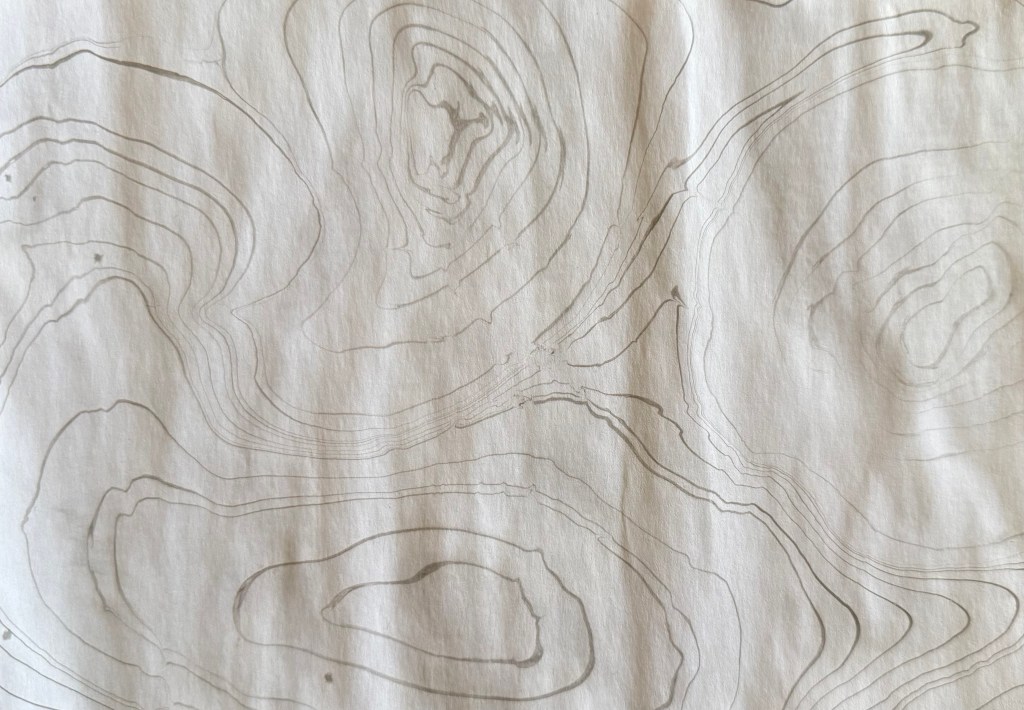
How might relationships, milestones, births, death, homes, struggles, goals, speculative futures be shared? Or might you map time, matter, emotions, culture, impermanence as it relates to you? What does a work that heavily references topography need to be resistant to fixity?
In my study statement I went on about how I was intending to explore my different roles and experiences etc. That intention fell by the wayside when I made the decision just to drift. I think that I’m more inclined towards exploring the emotions of relationships and events, maybe within the context of time, and how I relate to them, rather than the specifics. I don’t think that it needs to be resistant to fixity for the reasons mentioned above.
Or will you push the non-intentionality further by incorporating rules/games on what processes and materials to use?
The benefit of imposing rules is that it creates a situation in which I am forced to react against something, to think differently. It also takes away control and agency when they are imposed by others. In my Pushing Paper posts I set myself the task of responding to outlines drawn by others without much direction from me save that the line should not have a beginning or an end and that the line should overlap itself so as to create distinct areas. I have yet to complete the second set of images – when the outlines were being drawn, I asked for some rules as to how I should complete them. I think that I prefer having others set the boundaries for me rather than doing it myself. I like the idea that I am responding to others which mirrors how I am shaped by others and the world around me.
Or will you choose to disrupt or misuse tools and materials intentionally? Like your abstract sticker experiments!
Those who have skills in the areas into which I’ve strayed would probably argue that I’m already misusing tools and materials. I like discovering things by accident, of finding another use for something which wasn’t intended.
You might find Miska Henner’s work interesting.
I will have a more detailed look at his work.
From your tutorial with Jonathan, you conclude that you will take a mixed medium approach. We are intrigued by how you might incorporate the various experiments and skills you have developed towards Unit 3. Perhaps this is also a time to consider what aspects of your practice no longer serve you?
I’m now thinking that I’ve inadvertently labelled myself. Mixed media, multi-disciplinary? I like the idea of mixed media because I’m drawn the idea of re-processing and remediating, but I still want to be able just to make a drawing or a painting if I want to.
You and me, both, although I already find myself linking back to things that I have done in the past.
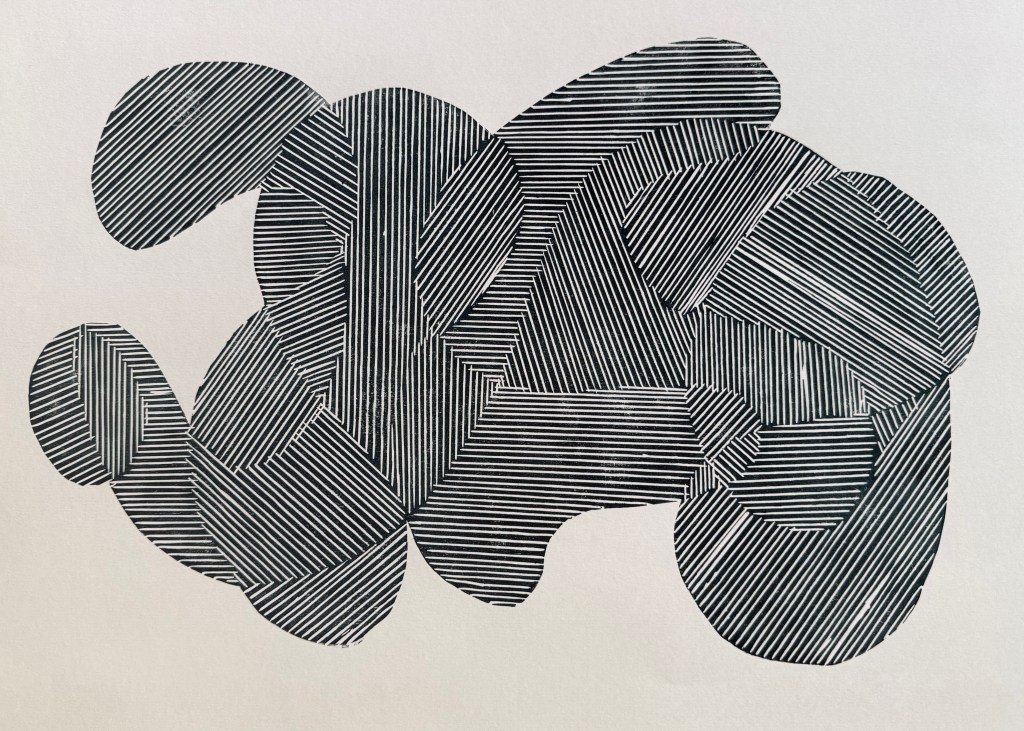
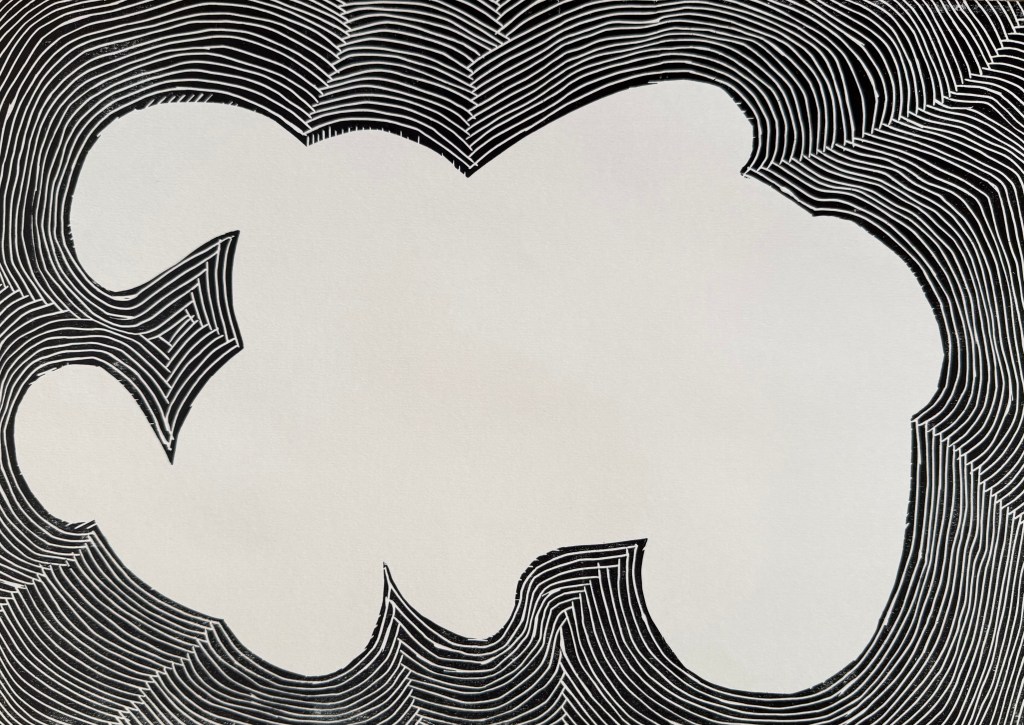
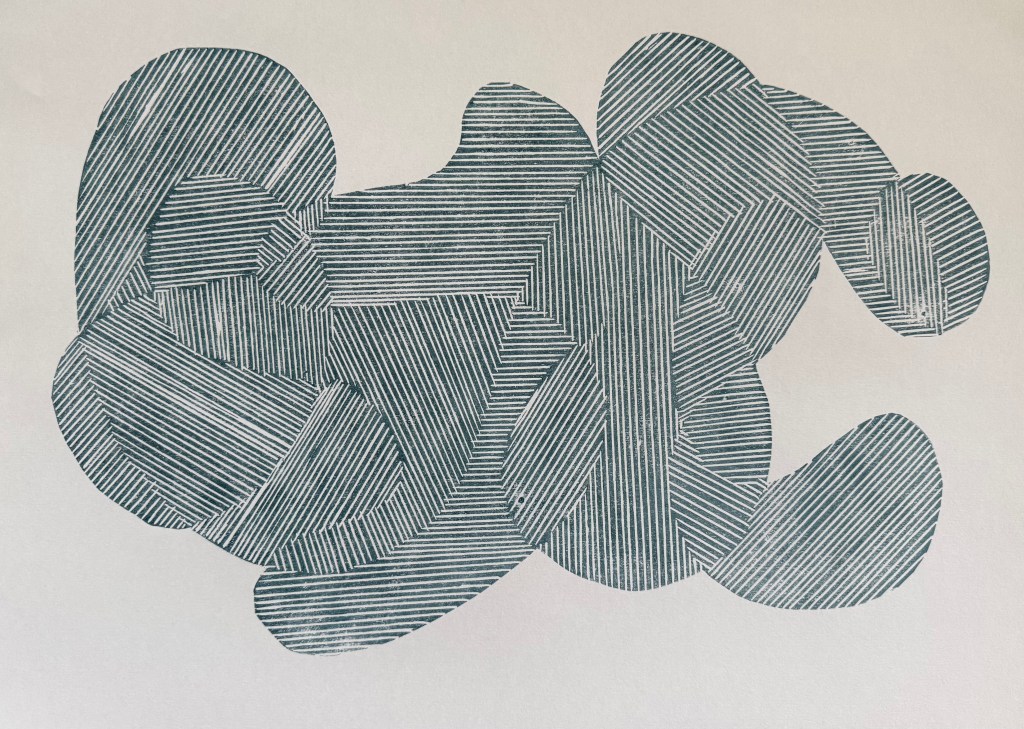
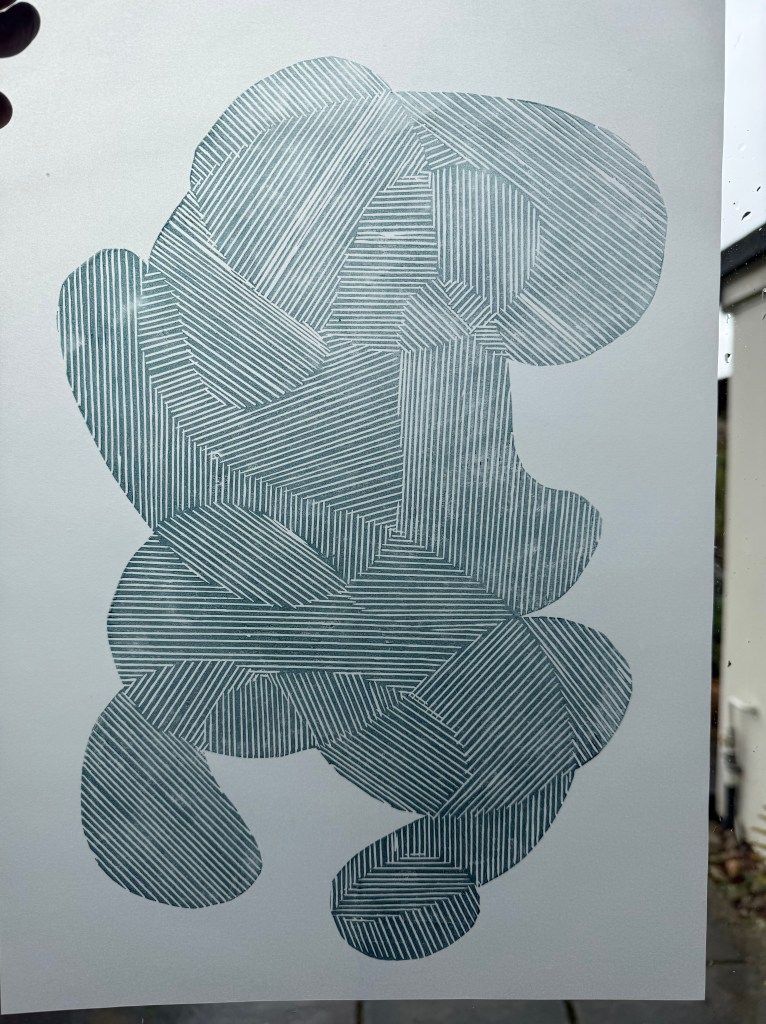
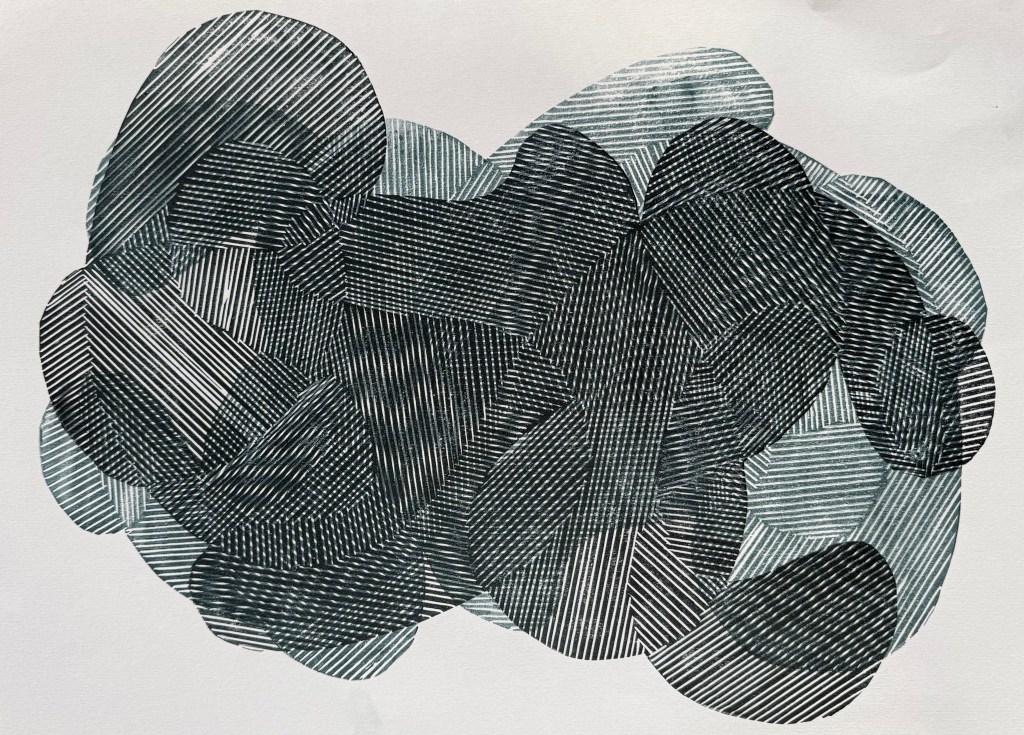
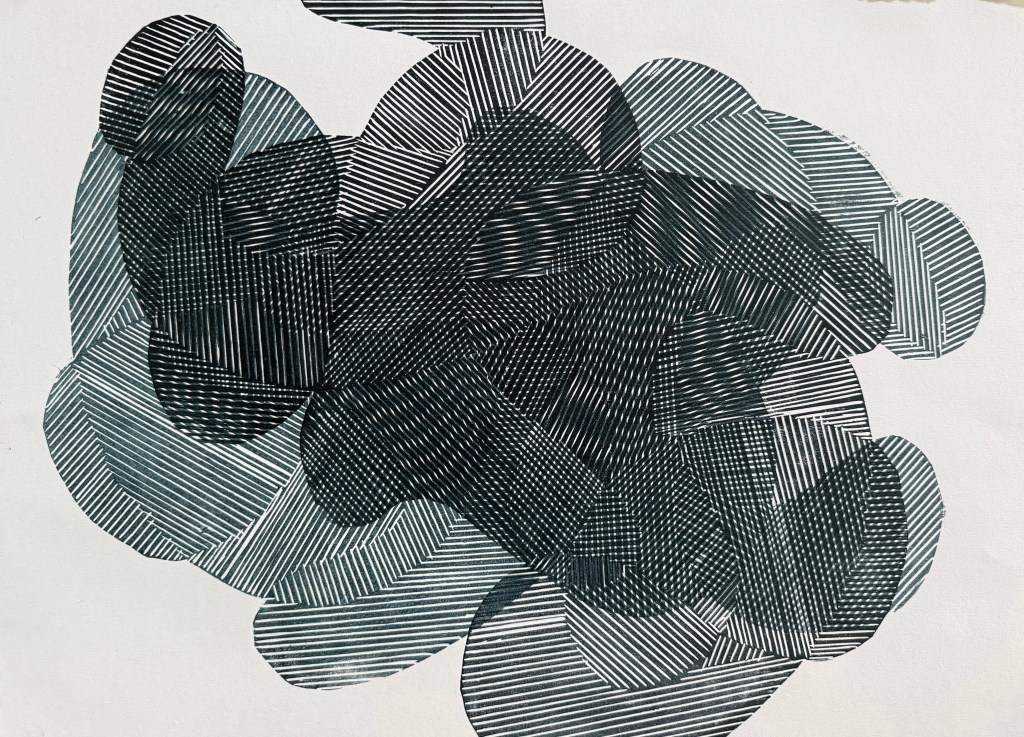
I’m not sure – I almost wrote off linocut but luckily decided to give it another go recently, but in a way that worked for me at this time. I think that perhaps I won’t need to make a conscious decision, it will just happen naturally – after all there are several experiments that I haven’t repeated or developed – gelplate printing and kitchen lithography, tetrapak etc. But there might come a time when I decide to approach them from a different angle.
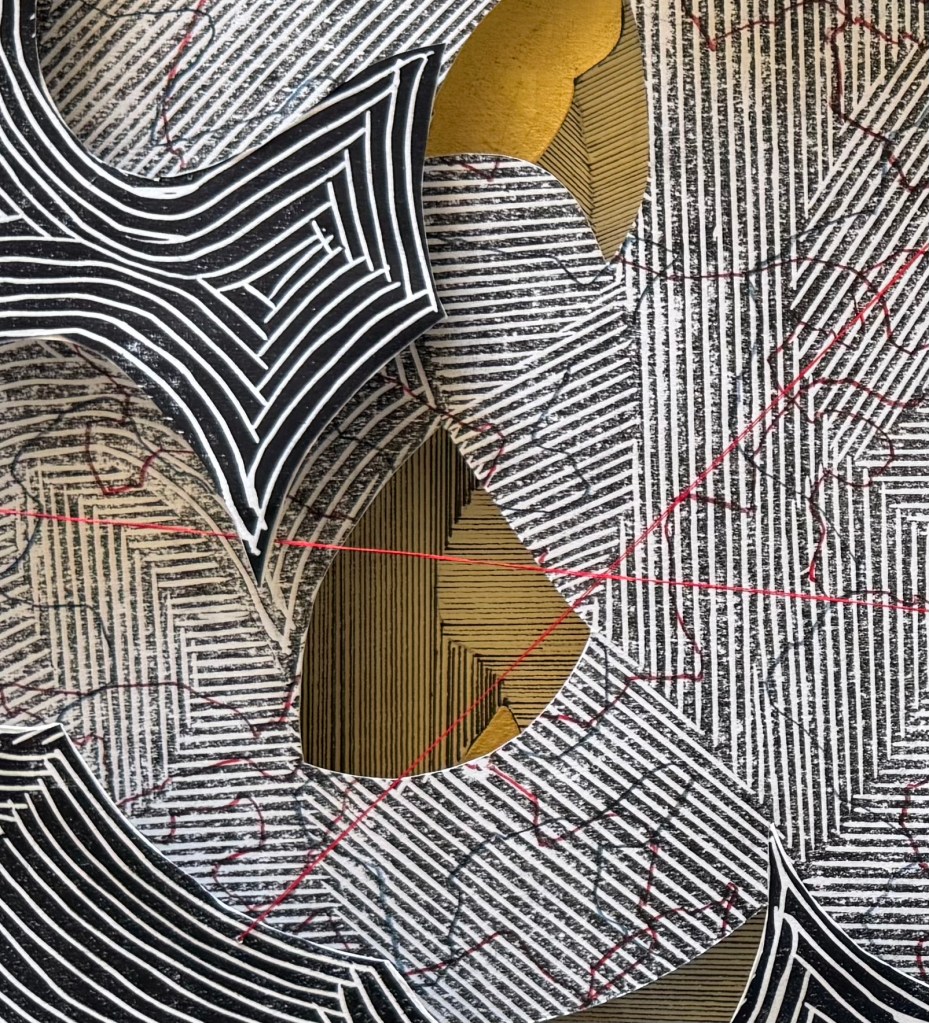
From your daily walks and their photographic experiments to the topological references to the parsemage and bubble experiments, to the line drawings, we are struck by how often pattern repetition appears in your practice. It brings to mind Richard Long’s ‘A Line made By Walking’, 1967. Why might repetition appears repeatedly in your work? How does this relate to your thoughts on intentionality?
I think that there is repetition in my work because I’m in a recursive, iterative loop – I progress up a ladder and come down a snake, then go up a ladder a bit further than before and come down a snake etc. I’m building layers of iterations as well as some form of connection, maybe in the same way that becoming is influenced to a certain extent by what was before and what is to come.
As you move away from figuration what is found between the figurative shapes, or fragments of these shapes – what happens when you zoom in on the negative spaces that are created? How might these be reused?
Whilst I think that I am moving away from the figurative, I think that it is likely that it may still feature in my work when it is the only method to express what I want to say. I need to give some more thought to negative space.
These are my thoughts for the time being. They may well change. I’m conscious that they contain contradictions. I think that the long and the short of it is that I simply don’t know at the moment how my research will play out in practice. It is theoretical and is bound to have practical limitations and to create puzzles to be solved. I feel as If I need to write myself some kind of a manifesto to order my thoughts and to try and address the practical implications.
 Kate McCalmont-Woods