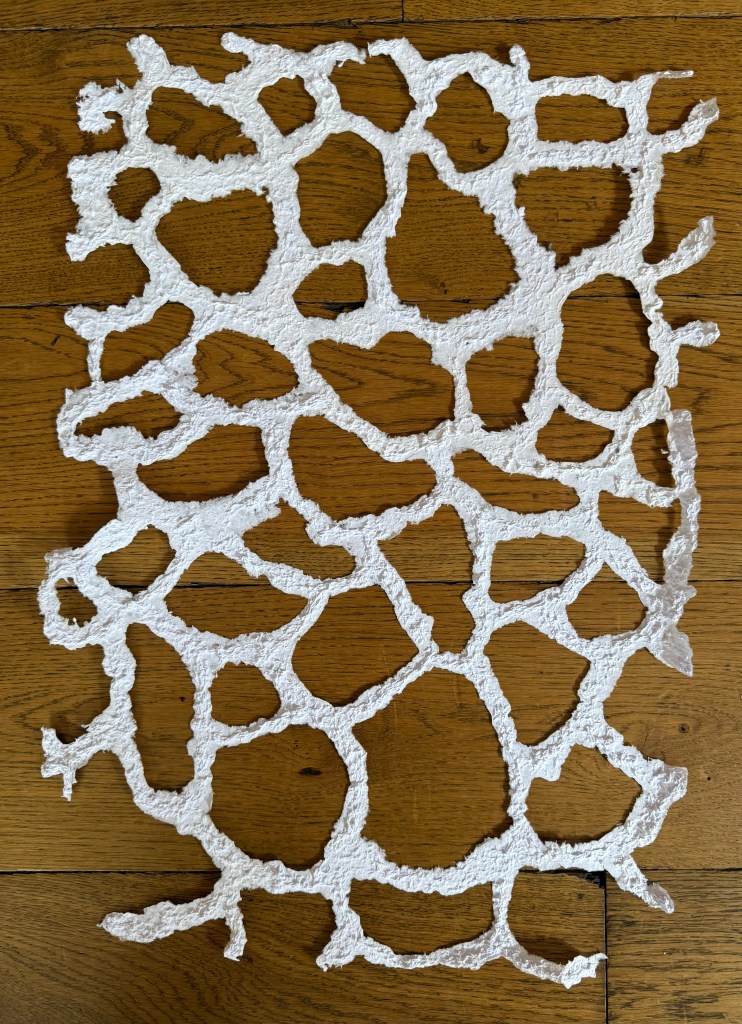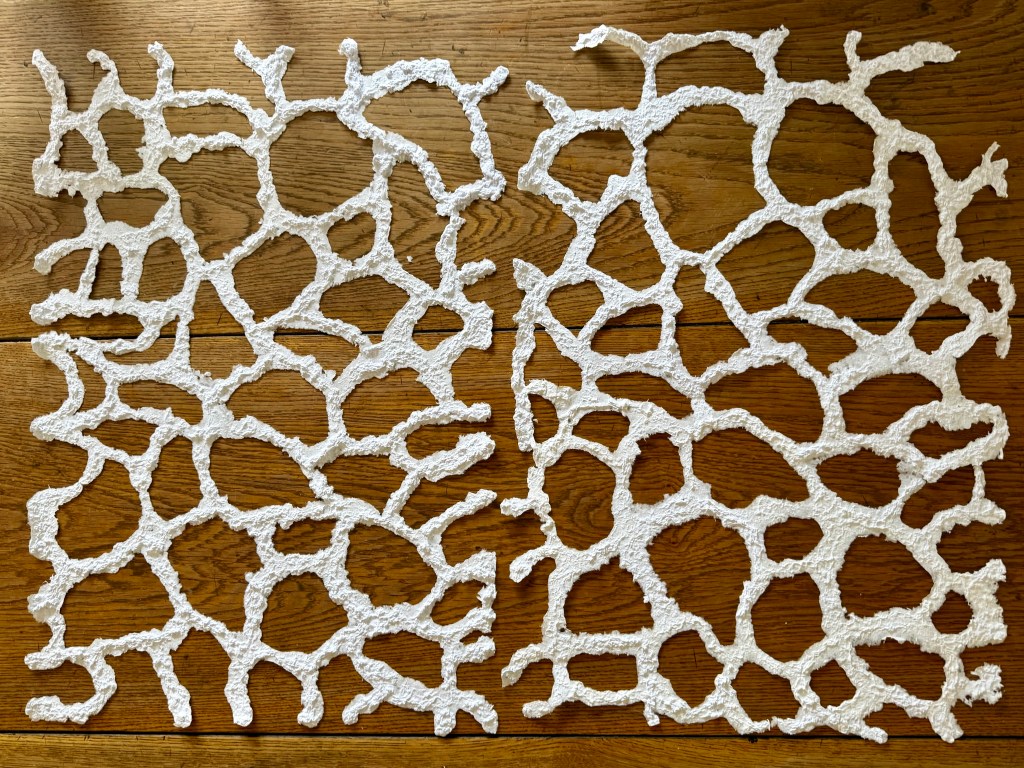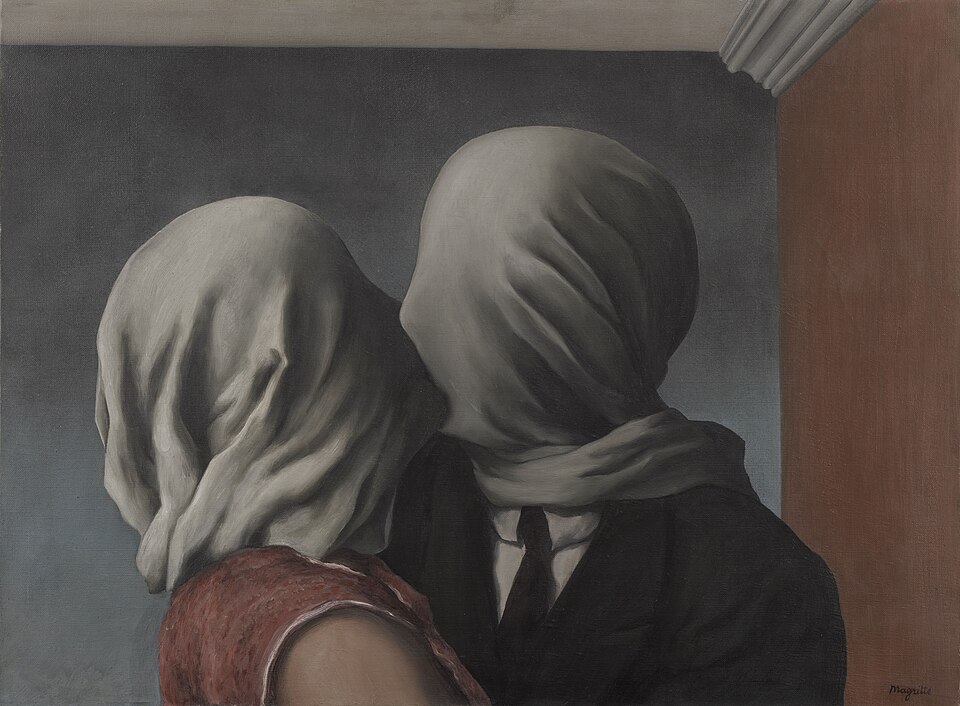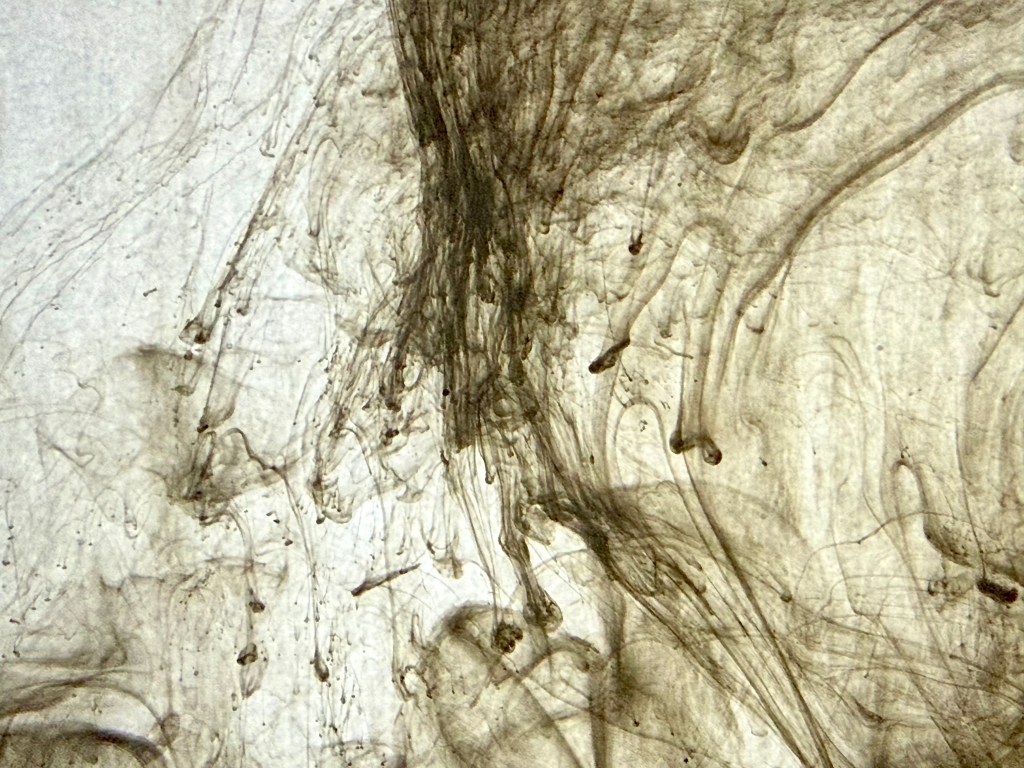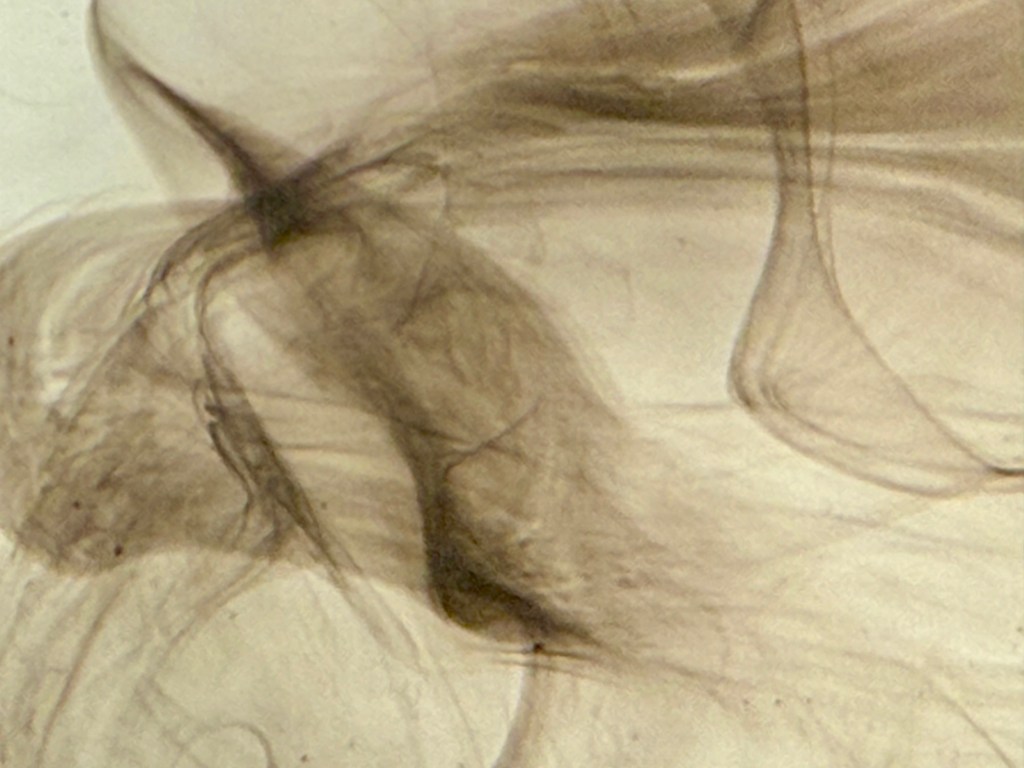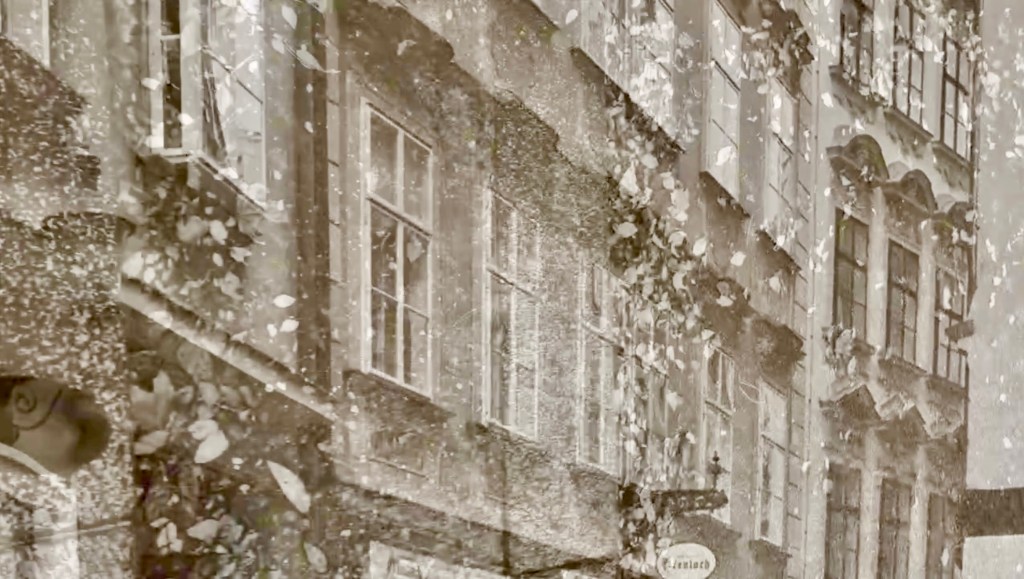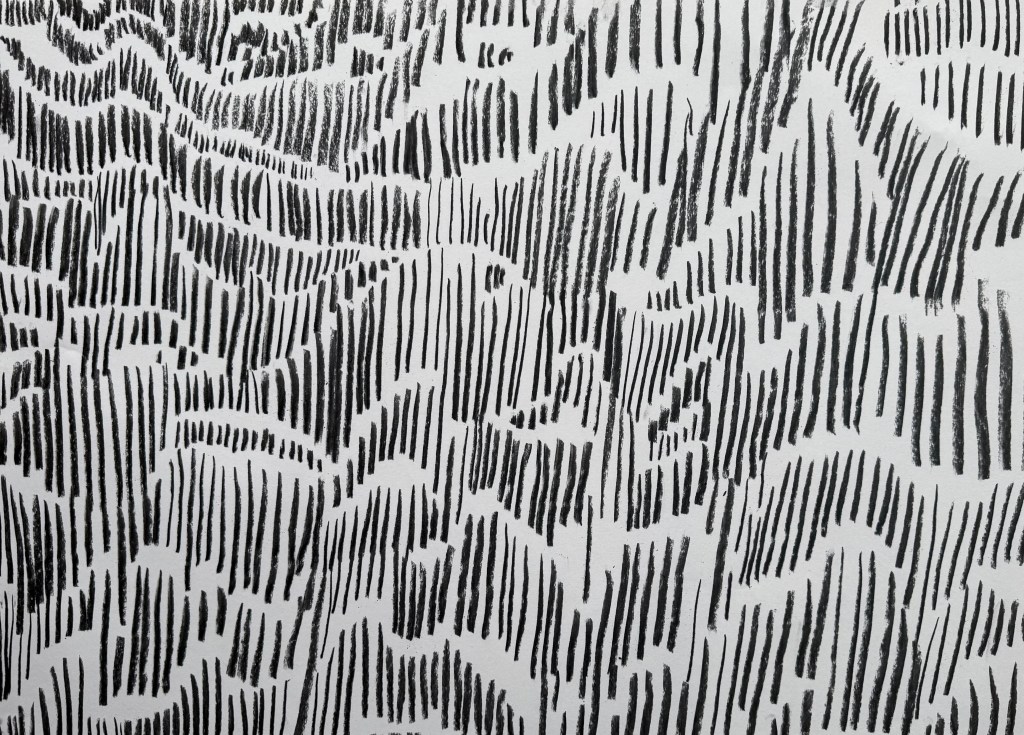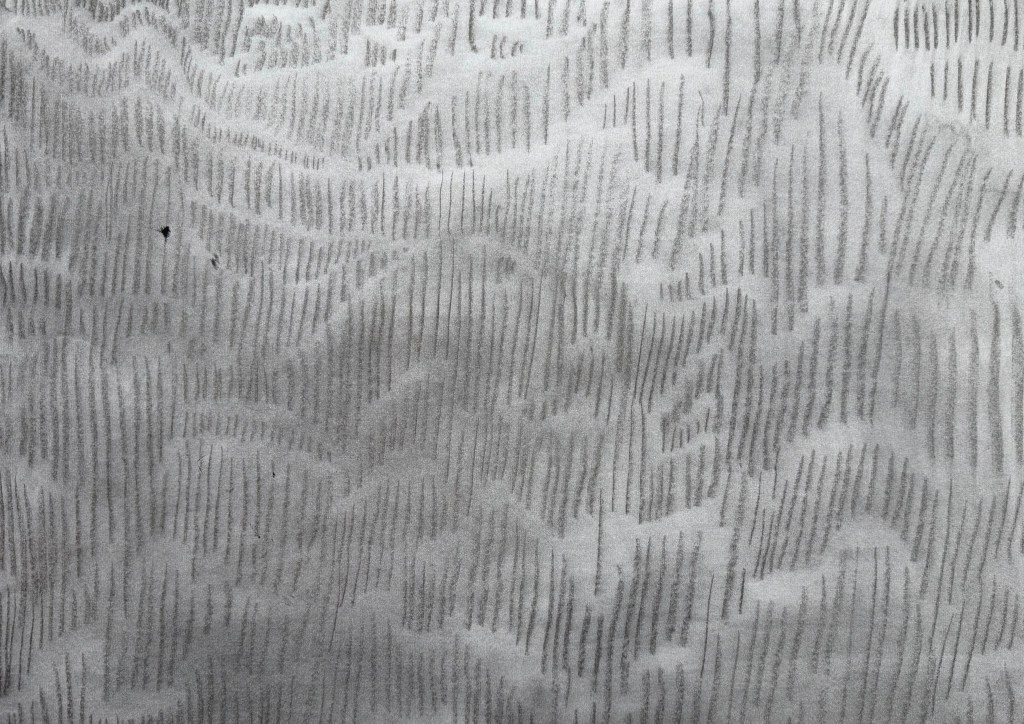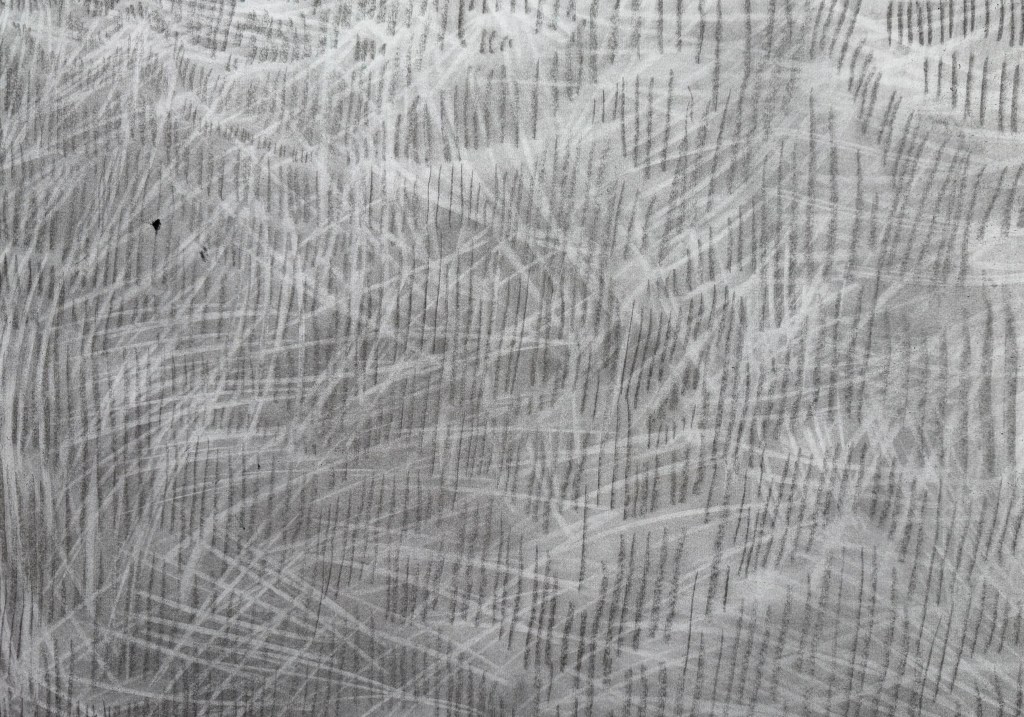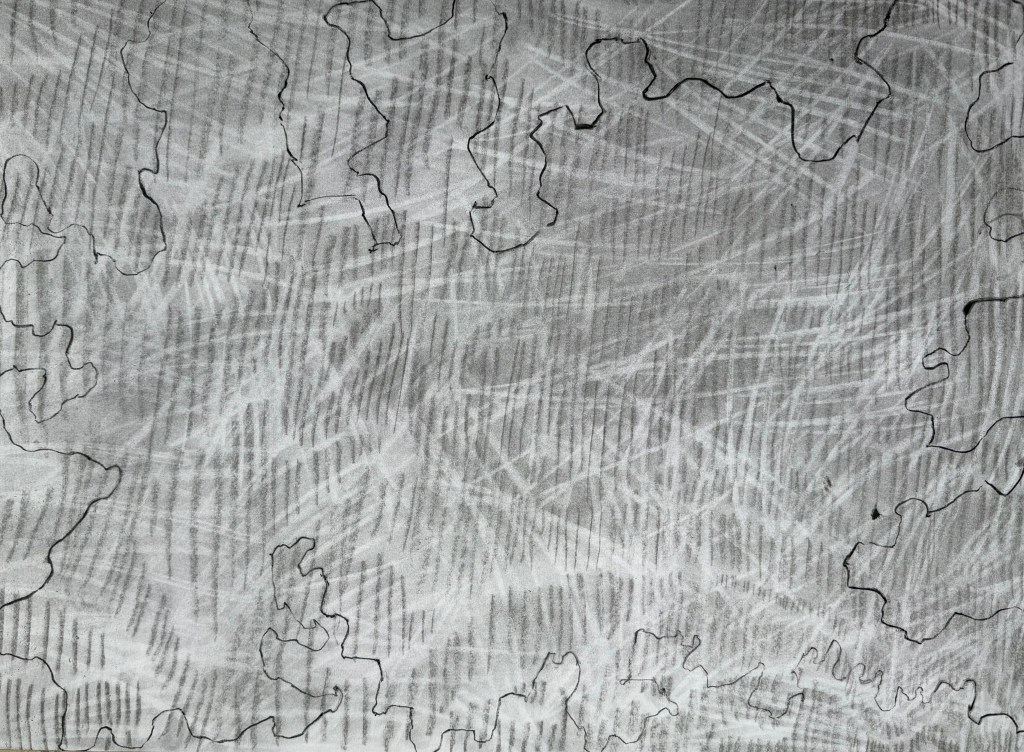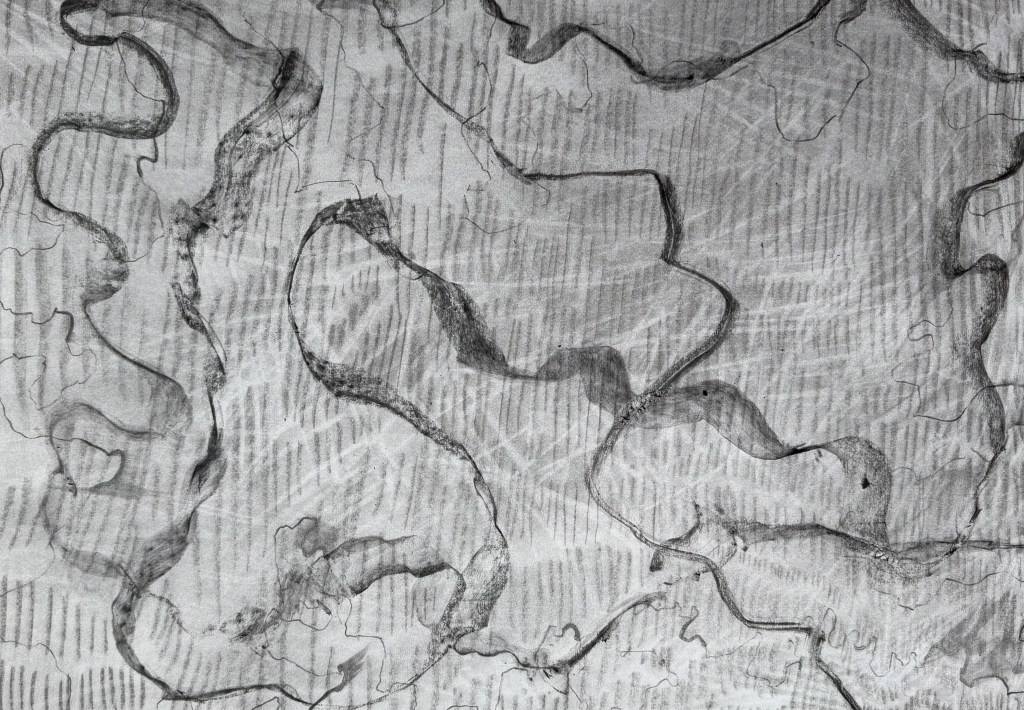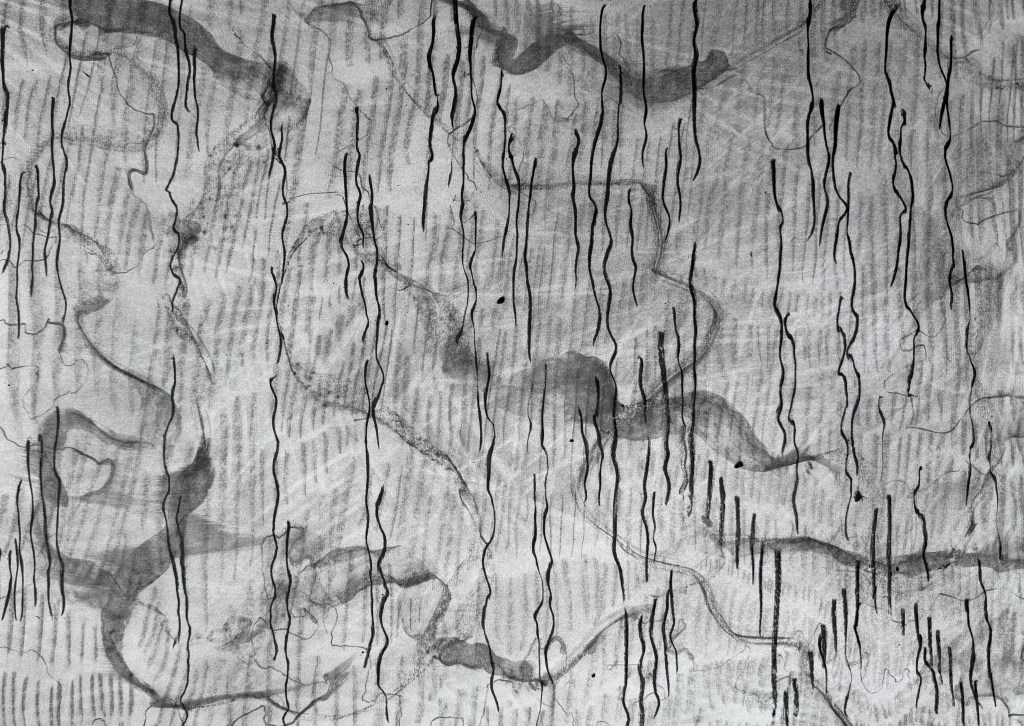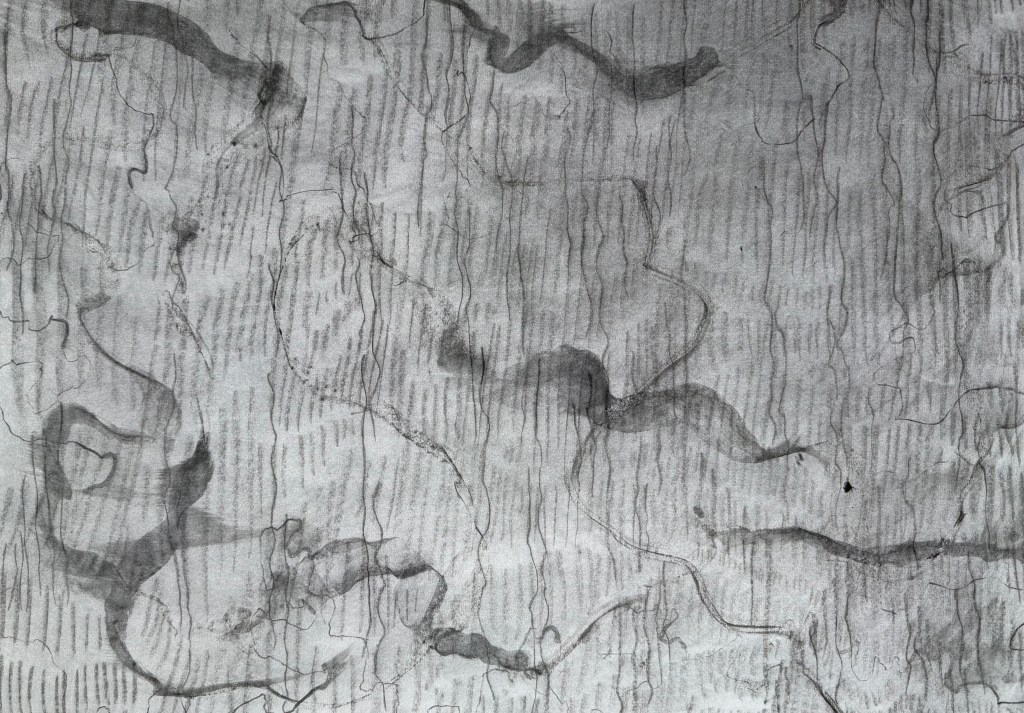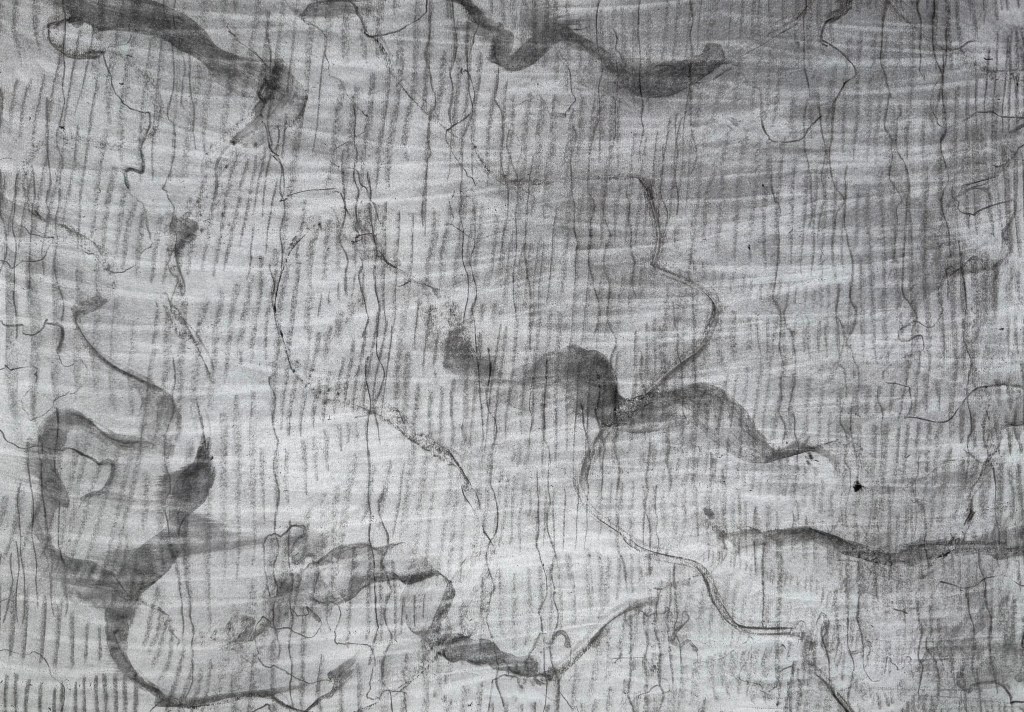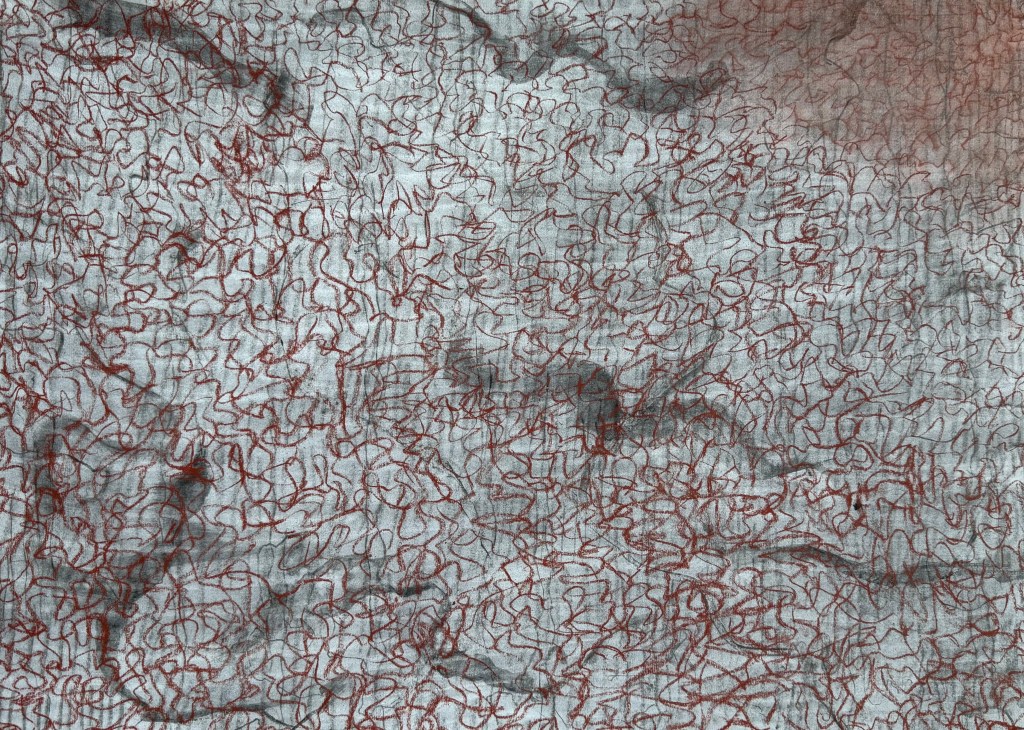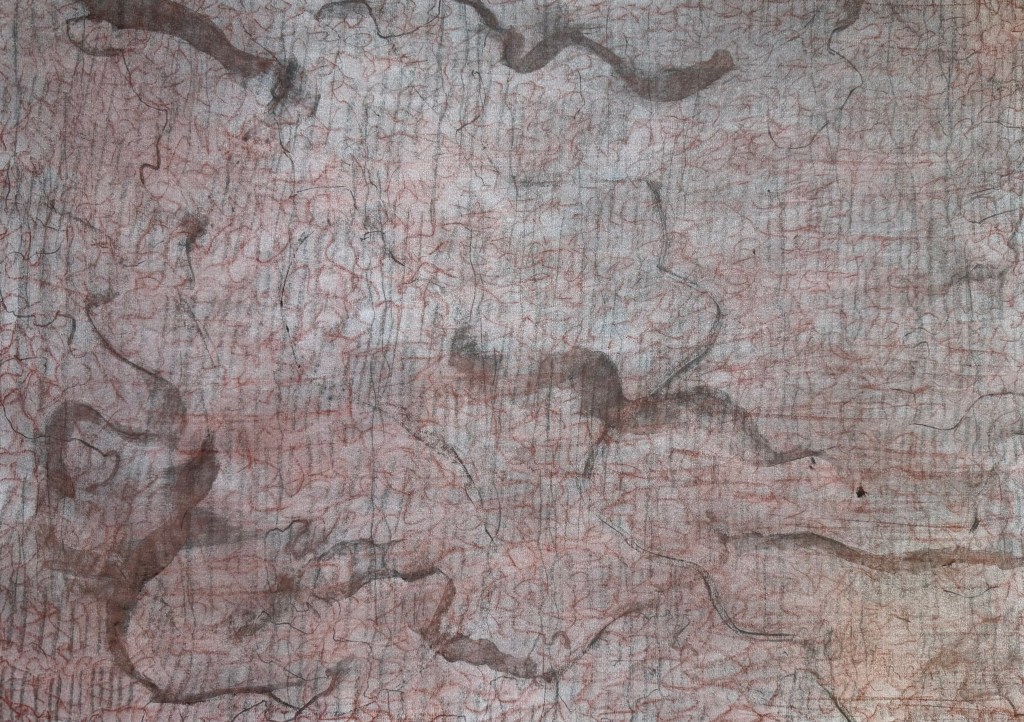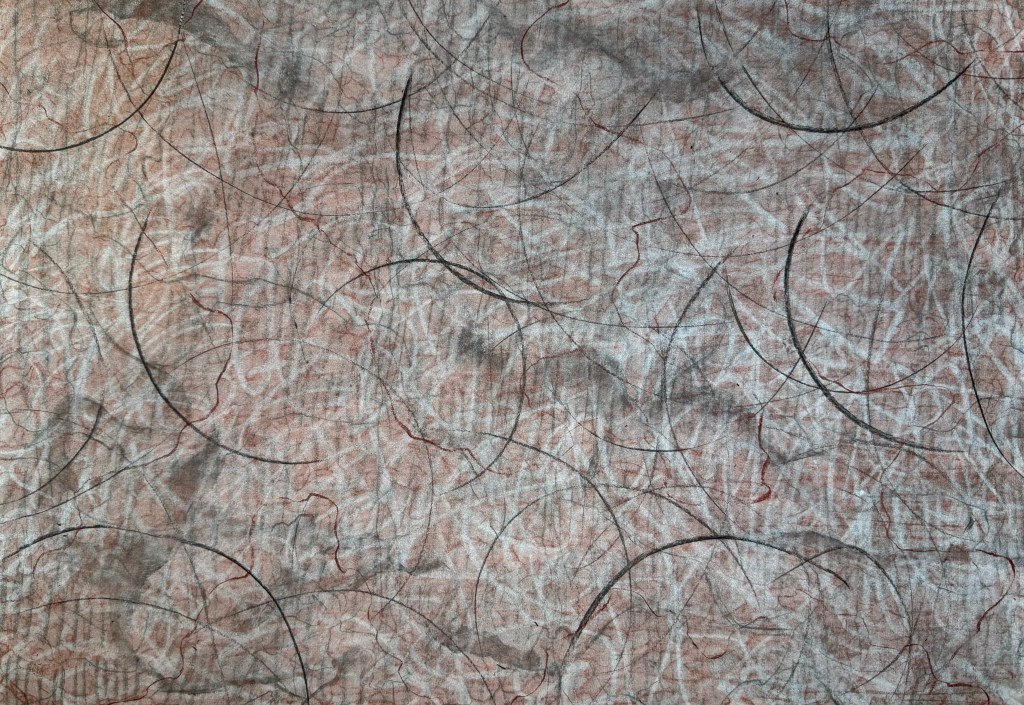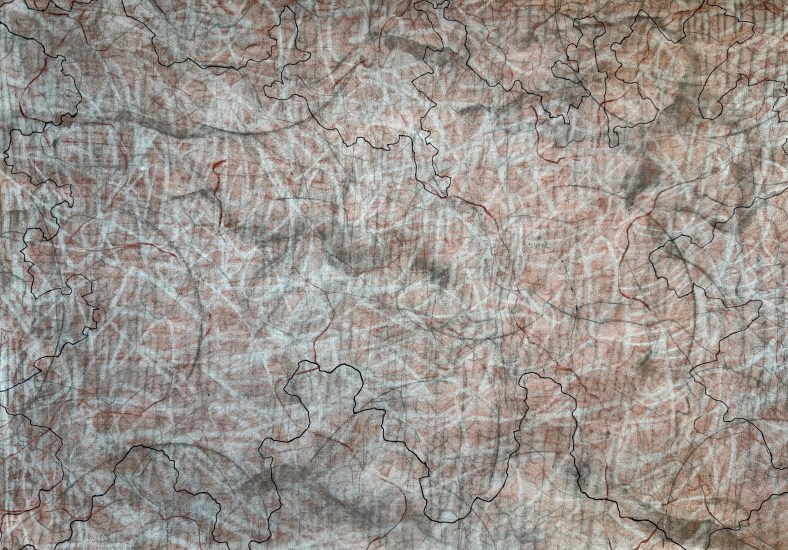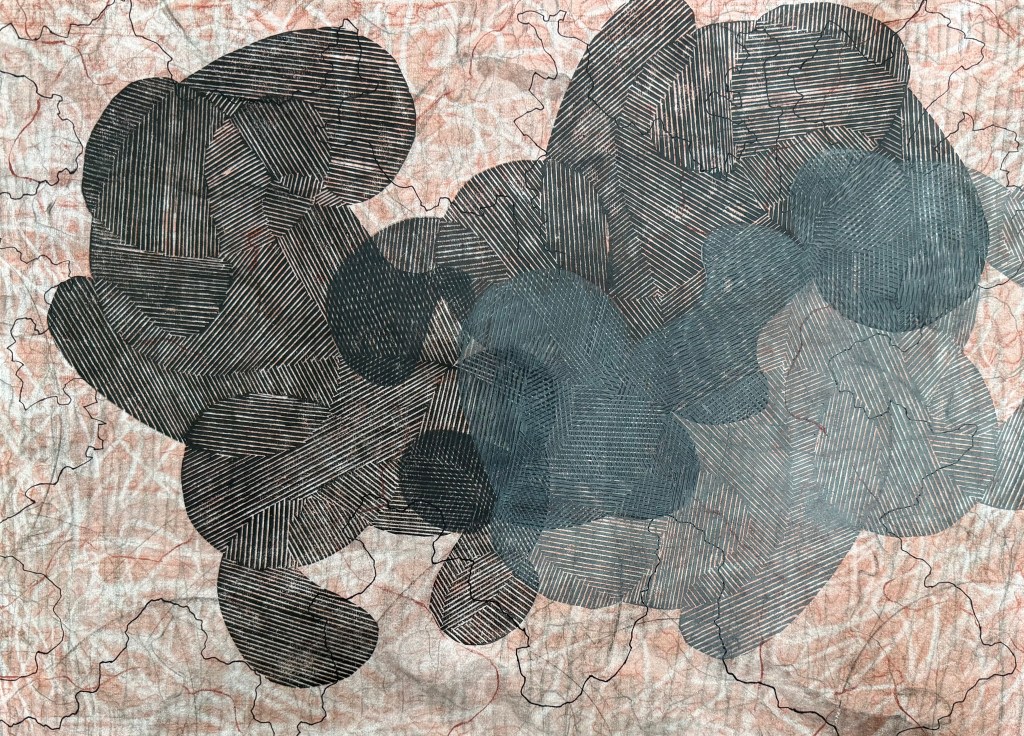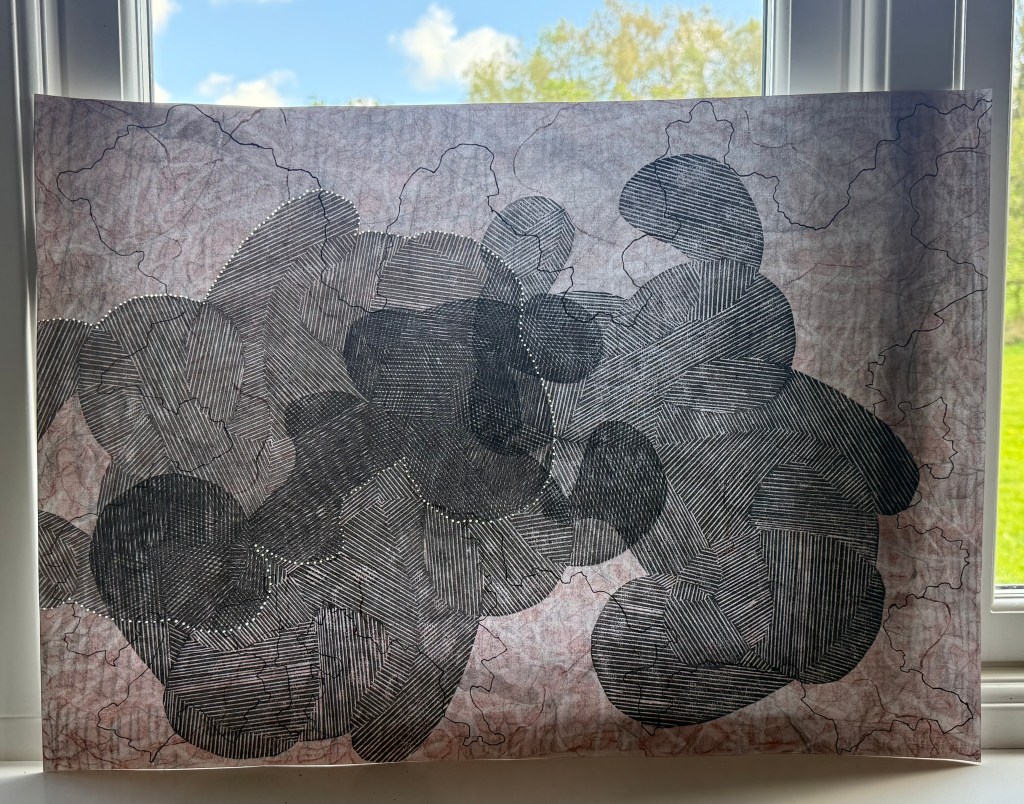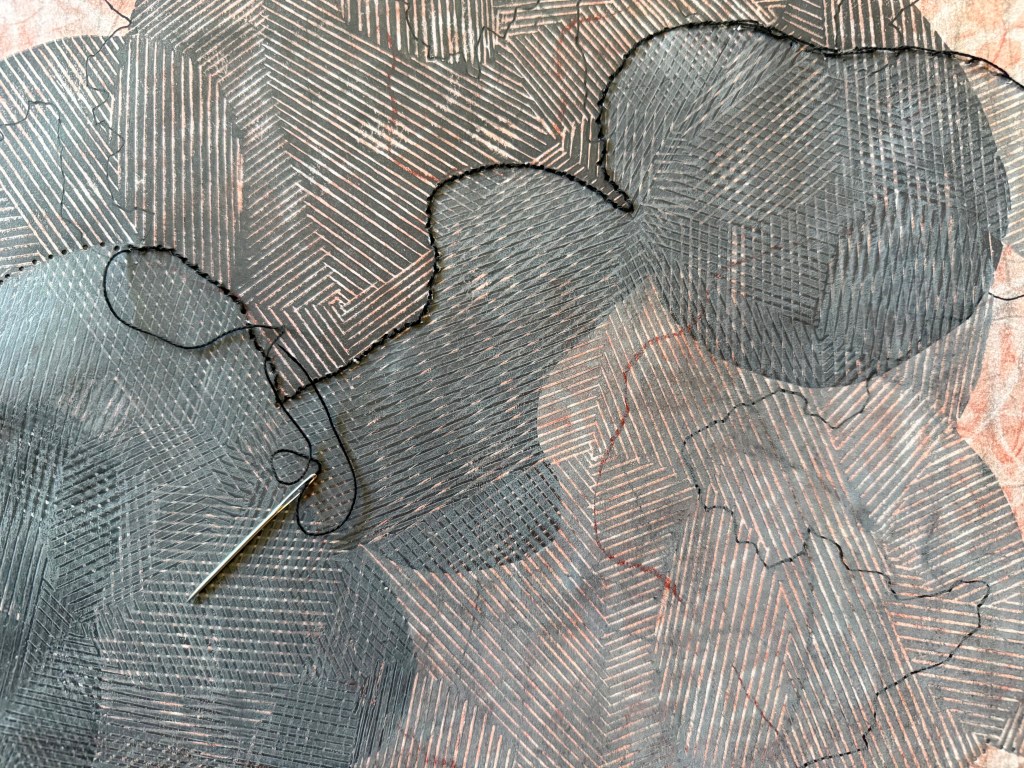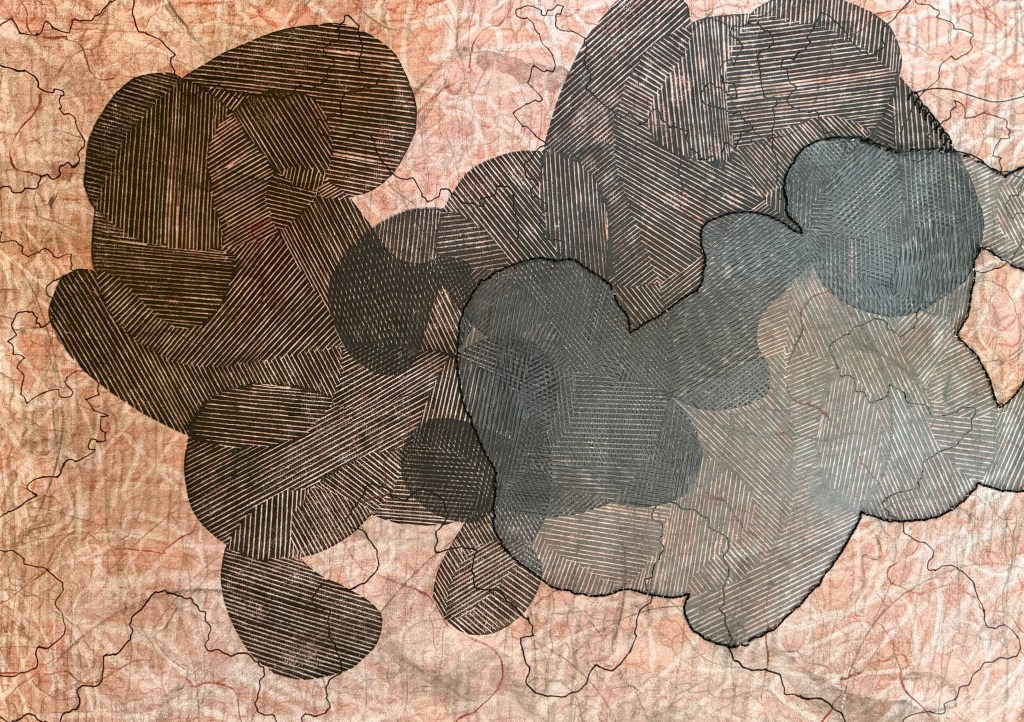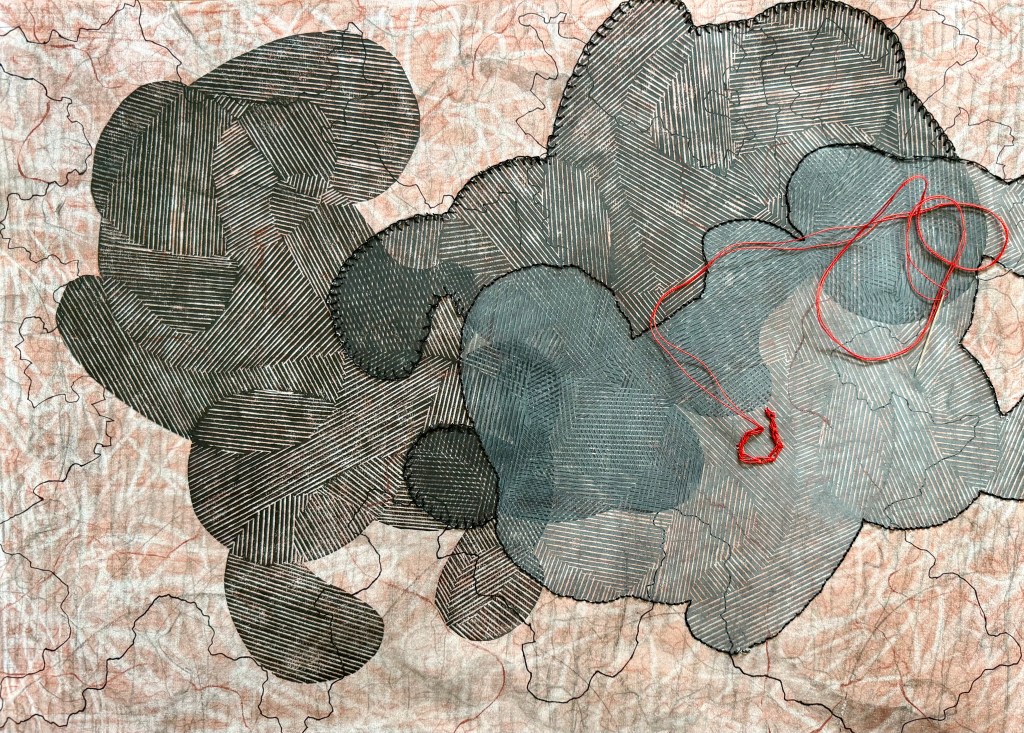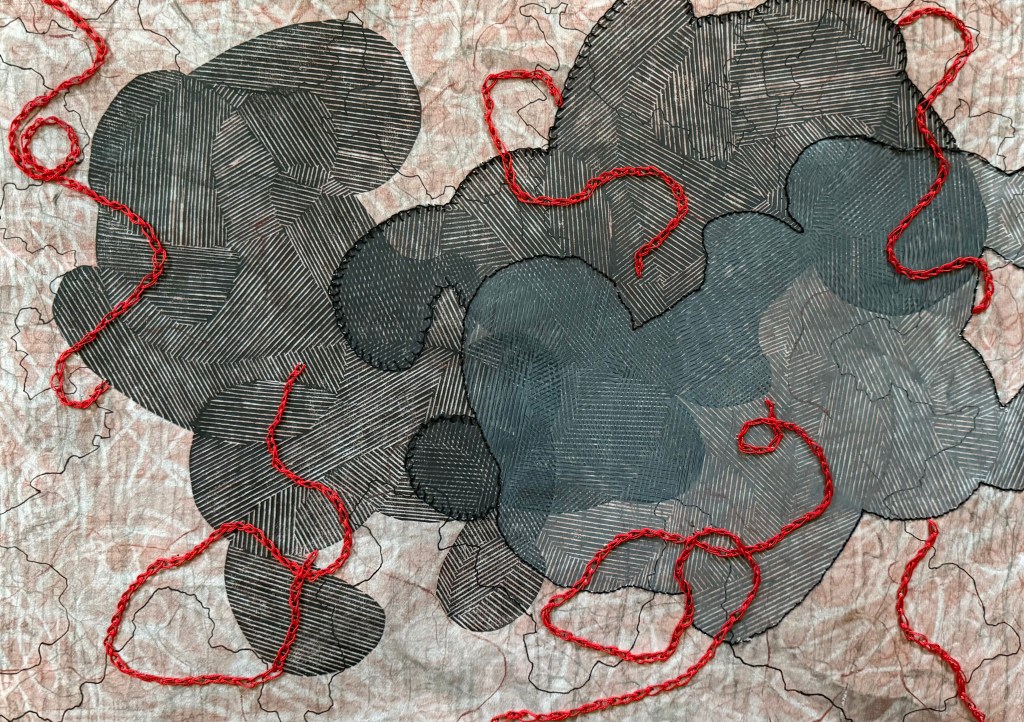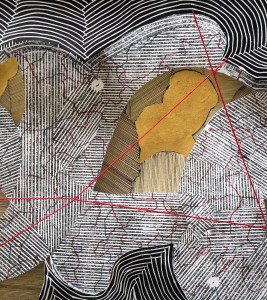
I wanted to make some marks – layers of marks – and so I took some A2 paper and used charcoal, pastel, an eraser and a pen.
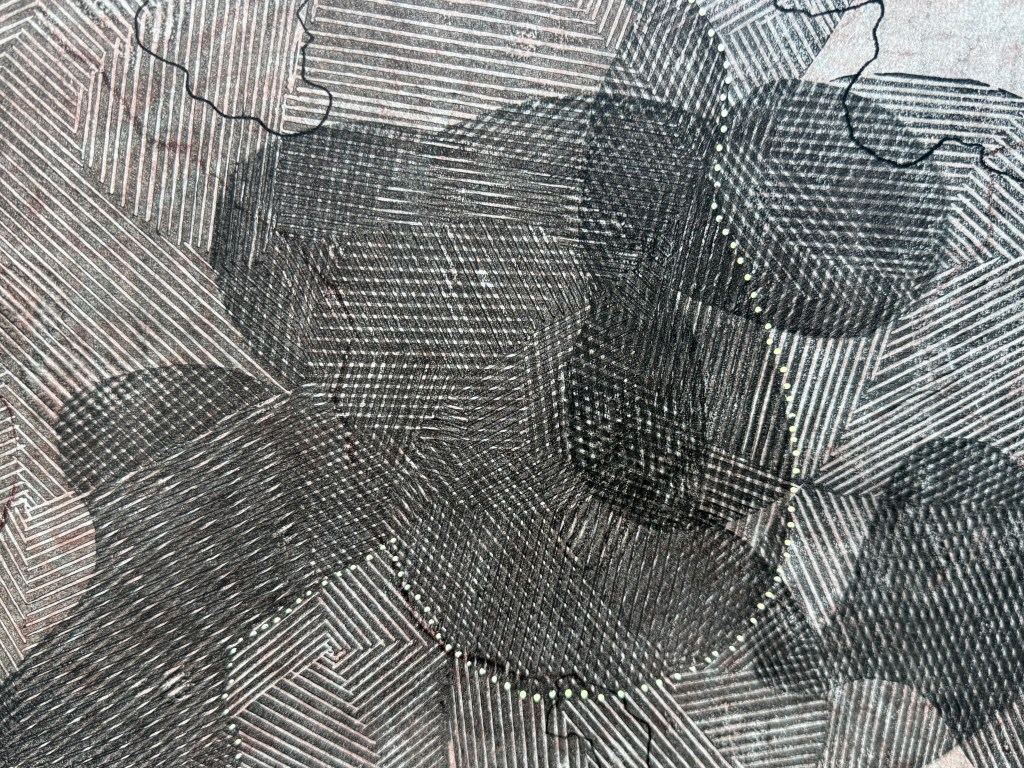
It wasn’t meant to be anything. I thought that I might use it as a base for something else. I had been wanting to have another go at overprinting the linocut image from Never Say Never. In that post I comment that the shapes look like crouching figures – in retrospect they are foetal-like. The subject of microchimerism has come back to my mind recently and I thought that the idea of making the ink more transparent with each print could touch on that. Also, the marks underneath would also become increasingly visible. I gave it a go but I made a hash of the ratio of ink to extender, and I couldn’t find the new tube of extender so I just added some white which, of course, made the print totally opaque, which wasn’t the original intention.
I left it for a while and got on with other tasks relating to the book and when I revisited it I thought about umbilical chords (something I have referenced previously in Sisters). I thought I might use some of the red thread that I had for my paper experiments to sew some kind of twisting chords which then made me think of using black stitching to delineate between the three shapes. I used a blanket stitch on the second shape as I’d seen at her Tate Modern exhibition that Tracey Emin had used it on her blankets to give a less defined line.
I’m really chuffed. I was thinking as I was sewing that maybe I should have planned where I was going to go, but then decided that, no, I liked the spontaneity of it all. Would I have done anything differently? No. How did I feel as I was making it? I felt pleasure, at all stages. I enjoyed the making of it and I like how it turned out. In fact, over the last few months (Summer Exhibition aside) I have really enjoyed making. That’s not to say that I haven’t enjoyed the process of making before then – I have, particularly the experimenting and and the wandering, it’s just that recently I have felt contented, as if some things have fallen into place. I particularly enjoyed the experiments with lino cuttings and packaging, and I’m really happy with the video that I made.
I think that it comes down to the accidental and the incidental; the unexpected that happens in the process and the small things I notice within the process which then lead to something else.
I often become distracted; I’ll put a pan of water on to boil and then get distracted by something and go wandering off, only remembering that I was meant to be boiling some eggs when the pan has boiled dry.
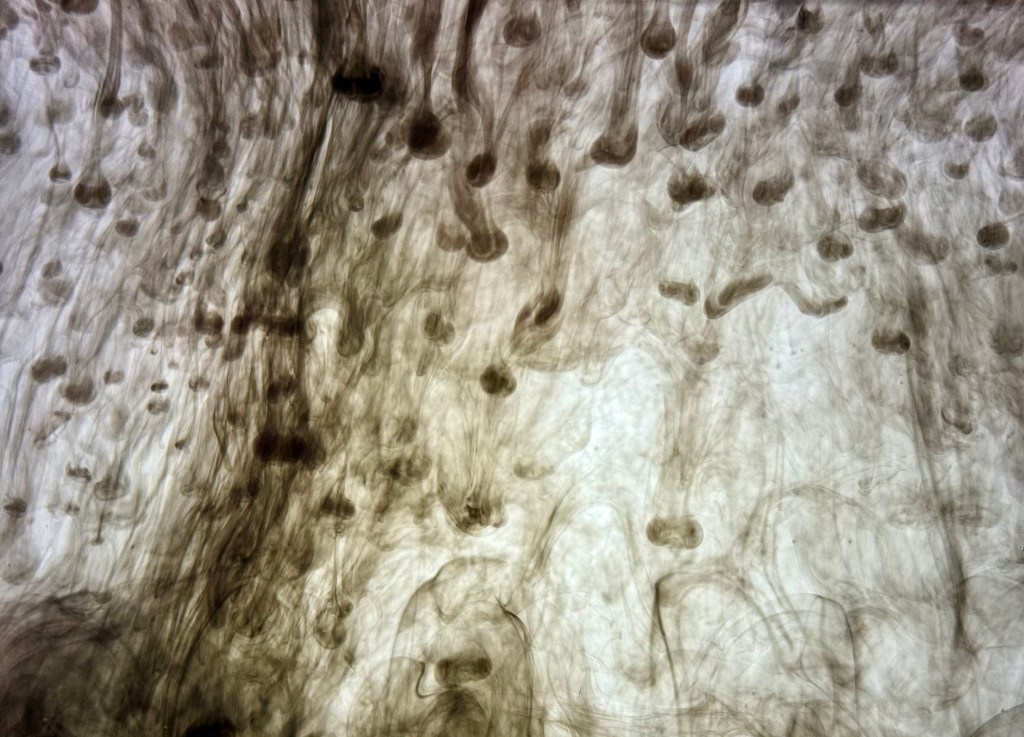
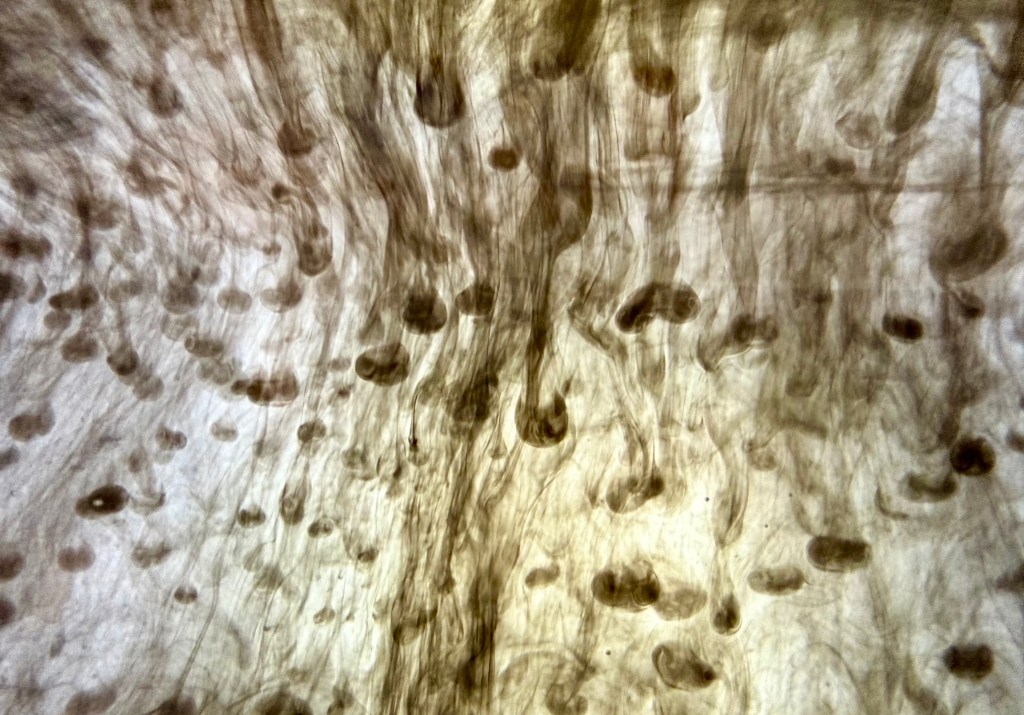
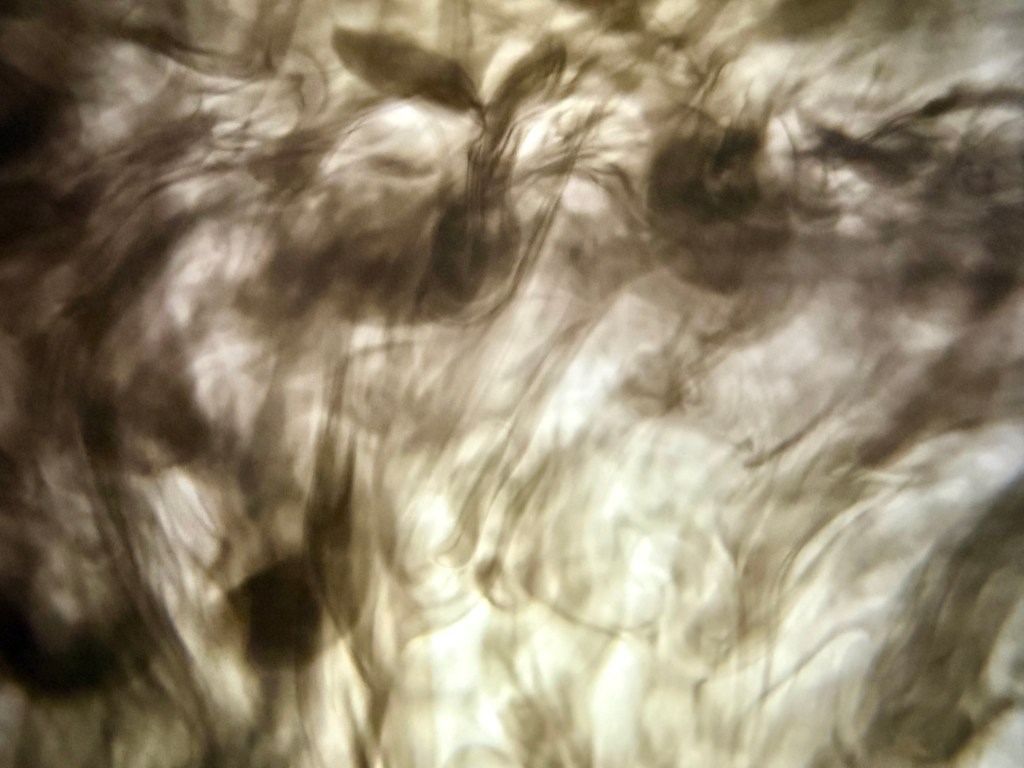
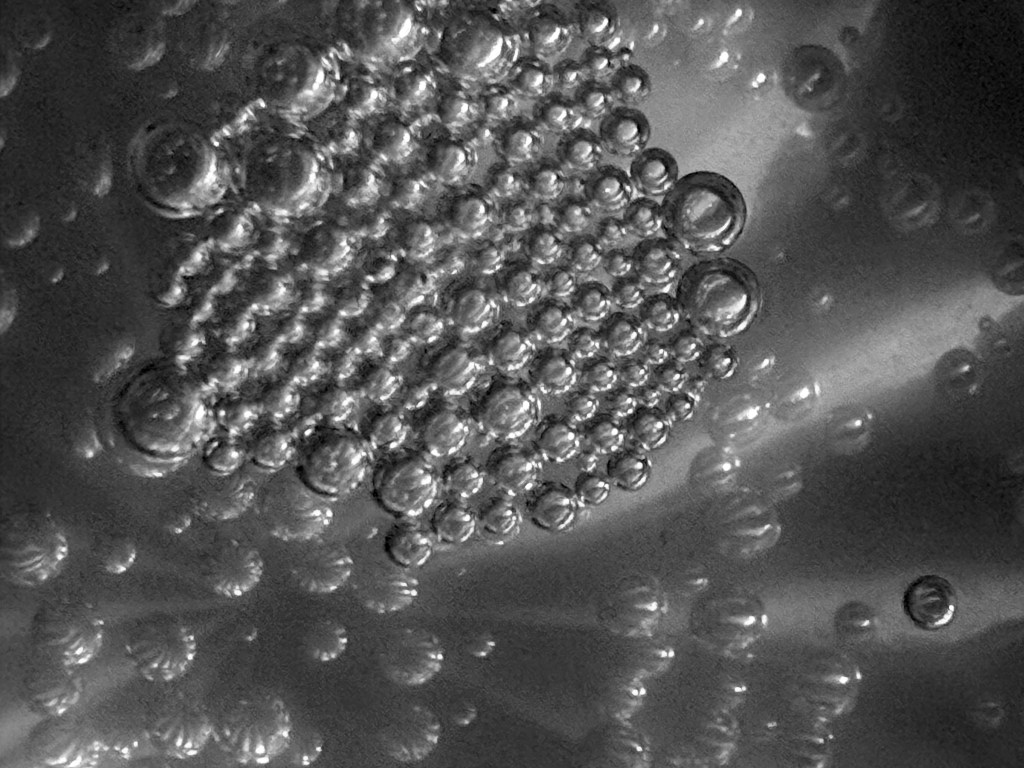
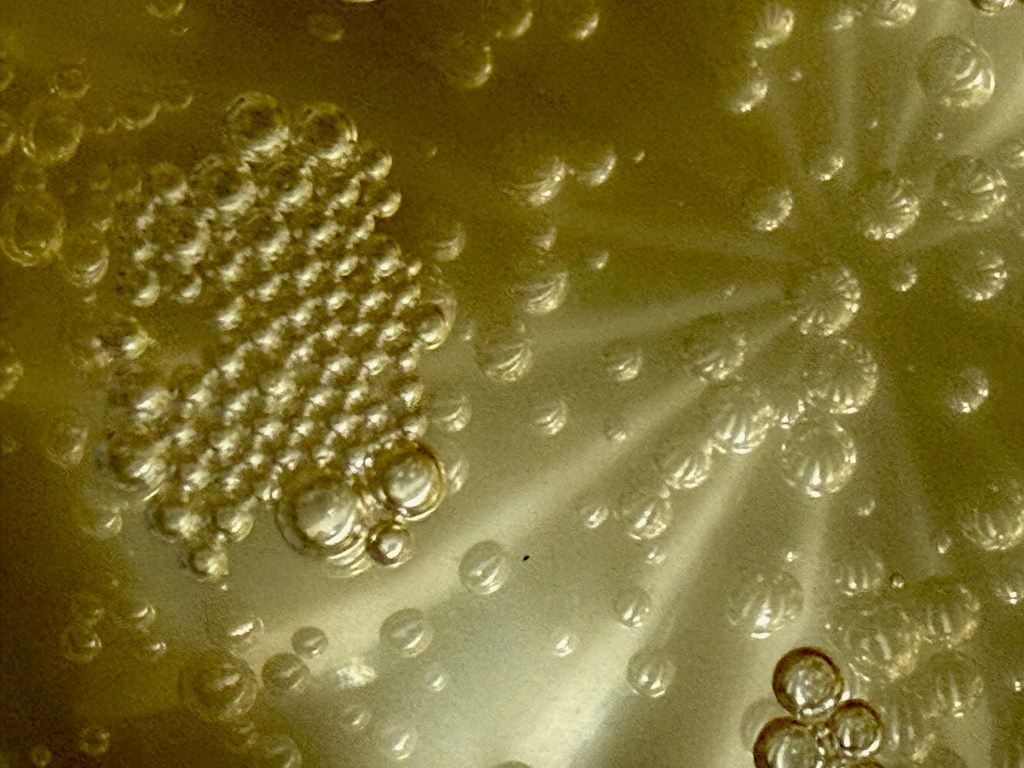
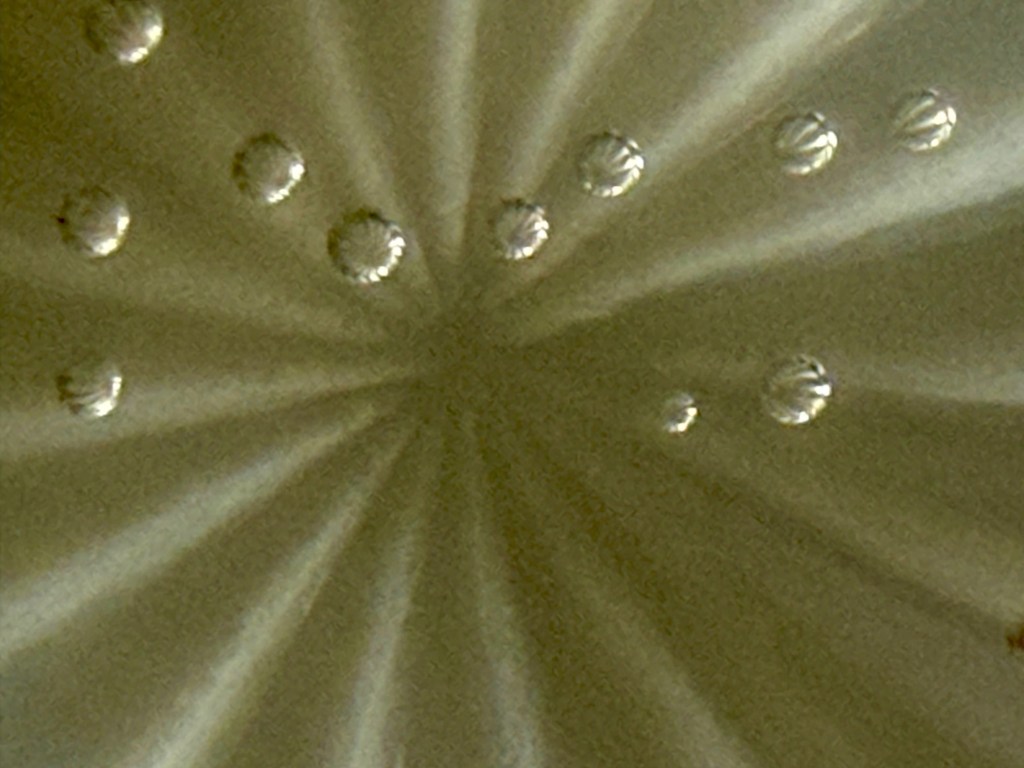
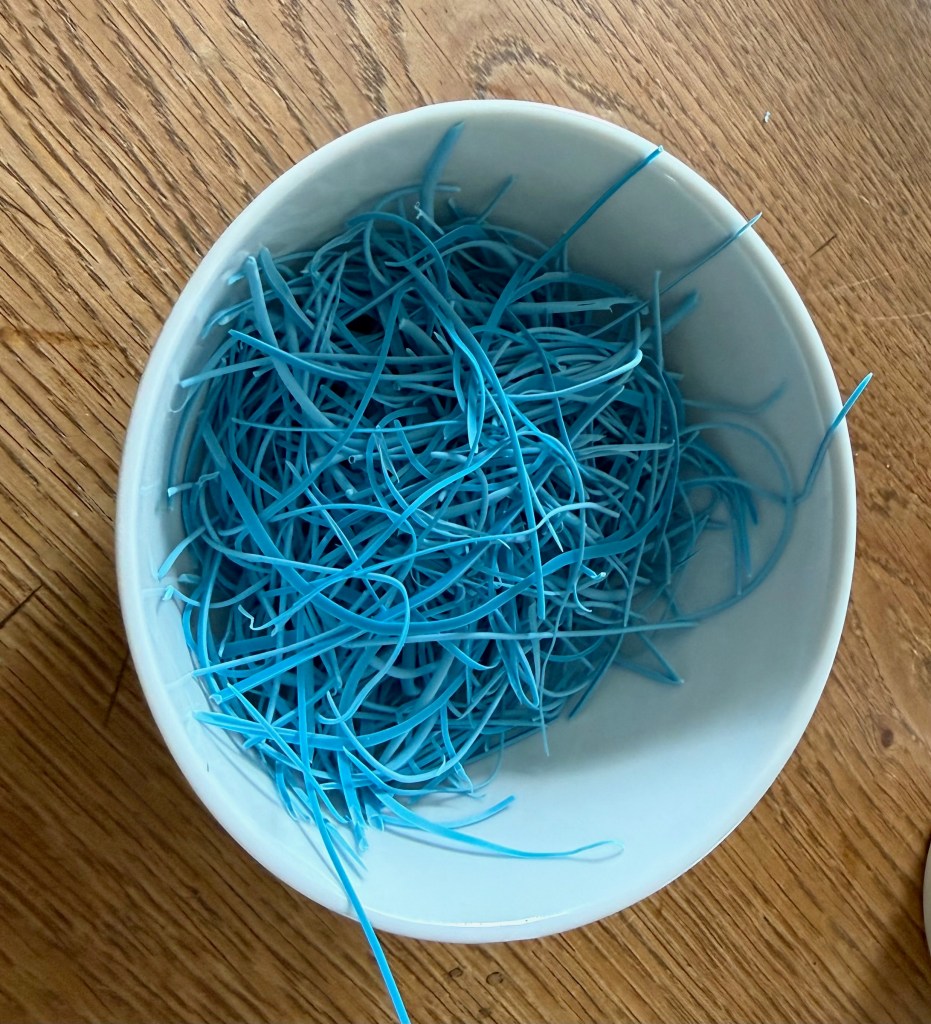
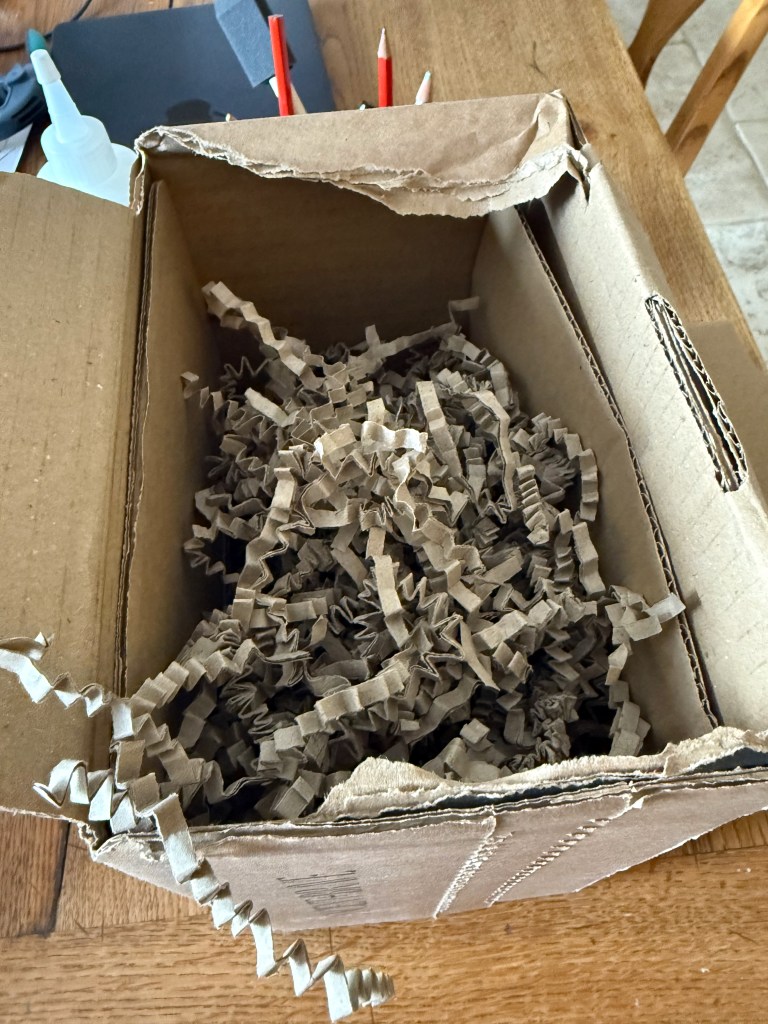
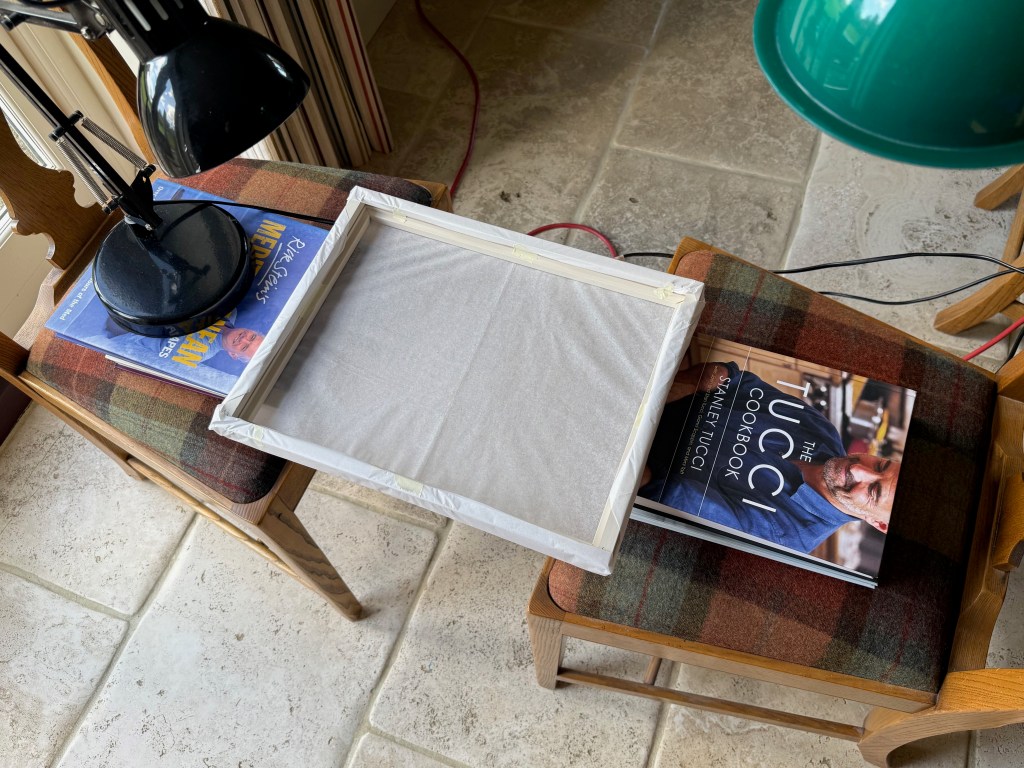
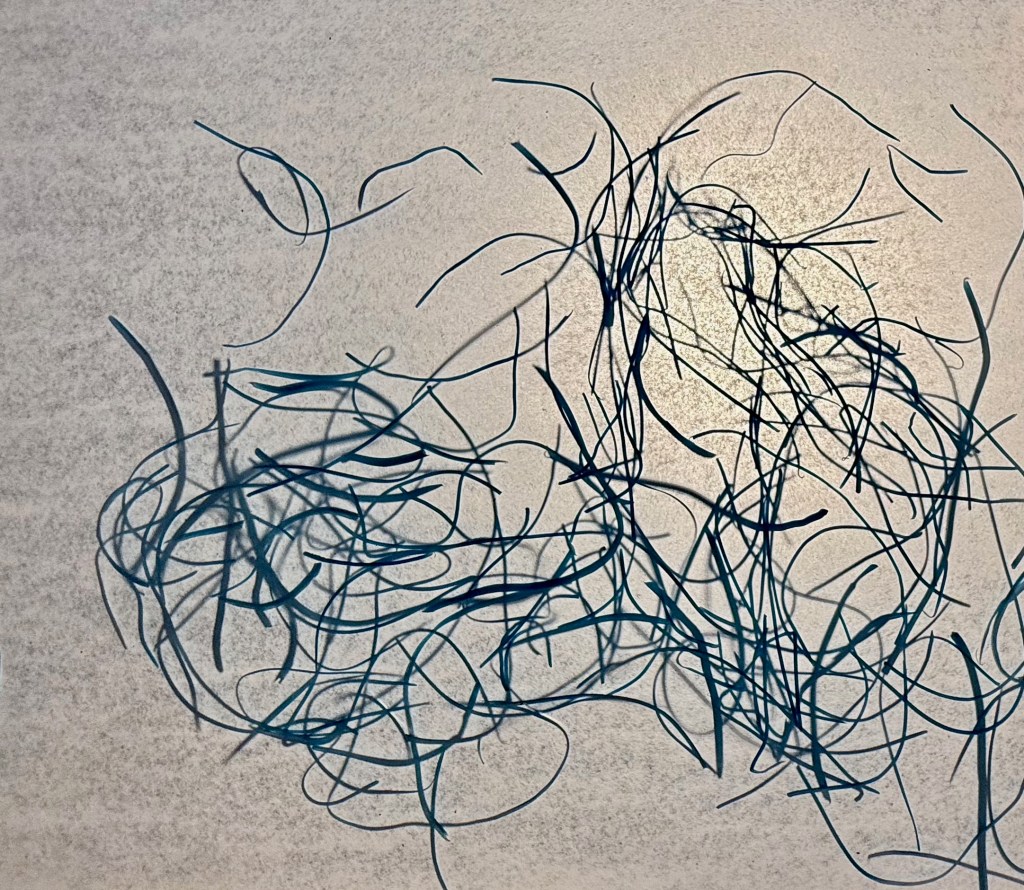
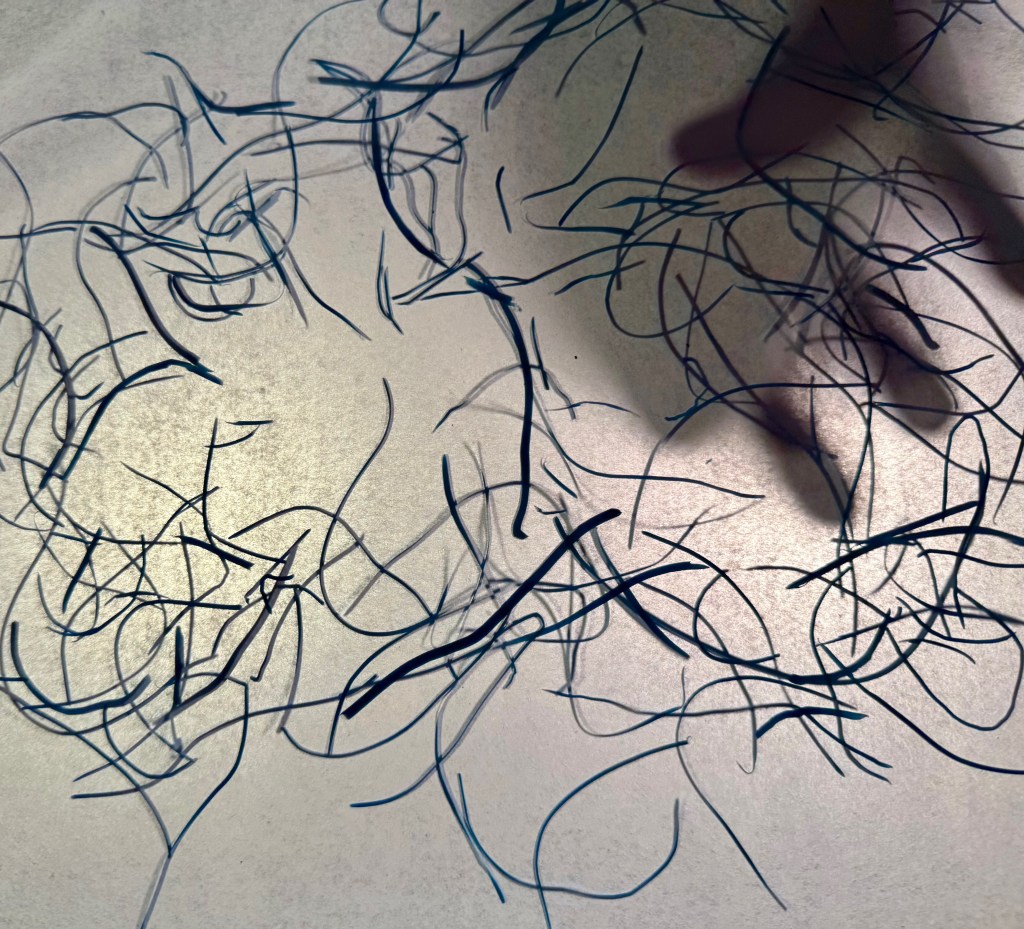
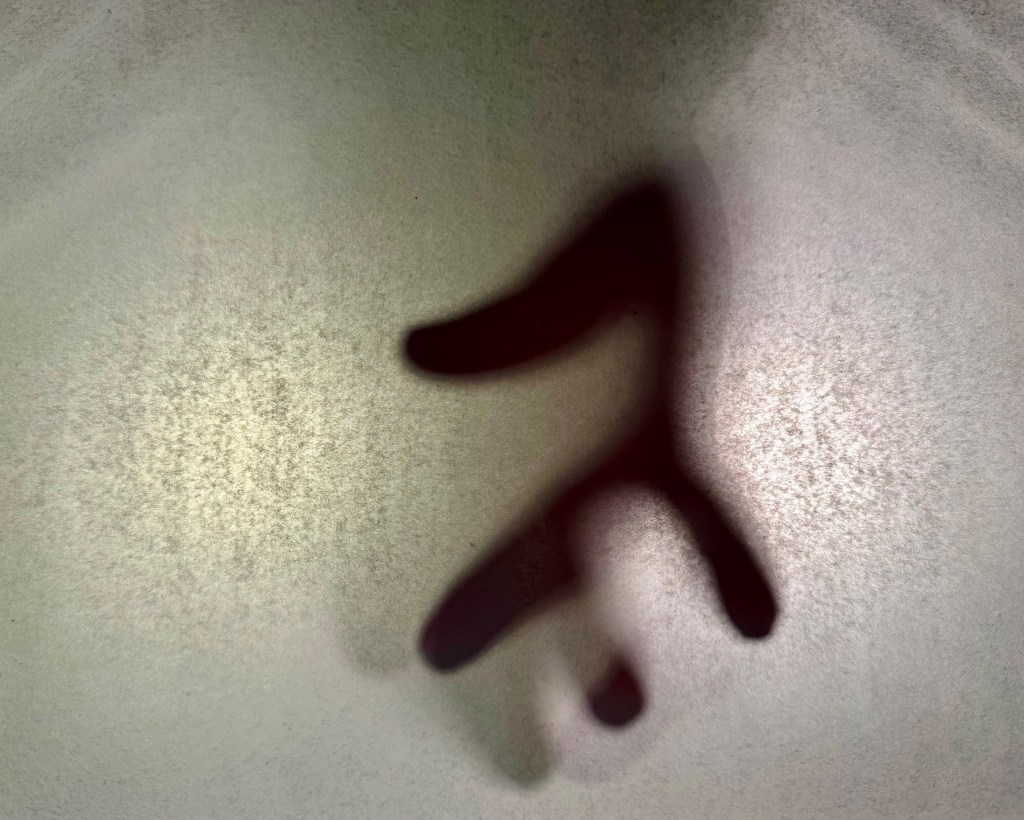
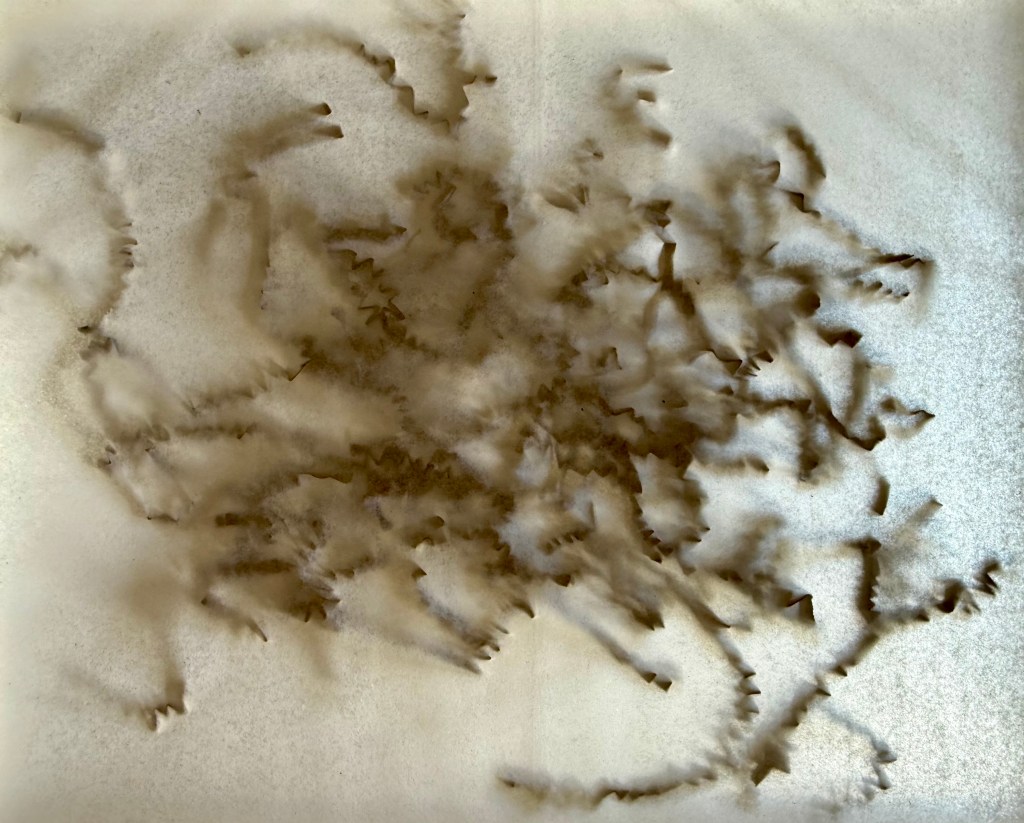
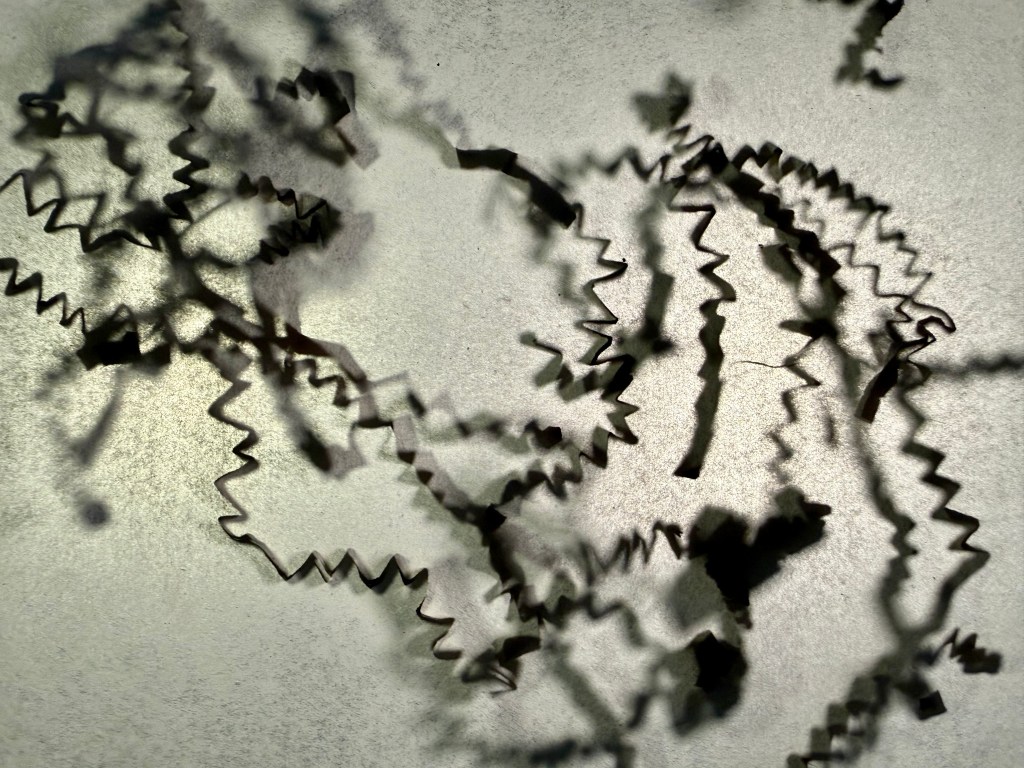
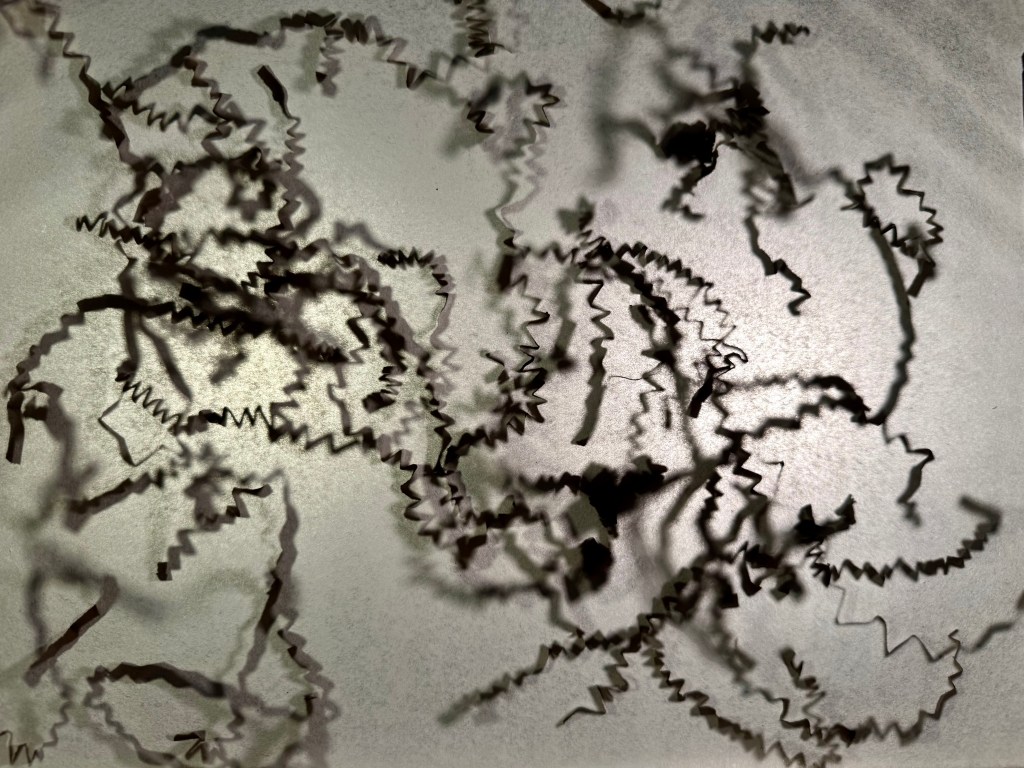
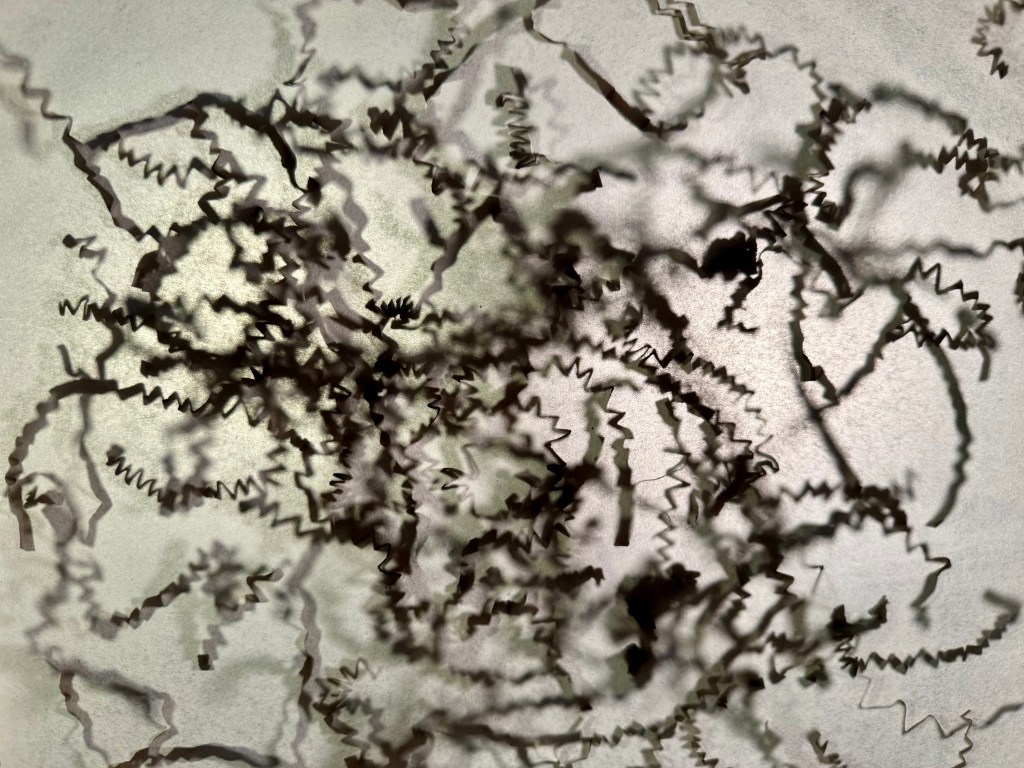
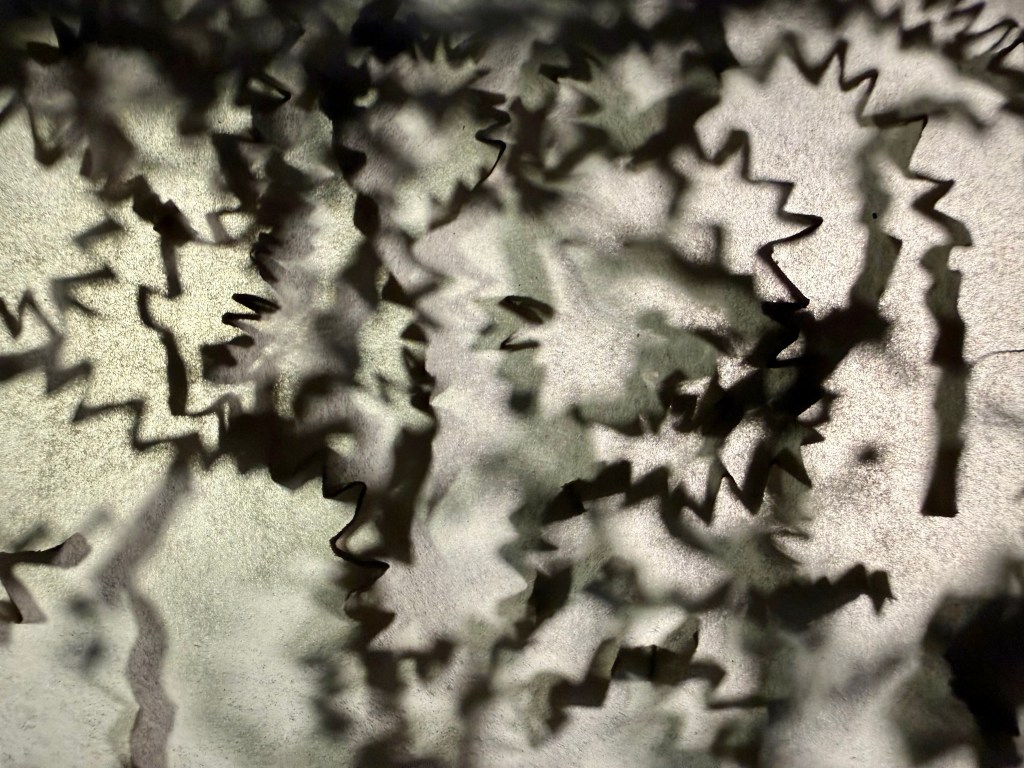
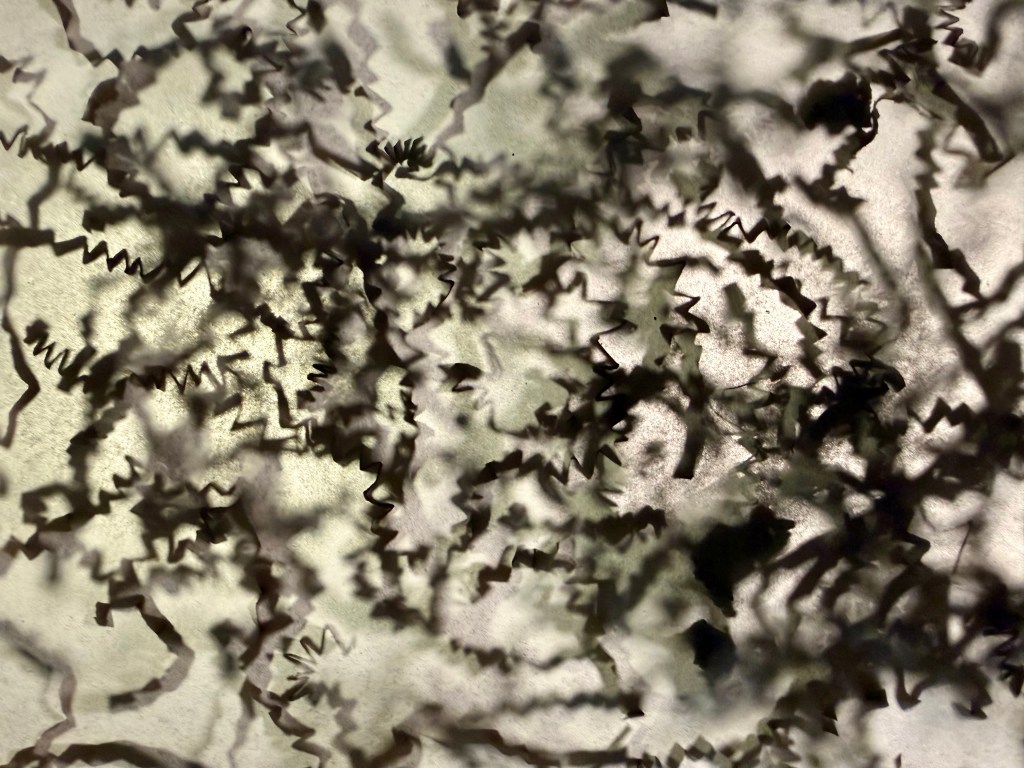
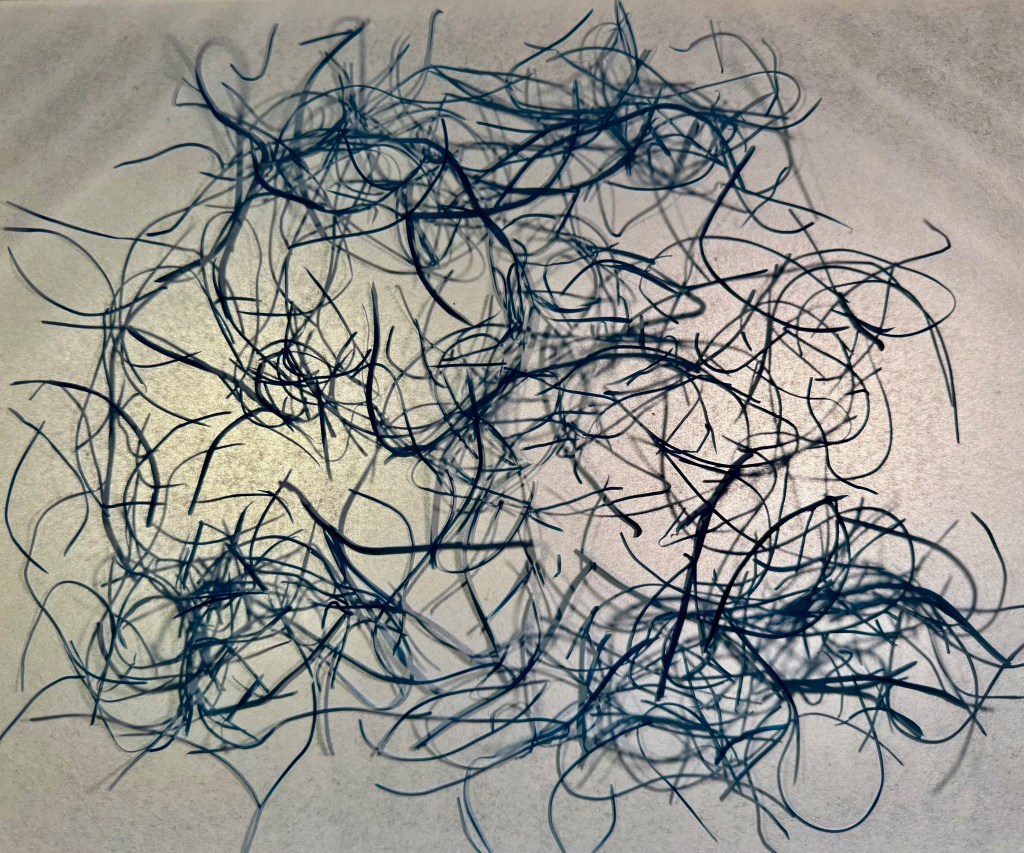
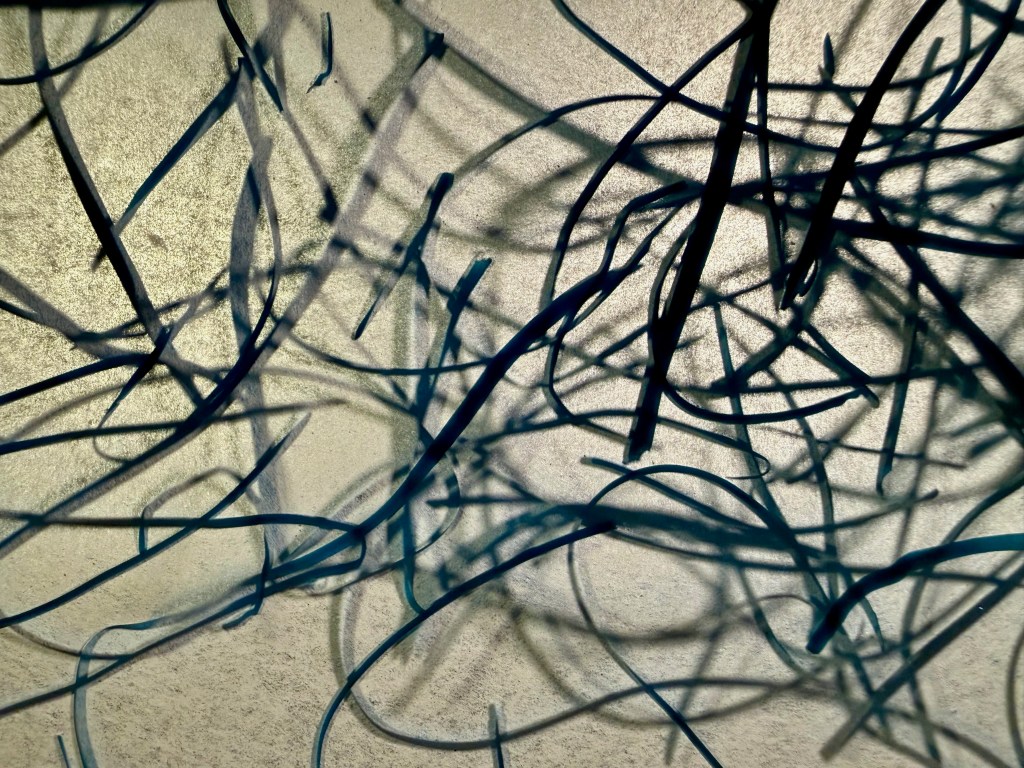
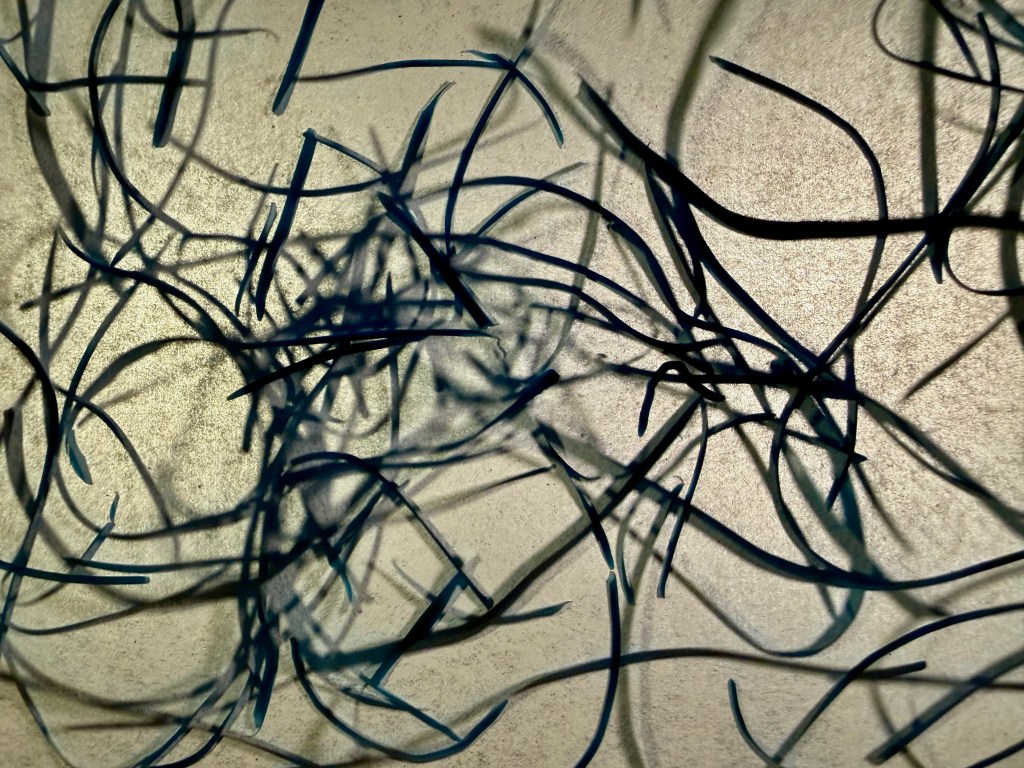
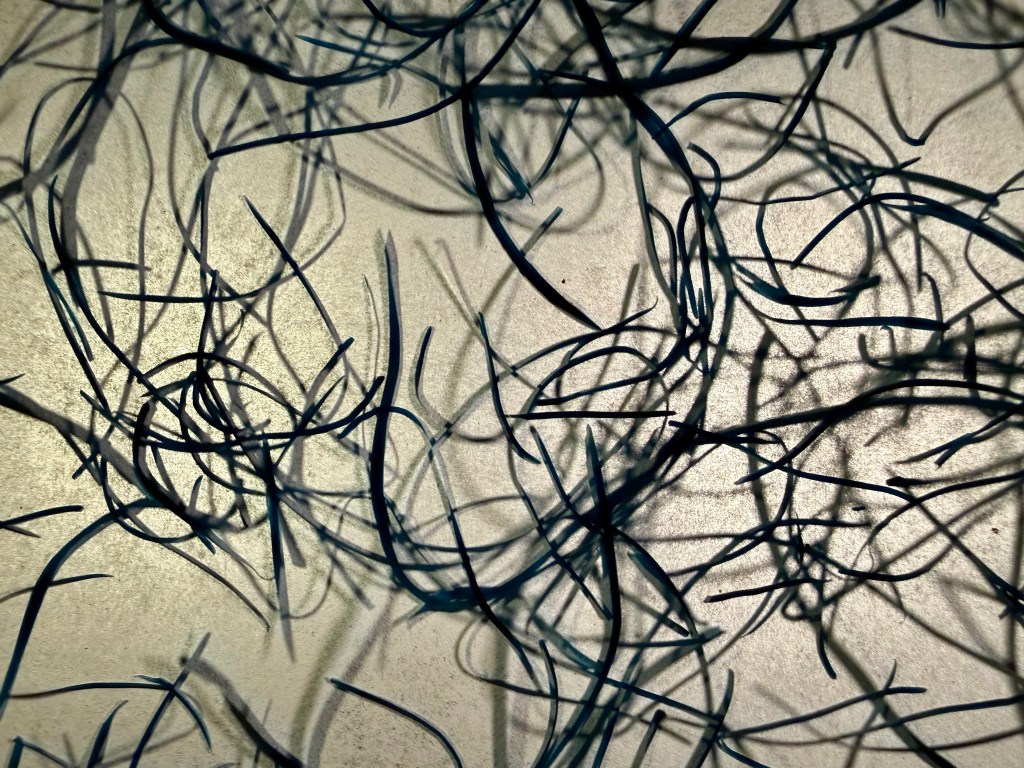
I was cutting some lino yesterday and I collected the bits of lino on a piece of tissue paper. As I was lifting it up to dispose of them I thought, ‘oh that looks interesting’. And off I went. I wrapped some tissue paper around an old photo frame. I couldn’t be botherered to go off and find clamps etc so I balanced the frame on some books on two chairs. I then set up a couple of anglepoise lamps. Lying flat on my back on the kitchen floor allowed me to photograph the tissue paper from underneath. I experimented with the lino bits as well as some packaging which I had saved, just in case it might come in useful.
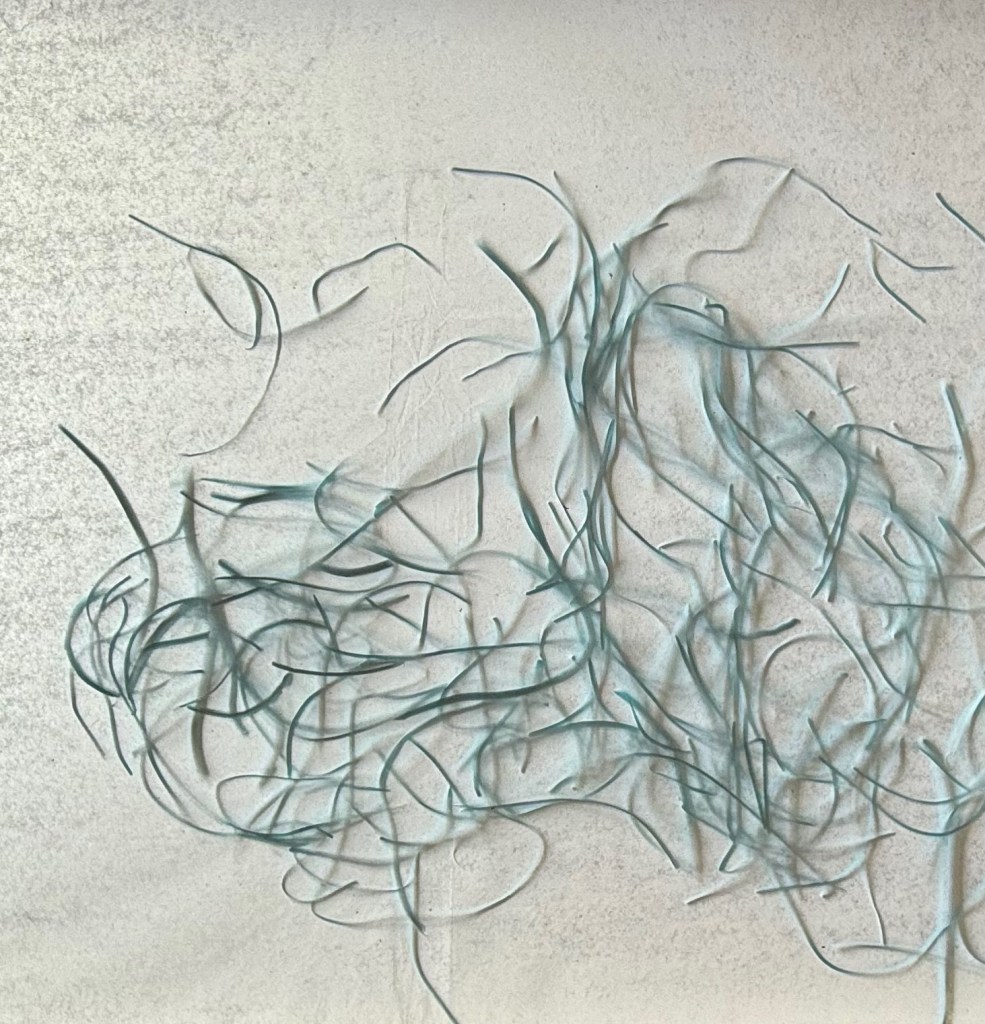
To save me from getting up and down, I enlisted some help with the sprinkling. These are the results:
I really like the effect of the lino bits – they are dynamic and have the sense of someone having just made some quick gestural marks. I like the added depth provided by the bits that are further away from the surface of the tissue paper.
I really like the effect in the photos. The first one in both sets is without any backlight and it almost looks like something trying to break through the tissue paper – like something crawling under the skin. It would have been good to try with just a few bits, but by the time I had the thought, I had put everything away, but something for the future.
I also made a video of the ‘sprinkling’. Otto, the dog, was in the kitchen at the time and decided to have a bark and come close to my head grunting like a pig. I was in the process of cleaning up the audio – I was even going to try out Garage Band – but then decided not to – I liked it how it is. I used some audio effects in Capcut – Deep 2, Echo and Super Reverb. I wanted to make the audio unexpected – the sprinkling of something light has been distorted so that it sounds unusually heavy and the background noises are unexpected when heard with the visual which I think makes it more interesting and unexpected.
I’ve filmed from my iPad screen covered in clingfilm before, but I decided to try videoing a projection as inspired by Johanna Love. I’ve also tweaked a few bits and re-recorded the audio again – I sounded really peed off in the original.
As usual, it turned out to be more complicated than anticipated. I wasn’t able to connect the old projector to my laptop because it didn’t have the right size or shape holes. So I had to dig out and charge up my old laptop. After a lot of time faffing around I eventually managed to record it and then I set about remaking the video. I think that I prefer this version.
The idea of layering has always been in the background. It could be in the form of separate physical layers or the layering of media, or the remediation of images. I wanted to explore layering the moving image over the static image. I have to confess to adopting Lyberis’s approach of the monotone audio on his 3-minute video. To me, it’s the sound of silence, the sound that sometimes keeps me awake at night when I’m convinced someone’s running a car engine nearby or there’s an extractor fan which has been left on. It’s not quite right at the moment and it needs some more work, but I’m quite pleased with it so far.
I felt a connection with this week’s visiting artist, Johanna Love. She remediates photographs and videos of car journeys.
I often make videos of car journeys, recreating those of my childhood when I sat in the back seat watching the passing landscape. My latest one was In A Flash.
The year before last, on the taxi ride from the airport to the centre of Vienna, the flat landscape gradually gave way to a looming mass of industrial buildings belching gases into the atmosphere: the scene took my breath away – it felt so out of place, intimidating, shocking. The area is called Schwechat, and is home to one of Europe’s largest inland refineries owned by OMV. In Spring last year it began producing green hydrogen, currently at a rate of up to 1,500 metric tonnes per year making an annual saving in CO2 emissions of 15,000 metric tonnes. I was back in Vienna a couple of months ago and I managed to video it from the City Airport Train.
I applied a neon filter to the first section to reflect my initial reaction of disbelief, slowly moving through monotone to reality. I particularly like the moments of transition, the overlay and monotone effect on the trees and the chimney stacks. Screenshots reveal moments when the image is neither one thing or another; moments of transience and liminality.
I’m intrigued by those moments. They inherently represent change, the process and becoming: they are what was once, what is now and what is to become. Becoming is fundamentally a state of liminality.
The process of making the 3 minute video was interesting. I don’t like listening to myself. It sounds different to how I hear myself in my head. As we’re going to have to make another video in the near future – this time 5 minutes’ worth – I think I need to get over it.
So, here’s my first video post. I’m, not sure why, but the YouTube embed isn’t working for me at the moment.
It has been a busy few weeks: the print sale, Research Paper, blog curation and 3-minute video.
Making the video was quite challenging. I started by selecting all of the images that I wanted to include and then I decided what to say. It was far too long. So I decided to change tack and think about what I wanted to say and then choose the images which best demonstrated the narrative. It was a good exercise in distilling everything down into a short space of time; of focussing the mind on what is important.
After such a spate of activity I would usually reward myself with a bit of a rest, but funnily enough I don’t feel like that – I feel energised, and with a sense of purpose. In my Unit 1 Feedback I was advised that I would broaden in scope and then narrow back down, and I think that this last unit has brought about some clarity for me, not necessarily in terms of the breadth of my practice but in terms of its future development. I’m feeling positive and I’m looking forward to tying up some loose ends and producing work which encompasses what I have discovered so far and which is not necessarily finished, but more resolved than it has been up until now.
Whenever I don’t have to drive, but am driven, I like to look out of the window at the world as it passes by, to daydream. It reminds me of my childhood and Sunday afternoon drives, safe in the car away from all the witches and ghouls which were out there in the woods, which were left behind – those were the days when you didn’t have to wear seatbelts – I was fascinated with looking out of the rear window to make sure that we weren’t being followed, to watch as we left behind.
I remember my father driving us in the darkness to catch the ferry back to England to visit my grandmothers, the bright lights of the car dashboard, of the ferry and port. The moment of held breath as we embarked, over the ramp, the car laden with all of our stuff, low to the ground. Even now I get a buzz of excitement when driving late at night and the heavy machinery rolls out onto the motorway, the flashlights, the hi vis, the noise.
Over the last year I’ve started filming the landscape as it rushes by. We went past Stonehenge on our way back from Exeter in June with all of our daughter’s stuff in the car.
The sky is more or less static and the mid ground moves a long quite slowly, with Stonehenge almost gliding across the screen. And then there is the fast moving foreground – I find the fence line and the traffic paraphernalia fascinating – the way in which the posts seem to be animated, punctuating the foreground, jumping up and down, reminding me of the graphic equalisers on my first stereo.
I wanted to create an image with less immediacy, with some distance, some sense of layering and so I experimented by filming the footage from my iPad with layered clingfilm over the screen.
I like this shortened version, I think it has more impact, or maybe it gets to the point a lot sooner – my social media shortened attention span at work.
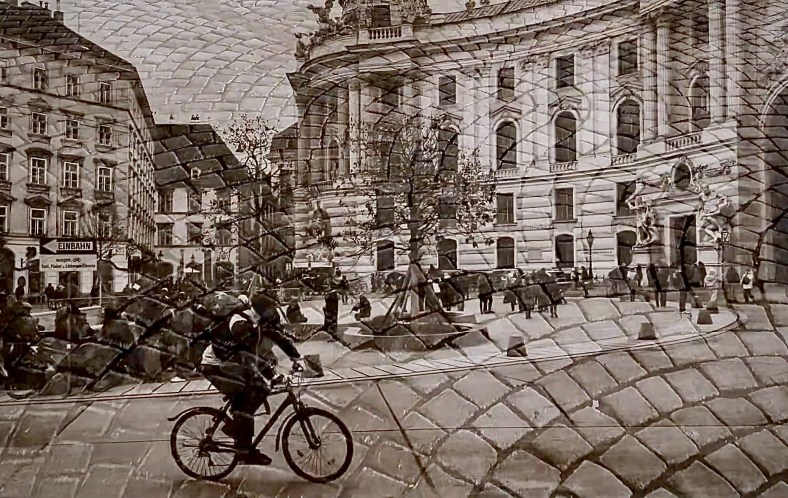
I played around with different effects and took some random screenshots.
I like the abstract nature of some of the images, the sense of ghostly imprints, an image which is not quite there, or that was there, but has since moved on.
I’ve been spending a lot of time in woods just recently. Maybe it’s because they offer respite from the sunshine, perfect for dog walks. But they’re also havens of stillness, of light and shade, of music and form. But, they also make me feel uneasy.
I’ve always thought it a good idea to try to see the world through someone else’s eyes, but perhaps misappropriating Alex Schady’s glasses during our collaborative making workshop wasn’t the best way to go about it, although I’d love to see the world the way he does! I imagine that it would be a lot like the experience I had in the Apple Store the other day when I accompanied my daughter who was buying a new laptop. Whilst she was doing her thing, I wandered over to the table with the futuristic looking Vision Pro headsets. Did I have time for a demo? Hell, yeah!
Apparently someone very technically minded in a back room somewhere was building my device for me based on my head size and glasses prescription, and then out it came ceremoniously offered up on a velvet cushion for my delight. Well, an hour later, having held a butterfly on my hand, walked with a tightrope walker across a ravine, ducked to avoid the flick of a dinosaur tail and had VIP access to a Metallica concert, I rather reluctantly removed ‘my precious’ and handed it back. My cheeks hurt through the stupid grin which must have been plastered all over my face. According to my daughter, I had turned into a child and had been making quite a lot of noise which had attracted quite a lot of attention. All the way home I was considering what I might sell to raise enough money to buy one. But then reality set in; I’d never go out of the house again, and would be destined always to watch films by myself (hang on, is that such a bad thing?). But it turns out that it’s had some mixed reviews, and so I resolved that I could spend the money I had saved by going on a nice holiday, and try to get my hands on one of Alex Schady’s spare pairs of glasses instead – he has quite a few apparently because he keeps on losing them. I wonder if he ever walks past someone and thinks, those glasses look familiar.
Until then I’ll have to make do with his fascination with holes. All sorts of holes; sink holes, caves, the holes the Road Runner used to fall down, black holes, white holes. He explained that the thing about holes is that they are defined by what is around them rather than the hole itself. Thinking about it, generally speaking, a hole is the void where something used to be. I have a hole somewhere inside me. I don’t know what used to be there, but I find myself trying to fill it with food, rubbish food, even when I’m not hungry and particularly when I’m bored. The thing is, I know that it’s a hole incapable of being filled, and that I’m not doing myself any favours in terms of my health whilst I engage in such a fruitless activity, but, nevertheless, still I try. I once told a counsellor, who was helping my daughter with her needle phobia, that I thought that my brain was trying to kill me. I could see the pound signs light up in his eyes.
So, Alex got us to cut holes in some card and took us off into the outside world where we stopped still, on his bell, and focussed on what we could see through our differently shaped holes; a lot of perplexed passersby and the fruit and vegetable section of Waitrose. It became something close to a performance, and I half expected some members of the public to whip out their cardboard holes and join us. It’s interesting how masking the extraneous can make you notice more details which perhaps you wouldn’t notice in the round. I found myself slightly adjusting my hole so what I could see through it became more compositionally pleasing.
Then it was back indoors where our holes were repurposed by being joined together to form a circle and painted black. We then had to make something which would move inside the holes as Alex filmed them from the inside using a small turntable.
I forgot to photograph my piece which was a circular piece of card with tissue paper and a length of finger-knitting glued onto it in a spiral to represent my oesophagus, which I was going to spin around on a pencil. A strange choice, I agree, but I had just been talking to Zoë (to whom I owe thanks for allowing the use of her photos from the day) about recently having had an endoscopy. I’d been experiencing a sensation of having a lump in my throat for a while, and Dr Google had diagnosed it as being globus, which is a common side effect of reflux, but the GP didn’t necessarily agree and decided, in light of my family history of oesophageal cancer, that it was better to be safe than sorry. I told them to give me all the drugs they had, and all went fine (turns out I have a hiatus hernia) although I do remember seeing inside myself at one point which was ever so slightly weird. Zoë and I agreed that I should get hold of the images by making a data access request to see if I can use them in my work.
The last activity of the day was to make a cardboard structure which was to have a phone at one end and, at the other end, an image with a hole cut out of it. The trick was to get the distance between the two just right so that neither the image nor what could be seen through it would be out of focus, which proved to be quite difficult. We then went out onto the roof and did some filming for one minute. I filmed using one continuous take – it didn’t really cross my mind to pause and change focus. Thinking about it now, this meant that the decisions I made as to where to go next were determined solely by what I could see through the camera and not by extraneous influences. Rather than moving from left to right, I think, in retrospect, it would have been more effective moving in the opposite direction which would have created a relationship with the image itself, as if the figure is being thrown off balance by the movement.
Developing this idea further, it would be possible to see, quite literally, through someone else’s eyes. In this respect, Sophie chose an image in which a model was wearing sunglasses, which she cut out, which was ingenious.
All in all, a super-charged day which has provided lots of food for thought.