I’m Forever Blowing Bubbles

To be honest I’m getting a bit sick of it. It’s not such fun – I haven’t been getting the proportions of pigment to washing up liquid to water right.

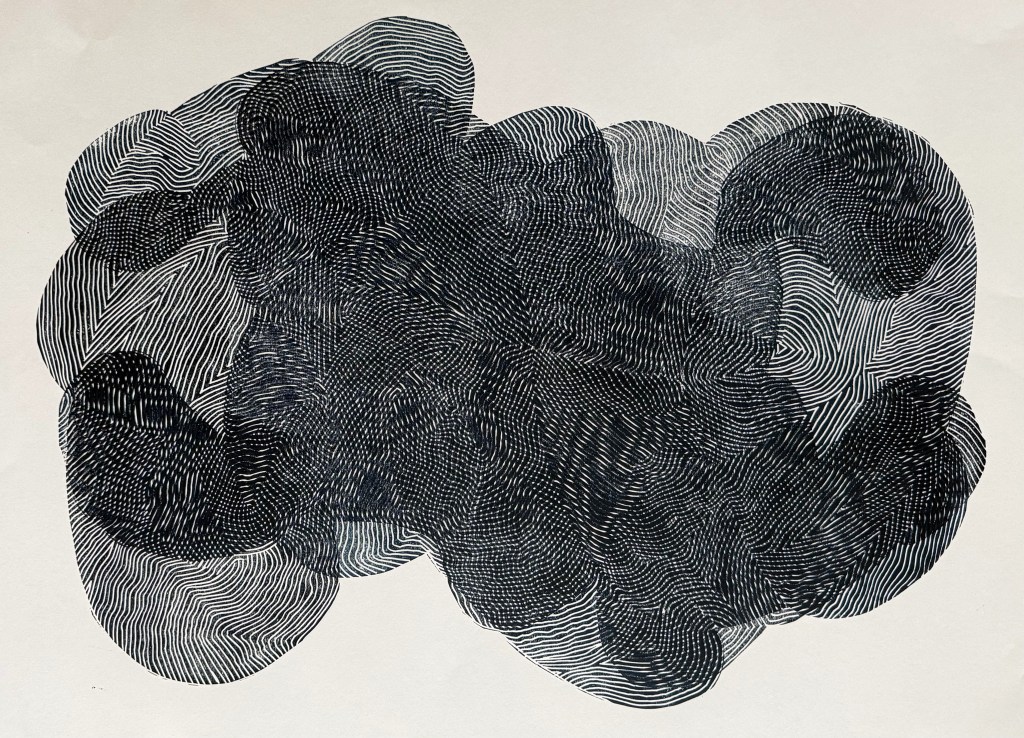
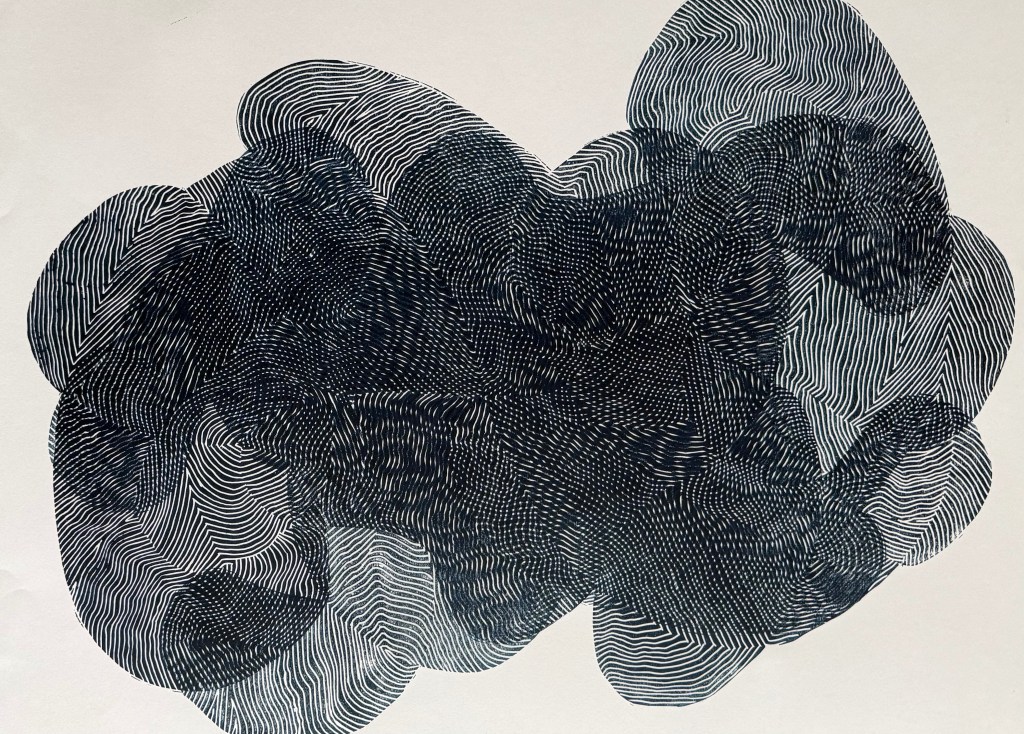
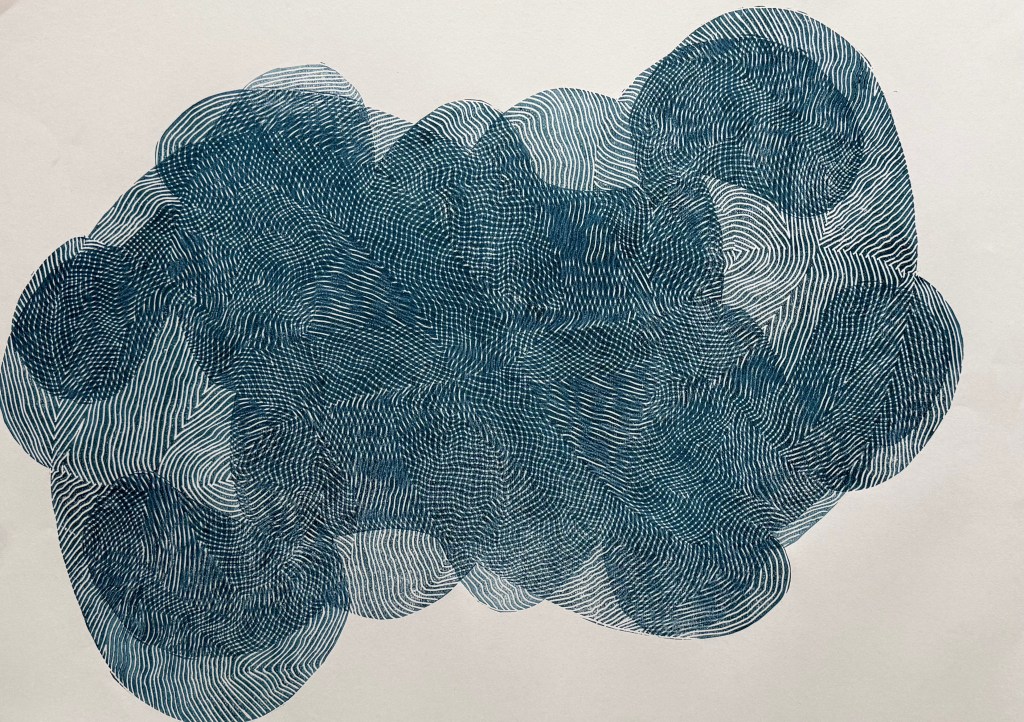
Anyway I’ve been doing some more experimenting over the very hot Bank Holiday weekend:

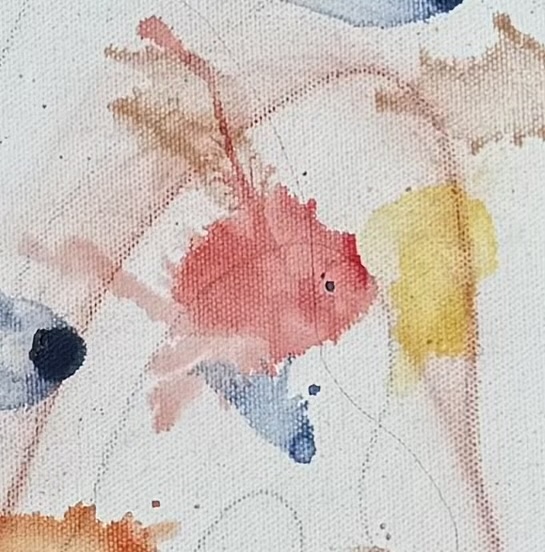
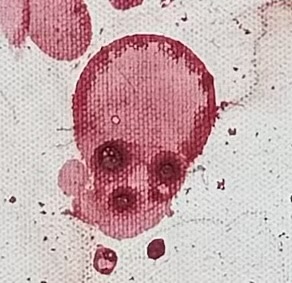
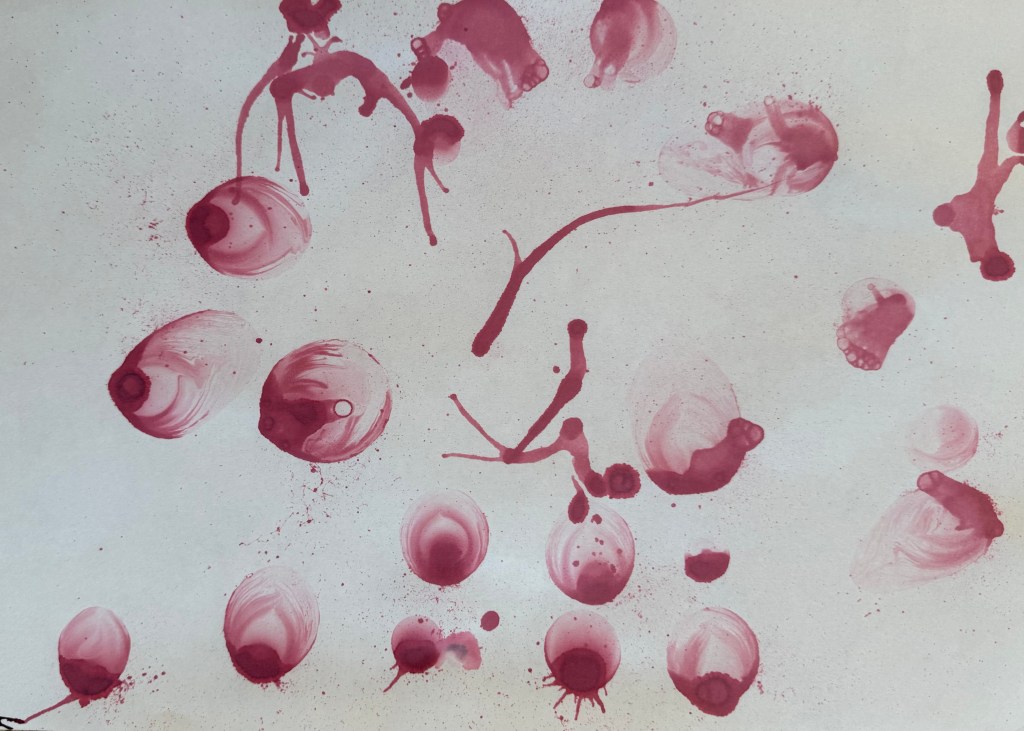
I discovered a new way of blowing in Instagram – the bubbles look more like eyeballs to me but I like the technique of dropping some liquid on the paper and then blowing with a straw so that it disperses in thin lines.

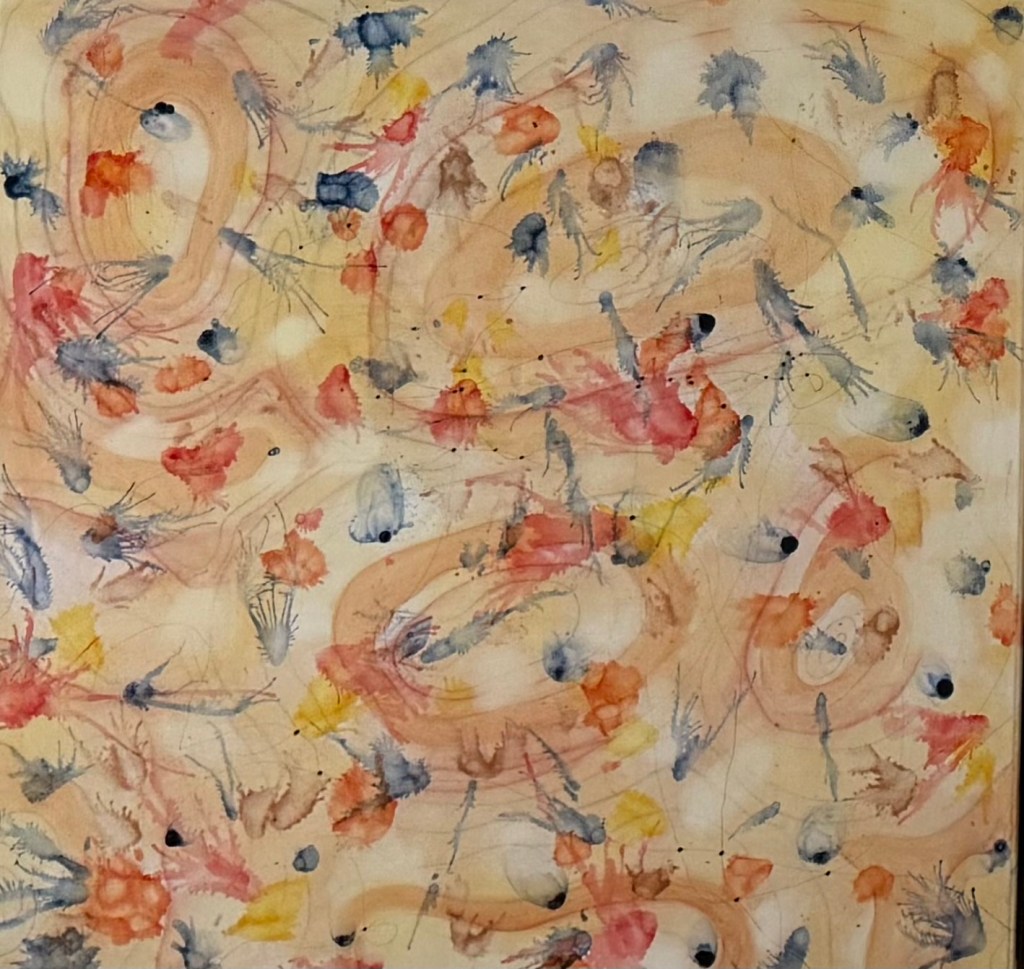
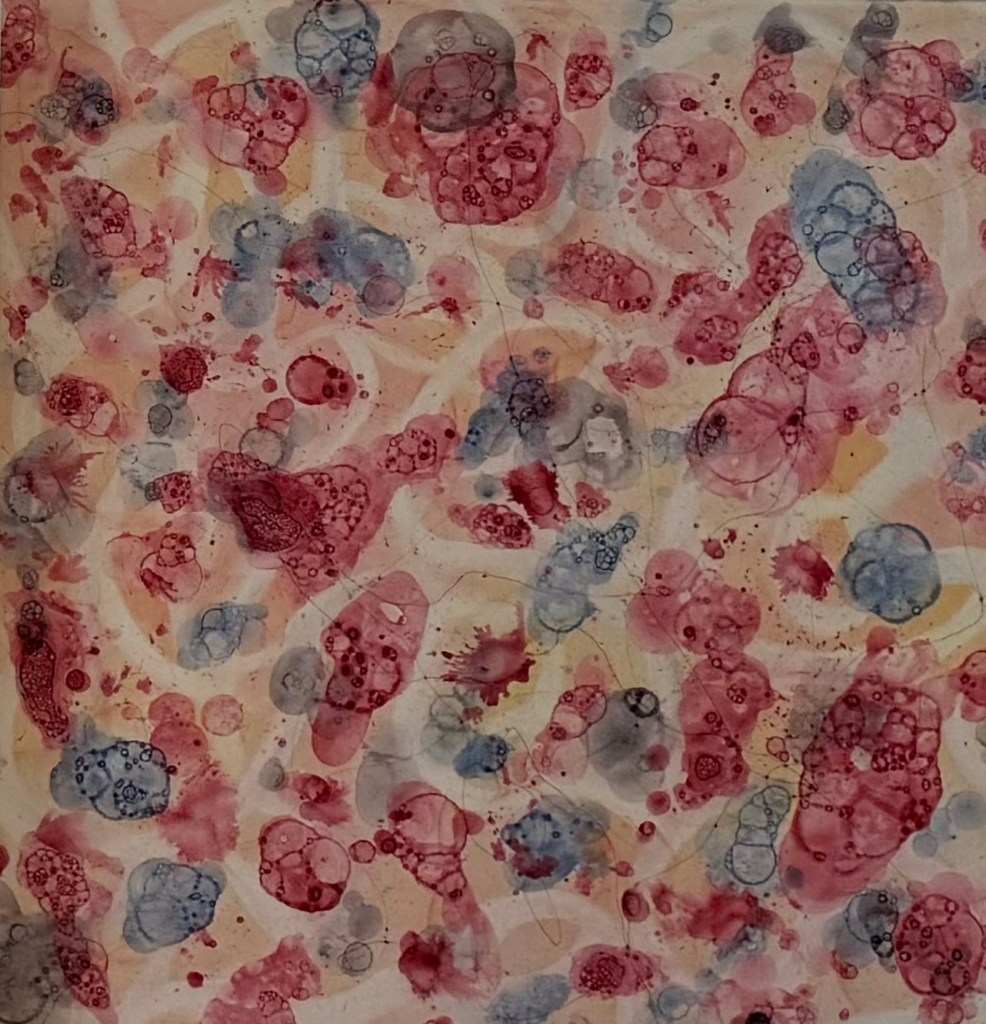
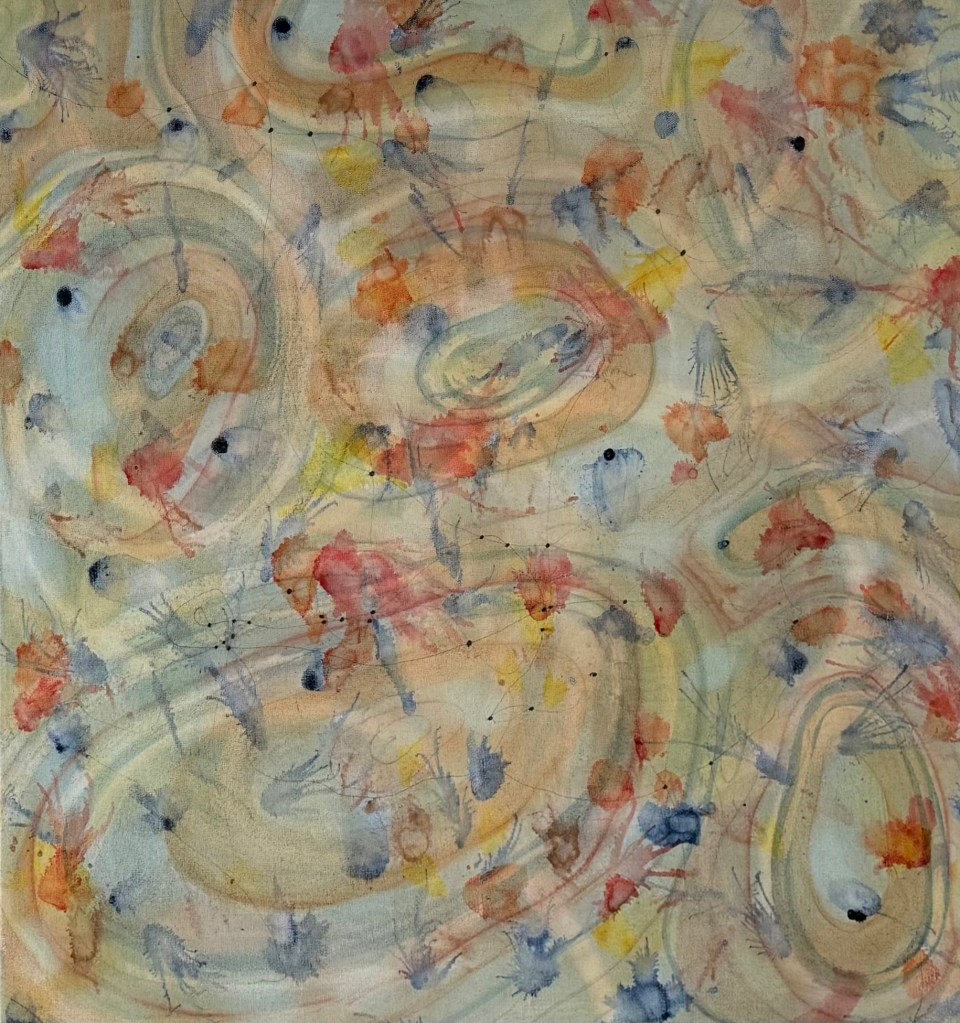
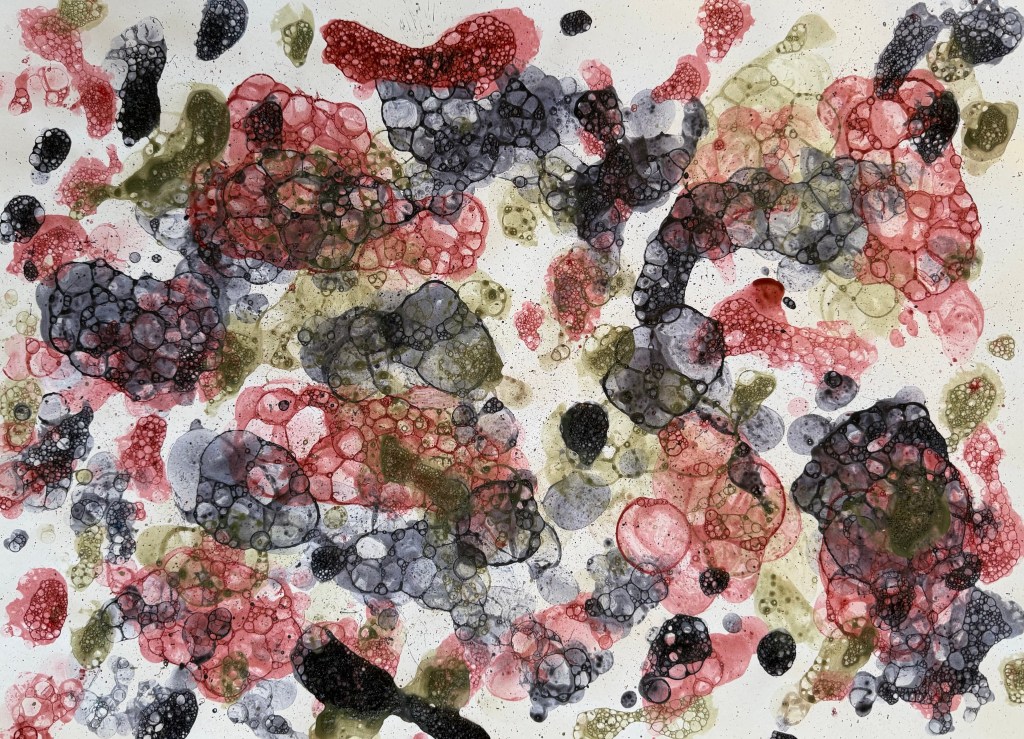
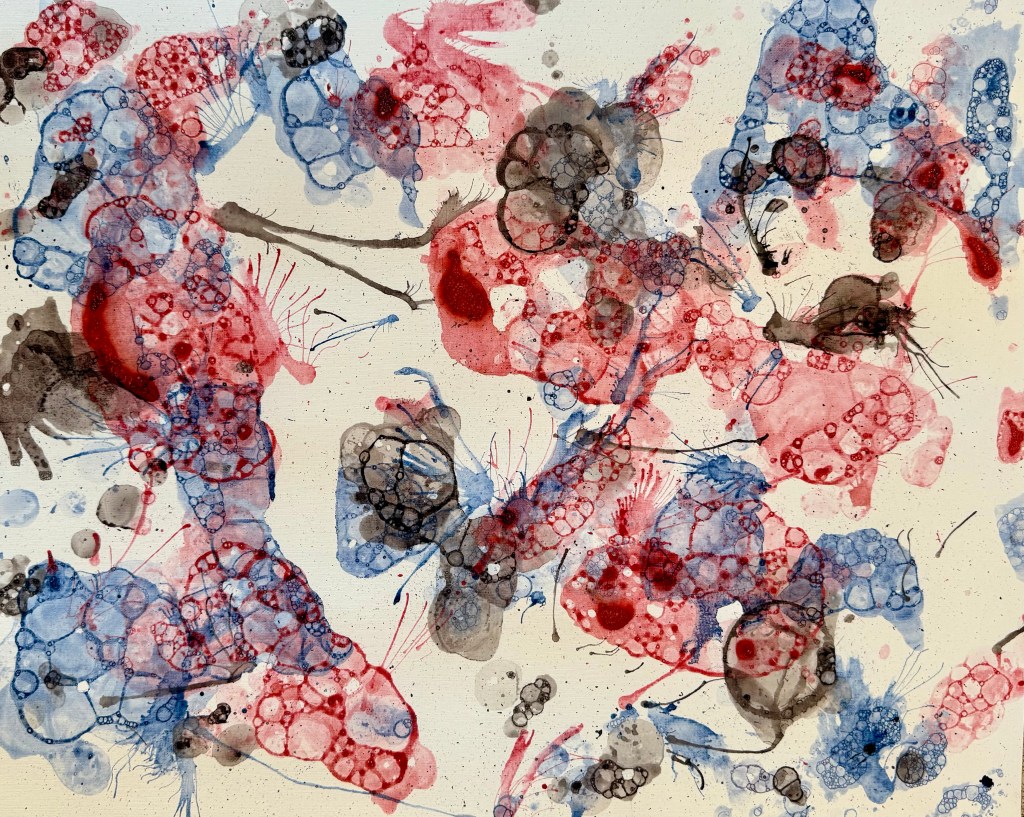
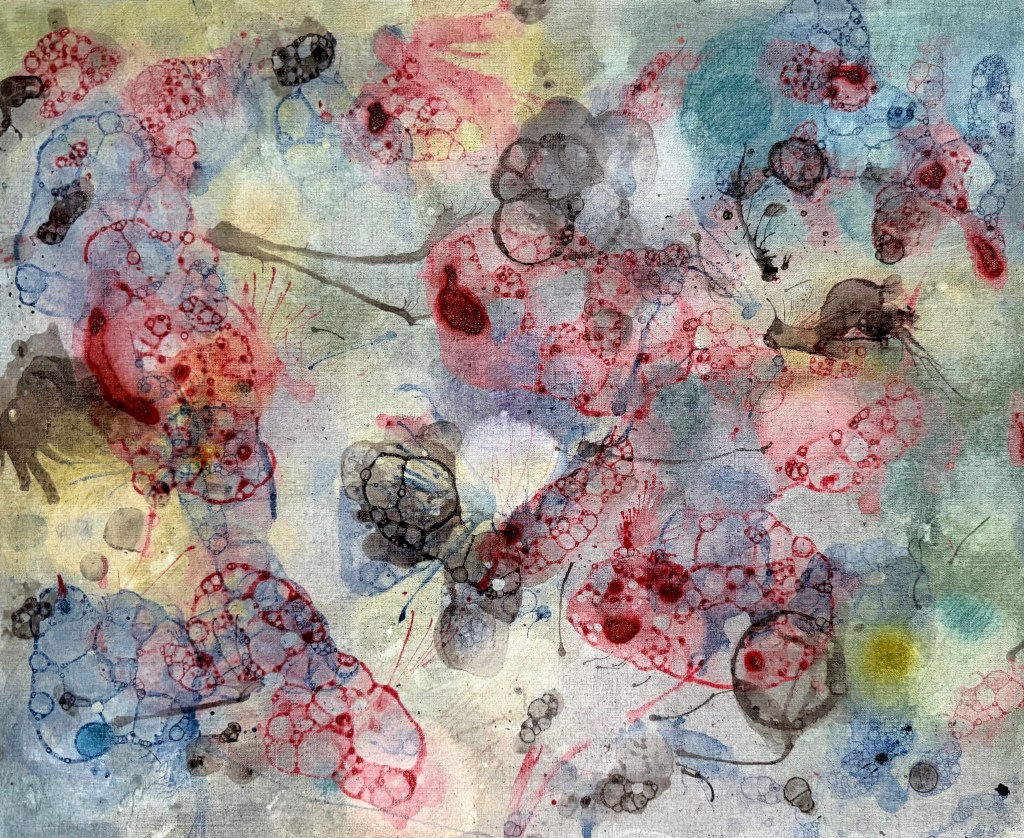
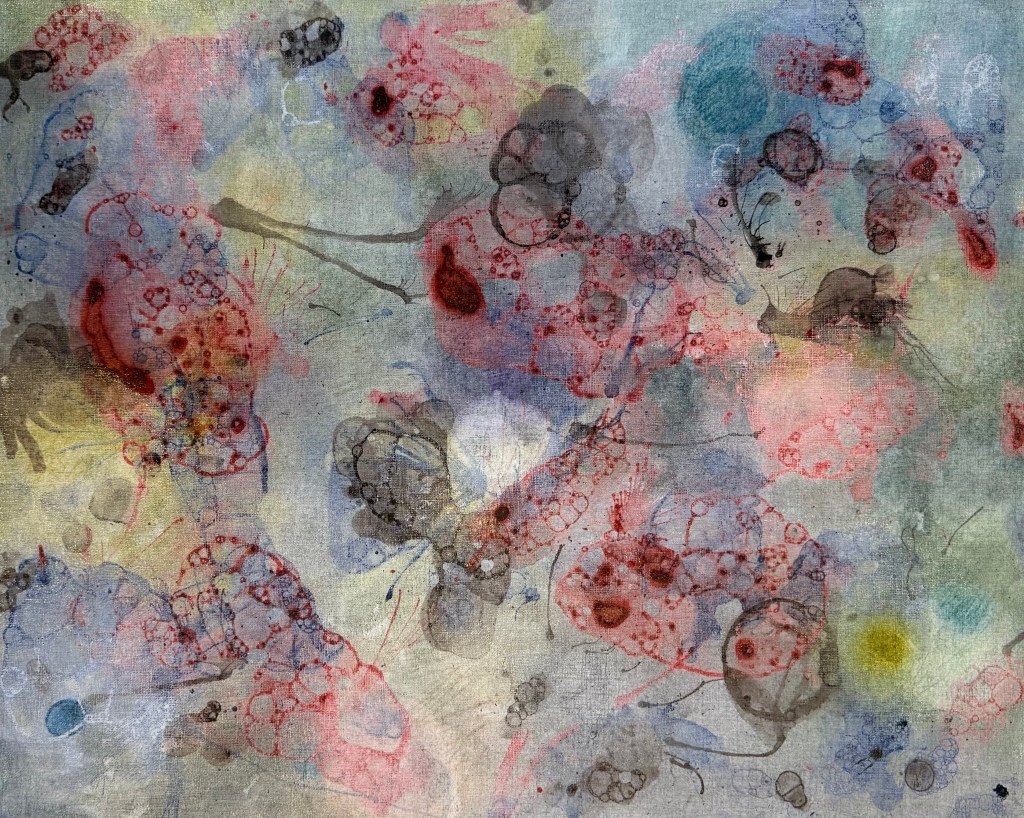
I like the white space in the first image. There are some good areas but the dark colour is too dark in places – I should avoid using the froth!. Also The green didn’t turn out as expected and my ratios were all wrong. I Like the second one and also the third one although I’m debating whether it is too much.

I have been experimenting on oil paper as I would like to try on a canvas and I want to experiment with putting thin glazes of oil paint on top.

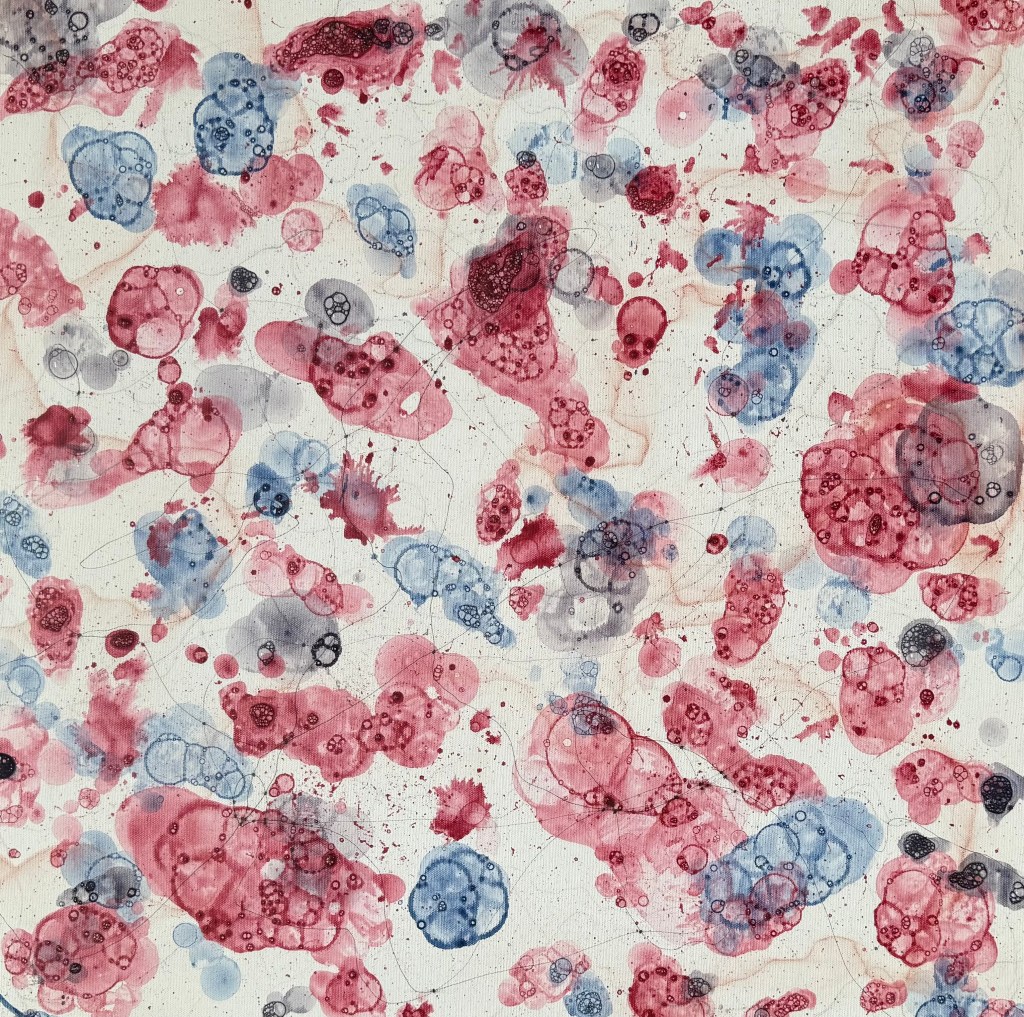
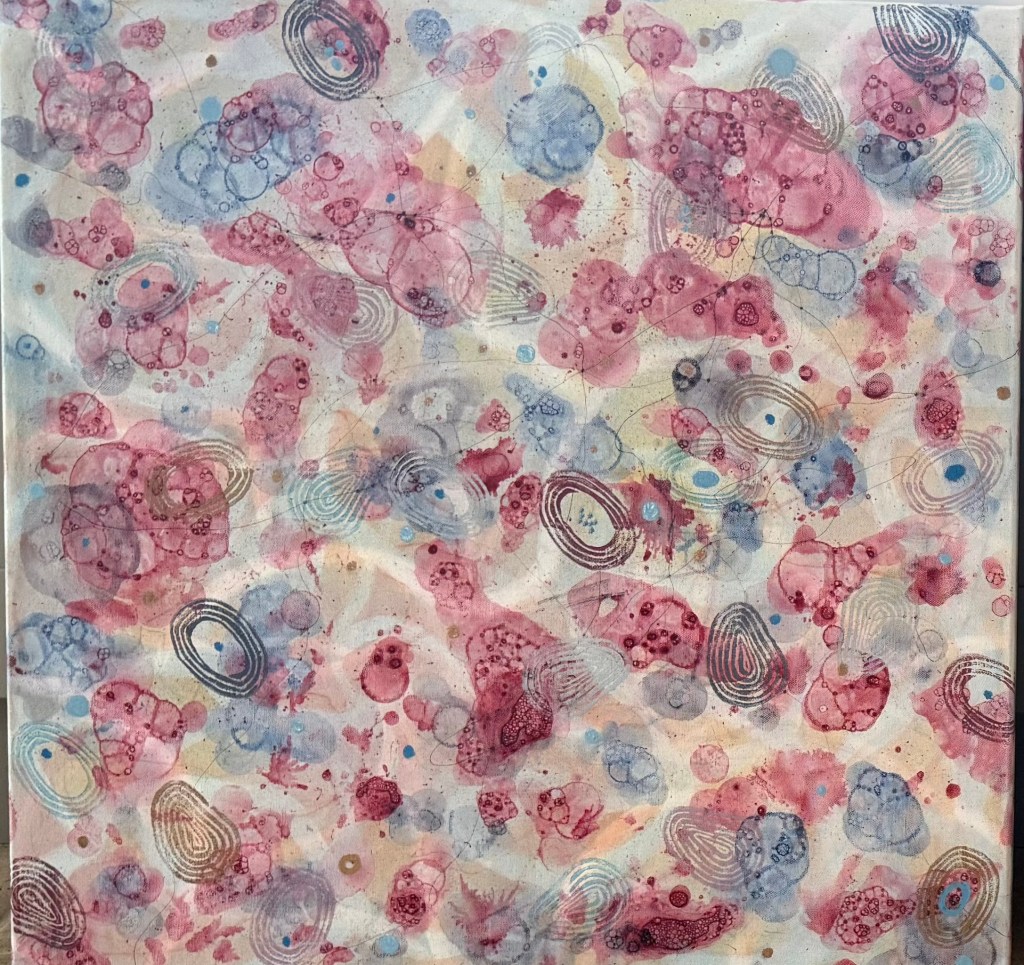
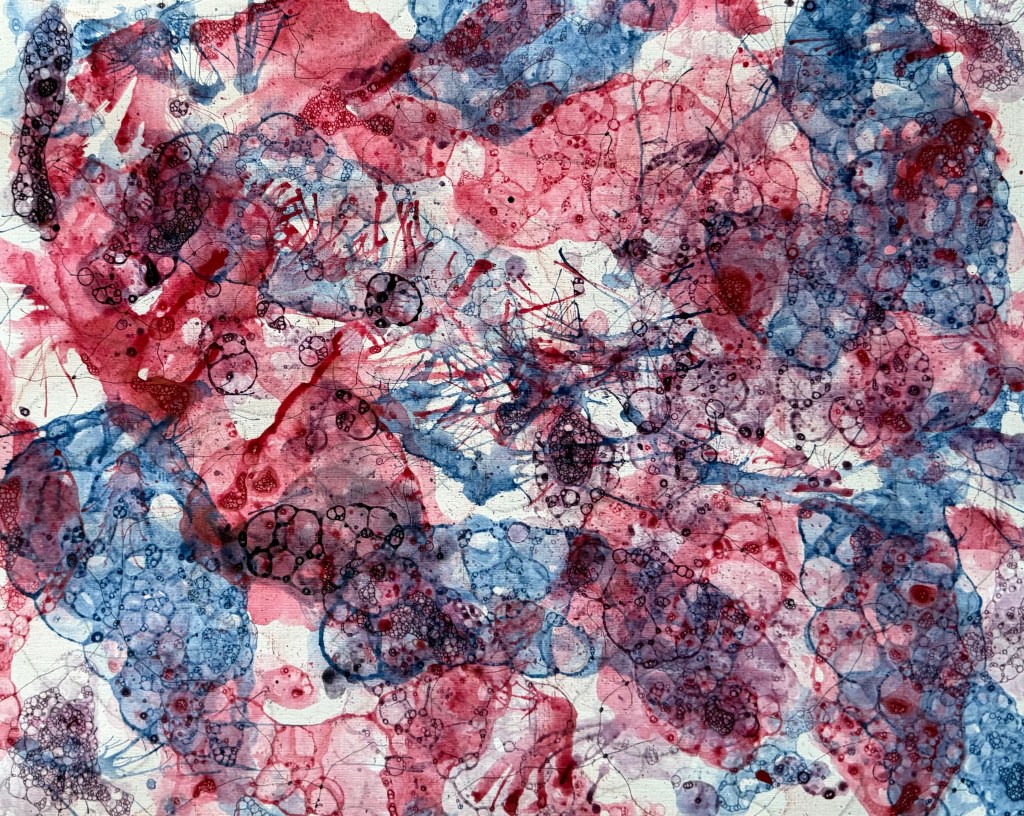
I’m not sure about these, or whether I prefer the previous set. I think that I need to sit with them for a while. I thought the first one was too bright (maybe because I’ve been in monochrome for so long) and so I tried knocking it back with a dark grey, wiping out areas to bring back some lightness. I like that they are still open – I see cells, someone else might see a flower bed with hydrangeas.

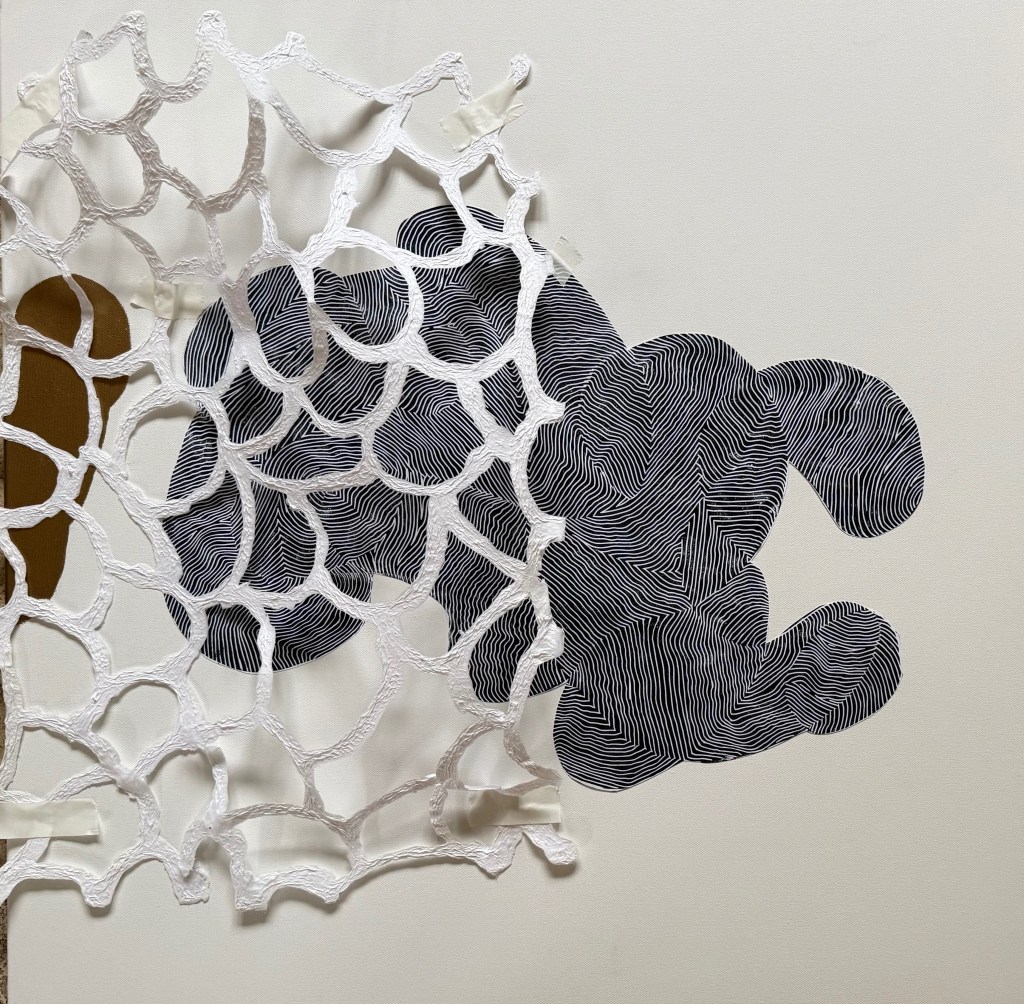
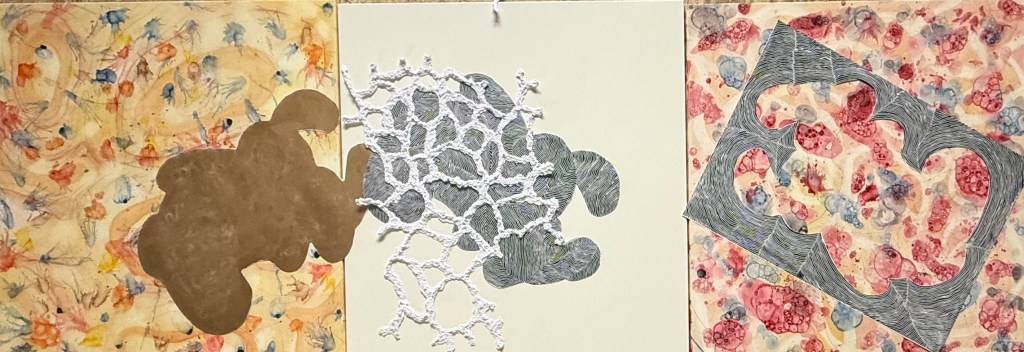
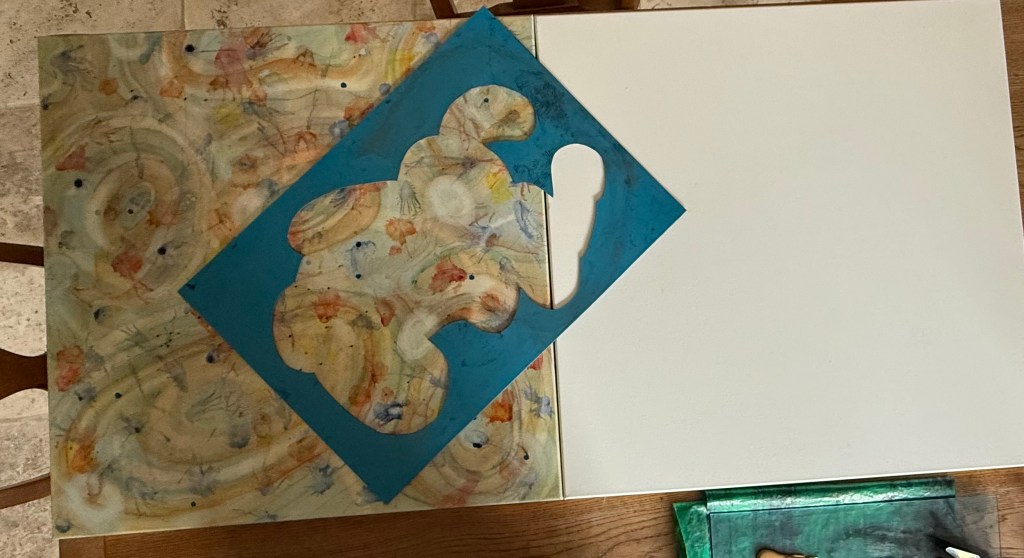
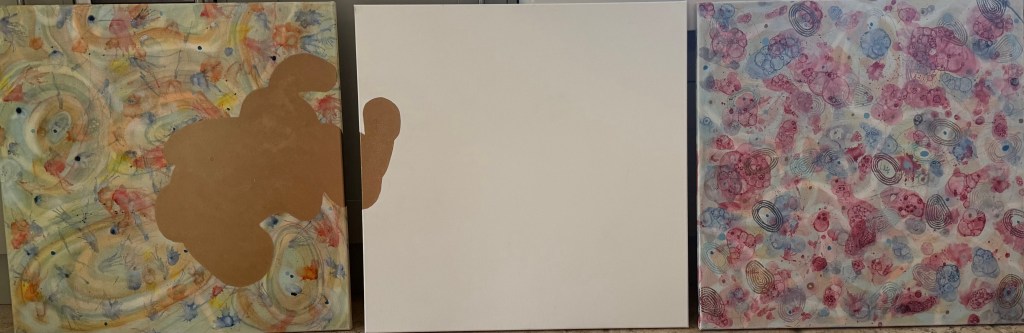
One thing that I would really like to do is experiment with 3 dimensionality. I’ve always resisted being constrained by the canvas and usually go off it – what if there was something coming out of it; out at you – maybe keeping you away or possibly making you part of the work? I was thinking if I had a number of canvases (3 is always a good number) I could connect them with something like an umbilical cord ( thinking back to siblings and microchimerism).

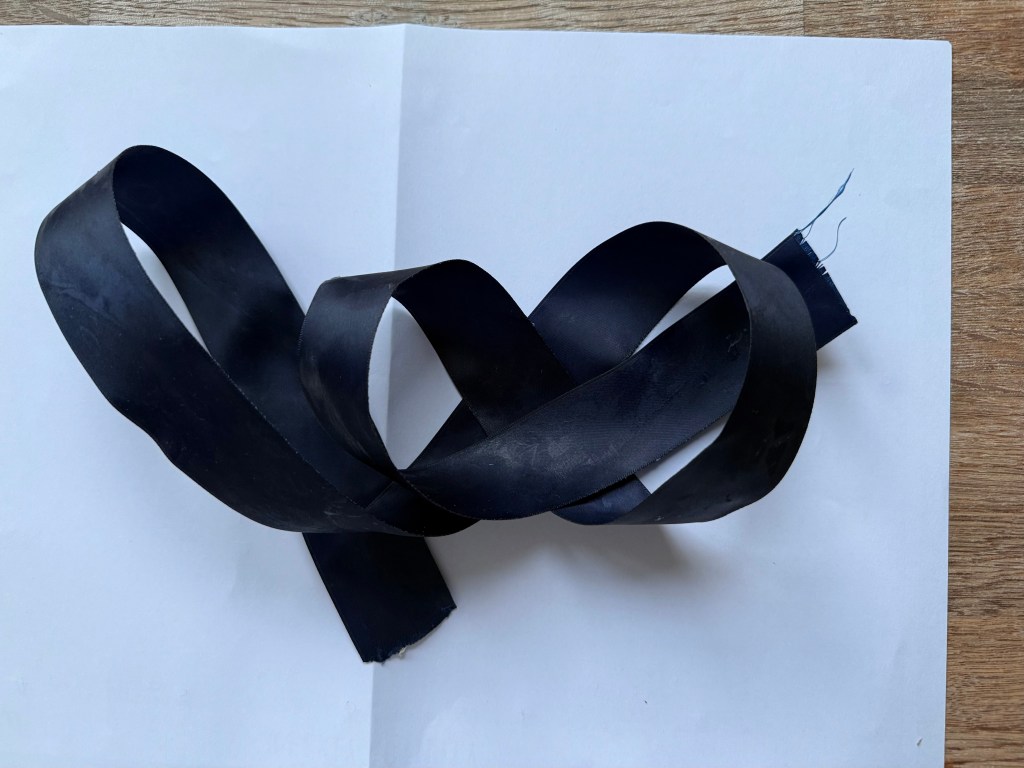
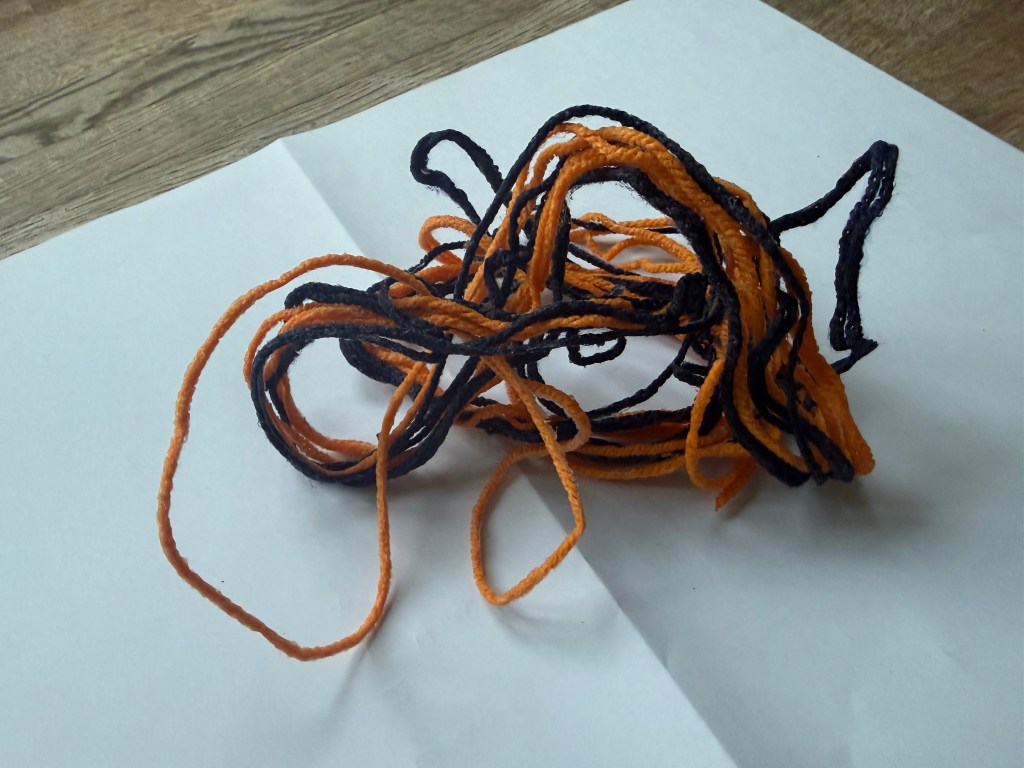
I came across a recipe for stiffening material on Facebook using cornflour, sugar, water and PVA glue. It should have been white sugar presumably so you can’t see it when it’s dry. I only had golden caster. I tried it on a ribbon and some wool. It’s not that great. I think I’ll look at wire and organza instead.
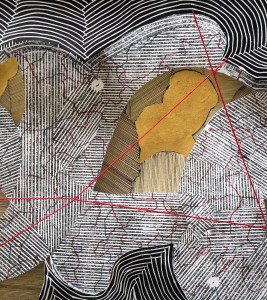
Solace in Repetition

I sat down this morning with a determination to get cracking on curating my blog. After all, it should be quite easy as I’ve been going through my blog to format it for my book.

But where to start? So much overlap. What goes where?

So I went outside and cut the grass. I might do a spot of weeding as well, and there’s that large pile of laundry waiting to be ironed.

I’m not sure whether this is life imitating art, or my art imitating my life. Or whether there is even a distinction any more.

A Sense of Achievement

My daughter phoned me yesterday, after her final exam. That’s it, she’s done, she’s finished, university is over. Another chapter in her life is coming to an end as another is about to begin.

That’s not the only achievement. Whilst she was at home over the Easter holiday she drove a car for the first time since her head-on collision last May. She felt she was ready – she had been having dreams that she was driving and felt bereft when she woke up to discover that it wasn’t real. A far cry from the flashbacks she had been having. So, I went with her for a couple of drives, and then she asked me how I would feel if she went solo. I told her that I was ok with it if she felt comfortable, rather perplexed by the seriousness with which she had asked the question. Well, you were traumatised by the accident as well and I want to make sure that you feel comfortable with me going by myself.

I’ve been thinking about this conversation and wondering why I was surprised by it and why I’m not still carrying the fall out from the accident with me – what could have happened, and what did happen to my one and only. Maybe it’s because after it happened I was making – experimenting with drawing maps and hands – and writing about it on this blog. It makes me wonder how differently other things might have turned out had I been making art or had written about it at the time.

Is It Time To Come In Yet?

So, having taped all of the test sheets togther into what I called my ‘play sheet’, I let rip with the small pieces of linocut I had found. I also used the lino of the shape that I’m not intending to use, although I still really like the shape of it. The full print of it doesn’t fit with the background, although I do like the way the background disrupts it. I experimented with just using the outline which I think is effective, experimenting with the quality of the outline by using a bold line painted on with printing ink, some thinned down ink and some charcoal. I also added to some other areas with a brush as well as coloured pencils. I think that I need to sit with it for a while to identify those elements that work – it’s got everything but the kitchin sink in it. Hopefully, some clarity will emerge from the chaos.

I have some initial thoughts.

Printing the solid shapes of lino wasn’t very effective but I do like those bits where I scratched away some of ink from the surface before printing. I also like the muted contour lines in a light grey. The darker colours definitely need greater transparency (I was thinking about the shadow cast by the stone).

It’s a starting point and the next step is to work on a slightly larger piece of paper trying to get the transparency of ink right, adding in some masked areas, and to work out a colour palette. I’ll keep using the lino offcuts for now.

I was a bit disappointed about the lined shape – I really love the effect you get when they overlap and the lines distort. Maybe I need to try something separately but incorporating elements of today’s experimenting, perhaps even including elements of collage. Maybe I could try using mulberry paper, or try sticking with monochrome – it felt a bit strange using so much colour, but I think that I was feeling in a celebratory mood.

That said, there are some areas that I like.

As I was experimenting I thought that what I really want is to achieve some thin veils of colour between the bubble layer and the print – like the effect you get when you glaze in oil painting. I’ve questioned recently whether I should try oil painting again. I haven’t done any for so long as I haven’t been going to my classes. It would be like meeting up with an old friend who I haven’t seen for a long time and during which time I have changed considerably. Would I get sucked into being my old self, or would they be happy to accept me as I am now?

To Study or Not to Study

That is the question…

It’s tempting to run away with ideas of further education – I’ve enjoyed this course so much and the research paper helped to explain a lot of things to me and gave me clarity in my practice. It is something that I would like to explore at a deeper level but is now or the imminent future the right time to think about it?

Aside from the commitment of time and the issue of funding, I think that rather than rushing out and trying to find a replacement for the course, I need to learn to practise and function in its absence. I need to focus on continuing to build sustainability into my practice in how, when and where I make. That’s not to say that there isn’t any space for personal development – there is and, as I mentioned to Jonathan in my last tutorial, I would like to improve my skills in a number of areas in terms of photography and film-making, and there are also some printing processes that I would like to explore. I will, of course, continue broadening my knowledge by reading and visiting exhibitions. But for now, it’s sorting out the physical location, carrying on implementing flexible time management (which seems to be working quite well at the moment), and thinking about issues such as building a website and maintaining my Instagram aacount.

I’m also going to carry on submitting work to open calls – since being on the course I have carried on my tradition of applying to the RA’s Summer Exhibition, unsuccessfully. I don’t think that I actually had any aspiration of being accepted; it was more a case of wanting to keep experiencing the feeling of rejection to make me resilient. I used to feel deflated but now I don’t really feel anything anymore, except perhaps regret at paying the submission fee. The only success I’ve had is with ING Discerning Eye last year, but even that had its own issues.

Yet More Play

The sun was out today so I thought that I would take advantage and engage in some more playful experimenting.

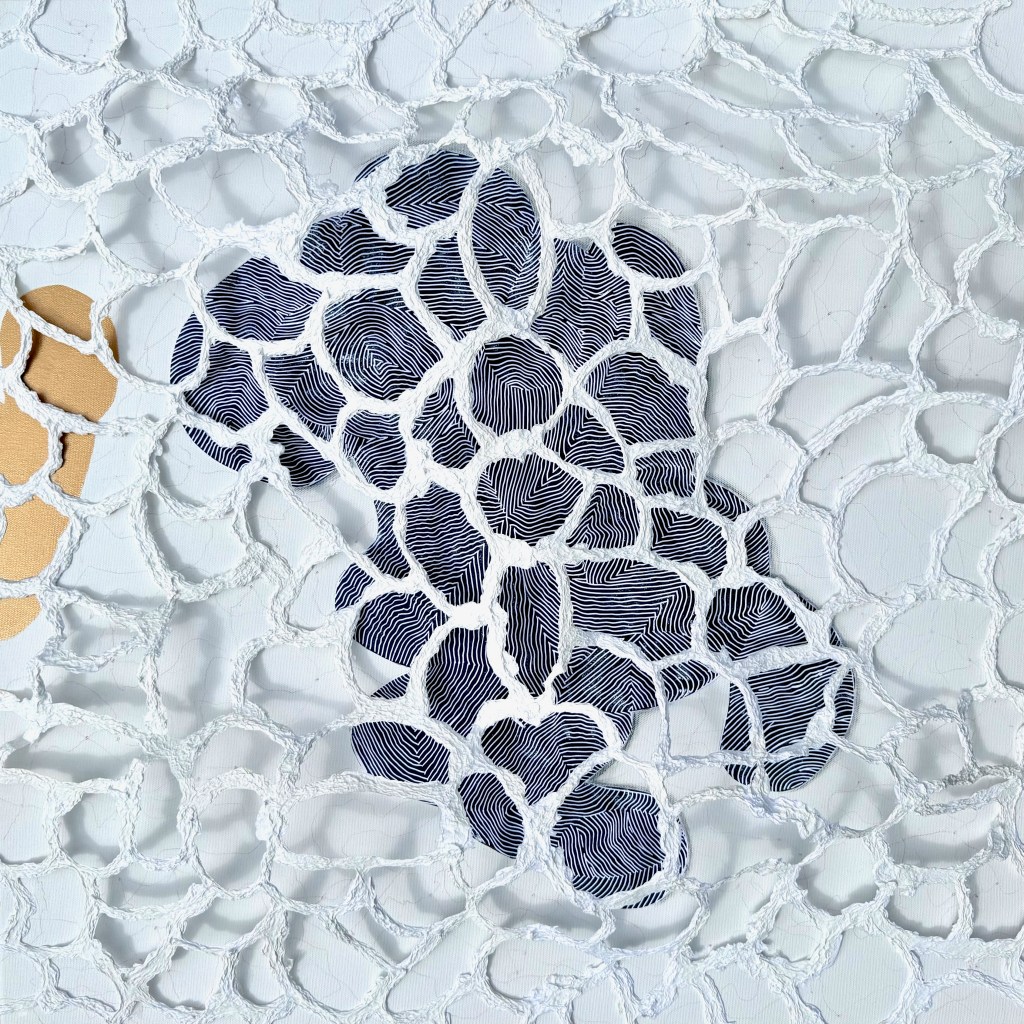
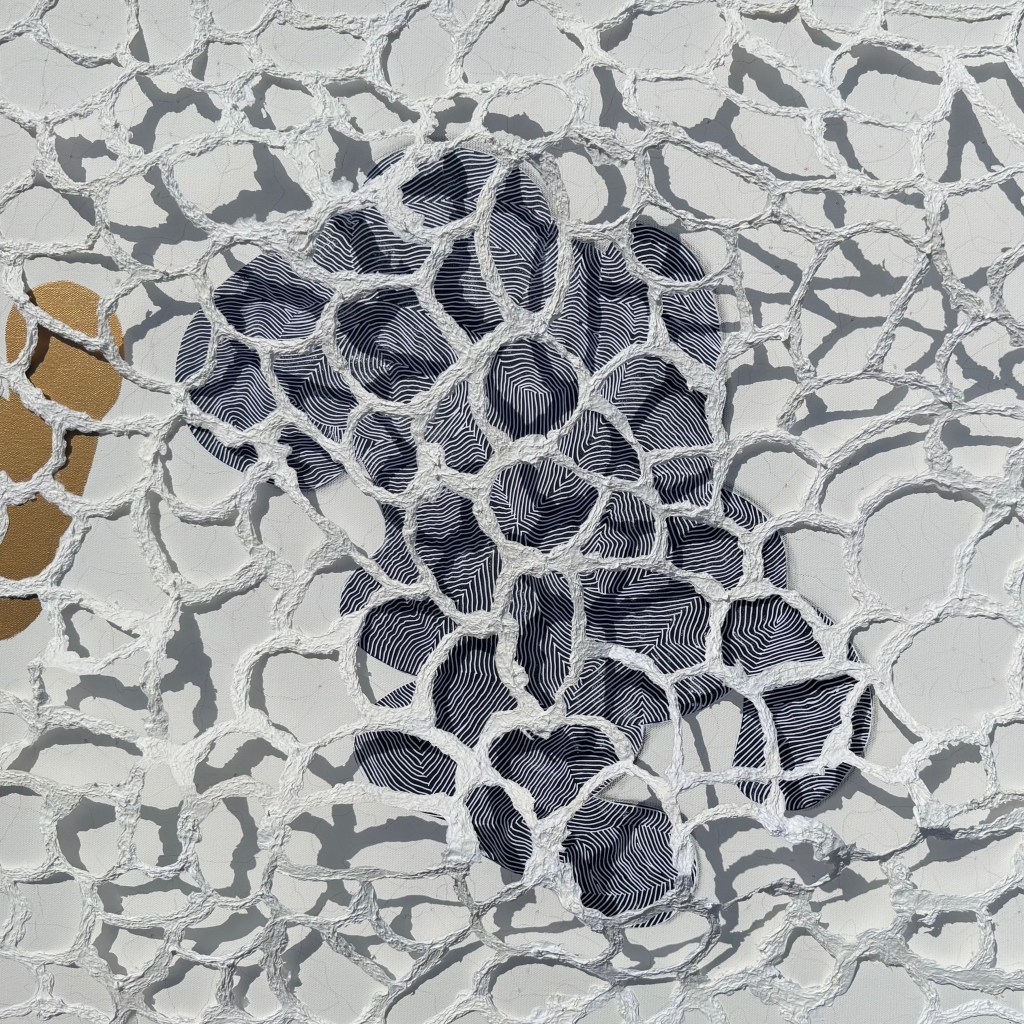
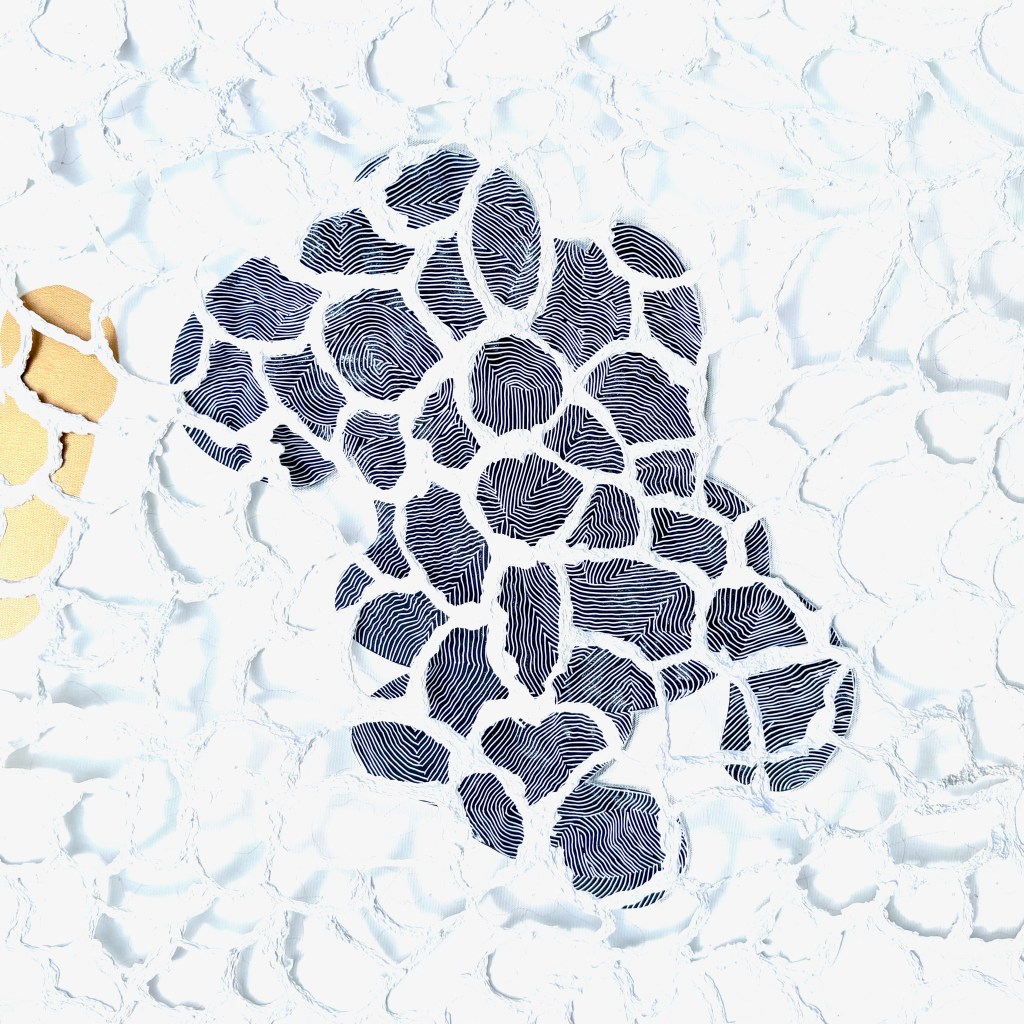
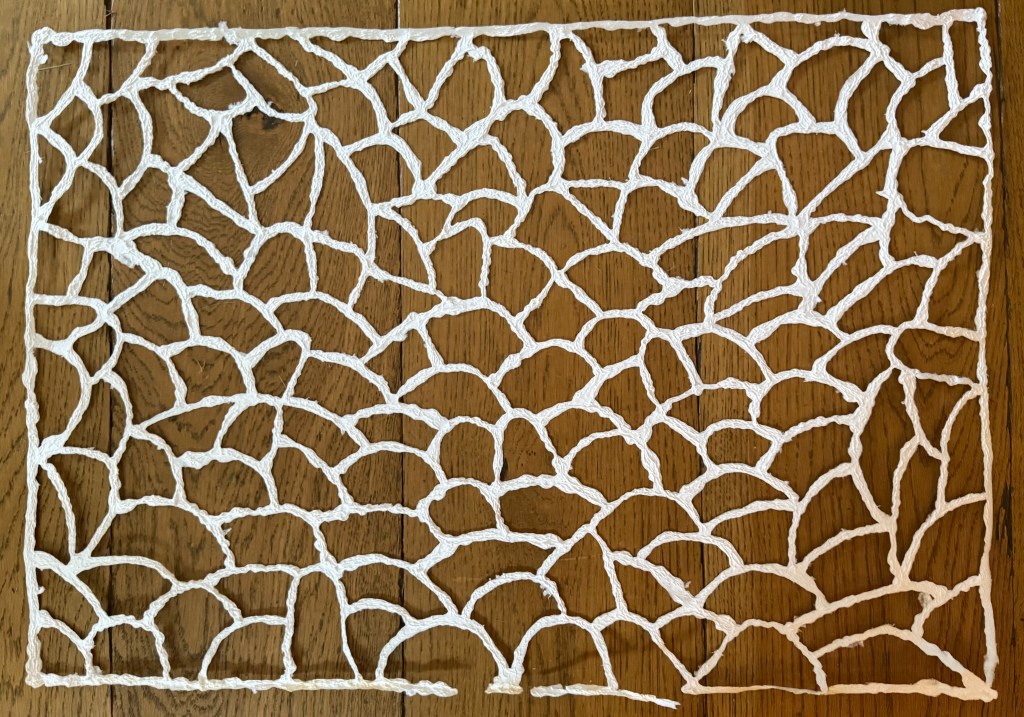
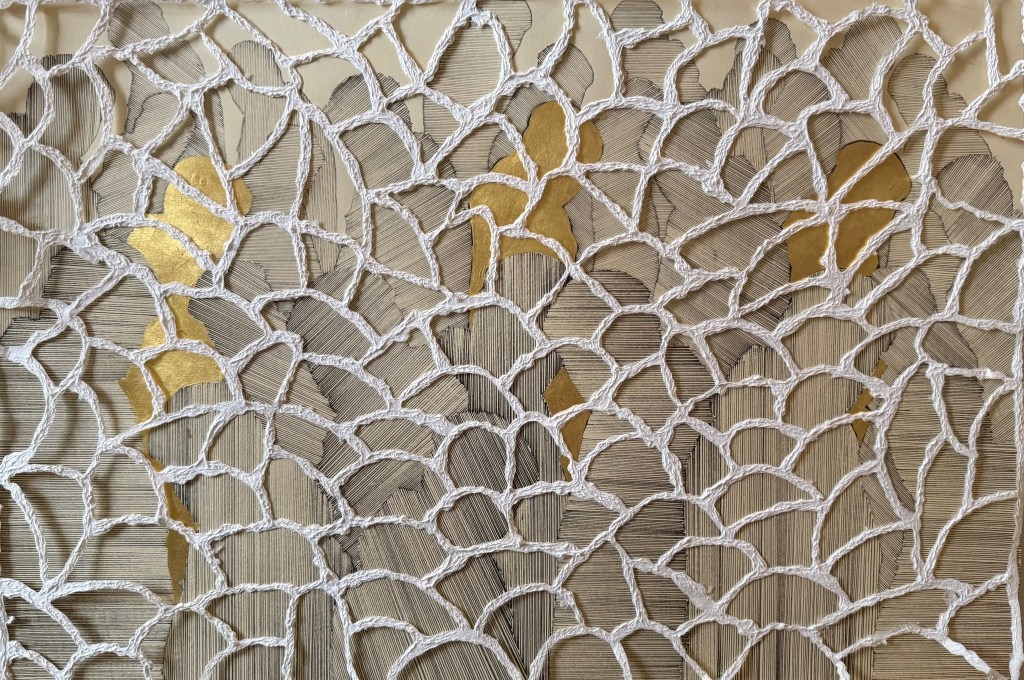
I’ve been lining up my paper pulp lacey membrane sheets by eye – that’s not working and so I’ve marked the edge of the frame so that each sheet is a repetition around the edges which will then line up. I gathered the ones that I’ve made already together in a pile intending to reprocess them in the blender. They took on a 3D form which caught my eye – maybe something for later. I also quite like how they look when laid on white paper.

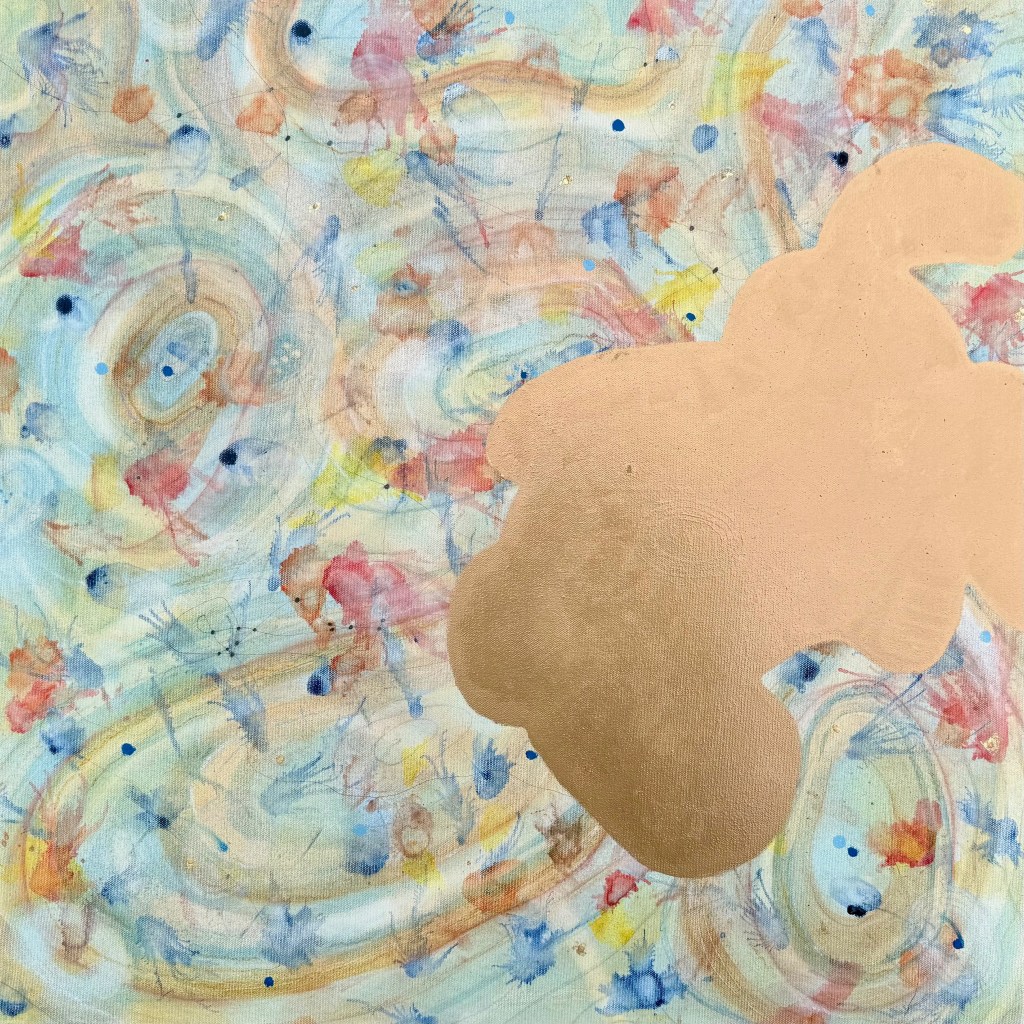
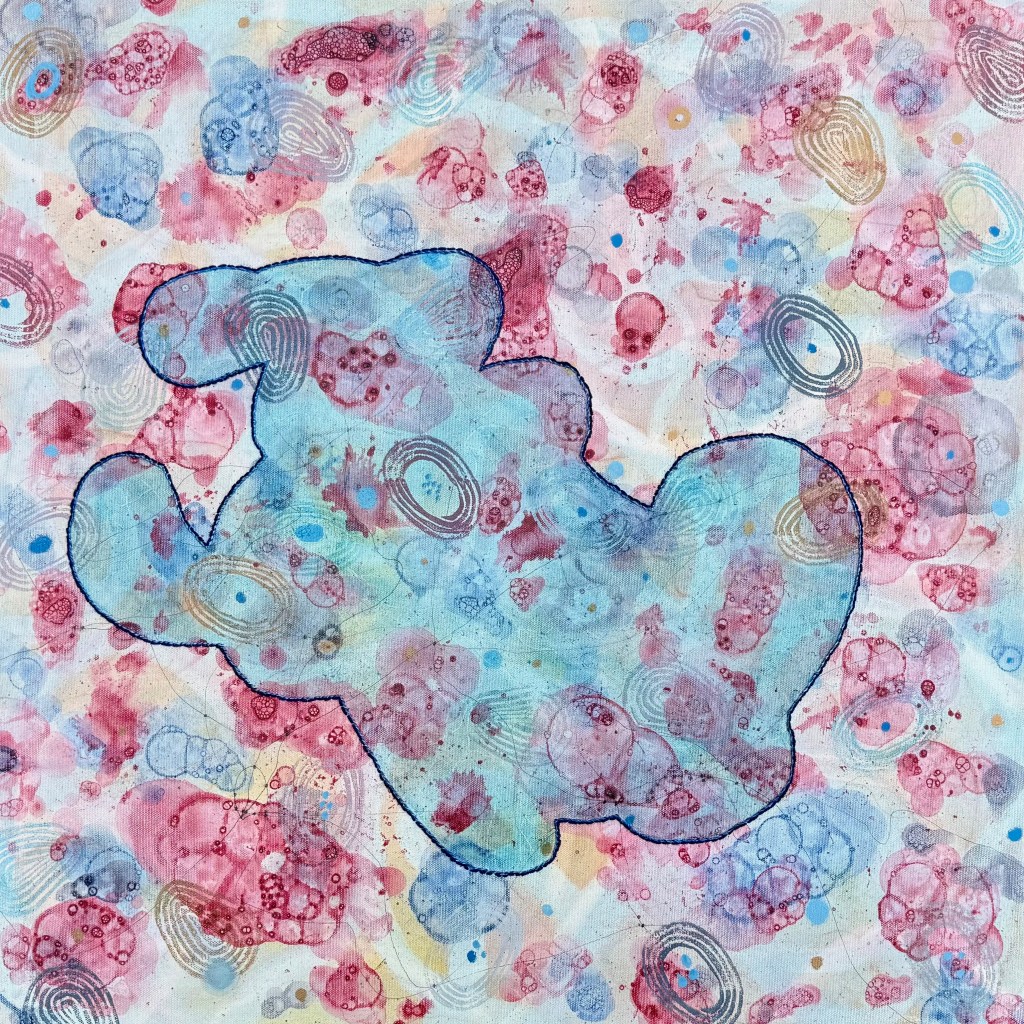
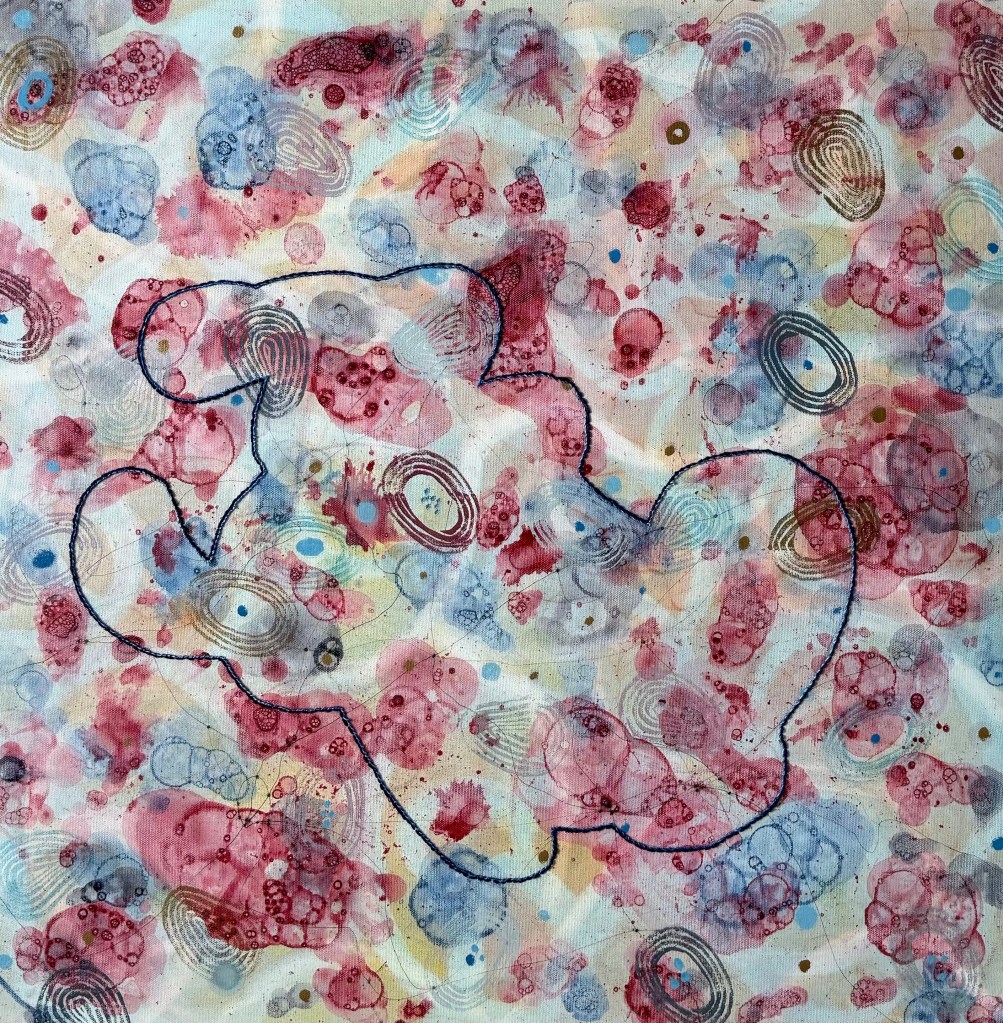
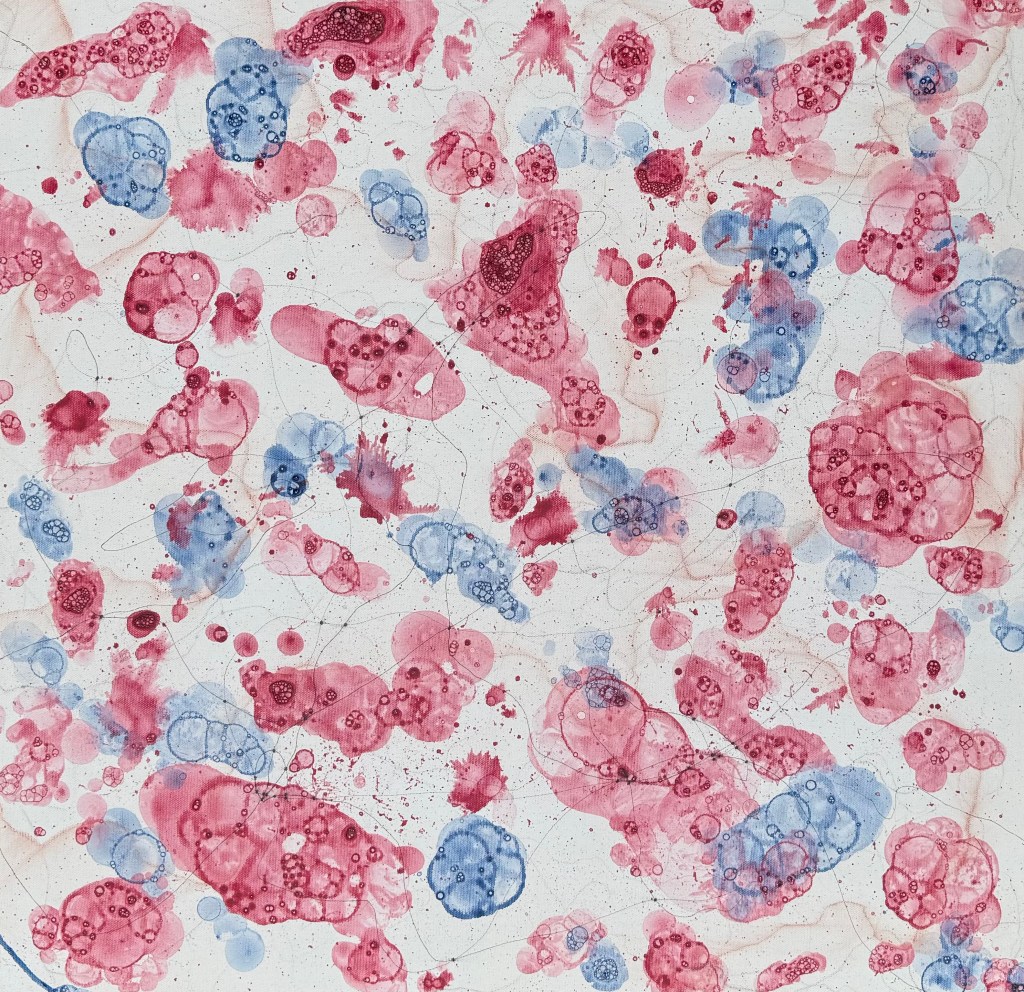
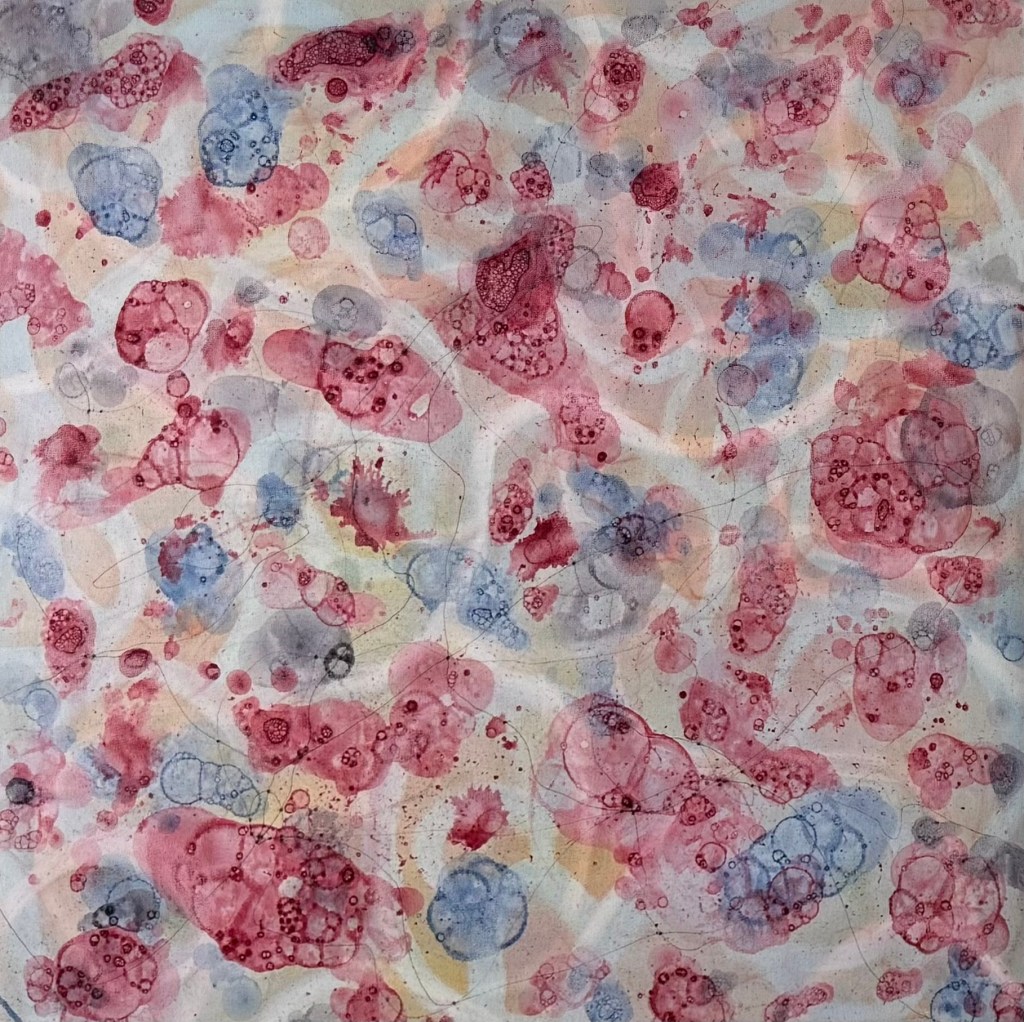
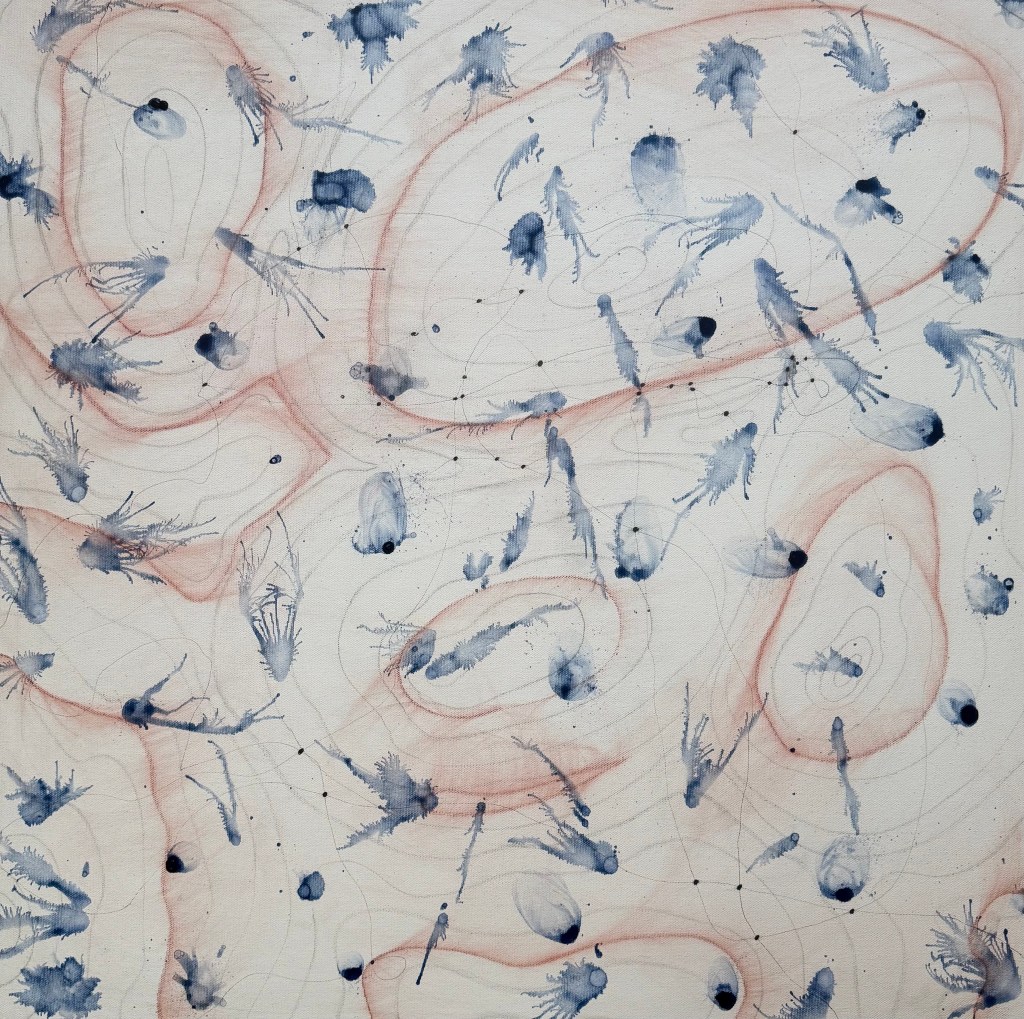
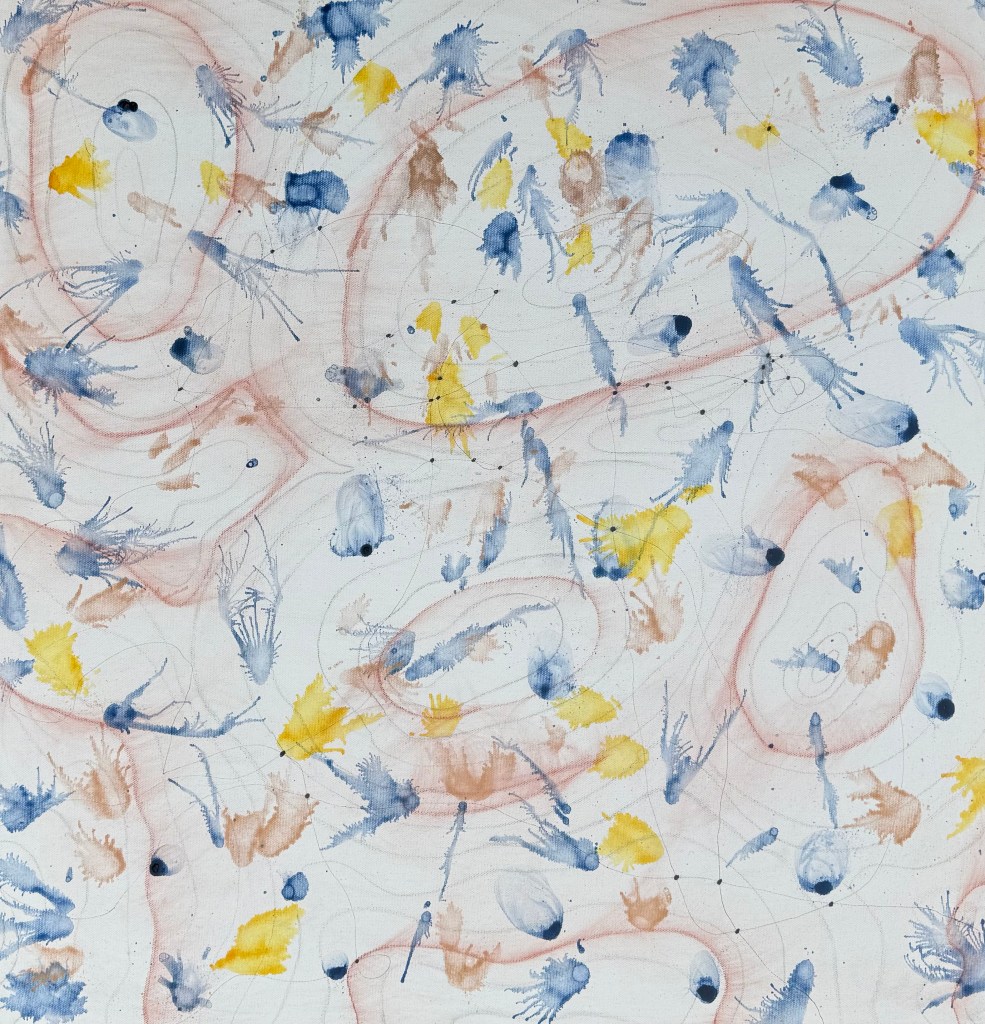
Then it was onto experimenting with bubbles using a mixture of inks and acrylic paints. I want to create a base layer onto which I will print, draw, paint, whatever takes my fancy. I like the idea of it being biological and cell like, hence the bubbles. I tried cartridge paper and the mulberry paper that I’m using for the book. The mulberry paper gives a much less defined edge which I really like. I tried masking with bits of paper – if I ultimately go down this route I’ll use something more robust and less inclined to buckle when wet, although it did provide some pieces to collage. I wanted to see if I could get a layer of lines below, so tried using a fine liner, a pencil and a combination of charcoal and pastel before applying the bubbles.

My first thoughts are to go with something that’s indicative of inside of the body and so I think that for now I’m tending towards reddish tones.

I liked the effect of the shadow cast by the stone.

I became distracted by the bubbles.

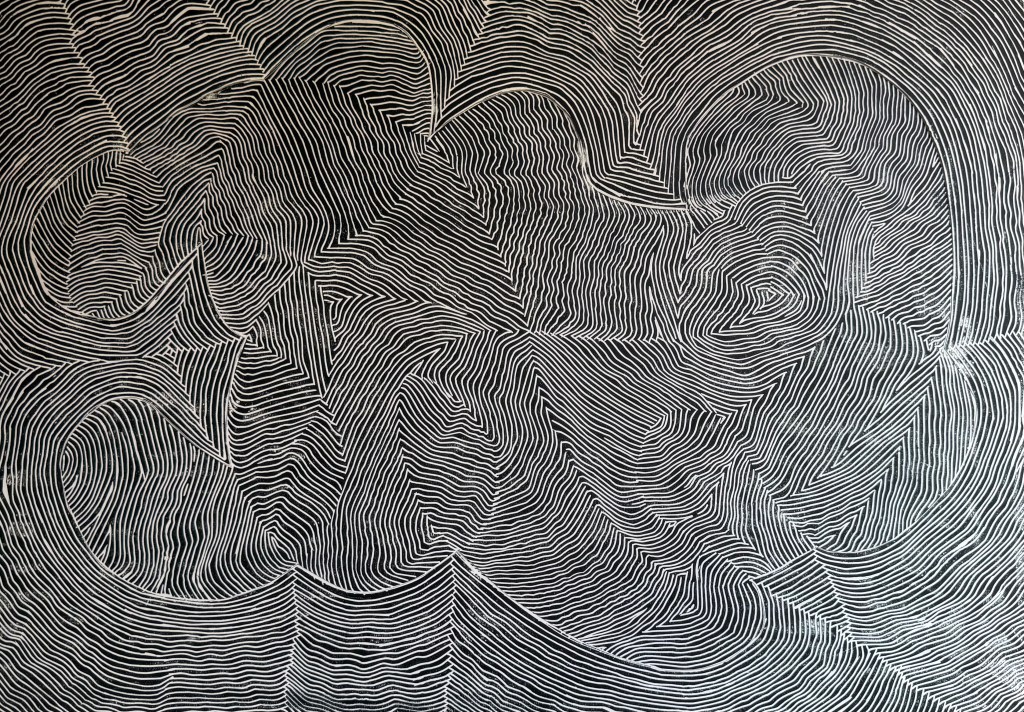
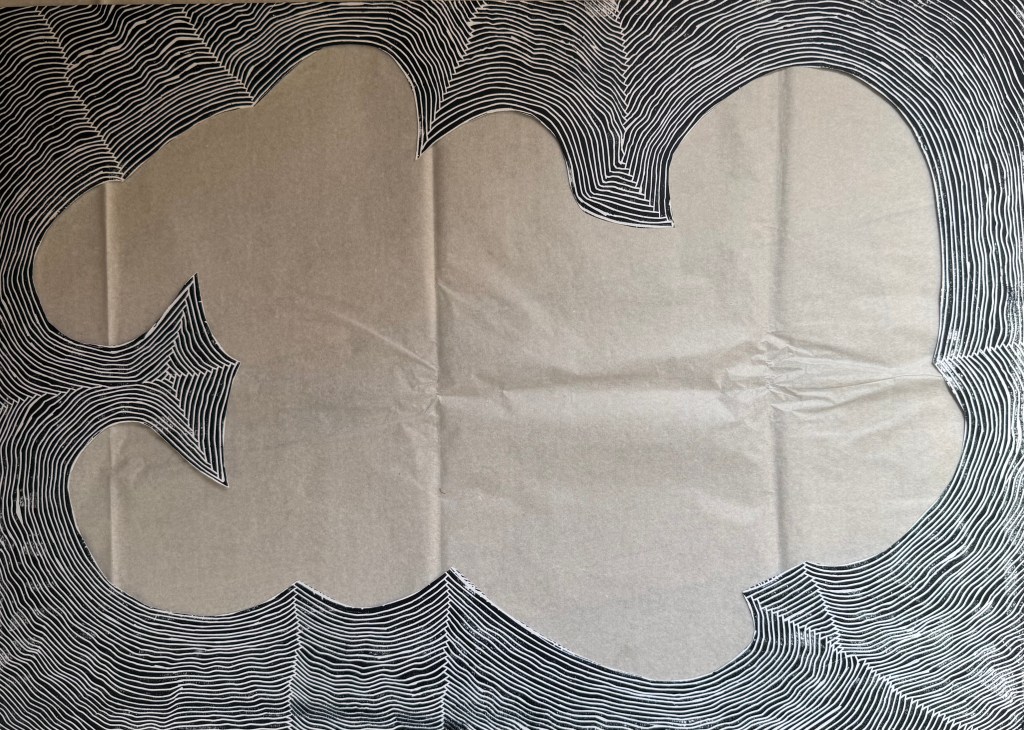
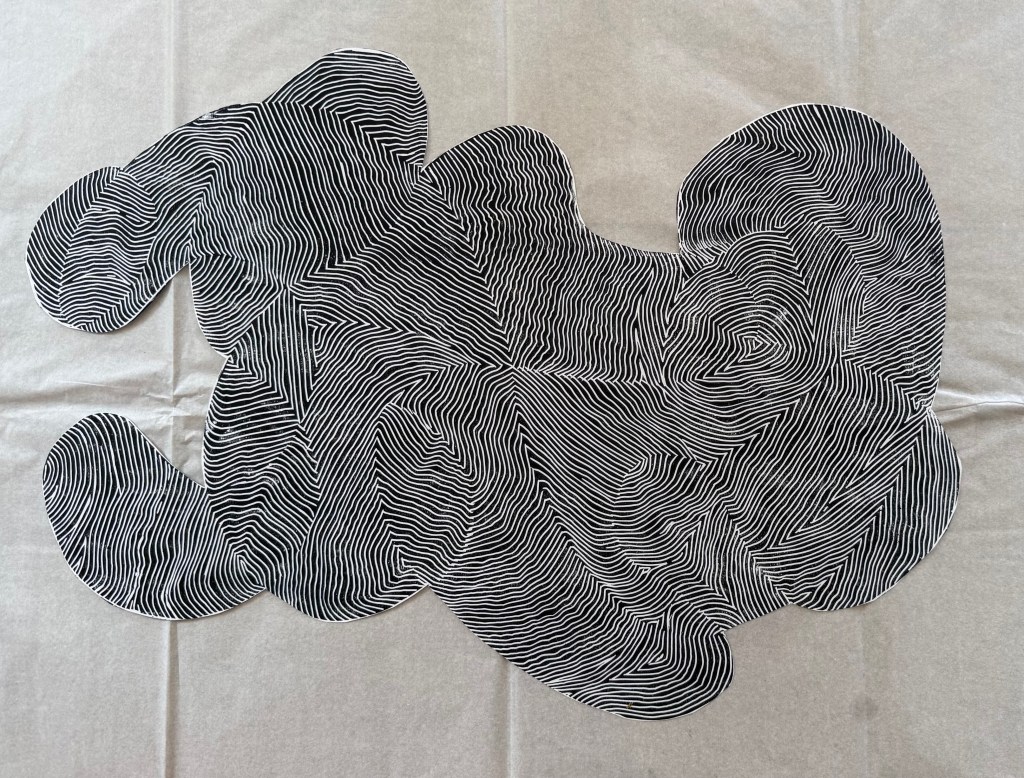
I’ve taped all my test sheets together ready for a layer of printing – I just need to get an idea of size and context for the printed elements. I’ve got together some off cuts of lino and made some shapes out of them ready to experiment with tomorrow morning. I’ve given the main shapes some further thought and decided that having said that they have an identity in my mind, I will not use them again. I might try using their outline, but I will probably cut a new shape most likely using loose lines rather than the straight ones I used previously, to give it a more organic feel. That’s the idea for now, but it could well change!

Who Are You?

Structure seems to be the word of the moment.

After the video feedback session this week, we discussed some of the structures around art that aren’t the actual art making. One of the areas we discussed in our group was social and online media. Eleana told us a story about her practising a pitch and one of the people giving feedback wanted to know more about the rest of her work so that she could see it and decide on the piece being pitched in context. So, people being able to see the bigger picture of you is important.

Sorting out a website has been something that I’ve had on my list of things to do in my head. I think it’s inportant going forward, after the end of the course.
Where Have I Come From?

I started this post a while ago. The act of going through all of my blog posts for the book and making the 5-minute video has encouraged me to think about the journey that I’ve been on. Sometimes I have so many thoughts in my head that I need to put them into words so that I can get some clarity and order. So, here goes…

I started this course thinking that I was an oil painter who enjoyed working with colour and shape. I’ve been looking back at the work that I was making two years ago. This is an example:

It still appeals to me – I like a narrative. It was made in response to the brief, ‘On Having an Outside’. I like a painting inside a painting, inside a painting and so on, and the use of a mirror, a play on Magritte’s ‘Not To Be Reproduced’. I thought about it a lot – the idea that we wear masks but in this case what you see on my mask is a reflection of you and how you feel about yourself which you then project onto me. It expresses how I felt at the time. I still like looking at it, but it does feel contrived, controlled, and static even though it depicts me turning to look at the viewer. I didn’t enjoy making it. I had a very fixed idea in mind as an end goal and so the process of making it was restrictive and frustrating. I kept at it until it was how I wanted it to be, what I thought was the best that it could be. It was all about the product and I was driven by my controlling perfectionist self. I haven’t painted very much at all over the last two years. I’m wondering why. Maybe I should?

These are screenshots of some of my recent Instagram posts:

I look at these images and I like what I see, but most importantly I remember how I felt when I made them. I felt free, unencumbered, excited, and intrigued. Interestingly, they are predominantly monochrome, exploring mark-making and movement.

I’ve been wondering what to do. When clothes don’t fit me I sell them or take them to a charity shop. What should I do when my work no longer fits me? Treat it like a photograph of a younger self maybe, a reminder of where I’ve come from?

The last two years have revealed many things to me:

I am happiest in the process

I am at my most productive and enjoy making the most whilst in the process and without a defined end product in mind. One of my mantras used to be that without intention there can be no expectation. I think that was useful in the early days to keep my focus on process, but I’m not sure that it’s strictly true because I experiment and explore with intention. Furthermore, the making of the book is a very intentional act with an end product in mind, but the specifics of how it looks have developed in the process. I think that the difference is that the book itself is not important save to the extent that it is documenting my process and the making of it has allowed me to develop further, as well as to reflect on the last two years.

I don’t need to be in control

Embracing the process has allowed me to give up control and it is now the foundation of my practice. It has helped me better understand myself and has changed me. It has allowed me to see that there is a direct correlation between my behaviour in making and my behaviour in life. It has taught me that in moments of personal overwhelm such as becoming a parent and caring for my mother my instinctive reaction was to try and exert control over circumstances. This behaviour fed through into my making. By allowing myself to give up control by experimentation in making, I now realise that I can deal with uncertainty in life and rather than trying to control it, I should lean into it.

I don’t have to make what I like or like what I make

Just because I love to look at Surrealism, works heavy with narrative or full of colour does not mean that is the kind of art that I should be making. Viewing and making are two entirely separate experiences. Because I am privileging process over product I may not always like what I make – what is most important is what I experience in the process. Just recently, I have been working more with video and I’ve realised that this actually gives me a means of exploring narrative.

The meaning of my work is in the process

As in the example above, I used to start out trying to make work that already had meaning. Now, the meaning comes out through the process of making, and the finished piece embodies it in some way. That doesn’t mean that I begin without any direction—I often still start with a line of enquiry or an idea—but it isn’t fixed. It stays open, changing and developing as I work.

I can embrace both the accidental and the incidental

I now feel more comfortable with accepting responsibility for the accidental within the process, and I actively look for the incidental and often go off on a tangent.

I want to be able to choose whatever process or material seems right in the moment

I don’t want to restrict or pigeonhole myself. I refuse to attach a label to myself either as an artist or as a person. I want to be able to choose whatever process or material is right in the moment. I don’t want to limit my ability to experiment or to discover new languages of expression. I live and I make.

I need some soft structure

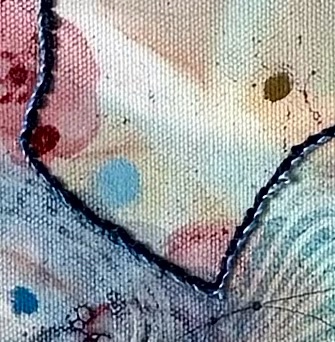
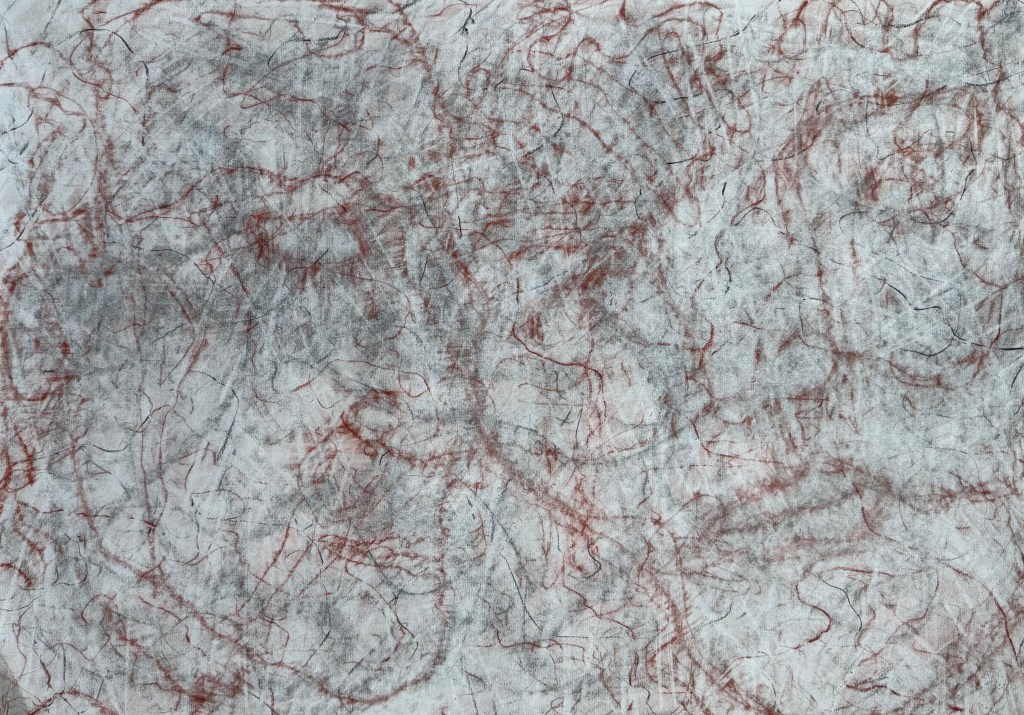
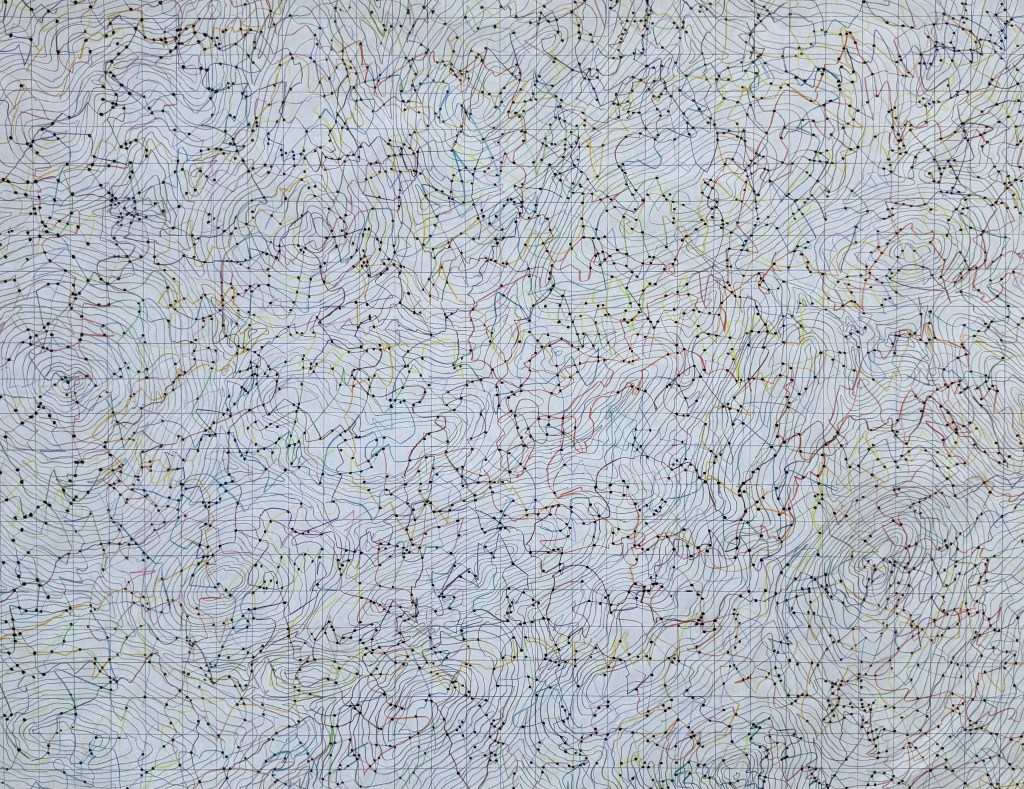
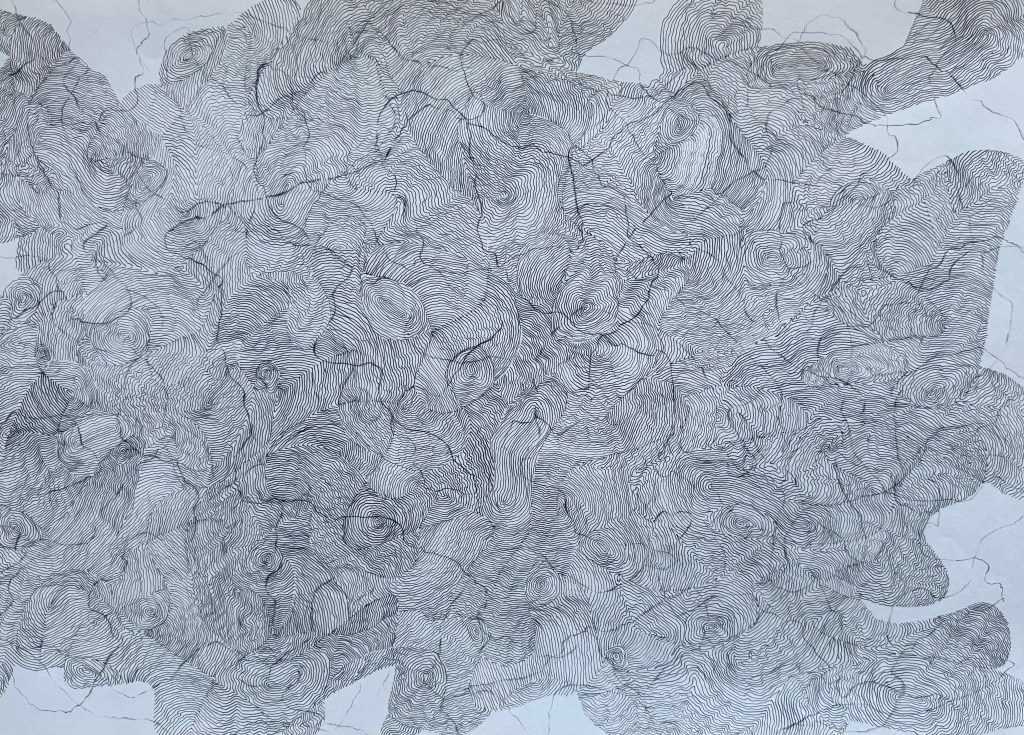
I think that there are two distinct areas of my practice – the experimental side which is exciting, uncertain and can be overwhelming, and the side which is more of a structured wandering, for example, repetitive mark-making. I’ve commented previously that the act of drawing line after, or even now more recently, stitch after stitch makes me feel contented – it’s as if there is just enough structure to provide a frame for my attention yet loose enough to allow for response. I’ve also been using motifs such as contour lines, automatic drawing, my father’s silhouette etc. throughout the course, and it is really only recently that I understand why that is a feature of my practice. I have accepted that I can never rid myself of the perfectionist self and the soft structure provided by the repetition keeps that part of myself happy.

And my Study Statement?

Since the first year I have thought from time to time that I need to change and update my Study Statement because I’ve wandered off course. In it I was very specific about how I was going to approach things. I had an end product in mind (what a surprise!). Instead of exploring all of the different roles that I’ve had in my life, complying with my detailed workplan and finding out who I am, I naturally deviated from my plan and later made the conscious decision to embark on a dérive contemplating those things which seemed important or of value. To have amended it would be to remove the evidence of my progress and my process. I’m not the person I was back then – I am becoming and the prescriptive framework of the Study Statement would have limited that becoming. Thinking about it even some of the categories on this blog are irrelevant.

Soft Structure

Jonathan started off by commenting that the films I’ve been making are really interesting and that there are so many different things to discuss, the book, the films, and he particularly likes ‘I’m an Artist’ . There’s something about the drawings, the books, trying to make the end papers, the disaster of the suminagashi but me noticing the connection to the line. I explained that I feel like since the end of last year there has been a sense of change, like things are linking up and coming together. He agreed.

He mentioned my videos of the ink in the fish tank – beautifully filmed, and not to diminish them but something you can get hold of quite easily from stock image websites – what’s impressive is what I do with them afterwards – the addition of the thumb harp to the droplet video which he thought was magical, and the addition of the audio to the speeded up version of the ink – I take it to somewhere else, and that’s what’s interesting to him. It interests me too. Before the course I was very much into narrative and I’ve realised that I can satisfy that part of myself in video-making, freeing up other processes for different things – I seem to have reached a point where I can satisfy different parts of myself by using different processes, including the perfectionist chimp which I can keep quiet by drawing lines and repetitive acts.This makes me feel more contented in my making and gives me a feeling of cohesion, but not in a closed way, in a momentary way – next week it could be a different combination of processes.

Jonathan moved onto the book, which is a huge challenge – it’s quite contained within its format – the signatures, the binding and stitching etc. I could have fed it into a website to produce it, but there’s no control, and he felt that it needs my hand because that is what it is about; it needed to be handmade. I commented that I felt a great sense of achievement about my first attempt, even though it hadn’t worked and it wasn’t really passable as a book (I didn’t mention this but I have actually showed it to friends, I’m that chuffed with it – I can’t imagine doing that a couple of years ago!). There’s something very special about making a book. Jonathan understood what I meant and showed me some of his concertina books which he often makes – the form of the book transforms the content. I said that having to go through my blog again has been a helpful process, even just glancing, looking at the images, reminds me of what I’ve done and how I felt at the time. Jonathan said that I have an incredible story to tell myself.

Turning to the videos, Jonathan commented that my video-making is astonishing considering that I’m using Capcut and that I need to step up. It’s something I’ve been thinking about going forward, to become more proficient but not to the extent that there’s nothing left to discover by accident. What would he recommend? Final Cut Pro – watch some video tutorials and will it come easily, allowing me more precise control on edits, layering images and sound etc. Mostly filming with my iPhone – I don’t need anymore than that but what I need to bear in mind is the fps – moving image is 24fps – my phone probably defaults to 30fps. Film in slo-mo (120fps), but will probably need more light if it is dark. Then when I slow down to play it back at 30fps I have 4 times as many frames to play with and the playback is much smoother. A downside is that it creates larger files and will take up more storage.

I commented that I have been wanting to learn how to use my phone to its full potential. Jonathan said what’s intriguing to him is that I’m doing incredible things with it as it is now and learning new techniques isn’t the most important thing – I already have an artistic eye – it might be that for now increasing it to 120fps is enough to be getting on with and will give me lots more to explore. I said that I am very much about using what I have in the moment, having a go and seeing where I can improve things. Jonathan thought that there’s a beauty with that and that it comes from all the other experiments and the comfort I have developed to take things that haven’t worked to somewhere else.

He gave me some tips for filming with the caveat that I shouldn’t get too bogged down with technical stuff as I’m doing it naturally and there’s something really lovely about that – what I’m filming and the way that I’m doing it is interesting . With regard to the Vienna video, a small detail which will help is to hold the camera out from the body using the elbow and shoulder as shock absorbers as the phone itself will do quite a bit of counterbalancing. There are some lovely moments when I notice something interesting and I should look to pause longer in those moments – always hold the shot longer than I think because I can always edit it out, I can’t add it in – like with the shadows on the ground. I explained that when I filmed in Vienna it was very much because I was interested in it rather than being mindful of making something out of it later and perhaps that is the downside of the experimental approach. Going forward I will take his advice and collect footage with possible later use in mind.

He advised that when filming water or anything transparent, light from behind, as I have, but what I can also do is to put black card either side of the fish tank. I could also put black card at the back of the tank which encourages the light to wrap around the side and light everything up against a black background.

Jonathan turned to recording sound. Technically I need a dead cat but they don’t do them for phones, but what I could do is just be conscious of wind increasing and perhaps turn my body or shield the microphone with my hand. These are small details but my films are mesmerising and these extras could take them to another level.

Jonathan commented that there are so many different things to look at, the layers, burning the paper, the red stitch, the scrunched up cyanotype material, ‘the line made by running’, which we had a little chat about.

He thought that I’ve written clearly and beautifully about the show being a snapshot – what would I be showing if I did it now? My books are a definite – I’m feeling quite happy making them if only I could stop posting. Jonathan observed that having volumes means that it’s an ongoing thing, something that can be added to. I thought that maybe I could also have some video. Maybe also a larger piece either layered or not, I’m not quite decided. Once the 5-minute video is out of the way I’ll be more focussed but not so that it’s resolved in anyway – I’m ok as long as I make the decisions in the process and see what happens. If it all goes wrong then at least I’ll have the book. Jonathan thought that whilst there’s so much work that I could show, focussing on the book is a good approach. I commented that the book gives me certainty and grounds me so that I feel a lot more relaxed about other pieces I could make. I’ve noticed that whilst I need and thrive in the experimental I also need a bit of loose structure to feel content and to feel like it is sustainable going forward. Jonathan observed that it’s a metaphor for the way I make work generally.

Jonathan was of the view that the book makes sense on so many levels for me – as a reflective piece – a wonderful treasure of the blog containing memories of what I have done and how I’ve spoken to myself. The book will allow me to dive back into there, and it also has a beautiful handmade feel as an object, as an art piece as well as being an element of structure but within which there is also space for experimentation.

Have I thought about how I might present the books? Yes, but it’s difficult because I want people to engage with them, to pick them up, to read them but not in a way where they just toss them back down again. It’s what we have talked about before where interaction breaches the barrier between artwork and viewer. Maybe they are only there when I’m there. I need to think about it – how to achieve a balance. Jonathan suggested that perhaps a couple of pairs of white gloves – maybe their presence would change the atmosphere. I thought this was a good idea. Jonathan then wondered whether the surface could say something eg a university chair with a flip table might have a sense of note-taking, exam, formality etc. Books piled up on a coffee table says something different, a leather inlaid desktop when compared to a white shelf. What about a conceptual relationship to my work? It’s been such an incredible journey. What about books stood up on a shelf so they taken out and put back in? I had thought about that but decided that perhaps that might just read as spines to be looked at, rather than ‘pick me up’, although the addition of the gloves might allude to the books being picked up. What if the third book is open on a different surface – is that enough? I could always lead the way by picking them up myself. What if the second surface is a screen showing the videos because they are so important to what I am doing, so the book needs to be picked up so that the video can be seen? The one issue is what the edge of the screen would like, we could put it on a white plinthat table height, it could be seen from every direction, we could make it disappear or just accept that it’s a screen with a cable there to power it. I asked about sound and Jonathan thought that so many people want headphones that the sound could just be coming from the screen. Being able to walk round it and seeing the videos from different directions could work well. Jonathan then wondered what that might look like if there were layers over the screen through which to watch the videos.

Finally, Jonathan remarked that it’s really helpful that I’m writing about sustainability and it’s wise that I’m trying to find rhythms of time and place so that I protect what’s happening right now because it’s precious. He’s very encouraged that I’m thinking and writing like this already. I think that it will be difficult but I need to find a way. I need to introduce a little bit of structure so that I change from working sporadically to something more consistent.

As ever, and for the last time, so many good ideas to mull over.

Four Little Words

I’d be lying if I said that I don’t get moments of anxiety about the End of Year Show and what I will be showing. After all, the plan is not to have a plan, as I’m treating it as a snapshot and the continuation of my becoming, as opposed to the big finale, the culmination of something. But it’s very difficult when all around me are so far advanced in their own work and I also need to give an idea of what I will be showing from a space planning and curation perspective.

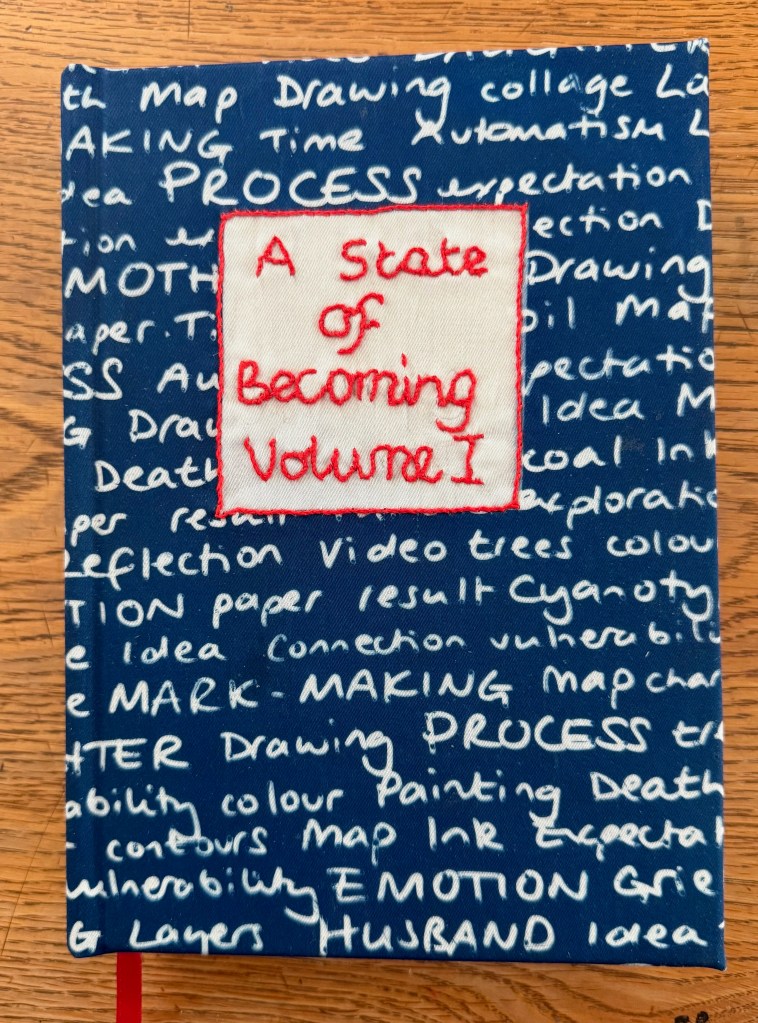
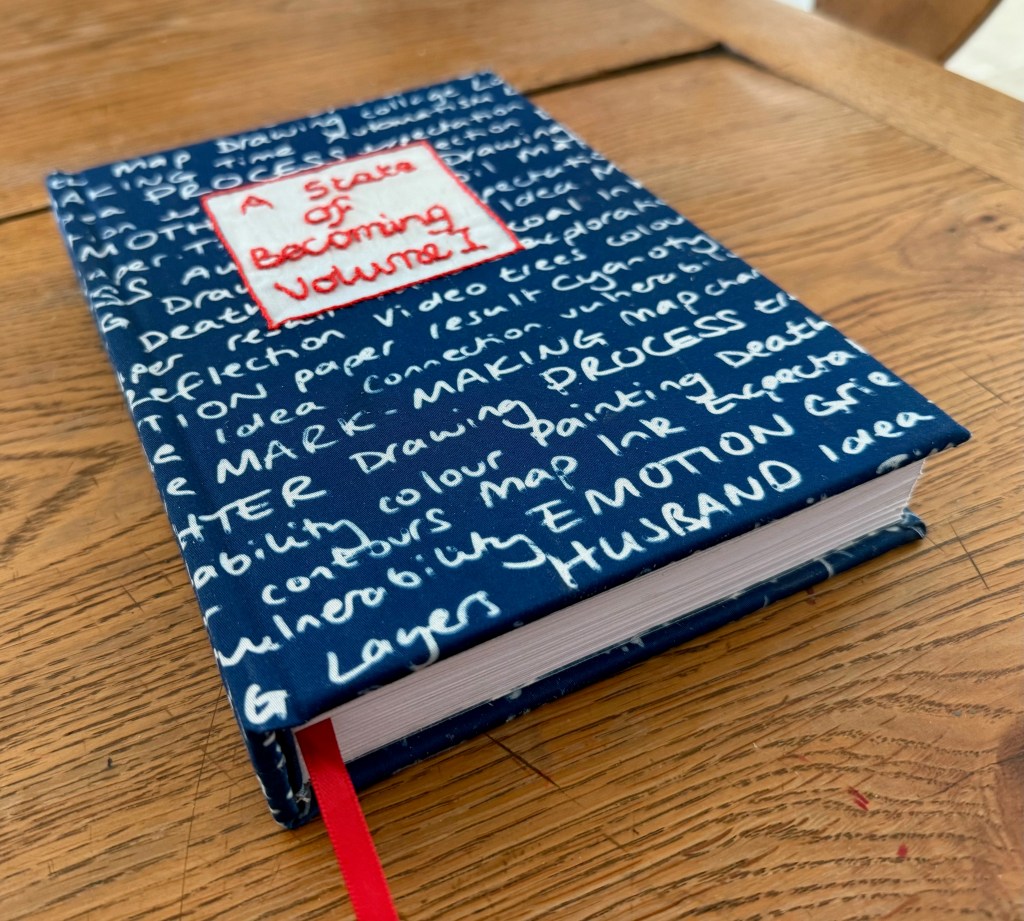
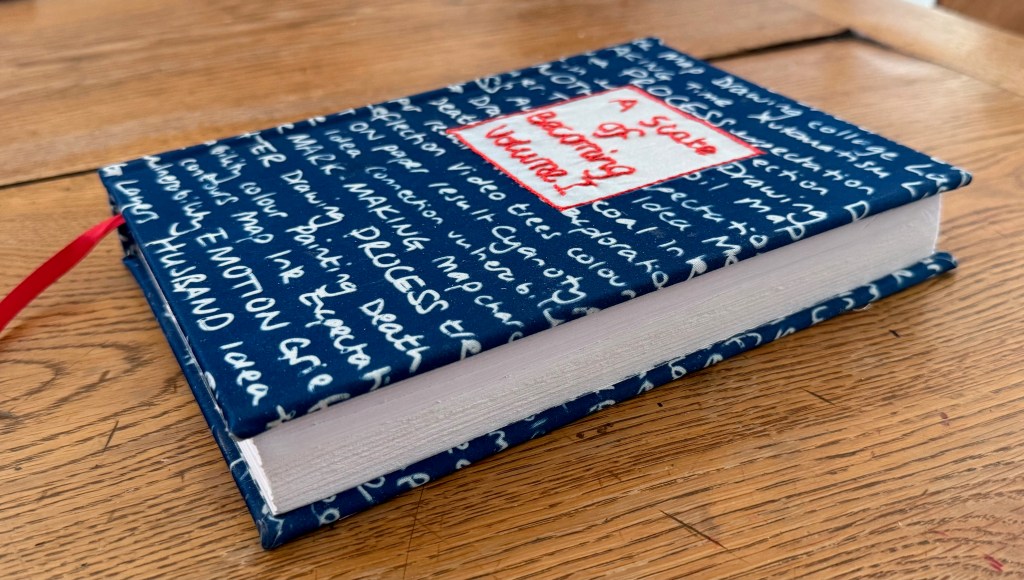
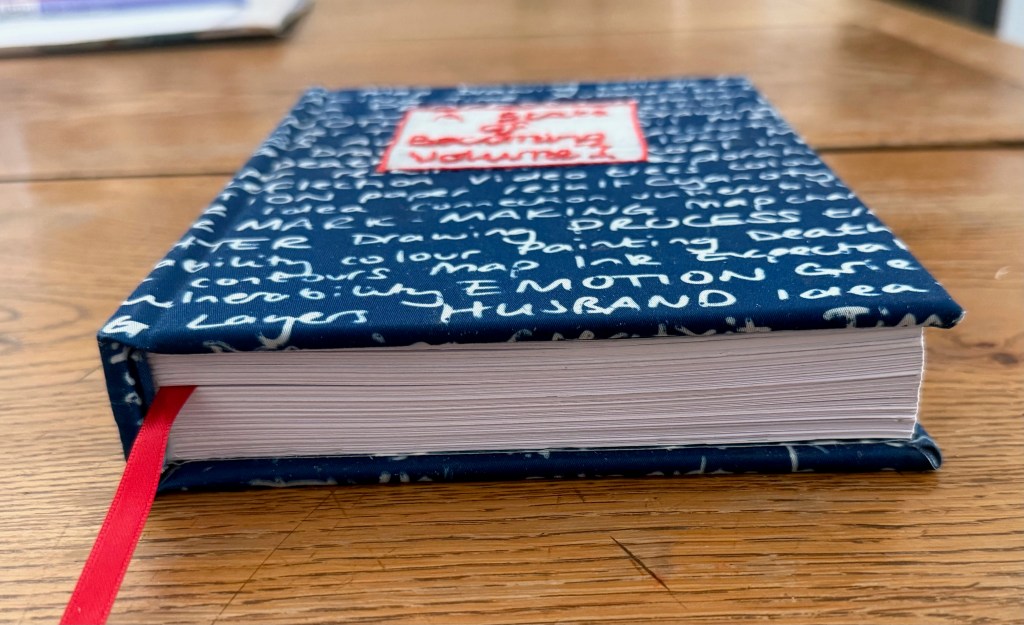
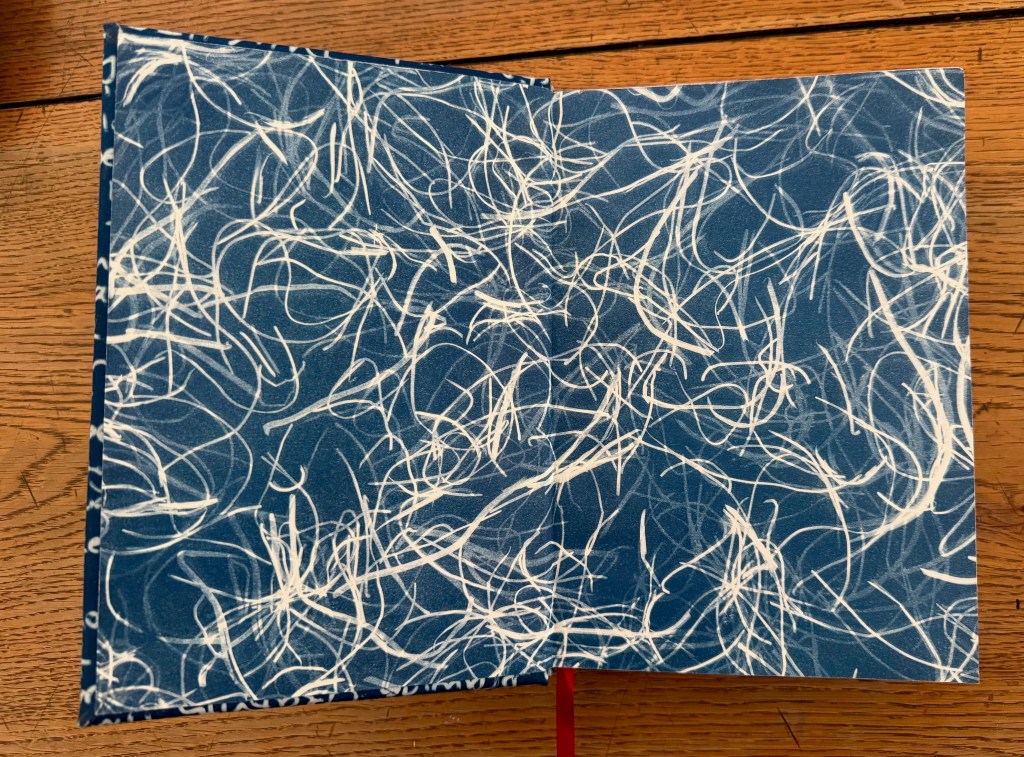
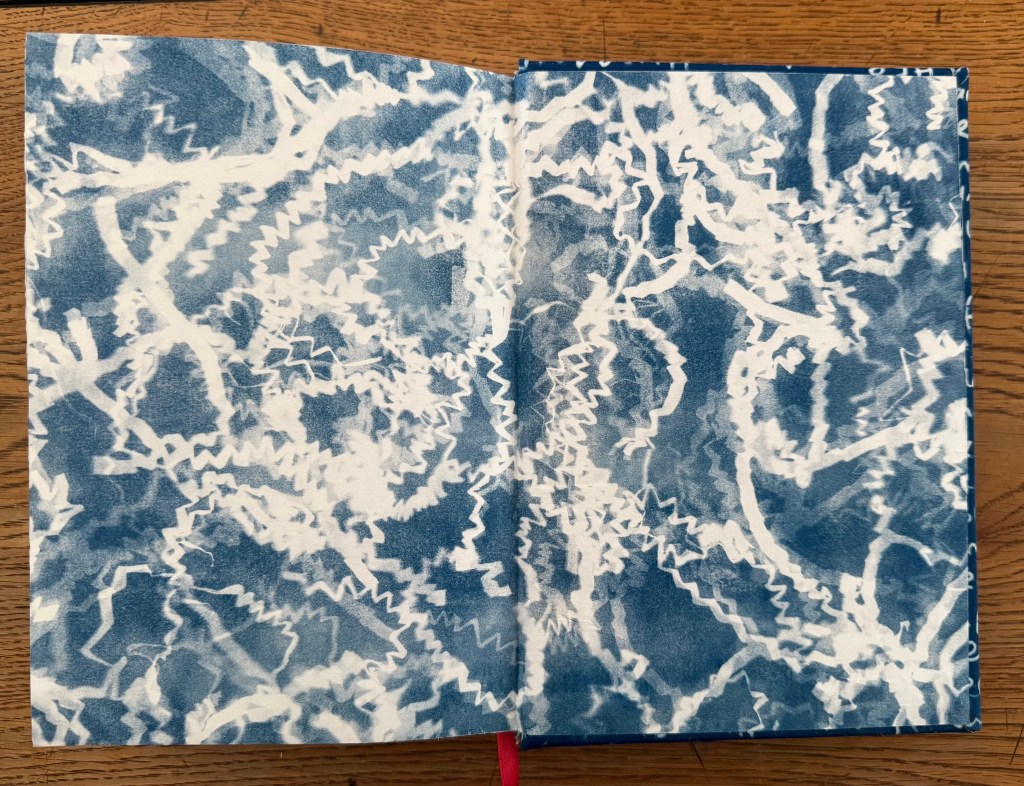
At the very least I will have the book – it was ok to have that as a plan as it seems the most natural thing for me to do, it is something that can continue to develop because it is made up of volumes and also the process of making it has been one of learning and development. After my trial run I decided that I need to have some sense of progress and that I would crack on with the second volume before returning to remake the first. So, I’ve made the book cloth that will be used for the cover and the end papers. I’m currently halfway through formatting the blog – the resizing of all the images to a higher resolution suitable for printing and the creation of QR codes for the videos takes up a lot of time. Hopefully I will have finished it sometime this week and so can get on with making both volumes.

I’ve been thinking about my conversation with Jonathan as to how to display it. I want people to pick it up and have a read of it but at the same time treat it with care. Placing a pair of white gloves like those used by archivists next to the books would indicate that care should be taken – I don’t necessarily intend for people to actually use them and I’m sure that there will be some who would be reluctant to anyway. Hopefully, there will be three volumes, so the idea of two being arranged on a shelf and the third being placed on a separate surface, open and an invitation to be read is a good one, but it is also open to being seen as being on display, something to be looked at, not touched and read. So, I’ve gone with Jonathan’s idea of a student table chair/ conference chair as a possible option. I’ve sourced one – it has a fixed writing tablet so nothing has to be moved or flipped up for the reader to be able to sit down.
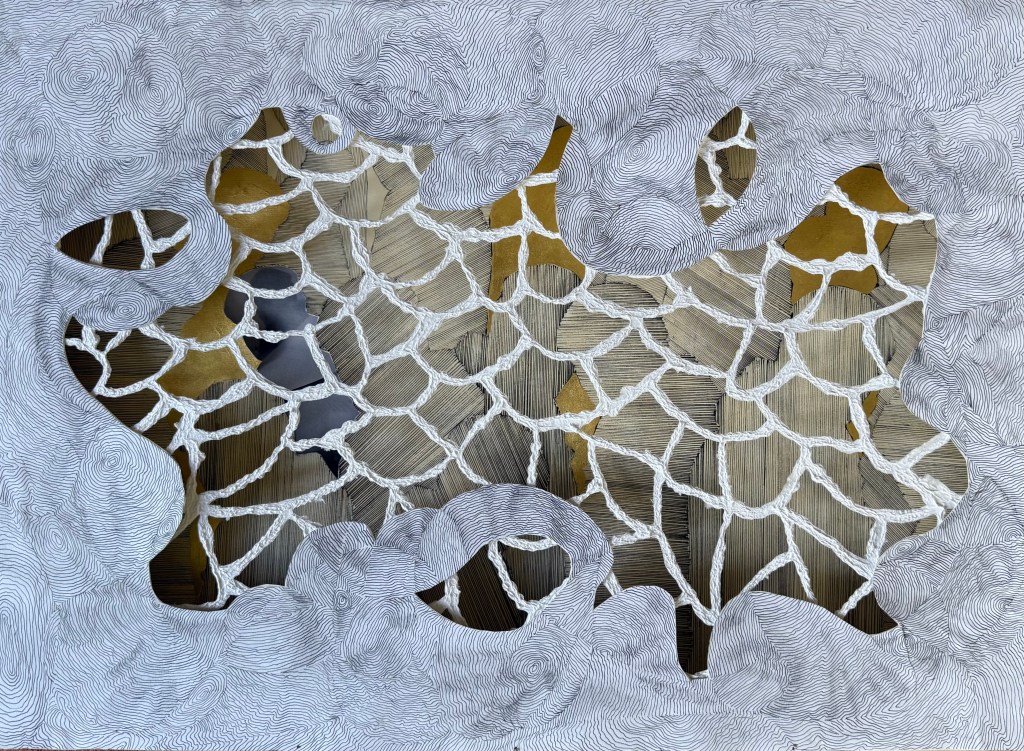
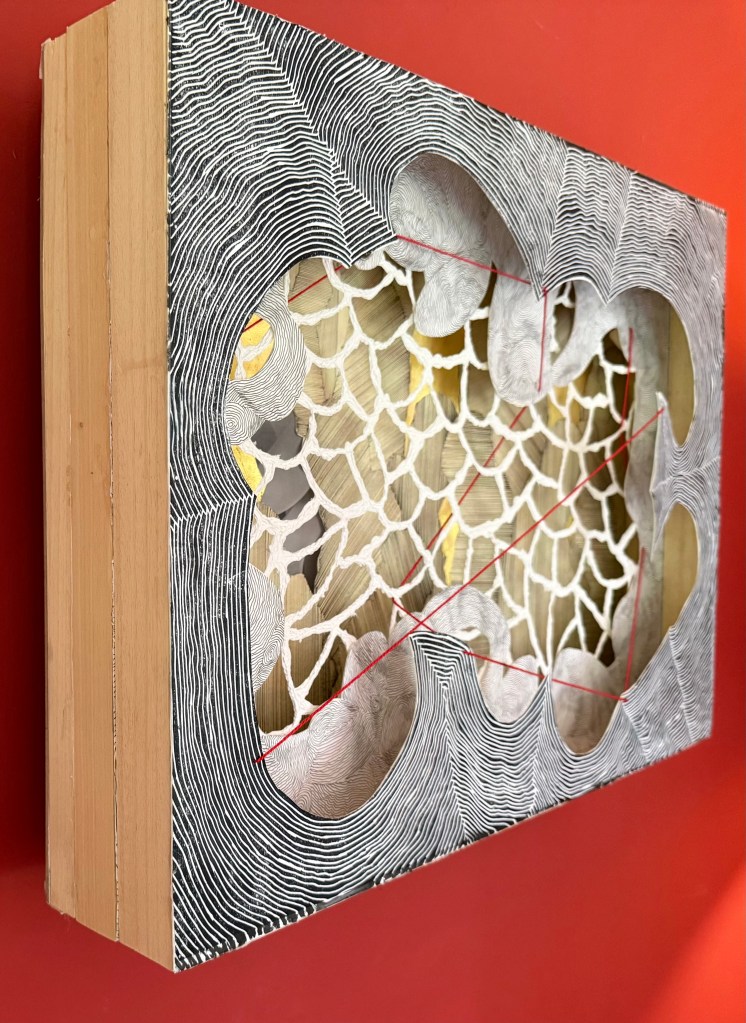
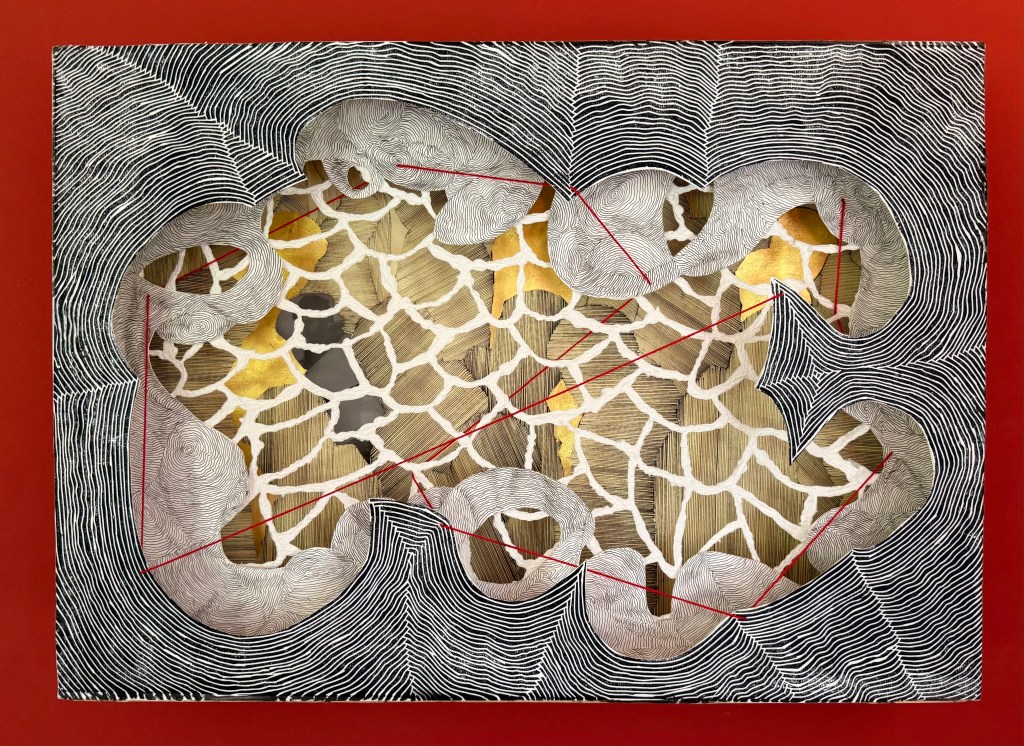
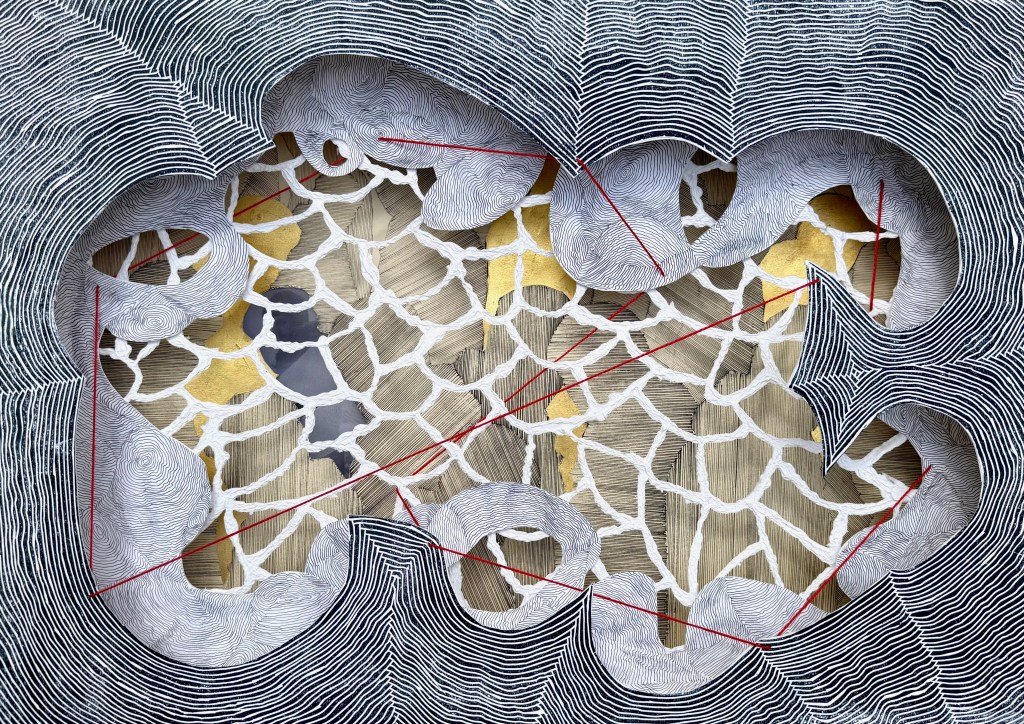
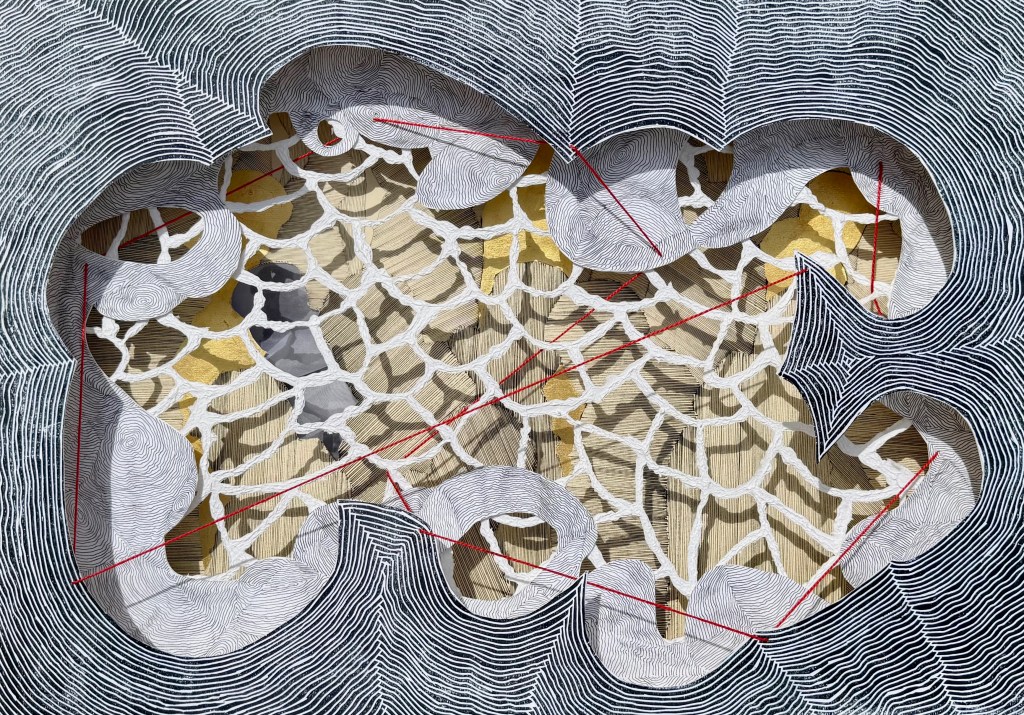
I’m also intrigued by Jonathan’s idea of using a video screen as a table and placing the book on that, as well as his comment about watching videos through layers. I had in the back of my mind that I would probably make a layered piece rather like the one in Layering. I tried experimenting with the burnt mulberry paper just to get a feel. I also used some mulberry paper that I had cyanotyped on and decided to burn holes in that to see how a patterned layer would work – a health and safety risk assessment beforehand probably would have alerted me to the risk that paper that had been chemically treated would probably burn quite enthusiastically – let’s just say that it was a bit quicker and harder to blow out than the plain paper. I put the paper on top of an acrylic sheet for the purposes of this exercise and so at times you can see my reflection.

Link to Video 1

Link to Video 2

I’m going to have a look at making some new videos and perhaps re-editing some of the existing ones, taking on board all the really helpful suggestions Jonathan made in my tutorial. I’ll keep playing around with layers and see where it takes me.

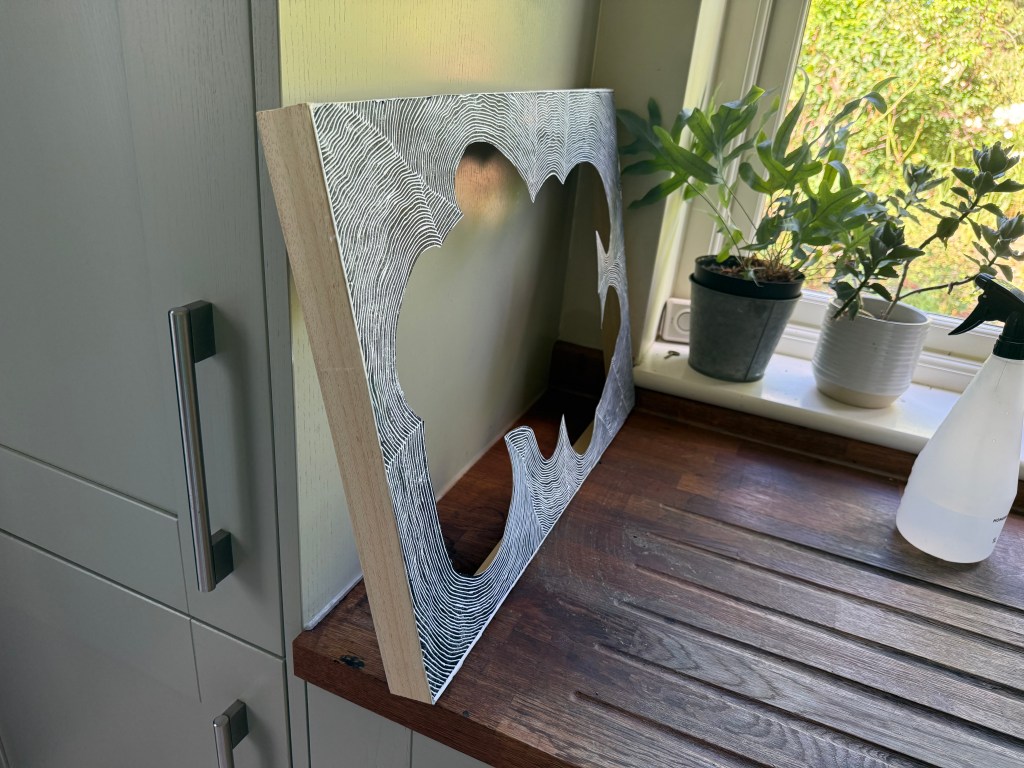
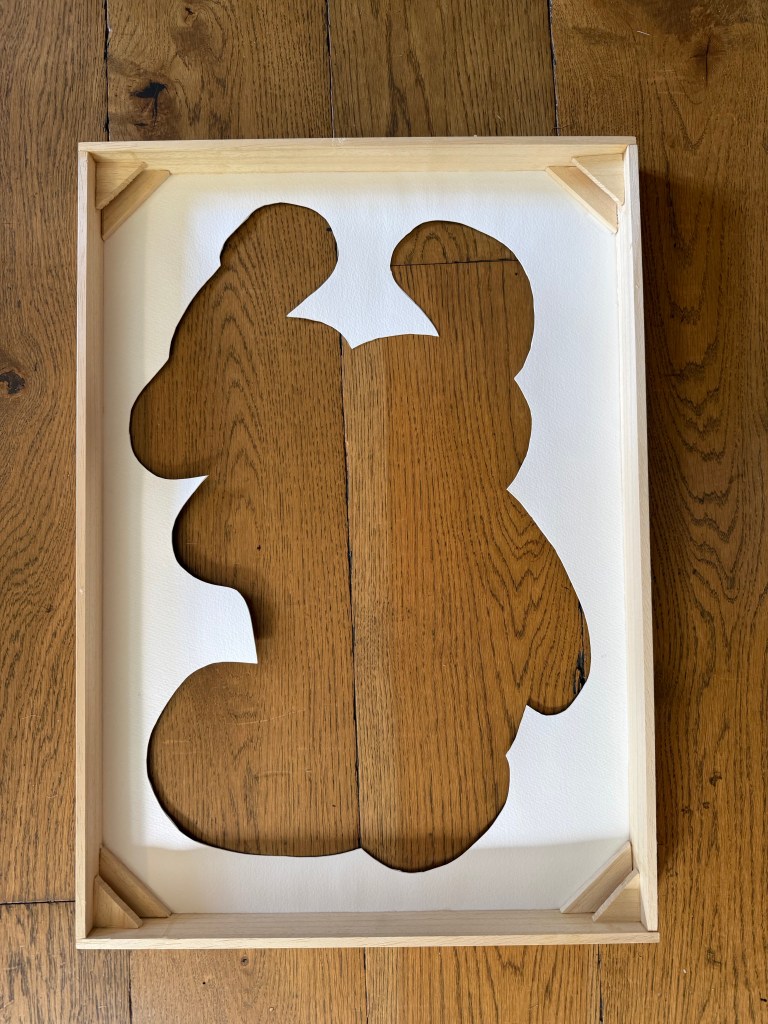
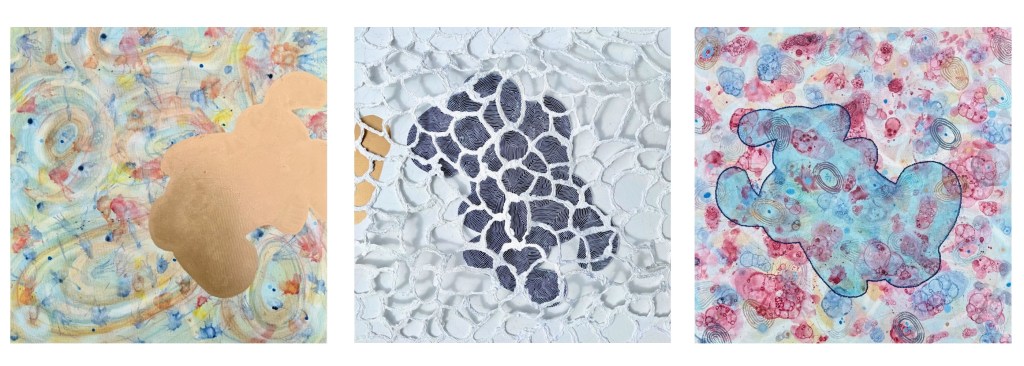
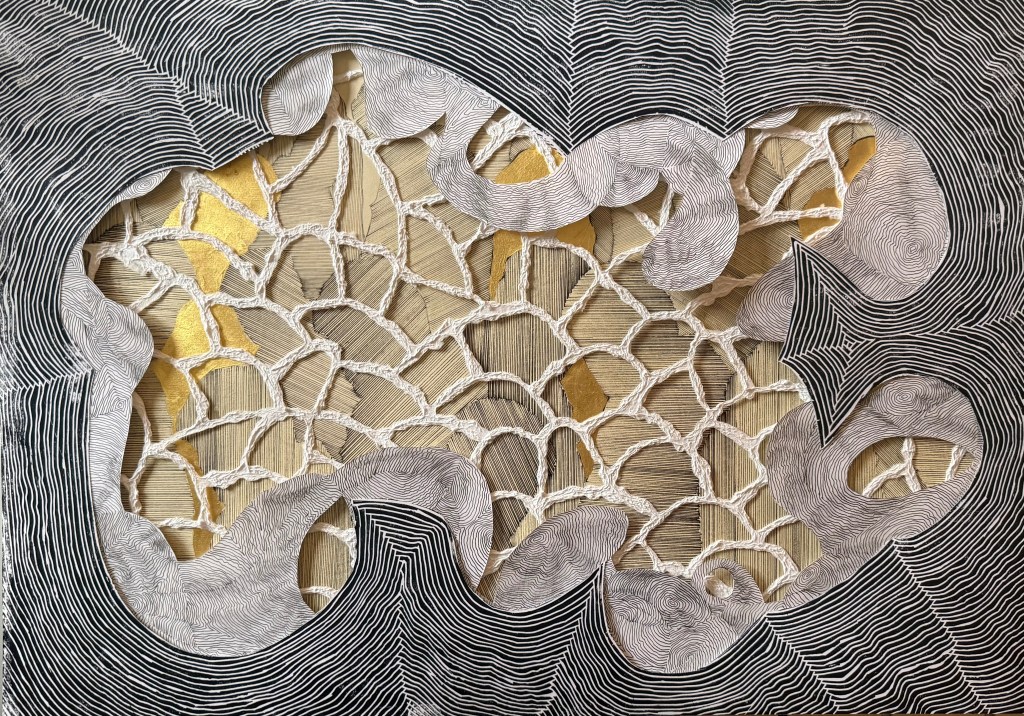
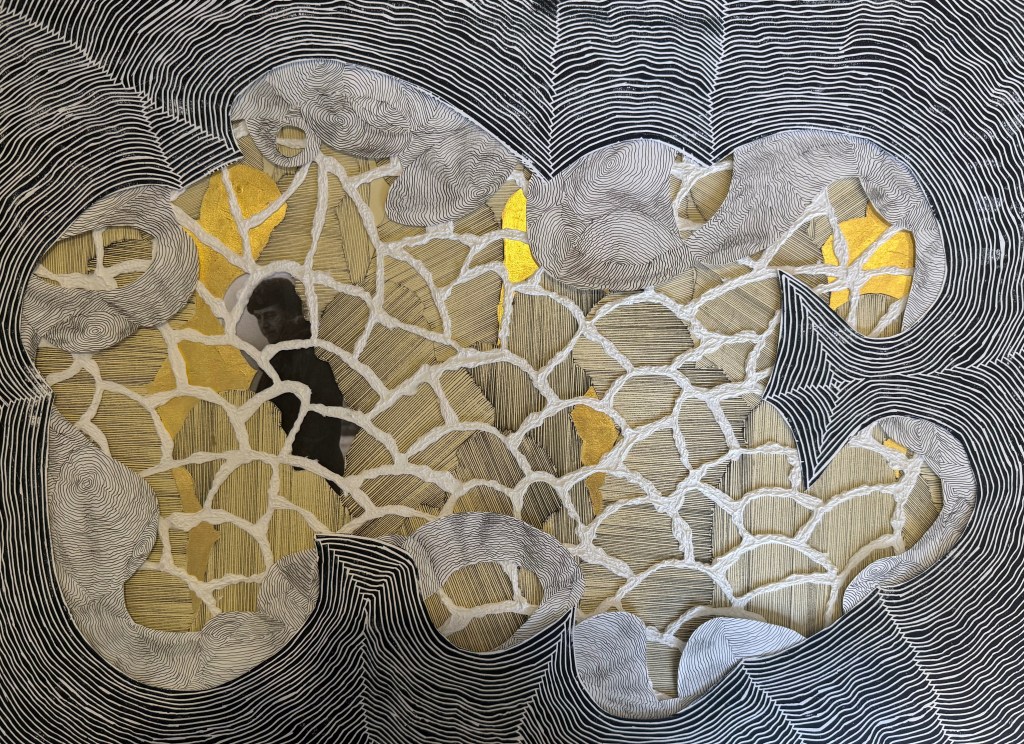
I also want to try working at a larger scale. I’m still thinking about microchimerism and the piece with the three foetal forms (The Accidental and the Incidental). I still can’t believe how randomly drawing a shape resulted in a form which I now see as having such a strong identity. I could use some of the processes that I have been experimenting with, such as bubbles and ink. I really enjoyed making the paper using the syringe ( Layers) – it feels organic and biological and maybe I could incorporate it in some way into a larger piece or even a layered piece. I can only make it in A2 but I think that I could easily attach sheets together to make a larger sheet. The only question is how I would transport it, but I think that once it’s dry it is quite flexible and more robust than it looks although it would probably be better to take in sheets and then join it together in situ using paper pulp which would have enough time to try over the install period. Failing that there’s always PVA glue.
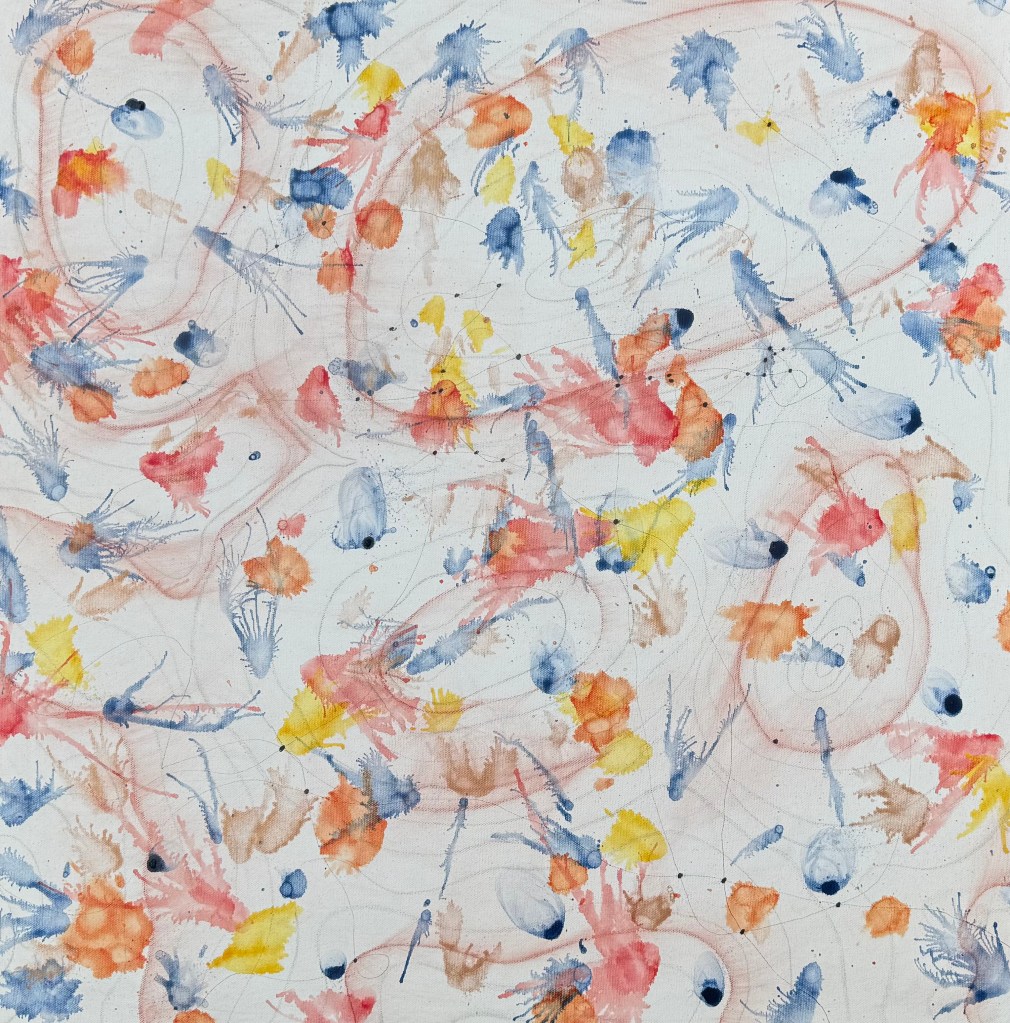
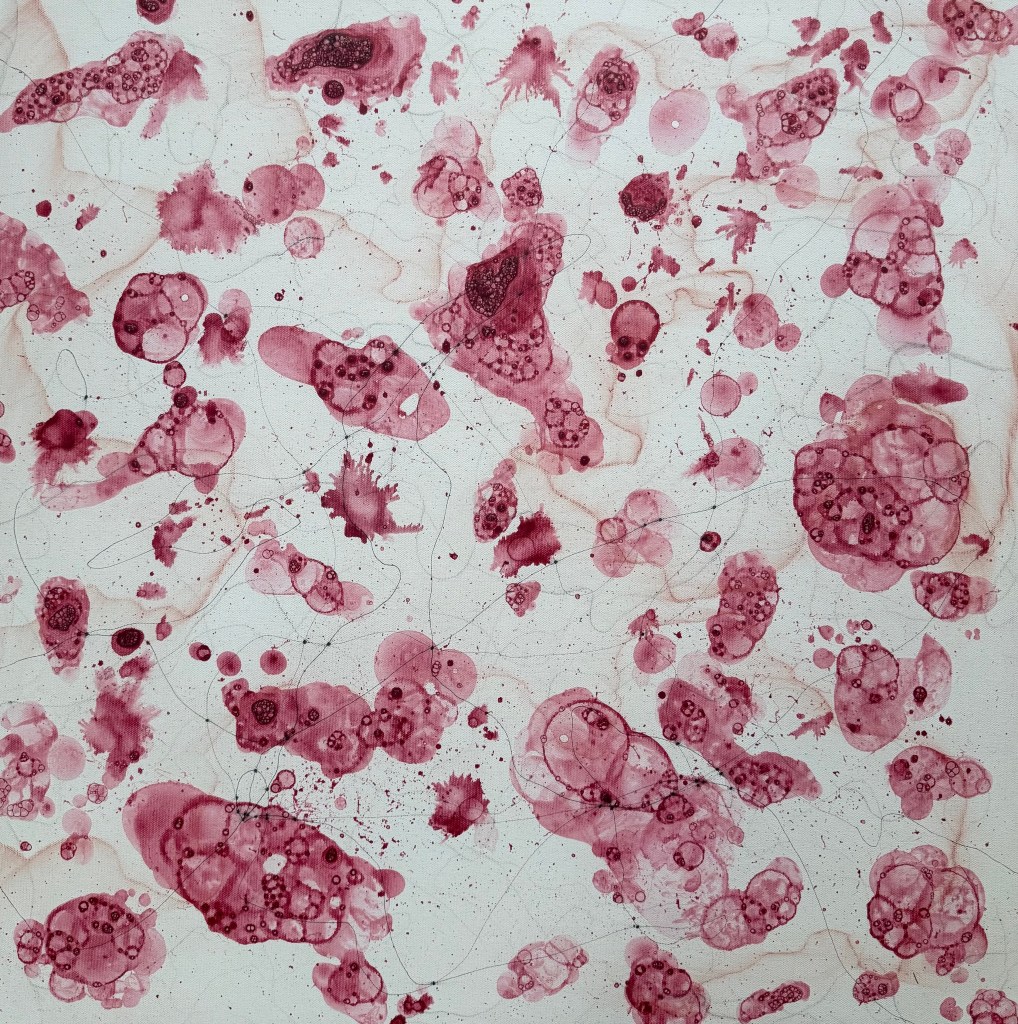
I’m feeling positive and excited that I have a loose idea – some soft structure – let’s see where it takes me.