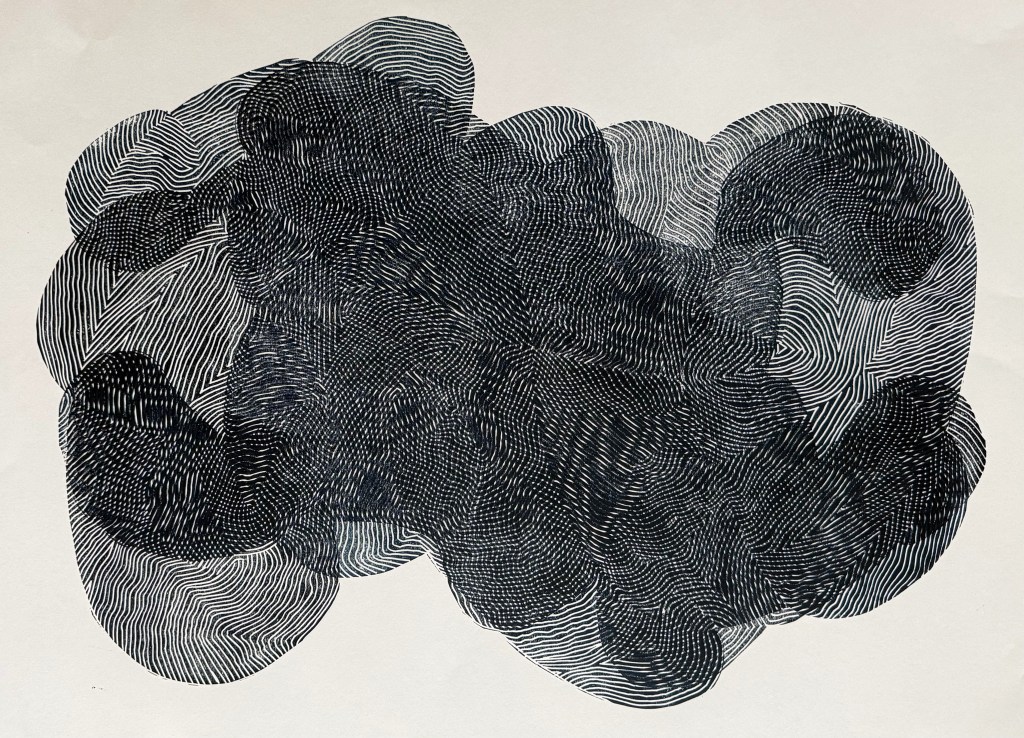
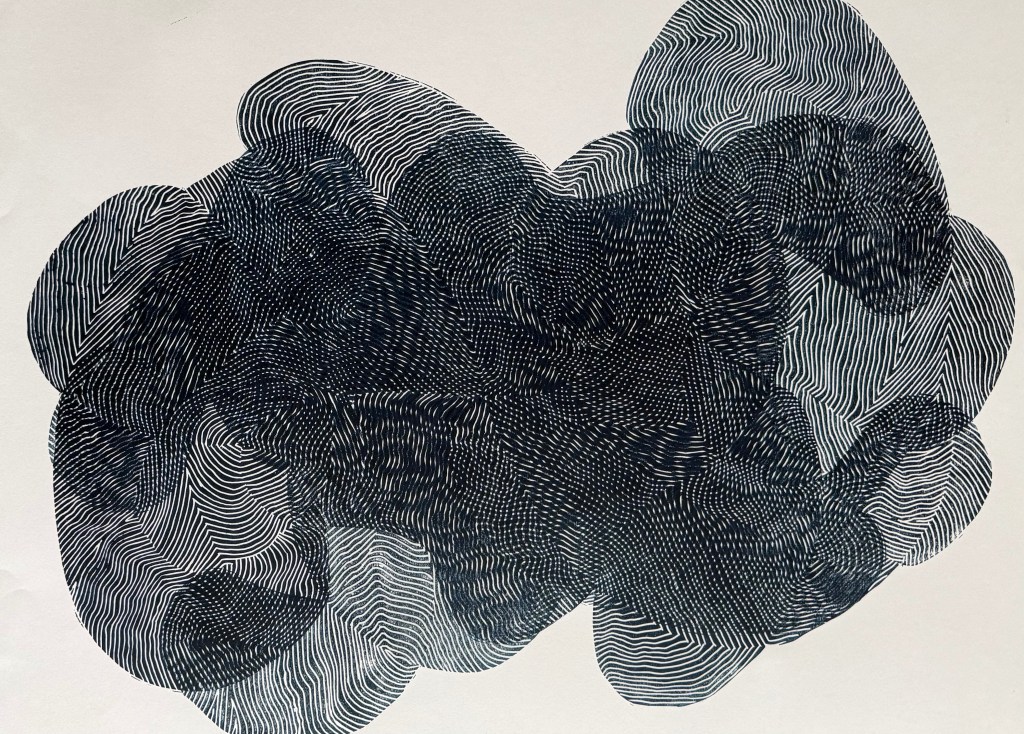
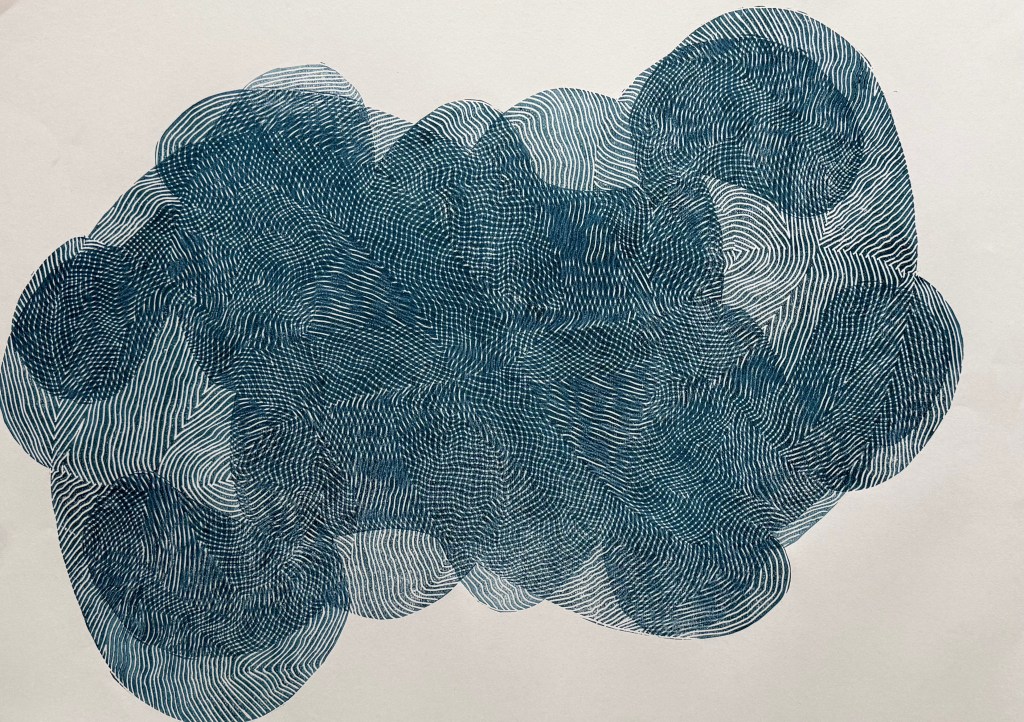
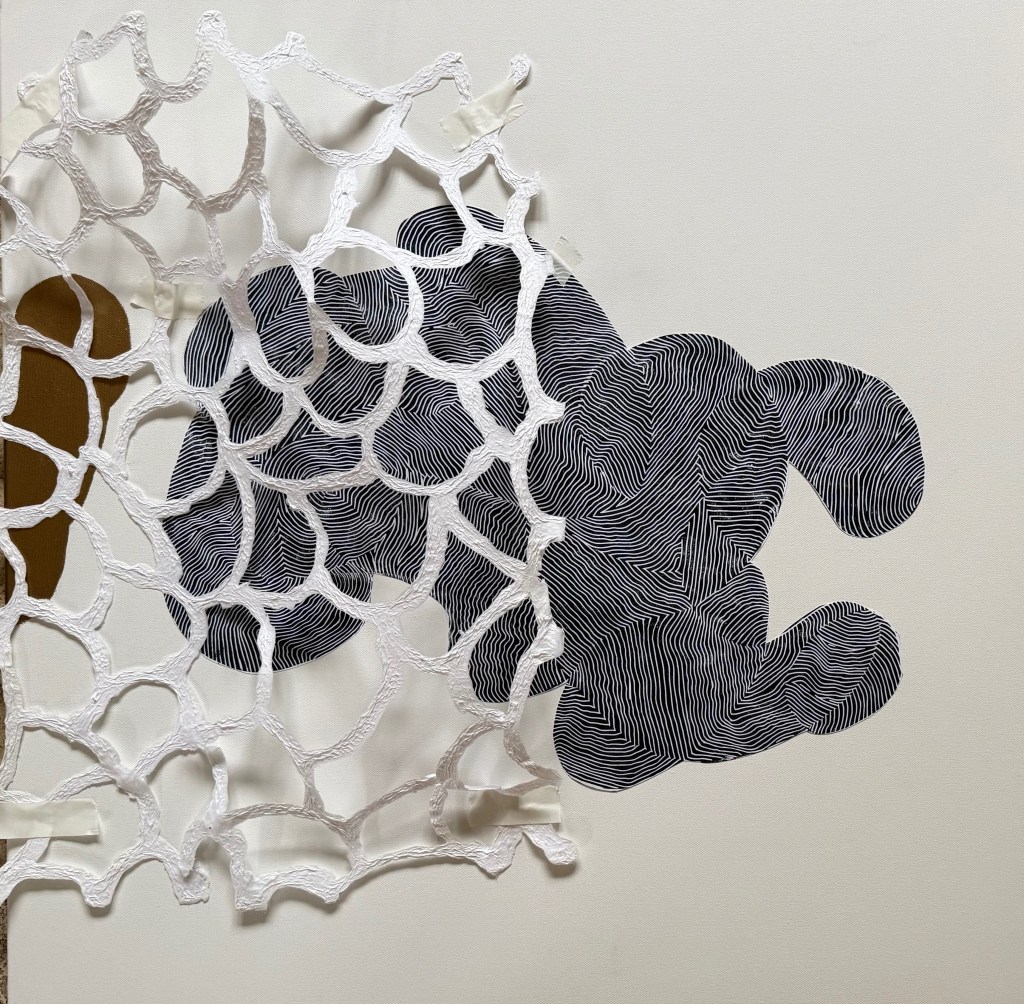
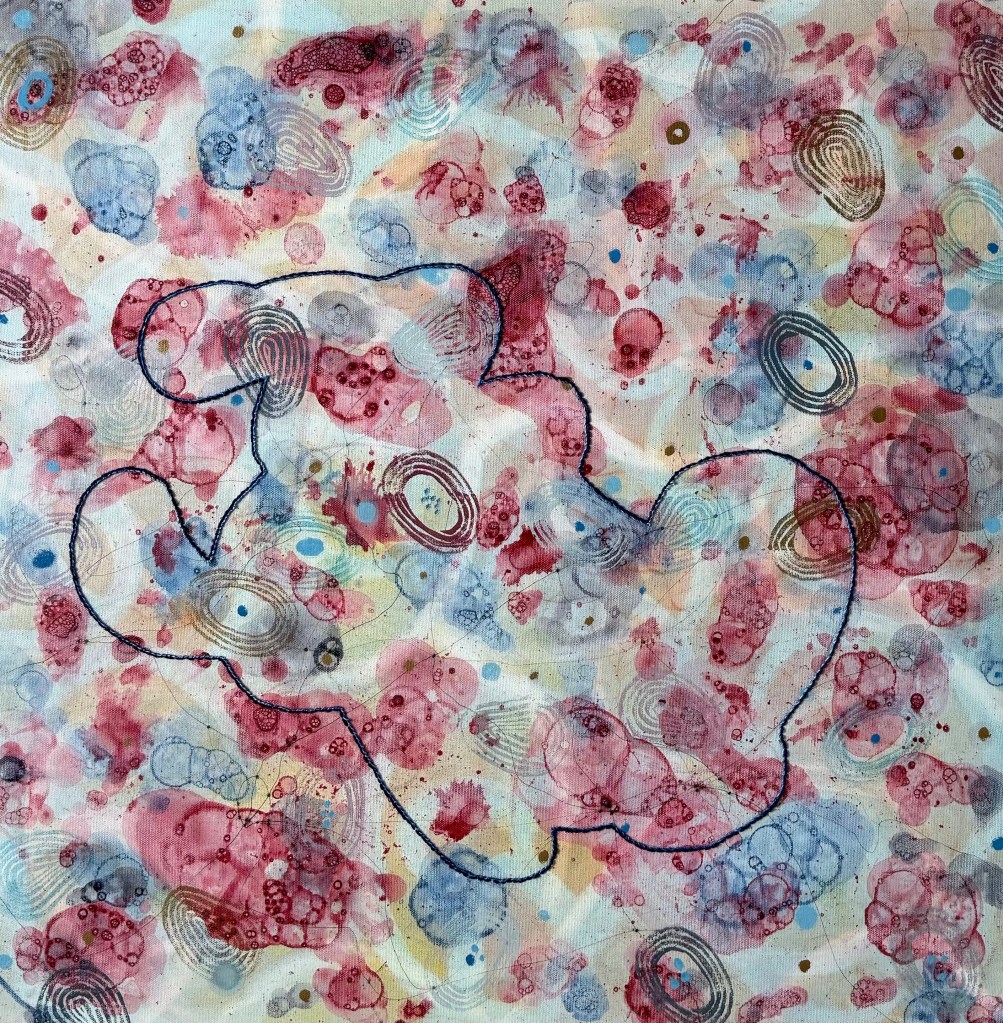
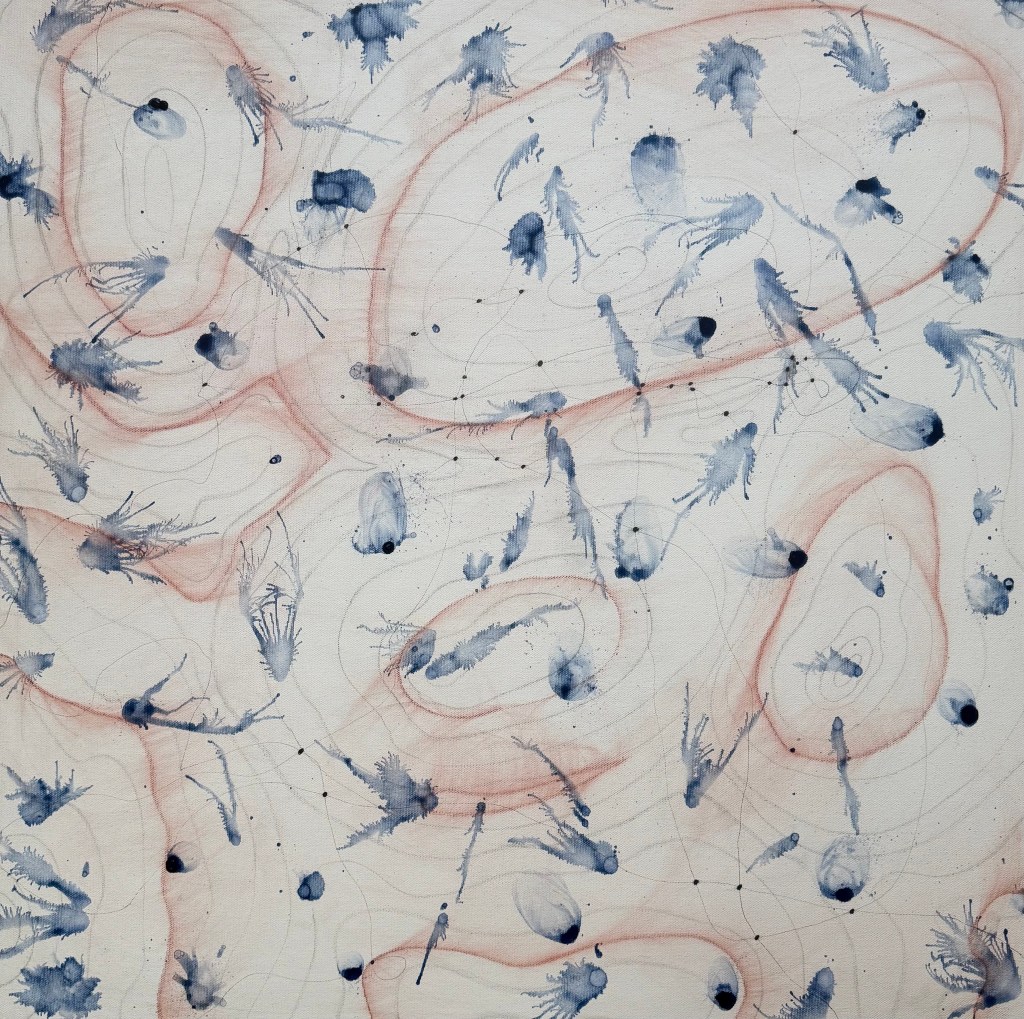
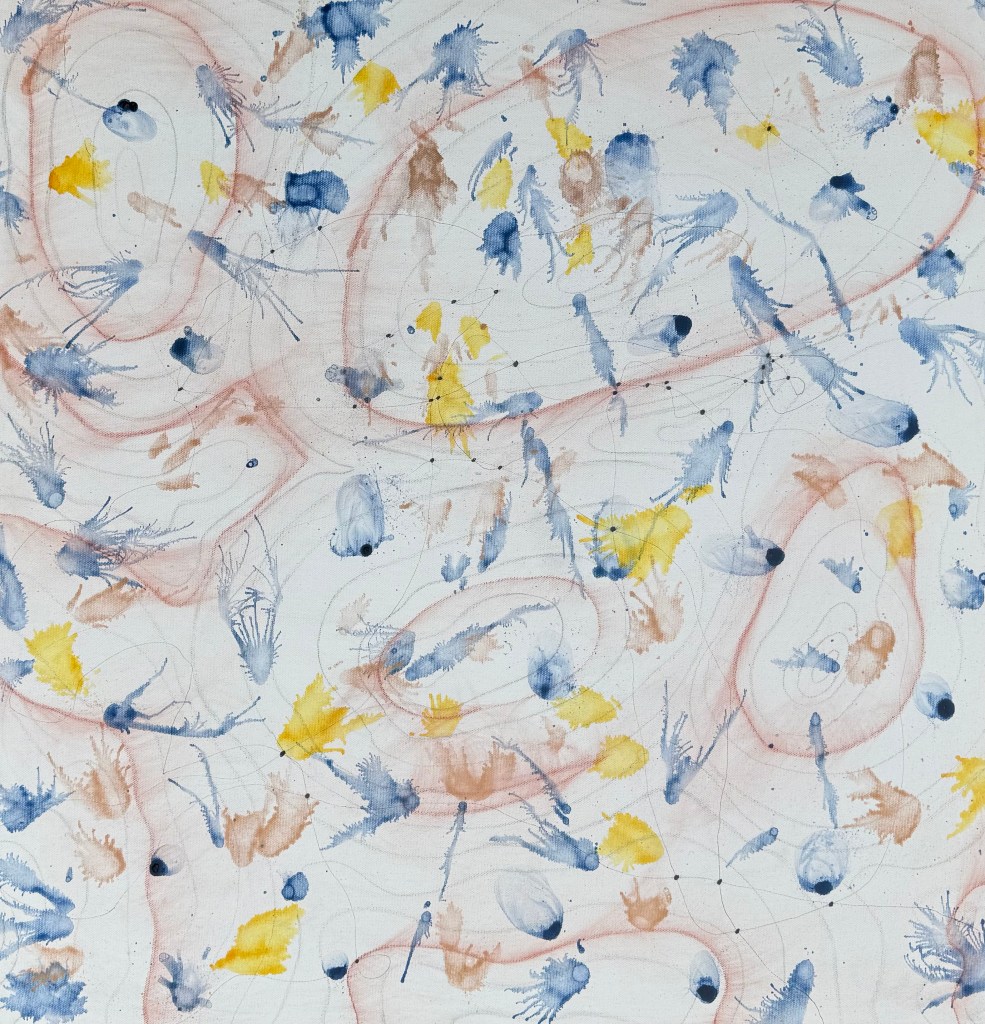
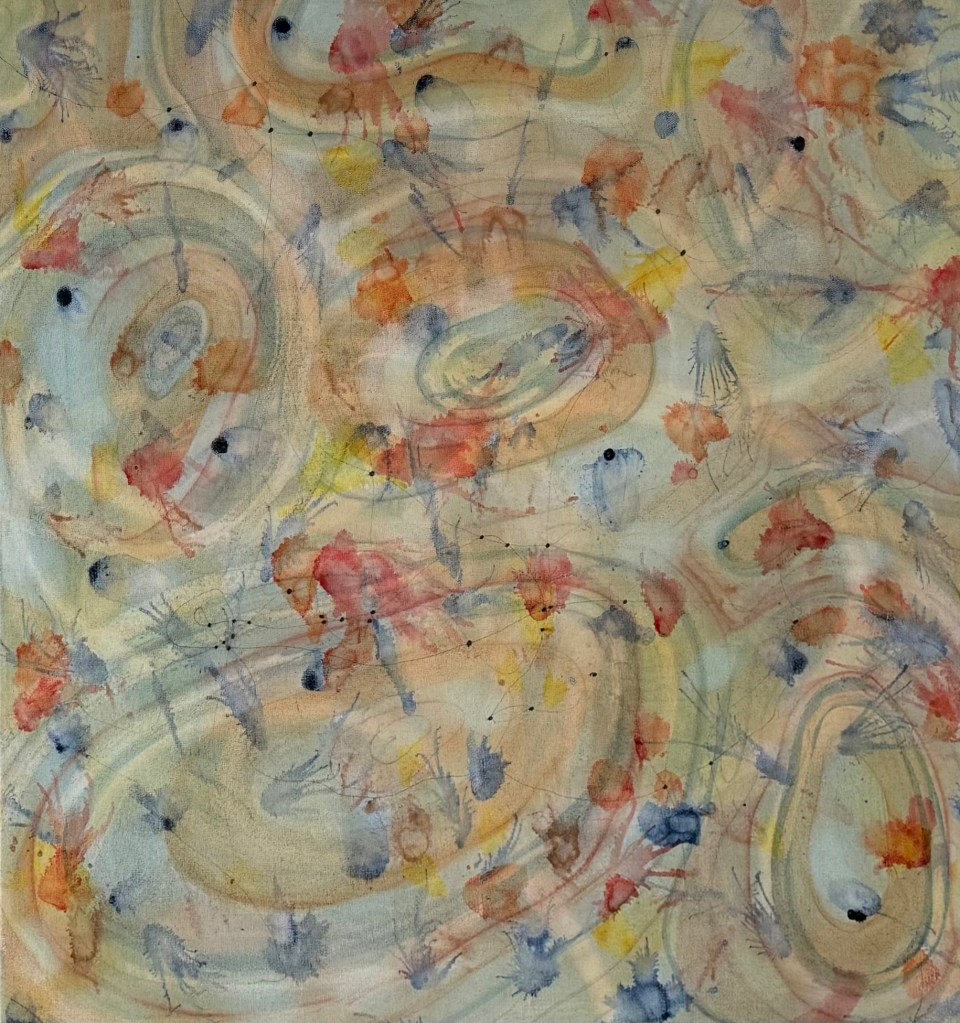
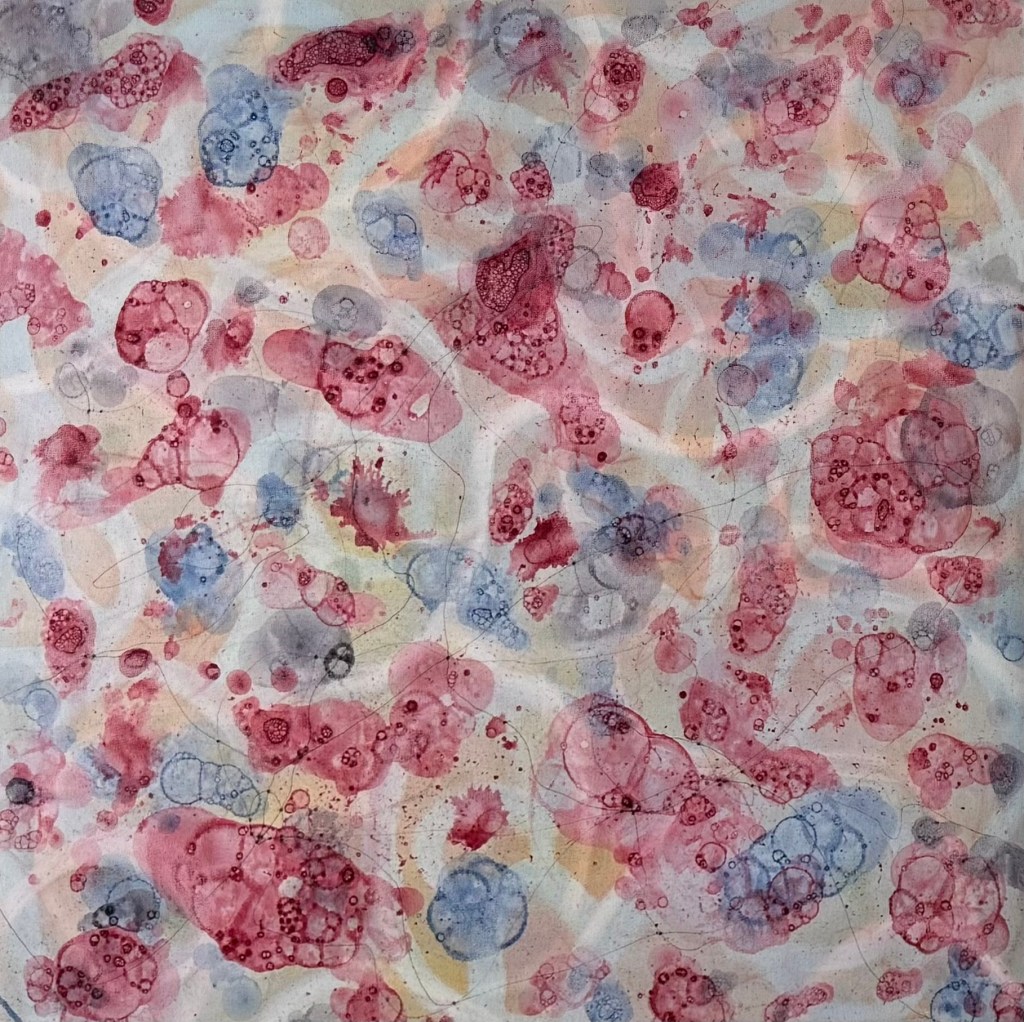
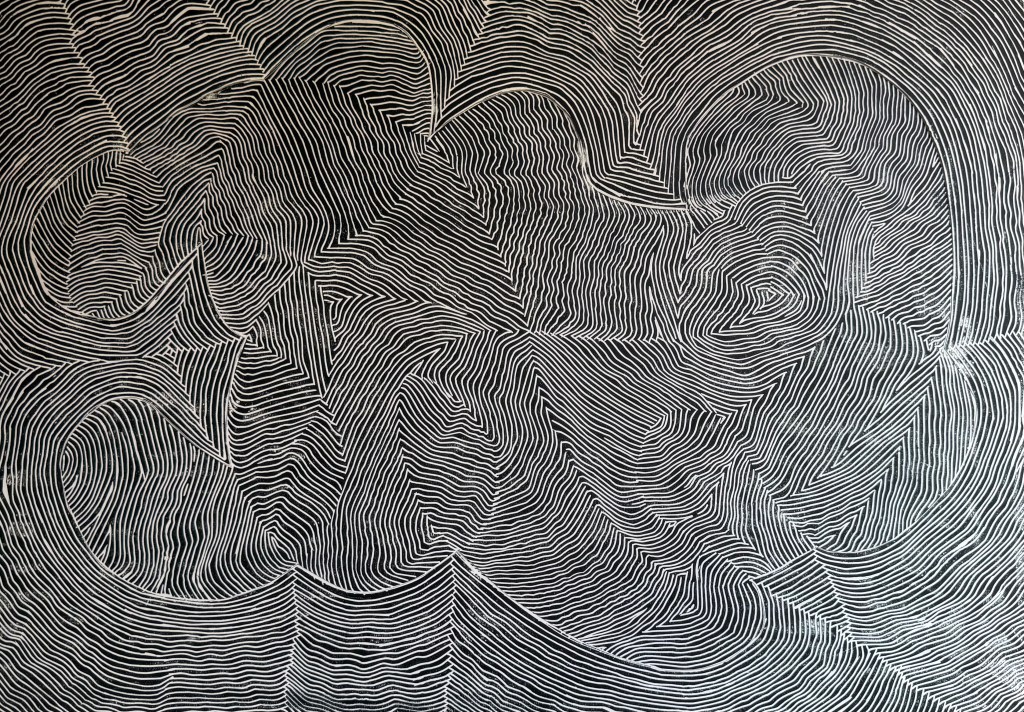
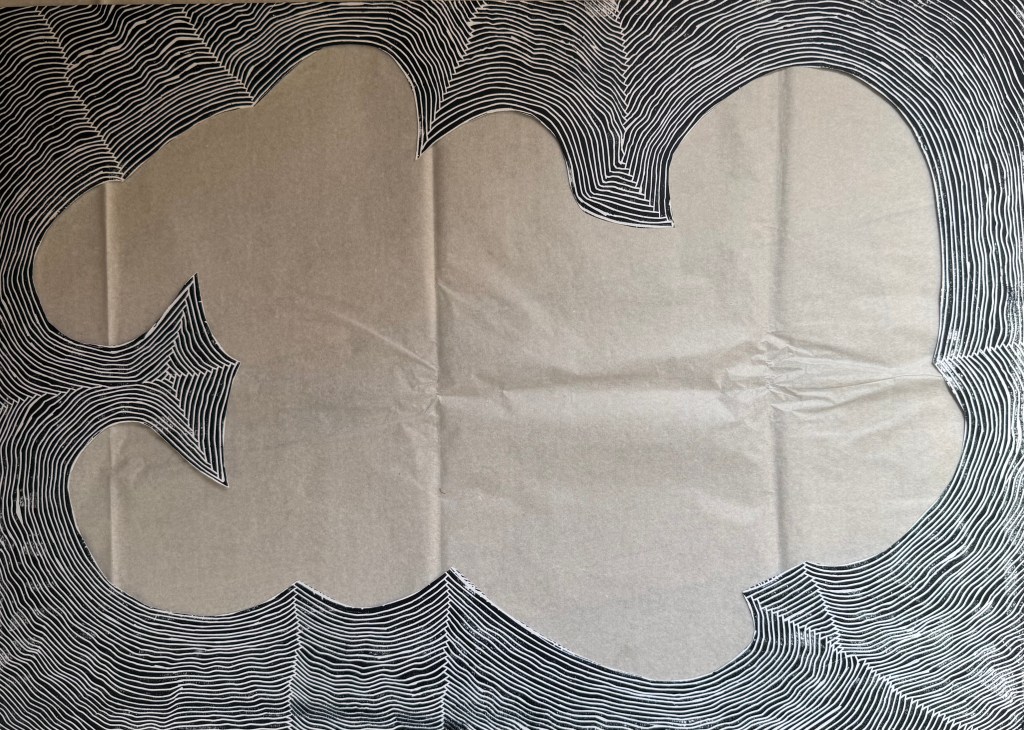
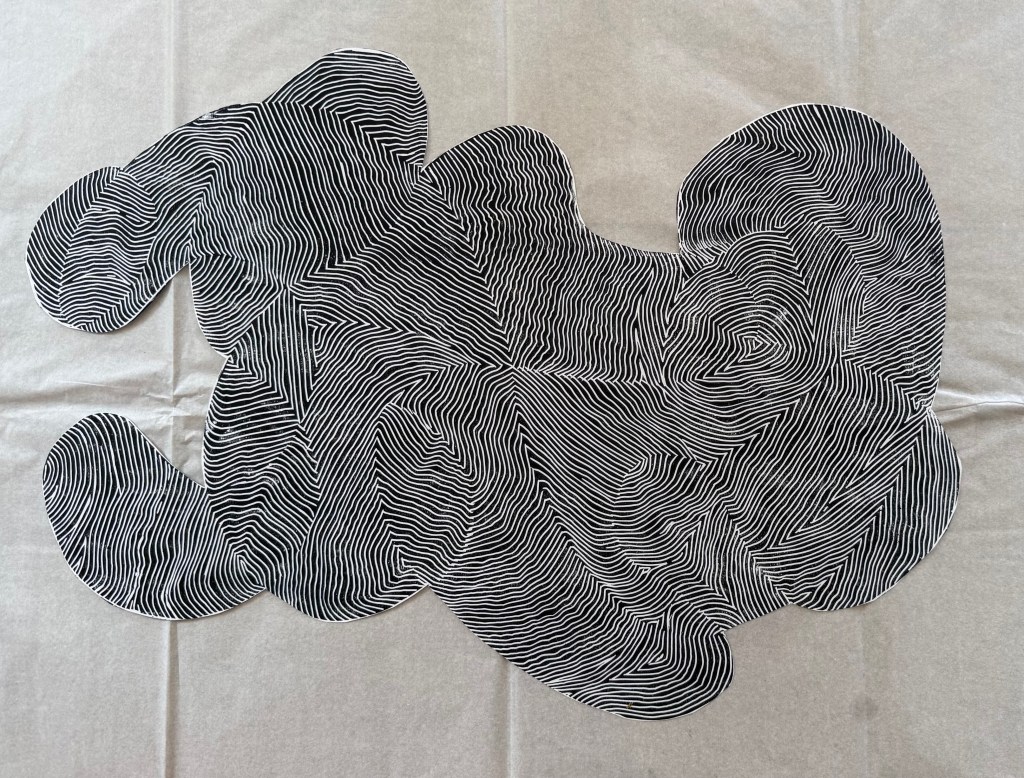
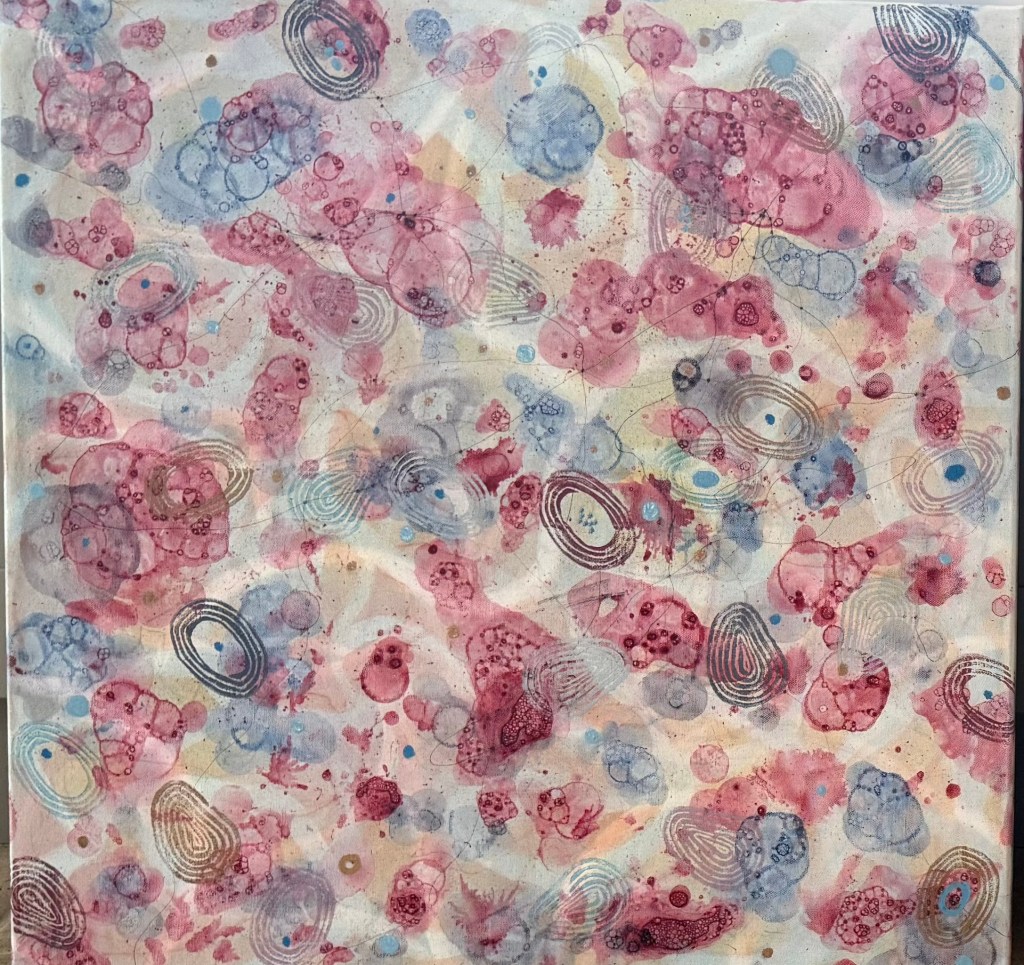
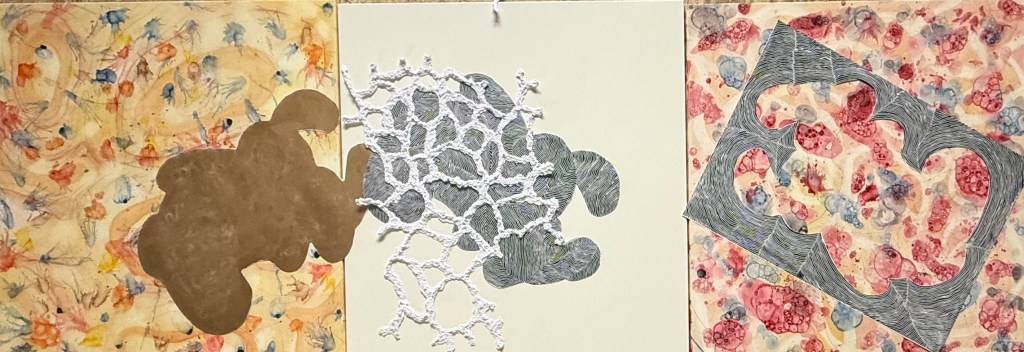
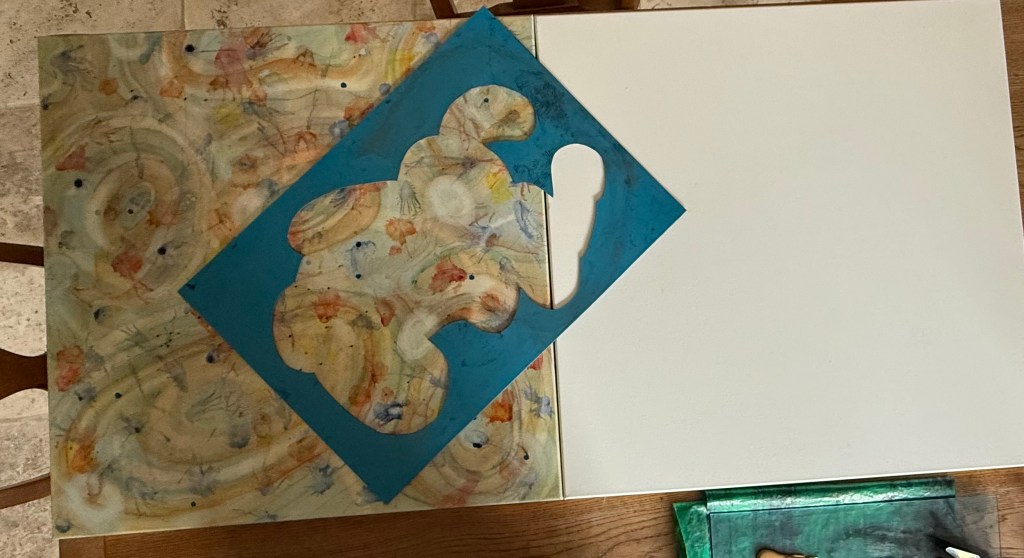
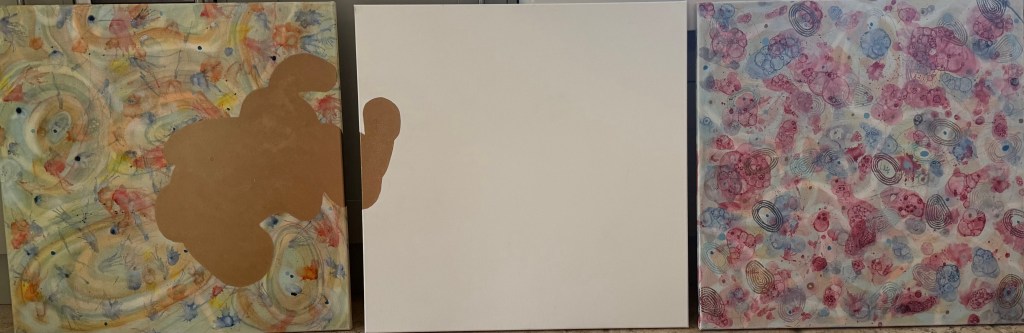
I’ve been continuing to work on the canvases. I’ve decided that instead of printing the shape on the second one, I will collage a print – printing directly could be quite tricky and so I decided not to take any risks which might involve having to source another canvas and to reprint the gold, which takes quite a while to dry. I’m not sure yet whether I’ll use a single shape or one that’s been overprinted, which could represent my paradoxical nature or make me different to the other two – whilst making them I’ve decided that the second canvas somehow represents me. I made some prints overlaying the lino:
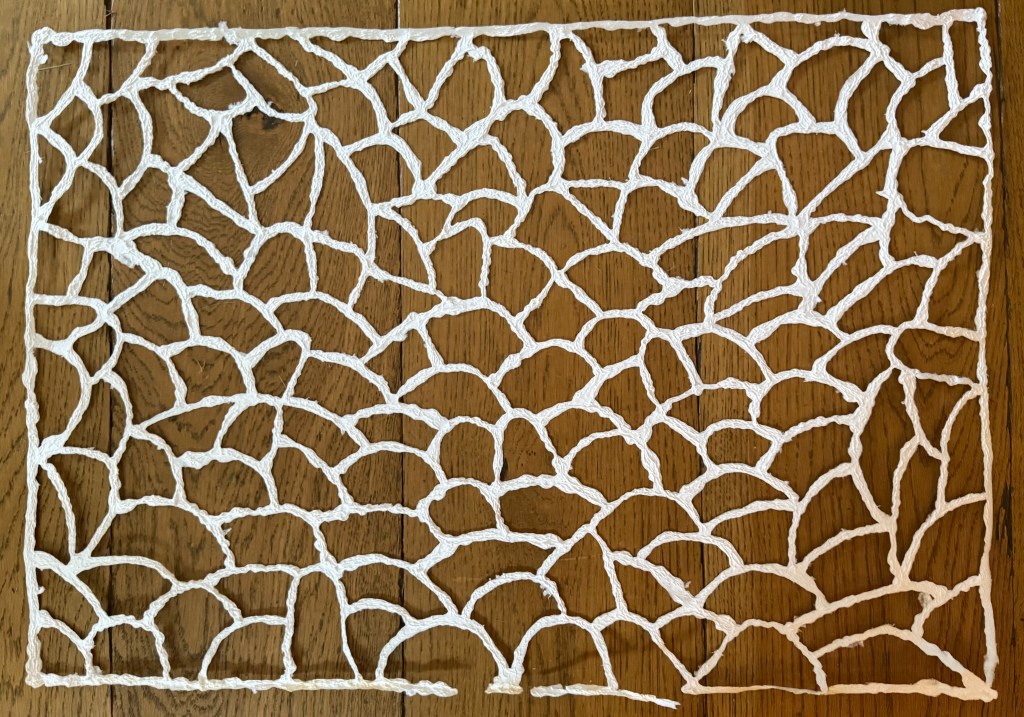
The konnyaku powder has made a world of difference to the paper lace making. It seems much more flexible and less prone to breaking, but time will tell. I’m currently thinking that I will create some form with it over the canvas – pushing it up in places and holding it in place with some stitching. This way hopefully it will add the extra dimension of creating shadows.
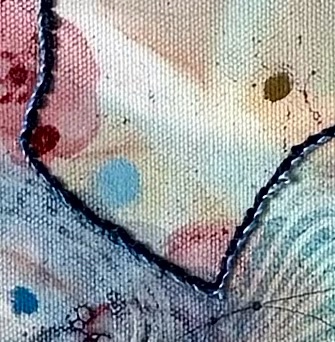
I’ve stitched the outline of the shape onto the third canvas. I used a graduated blue thread, but this turned out to be too subtle so I went round it with a darker blue – I really like the effect of the combination.
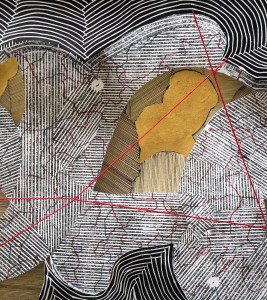
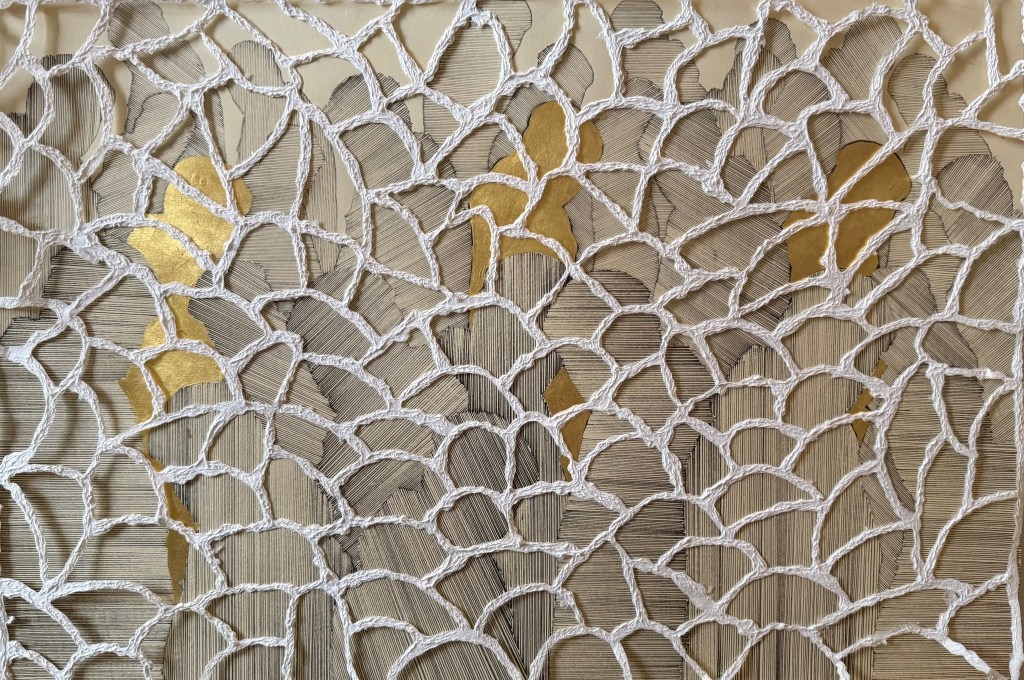
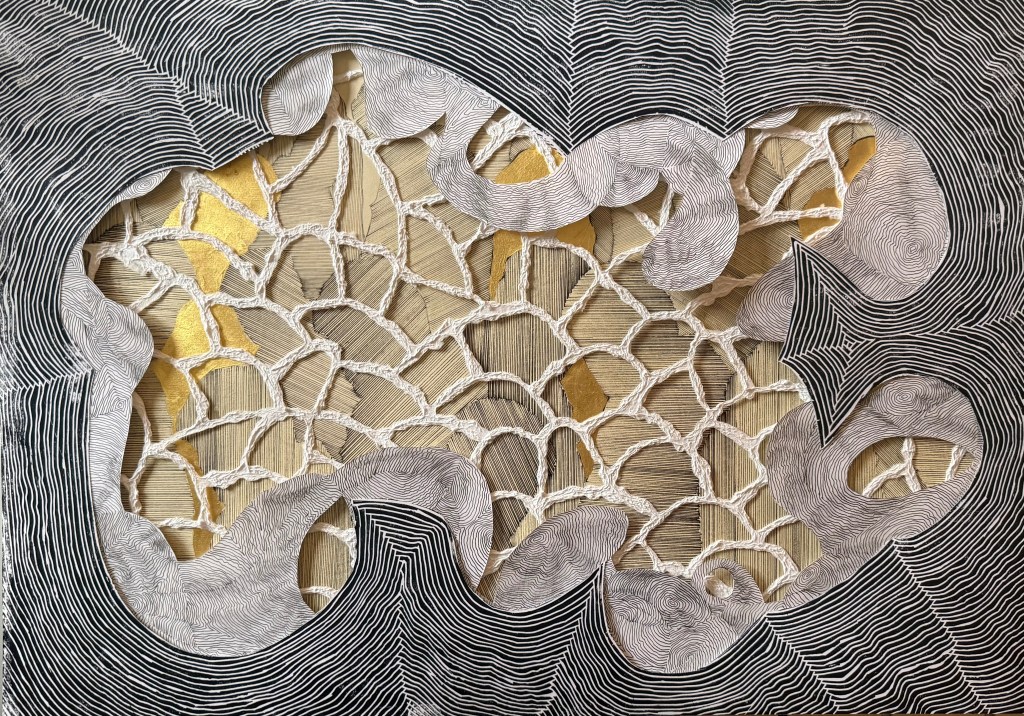
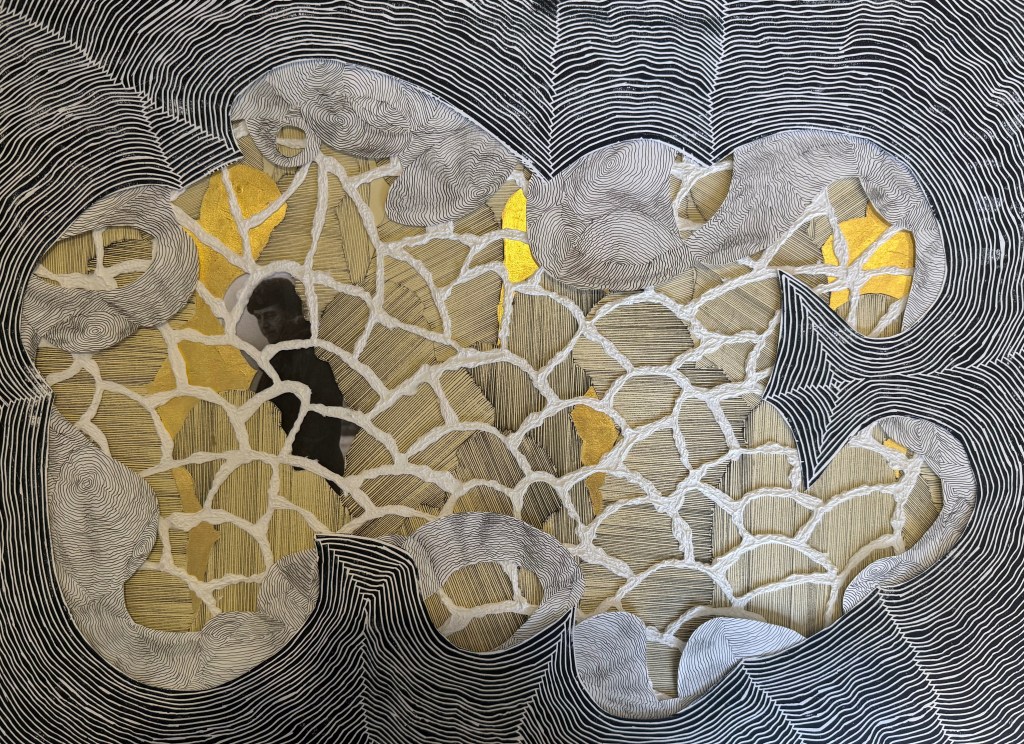
I managed to use a narrow syringe to make some paper lace which I’m thinking about using in the layered piece. I’m going to use the line drawing of the silhouette of my father with the gold as the base layer and then have the paper lace plus a couple of other layers. Whilst experimenting it occurred to me that I could have the actual image as the base layer. It stands out too much in the photo so I’m going to try putting some sheer fabric over the top to knock it back a bit. The layers are also just lying on top of each other. Once I’ve decided how I’m going to layer them I plan to use some wooden spacers used for framing to create the gaps in between.
I like how the top layer is the border from the print and together with the use of the paper lace creates a connection with the canvases, making everything more cohesive. I’m now thinking that I might try creating lace with the shape of the silhouette and see how that looks, rather than the current pattern that could be said to be a bit random. As I’m thinking that I might put the red thread on the top layer as I have done previously, it would mean that it would be less busy.
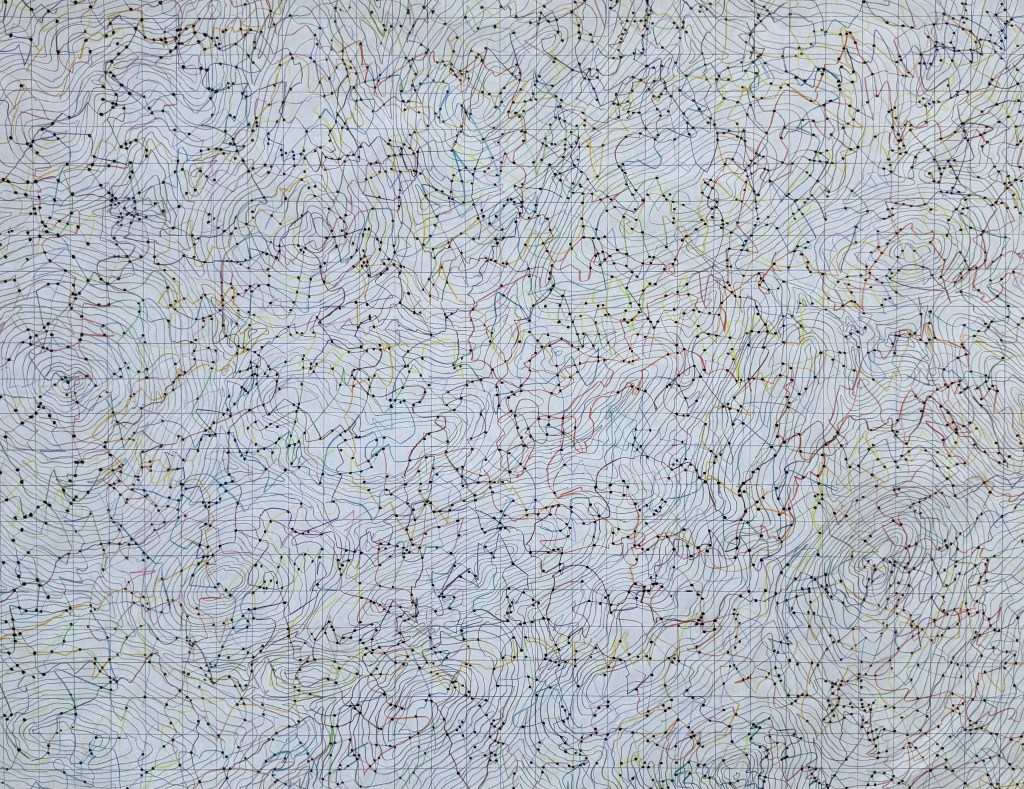
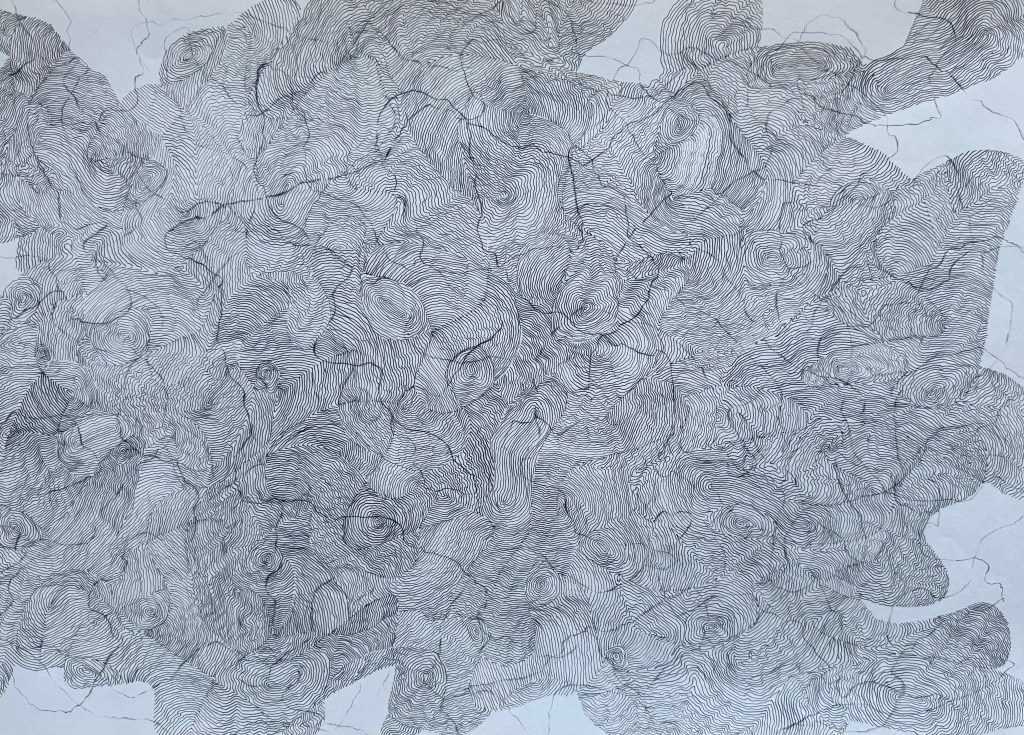
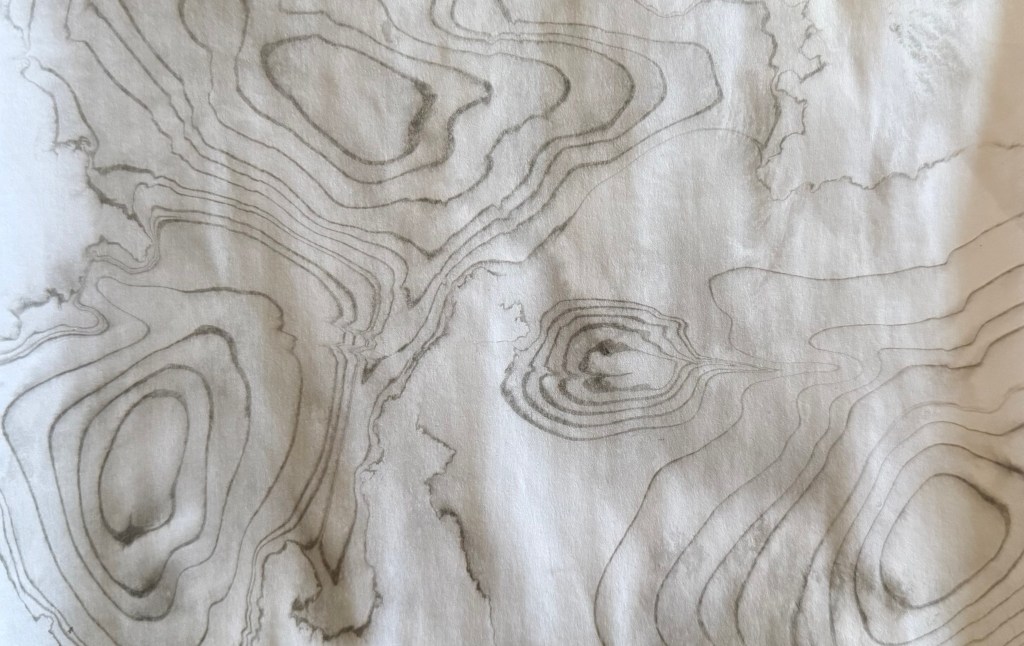
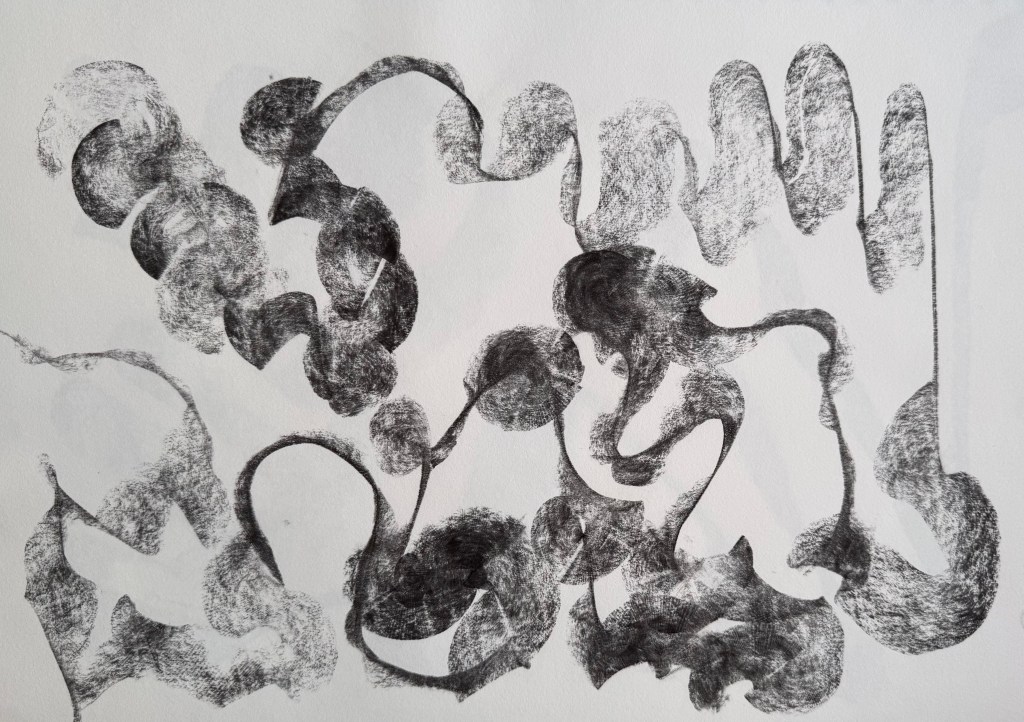
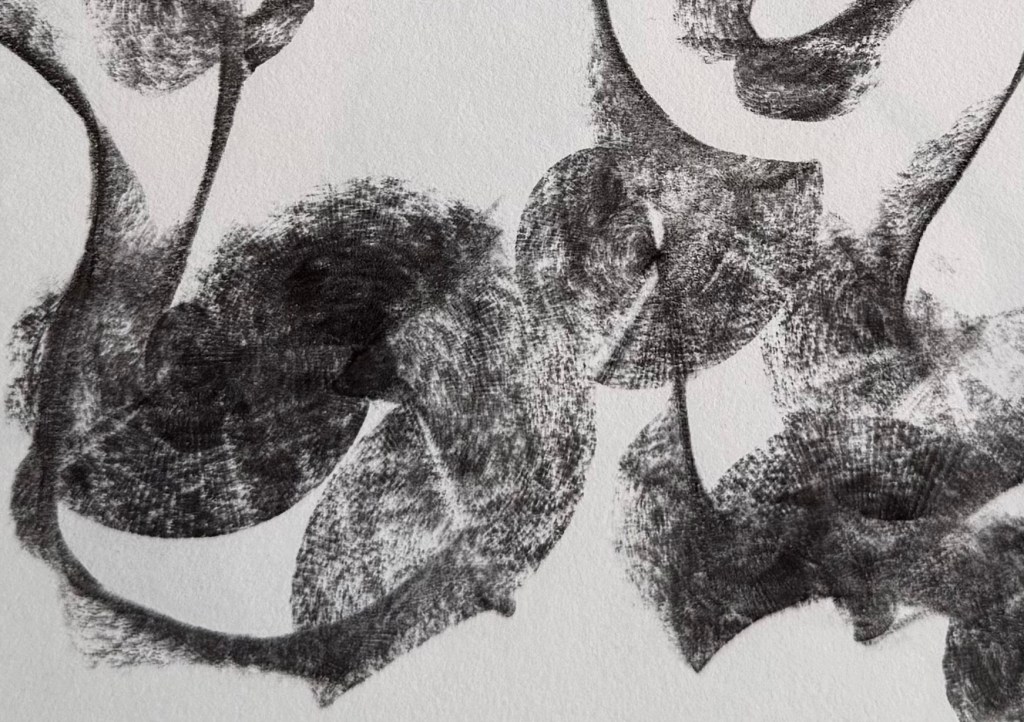
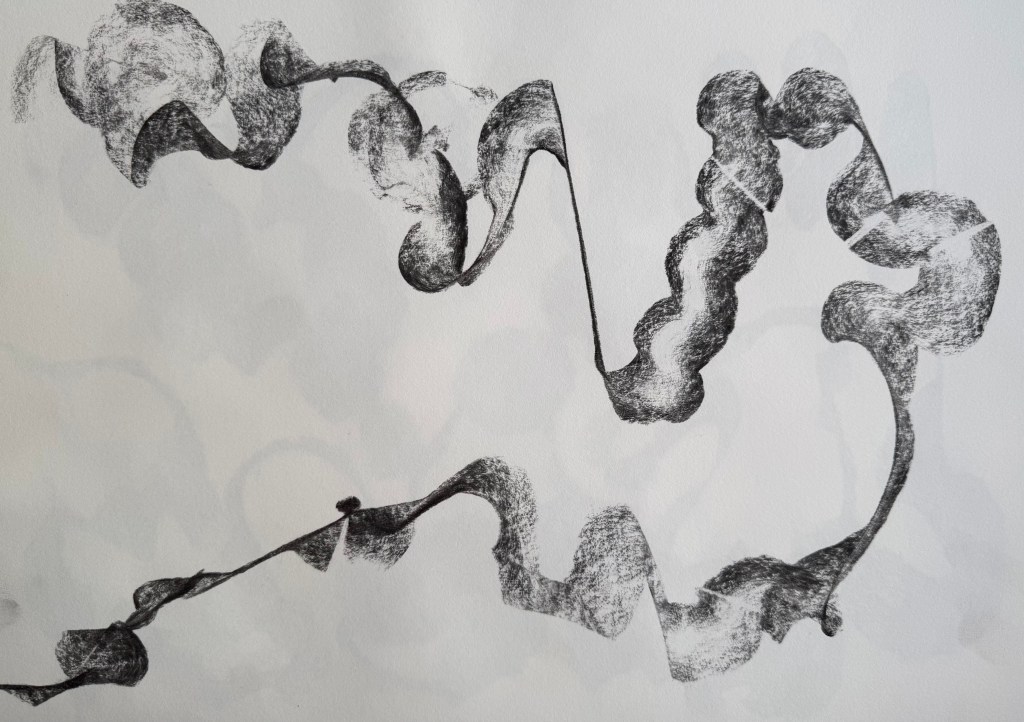
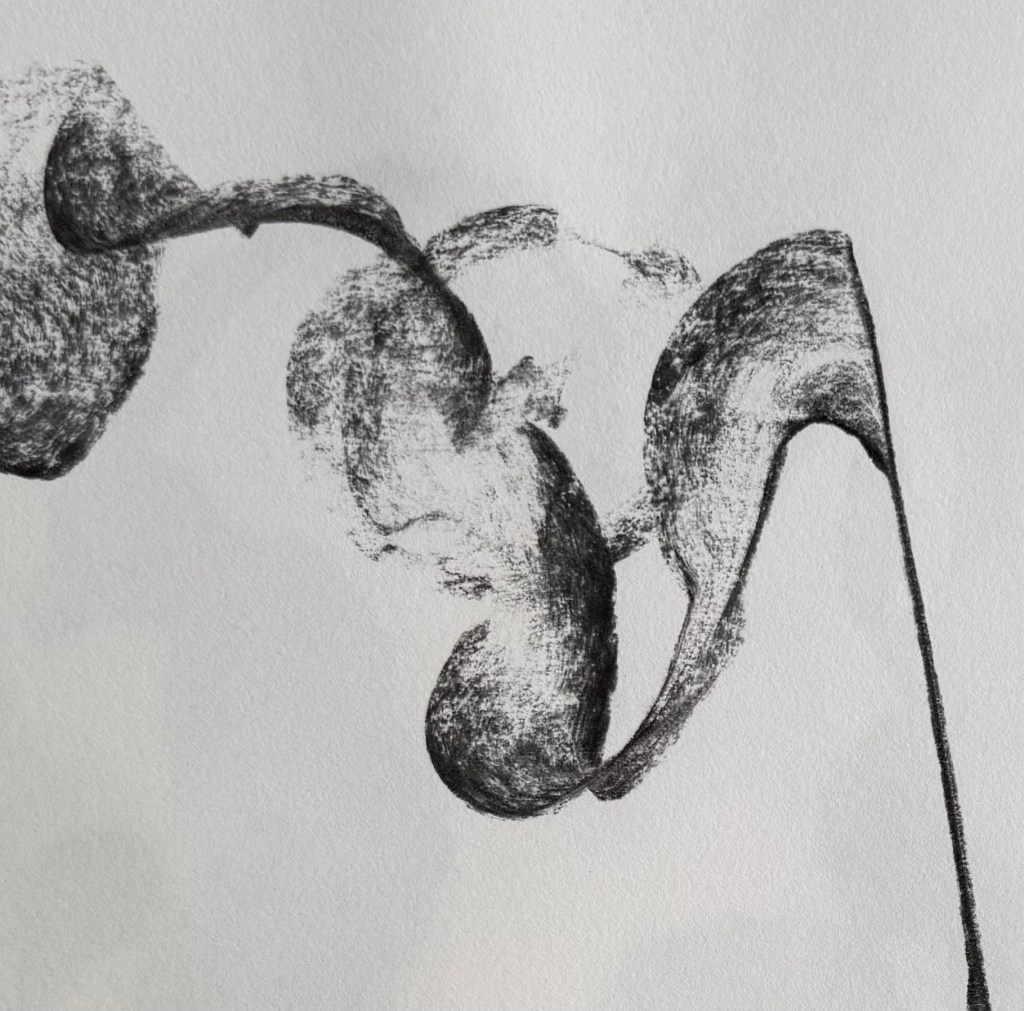
In the meantime, I’ve discovered that it’s the deadline for the Trinity Buoy Drawing Prize tomorrow, so I thought that I would take advantage of the student discounted entry fee and enter some work. I chose the pencil and pastel drawing from Do I Have to Look?, the map I drew in Late Night Ramblings and my latest drawing experimenting with organic non-straight lines. I’m not holding my breath.
But I feel as if I’m making some progress, and I’ve realised that I haven’t posted about it yet – I’ve been so caught up in it.
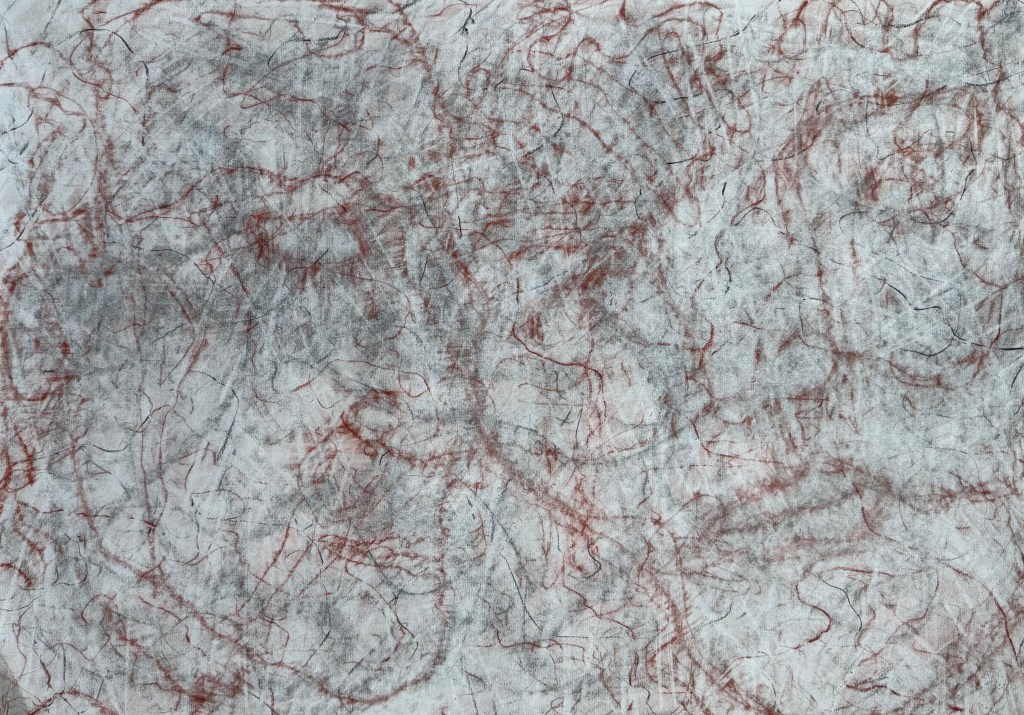
I took 3 70cm x 70cm canvases I had knocking around from a previous project several years ago. I did some automatic drawing on both of then using a fine liner pen, some charcoal and pastel. This step feels important as it has been my constant over the last two years.
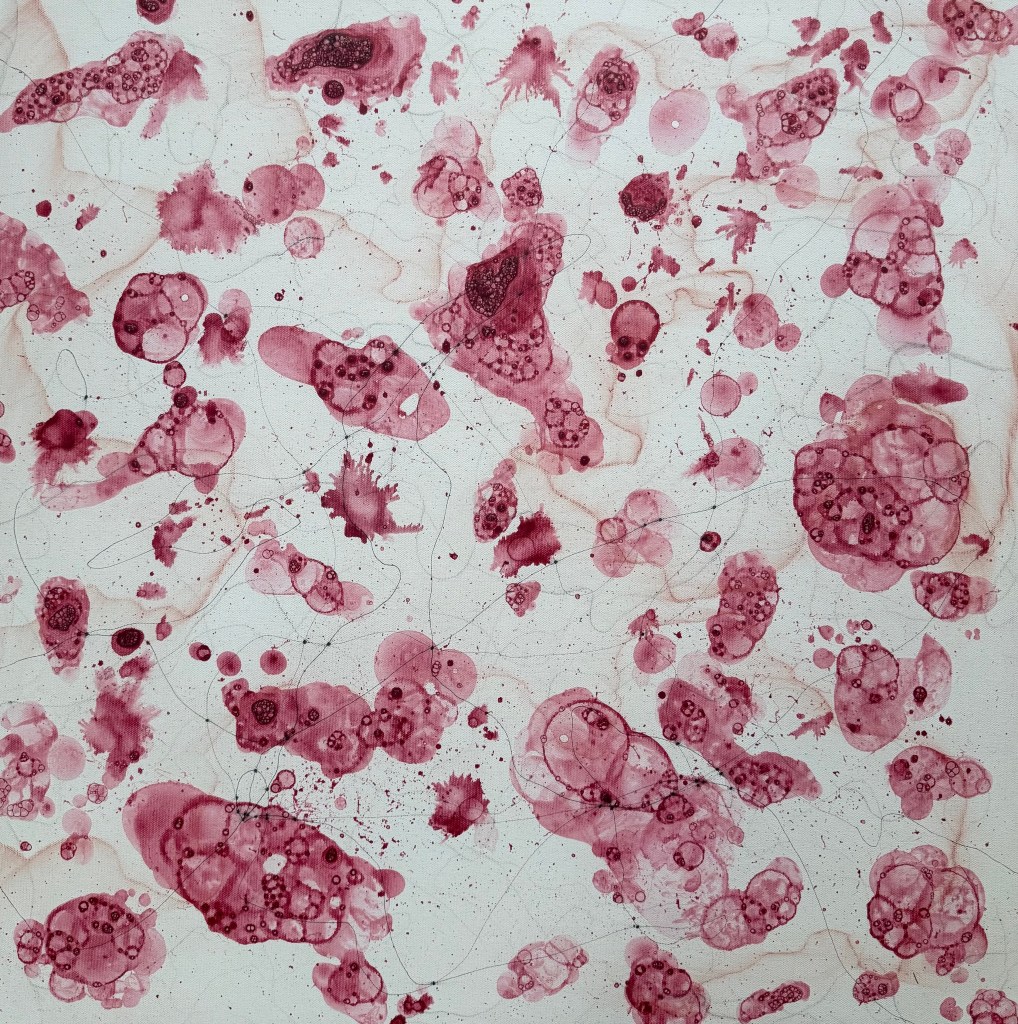
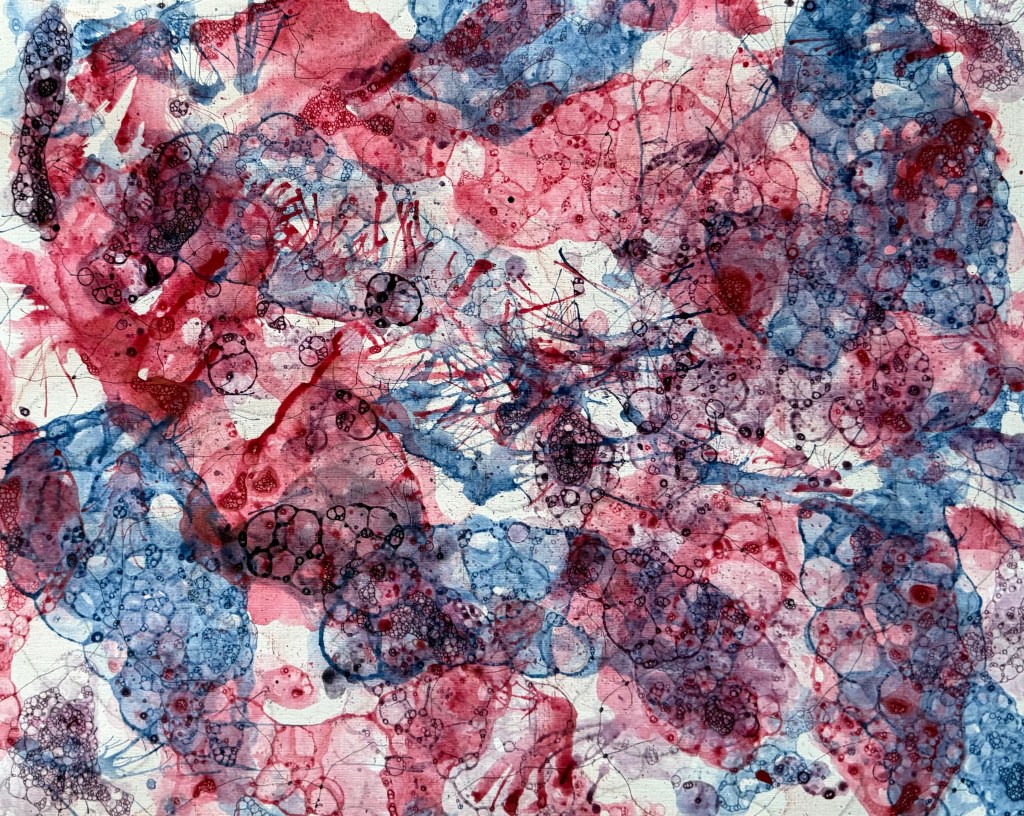
On 2 of the canvases I used acrylic paint and soap solution to experiment with bubbles and also dropping the solution and blowing using a straw.
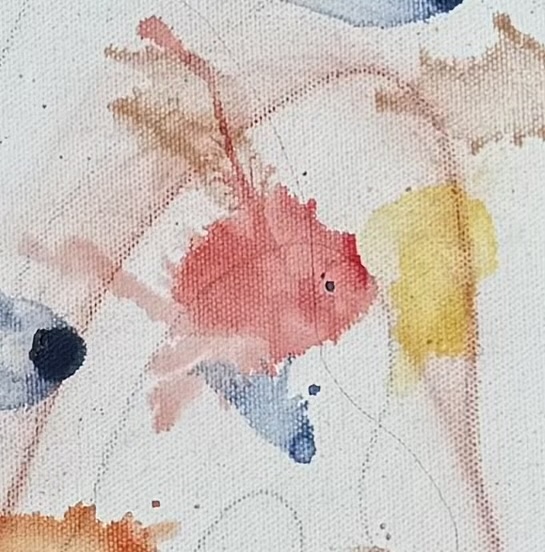
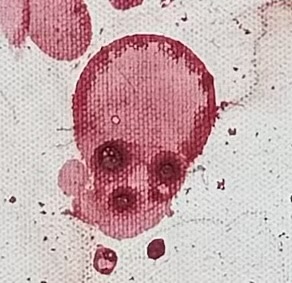
I love how you can see things in the shapes:
A goldfish and a skull:
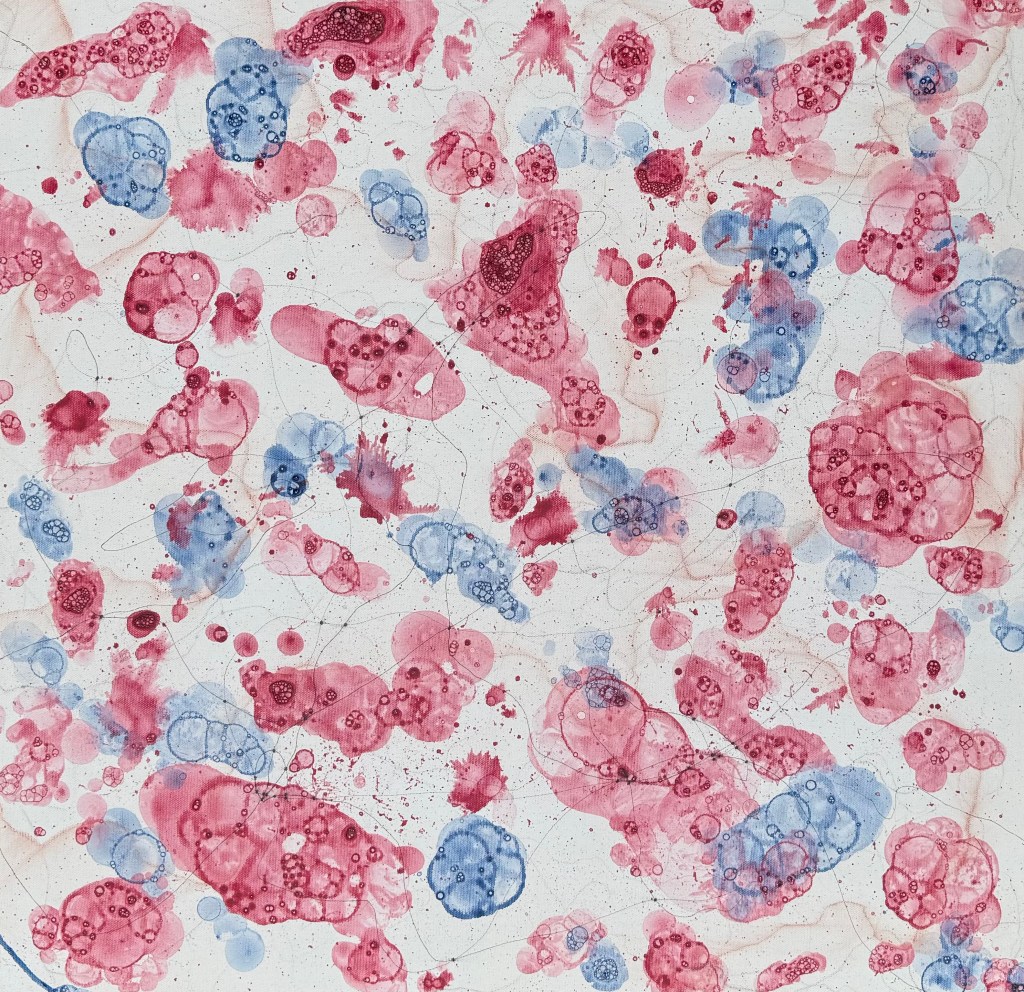
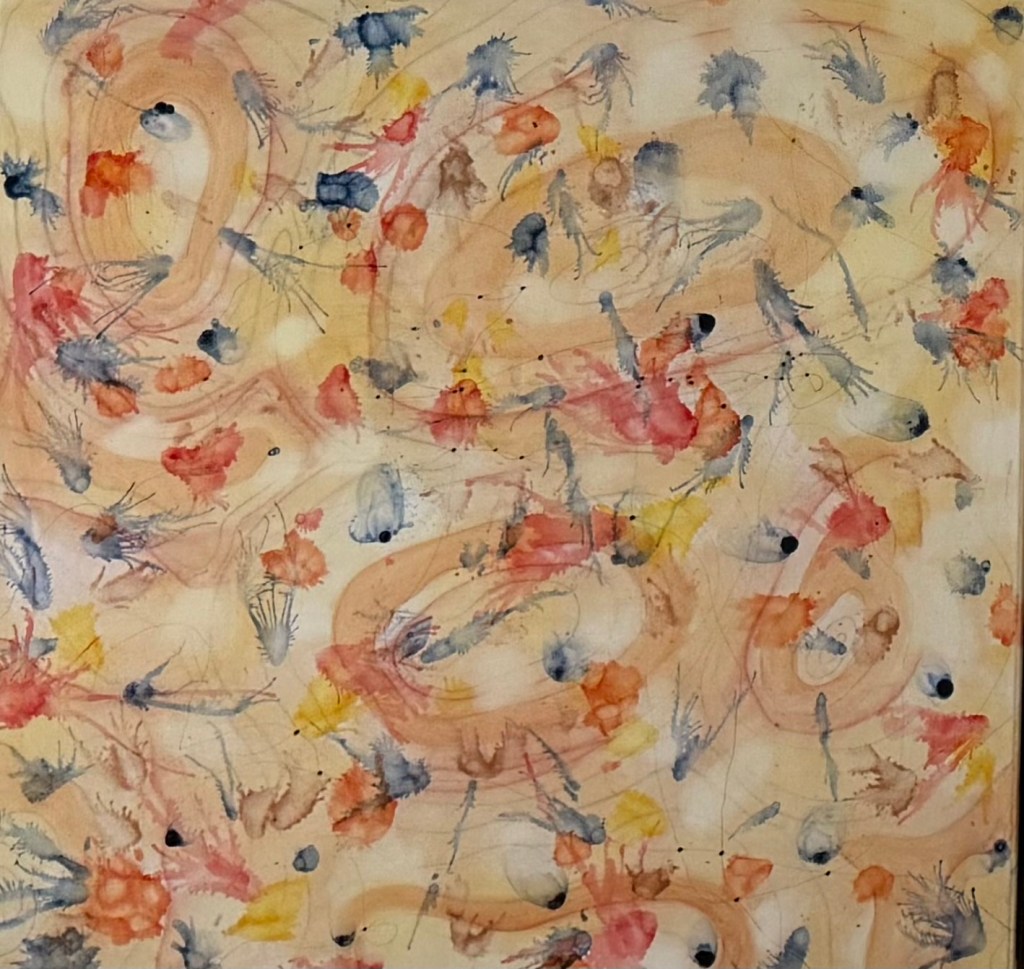
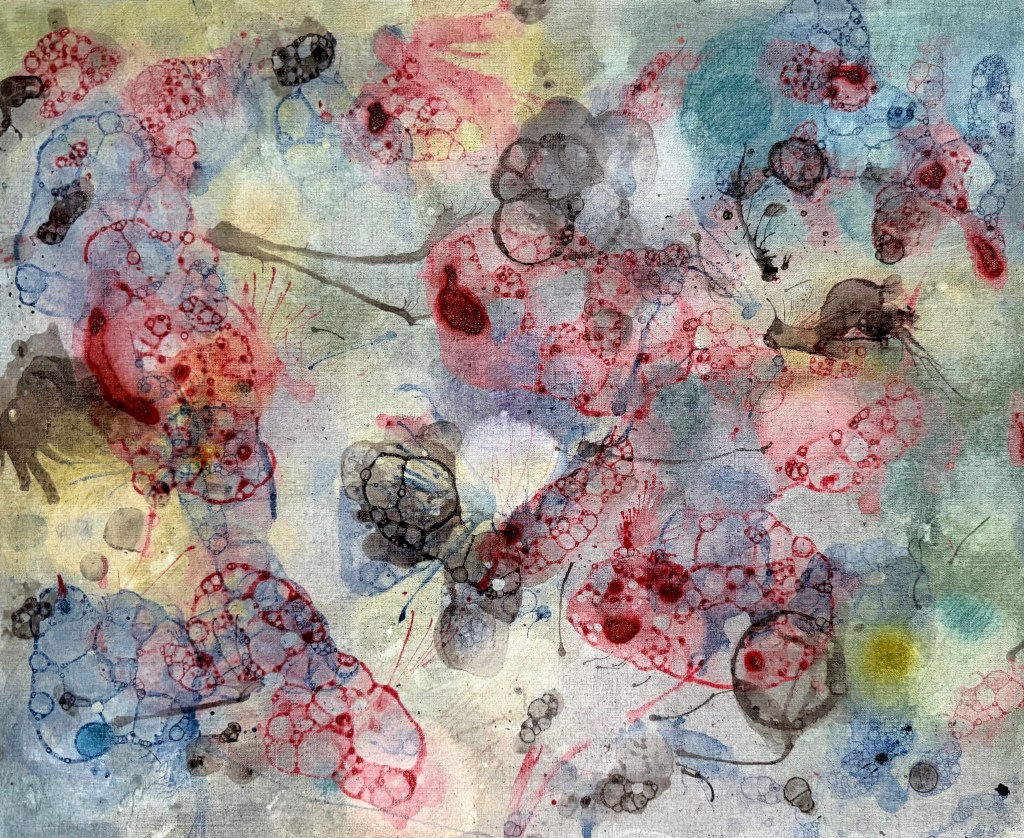
I then applied glazes of oil colour, wiping back in some areas to keep some light.
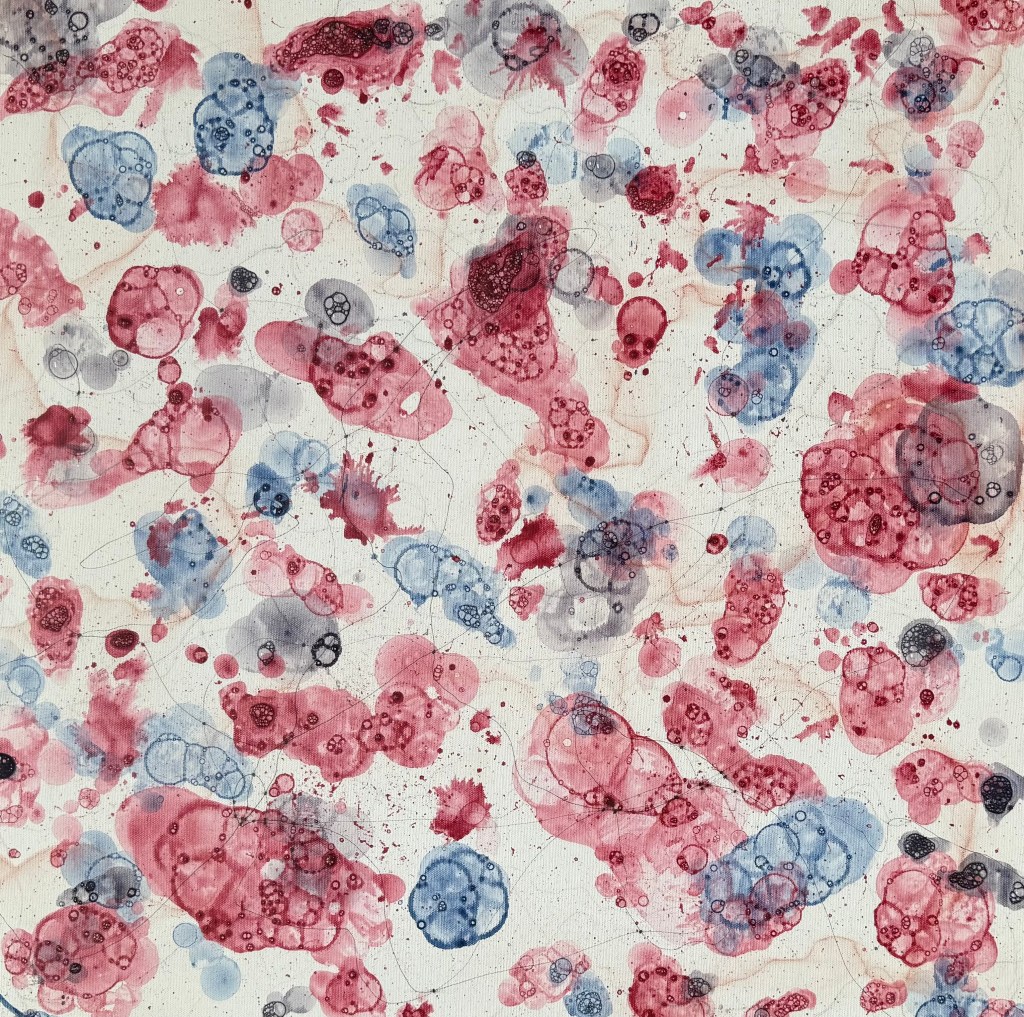
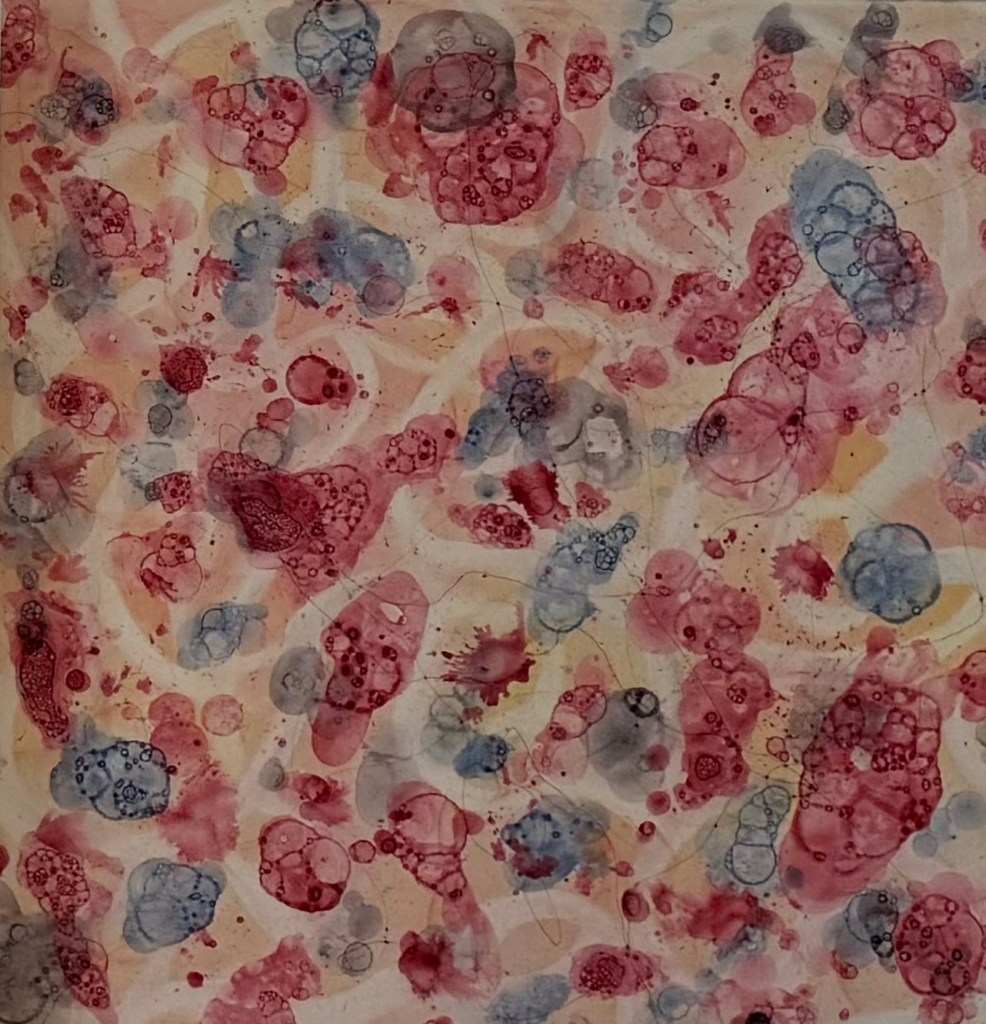
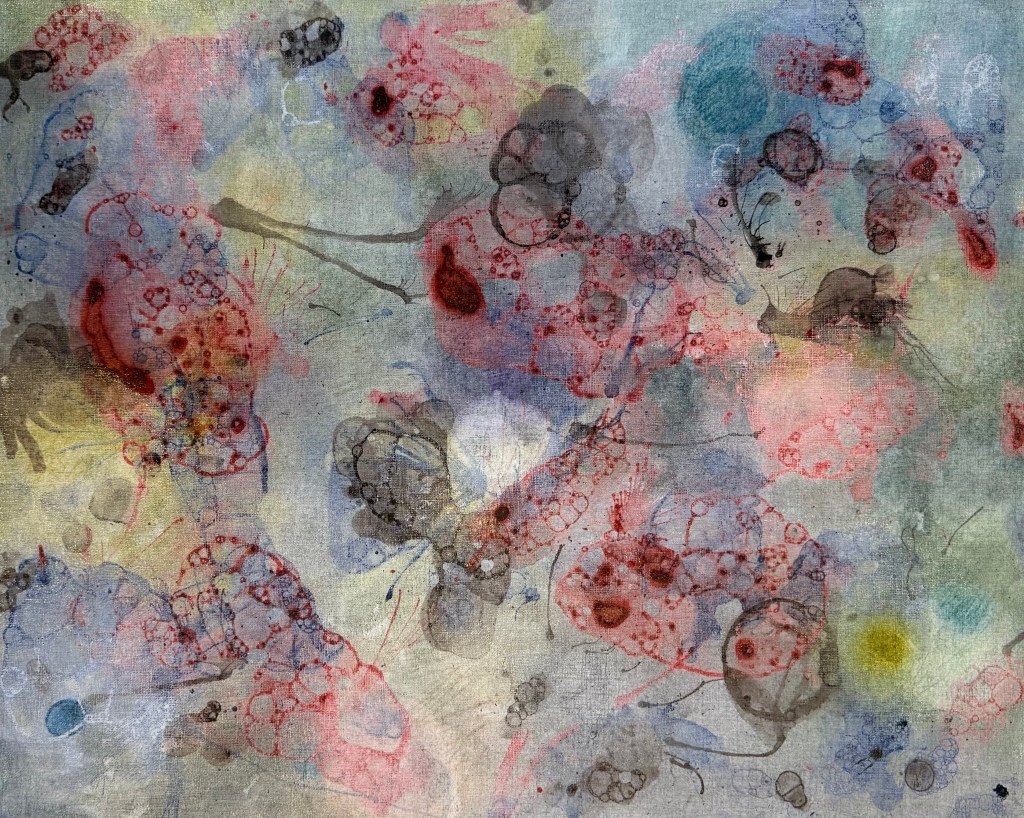
I then applied a Prussian blue glaze over the entire canvas and wiped back:
I decided that I wanted to put the same shape on all of the canvases, the third being left blank apart from the shape which I’d print on it. I’d previously decided against the shape I’d used before, but then changed my mind. I like the shape and I’m going to use it as a repeating motif. So I scaled it up to A2 size and cut the lino this time using more organic lines rather than the straight lines I used previously.
I then applied some small lino prints to the red and blue canvas. I tried on the orange and blue canvas but it didn’t work so I wiped my trial prints off.
I then decided on the order of the canvases working out how the shapes might be arranged. I liked the idea of the middle canvas being quite limited but perhaps overlaying a piece of paper pulp lace as it’s reminiscent of cellular structure or membrane. I’m planning on stitching the outline of the third shape which is why I quite like that the canvas has quite a bit going on in it.
This morning I printed the first shape using the border from the lino as a stencil and using gold oil based printing ink and a sponge.
The next step is to make some new paper pulp lace as I’ve now got some konnyaku powder which should help the flow through the syringe and also make the paper stronger and more flexible. I’ll then print the shape on the second canvas once the gold ink is dry and stitch the outline on the last one.
Things have become rather unsettled at the moment.
I’m constantly battling the inner fear that all I will have for the End of Year Show is a couple of books, possibly, as I still haven’t made both of them.
I underestimated the significance of a date, although I don’t know why as I mentioned the significance of anniversaries in April. It was the anniversary of the car accident at the weekend – old feelings and memories resurfacing, being re-lived. I can’t help thinking that a general feeling of sadness and uncertainty about the future is contributing to how we are feeling – both of our times at university are coming to a close.
To be honest I’m getting a bit sick of it. It’s not such fun – I haven’t been getting the proportions of pigment to washing up liquid to water right.
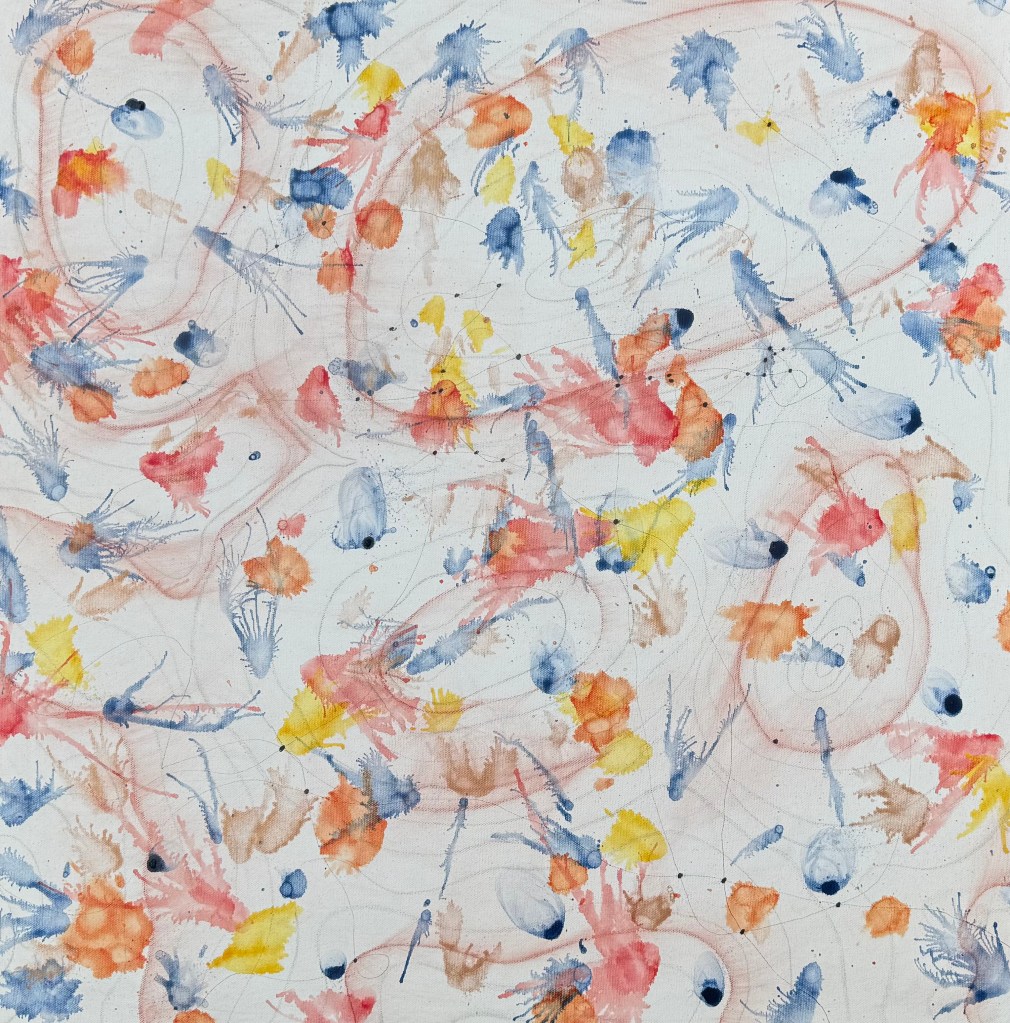
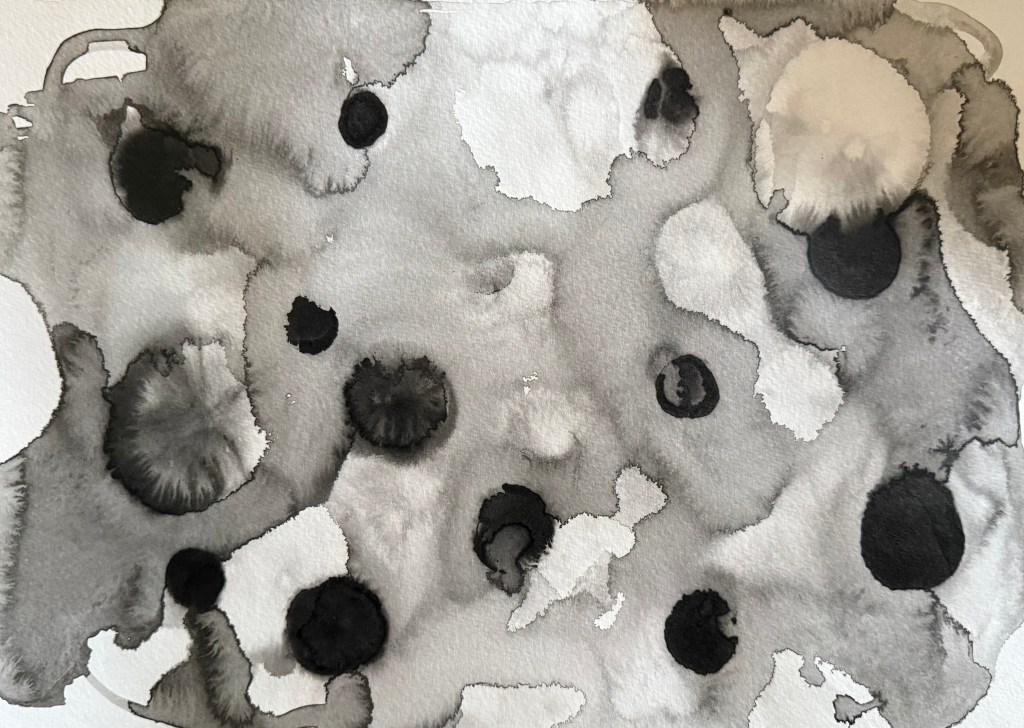
Anyway I’ve been doing some more experimenting over the very hot Bank Holiday weekend:
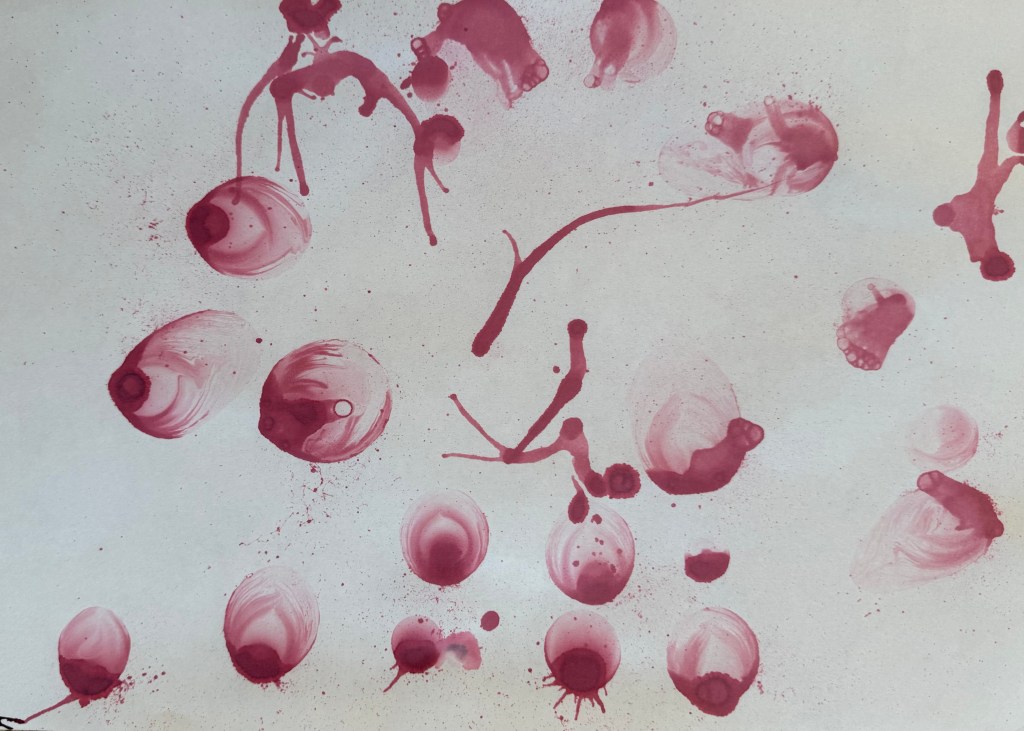
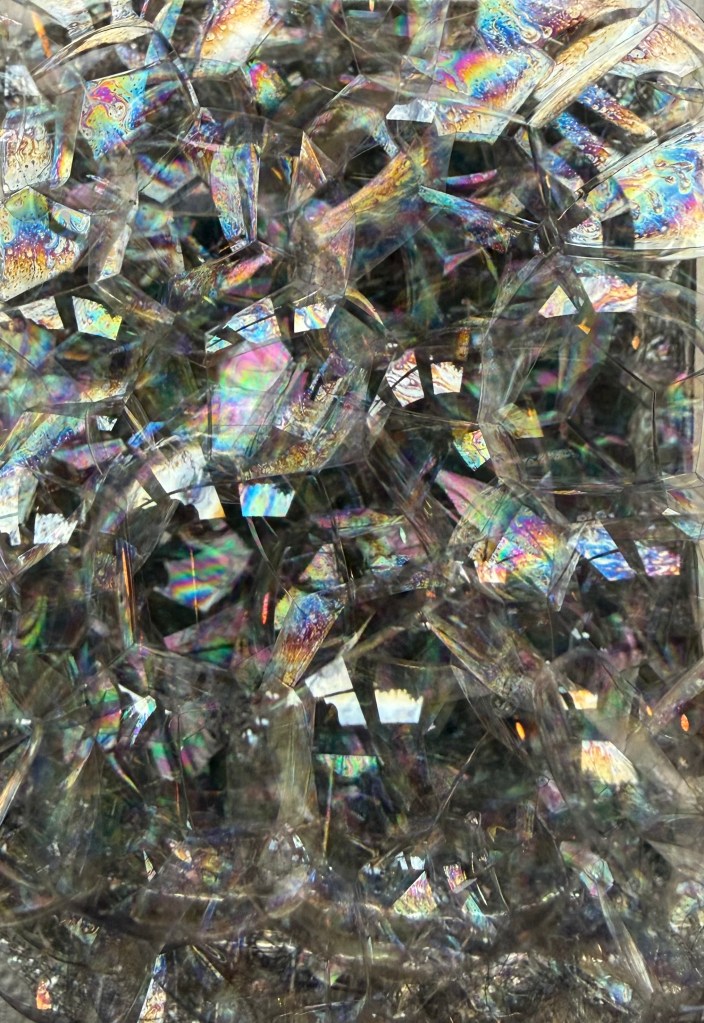
I discovered a new way of blowing in Instagram – the bubbles look more like eyeballs to me but I like the technique of dropping some liquid on the paper and then blowing with a straw so that it disperses in thin lines.
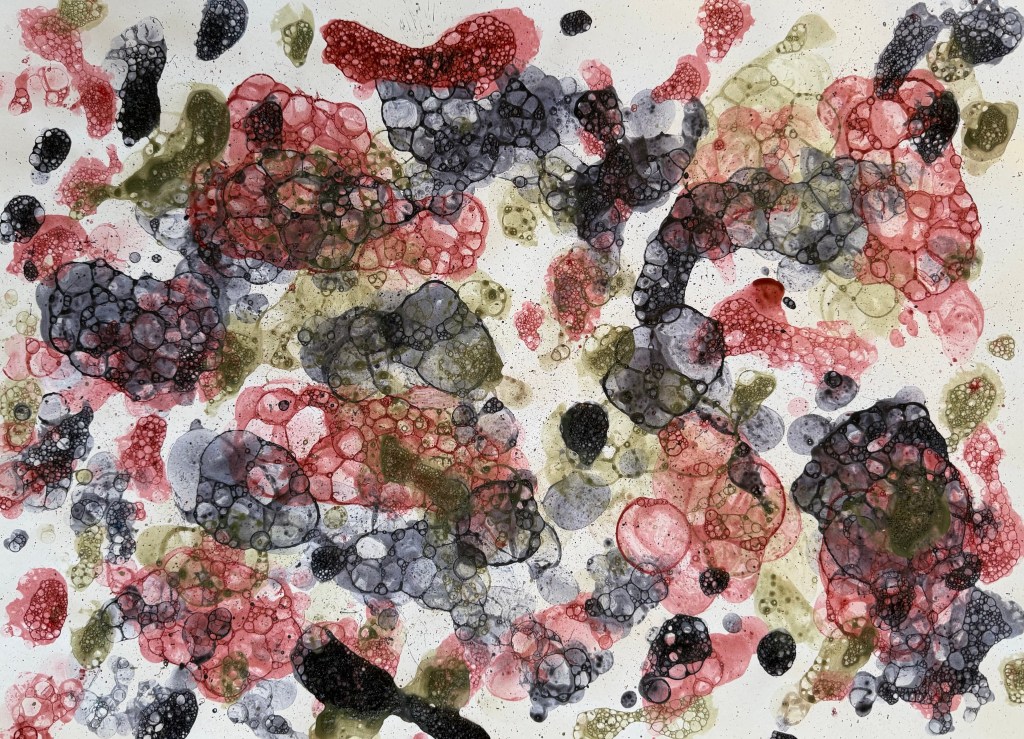
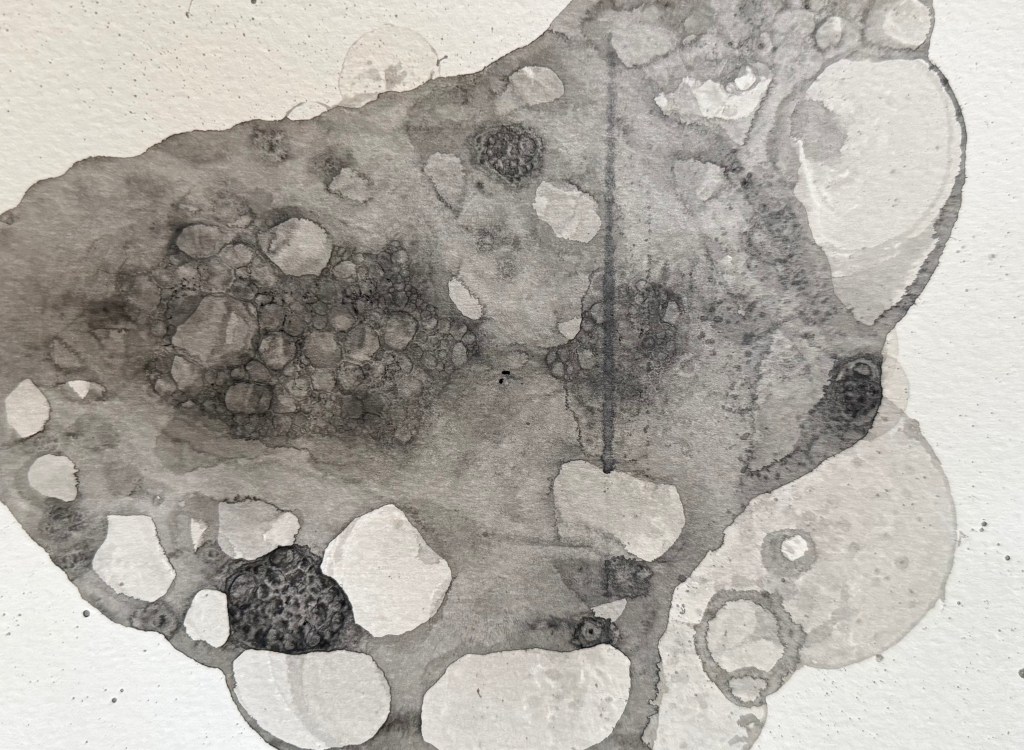
I like the white space in the first image. There are some good areas but the dark colour is too dark in places – I should avoid using the froth!. Also The green didn’t turn out as expected and my ratios were all wrong. I Like the second one and also the third one although I’m debating whether it is too much.
I have been experimenting on oil paper as I would like to try on a canvas and I want to experiment with putting thin glazes of oil paint on top.
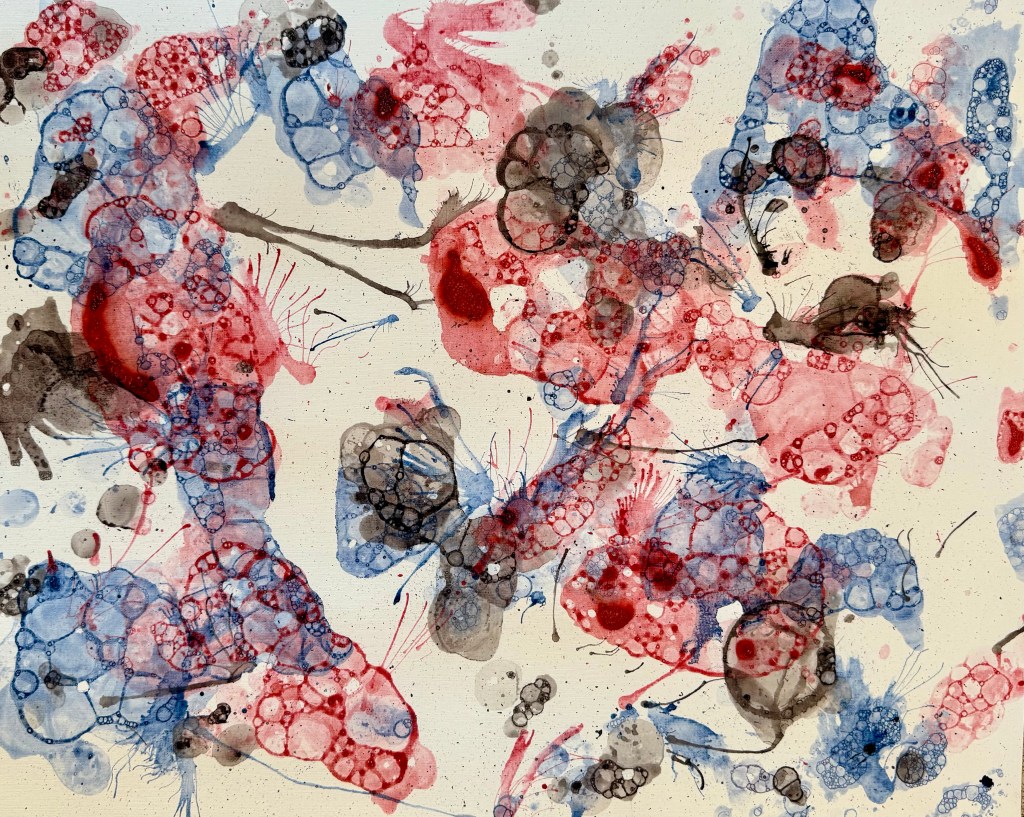
I’m not sure about these, or whether I prefer the previous set. I think that I need to sit with them for a while. I thought the first one was too bright (maybe because I’ve been in monochrome for so long) and so I tried knocking it back with a dark grey, wiping out areas to bring back some lightness. I like that they are still open – I see cells, someone else might see a flower bed with hydrangeas.
One thing that I would really like to do is experiment with 3 dimensionality. I’ve always resisted being constrained by the canvas and usually go off it – what if there was something coming out of it; out at you – maybe keeping you away or possibly making you part of the work? I was thinking if I had a number of canvases (3 is always a good number) I could connect them with something like an umbilical cord ( thinking back to siblings and microchimerism).
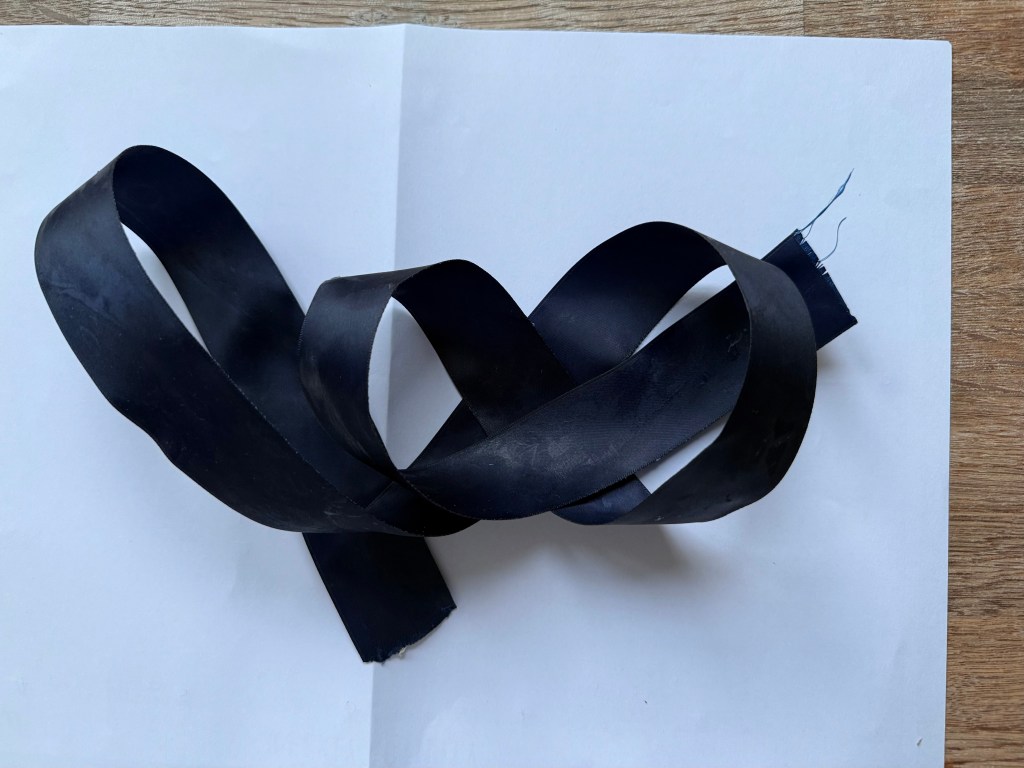
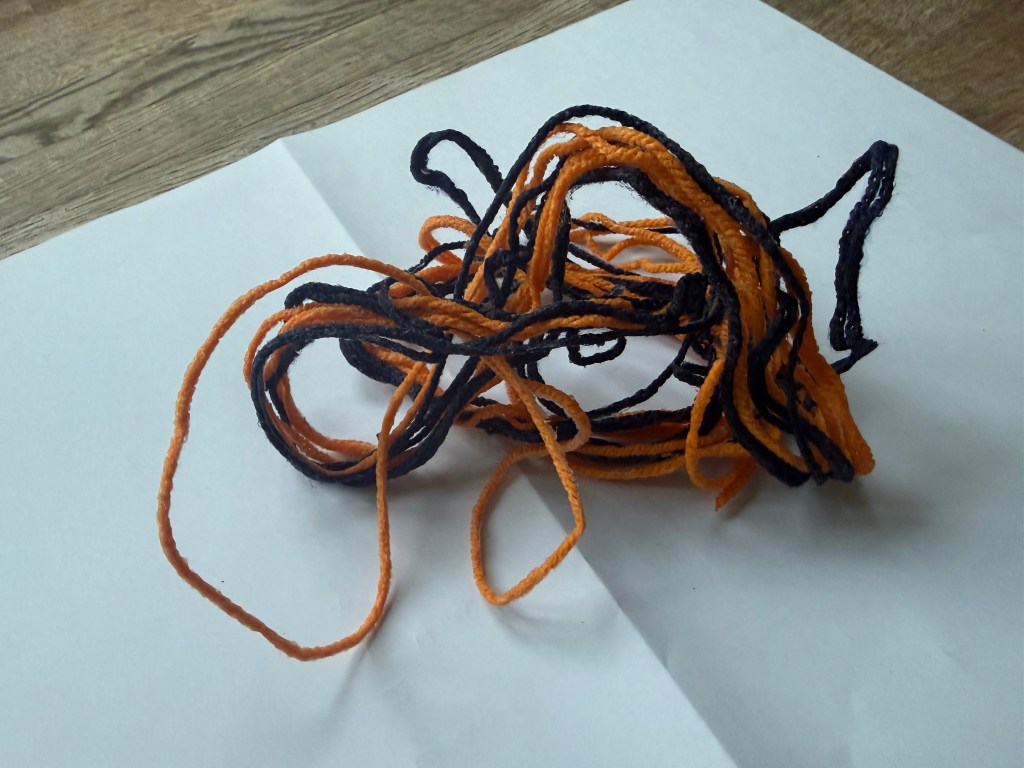
I came across a recipe for stiffening material on Facebook using cornflour, sugar, water and PVA glue. It should have been white sugar presumably so you can’t see it when it’s dry. I only had golden caster. I tried it on a ribbon and some wool. It’s not that great. I think I’ll look at wire and organza instead.
It’s tempting to run away with ideas of further education – I’ve enjoyed this course so much and the research paper helped to explain a lot of things to me and gave me clarity in my practice. It is something that I would like to explore at a deeper level but is now or the imminent future the right time to think about it?
Aside from the commitment of time and the issue of funding, I think that rather than rushing out and trying to find a replacement for the course, I need to learn to practise and function in its absence. I need to focus on continuing to build sustainability into my practice in how, when and where I make. That’s not to say that there isn’t any space for personal development – there is and, as I mentioned to Jonathan in my last tutorial, I would like to improve my skills in a number of areas in terms of photography and film-making, and there are also some printing processes that I would like to explore. I will, of course, continue broadening my knowledge by reading and visiting exhibitions. But for now, it’s sorting out the physical location, carrying on implementing flexible time management (which seems to be working quite well at the moment), and thinking about issues such as building a website and maintaining my Instagram aacount.
I’m also going to carry on submitting work to open calls – since being on the course I have carried on my tradition of applying to the RA’s Summer Exhibition, unsuccessfully. I don’t think that I actually had any aspiration of being accepted; it was more a case of wanting to keep experiencing the feeling of rejection to make me resilient. I used to feel deflated but now I don’t really feel anything anymore, except perhaps regret at paying the submission fee. The only success I’ve had is with ING Discerning Eye last year, but even that had its own issues.
I started this post a while ago. The act of going through all of my blog posts for the book and making the 5-minute video has encouraged me to think about the journey that I’ve been on. Sometimes I have so many thoughts in my head that I need to put them into words so that I can get some clarity and order. So, here goes…
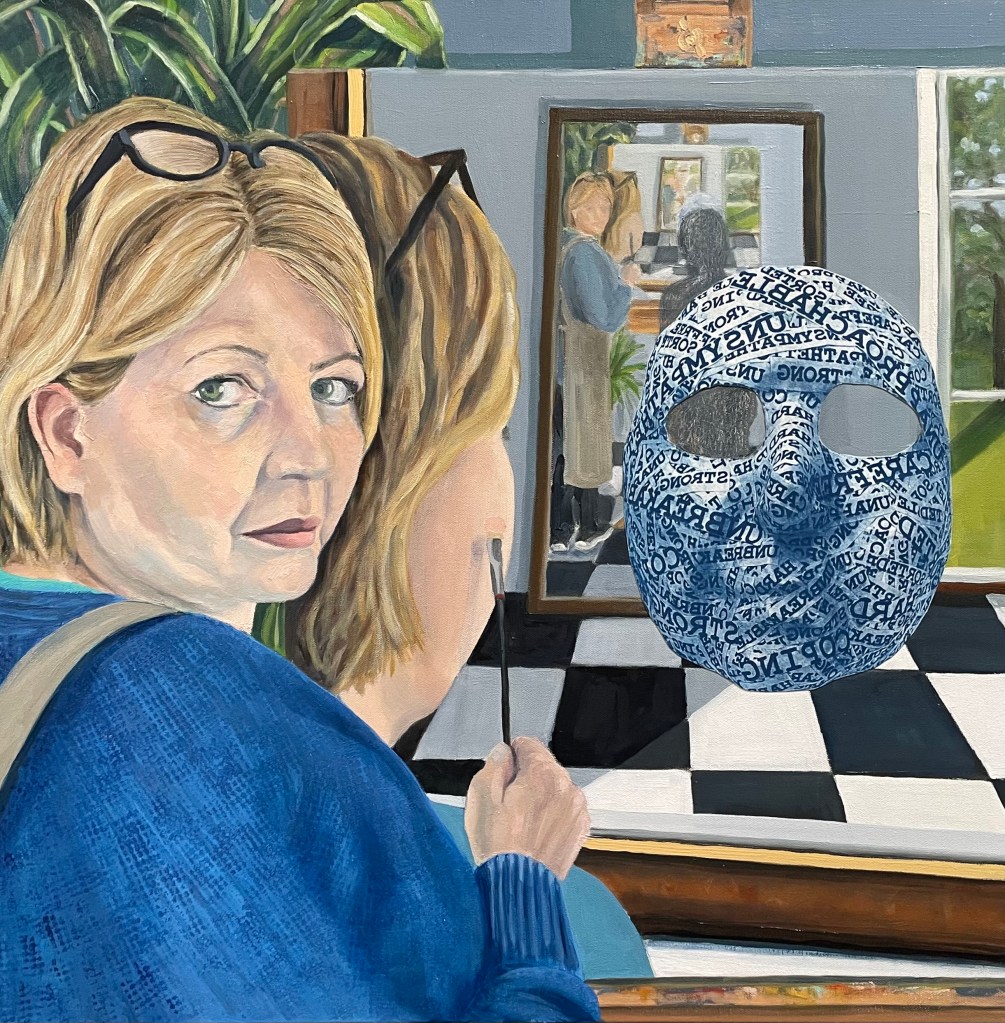
I started this course thinking that I was an oil painter who enjoyed working with colour and shape. I’ve been looking back at the work that I was making two years ago. This is an example:
It still appeals to me – I like a narrative. It was made in response to the brief, ‘On Having an Outside’. I like a painting inside a painting, inside a painting and so on, and the use of a mirror, a play on Magritte’s ‘Not To Be Reproduced’. I thought about it a lot – the idea that we wear masks but in this case what you see on my mask is a reflection of you and how you feel about yourself which you then project onto me. It expresses how I felt at the time. I still like looking at it, but it does feel contrived, controlled, and static even though it depicts me turning to look at the viewer. I didn’t enjoy making it. I had a very fixed idea in mind as an end goal and so the process of making it was restrictive and frustrating. I kept at it until it was how I wanted it to be, what I thought was the best that it could be. It was all about the product and I was driven by my controlling perfectionist self. I haven’t painted very much at all over the last two years. I’m wondering why. Maybe I should?
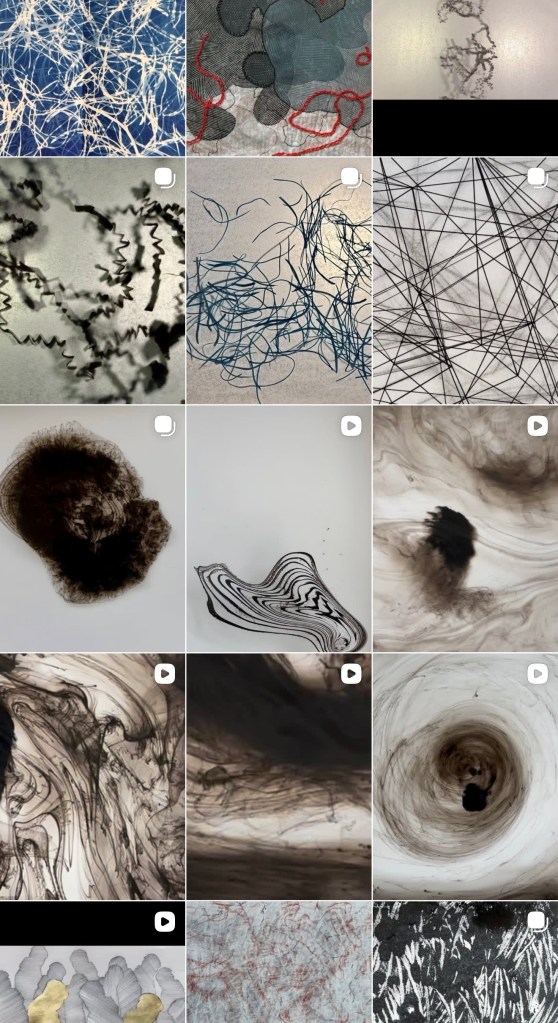
These are screenshots of some of my recent Instagram posts:
I look at these images and I like what I see, but most importantly I remember how I felt when I made them. I felt free, unencumbered, excited, and intrigued. Interestingly, they are predominantly monochrome, exploring mark-making and movement.
I’ve been wondering what to do. When clothes don’t fit me I sell them or take them to a charity shop. What should I do when my work no longer fits me? Treat it like a photograph of a younger self maybe, a reminder of where I’ve come from?
The last two years have revealed many things to me:
I am happiest in the process
I am at my most productive and enjoy making the most whilst in the process and without a defined end product in mind. One of my mantras used to be that without intention there can be no expectation. I think that was useful in the early days to keep my focus on process, but I’m not sure that it’s strictly true because I experiment and explore with intention. Furthermore, the making of the book is a very intentional act with an end product in mind, but the specifics of how it looks have developed in the process. I think that the difference is that the book itself is not important save to the extent that it is documenting my process and the making of it has allowed me to develop further, as well as to reflect on the last two years.
I don’t need to be in control
Embracing the process has allowed me to give up control and it is now the foundation of my practice. It has helped me better understand myself and has changed me. It has allowed me to see that there is a direct correlation between my behaviour in making and my behaviour in life. It has taught me that in moments of personal overwhelm such as becoming a parent and caring for my mother my instinctive reaction was to try and exert control over circumstances. This behaviour fed through into my making. By allowing myself to give up control by experimentation in making, I now realise that I can deal with uncertainty in life and rather than trying to control it, I should lean into it.
I don’t have to makewhat I like or like what I make
Just because I love to look at Surrealism, works heavy with narrative or full of colour does not mean that is the kind of art that I should be making. Viewing and making are two entirely separate experiences. Because I am privileging process over product I may not always like what I make – what is most important is what I experience in the process. Just recently, I have been working more with video and I’ve realised that this actually gives me a means of exploring narrative.
The meaning of my work is in the process
As in the example above, I used to start out trying to make work that already had meaning. Now, the meaning comes out through the process of making, and the finished piece embodies it in some way. That doesn’t mean that I begin without any direction—I often still start with a line of enquiry or an idea—but it isn’t fixed. It stays open, changing and developing as I work.
I can embrace both the accidental and the incidental
I now feel more comfortable with accepting responsibility for the accidental within the process, and I actively look for the incidental and often go off on a tangent.
I want to be able to choose whatever process or material seems right in the moment
I don’t want to restrict or pigeonhole myself. I refuse to attach a label to myself either as an artist or as a person. I want to be able to choose whatever process or material is right in the moment. I don’t want to limit my ability to experiment or to discover new languages of expression. I live and I make.
I need some soft structure
I think that there are two distinct areas of my practice – the experimental side which is exciting, uncertain and can be overwhelming, and the side which is more of a structured wandering, for example, repetitive mark-making. I’ve commented previously that the act of drawing line after, or even now more recently, stitch after stitch makes me feel contented – it’s as if there is just enough structure to provide a frame for my attention yet loose enough to allow for response. I’ve also been using motifs such as contour lines, automatic drawing, my father’s silhouette etc. throughout the course, and it is really only recently that I understand why that is a feature of my practice. I have accepted that I can never rid myself of the perfectionist self and the soft structure provided by the repetition keeps that part of myself happy.
And my Study Statement?
Since the first year I have thought from time to time that I need to change and update my Study Statement because I’ve wandered off course. In it I was very specific about how I was going to approach things. I had an end product in mind (what a surprise!). Instead of exploring all of the different roles that I’ve had in my life, complying with my detailed workplan and finding out who I am, I naturally deviated from my plan and later made the conscious decision to embark on a dérive contemplating those things which seemed important or of value. To have amended it would be to remove the evidence of my progress and my process. I’m not the person I was back then – I am becoming and the prescriptive framework of the Study Statement would have limited that becoming. Thinking about it even some of the categories on this blog are irrelevant.
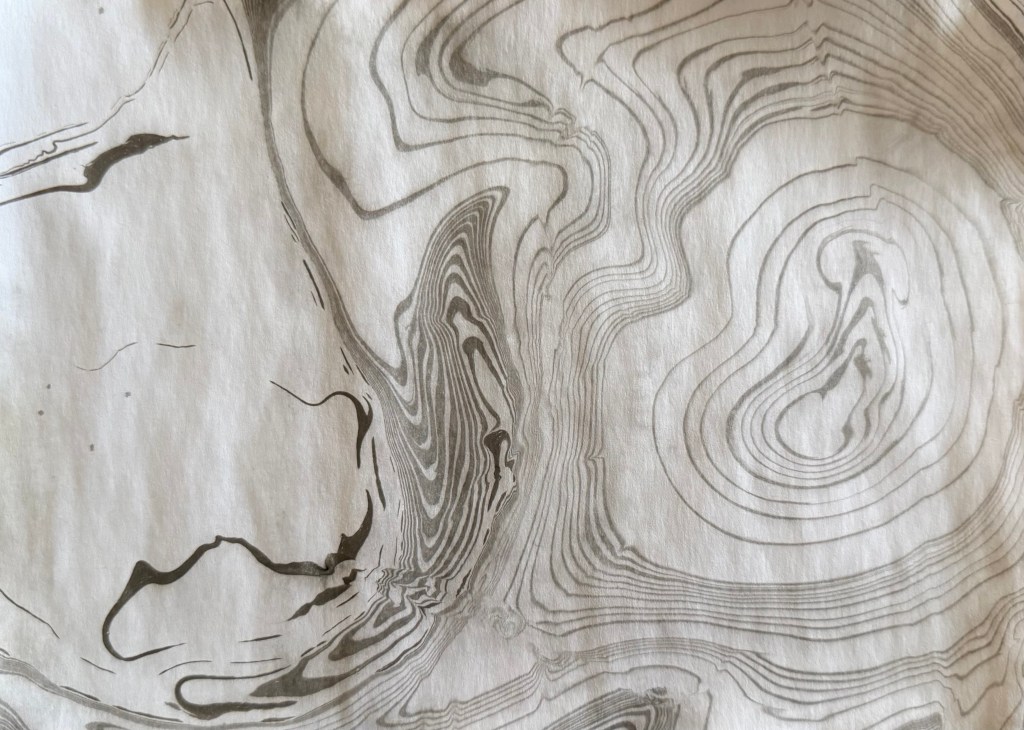
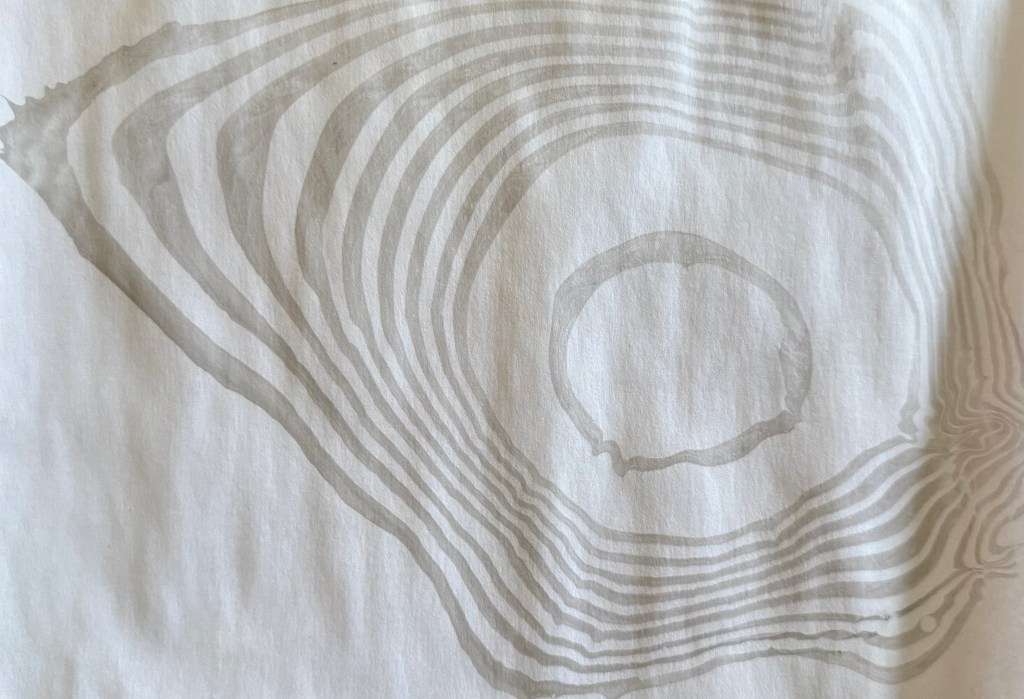
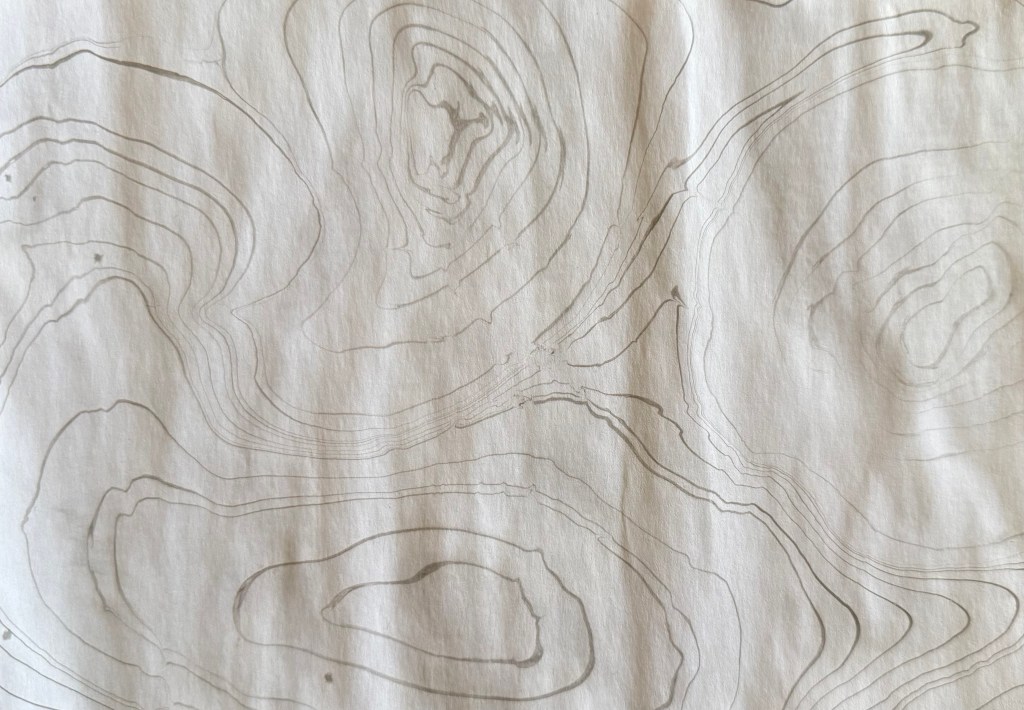
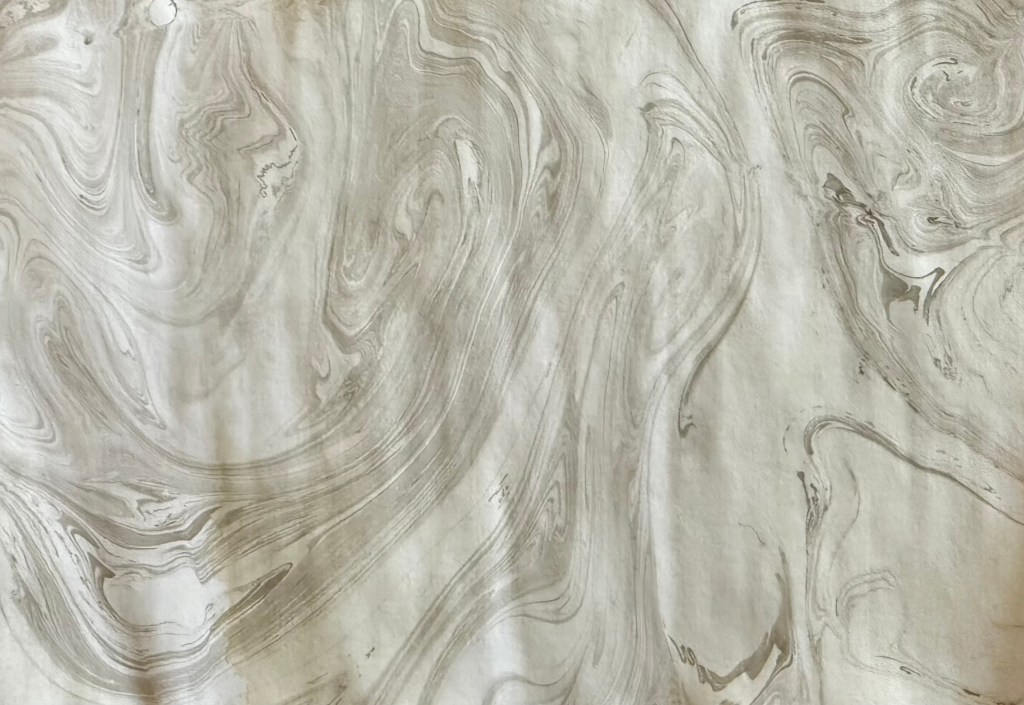
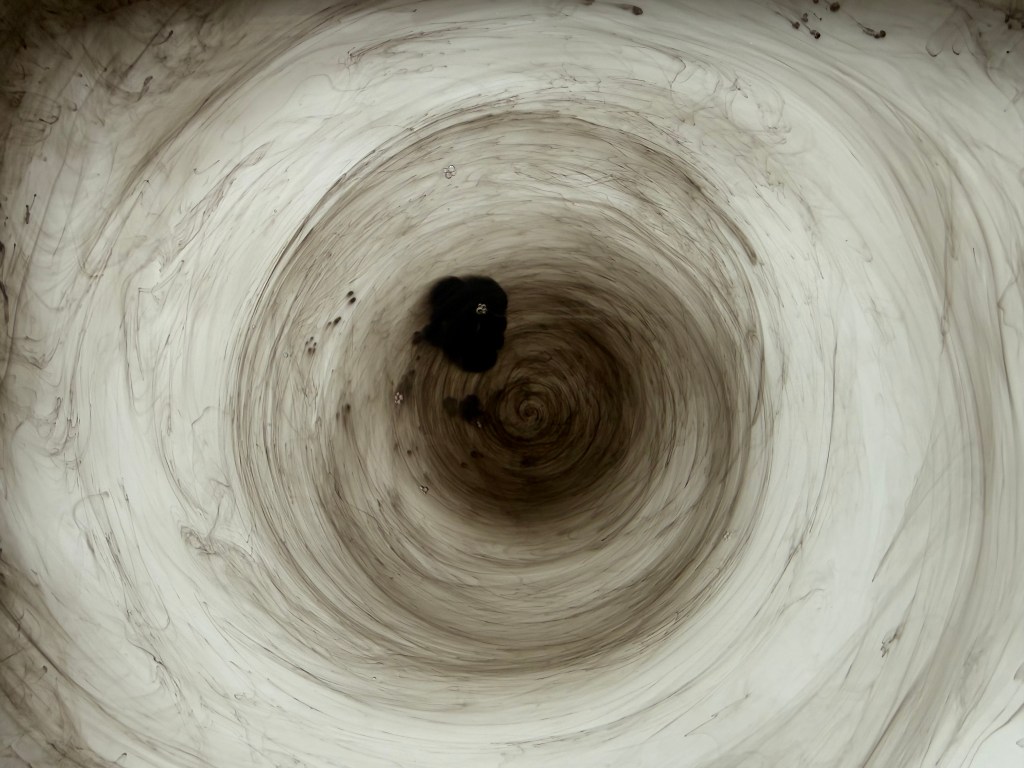
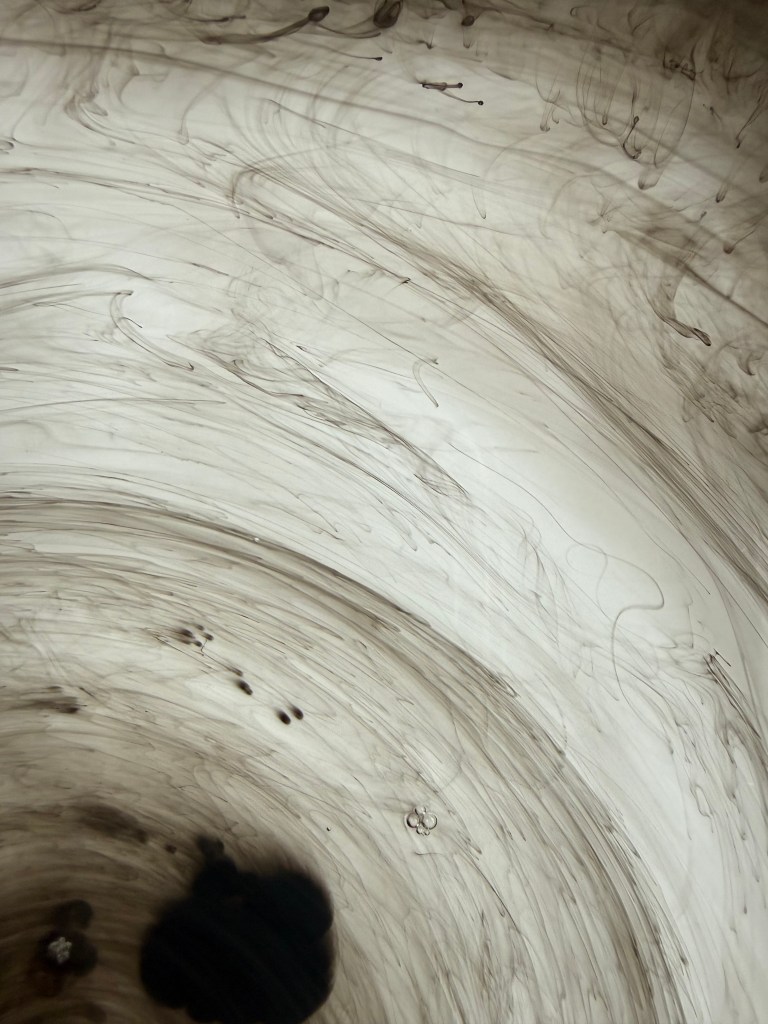
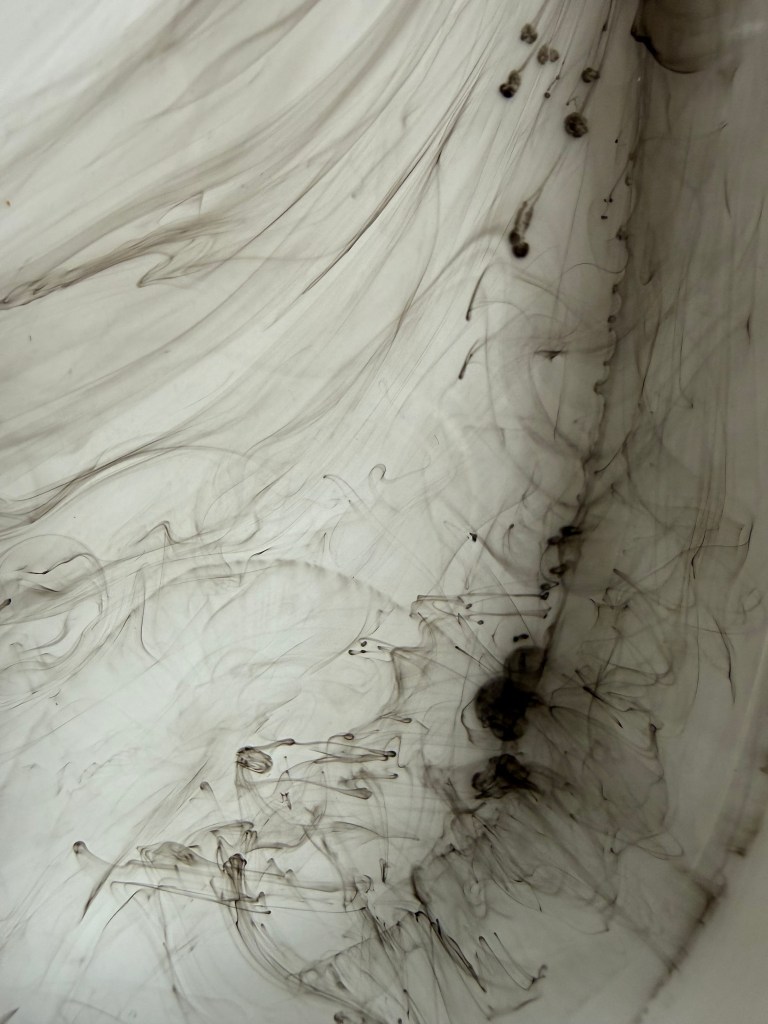
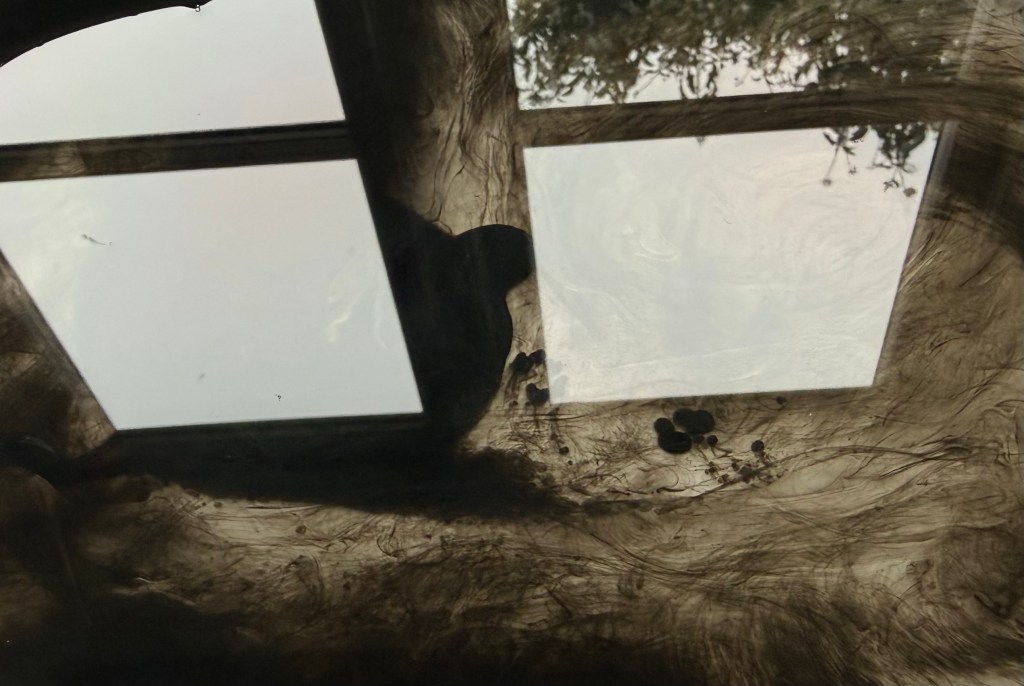
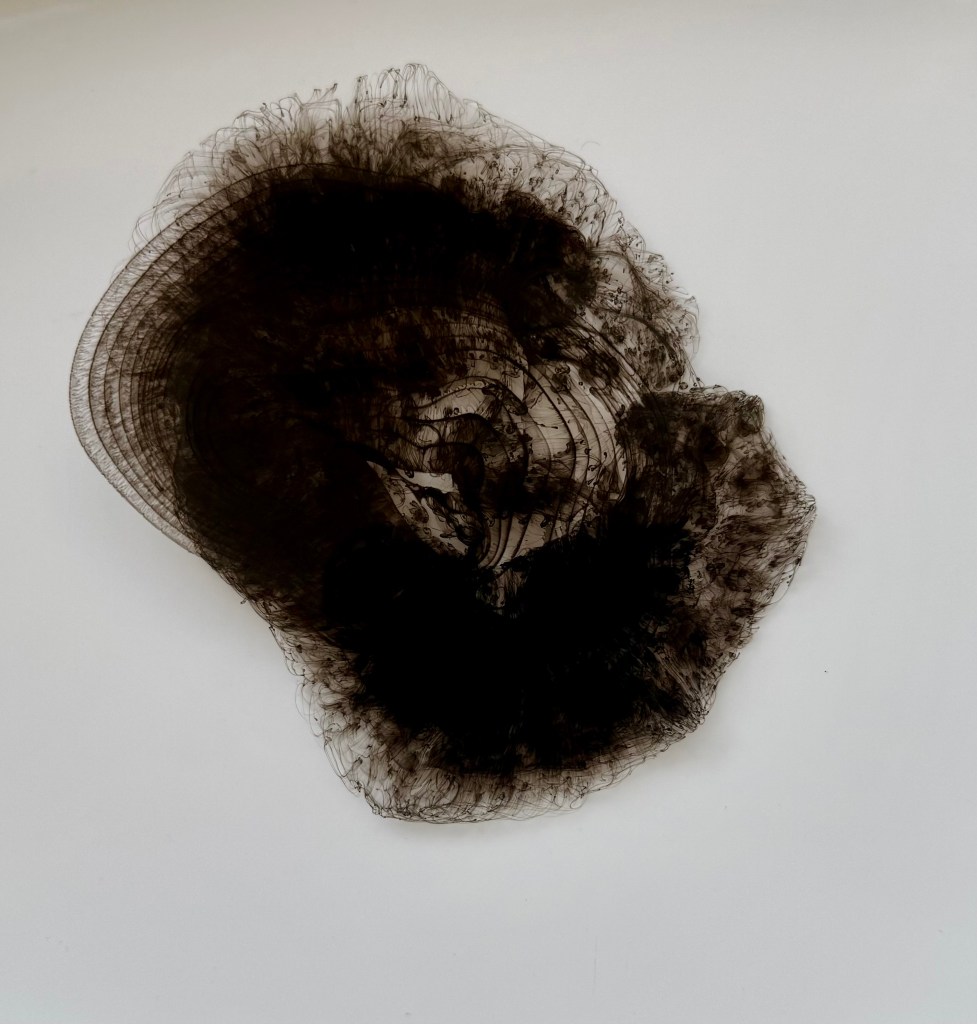
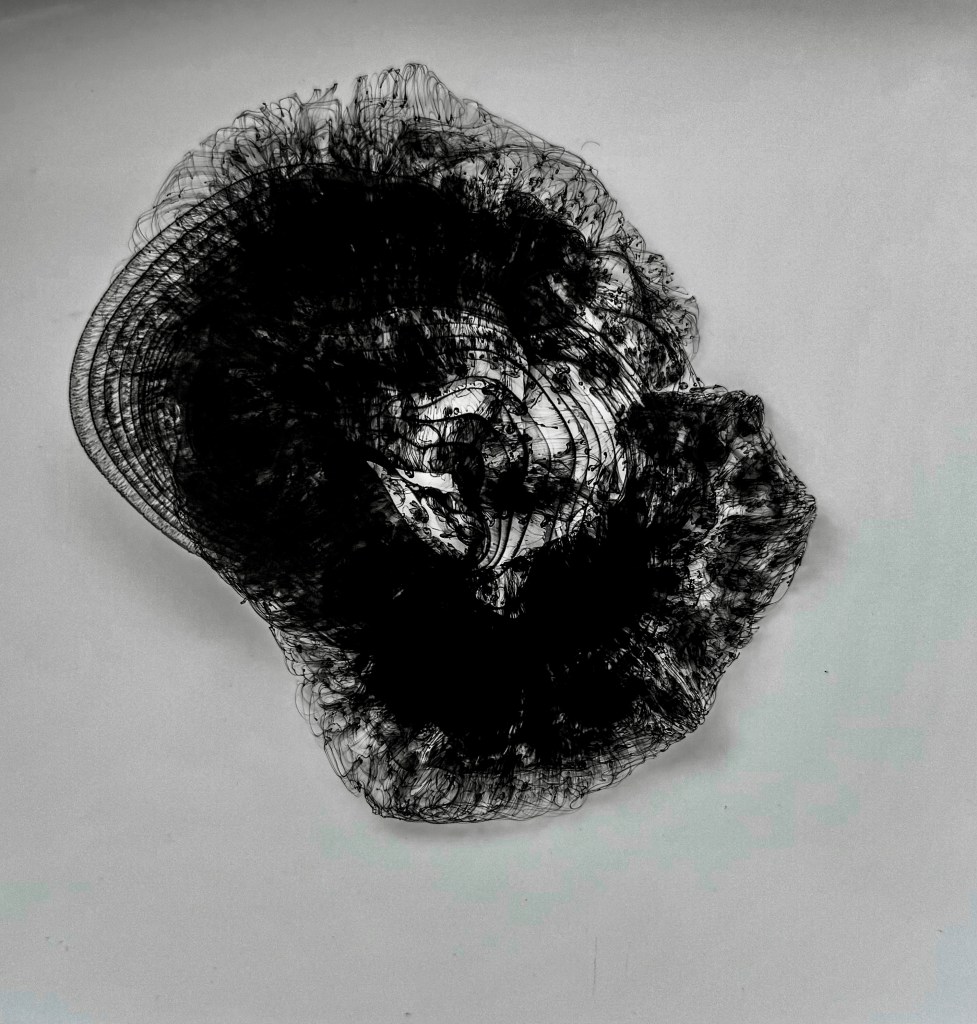
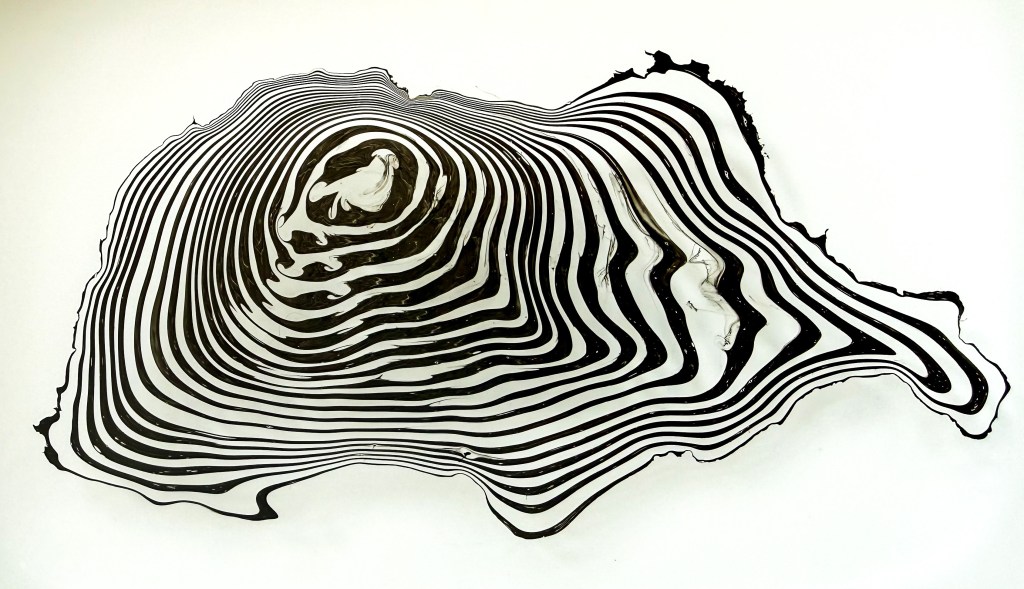
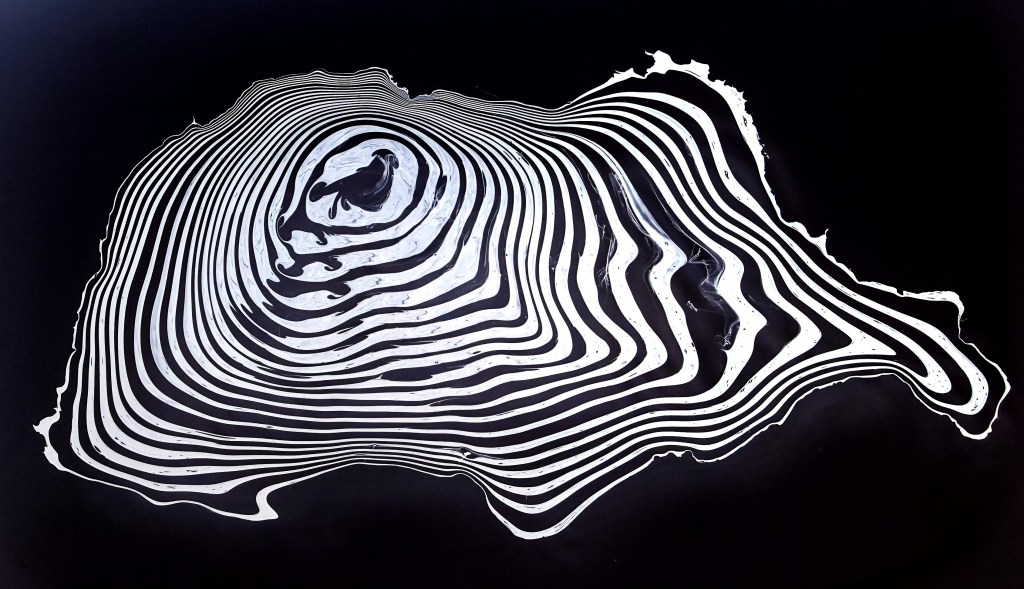
Whilst scrolling I came across suminagashi – a form of marbling using floating inks. I was drawn to how the effects are reminiscent of contour lines. I was transfixed watching the process and decided to have a go.
Well, it didn’t go well. The ink wouldn’t float, so I tried thinning it, changing from hard to softened water, even trying distilled. Then when it did float, when I removed the paper from the surface the ink ran everywhere. I tried different papers – watercolour, Ho-sho etc. The most successful turned out to be printer paper. After all that, I decided that perhaps it’s not for me and I’m not too sure about the results either. I might leave it a while and return to it.
But whilst everything was going wrong, I videoed and photographed. That was much more interesting; watching the ink in the water.
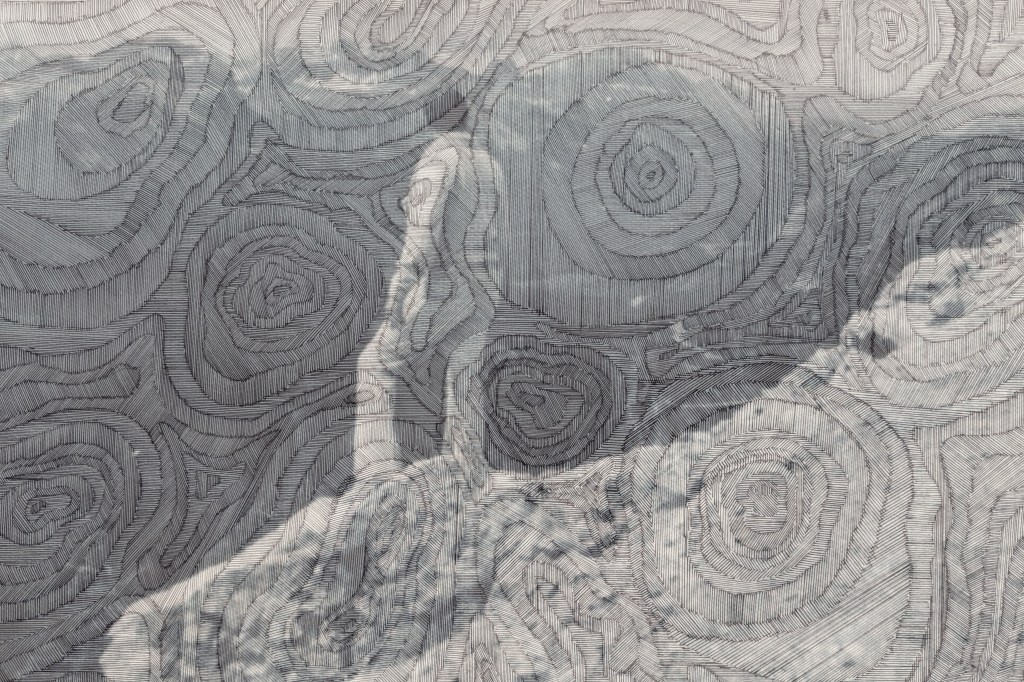
I’ve decided to experiment with using the contour image in Procreate as a layer.
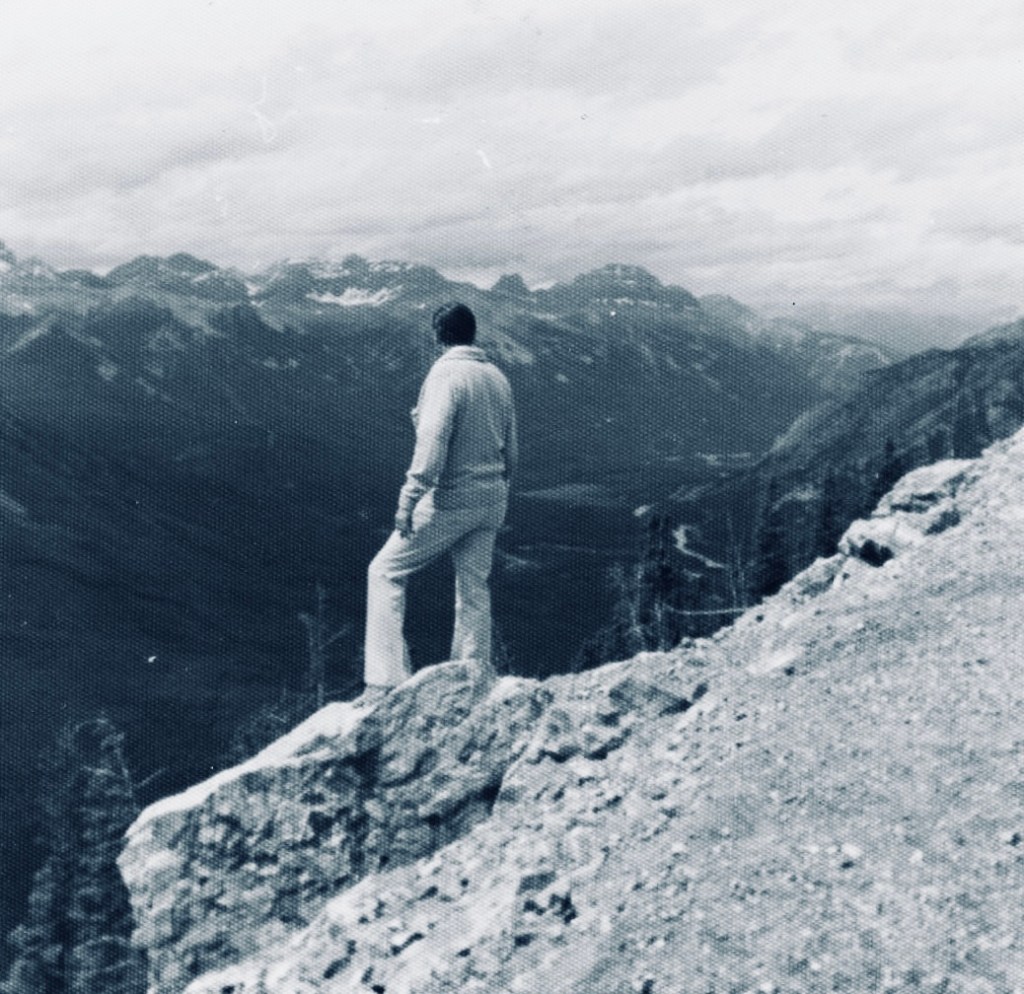
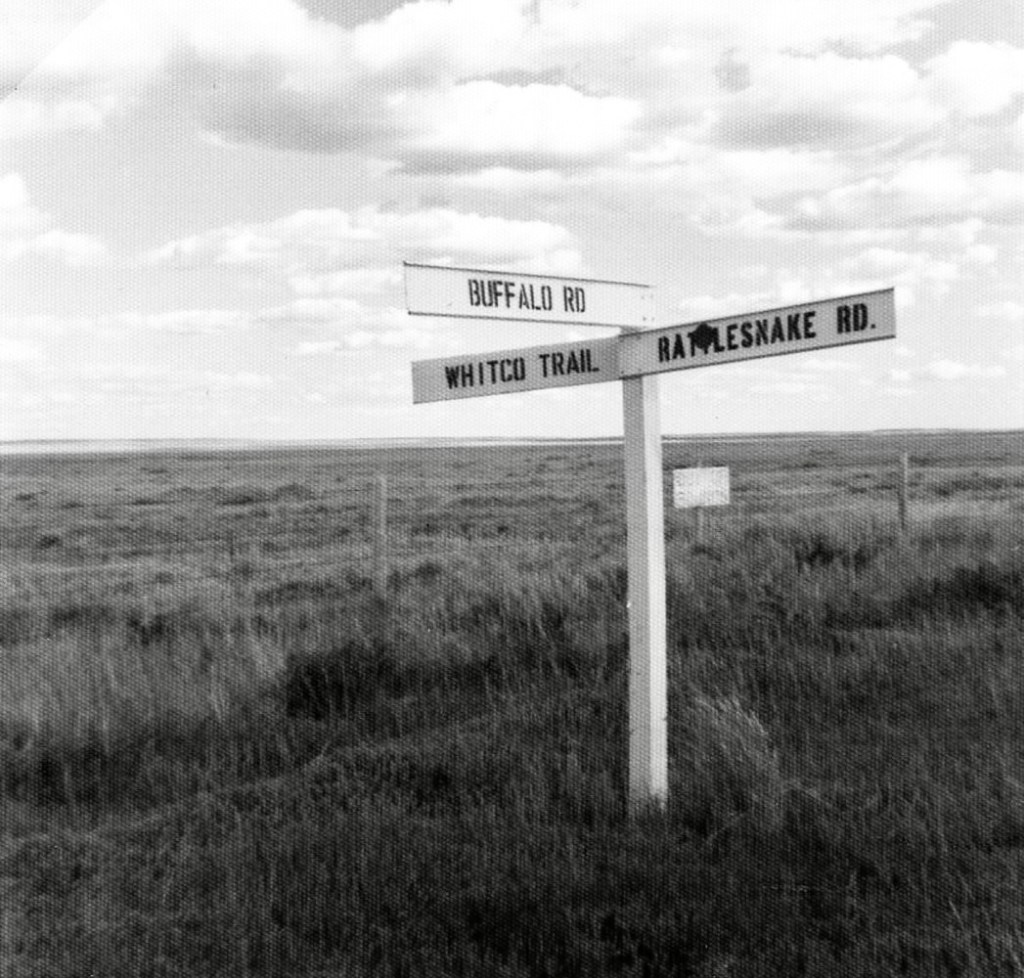
I was looking through some old family photos and found this one of my father in Canada. This is a recurring image from my childhood – if there was an edge or a high place, my father would always go and stand on it despite us pleading with him not to. I think he would have been about 40 years old when this was taken. I took him on the London Eye when he was in his 70s and I don’t think he looked out at the view once, choosing to spend the entire time sitting on the central seat, ashen-faced.
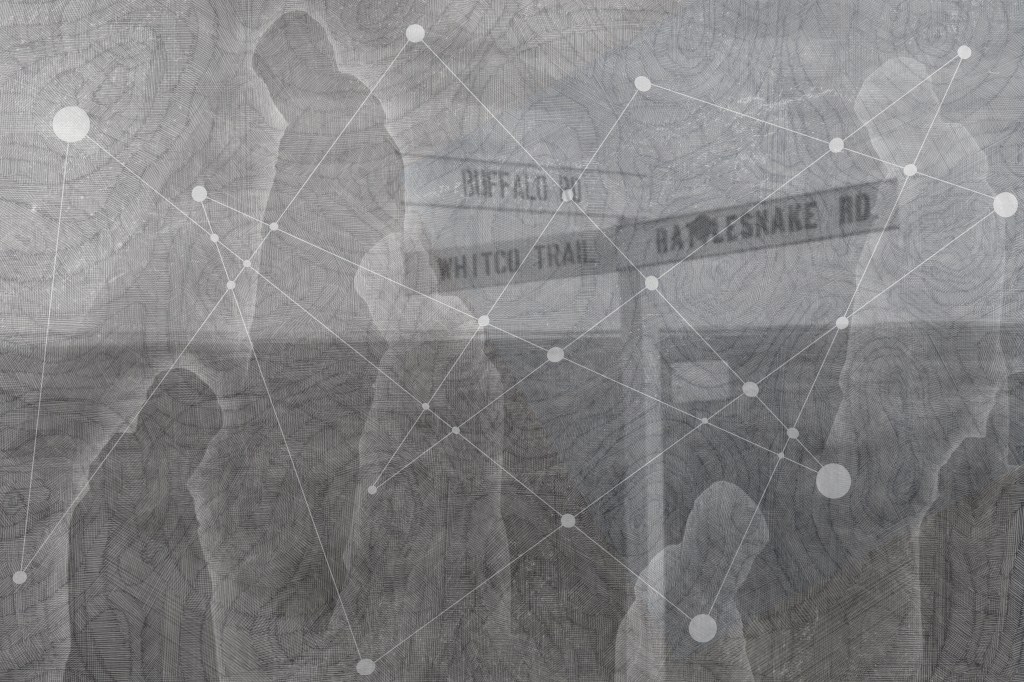
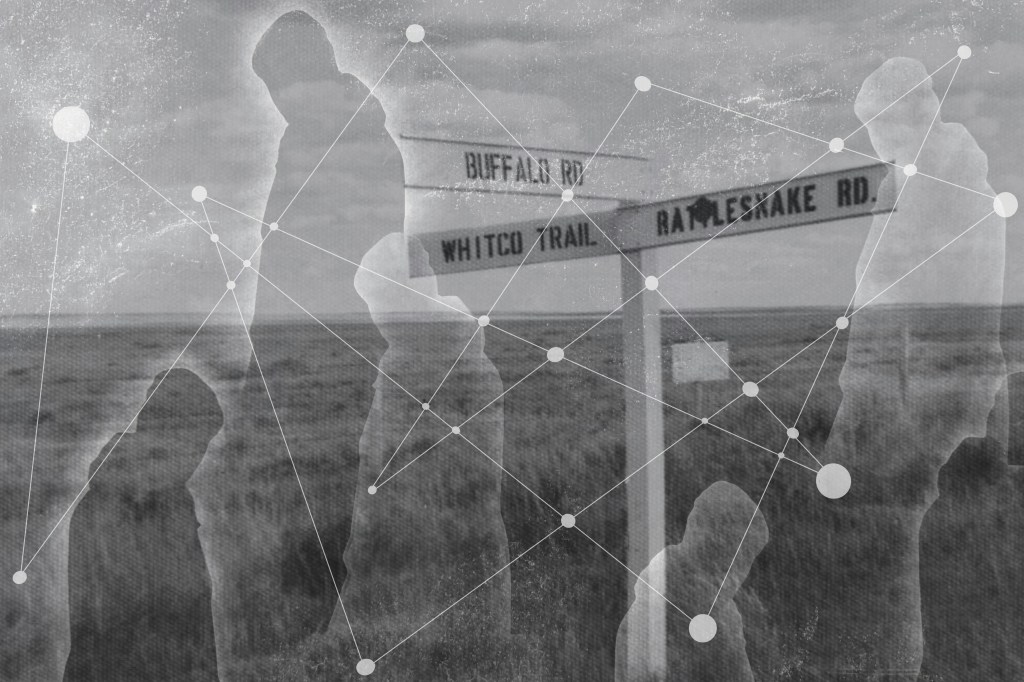
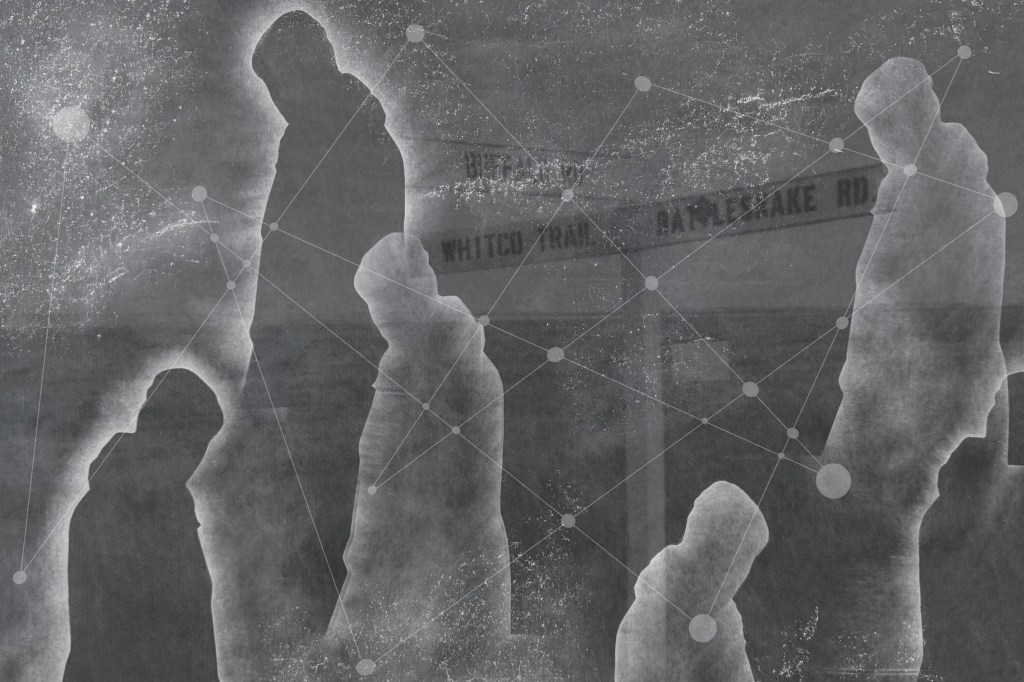
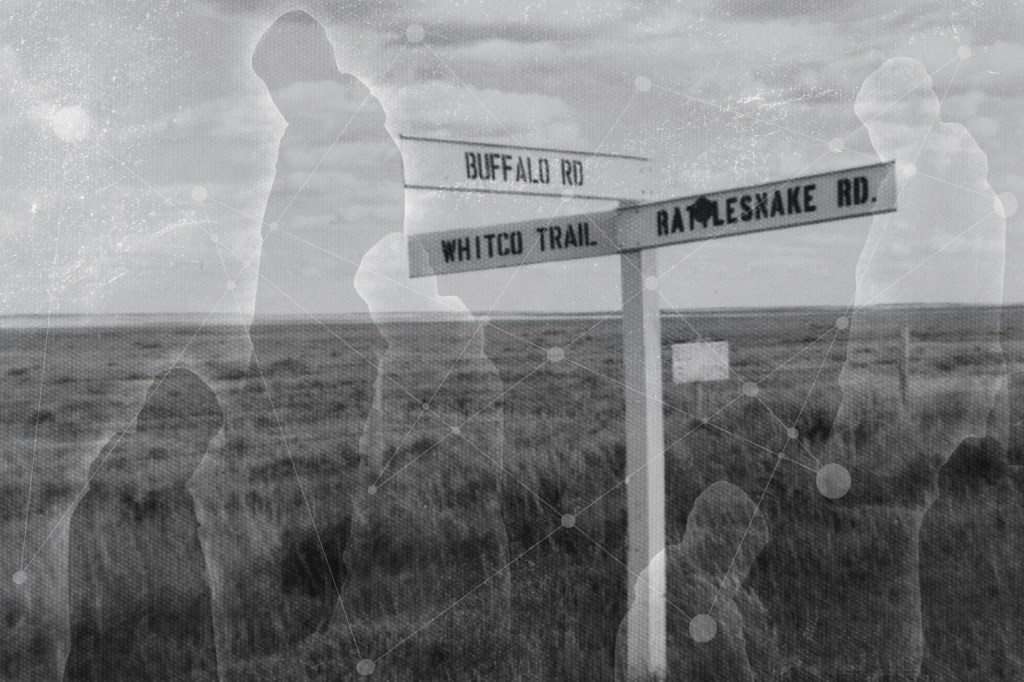
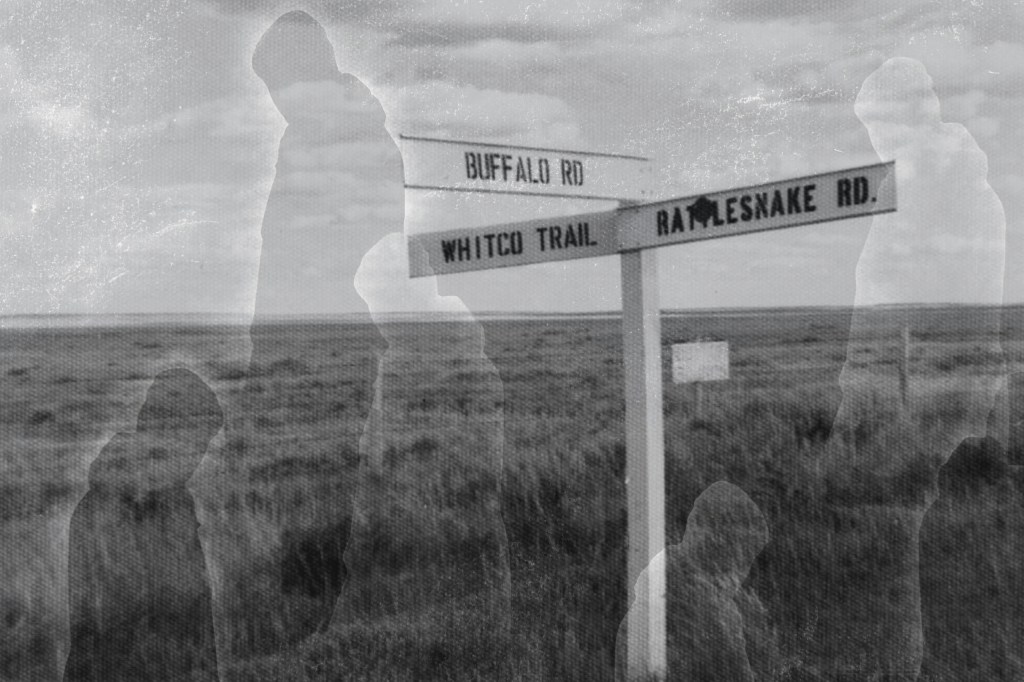
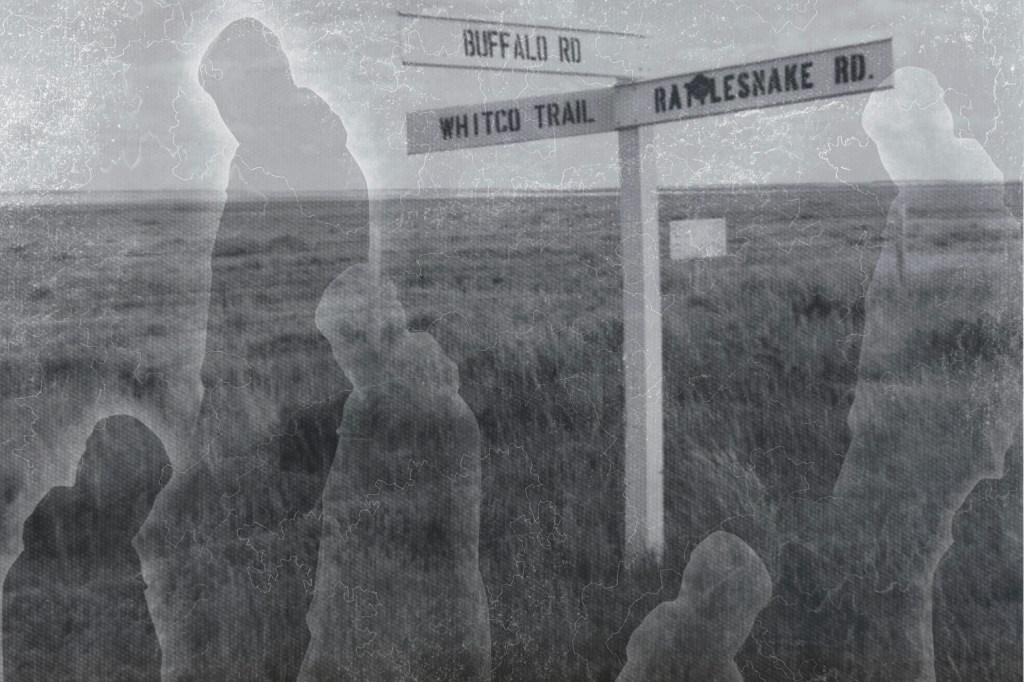
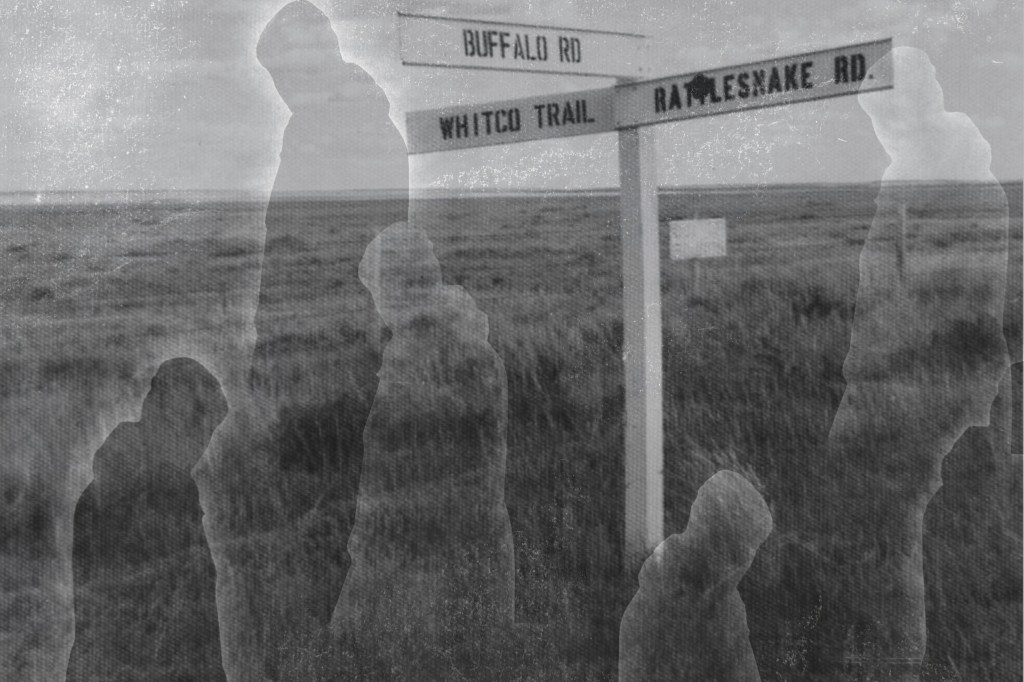
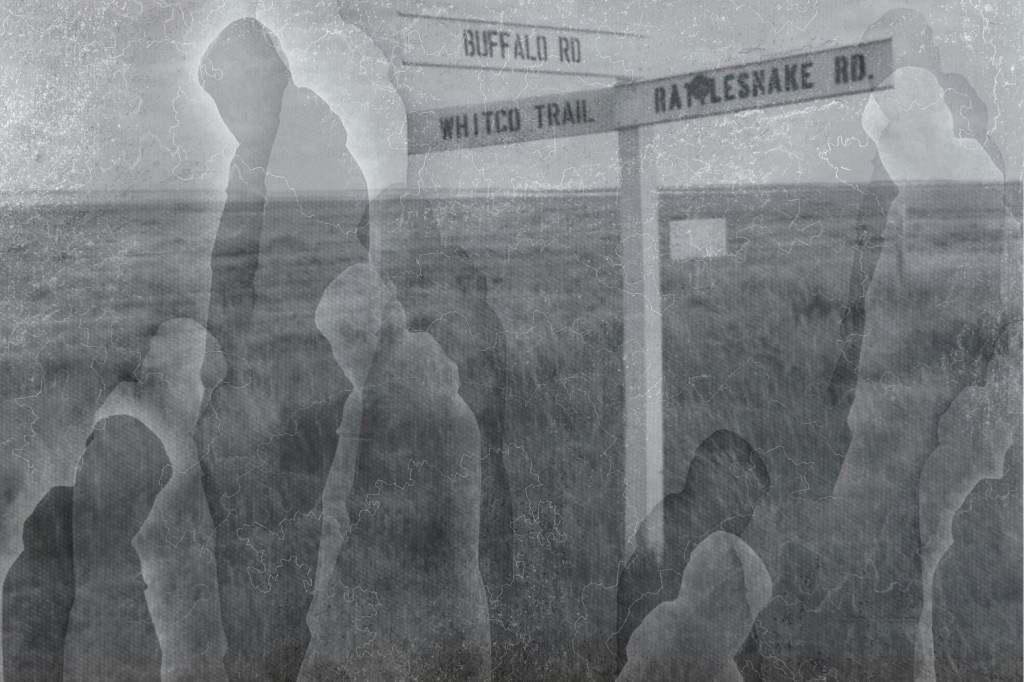
I also found this photo of a signpost.
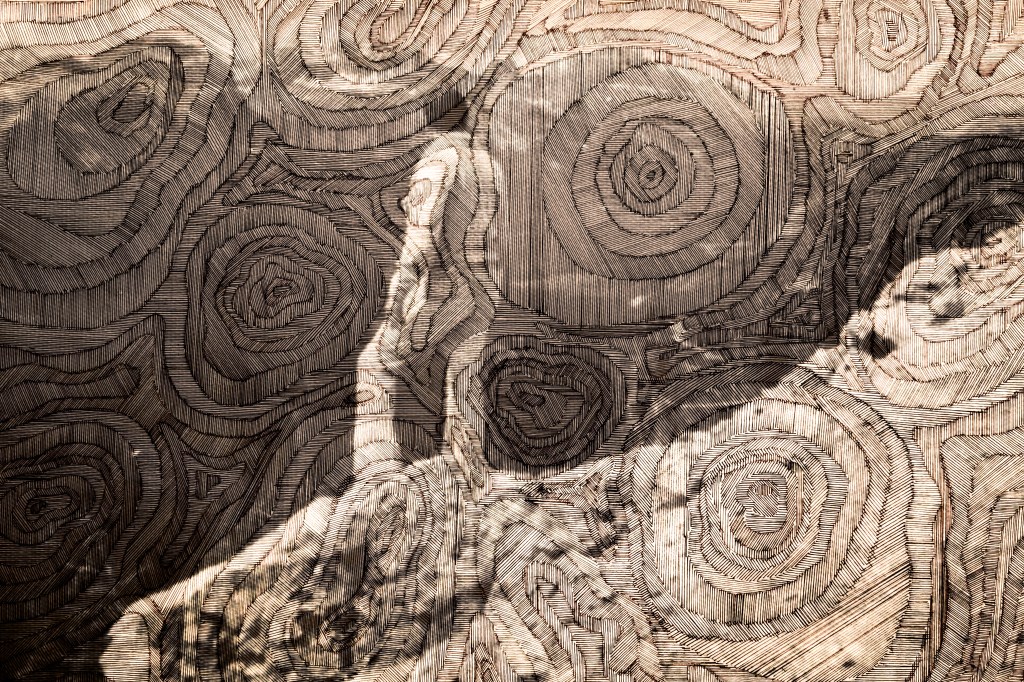
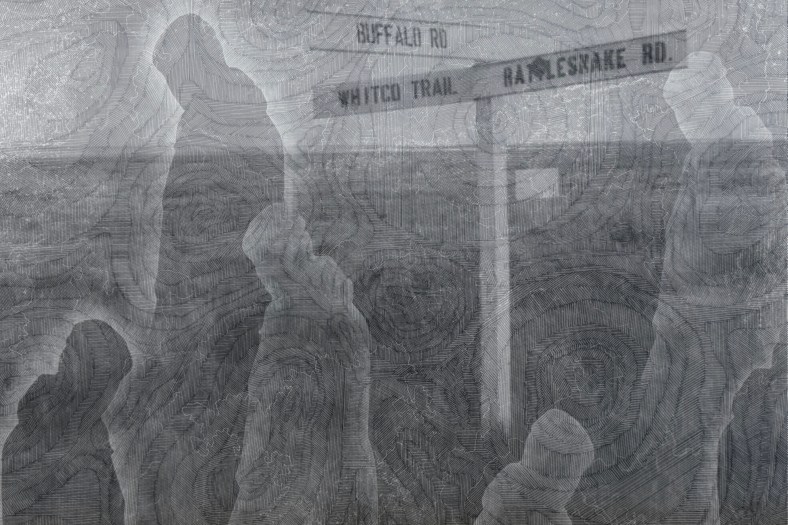
I played around with layering using filters, inverting and adjusting opacity:
The image above is tonally bland; I prefer the one below. I like how the lined contouring gives the effect of the image being woven or embroidered.
Again, the images above don’t have enough tonal range. I don’t think the contouring adds anything, it’s probably more of a distraction.
A mixed bag of results. I prefer the images which don’t crop off the bottom of the sign post. The most successful is probably the penultimate image, but again I think it needs a greater tonal range. However, I do like the effect of the figures against the landscape, the idea of crossroads in life, decisions made, a different path followed and shadow selves.
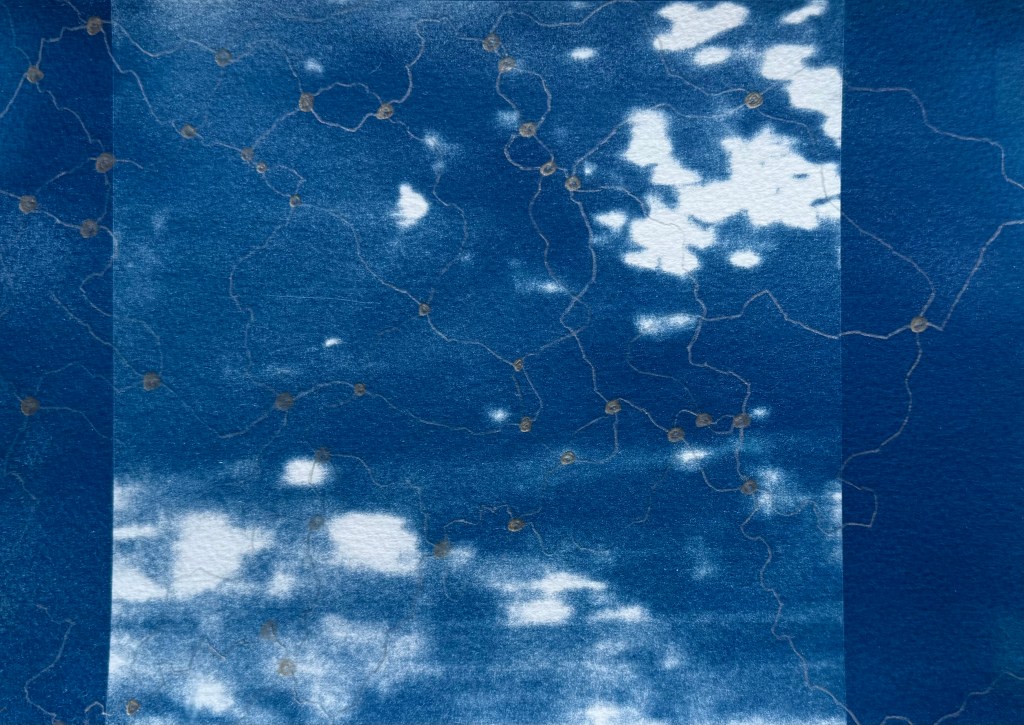
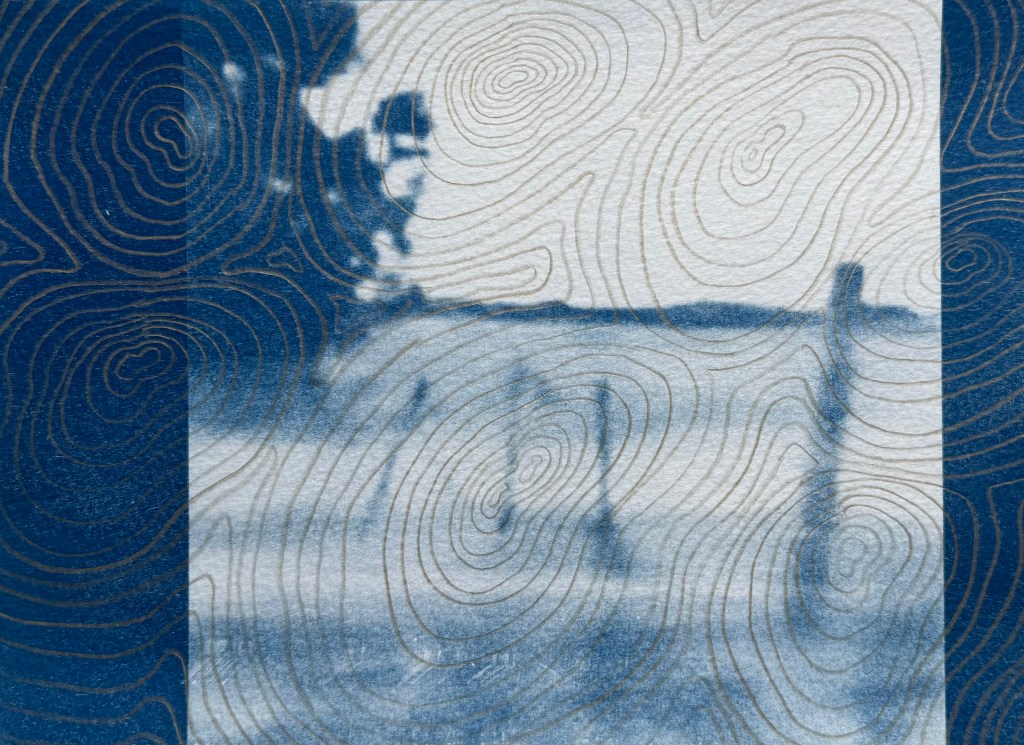
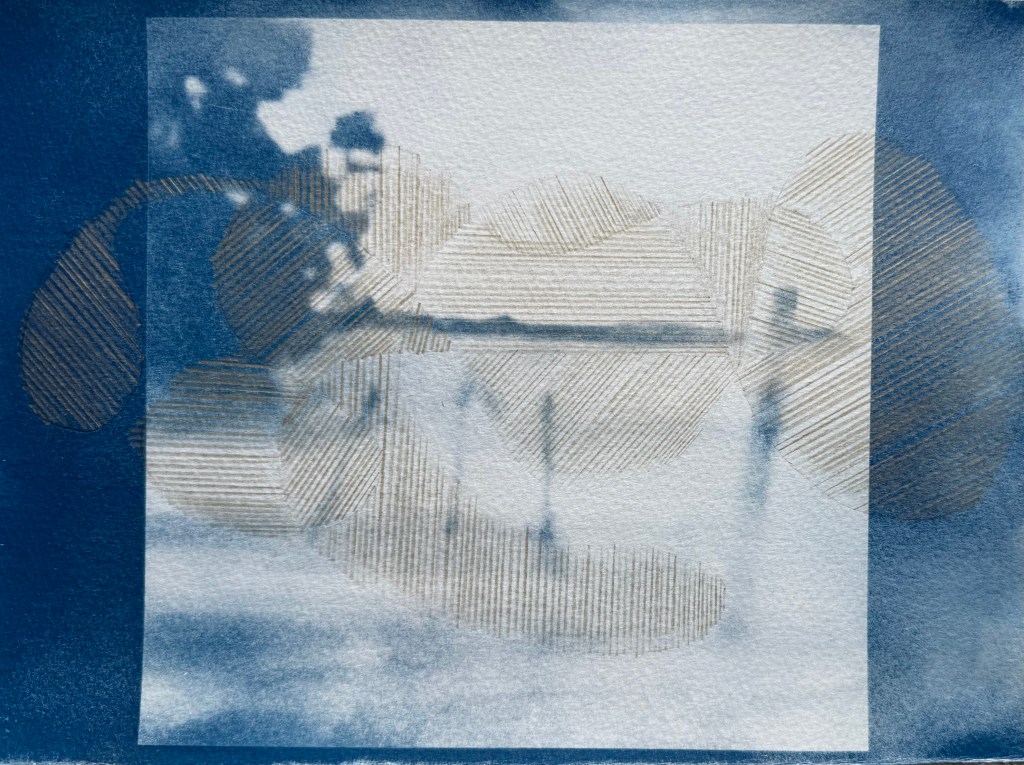
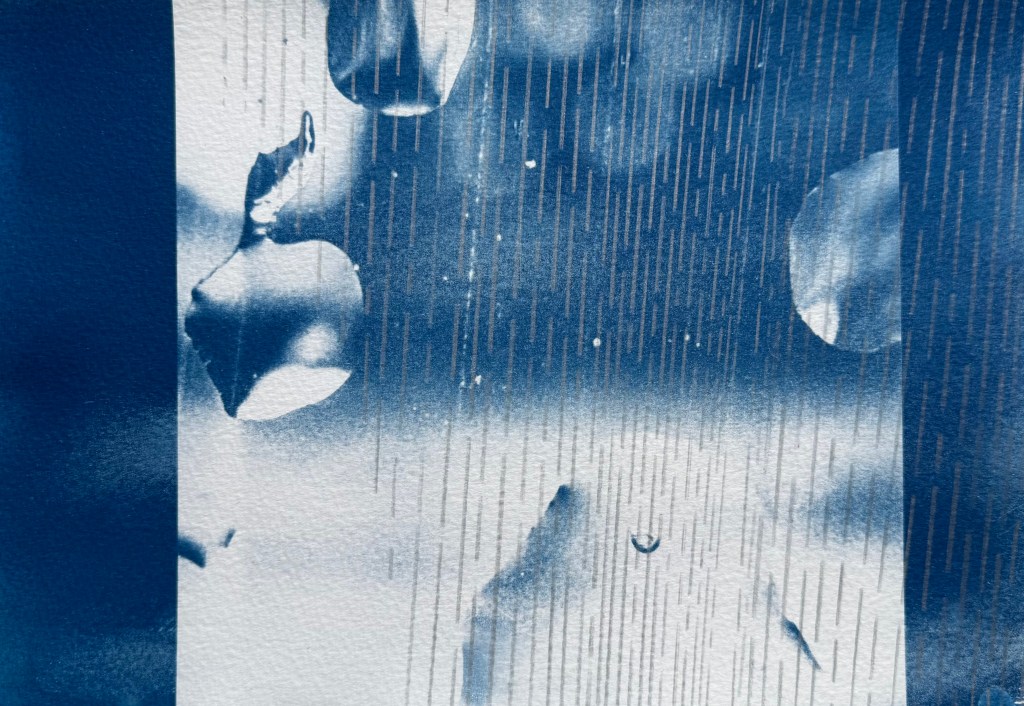
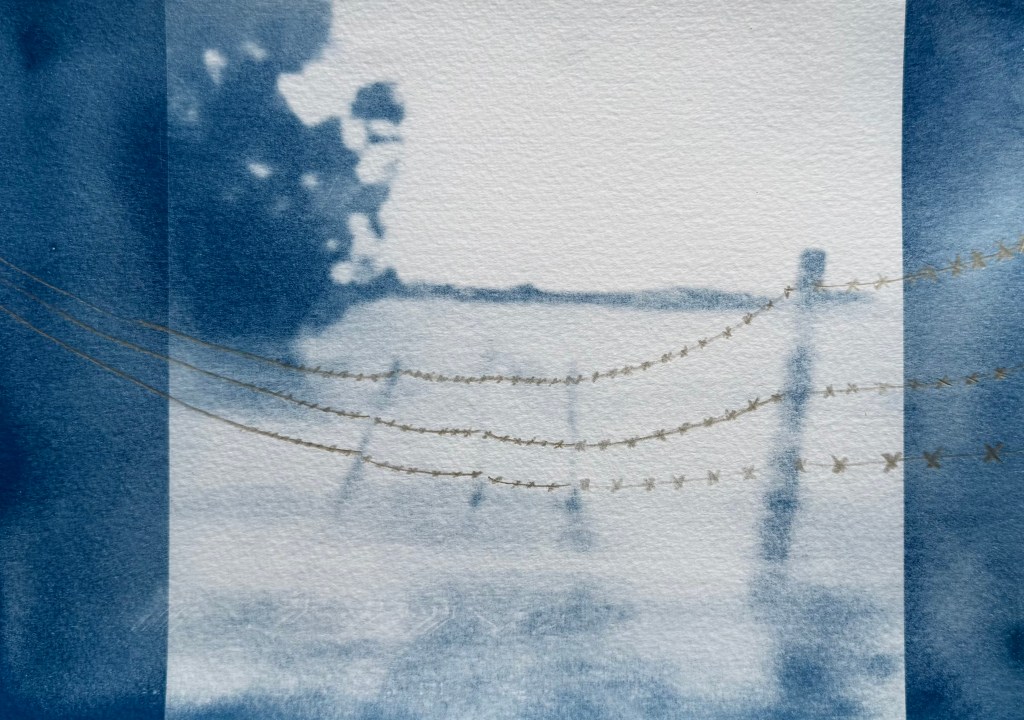
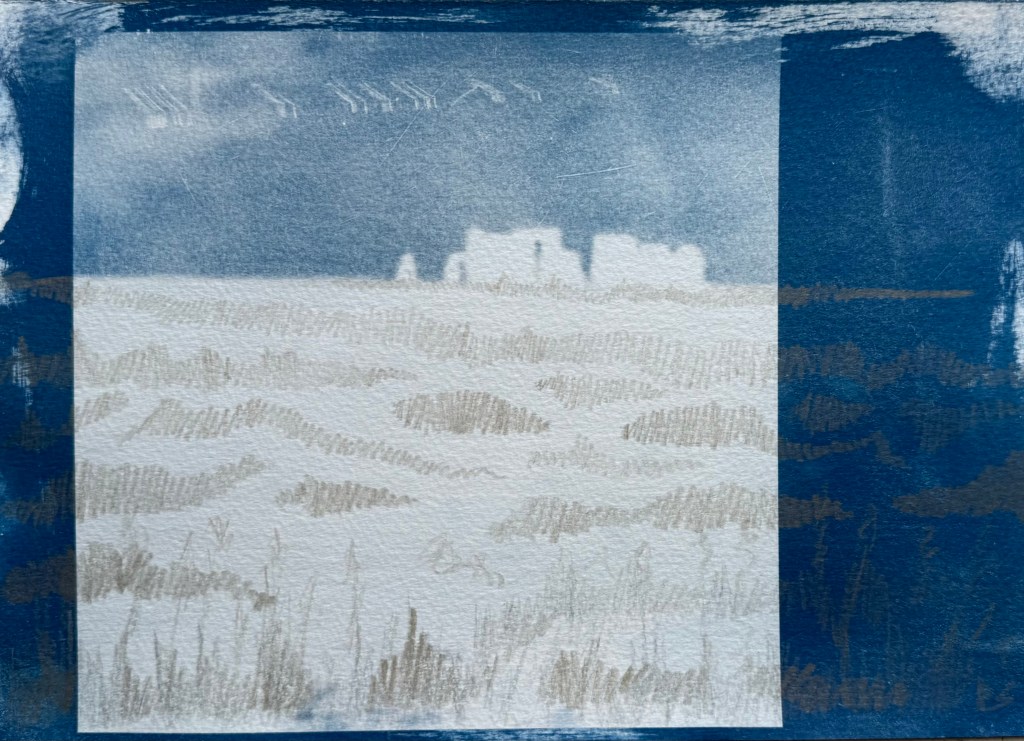
I was interested to see Jo Love’s remediation of old black and white photos using metallic pencils, in our session a couple of weeks ago. Photographic images quite often form the basis of my work. I decided to experiment with gold and silver pencils on some old unsuccessful cyanotypes I made from the video stills in In A Flash. The results were varied.
I used the silver pencil first but thought that it didn’t stand out enough. On reflection I think there is a subtlety about it which I like, and perhaps it would have been a better choice than the gold.
I’m not particularly drawn to any of them, but if I had to make a choice I prefer the last two images, particularly the last one. What works for me are the marks outside of the original image, the sunlike shape on the left and the drifting cloud on the top right. The overdrawing creates an image within an image, something which always appeals to me. I think part of the problem is the fact that the images are on watercolour paper which wasn’t overly receptive of the pencil. Overdrawing does appeal to me as a concept, though.
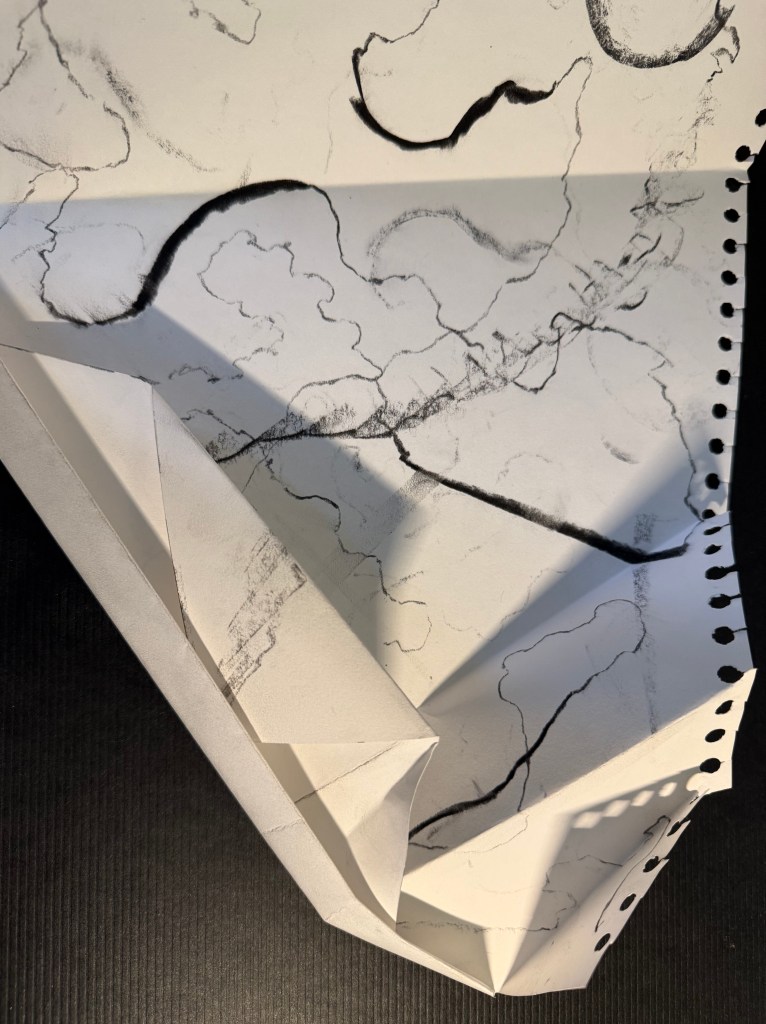
In preparation for this week’s mark-making session with Jo Boddy, I dusted off my charcoal box. I haven’t used charcoal for quite a while.
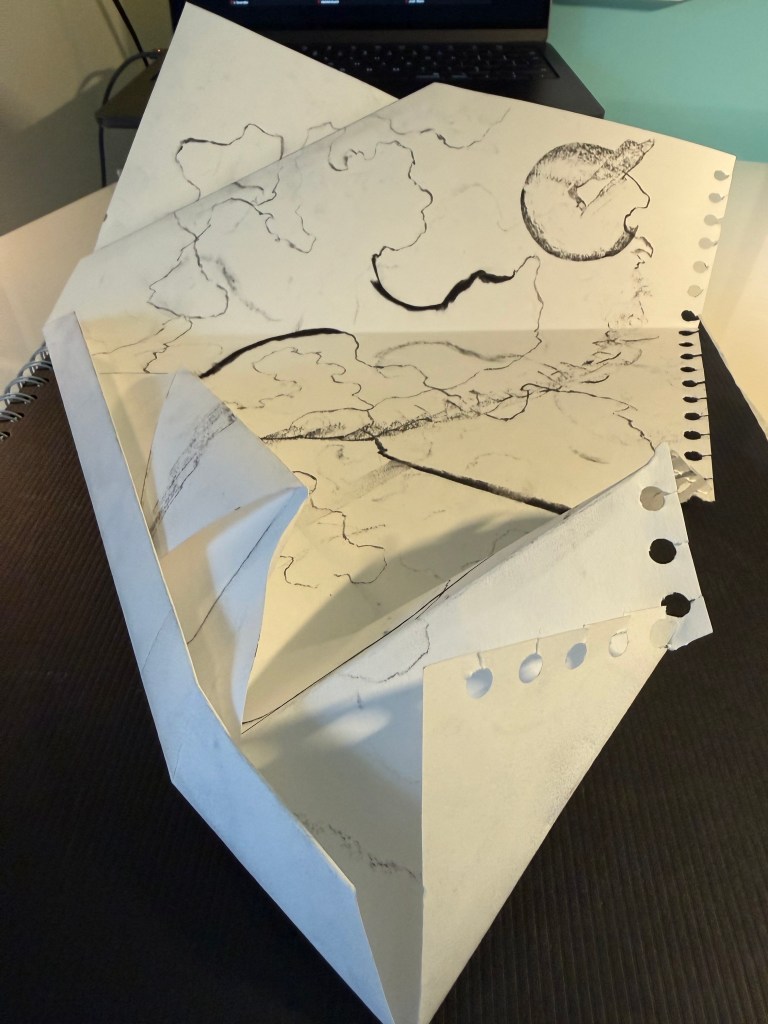
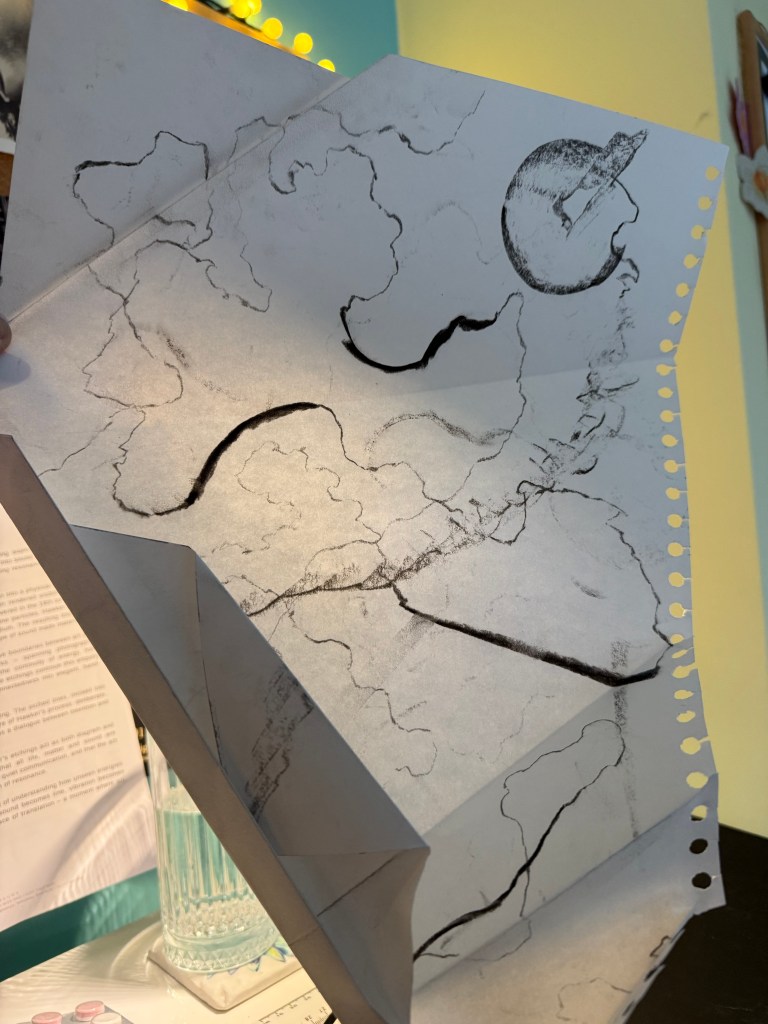
During the session we were instructed to make marks and to think about the context of our practice whilst doing it. We were then paired up and gave each other instructions as to how to make further marks with a view to giving up control, something that I’ve been exploring myself recently. I was instructed to keep my charcoal on the paper and to vary the pressure. We then folded and creased our paper, again taking instructions for a second round of folding – fold an edge as if wrapping a present. This reminded me of our workshop with Christian Azolan in last year’s Low Res – I love how folding and unfolded adds a different dimension, creates shadows, particularly where I had torn the page from my sketchbook.
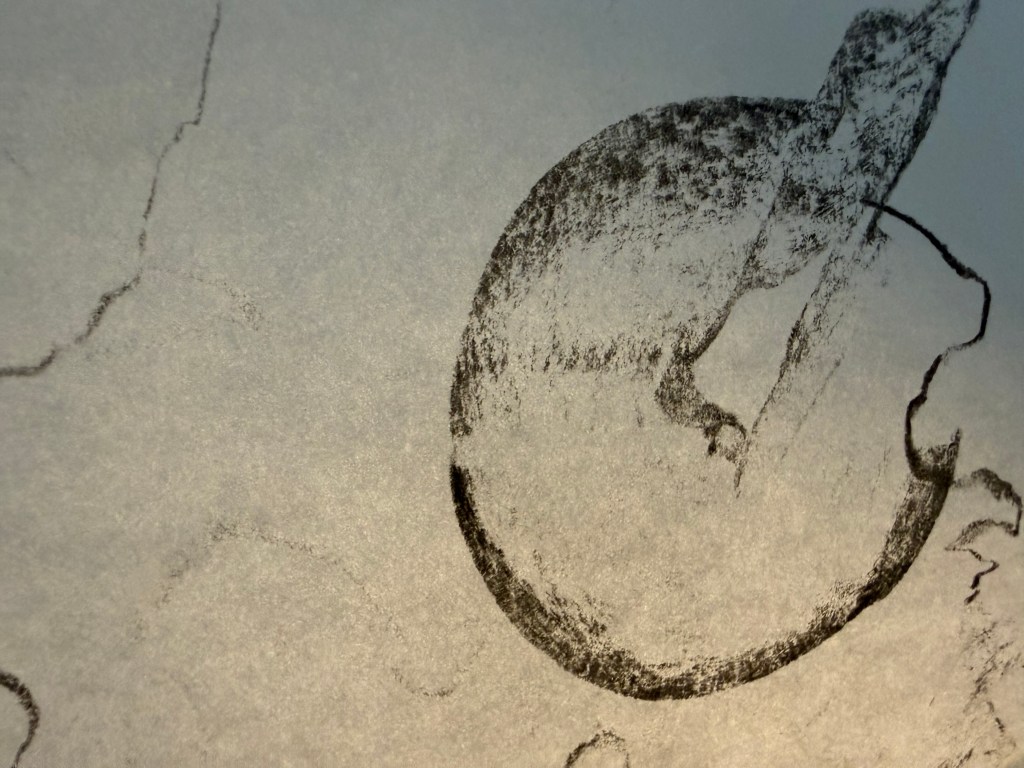
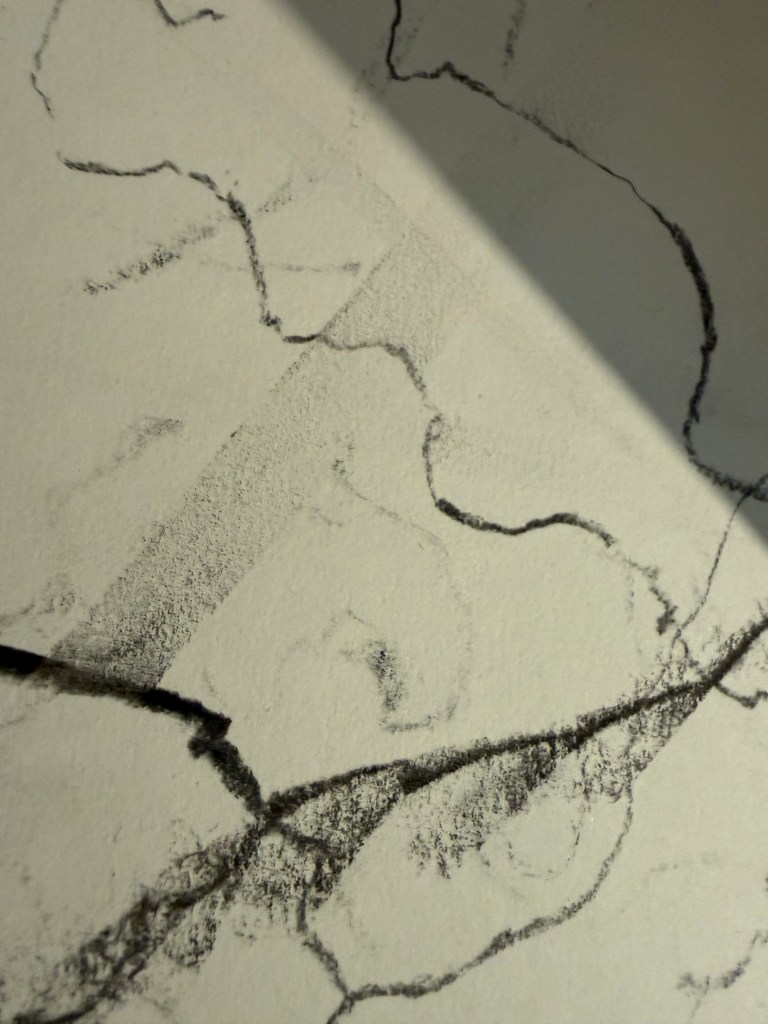
We took photographs of our piece and uploaded it to the miro board, giving it a title, taking it in turns to talk about it with the rest of the group. I called mine ‘Process’ because it evidenced my process – you can see where I exerted different pressure as I made my marks, how where I folded the paper the charcoal was smudged by my finger and the charcoal left a ghostly print on the opposite part of the paper.
The process felt totally comfortable.
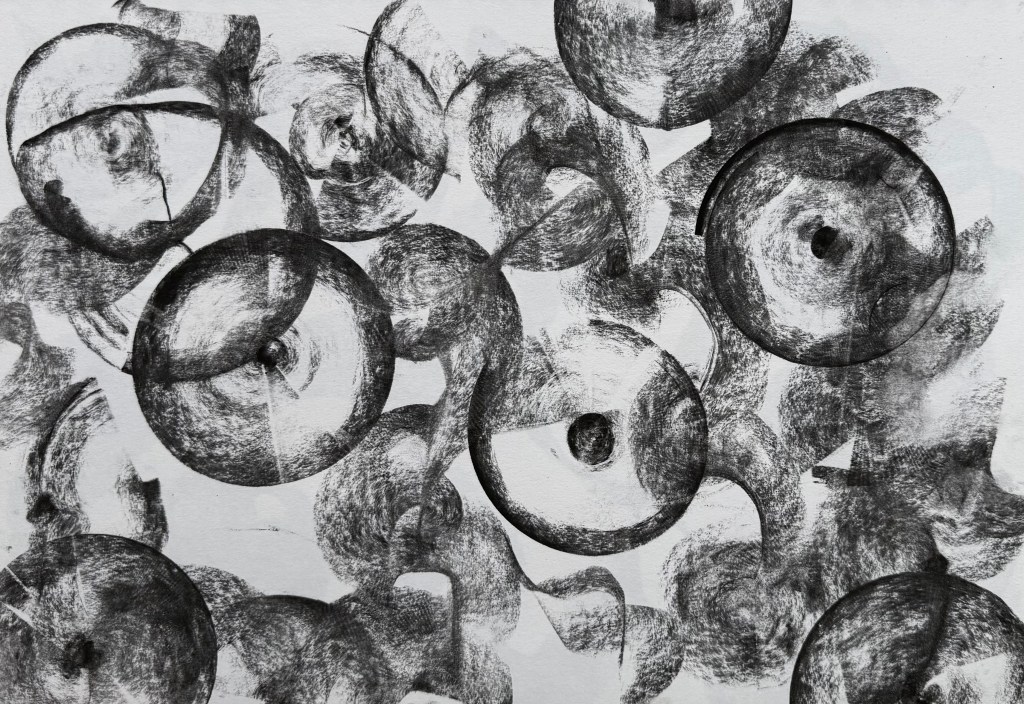
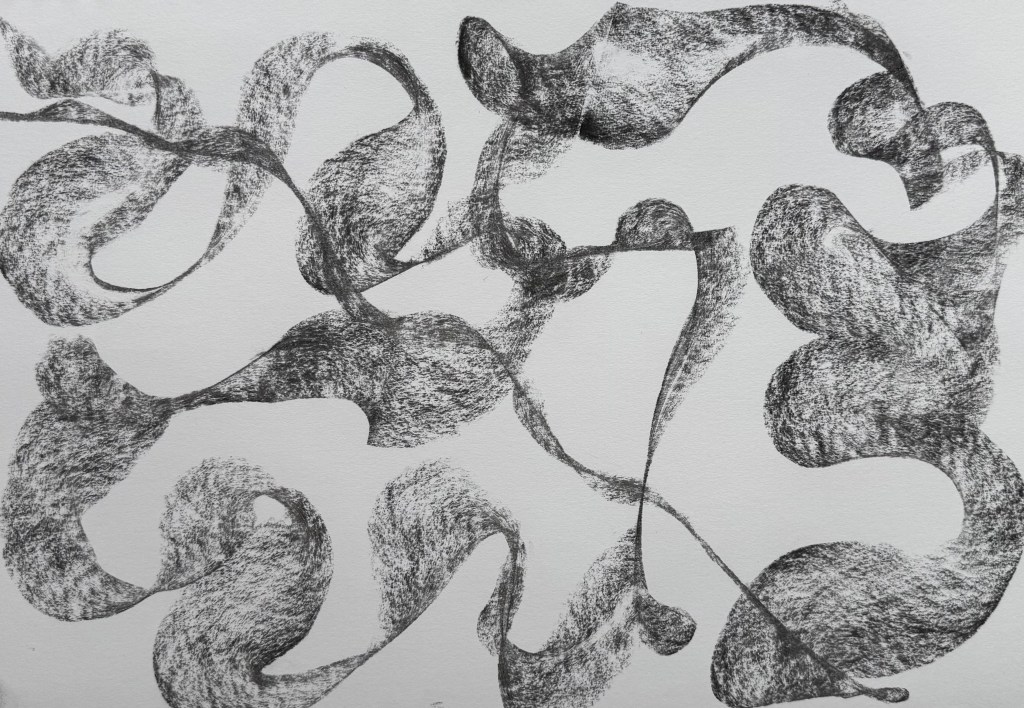
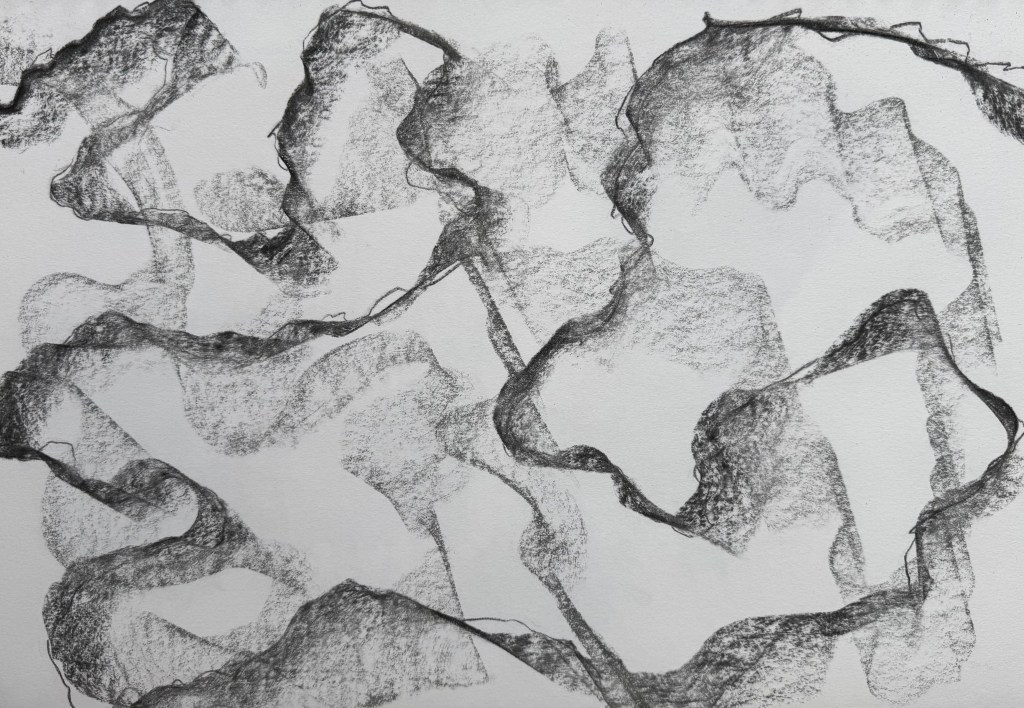
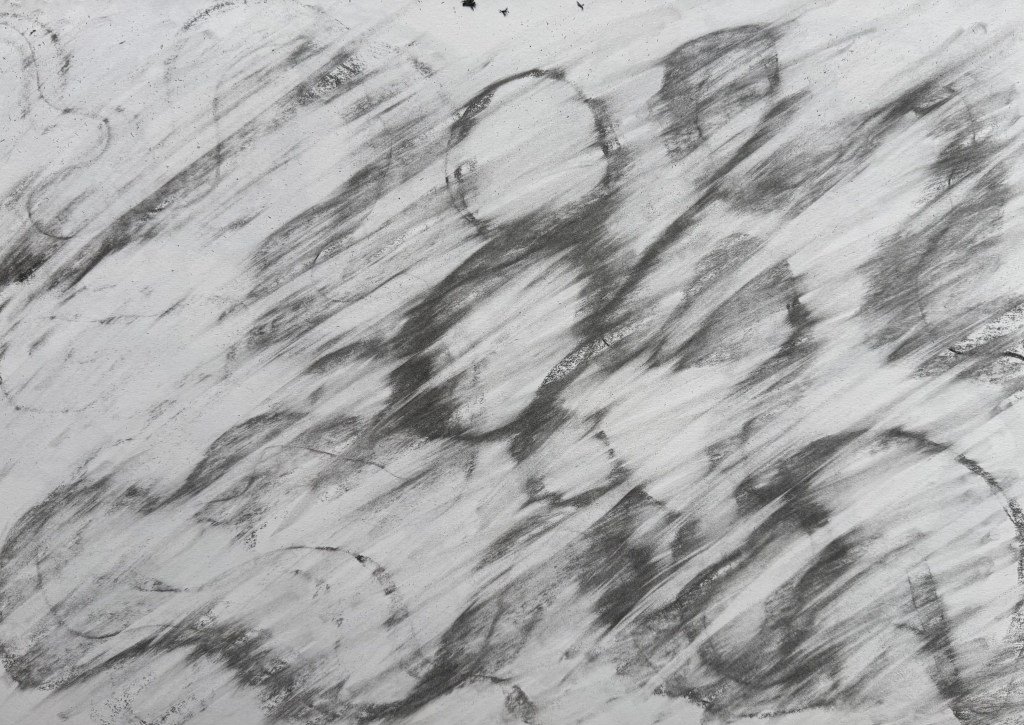
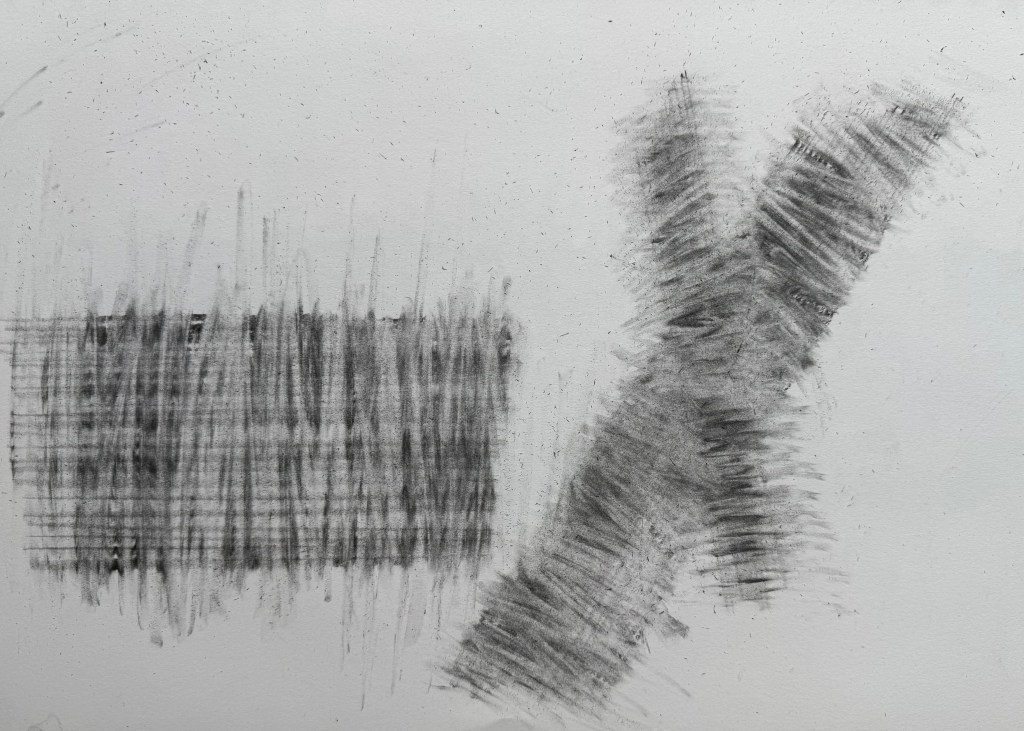
After the session, I carried on doing some more mark-making.
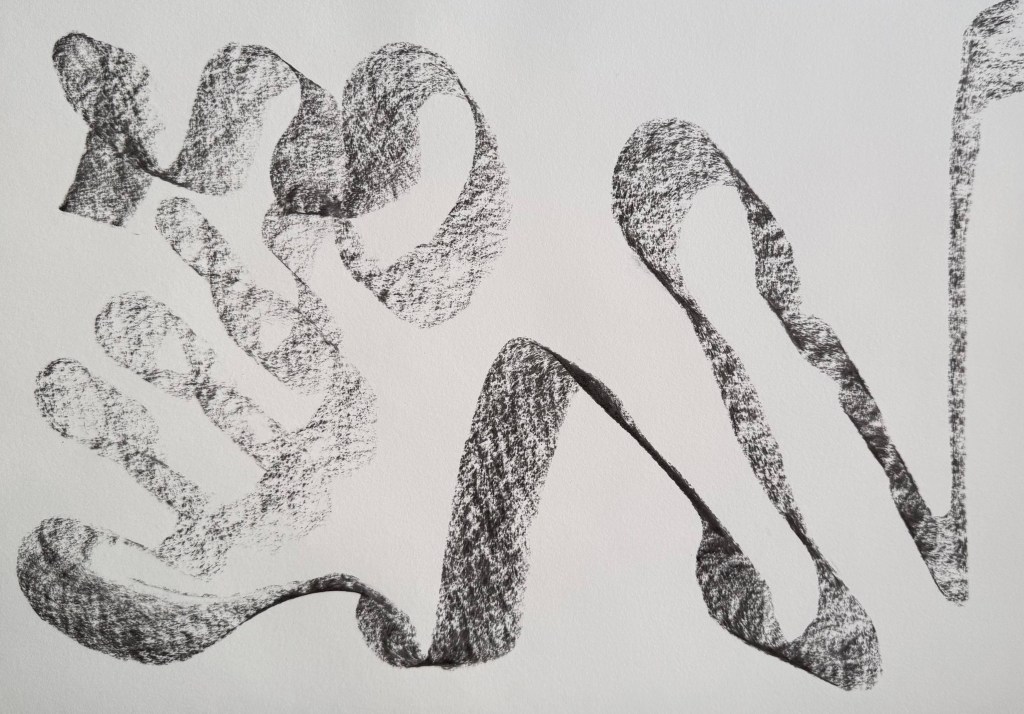
I really enjoy using the charcoal on its side, moving it up and down and rotating it on itself. I used a thick stick as well as a thin stick of willow charcoal. Because I was able to press down harder on the thicker stick I managed to achieve a greater range of tone.
The one above reminds me of coastal cliffs.
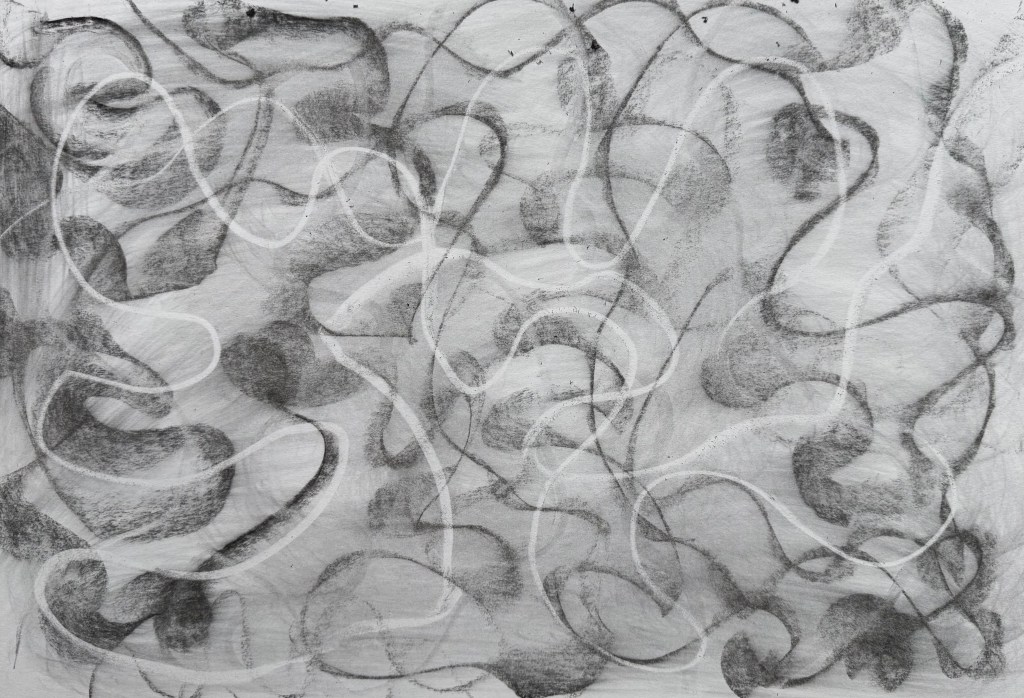
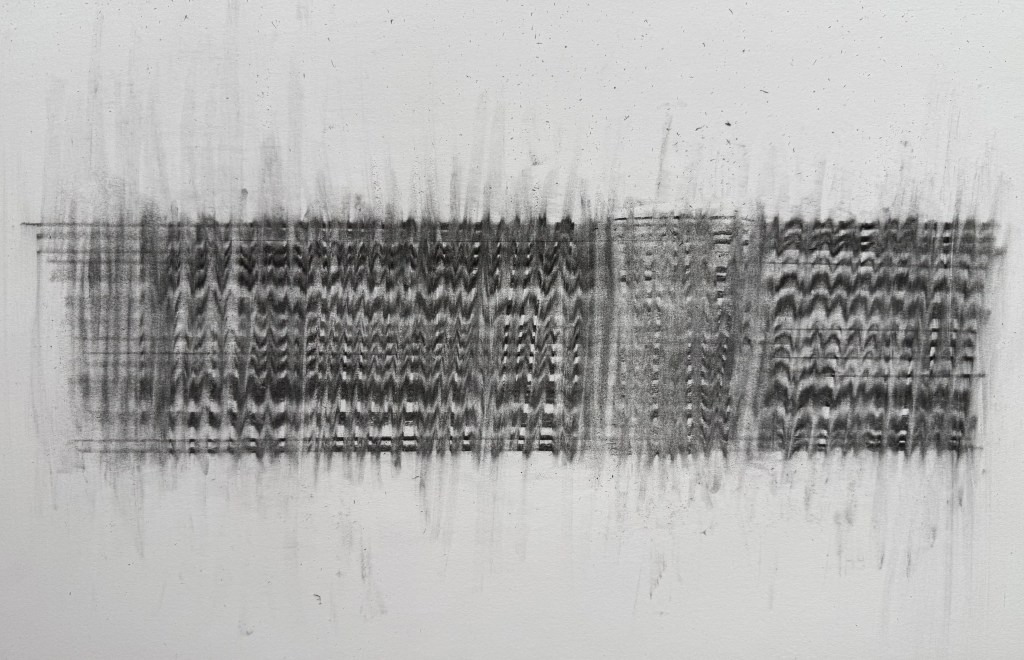
I then got the plastic eraser out.
I really like the one above. It feels really dynamic. I really like the effect of using the eraser perpendicularly to horizontal lines of varying thicknesses. Doing it alternately, reminds me of Bakewell tarts or Missoni.