Last week was mostly spent curating my blog, which turned out to be a monumental task as I had published over 70 posts. Despite that, I managed to explore cyanotypes, a process I’m really excited by and which is giving me lots of ideas in terms of processing and re-processing should I decide to go down that route.
I also thought a lot more about my ideas and also the direction of my research. I’ve got to think a lot more about the interim show and also, until I have resolved the issue of the direction of my research, I think I will delay the preparation of individual mind maps for now, and so I’ve carried that task forward to this week, but anticipate it being kicked further down the street.
This week:
Unfortunately, I won’t be able to make the Helene de Beauvoir exhibition after all, but will make some plans for the ICA. I’m supposed to be starting considering Topic 1, which I think I will keep to an element of the general theme for now.
I know already that I’m not going to achieve much this week as I have a lot on elswehere. I will do my best, but I anticipate a few items being carried forward to the following week.
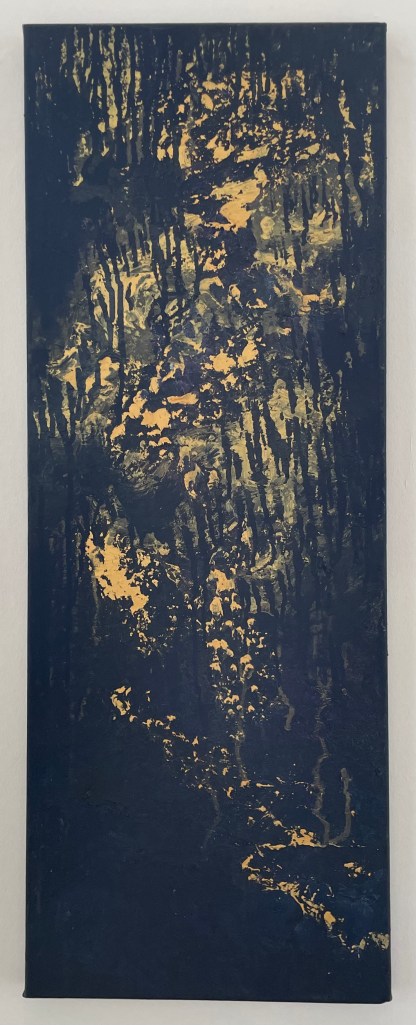
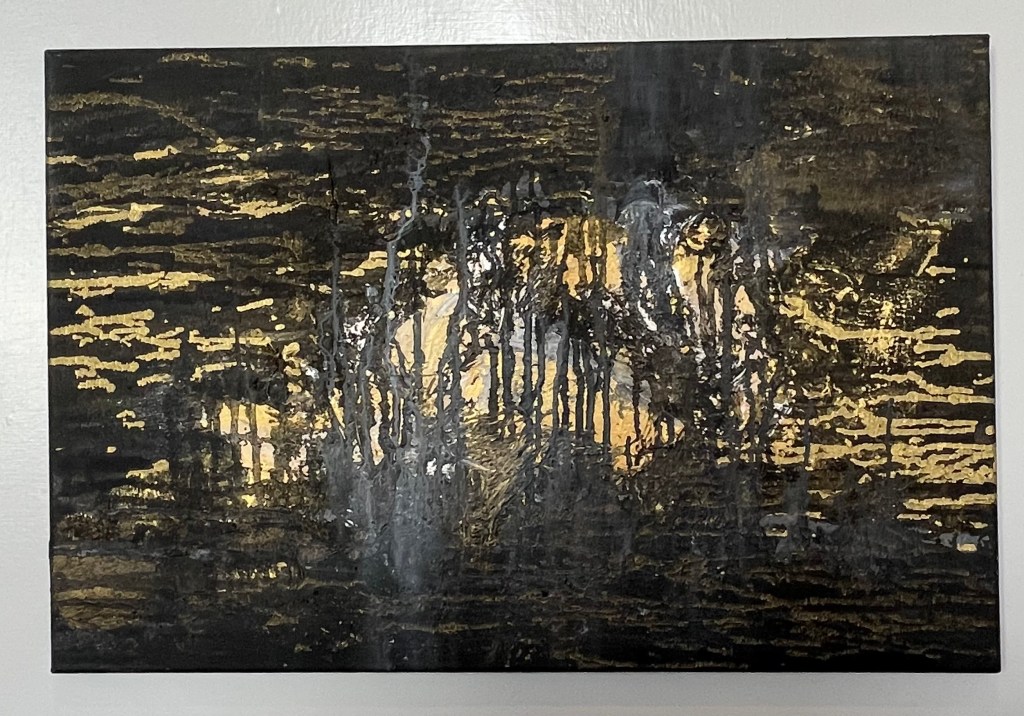
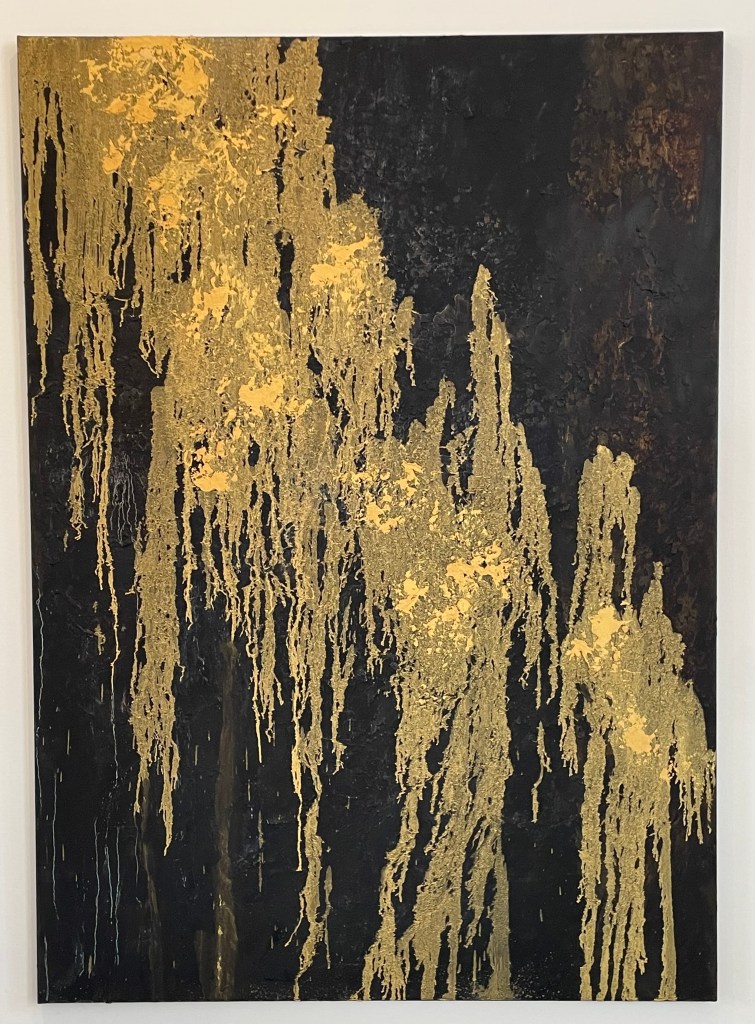
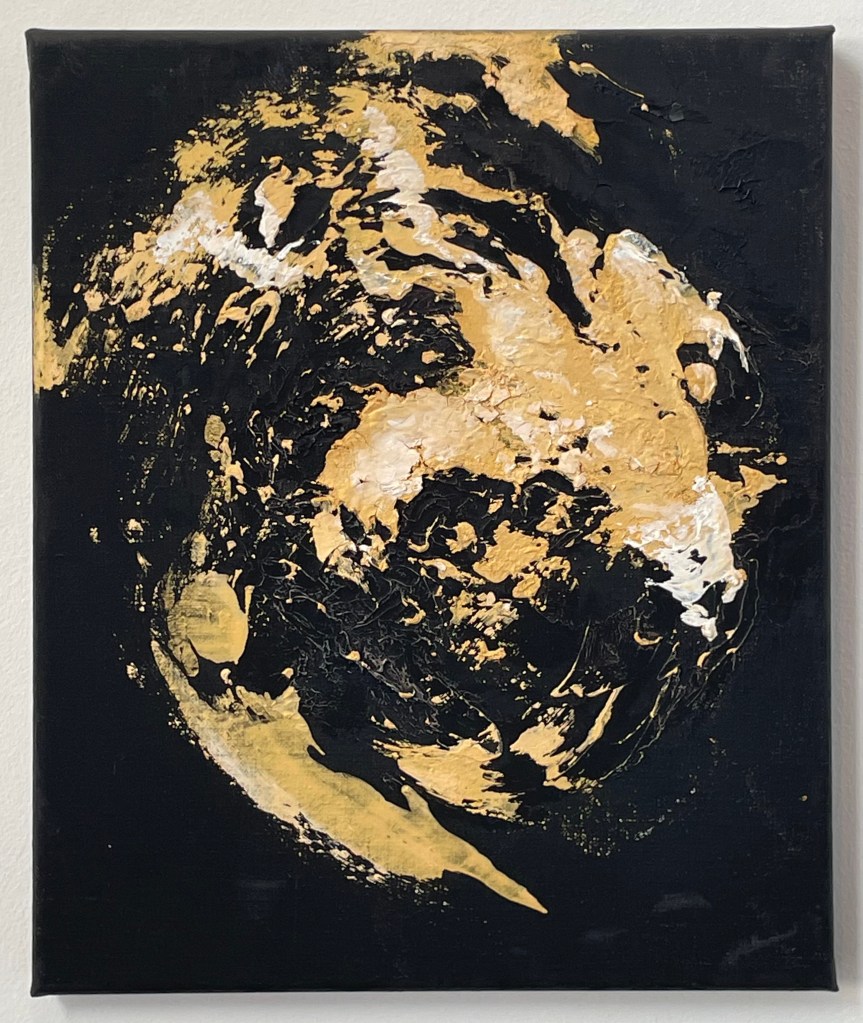
When I went to the Pallant House Gallery to see Dora Carrington recently there was another exhibition on at the same time: Maggi Hambling – ‘Nightingale Night’.
Nightingale Night VI
Nightingale Night X
Nightingale Night XIV
Nightingale Night III
Nightingale Night IV
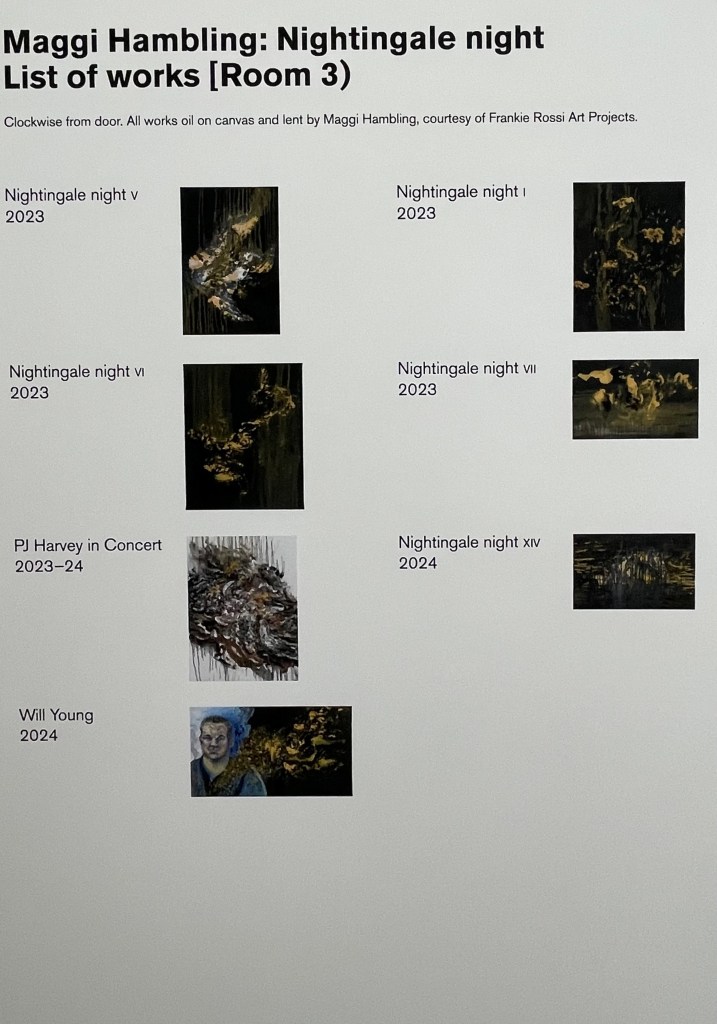
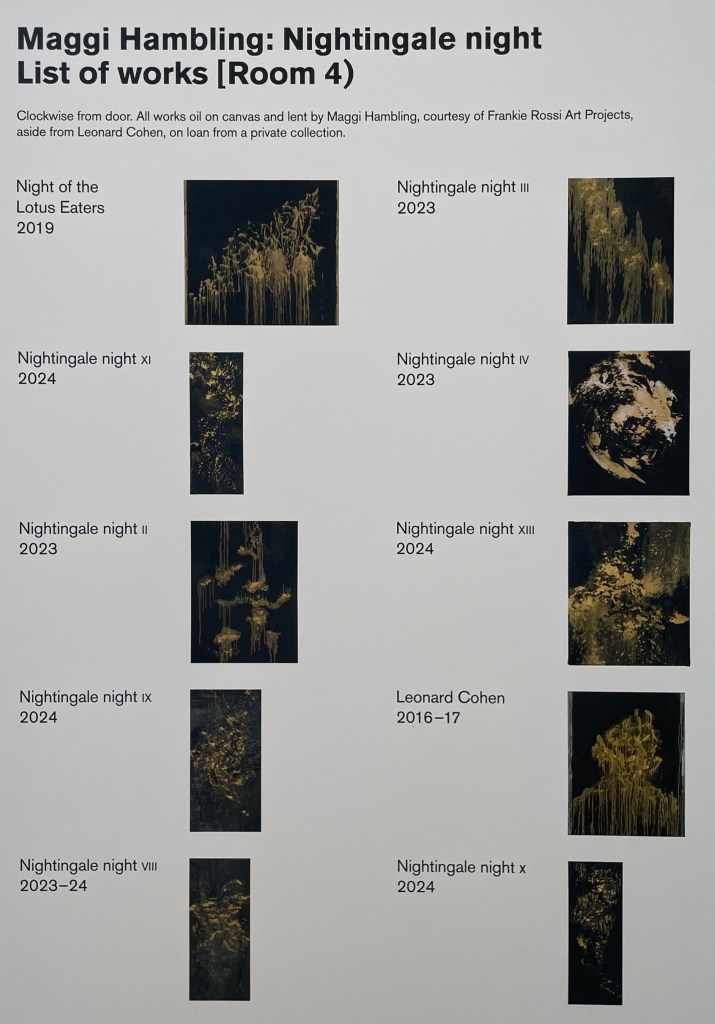
Hambling spent a night in a woodland in Sussex in the Spring of 2023 listening to nightingales. I didn’t take photos of all of the paintings – I think I was only drawn to some of them on the day, or maybe I was tired from exploring Dora, but Iooking again at the images on the identification labels, I’m regretting not having done so.
I’ve since read an entertaining interview with Hambling about the exhibition in ROSA Magazine – I like doing further research after I’ve been to an exhibition; never before.
I’m not entirely sure what I think about it all. I’m not sure that I like the gold on the black ground, although I can absolutely understand her reasoning behind it, and I do like a bit of gold. Does she succeed in communicating the otherworldly divinity of the nightingale in the darkness? The sense of it, absolutely, but the sound of it? I’m not convinced, and I think it’s the mark-making. The swirls and definite vertical and horizontal marks are successful, I think, in representing sound; my issue is with the drip-like marks – they don’t allude to the beautiful song of a nightingale to me; it’s more akin to me having a warble and eventually running out of steam and giving up. But I think I’m being harsh, because even she admits that it’s impossible to paint the sound of a nightingale, and that what she hopes to have captured is a sense of the fleeting moment. She comments:
”…there wouldn’t be much point in painting a picture that it was possible to paint…”
It’s an interesting comment, one to think about.
It would be interesting to know whether Hambling made the paintings from memory, or whether she played a recording of nightingale song whilst she worked. I’ve assumed that it is the former because it’s about the whole experience, of being in a certain place at a certain time bearing witness to something extraordinary.
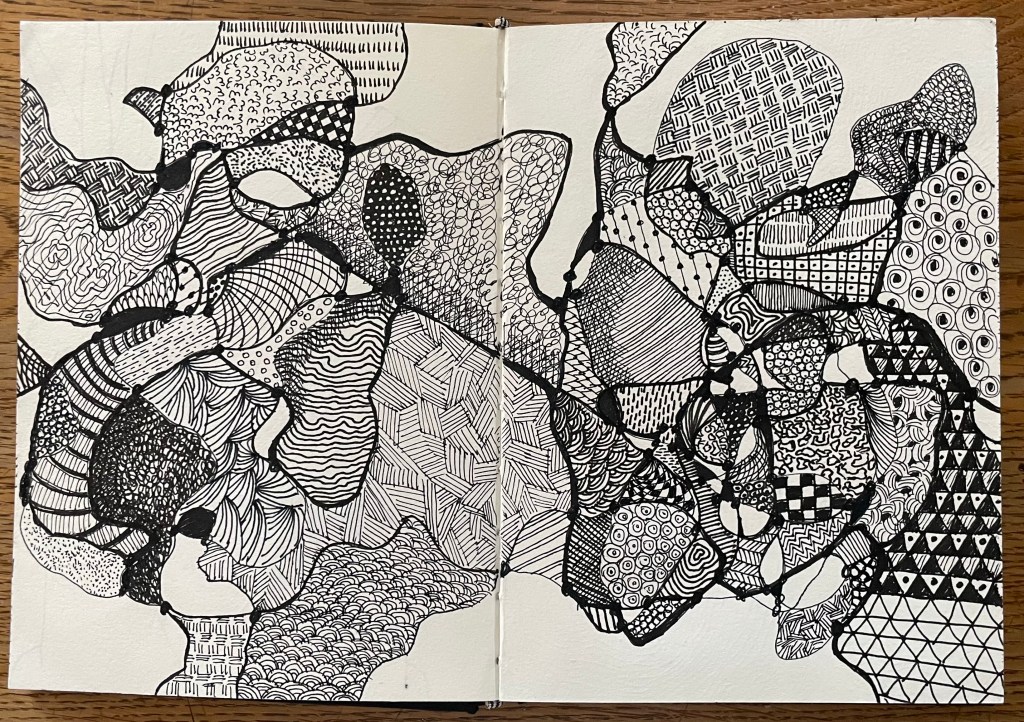
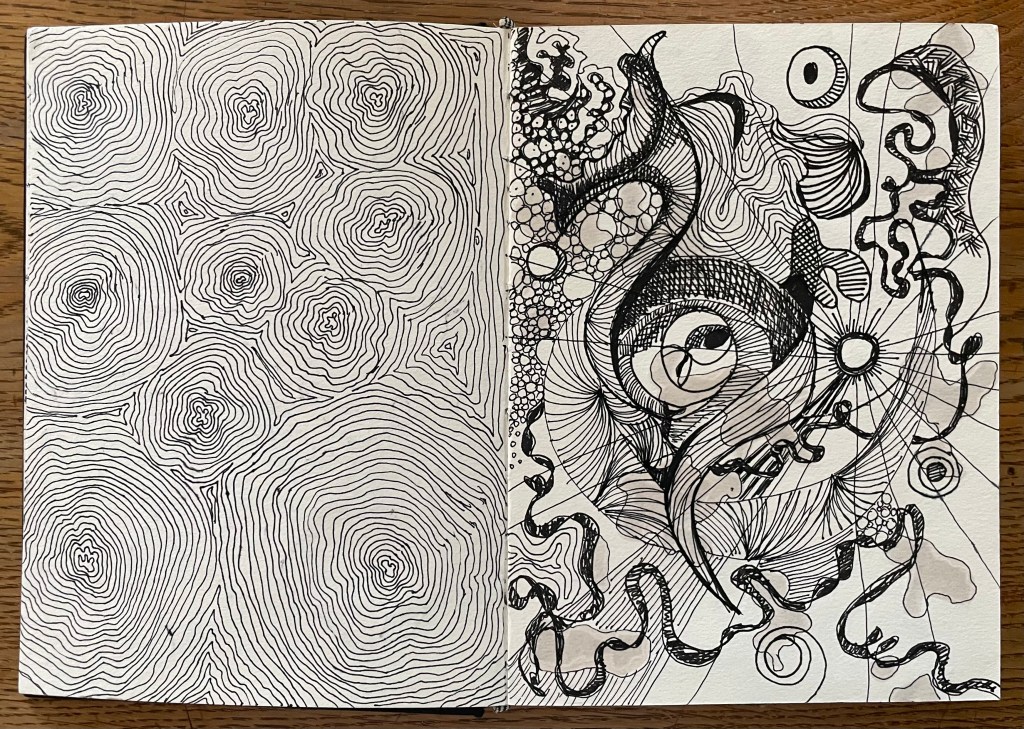
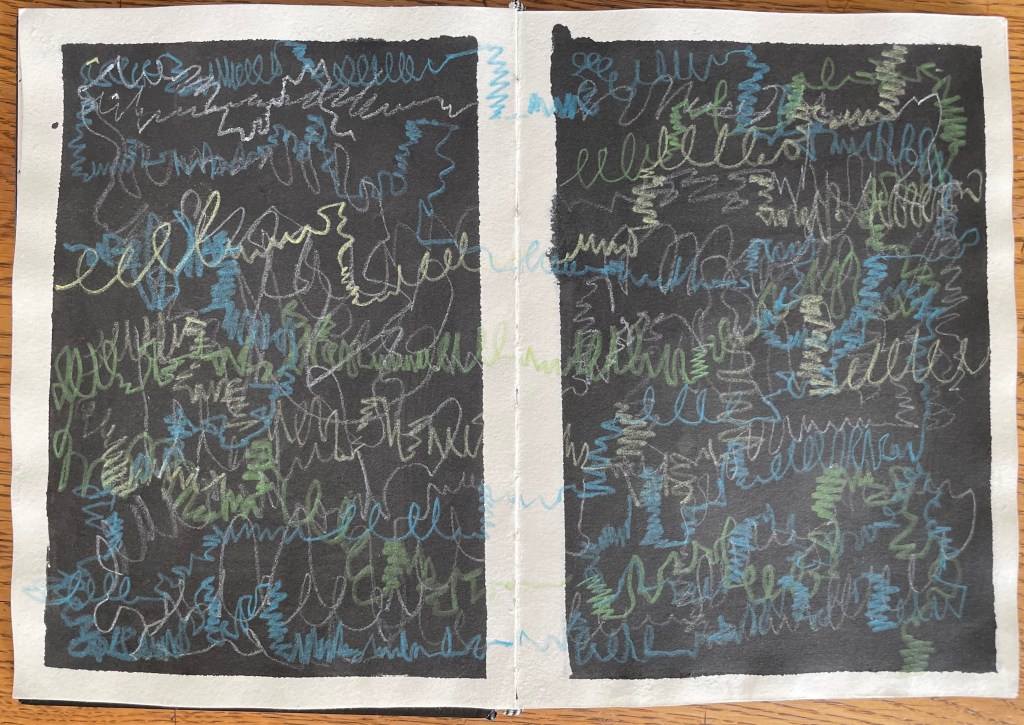
I have been carrying on with my pen doodling, some of which is unfinished – I became bored, and moved on. I also decided to give nightingales a go. The concept of representing sound in a 2-D form is really interesting – the consideration of tone, volume, intonation, rhythm etc. I’ve represented it in a linear way, thinking initially about sound waves, but it would be interesting to explore other methods of representation.
The song is so diverse and improvisational that it was very difficult to think of different mar–making to represent what I was hearing. It was an interesting exercise, and very calming listening to birdsong with my eyes closed.
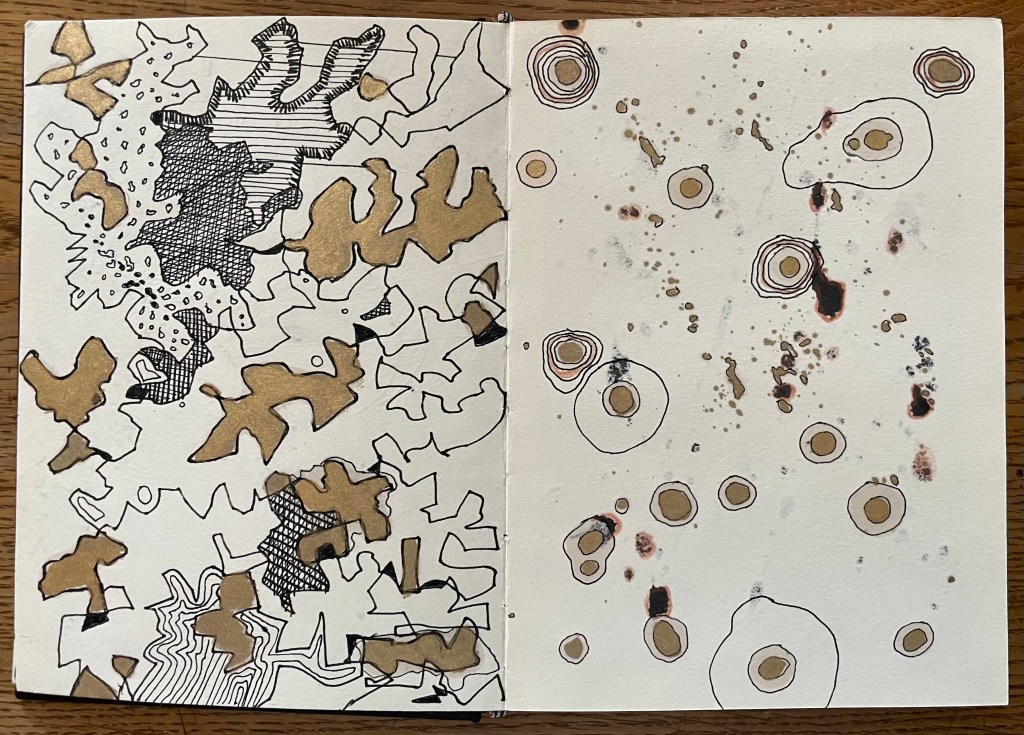
I like having an inked page – I think I will go through my sketchbook and randomly ink up or paint pages. I also like trying to work with unexpected events such as the solvent stains from the gold coming through to the reverse of the page. This is, literally, just playing – it’s enables a period of convalescence.
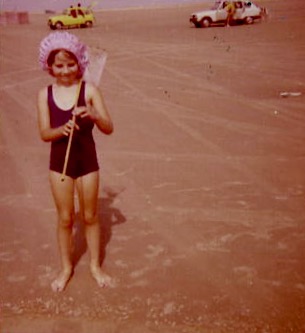
I took the overexposed images of me on the beach and lightened them by putting them in a bath of sodium carbonate (made by heating sodium bicarbonate in the oven) and water. I think that the solution was too strong as it lightened the images considerably.
I then made up some toning baths, and used the lightened images and two of the ones which had been ok from the previous session.
Red wine & teaCoffee & turmeric teaRed Wine(non-lightened)Black Tea(non-lightened)Coffee(lightened)
It took several hours for the tones to develop especially in the images which hadn’t been lightened first. Thinking about it I haven’t been particularly scientific or logical about this as I was too keen to experiment, but going forward I will need to be more careful about keeping a record of process: applications, timings, volumes, amounts etc if I am to stand much chance of recreating effects that I like. ( Left: Turmeric tea – lightened)
To get a true comparison I will need to repeat the process using lightened and unlightened images and specific volumes of toner and timings etc.
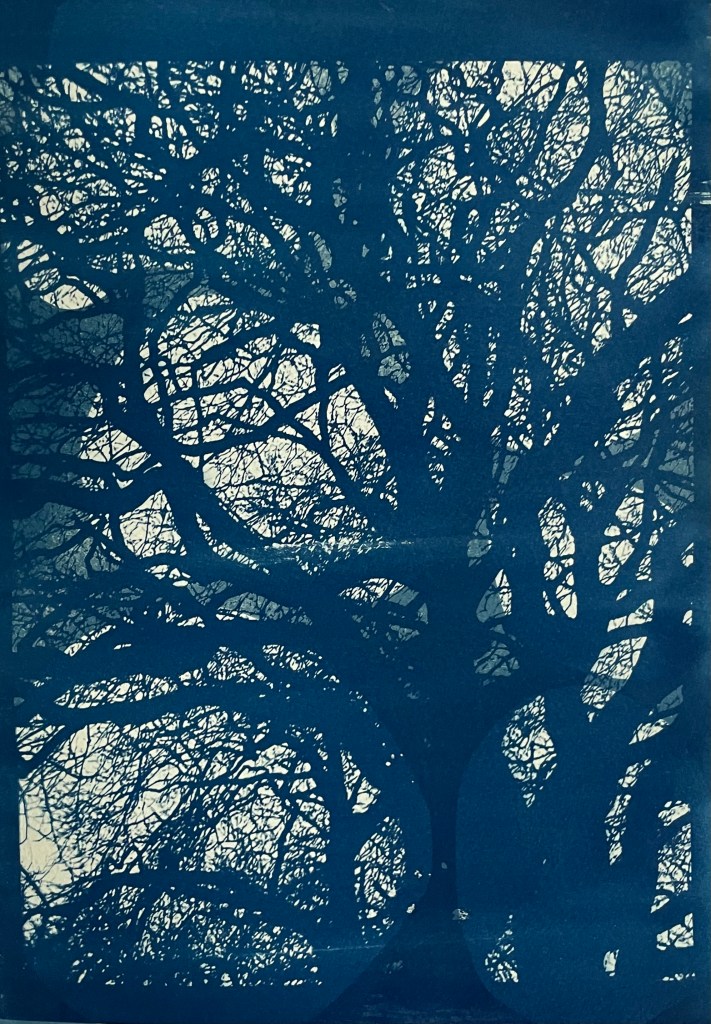
I then started playing around with exposures. I prepared a new print of the trees using the unit, re-applied some solution, and then placed some amorphic shaped paper masks over areas of it and put it back in the unit for 5 mins. I then put it in a hydrogen peroxide bath in an attempt to get some deeper blues and definition in the dark areas.
I like the added depth that is achieved by the second exposure; it creates some more interesting areas within the darks, and a mid tone in the lights, making 4 tonal values.
I then tried a triple exposure. I took the underexposed image of the pond statue from the previous session, reapplied the solution (not particularly evenly as it turned out), and used some torn paper to retain sections of the original image. I exposed it for 5 mins in the unit.
I then recoated it, and masked off most of statue, laid on some foliage and then exposed for 5 mins in the unit, finishing with hydrogen peroxide to accentuate the different tones in the dark areas.
I’m pleased with the result, although I would have liked to have achieved greater definition of the leaves where they cross the vertical strips. Perhaps less time on the second exposure?
Exploring the idea of masks further, I tried using various items on the first exposure. Some were more successful than others. Soap suds between sheets of plexiglass didn’t really work (I think that’s more for when working wet in wet):
Soap Suds
I also swapped from watercolour to oil paper, with a view to developing the prints by painting on them in the next session.
Cling Film
Piece of Cord
Bubble Wrap
I really like the effects achieved in the images above. I now need to sit back and reflect on if, and how I can develop them further.
I think that my brain is at risk of becoming overwhelmed by all the possible permutations. My natural reaction is to explore every combination possible. To this end, I enjoy making up colour charts, recording every possible combination using all of my paints, even if I never use the charts. I suppose that I like to know all of the options available to me, with which I can work. It makes me feel safe. I like the comfort of having some form of structure in place. That’s how I am – I like to be informed: to know all the options before making a decision, to see all that there is to see in the place where I am on holiday, read every book or article which might be relevant – hence my delay in tackling the UAL library online. I think it comes back to the feeling that I have done all that I can possibly do, and so the decision or path that I choose to go down has to be the right one. I like resolution. Nothing irritates me more than watching a film or reading a book and getting to the end where there is no end, even if it is a bad ending; no resolution. And yet, the ending could be whatever I want it to be and has infinite possibilities which in many respects should be a better and far more exciting place to be.
I’ve been doing quite a bit of thinking this week.
The first time, as a result of our weekly session, unprofessional v professional. We considered all that is implicit in the terms professional and unprofessional, and then read and discussed an article ‘How to be an Unprofessional Artist’ by Andrew Berardini, 23 March 2016, MOMUS.
I came away from the session feeling confused, and no longer having a clear sense of direction. My aims in my Study Statement are designed to help me fulfil my aspiration of becoming a practising professional artist. I’m now questioning what I even mean when I use the term ‘professional’. If it means losing creative autonomy, losing the love of creating because it has become an expectation or much worse, a chore; having to repeatedly make things because they are popular or asked for, then, no, I don’t think that’s what I want. But what is the alternative, just to carry on as I am now, making art for me and leave it at that – be a hobbyist like my mother said; be an amateur? I don’t think that’s what I want either. That’s not why I’m here.
Maybe when I get there, if I ever do, the answer will become clear. Perhaps the best course of action is to aspire to be a practising artist for the time being, making more time for creating. There’s no point trying to run before I can even walk.
I then spent some time reflecting on the cyanotypes I made, and all the possible further paths that I could go down. I started thinking about processes and re-processing. How you can take a painting, for example, take a photo of it, digitally alter that photo, incorporate other elements, say, by way of collage, print it out, print on top of it, paint on it, photograph it, keep changing it, keep re-processing it.
It then occurred to me that I’m just one big walking process made up innumerable smaller processes – breathing, talking, thinking, digesting, and on and on. Not just that, but that life is a process with all its constituent processes. Growing, having children, loving, caring, grieving, healing, dying are all processes by which we are, ourselves, processed.
So, I think that I’ve reached a point where I’m thinking about the reprocessing of art and the reprocessing of me. It’s probably because I’ve been thinking a lot about process recently, writing the word goodness knows how many times in Doing Lines, and reading ‘Ultra-Processed People’ by Chris van Tulleken. But it does occur to me that I have led most of my life too focused on the product, and not really living in the process.
I’ve been thinking about my discussion with Jonathan; about the ideas I have, and his advice that I should record them in this blog to remind me of them in the future. I find it easier to scroll quickly through the blog than sift through bits of paper, or flick through sketchbooks trying to find them.
I had an unexpected opportunity to start the process this morning. One of the good things about getting older is that you start being called in for regular tests and health reviews. I’m in the process of one such MOT – I have had my bloods done; liver function OK I noted from my NHS app (which seems to be filling up with more and more of my records everyday) and Type II Diabetes is still a way away so that’s good news for both my gin collection and my stash of chocolate. Cholesterol is a bit on the high side, but then it always has been – it’s all that good cholesterol, or so I keep telling myself – but there’s no getting away from the fact that women of my age are at an increased risk of heart attack. I’m starting to think that I’m a hypochondriac who is obsessed with death, but really I think that I have quite a positive outlook on life.
Anyway, for some reason I got a message on my phone yesterday notifying me of an appointment this morning for an ECG. Maybe it was a follow up to my cholesterol levels? They don’t even phone you nowadays I thought to myself – imagine if I hadn’t seen the notification? Anyway, long story short, when I arrived at the surgery after having rushed because I thought that I would be late, heart pumping a bit too quickly just before an ECG I thought to myself, it turns out that it was an admin error and it had been meant for someone else. I was out of bed now, so I might as well go and have a quiet stimulating coffee before heading back home.
So I did, and I did some thinking, made some notes and made a quick mind scribble when I got back home. It feels a bit like just having put the children to bed – I know where they are, and they’re safe.
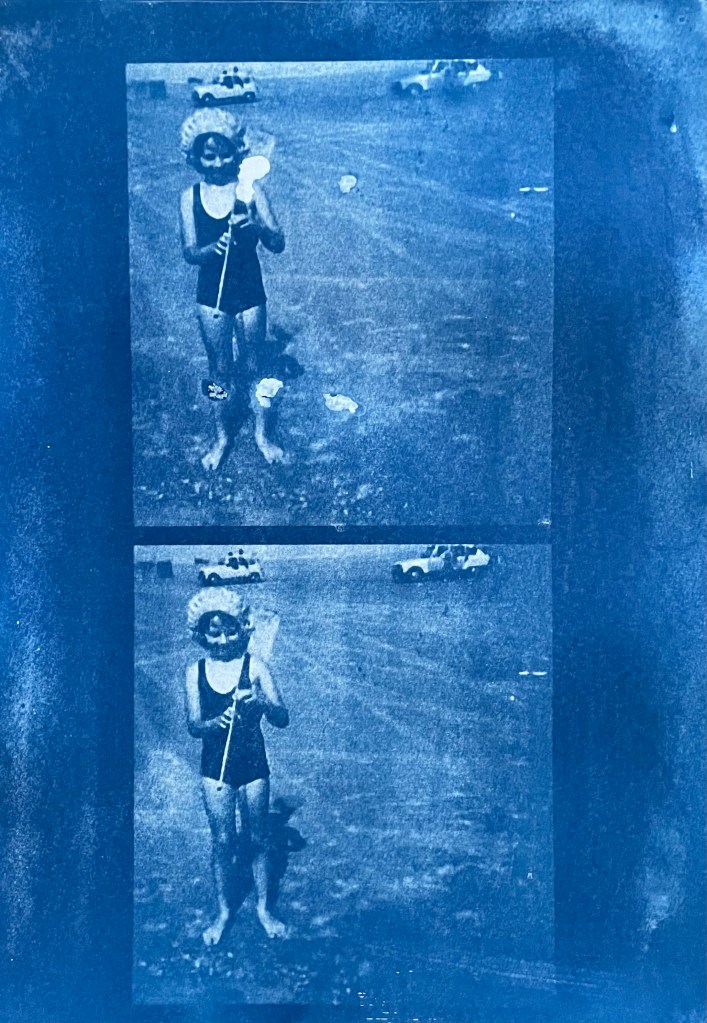
Last summer I became obsessed with cyanotypes. Then there was plenty of sun. There was some sun the other day, but not much since, so I decided to make myself an exposure unit using my Speedball UV lamp and following instructions on Handprinted. I do love a bit of DIY; there’s something very satisfying about making do with something handmade which didn’t cost a fortune to buy, or require some fancy kit, or having to go to a specialist location.
I used an old printer box which was large enough to take A3 sheets, cut out a hole for the lamp to sit in, and then lined it with aluminium foil.
I selected a few photographs to experiment with; some from the family photos which I’ve been sorting out, and others which I have collected on my phone as inspirational resources, as well as some images from the experiments earlier on in this blog. I converted them all to black and white and then inverted them in Photoshop, printing them off on transparencies. I had to dust off my old printer to do this as I wasn’t sure how to do it on my husband’s printer. This took a while because between each print I had to perform a ritual of pressing certain buttons in a certain order in order to fool the printer into thinking that I was using genuine HP ink cartridges, which I wasn’t. The things you can learn on YouTube.
Ironically, the sun came out, so I did a mix of au naturel and my DIY unit.
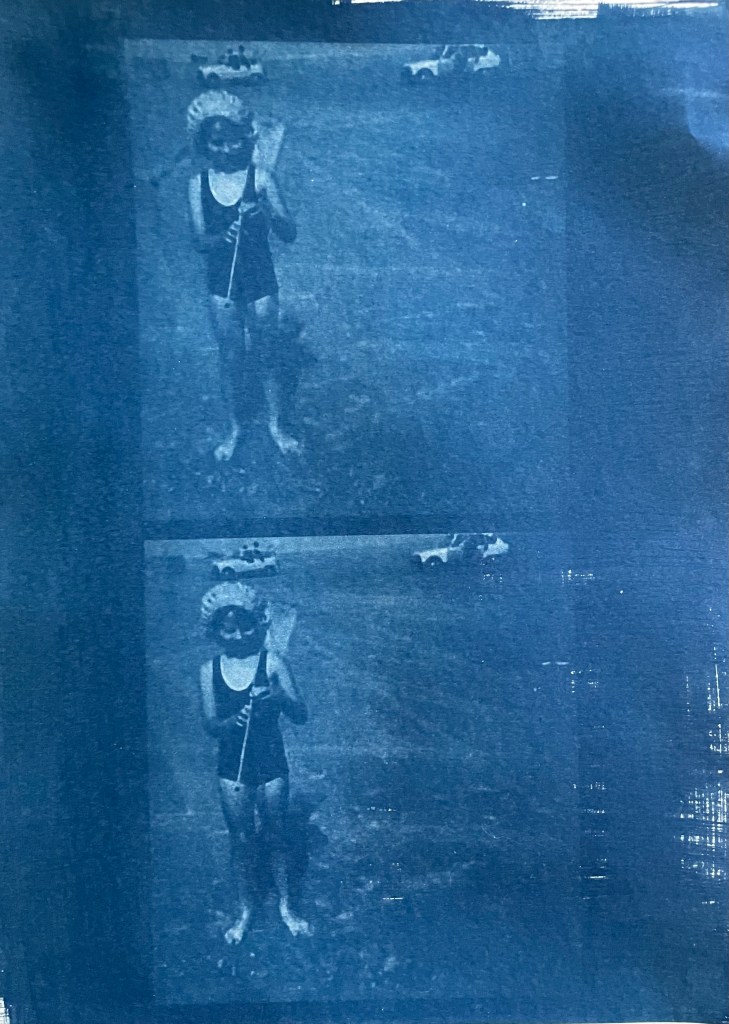
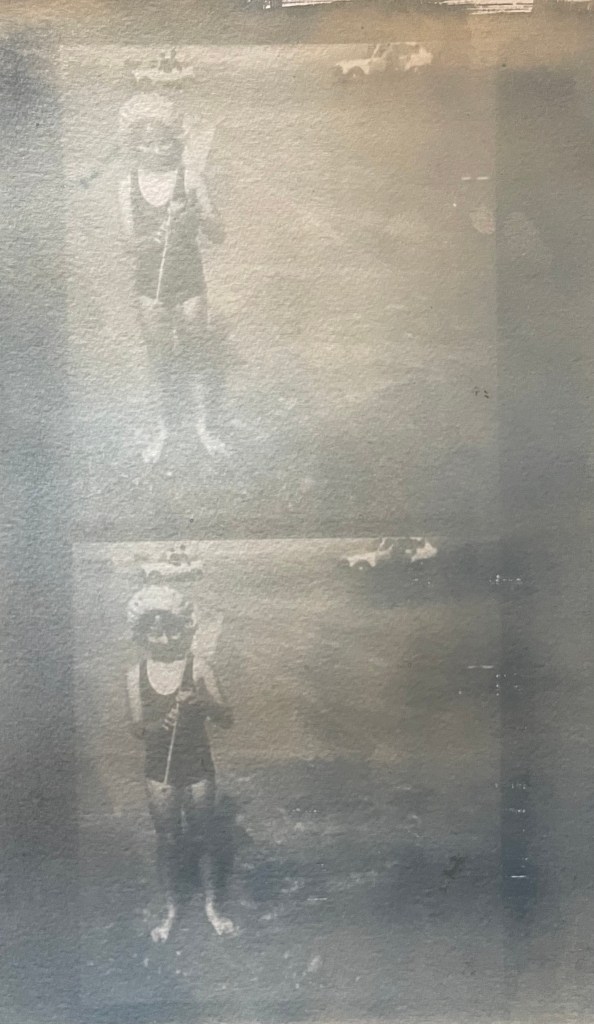
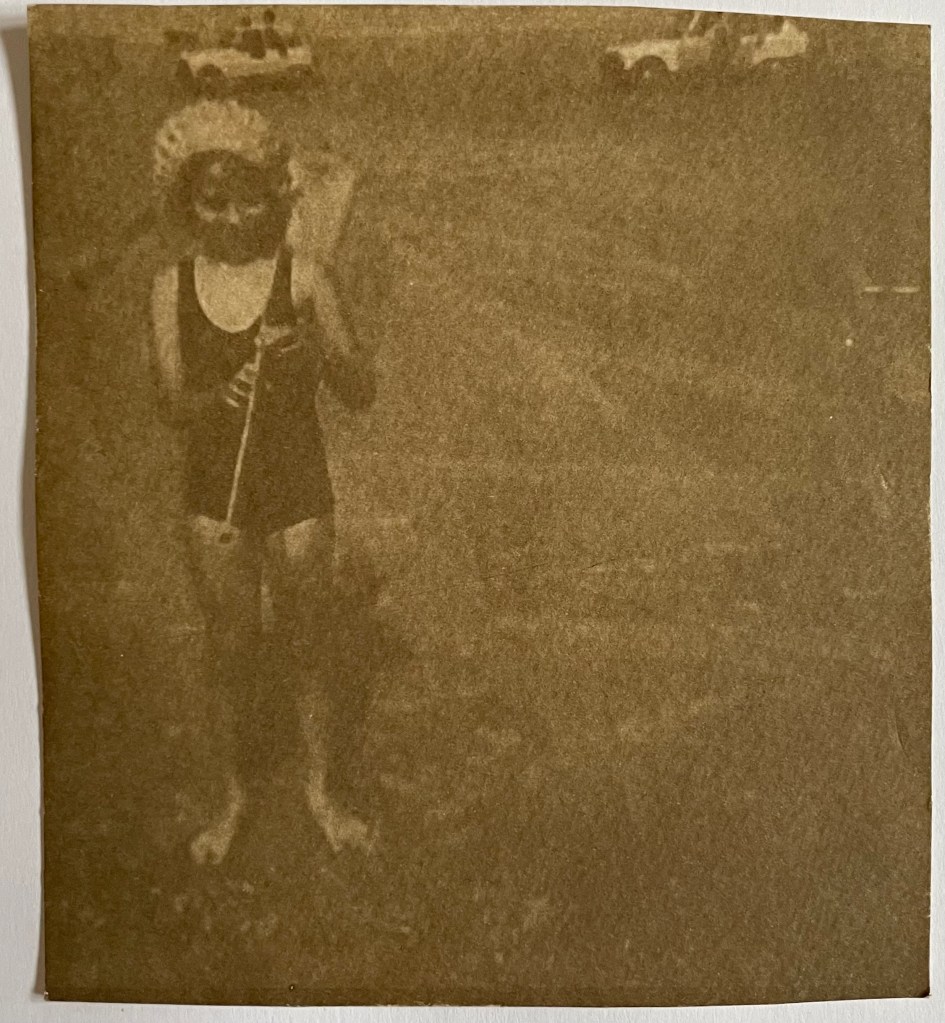
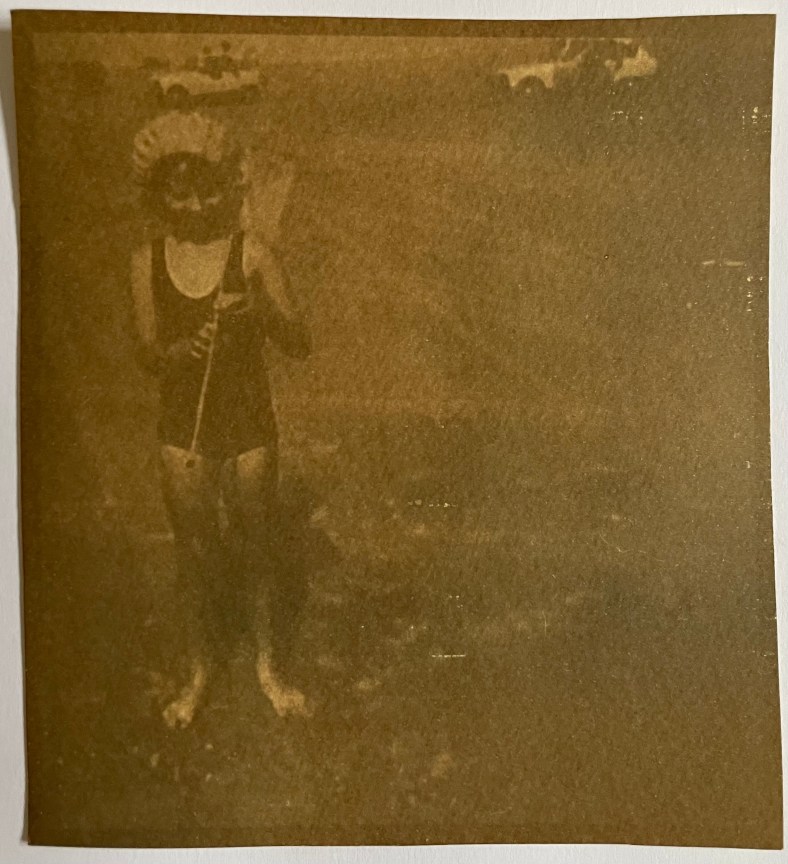
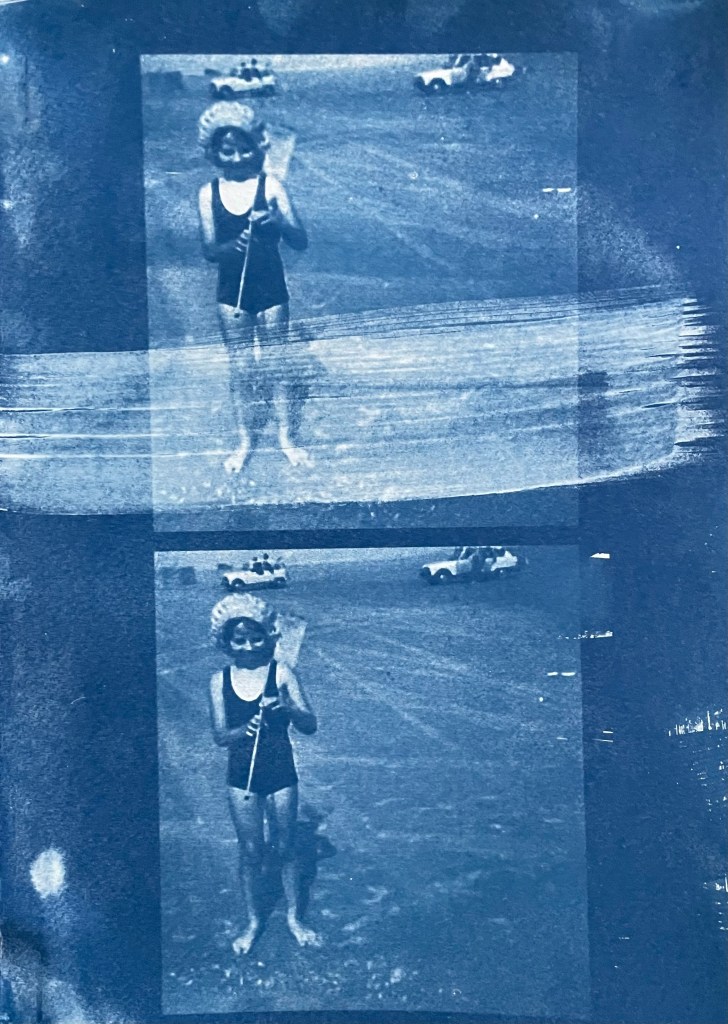
Me
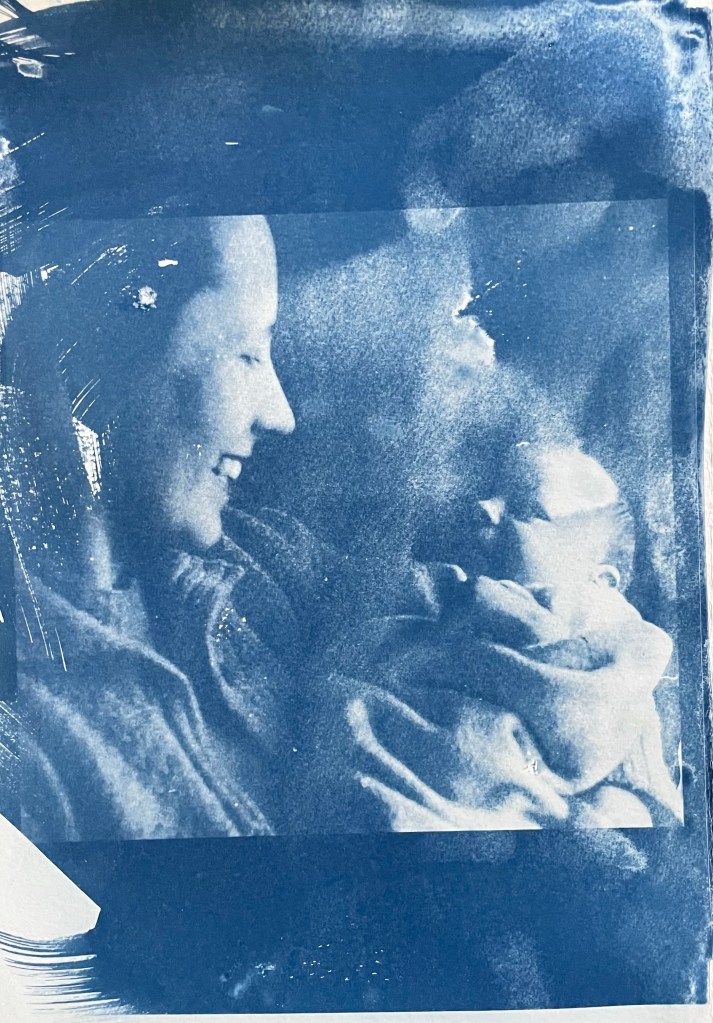
The first two prints were made using the unit, the first being over- exposed at 20 minutes, the second being just about right at 15 minutes. The last two prints I did outside in the sun, which was a bit more hit and miss because the strength of the sun was not constant as it kept disappearing behind some cloud cover. However, I do really like the effect of the visible strokes which I left when applying the solution to the paper, which was A4 300g/m2 hot pressed watercolour paper. The markings give the effect of a moving, flickering , transitory image – there, but not quite there. I put two images on the same negative transparency because I wanted to create a number of smaller images to experiment with. However, the suggestion that the images are on a roll of film is really interesting.
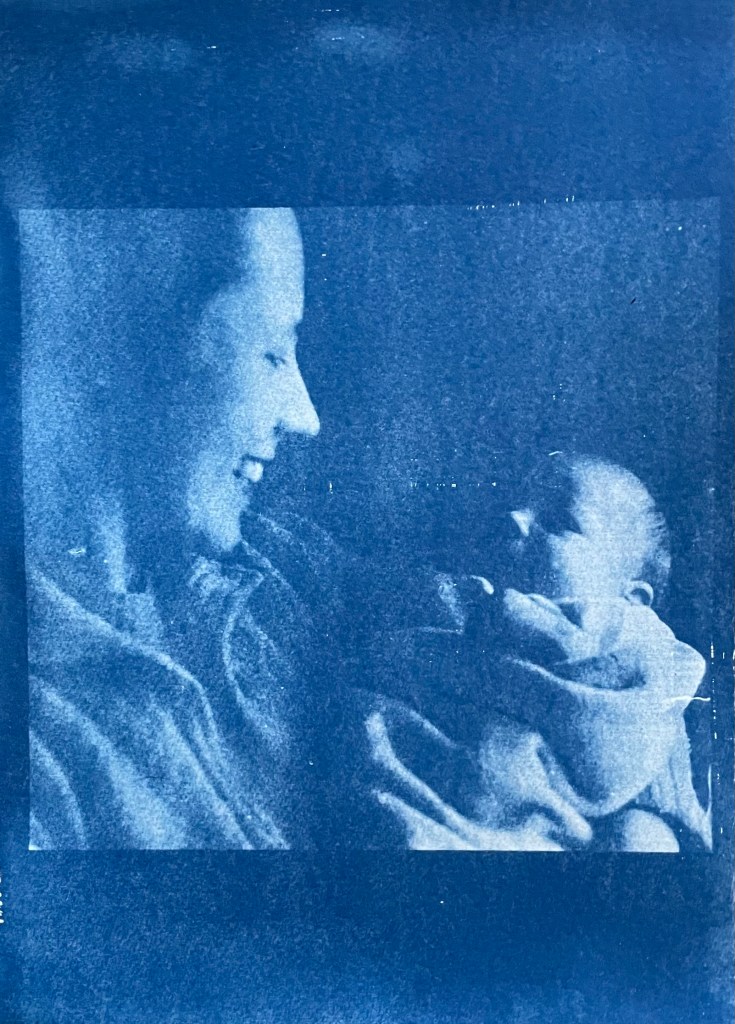
My mother & my brother – capturing a connection and a perfect expression of motherhood
It’s been really difficult getting some of the old photographs out of the albums; they are the sort which have sticky pages on which you position the photos, and then put a transparent film over the top. Over the years the adhesive has seized up and practically bonded to the back of the photos. I’ve tried all sorts including gentle heat, dental floss and a bendy, very sharp filleting knife.
This one of my mother and brother is a favourite, but sustained a small tear on the right. I am pleased with both images – the first one was done outside and the second in the unit, which seems to have more of a Prussian Blue hue to it although I’m not sure that there’s any rhyme or reason as to the differentiation in the blues – but I really like the movement in the second one, again giving the impression of a fleeting moment. I think that the solid areas at the top and bottom add to it, suggesting a frame from a film of a moving image.
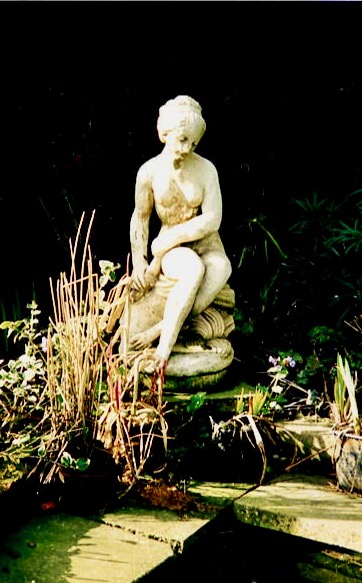
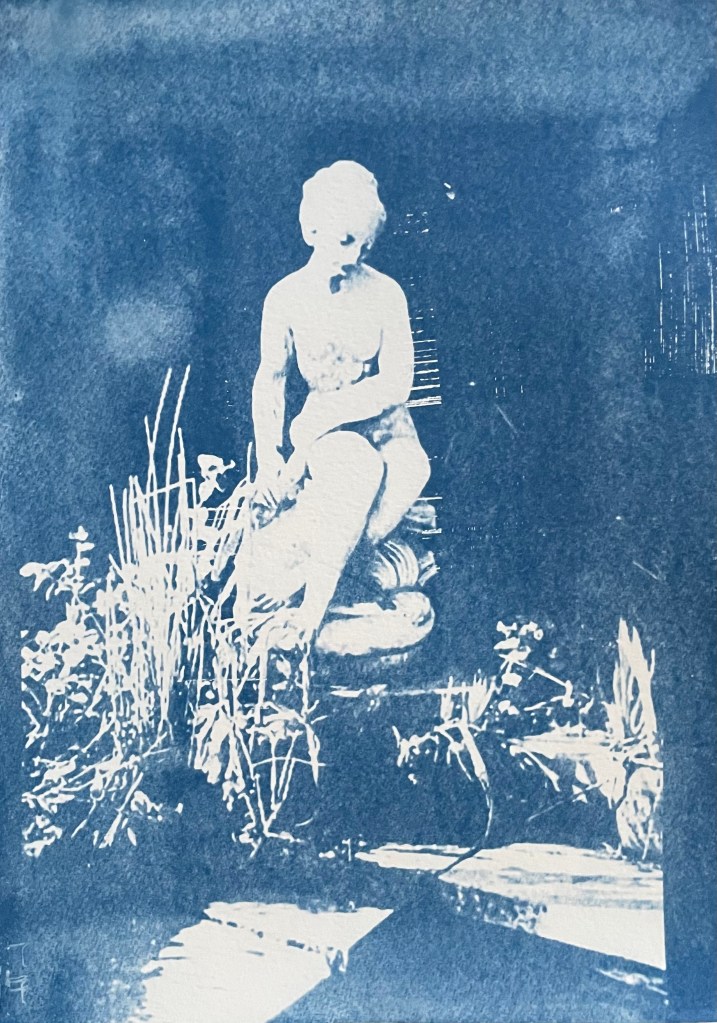
This is a photo of the statue which sits at the bottom of my mother’s garden next to her makeshift pond made out of an old washing-up bowl. I always used to wander around the garden when I visited, stopping at the pond to see if there were any frogs around. I do like a frog – my grandmother on my father’s side used to have a rockery, and I used to spend most of my visits looking for, and trying to catch frogs. That, and hanging out in her shed and greenhouse with the tomato plants – I love the smell of tomatoes; it takes me right back.
The problem with a cyanotype is that if you leave it too long, you over-expose it, and whilst you get deep blues you lose the midtones, which is what I thought I had done with the first one, so I exposed the second one for less, but it turned out to be under-exposed – even putting it in a hydrogen peroxide bath didn’t help. Both were done outside; perhaps I should have done a straight 15 mins in the unit, but where’s the jeopardy in that?
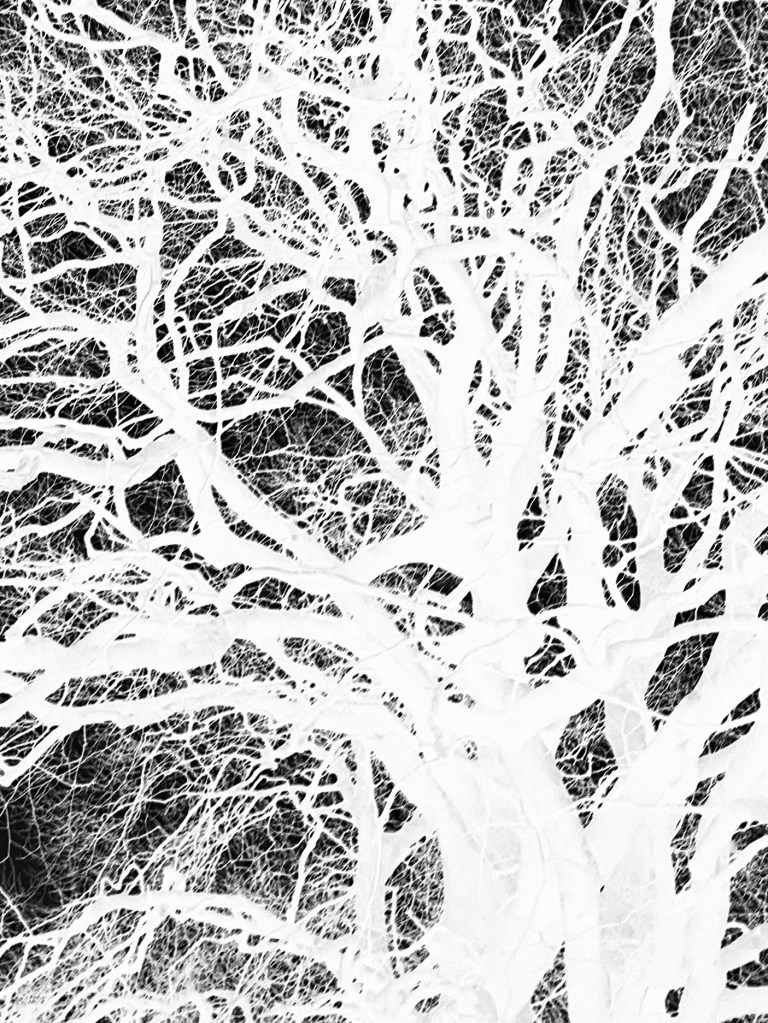
This is a photo that I took looking up into the branches of the three trees that I like. The negative image is also really interesting, and I might do something with that at a later date. The image (last photo) is underexposed again, but has a feeling of being removed, almost as if I’m looking at it through my window (which incidentally does need a good clean). I wanted to try fabric, but could only find some thin cotton lawn. I was so disappointed – it turned out terribly. I had visions of being able to create long, flowing, billowing, wispy cyanotypes, but ended up with the image above. You can just about make out the branches.
I will need to think about this a bit more. My first thoughts are that maybe there was a coating on the fabric, so I’ve washed it; maybe the image was too detailed, but I’ve seen quite detailed images on fabric; that the structure of the fabric is not robust enough – you can get pretreated fabric which is like a sateen so I could try that; or maybe there wasn’t enough contact between the fabric and the negative. I need to take some time to reflect, and try again.
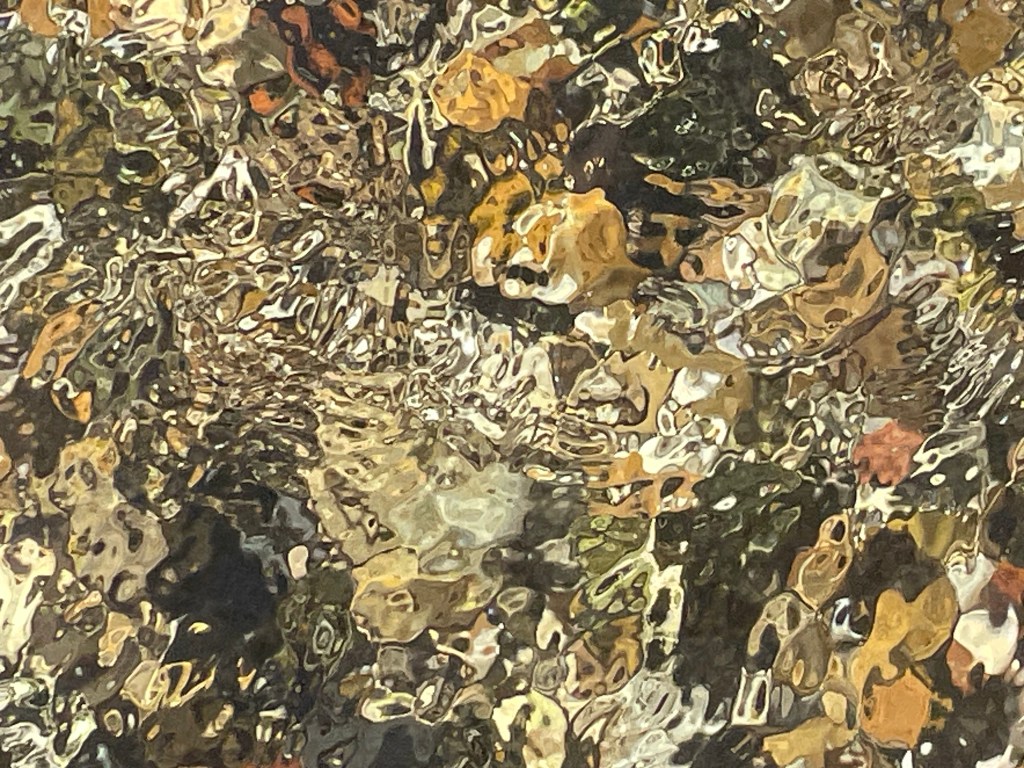
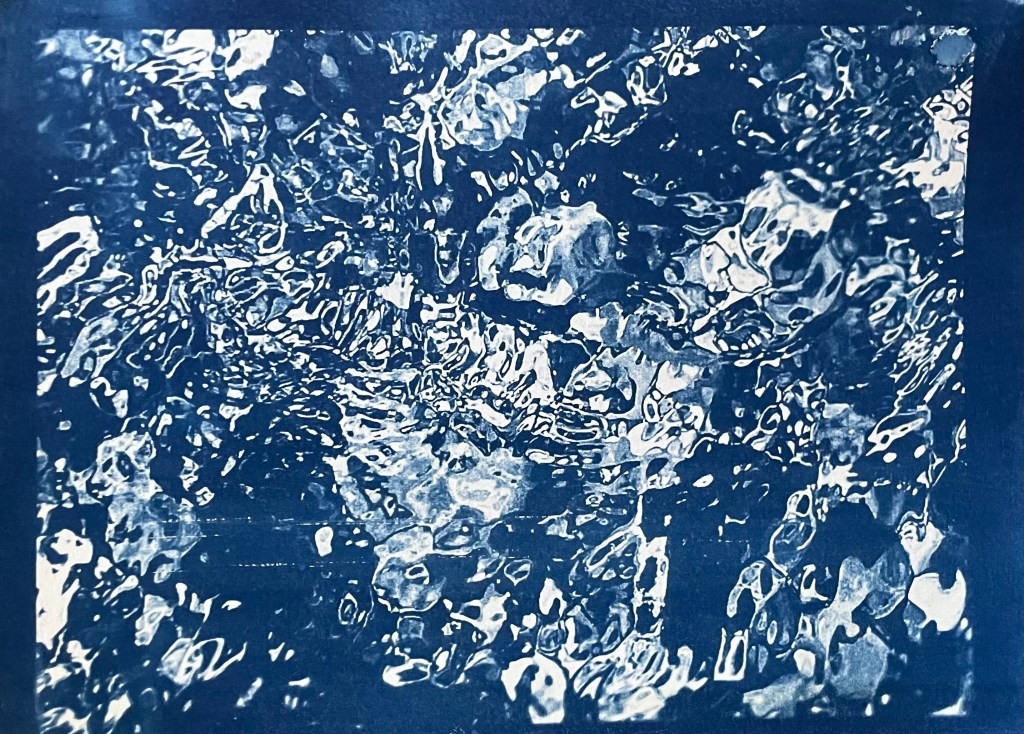
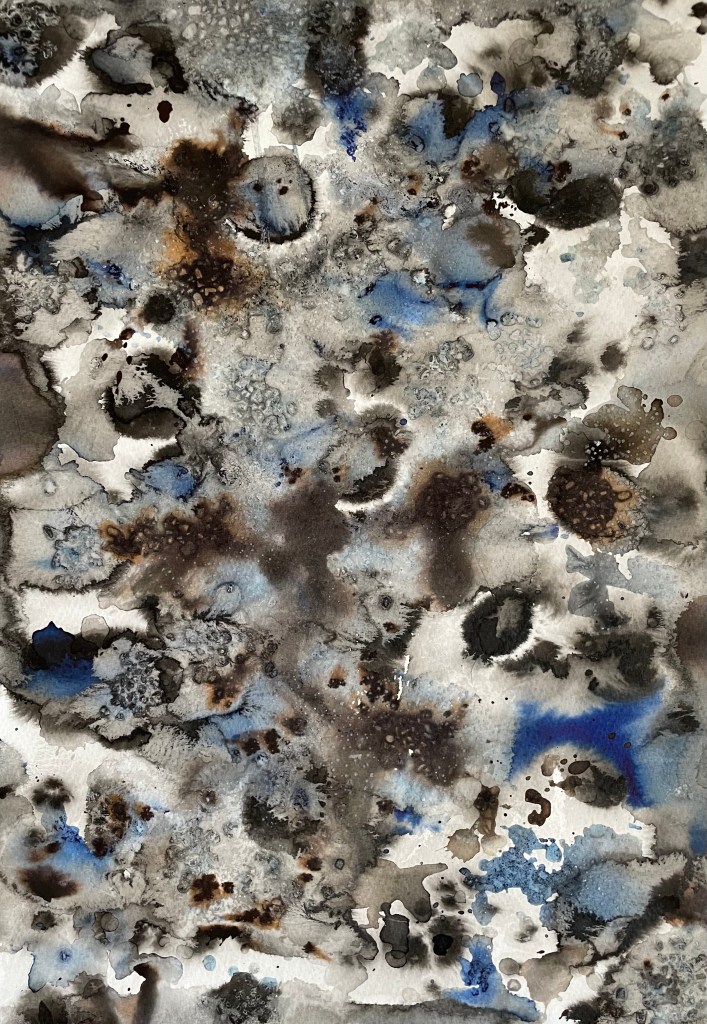
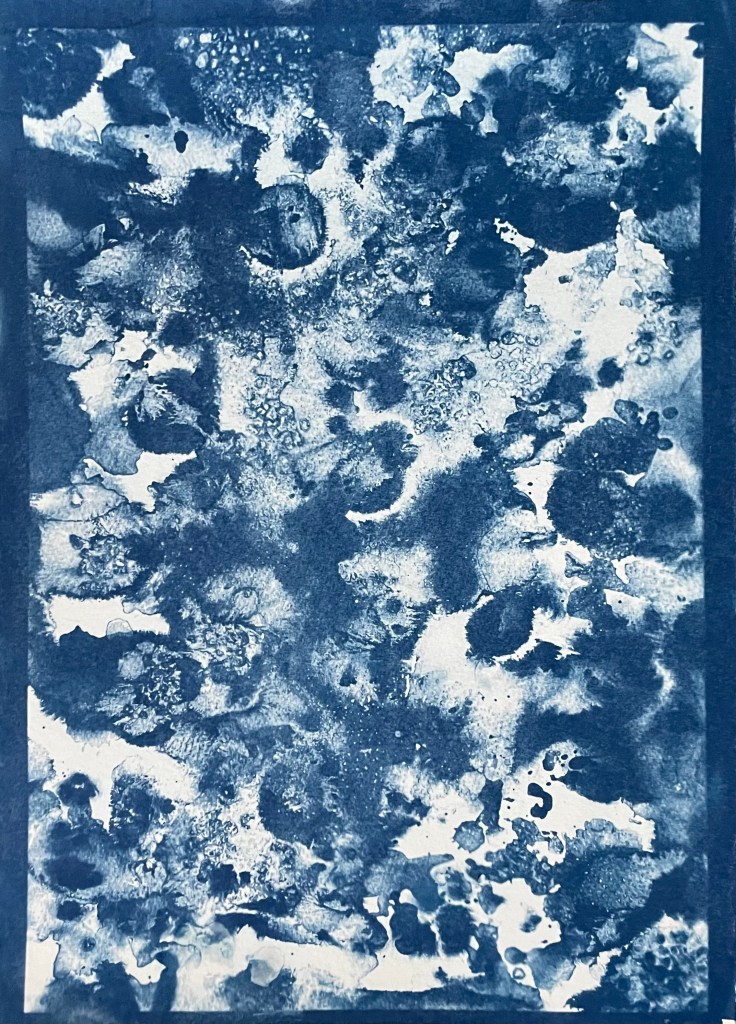
The images above were from my experiment with ink in Blot II , and from A State of Flow II . It was a useful exercise in that it confirmed to me that not everything works as a cyanotype – I much prefer the original images, particularly the ink one, as the edges between areas of flooding and blots are much more defined, and there is more of a delicacy about them. The contrast between the blue and the black ink also adds interest which is lost in the cyanotype.
So, on reflection a really useful and enjoyable exercise. The thing that I really enjoy about this process is the anticipation, and then the slow reveal as you rinse off the solution to see an image slowly emerge, or not, as the case maybe. Doing it outside as opposed to in the controlled environment of the unit adds a degree of extra excitement, but equally there is the risk of crushing disappointment when it doesn’t quite work out.
Moving forwards, I was intending to experiment with toning some of the smaller images of me with tea, coffee, wine etc, but I actually like the last couple as they are, so I will keep them as finished. I’m thinking about how I could use multiple exposures to create layers, and also thinking about manipulating the source image a bit more in Photoshop and printing from the original image rather than reversing etc. I’m not sure whether I’ll get straight to it, or do something else in the meantime – sometimes I go hell for leather with something and then exhaust it, or myself, or become disenchanted with it. I don’t want to get too far down a rabbit hole, so maybe I should leave a bit of space before going back to it, to allow for some more subconscious reflection. I suppose the clue was in the opening sentence: “Last summer I became obsessed with cyanotypes”, and I haven’t done it since.
This is last week’s list. I’m relieved to say that I have achieved all of the items on it. I’m about half-way through my Unit 1 Assessment – going through all of my posts to check categorisation and tagging actually helped with this as it reminded me of all my posts, making the process of curating them that bit easier. I have not only built myself my own DIY exposure unit, but have started experimenting with it. I have yet to reflect on the results and post about them.
This coming week:
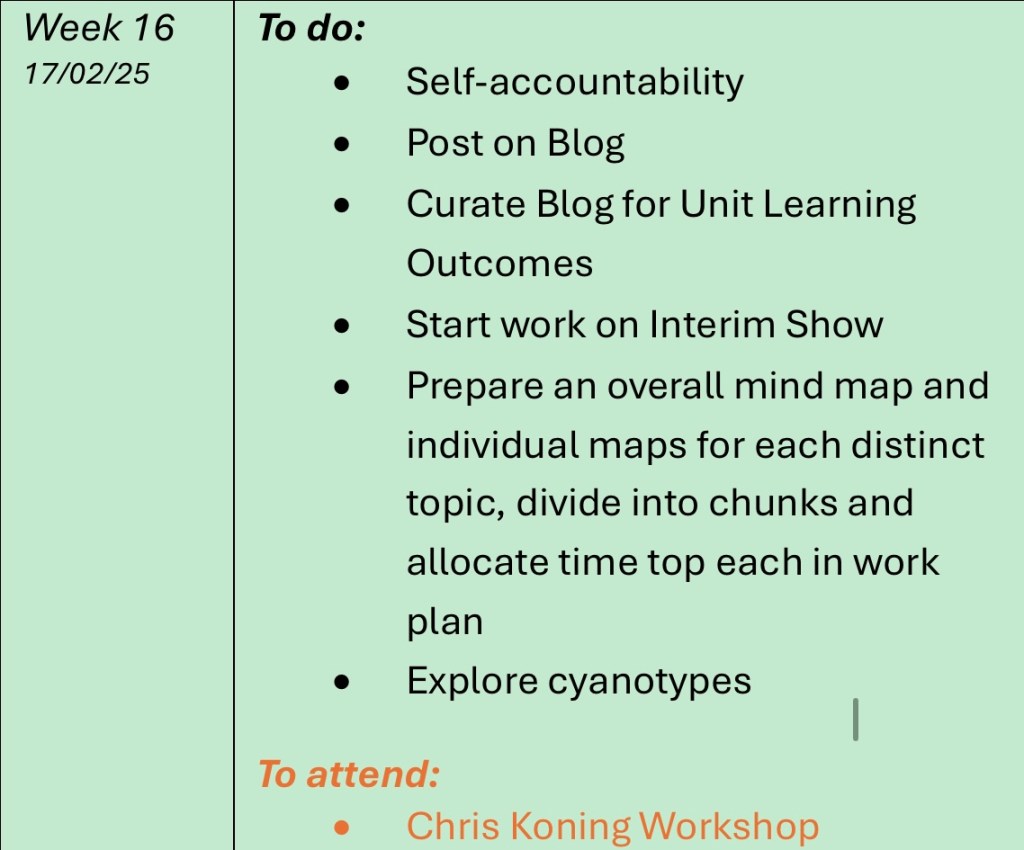
I have already actioned most of the points on this week’s list apart from the mind-mapping (but I’ve already allocated time to each topic in my Work Plan anyway), so I’m ahead of the game, which is a good thing as this week is going to be a bit busy on other matters. I’ve just realised that I can’t attend the Chris Koning workshop, so I will have to catch up with that session next term.
I think that I should look ahead to the next few weeks and make sure that I am able allocate the time needed to achieve my objectives.
I had a thing for Richard Gere when I was a teenager. I remember watching the film ‘American Gigolo’ which I had rented on video – one of his early films, before the likes of ‘An Officer and a Gentleman’ and ‘Pretty Woman’ – which had a brilliant soundtrack, ‘Call Me’ by Blondie. I tried to source the 7” from my local record shop, but had no luck as it had been released a few years before. One of my classmates at school told me her brother had it, and that he would sell it to me for £10 – in those days I could have bought almost 2 LPs for that amount; a single was just over £1. Needless to say, my crush on Richard and my newly discovered love of Blondie made me cough up some of the cash that I had earned from my Saturday job at the local Sainsbury’s. Even now when I hear the track, it takes me back to the opening scene with Richard driving along in his convertible, shades on, the wind in his hair. Ah, I could but dream…
’Call me’ is a strange phrase – often uttered when someone is pushed for time and can’t stop to talk; doesn’t want to talk; can’t make the time to talk; wants to leave it up to someone else to initiate the talk; is desperate to talk; is extending an invitation to talk. It’s not even as if we speak on the phone that often anymore – many households in the UK don’t have a landline, relying on their mobile phones instead, but as Donald commented in one of our sessions, we tend to use a device designed to allow us to communicate on the move, to message, take photos, make videos, play games, navigate, play music, and look things up, instead.
Anyway, I have managed to source a telephone for the interim show, as discussed with Jonathan in my last tutorial.
Am I bothered about using an object which I have sourced rather than made? No, as Jonathan commented, there’s no point making something which already exists; I don’t grind my own pigments to make oil paint, although many do as they feel it provides a greater connection with the work, and I respect that level of patience and dedication – it’s just not for me. But I do, now and then, and if time permits, stretch and prime my own canvases, but this is something I know how to do – all things electronic are alien to me. Also, I generally only do it when I want to recycle some old stretchers. And at the end of the day, ‘readymades’ were ok for Duchamp. I think what is most important to me is the haptics of using the dial – many of the phones I researched had push buttons. I used to love dialling a number – the slight resistance, followed by that sound.
The phone will enable me to leave a pre-recorded message and allow members of the public to leave messages for me, which will then form part of my research – I plan to exploit the public nature of the space. My issue now is, what’s the message going to be, and how will I exhibit it?
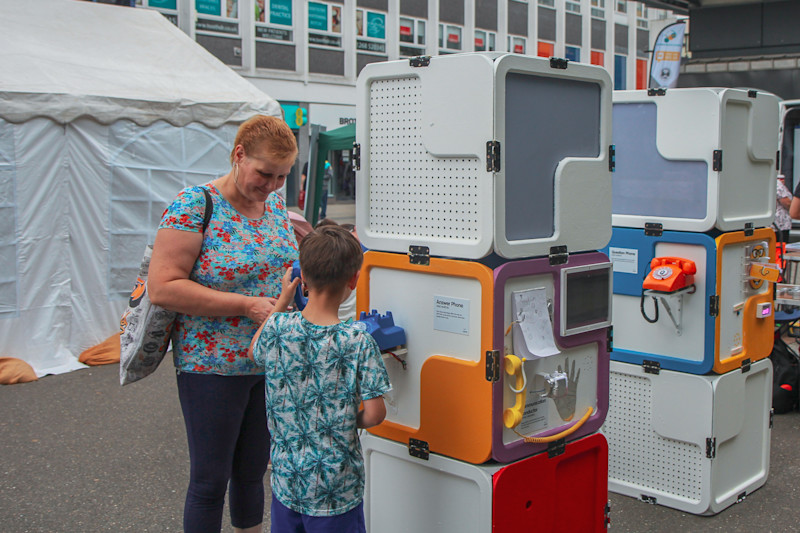
It’s not a new idea, not surprisingly, but I will put my own take on it. Having done a bit of research about artists who have used phones as interactive exhibits in their work, I came across Joe Sweeney who, in 2019, installed a phone booth facing France on a beach in Dungeness entitled ‘+44… Leave A Message for Europe!’. Members of the public were invited to leave messages relaying their feelings about Brexit, forming part of a permanent archive of public opinion. The statement on site explains: “The inactive phone box acts as a beacon. It is a nostalgic call to action – a reminder of the way we once communicated – with the nuance of the voice.”
Norton: “The inspiration for the question/answer phones came from a desire to build a device that lets you share a message with someone you’ll never meet. A digital time capsule of anonymous thoughts, advice, stories, and memories that could be listened to by anyone. You have no idea who might hear your message and how it could affect them.”
Unlike in these two installations, my phone won’t have the ability to allow viewers to hear other people’s messages. Mine’s not so complex, but I still think it gives the person a sense of speaking to someone anonymously, and perhaps sharing thoughts which they haven’t shared with anyone else. Those words initially communicated by a phone, then also have the potential to be further communicated in my work.
It’s a question that I find quite difficult to answer. It always makes me sigh; inwardly, if not outwardly. Nowhere, is an answer I sometimes give: it’s a short version, but demands an explanation.
I don’t really ‘come’ from anywhere.
My father was a soldier in the British Army. I was born in Germany, as were my siblings. Apart from a couple of short stints in England, a year in Omagh, Northern Ireland, and two years near Kowloon, Hong Kong, I spent most of my formative years in various locations in Germany.
It was a peripatetic life, the only constant being trips back to visit my grandmothers in the UK, both of whom lived near Derby in the Midlands. At the time, it was exciting regularly packing up our belongings in big army crates and stencilling the details of our next destination on the outside. Even more exciting was the unpacking at the other end, waiting for the crate with our favourite toys to be opened.
When my father retired from the army, we settled in Essex, for no other reason than that is where he got a job. I went to a local secondary school and then went off to university in Leeds, followed by law school in Chester. Then it was London until I moved to Hampshire twelve years ago. I don’t intend to stay here forever.
So, if I don’t come from anywhere, where do I belong? I can’t think of any geographical location to which I feel any sense of belonging. Maybe the answer lies in where I would like to be buried, but I still can’t think of anywhere. The ashes of both of my parents are buried at the church where they were married, in the village where my mother grew up, where most of her relatives are buried. If I die now I’m likely to end up in Basingstoke Cemetry at the intersection between the A303 and the M3 – just think of the noise!
I think the only sense of belonging I have is to my family.
My husband, on the other hand, is very clear as to where he comes from: Liverpool. He’s not lived there since his early twenties, but that matters not a jot. Personally, I don’t think I have come across a geographical location that instils in the people who come from it such a strong sense of place, belonging and identity. And it’s not just about the Beatles and football, although my husband would quote Shankly and say that Liverpool has the two best football teams in the world: Liverpool FC and Liverpool FC Reserves. It is something more than that, and I can’t quite put my finger on it.
I’m in two minds whether I’m incredibly envious of my husband, or whether I like not belonging anywhere – there’s a feeling that you could leave everything at the drop of a hat and move on. There is also something quite appealing about the idea of starting afresh, and leaving behind old baggage – a metamorphosis.
This train of thought was triggered by going through old family photos. Before he died, my father had started reorganising the family albums. Half of the photos are in brown envelopes. I’m attempting to bring some order to them, and to digitize them. It’s a long, slow process, picking through a family’s history; my history.
It’s been difficult, but I’ve been managing to stop myself from altering things after the event. To leave things undone with elements which really jar with me, which are clearly wrong and which look awful, and to post them anyway. I think that it’s starting to make a difference as to how I work – if I can get into the habit of showing the worst of it, the imperfect, work which I’d much rather never see the light of day, and preferably end up in the bin, I hope that I will be able to engage fully with the process, and not worry about the result.
The mantras I’ve adopted so far:
I will choose the mark-making processes which I enjoy, and not worry about the result
I choose the process, not the result
I don’t have to like what I make, and I don’t have to make what I like
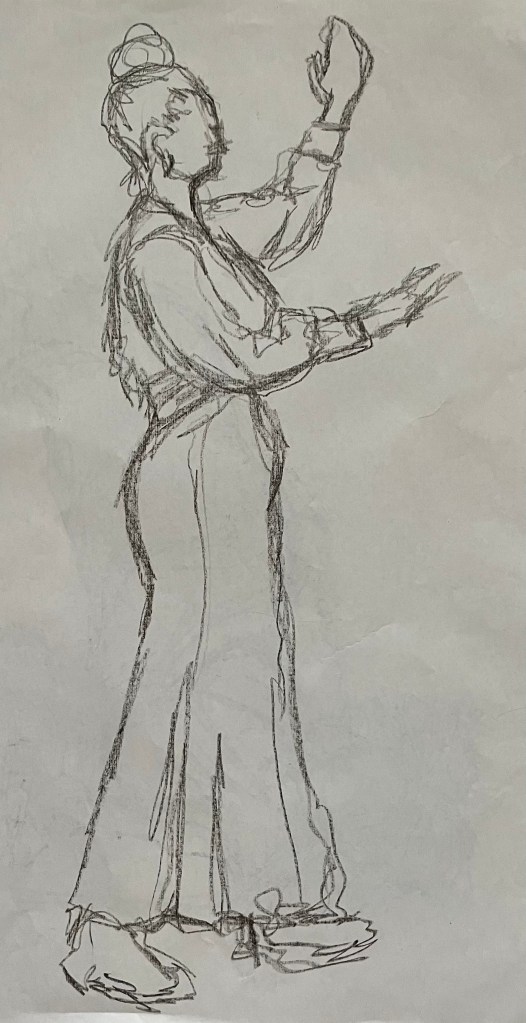
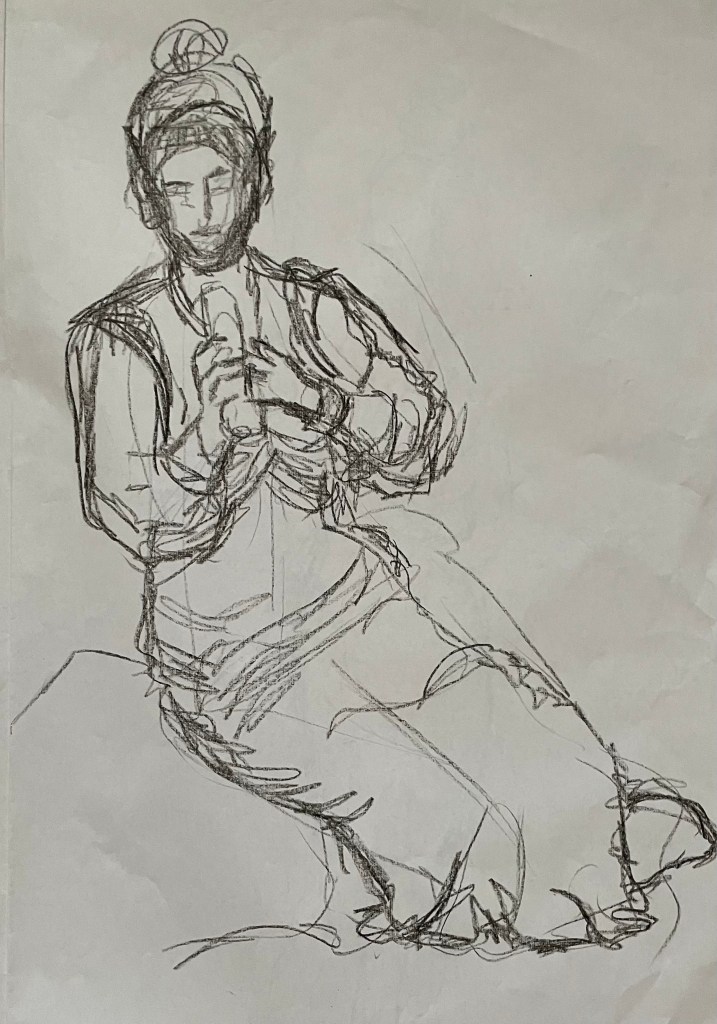
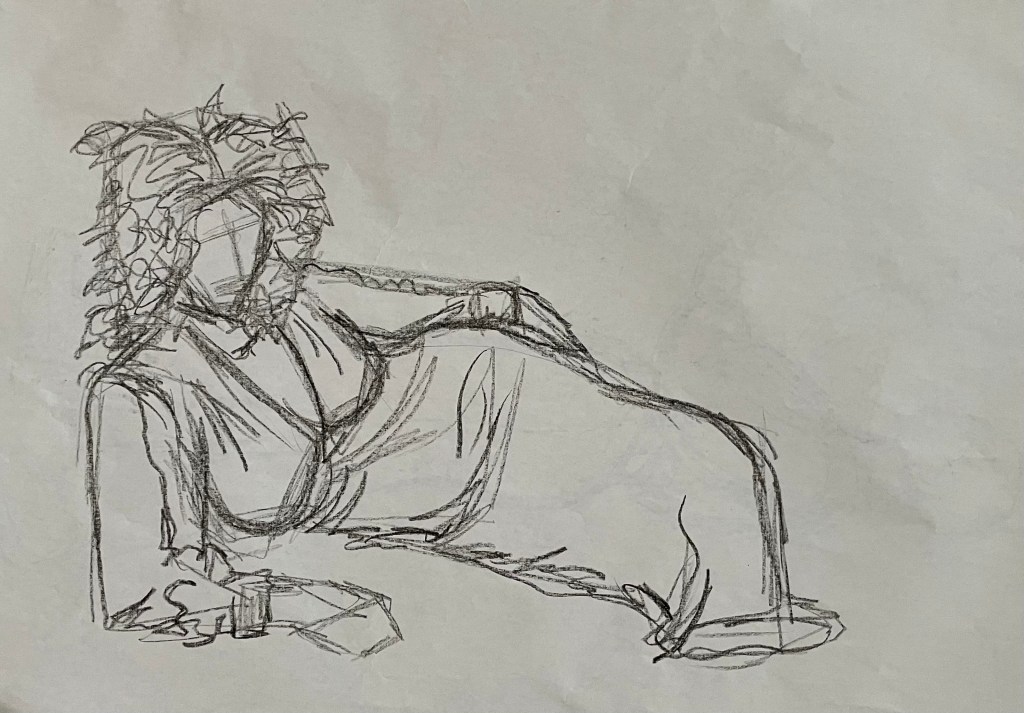
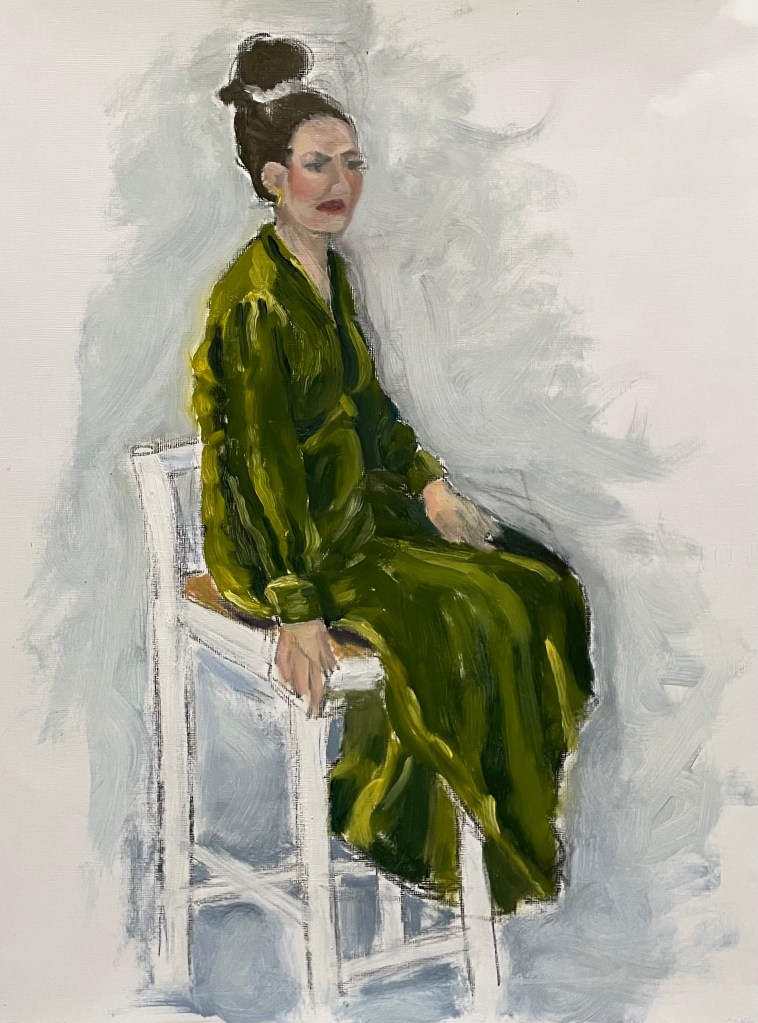
So, we’ve been continuing with the subject of figures in my weekly oil painting class. We had a model today. I certainly haven’t done her justice, and just don’t get me onto the subject of faces. We had to do a few warm up drawings, starting with continuous line – always difficult to get things in the right place – and then just normal sketching, a couple of minutes each. I used an oil pastel – I like that it’s a commitment, and can’t be rubbed out. There’s nowhere to hide, mistakes remain visible – the new me. Then an hour painting.
What to say? I’ve realised that since I’ve been posting my ‘Undones’ (seems a more positive word than failures), no matter how unhappy I am with the result, I can always find something that I like, if I look hard enough. It has just dawned on me, that I probably wouldn’t notice these elements if I was happy with the end result if, indeed, they managed to survive the perfecting process. There’s always some beauty, no matter the ugliness.
I think that I’ve unintentionally transferred my feelings of being weighed down onto the model. The dress looks so heavy; although it was velvet. I think I’ve managed to capture the sense of velvet. I’m trying to avoid using any blending in my paintings at the moment – I’m working on keeping my brushstrokes defined and with a sense of movement – I think I’ve achieved this. The figure is generally good and I particularly like the neck.
I’ve just been watching Sky Arts LAOTY, and now Gareth Reid is now giving a masterclass on drawing faces – I could definitely do with watching this.

















 Kate McCalmont-Woods