The Kindness Of Strangers

Yesterday lunchtime, my daughter phoned me, but it wasn’t her who spoke when I answered the call.

Instead it was a member of the public, who, with his daughter, had been taking it in turns to hold my daughter’s head, keeping her company whilst they waited for the emergency services, and later, whilst she was being cut out of the car.

We made it to the hospital before she did. Probably the worst moment of my life, waiting and not knowing, not wanting to imagine the possibilities.

A near head-on collision at 40mph. Everyone said she was incredibly lucky. We thought so, she didn’t want to entertain the thought, and still doesn’t want to think about it. Broken bones and a small operation tomorrow. She’ll be ok, physically anyway.

I can only hope to be able to repay the kindness to someone else’s loved one, of being there when they are alone and afraid. In the meantime, I’ve been in touch with him and he was equally relieved to hear how she is, looking forward to speaking to her when she feels up to it.

Puts it all into perspective.

Computer Says ‘No’

If I were a laptop I would say that at the moment I have no RAM, my processor is kaput and my operating system doesn’t support updates.

I’m not in the right headspace to have to think about a research paper. The more I think about it the more I just want to make, but my chunking approach to life means that I have to deal with this before I can entertain anything else.

At the end of the day, it’s just a draft – a draft is inherently subject to change.

What intrigues me? Initially it was the fallibility of memory. Then it was maps and the act of mapping. But do either of these interest me that much or are they just a passing fad? Is there anything which will make this exercise a pleasure and not the chore I suspect it will be? I’ve decided that I have the attention span of a gnat, that I am fickle in that I am interested in something intensely for a period of time and then I get bored and move on, that I am impatient and probably at times a bit lazy – isn’t life too short to have to work at making sense of academic writings which seem to have been written in such a way as to make them inaccessible to anyone but the most ardent of readers? I’m increasingly of the view that if you want me to do something, make it easy for me; that’s the approach I adopt with others.

The Paradox Of Choice

Choice = Freedom + Power

Or does it?

Just recently I’ve been running away. Fight or flight. Apparently flight is an underrated stress response.

At the moment, I feel like I’ve got a lot on my mind; too much. More times than not, I just get on with it in a resilient effort, and other times I indulge in some escapism and don’t deal with anything, waiting for something to blow up and become urgent, preferring to lose myself streaming box sets. But, of course, that’s just prolonging the inevitable.

Anyway, I met a friend the other day. I mentioned the research paper to her. I explained that I feel the need to think of all the possible options to make sure that what I choose is the right decision. She said that I shouldn’t worry about making the right choice, I should just make a choice and make it right.

Apparently, it’s called choice overload, and it’s an evil of the modern world. Whilst choice brings freedom and a sense of empowerment, too much choice can cause anxiety; a paralysis which results in no decision being made at at all; higher expectations of making the right decision by virtue of the sheer number of available choices; and consequently an increased probability of dissatisfaction with the final decision. I’m what’s termed a maximiser – someone who has to consider all the options before making an informed decision which in essence is a good thing but in a world of infinite choices can lead to choice overload. I need to become more of a satisficer, someone who is content with good, rather than the best and who, as a result, doesn’t feel the need to research every option and consequently manages to avoid the paradox of choice.

In short, I need to shop more like my husband.

Raita Bitless

Not only did I not get the obvious joke with the placeholder name of ‘Noah Bitmore’ until half-way into the session on Tacit Agency with Prof Paul Haywood, but I didn’t really get the session itself at first.

I think part of my problem was that I came into it with a preconception from the title. My understanding of tacit agency is a legal one. It turned out to be about the relationship between who I am and where I am – an individual’s sense of connectedness with their physical and social environment.

The exercise of describing an important place without naming it was a revelation. I wrote white railings, the smell of coal fires, lemon curd tarts in a Family Circle tin. I was describing staying with my grandmother. I’ve previously mentioned that visiting my grandmothers is a strong childhood memory and one which evokes a feeling of constancy. We mostly stayed with my mother’s mother. I recently came across some glasses on eBay and ended up buying them because they were very similar to the ones she had, out of which I had my pop, usually dandelion and burdock, or sometimes shandy, poured out of a glass bottle for which you would get some money if you returned it, which was stored on the floor in her pantry.

I love a pantry. Shelves full of interesting things like bottles of Camp coffee, and biscuit tins of jam and lemon curd tarts, packets of crisps and jars of marmalade.

She’d ask me to shell peas from her garden for dinner (I’d eat most of them), the outside loo with the wooden seat, housecoats, woolly hats and Victory V sweets on the ‘buz’ to Derby sitting next to her on the front seat on the top deck so that I felt like I was flying as we went over Swarkestone Bridge, walking down to the village shop where she’d buy me cola bottles and Swizzels double lollipops, going past the pub on the way and breathing in the hoppy aroma, stodgy Yorkshire pudding whilst we watched Emmerdale Farm, the seersucker checked table cloths, the cupboard full of Woman’s Own and People’s Friend magazines from which I used to read the serialised stories, sometimes annoyingly having to miss an instalment because she hadn’t bought that week’s issue, going to Swad and having a cream doughnut, spending hours making mud pies and selling them from my shop in her front porch, the tops of her hold ups visible as she bent over to clean out the grate in the morning and lay and light a new fire – she must have had asbestos fingers – with her horse brasses hanging either side of the fireplace and her ornamental carthorses on the mantlepiece, climbing up the stairs at night into a freezing cold bedroom, shivering under the counterpane until I warmed up, memorising the Lord’s Prayer from the framed embroidery on the wall, watching horse racing and wrestling on the TV with her on Saturdays, hours of country walks pretending to be a horse, and many hours of playing with her plastic cowboy horse in the front room, playing cards and going up the passageway to visit Uncle Walter who would slip me 50p and Auntie Tamar with her slightly greasy hair who never seemed to move from her chair beside her 3 bar electric fire, but most of all, the white railings – a flutter of excitement because we were almost there.

As for my father’s mother, not so many memories. Although we visited her a lot, we rarely stayed with her as she didn’t live far from my other grandmother. The garden shed where I used to spend a lot of time lost in my imagination, I loved the smell, I loved the greenhouse, the smell of tomatoes, when I smell that smell I’m right back there, I saw a candle in Sainsbury’s the other day which was supposed to smell of tomato plants, but I’m not sure, searching for frogs on her rockery at the bottom of the garden, jumping over her decorative white fencing, yes, pretending to be a horse, being fascinated with her dressing table, glass containers and hairbrushes with tortoiseshell, the plastic pink powder container with a puff and her stone Westie doorstop I used to pretend was a real dog, Battenberg cake, her taking exception to me repeatedly playing my Growing Up With Wally Whyton record which I had got as a Christmas present one year, which included the lyrics:

Oh you canny shove your granny off a bus, oh you canny shove your granny off a bus, oh you canny shove your granny for she’s your mammy’s mammy, oh you canny shove your granny off a bus. You can shove your other granny off a bus, you can shove your other granny off a bus, you can shove your other granny for she’s your daddy’s mammy, you can shove your other granny off a bus.

Visiting her in the nursing home with my father and the patch on her forehead she kept on scratching, her limp arm and having to go with her when she wanted to go to the loo, watching her eat a slice of bread and butter with her cup of tea whilst she told us about the old man who kept going AWOL, told off by my father for not singing at her funeral, and the bracelet and the ring that she left me.

In my Unit One feedback there was a question: Beyond the photographs you are using, are you channelling memories through your practical experimentation in other ways – how might you explore more of this? Might you introduce more conversational elements – your voice is already present in your work, but would it feel relevant or interesting to explore recordings in text or sound? What would happen if you were to layer those recordings over animated/ simple stop-frame slide sequences of your cyanotypes and prints?

I’d been thinking of exploring using video before the feedback, and having just written this post I think that these childhood memories are so rooted in the sense of place that I need to go back there and make some mud pies.

By the way I dislike my voice, it sounds totally different to how it does in my head, and that’s why I resorted to using Siri on the recorded message on my red telephone, which is one more thing that I’ve yet to progress…

In the meantime, in the words of Kazimir Malevich,

Swim! The free white sea, infinity, lies before you.
Maps

I was very lucky to have Cheng and Dalal in my group for this week’s group crit.

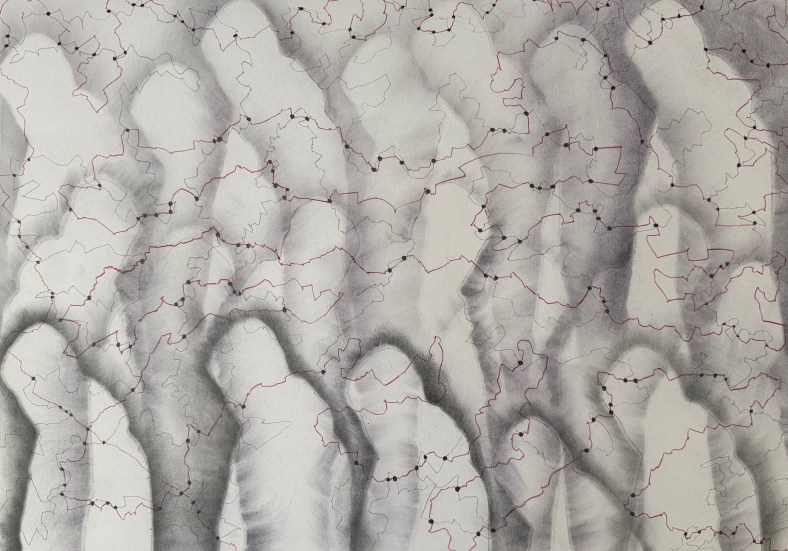
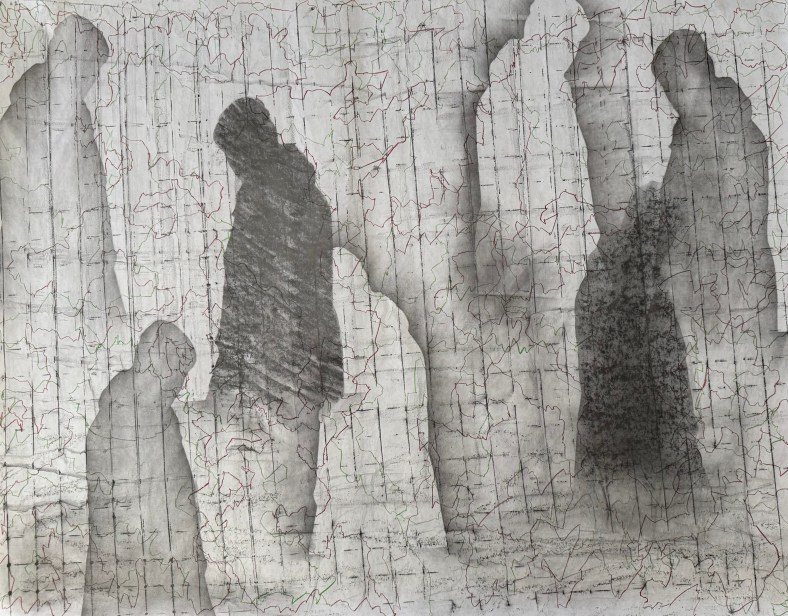
I showed my recent experiments with graphite and pencil.

I explained that I have become interested in the idea of inheritance recently and mentioned Donald Rodney’s work. We had a really interesting discussion about where we come from and our legacy, how it’s sometimes comforting to know that someone else before us was like us which frees us from feelings of fault and guilt, the idea of all that has gone before distilling down into us, much like our family tree before us, ends with us. How what we pass on feels like a responsibility or a burden.

Cheng commented that the white shapes give the impression of something that is no longer there and the dark shapes are reminiscent of shadows. Thinking about it, the shadows are cast by something that is there but is not visible. A figure’s absence is felt yet we feel a figure’s presence somewhere – it just about sums up ancestry.

I explained the process of making the pieces and how they seemed to develop into a type of map. I mentioned that the subject of maps has come to the forefront of my thinking recently along with the idea of connection. In my Unit 1 feedback one of the comments was: “It feels as though you have been working through an abundance of techniques that are maybe a type of mapping – now is the time to compare and contrast all of those experiments in order to develop an intuitive and personal way of mapping your experiences…”.

For sometime I’ve been interested in Deborah Levy’s idea of her mother being her internal sat nav and I used Google maps to obtain the aerial image I used in Parental Loss. My art class recently gave me a scarf with a Grayson Perry map on it. I was thinking earlier in the year of mapping the course of a river. The coincidence that I chose to draw the lines in colours which reminded me of maps somehow has linked all of this together. That, and the fact that I have been complaining ad nauseum about not having a sense of direction.

During these two years, I am, to all intents and purposes, mapping my life.

There seems to be a strong unintentional link to maps in the images: Cheng said that the images in which I’ve marked the intersections remind her of constellations, and Dalal observed that the lines themselves could be interpreted as borders, which then feeds into borders marking the the point where countries connect. This led to me seeing that the outline of the shapes themselves resemble coastlines.

Cheng and Dalal both made some really helpful comments about potential development:

  • playing with scale: a large image on a wall giving the impression of a map but then coming in close on a small scale to create a more personal experience and stronger connections
  • Drawing on a vintage map or incorporating old family photos
  • Using a pin to attach separate images to the points of intersection – this has since led me to think about criminal investigation maps – maps with string coming off from them to images and additional information on the perimeter
  • Thinking about how I can use materials to create something that looks older, that comes from a past time – this brought to mind highly decorative old maps with sea monsters in the oceans
  • creating a large scale reimagined map

Shortly after our session ended, I had a thought about making a digital map of my life with events or periods of significance being marked by specific points, a bit like a Google map, which you could then drag the yellow man to and drop into a space where you have a street view – maybe of images relating to that particular event. And then I laughed, Alexa laughed, Siri laughed, my husband laughed.

Lots to think about, as ever.

To The Manor Born

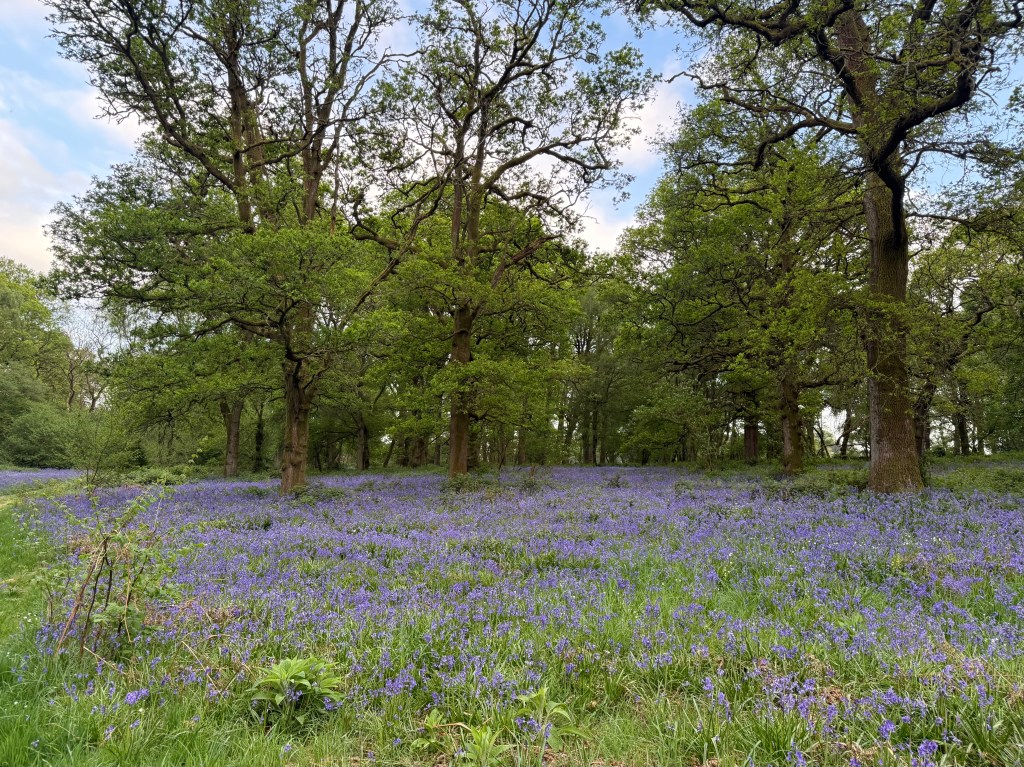
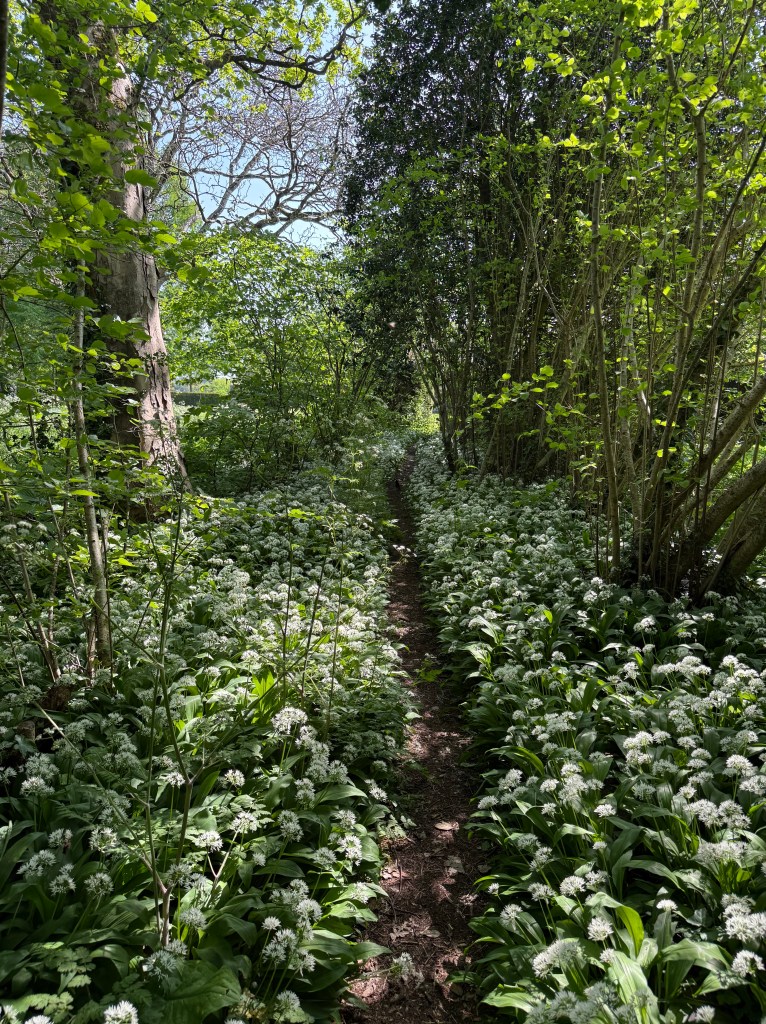
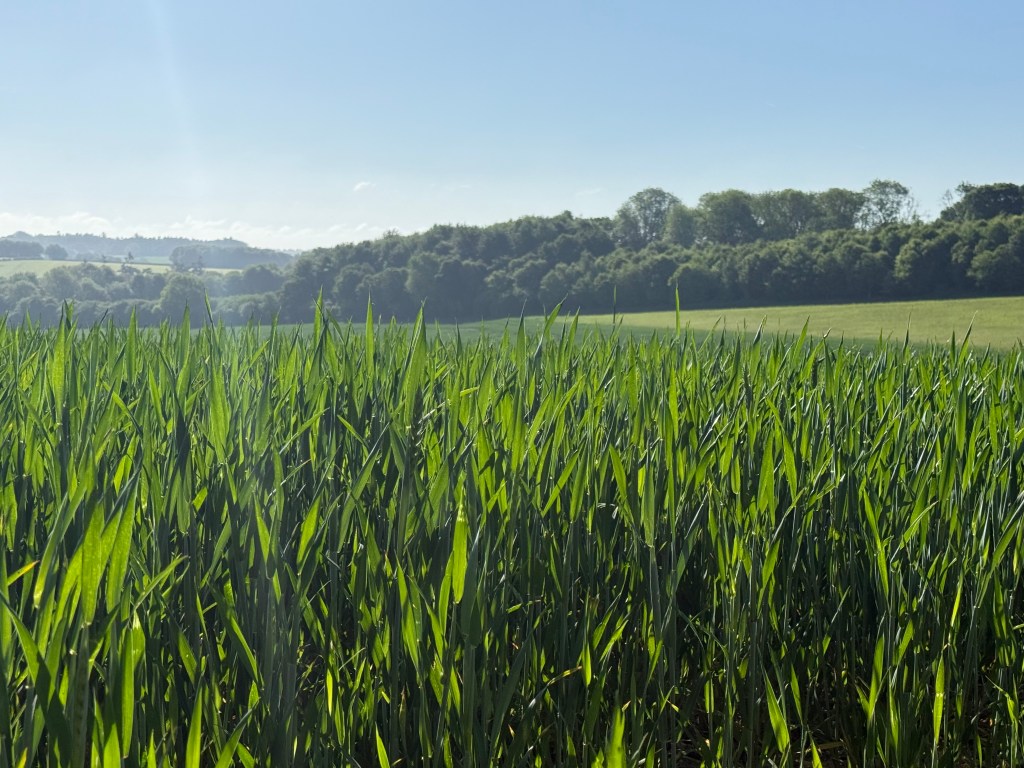
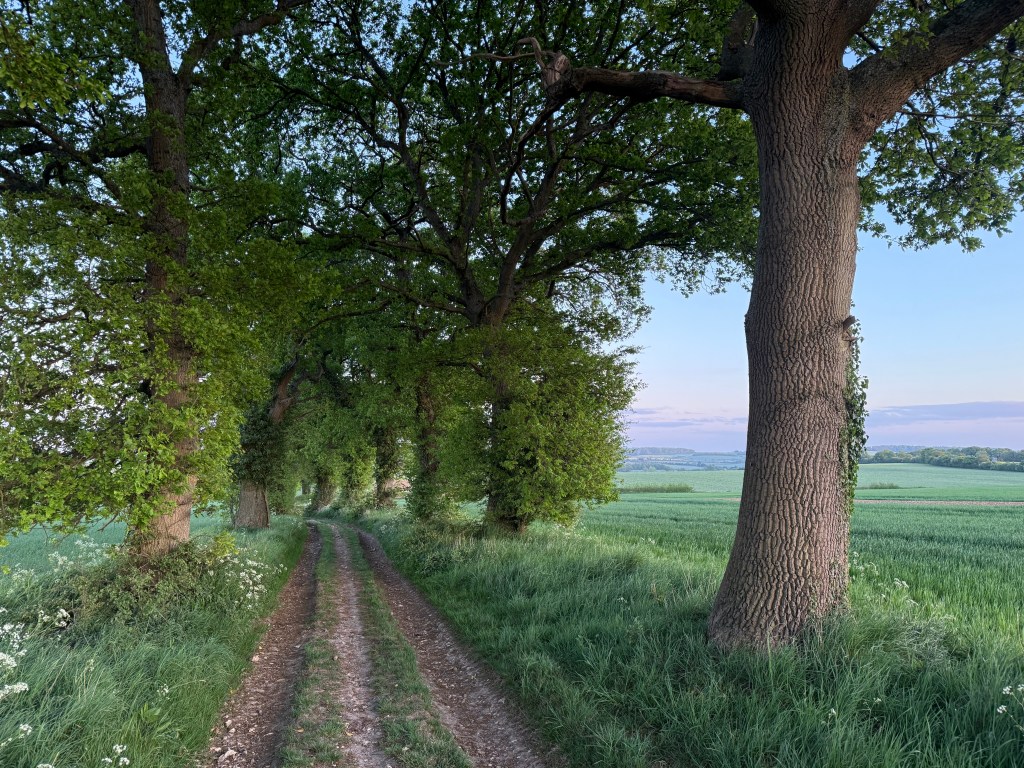
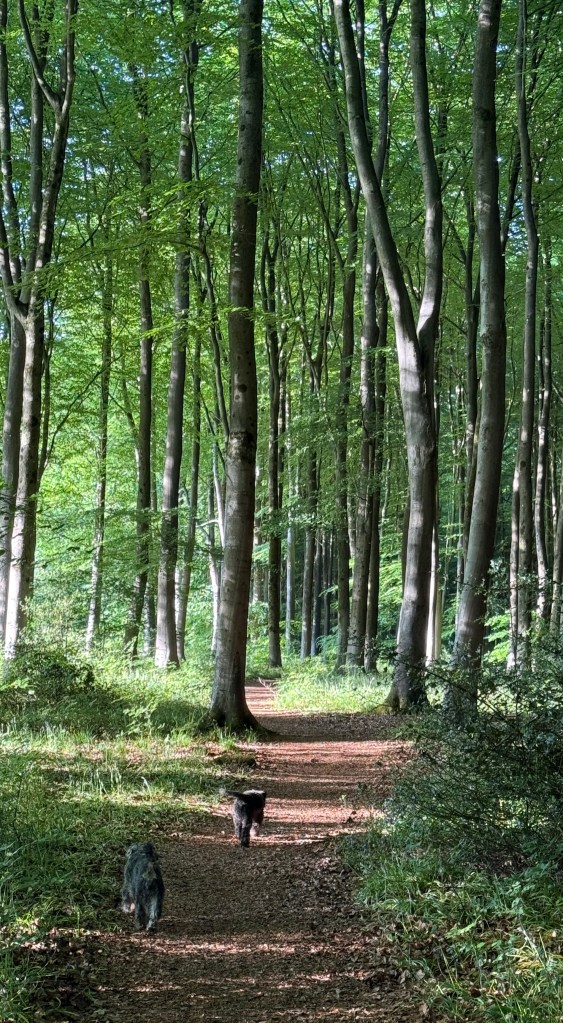
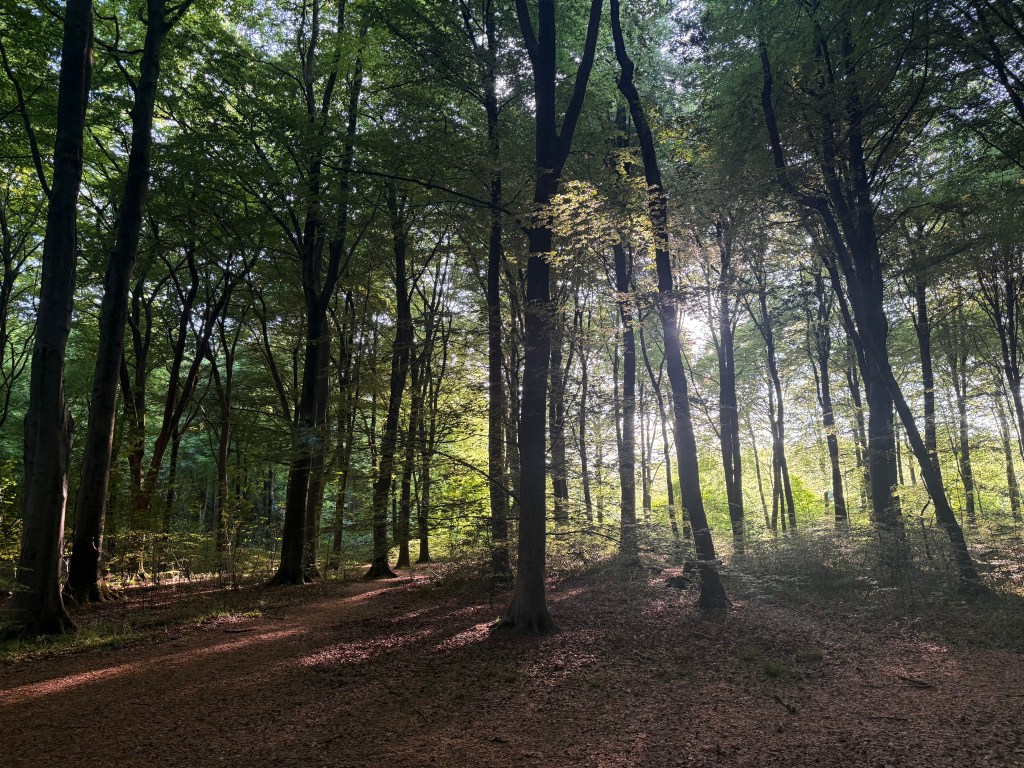
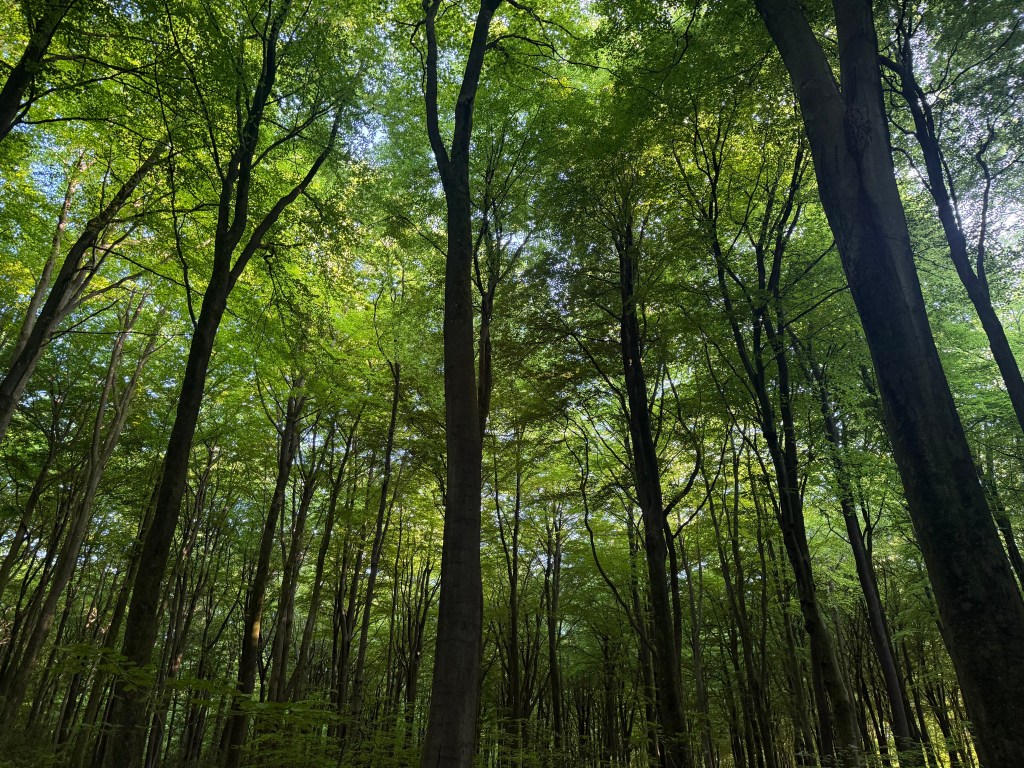
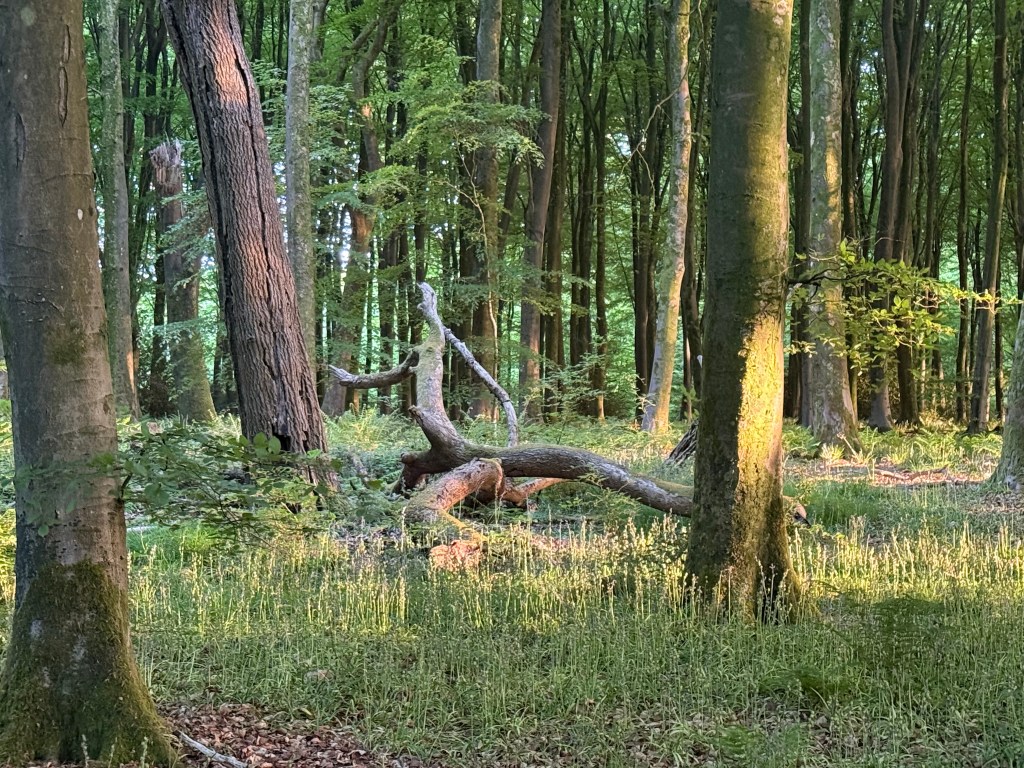
I love this time of year. The hedgerows are full of hawthorn blossom and clouds of cow parsley, there are blue carpets of bluebells in the woods, if a little threadbare by now, swathes of flowering wild garlic, crops growing in the fields and trees in full leaf.

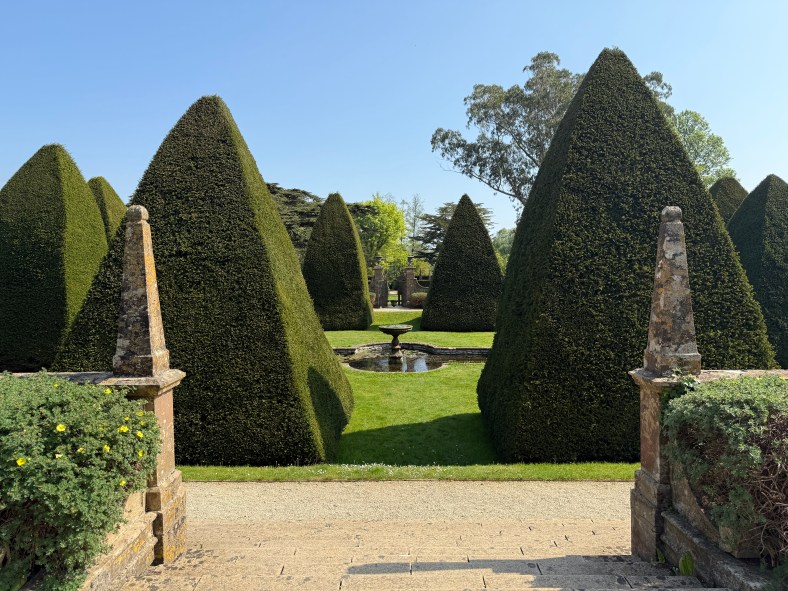
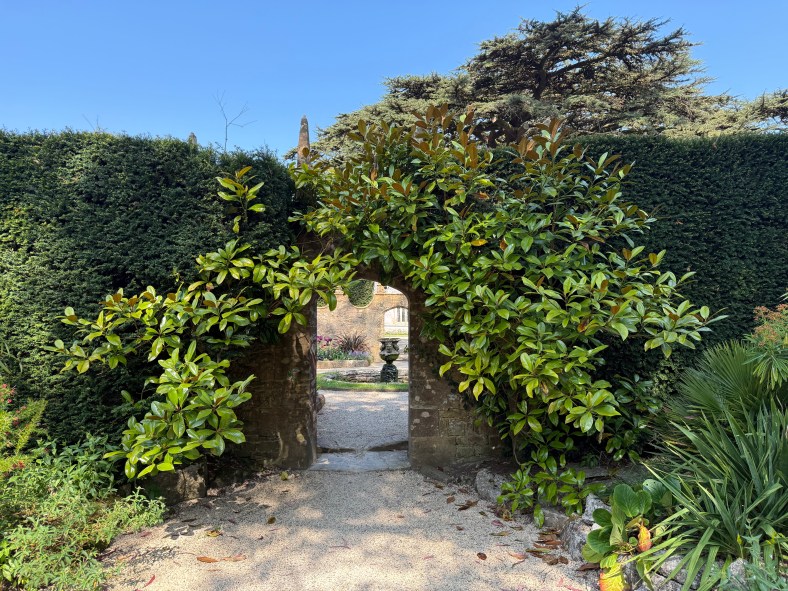
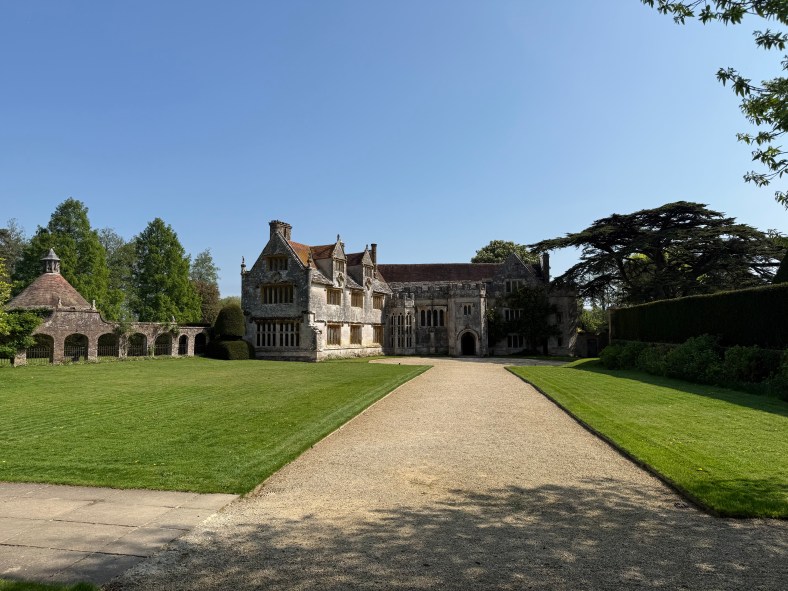
I took my daughter back to uni in Exeter a week or so ago: a lovely drive down the A303 past Stonehenge, under the mystical big skies of Wiltshire and the rambling green fields of Somerset and Devon. On the way back I took the alternate route through Dorset along the Jurassic Coast and stopped off at Athelhampton House, a Tudor manor house I haven’t visited for a number of years with a very strong connection to Thomas Hardy. I didn’t know that Hardy was an architect before he became a writer and that he had worked on the house with his father, or even that he had lived into the early part of the 20th century. He seems to belong to a different time.

The gardens are wonderful – a house with many rooms (this seems to be a recurring theme recently).

Inside, apart from some wonderfully old glass windows which distorted the view outside,

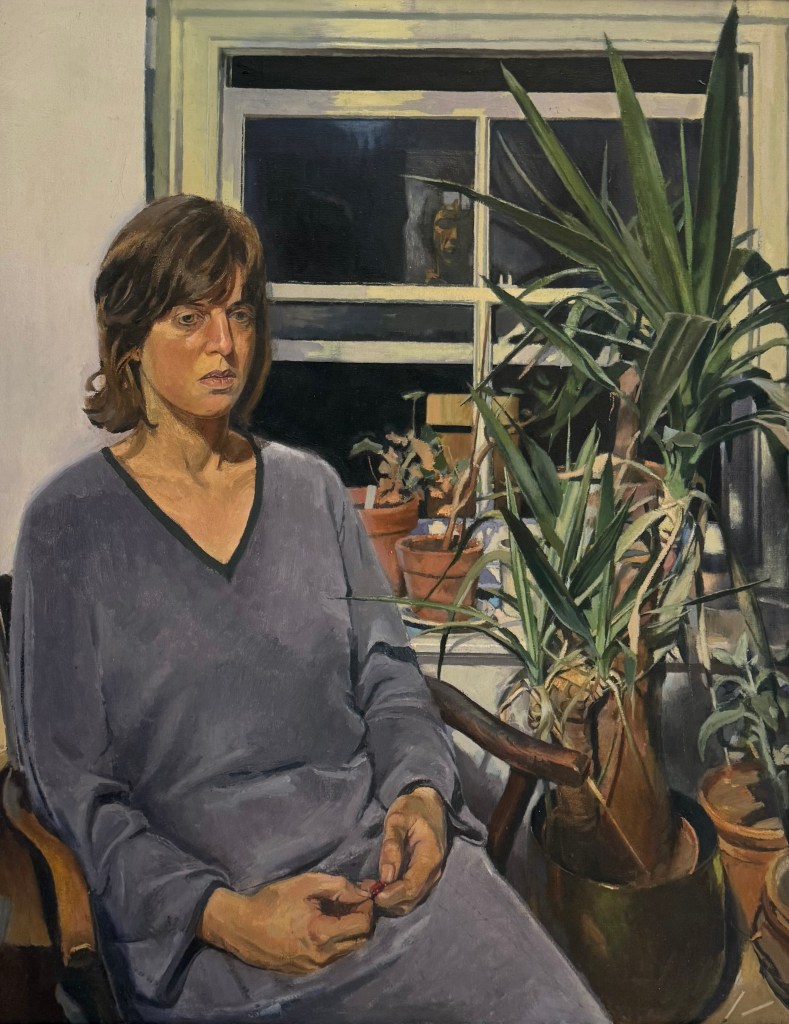
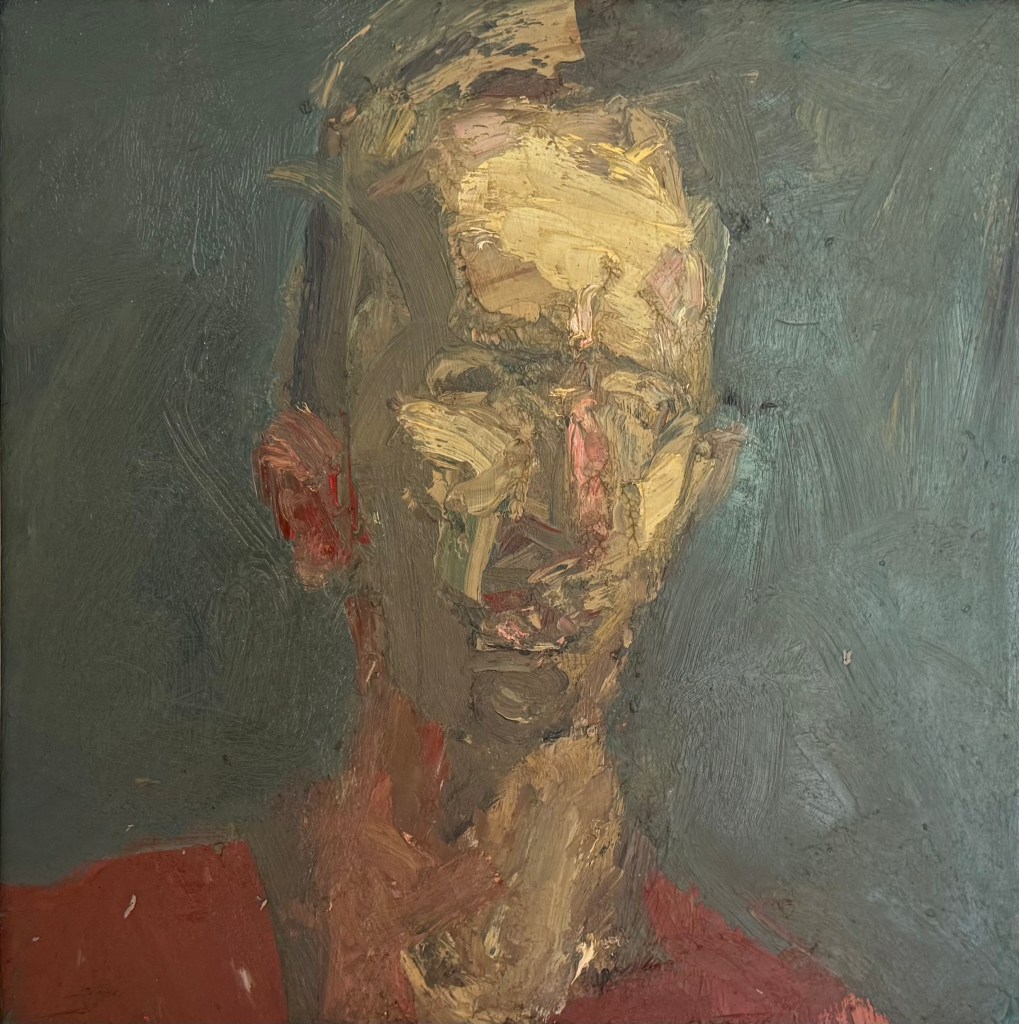
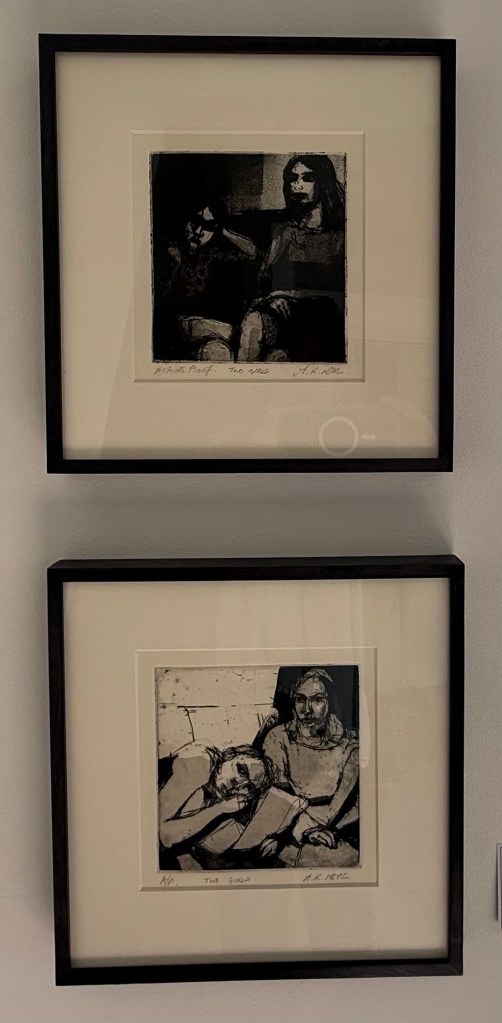
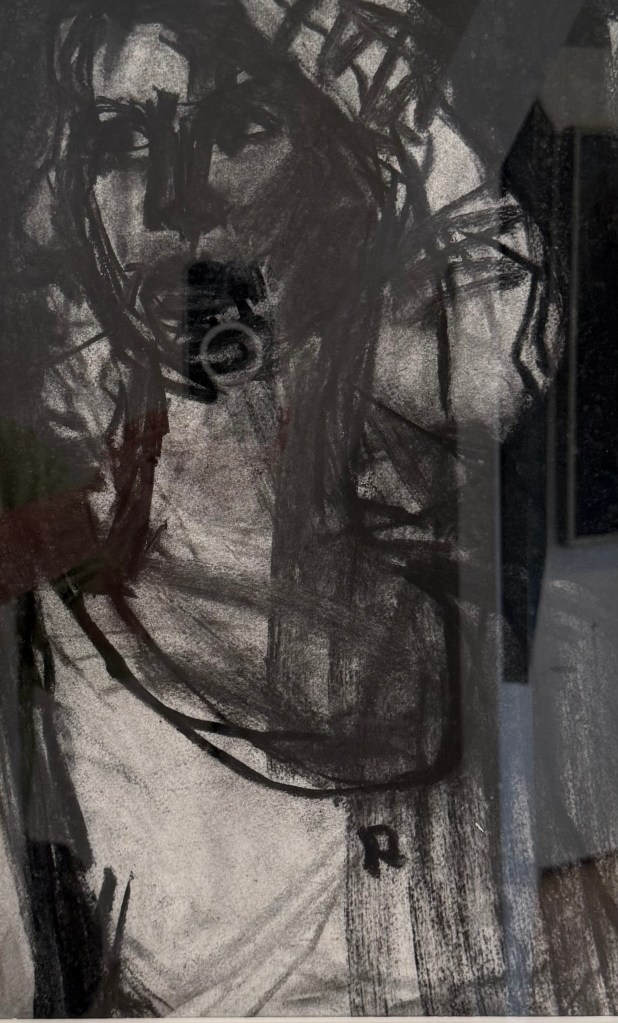
was an exhibition of work by Arthur Neal, a painter and printmaker practising since the 1970s. He appears to vacillate between the figurative and the abstract. It would have been difficult to guess that all of the works on display were made by the same artist. I was particularly drawn to his small abstract oil paintings, his work in charcoal and his more recent prints.

The exhibition made me think. I would still like to explore charcoal and drypoint, and after that I think I’ll be done. It will be time to reflect.

The small oil paintings reminded me of a stack of small canvas boards we’ve had for ages, as yet unused. I can’t recall why we got them – I don’t generally do small. I think my husband bought them because they fit in a small pochard box he is going to use for all those landscapes sketches he’s going to paint, once he has wiped off all the dust. It wouldn’t take more than a few brush strokes to cover them. No excuse really, not to do something every day.

I have a fascination with Jackson’s Inside the sketchbook series – of looking at the sketchbooks of artists, to see how they work and think. Sketchbooks are personal spaces and it’s exciting to get to look inside, although I’m in no doubt that they choose to talk about their best ones. A recent one which springs to mind is Unga from Broken Fingaz. He talks about how working small means that you have to let go of detail. I think I’ll give it a go.

What Was I Thinking?

I decided to try out the ‘map’ drawing using oil paints. I liked the combination of pencil and oil paint in As I Was Going To St Ives and so I drew the grid lines on some oil paper – I was limited to A3. I put the paper on the floor and lightly rubbed over the tiles which created an interesting texture. Then I did the figures and the automatic drawing, just as before.

I’ve decided that I really enjoy making the lines and marking the intersections. My brain must truly have become disconnected from the process because, for some inexplicable reason, I thought that a quick spray of fixative would be sufficient before I applied the oil paints. Oh, how wrong I was. The solvent and graphite mixed really well – that’s the positive I’m taking from this! It needs to be the other way round, possibly, maybe, or maybe not. But time to stop and give up for the day, but not before I salvage something from the process. I’ve been thinking as I’ve been experimenting that the cutouts look really interesting in themselves, so I cut out the figures from the latest effort and did a bit of arranging on a spare sheet of paper. Interesting, particularly the figures in transparent film…