Rubbing It Out

Following on from Solitude, I decided to try and develop it further.

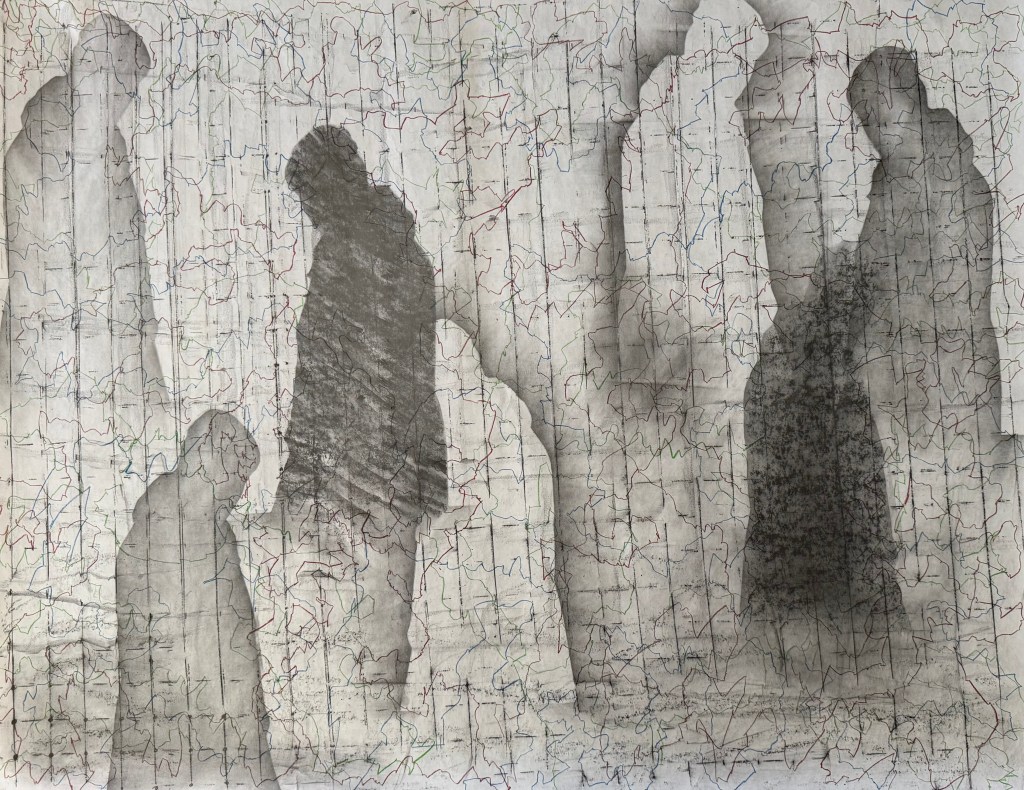
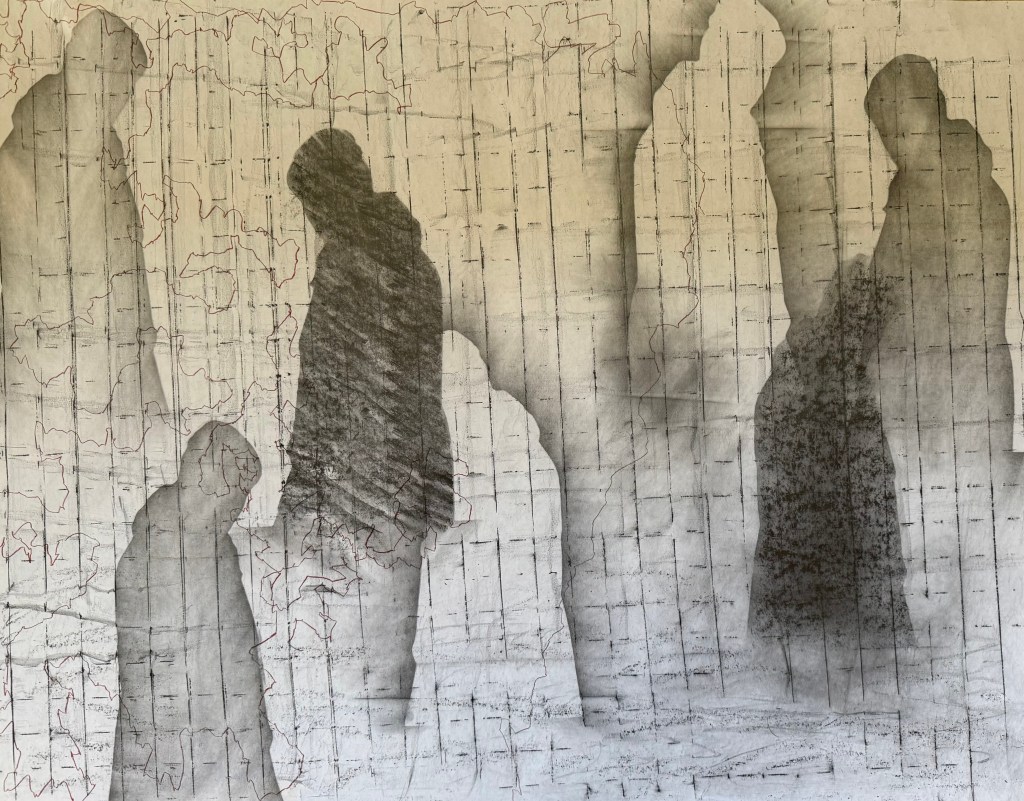
I used flipchart paper again, as it was easier to manhandle it over the obstinately curved wire fencing which I used for the grid effect. A downside was that the grid is a bit off kilter, but nonetheless I like the grid and the lines of coloured automatic drawing – it reminds me of map grid lines, a road map. I explored trying to have some figures behind and some in front of the grid. Not sure I succeeded and I am in two minds about the light figures.

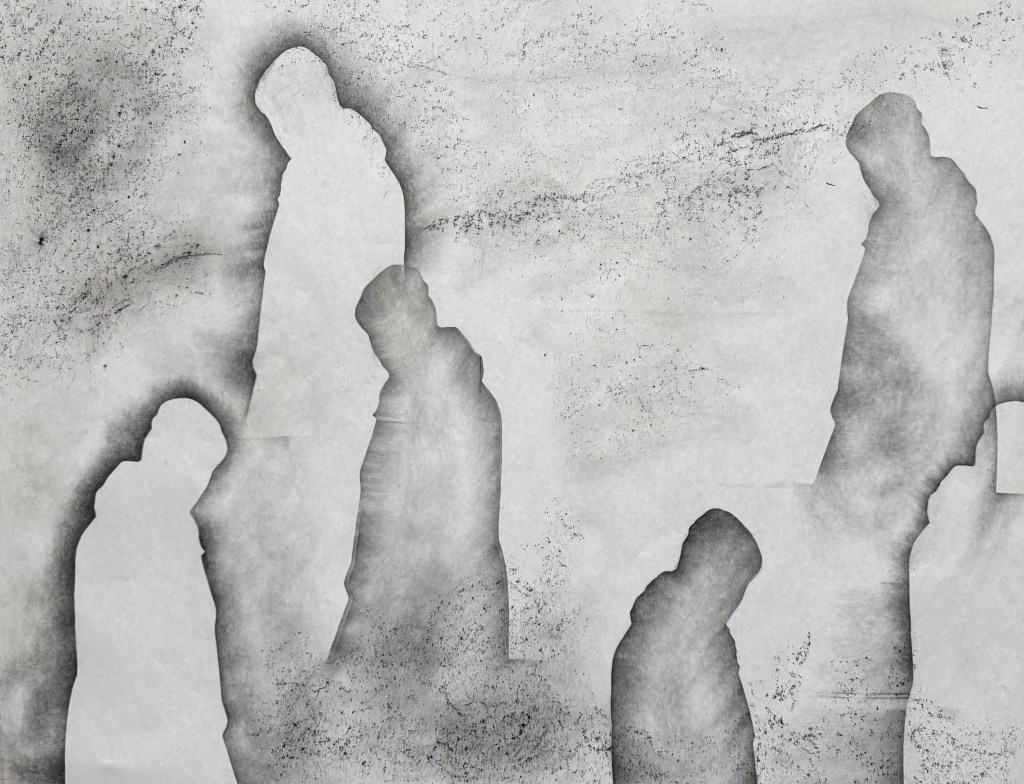
I decided to have a go with soluble graphite sticks using heavyweight cartridge paper.

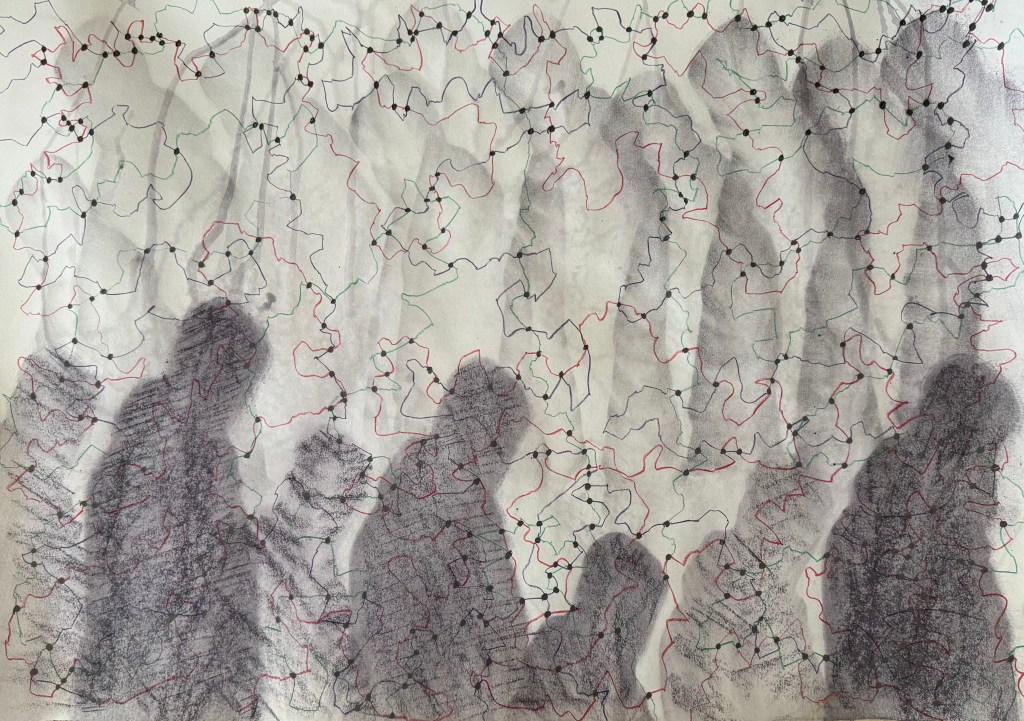
I wanted to get away from the soft diffused figures and experimented with hatching and rubbing on a textured surface. I sprayed with water and held upside down to create some streaks and drips. Not one for less is more, I drew some green and red lines and then thought it would be interesting to see what kind of a random pattern would be created by drawing dots at the intersections of the lines.

I still didn’t like the dark figures at the bottom and so to try and break them up a bit, I coloured in some random shapes like I’ve done previously using different marks in my monochrome doodles.

I really don’t like it, and I’m struggling to find anything positive to say about it other than I like the idea of the lines and the dots at intersections emphasising the concept of connectedness and the idea of multiple figures in the background; the idea of all those who have come before, and of inheritance (Bus Replacement Service)

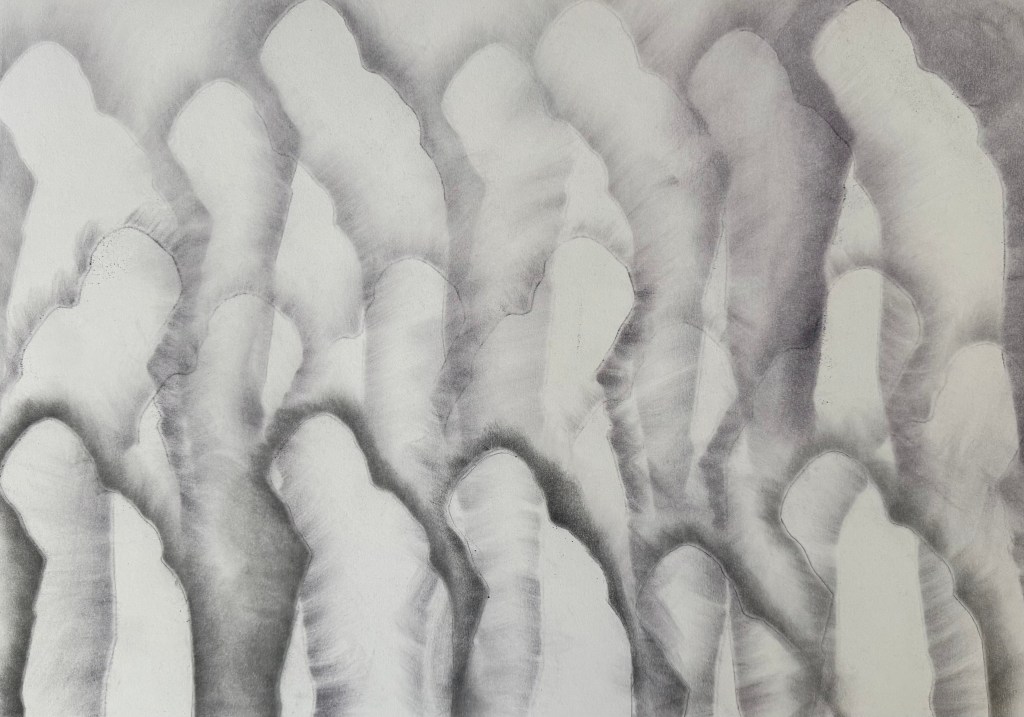
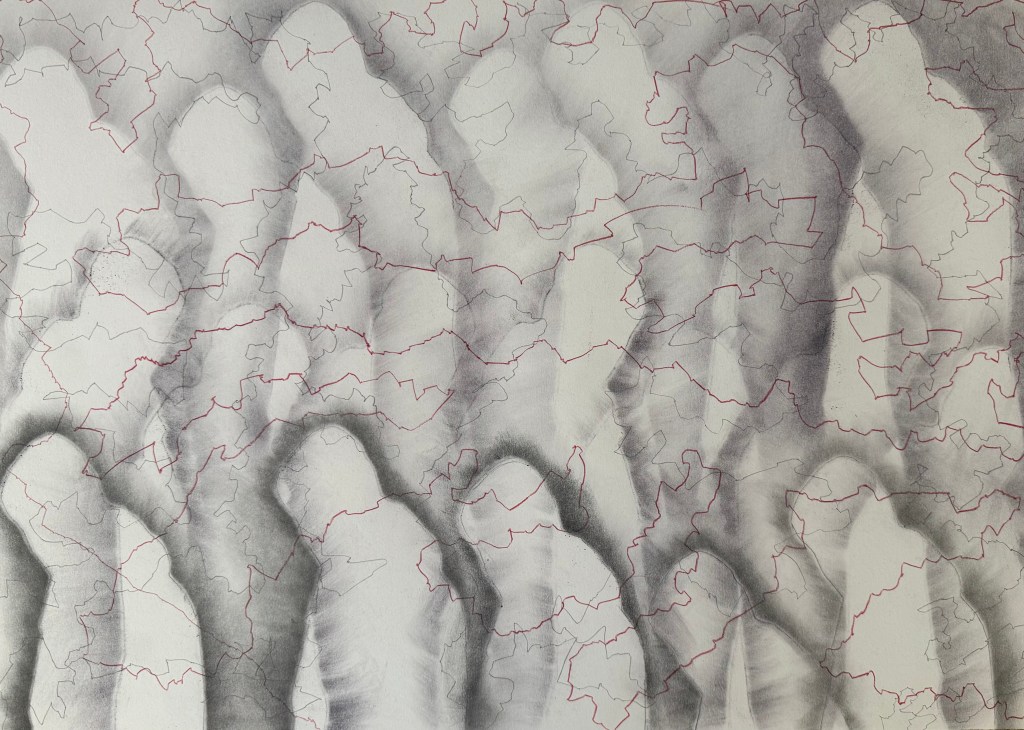
This time I left out the water, but I still used the water soluble graphite stick which had a purple tint to it which isn’t apparent in the photos. I don’t think it is as easily blended as normal graphite.

I much prefer this one out of the two. I’m starting to wonder what it would be like on a painted ground or even using thin layers of oil paint gradually building them up. Or am I done for now?

Witness

We talked about consumption of content during this week’s session. I admitted that the first thing I do in the morning is to pick up my phone. I use it as an alarm clock. It’s reliable unlike other alternatives I have tried. Also, I don’t leave my phone downstairs ever since I was told by a firefighter that it would be my only means of contacting the emergency services if a fire broke out and damaged the landline. That was when we lived in London and a mobile signal was something taken for granted. In deepest, darkest Hampshire it’s a luxury and dependent on WiFi, so we’d be completely stuffed if a fire takes out the power and the router goes down. So, really it’s born out of habit, and the knowledge that our means of escape would be to hop out of the spare bedroom window onto the flat roof and down onto the ground, hoping to get at least one bar if we stand 10 paces east of the base of the oak tree. Not that I’ve given it much thought…

I love a reel. I try not to spend too much time watching them. The last one I watched which interested me was a clip from Shall We Dance?

Maybe that’s why I make art. The process of art-making is important but it wouldn’t be enough in itself – it needs to see the light of day, to be seen, to be witnessed. To be witnessed by me as an act of self-reflection and by others, even if it is limited to those who are close to me.

As I Was Going To St Ives …

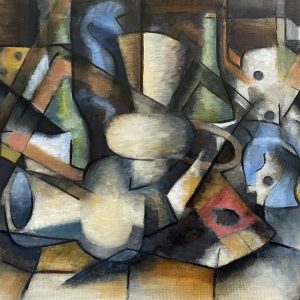
We’ve gone to St Ives in my weekly oil painting class, more specifically looking at the work of Ben Nicholson.

I’ve only recently looked at the work of the St Ives artists; aside from Barbara Hepworth, it didn’t really interest me before. I often go to the Pallant House Gallery and they have a few as a part of their permanent collection.

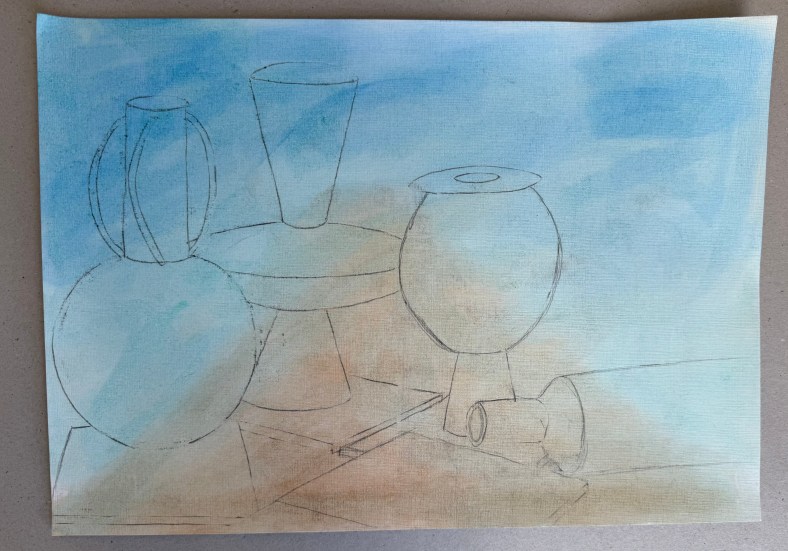
The brief was to make a drawing of the still life and then make two pieces, one with a slightly Cubist slant (using a tracing of the drawing to recreate shapes) and the other with a landscape in the background, both in the style of or influenced by, Nicholson. We used a limited palette of burnt umber, ultramarine blue, cadmium red light, lemon yellow and white.

I think that I would say that the finished pieces were more influenced by, than in the style of Nicholson! I’m not sure what I think about them. I swing from loathing them to actually quite liking them. I prefer the more abstract of the two.

What I have taken away from this exercise:

  • Lemon yellow takes an age to dry.
  • I really like the contrast between areas of pure ground and areas of opaque colour – I’ve often thought that some of Nicholson’s work has a ‘collage’ effect to it, which I like.
  • I like the interplay between the visible graphite lines and the oil paint.
  • The combination of the different genres of still life and landscape is really interesting.
  • I feel that I’m veering away from the figurative.
  • I wish that I had been less literal – I should have been more adventurous in my composition of the still life, mixed it up a bit more and not included figurative renditions of the individual elements, especially in the one with the landscape.

Next, is one of Nicholson’s inspirations, Alfred Wallis, known for his naïve art-making.

Our House

Is on a bend on a narrow country road full of potholes, and sharp flints which are paddled onto it by tractors from nearby fields.

I’ve lost count of the number of times I’ve come home to find a car parked lopsidedly outside the house and strangers drinking tea in our kitchen waiting for a breakdown vehicle. We’ve had a few road accidents as well, the last one being on 27 May 2020. A motorcyclist was swiped off his bike by a trailer which had swerved onto his side of the road whilst navigating the bend. The Hampshire Air Ambulance landed in the field next to our house.

The driver of the vehicle towing the trailer carried on, but later saw the error of his ways and went to a police station. He was prosecuted. Specialist police officers came to the scene to reconstruct who did what, at what speed etc, and to take photographic evidence. Four years later, I was contacted by a lawyer acting for the motorcyclist who was now suing the driver as he had sustained life changing injuries. Would I be prepared to provide them with a witness statement as to what I saw and heard on the day in question?

Well, I have difficulty remembering what I did last week, let alone what I heard and saw in the fleeting moment they both passed the house four years before. Of course, I said yes, and yes, I understood that I might be required to attend court and give evidence. What I found really difficult was trying to remember what I actually saw and heard myself as opposed to what extra information and thoughts I had accumulated from discussing it with my husband and daughter after the event.

In her book The Memory Illusion, Julia Shaw refers to this as source confusion i.e. misattributing information to our own memory or experience. She specifically talks about it in conjunction with confabulation (in which the event being remembered never actually took place) in the context of early childhood memories. It’s led to me querying my husband’s firm recollection of sitting on his grandmother’s knee with his Dinky car when he was three. Is he sure that he hasn’t seen a photo or been told a story as he was growing up? No, he’s certain it’s a memory. Apparently, the average age for a child to form a memory capable of being recalled in adulthood is 3.5 years, although the range can be anywhere between 2 and 5 years. I am struggling to find my first memory.

I’ve often thought that I would be a really bad witness. I don’t understand how that can be, because as artists, aren’t we supposed to be highly observant? Mind you I was never very good at the observation round in The Krypton Factor. Or do we just observe different things? I’m generally good at spotting when something is different, which probably means that my memory of how something was before is perhaps subconscious and is only triggered when I sense a difference. Who knows? All I know is that I can remember my 16 digit credit card number with no problem at all, which was handy when I went out on Saturday morning and accidentally left both of my bank cards at home, and had to set up Apple Pay manually so that I could put some petrol in the car to get home again.

Anyway, I have recently received an email from the lawyer informing me that the case has settled and that I will no longer be needed at trial. Result!

Solitude

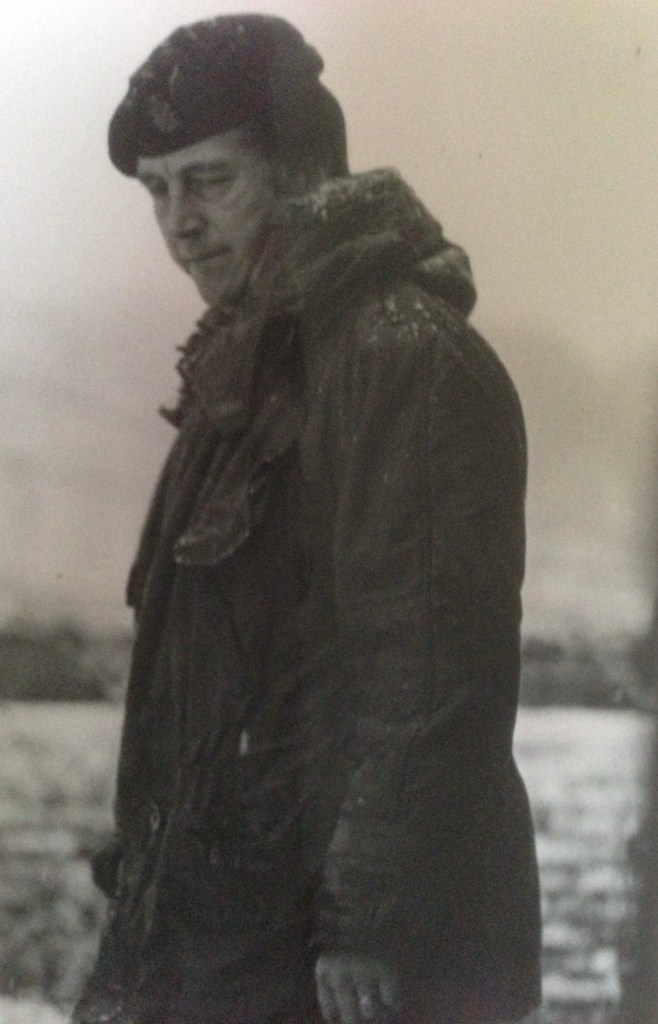
I feel particularly drawn to this photograph of my father. It’s solitary and contemplative, evoking a sense of vulnerability – a side which was never apparent whilst I was growing up. It makes me want to go and give him a hug. He was the world’s best hugger. Either that, or he’s watching someone doing something and he’s not that impressed – a more familiar experience.

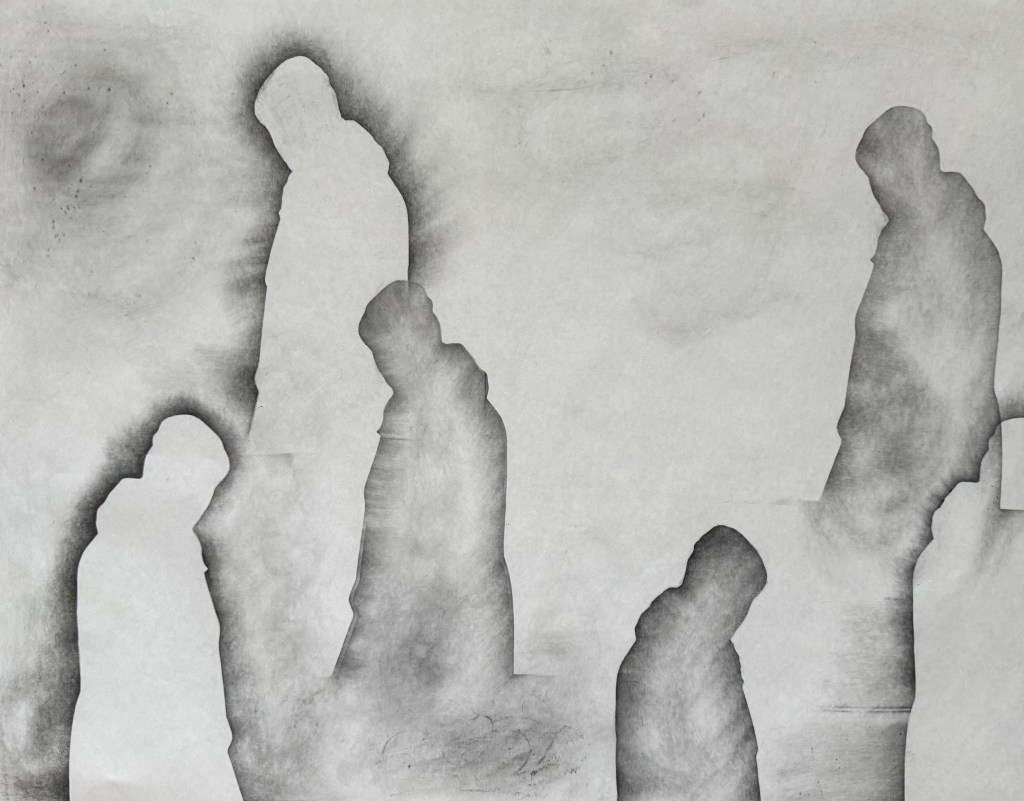
Having missed out on visiting a couple of exhibitions on Sunday, I decided to experiment. I took a piece of A1 flipchart paper, a graphite stick and a 5B pencil and got to work. First I created multiple silhouettes of the image using the graphite stick.

I was inspired by the Richter drawings (The Rich Are Getting Richter) and used the tiles on the kitchen floor to create texture with some frottaging.

Having really liked the effect of some of the lines and marks made in my automatic drawings, I used the 5B pencil to create a wandering line, holding it at the top and twisting it from side to side in the process and then holding it on its side to create a second softer line. I like the idea of tree roots and mycorrhizas connecting and creating a support network for trees, a concept we touched on in last week’s session. The lines are connecting each figure so it’s no longer alone. They are also reminiscent of a map or a mapping out. Not sure which, but I like the effect. I like the delicacy of the lines. They also remind me of the lines in skulls at the points where the plates have fused or cracks in a surface, fault lines. I wasn’t keen on the overlap on the two figures on the right which created a hard box-like edge, so I cropped it out on the last image.

I really enjoyed doing this, particularly the lack of control of the line making and the unpredictability of the frottaging, and despite that, it does bear a resemblance to the vague image I had in my head. It ties in with the idea of shadow selves (Sniper’s Alley) and the idea of inheritance and being made up of multitudes (Bus Replacement Service). It’s definitely an approach I will develop further, but I’ll use better quality paper next time.

Bus Replacement Service

I was planning on going into London yesterday to catch Donald Rodney: Visceral Canker at Whitechapel Gallery (as well as revisit the Cardiff audio walk), and Linder: Danger Came Smiling at the Hayward, before they close in the next day or two. But what I forgot was that it was a Sunday on a Bank Holiday weekend, a perfect time for railway engineering works. A bus replacement service would almost double my usual journey time, and so I decided to stay at home. Instead, I had a look on Whitechapel Gallery website, to see what I had missed. There is an interesting piece on Rodney by Caleb Azumah Nelson, particularly on their relationships with their fathers.

Rodney had, and ultimately died at the age of 37 from a complication of, sickle cell anemia. He was in the midst of a sickle cell crisis when his father died and he was unable to attend his Nine Night.

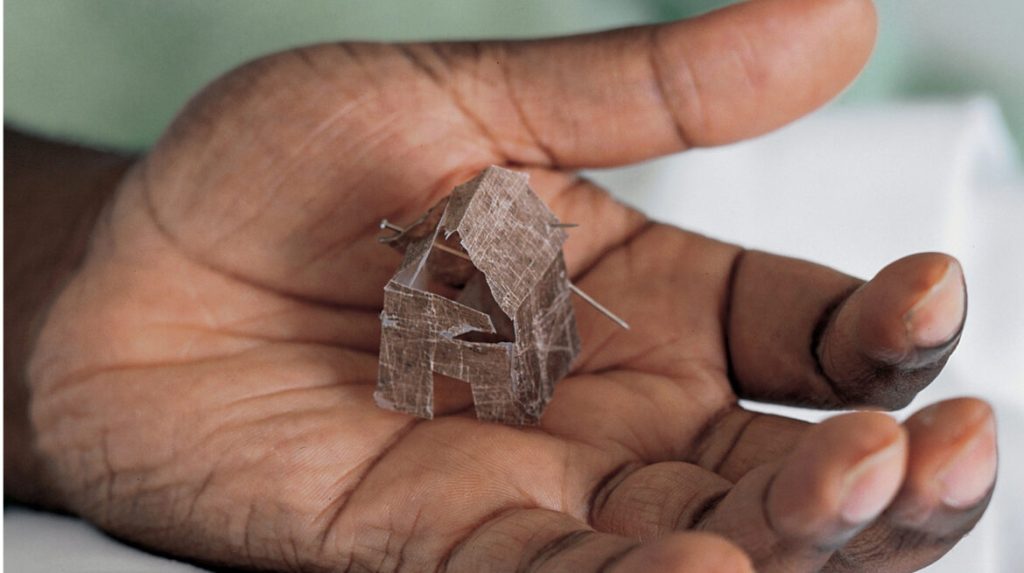
In the House of My Father 1977, photograph (Image Source: http://www.whitechapelgallery.org accessed 5/5/25)

Made from his own skin, the house is held together with small dressmaking pins.

This is the first piece of work by Rodney which Nelson encountered, purely by accident:

’The strength, not in the structure, but in the vulnerability of exposure, his open palm an invitation into his heart, his family. With this gesture, Rodney suggests, this is who I am, this is who I might be.

How does the self come to be? And how do we make space to be our whole selves? … a condition he would have inherited from his father, who would’ve inherited it from his father before that. Their selves, our selves, folding into one another: we contain multitudes. And what else do we inherit? And how do we carry around these inheritances, how do we make space for them in our lives?…’

At the time he was reflecting on his own relationship with his father:

’… wrangling with the things he cannot say to me, or doesn’t have the language for, the many rooms in the house to which I do not have the key…’

He finishes his piece with:

I believe Art gives us a space to be honest, to confront, to dismantle, to reassemble. To imagine. Visiting and revisiting Rodney’s work reminds me that other worlds are possible. It reminds me, that even in the face of continued crisis, it is necessary to dream. It reminds me that , even in the face of death, we must continue to inhabit many rooms, to hold space where we can be honest, where we can be our whole selves. Where we can feel alive.’

So many thoughts have come to mind:

  • The idea of inheritance and how we find a space for it in our everyday lives. To me this feels like a burden not just in the physical sense of belongings, and ‘stuff’, but to the extent that I might feel defined by it: I don’t want to be, I want to be my own person steering my own course independently of what has gone on before, but I can’t ignore the extent to which others have shaped me. Last weekend, I lost count of the number of times friends commented how my daughter is a mini-me or the spitting image. No, she’s not. She’s her own person, living her own life. But, inevitably, I will have had an input into who she is, even if it’s just a matter of genetics.
  • I have inherited my family history from my parents. I used to spend ages looking through the family photo albums talking to my mother about the contents. I feel an enormous responsibility to pass this knowledge on. It’s a burden. My daughter is not particularly interested. Maybe it’s an age thing – as we age we need a greater understanding of who we are? Or maybe it’s a digital thing, we don’t have a physical record of our lives lying around the house to prompt an inquiry and so the questions never get asked. Sometimes I think that I should write it all down in case she’s ever interested, and other times I think that I’ll take it all with me and free her from the burden.
  • I think that I’ve been dismantling myself over the last few months. I’m not entirely sure that I’ll be able to reassemble myself, but maybe a few left over bits here and there wouldn’t be such a bad thing. I could even write my own instruction manual.
  • The child/ parent relationship: I remember the moment when I realised that my parents didn’t know or have the answer to everything; that they were human. It really stopped me in my tracks.
  • The idea of the house with many rooms; our ancestors folding into one another; the self containing multitudes.
Mind The Gap

I’ve been looking back at some of my previous posts to try and assimilate my thoughts and ideas.

In this week’s session we considered an excerpt from Art & Fear by Bayles & Orland. We discussed the gap: “…Making art provides uncomfortably accurate feedback about the gap that inevitably exists between what you intended to do, and what you did…”

My earlier post,Making A Sound, referenced a comment made by Maggi Hambling:

…there wouldn’t be much point in painting a picture that it was possible to paint…”

So, we shouldn’t mind the gap. If there is no gap, we are not pushing ourselves or allowing exploration in our work.

Art & Fear also threw up another corker. It’s from Stephen De Staebler:

“Artists don’t get down to work until the pain of working is exceeded by the pain of not working.”

Almost there!…