Summer II

I’m now playing catch up, tying up all the loose ends from the summer, which now seems an age away.

Once I’d seen Bourgeois’ ‘Maman’ I had a wander around the rest of Tate Modern.

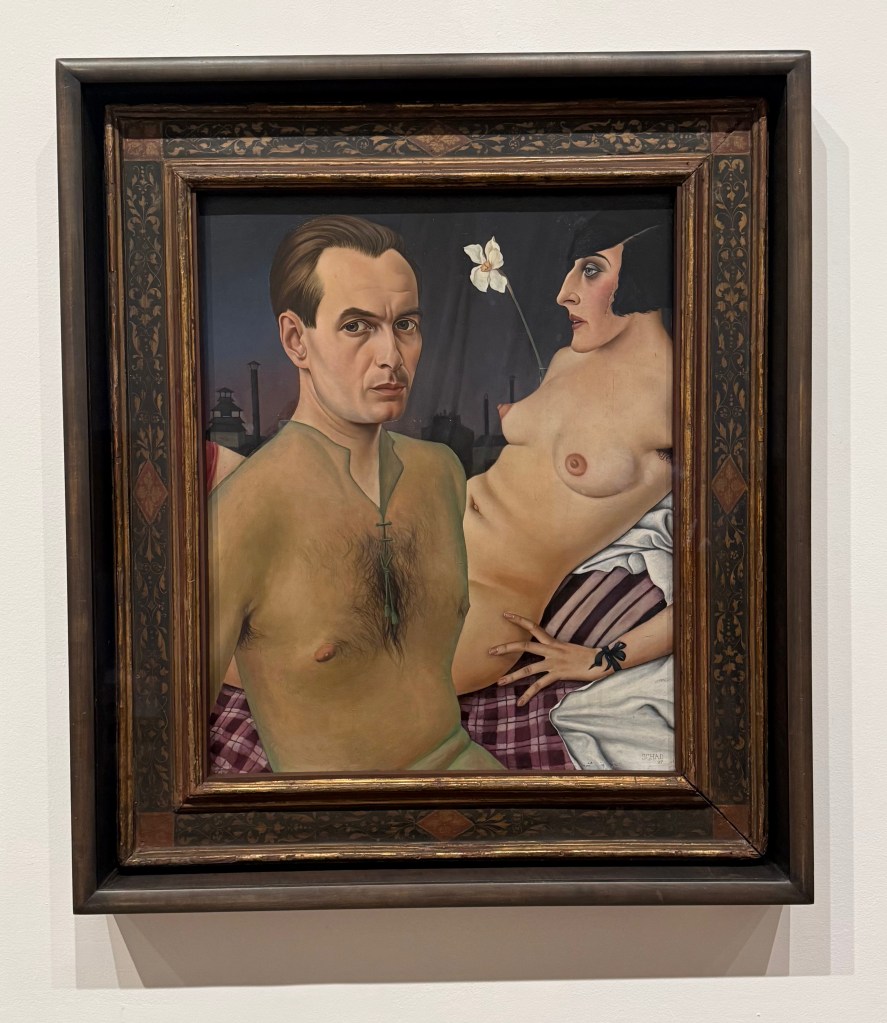
I don’t know what it is about this painting, but I always find myself standing in front of it. It’s a self-portrait by German artist, Christian Schad, in 1927. Having previously been influenced by Dadaism, after returning from Naples he started painting in a smooth, realistic style as part of the New Objectivity, a reaction against Expressionism. He also created Schadographs, which I may have to have a look at. Maybe I’m drawn to it because it was painted at a time of decadence in Berlin and Vienna, or because of the narcissistic symbolism, or maybe it’s just the way he’s painted that really sheer shirt.

This is by British modernist, John Tunnard in 1942. It is an abstract landscape painting of Tol Pedn near the Lizard Peninsular, where Tunnard served as a coastguard during the war. The two small chesslike objects represent the two artificial landmarks on the coast warning ships to keep away from the Runnel Stone, a dangerous reef. I like the areas of texture which contrast with the flatter paint, and the overall balance of the composition.

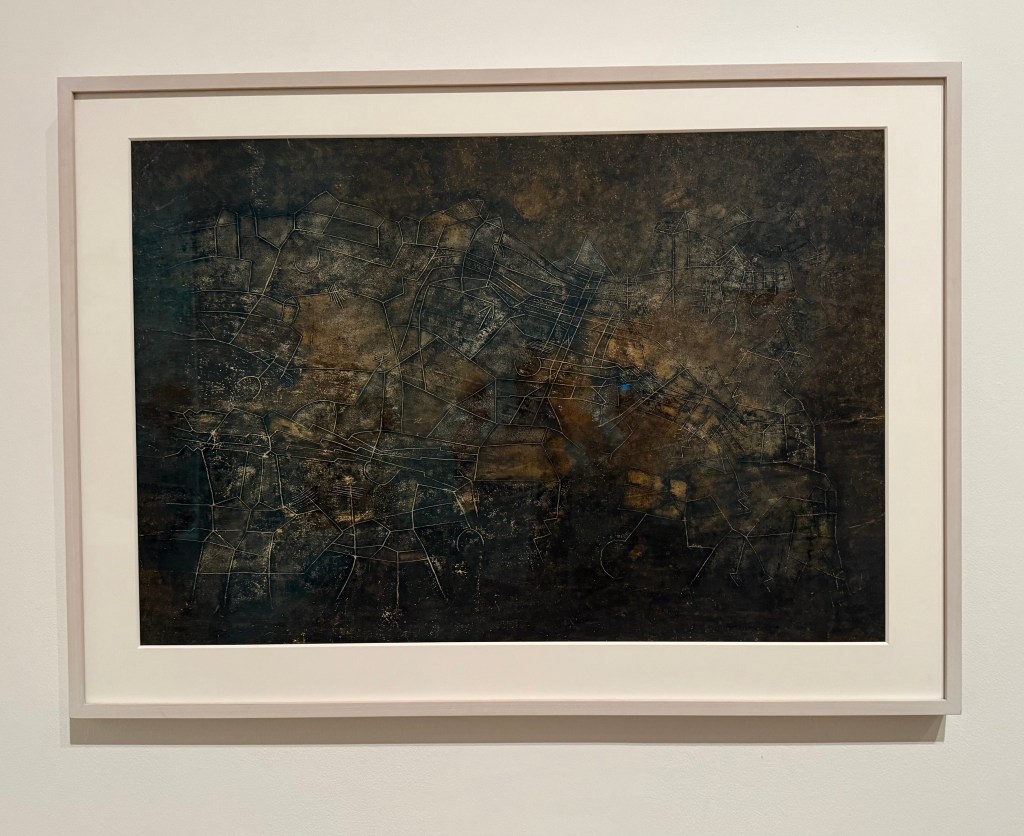
I particularly like the aerial view feel of this work. It is Nocturnal City, by Maliheh Afnan made in 1987 – wax, crayon, oil pastel and ink on paper. She is influenced by the written form, in particular, Persian manuscript paintings. She ‘writes’ her paintings layering materials in which she explores, memory and places. Text has appeared in some of my work, and I like the effect of scraping into the surface to make marks, something that I do a lot of instinctively.

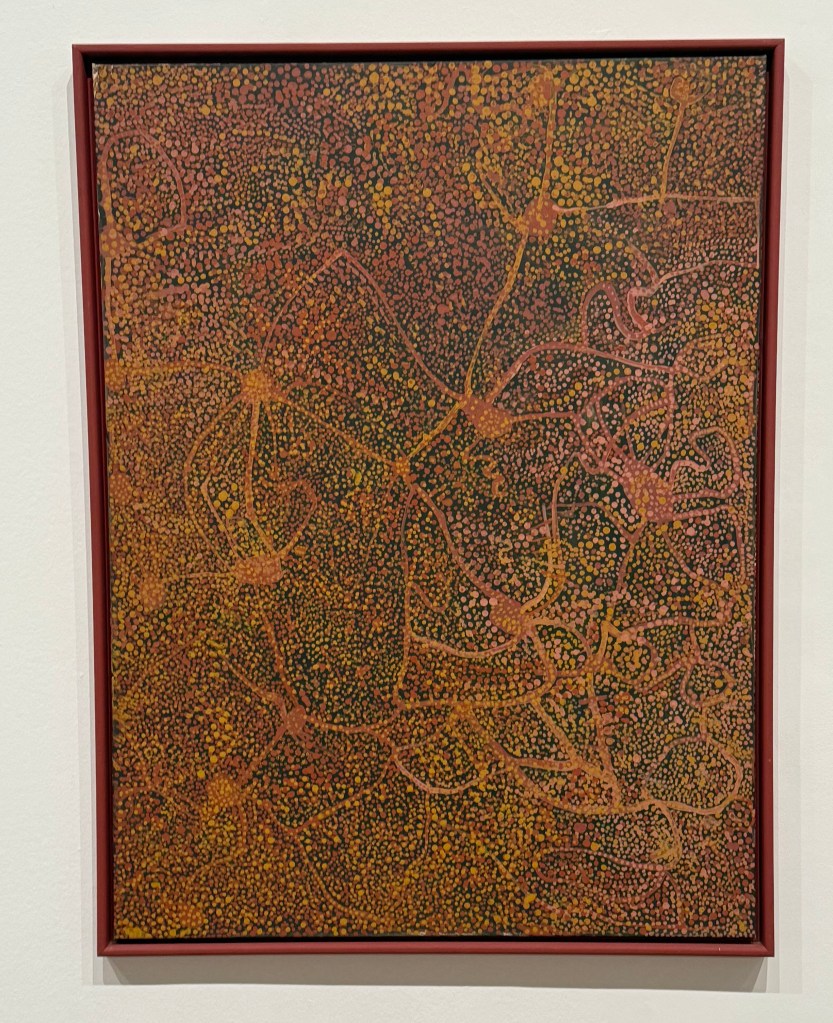
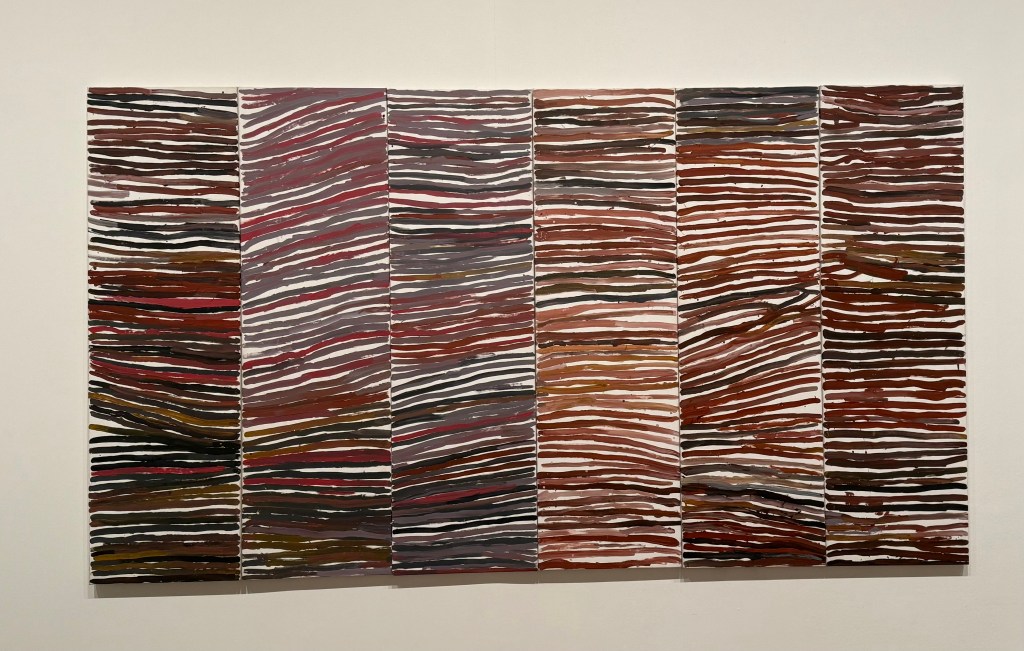
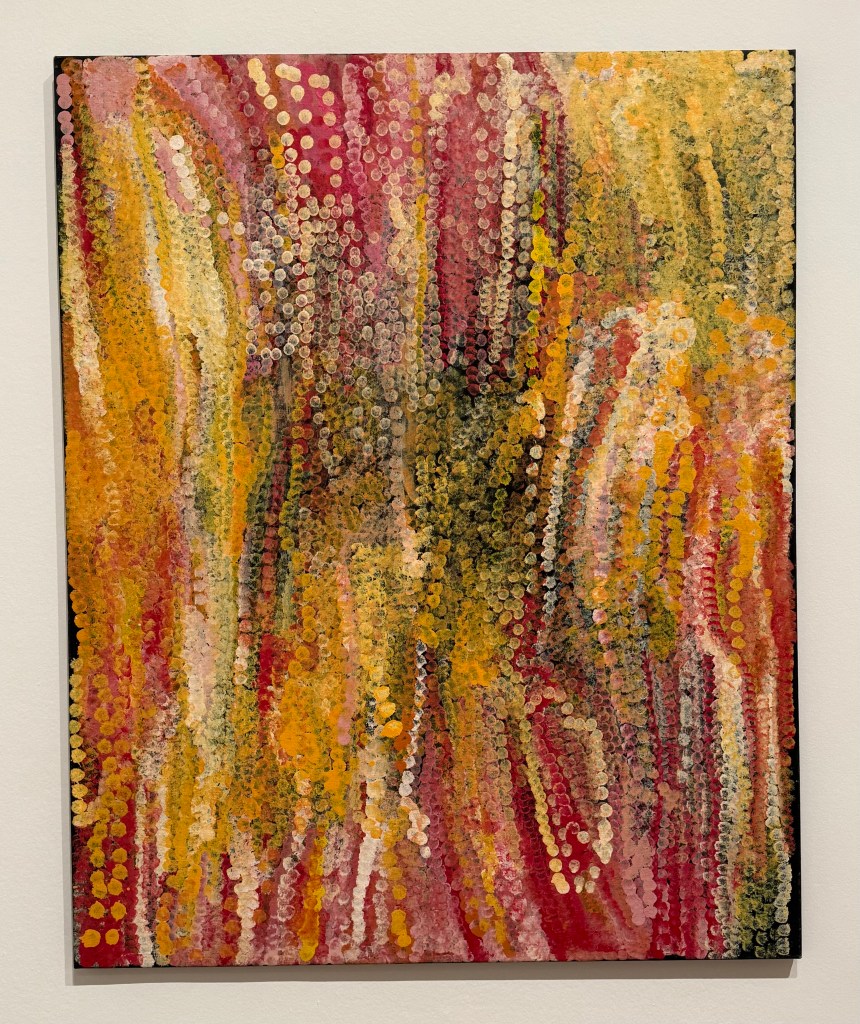
I had a look around the Emily Kam Kngwarray exhibition: she started painting in old age and made a mind-blowing 3,000 odd works in just a few years. I enjoyed looking at the mark-making and the colours, some reminiscent of mapping.

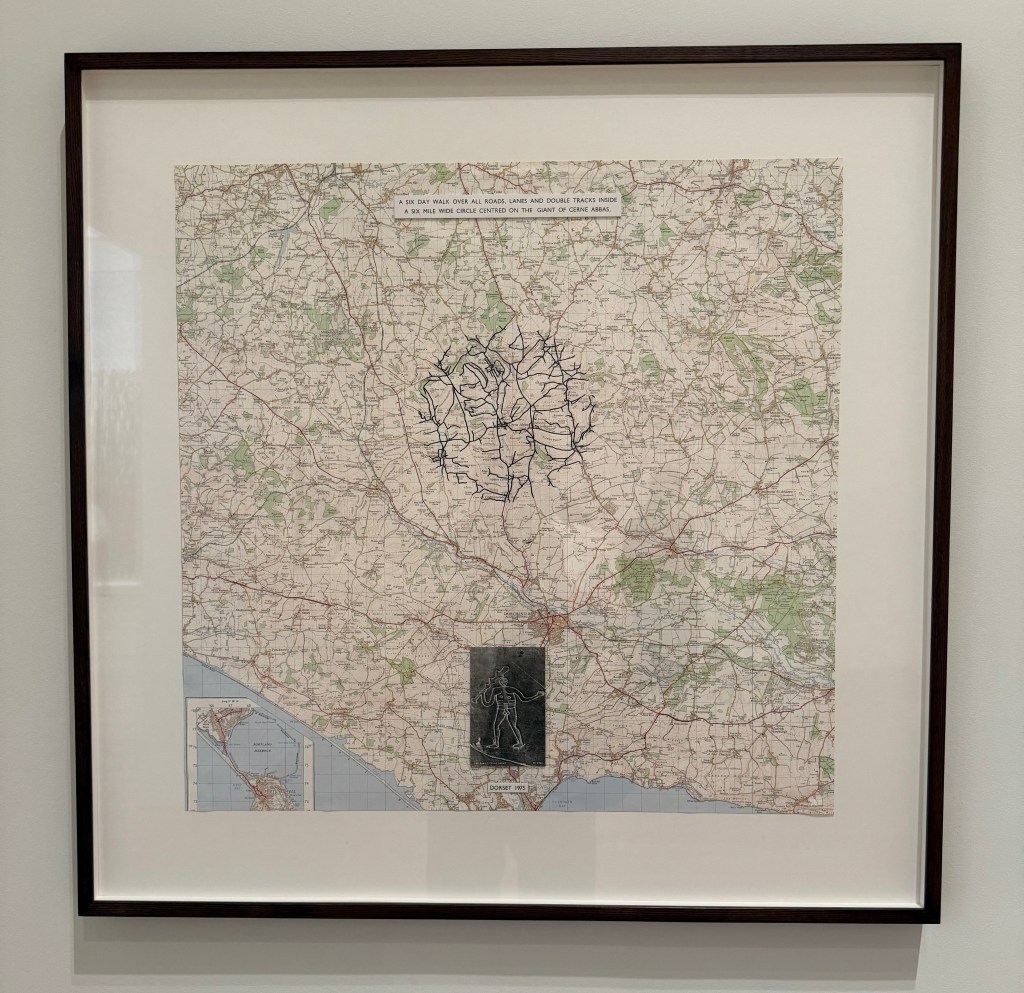
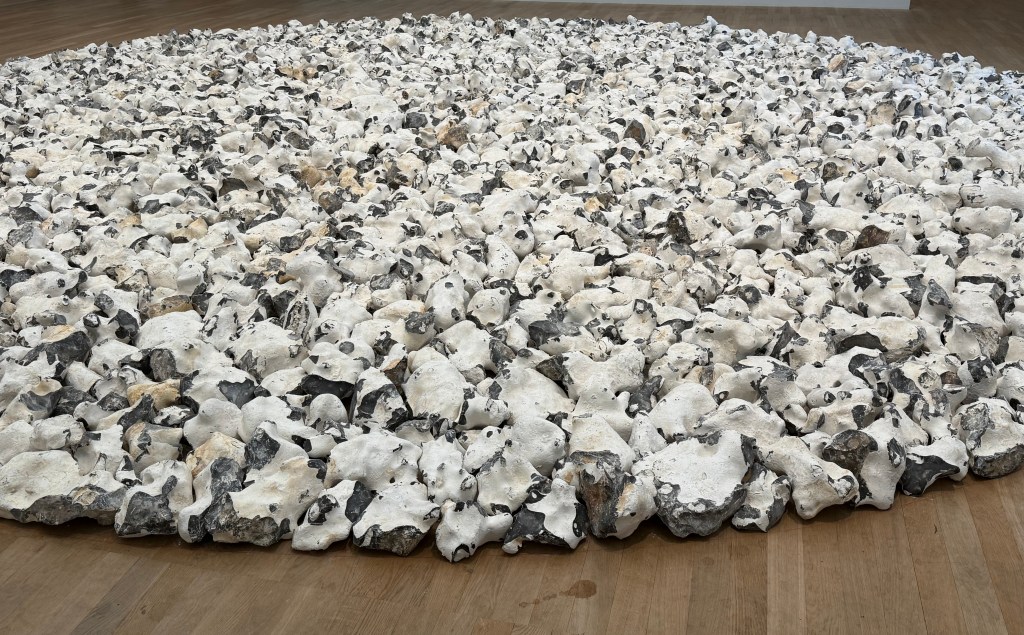
And then I saw an actual map in Richard Long’s Cerne Abbas Walk (1975) in which the sculptor/ land artist documents a six-day walk at a well known Dorset landmark, detailing his physical interaction with the landscape. I couldn’t help but stop and spend quite a long time just looking at his 8 metre wide Norfolk Flint Circle (1990) which creates its own extraordinary landscape.

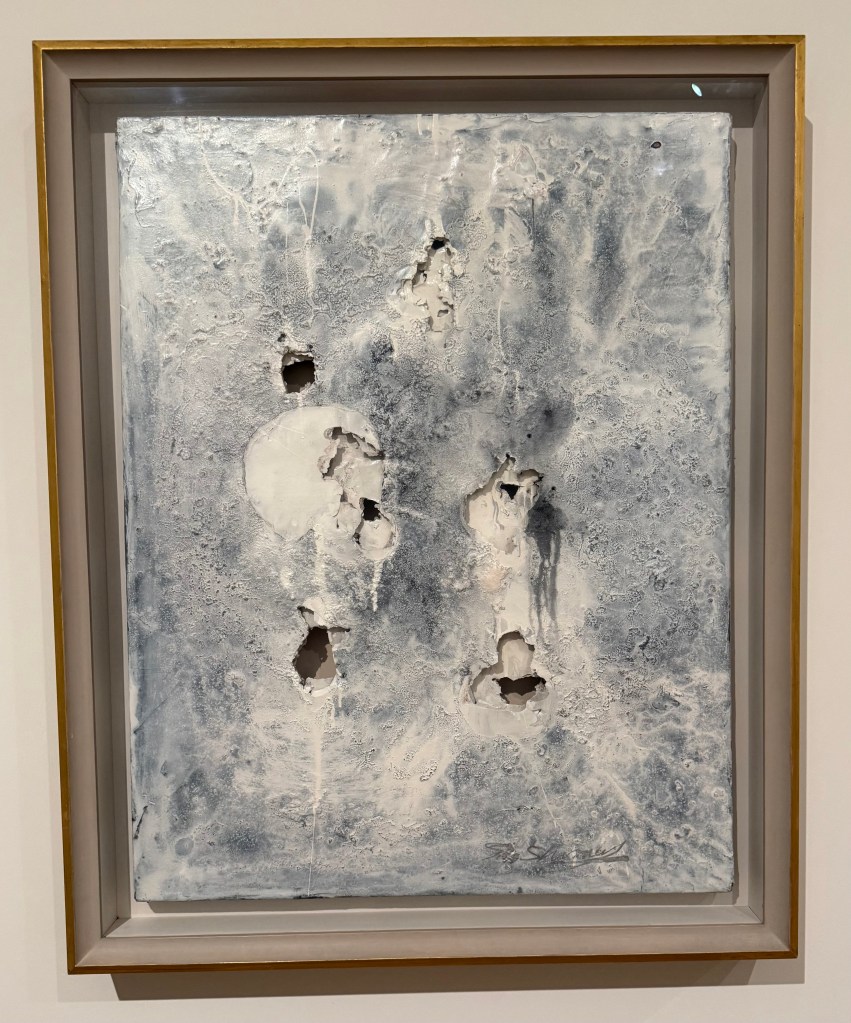
I didn’t make a note of this next work which is frustrating as I was intrigued by the holes and layers beneath.

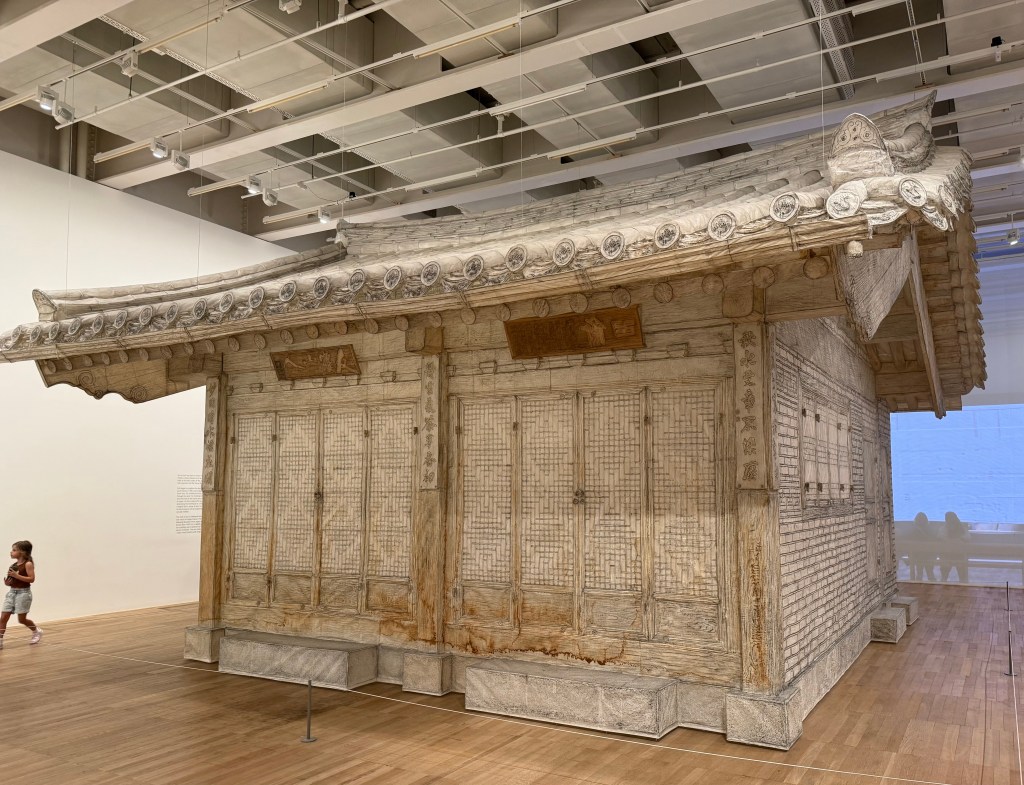
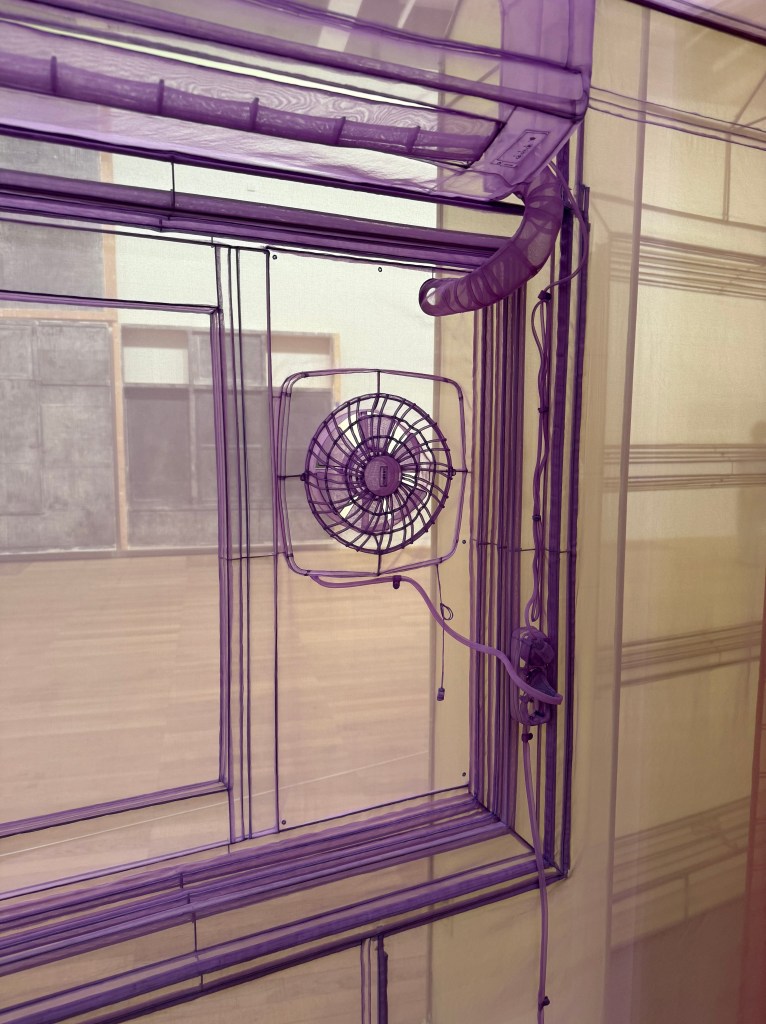
Then it was on to Do Ho Suh’s Genesis exhibition. Lots of transparent layers, grids and threads, all of which appealed to me.

Some wonderful Giacometti’s in the Tanks, emerging from the darkness and given form by the wonderful lighting.

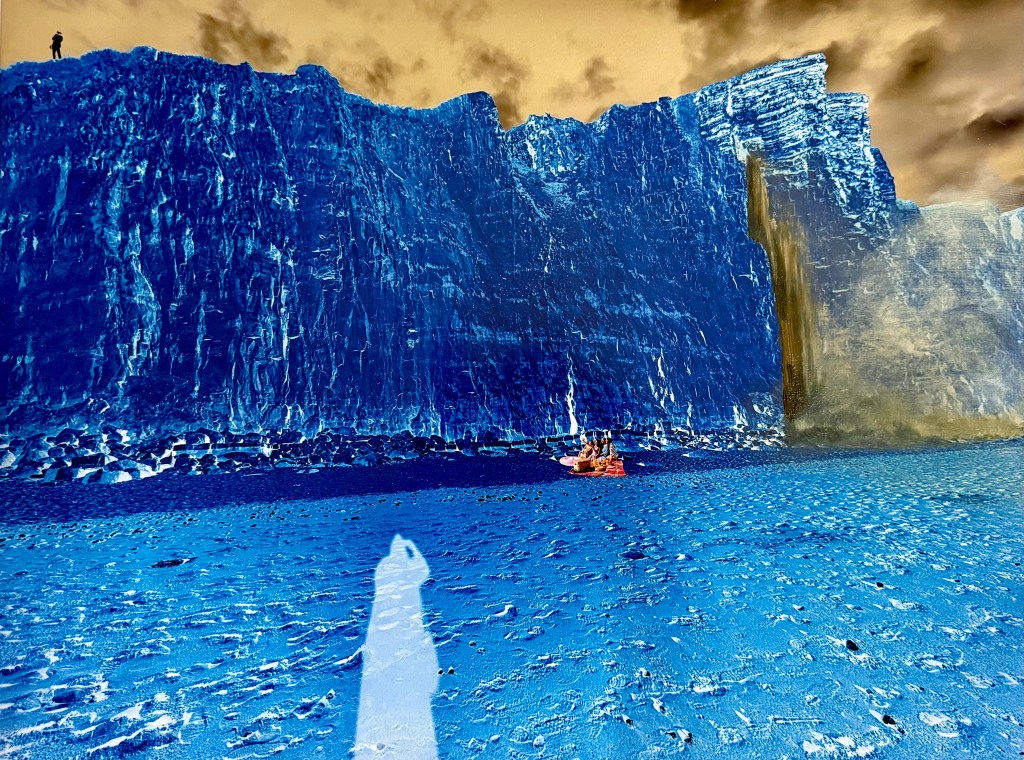
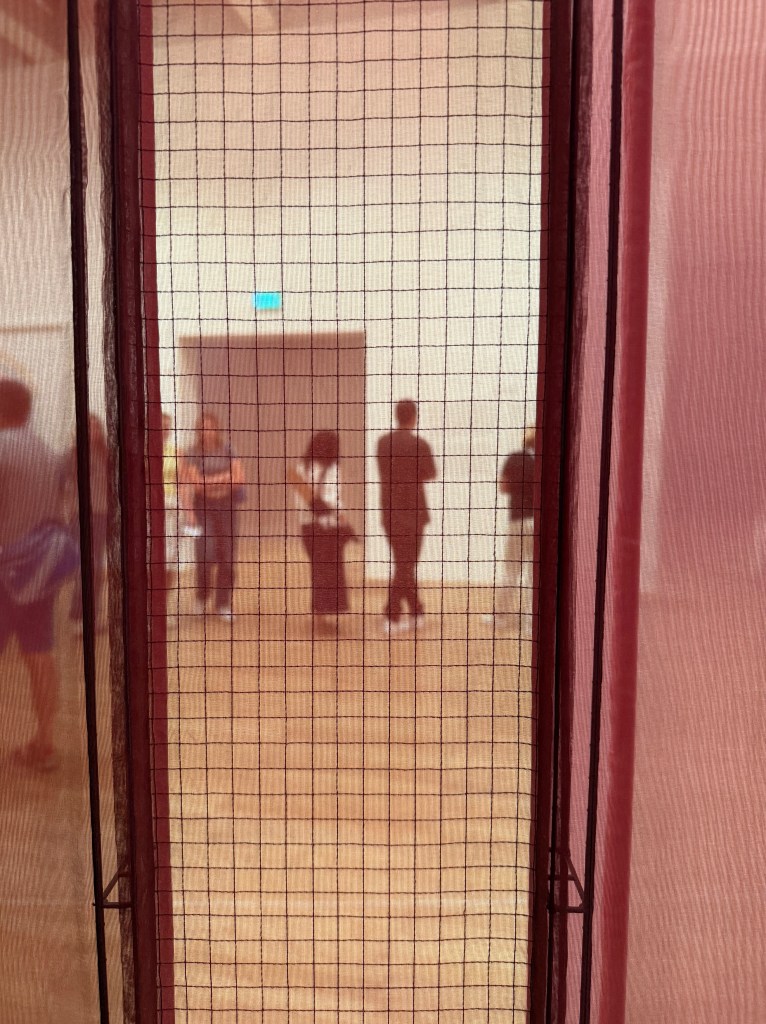
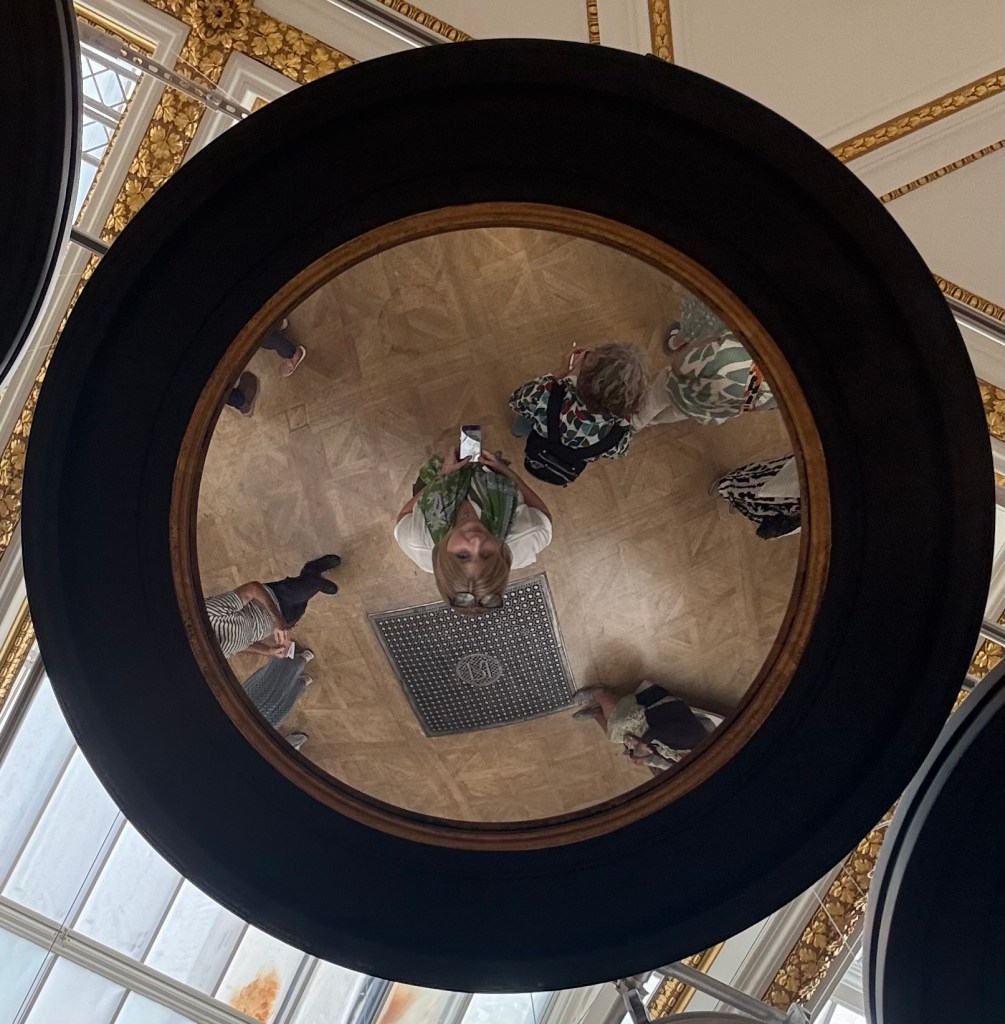
An accidental slip of the phone, but an interesting image.

Last Minute II

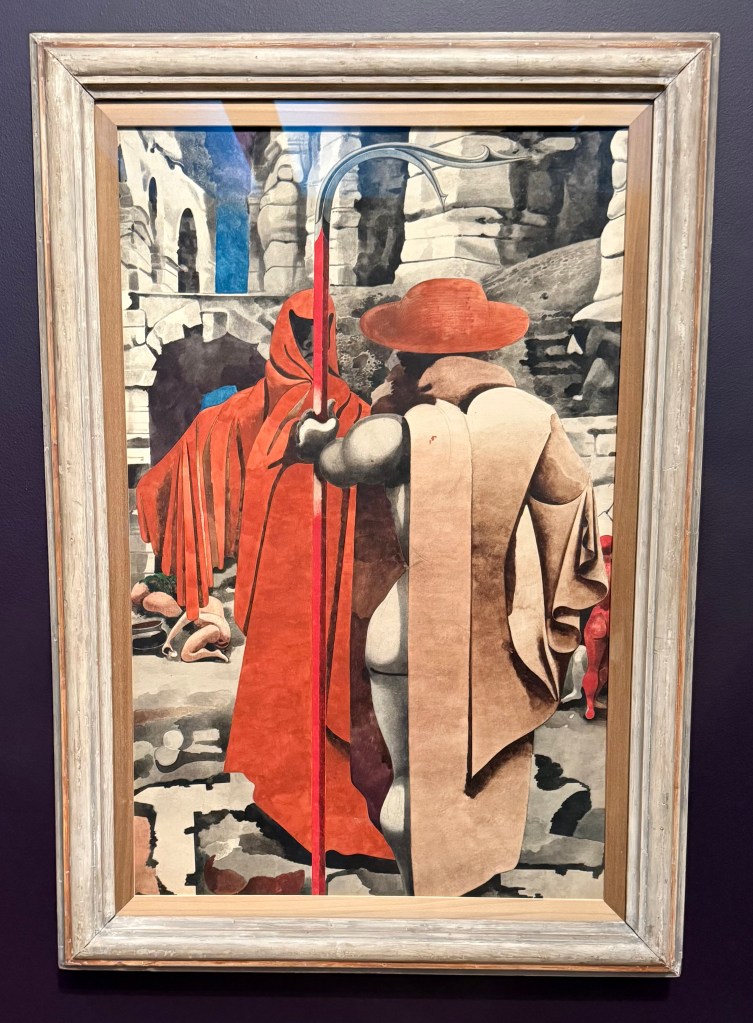
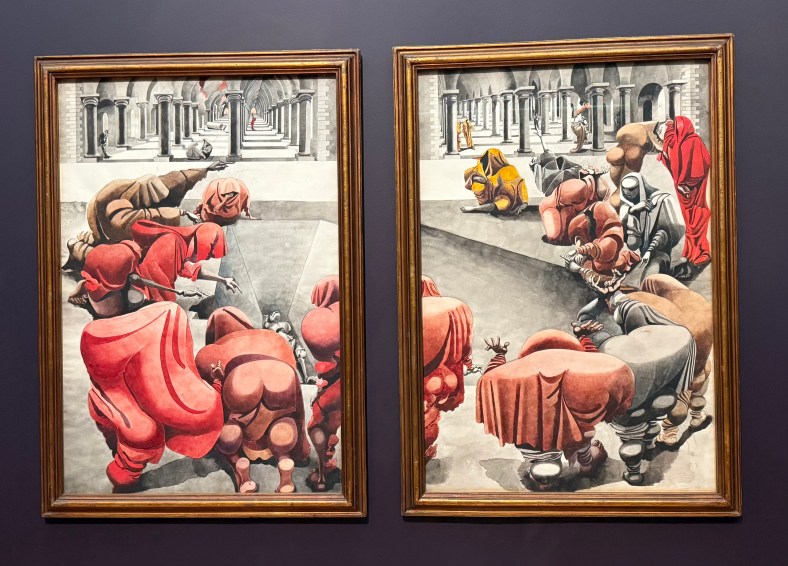
I didn’t expect to enjoy the Edward Burra exhibition at Tate Britain. His earlier works of figures in bars and cafés in France and the US were interesting, but I was particularly intrigued by his work during the Spanish Civil War, the Second World War, and his later work. He was diagnosed with rheumatoid arthritis as a young boy, and during the war his medication was subject to rationing which meant that not only was he isolated from his friends, but he was also in pain for most of the time.

He mostly drew from memory, and used watercolour to build up layers. They were extraordinary. They had the solidity of oil paintings, and yet had a remarkable quality of luminescence about them.

As he got older, and couldn’t travel abroad because of his failing health, he went on road trips with his sister, often accompanied by friends. When they stopped to enjoy the views he would just look, later recreating the scene months later in his work.

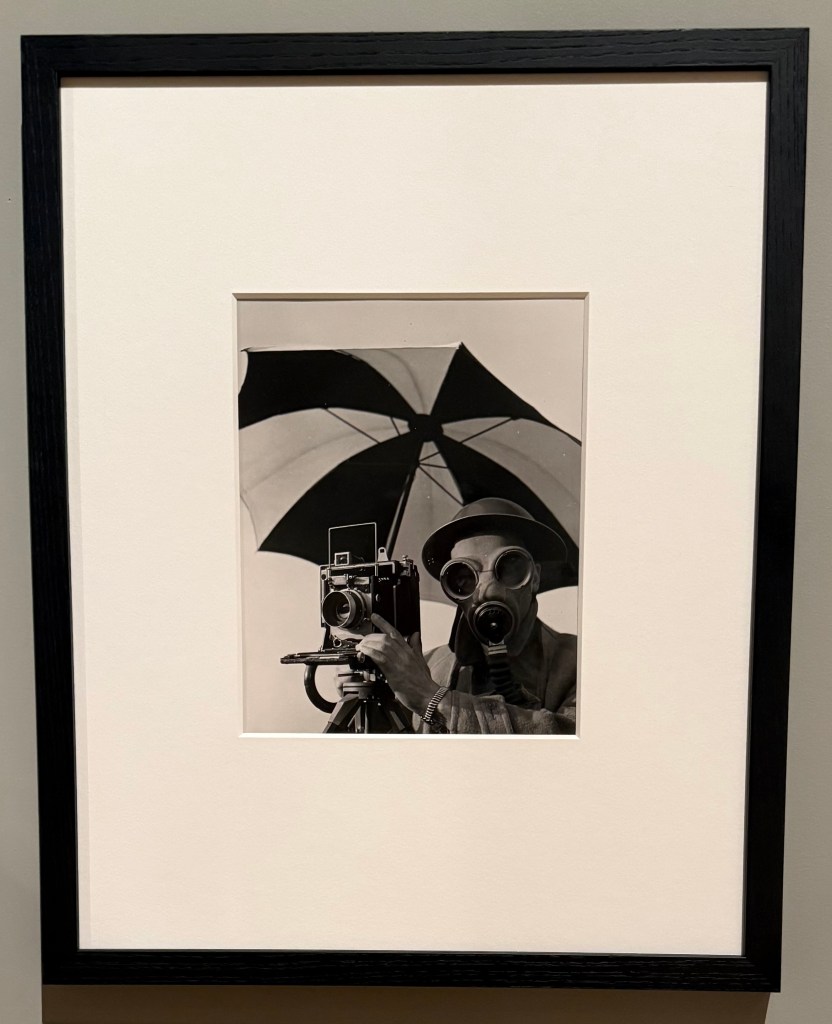
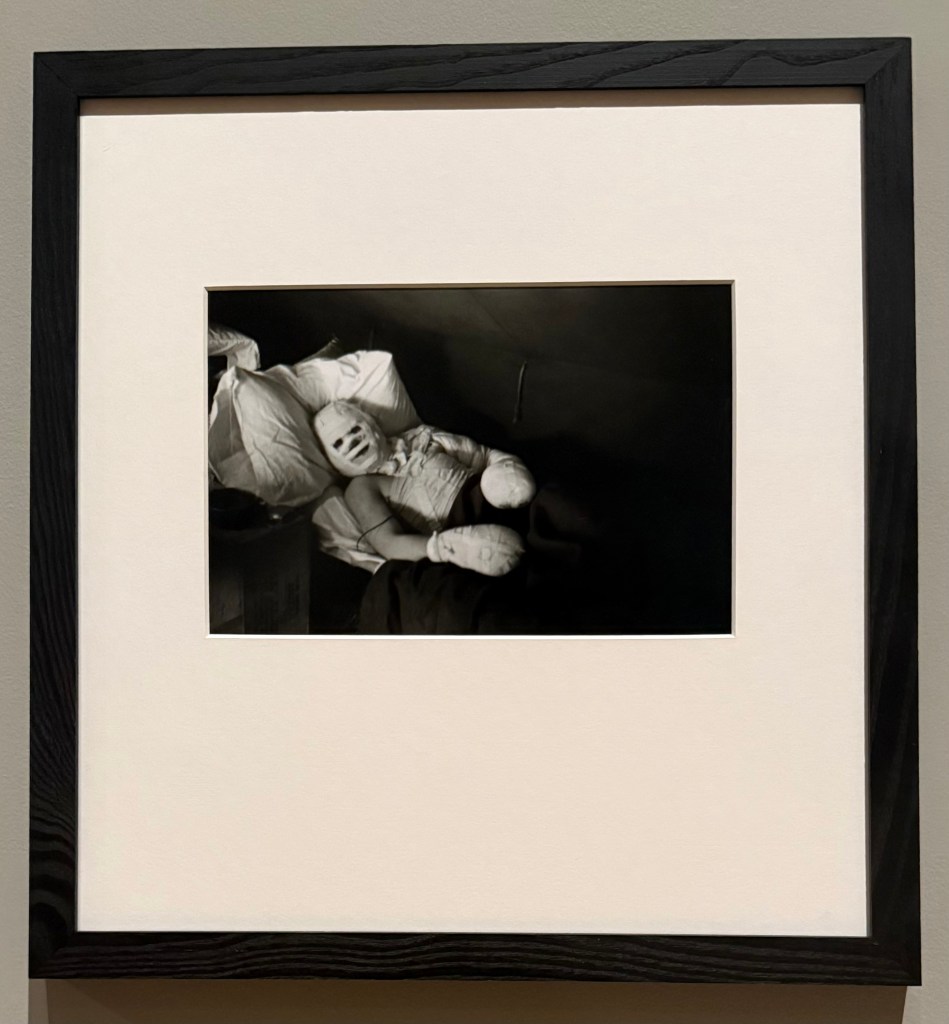
I then went round the Lee Miller retrospective which has around 250 photographic images on display. Originally a Vogue model, she moved from being in front of the camera to being behind it, working closely and experimenting with Man Ray in Paris. During the Second World War she was a war correspondent for British Vogue taking photographs of the Blitz, the liberation of Paris and the concentration camps at Buchenwald and Dachau.

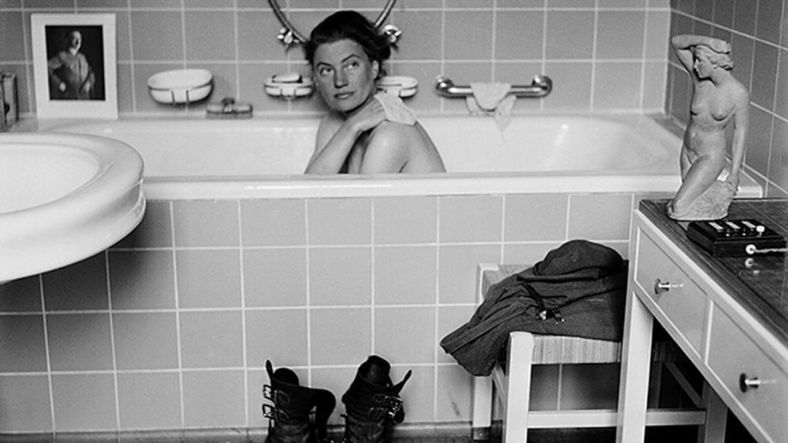
I hadn’t really been aware of Lee Miller before I went to see the film Lee, in which Kate Winslet plays her. At the end of the film, you see a selection of some of her most famous photographs including the one of her bathing in Hitler’s bath taken by her colleague, David E Scherman, as well as the scenes she witnessed at Buchenwald and Dachau, the mud of which is still on her boots which she has purposefully placed in front of the bath. Seeing them in the flesh, in a small side room, was incredibly moving. Not surprisingly, photography was not permitted in this part of the exhibition.

Available at http://www.bbc.co.uk

British Vogue was reluctant to publish her photos of the concentration camps, on the basis that people wanted to move on from the war, and whilst they published a few, American Vogue published a comprehensive spread of them in the June 1945 issue, including the most harrowing, under the title ‘Believe It’. Her work, particularly her war photography, was not widely known about until after her death when her son found her collection of photographs. She had given up photography, too traumatised by what she had experienced during the war, and taken up gourmet cooking.

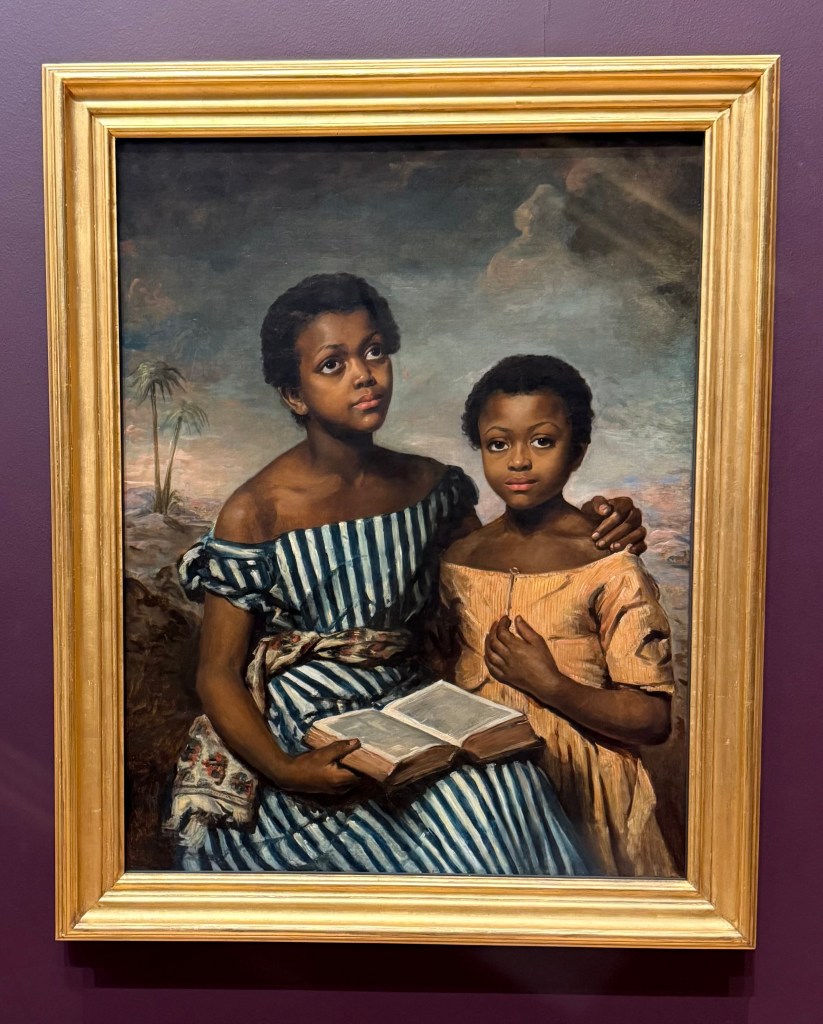
I finished off the day by having a look around the general exhibition and came across the subject of one of my favourite Fake or Fortune episodes (other than Frink’s Warrior found at an Essex car boot sale), Emma Soyer’s Two Children with a Book.

Last Minute

I made a last minute decision to go to Tate Britain on Friday to see the Ithell Colquhoun and Edward Burra exhibitions before they ended yesterday.

I didn’t enjoy the Colquhoun exhibition as much as I was anticipating, and I think it was because there wasn’t much surrealism.

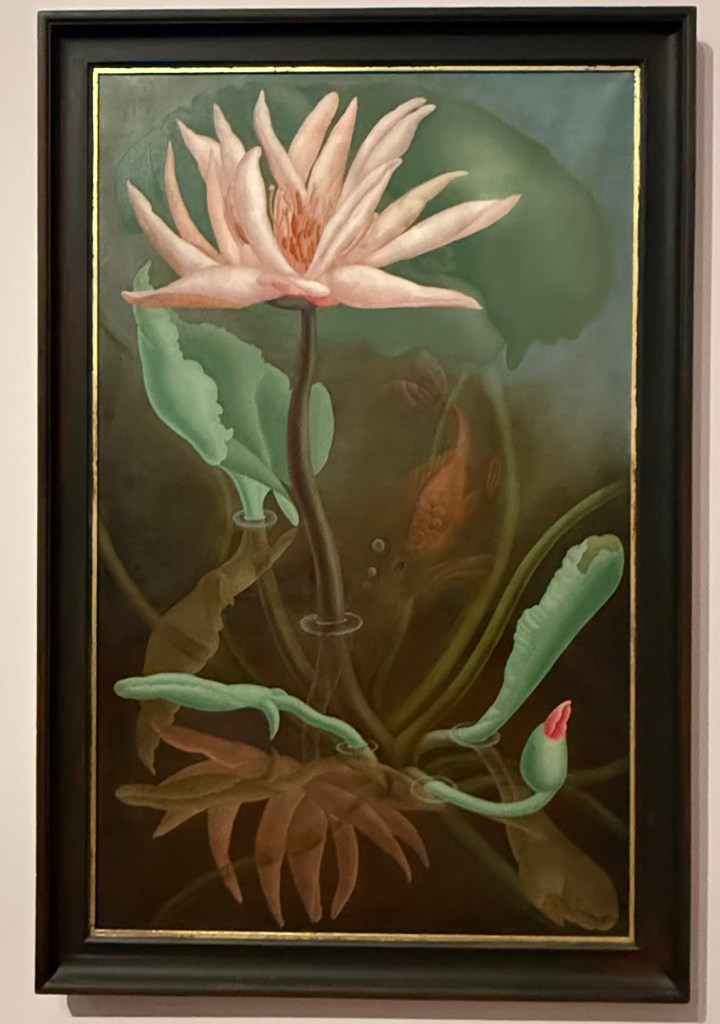
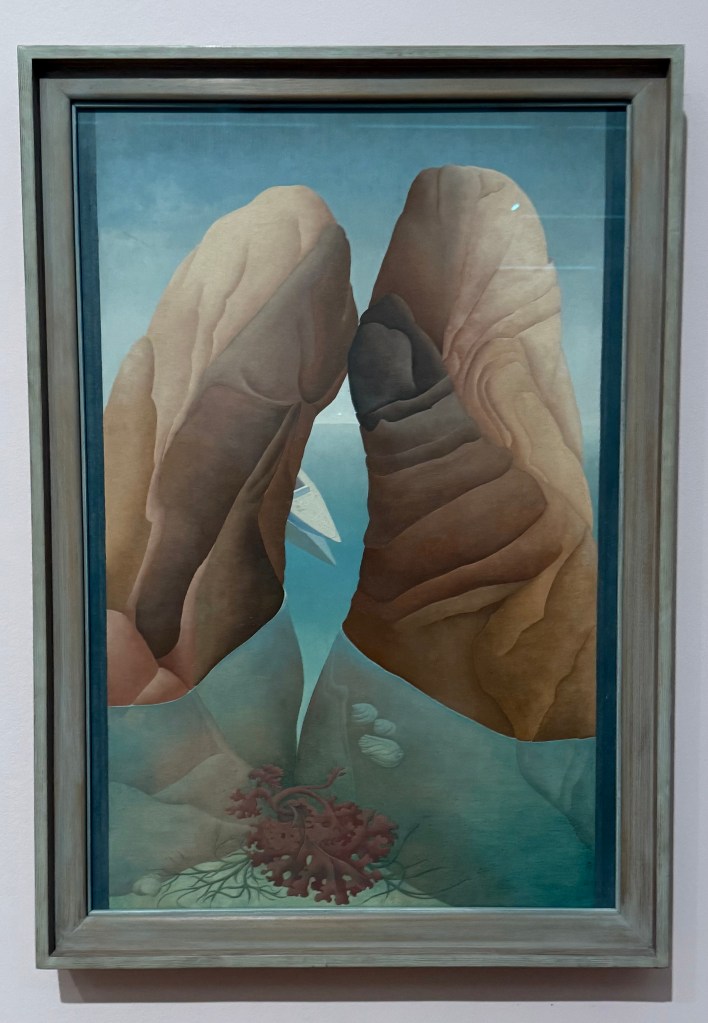
As I was standing in front of Scylla, a woman commented to me that she had been expecting it to be a lot bigger as it had been used so extensively in the marketing of the exhibition. I assume that she had thought that because the image was used for marketing purposes that it was an important work of Colquhoun’s and because it was important and of value, that it would be large in scale – the old perennial issue of size.

Scylla, 1938, oil on board, 91.4 x 61cm

‘It was suggested by what I could see of myself in a bath… It is thus a pictorial pun or double-image in the Daliesque sense – not the result of a dream, but of a dreamlike state.’
Colquhoun used the Surrealist process of decalcomania to produce a mirror image of randomly applied marks which she then used as a starting point for her work.

Gorgon, 1946, oil on board & its decalcomania counterpart of oil on paper

’I meant to paint a ‘Guardian Angel’ but the result of the automatism was so horrific that I had to call it a Gorgon instead’.

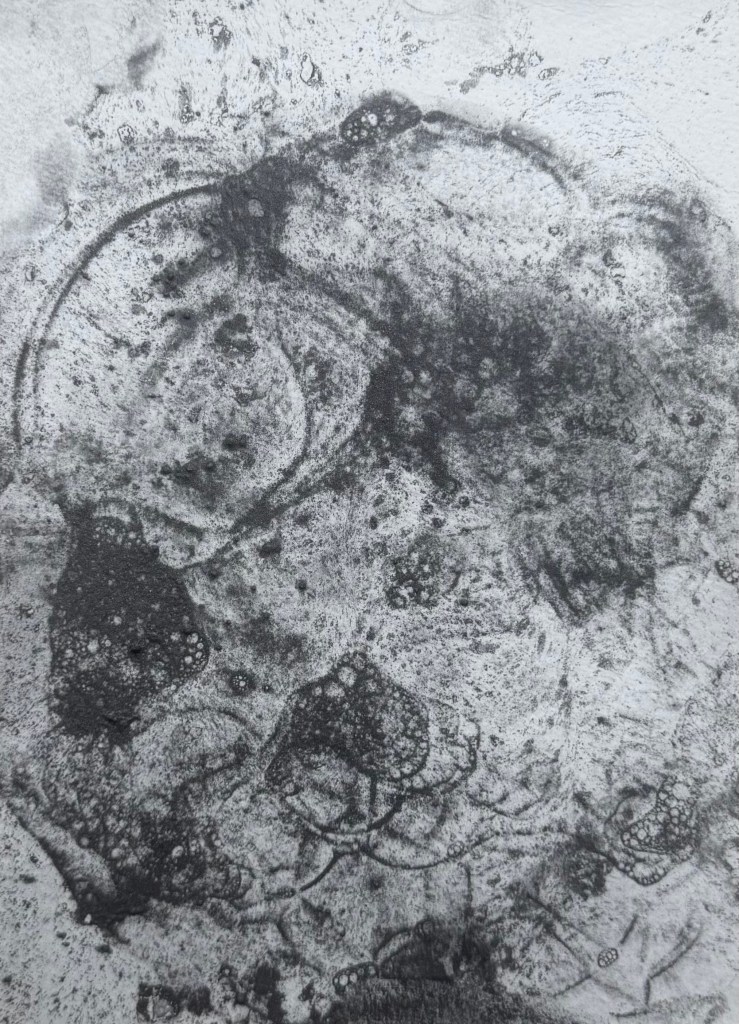
She also used a technique called parsemage, which involved submerging paper in water which had powdered chalk or charcoal on the surface.

These processes offered intuitive access to the unconscious mind, according to the accompanying blurb.

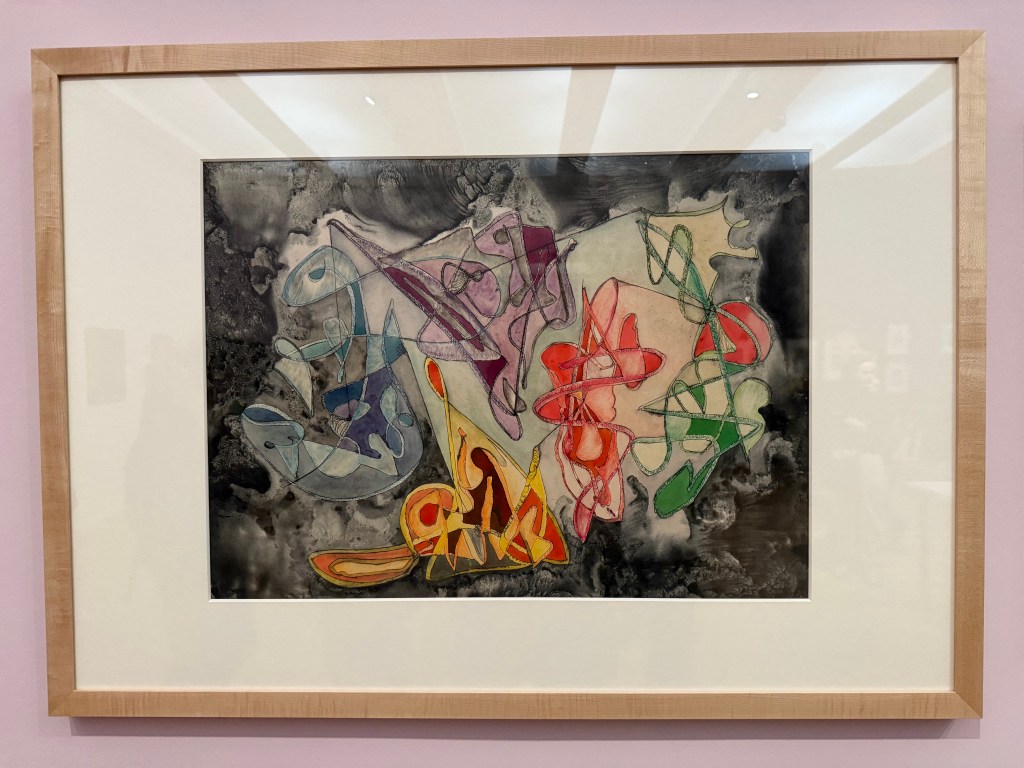
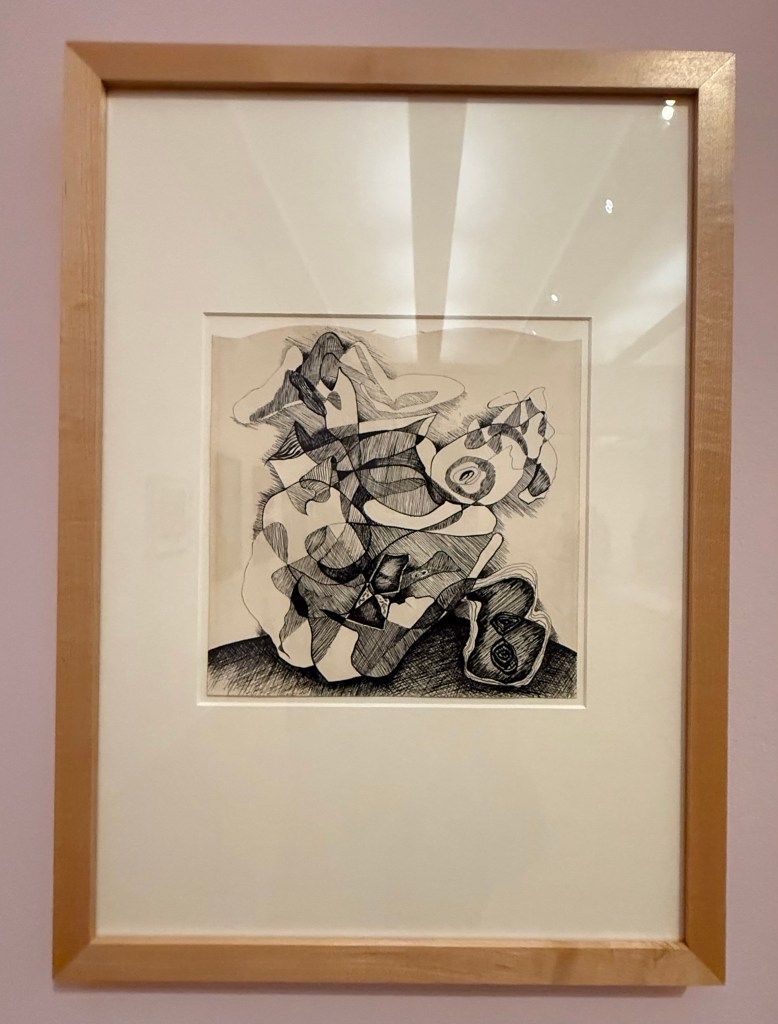
Colquhoun also utilised automatic drawing.

They remind me of my pen drawings in On Your Marks & Lines.

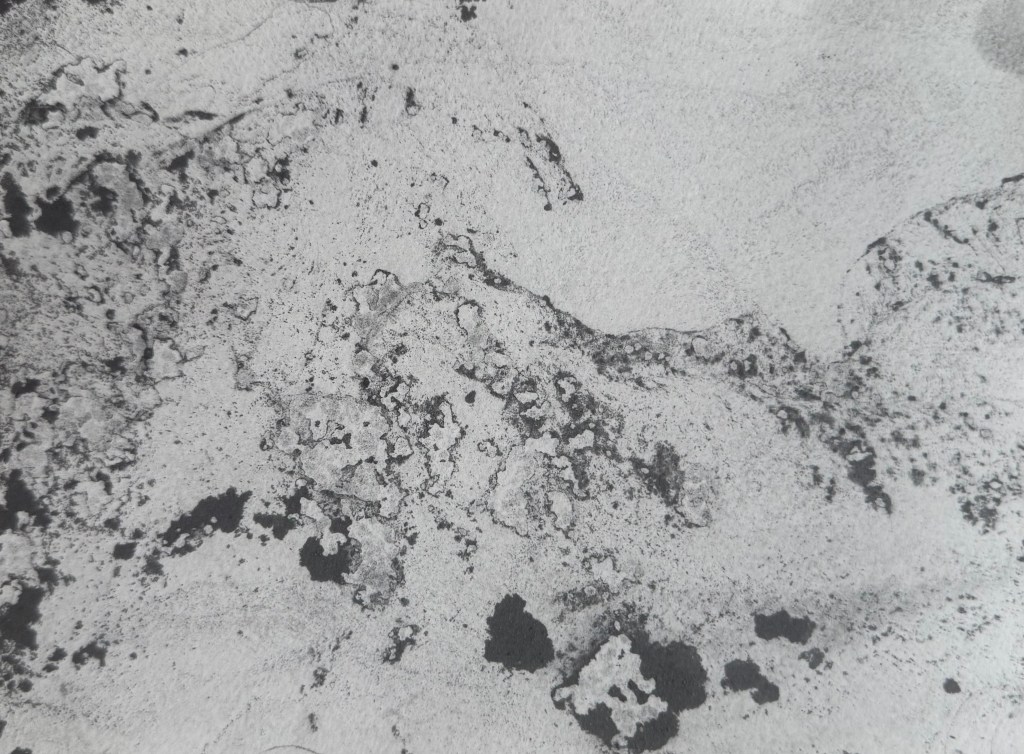
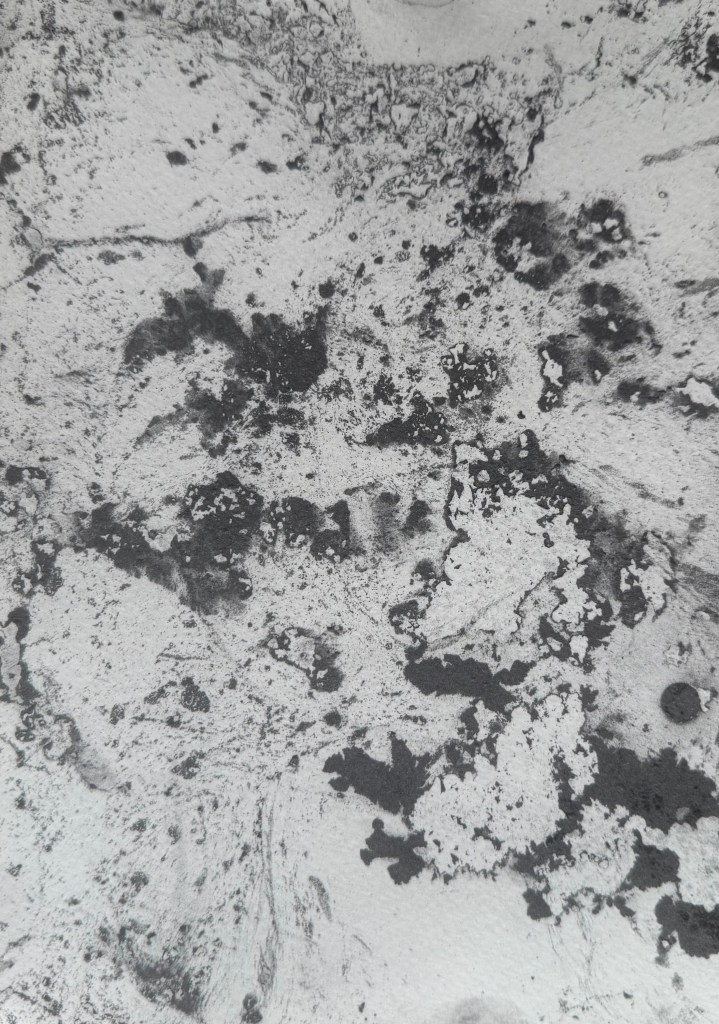
I decided to give parsemage a go – I think that you can do it with anything that can be ground to a dust – I used powdered graphite which has a slightly metallic quality to it. I was really pleased with the results.

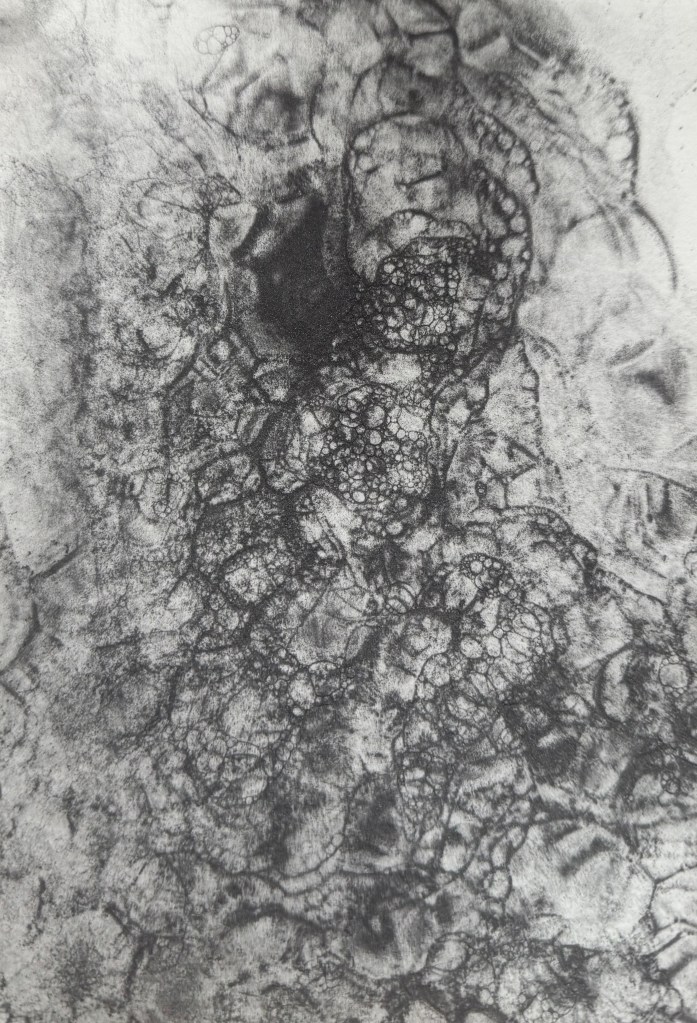
I then remembered a post on Instagram of a potter decorating bowls by blowing bubbles. I’ve used bubbles in wet cyanotyping before, so I decided to try it with the powdered graphite. I really like the delicate lines which were created and it was fascinating watching the effect of the bubbles popping – it reminded me of looking at cells under a microscope.

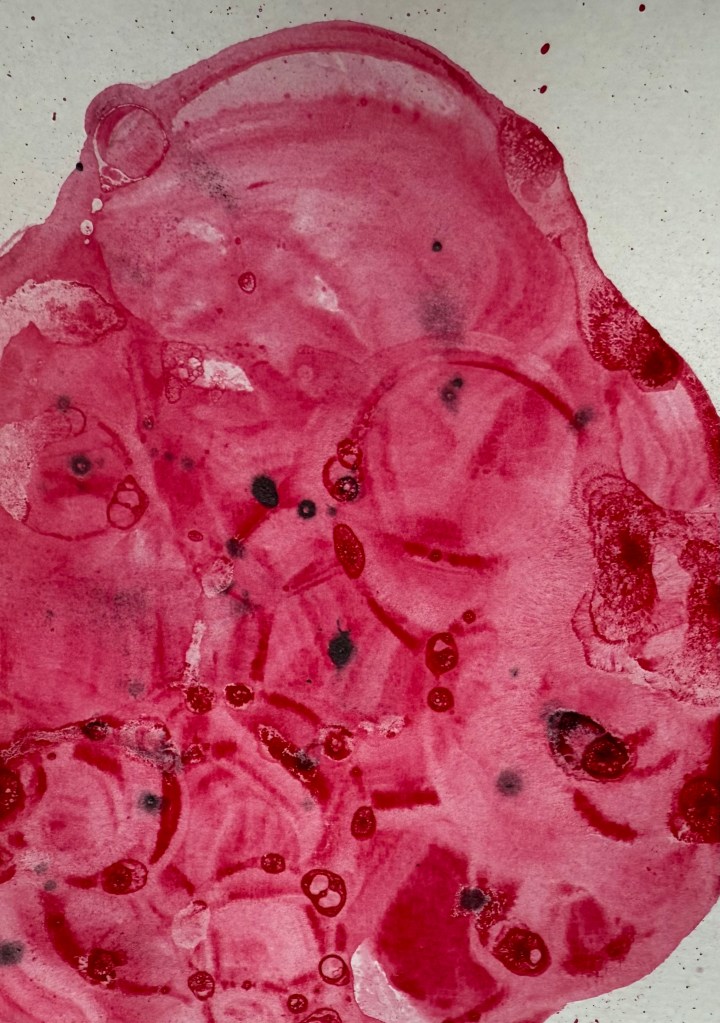
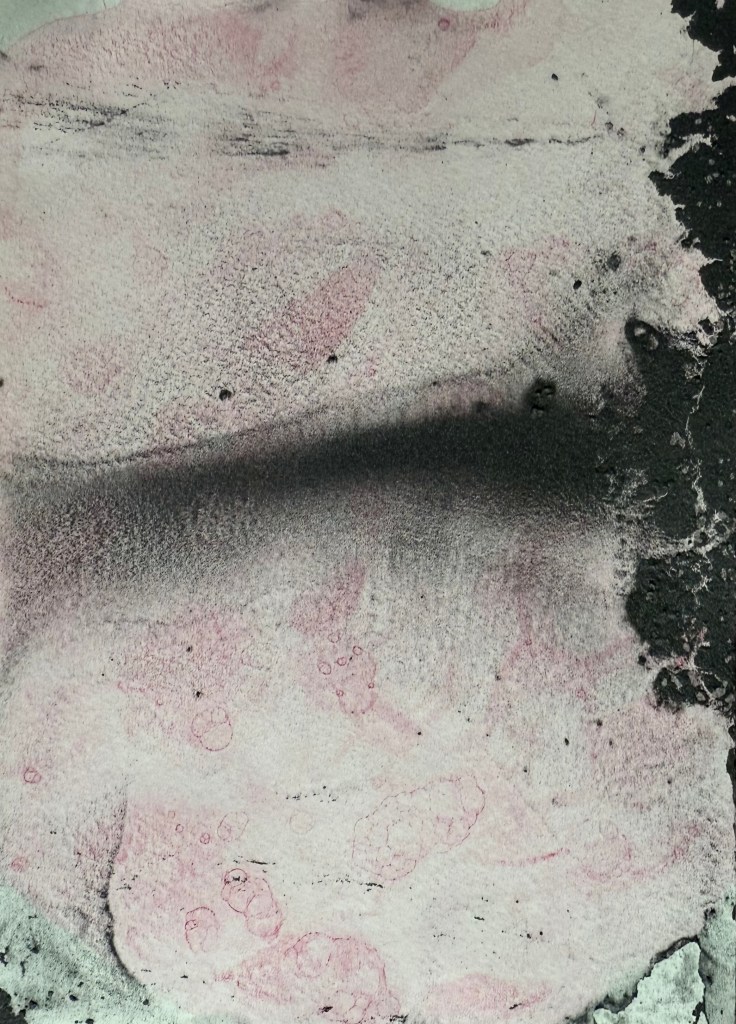
I then experimented with acrylic ink – maybe I should have realised beforehand – but it failed miserably. I wanted to try again with a water based ink, but I couldn’t find them. It might offer a more effective way of creating something akin to cells, than my previous attempts, so I’ll try again when I eventually locate them.

Summer I

Whilst I don’t know where the summer went, it seems that I have quite a bit to catch up on.

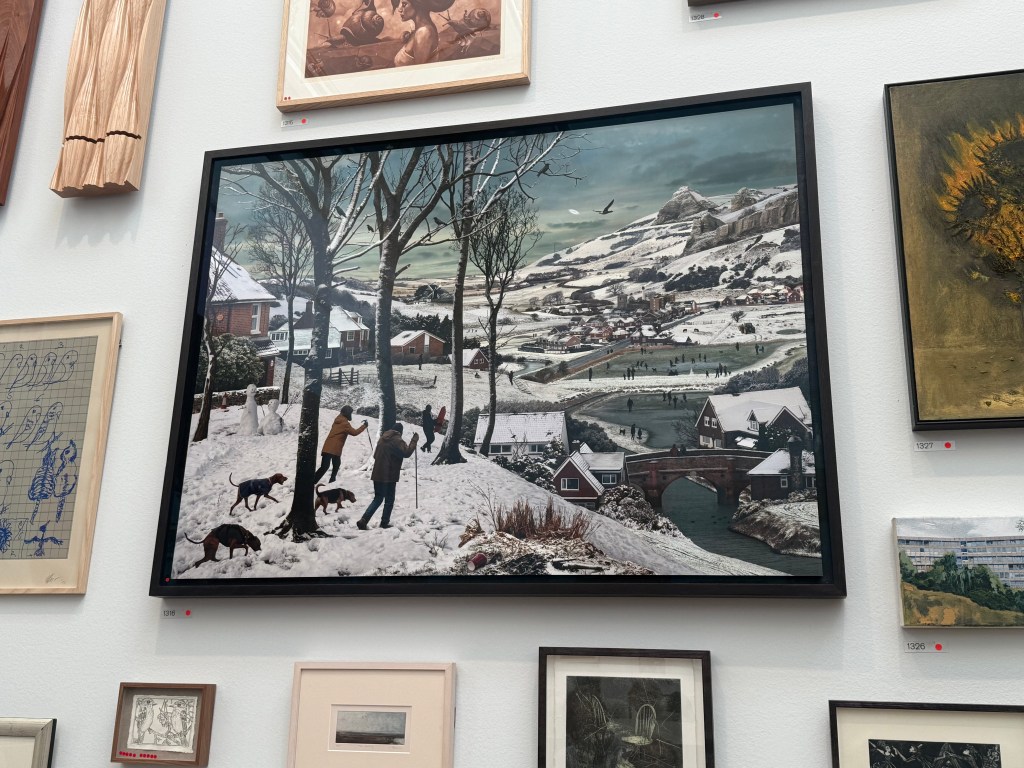
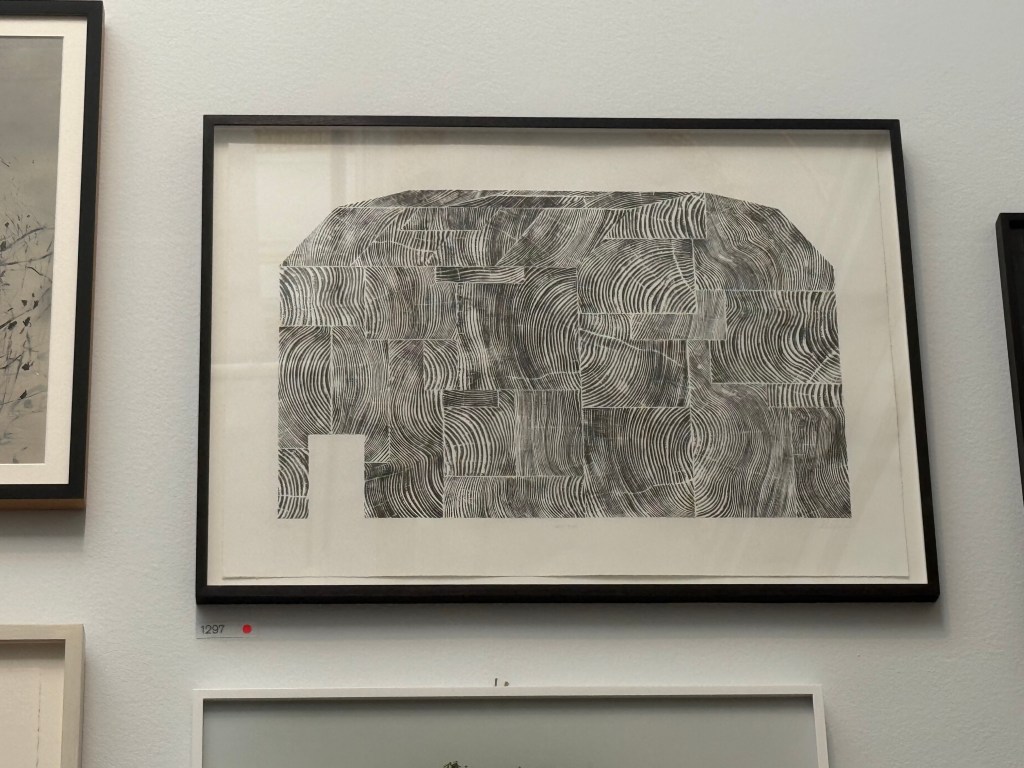
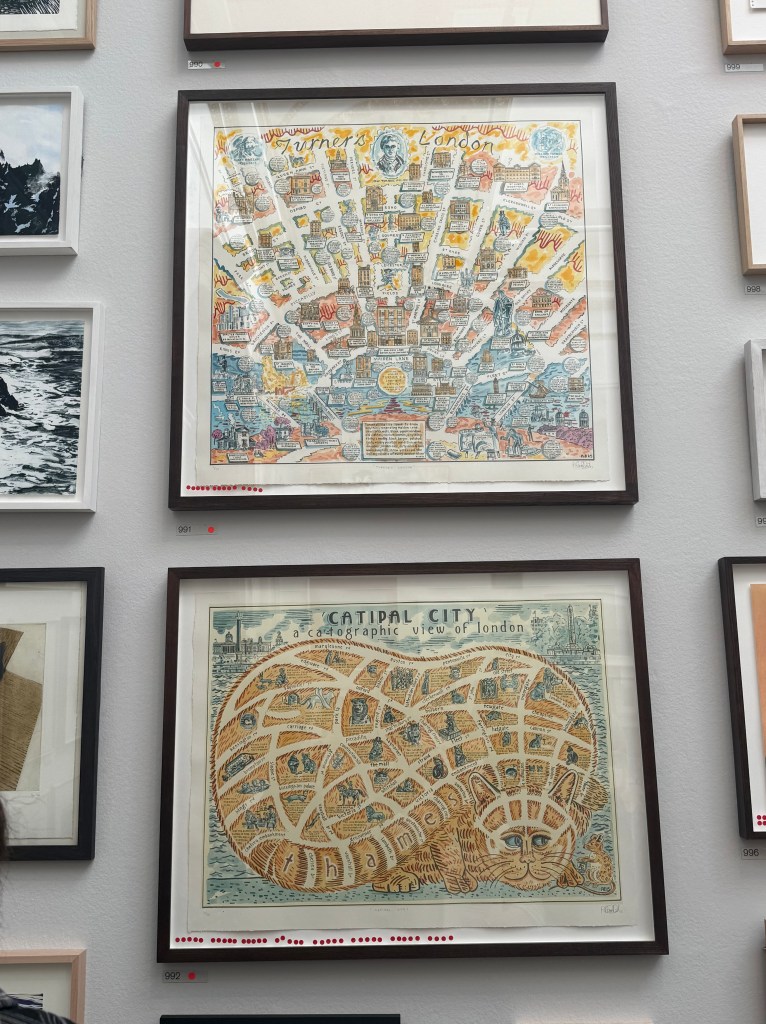
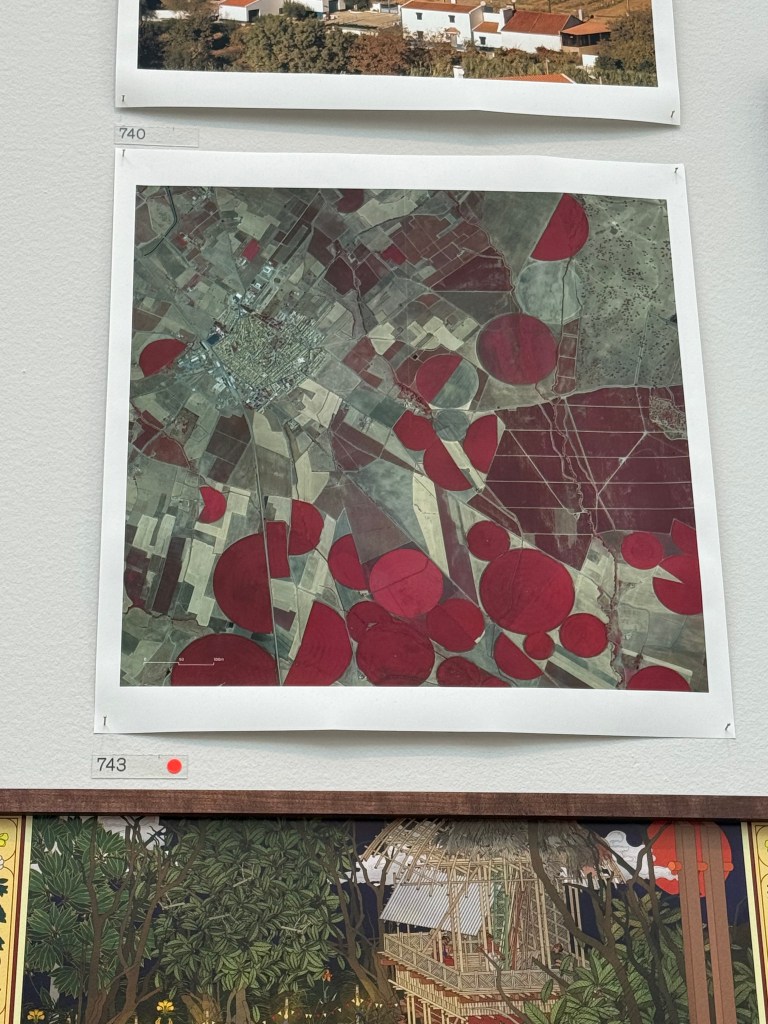
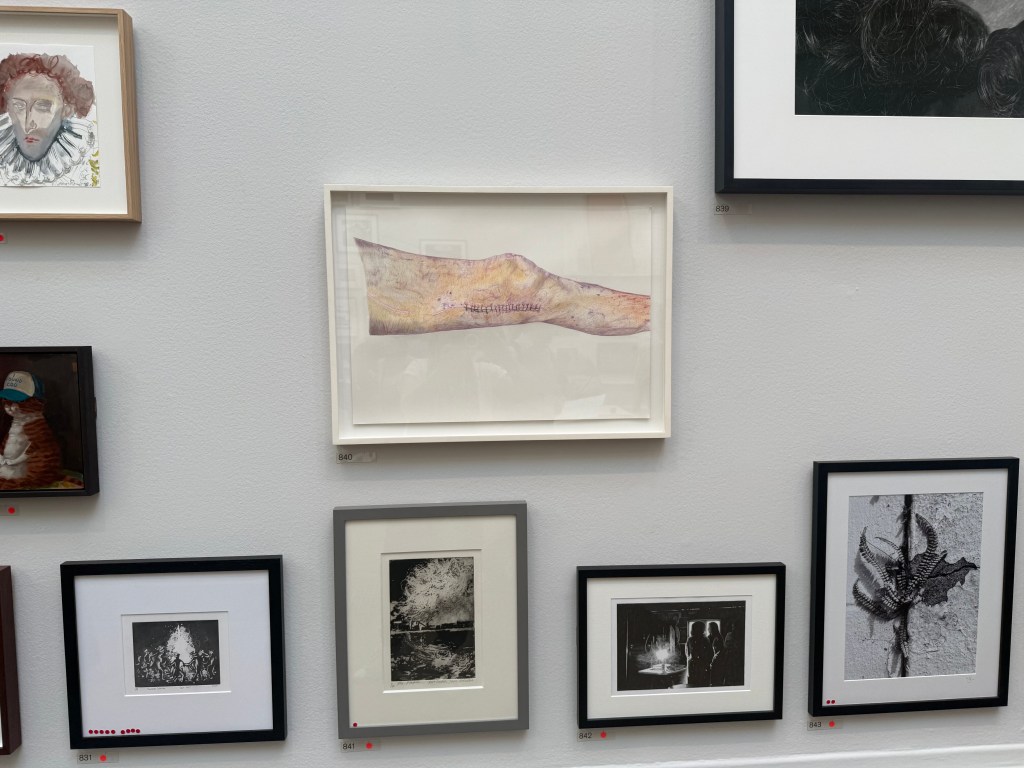
As is our habit, we went to the RA for the Summer Exhibition. I don’t think ‘A Die, A Log, With You’ was much missed. There was the usual mixed bag. I felt myself drawn to any pieces which bore any resemblance to maps or mapping.

I think I know what my entry next year will be, irrespective of theme.

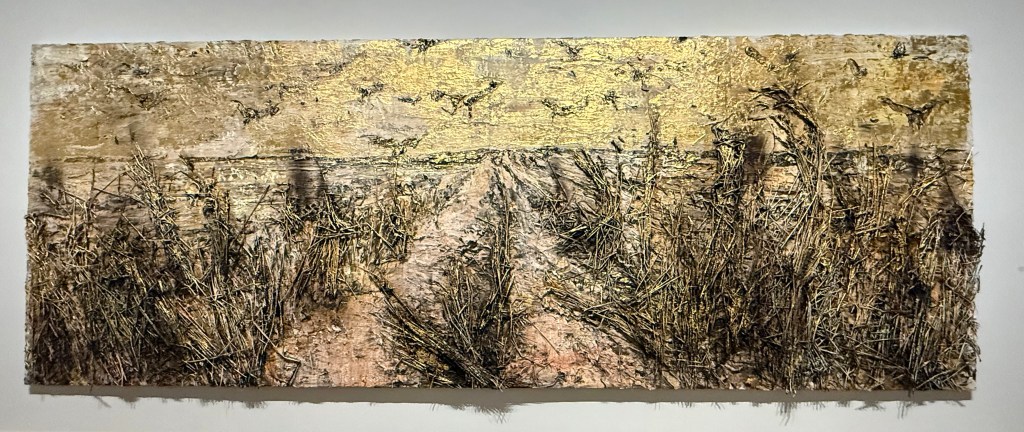
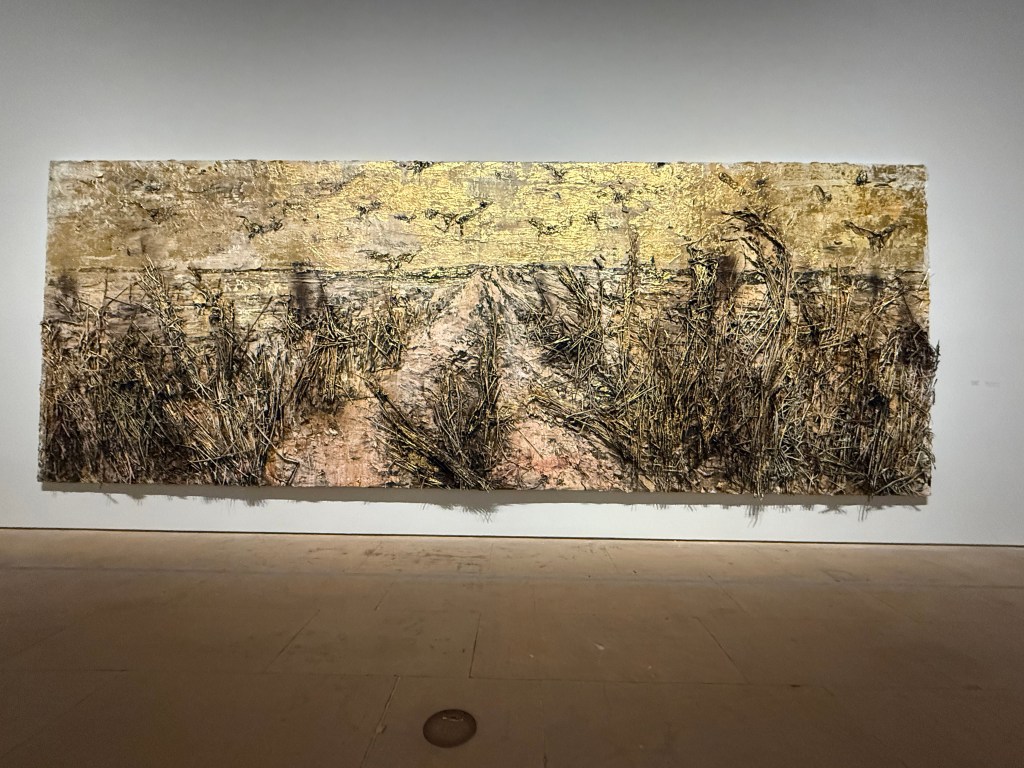
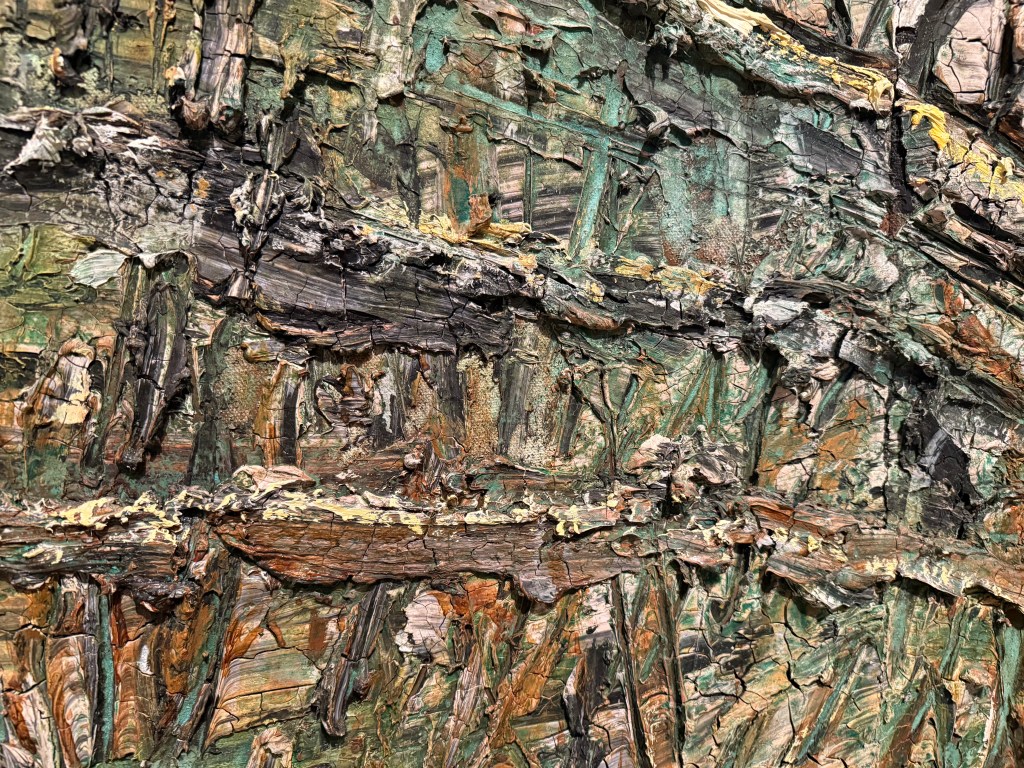
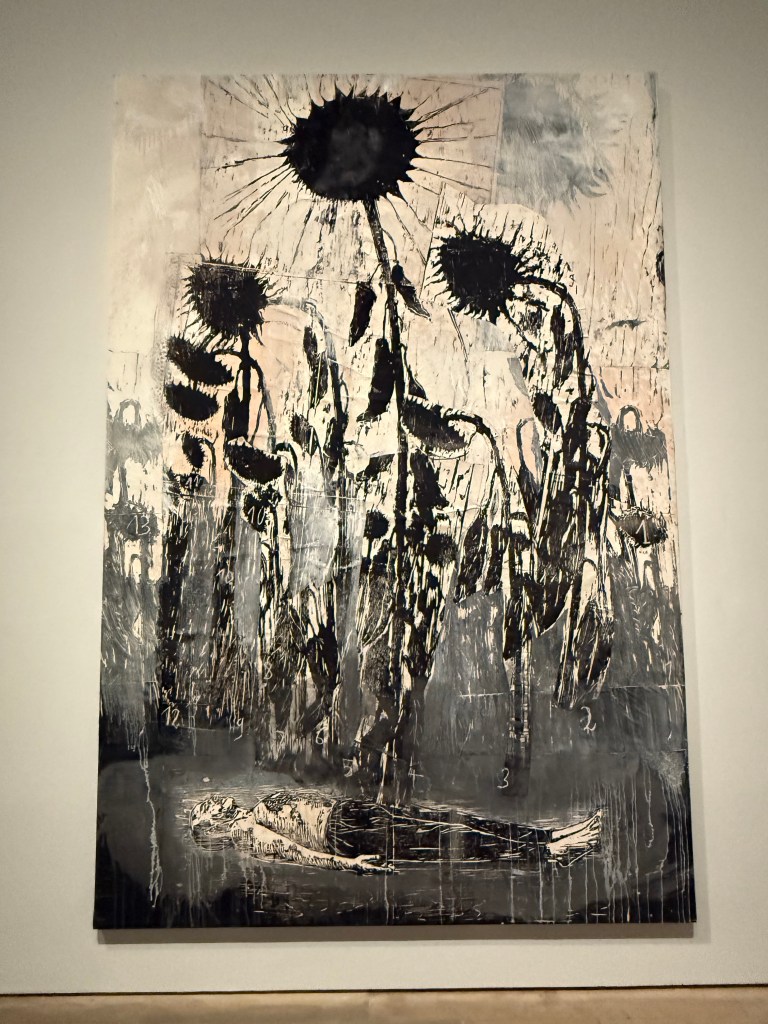
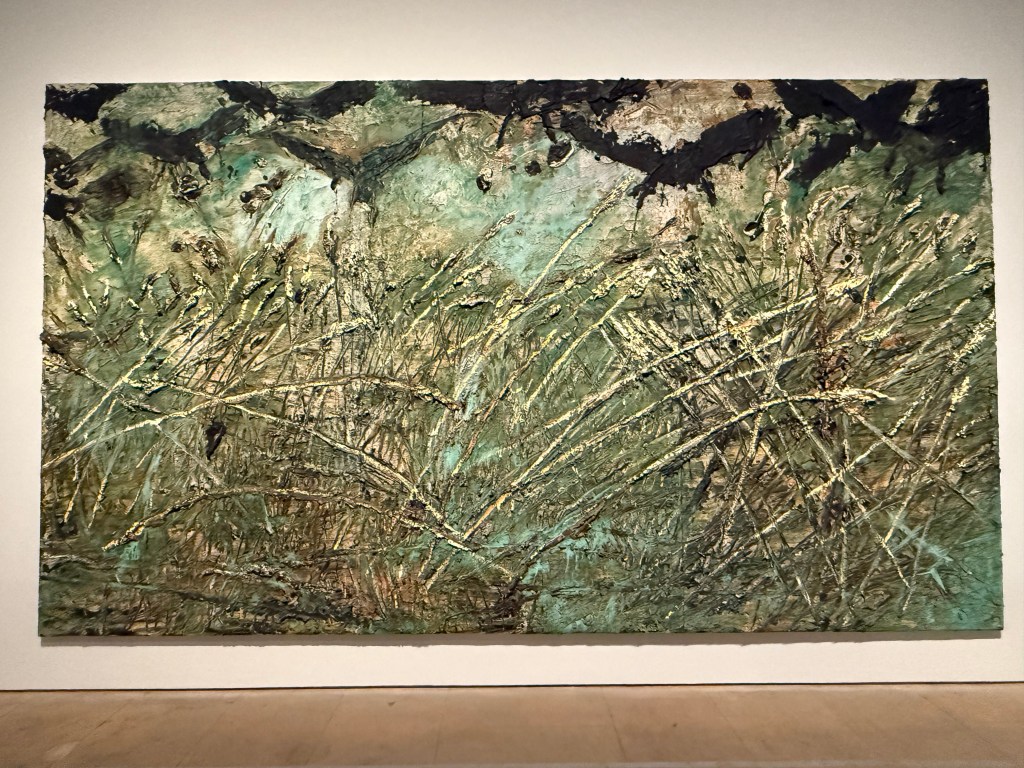
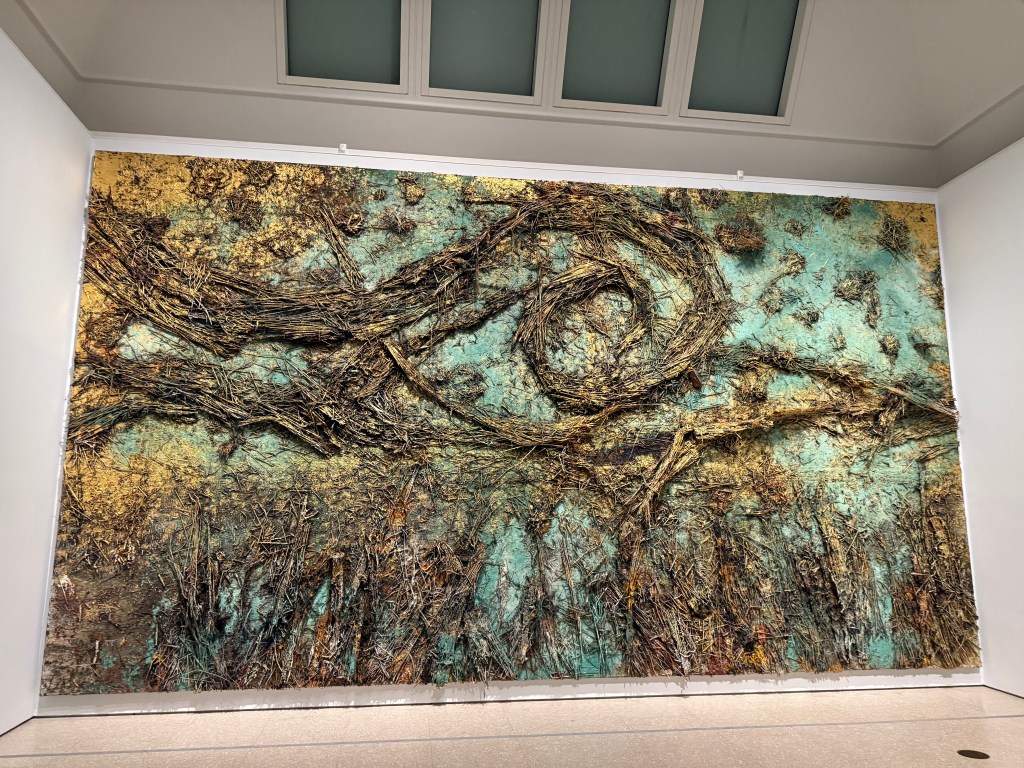
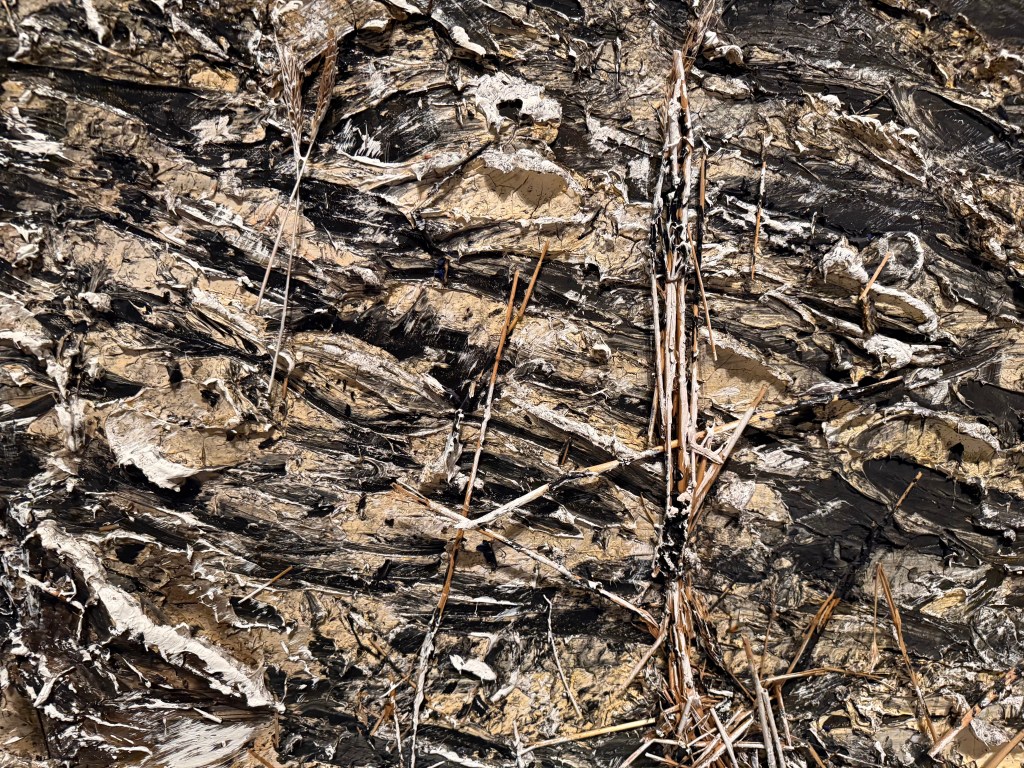
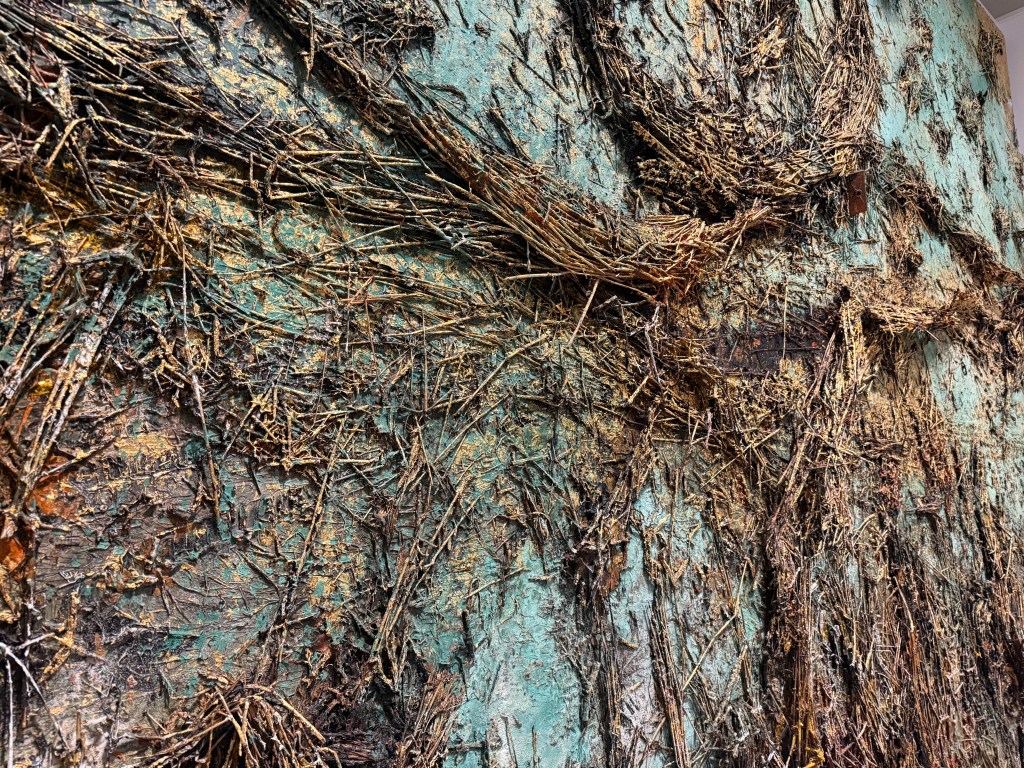
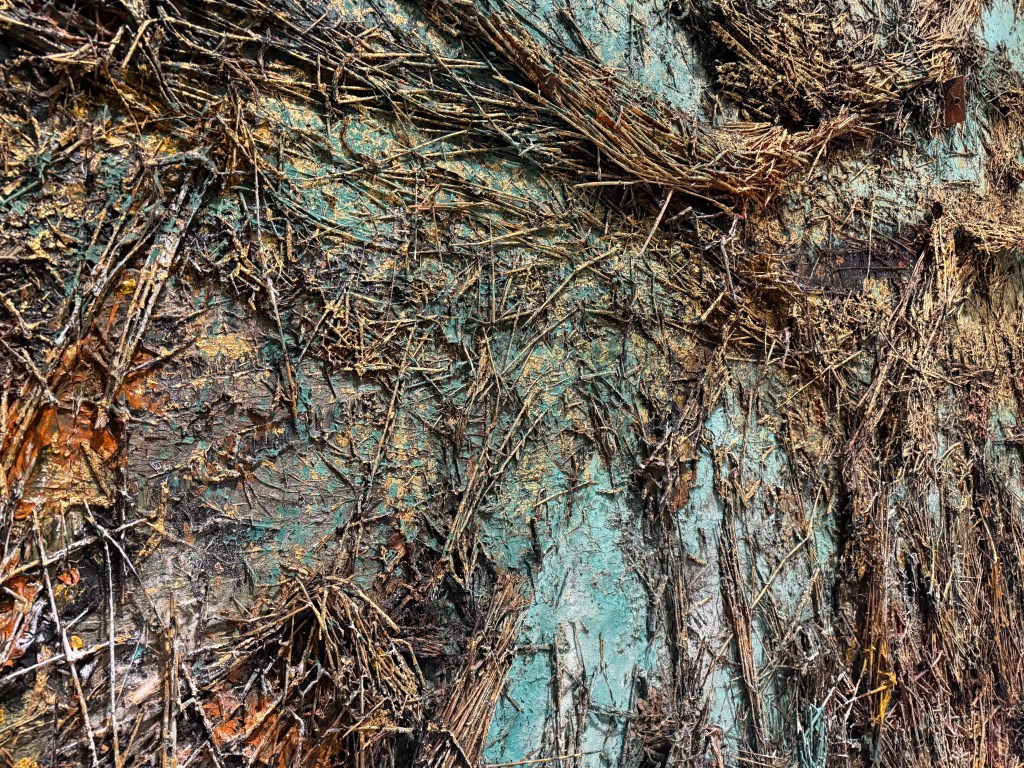
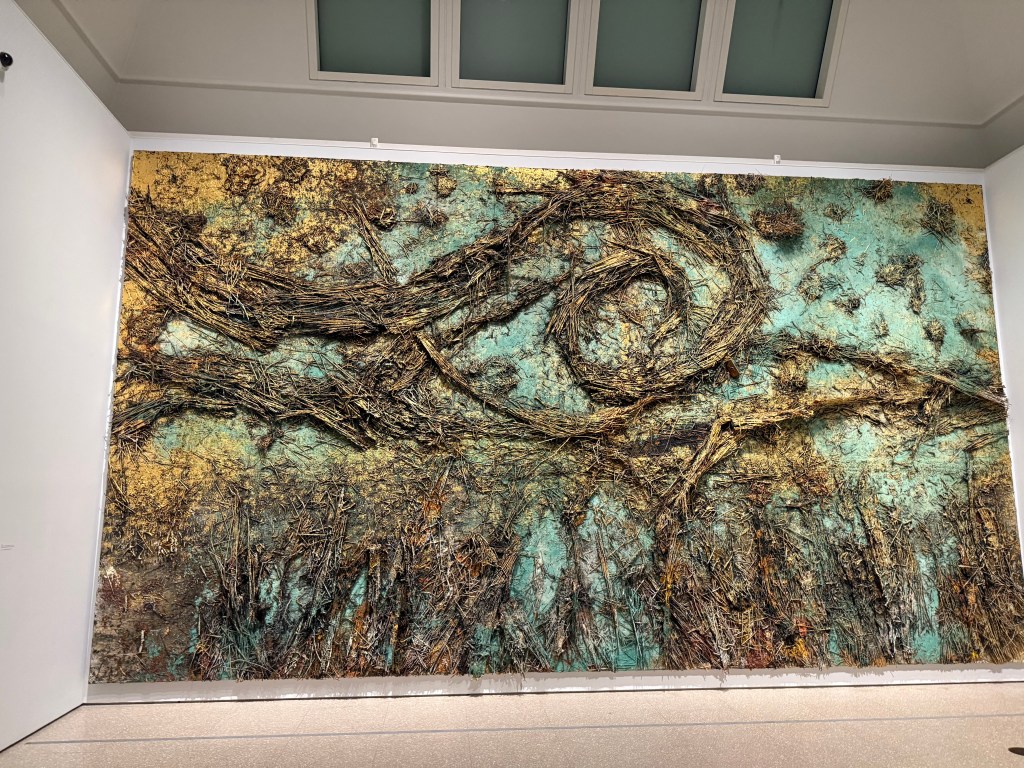
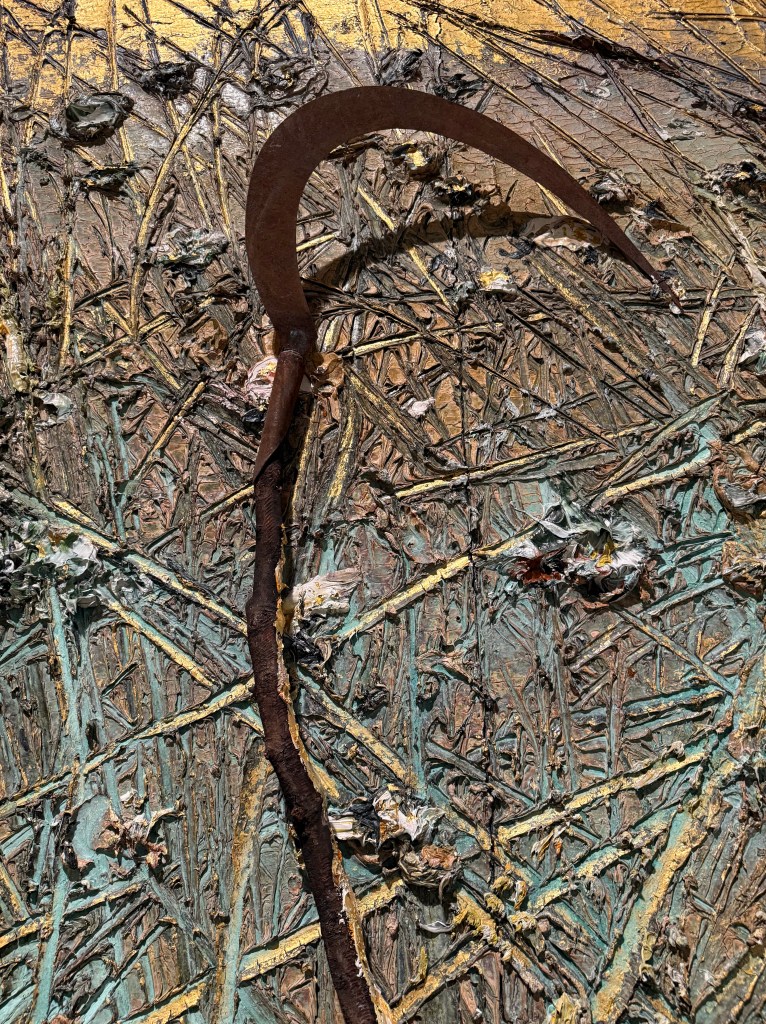
Then we went into the Kiefer/Van Gogh exhibition. I didn’t expect to enjoy it and I’m not sure that enjoy is the right word anyway. The works are huge and for once I didn’t really even register their size, because it was inherently obvious why they were the way they were. I sat in front of the first image below (Crows) for ages. In my mind the path leading up the centre was wet and muddy, the kind on which you can’t get any traction, putting in lots of effort but slipping and sliding all over the place and getting nowhere. Despite its warm colours, it felt bleak and desolate.

The works have a three dimensional quality with Keifer’s use of straw and clay. It’s as if he is reconstructing reality on the canvas, the surface of the works offering up their own landscapes, casting their own shadows. It must have taken ages for them to dry.

Arachnid

Whenever I go to B&Q, I always want to come home and do some DIY; whenever I visit a beautiful garden, I always want to come home and sort out our garden; whenever I go to an exhibition, I always want to come home and make.

I’ve been feeling in need of a pick me up recently, and so yesterday I headed into London on a hot, Notting Hill Carnival, Bank Holiday Monday to catch Louise Bourgois’ ‘Maman’ on its last day at Tate Modern, the very space for which it was commissioned back in 2000. There’s no doubt that it’s impressive at 9m tall – again, I ask myself whether it’s all about the size, but I think any spider larger than real life would have an impact. I had an overwhelming urge to touch it, but resisted in light of the ‘Please Do Not Touch Sign’. I also found myself wondering how they got it into the building, memories of Johnny Vegas’ struggles coming to mind.

It was well worth the trip, a rare chance to see a piece in the flesh in the very place for which it had been made. Having said that, I’ve seen some images of it in a landscape, which I find particularly effective.

Tate Modern’s website on ‘Maman’:

Louise Bourgeois started making sculptures of spiders in the 1990s. This version is her biggest spider. Its title, Maman, is French for mummy. The artist said spiders reminded her of her mother: ‘Like a spider, my mother was a weaver. My family was in the business of tapestry restoration, and my mother was in charge of the workshop. Like spiders, my mother was very clever … spiders are helpful and protective, just like my mother.

I’m a bit behind with things at home, and we’re starting to amass some really impressive cobwebs. I watched as a flying insect became entangled in one of them; in a flash the spider came from nowhere and quickly got to work wrapping it up.

I’m not sure that spiders are clever as such, but they do have great skill. I don’t really think of them as being helpful and protective: they set traps that you can’t see, they ambush you and then swaddle you up until they consume you. Although, I don’t have a problem with them, as they catch flies etc, as long as they are not where they’re not supposed to be, such as on the bedroom ceiling above my head, or in the bed.

Lifelong arachnaphobe, Primo Levi, in his essay ‘The Fear of Spiders’:

“The spider is the enemy-mother who envelops and encompasses, who wants to make us re-enter the womb from which we have issued, bind us tightly and take us back to the impotency of infancy, subject us again to her power…”

I’ve tried not to be either of those spider mothers. I’ve tried not to be suffocating and I’ve tried to resist the urge to fix things. I’ve definitely failed; I often tell my daughter that I’m trying my best, and, when she’s older, not just to remember the times when I’ve not been at my best, like I seem to have done with my own mother. It’s that negative bias again, I suppose. I’m now actively remembering all the times when she was kind and caring, supportive, and all the laughs we had together, which by far outnumber the not so good.

The Eyes Have It

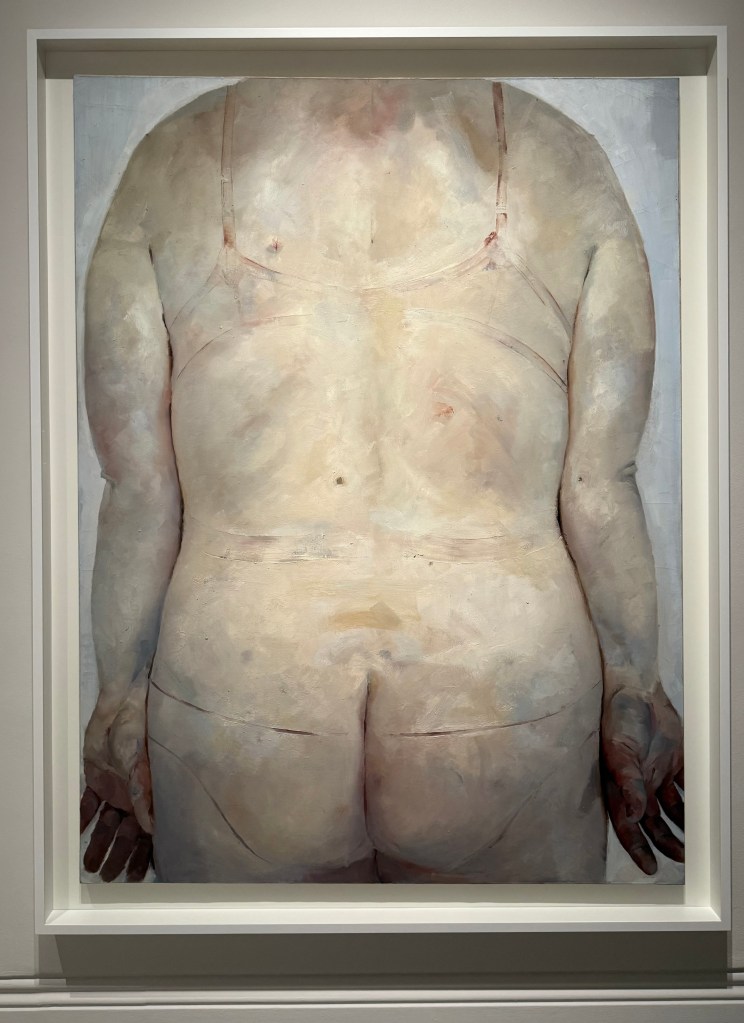
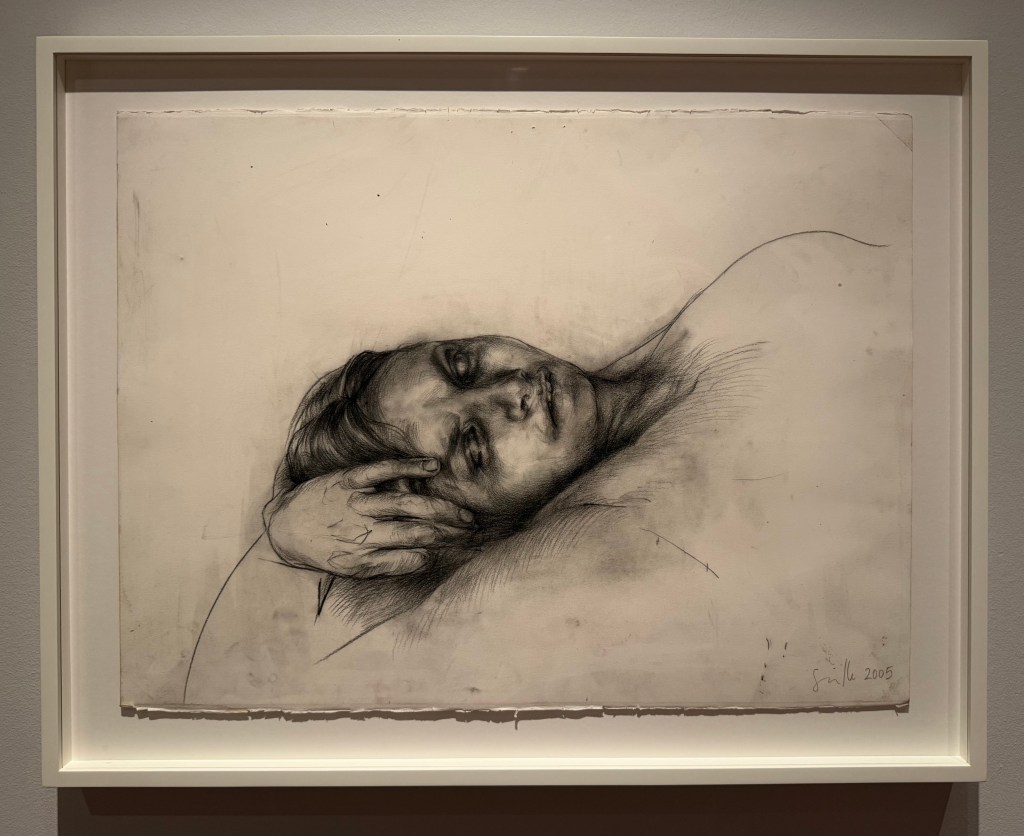
I went to see Jenny Saville’s The Anatomy of Painting at the National Portrait Gallery a few weeks ago. I went thinking that I admired her work; I came out knowing that I only liked some of it, mainly her early work. It was Michael Craig- Martin all over again.

Her canvases are huge. It made me wonder whether it is all about size. If they were smaller would they still have the same impact? If something is large do we immediately perceive it as being impressive? I always thought that large meant there was nowhere to hide, but now I’m not so sure; maybe it’s just a case of first impressions.

I love the way she paints flesh, in her earlier work that is. I look at my skin and I see those colours, usually with the advent of summer, with a sigh and a determination to keep as much of it covered up as possible, no matter the heat. I have those imprints once I have relieved myself from the claustrophobia of overly restrictive clothing. I can relate.

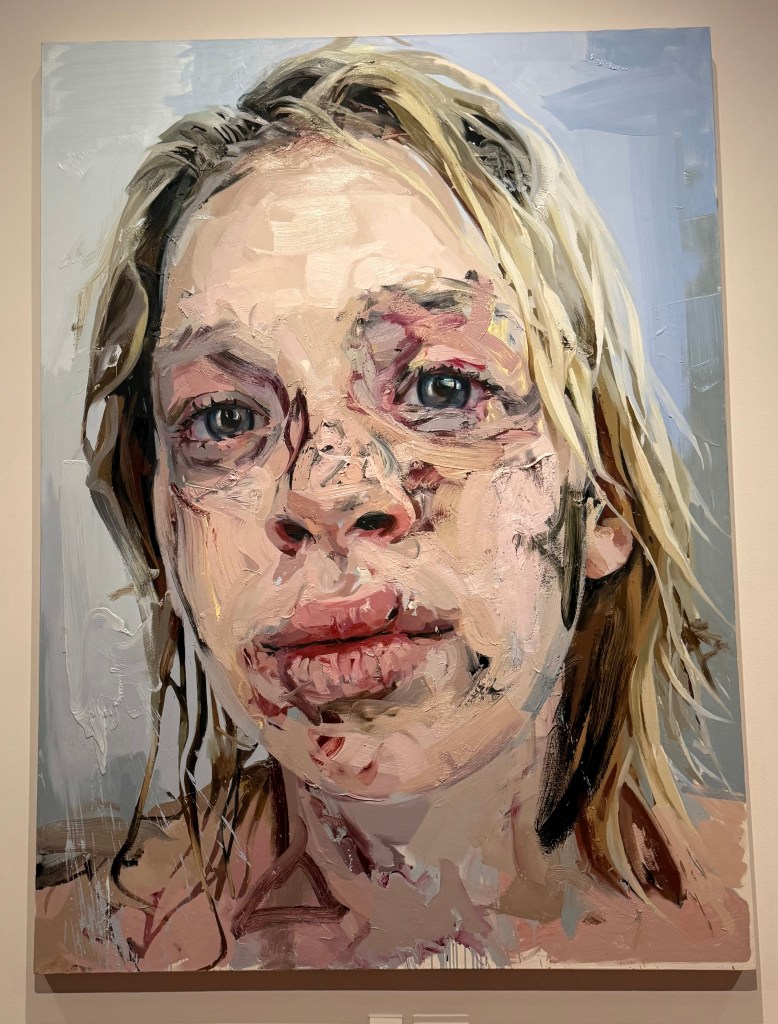
And then there’s the work which comes later, the last image being an example, at the more restrained end of the spectrum. I can’t connect with it; I think to myself, why paint such wonderfully realistic eyes and then treat the rest in the way that she has, bordering on abstract figurativism? I feel like she’s stuck on a fence; she wants to embrace the abstract approach but still wants us to know that she can paint a good eye. I find it jarring and slightly irritating, probably because it resonates with my own feelings of indecision.

Last night I was channel surfing, and came across Alan Yentob’s last interview which he made in March this year, two months before he died. I’m a great fan of his Imagine series; you can tell that he has a real interest in people. The interview is with Jenny Saville, on the eve of the opening of her Gaze exhibition at the Albertina in Vienna. It is only 10 minutes long.

During the interview, in which it rather ironically takes her an age to make eye contact with Yentob, Saville comments that she likes painting eyes; think of all the visual information and memories which go through this structure, something she has been intrigued by since she was a child. Making her heads so large allows her the freedom to experiment with the surface of the paint. From a distance there is the holistic nature of the head, but as you get closer the surface is heightened. She confirms that she is committed to figurative painting but is experimenting with how she can get realism in the face which goes beyond a simple rendering. Whilst looking at one of her large heads, she comments that there is something psychological going on in that you are convinced by the head because of the eyes – something happens in your brain that allows you to piece it together, and as you get closer to it you go on a journey. So she’s using the figurative to help the viewer make sense of the abstract?

That’s explains a lot, but I’m still not convinced by the eyes.

Late Night Ramblings

It was a long day at the hospital yesterday and once everything was sorted and my daughter was settled in bed, I needed to do something to switch off.

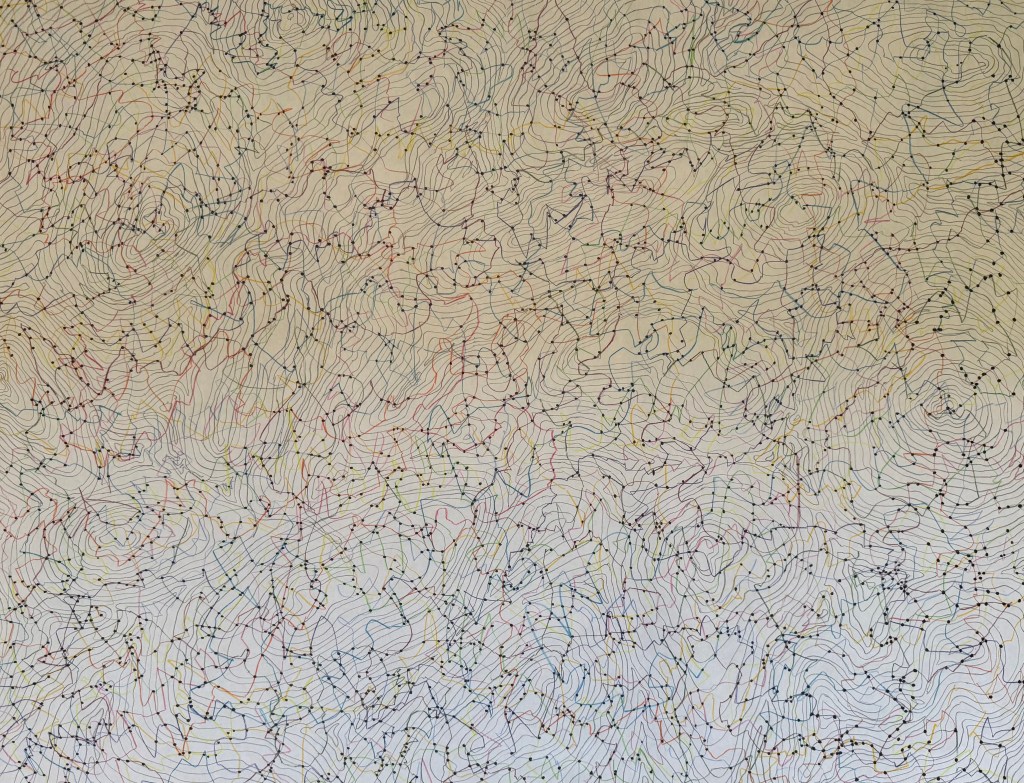
Some wandering lines in different colours on flip chart paper – I quite like the flimsy quality to it. Then dotting the connections, many of which I’ve missed I’m sure but my eyes were getting tired. It was brainless activity, but incredibly soothing. That done, I decided to incorporate some of the contour-like lines I have previously used in my doodles.

Add in some grid lines and the result is something akin to a map. But what to do next? How can I incorporate this into something else or develop it further? I decided to leave it for now, whilst I still like it, before I do something I’ll undoubtedly regret but which is all part of the experimental process.

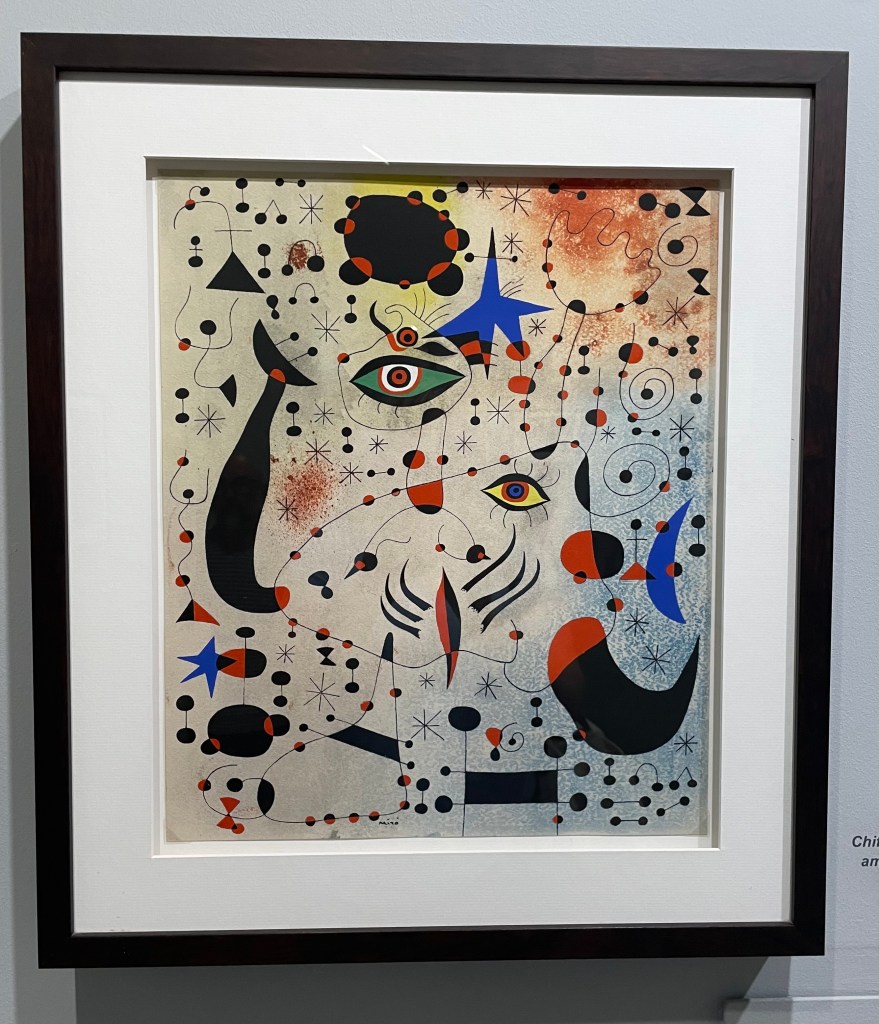
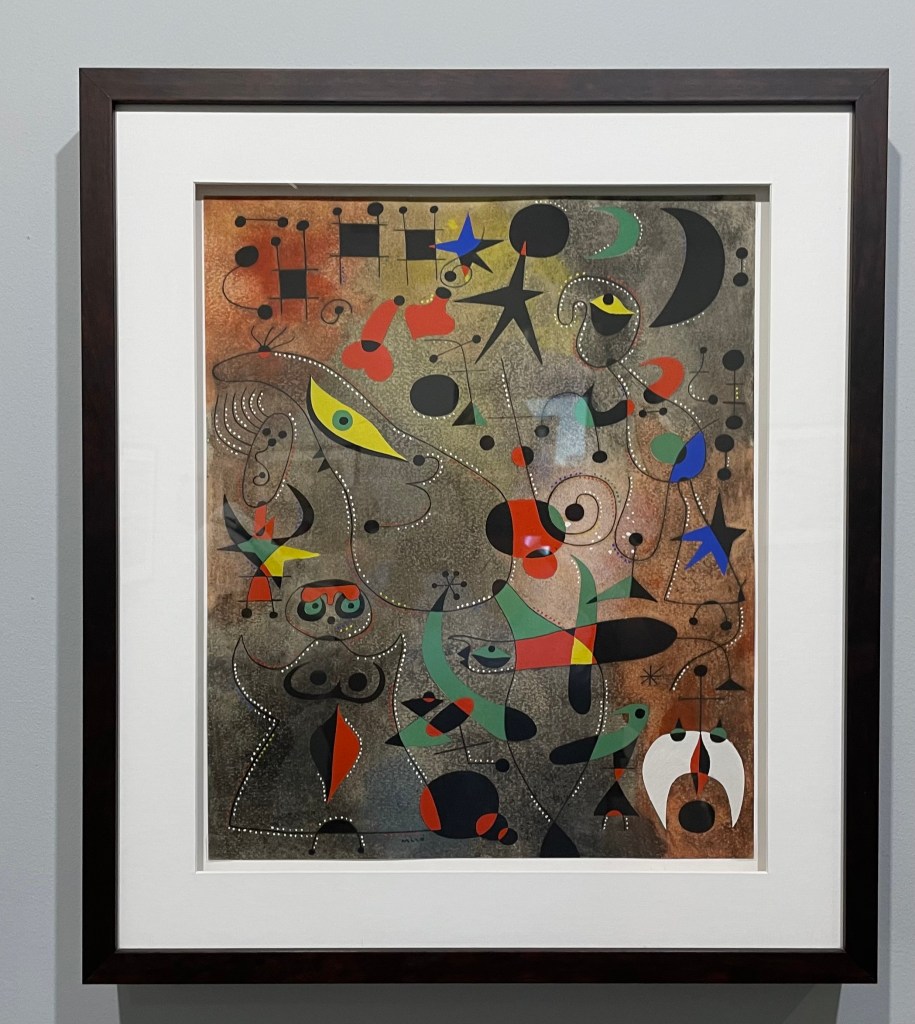
I’ve reflected on it further today – I had a look at some ordnance survey maps (incidentally OS is half an hour down the road from me in Southampton) to think about symbols. I remembered last year in Mallorca and the Miró/ Picasso exhibition at Sóller train station. There was a key showing the symbols Miró used and their meanings.

I didn’t think that I liked Miró, but then I hadn’t seen any of his work in the flesh. They were extraordinary and thinking about it now full of map like qualities; symbols in a spatial relationship, a visual expression of his inner world. Which now makes sense, considering these ones are part of his ‘Constellation’ series!

To The Manor Born

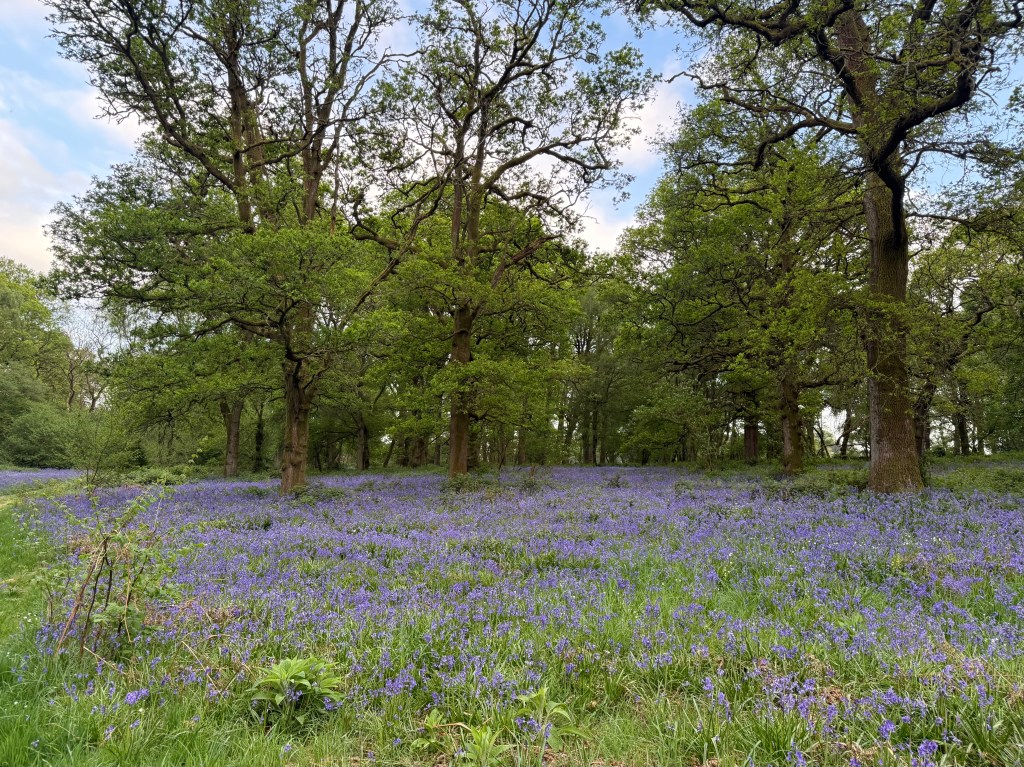
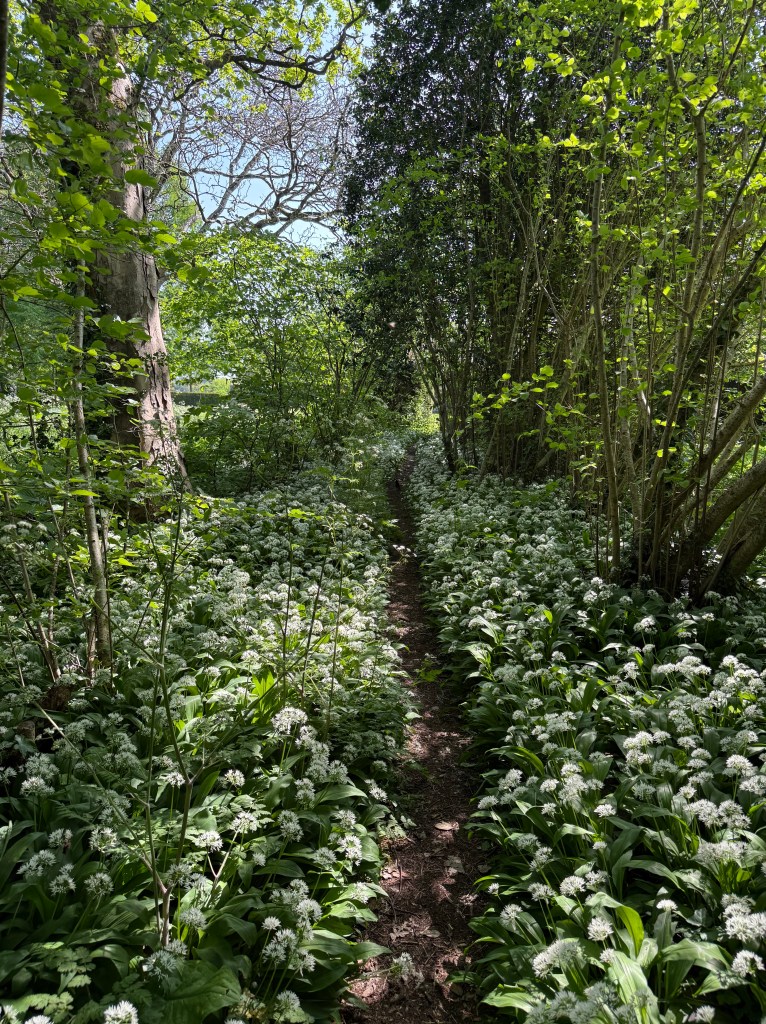
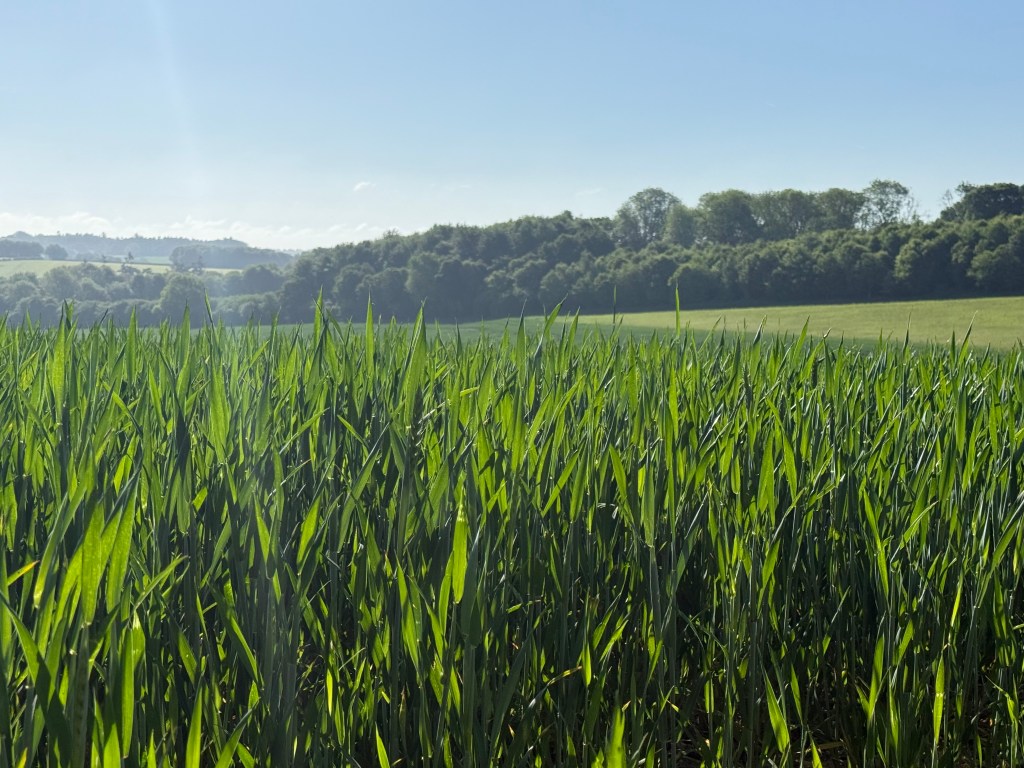
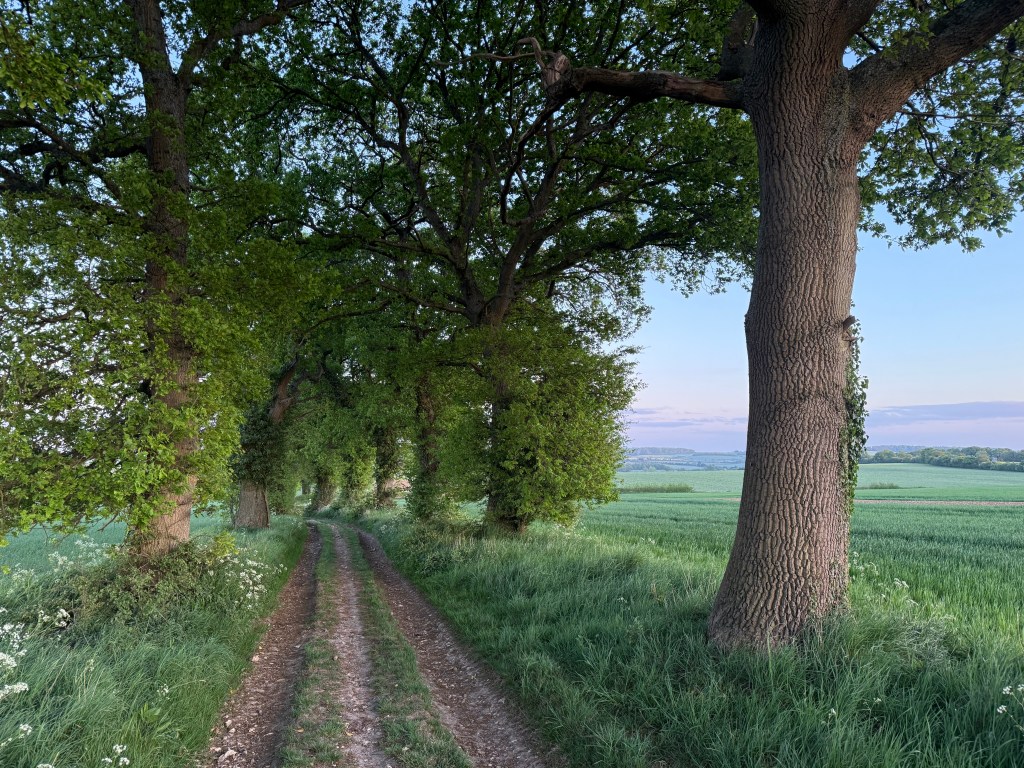
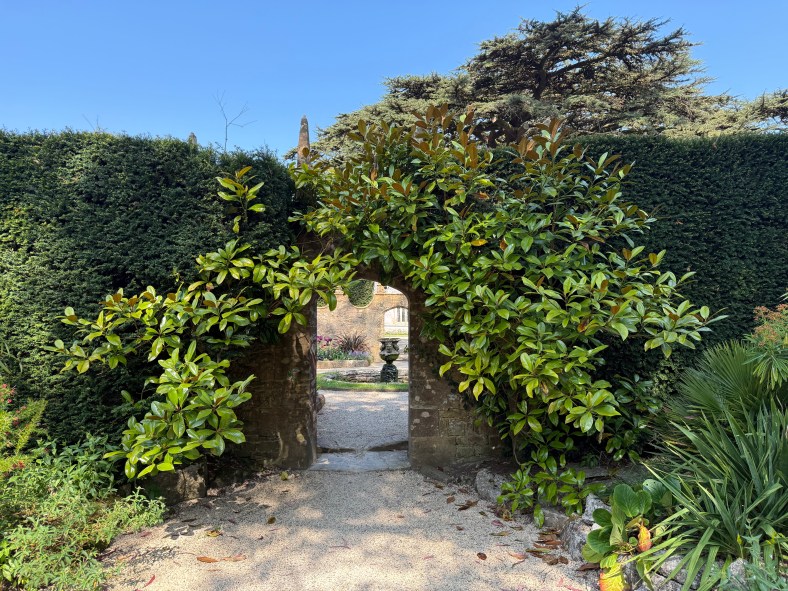
I love this time of year. The hedgerows are full of hawthorn blossom and clouds of cow parsley, there are blue carpets of bluebells in the woods, if a little threadbare by now, swathes of flowering wild garlic, crops growing in the fields and trees in full leaf.

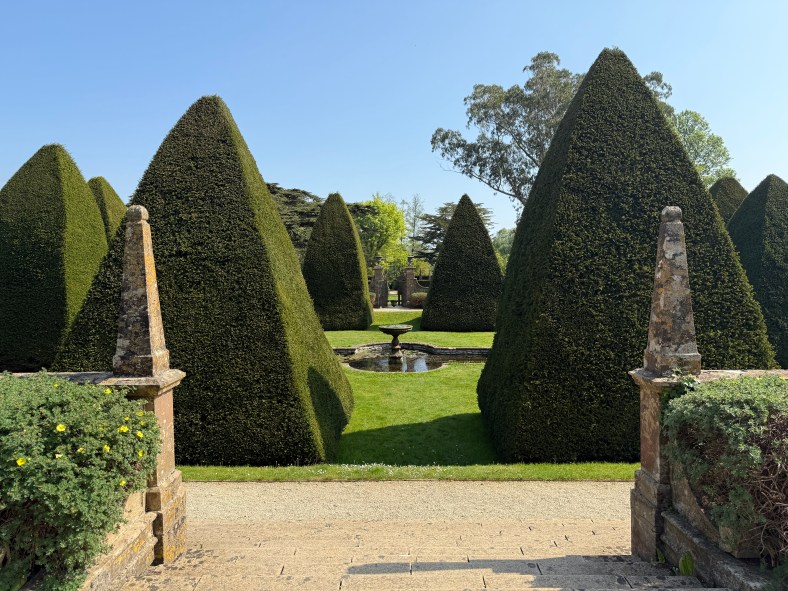
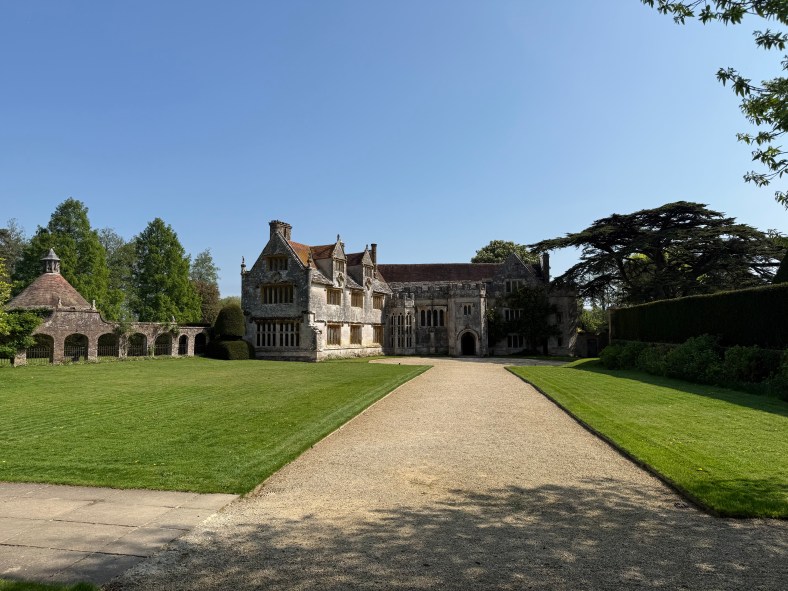
I took my daughter back to uni in Exeter a week or so ago: a lovely drive down the A303 past Stonehenge, under the mystical big skies of Wiltshire and the rambling green fields of Somerset and Devon. On the way back I took the alternate route through Dorset along the Jurassic Coast and stopped off at Athelhampton House, a Tudor manor house I haven’t visited for a number of years with a very strong connection to Thomas Hardy. I didn’t know that Hardy was an architect before he became a writer and that he had worked on the house with his father, or even that he had lived into the early part of the 20th century. He seems to belong to a different time.

The gardens are wonderful – a house with many rooms (this seems to be a recurring theme recently).

Inside, apart from some wonderfully old glass windows which distorted the view outside,

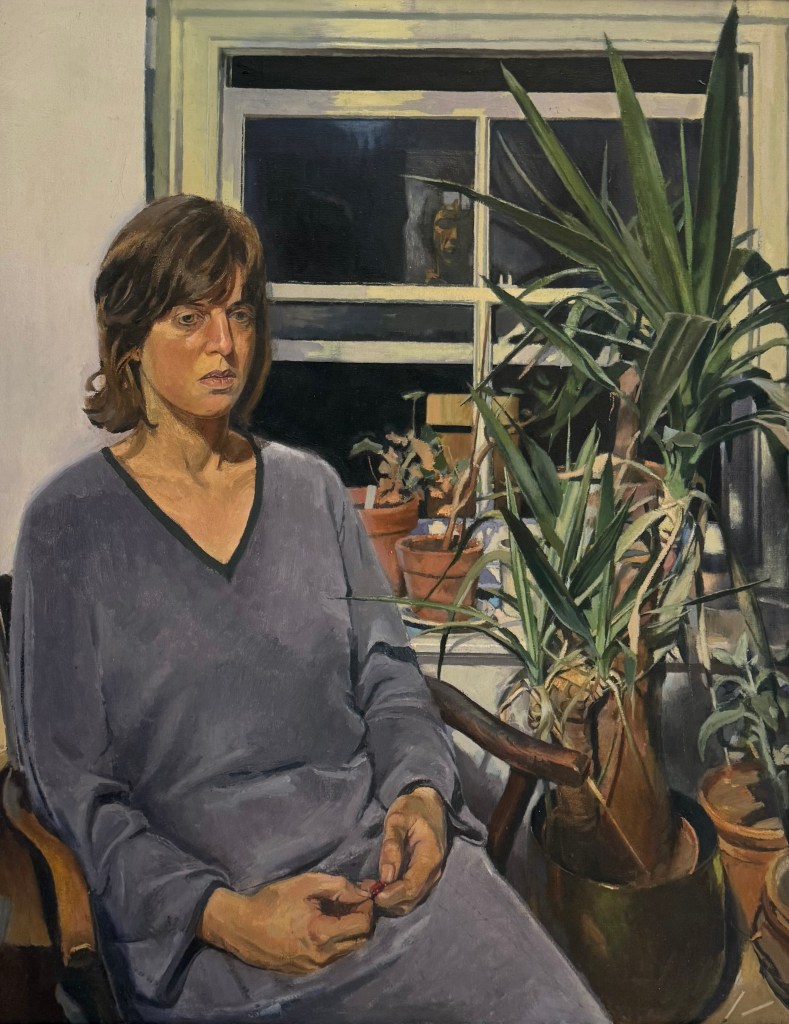
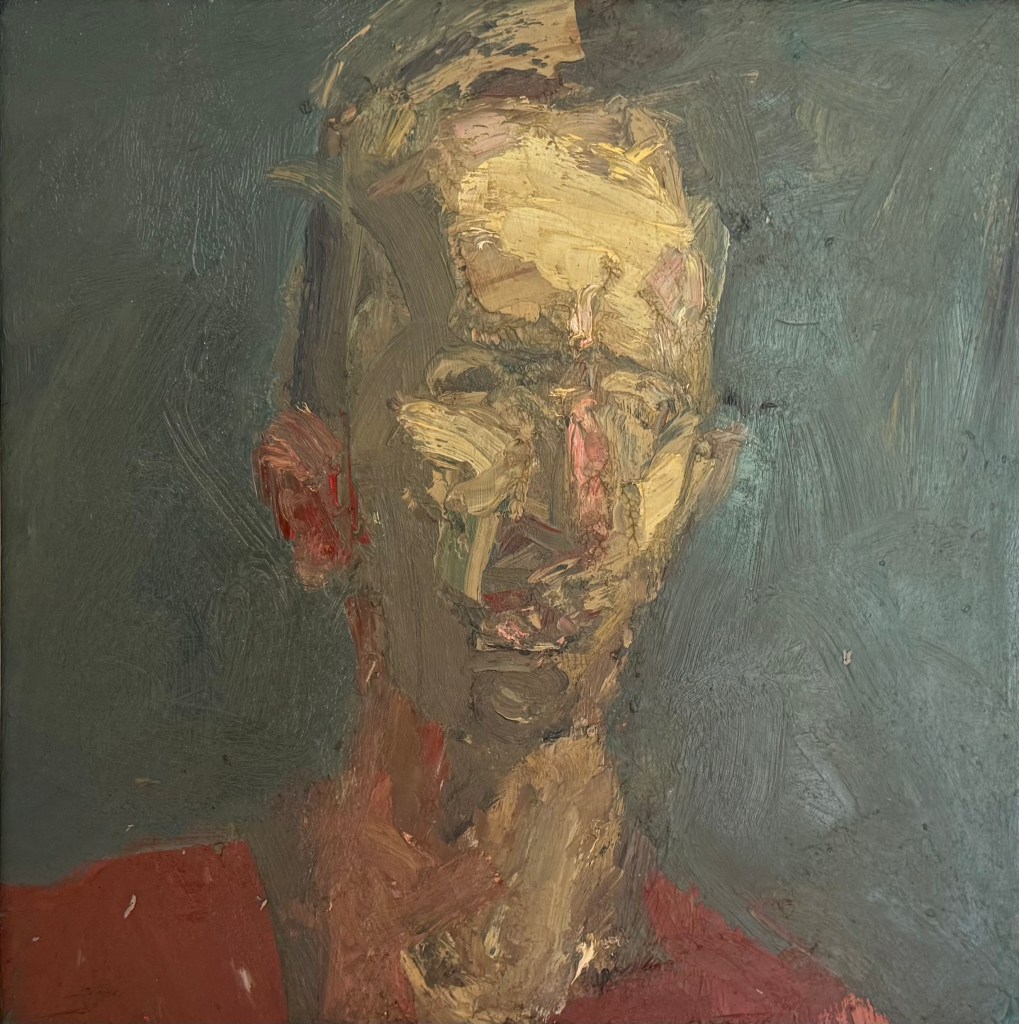
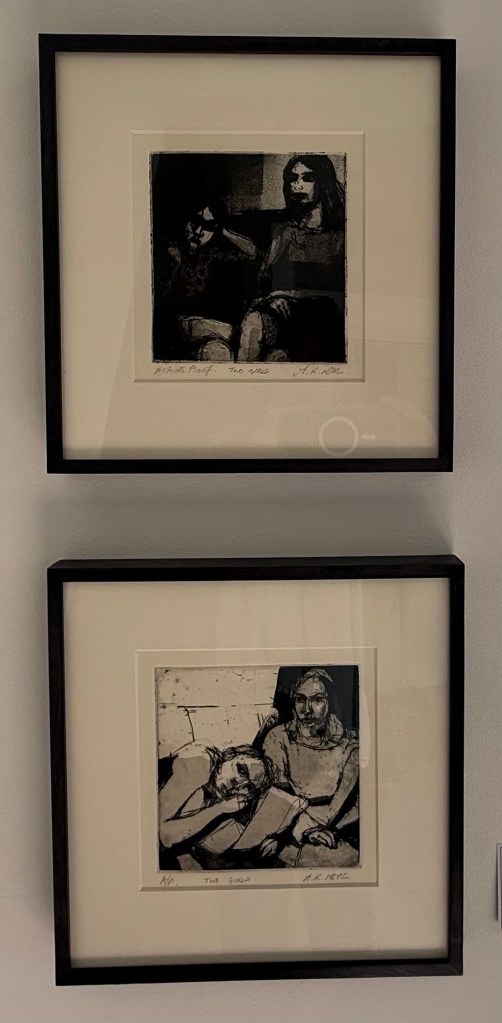
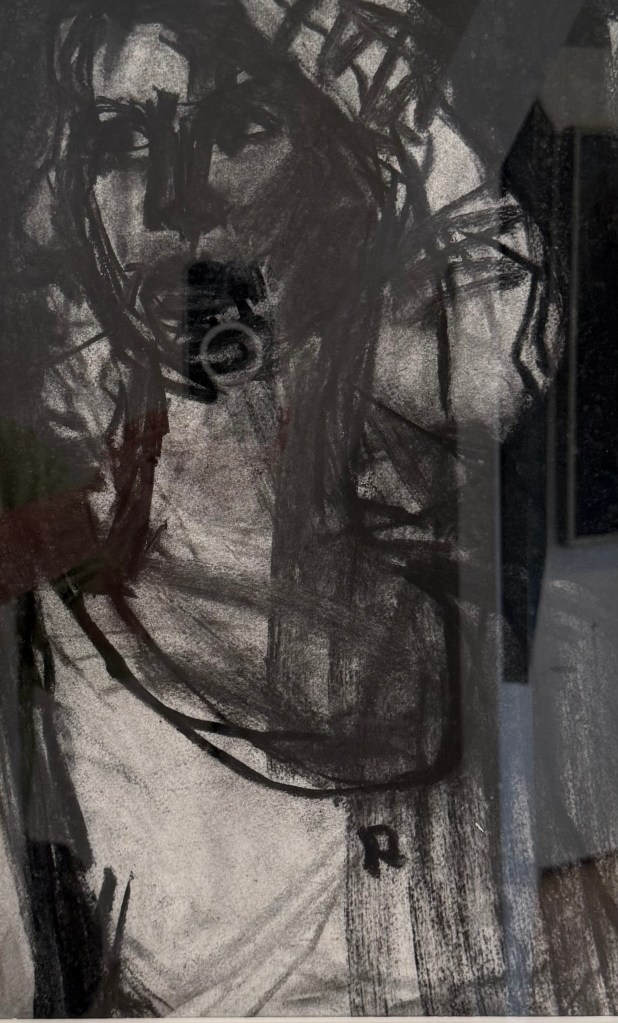
was an exhibition of work by Arthur Neal, a painter and printmaker practising since the 1970s. He appears to vacillate between the figurative and the abstract. It would have been difficult to guess that all of the works on display were made by the same artist. I was particularly drawn to his small abstract oil paintings, his work in charcoal and his more recent prints.

The exhibition made me think. I would still like to explore charcoal and drypoint, and after that I think I’ll be done. It will be time to reflect.

The small oil paintings reminded me of a stack of small canvas boards we’ve had for ages, as yet unused. I can’t recall why we got them – I don’t generally do small. I think my husband bought them because they fit in a small pochard box he is going to use for all those landscapes sketches he’s going to paint, once he has wiped off all the dust. It wouldn’t take more than a few brush strokes to cover them. No excuse really, not to do something every day.

I have a fascination with Jackson’s Inside the sketchbook series – of looking at the sketchbooks of artists, to see how they work and think. Sketchbooks are personal spaces and it’s exciting to get to look inside, although I’m in no doubt that they choose to talk about their best ones. A recent one which springs to mind is Unga from Broken Fingaz. He talks about how working small means that you have to let go of detail. I think I’ll give it a go.

Am I Bovvered?

Amidst all the excitement of the Low Res, I received my annual rejection letter from the RA.

Immersed in all the distraction, I wasn’t bothered, which is why I have left it until now to reflect on this rejection. I’m still not bothered. Why? I’m not sure, in the end I invested quite a lot of time into the process of producing A Die, A Log, With You. However, I didn’t invest very much in an emotional sense – yes, it made me titter but it’s not as if I put my heart and soul into it. Why? because it was an arbitrary task I had set myself which was, frankly, getting in the way of more interesting things. Also, entering the Summer Exhibition is no longer my only artistic outlet into the big wide world. This blog has changed that.

Based on our discussion in yesterday’s session on the subject of success as an artist, I would say that I failed. The piece didn’t connect with others, and, perhaps more importantly, it didn’t connect with me. I used to think that my work was like a Harry Potter Horcrux with each piece containing a little bit of my emotional being. This piece has none of me, so was always destined to be a failure as a piece of work. However, as an exercise in ‘that will do’ as opposed to the normal quest for perfection it was a total success. So. I’m still left in a quandary as to why I didn’t feel connected – was it that in accepting something less than perfection I detached myself from it, or was I just not that into it to start with?

Making A Sound

When I went to the Pallant House Gallery to see Dora Carrington recently there was another exhibition on at the same time: Maggi Hambling – ‘Nightingale Night’.

Nightingale Night VI
Nightingale Night X
Nightingale Night XIV
Nightingale Night III
Nightingale Night IV

Hambling spent a night in a woodland in Sussex in the Spring of 2023 listening to nightingales. I didn’t take photos of all of the paintings – I think I was only drawn to some of them on the day, or maybe I was tired from exploring Dora, but Iooking again at the images on the identification labels, I’m regretting not having done so.

I’ve since read an entertaining interview with Hambling about the exhibition in ROSA Magazine – I like doing further research after I’ve been to an exhibition; never before.

I’m not entirely sure what I think about it all. I’m not sure that I like the gold on the black ground, although I can absolutely understand her reasoning behind it, and I do like a bit of gold. Does she succeed in communicating the otherworldly divinity of the nightingale in the darkness? The sense of it, absolutely, but the sound of it? I’m not convinced, and I think it’s the mark-making. The swirls and definite vertical and horizontal marks are successful, I think, in representing sound; my issue is with the drip-like marks – they don’t allude to the beautiful song of a nightingale to me; it’s more akin to me having a warble and eventually running out of steam and giving up. But I think I’m being harsh, because even she admits that it’s impossible to paint the sound of a nightingale, and that what she hopes to have captured is a sense of the fleeting moment. She comments:

…there wouldn’t be much point in painting a picture that it was possible to paint…”

It’s an interesting comment, one to think about.

It would be interesting to know whether Hambling made the paintings from memory, or whether she played a recording of nightingale song whilst she worked. I’ve assumed that it is the former because it’s about the whole experience, of being in a certain place at a certain time bearing witness to something extraordinary.

I have been carrying on with my pen doodling, some of which is unfinished – I became bored, and moved on. I also decided to give nightingales a go. The concept of representing sound in a 2-D form is really interesting – the consideration of tone, volume, intonation, rhythm etc. I’ve represented it in a linear way, thinking initially about sound waves, but it would be interesting to explore other methods of representation.

The song is so diverse and improvisational that it was very difficult to think of different mar–making to represent what I was hearing. It was an interesting exercise, and very calming listening to birdsong with my eyes closed.

I like having an inked page – I think I will go through my sketchbook and randomly ink up or paint pages. I also like trying to work with unexpected events such as the solvent stains from the gold coming through to the reverse of the page. This is, literally, just playing – it’s enables a period of convalescence.