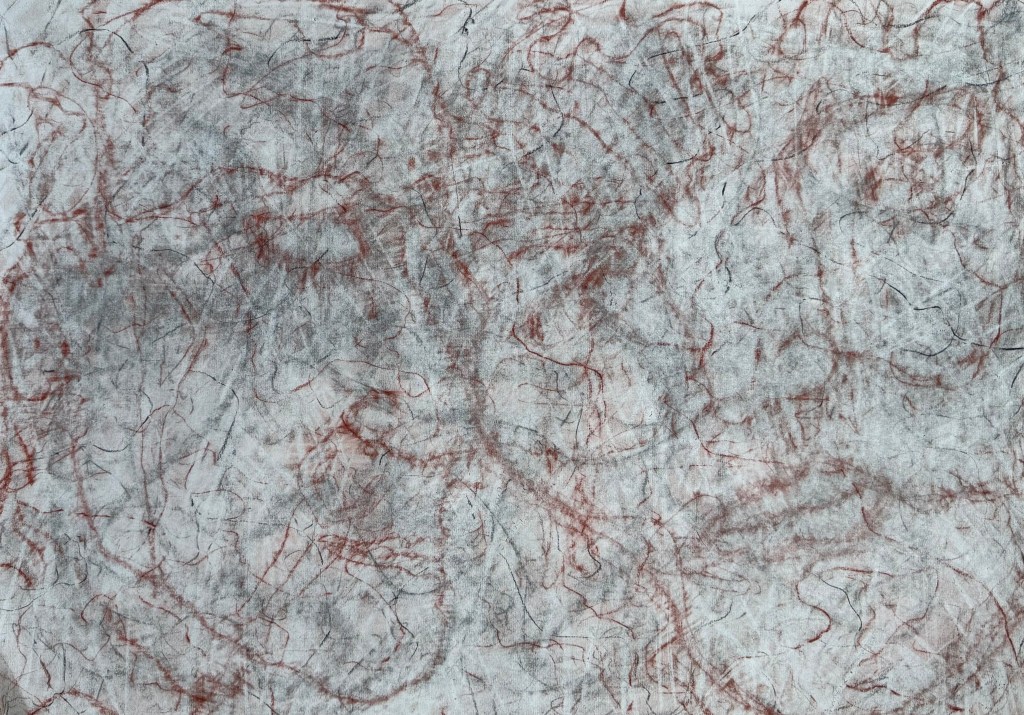
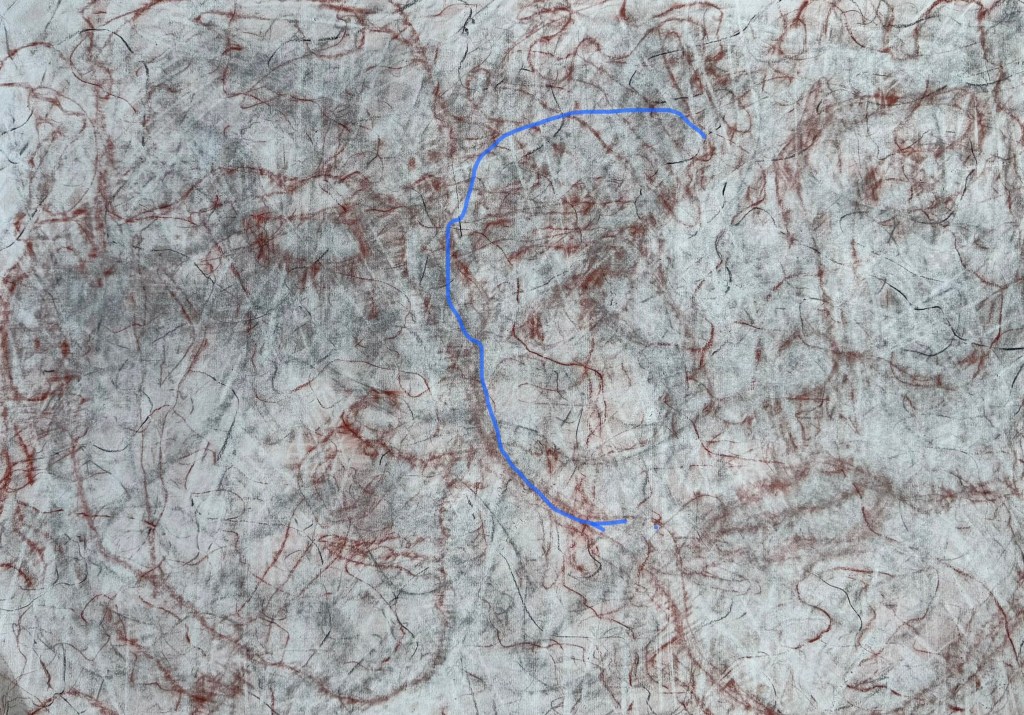
I had an urge to make some marks with charcoal before I went to bed last night. It started off as a wild grassy landscape then I wiped it and used some Conté pastel to draw various figures, crouched, swimming, running etc. They were quite comical. I sometimes wonder whether I have to look at something to be able to draw it. Anyway, I wiped that off and it left some lovely outlines. I kept using the pastel, closed my eyes and drew two heads using a continuous line, looking from time to time. I then traced the lines with some charcoal, cut a wedge of eraser using the fine edge backwards and forwards over the line. I wiped it all back and then did several layers of pastel then charcoal using the eraser in brisk strokes all over the paper. I think it turned out surprisingly well, and I’m pleased that the heads are only just visible when you stand back – close up it’s just a lot of mark-making. And the weirdest thing, I can see a third head in between the two which doesn’t stand out so well in the photo.
I quite like the idea of revelation, and layering seems to facilitate this.
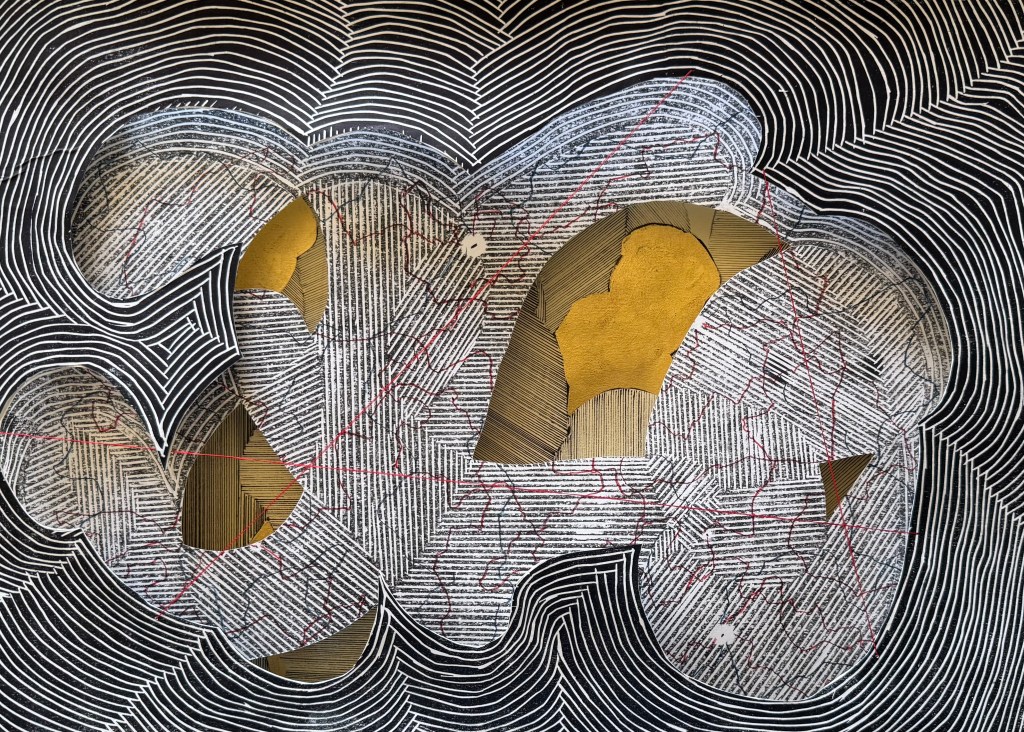
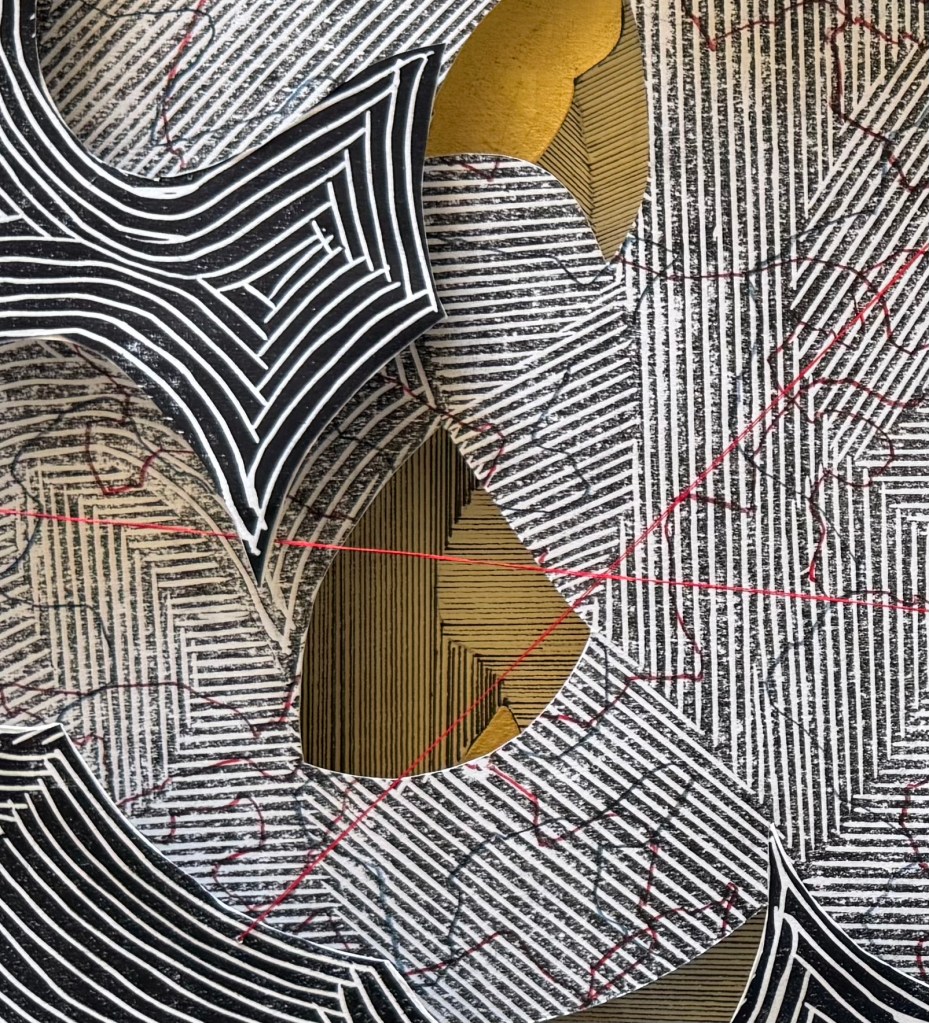
Drawing lines on the first print I made of the linocut – there must have been some loose bits because it left small circular areas of white which reminded me of places or points of interest on a map. I then cut out some areas and laid it on top of a section of the figures line drawing using some cut up old corks as makeshift spacers. I then stuck the print with the large white space onto some watercolour paper and cut out the centre. I sewed some threads across the centre – thicker embroidery silk would have been better but I had to make do with what I had to hand. I laid it on top, slightly off from the print below.
I’ve filmed from my iPad screen covered in clingfilm before, but I decided to try videoing a projection as inspired by Johanna Love. I’ve also tweaked a few bits and re-recorded the audio again – I sounded really peed off in the original.
As usual, it turned out to be more complicated than anticipated. I wasn’t able to connect the old projector to my laptop because it didn’t have the right size or shape holes. So I had to dig out and charge up my old laptop. After a lot of time faffing around I eventually managed to record it and then I set about remaking the video. I think that I prefer this version.
And I was right. And I wish that I had thought about doing this sooner.
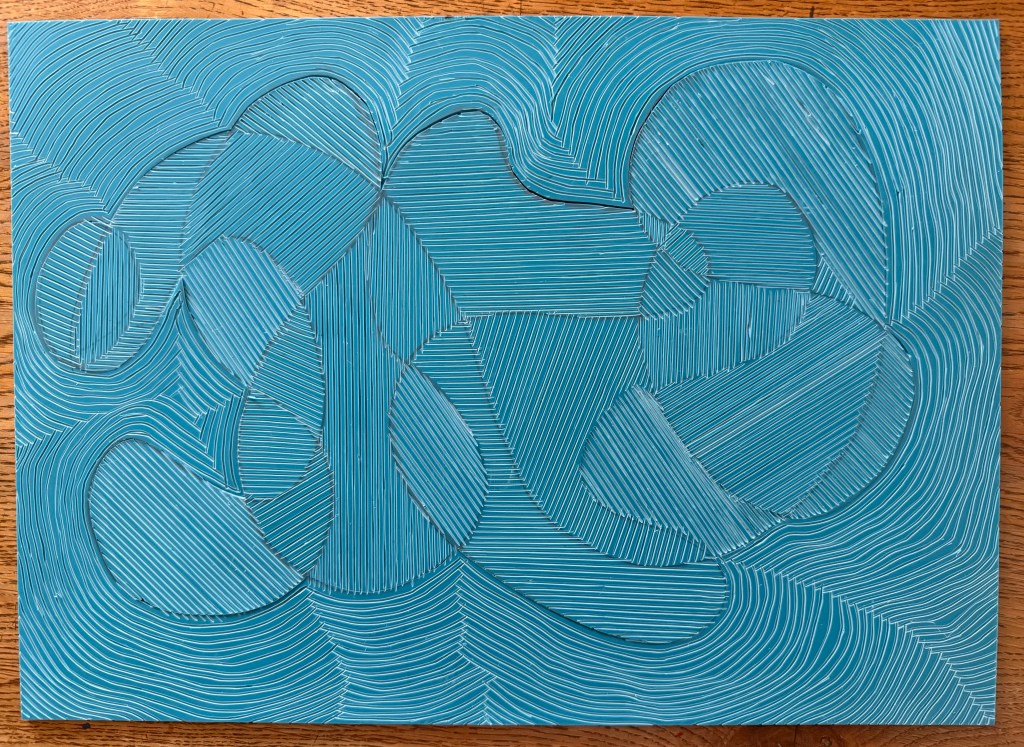
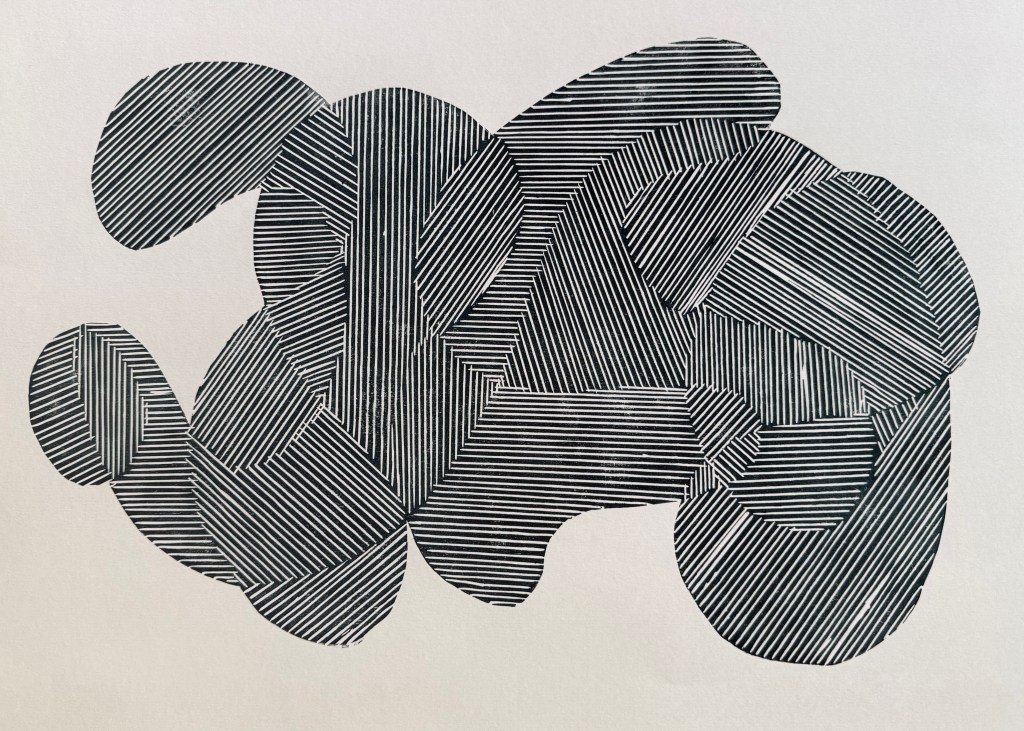
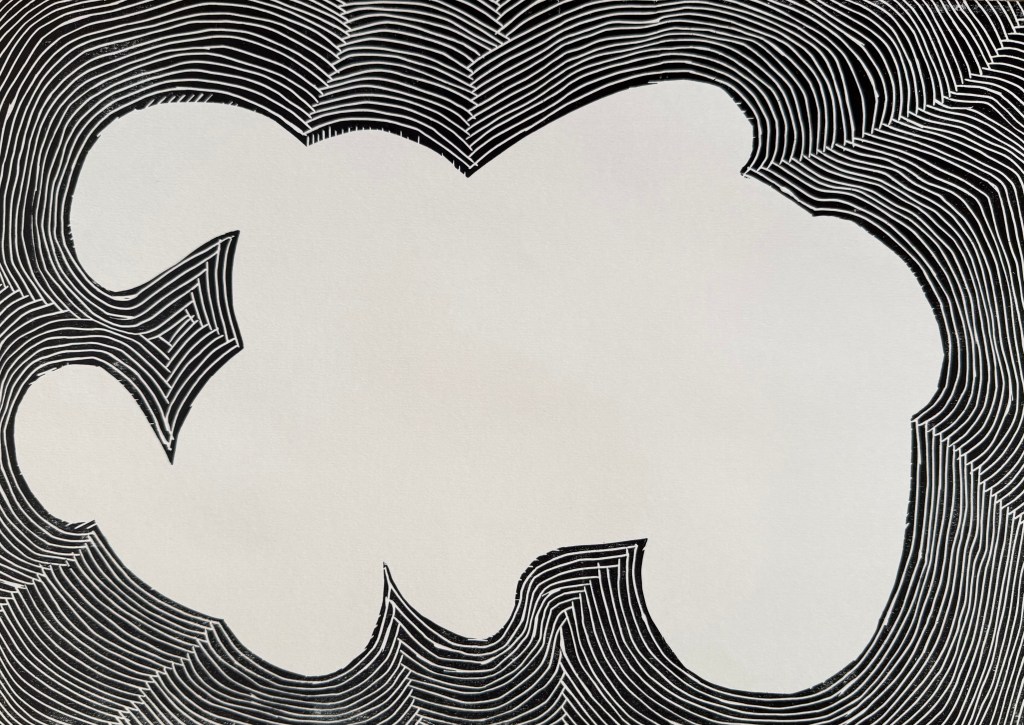
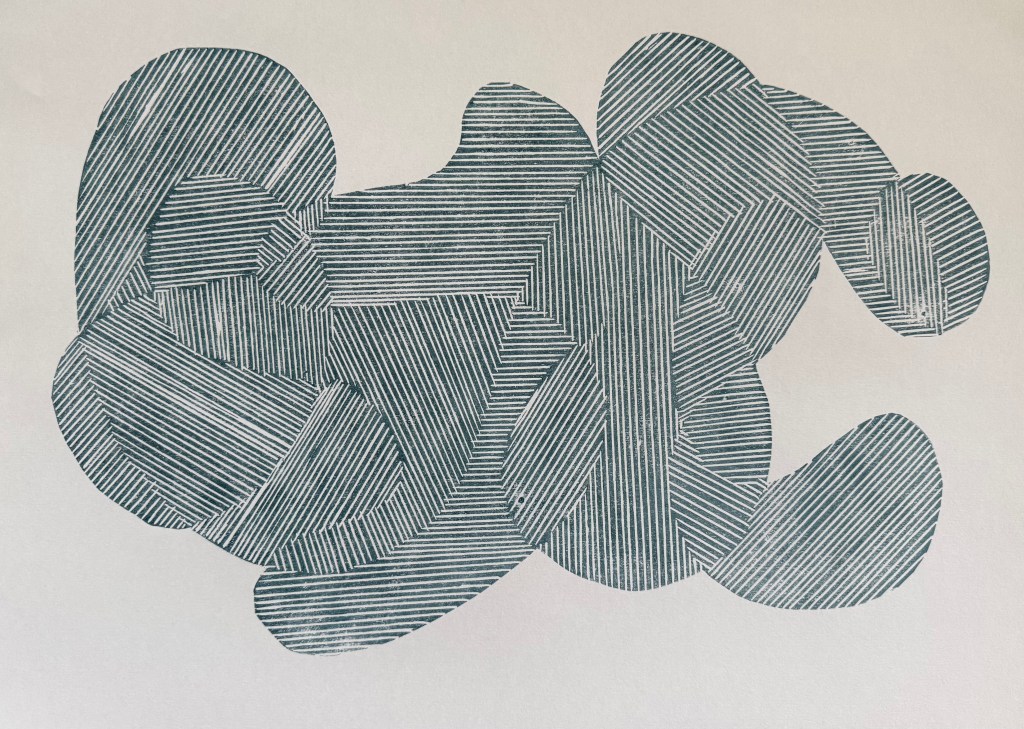
I dusted off my printing box and experimented with printing a line drawing. I used an A3 piece of soft cut Lino as I didn’t want to be shooting off all over the place, and have bits crumbling away. I used my smallest tool. The good thing about soft cut is that you can easily use a craft knife to cut out sections.
I started by tinting black with some blue, and printing the whole block:
I like.
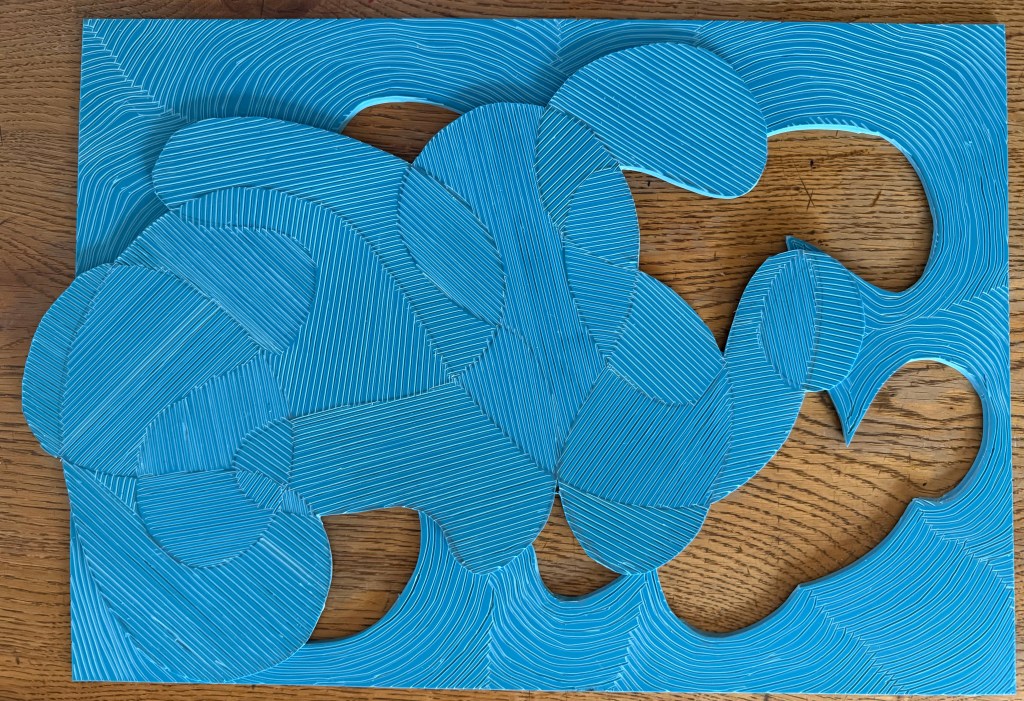
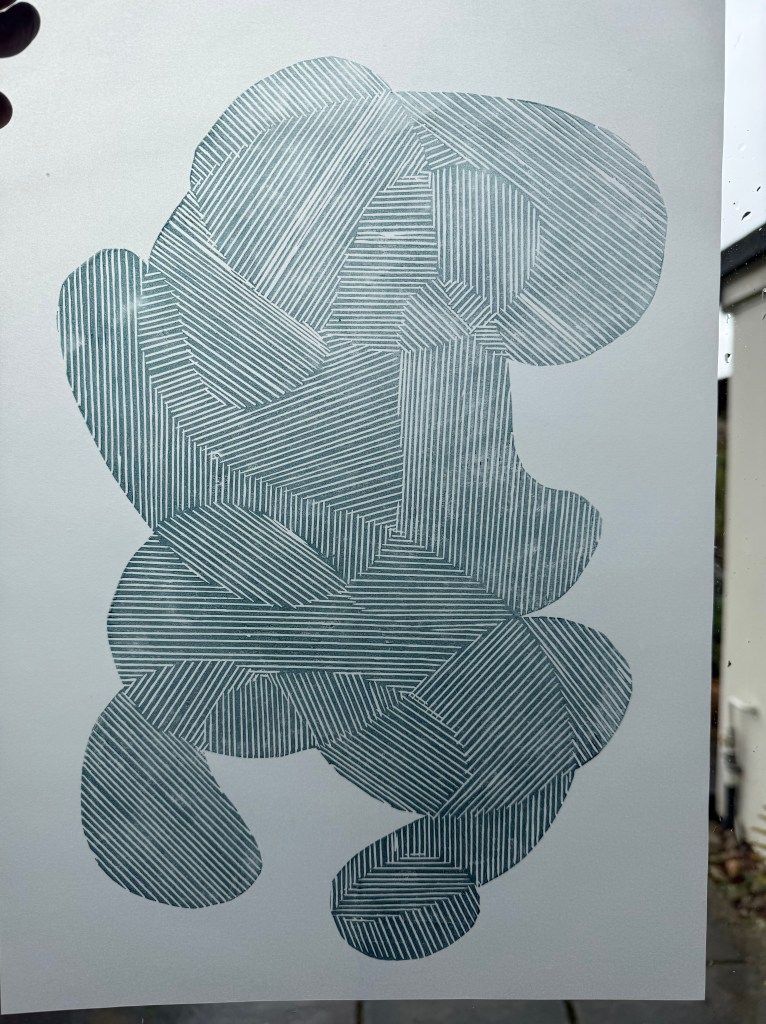
Then the two separate sections:
I also like. This way around, it reminds me of a figure, curled up, cowering, face protected by hands.
Then I added in some extender to make a lighter, more transparent colour:
Nice.
Printing on tracing paper:
Interesting. Possibilities.
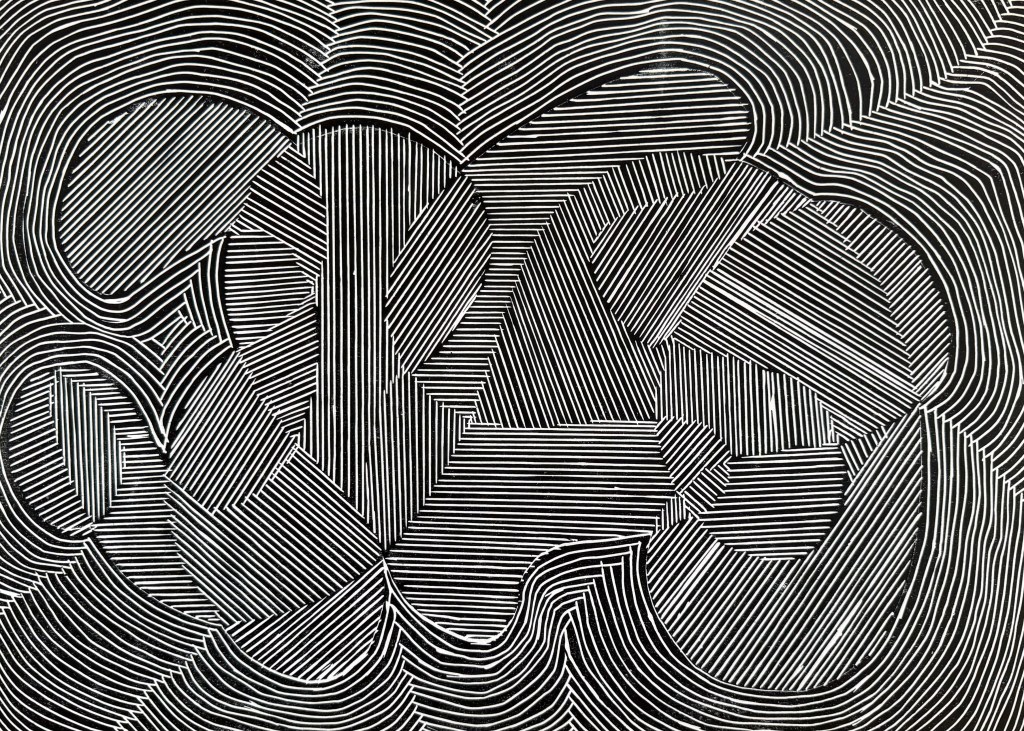
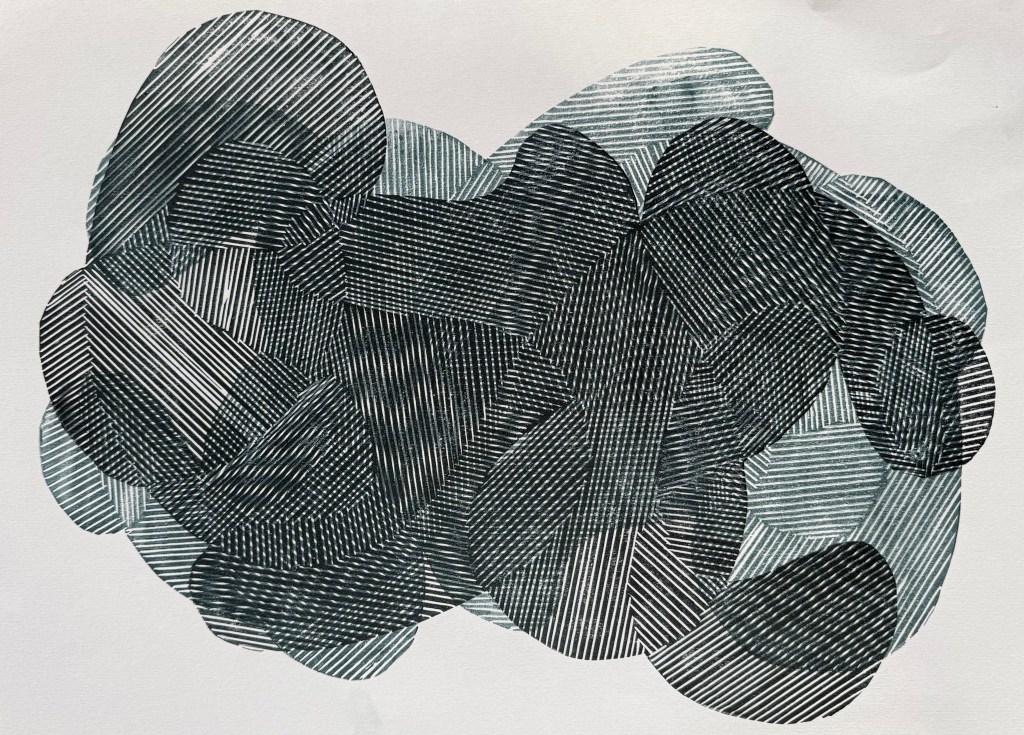
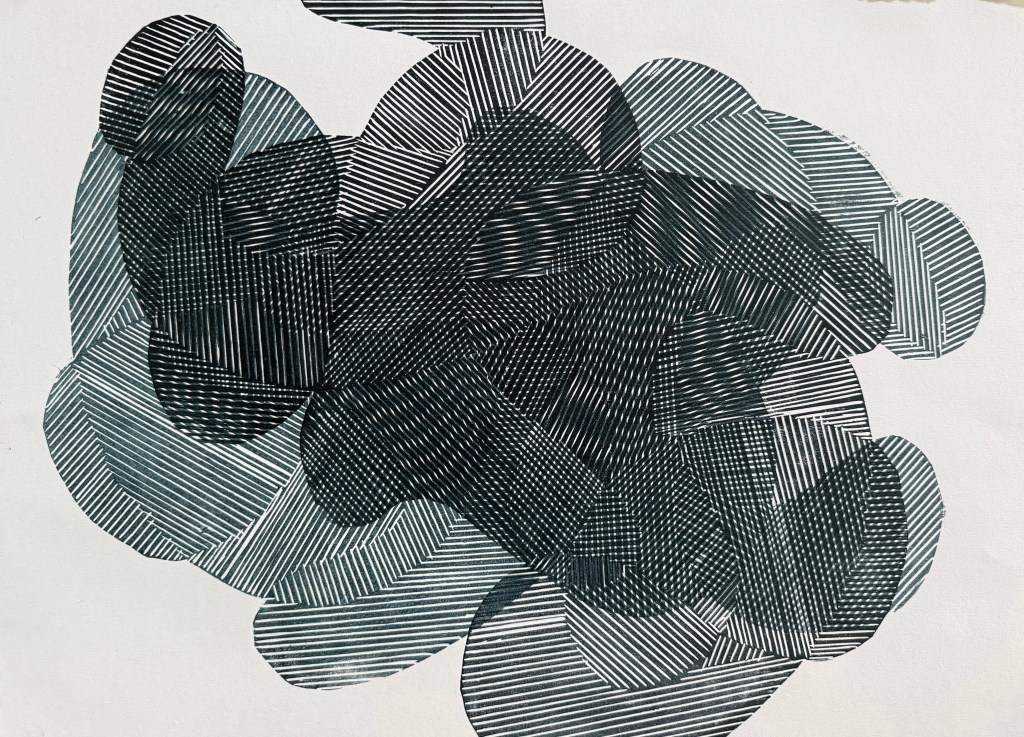
I then experimented with overprinting:
Absolutely love.
I’ve noticed that I’ve been using that word a lot more recently.
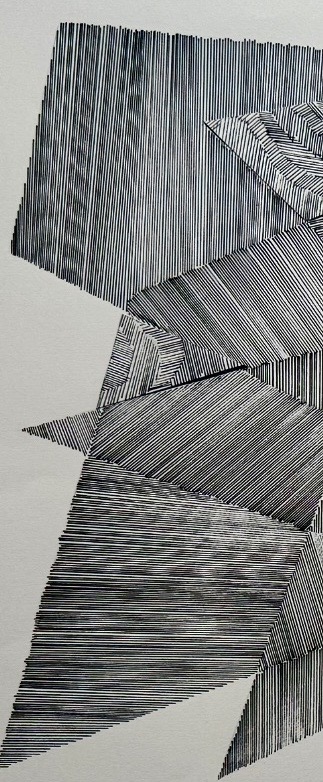
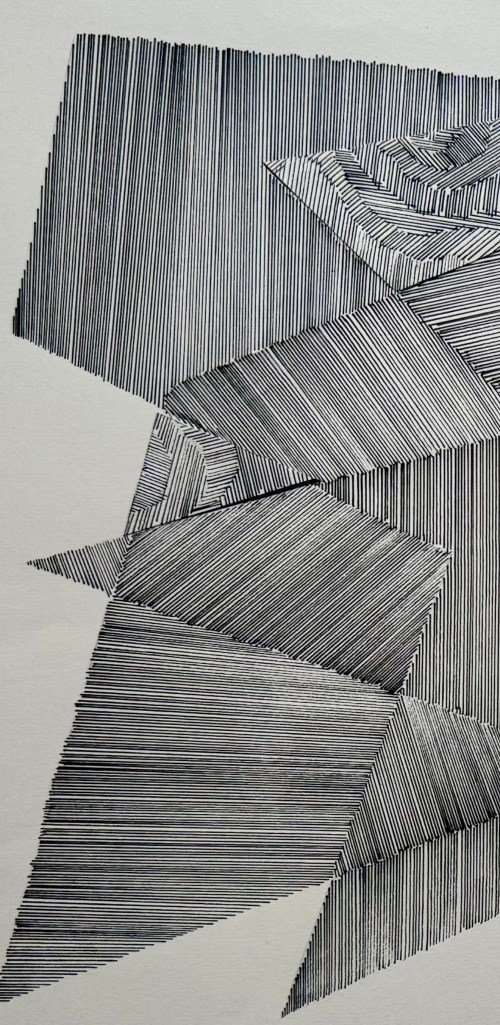
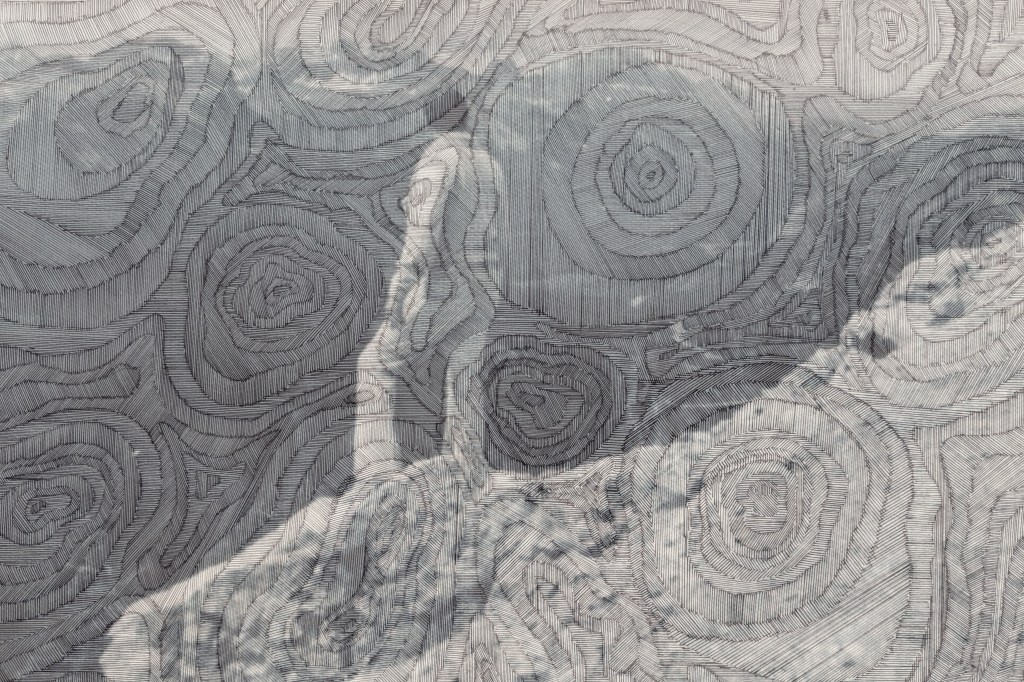
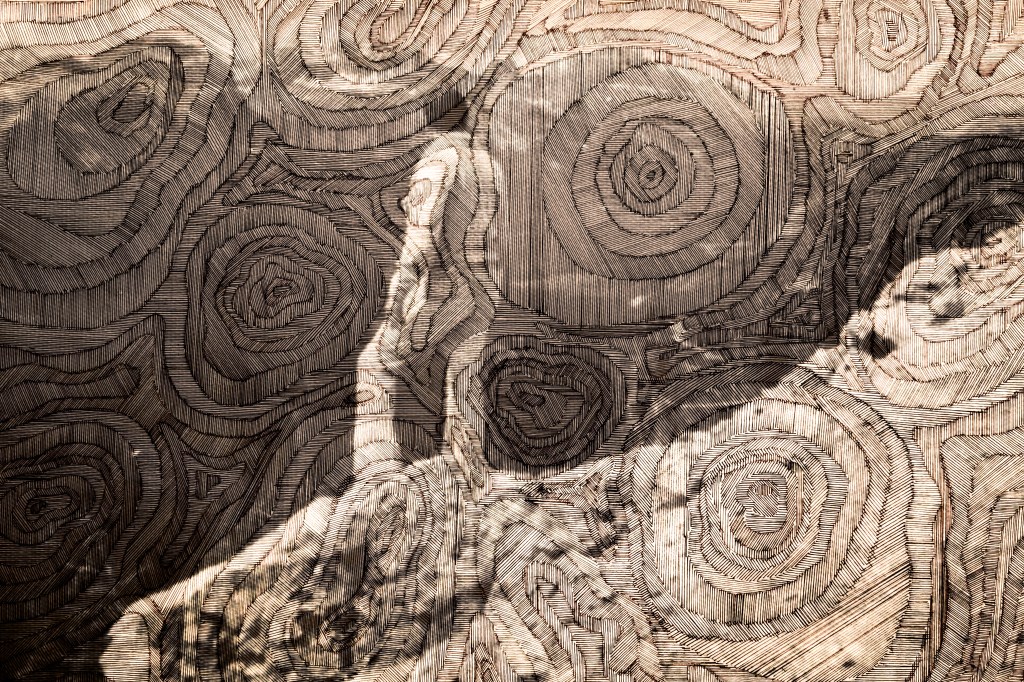
It’s fascinating that by overlapping the prints I’ve recreated some of the mark-making I was experimenting with using the Micron pens (Pushing Paper III) and also the strange effects created when I photographed the pen drawings. It was almost as if the camera couldn’t quite work out what was going on. For example, when the image is displayed on my phone normally it looks like the first image below. It is only when I zoom in, that I can see that the lines look as they do in the second image.
Anyway, I think that it was a very productive session and has given me lots to thinks about. I’ve decided that I’m warming to linocut. It used to bug me before, because it can be quite patchy in places (probably my ineptitude), but since using the fineliners to make line drawings, and noticing the texture created when the ink dried up a bit and the effect of mistakes, I’ve noticed that Lino has the same qualities. They both evidence the process of making which I’ve recently been embracing, rather than a perfect print.
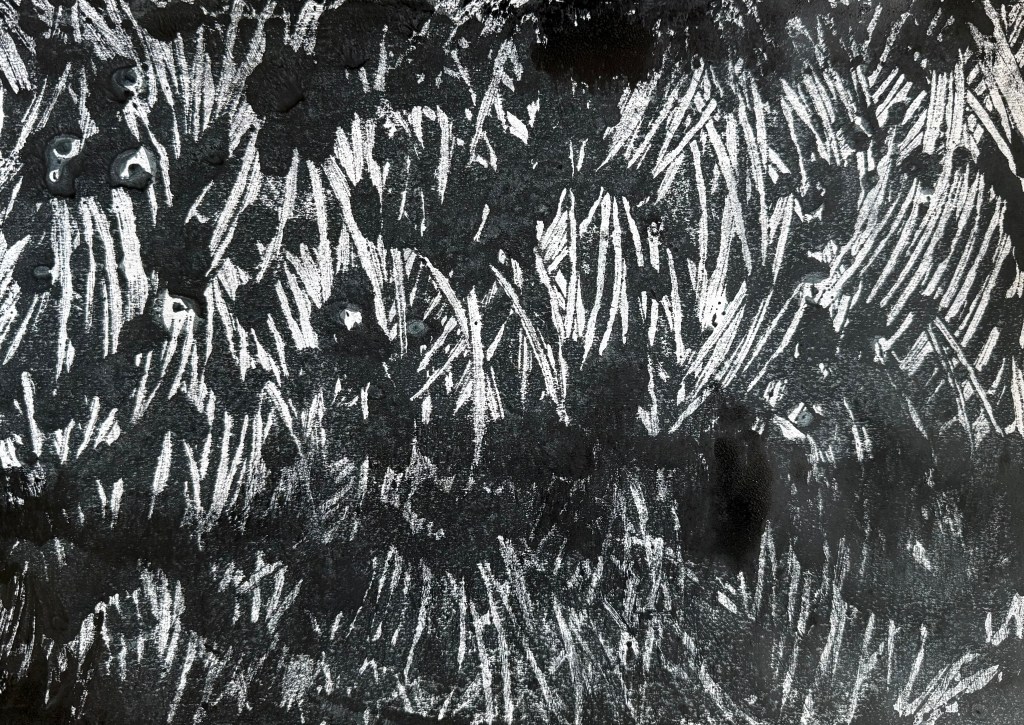
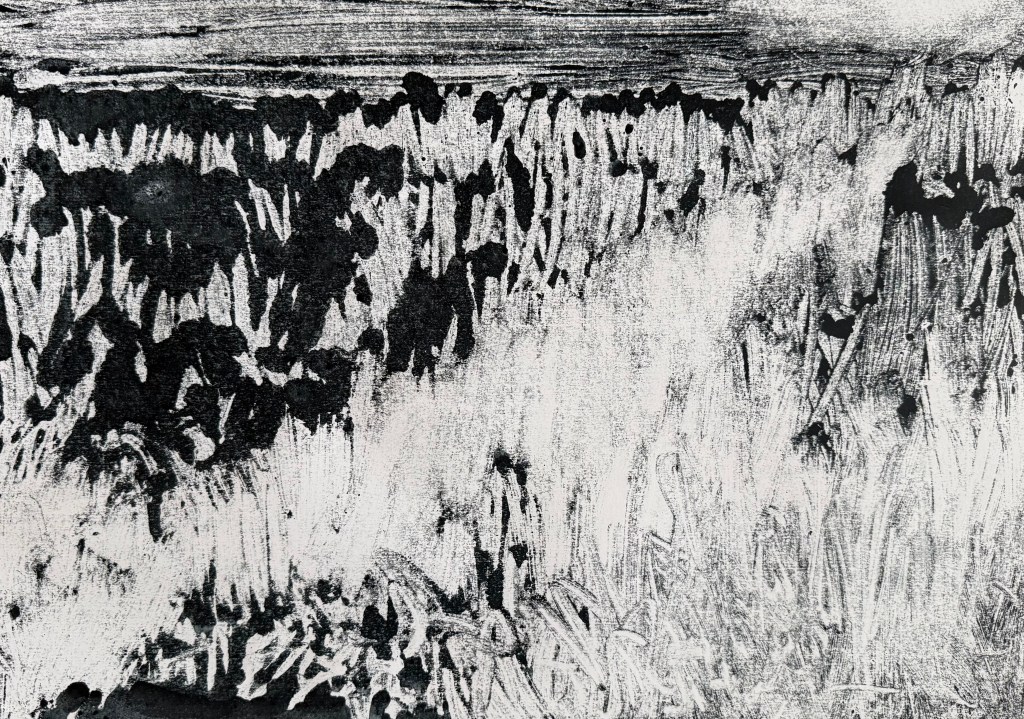
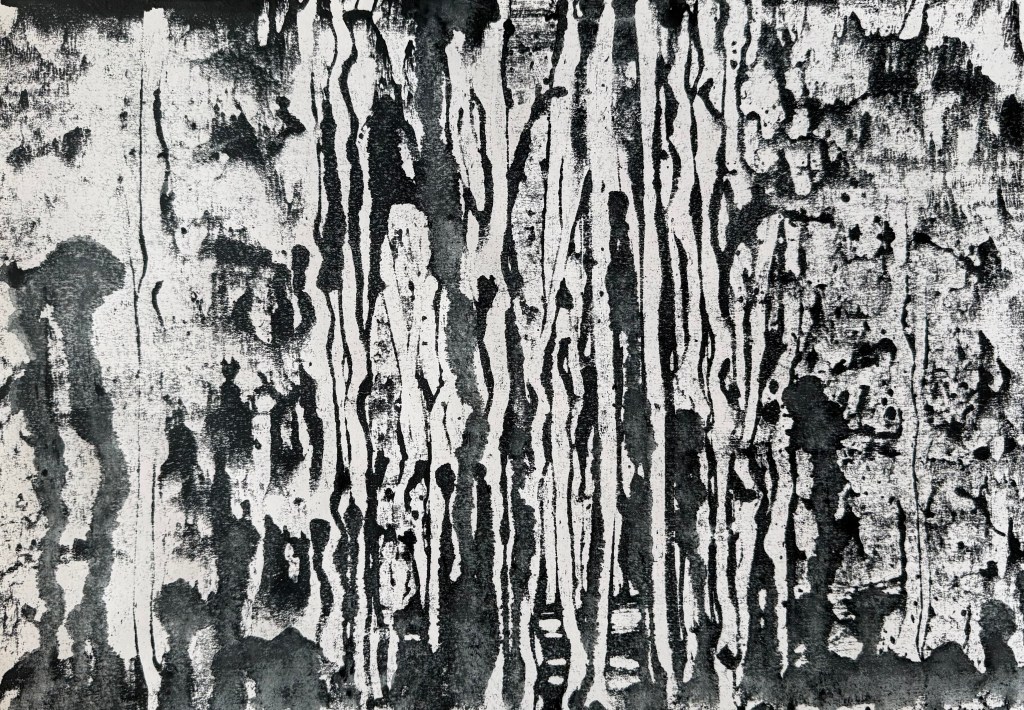
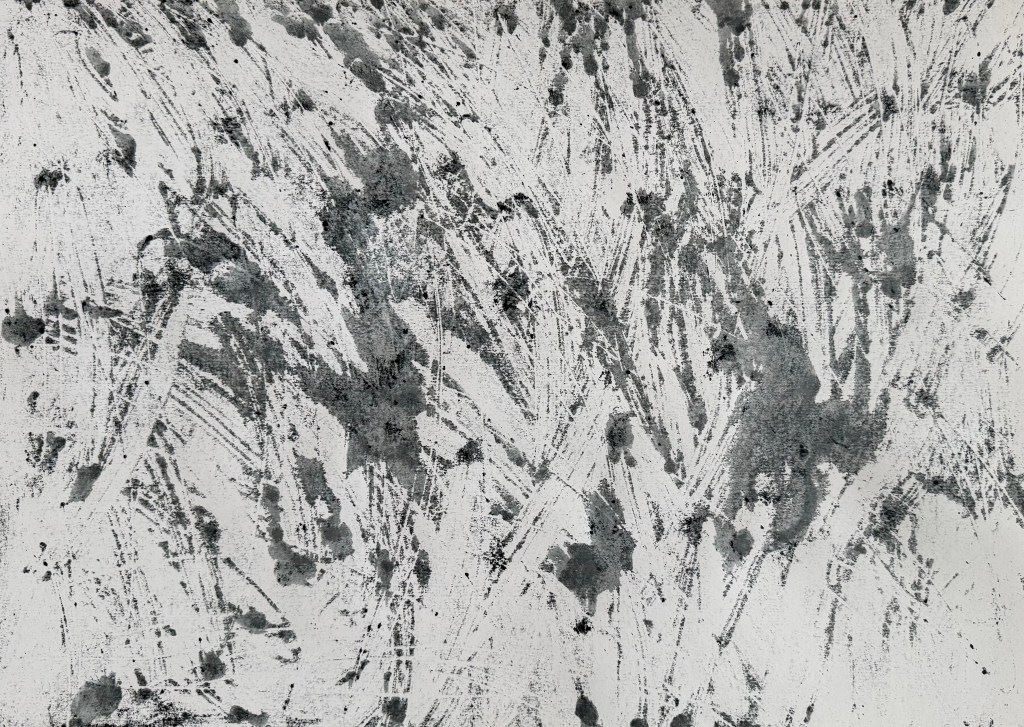
I used up the leftover ink to make some mono prints. The inks are safe wash – they are oil-based but soluble in water. I like the effect of spraying the ink with water, and running the brayer over it. These could maybe form the basis of something else.
I was really intrigued by Do Ho Suh’s thread drawings at Tate Modern last summer (Summer II). After some research I discovered that his method was developed during a residency at the Singapore Tyler Print Institute. He had been spending a lot of time drawing in his sketchbook when it was suggested to him that he might try drawing with thread. Applying thread to wet paper proved unsuccessful as the thread was difficult to control and so he tried sewing on tissue paper but it proved too difficult. It was an intern at the institute, who had experience of textiles, who suggested that he might try gelatine tissue paper which is used in embroidery. So he sews his drawings on gelatine paper and then applies it to wet handmade paper and the gelatine paper dissolves leaving the thread bound into the paper.
This has got experiment written all over it.
I couldn’t find gelatine tissue paper as such, but I managed to source some water soluble embroidery stabiliser. I haven’t attempted to make paper before but I did a bit of research online and gave it a go. The results are not great, mainly because I’m so impatient and kept on touching it etc and so there are lots of overlaps and tears – but then that is me in the process, so actually it’s all good.
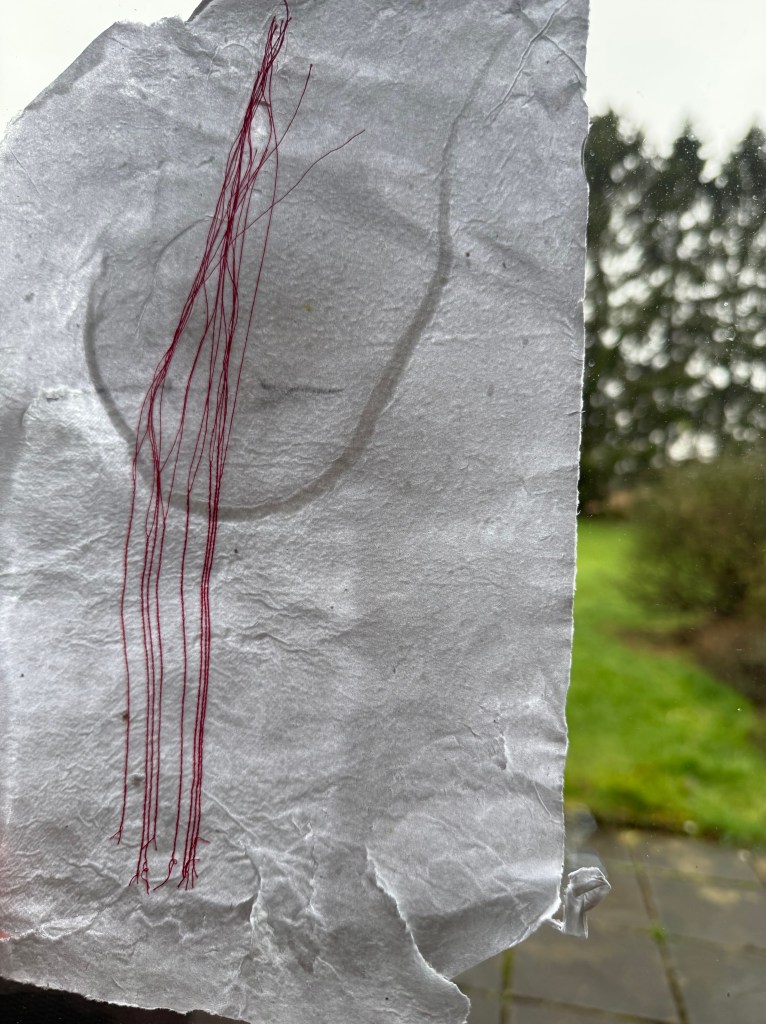
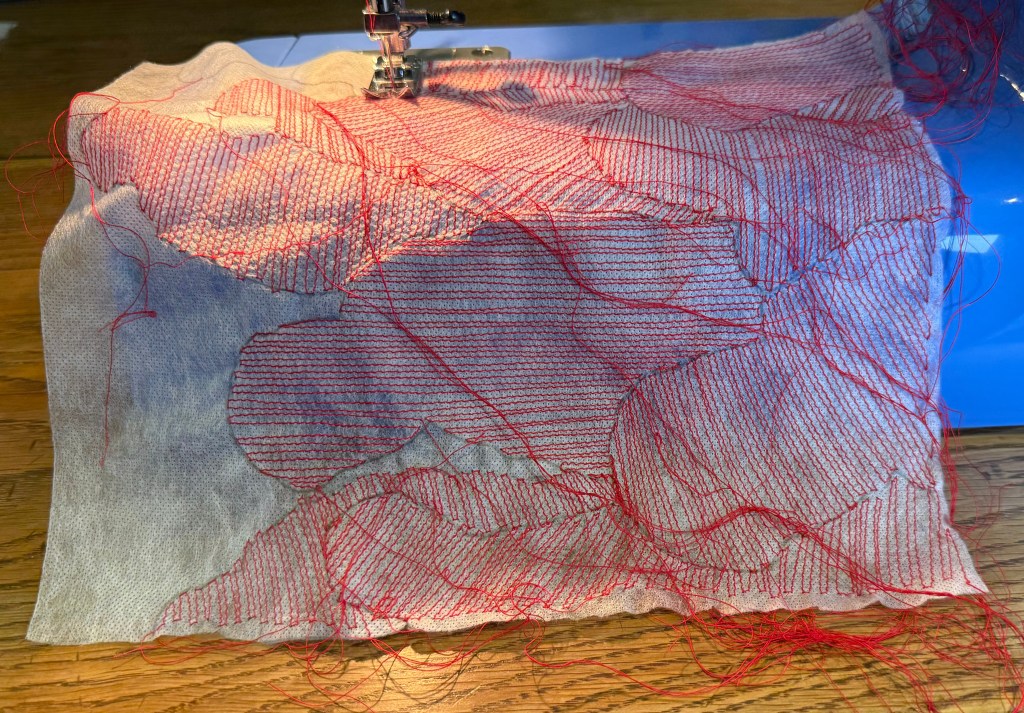
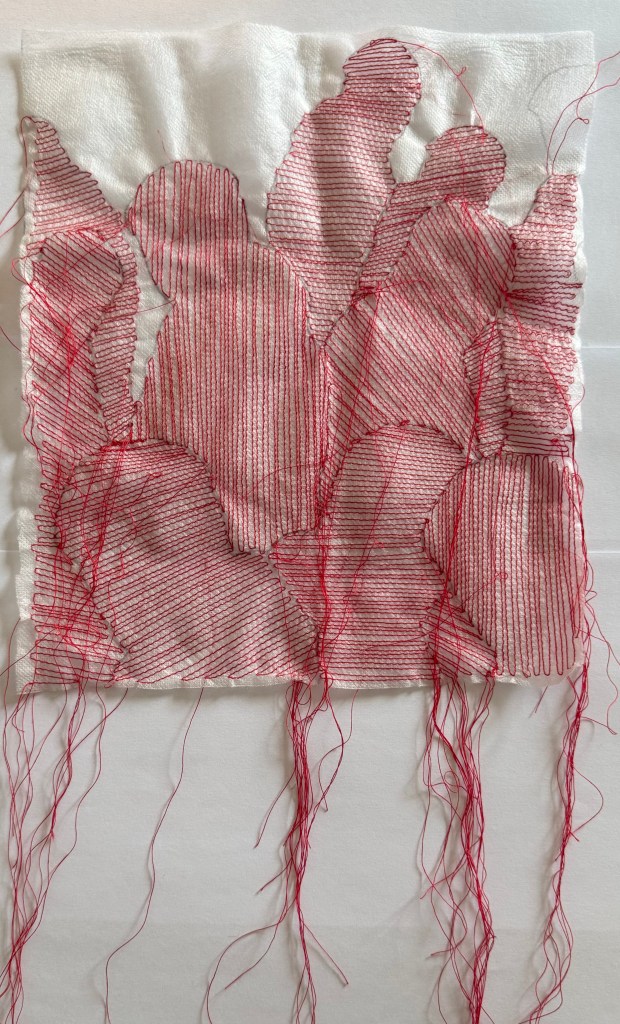
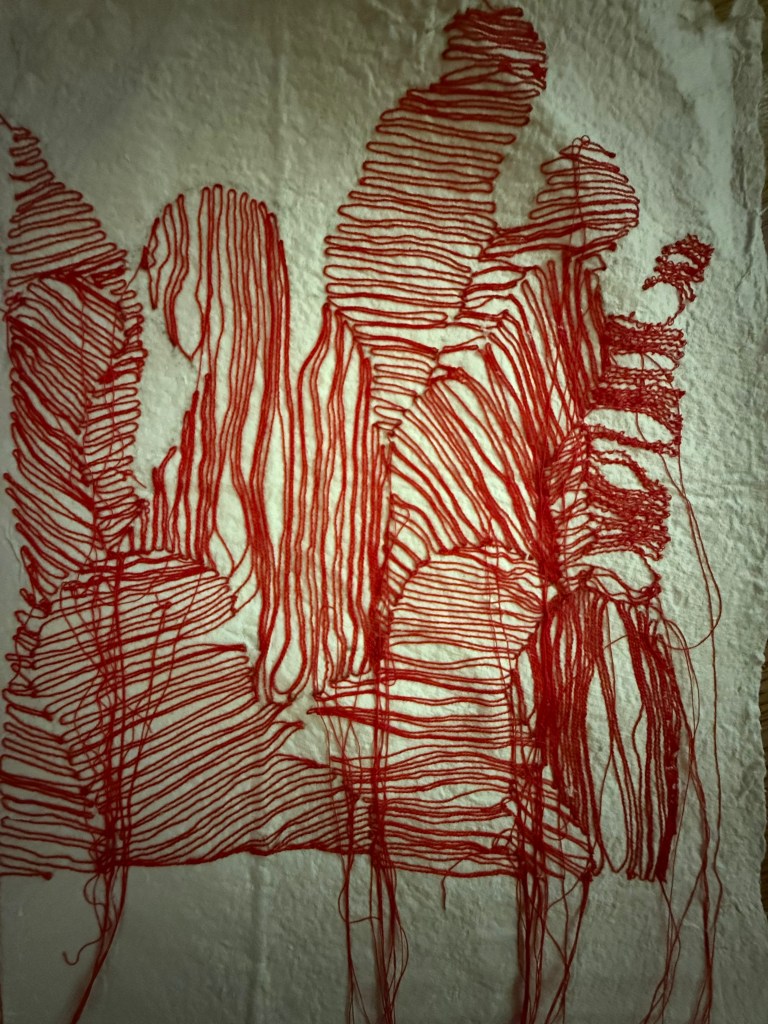
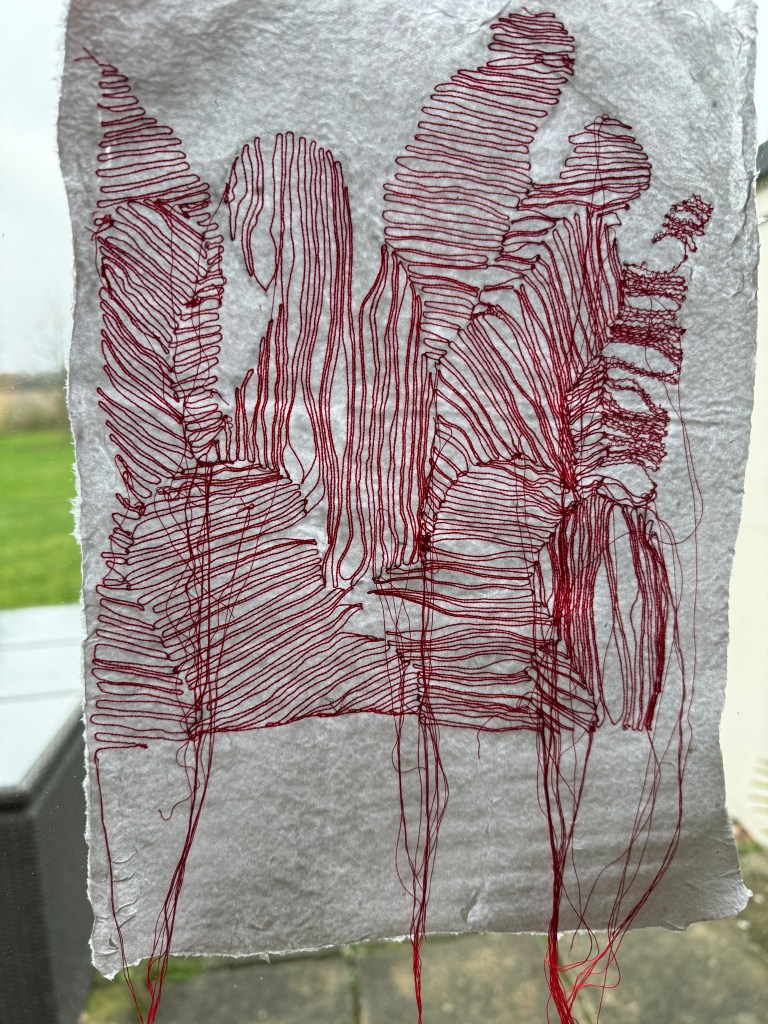
I borrowed my daughter’s sewing machine, sewed on a couple of test pieces and applied to the wet paper and these are the results:
The thread has, for the most part, bound to the paper, so it’s been a success. You can still see where the embroidery stabiliser was, and when it is lying flat there is a slight sheen to the paper. I’m not sure what can be done about that and I probably need to experiment more. The stitching doesn’t have the same effect as Do Ho Suh’s, and he has commented that he likes the unpredictability of how the bobbin thread appears. I think it would be worth using a larger stitch which might create a more interesting effect.
I double dunked this one in the paper pulp and water solution (there’s probably a technical term for it) to see if I could get rid of more of the stabiliser. The effect was quite interesting as in some areas the paper folded over itself trapping in some of the thread and in others the pulp settled on top of the thread, partly obscuring it.
I need to do some more research and experimentation and think about how I might incorporate this approach into my work.
In the meantime, I decided to do some more lines.
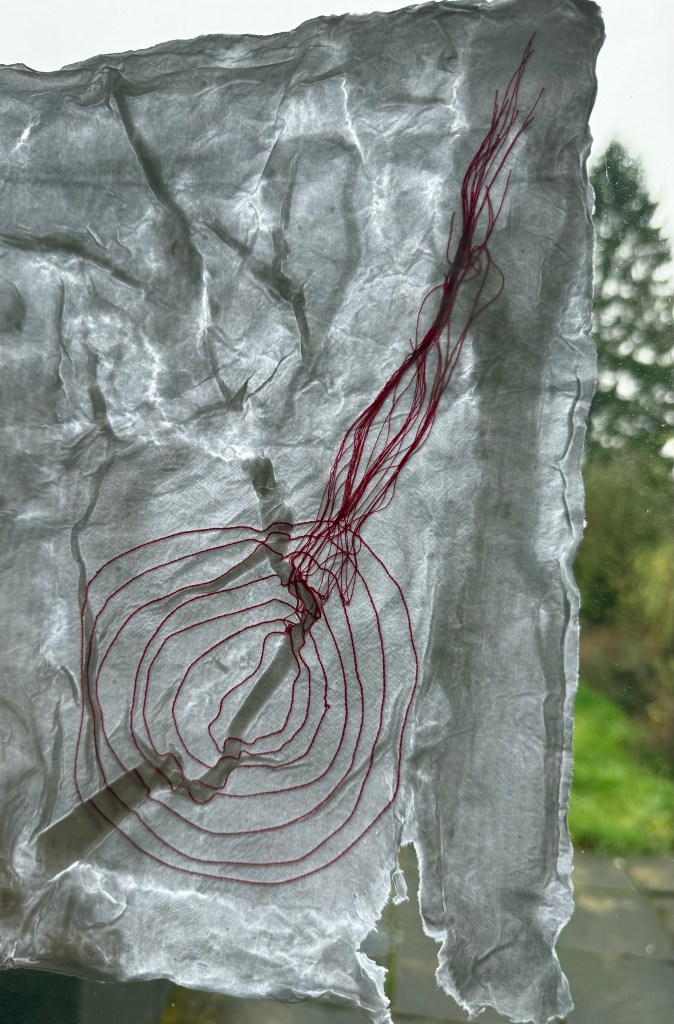
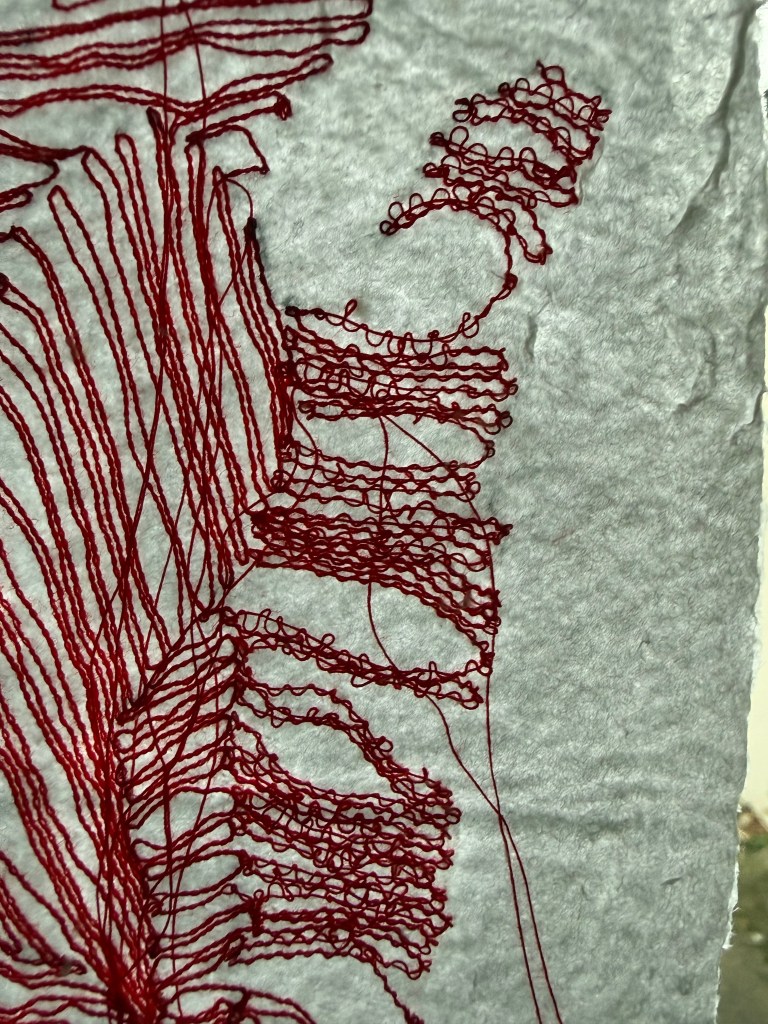
Because the stabiliser doesn’t dissolve very well when placing it on top of the wet paper, it’s necessary to help it along using a spray bottle. I think the spray combined with the excess water and movement in the stabiliser as it dissolved, caused some of the threads to distort. Initially, I was a bit disappointed, but I actually quite like the movement it creates and also the loopiness of the stiching on the right. It has the feeling of a continuous line drawing.
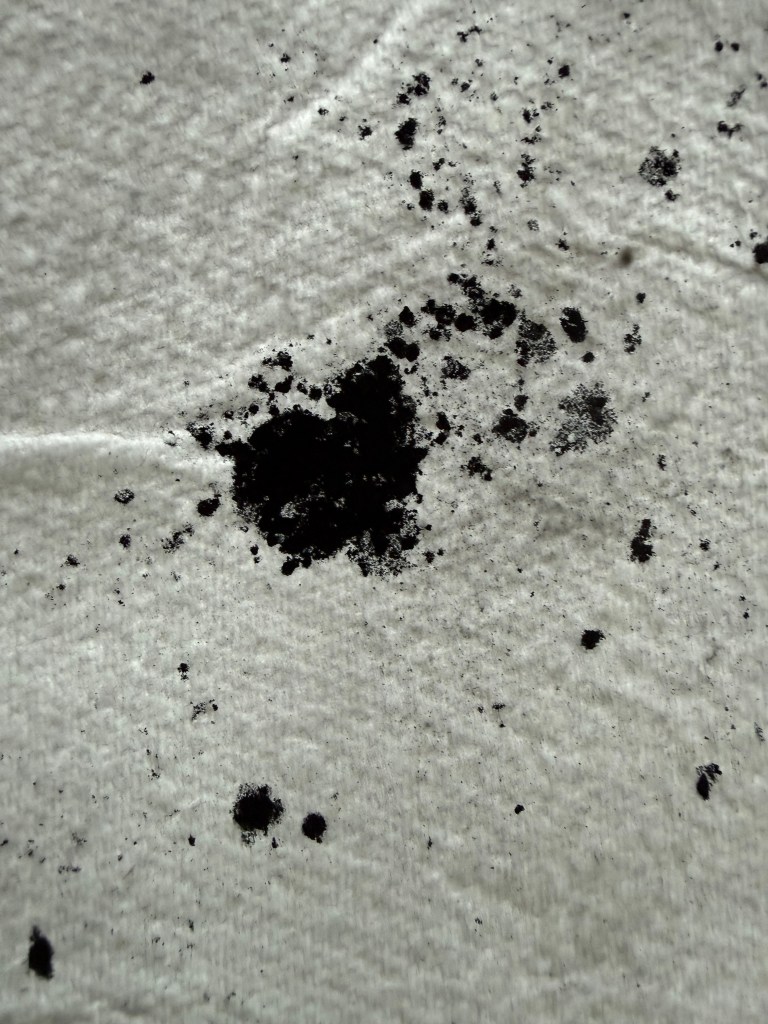
There was some pulp leftover so I played with some colour and some graphite powder. The graphite powder didn’t really do anything interesting, and still remains quite loose on the surface of the paper. I like the mottled effect of the colour as well as the impression from the kitchen paper it had been sitting on.
I was looking at Google Maps on my phone following directions to a restaurant. I sensed my husband, who was standing beside me, step off the curb to cross the road, so I stepped off too. His arm suddenly shot out and brought me to a halt as a bus went past us. My attention had been elsewhere and I had instinctively followed him. He just hadn’t been looking properly.
People walking along looking at their phones, not where they’re going, who they are about to bump into, or what’s going on around them, videoing events rather than experiencing the moment.
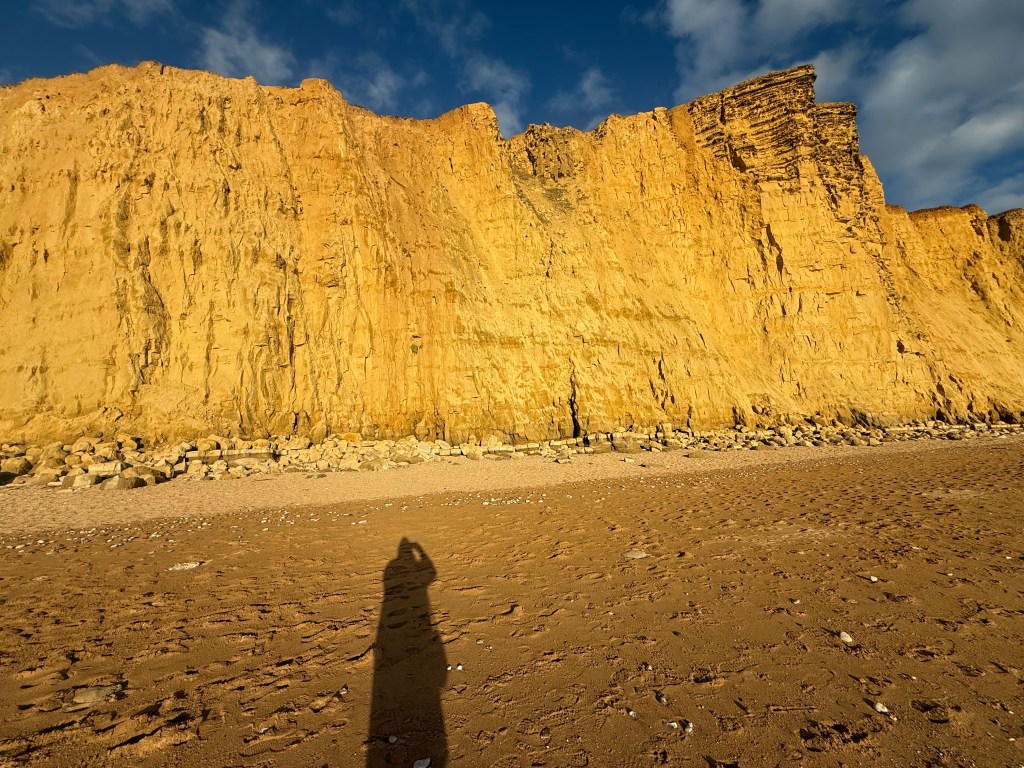
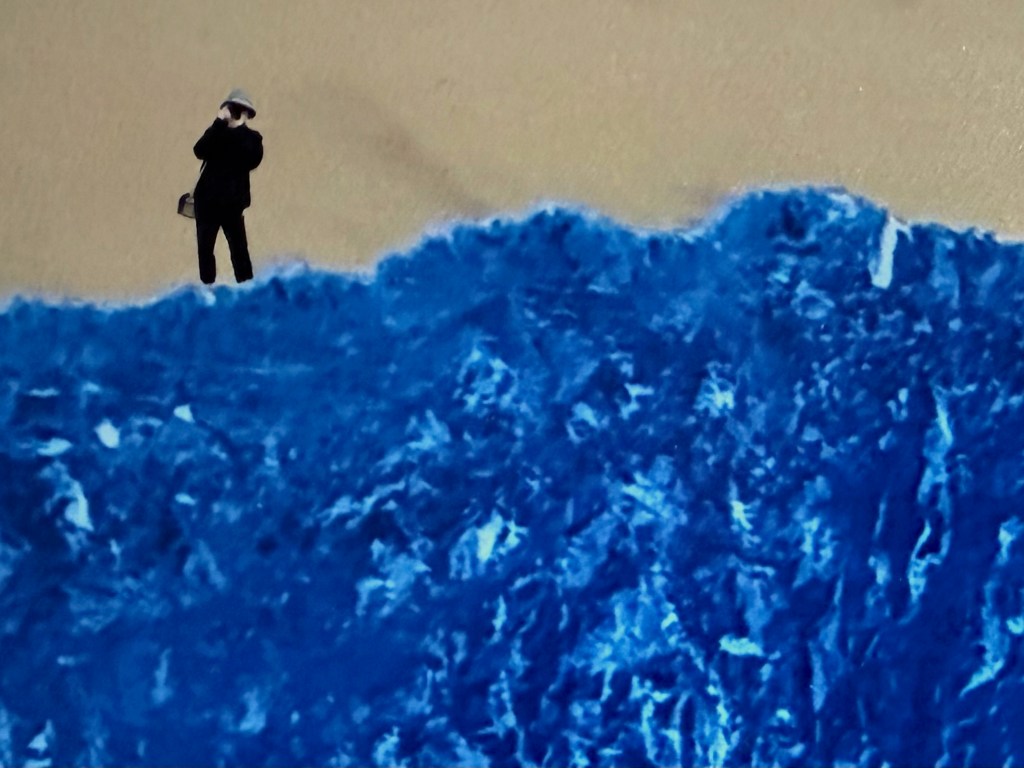
I recently took this photo of East Beach in West Bay.
We’ve spent a lot of time over the last 20 years or so on this part of the south coast, between Weymouth and Lyme Regis. The cliffs are made of sandstone which is undercut by the sea and in recent years the incidence of rockfalls and landslips has increased to at least two a year – a woman walking on the beach was killed in one in 2012. The extent of the coastal erosion is evidenced by the regular closures and rerouting of the South West Coastal path. Yet despite the large yellow warning signs on the beaches, there always seems to be someone either standing near the edge of the cliffs or sitting close to their base, if not directly under them.
I suppose that I’m interested in the sense of a general lack of awareness, which often comes about by seeing life through a lens rather thna living in the moment.
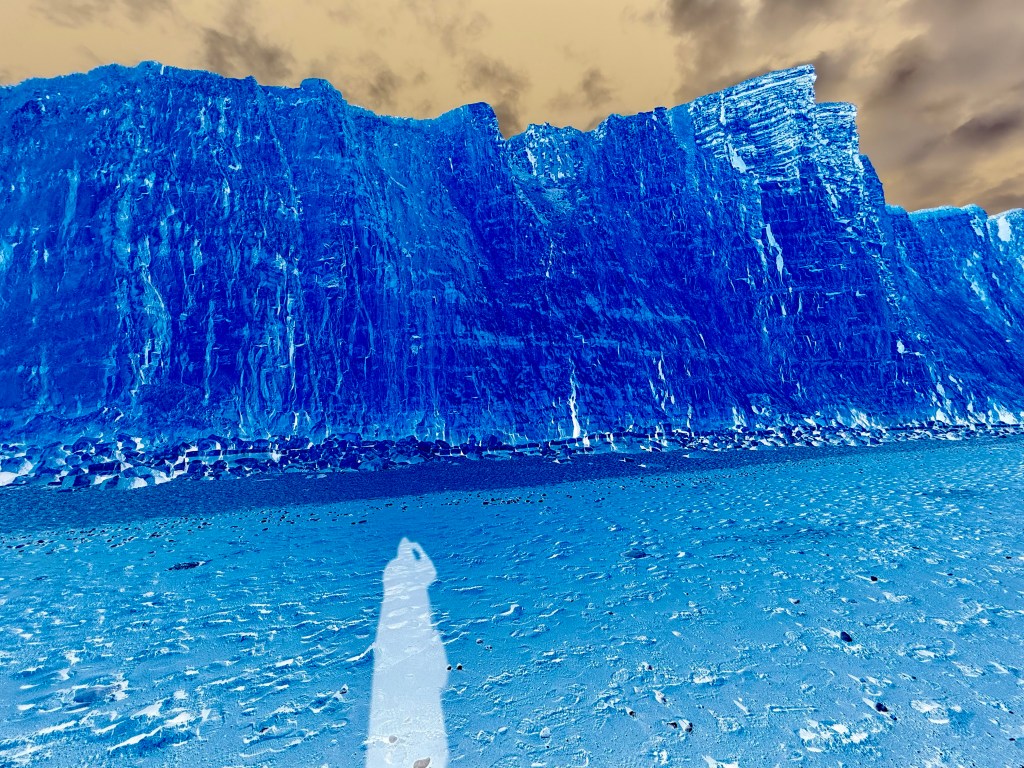
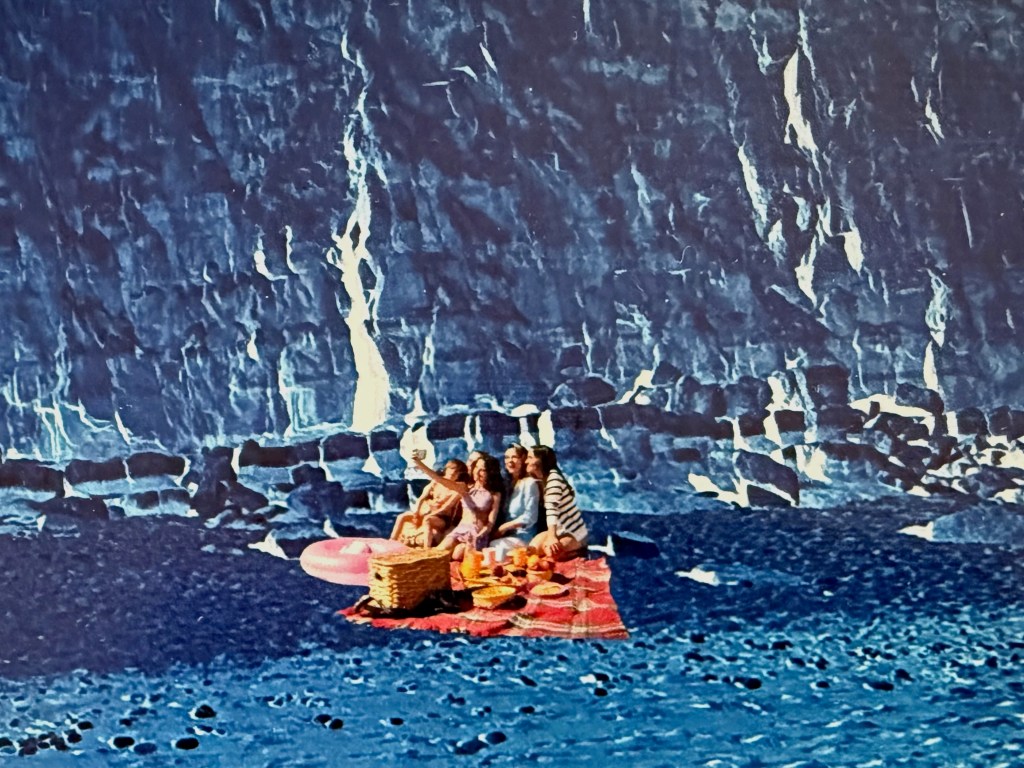
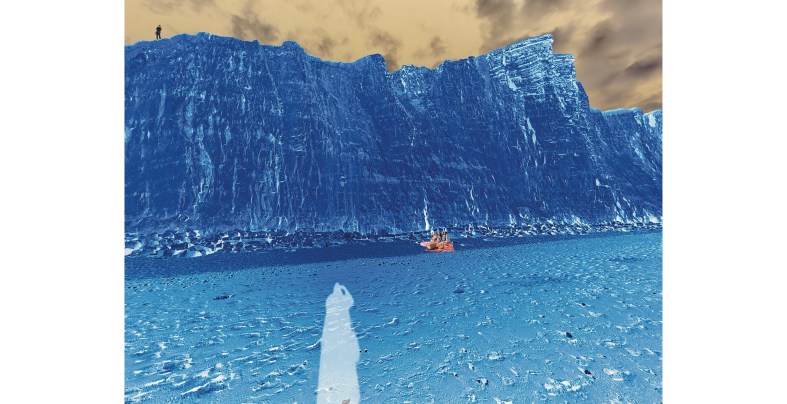
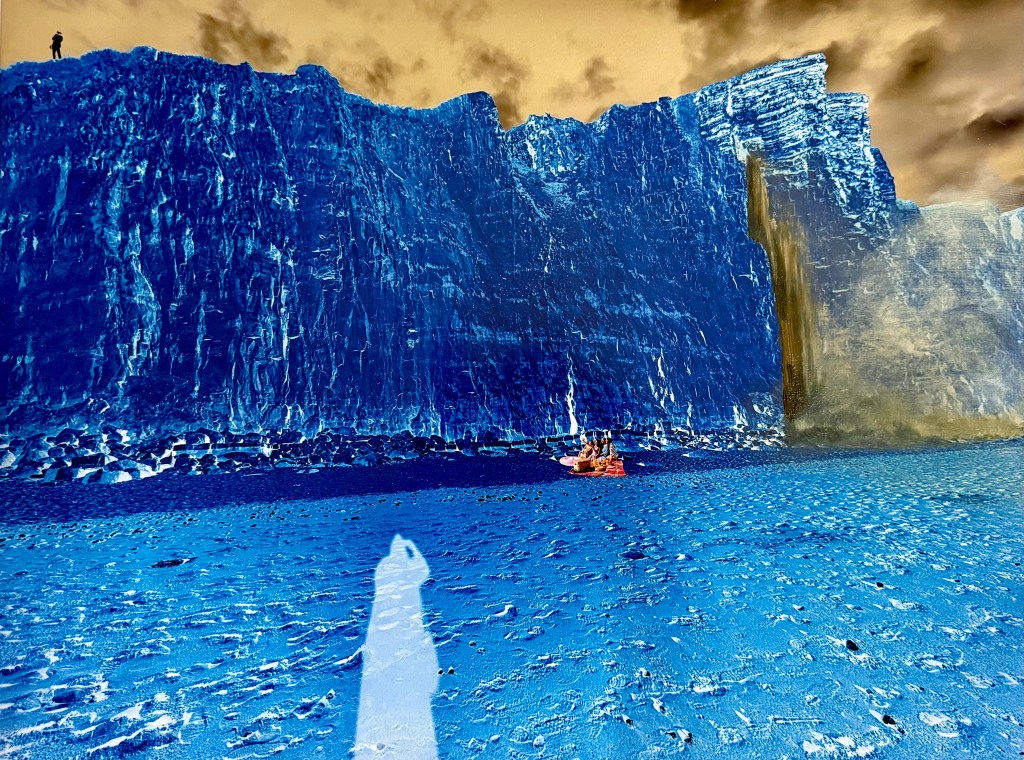
Anyway, I experimented by inverting the photo. My plan is to digitally collage some figures into it, all using a camera in some way, as I am in my shadow. Then I think that I will create a landslip in the cliffs on the right, probably using paint – I was interested in Johanna Love’s reference to Richter’s painted photographs.
After adding some figures in Procreate:
It was difficult getting the scale of the figures right and still being able to make them out, but it’s the best that I can do. Also, Procreate has desaturated the colours – from what I can tell it’s because it uses a different colour profile, but I think that I prefer the blue as it reminds me of a cyanotype. So I’ve had it printed onto satin photo paper, halfway between A3 and A2.
I needed to think about how the paint might behave on the photo paper. After some research I decided to spray the print with varnish to protect the ink from the next layer of gloss medium. I then painted on top.
It’s still raining, and a short while after I’d finished my last post, I realised something which put even more of a damper on things, just as I thought that I was making some headway – I hadn’t considered the issue of copyright.
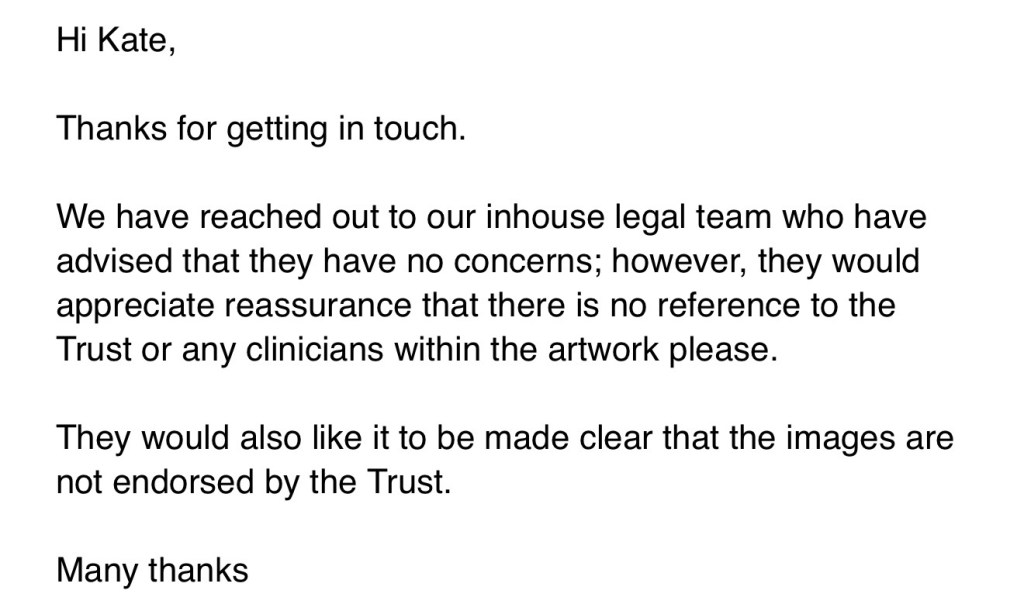
Whilst it’s my data, the copyright in the images belongs to the maker, in this case the healthcare trust as employer of the radiographer. I did a bit of digging around and discovered that I needed to contact someone known as the Caldicott Guardian for my healthcare trust, and luckily the details were on the trust’s website. I sent off an email explaining who I am, what I’ve done and added in a bit extra about the benefits etc. Amazingly, after a couple of days I got a response:
Something to bear in mind for the future, but for now, a relief.
I’m starting to get the same feeling as last year – something that was supposed to be relatively straightforward, and into which I wasn’t going to invest too much effort, has become unexpectedly more complex and time consuming.
Having been distracted momentarily by my line drawing phase, I’m experiencing delayed January blues. When is it going to stop raining? It’s really difficult to get enthusiastic about much when it’s constantly dark and raining outside. Opportunities to go out for a good walk are limited, although Otto, the dog, still has to have his walks but they’re generally quite quick because, likewise, he doesn’t like the rain, and won’t go in puddles.
Nevertheless, I’m keen to keep up my recent momentum in making. One pressing concern is next week’s looming deadline for the Royal Academy’s Summer Exhibition. Somehow, I managed to apply for two entries this year – I was intending to apply for my husband to encourage him to pick up a paintbrush again, but clearly I wasn’t wearing my thinking head that day. So I’m now setting myself for a double rejection, but it’s happened so many times now, I’m feeling quite immune. As always, there is a theme but I’m not even going to bother thinking about it this year, although I do note that they are encouraging students to enter – maybe that will improve my chances!
I had the idea during last year’s low residency to get hold of the images from my endoscopy which I’d had a month or so before. Well, I eventually got around to requesting them, but the good old NHS has sent me everything but what I actually wanted. Whilst I’m waiting to hear back from them (let’s face it they’ve probably got better things to be doing), I thought I could make use of last year’s mammogram. There’s really nothing quite like having your breasts squeezed between two rigid surfaces. Before I had my first one, a friend of mine commented that she hates having them done because the machine reminds her of the meat slicers you get on delicatessen counters. I relayed this remark to the radiographer who grimaced and squeezed her legs together. I have to say that the thought does flit across my mind in the moment. Rather ironically, because it feels less clinical than a hospital, I always choose to go to the mobile unit in Tesco’s car park. It means I can do the weekly shop afterwards – two birds, one stone, and all that.
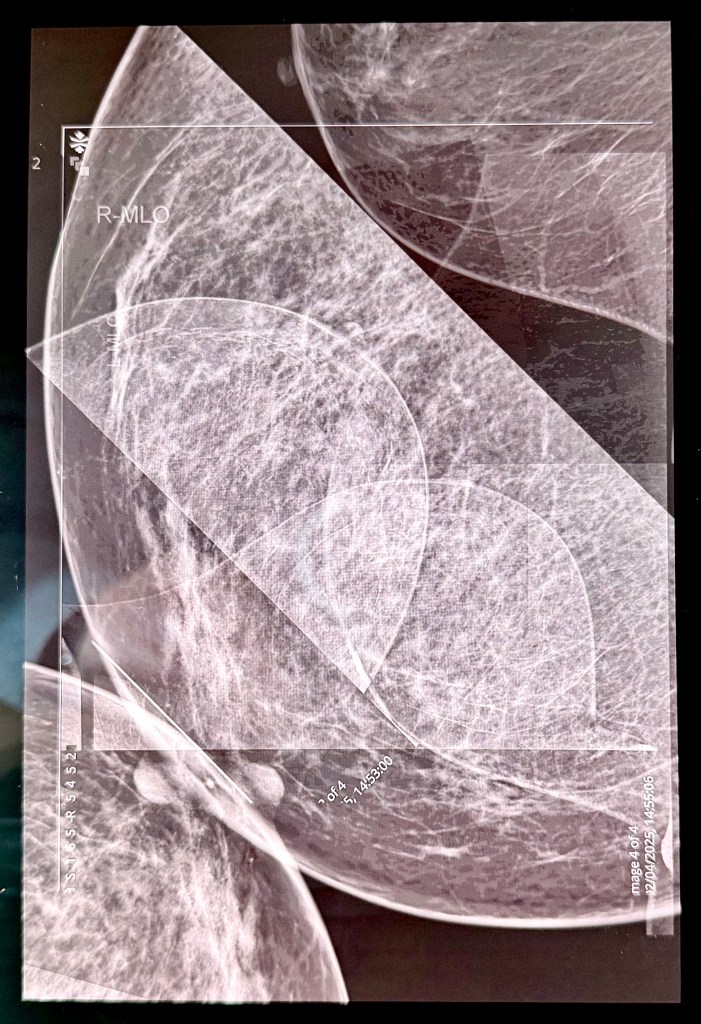
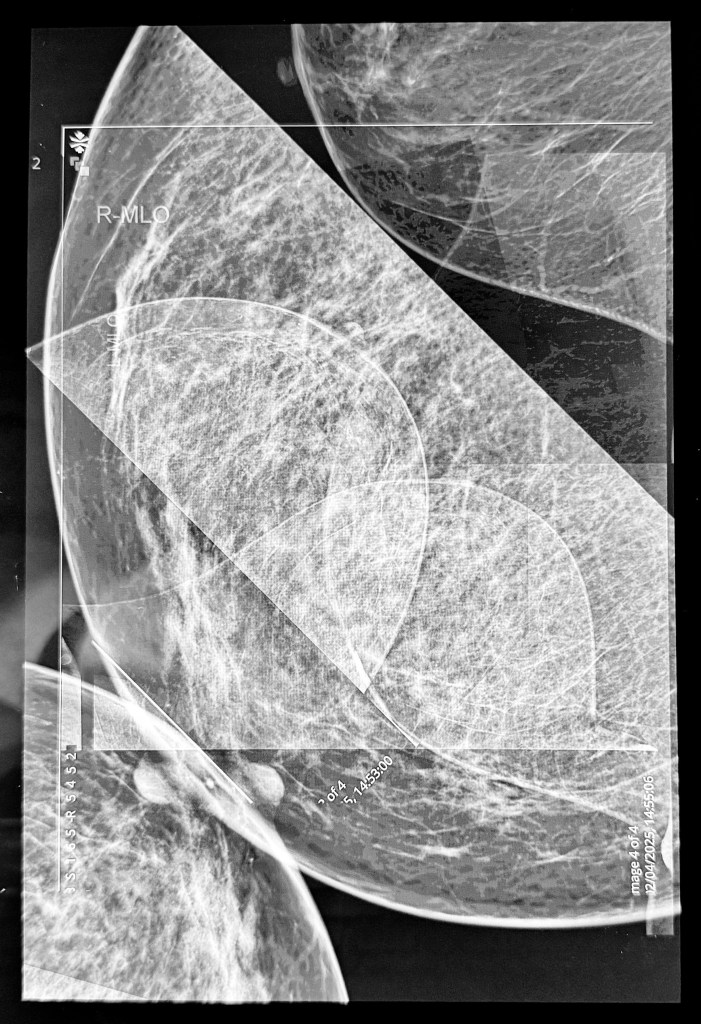
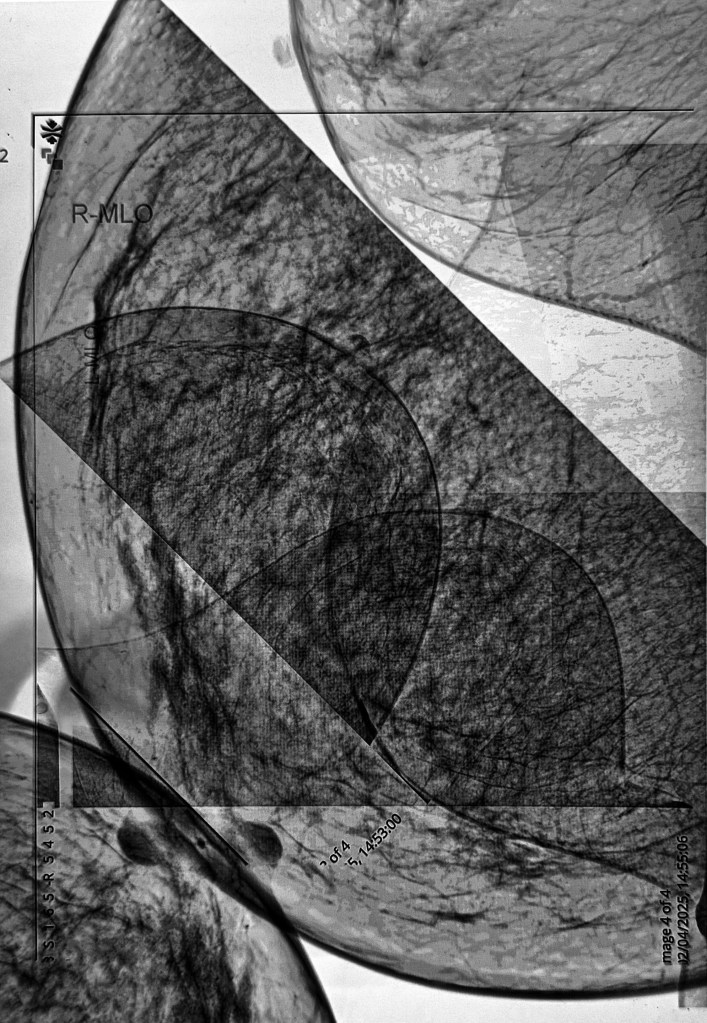
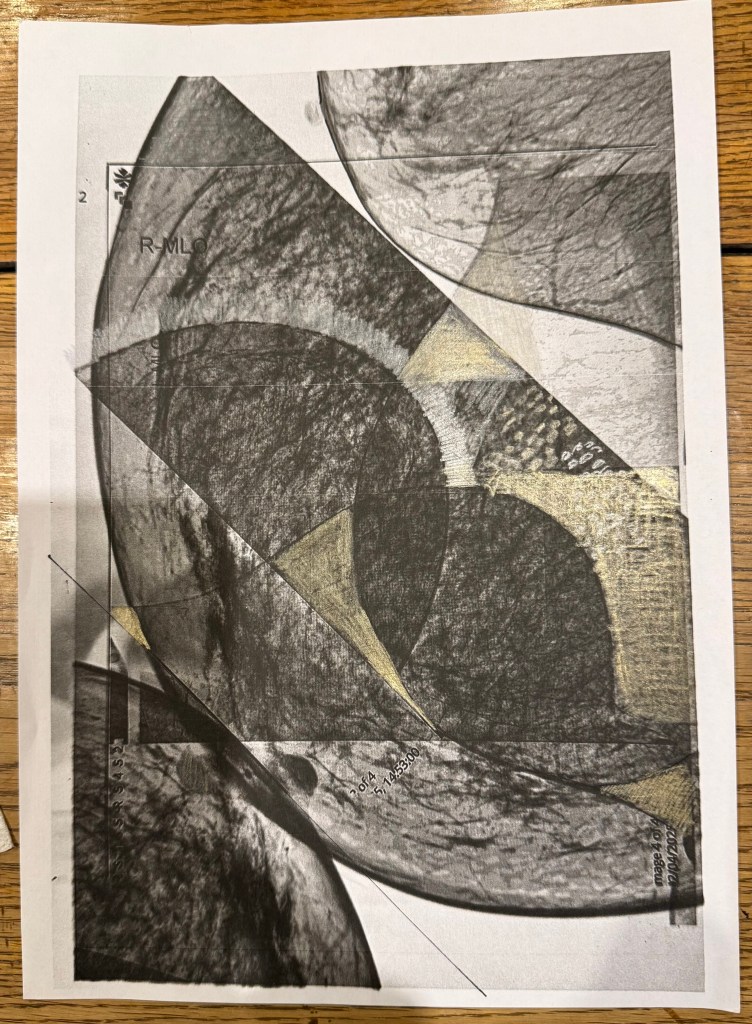
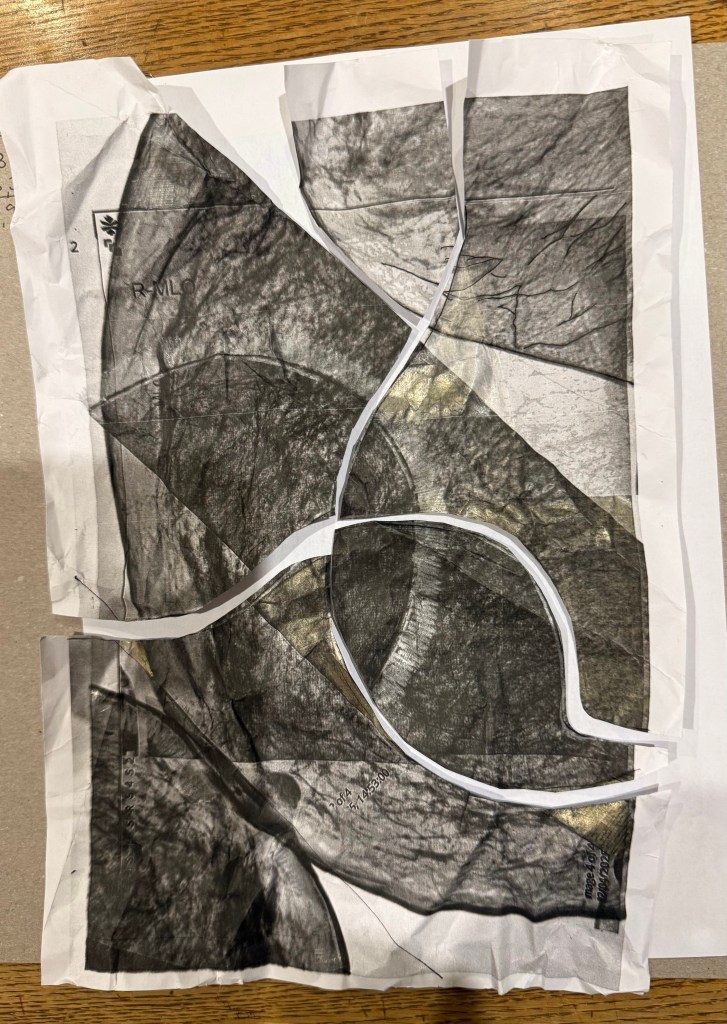
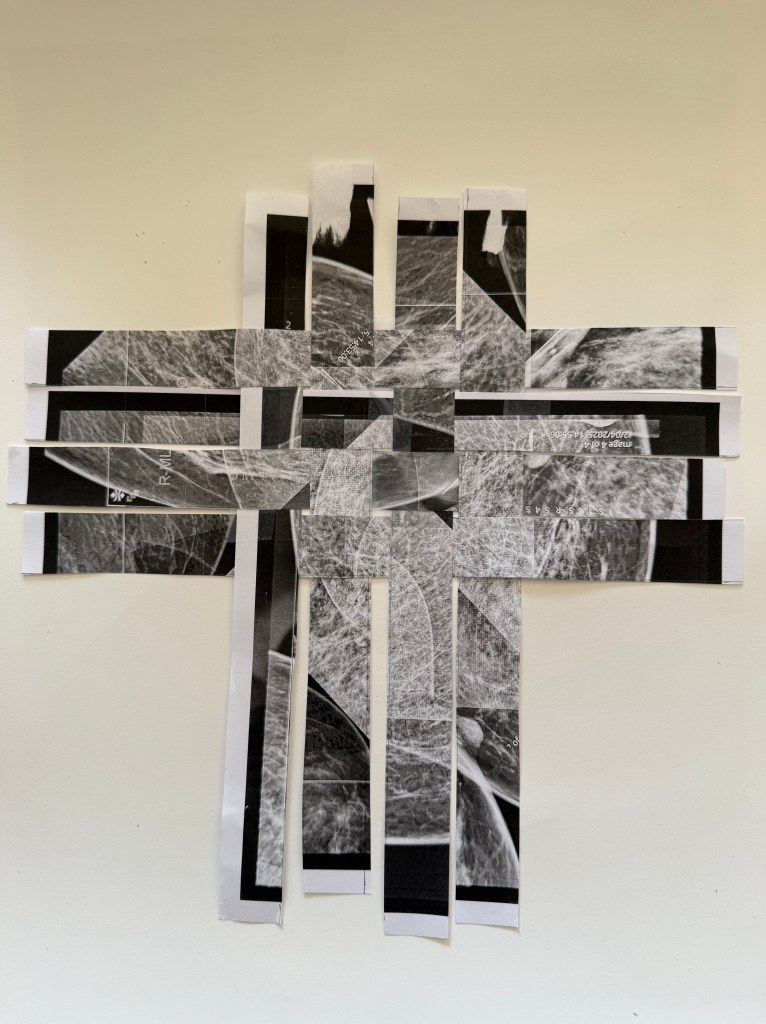
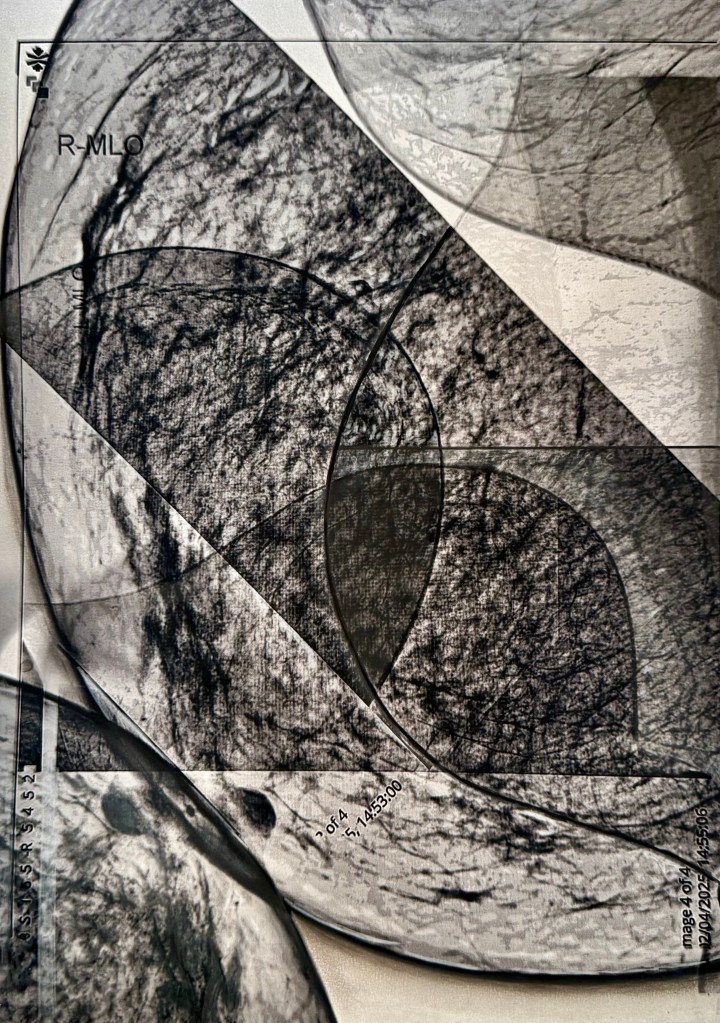
I took all four images: right and left mediolateral oblique and right and left craniocaudal. I removed my personal info and removed some digits from my hospital number as I wanted it to be apparent that they are medical images. I then imported them into Procreate and played around with inverting and layering etc. And this is when I learnt an important lesson – whilst it’s great to experiment and try lots of different things, if you don’t make a note of it somewhere you won’t be able to recreate it. I liked the first image I made but wanted to adjust some of the transparency in some areas. So I adjusted it but couldn’t remember what I had done to create the final image. Try as I might I just couldn’t recreate it so, in the end, I decided to run with the original image. I displayed the image on my laptop screen and then took a photograph of it which incorporated some of the reflections on the screen, which I think add a bit of depth and additional interest to the image. The idea was to print it and then overdraw with pencils, charcoal etc. I experimented on a home-printed image. I became even more despondent because nothing seemed to work. I decided to fold it, scrunch it and cut it up. Then I thought, a good approach when something isn’t working is to cut it into strips and weave it. I liked the effect, and my mood lifted.
Anyway, when I got the A3 image from the printers I didn’t think it was that bad, and I couldn’t bring myself to cut it up so I just overdrew some areas adjusting tones using black, grey and silver pencils and some charcoal. I quite like how the inclusion of the straight lines and the curves suggest a graph of some sort, how it has both a geometric feel but also a natural, landscape feel, as if the line towards the centre is the waterline and beyond is a land mass, the dark area on the left almost reading as a tree. It was rolled up, so I’m going to have to flatten it and sort out proper lighting before I take a photo for submission. I actually really like it.
Aside from the importance of making notes whilst experimenting, this exercise has also taught me something about myself, which I suppose I have secretly always suspected. I started out with the idea of overdrawing the image. Initially that didn’t work, but rather than accept that I could change my thought process, and go off in a different direction, I allowed myself to press on and become despondent. My thought process was not flexible – it was a form of tunnel vision. Once I let go of it, I felt more positive.
I’ve decided to experiment with using the contour image in Procreate as a layer.
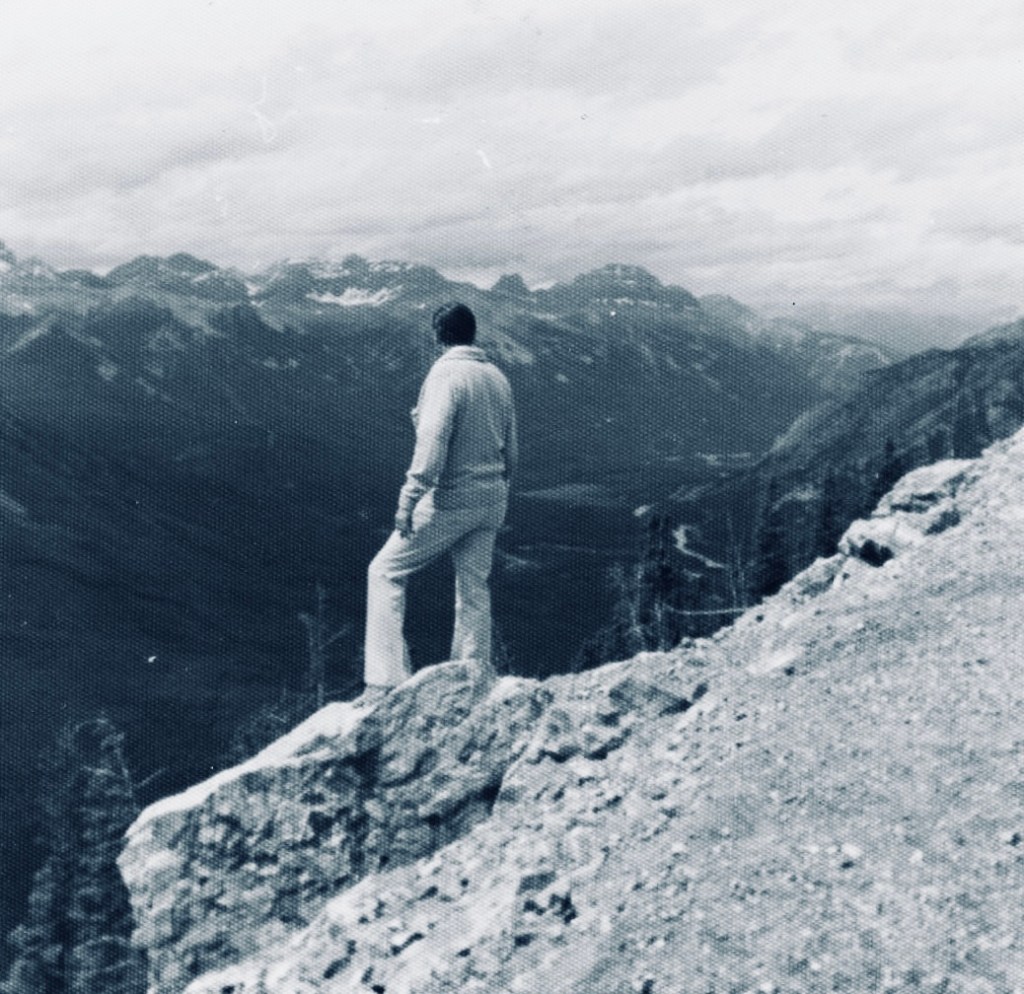
I was looking through some old family photos and found this one of my father in Canada. This is a recurring image from my childhood – if there was an edge or a high place, my father would always go and stand on it despite us pleading with him not to. I think he would have been about 40 years old when this was taken. I took him on the London Eye when he was in his 70s and I don’t think he looked out at the view once, choosing to spend the entire time sitting on the central seat, ashen-faced.
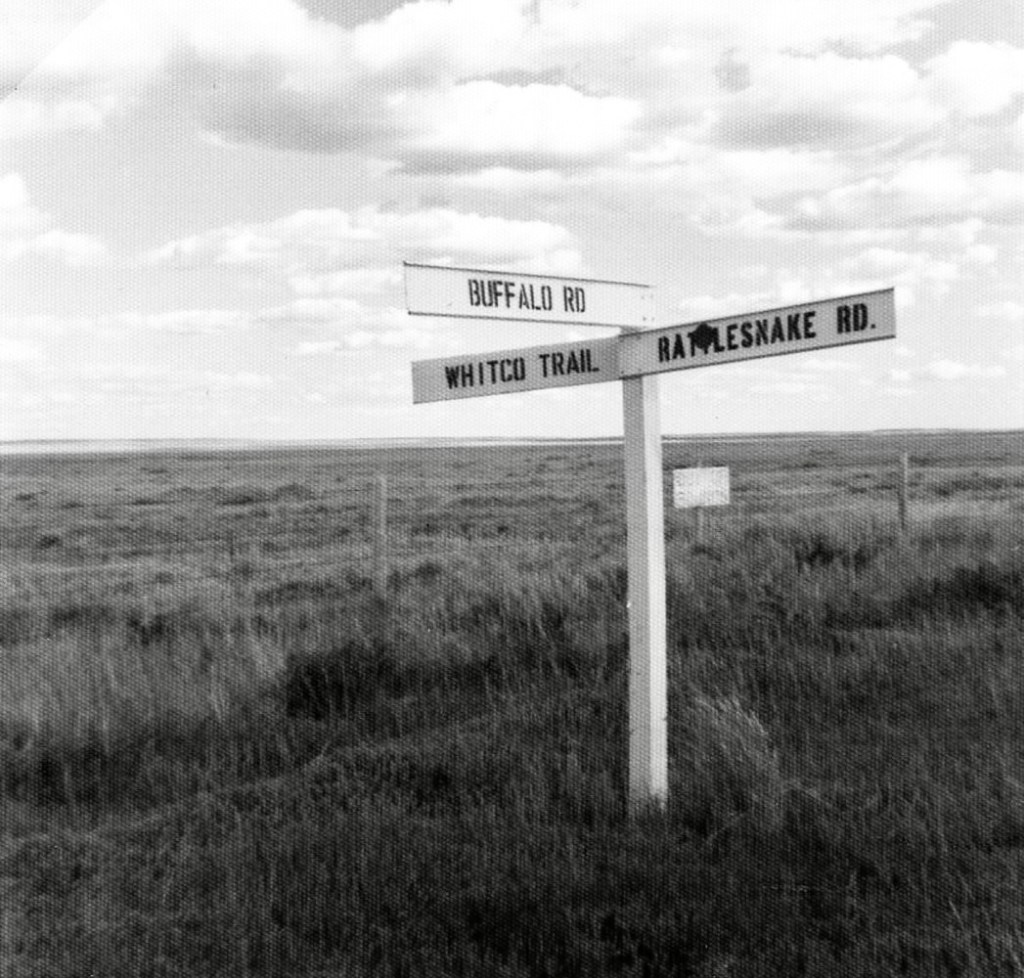
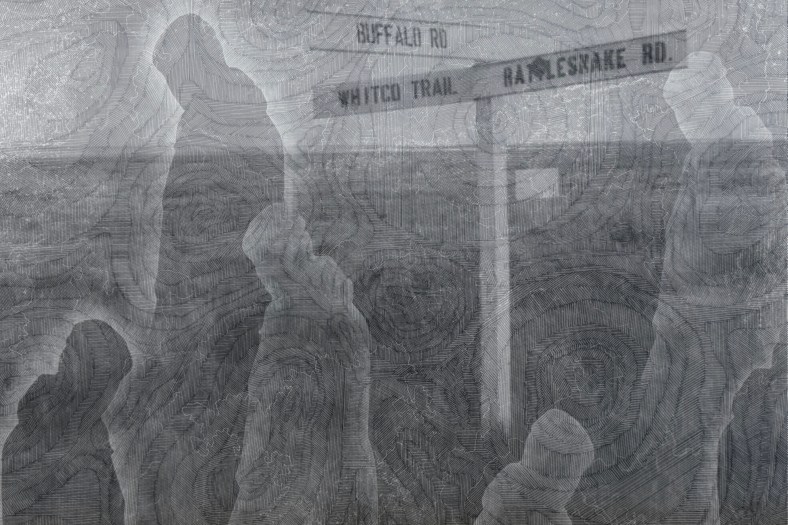
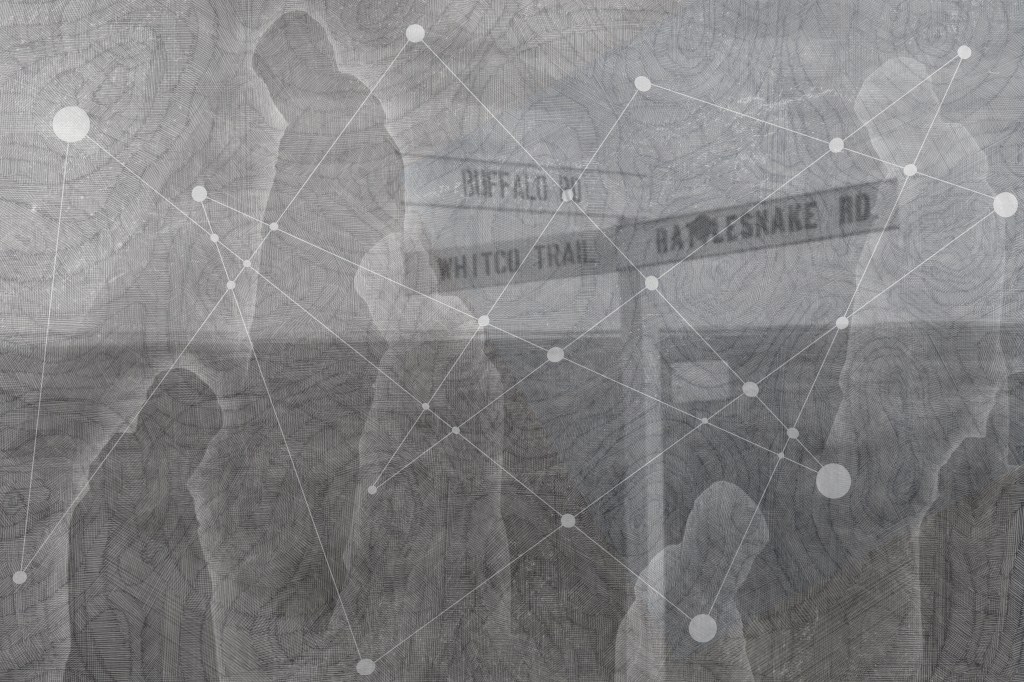
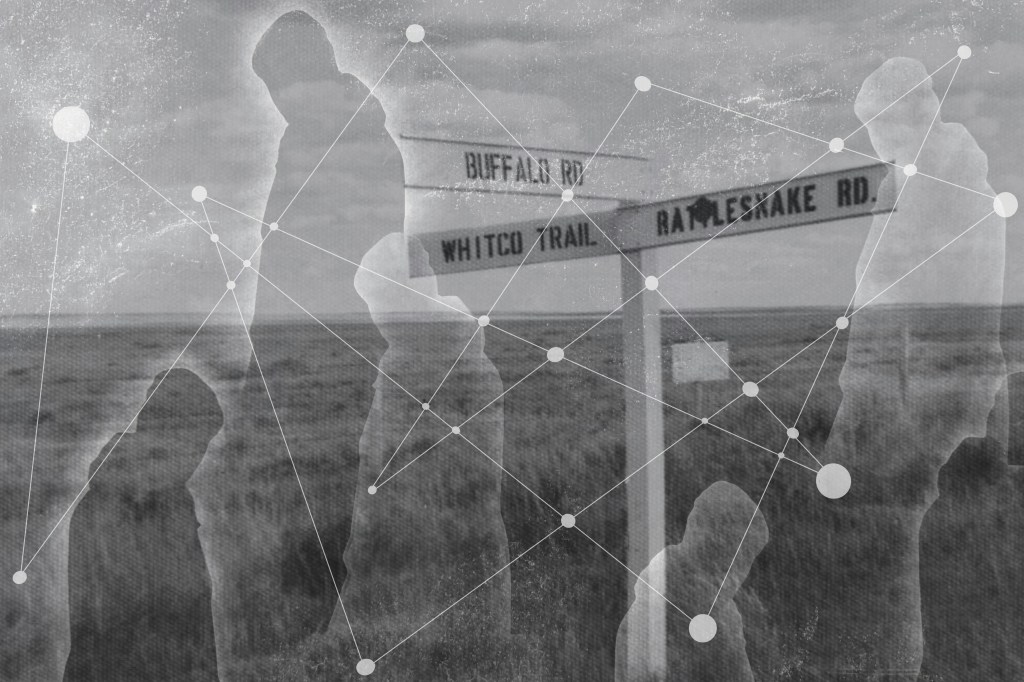
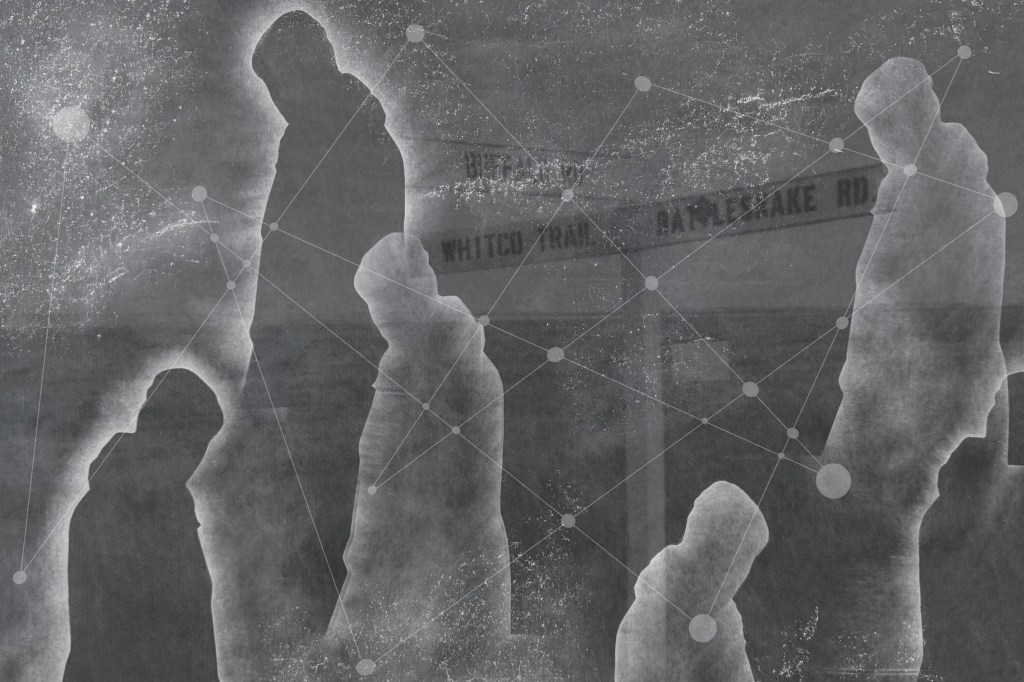
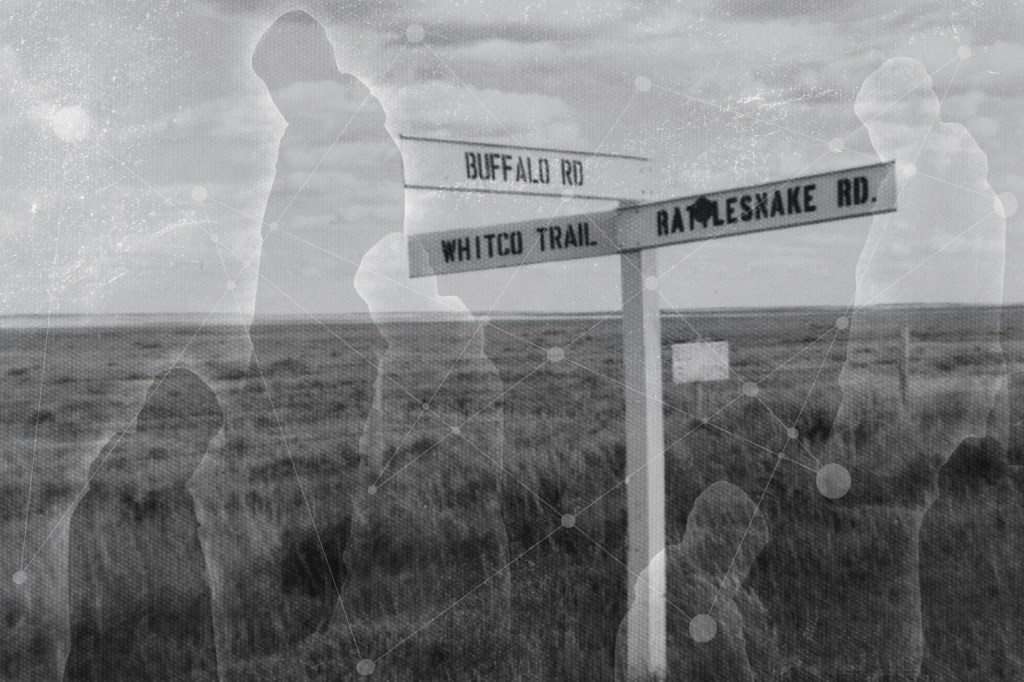
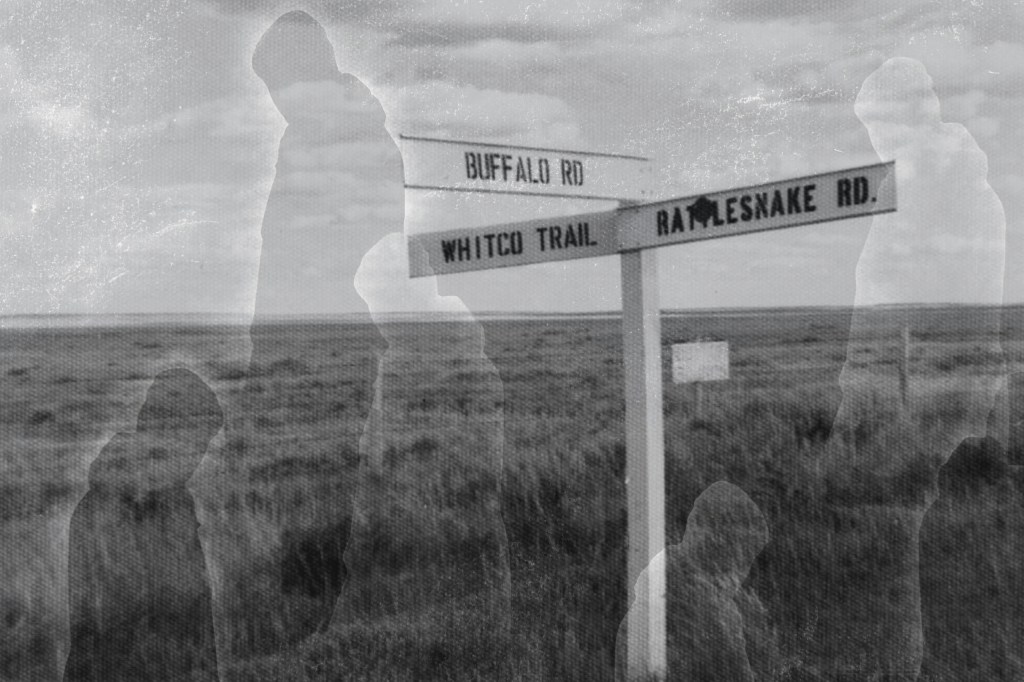
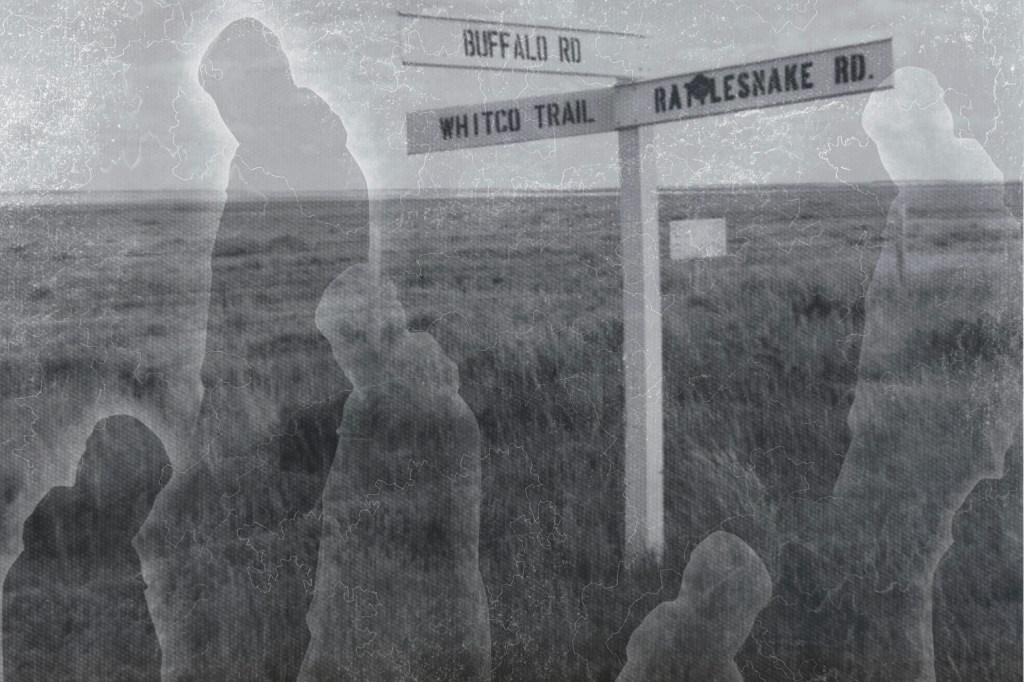
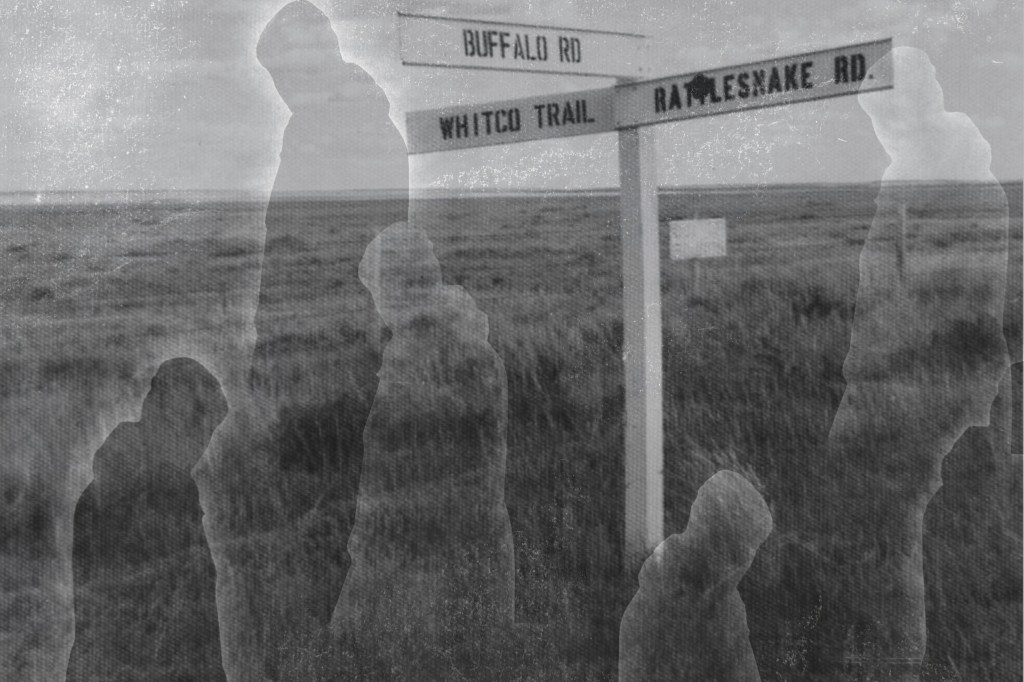
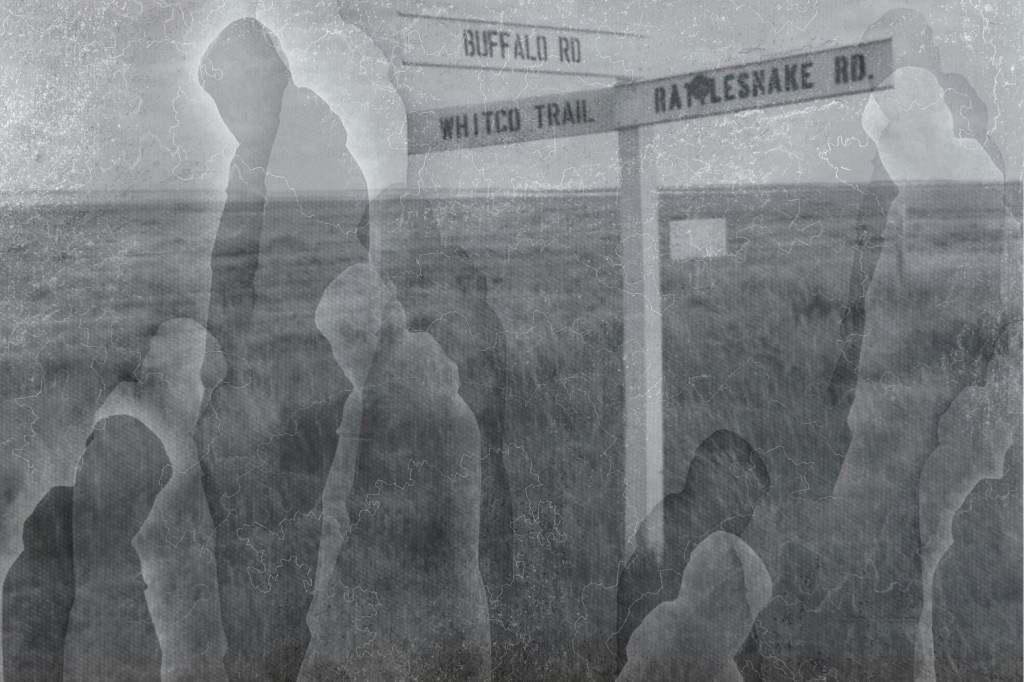
I also found this photo of a signpost.
I played around with layering using filters, inverting and adjusting opacity:
The image above is tonally bland; I prefer the one below. I like how the lined contouring gives the effect of the image being woven or embroidered.
Again, the images above don’t have enough tonal range. I don’t think the contouring adds anything, it’s probably more of a distraction.
A mixed bag of results. I prefer the images which don’t crop off the bottom of the sign post. The most successful is probably the penultimate image, but again I think it needs a greater tonal range. However, I do like the effect of the figures against the landscape, the idea of crossroads in life, decisions made, a different path followed and shadow selves.
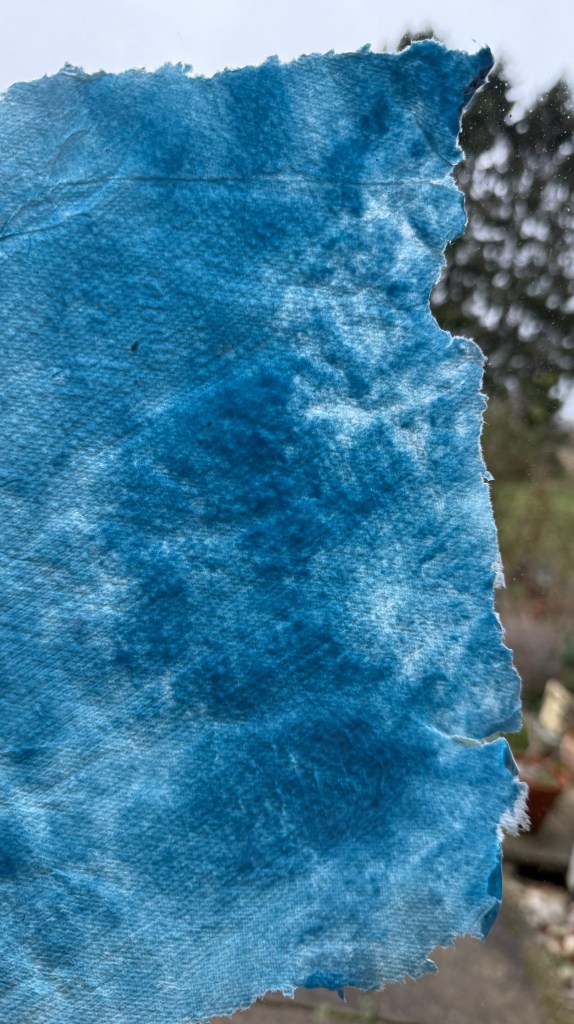
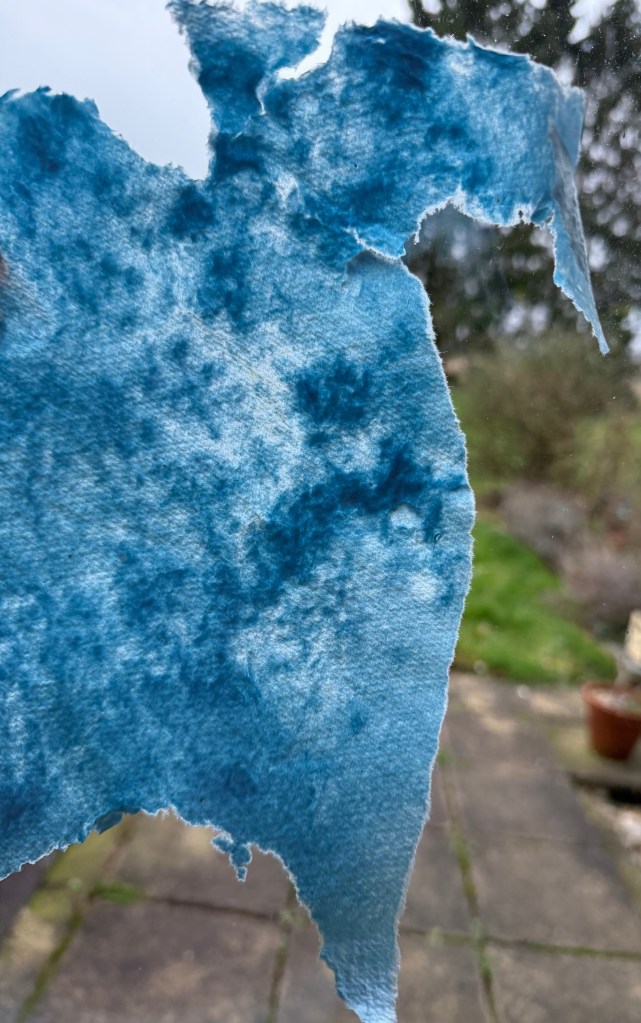
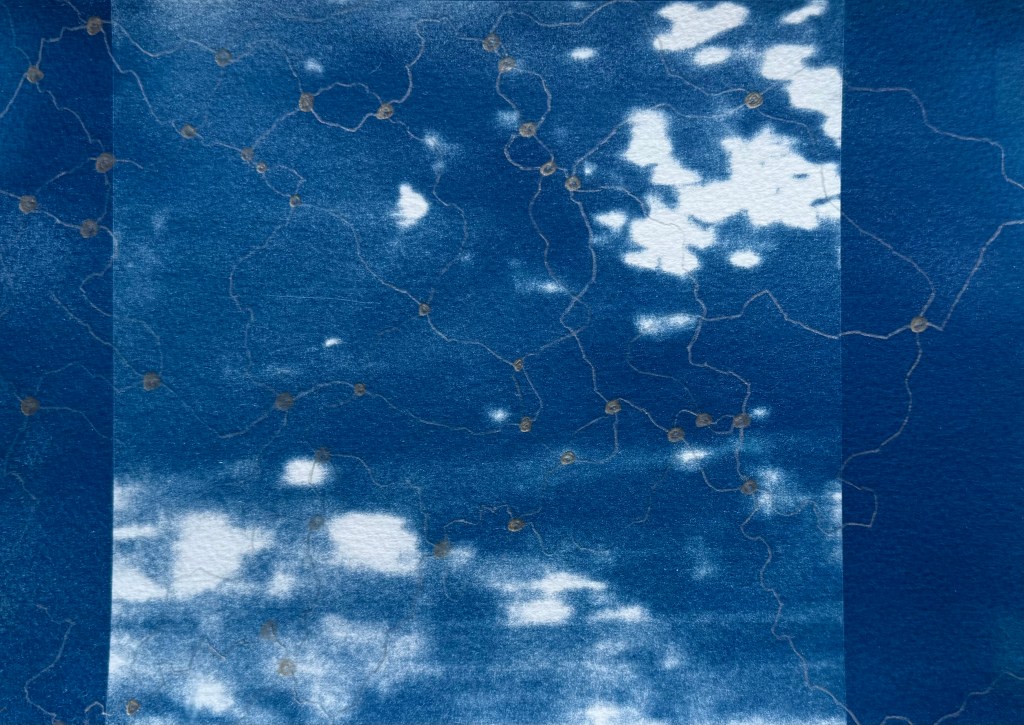
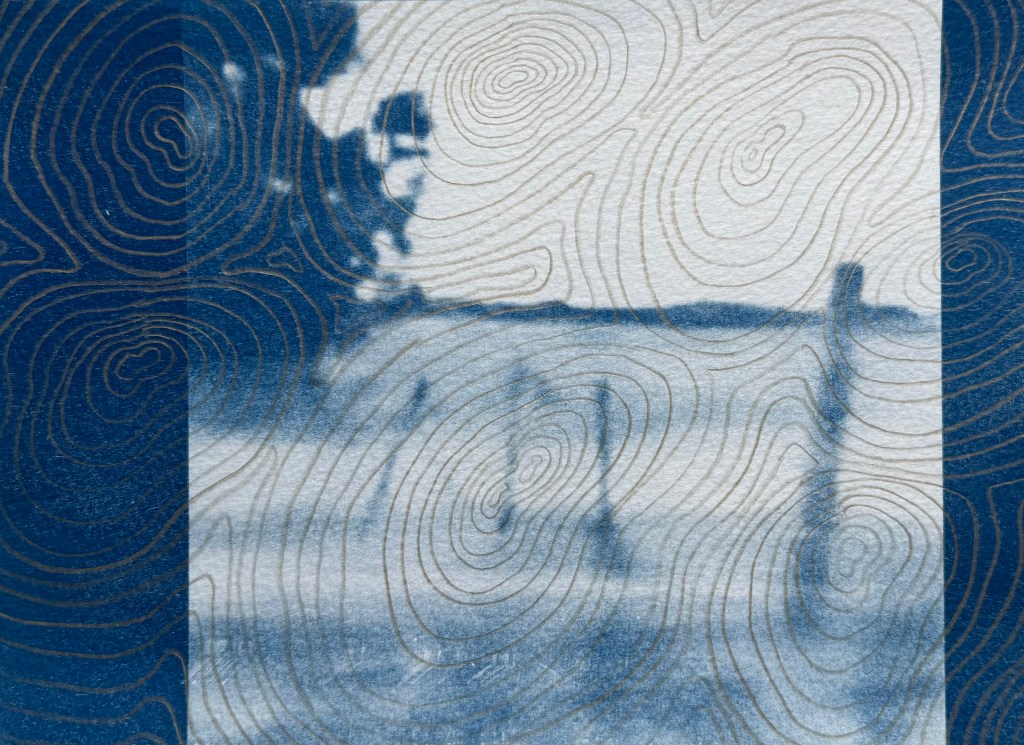
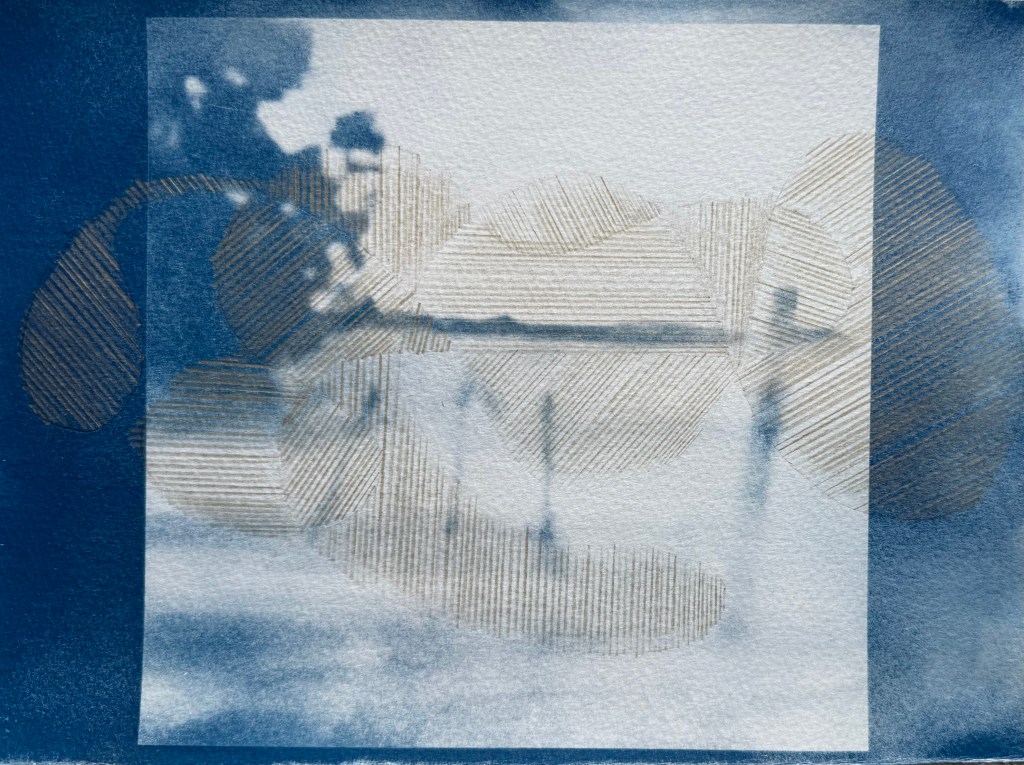
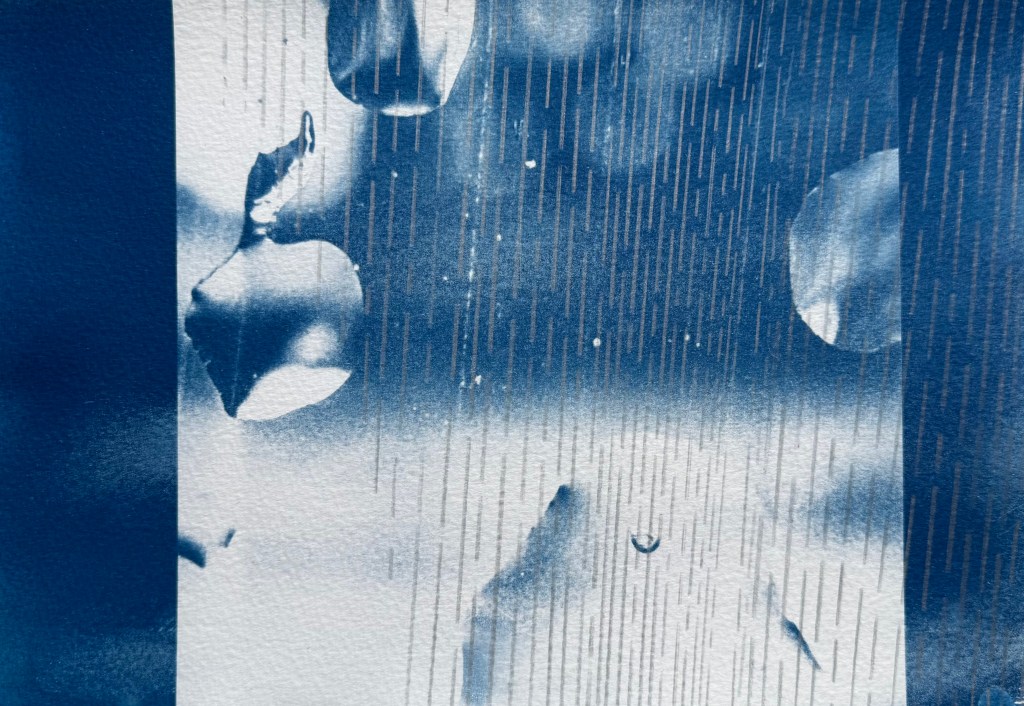
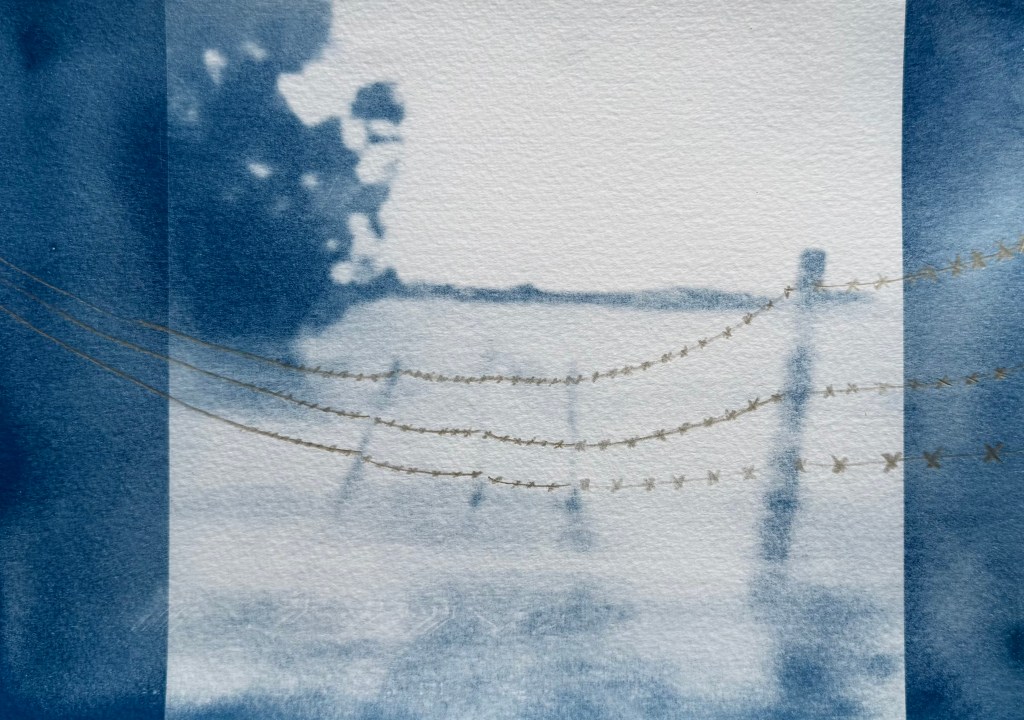
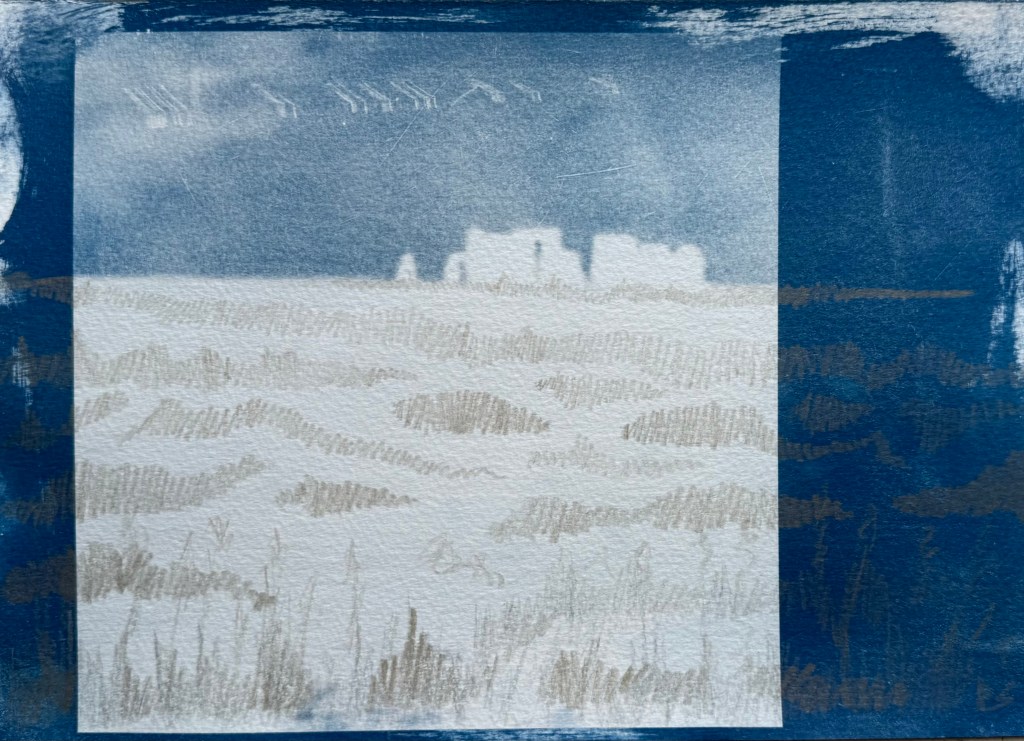
I was interested to see Jo Love’s remediation of old black and white photos using metallic pencils, in our session a couple of weeks ago. Photographic images quite often form the basis of my work. I decided to experiment with gold and silver pencils on some old unsuccessful cyanotypes I made from the video stills in In A Flash. The results were varied.
I used the silver pencil first but thought that it didn’t stand out enough. On reflection I think there is a subtlety about it which I like, and perhaps it would have been a better choice than the gold.
I’m not particularly drawn to any of them, but if I had to make a choice I prefer the last two images, particularly the last one. What works for me are the marks outside of the original image, the sunlike shape on the left and the drifting cloud on the top right. The overdrawing creates an image within an image, something which always appeals to me. I think part of the problem is the fact that the images are on watercolour paper which wasn’t overly receptive of the pencil. Overdrawing does appeal to me as a concept, though.
 Kate McCalmont-Woods