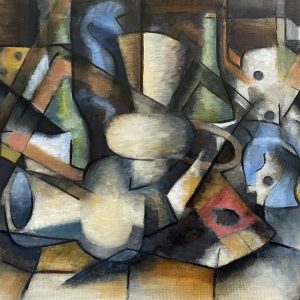
The idea of layering has always been in the background. It could be in the form of separate physical layers or the layering of media, or the remediation of images. I wanted to explore layering the moving image over the static image. I have to confess to adopting Lyberis’s approach of the monotone audio on his 3-minute video. To me, it’s the sound of silence, the sound that sometimes keeps me awake at night when I’m convinced someone’s running a car engine nearby or there’s an extractor fan which has been left on. It’s not quite right at the moment and it needs some more work, but I’m quite pleased with it so far.
Category Grief
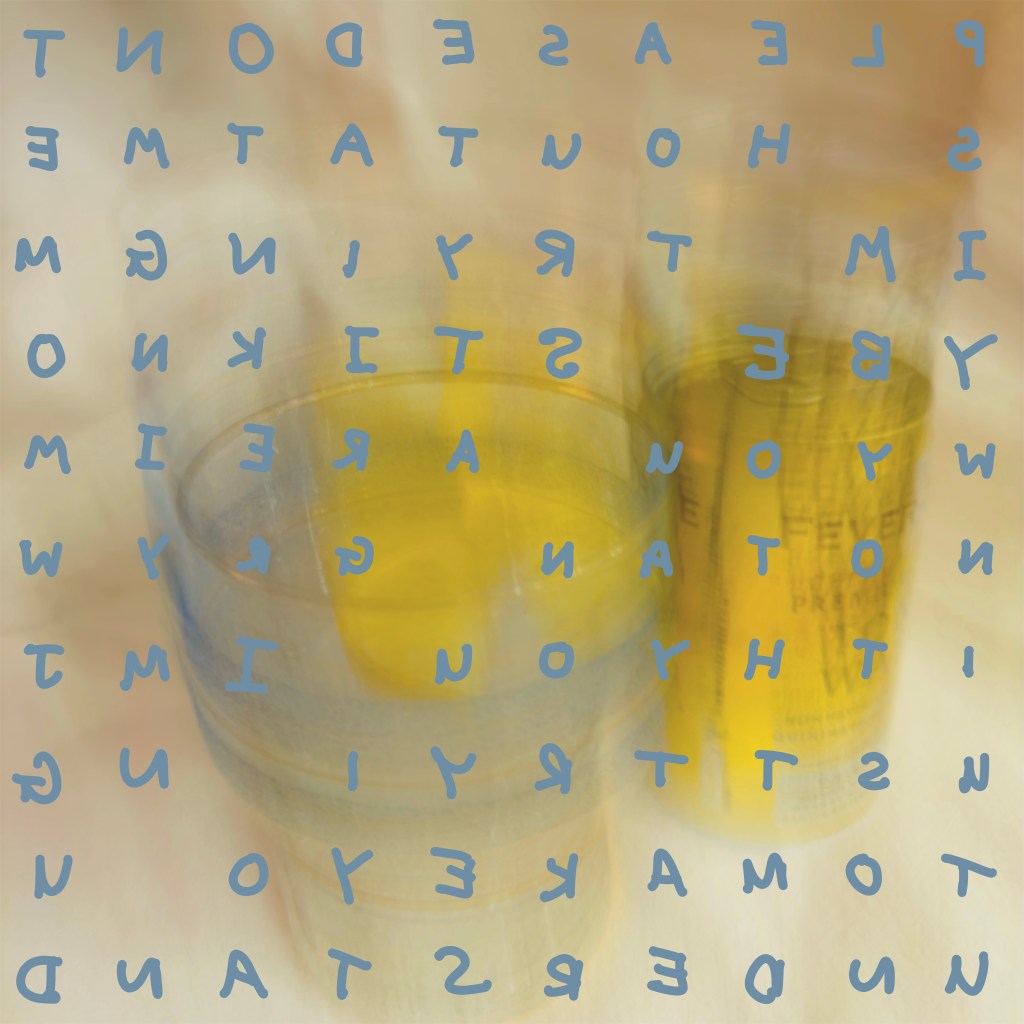
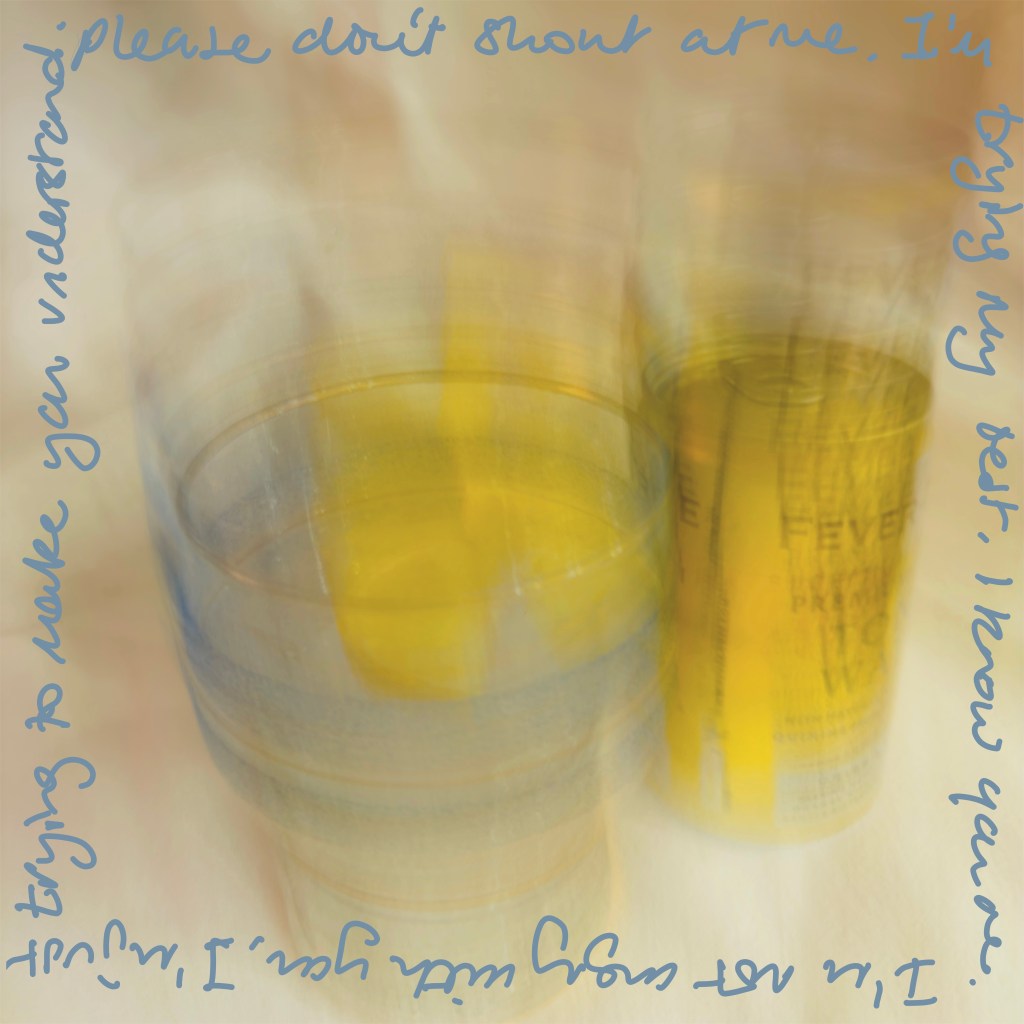
Ice & A Slice
’I fancy a gin and tonic’
I said no. Alcohol and morphine. Why? One of my biggest regrets. I used to dislike it, but now it’s my go-to drink. A constant reminder of when I should have been a daughter, not a carer?

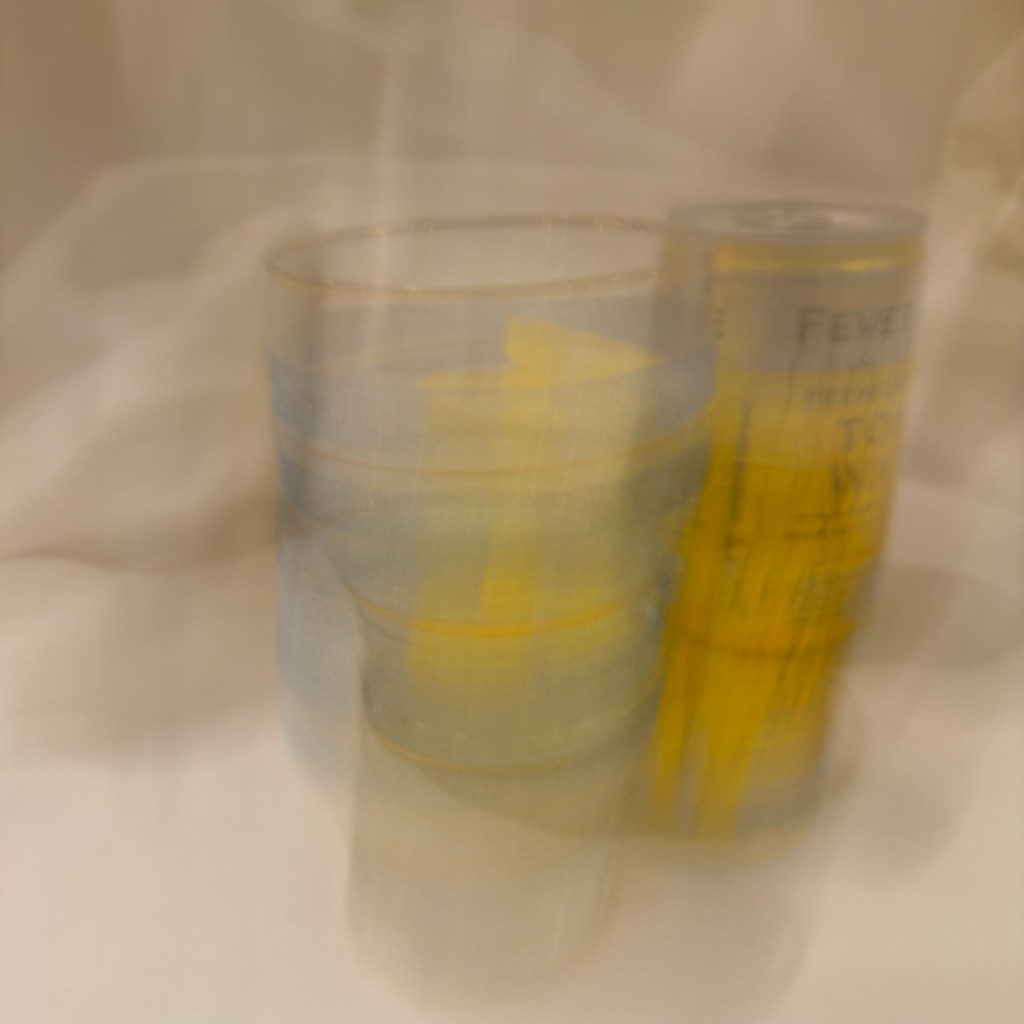
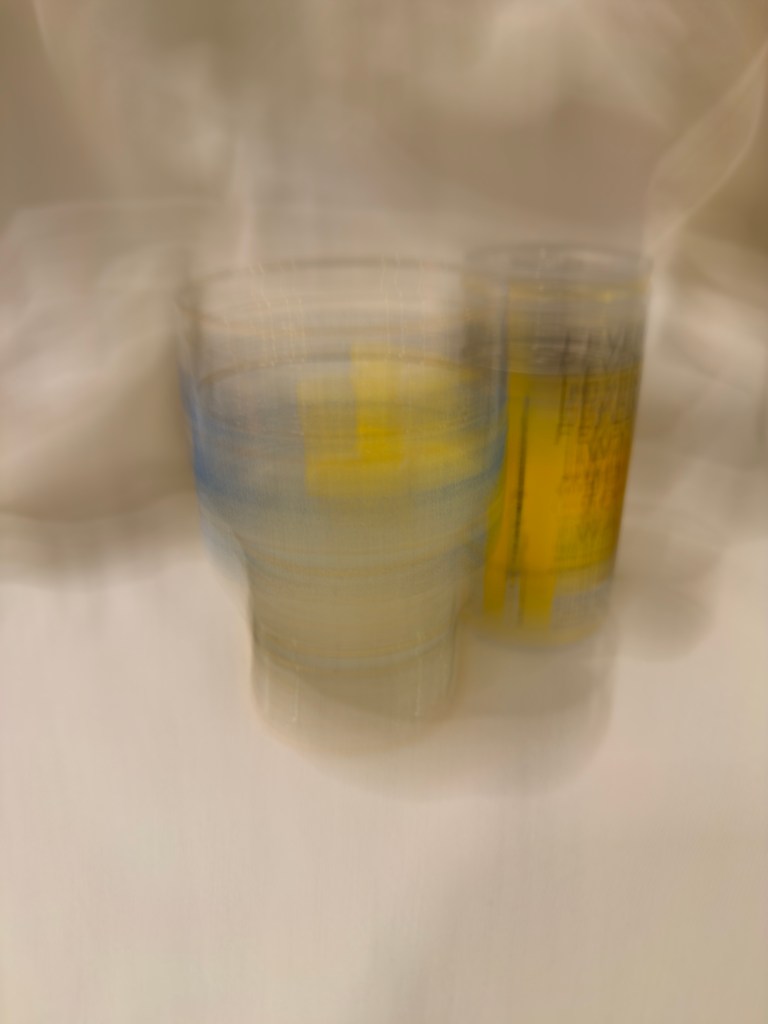
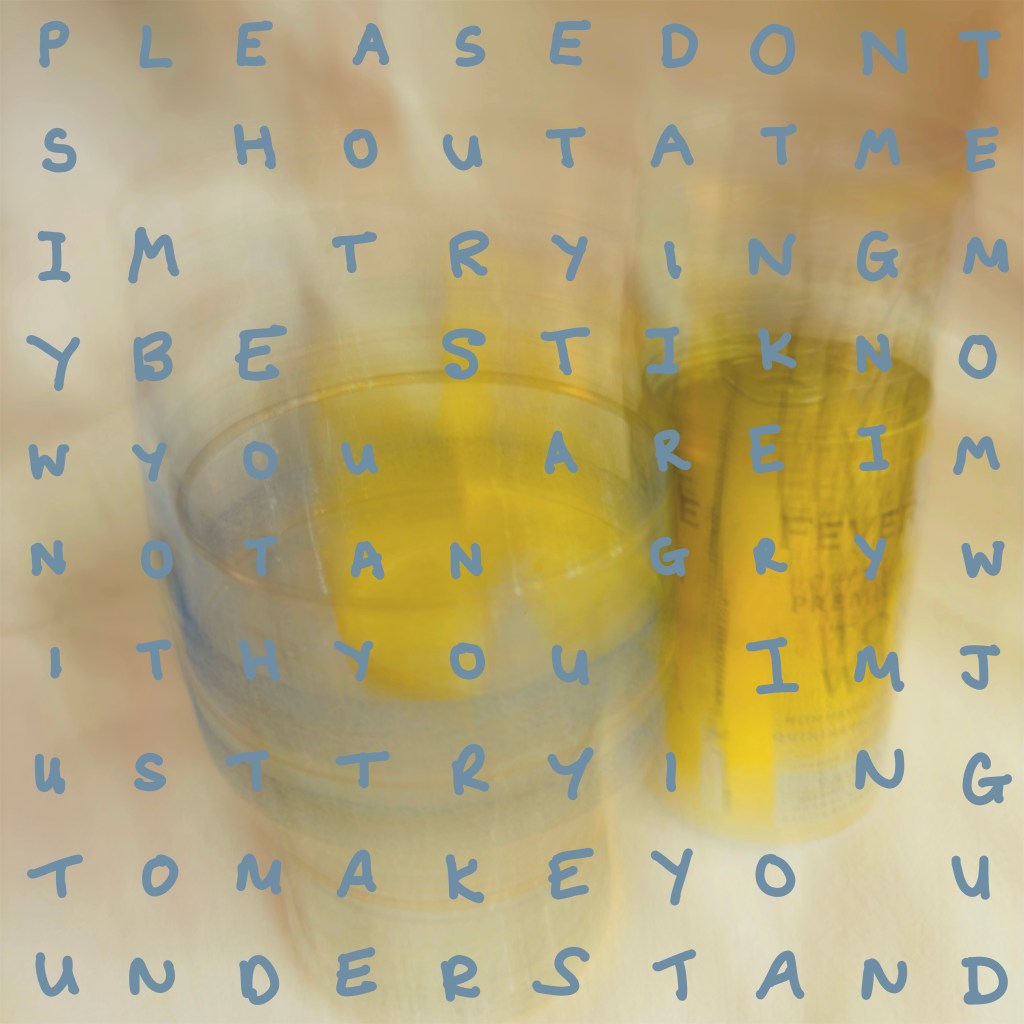
A late night conversation which embodies the isolation and hopelessness of it all.

Forget-me-nots
It’s a long time since I last had a pet, and this may not be anything new, but there’s a business out there, maybe more than one, which is supplying veterinary surgeries with packets of forget-me-not seeds to send to customers whose pets have died. Since Monty died we’ve received cards of condolence from our regular vets and the specialist practice, both enclosing identical packets of seeds.
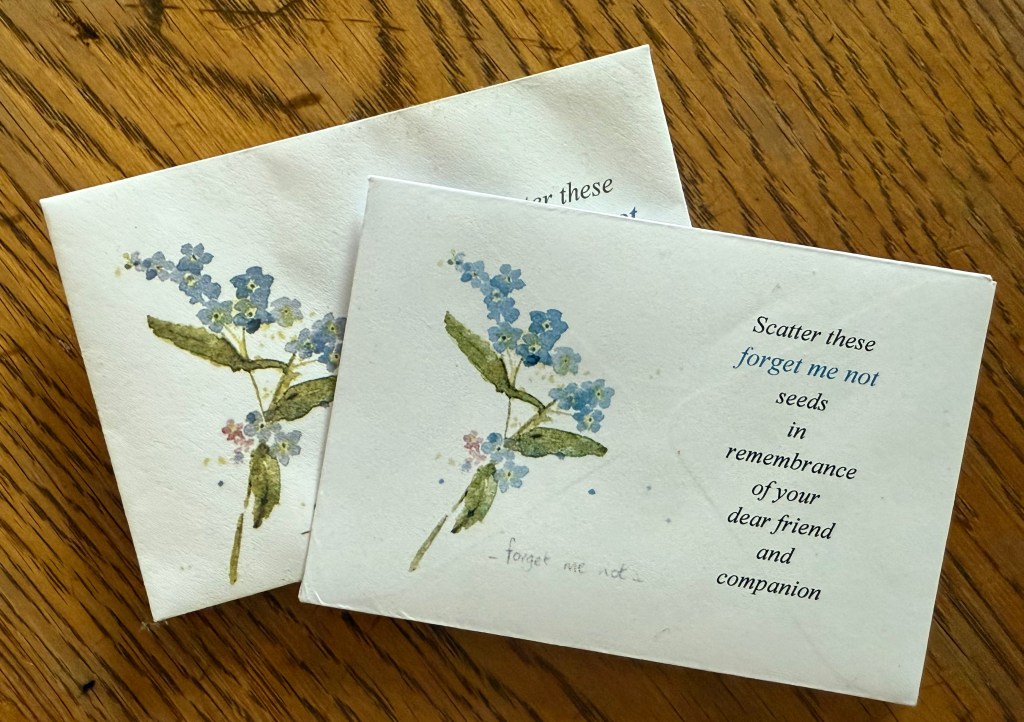
I will sow the seeds and hopefully next year green shoots will emerge from the earth, but with my gardening skills, I don’t hold out much hope.
I appreciate the thought, if it was indeed a thought, and not just a gesture generated automatically by an impersonal process. The cards contained messages from staff I didn’t even know were involved in Monty’s care; general messages of sympathy for our loss, except for one, which stood out because it described him as having been such a character. No sooner had Monty’s heart stopped beating than the vet’s hand was on my shoulder, followed by “I’m sorry for your loss”. Similarly, from the veterinary nurse who had assisted, with an added hug, whose eyes failed to show any sign of recognition a couple of days later when I went into the surgery to speak to her about our other dog.
I’ve decided that I don’t like the phrase; it’s trite and it doesn’t make the pain any easier to bear. In fact, I don’t think that I’m a fan of euphemisms generally, particularly, the idea of passing or passing away. Where to? My father died, my mother died, my dog died. That’s it. They didn’t go anywhere, I didn’t lose them, and there’s no chance of finding them again, and reuniting.
That’s not to say that I don’t believe in something else. Maybe I believe in the law of the conservation of energy: it can neither be created nor destroyed.
Now, where are those forget-me-nots?
Maps
I was very lucky to have Cheng and Dalal in my group for this week’s group crit.
I showed my recent experiments with graphite and pencil.

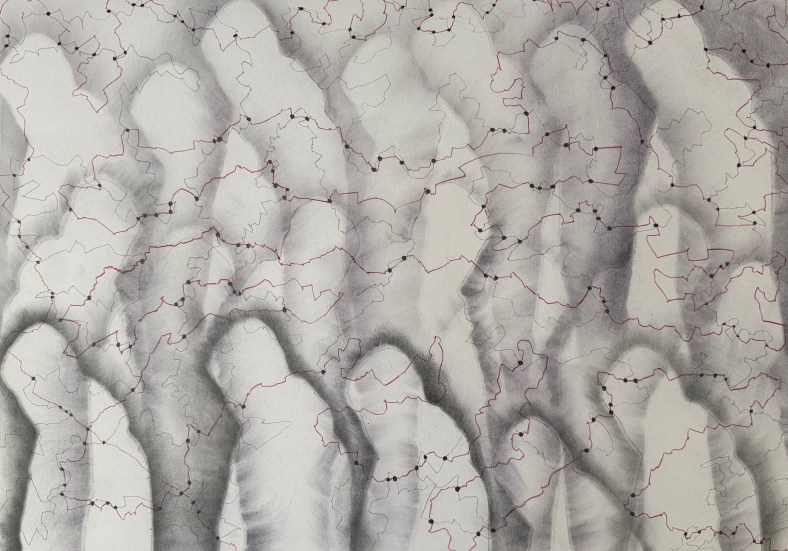

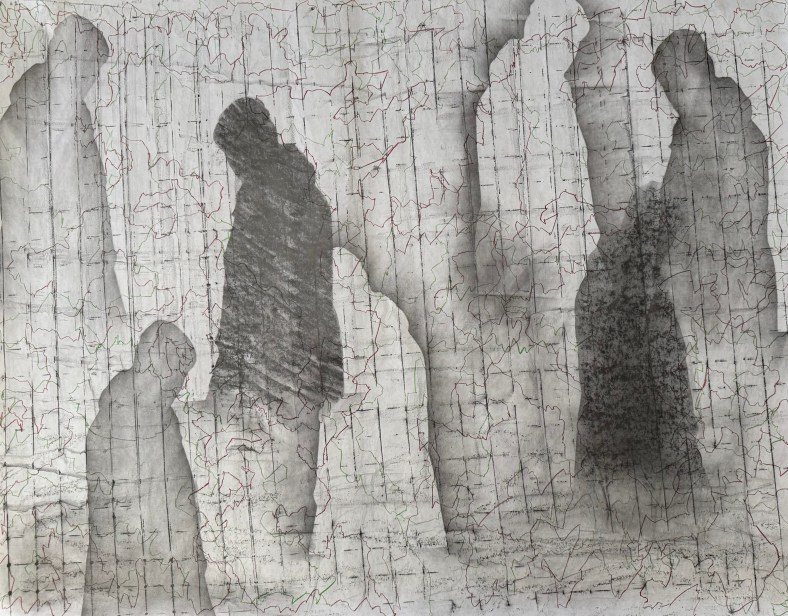
I explained that I have become interested in the idea of inheritance recently and mentioned Donald Rodney’s work. We had a really interesting discussion about where we come from and our legacy, how it’s sometimes comforting to know that someone else before us was like us which frees us from feelings of fault and guilt, the idea of all that has gone before distilling down into us, much like our family tree before us, ends with us. How what we pass on feels like a responsibility or a burden.
Cheng commented that the white shapes give the impression of something that is no longer there and the dark shapes are reminiscent of shadows. Thinking about it, the shadows are cast by something that is there but is not visible. A figure’s absence is felt yet we feel a figure’s presence somewhere – it just about sums up ancestry.
I explained the process of making the pieces and how they seemed to develop into a type of map. I mentioned that the subject of maps has come to the forefront of my thinking recently along with the idea of connection. In my Unit 1 feedback one of the comments was: “It feels as though you have been working through an abundance of techniques that are maybe a type of mapping – now is the time to compare and contrast all of those experiments in order to develop an intuitive and personal way of mapping your experiences…”.
For sometime I’ve been interested in Deborah Levy’s idea of her mother being her internal sat nav and I used Google maps to obtain the aerial image I used in Parental Loss. My art class recently gave me a scarf with a Grayson Perry map on it. I was thinking earlier in the year of mapping the course of a river. The coincidence that I chose to draw the lines in colours which reminded me of maps somehow has linked all of this together. That, and the fact that I have been complaining ad nauseum about not having a sense of direction.
During these two years, I am, to all intents and purposes, mapping my life.
There seems to be a strong unintentional link to maps in the images: Cheng said that the images in which I’ve marked the intersections remind her of constellations, and Dalal observed that the lines themselves could be interpreted as borders, which then feeds into borders marking the the point where countries connect. This led to me seeing that the outline of the shapes themselves resemble coastlines.
Cheng and Dalal both made some really helpful comments about potential development:
- playing with scale: a large image on a wall giving the impression of a map but then coming in close on a small scale to create a more personal experience and stronger connections
- Drawing on a vintage map or incorporating old family photos
- Using a pin to attach separate images to the points of intersection – this has since led me to think about criminal investigation maps – maps with string coming off from them to images and additional information on the perimeter
- Thinking about how I can use materials to create something that looks older, that comes from a past time – this brought to mind highly decorative old maps with sea monsters in the oceans
- creating a large scale reimagined map
Shortly after our session ended, I had a thought about making a digital map of my life with events or periods of significance being marked by specific points, a bit like a Google map, which you could then drag the yellow man to and drop into a space where you have a street view – maybe of images relating to that particular event. And then I laughed, Alexa laughed, Siri laughed, my husband laughed.
Lots to think about, as ever.
Solitude
I feel particularly drawn to this photograph of my father. It’s solitary and contemplative, evoking a sense of vulnerability – a side which was never apparent whilst I was growing up. It makes me want to go and give him a hug. He was the world’s best hugger. Either that, or he’s watching someone doing something and he’s not that impressed – a more familiar experience.
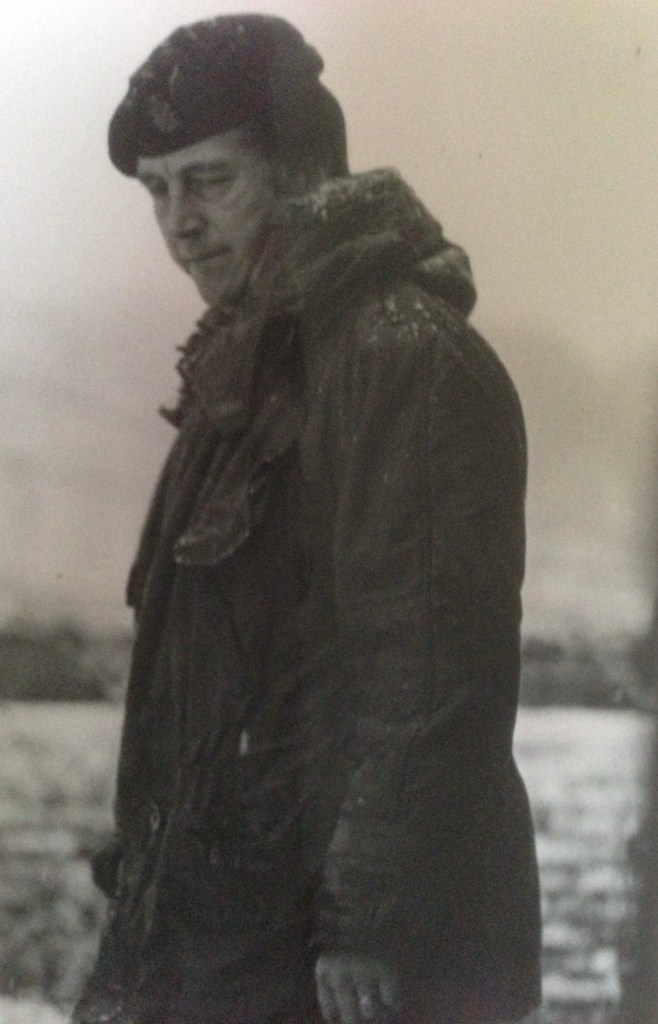
Having missed out on visiting a couple of exhibitions on Sunday, I decided to experiment. I took a piece of A1 flipchart paper, a graphite stick and a 5B pencil and got to work. First I created multiple silhouettes of the image using the graphite stick.
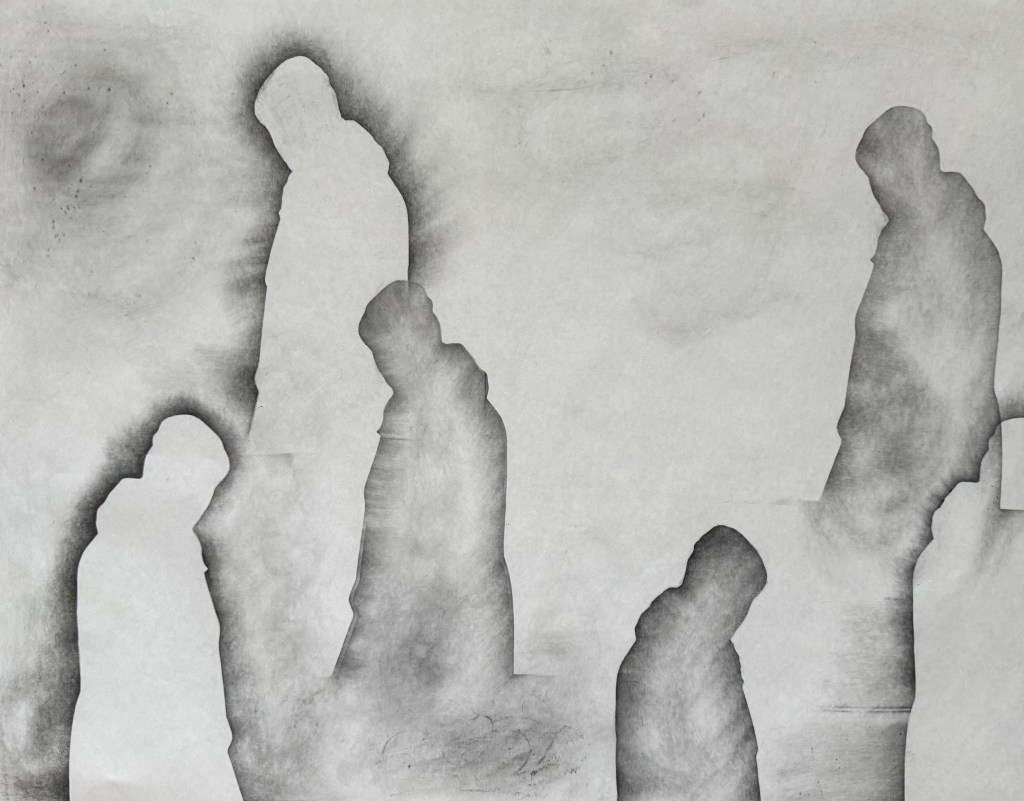
I was inspired by the Richter drawings (The Rich Are Getting Richter) and used the tiles on the kitchen floor to create texture with some frottaging.
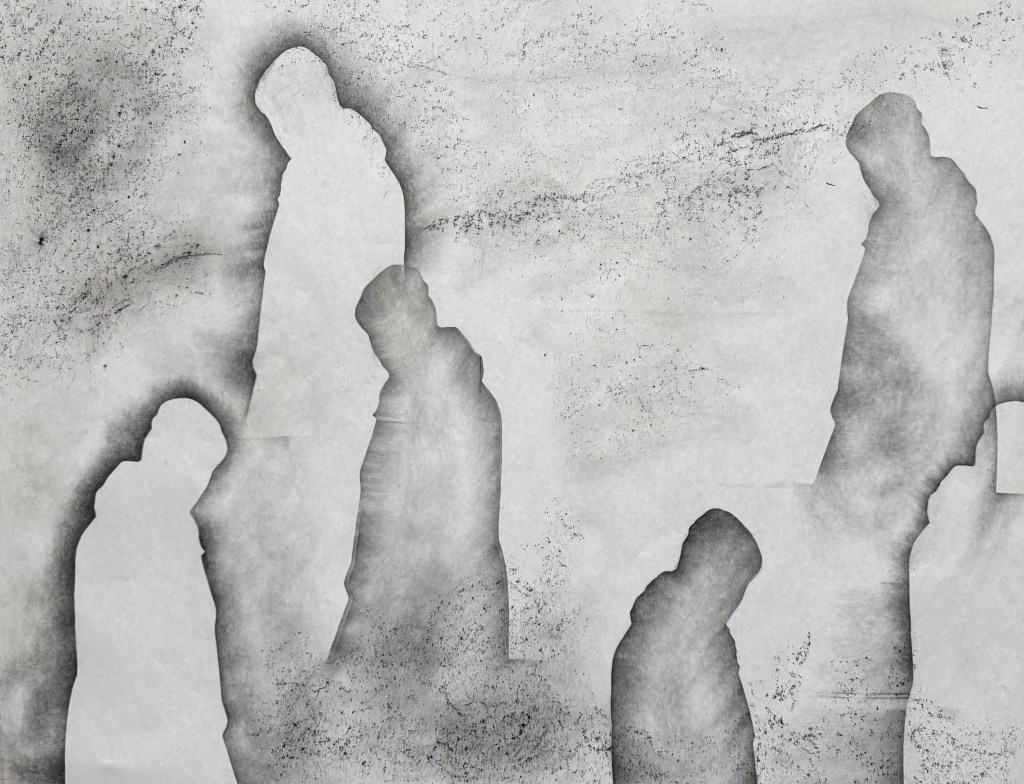
Having really liked the effect of some of the lines and marks made in my automatic drawings, I used the 5B pencil to create a wandering line, holding it at the top and twisting it from side to side in the process and then holding it on its side to create a second softer line. I like the idea of tree roots and mycorrhizas connecting and creating a support network for trees, a concept we touched on in last week’s session. The lines are connecting each figure so it’s no longer alone. They are also reminiscent of a map or a mapping out. Not sure which, but I like the effect. I like the delicacy of the lines. They also remind me of the lines in skulls at the points where the plates have fused or cracks in a surface, fault lines. I wasn’t keen on the overlap on the two figures on the right which created a hard box-like edge, so I cropped it out on the last image.
I really enjoyed doing this, particularly the lack of control of the line making and the unpredictability of the frottaging, and despite that, it does bear a resemblance to the vague image I had in my head. It ties in with the idea of shadow selves (Sniper’s Alley) and the idea of inheritance and being made up of multitudes (Bus Replacement Service). It’s definitely an approach I will develop further, but I’ll use better quality paper next time.
Bus Replacement Service
I was planning on going into London yesterday to catch Donald Rodney: Visceral Canker at Whitechapel Gallery (as well as revisit the Cardiff audio walk), and Linder: Danger Came Smiling at the Hayward, before they close in the next day or two. But what I forgot was that it was a Sunday on a Bank Holiday weekend, a perfect time for railway engineering works. A bus replacement service would almost double my usual journey time, and so I decided to stay at home. Instead, I had a look on Whitechapel Gallery website, to see what I had missed. There is an interesting piece on Rodney by Caleb Azumah Nelson, particularly on their relationships with their fathers.
Rodney had, and ultimately died at the age of 37 from a complication of, sickle cell anemia. He was in the midst of a sickle cell crisis when his father died and he was unable to attend his Nine Night.
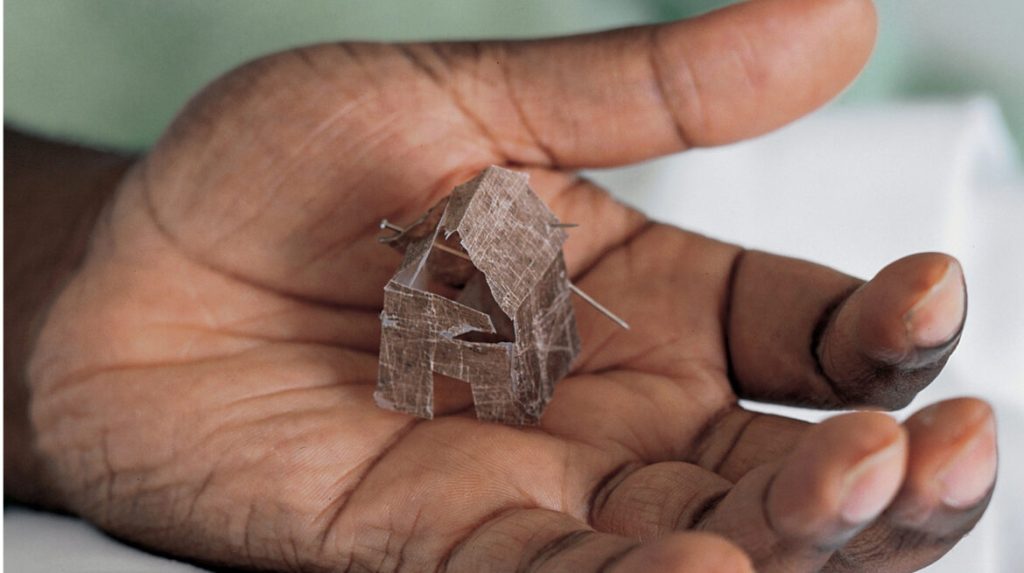
In the House of My Father 1977, photograph (Image Source: http://www.whitechapelgallery.org accessed 5/5/25)
Made from his own skin, the house is held together with small dressmaking pins.
This is the first piece of work by Rodney which Nelson encountered, purely by accident:
’The strength, not in the structure, but in the vulnerability of exposure, his open palm an invitation into his heart, his family. With this gesture, Rodney suggests, this is who I am, this is who I might be.
How does the self come to be? And how do we make space to be our whole selves? … a condition he would have inherited from his father, who would’ve inherited it from his father before that. Their selves, our selves, folding into one another: we contain multitudes. And what else do we inherit? And how do we carry around these inheritances, how do we make space for them in our lives?…’
At the time he was reflecting on his own relationship with his father:
’… wrangling with the things he cannot say to me, or doesn’t have the language for, the many rooms in the house to which I do not have the key…’
He finishes his piece with:
’I believe Art gives us a space to be honest, to confront, to dismantle, to reassemble. To imagine. Visiting and revisiting Rodney’s work reminds me that other worlds are possible. It reminds me, that even in the face of continued crisis, it is necessary to dream. It reminds me that , even in the face of death, we must continue to inhabit many rooms, to hold space where we can be honest, where we can be our whole selves. Where we can feel alive.’
So many thoughts have come to mind:
- The idea of inheritance and how we find a space for it in our everyday lives. To me this feels like a burden not just in the physical sense of belongings, and ‘stuff’, but to the extent that I might feel defined by it: I don’t want to be, I want to be my own person steering my own course independently of what has gone on before, but I can’t ignore the extent to which others have shaped me. Last weekend, I lost count of the number of times friends commented how my daughter is a mini-me or the spitting image. No, she’s not. She’s her own person, living her own life. But, inevitably, I will have had an input into who she is, even if it’s just a matter of genetics.
- I have inherited my family history from my parents. I used to spend ages looking through the family photo albums talking to my mother about the contents. I feel an enormous responsibility to pass this knowledge on. It’s a burden. My daughter is not particularly interested. Maybe it’s an age thing – as we age we need a greater understanding of who we are? Or maybe it’s a digital thing, we don’t have a physical record of our lives lying around the house to prompt an inquiry and so the questions never get asked. Sometimes I think that I should write it all down in case she’s ever interested, and other times I think that I’ll take it all with me and free her from the burden.
- I think that I’ve been dismantling myself over the last few months. I’m not entirely sure that I’ll be able to reassemble myself, but maybe a few left over bits here and there wouldn’t be such a bad thing. I could even write my own instruction manual.
- The child/ parent relationship: I remember the moment when I realised that my parents didn’t know or have the answer to everything; that they were human. It really stopped me in my tracks.
- The idea of the house with many rooms; our ancestors folding into one another; the self containing multitudes.
Food For Thought
Last week was a week of two halves.
At the beginning we were told that our dog, Monty, has metastatic melanoma. Without treatment he will rapidly decline in a matter of weeks. With treatment he has a chance of possibly living to his natural life expectancy. With no significant side effects to the treatment, we are giving it a go, and he had the first dose of chemo and immunotherapy on Friday. If it becomes obvious that it isn’t working, we will stop.
We are devastated. I know he’s only a dog but he’s been a part of our family for the last 12 years; he’s been a part of my daughter’s childhood for more time than he hasn’t. I also can’t help thinking that some of the desperately crippling sadness I’m feeling is unresolved grief from my mother’s death, because I’ve been teleported straight back there.
For me, emotion and food are intrinsically linked. The need to eat in order to survive is a primal instinct. I have a need to feed. When I became a mother, my need to nurture and provide nourishment, in all its forms, for my family became paramount. And, of course, many people express their love by making food for others.
The refusal of food is one of the first steps in withdrawing from the world. I remember the lengths I would go to in order to try and encourage my mother to eat. I would spend so much time making her dishes which she said she fancied only for her to take one taste and decide that she didn’t want it anymore. The most difficult moment was when I had to accept that all I could do was to offer it, and not to try and browbeat her into eating it.
Monty’s not as keen on his food as he was. I have dishes full of different vegetables and meats that I’ve cooked, in an attempt to encourage him, in the fridge. Unfortunately, the only food he seems keen on at the moment is steak. When he eats it I feel like everything will be ok, but in the back of my mind is the nagging thought that all I’m succeeding in doing is nourishing the very thing which is killing him.
On a happier note, we had a party to celebrate my daughter’s 21st birthday this weekend. Family and friends came from all over to join us to sit down and have dinner together. There was much drinking and dancing, and everyone had a good time, welcoming the chance to reconnect with old friends or form new connections over food. Some of them I hadn’t seen for a few years – they looked older, as I’m sure I did to them. Even more reason to make the time to meet up with people as much as possible – to walk the walk, and not just talk the talk.
Interim Show
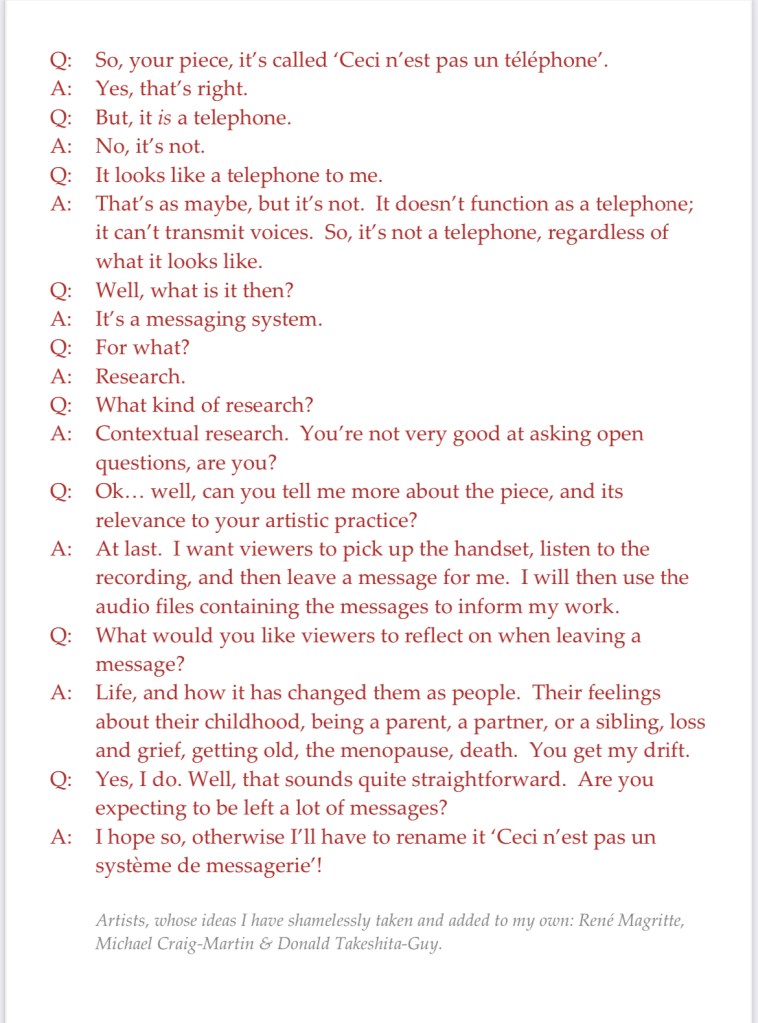
My main piece is the telephone. I’ve managed to figure out how it works – now I’ve just got to record my message which I think will be quite short and to the point.
I struggled for a while to come up with a way to indicate that it is an interactive piece. Also, if I’m going to use the audio files as well as the content of the messages in future work, I think I should say as much so that people have an opt out if they’re not happy with the possibility of their voice being used.
I was trying to get to sleep the other night, tossing and turning, when it came to me – I’d do what Michael Craig-Martin did for ‘The Oak Tree’ i.e. have a transcript of an imaginary conversation between me and a third party.
So I came up with this, which I will display alongside the telephone. And yes, I’ve also ripped off Magritte, and used Donald’s comment from a few sessions ago about mobile phones not really being used for their primary purpose, making and receiving calls, but for messaging etc.
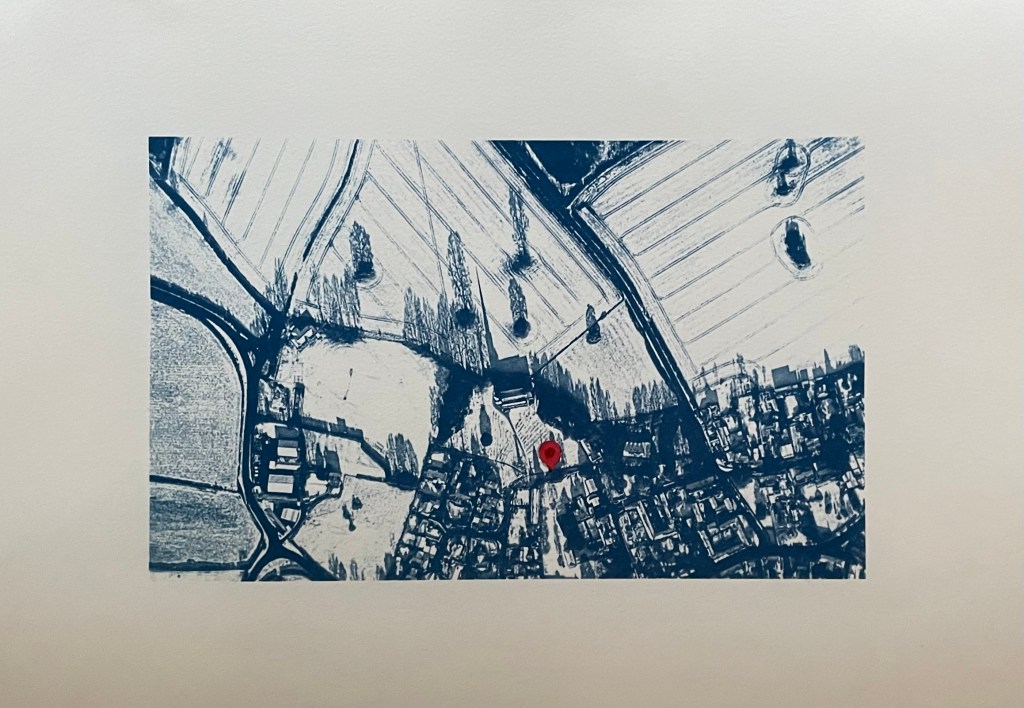
I’ve also had another bash at the cyanotype of the aerial view of the village. I couldn’t get it right on A3 for some reason as the detail of the fields just wouldn’t stick. I tried so many times but I think that because I was doing it quite late at night my brain just stuck, and instead of stopping and leaving it for a while so I could reflect on it with some distance and clarity, I just kept on making the same mistakes over again which made me feel really frustrated. I’m going to park it for now – it could be something to do with the height of the UV lamp.
So I’ve gone back to the smaller negative and printed it on A3 and added in a location pin. I’ve decided to call it In Loco Parentis. I feel much better about it now, and, on reflection, A3 would just have been too large an image for something which is quite intimate and personal.
I’ve also tried doing a triptych of the view from my window. I had initial success in finding out how to split the image into 3 equal parts and printing separate negatives for each. After that it just went downhill; it has been so difficult to get any consistency between each of the separate sections because I’m doing them each individually and there doesn’t seem to be any rhyme or reason as to why they turn out differently despite using the same solution and applying it as consistently as possible, exposing for the same amount of time and washing out in the same way. I even tried to make sure that the temperature of the water was the same by starting to run it at exactly the same time before the exposure had finished, but the difference in results between them was staggering. I’ve now got lots of different sections, and having sorted through them all, these three are the best fit that I could come up with.

I think I might sort out the sizing a bit more and then fix them to another piece of watercolour paper.
Disheartened by the exercise I did the same as with the aerial view, took the original negative and printed it on A3. It was much more straightforward, and made me feel an awful lot better. Is it a bit boring? I don’t think so as I think you get a much better sense of atmosphere, and I’m trying to change myself to subscribe to the view that less is more.
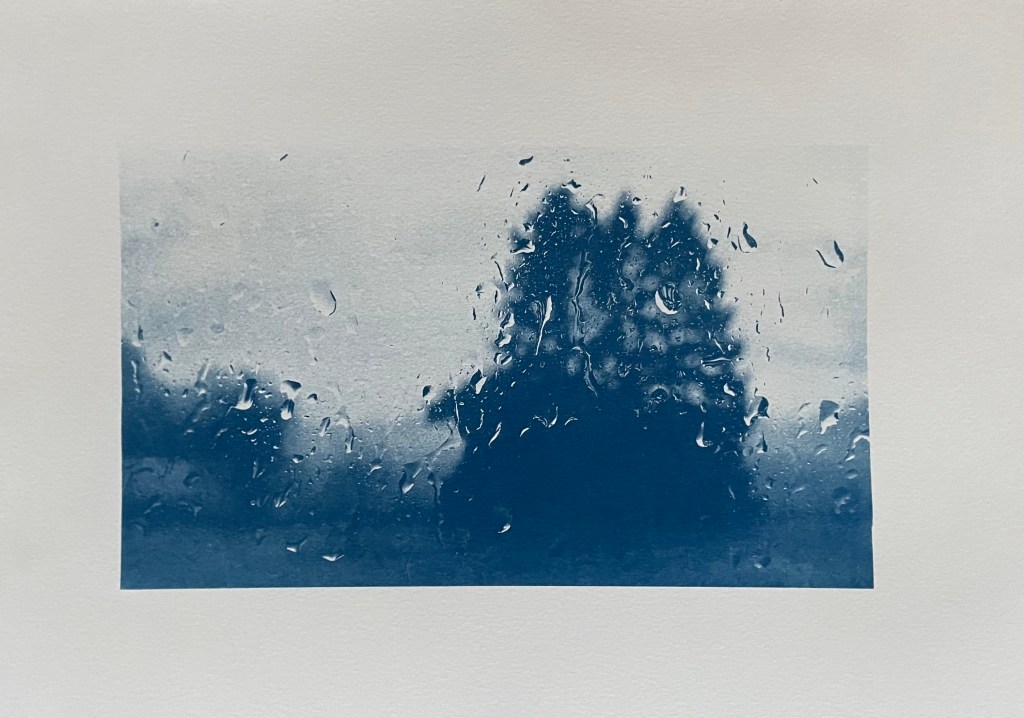
As I took the original photo on New Year’s Day, I think I’ll call it, Another New Year’s Day. On reflection I think I prefer it. I’m not sure that disjointed views really do it for me, but then again I didn’t think that I liked collage.
In addition to the pieces above, I’m taking along Motherhood I which I’ve had printed on A1. I’ll see what seems right on the day.
Parental Loss I
There’s a passage that I find really moving. It comes from Deborah Levy’s The Cost of Living which I selected as an inspirational text (see The Cost Of Living). In it she describes how she felt after her mother died and, in particular, her reaction after coming across a postcard her mother had sent her.
“My mother had made a biro’d X on the front of the postcard and written’ X is where I am’… It is this X that touches me most now, her hand holding the biro, pressing it into the postcard, marking where she is so that I can find her.”
In response, I had an urge to do something similar. I’ve had an image in my head for some time. I looked at the satellite image of the village where my mother grew up, of the church where my parents were married, and of the churchyard where they now rest, together with my grandparents, aunt and uncle, and other distant relations. The image was taken on a sunny day with snow on the ground, and I love the shadows which are cast by the trees and the buildings, in particular, the church; the shadow of the spire revealing a building, which is otherwise indistinct from the air, as being a church.
Luckily, after a bit of research I managed to work out how to remove the road and building labels.
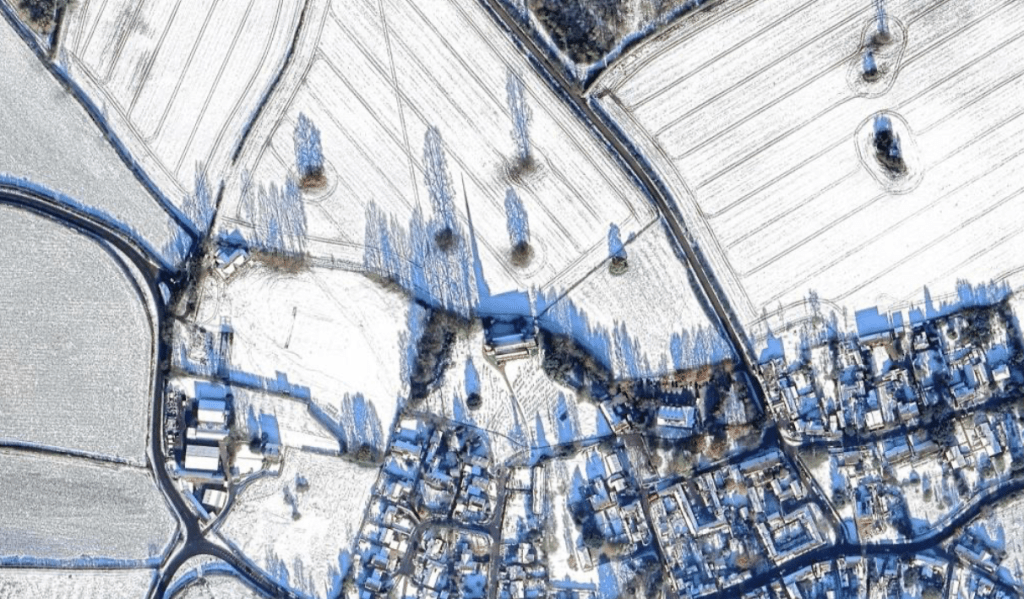
So, I made a cyanotype. It’s only A4 in size. I’m thinking about making it larger, say, A3. I don’t think that I can make the image any sharper, but I don’t think that really matters – it’s not about the detail of the buildings; it’s about the shadows revealing the nature of the buildings, about the sense of place and about the topography; the tramlines in the fields, the clusters of trees in the middle of fields and the pattern of the roads I walked down as a child. I love the patchwork nature of the countryside. I know that I’m coming home when I see it from a plane.
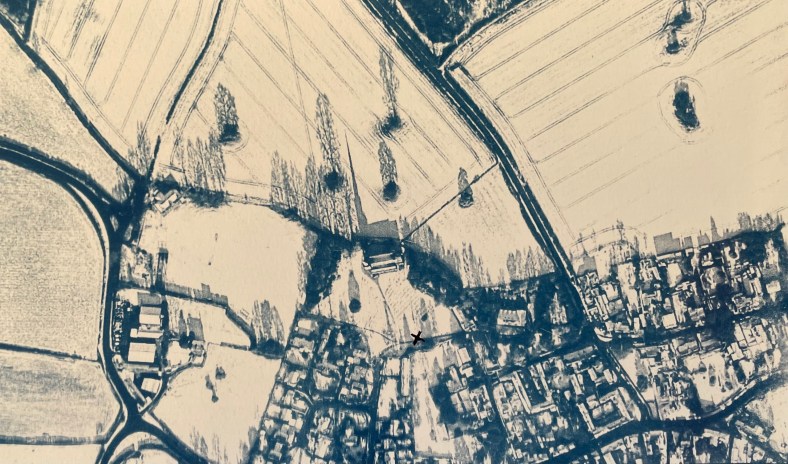
I’ve put in an ‘x’ but black ink doesn’t really work. I might try red, or maybe replace the ‘x’ with a location pin instead which might contrast well with the historical feel of the cyanotype.
There’s not been much experimenting. I think it’s because I’ve known what I wanted to do for a while and it was a clearly formed idea. It’s been an easy process and a cathartic one, but it does make me feel sad. My parents were my anchor to the past and without them I feel adrift from where I came from, and from a substantial part of my history.
Stuff
During our session at the brain gym this week, I explained to Dalal and Josh that I have been struggling to make finished work, as opposed to the products of experimentation. They both agreed with Jonathan, who, during my tutorial, had questioned whether I felt a pressure to make finished pieces; the experimentation stage is a place to stay for a while, and will, at the right point, turn into something more complete. I commented to Josh and Dalal that part of the problem may be that I’m ever conscious of time passing, and so I feel that I should be making the most of every minute – preparing the work plan had brought into perspective that there are a finite number of weeks left of the course, and that made me experience a moment of what I can only describe as loss.
I had hoped that a more productive phase would be imminent, but I suspect that at the moment this is being hampered by not having the headspace, or the physical space.
My husband is about (fingers crossed) to complete on the sale of his parents’ house in Liverpool – his childhood family home. He has been up and down, bringing things back. I find the process very difficult – I don’t have a problem with keeping things of use or of sentimental value, but another can opener? We have enough of our own stuff. We, or more specifically I, don’t need to add our parents’ stuff to the mix. I feel like I’m suffocating under the weight of belongings, many of which are occupying the physical space where I should be creating (more stuff?). Admittedly, I’ve been sorting this space out for I can’t remember how long, and made absolutely no progress. I’m conscious that my daughter will, one day, hopefully not in the foreseeable, have to undergo the same process – I don’t want her to be weighed down by all the stuff.
Along with the stuff, he also brought back what remains of one of his best friends from school, who died suddenly last year. His friend had left instructions as to all the places where he wanted to be scattered, including our garden, as he enjoyed coming to visit. Unbeknownst to me, my husband had brought him into the house and put him on the shelf, next to a glass bowl which had belonged to his parents, and which he had smuggled in as contraband whilst I wasn’t looking. My heart sank as I saw the bowl, and then the black bag next to it – what’s in here I thought as I opened the bag and took off the lid, another ornament?…
 Kate McCalmont-Woods