Raita Bitless

Not only did I not get the obvious joke with the placeholder name of ‘Noah Bitmore’ until half-way into the session on Tacit Agency with Prof Paul Haywood, but I didn’t really get the session itself at first.

I think part of my problem was that I came into it with a preconception from the title. My understanding of tacit agency is a legal one. It turned out to be about the relationship between who I am and where I am – an individual’s sense of connectedness with their physical and social environment.

The exercise of describing an important place without naming it was a revelation. I wrote white railings, the smell of coal fires, lemon curd tarts in a Family Circle tin. I was describing staying with my grandmother. I’ve previously mentioned that visiting my grandmothers is a strong childhood memory and one which evokes a feeling of constancy. We mostly stayed with my mother’s mother. I recently came across some glasses on eBay and ended up buying them because they were very similar to the ones she had, out of which I had my pop, usually dandelion and burdock, or sometimes shandy, poured out of a glass bottle for which you would get some money if you returned it, which was stored on the floor in her pantry.

I love a pantry. Shelves full of interesting things like bottles of Camp coffee, and biscuit tins of jam and lemon curd tarts, packets of crisps and jars of marmalade.

She’d ask me to shell peas from her garden for dinner (I’d eat most of them), the outside loo with the wooden seat, housecoats, woolly hats and Victory V sweets on the ‘buz’ to Derby sitting next to her on the front seat on the top deck so that I felt like I was flying as we went over Swarkestone Bridge, walking down to the village shop where she’d buy me cola bottles and Swizzels double lollipops, going past the pub on the way and breathing in the hoppy aroma, stodgy Yorkshire pudding whilst we watched Emmerdale Farm, the seersucker checked table cloths, the cupboard full of Woman’s Own and People’s Friend magazines from which I used to read the serialised stories, sometimes annoyingly having to miss an instalment because she hadn’t bought that week’s issue, going to Swad and having a cream doughnut, spending hours making mud pies and selling them from my shop in her front porch, the tops of her hold ups visible as she bent over to clean out the grate in the morning and lay and light a new fire – she must have had asbestos fingers – with her horse brasses hanging either side of the fireplace and her ornamental carthorses on the mantlepiece, climbing up the stairs at night into a freezing cold bedroom, shivering under the counterpane until I warmed up, memorising the Lord’s Prayer from the framed embroidery on the wall, watching horse racing and wrestling on the TV with her on Saturdays, hours of country walks pretending to be a horse, and many hours of playing with her plastic cowboy horse in the front room, playing cards and going up the passageway to visit Uncle Walter who would slip me 50p and Auntie Tamar with her slightly greasy hair who never seemed to move from her chair beside her 3 bar electric fire, but most of all, the white railings – a flutter of excitement because we were almost there.

As for my father’s mother, not so many memories. Although we visited her a lot, we rarely stayed with her as she didn’t live far from my other grandmother. The garden shed where I used to spend a lot of time lost in my imagination, I loved the smell, I loved the greenhouse, the smell of tomatoes, when I smell that smell I’m right back there, I saw a candle in Sainsbury’s the other day which was supposed to smell of tomato plants, but I’m not sure, searching for frogs on her rockery at the bottom of the garden, jumping over her decorative white fencing, yes, pretending to be a horse, being fascinated with her dressing table, glass containers and hairbrushes with tortoiseshell, the plastic pink powder container with a puff and her stone Westie doorstop I used to pretend was a real dog, Battenberg cake, her taking exception to me repeatedly playing my Growing Up With Wally Whyton record which I had got as a Christmas present one year, which included the lyrics:

Oh you canny shove your granny off a bus, oh you canny shove your granny off a bus, oh you canny shove your granny for she’s your mammy’s mammy, oh you canny shove your granny off a bus. You can shove your other granny off a bus, you can shove your other granny off a bus, you can shove your other granny for she’s your daddy’s mammy, you can shove your other granny off a bus.

Visiting her in the nursing home with my father and the patch on her forehead she kept on scratching, her limp arm and having to go with her when she wanted to go to the loo, watching her eat a slice of bread and butter with her cup of tea whilst she told us about the old man who kept going AWOL, told off by my father for not singing at her funeral, and the bracelet and the ring that she left me.

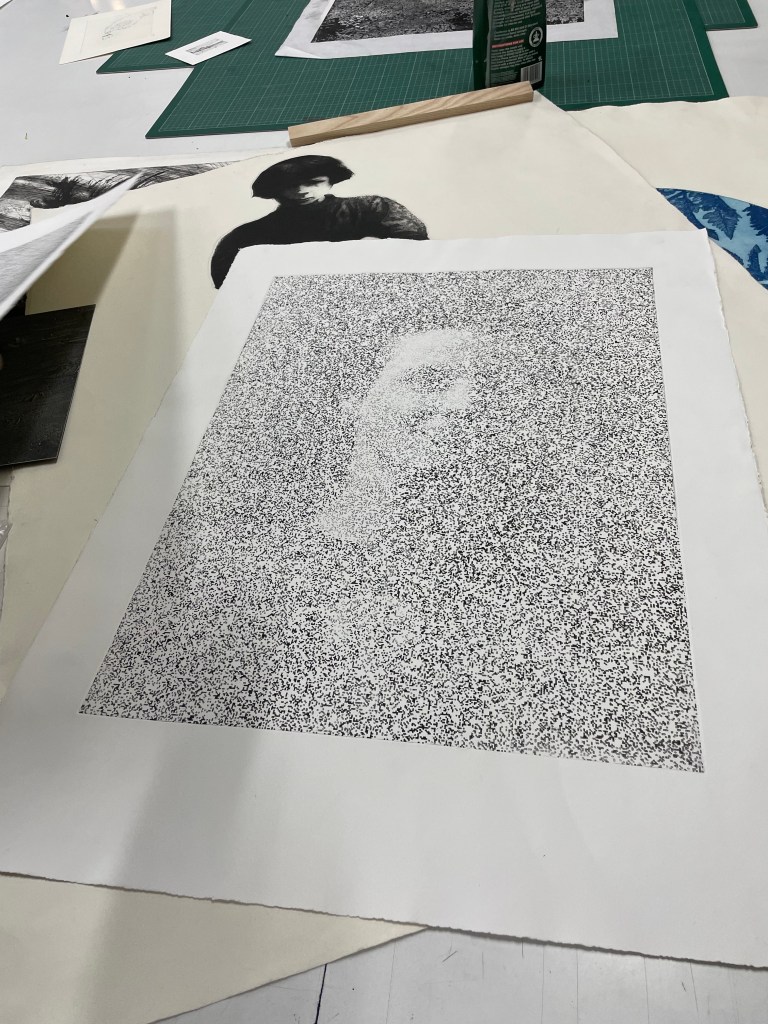
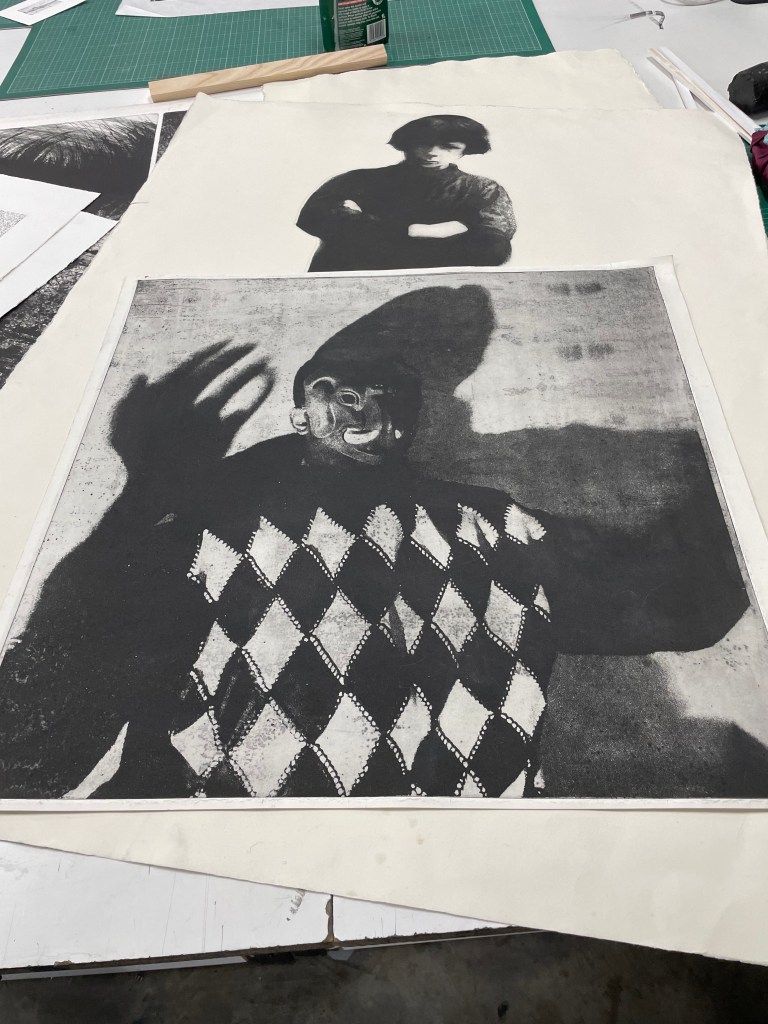
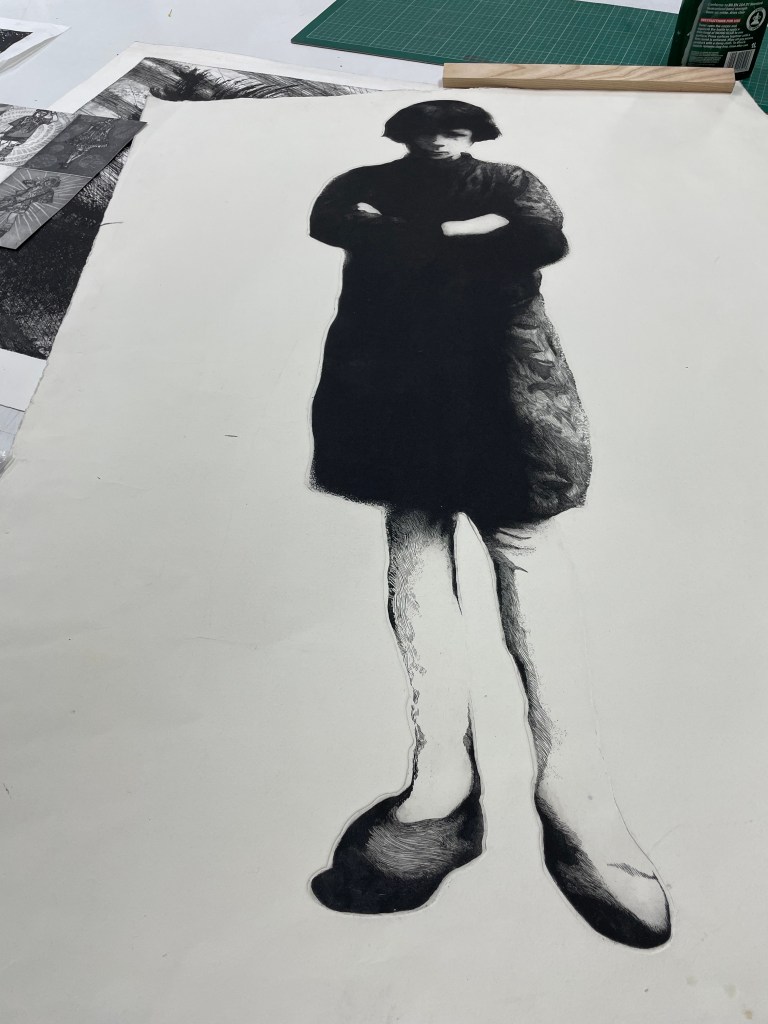
In my Unit One feedback there was a question: Beyond the photographs you are using, are you channelling memories through your practical experimentation in other ways – how might you explore more of this? Might you introduce more conversational elements – your voice is already present in your work, but would it feel relevant or interesting to explore recordings in text or sound? What would happen if you were to layer those recordings over animated/ simple stop-frame slide sequences of your cyanotypes and prints?

I’d been thinking of exploring using video before the feedback, and having just written this post I think that these childhood memories are so rooted in the sense of place that I need to go back there and make some mud pies.

By the way I dislike my voice, it sounds totally different to how it does in my head, and that’s why I resorted to using Siri on the recorded message on my red telephone, which is one more thing that I’ve yet to progress…

In the meantime, in the words of Kazimir Malevich,

Swim! The free white sea, infinity, lies before you.

The Rich Are Getting Richter

Well, it was either that, or For Richter, For Poorer…

I couldn’t quite work out why, during the Low Res, I arrived at CSM each day feeling increasingly out of sorts. And then it struck me. As I came up through Kings Cross underground station from the Piccadilly Line, I walked through a tunnel with music playing in the background. The music was Vivaldi’s Spring 1 by Max Richter and this is where I’d heard it before.
https://youtu.be/e-ymoWfHBwI

It’s amazing how music can alter your mood or take you back in time. The other day, I heard Queen and David Bowie’s Under Pressure playing in the background somewhere, and I was immediately a teenager in my bedroom on a Sunday evening listening to the chart show on the radio, trying to tape my favourite songs whilst doing my homework, which I had left until the last minute, as always. It made me feel that Sunday feeling again.

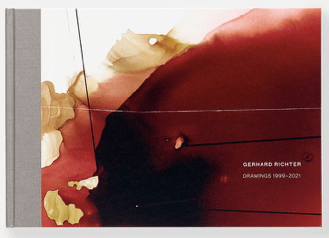
Another Richter, this time Gerhard, was the subject of the book I selected in the CSM library during our small group visual exercise.

In my wanderings I first came across this book and was intrigued.

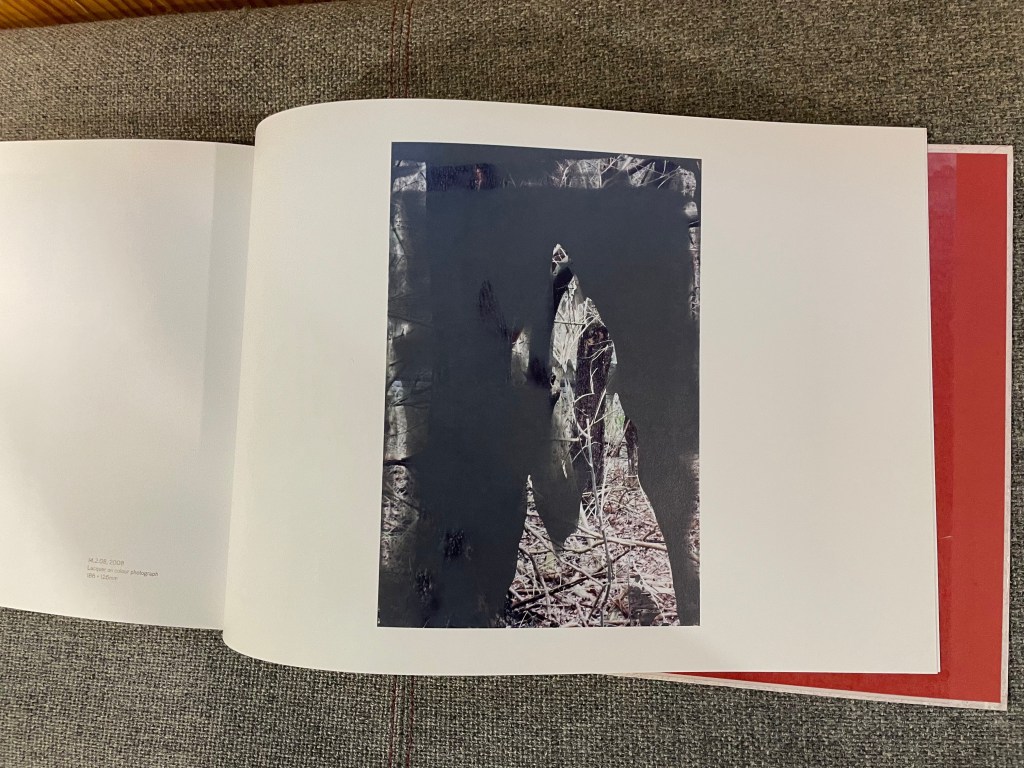
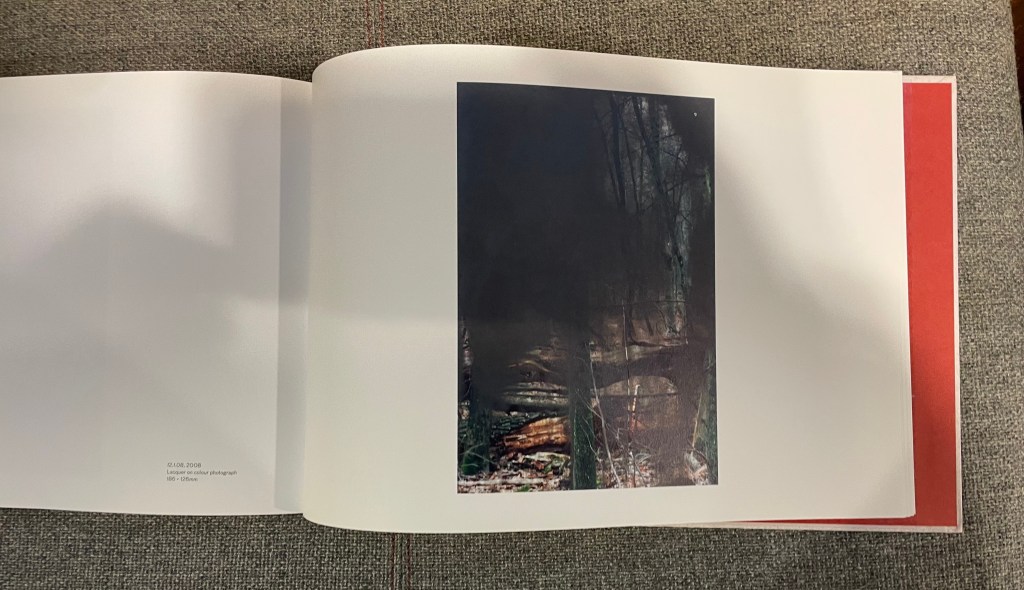
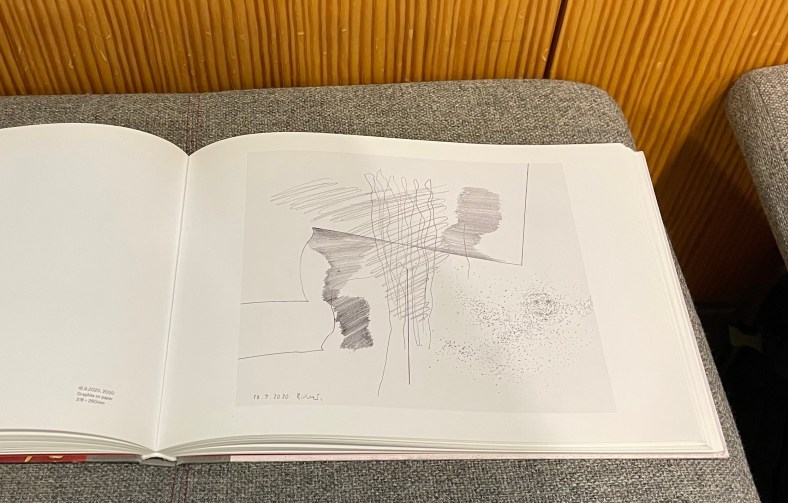
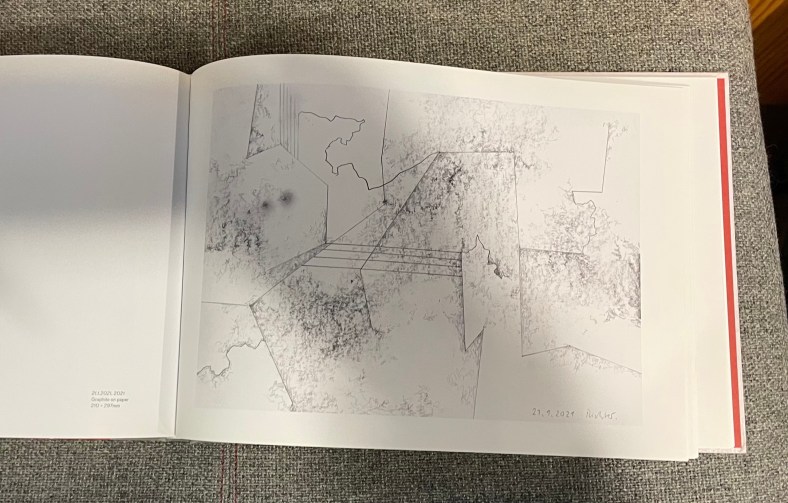
I had decided to pick the second book along from the first artist I recognised beginning with ‘E’. I was drawn to the spine, but put it back, abandoned my plan and walked on into the ‘R’s. I like Richter’s blurred images, but this book – and would you believe it, I forgot to take a photo of it – includes recent drawings and photographs with lacquer.

I particularly like the last drawing which includes what looks like frottage to create texture. They are less than A4 in size, in stark contrast to his huge canvasses of colour.

Having just done a quick search in the online library, I’m 99% certain that this is the book.

Where Do We Go? Where Do We Go Now?

Apparently, Guns N’ Roses didn’t know how to end their most successful song, Sweet Child O Mine. Whilst in the recording studio, Axl Rose reputedly started singing, ‘Where do we go? Where do we go now?’ And the rest is history and, in my humble opinion, probably the best bit of the song.

So a moment of inspired creativity can come from a total lack of direction and confusion. Here’s hoping…

I’m resolved to wallowing in the myre of confusion. There’s not much point in fighting it; I can’t understand everything. The latest book we read in my book club was Michael Ondaatje’s Coming Through Slaughter. I’ve never read a book like it. It deals with the mental decline and eventual death of the New Orleans cornet player, Buddy Bolden, who is considered to be the father of jazz. I didn’t understand what was going on half of the time, who was talking, and to whom. It jumped around all over the place. There aren’t any chapters as such, just three parts, no speech marks and paragraphs end at odd points on the page and continue on the next – visually it is striking. It is a book to be read, not to be listened to; its format echoes the improvisation and syncopation of jazz music. Once I had decided that perhaps I wasn’t supposed to understand it and just went along with it, reading each phrase and word in its own right, looking at the patterns, and the sounds of the words, a bit like reading a poem (after all, Ondaatje is a poet), I got a lot more out of it.

So this is how I intend to move forward. And it’s just as well, because try as I might to keep up with the constant flow of information being offered up by Paul in the Low Res etching workshop, I just couldn’t. I started taking notes, but just gave up in the end and surrendered myself up to not understanding anything and just enjoying being along for the ride.

It kicked off with Paul showing us what we could have gone home with, had we the requisite skills. There were some impressive prints which demonstrated the versatility of printmaking which I hadn’t really fully appreciated until now.

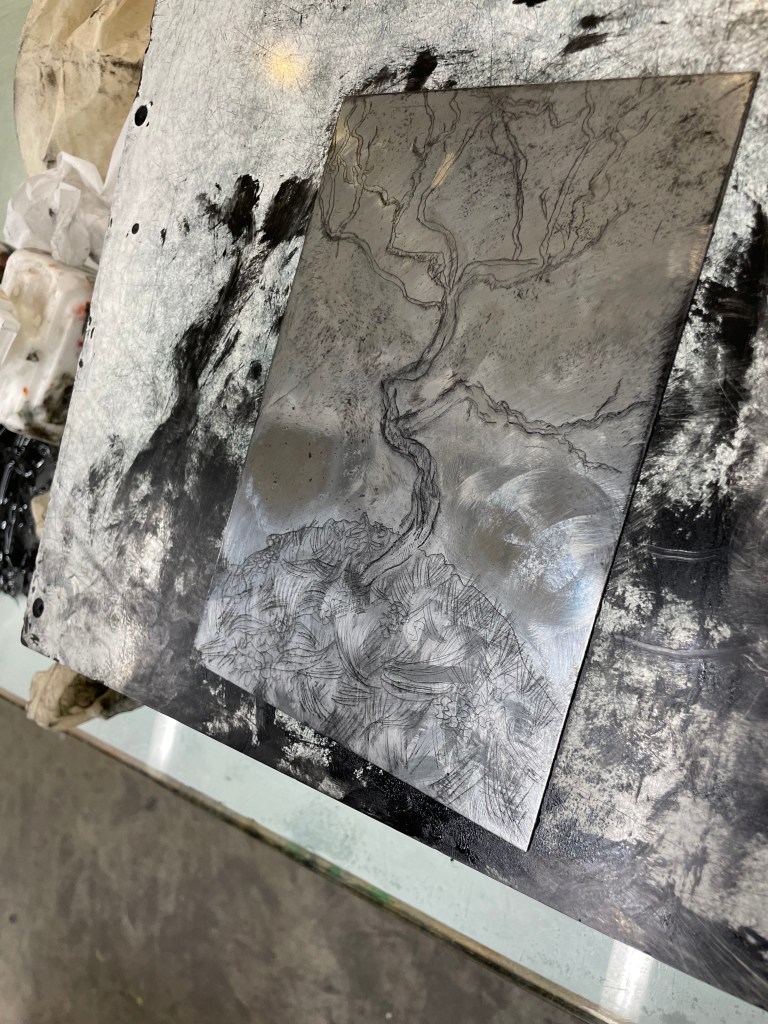
We started off by putting down a hard ground on a zinc plate and then we had about 20 minutes to create the image using a selection of Paul’s tools. What to do? I had a quick look on my phone and chose Schiele’s Small Tree in Late Autumn.

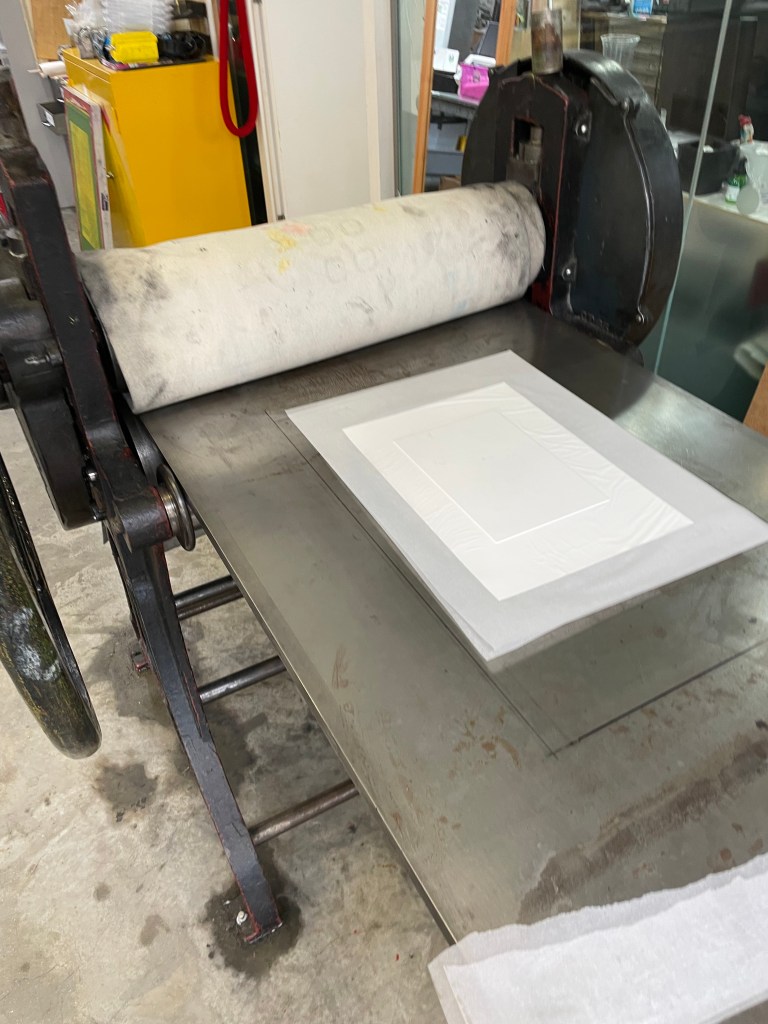
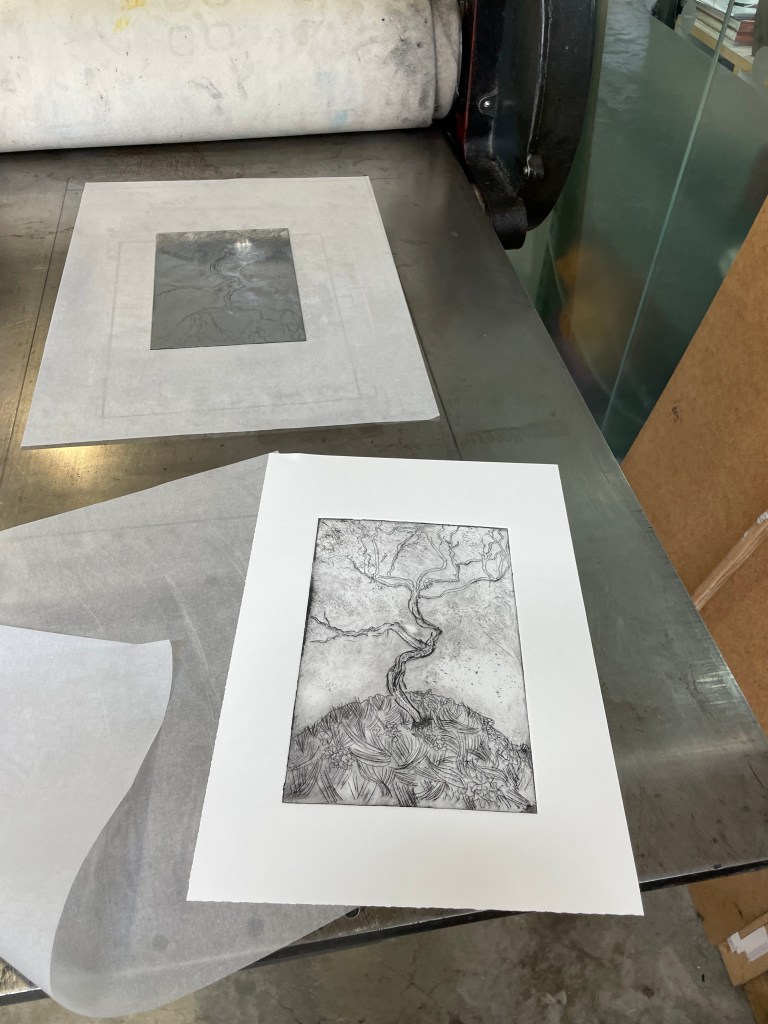
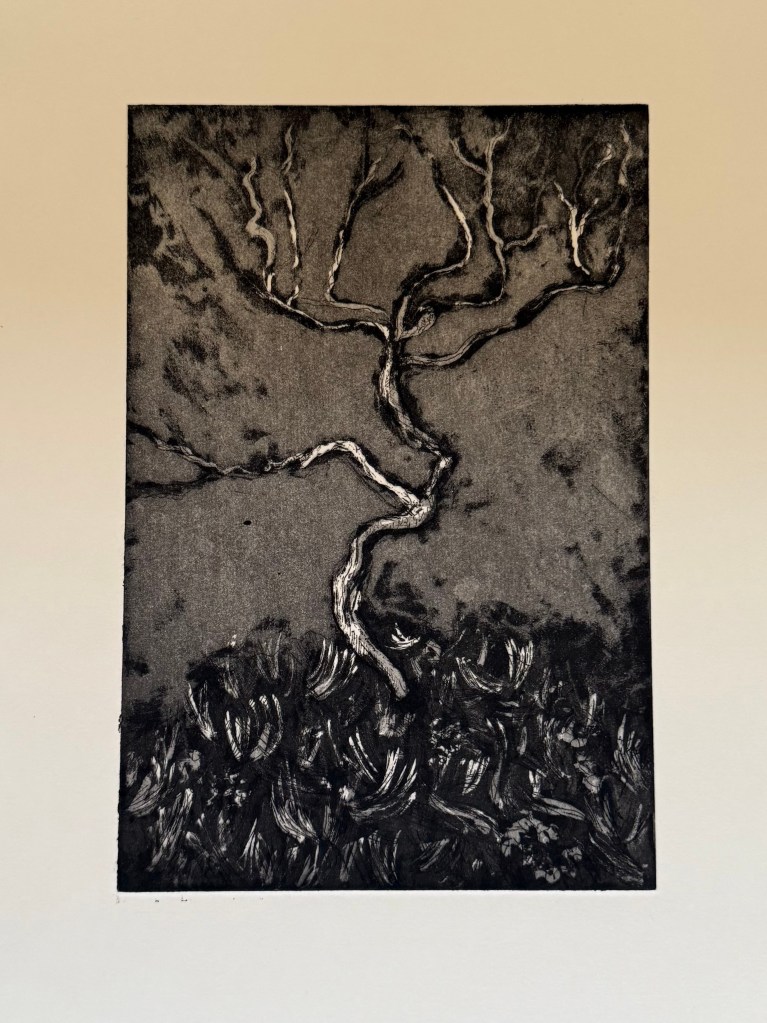
This is the plate once the hard ground had been removed and it had been cleaned followed by the printed images, using aquatint on the last one.

How do I feel about them? Pretty good bearing in mind I only had 20 minutes to create the plate and I had very little idea what I was supposed to be doing most of the time. Will I do it again? I don’t know – it’s very process driven, and whilst I love the excitement and anticipation of the big reveal, I’m more of an instant gratification kind of person. That’s not to say that I’ve ruled out etching altogether, it’s just that I would need a greater understanding of the different and quite complicated steps involved to do it any justice, and that’s just not compatible with the ‘new me’ at the moment.

Will The Real Alex Schady Please Stand Up?

I’ve always thought it a good idea to try to see the world through someone else’s eyes, but perhaps misappropriating Alex Schady’s glasses during our collaborative making workshop wasn’t the best way to go about it, although I’d love to see the world the way he does! I imagine that it would be a lot like the experience I had in the Apple Store the other day when I accompanied my daughter who was buying a new laptop. Whilst she was doing her thing, I wandered over to the table with the futuristic looking Vision Pro headsets. Did I have time for a demo? Hell, yeah!

Apparently someone very technically minded in a back room somewhere was building my device for me based on my head size and glasses prescription, and then out it came ceremoniously offered up on a velvet cushion for my delight. Well, an hour later, having held a butterfly on my hand, walked with a tightrope walker across a ravine, ducked to avoid the flick of a dinosaur tail and had VIP access to a Metallica concert, I rather reluctantly removed ‘my precious’ and handed it back. My cheeks hurt through the stupid grin which must have been plastered all over my face. According to my daughter, I had turned into a child and had been making quite a lot of noise which had attracted quite a lot of attention. All the way home I was considering what I might sell to raise enough money to buy one. But then reality set in; I’d never go out of the house again, and would be destined always to watch films by myself (hang on, is that such a bad thing?). But it turns out that it’s had some mixed reviews, and so I resolved that I could spend the money I had saved by going on a nice holiday, and try to get my hands on one of Alex Schady’s spare pairs of glasses instead – he has quite a few apparently because he keeps on losing them. I wonder if he ever walks past someone and thinks, those glasses look familiar.

Until then I’ll have to make do with his fascination with holes. All sorts of holes; sink holes, caves, the holes the Road Runner used to fall down, black holes, white holes. He explained that the thing about holes is that they are defined by what is around them rather than the hole itself. Thinking about it, generally speaking, a hole is the void where something used to be. I have a hole somewhere inside me. I don’t know what used to be there, but I find myself trying to fill it with food, rubbish food, even when I’m not hungry and particularly when I’m bored. The thing is, I know that it’s a hole incapable of being filled, and that I’m not doing myself any favours in terms of my health whilst I engage in such a fruitless activity, but, nevertheless, still I try. I once told a counsellor, who was helping my daughter with her needle phobia, that I thought that my brain was trying to kill me. I could see the pound signs light up in his eyes.

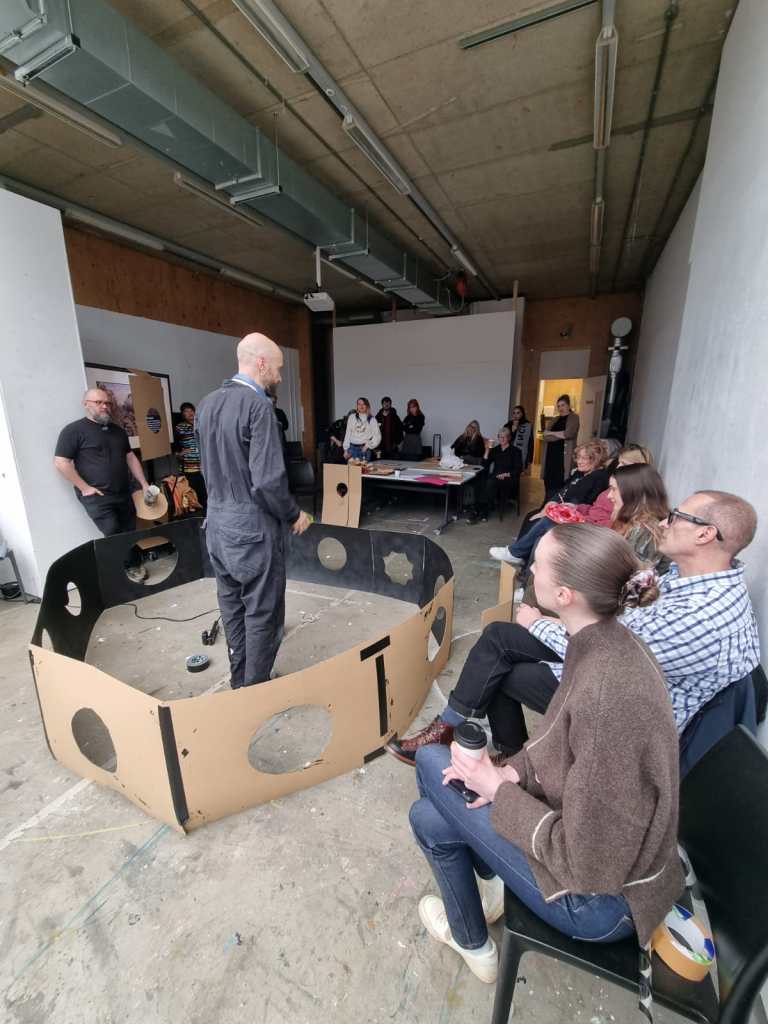
So, Alex got us to cut holes in some card and took us off into the outside world where we stopped still, on his bell, and focussed on what we could see through our differently shaped holes; a lot of perplexed passersby and the fruit and vegetable section of Waitrose. It became something close to a performance, and I half expected some members of the public to whip out their cardboard holes and join us. It’s interesting how masking the extraneous can make you notice more details which perhaps you wouldn’t notice in the round. I found myself slightly adjusting my hole so what I could see through it became more compositionally pleasing.

Then it was back indoors where our holes were repurposed by being joined together to form a circle and painted black. We then had to make something which would move inside the holes as Alex filmed them from the inside using a small turntable.

I forgot to photograph my piece which was a circular piece of card with tissue paper and a length of finger-knitting glued onto it in a spiral to represent my oesophagus, which I was going to spin around on a pencil. A strange choice, I agree, but I had just been talking to Zoë (to whom I owe thanks for allowing the use of her photos from the day) about recently having had an endoscopy. I’d been experiencing a sensation of having a lump in my throat for a while, and Dr Google had diagnosed it as being globus, which is a common side effect of reflux, but the GP didn’t necessarily agree and decided, in light of my family history of oesophageal cancer, that it was better to be safe than sorry. I told them to give me all the drugs they had, and all went fine (turns out I have a hiatus hernia) although I do remember seeing inside myself at one point which was ever so slightly weird. Zoë and I agreed that I should get hold of the images by making a data access request to see if I can use them in my work.

The last activity of the day was to make a cardboard structure which was to have a phone at one end and, at the other end, an image with a hole cut out of it. The trick was to get the distance between the two just right so that neither the image nor what could be seen through it would be out of focus, which proved to be quite difficult. We then went out onto the roof and did some filming for one minute. I filmed using one continuous take – it didn’t really cross my mind to pause and change focus. Thinking about it now, this meant that the decisions I made as to where to go next were determined solely by what I could see through the camera and not by extraneous influences. Rather than moving from left to right, I think, in retrospect, it would have been more effective moving in the opposite direction which would have created a relationship with the image itself, as if the figure is being thrown off balance by the movement.

Developing this idea further, it would be possible to see, quite literally, through someone else’s eyes. In this respect, Sophie chose an image in which a model was wearing sunglasses, which she cut out, which was ingenious.

All in all, a super-charged day which has provided lots of food for thought.

Sorry, Are You Talking To Me?

I’ve decided that I’m probably learning far more about myself by simply being in this process than I am by looking back on my life.

I need to retrain my brain. My legal training has made me focus on detail, anticipate every possible eventuality, dot every ‘i’ and cross every ‘t’ all within a rigid framework of rules and regulations. That way of thinking served its purpose then, but it now stultifies creativity.

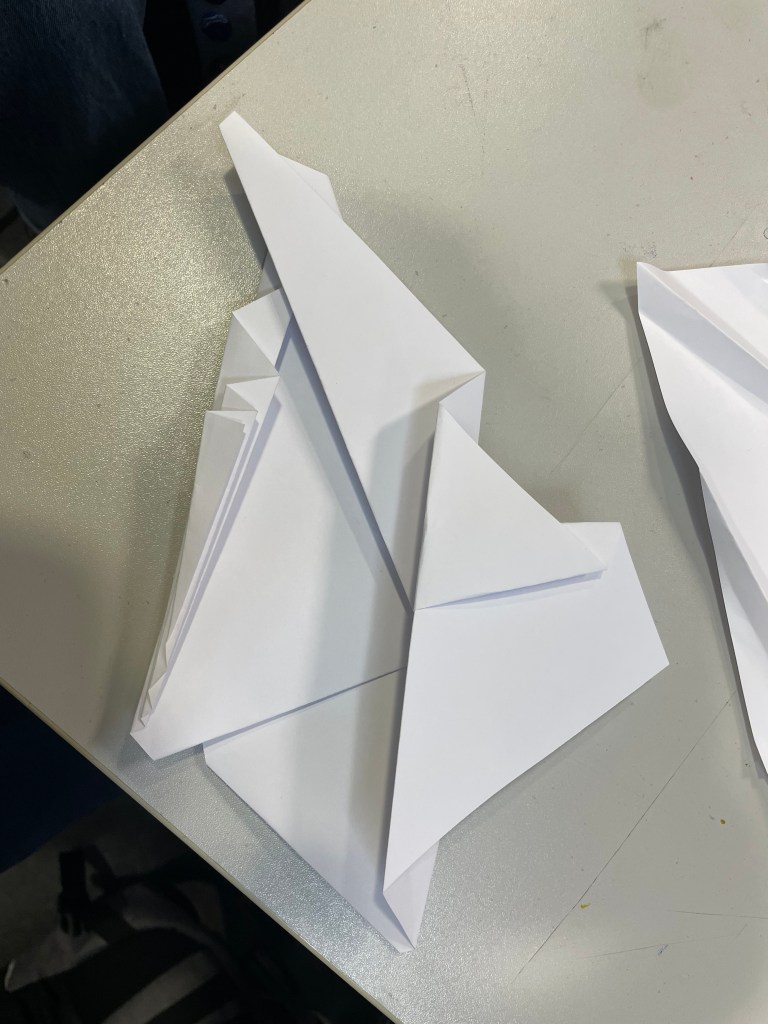
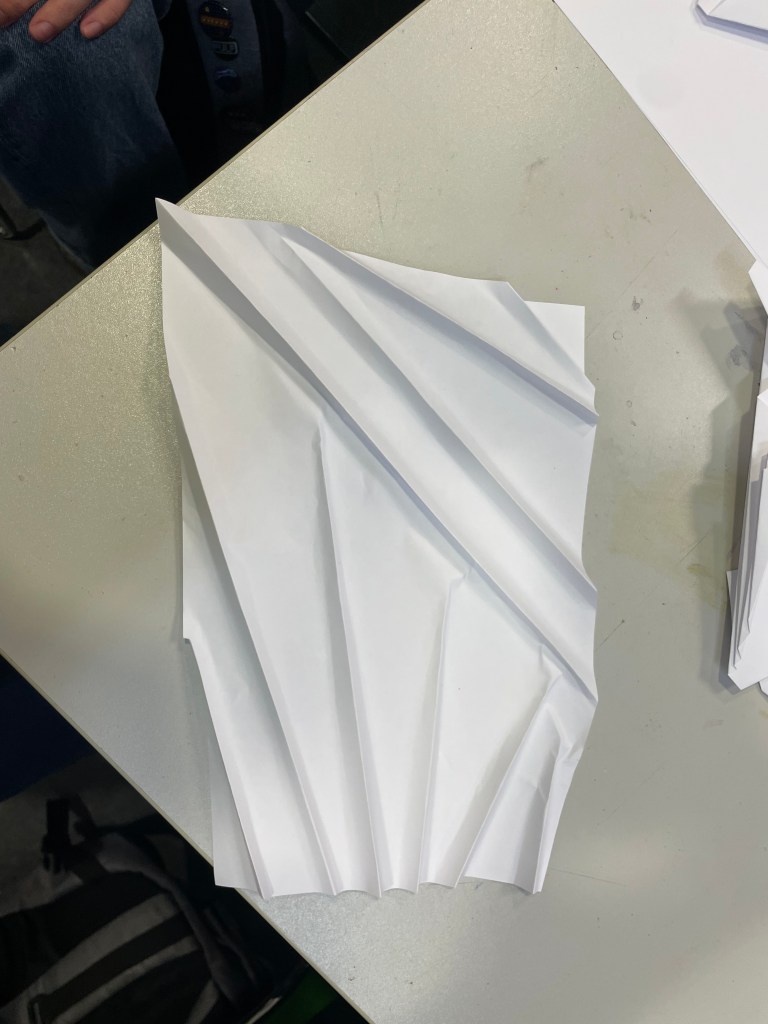
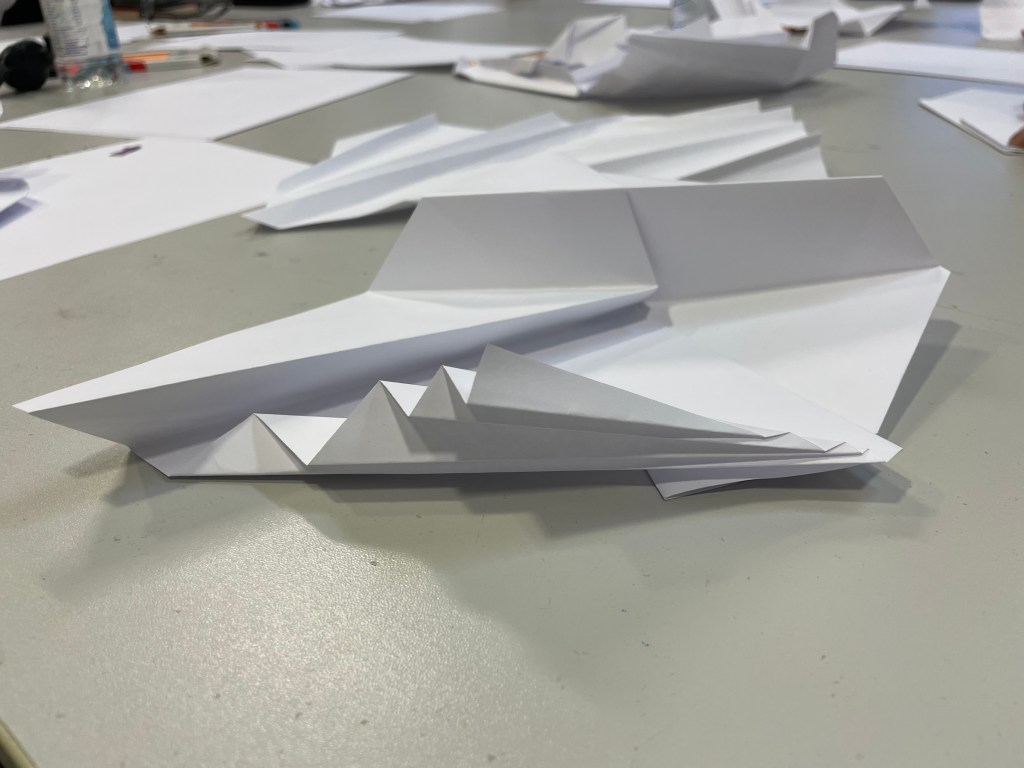
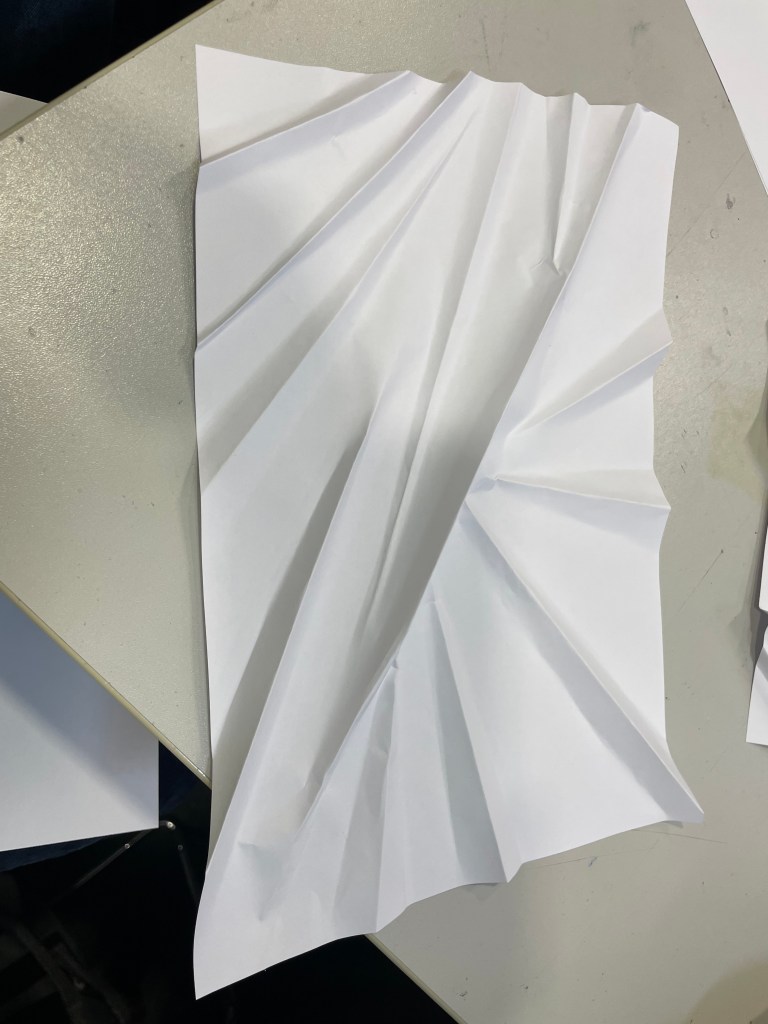
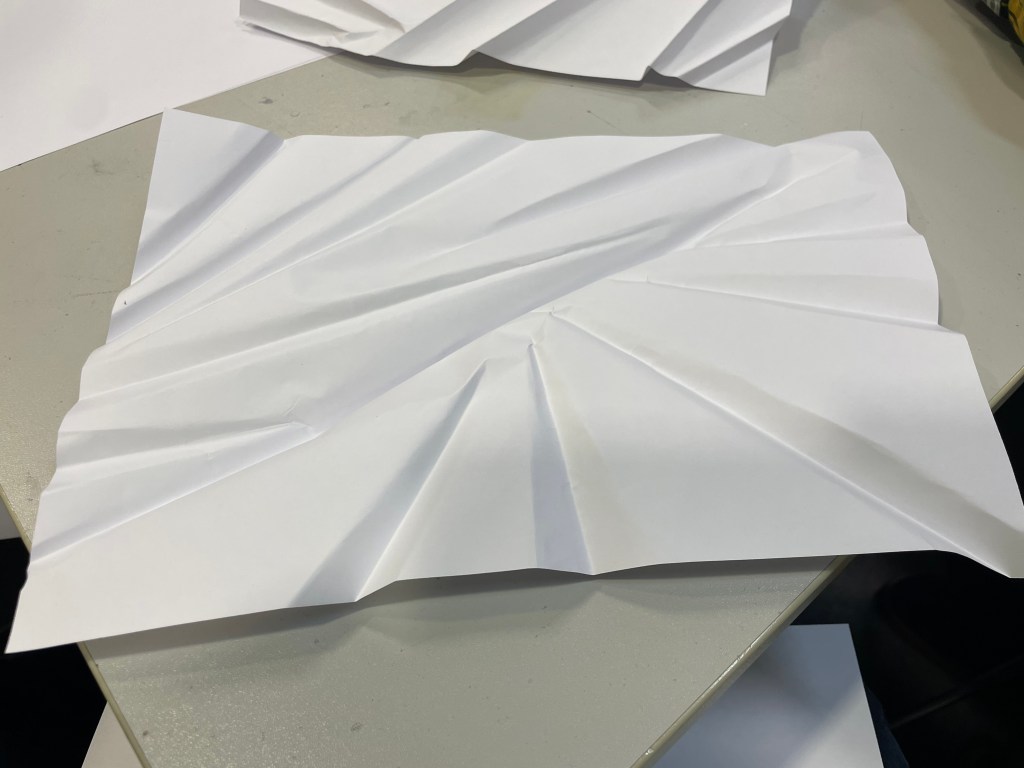
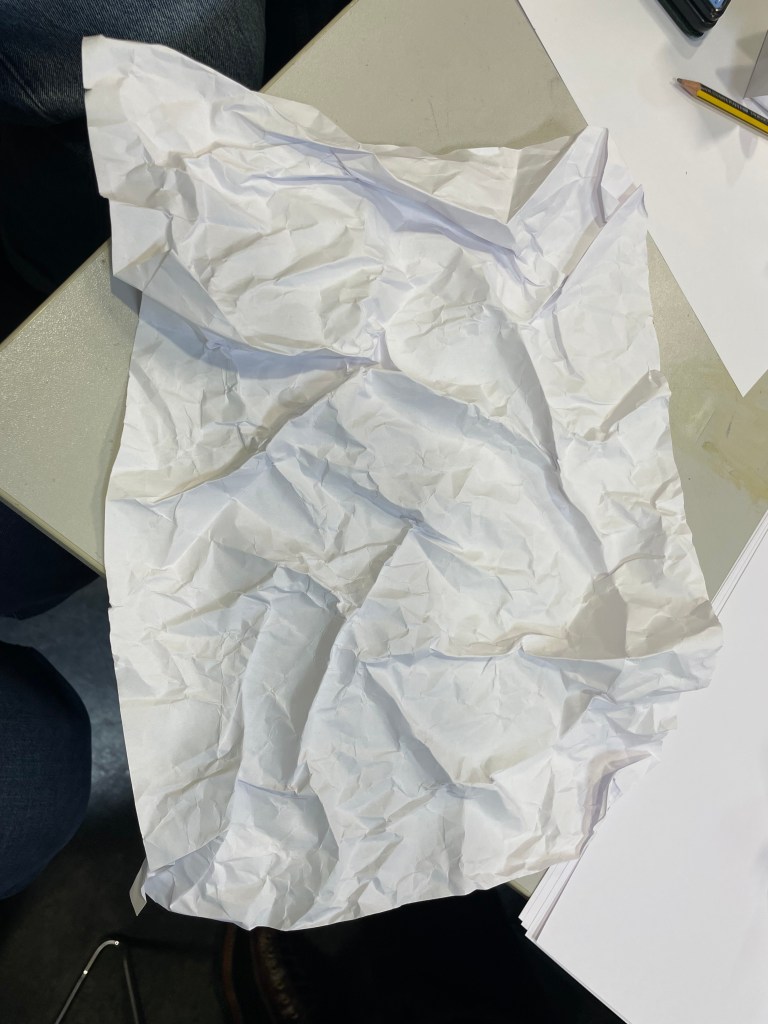
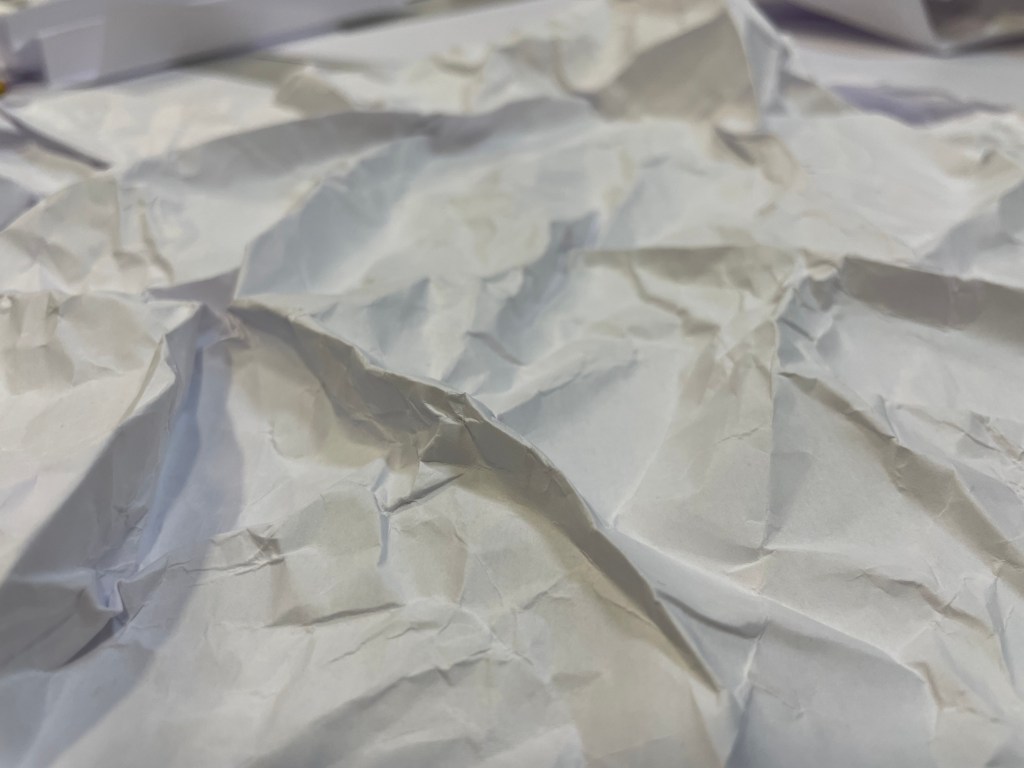
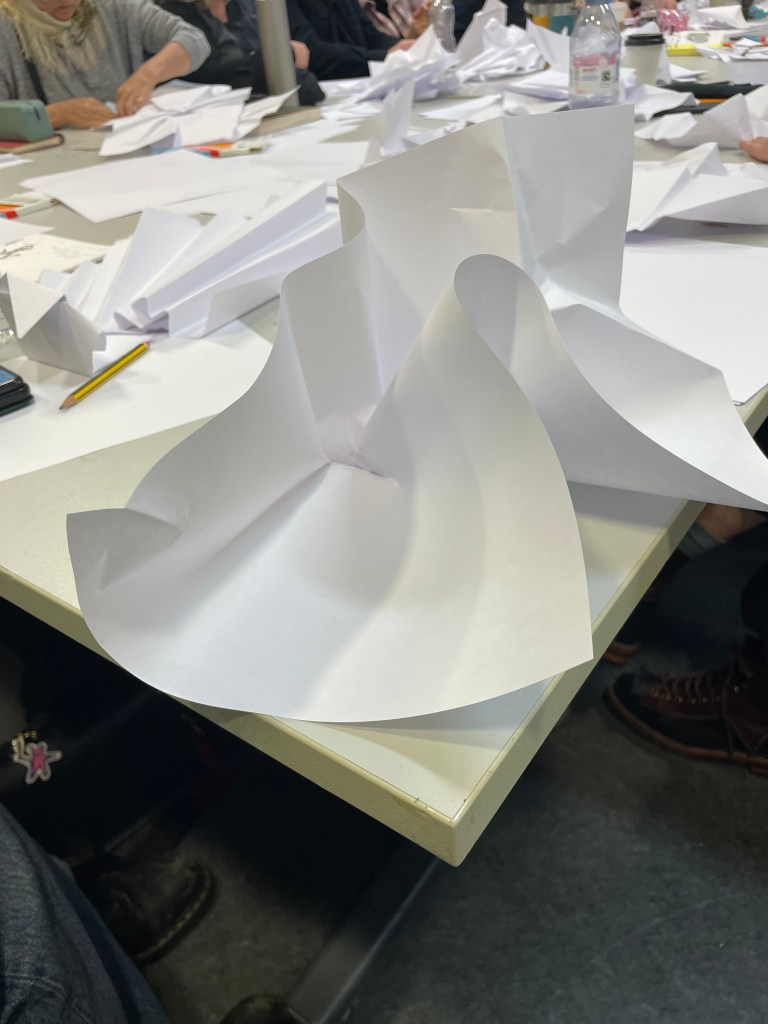
When I’m in a scenario which is unfamiliar, I like to know the parameters within which I’m expected to navigate; quite often I feel discombobulated when things don’t go the way I am expecting, the paper workshop with Christian Azolan being a case in point. We were instructed to fold the paper. To my pedantic mind, folding involves a deliberate act of bending something over on itself to create a clearly defined edge. It doesn’t include scrunching. But once I had overcome my initial confusion and accepted this unexpected variation of the parameters, I enjoyed myself.

I definitely preferred using the blank paper – I don’t know what brand it was, but it felt really good. It led me to confess my fetish for pristine white paper to some of my fellow students. I think it stems from being at primary school when the teacher would write my name on the front of a new exercise book with a marker pen and I would go back to my desk and give it a good sniff. I now appear to associate blank paper with a solvent high. I don’t think that my school ever had a pupil who was so keen to man the stationery cupboard at break time. In fact, I used to get palpitations and a bit of a sweat on just walking into WH Smith (R.I.P).

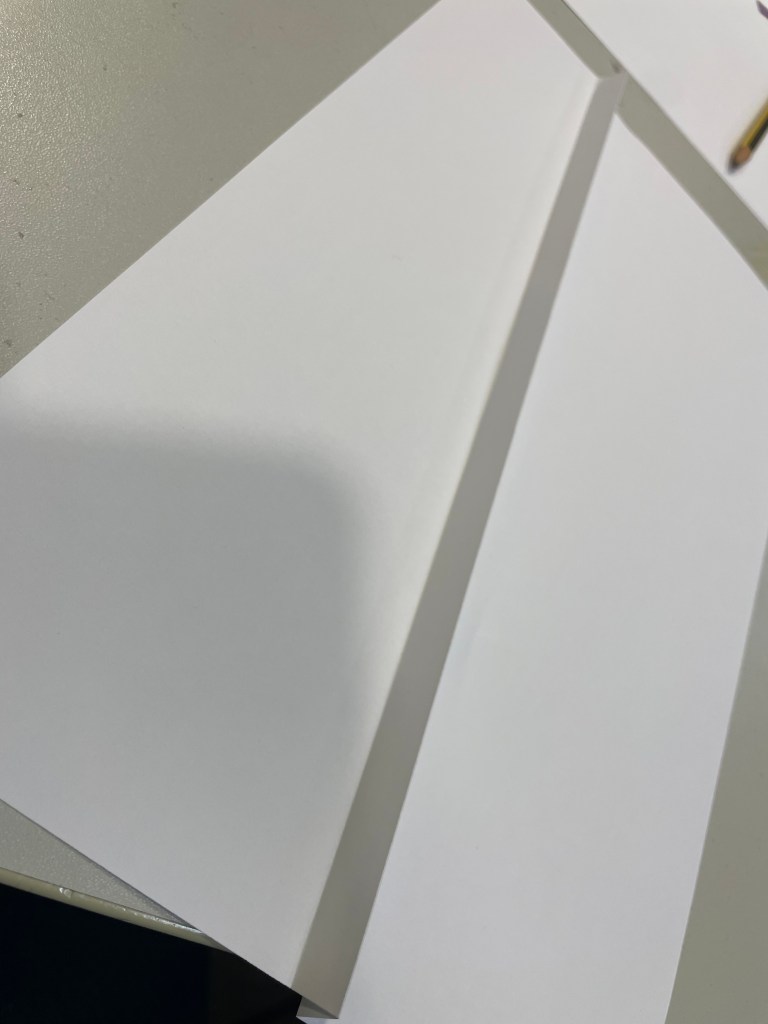
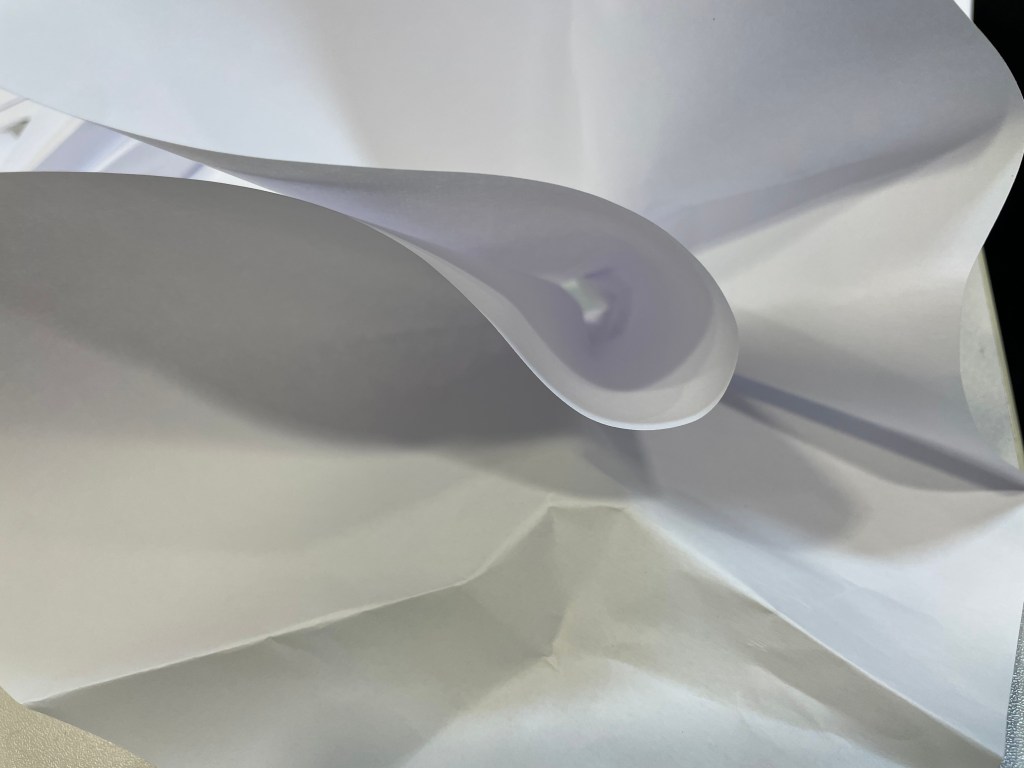
Working with the blank paper seemed to allow more freedom and I liked that the results took on a sculptural quality. The effect of the folding on the reverse of the paper was equally, if not more, interesting at times than the right side; areas which were peaks on one side became troughs on the other and vice versa.

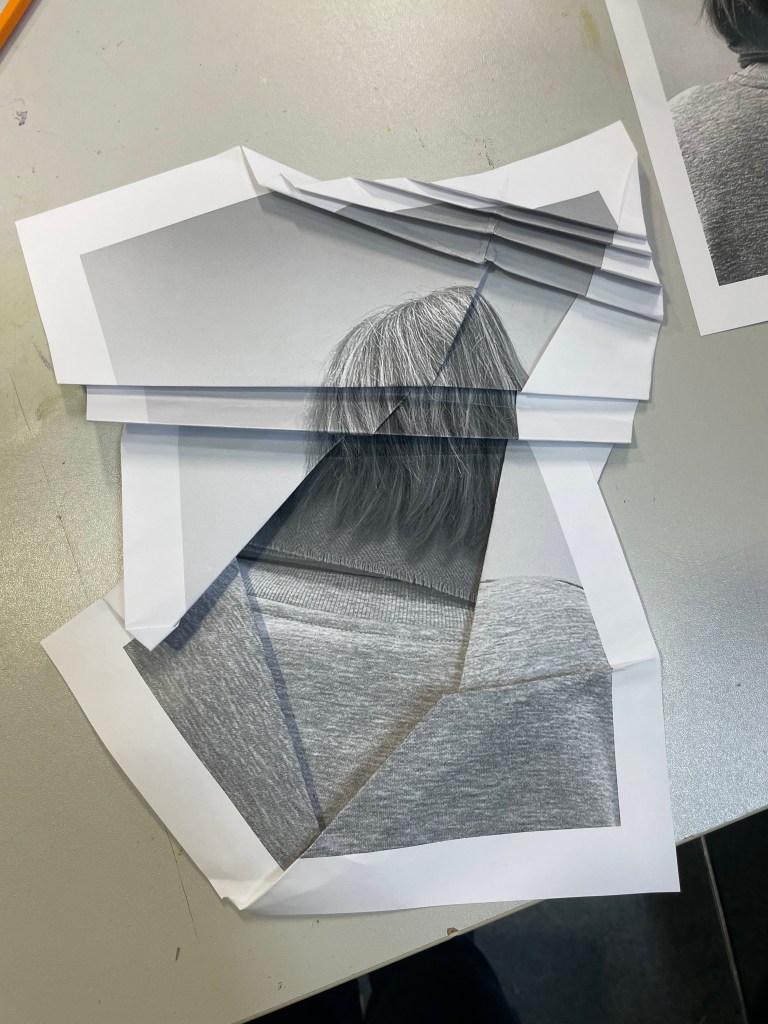
I felt inhibited using the print of the back of my head; I became too concerned with the resultant image which seemed to impose restrictions on how I folded, so maybe I like clear parameters, but not too many of them? Also, the effect is less sculptural than when using the blank paper; the areas of shadow are less apparent and the focus shifts to the distortion and concealment of parts of the image rather than the creation of form.

We then went on to do some linocutting – it seemed a bit incongruous with the folding activity, but nevertheless we all launched into it with equal enthusiasm.

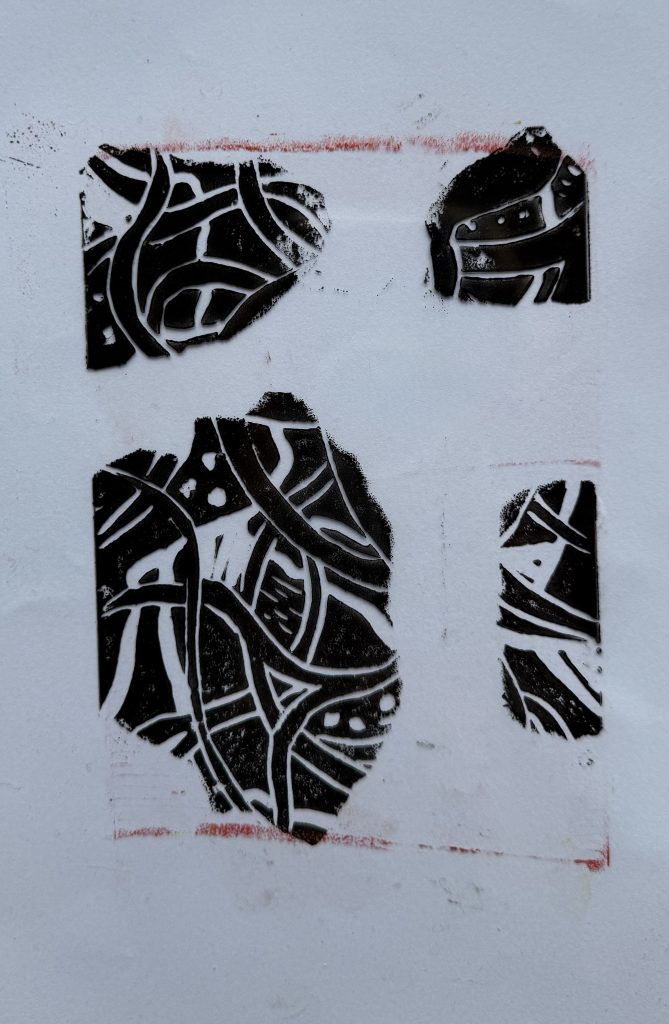
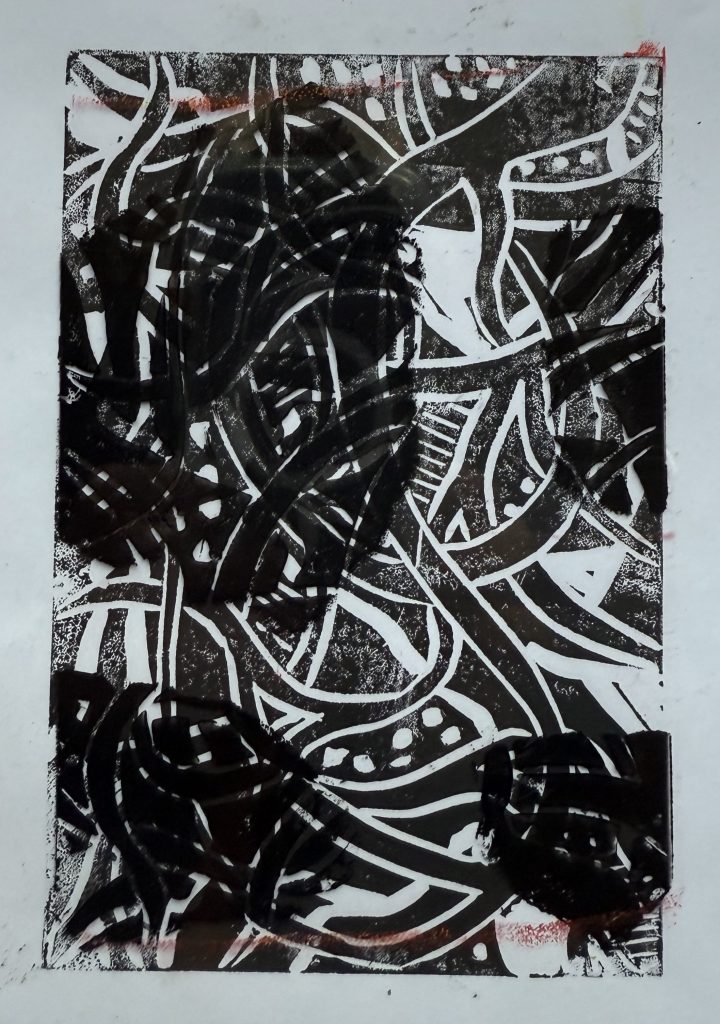
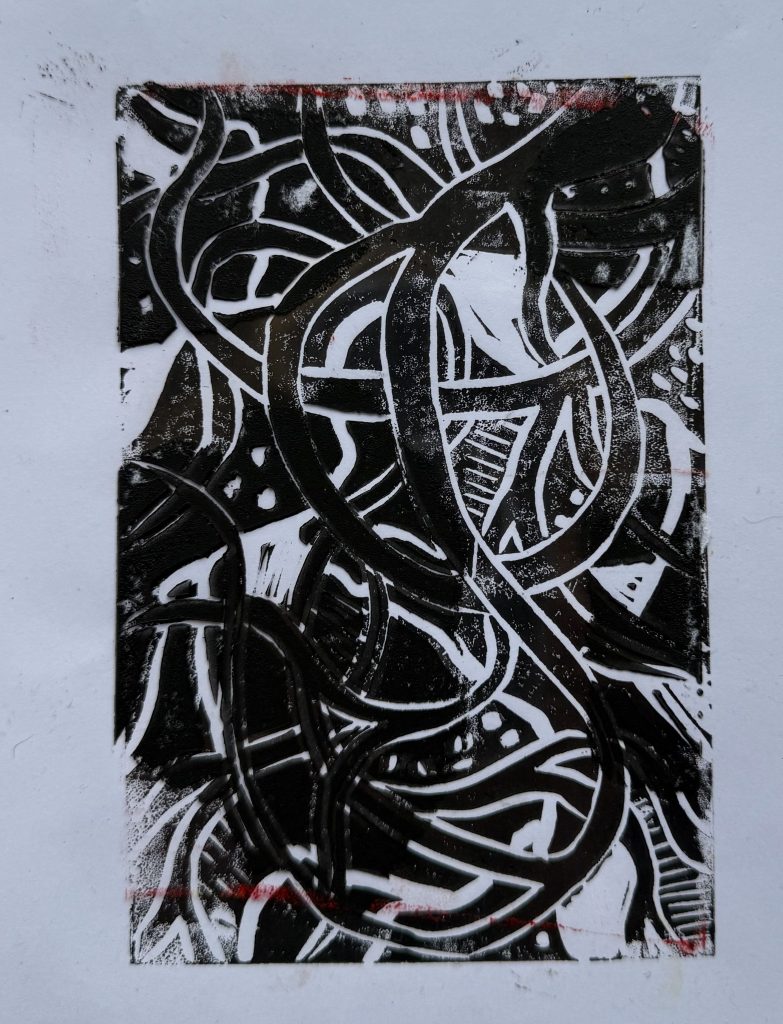
I prepared two linocuts; one inspired by tree roots and the other a reduction linocut of an abstract shape – I printed it using yellow ink first, then cut away more lino and printed using red ink.

I also printed the tree roots image on a transparency, having torn up bits of paper to create a random mask. It is interesting to see the effect of overlaying it with the two prints; how it creates a sense of discord on the prints where it’s not in sync with the image below, and how it creates areas of intensity on the print over which it lines up.

As I was taking my lino into the next door room to print it, Christian heard me reminding myself as to what I was planning to do. Sorry, are you talking to me? No, just myself. Doesn’t everyone do that? Yes, of course. When I went back in to print my second lino, I asked him how long we had left. Sorry, are you talking to me?…

Perception Of The Whole

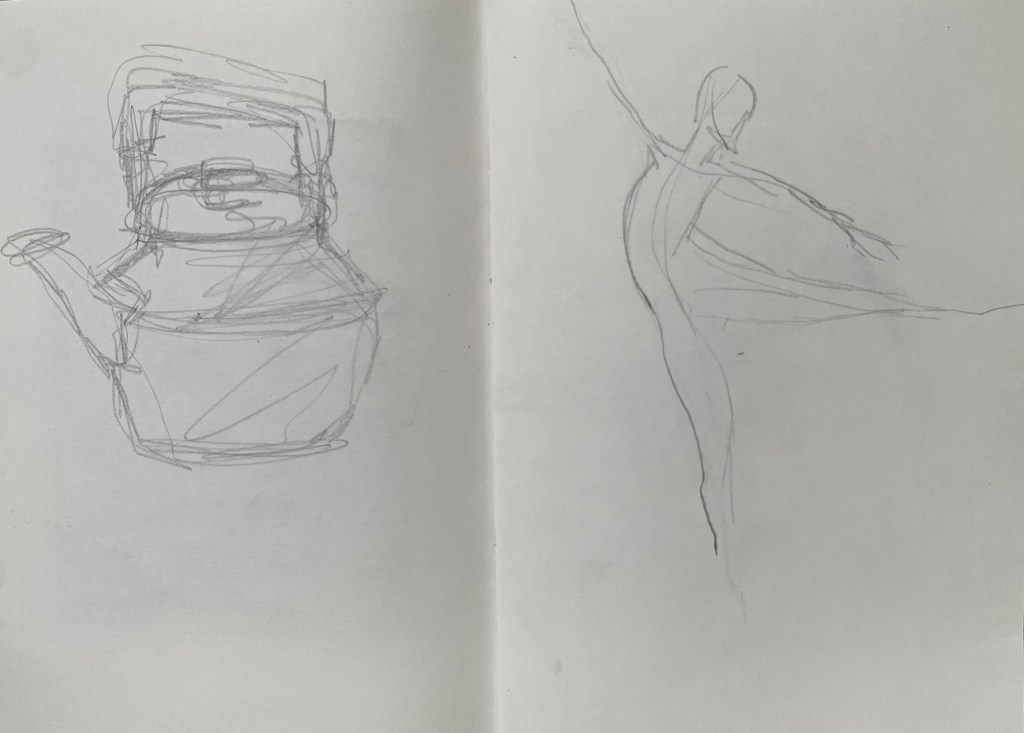
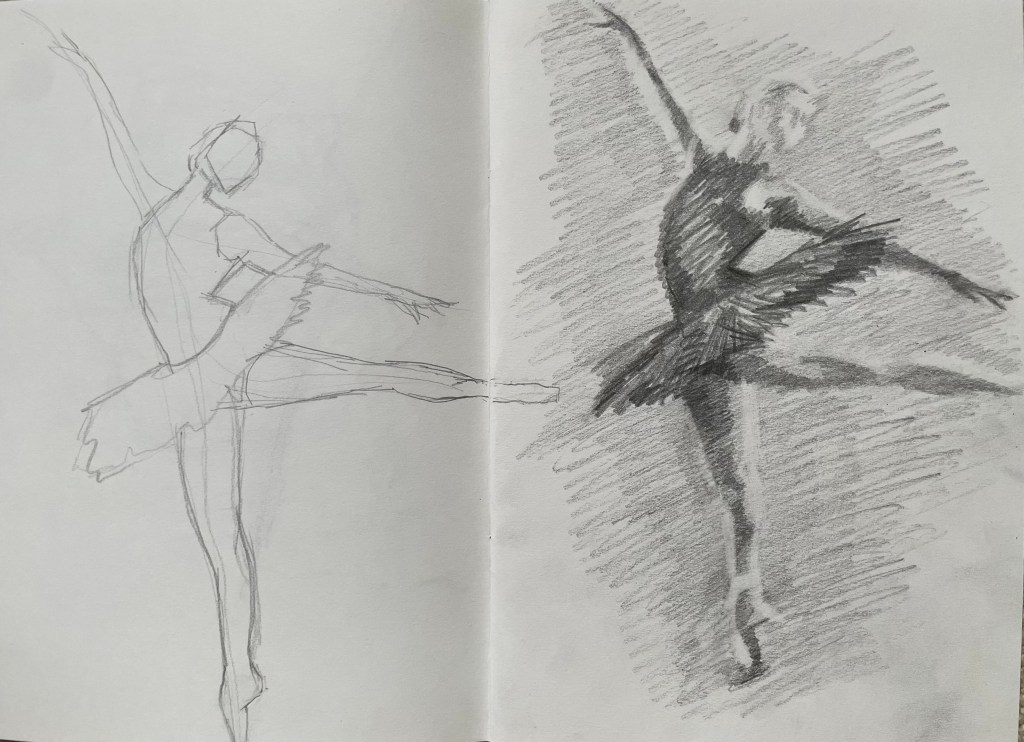
I attended another of Chris Koning’s online drawing workshops this lunchtime. She referenced Kimon Nicolaides’ 1941 book, ‘The Natural Way to Draw’. He says that you need to draw what the object is doing, not what it looks like – gesture drawing.

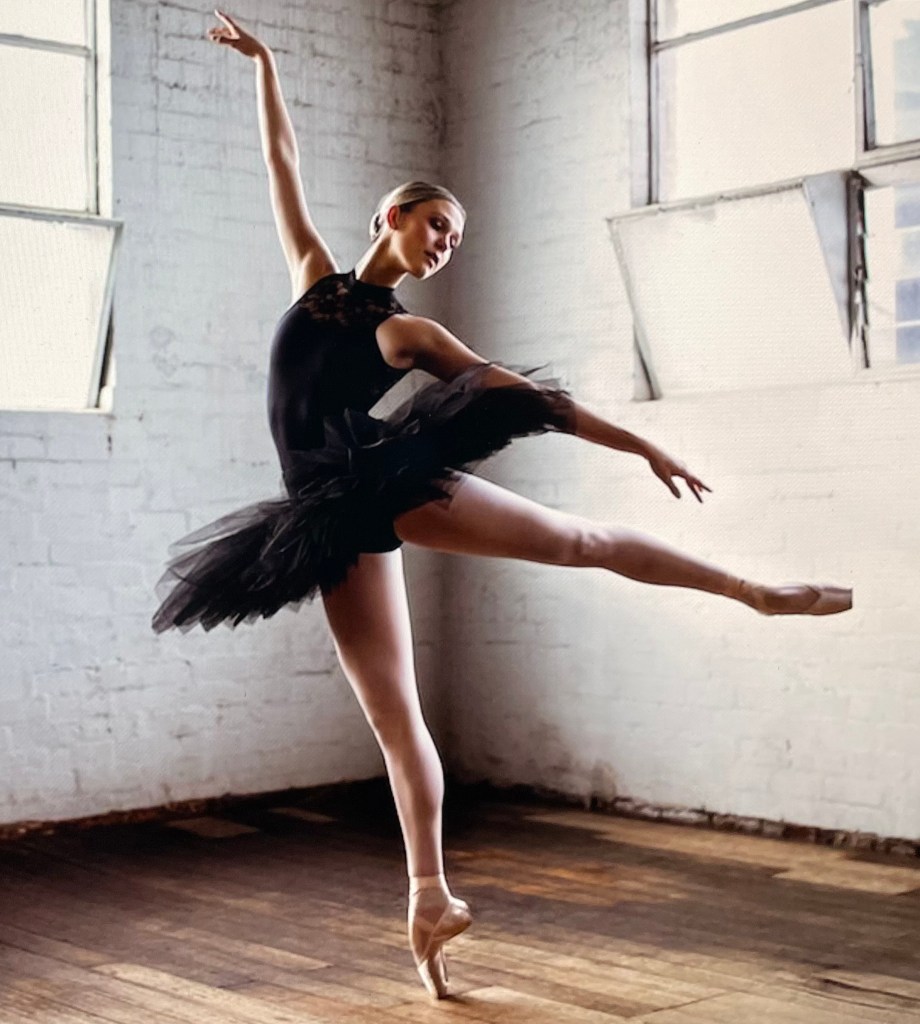
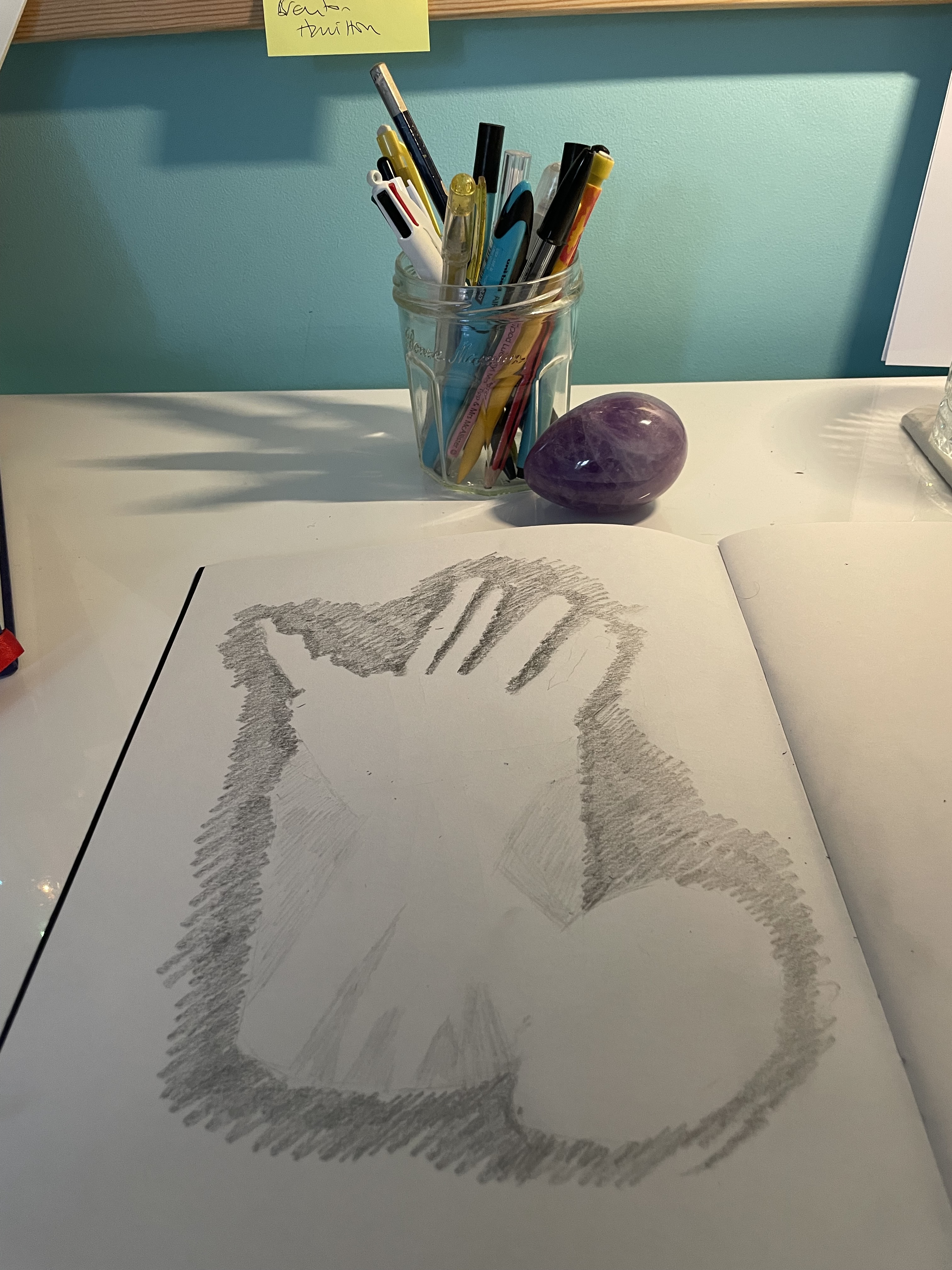
We did a couple of very quick exercises – a quick 30 sec gestural drawing of a kettle starting from the middle rather than the edge, and a dancer using gesture, negative spaces and shading etc.

For some reason I didn’t do one drawing but got sidetracked on looking at shapes and shading. I’m quite pleased with the end result bearing in mind I only had an HB pencil to hand. It was quick and instinctive. I ran out of space as usual. I’m going to concentrate on doing some more drawing. I like the idea of moving continuously without taking the pencil off the paper, looking and editing as I go.

Light & Shadows

I attended another of Chris Koning’s online drawing workshops at lunchtime, to brush up.

She explained the concept of light logic:

  • Highlight – the brightest light
  • Cast Shadow – caused by the object blocking the light and so the darkest dark
  • Reflected Light – dim light bounced back up from light on the surface
  • Crest/Form Shadow – shadow which lies on the crest of a rounded form between highlight and reflected light

When drawing we are not interested in contrast, but in value ie what something looks like against something else.

‘The Artist’s Mother’, Georges Seurat, 1883

This drawing by Seurat is made up of lots of different areas of tone. The parting in the hair is not a definite line; it has been created by different areas of tonal value. There are no harsh lines anywhere and there is very little contrast in the image. It is Seurat’s flawless light logic which allows us to create the rest of the information ourselves.

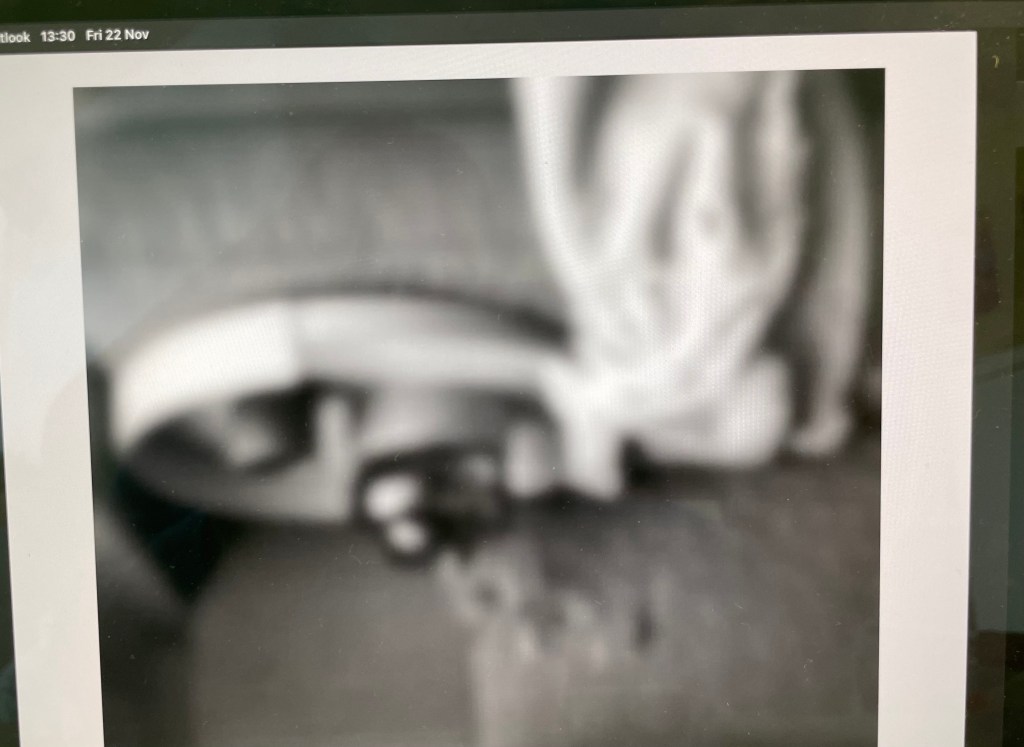
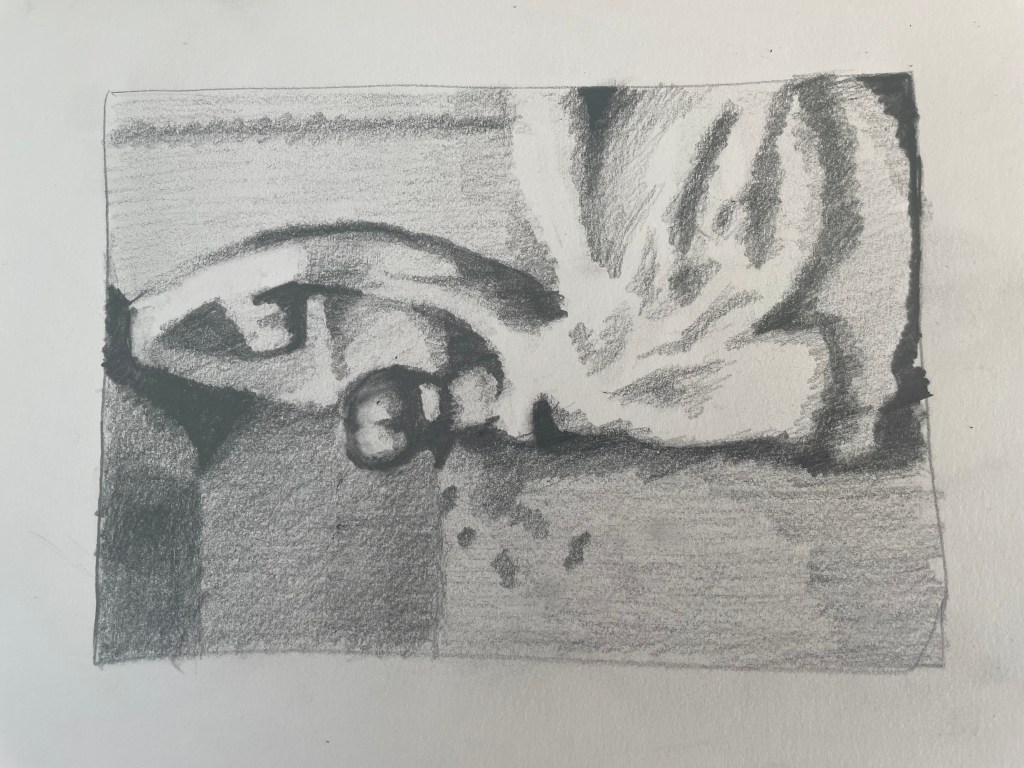
We then did a quick 10 minute exercise. We lightly shaded in a rectangle. Then we were shown a blurred image and told to fill in the darkest areas and then use an eraser to show the lightest. We then had to fill in the rest of the tonal values in the knowledge that nothing else will be as dark or as light as the existing areas of tone.

Chris then inverted the image and made it clearer:

It was a helpful reminder not to ‘see’ what I’m drawing and thereby create an expectation, but just to see shapes of tone, and to start from the general, keeping in mind the relationships between areas in the whole of the composition, and then move towards the specific.

Hearts and Lino

”Making the decision to have a child – it is momentous. It is to decide forever to have your heart go walking around outside your body.”

This quote from Elizabeth Stone (I’m yet to fathom out who she is!) is apparently well-known, but I only heard it recently when someone, I think it was an actor, was being interviewed about becoming a parent.

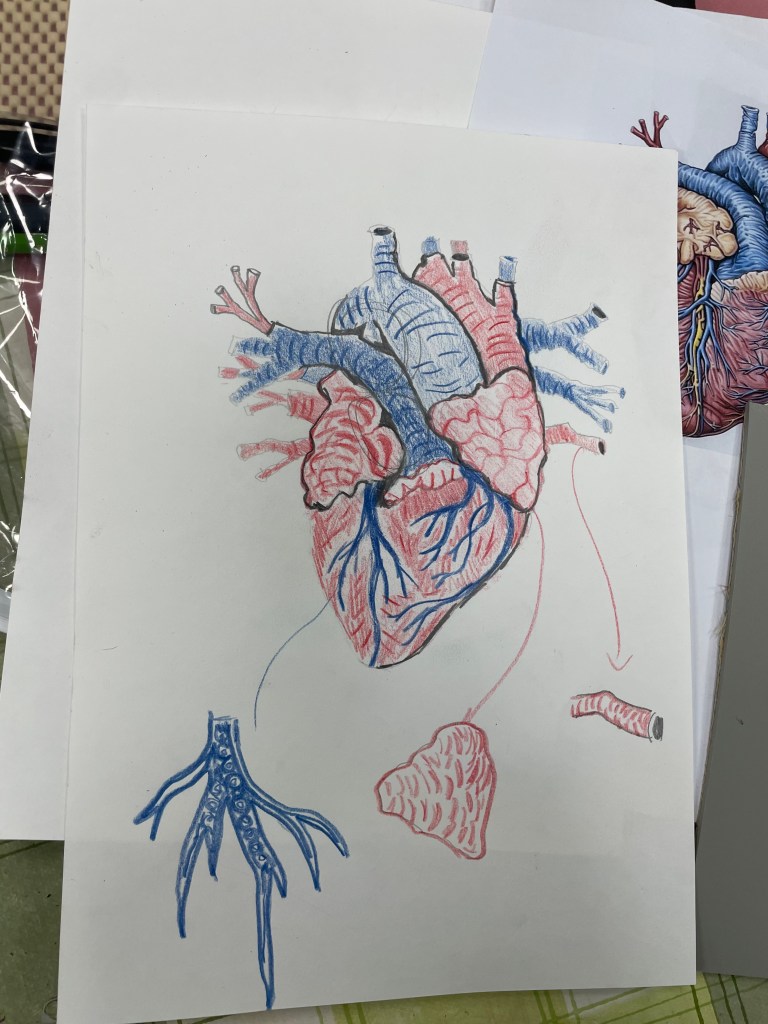
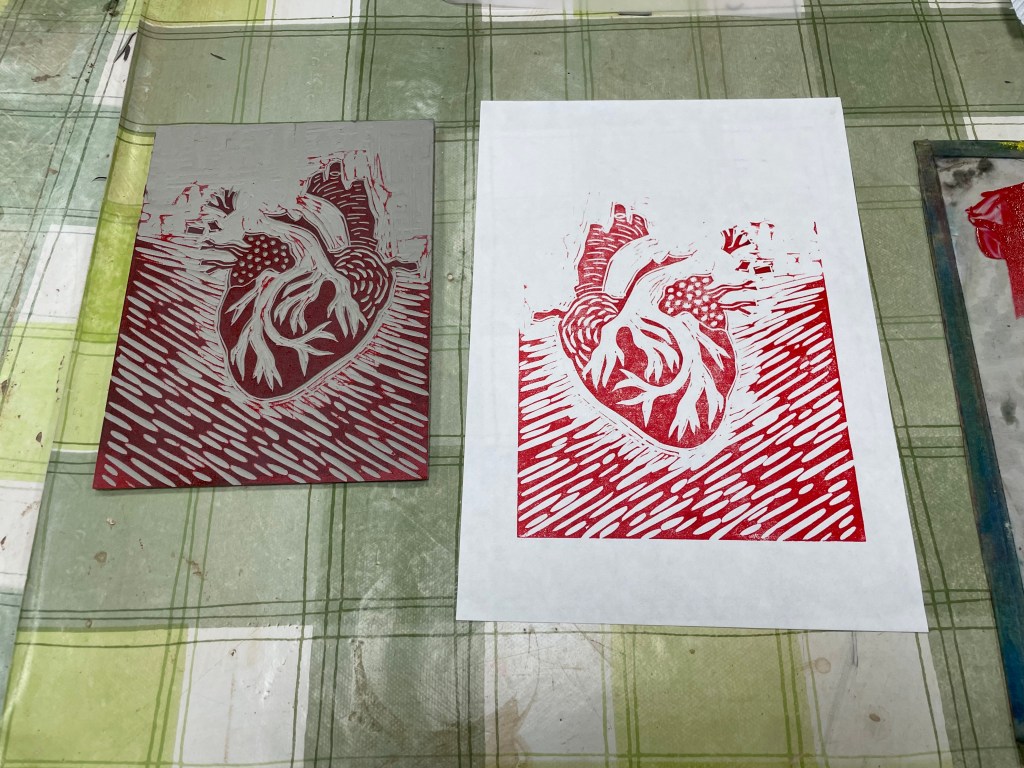
I think it sums up brilliantly the utter overwhelming sense of vulnerability and responsibility that I felt on becoming a mother. With this in mind, I attended a workshop on Saturday and Sunday on linocut led by Lisa Takahashi. Whilst everyone else started working on their images of sea urchins, birds, landscapes and flowers, I sat there, initially reluctant to reveal my chosen image of an anatomical diagram of a heart – it seemed particularly grisly and gruesome in this environment of natural loveliness. I suspect a few eyebrows were raised, on the side!

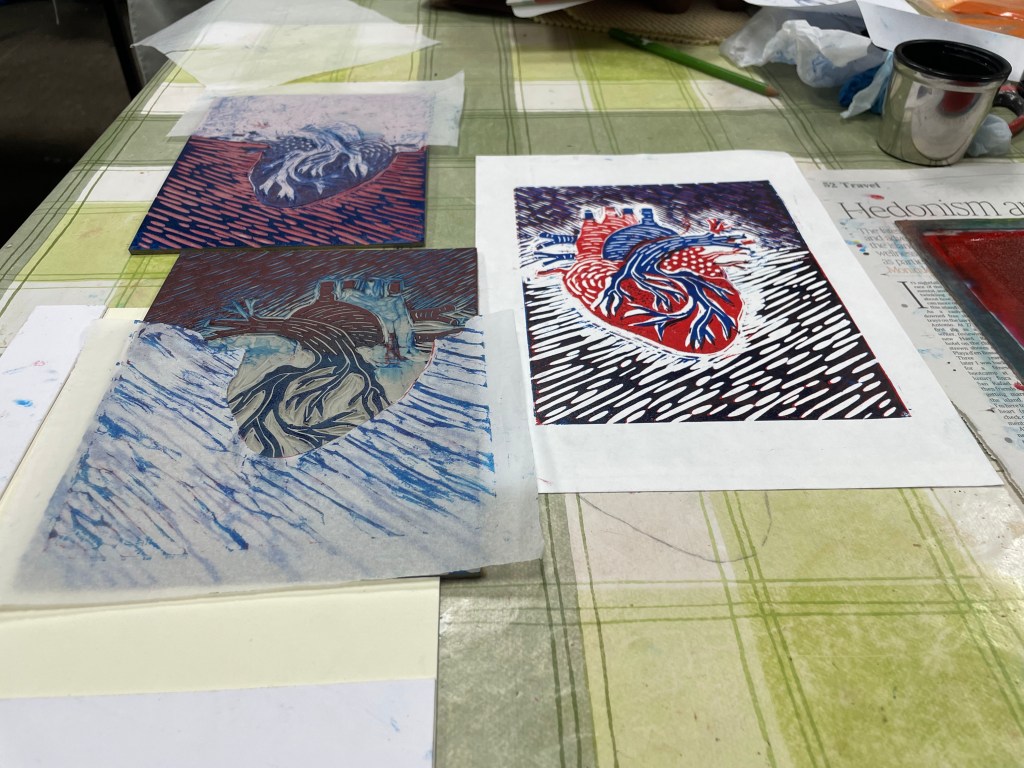
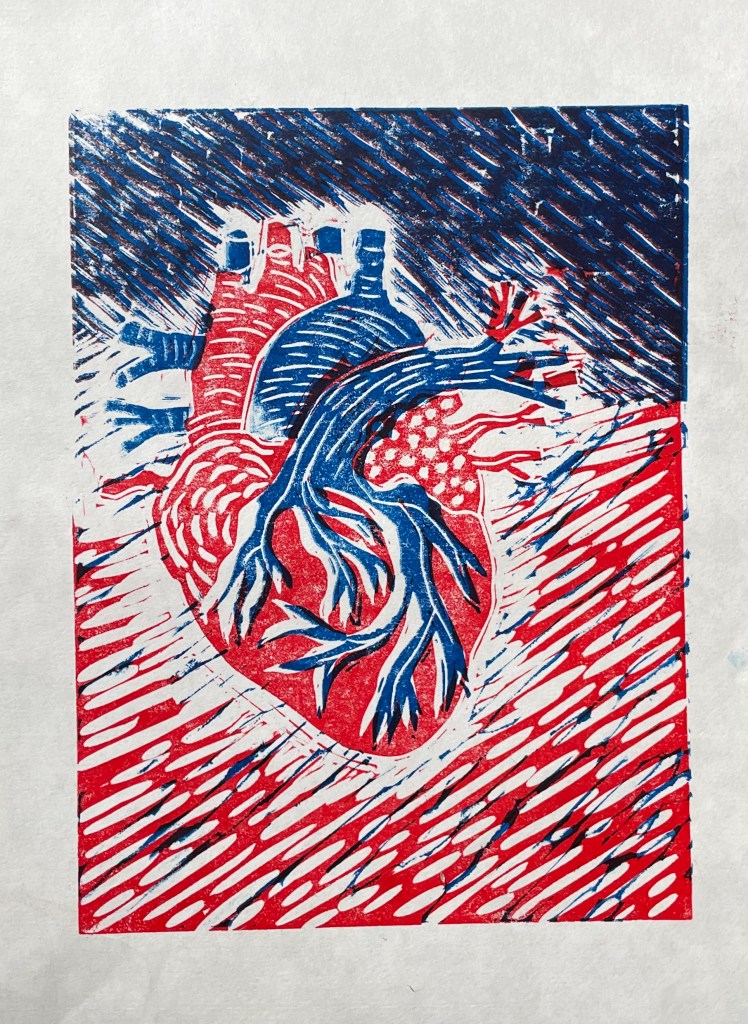
The workshop was on multiple-block linocut, a process in which you use separate blocks of lino to print individual colours, as opposed to reductive linocut where the colours are printed from the same block. I’ve only ever done a basic linocut with a single colour, so the process of working out what areas to cut for each colour meddled with my head a bit. Also, because you use separate blocks you can reprint in different colourways, although there is more room for error in terms of cutting and registration when printing, which can lead to unintended gaps and overlaps which add to the feeling of it being handmade, apparently! Also, as with all linocuts, you can sometimes get marks from ridges of lino which have inadvertently picked up the ink, particularly in large areas which have been cleared out, and this is called “chatter”, which is a lovely term.

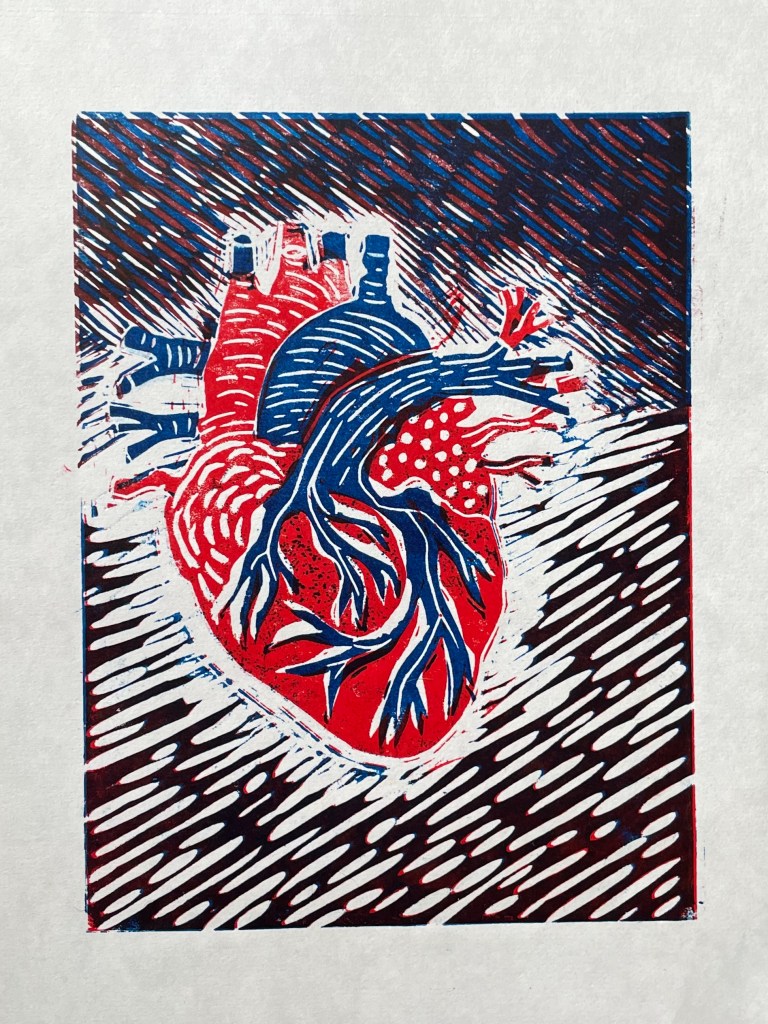
We were limited to two colours, which effectively means that there can be up to four colours in the print: the two chosen colours, their resultant mix, and the white of the paper. I chose red and blue as they were the colours on the diagram.

Well, the prints are a bit rough and ready. I’m not keen on the white area around the heart – originally the background was also red and so I wanted some differentiation between the two, but later on I decided that I preferred the darker background. Having said that, I think it does give the image some dynamism, as if the heart is beating and pulsating.

“Oh Betty!”

Sometimes it’s good to go back to basics, so I signed up for Chris Koning’s online workshops on drawing – admittedly today’s on negative space was the first one I’ve been able to attend as I’ve had all sorts of IT issues.

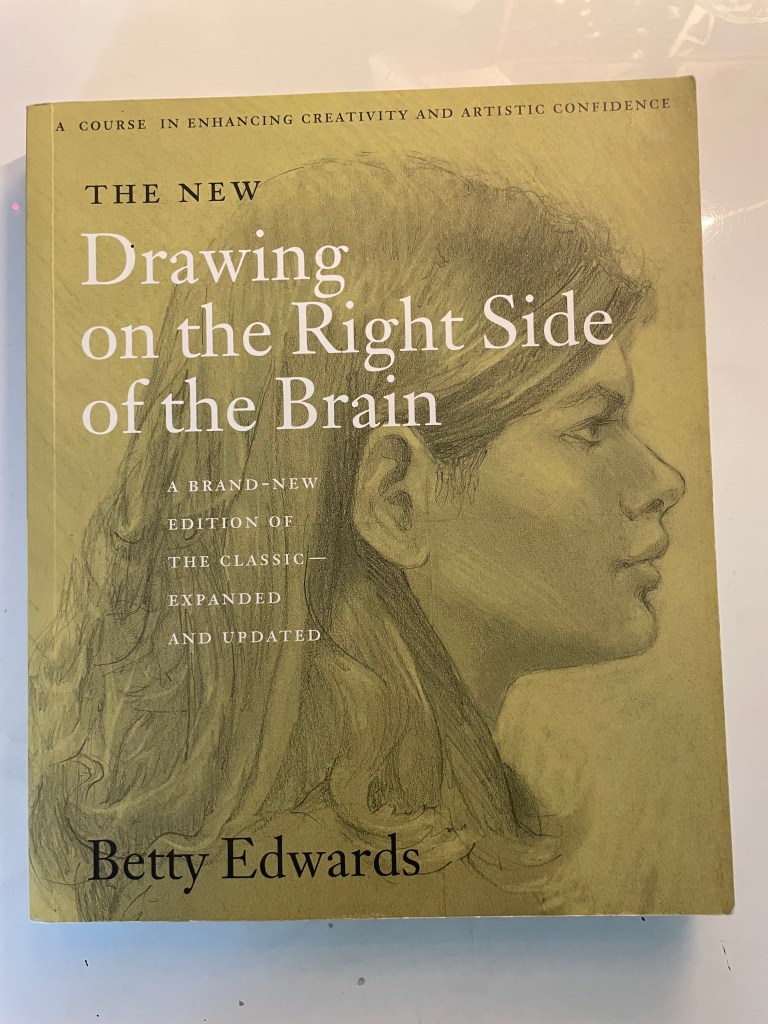
They are based on Betty Edward’s tome – Drawing on the Right Side of the Brain.

A friend bought me this book many years ago, so today’s workshop has motivated me to get on and finish reading it (I’ve suddenly got so much reading to do!). The book’s message is that if we understand how to perceive something, we’ll be able to draw it and, in this respect, there are five perceptual skills of drawing:

  • The perception of edges
  • The perception of spaces
  • The perception of relationships
  • The perception of light and shadow
  • The perception of the whole

It’s all about how we see, and it’s always good to review how we perceive things, as we might end up noticing something different.