Last Minute

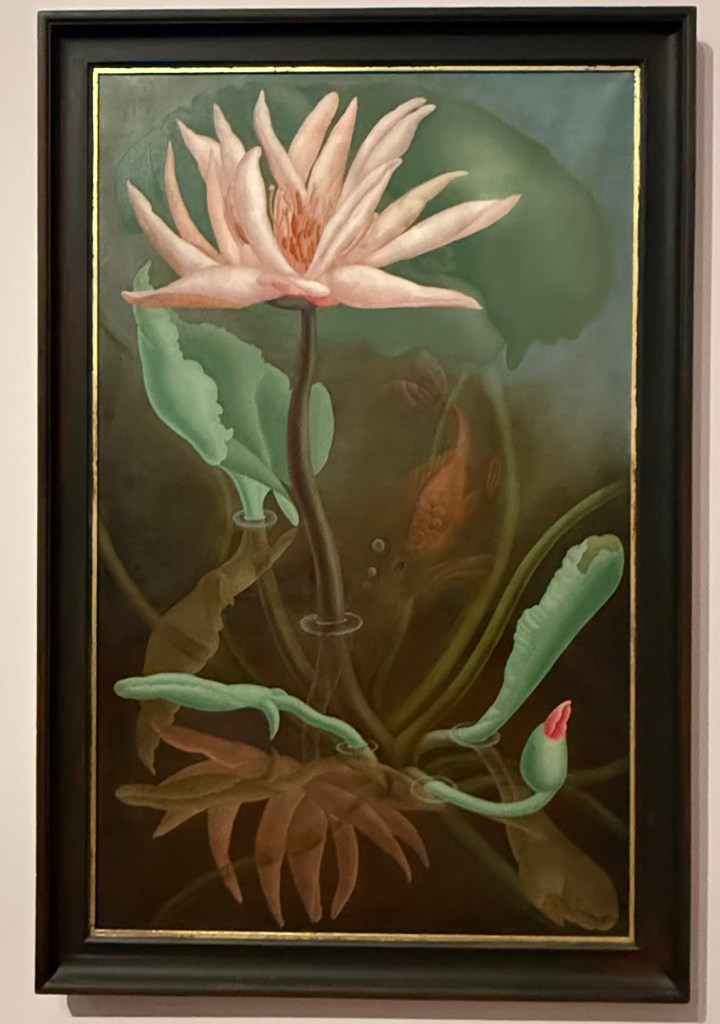
I made a last minute decision to go to Tate Britain on Friday to see the Ithell Colquhoun and Edward Burra exhibitions before they ended yesterday.

I didn’t enjoy the Colquhoun exhibition as much as I was anticipating, and I think it was because there wasn’t much surrealism.
As I was standing in front of Scylla, a woman commented to me that she had been expecting it to be a lot bigger as it had been used so extensively in the marketing of the exhibition. I assume that she had thought that because the image was used for marketing purposes that it was an important work of Colquhoun’s and because it was important and of value, that it would be large in scale – the old perennial issue of size.
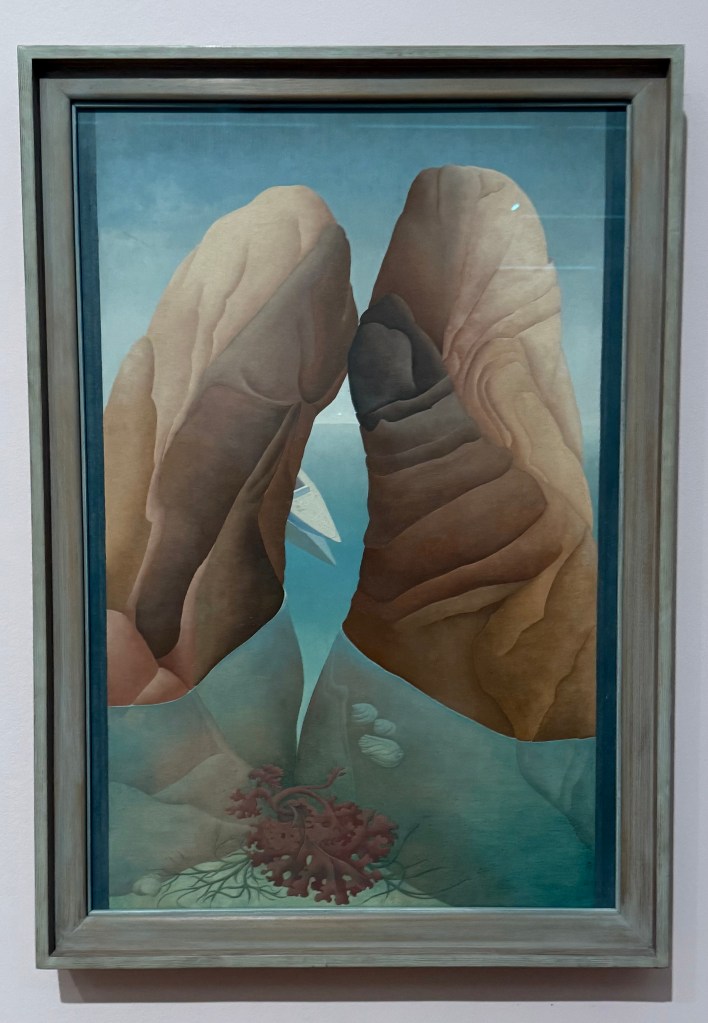
Scylla, 1938, oil on board, 91.4 x 61cm

‘It was suggested by what I could see of myself in a bath… It is thus a pictorial pun or double-image in the Daliesque sense – not the result of a dream, but of a dreamlike state.’

Colquhoun used the Surrealist process of decalcomania to produce a mirror image of randomly applied marks which she then used as a starting point for her work.

Gorgon, 1946, oil on board & its decalcomania counterpart of oil on paper

’I meant to paint a ‘Guardian Angel’ but the result of the automatism was so horrific that I had to call it a Gorgon instead’.

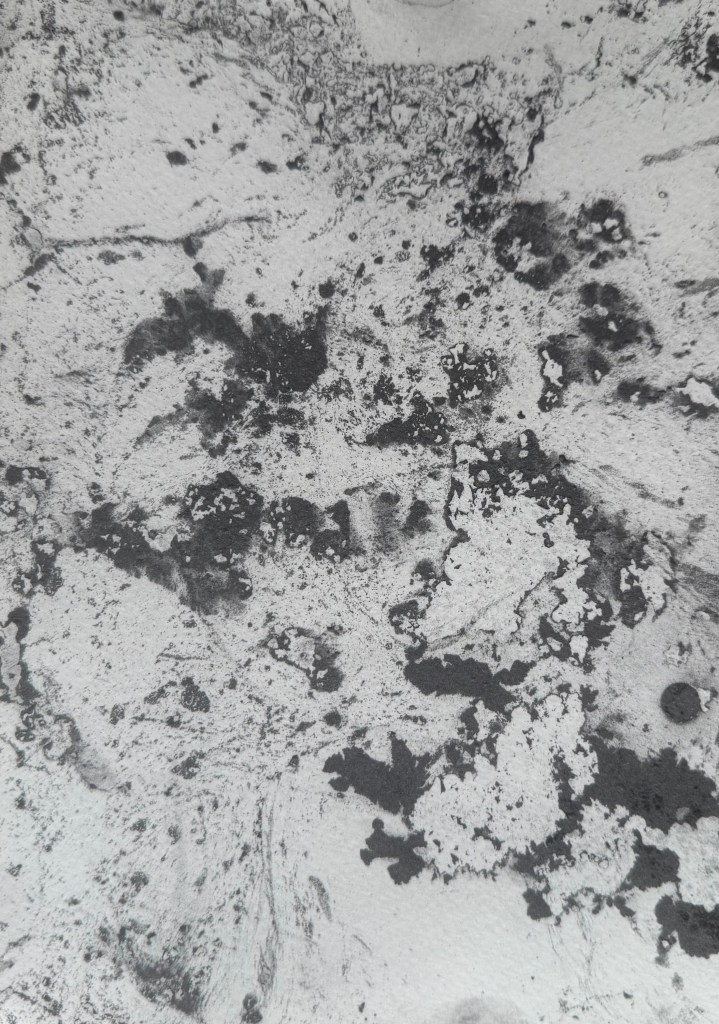
She also used a technique called parsemage, which involved submerging paper in water which had powdered chalk or charcoal on the surface.

These processes offered intuitive access to the unconscious mind, according to the accompanying blurb.

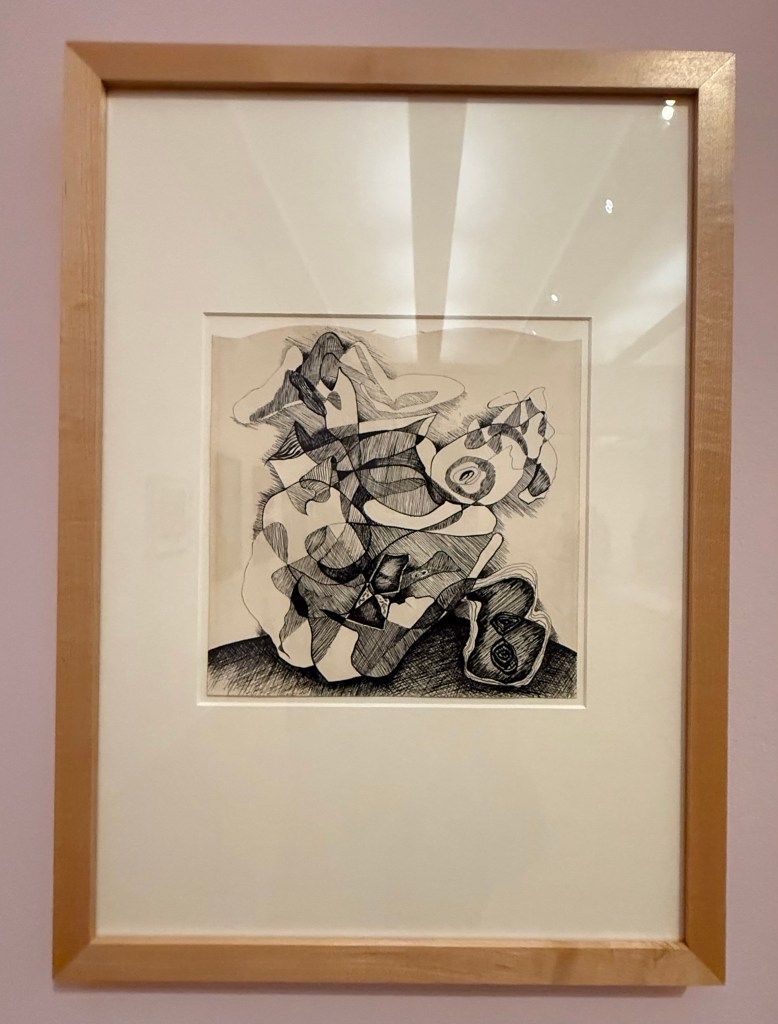
Colquhoun also utilised automatic drawing.
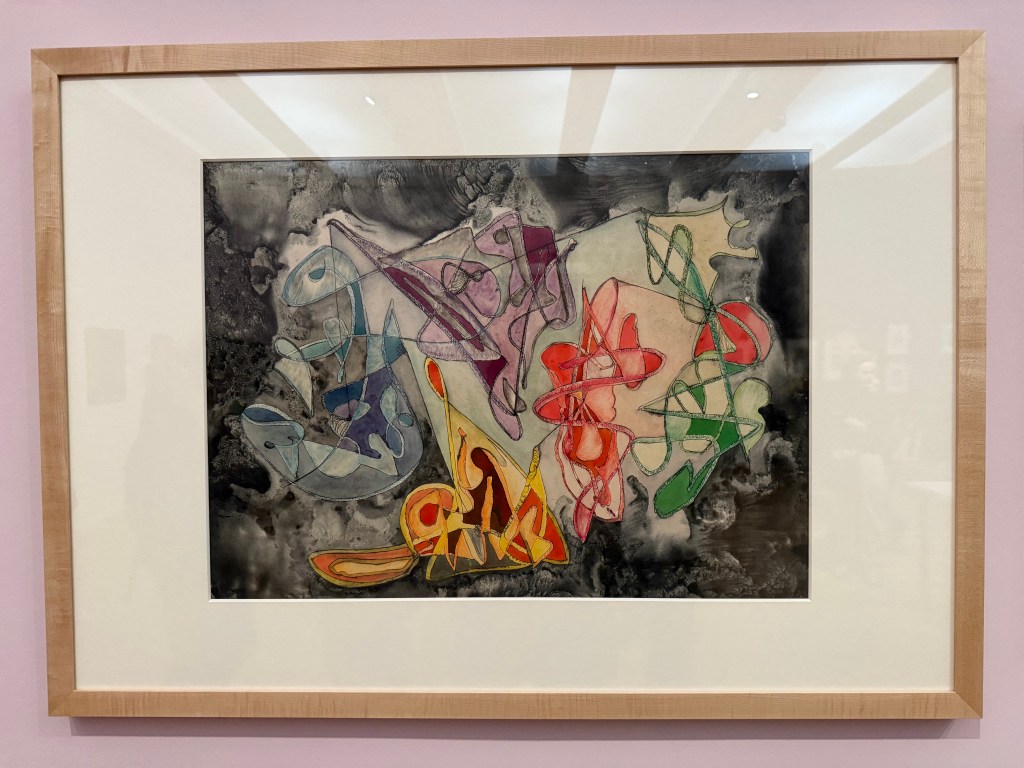
They remind me of my pen drawings in On Your Marks & Lines.

I decided to give parsemage a go – I think that you can do it with anything that can be ground to a dust – I used powdered graphite which has a slightly metallic quality to it. I was really pleased with the results.

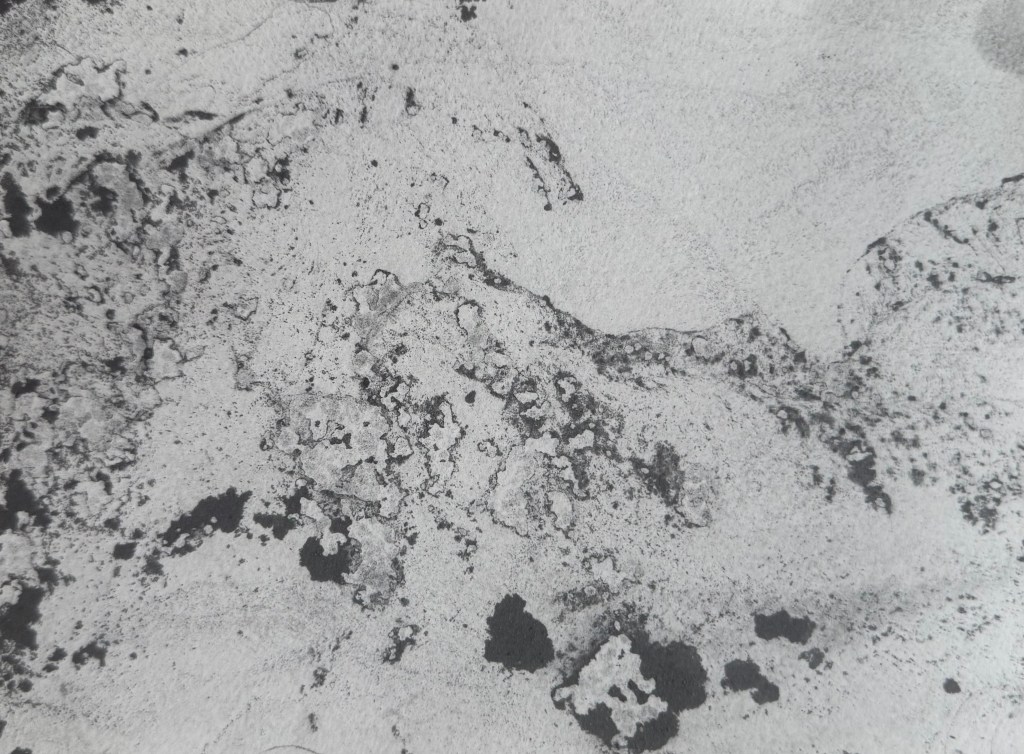
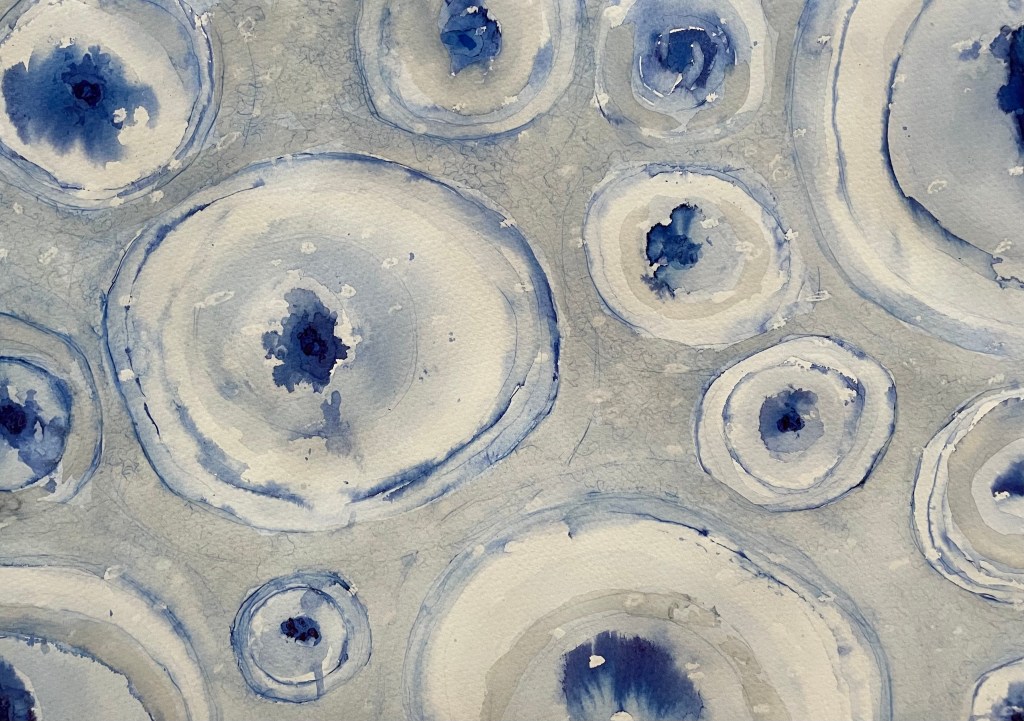
I then remembered a post on Instagram of a potter decorating bowls by blowing bubbles. I’ve used bubbles in wet cyanotyping before, so I decided to try it with the powdered graphite. I really like the delicate lines which were created and it was fascinating watching the effect of the bubbles popping – it reminded me of looking at cells under a microscope.
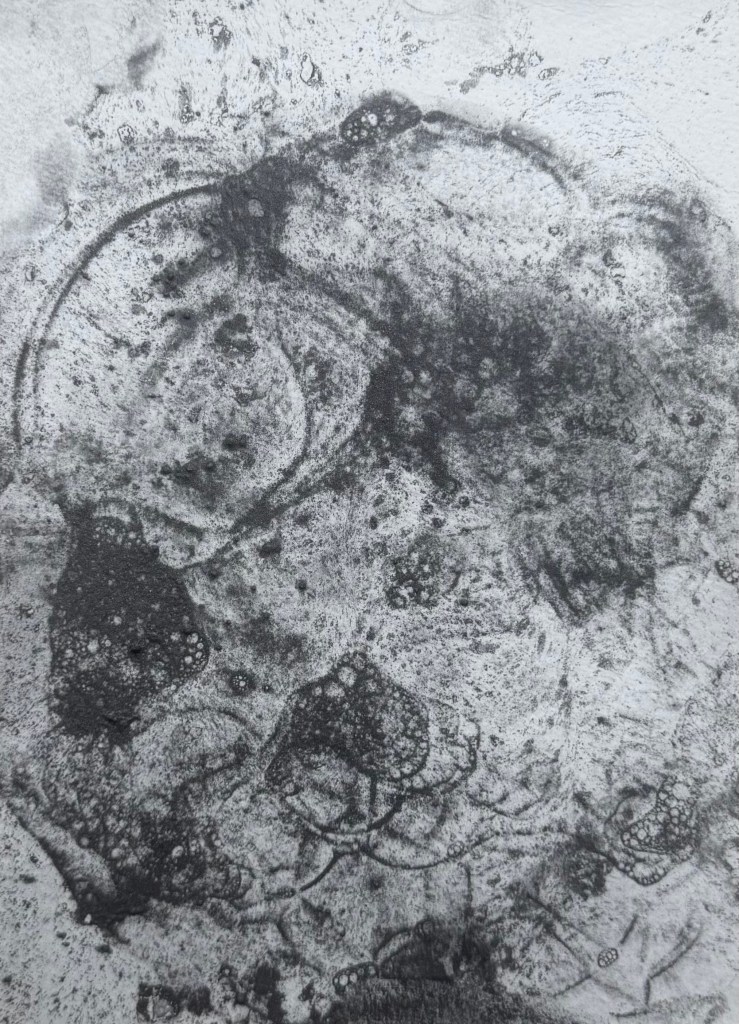
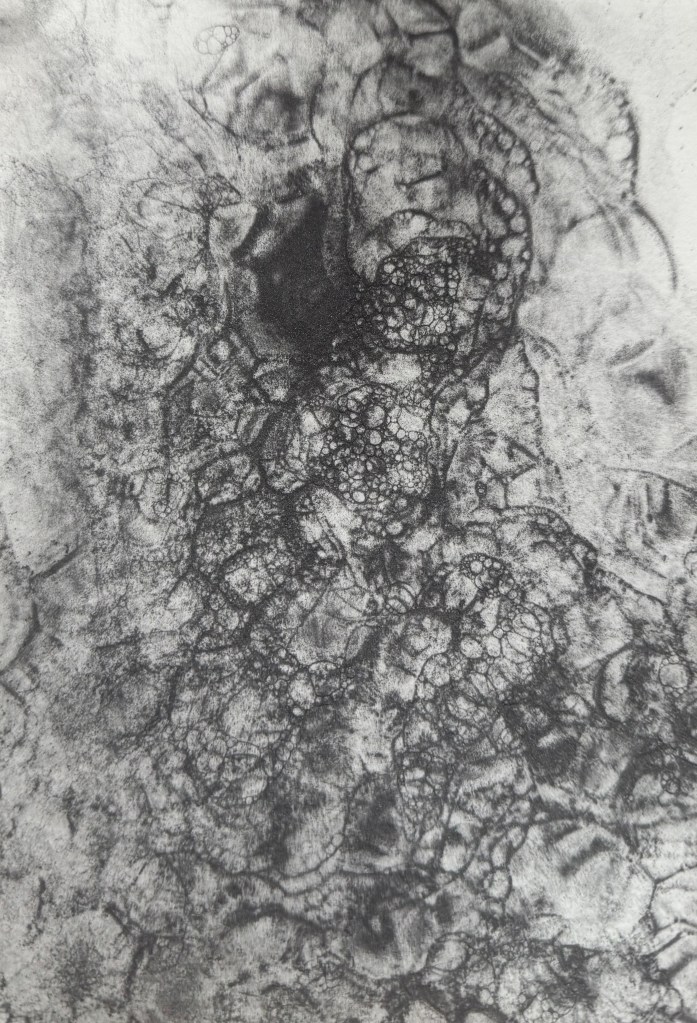
I then experimented with acrylic ink – maybe I should have realised beforehand – but it failed miserably. I wanted to try again with a water based ink, but I couldn’t find them. It might offer a more effective way of creating something akin to cells, than my previous attempts, so I’ll try again when I eventually locate them.
Blot

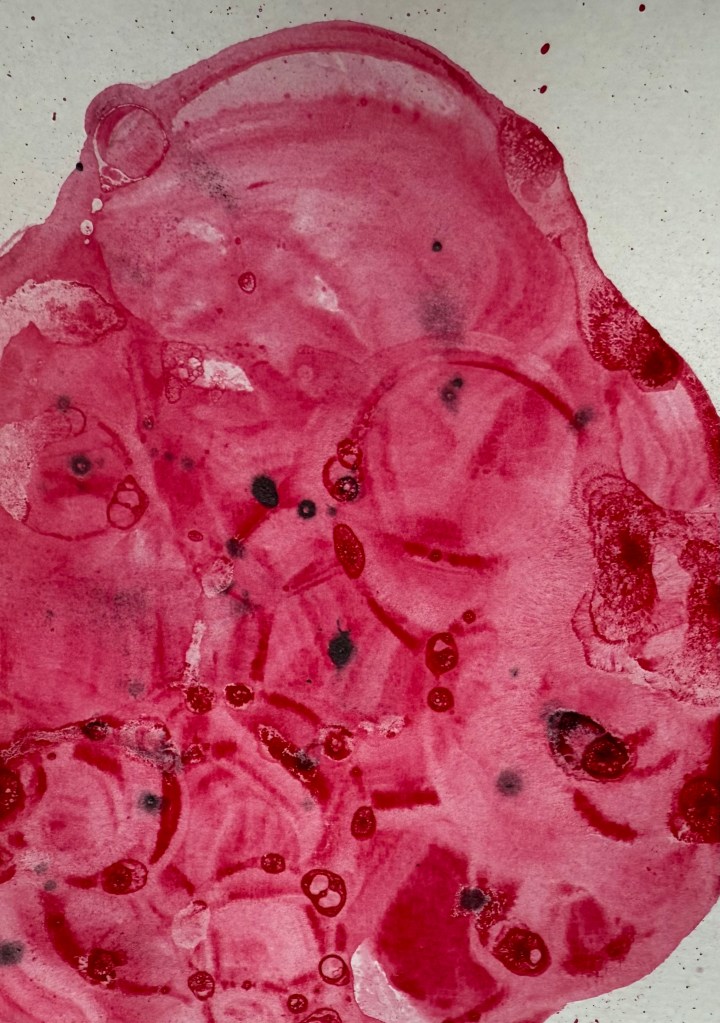
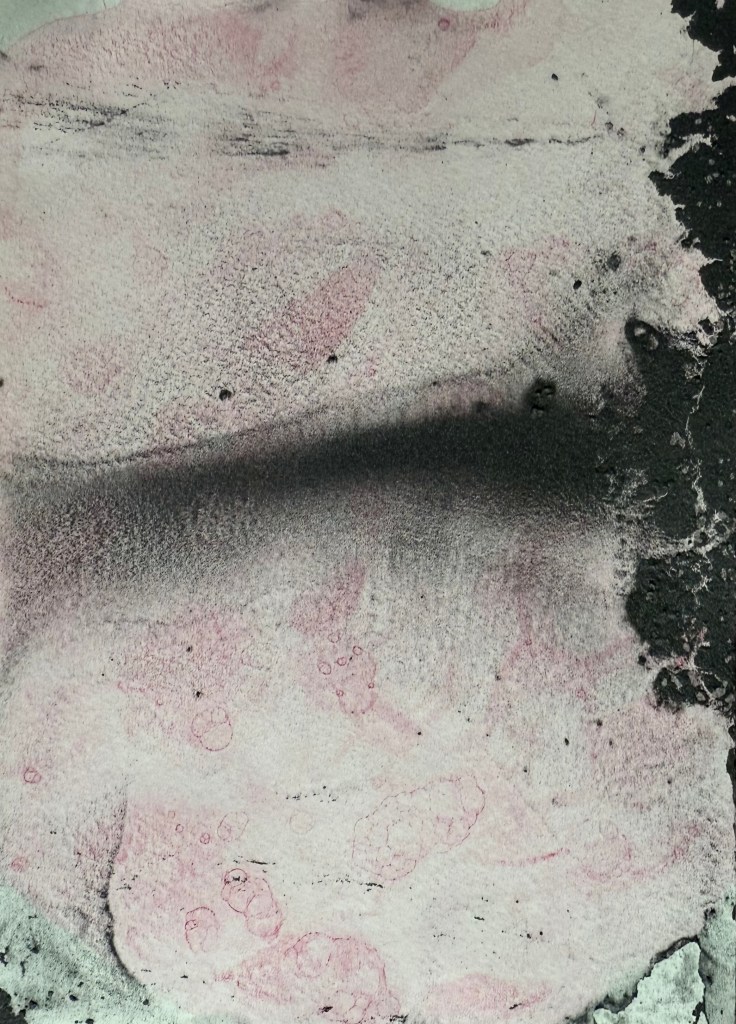
Messing with ink.

There’s not a lot to say about these images. Apart from the middle one, which was influenced by thoughts on cells and became all too contrived, there’s something very liberating about putting water on paper and watching the ink do its thing.

I’m beginning to think that maybe I should be getting on and producing some actual work.

The Invasive Sibling

My daughter turns 21 next year and my husband and I have decided to throw a bash not only to celebrate her birthday but also some milestone ones of our own which have gone by not properly celebrated.

I was chatting to my daughter the other day about the fact that my brother, who lives in Belgium, has declined the invitation. I explained to her that I felt really quite upset because the last time I had seen him was when we interred my mother’s ashes in April this year and before that, at her funeral in May last year.

My daughter is not one to get into emotional discussions, despite (or maybe because) she is studying for a psychology degree, and in response she informed me that I shouldn’t worry about not seeing him because he’s inside me. Inside me? Yes, she informed me as I tried to quell the rising tide of nausea – when he was born he left some of his DNA behind in the womb and that then ended up in me.

Microchimerism, it’s called – I looked it up. It means the presence of a small number of cells in an individual that have originated from another individual and are, therefore, genetically distinct.

As I understand it, on my very limited research, when a baby is in the womb the umbilical cord can act as a two-way street – the mother’s cells travel to the baby, and vice versa, so that some foetal cells can remain in the mother, even if the baby is not subsequently born. As they are effectively stem cells they can travel to parts of the mother’s body and grow as other cells eg cardiac cells (so the baby is forever part of the mother’s heart) or they can hang around and become part of future offspring. From what I can tell, the research has mainly been in terms of cells left by male babies, as it is easier to distinguish rogue Y chromosomes in the mother’s body, however, it is generally thought that it equally applies to female cells and that female babies may leave more cells behind than male babies. This process can play a part in autoimmune diseases and also the sex of the baby may influence the development of Parkinson’s and Alzheimer’s. All exciting stuff!

I was talking to my sister about it and the possibility of expressing this by making something akin to a set of Russian dolls with her as the outside one, and my brother and me on the inside – she wasn’t keen. I fear that our conversation may have been a contributing factor to her dream that night in which she was being chased by an artist who wanted to possess her body!