We’ve gone to St Ives in my weekly oil painting class, more specifically looking at the work of Ben Nicholson.
I’ve only recently looked at the work of the St Ives artists; aside from Barbara Hepworth, it didn’t really interest me before. I often go to the Pallant House Gallery and they have a few as a part of their permanent collection.
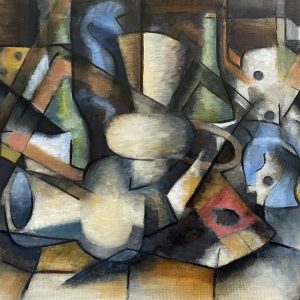
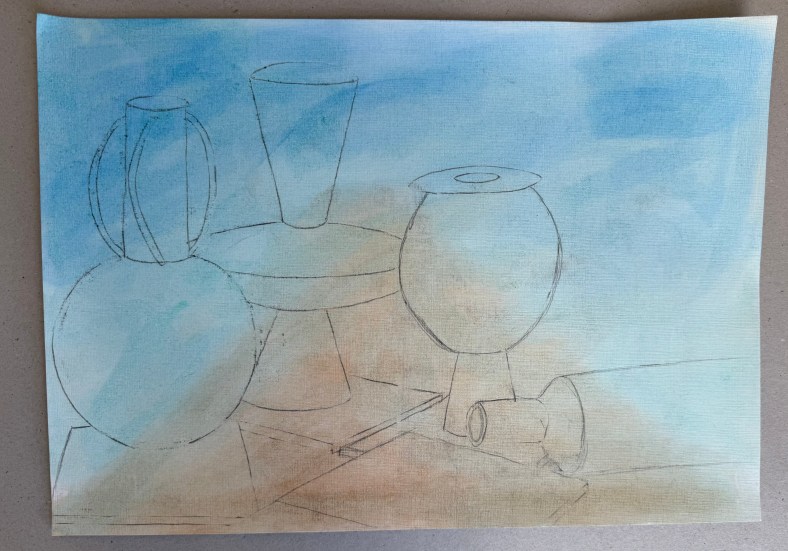
The brief was to make a drawing of the still life and then make two pieces, one with a slightly Cubist slant (using a tracing of the drawing to recreate shapes) and the other with a landscape in the background, both in the style of or influenced by, Nicholson. We used a limited palette of burnt umber, ultramarine blue, cadmium red light, lemon yellow and white.
I think that I would say that the finished pieces were more influenced by, than in the style of Nicholson! I’m not sure what I think about them. I swing from loathing them to actually quite liking them. I prefer the more abstract of the two.
What I have taken away from this exercise:
Lemon yellow takes an age to dry.
I really like the contrast between areas of pure ground and areas of opaque colour – I’ve often thought that some of Nicholson’s work has a ‘collage’ effect to it, which I like.
I like the interplay between the visible graphite lines and the oil paint.
The combination of the different genres of still life and landscape is really interesting.
I feel that I’m veering away from the figurative.
I wish that I had been less literal – I should have been more adventurous in my composition of the still life, mixed it up a bit more and not included figurative renditions of the individual elements, especially in the one with the landscape.
Next, is one of Nicholson’s inspirations, Alfred Wallis, known for his naïve art-making.
It’s taken me a while to finish this post – other things have got in the way – but I needed to complete it to make note of what I saw, and what I thought.
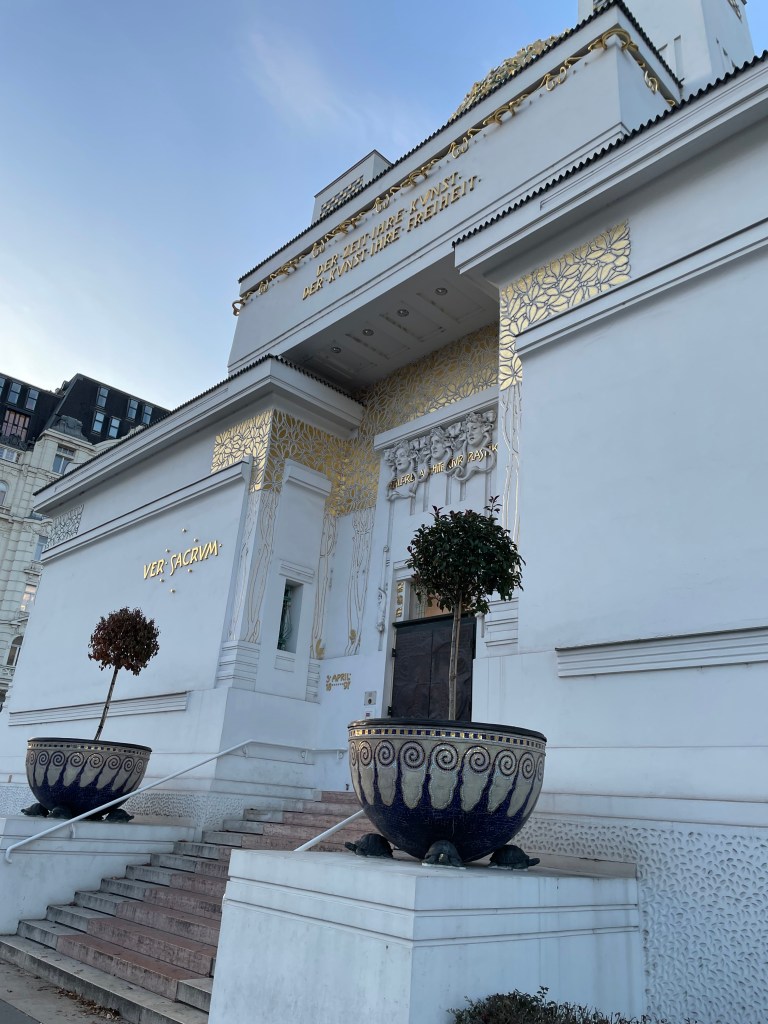
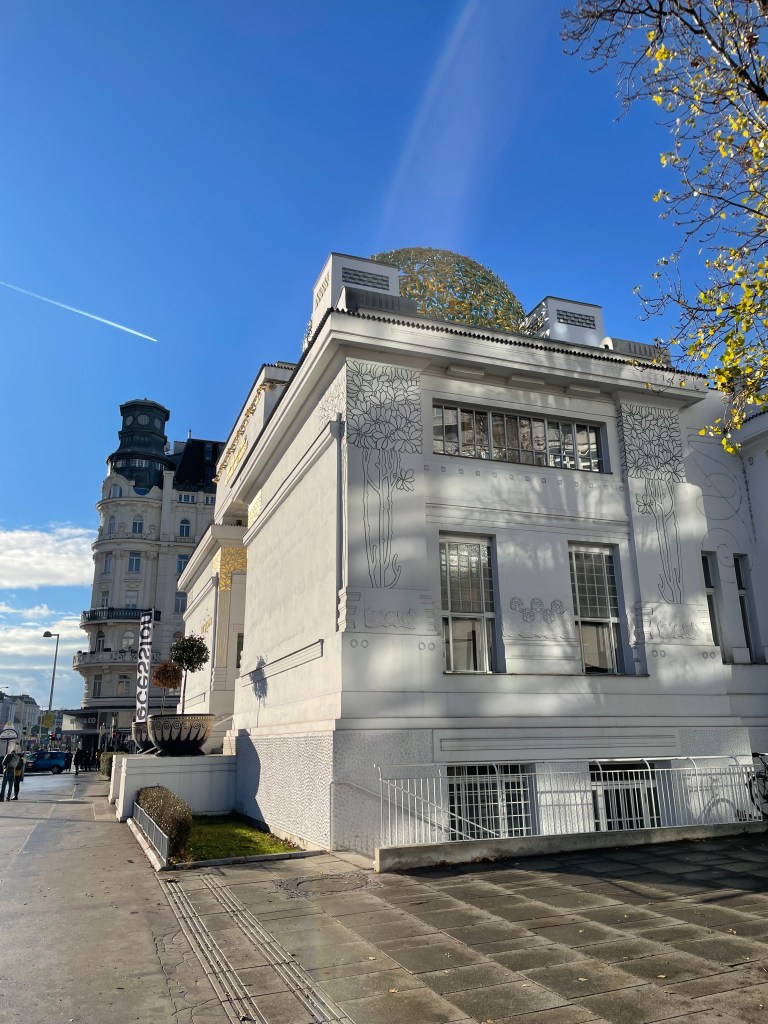
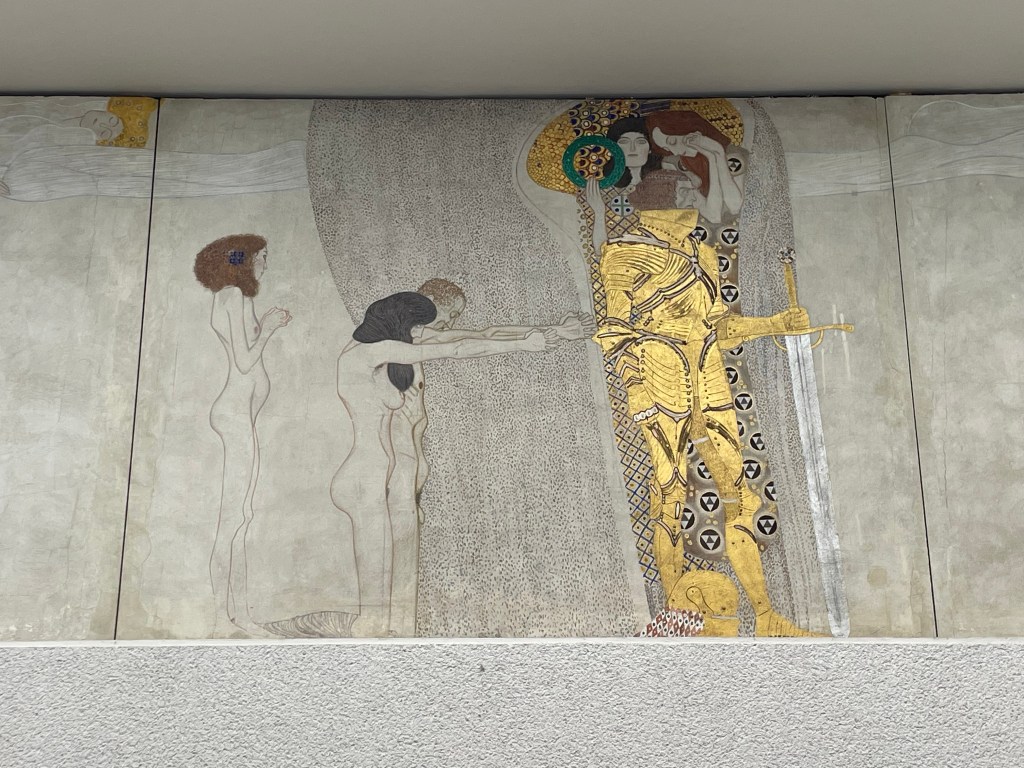
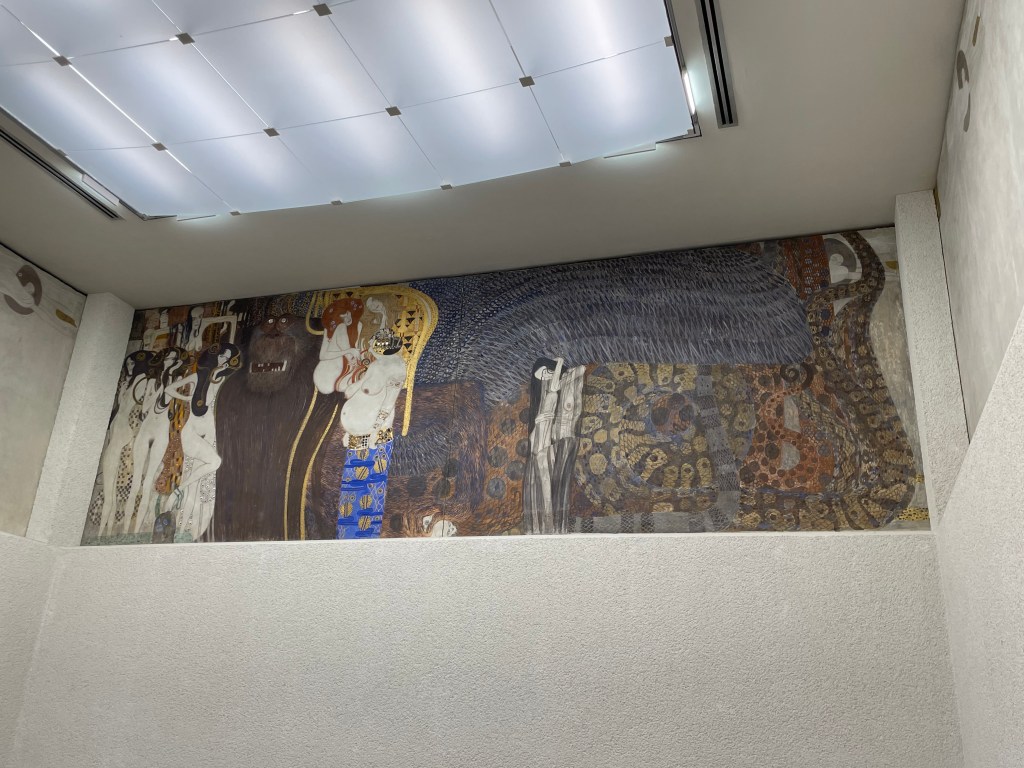
Whilst in Vienna, we also managed to visit the Secession Building, which was designed by the architect, Joseph Maria Olbrich, in 1898, as an exhibition space for the Secession. He was one of the founding members along with a group of artists, including Klimt, who had broken away from the traditional Künstlerhaus to pursue progressive contemporary art. The group’s motto which appears above the door is “To every age its art, to every art its freedom.” Topped by a golden cabbage comprised of 2,500 gilded iron laurel leaves, it houses Klimt’s Beethoven Frieze.
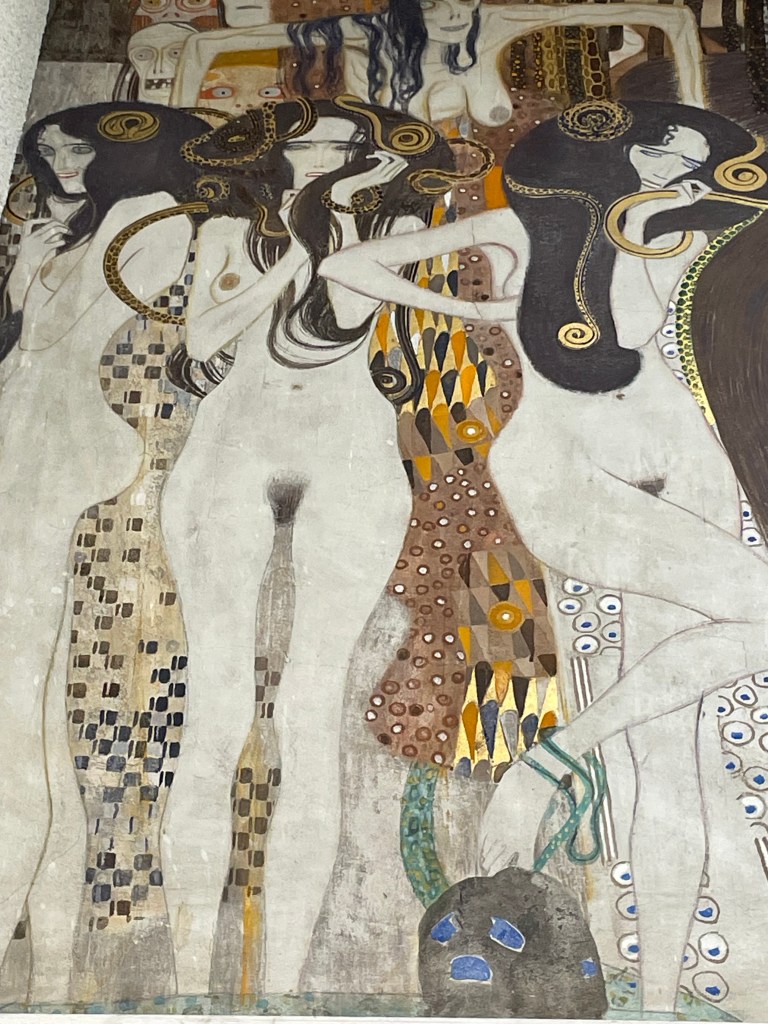
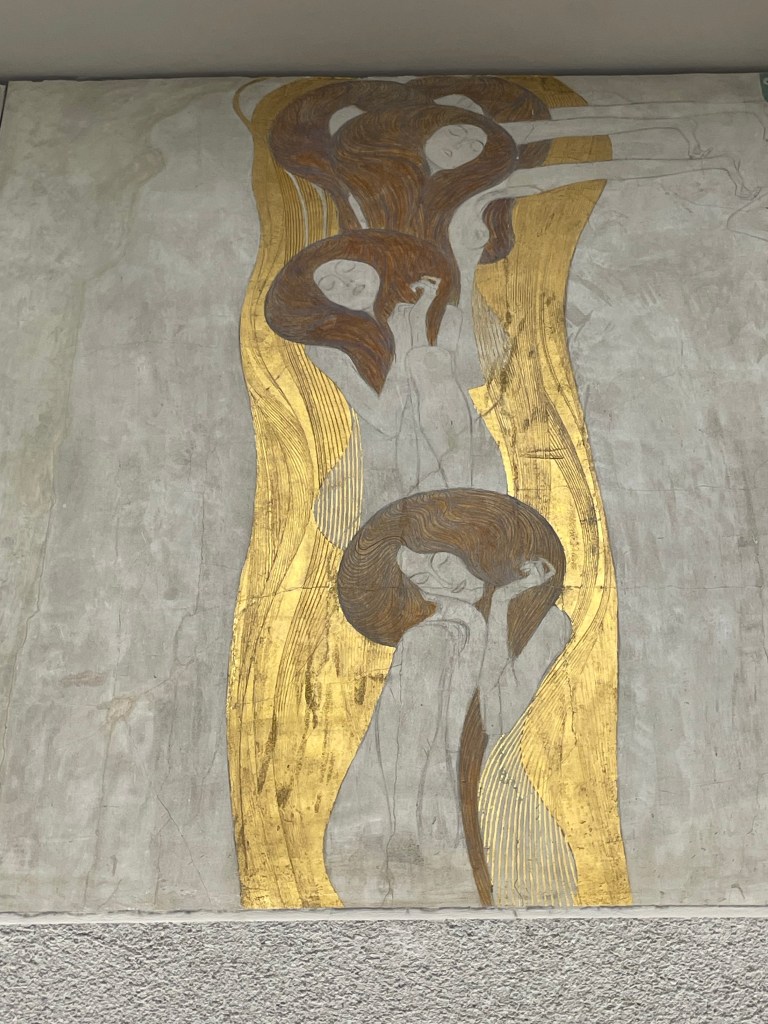
The frieze is based on Wagner’s interpretation of Beethoven’s Ninth Symphony: it is a tale of humankind’s search for happiness.
The kneeling couple symbolize suffering humanity and beg the knight for helpIn this scene humanity faces of Typhoeus, a hybrid monster with a snakelike body and blue wings.To his left are his daughters, the Gorgons and above them masklike representations of Sickness, Madness and Death.To his right are Lasciviousness, Wantoness and the large-bellied IntemperanceGnawing GriefHumanity’s search for happiness is found in poetry – a female figure playing a lyreFigures representing the arts lead to the ideal realm of artThe deification of art is a couple kissing in front of of a choir of angels – “This kiss to the whole world” (Ode to Joy)
I didn’t know what I was expecting really, which is a bit daft considering that I had seen pictures of it in books. I initially felt, yeah ok, but now reflecting on it I think I must have been suffering from a case of art gallery overload. It was really remarkable. It’s been relocated from its original position. It’s high up on the walls of the room, and surrounds you. The fact that you have to look up, makes viewing it an almost reverential experience. That coupled with the fact that you can listen to Beethoven whilst you admire it.
In addition to Klimt and Schiele, I saw many works by other artists, which I felt might be useful over the next year or so, some of whom I hadn’t previously come across.
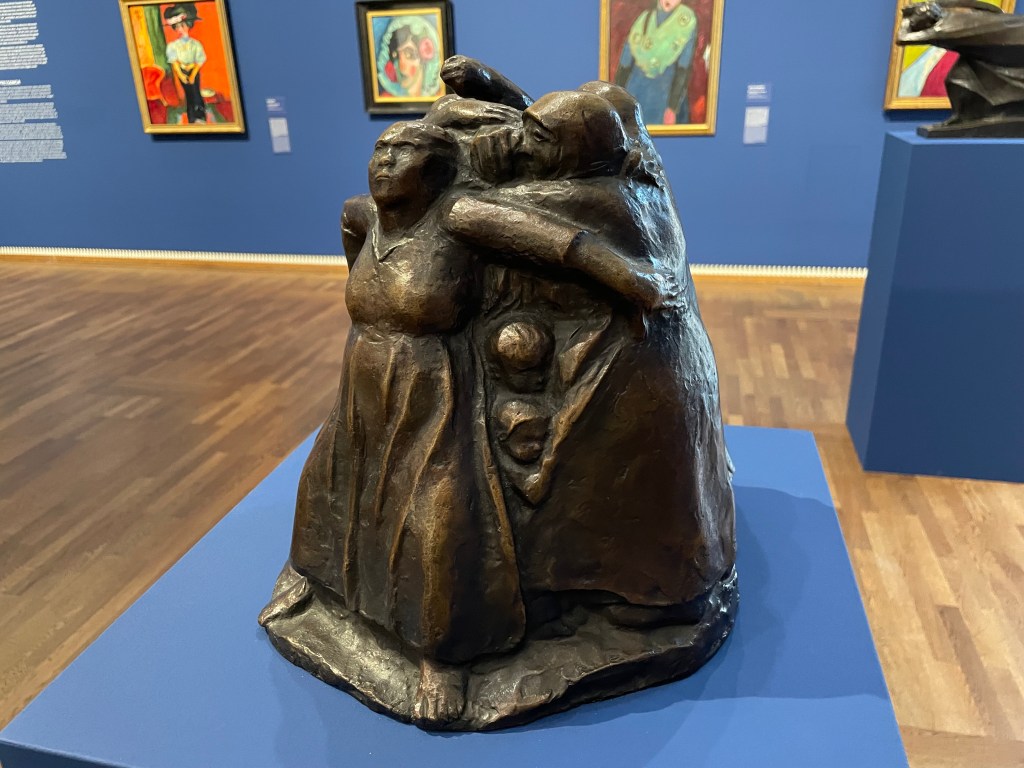
This bronze sculpture is Tower of Mothers, 1937/38 by Käthe Kollwitz. It shows a group of mothers standing together and forming a circle to protect their children, who can be seen peering out from between their skirts. The strength and determination to defend whatever the cost is beautifully captured in the postures of the figures, particularly the mother with her arms spread wide. There is no fear in this sculpture. The mothers are protecting their children from war and the horrors of war, which is poignant as Kollwitz herself lost one of her sons in the First World War, a loss she never recovered from.
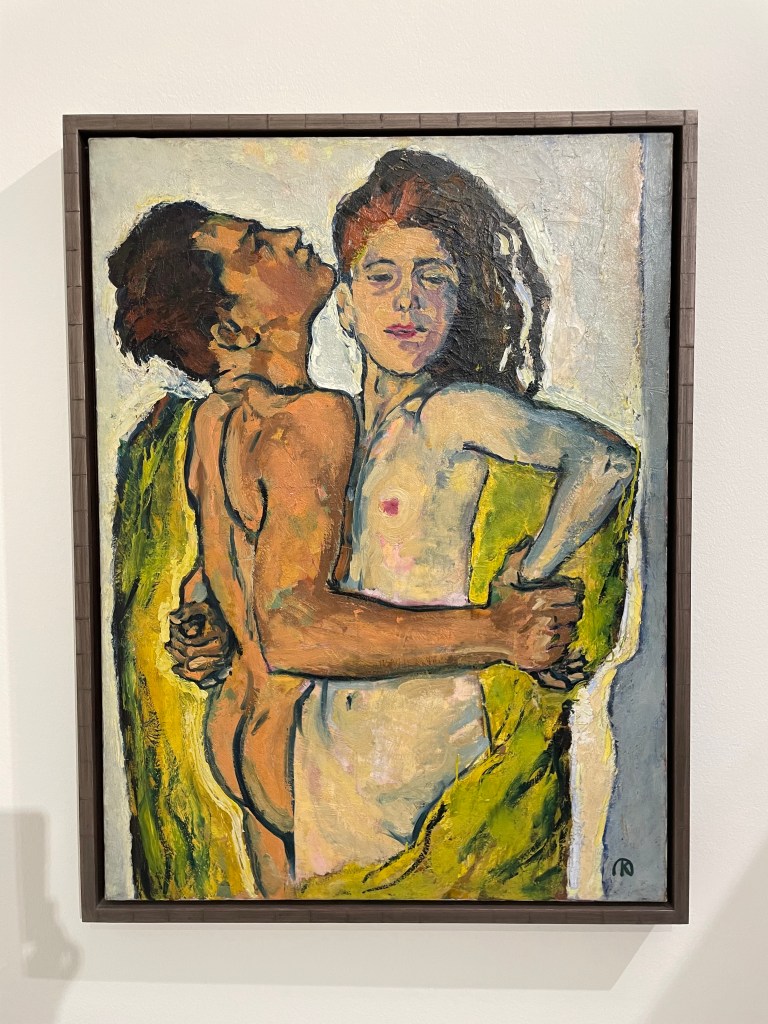
Lovers, 1914Venus in the Grotto , 1914
These oil paintings on canvas are by Koloman Moser. Moser was a founding member of the Secession, and was primarily a graphic designer and illustrator, as well as a set designer, furniture and textile designer, and painter. I like the slight graphic quality of these paintings as well as the unusual palette – his use of what looks like a lime green gives a sickly feel to the works, and works really well with the purplish reds in the skin tones and the shroud. They appear almost luminous.
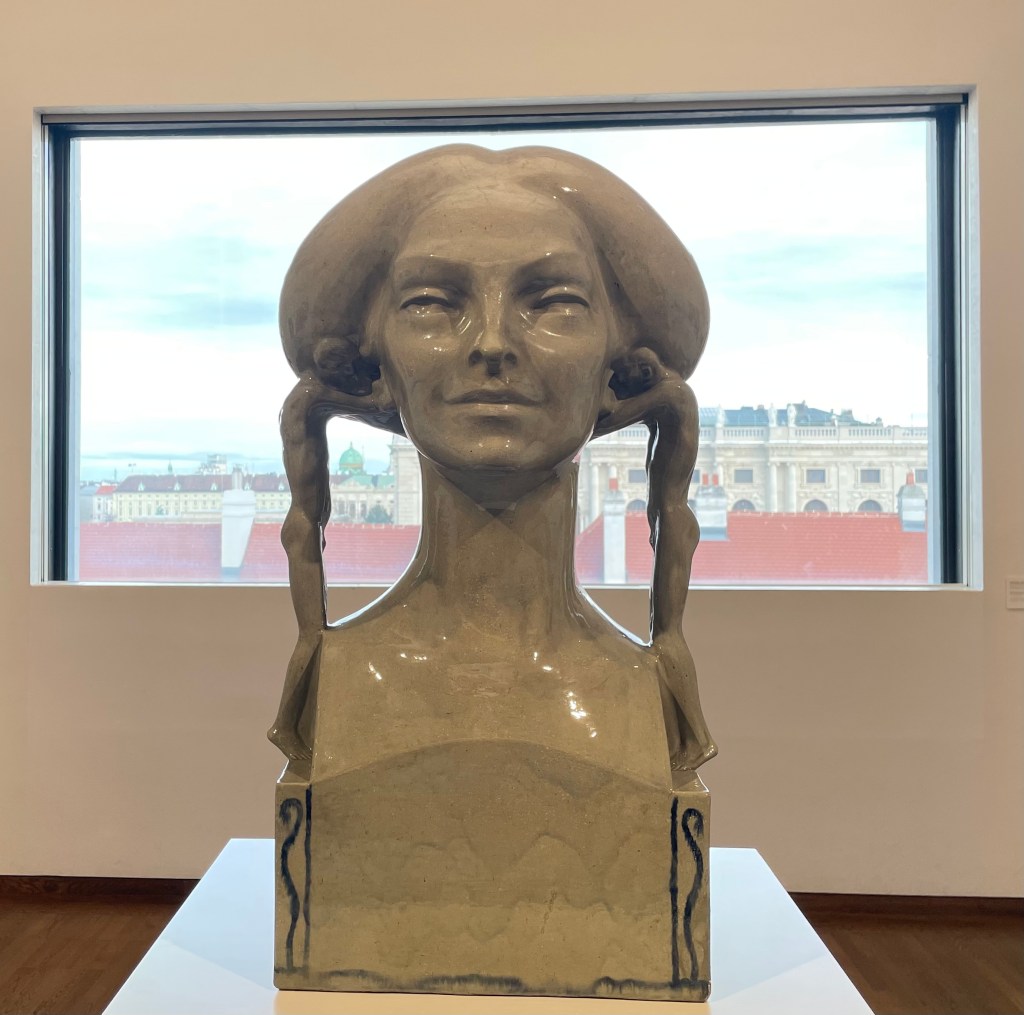
The ceramic glazed sculpture above is Insinuation, 1902/03, by Richard Lucksch. I had to resist the urge to touch it. I found myself wondering what the young men are whispering in her ears; what are they insinuating? The very title implies something negative. It reminded me how difficult it can be to navigate a true course through life, when others are constantly whispering things into one’s ears, insinuating, commenting, doubting, demoralising, chipping away.
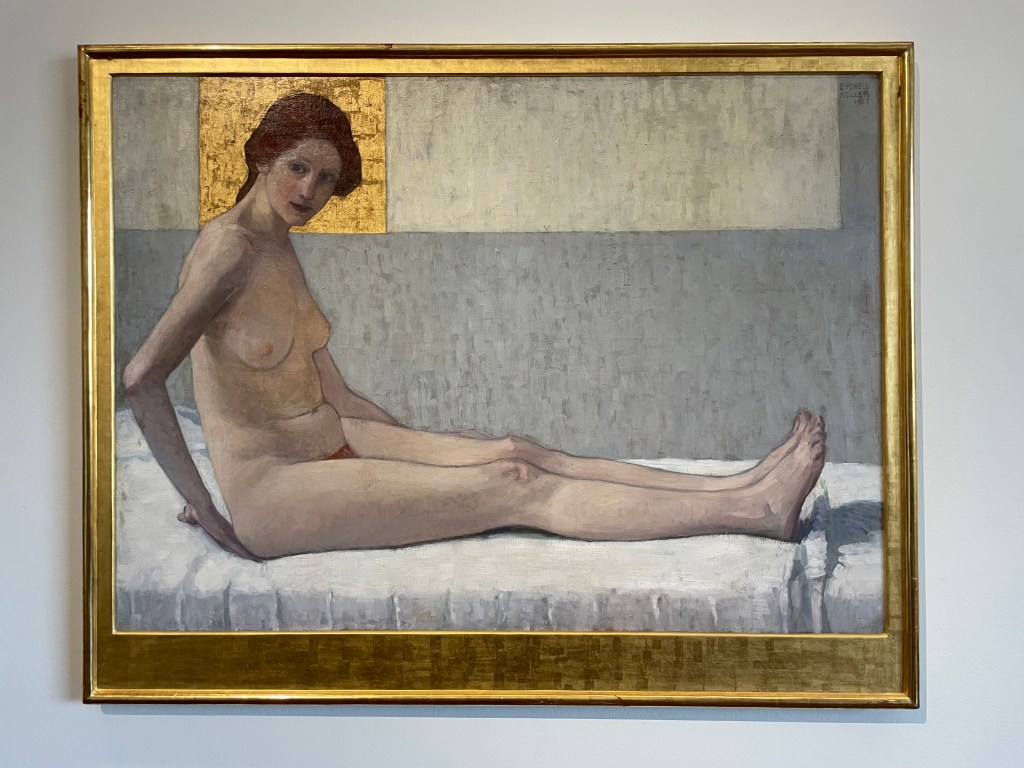
I felt drawn to this painting, for some reason. There’s some gold; that’s a start. The skin is beautifully rendered and I like the composition: I start from the head encased in the golden square and make my way down her body with the interesting detour created by her right arm, along her legs, through her toes up towards the top right and then back to the golden square via the light coloured rectangle. It’s satisfyingly complete.
It’s Seated Woman (Marietta), 1907 by Broncia Koller-Pinells, the Austrian equivalent of radical, Laura Knight, who also challenged the taboo for women artists at the time – the nude.
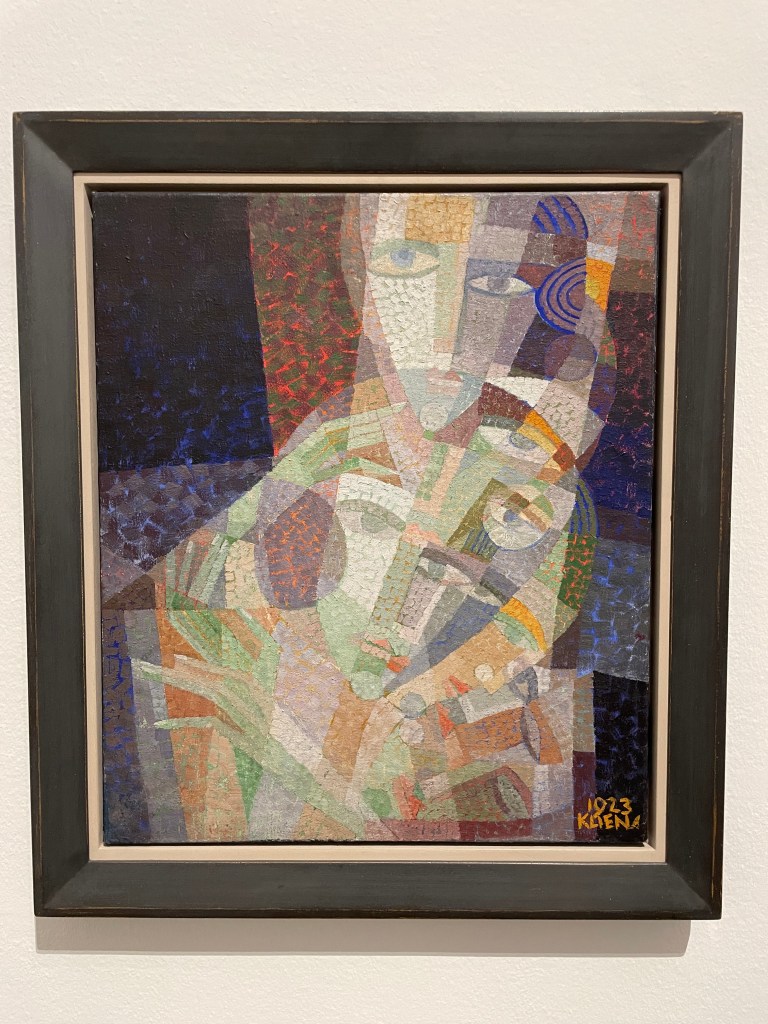
Head of A Dancer, 1923, by Erika Klien is an example of Viennese Kineticism, which was inspired by Cubism, Constructivism, Futurism, dance, music and architecture. I like the sense of movement of the head and the hands, which have also been deconstructed in parts, as well as the quite limited colour palette.
What’s not to like about a Degas figure? This one Pregnant Woman, was risqué for its time, depicting a woman in a pregnant state, and was cast in bronze after his death.
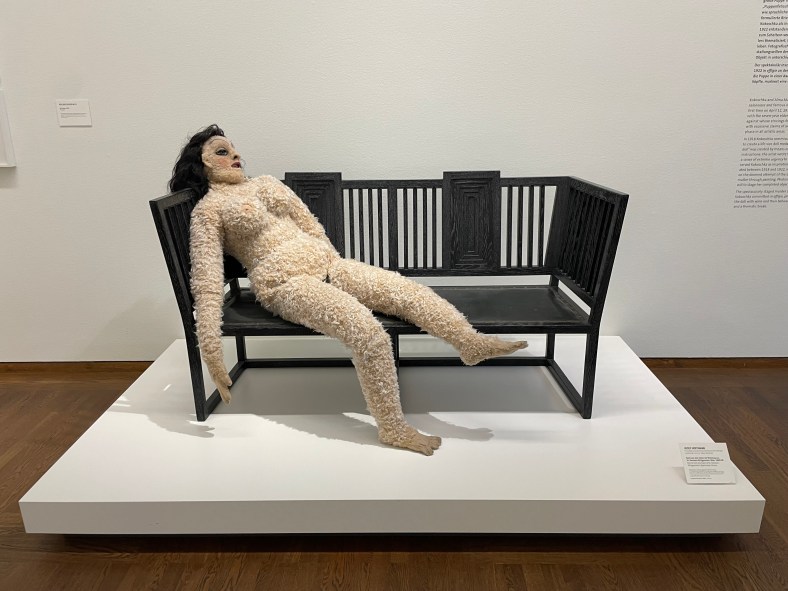
This definitely gets the award for most interesting. The Doll is from the film, My Alma – Oskar Kokoschkas’ Love to a Doll. I’ve since researched it a bit further and it really is a strange tale. Alma was Alma Mahler, Gustav Mahler’s widow. Having had her first kiss from Klimt when she was 17, she went on to have many love affairs before , during and after her several marriages. One of those affairs was with the young artist, Oskar Kokoschka for whom she became the love of his life. I think it’s fair to say he was obsessed with her. He had to go off and fight in the First World War War and whilst he was away she married a previous lover. Needless to say he was quite devastated when he returned home, after having been bayoneted in the chest, suffered a major brain injury and declared mentally unstable, to find that she had ended their relationship. So he did what all spurned lovers do, he commissioned a doll maker to make a life size doll of her providing very specific instructions as to how it should be made and what it should feel like to the touch. When she finally arrived he was a bit perturbed by the fact that her body had been covered in feathers but went on to pose her for paintings and photographs, dress her up and even take her to the opera. But eventually he resolved himself to the fact that his Alma doll wasn’t doing it for him, so he threw a party, then took her out into the garden where he chopped off her head and broke a bottle of red wine over her. I’m not sure that I’ll watch the film…
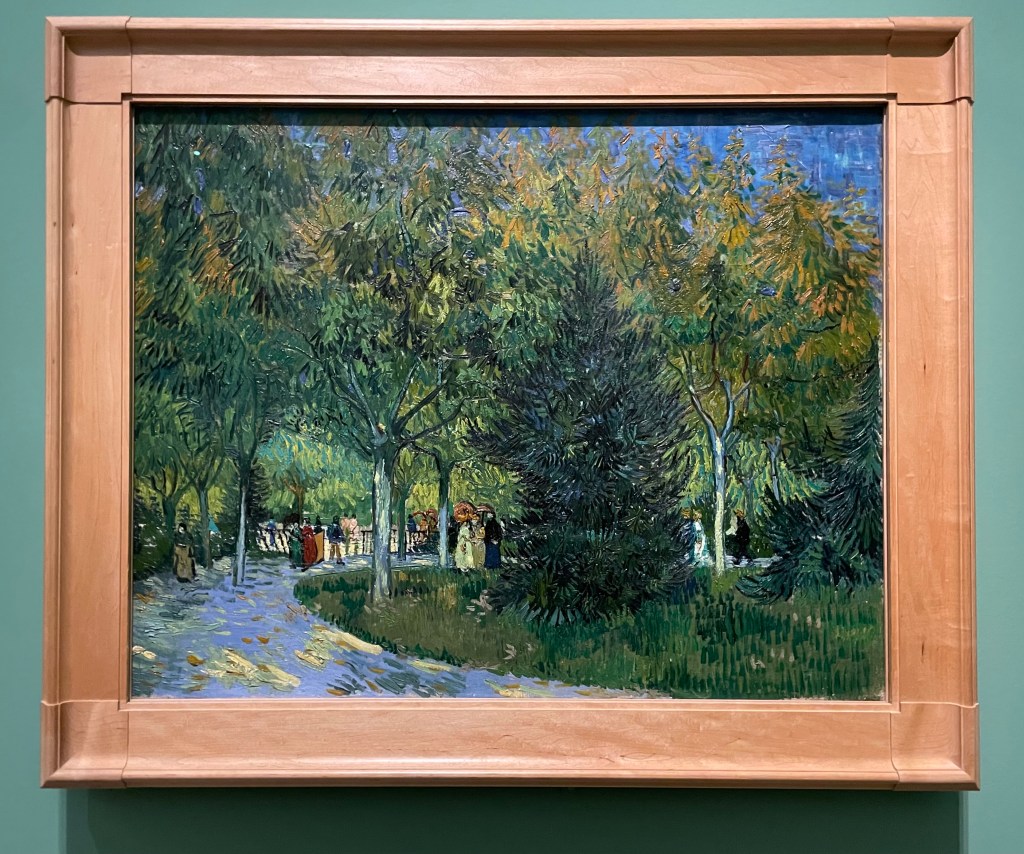
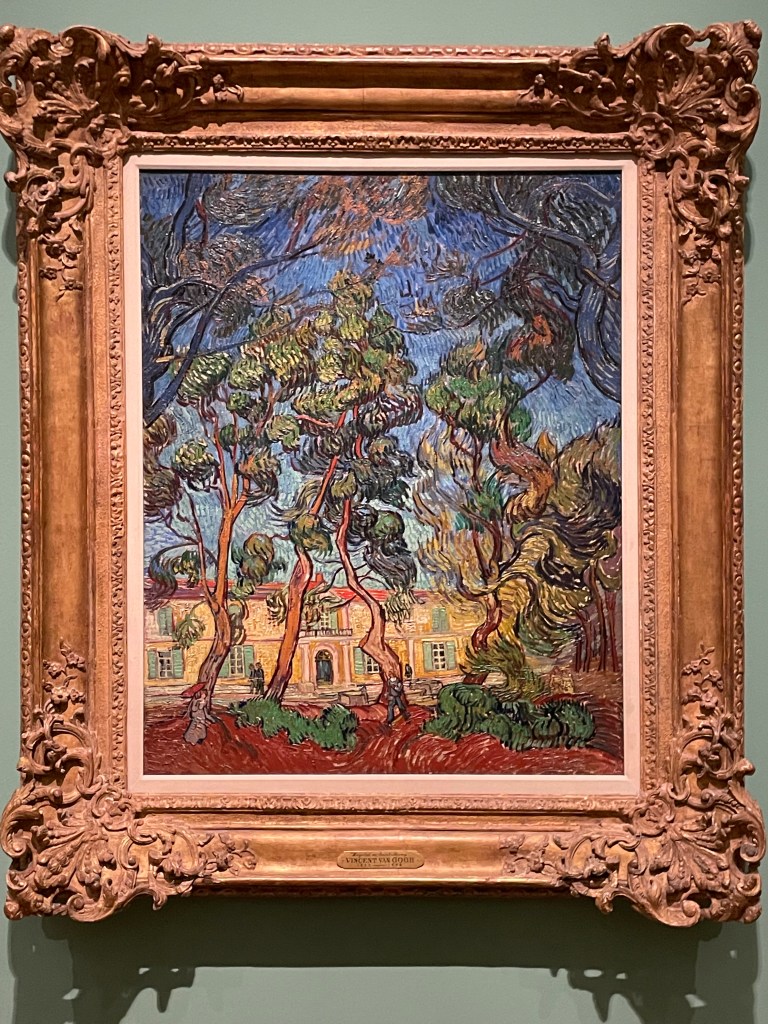
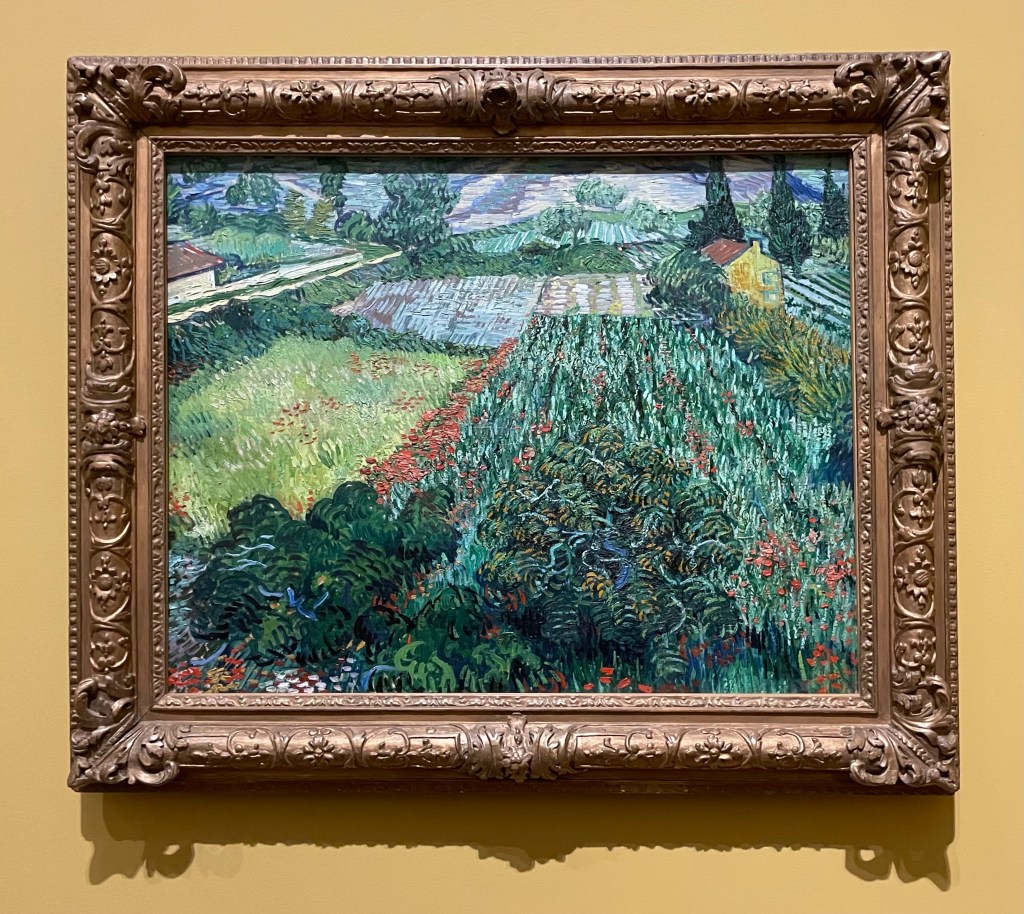
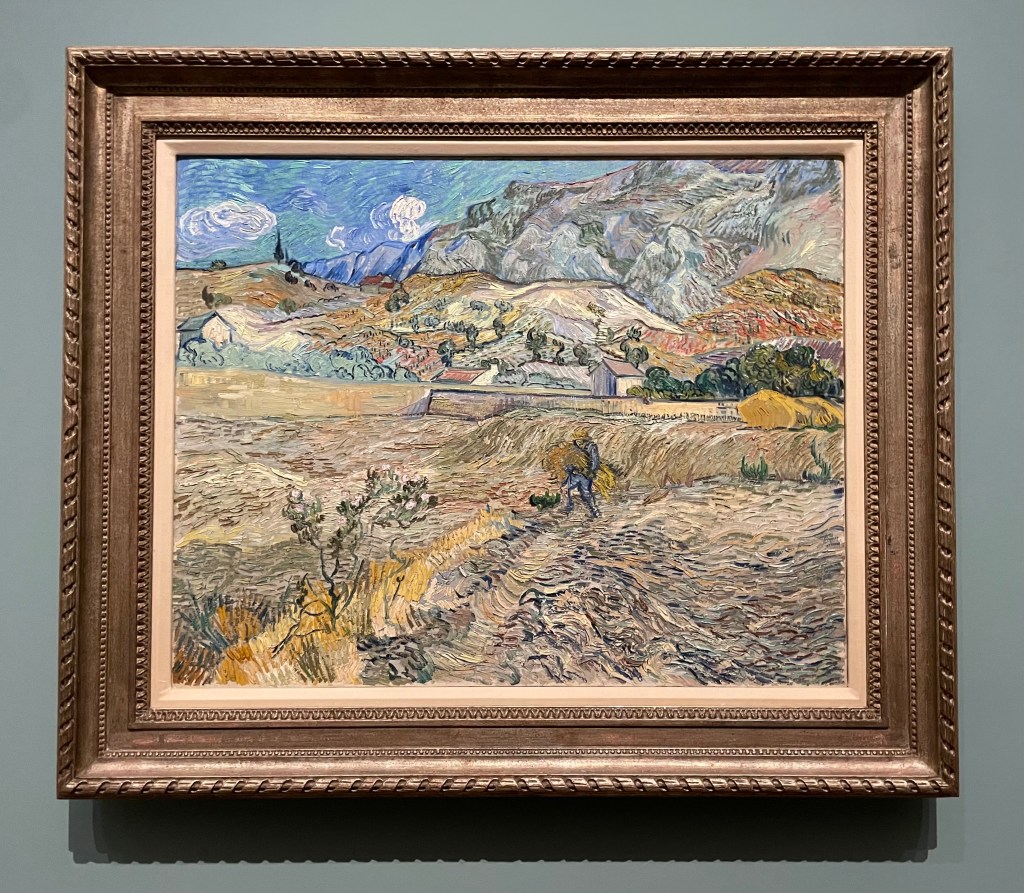
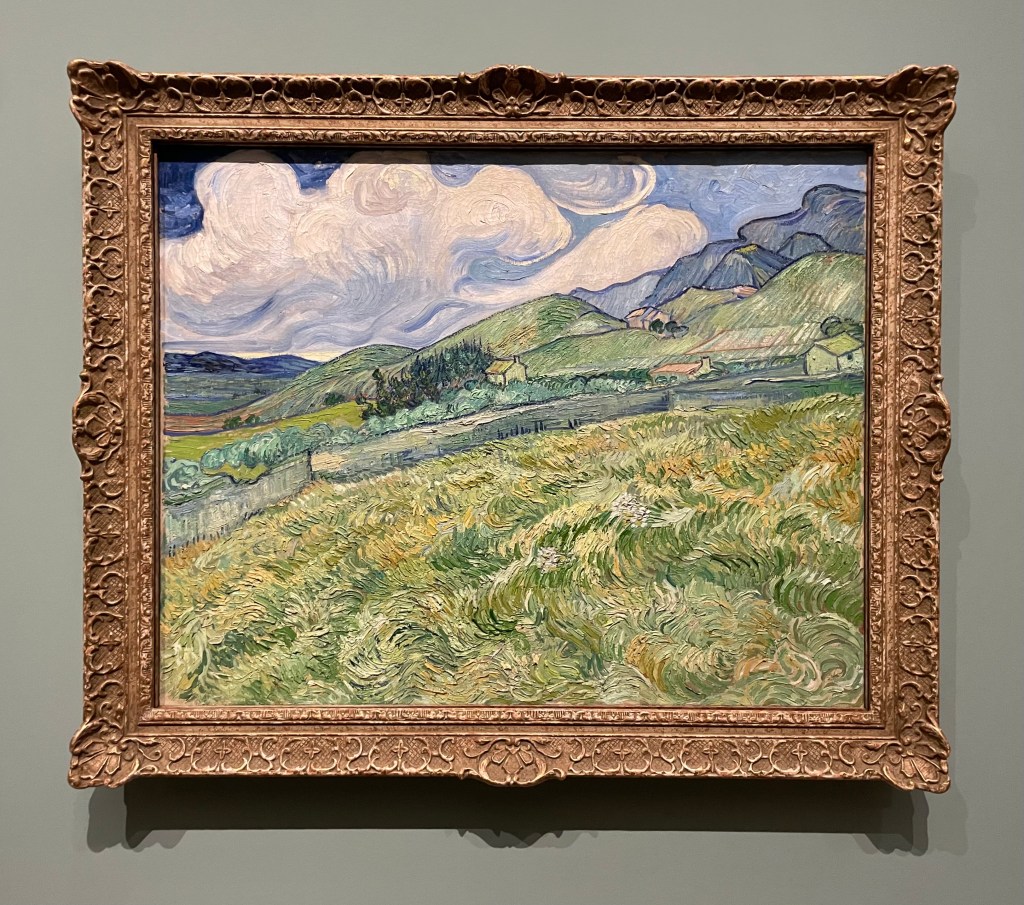
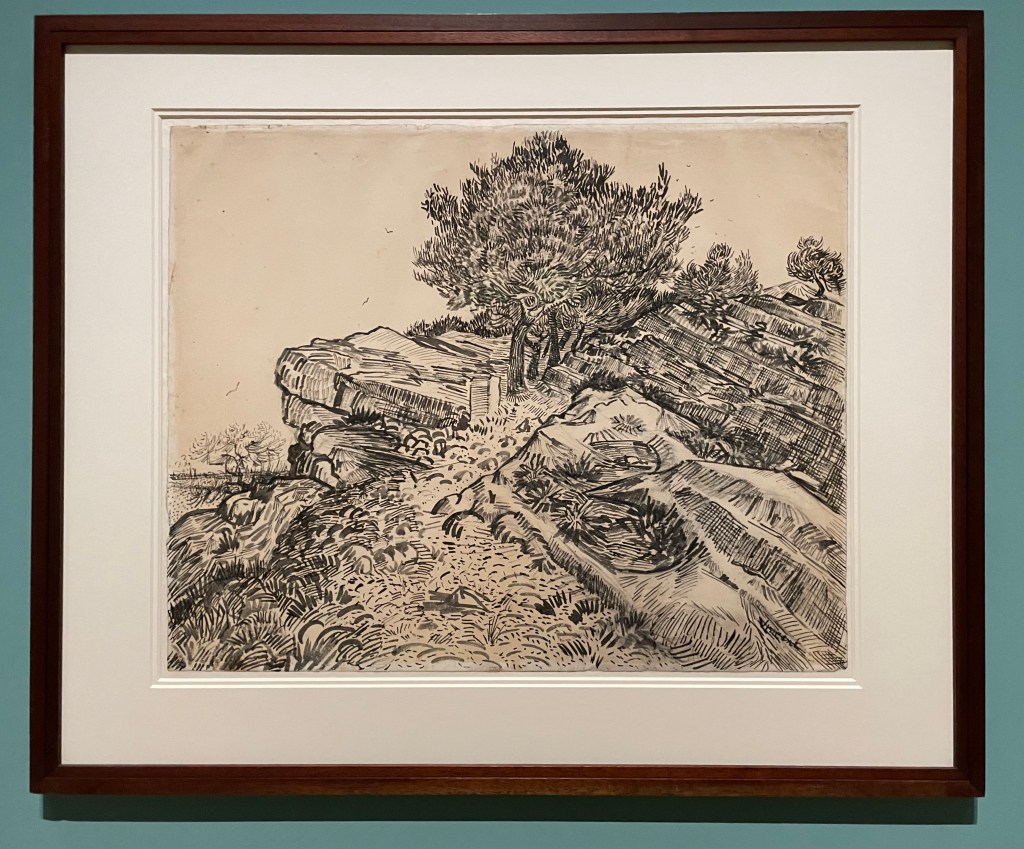
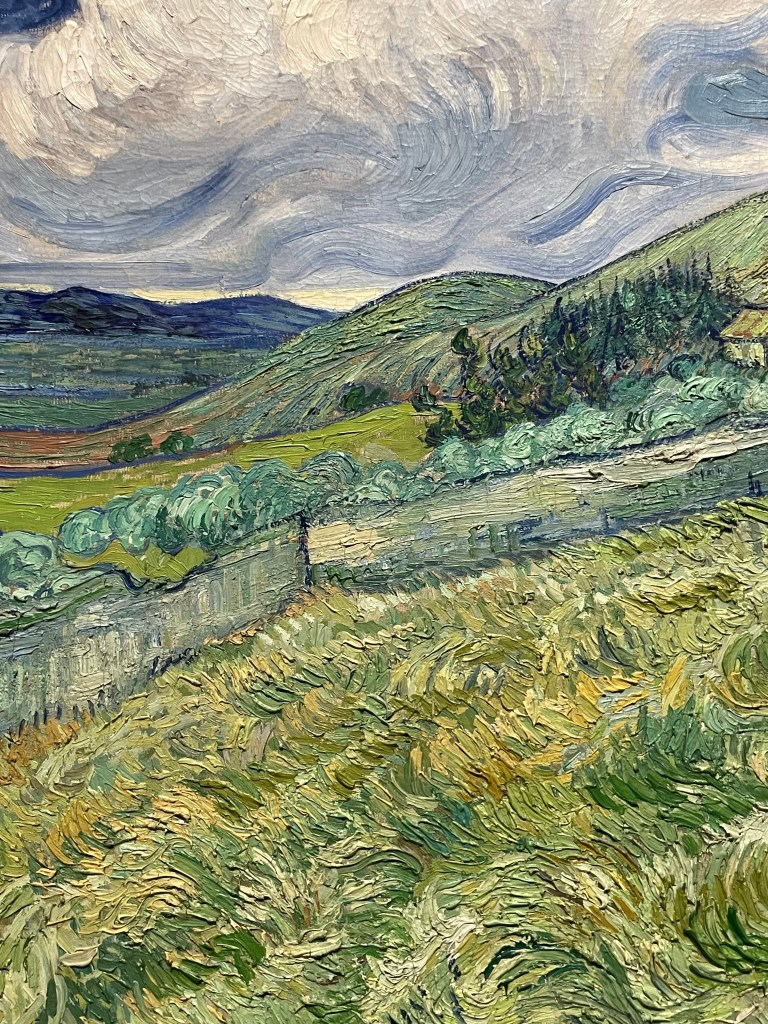
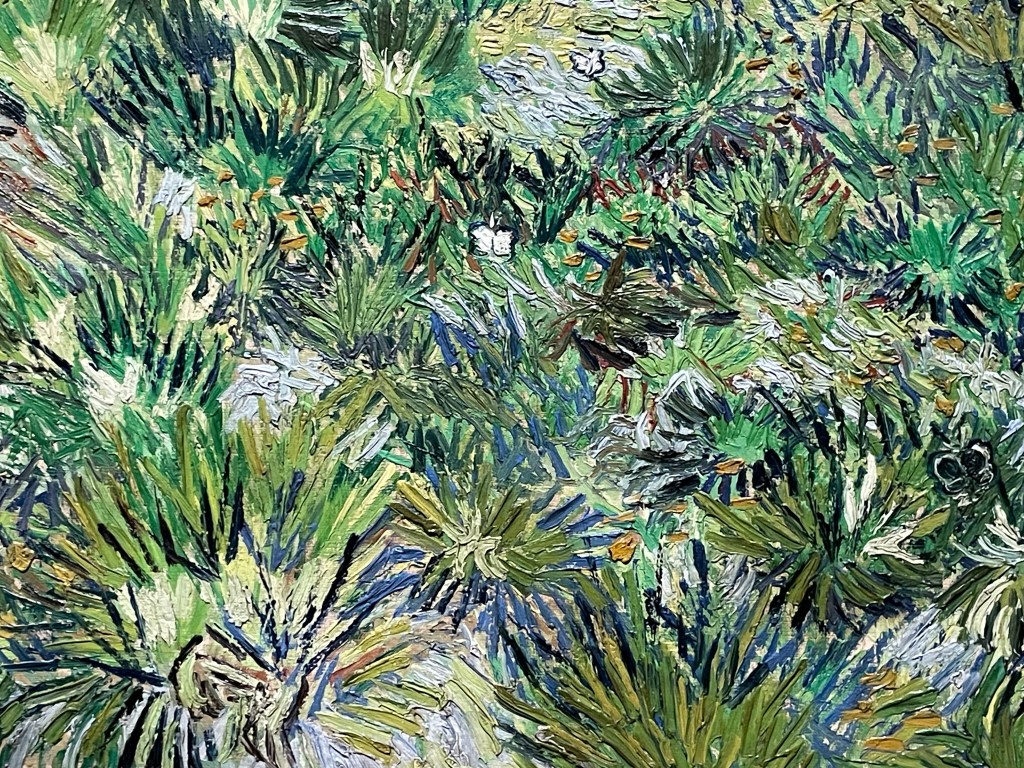
Well, I made it through without a tear. It might have been the sheer number of people which meant that it was impossible to stand and contemplate too deeply, or the audio commentary going on in my ear which distracted me. The ‘Poets and Lovers’ exhibition at the National Gallery was a cornucopia of Van Gogh brilliance, although I was left wondering why it didn’t include some of the Van Goghs I had seen in other galleries, such as the self-portrait with bandaged ear at the Courtauld, but then I don’t have the faintest idea about curation. That said, it didn’t detract from the luscious visual delights on offer, many of which I hadn’t come across before.
What struck me more than anything was the direct correlation between how he drew and how he painted. The range and quality of mark-making was phenomenal. Whilst up close, the brushstrokes and colour palette made me virtually tachycardial, it was standing in the centre of each of the rooms which gave the most rewarding experience.
The only moment when I almost cracked, was when I found myself in front of the Sunflowers from the National Gallery and the Philadelphia Museum of Art: he painted his Sunflower series to decorate his guest room in anticipation of Gaugin’s visit to Arles, in an effort to impress Gaugin, who he greatly admired, almost to the point of obsession. Van Gogh’s sensitivity and vulnerability weren’t a good match for Gaugin who, by some accounts, was aggressive and egocentric, which served only to reinforce Van Gogh’s insecurities. It all made me blink a bit quicker. I have to declare my bias – I’m not a fan of Gaugin for various reasons, not least because he abandoned his wife and five children to go off and indulge his predilection for young girls.
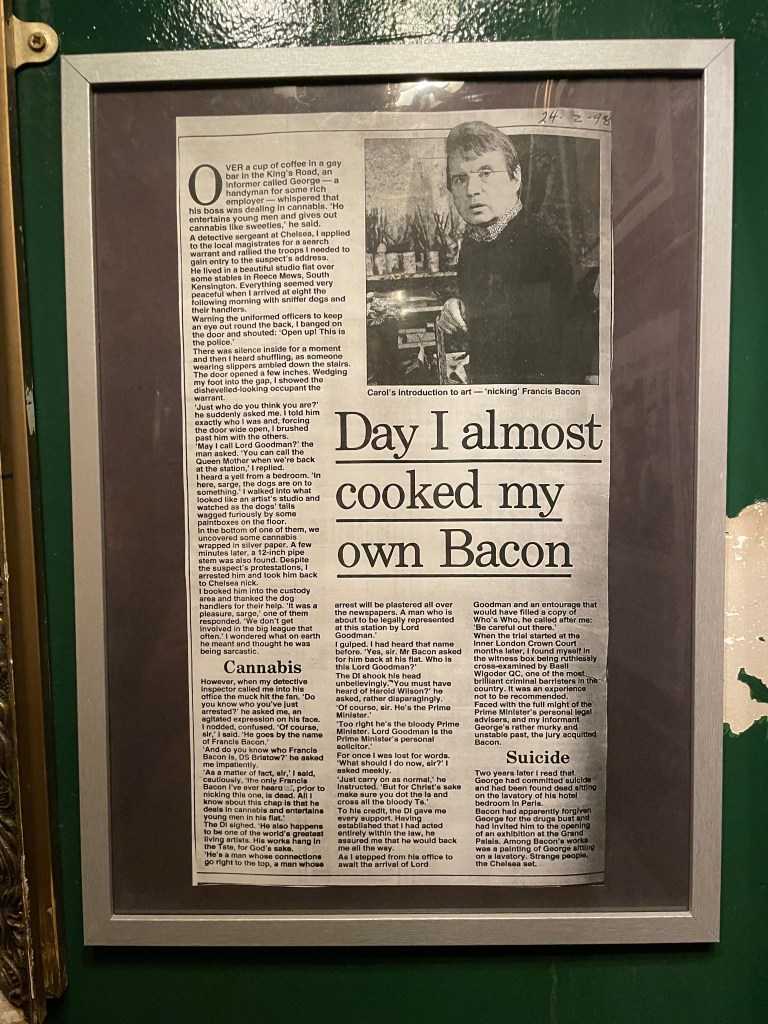
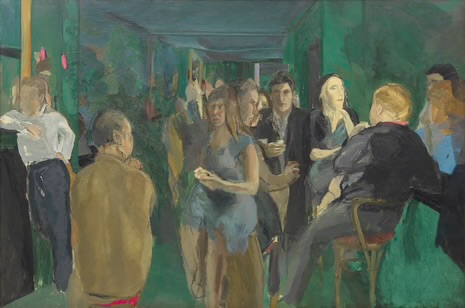
The day was rounded off by a trip to the Colony Room Green, a replica, as near as dammit, of the bohemian Soho legend that was the Colony Room Club which closed down in 2008 after 60 years, and which was the creation of the queen of Soho, Muriel Belcher – apparently, you knew you were in if she called you the ‘C’ word. It was the favourite haunt of creatives such as Francis Bacon, Lucian Freud, John Craxton, Damien Hirst, Tracey Emin, Dylan Thomas, John Deakin, Frank Auerbach, Michael Andrews, Giacometti, and the list goes on. My husband was particularly keen to visit as he’s reading Darren Coffield’s ‘Tales from the Colony Room’.
‘ Francis Bacon was very fashion-conscious and always immaculately dressed. One afternoon Francis walked in, annoyed and pulling his collar. – “What’s wrong, Francis?” – “Harrods, I’m never going back there again.” He’d attended a special night for select clients and bought lots of clothes, but when he’d got back home he’d decided he didn’t like any of them. “I bought so many suits and shirts and threw the lot in the dustbin.” You’d never seen the club empty so quickly. The next day everyone was up the club parading around in their new suits and shirts from Francis’ dustbin.’
Colony Room I, Michael Andrews, 1962
It’s very small and down some stairs underneath Ziggy Green, 4 Heddon Street, a side street off Regent Street. It’s reminiscent of a dive bar/ speakeasy.
It was great meeting Liam, the house jazz pianist and chatting to Tim, the barman who explained that it’s not trying to be a re-creation of the original, but somewhere to come and meet an eclectic mix of people. Despite what he said, I couldn’t help but feel that I had stepped back in time, waiting for the door to open and for one of my artistic heroes or heroines to walk through it. They often have events which are free to attend, such as talks and book launches. Unfortunately, we couldn’t hang around for the Portrait of Muriel Belcher evening.
There’s something very inspiring about the idea of a group of creative people coming together regularly to discuss work, ideas and concepts. I’ll definitely pop back in next time I’m in town, in the hope that something might rub off.
Well, the starting pistol has gone off, and I’m still sat here, procrastinating, allowing myself to be distracted, doing anything other than what I should be concentrating on: producing something for the pop-up show. My problem with deadlines is that I tend to ignore them until the very last minute – goal driven, that’s me.
What, with thinking about the pop-up and trying to come up with an inspirational text for Tuesday’s session, I’m feeling just the tiniest bit sick. I would say that I have stuck my head in the sand but apparently that’s a popular misconception: when they sense danger and cannot run away, ostriches will flop to the ground and remain still, attempting to blend in with the terrain – that sounds just about right!
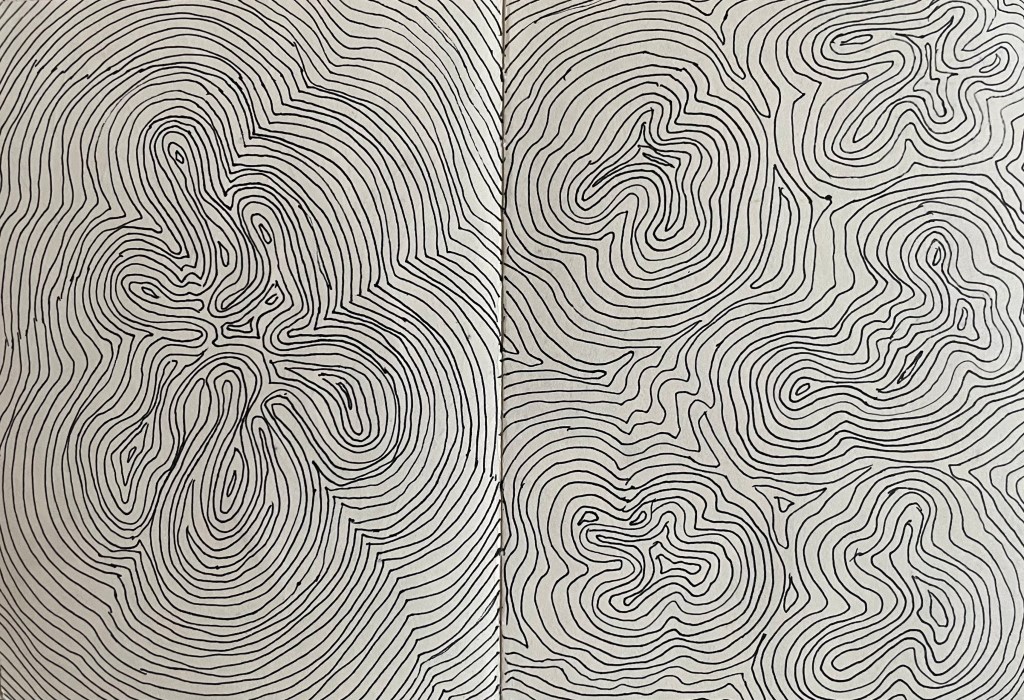
Anyway, following on from my ‘Less’ post, I’ve been thinking about working with a limited palette and how it narrows choice. Using a pen narrows choice even further – just black and white and nothing much else in between. Using a pen forces you to think about mark-making in order to create tonal values and areas of interest. So, I’ve been using my time constructively by doodling with a pen in my sketchbook whilst listening to an audio book – who says I can’t multi-task!
I found the process of mark-making to be meditative and grounding, totally different from the anticipation of putting ink onto wet paper and waiting to see what happens. Strangely, I like it. I think I am a person of extremes: I’m either fastidiously tidy or chaotically messy; organised or haphazard; focused in on the minutiae or just wanting to see the bigger picture. Somehow I have to find a path along which both sides of me are satisfied.
I will definitely use pen again, if only as a way to order my thoughts. Going forward I think I should try to build up a bank of possible marks, almost like a painter might have a bank of colour swatches. Having said that, I’m mindful that I’ve still got to do a few things to which I’ve committed in earlier posts, so I think I need to embark on some self-accountability first.
I haven’t posted for a while – I’ve been busy sorting things out before going off to Marrakech for a four day trip with my book club.
Marrakech was amazing. Colour. Noise. Smells. People. Heat. Contrast that with this morning when I had to defrost the car before heading off to my weekly art class. I love this drive, along an old Roman road – straight and undulating through the Hampshire countryside to Stockbridge, a small town in the Test Valley. The sun came out and the trees came to life – burning oranges, golds and yellows. It was beautiful, and by the time I arrived at my class, late because I couldn’t find anywhere to park, I was still feeling its effects.
I can’t deal with too much choice – it paralyses me and then I can’t make a choice. Needless to say, I didn’t buy anything in the souks in Marrakech – the choice was overwhelming, so I resolved not to buy anything at all, and was then able just to wander and enjoy the atmosphere and culture.
So today’s task was perfect for how I was feeling. A landscape using a limited palette of burnt sienna, burnt umber, ultramarine, pale cadmium yellow, white and cadmium red. We took a board, roughly primed – in my case it was an old piece of MDF which I had previously coated with professional Dulux oil-based primer, which can make it a bit like an ice rink – and put down a loose ground of burnt sienna with a bit of sansador which ended up not drying for some reason. Then we put in some outlines using burnt umber following with thick patches of colour keeping it very general, but the wet burnt sienna contaminated some areas and lifted off the board in others. We experimented with dragging a dry brush across the paint and I also did a bit of sgraffito which I can’t help doing when using thicker paint.
This is the result:
I haven’t painted for ages – not since beginning this course – I don’t know why. Perhaps it’s because I’ve been doing a lot of thinking and experimenting with other media. At first, it felt a bit strange coming back to it, almost awkward, like I’d been unfaithful in some way.
It’s not my best by far, but it’s ok for an hour and a half. I am leaving it. The ‘me’ I’m trying to change would say that it is not finished by a long way. There’s lots I don’t like and would love to change – I’m itching to tinker – but I’m exercising some will power and calling it a day. Just like I’ve been trying to change my mindset about having an expectation as to how a piece will turn out, I am also trying to train myself to walk away.
Jonathan told me that the job of mark-making is to tell us what to do next. These marks are telling me to leave it alone and to be happy with what bits of it appeal to me – I like the lack of clarity and blurriness caused by the dry brush; the light coming through the burnt sienna ground in the foreground; the energy in the marks, which I would absolutely kill if I allowed myself to do more; the lack of definition which gives a sense of a fleeting moment; and the recreation of the feeling I had whilst driving to class.
Will I do this again? Yes, I always like going back to basics and using a limited palette – I’ll use a different image and next time I will definitely make sure that the ground is dry before carrying on so that the colours aren’t so muddy in places.


















 Kate McCalmont-Woods