Out Of Sorts

I haven’t done anything since coming home from the Low Res.

There was an intense period building up to it, followed by a period of sitting back and taking stock. I’m still thinking about it all, but whilst doing so I’ve allowed myself to get sucked back into domestic life. My daughter’s now home from uni for a month, along with all her ‘stuff’. Whilst it’s lovely that she’s back, it’s upset the normal way of things. Glasses and crockery disappear into the blackhole that is her bedroom, and the bottom of the stairs has become a footwear hotspot. Could be worse, I suppose.

Also, one of our dogs, Monty, hasn’t been so good. He’s an old boy at 12. Enlarged prostrate, chemical castration, hormonal inbalance making him not himself, and removal of a malignant melanoma. Waiting to talk to the vet about prognosis. I suspect there may be trouble ahead and difficult decisions to make. He’s out of sorts. We’re all out of sorts. But tomorrow’s another day.

I haven’t made anything. I am conscious that I haven’t and it’s starting to stress me a bit. My last two posts could have been cheerier, but there’s no point in putting on a fake smile. My colours are definitely muted at the moment. I feel like I’m stuck and I can’t progress until I’ve managed to process and order all that I took away from the week in London, but up until now I haven’t been able to set aside the time to do it. Also, my logical side dictates that I should deal with it all in chronological order, but that’s impossible to do because it all seems to be intertwined.

Second year Catherine told me that she feels like a spider spinning a web. I told Jonathan that I felt like I had been collecting during the week; it’s as if I’m accumulating pieces of a jigsaw puzzle, but I don’t have the benefit of an image on a box to guide me. I just hope it makes something, because it’s making me feel out of sorts.

I’m looking forward to the start of a new term next week. I need some structure.

Motherhood I

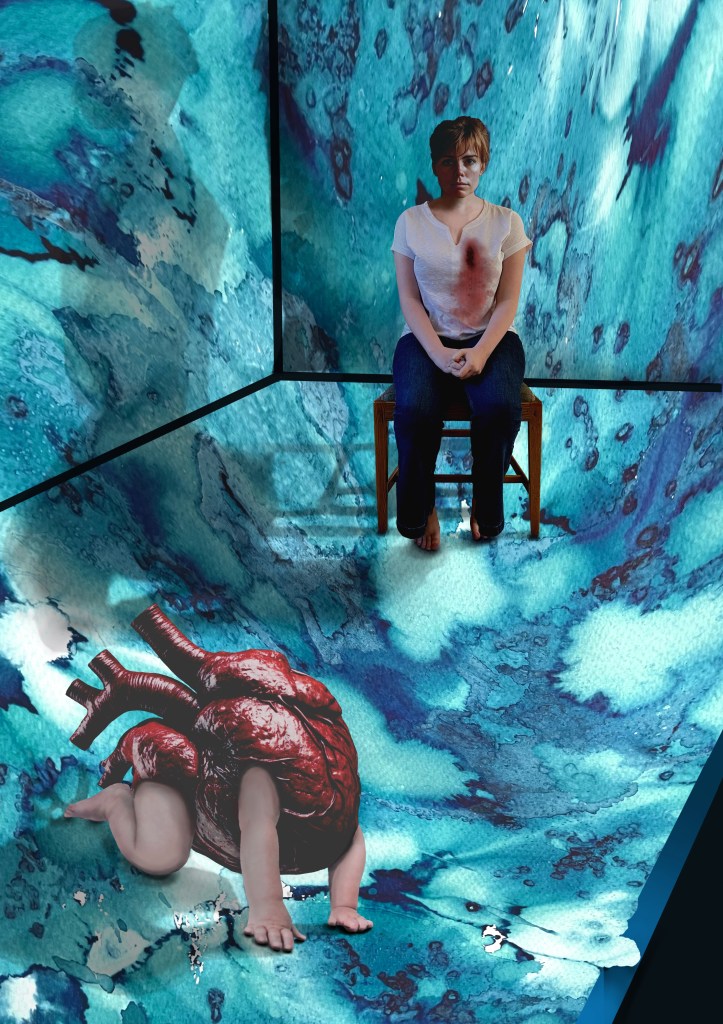
I have had an image in my mind for months. It came from the Elizabeth Stone quotation, I first mentioned in Hearts & Linos .

”Making the decision to have a child – it is momentous. It is to decide forever to have your heart go walking around outside your body.”

I think it encapsulates perfectly how I felt when I became a mother. My whole world was turned upside down. I was suddenly responsible for raising and protecting another human being. I felt overwhelmed by the magnitude of it all; that life would never be the same again. It made me question the sort of world I had brought her into, how her life might be; how much of it I would be a part of, the unthinkable and unbearable pain I would suffer if anything happened to her. She was precious and intrinsic to me, now living and breathing in the world, independently of me.

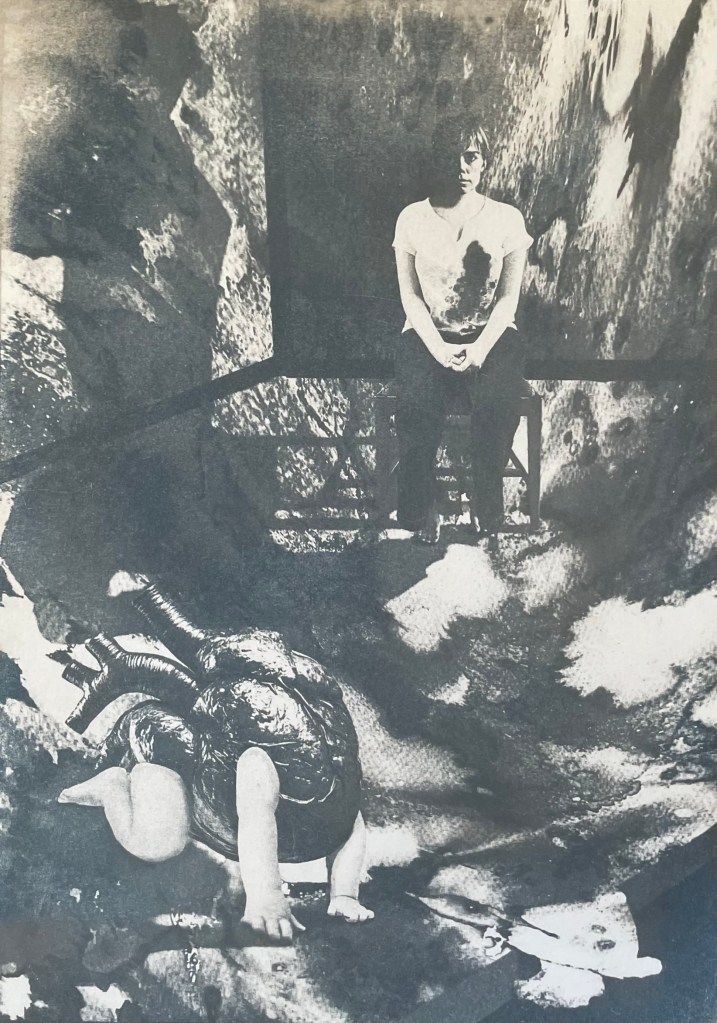
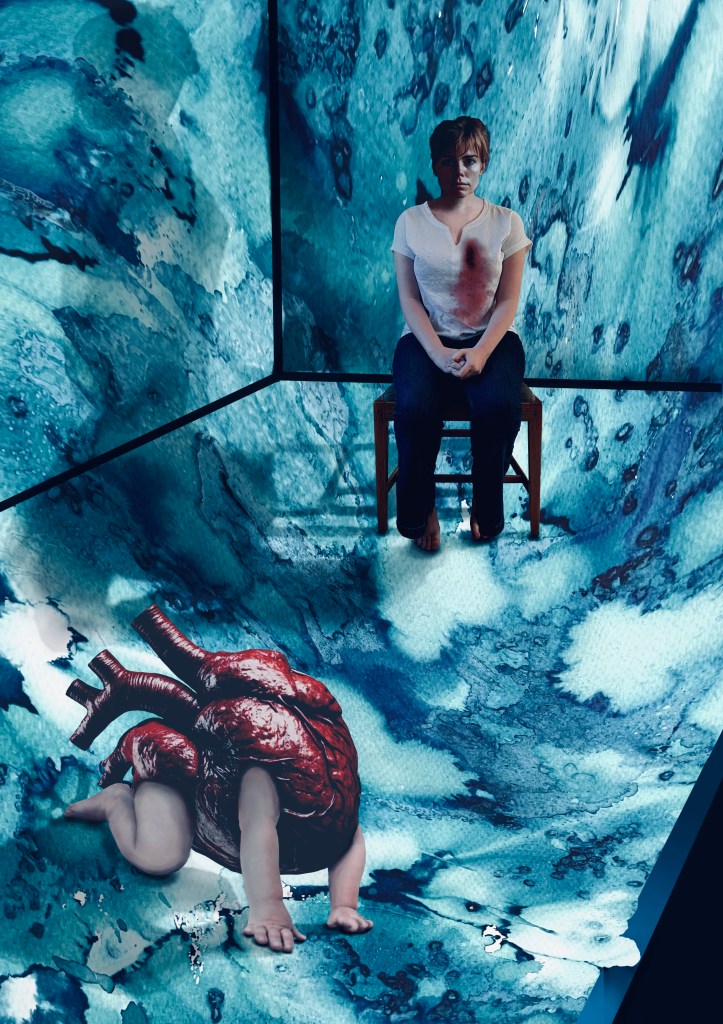
It’s taken a while. Bearing in mind that I’m still finding my way around Procreate I don’t think that I’ve done too badly. I’m sure that I’ve done lots of things incorrectly, but I don’t really care. It’s all a learning process and it was fundamentally about me trying to realise an image that I had in my head. I feel that I’ve achieved what I set out to do. In that respect, I’m pleased with it. I think it conveys the visceral nature of my feelings.

Actually, it has taken me more than a while; it’s taken ages, probably because I kept on making mistakes, but I have learnt lots along the way. I’ve redone parts of it several times but I have to say that it has all been about the process of discovery and realisation. It’s allowed me time to focus on the detail, but it’s been as part of the process rather than with a view to trying to achieve a perfect result. I don’t think that Procreate is a tool with which I can be loose and expressive in the physical sense, but it seems to satisfy that part of me that likes to focus on surreal detail every now and then. Hopefully that will allow the other part of me to enjoy the experimentation of being looser and more expressive in my mark-making when, say, painting.

I decided ages ago that I wanted to incorporate my ink experiments as a background to a collage type piece. I sourced the heart, crawling baby and head of the woman from royalty free image sites which allow for reproduction of the resultant work, if need be. The body is my daughter. She’s a bit freaked out by someone else’s head being on it, but I wanted a neutral character, and I couldn’t find an image of a woman sitting on a chair that fitted my requirements, so I roped in a free model.

It was challenging constructing the crawling heart. I’ve had to rebuild parts of it including the hands as some of the fingers were hidden in the original image. It was quite difficult finding source images whose licences allowed me to do what I wanted to do, and were also free. I’ve played around with editing effects and colours and I think that I’m settled on the last image for now. The slight greenish tones, complement the red heart. I really like the cyanotypes, but unfortunately there isn’t enough tonal variation and the slightly chaotic background loses its delicate tonal transitions in the process. I might try again but change the background to something a little less busy. But I like the historical, almost Victorian Penny Dreadful feel to them. I might develop it further, but I’ll leave it on the back burner for now.

The time delay video created by Procreate is of epic proportions, but it’s helpful for me to watch it back so I can see what a song and dance I made of it all. This is a shortened version.

It’s All Part Of The Process

I’ve been doing quite a bit of thinking this week.

The first time, as a result of our weekly session, unprofessional v professional. We considered all that is implicit in the terms professional and unprofessional, and then read and discussed an article ‘How to be an Unprofessional Artist’ by Andrew Berardini, 23 March 2016, MOMUS.

I came away from the session feeling confused, and no longer having a clear sense of direction. My aims in my Study Statement are designed to help me fulfil my aspiration of becoming a practising professional artist. I’m now questioning what I even mean when I use the term ‘professional’. If it means losing creative autonomy, losing the love of creating because it has become an expectation or much worse, a chore; having to repeatedly make things because they are popular or asked for, then, no, I don’t think that’s what I want. But what is the alternative, just to carry on as I am now, making art for me and leave it at that – be a hobbyist like my mother said; be an amateur? I don’t think that’s what I want either. That’s not why I’m here.

Maybe when I get there, if I ever do, the answer will become clear. Perhaps the best course of action is to aspire to be a practising artist for the time being, making more time for creating. There’s no point trying to run before I can even walk.

I then spent some time reflecting on the cyanotypes I made, and all the possible further paths that I could go down. I started thinking about processes and re-processing. How you can take a painting, for example, take a photo of it, digitally alter that photo, incorporate other elements, say, by way of collage, print it out, print on top of it, paint on it, photograph it, keep changing it, keep re-processing it.

It then occurred to me that I’m just one big walking process made up innumerable smaller processes – breathing, talking, thinking, digesting, and on and on. Not just that, but that life is a process with all its constituent processes. Growing, having children, loving, caring, grieving, healing, dying are all processes by which we are, ourselves, processed.

So, I think that I’ve reached a point where I’m thinking about the reprocessing of art and the reprocessing of me. It’s probably because I’ve been thinking a lot about process recently, writing the word goodness knows how many times in Doing Lines, and reading ‘Ultra-Processed People’ by Chris van Tulleken. But it does occur to me that I have led most of my life too focused on the product, and not really living in the process.

Something for me to think about.

Resisting The Urge

It’s been difficult, but I’ve been managing to stop myself from altering things after the event. To leave things undone with elements which really jar with me, which are clearly wrong and which look awful, and to post them anyway. I think that it’s starting to make a difference as to how I work – if I can get into the habit of showing the worst of it, the imperfect, work which I’d much rather never see the light of day, and preferably end up in the bin, I hope that I will be able to engage fully with the process, and not worry about the result.

The mantras I’ve adopted so far:

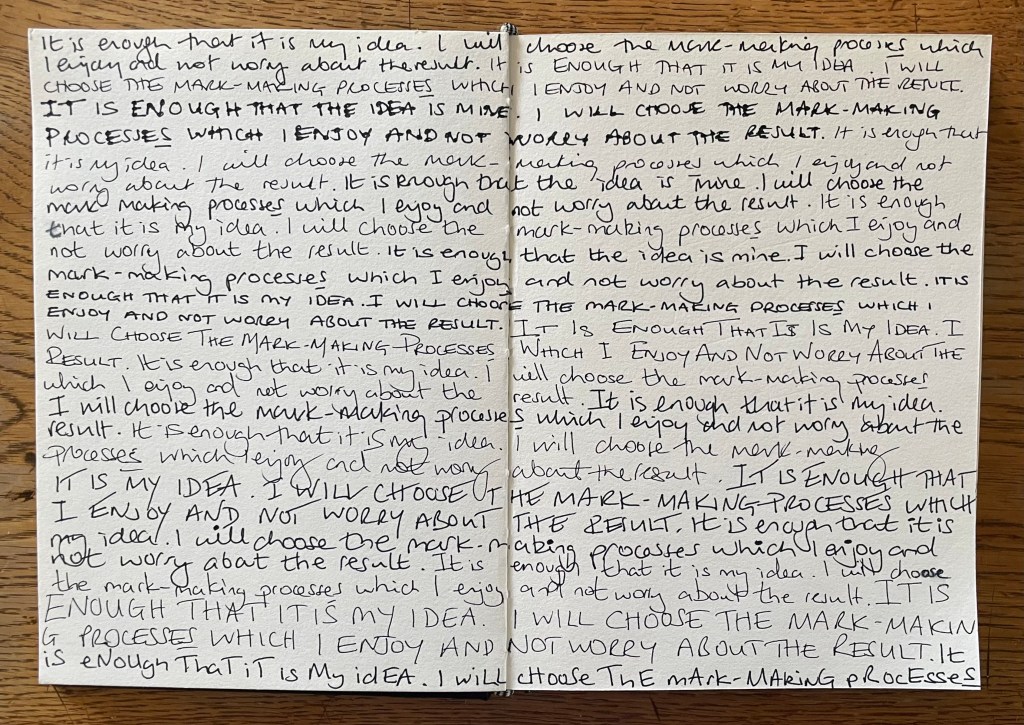
  • I will choose the mark-making processes which I enjoy, and not worry about the result
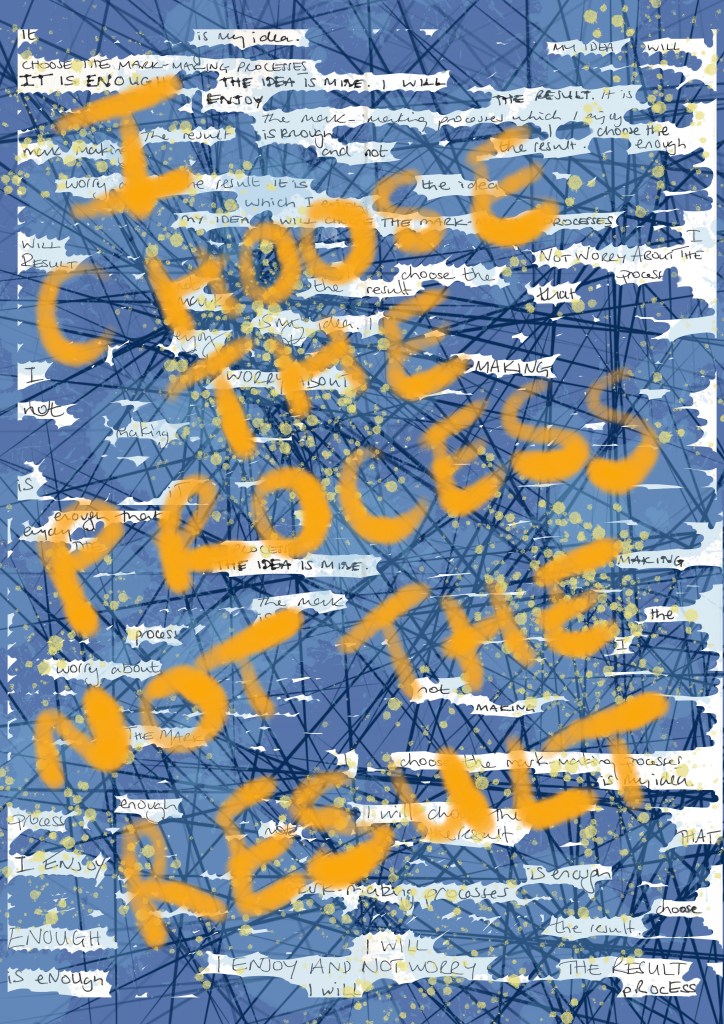
  • I choose the process, not the result
  • I don’t have to like what I make, and I don’t have to make what I like

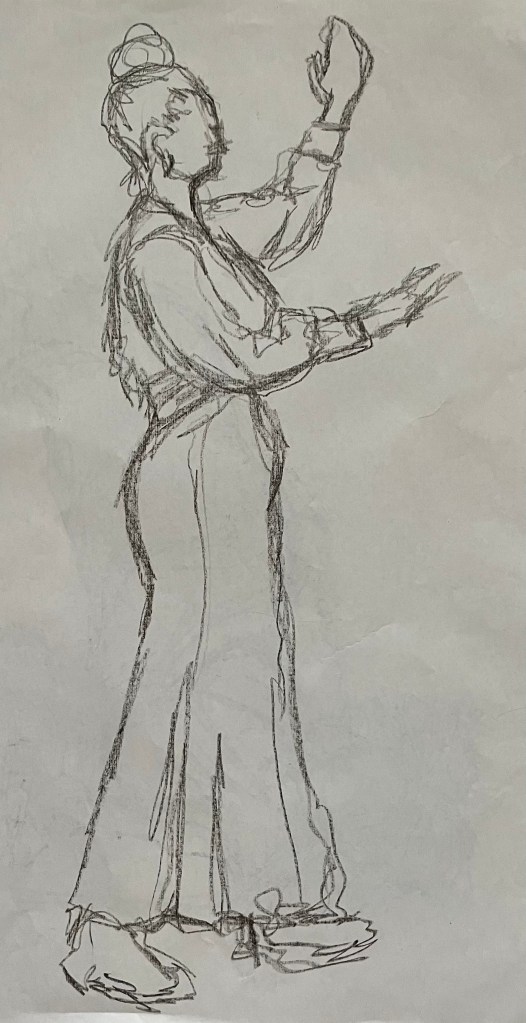
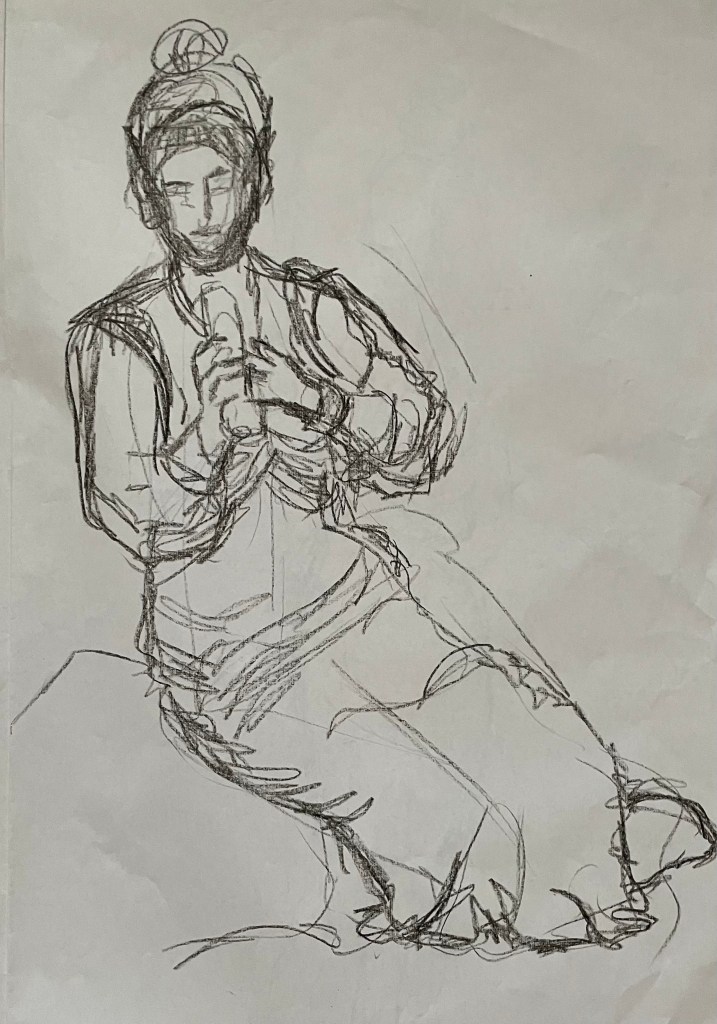
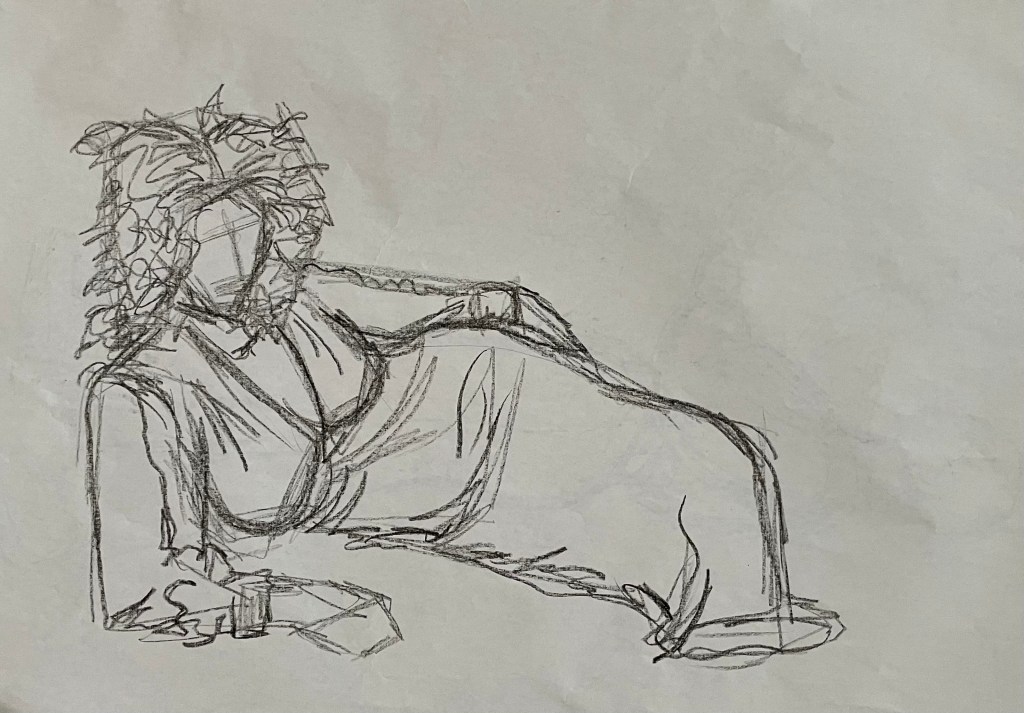
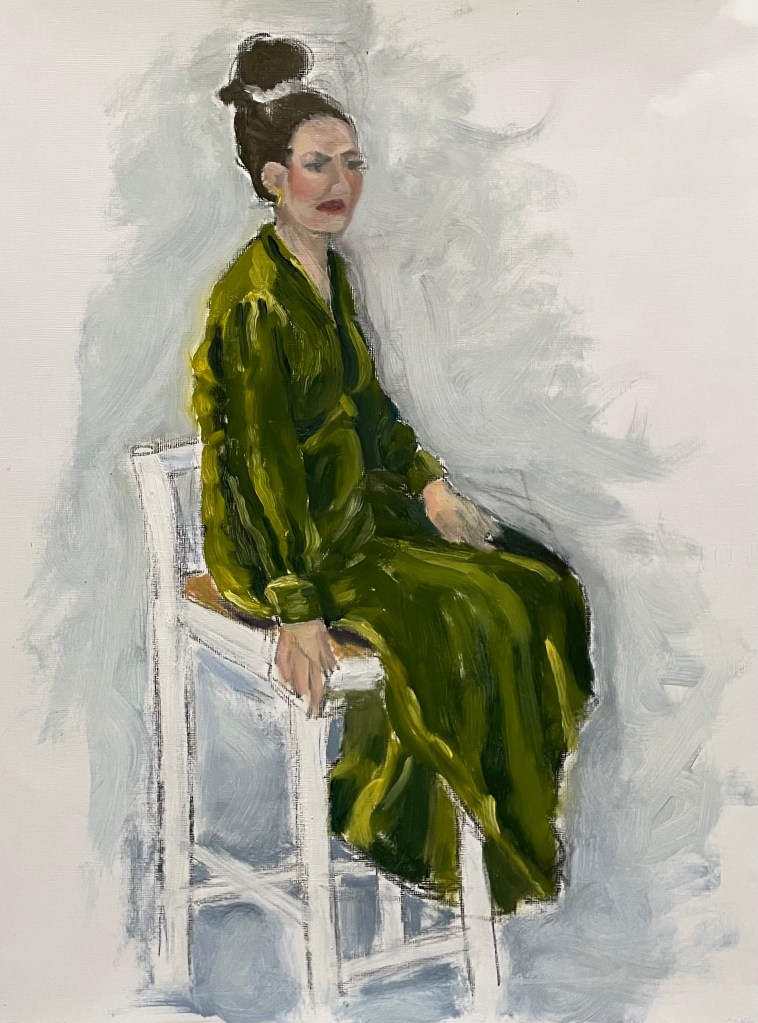
So, we’ve been continuing with the subject of figures in my weekly oil painting class. We had a model today. I certainly haven’t done her justice, and just don’t get me onto the subject of faces. We had to do a few warm up drawings, starting with continuous line – always difficult to get things in the right place – and then just normal sketching, a couple of minutes each. I used an oil pastel – I like that it’s a commitment, and can’t be rubbed out. There’s nowhere to hide, mistakes remain visible – the new me. Then an hour painting.

What to say? I’ve realised that since I’ve been posting my ‘Undones’ (seems a more positive word than failures), no matter how unhappy I am with the result, I can always find something that I like, if I look hard enough. It has just dawned on me, that I probably wouldn’t notice these elements if I was happy with the end result if, indeed, they managed to survive the perfecting process. There’s always some beauty, no matter the ugliness.

I think that I’ve unintentionally transferred my feelings of being weighed down onto the model. The dress looks so heavy; although it was velvet. I think I’ve managed to capture the sense of velvet. I’m trying to avoid using any blending in my paintings at the moment – I’m working on keeping my brushstrokes defined and with a sense of movement – I think I’ve achieved this. The figure is generally good and I particularly like the neck.

I’ve just been watching Sky Arts LAOTY, and now Gareth Reid is now giving a masterclass on drawing faces – I could definitely do with watching this.

Dialogue III – That Will Do

I’ve always thought that if you do something, you should do it to the very best of your ability, no matter what. My husband is very much of the ‘that will do’ approach, which used to really irritate me.

With hindsight, it was an impossible ideal – it’s obvious that I couldn’t do my absolute best at everything I did in life; there’s only so much time, and so much of me. It was a tall order to impose not only on myself, but also on others – it led to feelings of disappointment and dissatisfaction. It was also the slippery slope which led me to strive for perfectionism in my art. Over the last few months, my mindset has shifted, I would say, seismically.

That’s not to say that I’ve stopped caring, or have become laissez-faire. I would like to say it’s because I now care much less about the result, and more about the process, but I’m not quite at that point yet. It’s more that I’ve stopped imposing such high expectations on myself – in the past their achievement might ultimately have given me a moment of satisfaction, but it was rarely ever enjoyable or something that I actually wanted to do. Now, I feel that I am motivated by what interests me, and I would still like to do my best, for example, in the sense of making the most of opportunities and ideas, but I recognise that there are so many variables which could influence what that might be.

Anyway, long story short, I’m done, finito, and heaven forbid – it’ll do.

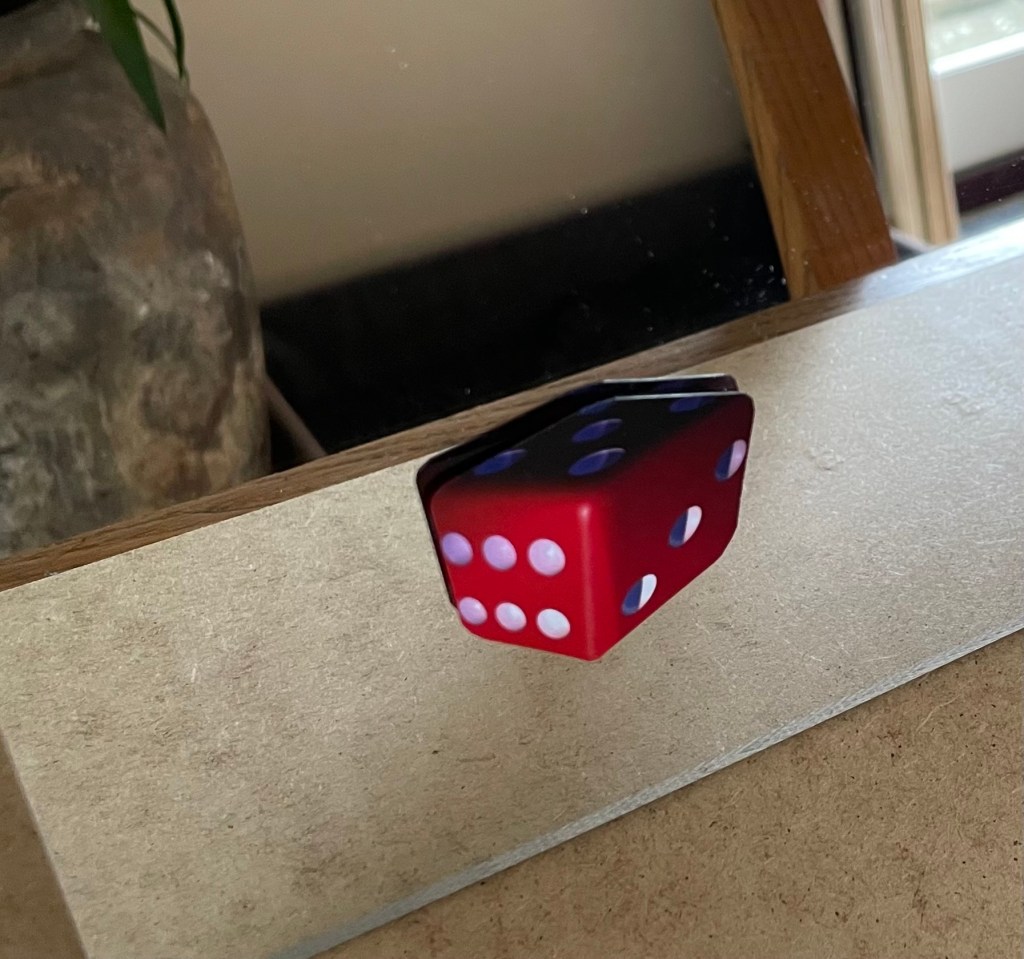
So, I had the mirror images printed and fixed them to the back of the existing cut outs. I used a crafter’s glue – Tombow mono liquid glue – as it seemed the least likely to cause buckling etc. Now the cut-outs were thicker than they were originally which caused a problem of the white edging. Also, even using a brand new craft knife didn’t prevent some of the edging being visible face on, which was particularly irritating – I don’t really do fiddly stuff and I’m not the neatest – as I had been really careful when cutting them out. I used some highly pigmented coloured pencil to get rid of the white as best I could. I then glued the cutouts onto the mirror, which proved tricky as the mirror surface had to be wet for the glue to cure properly. I managed it as best I could, but it was a tricky process trying to get enough glue on the back of the cutout for it to fix, but not so much that it would ooze out from underneath and react with the water on the surface.

It will do.

Next problem: photographing the finished piece.

Doing Lines

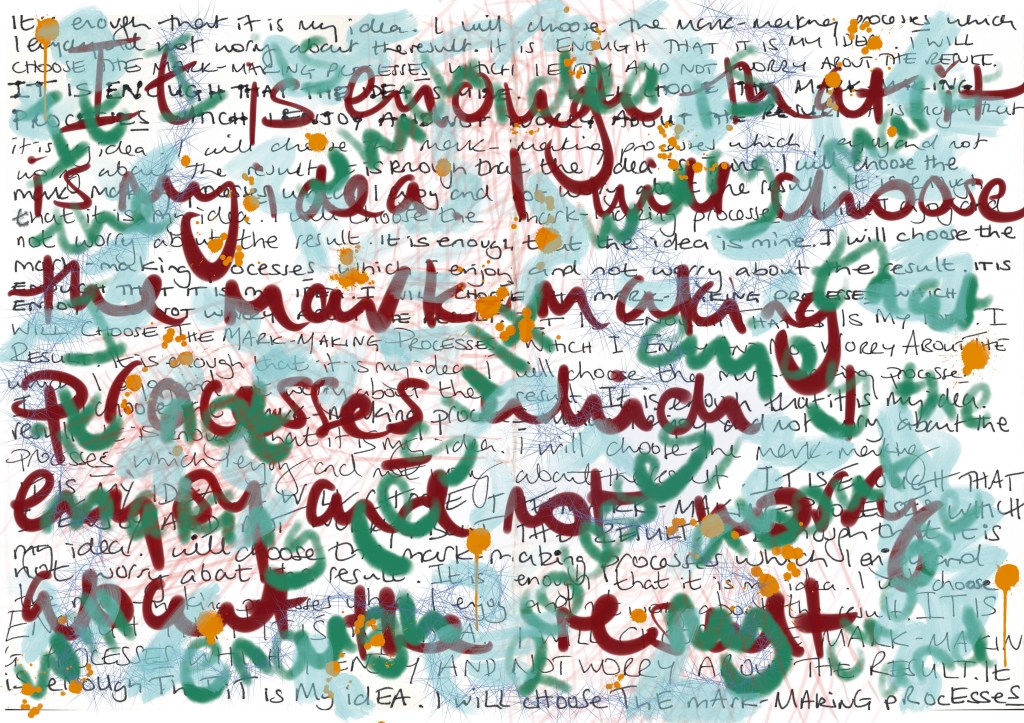
Following my tutorial with Jonathan, I decided to test the theory that if you say something to yourself enough times, you’ll start to believe it. So, I’ve been doing lines. To be honest I didn’t have to do lines as a punishment at school: I was a conformist.

We make marks everyday in one way or another. An obvious one is our handwriting. I learnt handwriting at school in the same way as every other child, in the book with the lines which indicated where the top and bottom of your letters should go, and the line in the middle indicating the height of the small letters. Once we had mastered the basics, we were allowed to go free range, first with a pencil, and then with a pen, as a reward for continued neatness, and perfection. Those were the days when everyone was taught to write with their right hand; left-handedness was not tolerated. But the need to express ourselves in how we write the words, not just with the words we choose, will always out.

Our handwriting reveals things about us, from the tilt, the size, the pressure, the failure to close our loops. I’ve never had consistent handwriting. It changes depending on my mood. I wonder what that says about me. Maybe I’ve never found a style which says to me: yes, this is you. And maybe that’s the point – I’m forever changing. Or maybe I just haven’t found my mark-making processes. It doesn’t really bother me, but at times I do feel jealous of the beautifully formed letters of others. I think – yes, you’ve got it together; you know who you are.

Doing Lines I

I like that the redaction is scruffy and that there are jagged edges. When I was doing it I wasn’t aware how scruffy it was because I was doing it against a white background, and so it just looked like the redacted words were disappearing. Surprisingly, I didn’t even have the urge to tidy it up once it revealed itself to me. As I was going through the words trying to make different phrases each time, there was a section in the middle which became a bit negative. It’s quite difficult to find different phrases from the same words in the same order. Phrases like ‘I worry about not making’, ‘Is it enough that I enjoy the process’ and ‘I worry about not making the mark’ started to pop up.

Doing Lines II

Well, I’ve written the words that many times, that if they haven’t sunk in by now, they never will.

It seems to have all been about words recently. What are words worth? That’s what the Tom Tom Club asked in their rather bizarre new wave hit from the early eighties, Wordy Rappinghood. You have to be of a certain age to remember this one. I rather like the artwork.

Come And Have A Look At This

Said my husband as I was trying to cook dinner this evening. With a sigh I carried the onion I was about to peel into his office, where he told me to sit down, because I was going to like this.

https://www.bbc.co.uk/news/videos/c1dg9zr0xelo

Give him his due, Hockney is not one to rest on his laurels, and a generous soul to boot, sharing his process. Do I have to make dinner? I’d rather have a go on Procreate now…

We’re So Excited

No, not the Pointer Sisters. My second tutorial with Jonathan this morning.

I’ve had some additional thoughts whilst writing this up and put them in brackets in italics as a reminder to me – they didn’t form part of our discussion.

He asked me whether I feel that I have been productive.

I told him about something my husband had read out to me from his Facebook feed last night on the basis that he thought it was relevant to me: “ambition without action turns into anxiety”.

In terms of posting on my blog and thinking and having ideas, yes. In terms of actual physical output, no. But that doesn’t really concern me as I feel that I am about to enter a different phase; up until now I have been collecting ideas and inspiration. I’ve done enough now, although the process of collecting will always continue. I tend to have periods of inactivity, of thinking and pondering, followed by intense periods of activity.

We talked about the exhibitions that I’ve visited and written about in my blog; my thoughts and takes on the artists and work I have seen, which he found interesting.

I mentioned entering the Summer Exhibition as a way to make myself make and how I’m viewing it as an experiment. In previous years I have spent a lot of time and emotional energy in creating work which has then been rejected, but still I enter every year – it is almost a masochistic ritual. This year I’m not investing the same amount of energy, although it’s turning out that my time has been taken up with problem-solving, rather than emotional input anyway. It will be interesting to see whether the feeling of rejection stings as much. Theoretically it should, because a work which I create in 5 minutes should still have the same value to me as a work which takes me 5 years to create.

*(How to value work? Time spent? Size? Type of material used? Obviously, there’s a break even point, but beyond that?)*

This feeds into my concern about the extent to which I can take credit for a work in which others have had an input, or in which chance has played a major part. I mentioned the possibility of having to engage the services of a professional printer to screen print on a mirror and referred to the Phyllida Barlow video in yesterday’s session; I saw an exhibition of Barlow’s work last year at Hauser + Wirth and watched the accompanying video documentary in which she had technicians assisting her. I also mentioned artists such as Damien Hirst who have a team of people who help make their work. I tell myself that it is enough that it is my idea, or that I created the particular circumstances in which chance created something. It is a mantra I keep repeating to myself, and I think that I am starting to accept it.

Jonathan advised that it’s absolutely ok to have others involved in the making. He mentioned master printmakers to whom artists would look to print their images and his augmented reality project in Cornwall in which he had to enlist help with the more complex coding he couldn’t do himself. These others don’t necessarily have to be acknowledged on the label (although he did acknowledge his) – it is enough that they are acknowledged in the process and the work itself. In fact, printmakers would often supply a certificate in an edition print to confirm that they had destroyed the plate, their input being acknowledged that way.

We then went onto to discuss readymades. I mentioned that I’d had an idea for the Summer Exhibition (which in the end wouldn’t have worked because it would require having to be regularly recharged) of using an old rotary telephone with a message on it from me inviting the viewing public to leave their own messages. Donald had mentioned in the session last week about mobile phones no longer being used for their initial primary purpose of calling people but as a messaging tool. I have researched sourcing an old one and getting a sound board fitted etc, but then discovered that the wedding industry has actually already produced one. I thought that I could possibly use this idea for the interim show; the fact that it is a space which is open to the public for a prolonged period of time seems to me to be a resource which shouldn’t be wasted – I could use the phone as a way to collect research data and then use that to inform my work. Jonathan commented that it is interesting that I have thought about the space and what it offers as a potential for interactivity. A student in one of the past interim shows had a work which was made by the public writing on postcards on the subject of grief and loss – there were the odd few on which children had drawn pictures, and that’s the issue with interactive exhibits. Usually in a gallery setting there is a line across which the public cannot cross; once the public are encouraged to cross it by an interactive piece, they are without any guidance as to how they should behave. He referred to an interactive exhibition where many of the exhibits had elements which had been damaged by the public, although not maliciously, even whilst the exhibition was being invigilated. I would probably need to think about maybe just having it there for the opening night, which would give me the opportunity to engage with people.

*(I need to think about this. The benefit of people using it when no-one else is around is that it would encourage a more personal response? What is the piece of work? The telephone or the messages? Does it matter if it is damaged after the first night as long as I have downloaded the messages from it? Leaving it longer will increase the number of interactions, but increase the risk of misuse.) *

Jonathan asked me what energises me. I don’t really have much energy at the moment, but maintaining my blog energises me: I enjoy doing it and it’s something that I find easy to do on a regular basis. I see it as being very important to me as both a note making tool which I can just scroll through to remind myself of what has interested me and as a record of the process. I see it as being a piece of work in its own right at the end of the course as it will embody everything about me. Jonathan mentioned that a past student had actually turned her blog into a book, which takes a lot of time to work out how to do particularly when deciding what to do about videos etc. This is actually something that I have been thinking about doing myself. Jonathan commented that the tag cloud at the moment shows ‘mother’ and ‘drawing’ as being the areas of interest. I need to go through all my past posts and make sure that I have categorised and tagged them correctly and this process itself, Jonathan observed, would be a valuable reflective exercise.

Jonathan then asked me what is a challenge. Making ‘finished’ work. I feel that I have been dipping my toes in various ponds, trying things out, experimenting but not taking things that step further. We talked about the kitchen lithography and whether I would do it again. I think I will. The DIY aspect really appeals to me in the sense that I can do it at home, and not have to go into a specialist place, with expert people, where I don’t really know what I’m doing. I mentioned that last summer I became obsessed with cyanotypes and want to revisit them. To this end I’ve googled how to make my own lightbox and have bought a UV light etc.

He asked me whether there is any particular mark-making process that I like. I am not sure at the moment, I’m still dipping my toes. On the subject of liking something, I mentioned my painting which I recently did in my oil painting class, and not liking it but enjoying the process and my subsequent quandary about thinking that I should, as an artist, embody everything that I like in other artists and their work, which I think has made me feel as if I’m in an identity crisis. I can’t be every artist that I admire, I can only be me. I love colour but I’m not a colourful person in terms of the way I dress. I don’t want to pigeon hole myself. Jonathan asked whether I felt that there is an expectation to. I have in the past in the sense that people have told me that as an artist people expect a consistency in approach, although Picasso was a painter, printmaker, ceramicist and sculptor.

I’ve also asked myself whether I should even have to like my work or if enjoying the process is enough. I think I have reached a place where I will choose the mark-making processes which I enjoy, and not worry about the result. Jonathan read my comment back to me, because this is a huge shift in perspective for me. I really think that the blog has been instrumental in this – making me put work up which ordinarily wouldn’t see the light of day. He said that he gets a real sense of everything that I’ve been doing is being directed towards a point, which is unknown as yet, and that I shouldn’t feel a pressure to produce work.

Whilst I can multi-task, I find it difficult dealing with several things which are mentally and emotionally draining at the same time. I think that once I get the study statement out of the way, I’ll feel like I can start to make. It’s not that I see the statement as a barrier to making, unlike the inertia I felt at the time of my last tutorial. It’s been incredibly helpful to focus my thoughts and set out a framework within which to operate but which allows enough room for exploration. I commented that I often go off on tangents, for example, I was looking again at the flowing water posts and thought to myself that it would be interesting to follow a river from its source to its end, and make a body of work. Jonathan said that would be an interesting project as it could involve all sorts of media, such as video. He said that it is important to make note of these ideas so that they can be revisited in the future.

As from next week I feel that things will change. It’s a bit like learning how to play a new game. You can look at the rules, but the real knowledge comes from actually playing it. I feel like I’ve been having a quick look through the rule book to get the general gist, and now I’m ready to play the game. Jonathan asked whether the interim show is helping with this. It is, definitely. Aside from the telephone, I have been thinking about cyanotypes on fabric which can be draped – I’m in the process of digitising my parents’ family photos which I’m thinking I could use – or maybe some prints. I hope to become a bit clearer on where I’m going from next week.

I told Jonathan that I feel like a different person to the one who started the course in October. I feel like me, whoever that is. I feel alive.

*(On that basis, I should have answered the question about what energises me, as being the course. I mean ‘alive’ in the sense of feeling open to new experiences, noticing so many more things, feeling whole, engaged and energised.)*

Jonathan ended by reflecting that it’s great that I’ve really put myself into the blog and that I’m letting myself get lost in the confusion. He’s looking forward to seeing what comes next, and that I should carry on as I’m doing. He’s excited. I’m excited.
Figuring It Out

I’ve started back at my weekly art class after the Christmas break, and over the last two sessions we have been looking at figures, in particular, figures in an environment. I’m not very good at depicting humans (or any animate subject for that matter), so this was a bit of a challenge.

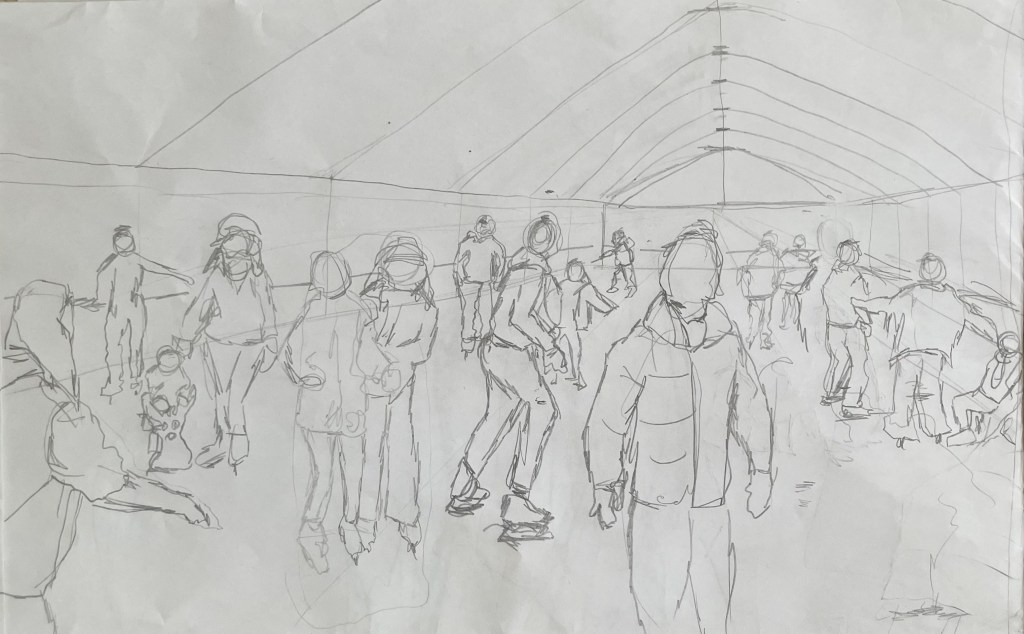
We had to work from images which we had sourced: I took my nieces ice-skating at Christmas, which was really entertaining to watch. There were the confident, well-practised skaters who came equipped with their own boots; the ‘I’m-competent-but every-now-and-then-lose-my-balance-and-windmill-my-arms-brigade; and then the rest – hopelessly clutching the side, or each other, for dear life, inching their way round. There was a whole range of shapes, gestures and weights, in the sense of where in the body the weight is being distributed, and there was a lot of tension.

We started by sketching out the composition.

I used a combination of photos and video stills from my phone – I could have been more organised because I lost track of which figure was on which photo, which wasted quite a bit of time. Next time I work from numerous image sources I will organise them so that they are more accessible and easier to switch between.

I then applied a ground to the support (I used oil paper as opposed to a canvas, as I wasn’t sure how it was going to go). As it was a painting of ice-skaters, I chose burnt umber thinned down with Sansador as my ground, as it’s the blue equivalent of the earth colours. I then drew in the figures using a rigger brush and thinned paint – I found the techniques covered by Chris Koning’s workshop of gestural drawing (‘Perception of the Whole’) to be really helpful in trying to get some dynamism in the portrayal of the figures. I also changed the composition from the pencil sketch to bring forward the pair of skaters on the left and to give the skater next to the pair some extra space into which he could move. I also packed some more figures in, including my favourites, the couple in the centre – the man skating alongside and watching his partner who is leaning forward – and the girl behind them.

The next step was to block in the background. I decided that I didn’t want to put the figures in the specific setting of an ice rink, so I left out the details of the roof and sides which were included in the original sketch. This gives a feeling of more space.

I used a thinned down mixture of titanium white, ultramarine blue and burnt umber to create a grey/blue and then scratched into it with the end of the paintbrush to create skate marks.

I then started blocking in some colour using thinned paint. I liked the fact that the burnt umber drawing was still visible and decided to try and retain as much of it as possible. This meant that I would not be able to use much thick paint in subsequent layers, and so the painting will retain a sketch-like quality. The purpose of the exercise was to capture the essence of the figures, so there will be very little detail in the figures and their faces, other than those in the foreground, and even then I will keep these limited.

I regretted having the large figure in the foreground, but he felt necessary to add variation to the height of the figures, and his static quality should hopefully contrast with the sense of movement in some of the other figures.

I carried on adding some more colour and changed the colour of the skater’s hoodie to differentiate him from the figure in the foreground.

I really enjoyed the process of being looser: the multiple visible alterations and the pared back application of paint. I’m not sure that I like the finished piece, probably because of its subject matter – it’s all a bit twee. But that’s my own fault – I hadn’t adequately prepared for the class and so made a rushed decision. Next time we have to work from a preselected source, I will make sure that I prepare properly, so that the subject matter appeals to me as much as possible.

There are areas which really appeal to me; I like the way I have treated the ice and I think that I have managed to capture the sense of movement, the hesitancy and tension in the figures, and the atmosphere. I don’t like the way I’ve painted the faces in the foreground. Whilst the exercise was all about the figures, I don’t think I’ve managed to find a method to render faces in a non-detailed way which does not look childish. I need to work on this.

I was thinking about this painting whilst I was out on a dog walk yesterday. I enjoyed making it, but I’m not that enamoured with the overall result, which made me ask myself whether I need to like the work I make or whether enjoying the process is enough. Also, I like and am attracted to a wide variety of artists working in very different ways. I suspect that I have previously thought that I need to make myself like them and make the sort of work they make because it is something that I like and am drawn to. I’m starting to realise that this isn’t necessarily the case – I just need to be ‘me’.

Generally, the work which I produce at my art class is not something that I would ordinarily choose to do, (which is a good thing) and won’t necessarily be relevant to my field of study in terms of subject matter, but it will provide a useful source of exploration in terms of technique and approach in my art practice. As such it is a valuable resource and a good use of time as well as a commitment which ensures that I create work on a regular basis.

A Way of Working

As ever, I’m conscious that time is ticking by. Whilst the study statement will be useful to focus what’s buzzing around in my head, moving forward I need to develop a more concentrated and sustainable way of working in order to ensure that I get the most out of the next 5 terms.

Up until now I’ve been all over the place, immersing myself in art, books, programmes, aimlessly ‘doodling’, without any direction, just exposing myself to everything I can and seeing what might stick. Jumping from one thing to another. This process has given me lots of ideas. It’s not too difficult to have ideas – the difficulty is having good ideas and then developing them into a piece of work. I’m feeling that at the moment I’m talking the talk, but not walking the walk.

I lack self-discipline; I get easily distracted; I get bored; I often don’t finish things; sometimes I wake up and know that the day is not going to work for me, and it’s a case of just getting through it; tomorrow’s always another day; I have no routine. I need to establish a routine, if I can, one that allows me to fulfil my everyday responsibilities but which dedicates time to developing creativity. I have no idea how much time I have spent so far on this course. So, moving forward I’m going to record how long I spend doing what. Just roughly, not down to the minute. I’ve had to do this previously – it’s soul destroying having to account for your existence – but the reason for doing it now is to give me a better understanding of how I work, what works for me, whether I’m doing enough and how I need to plan for the future.

Thirty hours a week is a long time, I’ve realised. So, that’s blog 20 mins…