She went back to uni today. She was looking forward to getting back to some normality and having independence again. The house seems empty – don’t get me wrong, I’m not one to suffer from empty nest, but there is a presence missing, along with all her stuff that seemed to have found its way into every single room of the house. The creation station that she had set up in the sitting room is no longer there – watching tv whilst she painted by numbers to try and occupy herself and at the same time rehabilitate her hand. And then the quilt, which she didn’t manage to finish before she left; she was disappointed because she wanted to have something to show for what she saw as having been a wasted summer. Never mind – she’ll complete it over the next few weeks, and it will serve as a reminder of ‘that summer’, imbued with fear, frustration, pain, resilience and hope.
It never ceases to amaze me how, in the act of making, memories and emotions are stored within the object, like a creative time capsule.
In the words of Vinnie Jones: it’s been emotional.
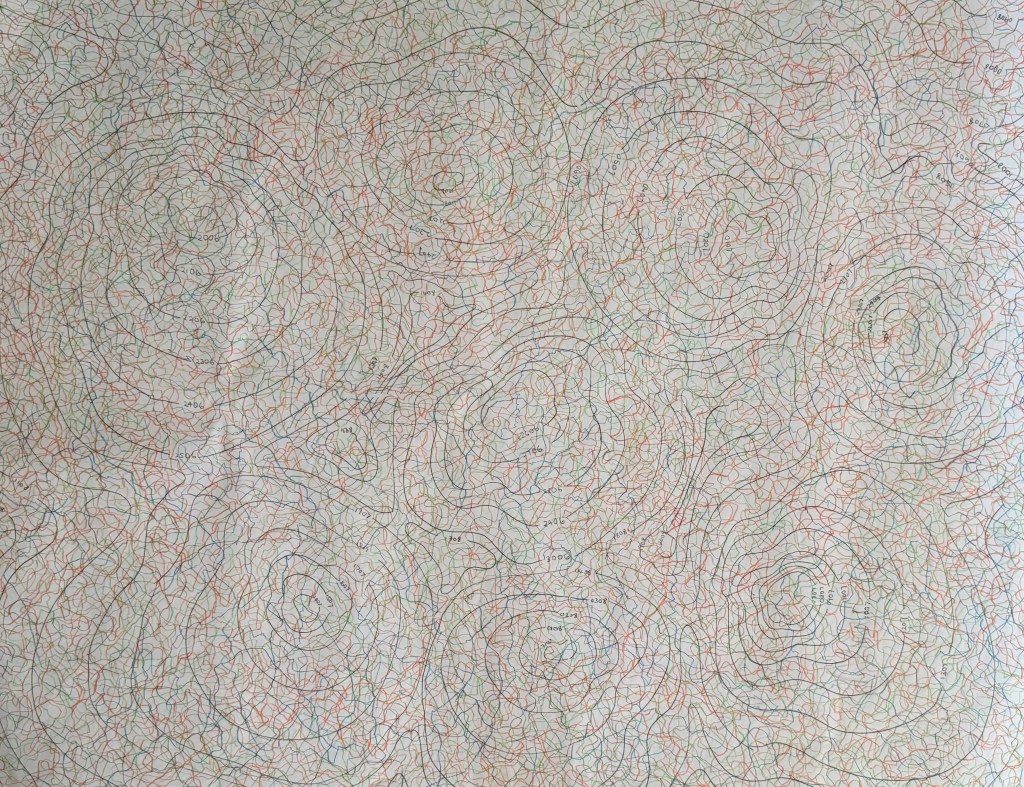
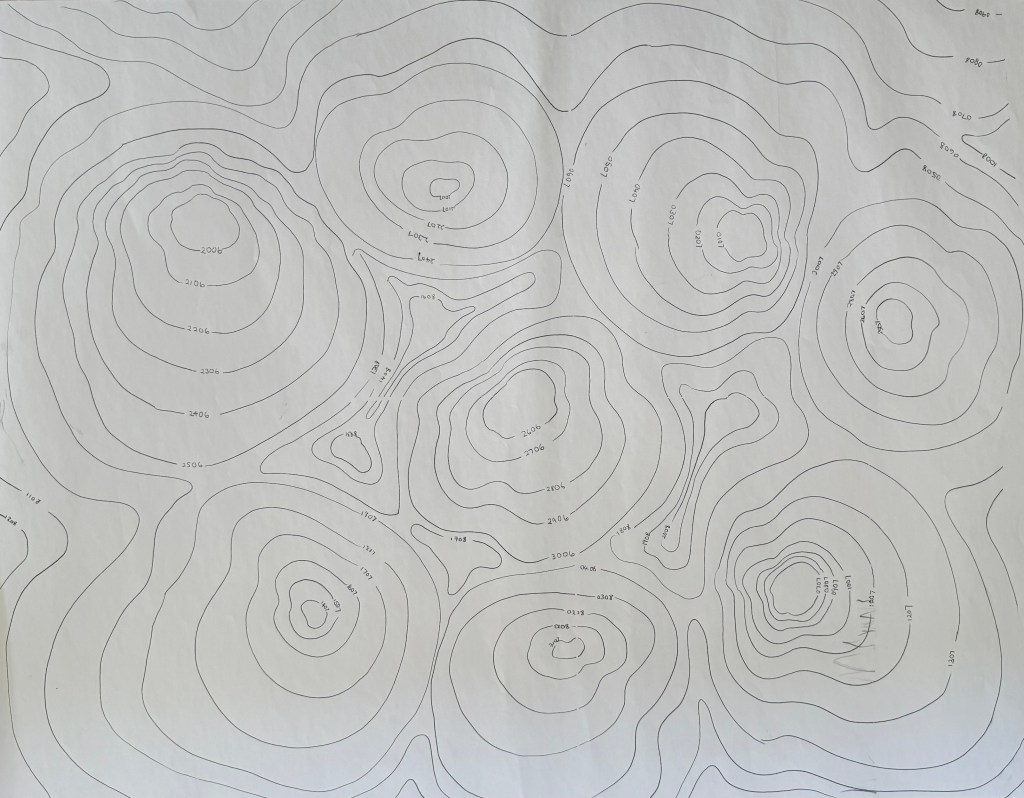
Over the last 54 days I have been mapping my emotions each day, using orange for positive, green for neutral and blue for negative. At the beginning, I was going to use different shades of each colour but I soon realised that this would over-complicate things. I also realised that I needed to put some rules into place: I started each line from the dated contour line, drew for two minutes, trying to explore as much of the sheet as possible to achieve an even distribution of mark-making, and finished the line off the page. I wanted to make it so that theoretically I can pick any day and trace the line which represents it. I drew each line at the end of the day, and took a photo. Unfortunately, sometimes it wasn’t light enough and so I had to take photos including a number of days’ worth of lines, so instead of having 54 photos, I’ve only got 46 which has resulted in a sudden surge in orange lines towards the end – maybe I was enjoying the positive. They are not the best photos – the lighting is all over the place. Next time I do something like this I will try and make them consistent, although I do quite like the movement it creates.
What have I learnt from this exercise? Had I not done it and you had asked me what the last 2 months have been like for me, I would have said that they have been difficult, and that for the most part I have felt negative emotions such as sadness, grief, stress, frustration and anxiety. However, looking at the end result I can see that this isn’t actually the case; I can see that there are more orange lines than green, which in turn outnumber the blue. This must mean that I feel negative emotions more strongly than positive ones, and this results in my perception of life being somewhat skewed. The map reflects this, in that, whilst they are few in number, the blue lines jump out at me from the rest. I think the technical term is the negativity bias. I don’t think that I would have had the same result had I represented my daily emotions diagrammatically in a chart – it matters that each day is individually represented. Maybe there is another way of doing it – I’m just not a mathematician!
I found the exercise to be a positive one; the act of drawing a line each day not only meant that I was making, but it also allowed me to reflect on the day as I drew – a form of visual journaling. I enjoyed the process of it and whilst it can be said that the resultant map is interesting, what it reveals also became apparent during the process itself; as the map was becoming each time I engaged with it, so I was becoming.
As ever, I’m not sure how I can develop this, if at all. Or maybe, there’s no need. Today was the last day. I think I will miss doing it, so I might just continue.
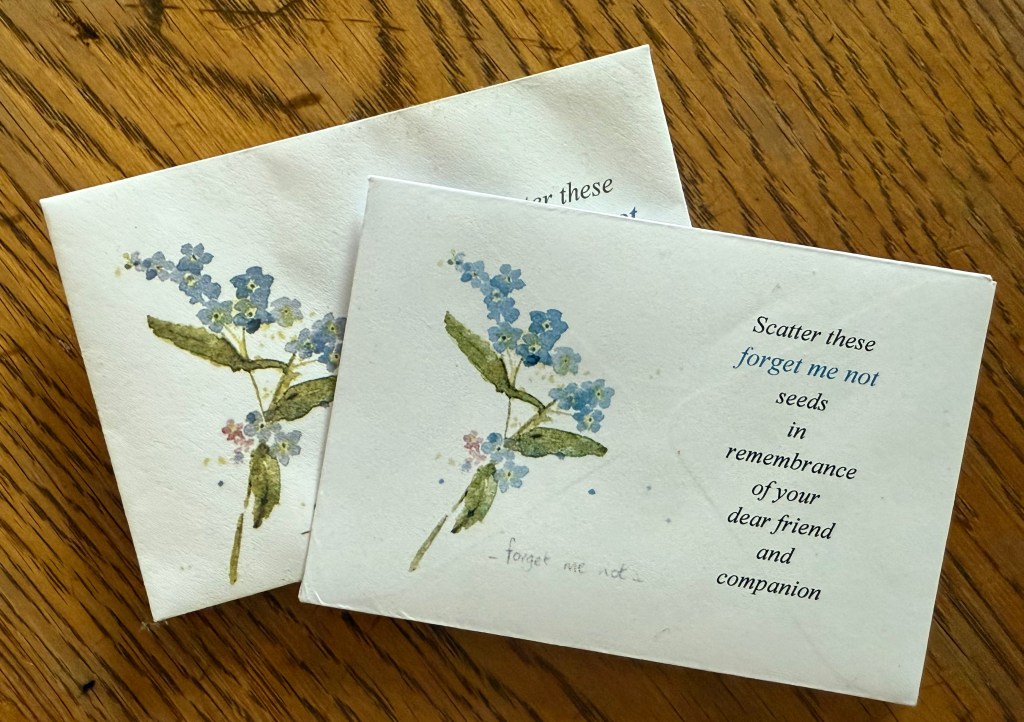
It’s a long time since I last had a pet, and this may not be anything new, but there’s a business out there, maybe more than one, which is supplying veterinary surgeries with packets of forget-me-not seeds to send to customers whose pets have died. Since Monty died we’ve received cards of condolence from our regular vets and the specialist practice, both enclosing identical packets of seeds.
I will sow the seeds and hopefully next year green shoots will emerge from the earth, but with my gardening skills, I don’t hold out much hope.
I appreciate the thought, if it was indeed a thought, and not just a gesture generated automatically by an impersonal process. The cards contained messages from staff I didn’t even know were involved in Monty’s care; general messages of sympathy for our loss, except for one, which stood out because it described him as having been such a character. No sooner had Monty’s heart stopped beating than the vet’s hand was on my shoulder, followed by “I’m sorry for your loss”. Similarly, from the veterinary nurse who had assisted, with an added hug, whose eyes failed to show any sign of recognition a couple of days later when I went into the surgery to speak to her about our other dog.
I’ve decided that I don’t like the phrase; it’s trite and it doesn’t make the pain any easier to bear. In fact, I don’t think that I’m a fan of euphemisms generally, particularly, the idea of passing or passing away. Where to? My father died, my mother died, my dog died. That’s it. They didn’t go anywhere, I didn’t lose them, and there’s no chance of finding them again, and reuniting.
That’s not to say that I don’t believe in something else. Maybe I believe in the law of the conservation of energy: it can neither be created nor destroyed.
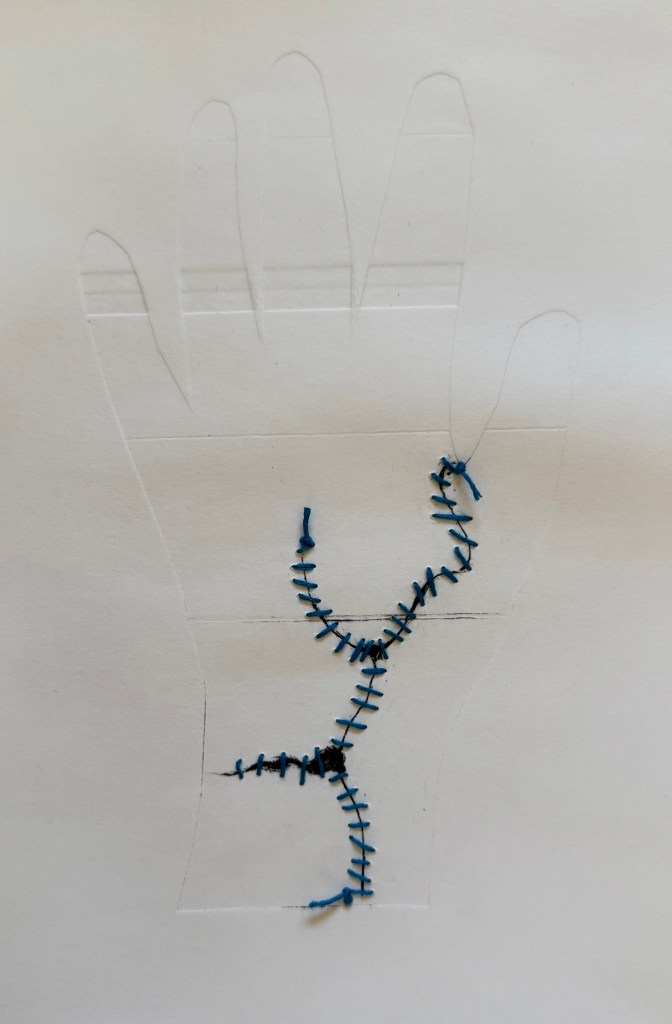
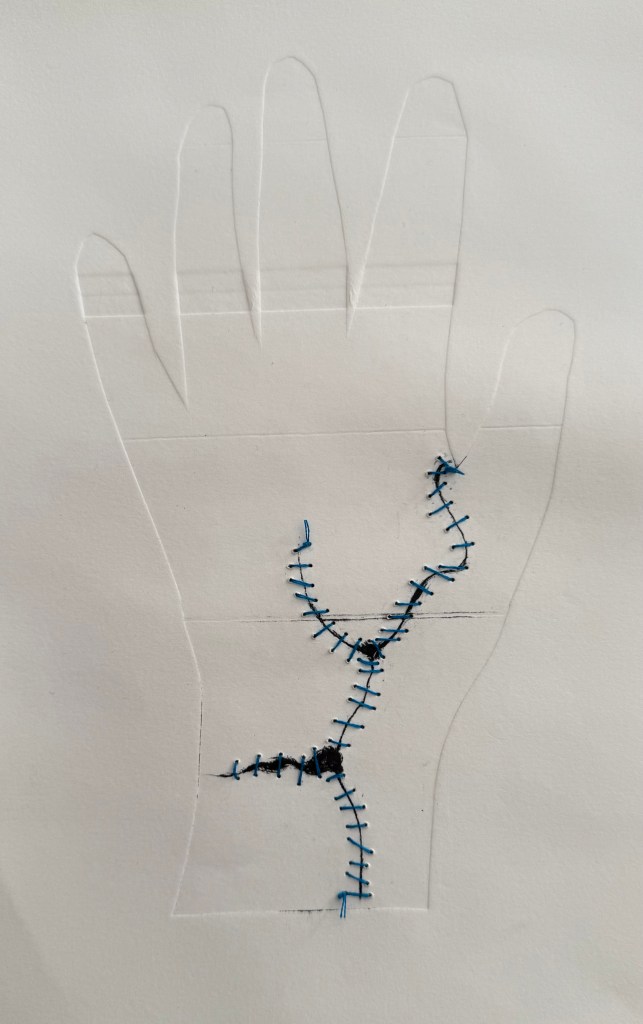
In the accident, a 2 inch piece of glass managed to find its way into my daughter’s thumb via the underside of her wrist (luckily missing her artery) severing the main nerve and two tendons in her dominant right hand. Fortunately, she was taken to Salisbury Hospital, the regional centre for plastics. We make the 2 hour round trip every week for dressing changes and physiotherapy. Every week I take a photograph of her wound, mapping its healing, but also so that she can look at it when we get back home – she can’t look at her hand in the moment. It’s important that she reconnects her brain to her hand otherwise the hand map in her brain will be lost, as will any chance of recovering as much sensation as possible. Whilst some of the physio has been physical exercises to rehabilitate movement in the tendons, the majority of it is brain training: visualisation and mirroring exercises, analysing touch and sensation, using the good hand to teach the injured hand how things feel, teaching the brain the new language with which the hand is trying to communicate.
So, we decided that we would make something. I’ve been meaning to try out some tetrapak printing for a while. The process of incising seemed appropriate. I feel some responsibility – if I hadn’t suggested that she leave earlier, perhaps it wouldn’t have happened. The act of sewing, holding things together, helping things to heal.
I like that the wound is the subject, that the hand is suggested by the embossing. I debated whether to add more detail, more variety of tone but for once went with the less is more option. I used ordinary cotton thread but we decided that the colour wasn’t right so we went for embroidery thread – a brighter blue. As I was sewing I knew that it was too thick, that I should have separated it, but I just kept going. I knew it was wrong; she said it was wrong because now she couldn’t see the wound – I had obliterated the very thing that we were supposed to be embracing. I tried a couple more times until we decided that it was right. By then the holes were quite large but that in itself doesn’t matter – it reinforces the idea that often we have to endure further harm or pain in order to heal.
During my tutorial Jonathan mentioned carbon paper.
It brings back memories of a time when it was the only way to make copies, of secretaries putting a sheet between the top and bottom copies when they typed. Those were the days when the most technologically advanced piece of equipment in the office was a fax machine, which would regularly spew out reams of documents on thin, shiny paper, the print fading away to nothingness over time, thus requiring photocopies to be made, just like some present day shop receipts, so I’ve discovered.
So what to do with it? Recently, I have been reading about map-making and the act of mapping, considering the difference between the two. Contemporary cartographic theorists consider the process of mapping to be of paramount of importance, the creation of the artifact of the map being just one step in the process. In particular, psychogeographic mapping seeks to represent how individuals feel about the place they are in, a process in which subjective experience is prioritised over factual accuracy. Artist, Christian Nold, who uses a bio-mapping device to record individuals’ changes in emotional state, creates emotional maps of places, and one I’m particularly interested in is Brentford Biopsy because I used to live next door in Chiswick before I moved out of London. The project was undertaken in 2008 before areas of Brentford were redeveloped, and it’s really interesting to see how people felt about the area: it reveals so much more information than you would get by simply looking at a map: a map details the historic buildings and the riverside, but not how people respond to them, their view as to how they should be dealt with in future development, and how it actually feels to be there.
So, I’ve decided to embark on some emotional mapping of my own, not in relation to a sense of place (that may come later when I revisit my grandmother’s village) but of my day to day life. The bonus is that it means that I have to make a line everyday which will hopefully lead me to doing other making. I have drawn the contour lines using carbon paper (I‘m currently thinking that they may be too dark and overpowering, but we’ll see how it goes; it’s an experiment after all) and each one relates to an individual day.
I’ve already started, and it should take me up to the 12th of August. I’ve had to invoke some rules. There are three colours which represent three emotional states which I assess at the end of the day; green represents a neutral emotional state, orange positive and blue negative. Obviously within the generalised emotional states is a whole range of different specific emotions, but I decided just to keep it simple. Each line starts from the contour of the day in question and ends by going off the sheet otherwise it may be associated with more than one day. I draw each line for no longer than two minutes. I had thought about allowing myself however long I felt I needed and varying the intensity of the line depending on how I felt, but decided that would over-complicate things. The map will give an indication of how often I was in each emotional state over a period of time. I’m now thinking that I should have had another map on the go at the same time; not just to depict frequency but also depth of emotion. Maybe next time, if this works out.
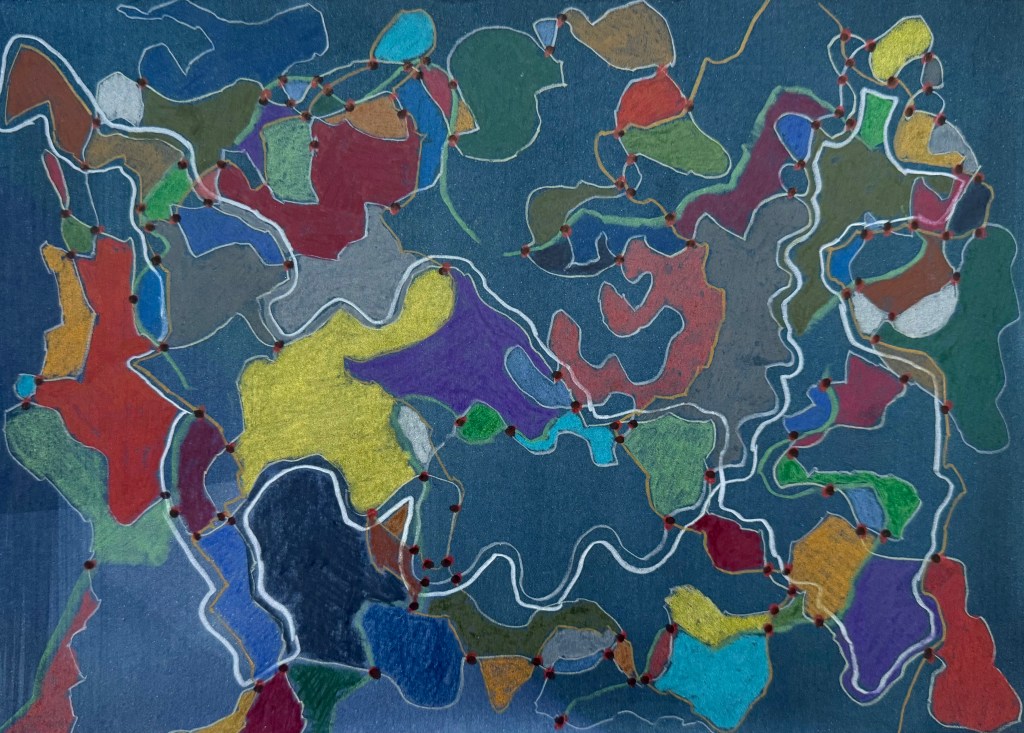
I also found some watercolour paper which I had used for an unsuccessful cyanotype and experimented with it. I like the intensity of the colour against the blue background, and the way the coloured in areas look like countries on a map of the world.
The groupings of colours also remind me in a way of the Art Emotions Map which has been produced by Google Arts & Culture and the University of California, Berkeley, which I’ve spent a bit of time exploring and which reminds me of one of our Miro boards. My husband suggested that I could do something similar relating to life experiences, with getting married to him falling within ‘Wonder & Awe’. Oh, he does have a sense of humour!
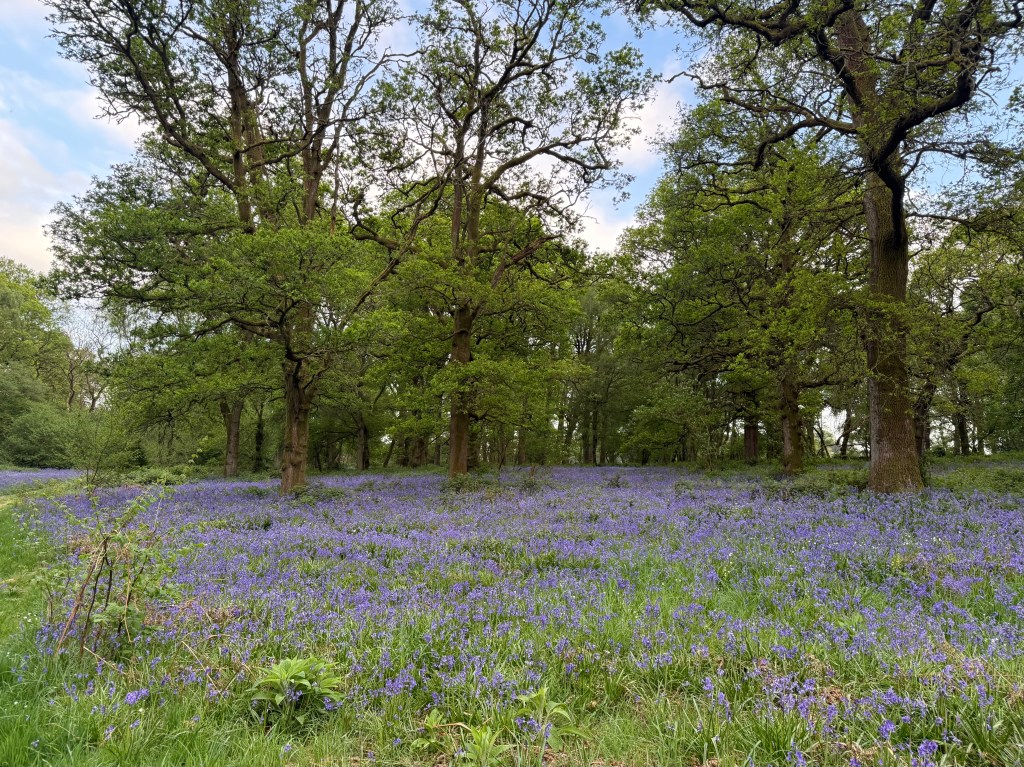
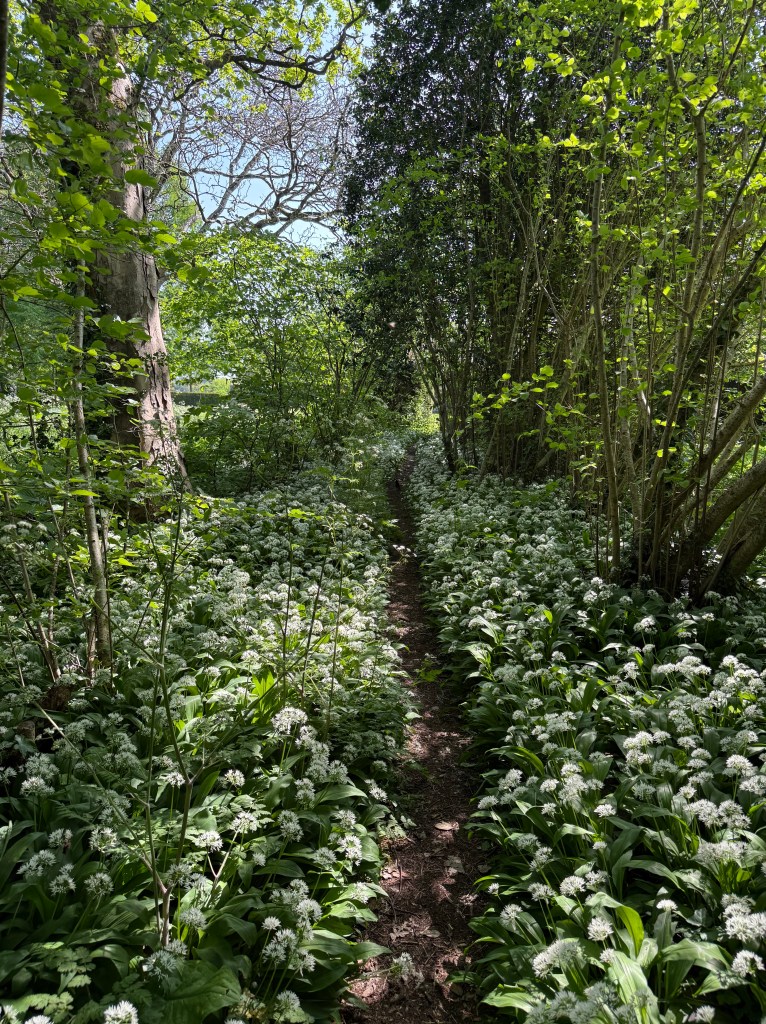
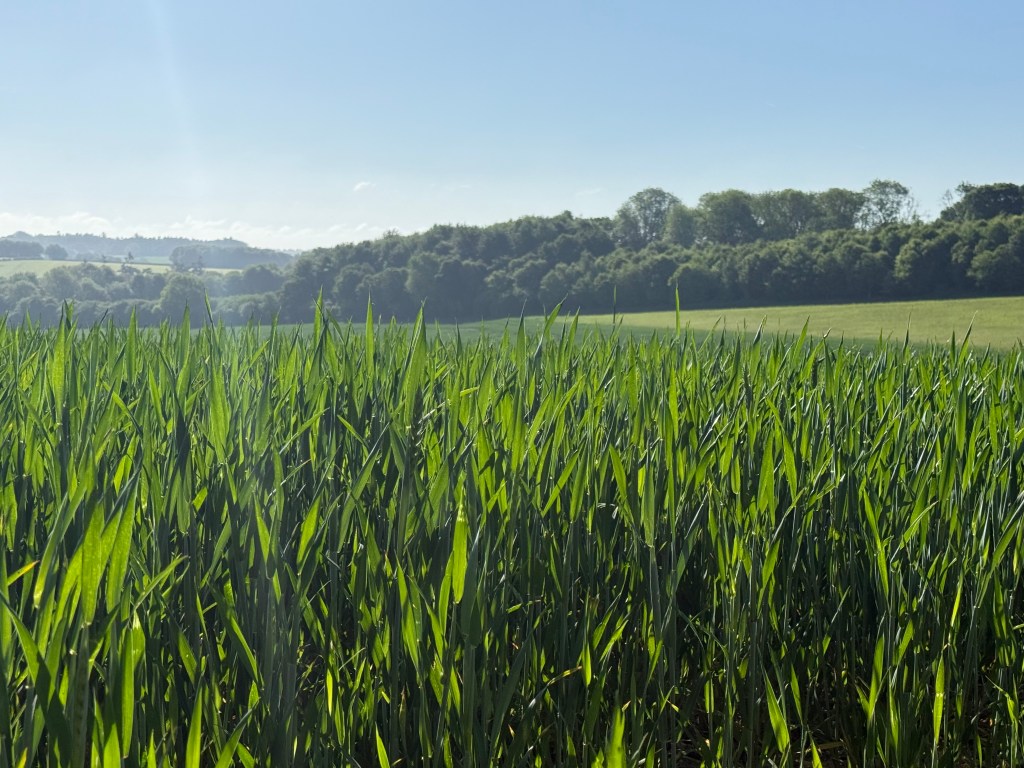
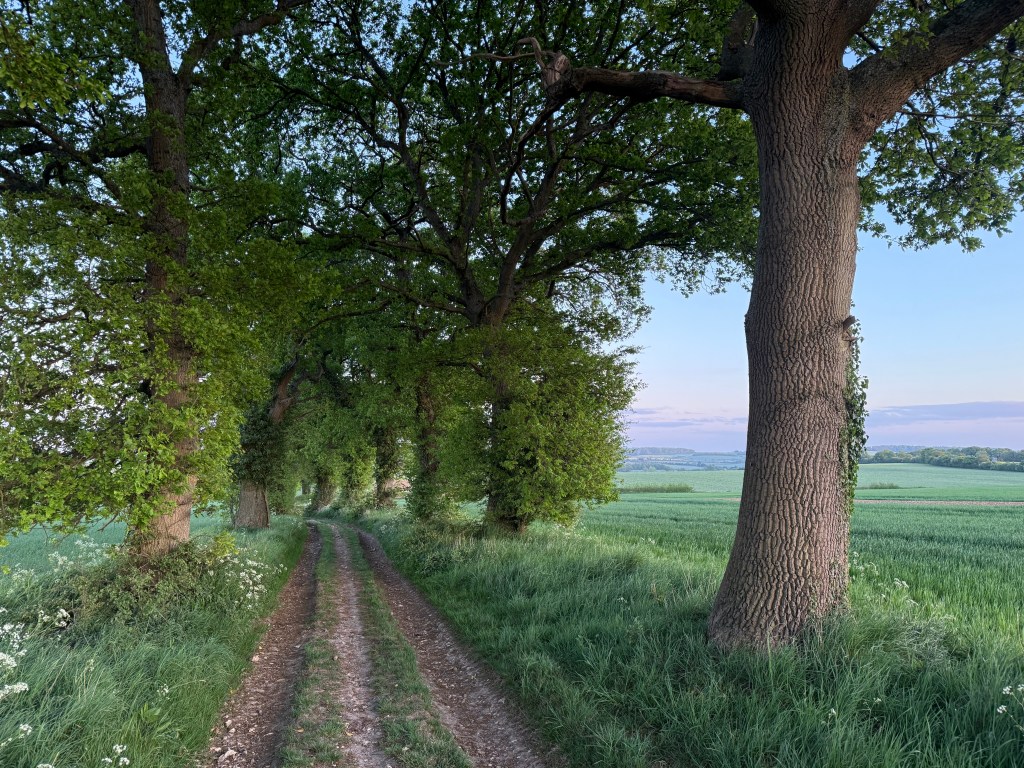
I love this time of year. The hedgerows are full of hawthorn blossom and clouds of cow parsley, there are blue carpets of bluebells in the woods, if a little threadbare by now, swathes of flowering wild garlic, crops growing in the fields and trees in full leaf.
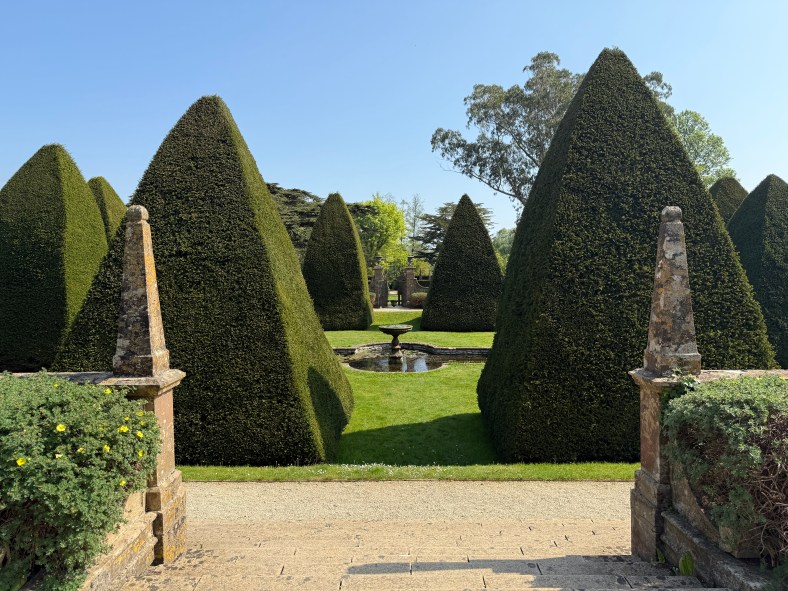
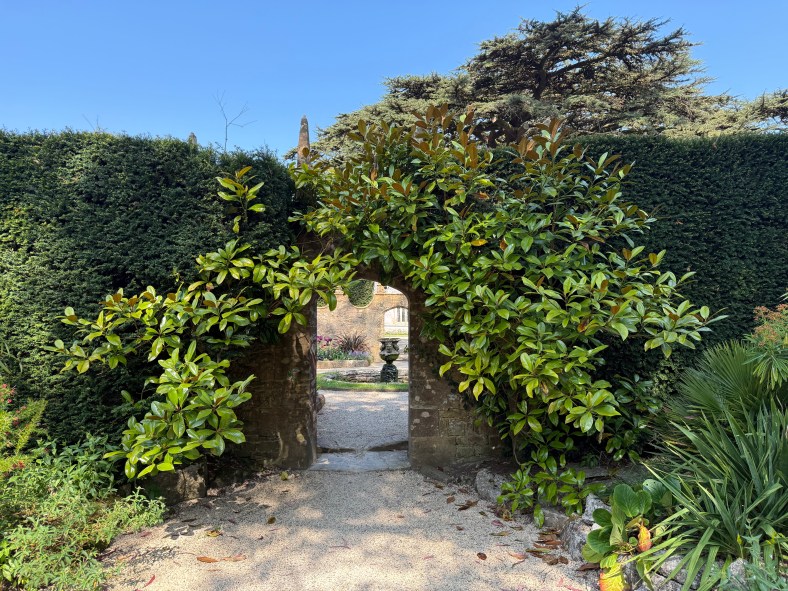
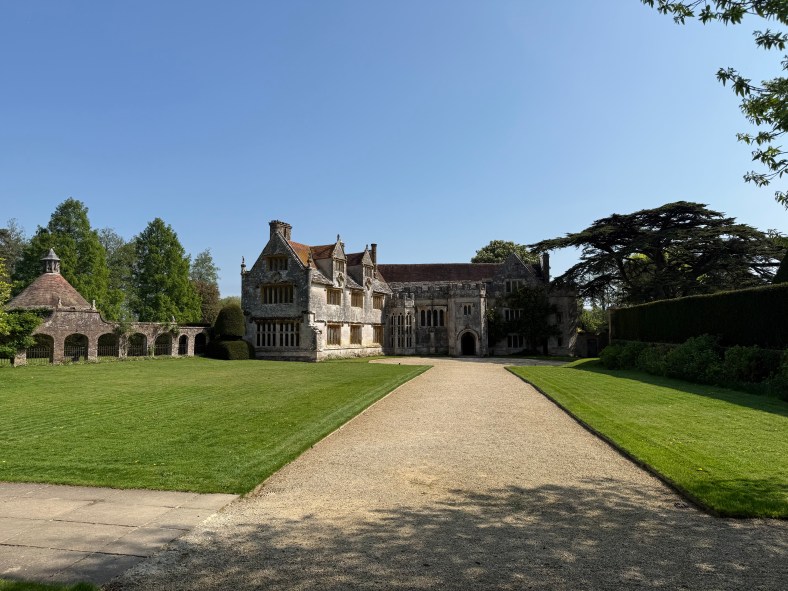
I took my daughter back to uni in Exeter a week or so ago: a lovely drive down the A303 past Stonehenge, under the mystical big skies of Wiltshire and the rambling green fields of Somerset and Devon. On the way back I took the alternate route through Dorset along the Jurassic Coast and stopped off at Athelhampton House, a Tudor manor house I haven’t visited for a number of years with a very strong connection to Thomas Hardy. I didn’t know that Hardy was an architect before he became a writer and that he had worked on the house with his father, or even that he had lived into the early part of the 20th century. He seems to belong to a different time.
The gardens are wonderful – a house with many rooms (this seems to be a recurring theme recently).
Inside, apart from some wonderfully old glass windows which distorted the view outside,
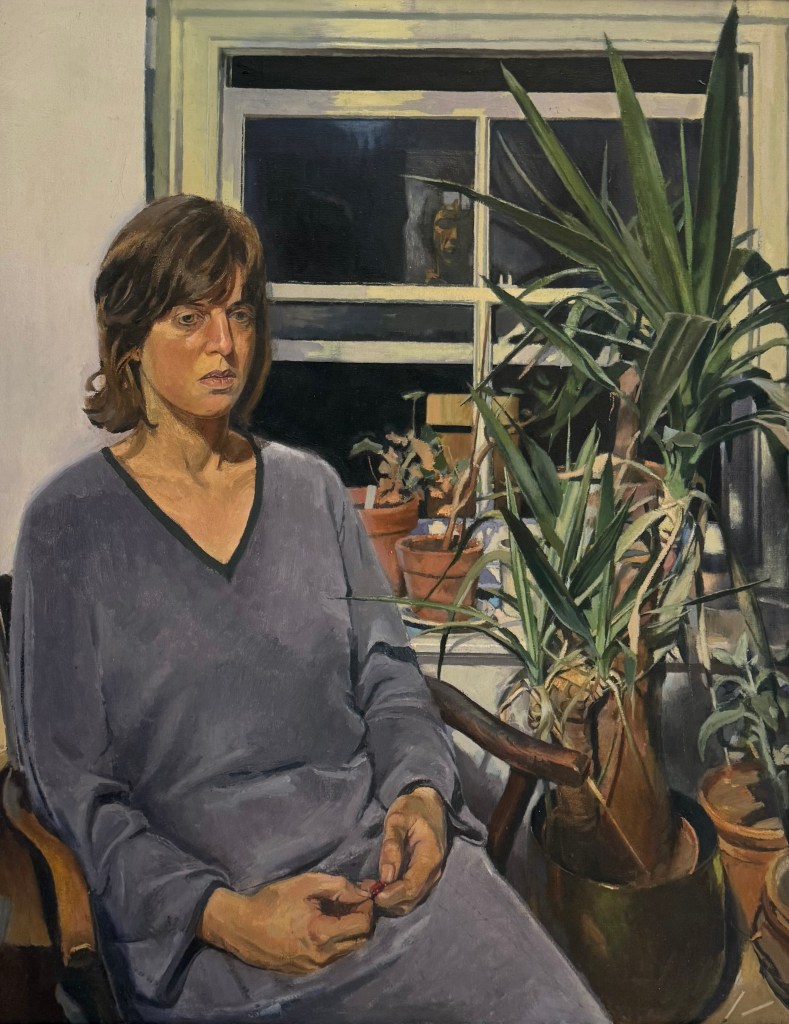
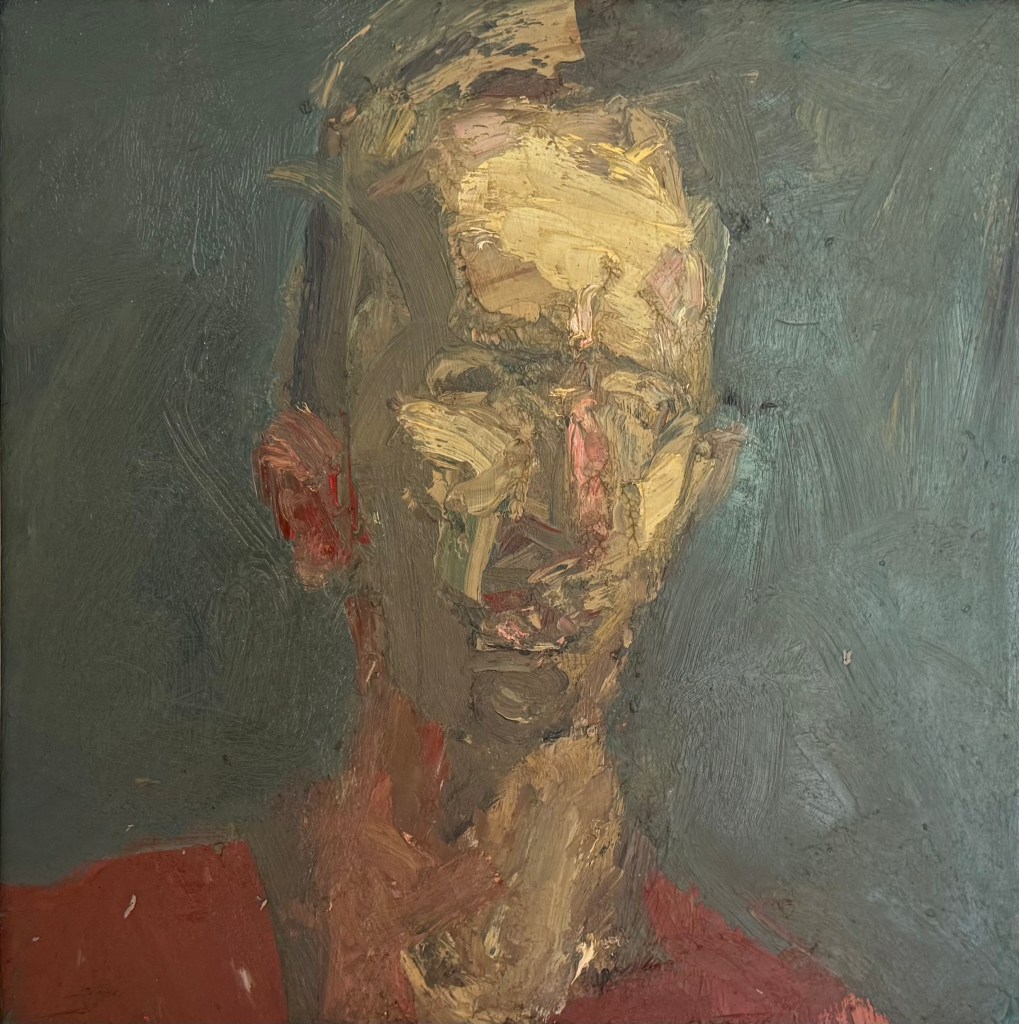
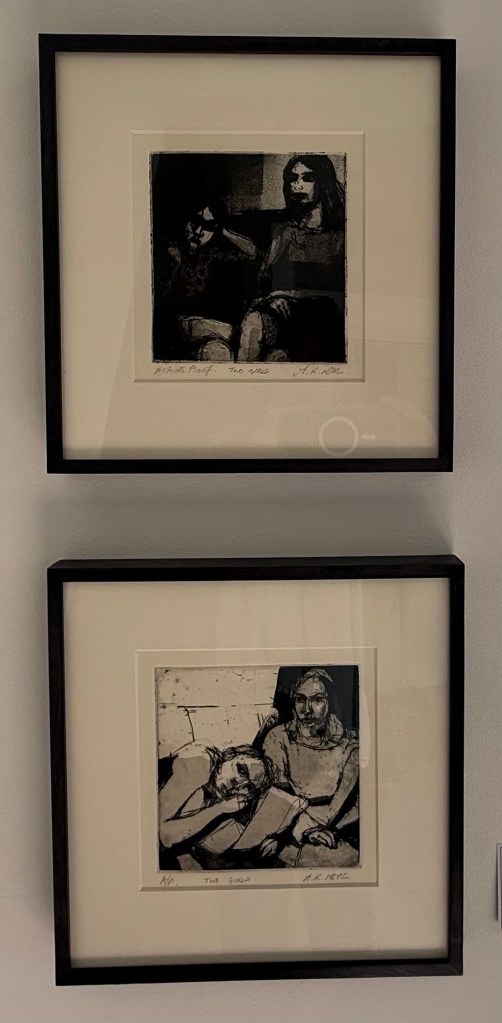
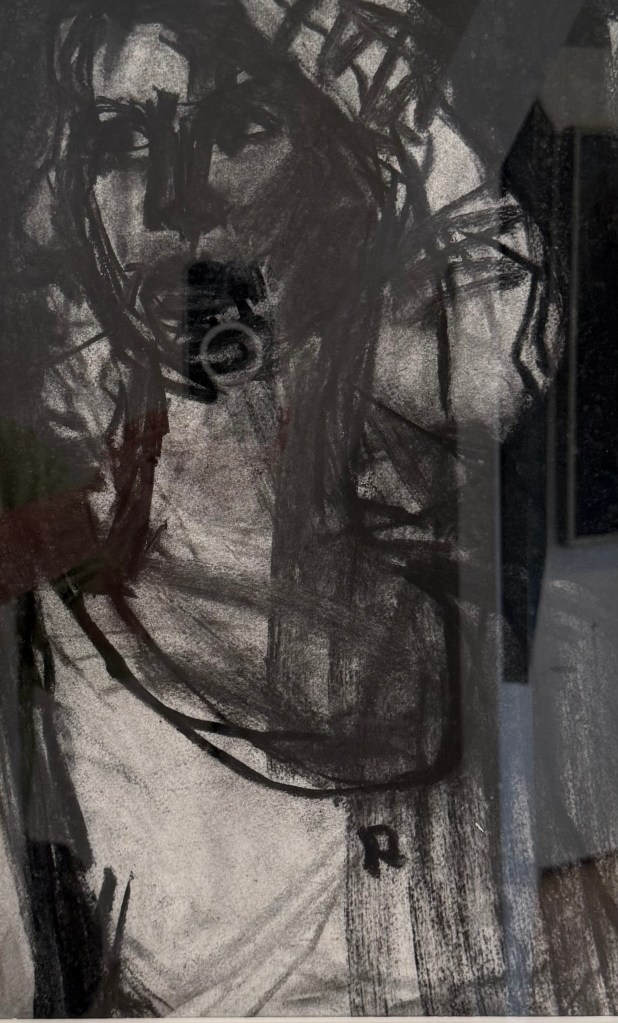
was an exhibition of work by Arthur Neal, a painter and printmaker practising since the 1970s. He appears to vacillate between the figurative and the abstract. It would have been difficult to guess that all of the works on display were made by the same artist. I was particularly drawn to his small abstract oil paintings, his work in charcoal and his more recent prints.
The exhibition made me think. I would still like to explore charcoal and drypoint, and after that I think I’ll be done. It will be time to reflect.
The small oil paintings reminded me of a stack of small canvas boards we’ve had for ages, as yet unused. I can’t recall why we got them – I don’t generally do small. I think my husband bought them because they fit in a small pochard box he is going to use for all those landscapes sketches he’s going to paint, once he has wiped off all the dust. It wouldn’t take more than a few brush strokes to cover them. No excuse really, not to do something every day.
I have a fascination with Jackson’s Inside the sketchbook series – of looking at the sketchbooks of artists, to see how they work and think. Sketchbooks are personal spaces and it’s exciting to get to look inside, although I’m in no doubt that they choose to talk about their best ones. A recent one which springs to mind is Unga from Broken Fingaz. He talks about how working small means that you have to let go of detail. I think I’ll give it a go.
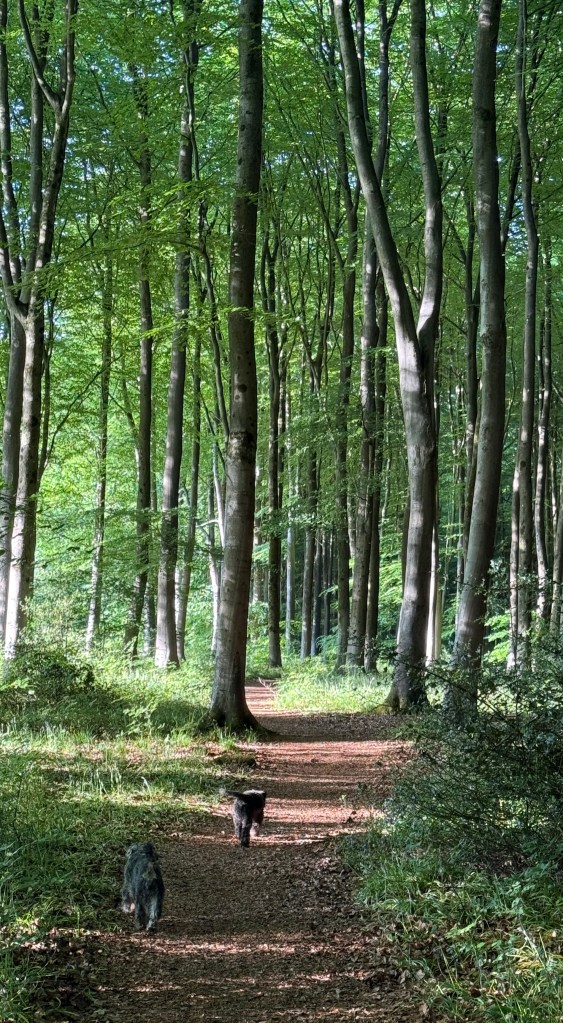
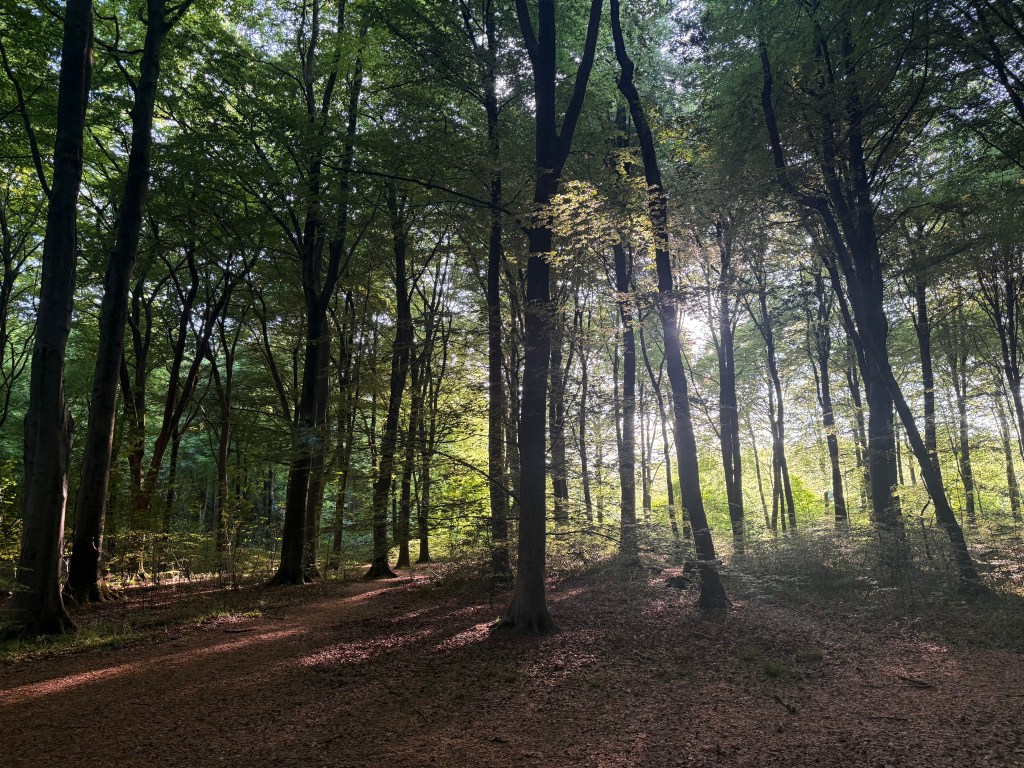
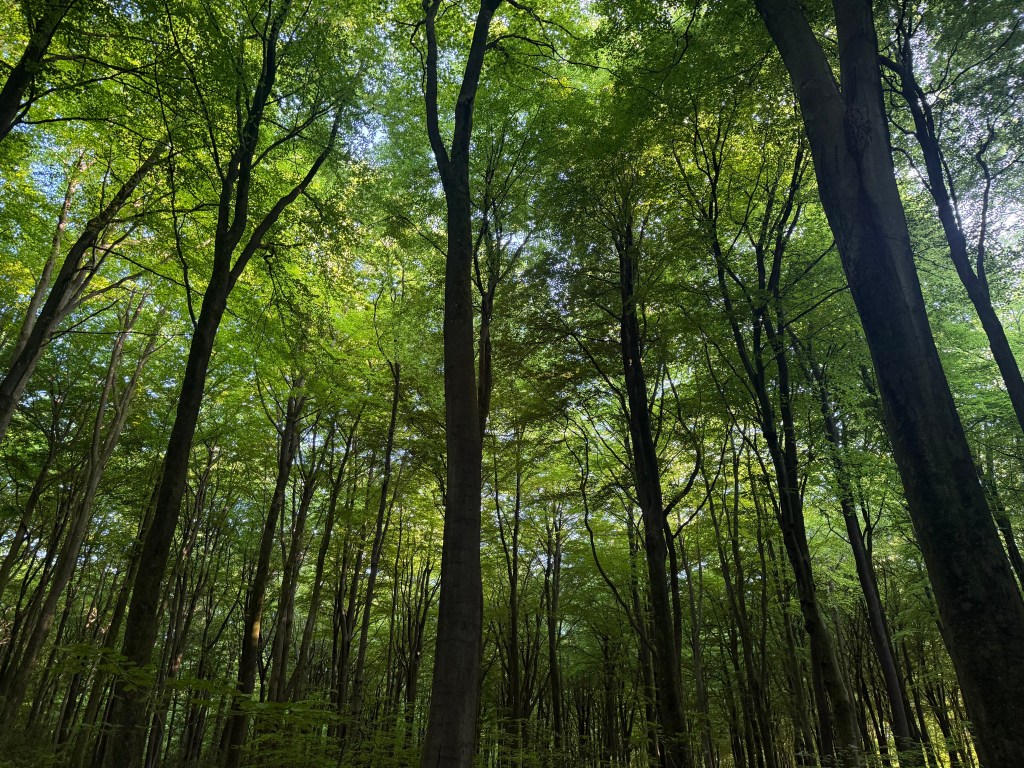
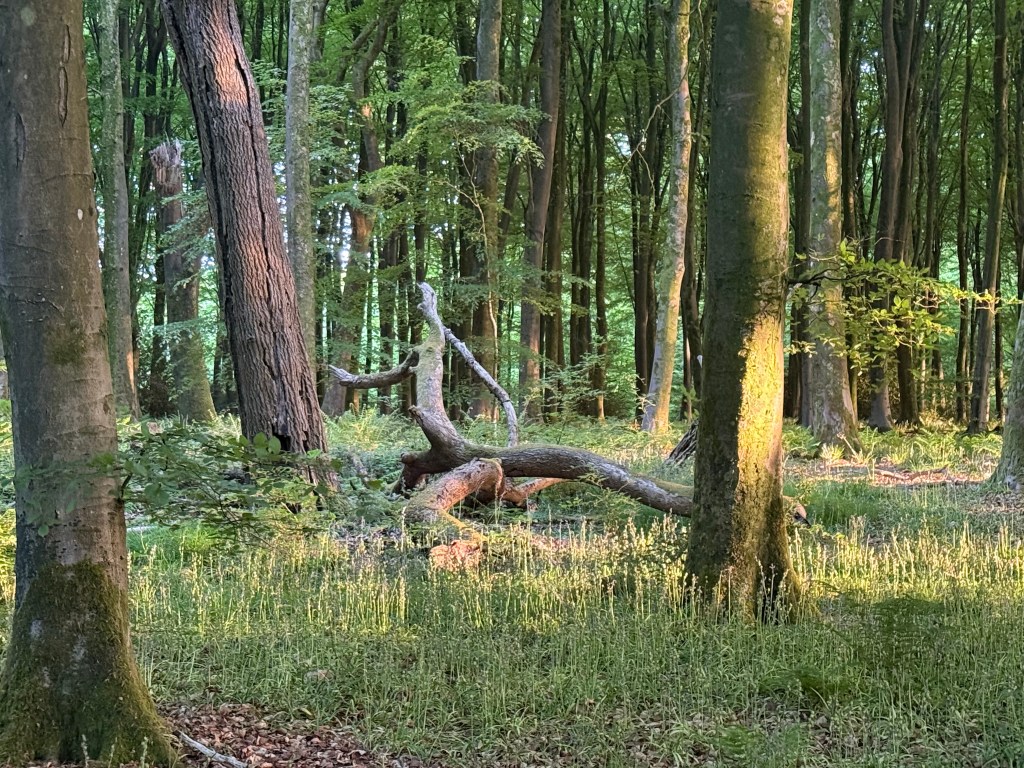
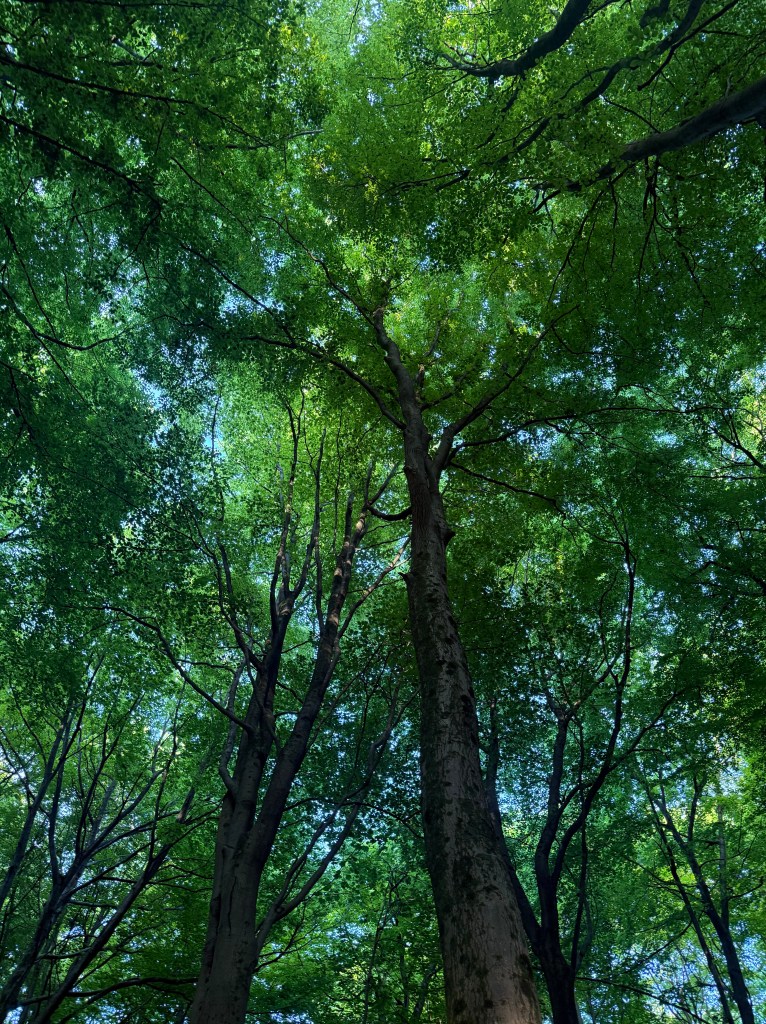
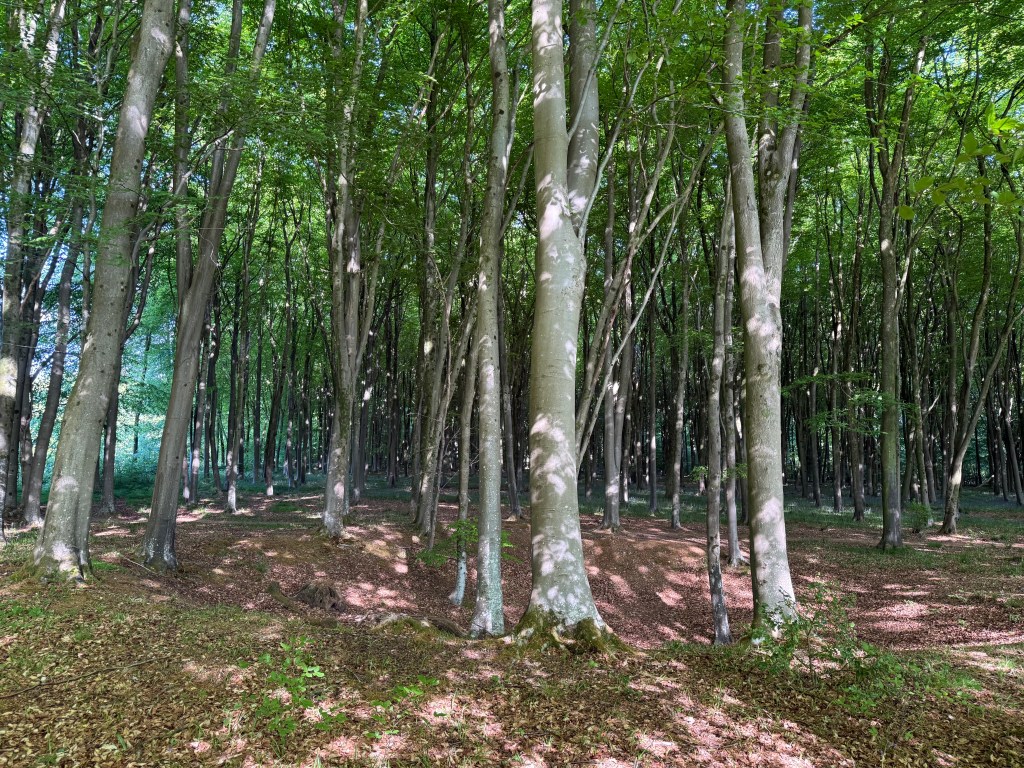
I’ve been spending a lot of time in woods just recently. Maybe it’s because they offer respite from the sunshine, perfect for dog walks. But they’re also havens of stillness, of light and shade, of music and form. But, they also make me feel uneasy.
We talked about consumption of content during this week’s session. I admitted that the first thing I do in the morning is to pick up my phone. I use it as an alarm clock. It’s reliable unlike other alternatives I have tried. Also, I don’t leave my phone downstairs ever since I was told by a firefighter that it would be my only means of contacting the emergency services if a fire broke out and damaged the landline. That was when we lived in London and a mobile signal was something taken for granted. In deepest, darkest Hampshire it’s a luxury and dependent on WiFi, so we’d be completely stuffed if a fire takes out the power and the router goes down. So, really it’s born out of habit, and the knowledge that our means of escape would be to hop out of the spare bedroom window onto the flat roof and down onto the ground, hoping to get at least one bar if we stand 10 paces east of the base of the oak tree. Not that I’ve given it much thought…
I love a reel. I try not to spend too much time watching them. The last one I watched which interested me was a clip from Shall We Dance?
Maybe that’s why I make art. The process of art-making is important but it wouldn’t be enough in itself – it needs to see the light of day, to be seen, to be witnessed. To be witnessed by me as an act of self-reflection and by others, even if it is limited to those who are close to me.
Is on a bend on a narrow country road full of potholes, and sharp flints which are paddled onto it by tractors from nearby fields.
I’ve lost count of the number of times I’ve come home to find a car parked lopsidedly outside the house and strangers drinking tea in our kitchen waiting for a breakdown vehicle. We’ve had a few road accidents as well, the last one being on 27 May 2020. A motorcyclist was swiped off his bike by a trailer which had swerved onto his side of the road whilst navigating the bend. The Hampshire Air Ambulance landed in the field next to our house.
The driver of the vehicle towing the trailer carried on, but later saw the error of his ways and went to a police station. He was prosecuted. Specialist police officers came to the scene to reconstruct who did what, at what speed etc, and to take photographic evidence. Four years later, I was contacted by a lawyer acting for the motorcyclist who was now suing the driver as he had sustained life changing injuries. Would I be prepared to provide them with a witness statement as to what I saw and heard on the day in question?
Well, I have difficulty remembering what I did last week, let alone what I heard and saw in the fleeting moment they both passed the house four years before. Of course, I said yes, and yes, I understood that I might be required to attend court and give evidence. What I found really difficult was trying to remember what I actually saw and heard myself as opposed to what extra information and thoughts I had accumulated from discussing it with my husband and daughter after the event.
In her book The Memory Illusion, Julia Shaw refers to this as source confusion i.e. misattributing information to our own memory or experience. She specifically talks about it in conjunction with confabulation (in which the event being remembered never actually took place) in the context of early childhood memories. It’s led to me querying my husband’s firm recollection of sitting on his grandmother’s knee with his Dinky car when he was three. Is he sure that he hasn’t seen a photo or been told a story as he was growing up? No, he’s certain it’s a memory. Apparently, the average age for a child to form a memory capable of being recalled in adulthood is 3.5 years, although the range can be anywhere between 2 and 5 years. I am struggling to find my first memory.
I’ve often thought that I would be a really bad witness. I don’t understand how that can be, because as artists, aren’t we supposed to be highly observant? Mind you I was never very good at the observation round in The Krypton Factor. Or do we just observe different things? I’m generally good at spotting when something is different, which probably means that my memory of how something was before is perhaps subconscious and is only triggered when I sense a difference. Who knows? All I know is that I can remember my 16 digit credit card number with no problem at all, which was handy when I went out on Saturday morning and accidentally left both of my bank cards at home, and had to set up Apple Pay manually so that I could put some petrol in the car to get home again.
Anyway, I have recently received an email from the lawyer informing me that the case has settled and that I will no longer be needed at trial. Result!













 Kate McCalmont-Woods
