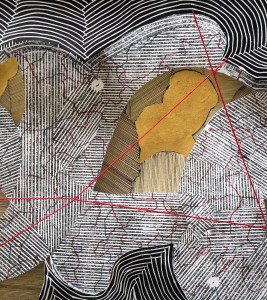
I often become distracted; I’ll put a pan of water on to boil and then get distracted by something and go wandering off, only remembering that I was meant to be boiling some eggs when the pan has boiled dry.
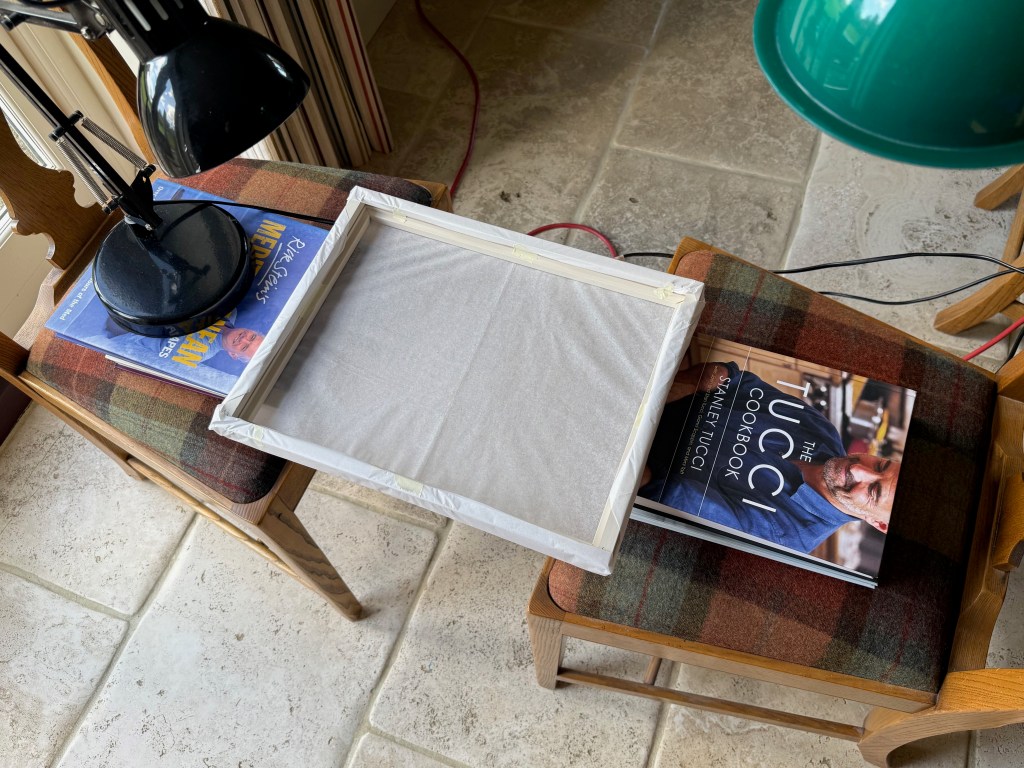
I was cutting some lino yesterday and I collected the bits of lino on a piece of tissue paper. As I was lifting it up to dispose of them I thought, ‘oh that looks interesting’. And off I went. I wrapped some tissue paper around an old photo frame. I couldn’t be botherered to go off and find clamps etc so I balanced the frame on some books on two chairs. I then set up a couple of anglepoise lamps. Lying flat on my back on the kitchen floor allowed me to photograph the tissue paper from underneath. I experimented with the lino bits as well as some packaging which I had saved, just in case it might come in useful.
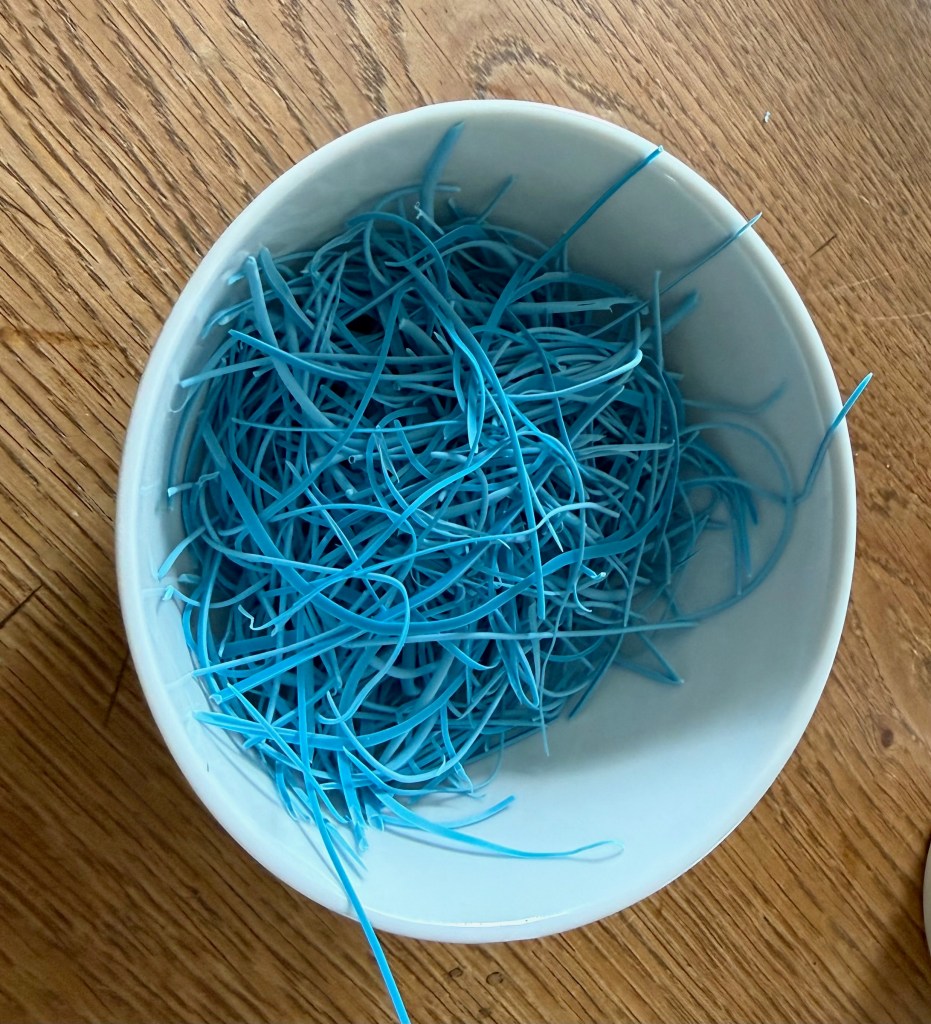
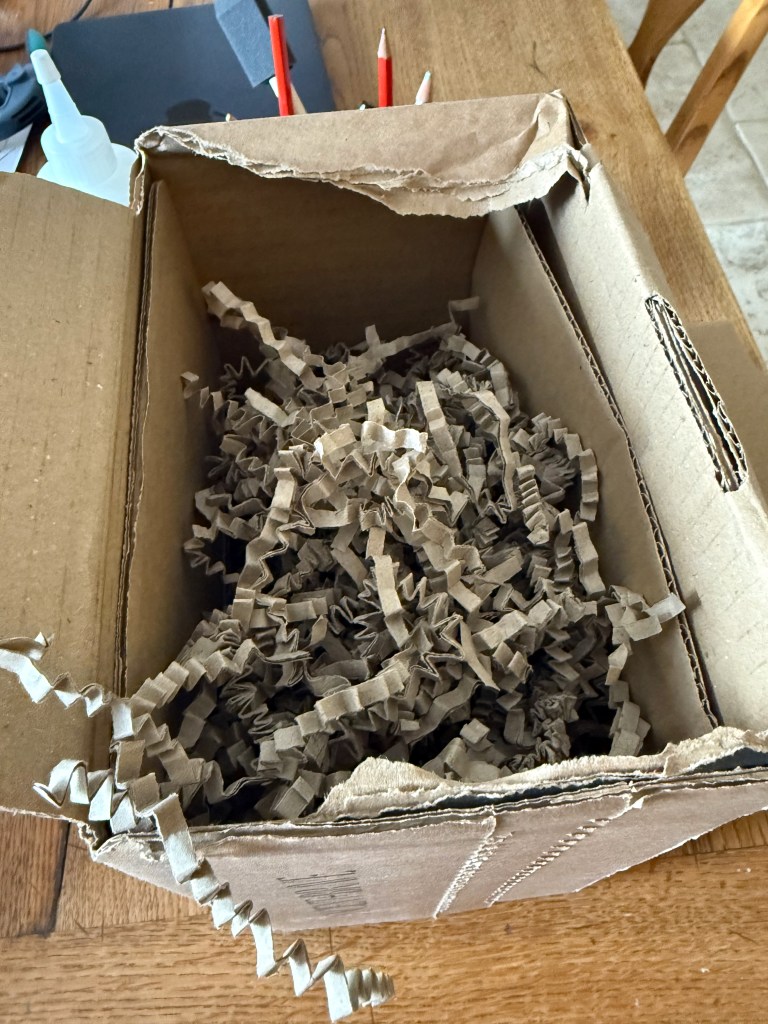
To save me from getting up and down, I enlisted some help with the sprinkling. These are the results:
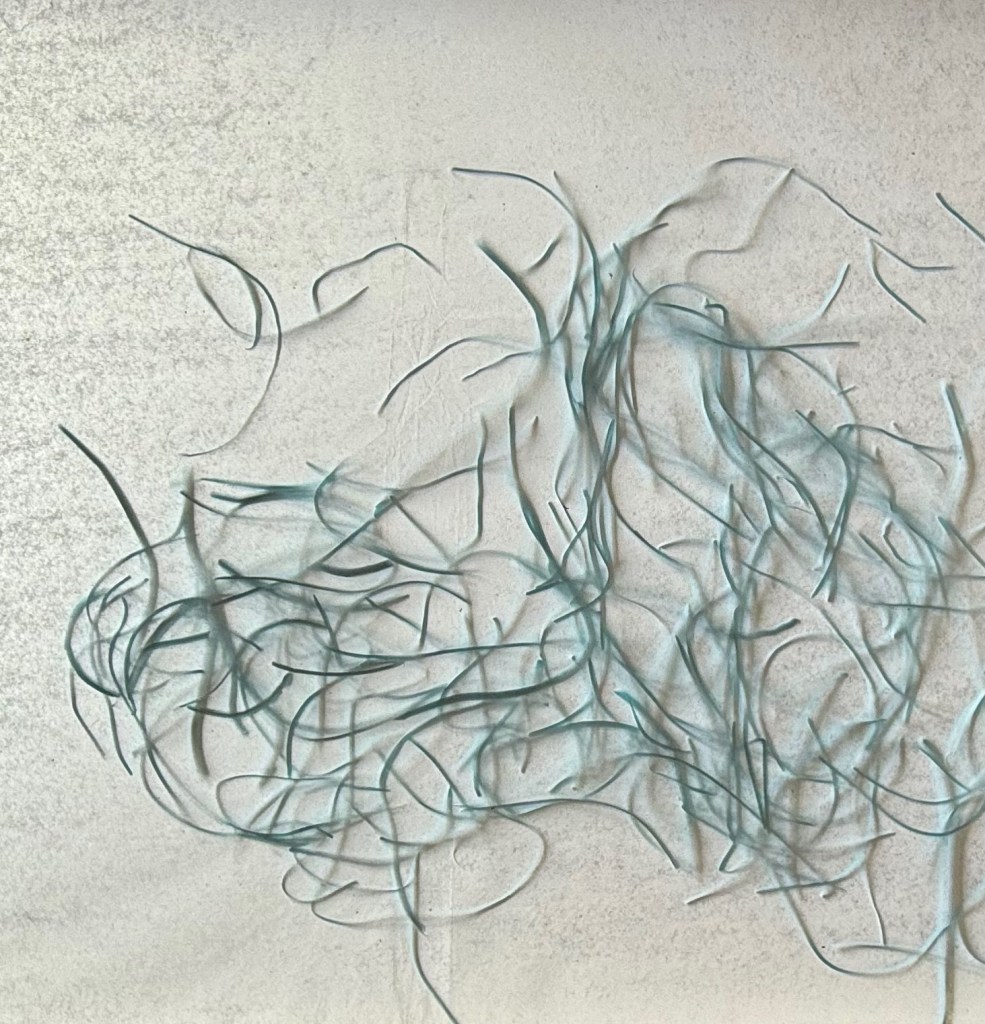
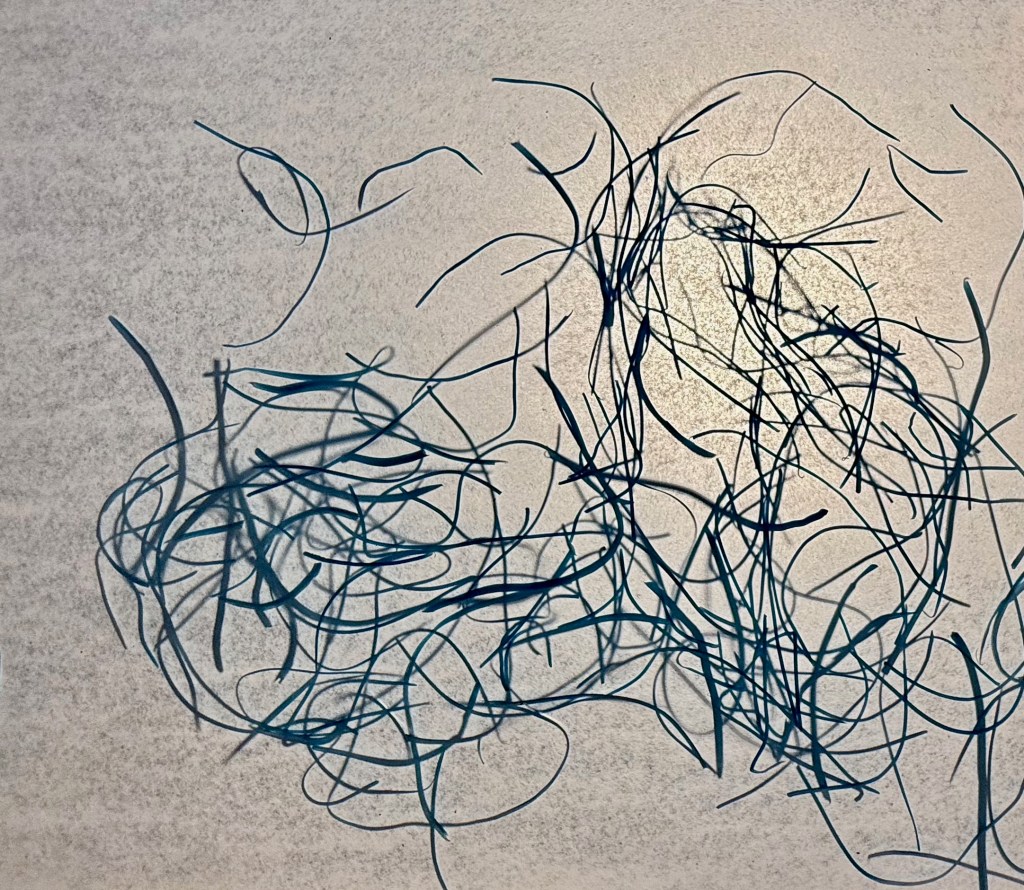
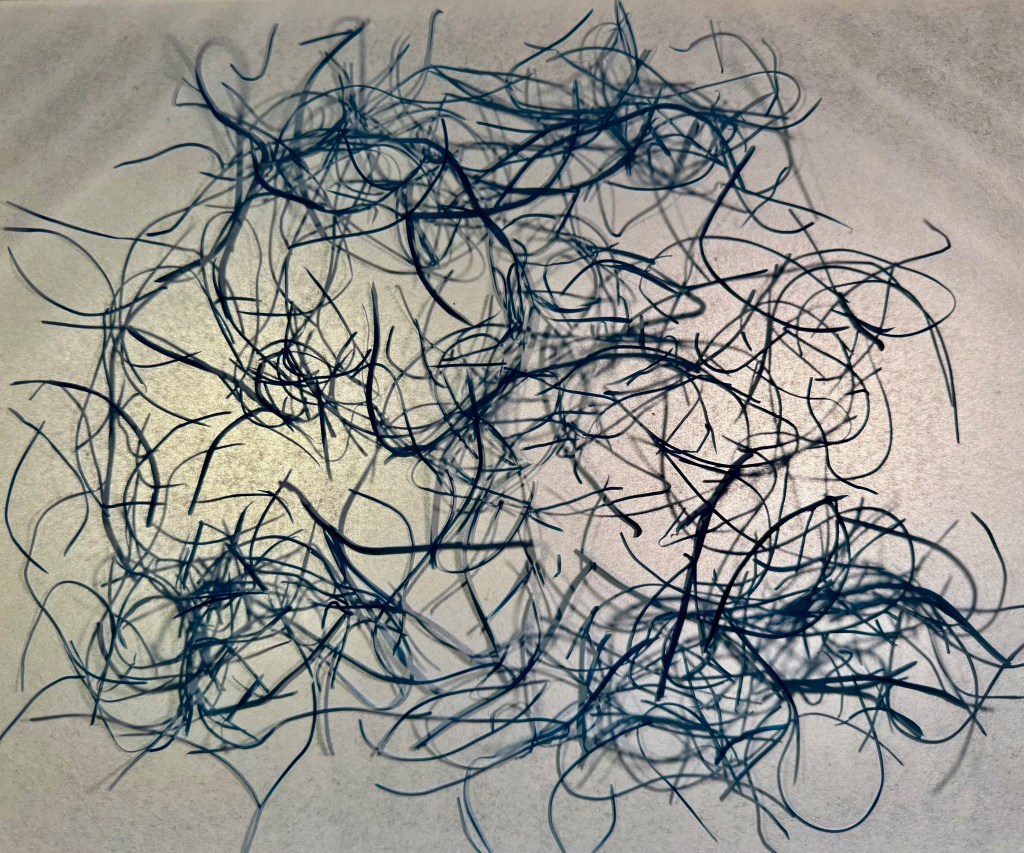
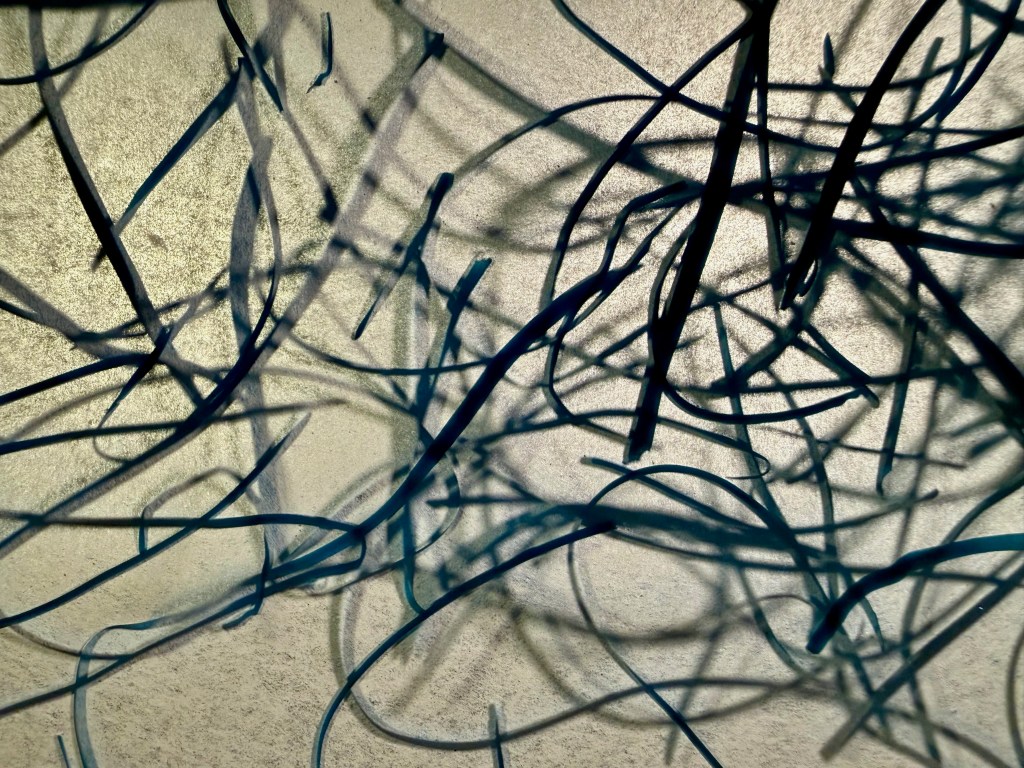
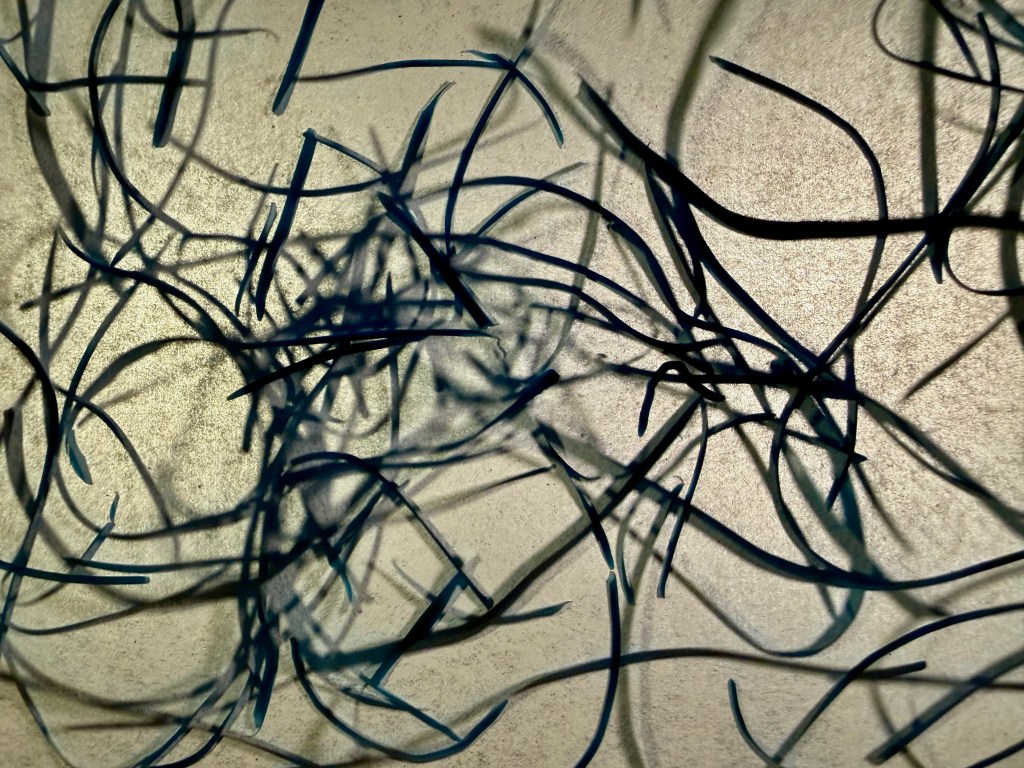
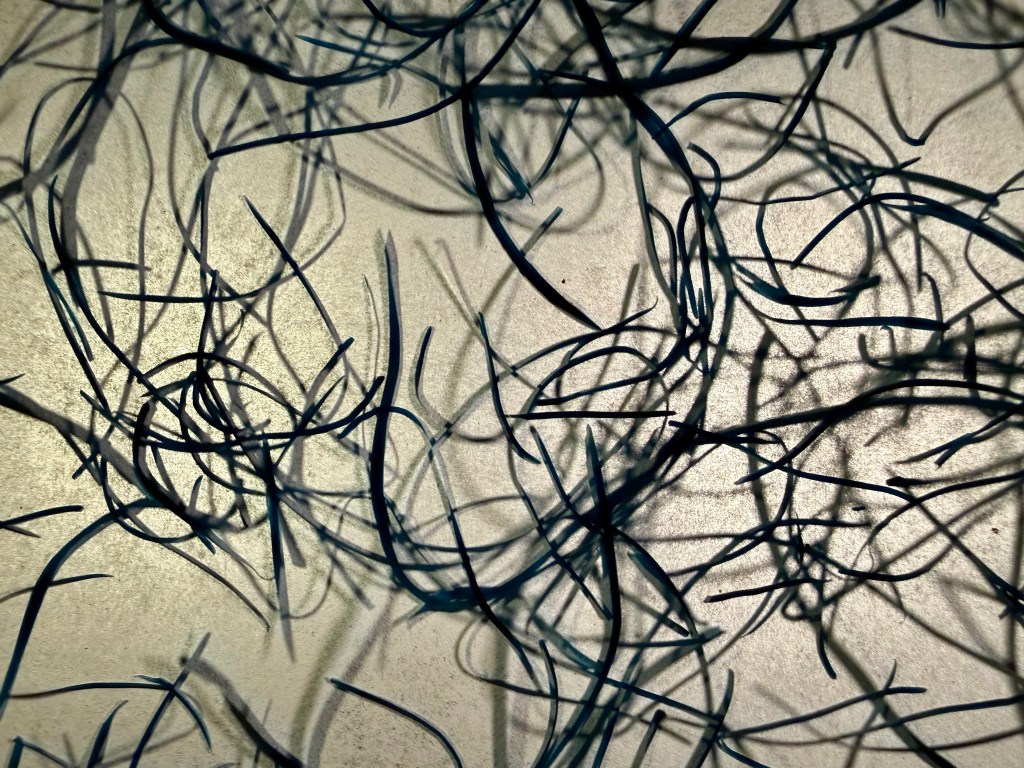
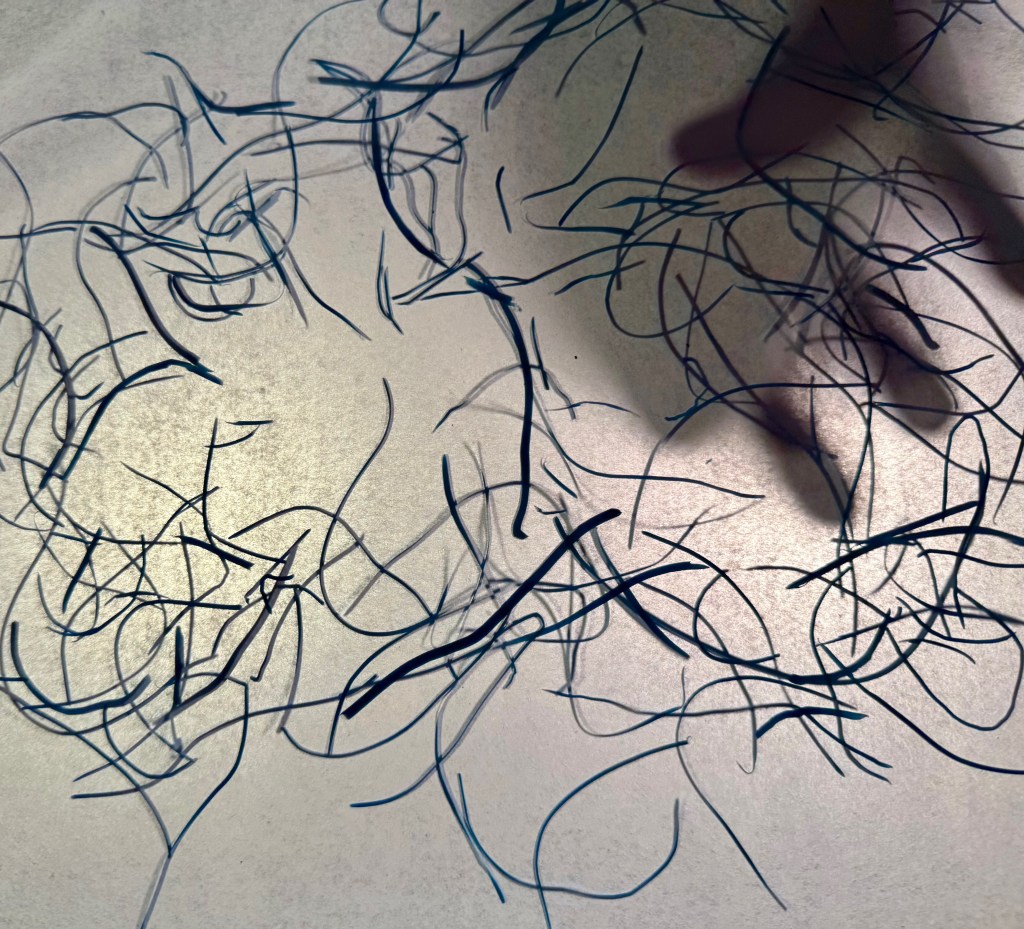
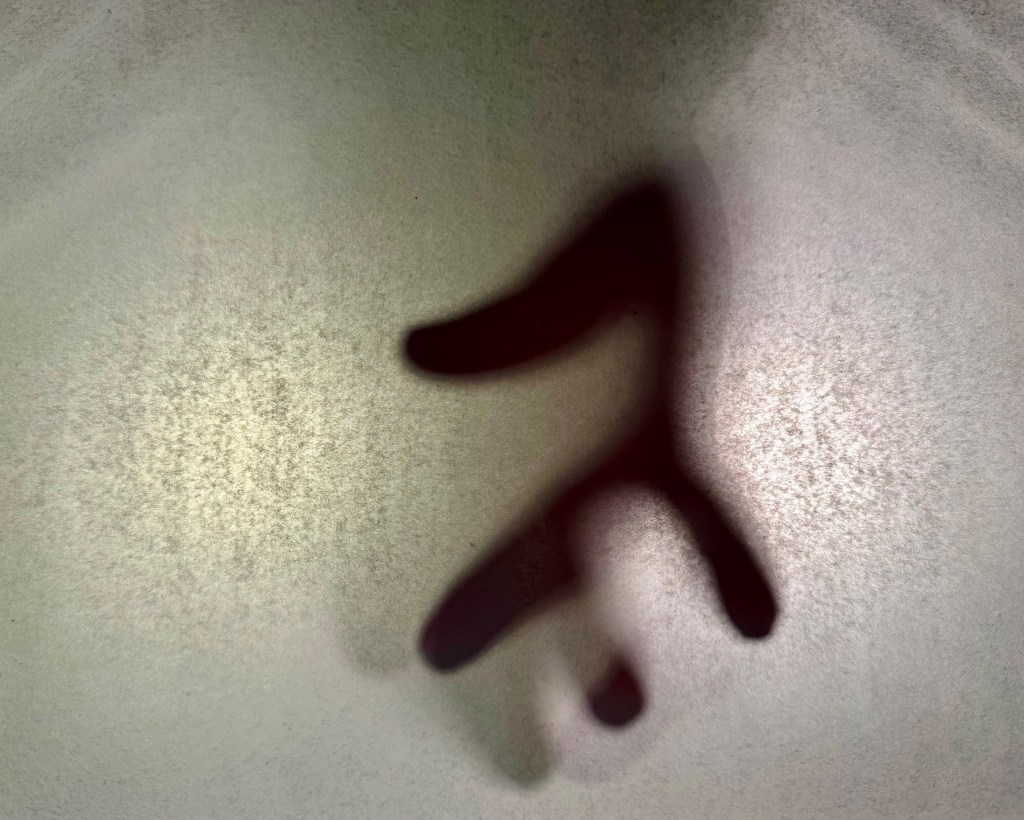
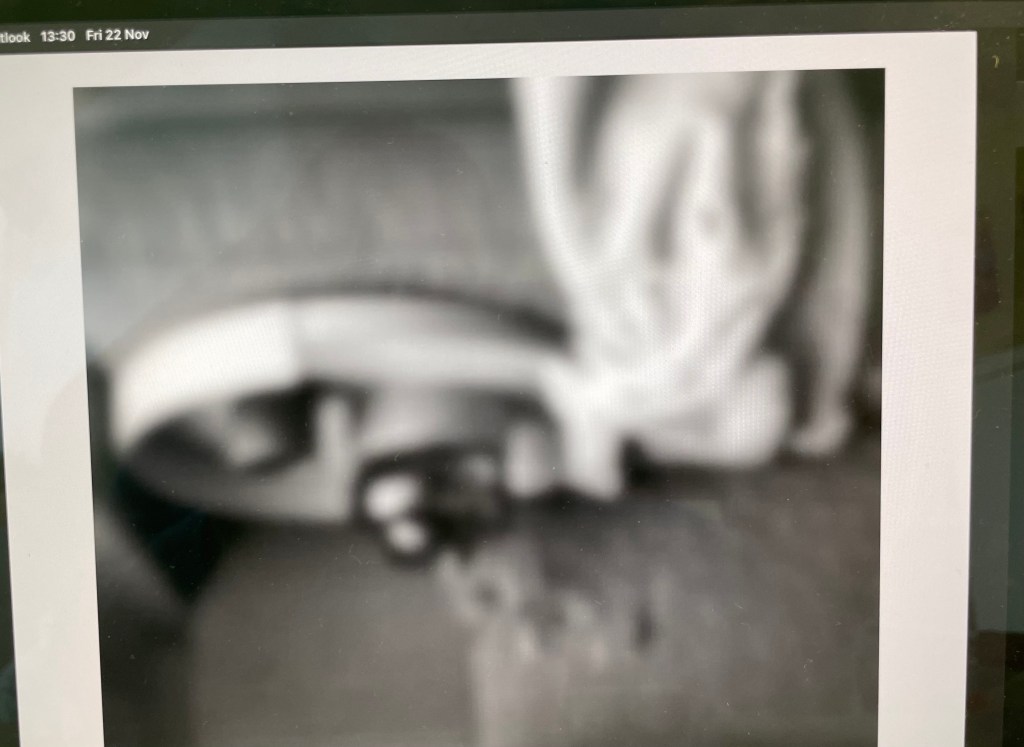
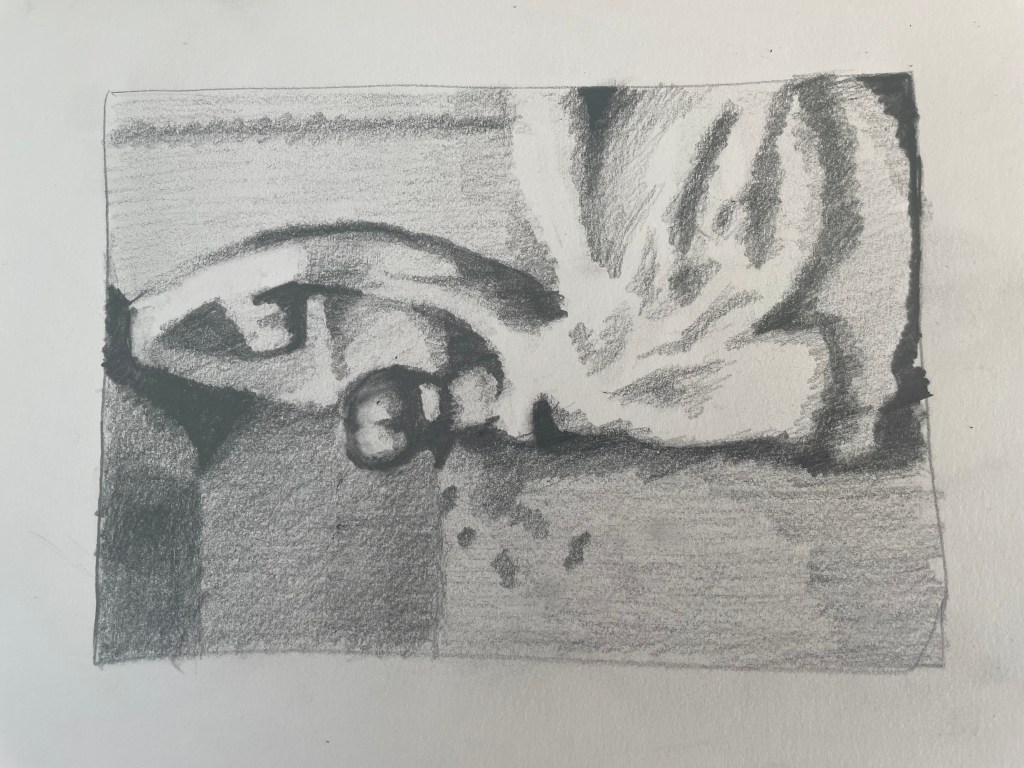
I really like the effect of the lino bits – they are dynamic and have the sense of someone having just made some quick gestural marks. I like the added depth provided by the bits that are further away from the surface of the tissue paper.
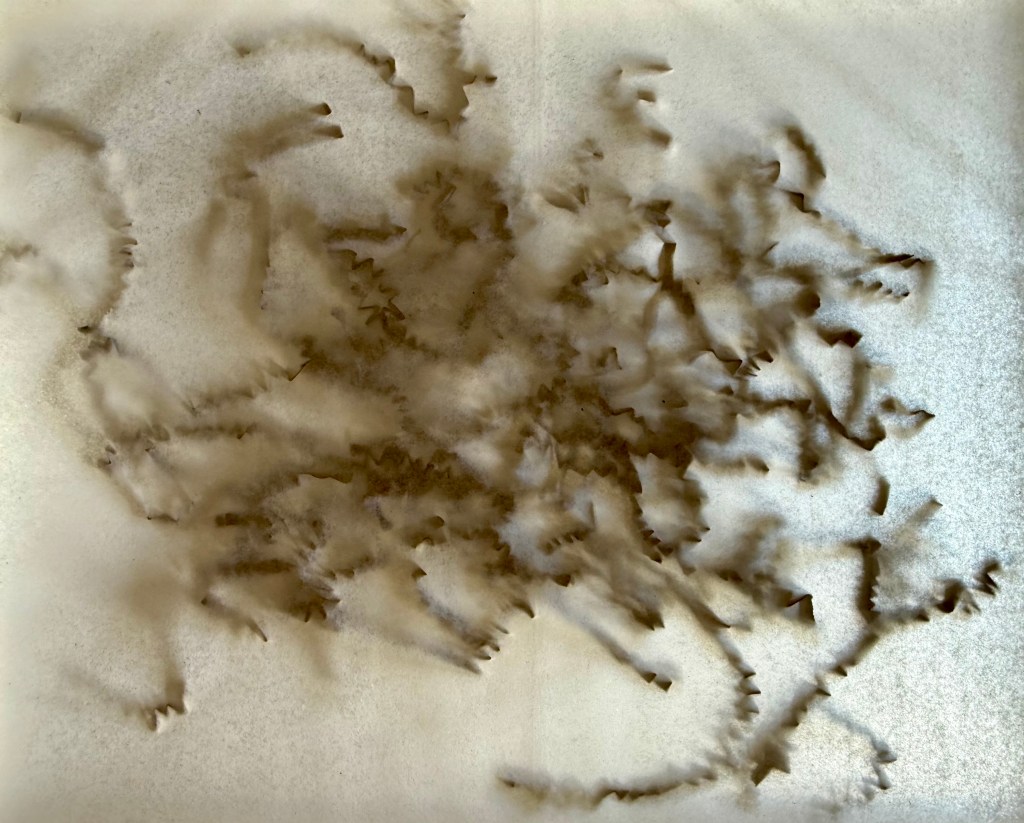
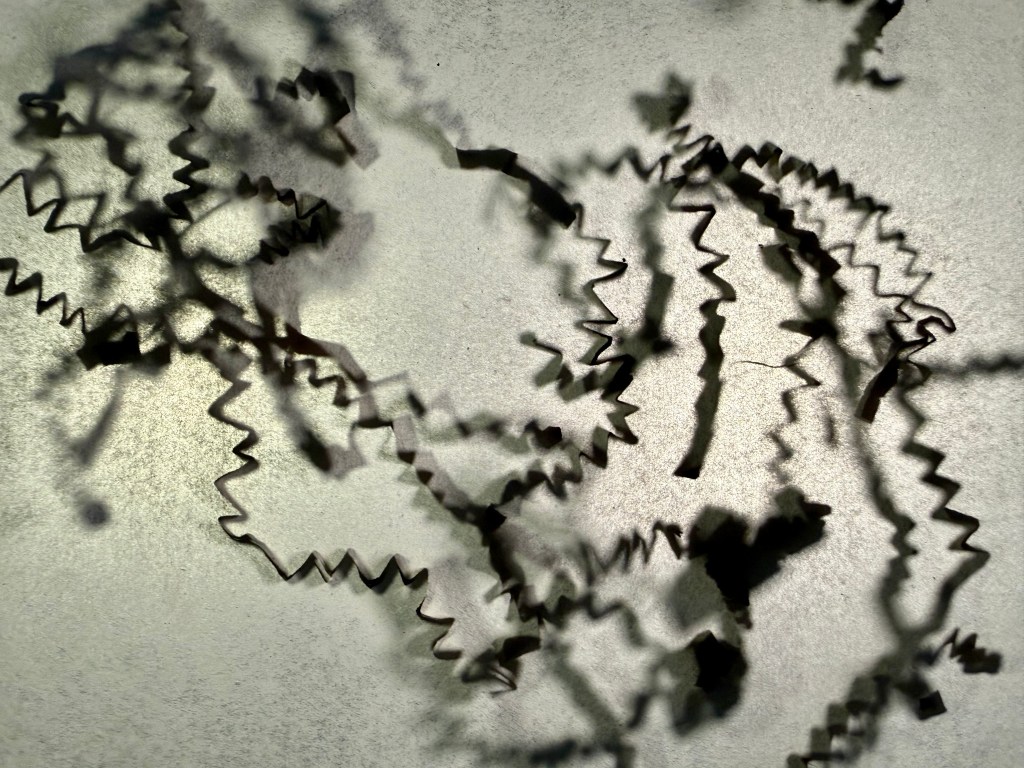
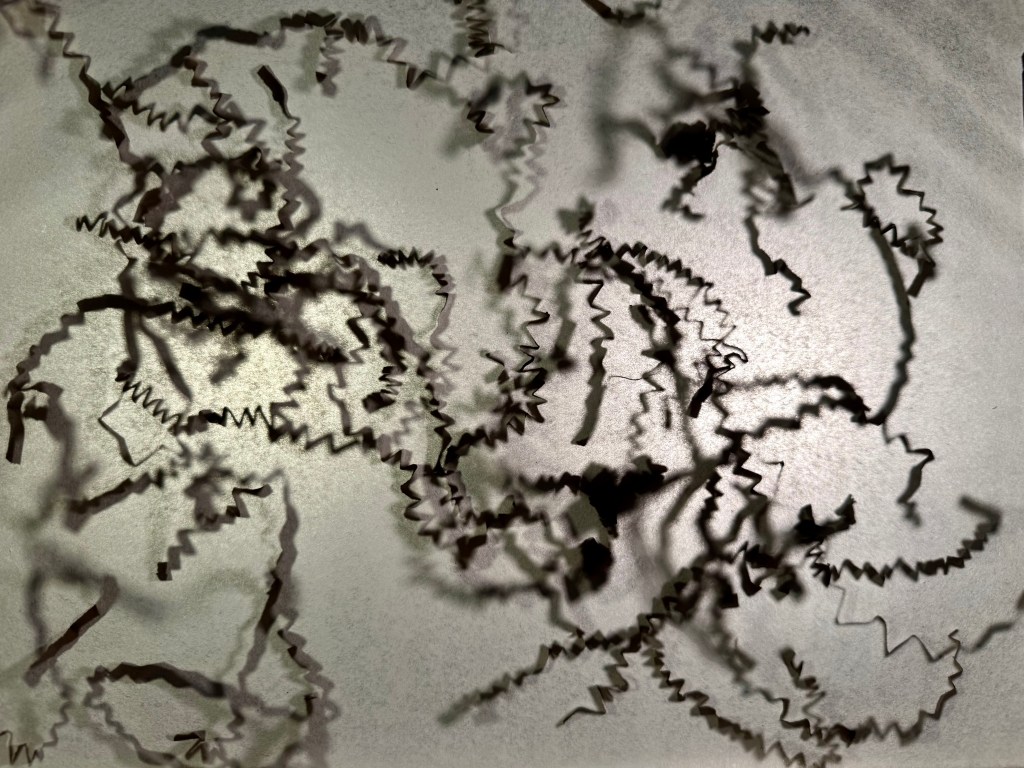
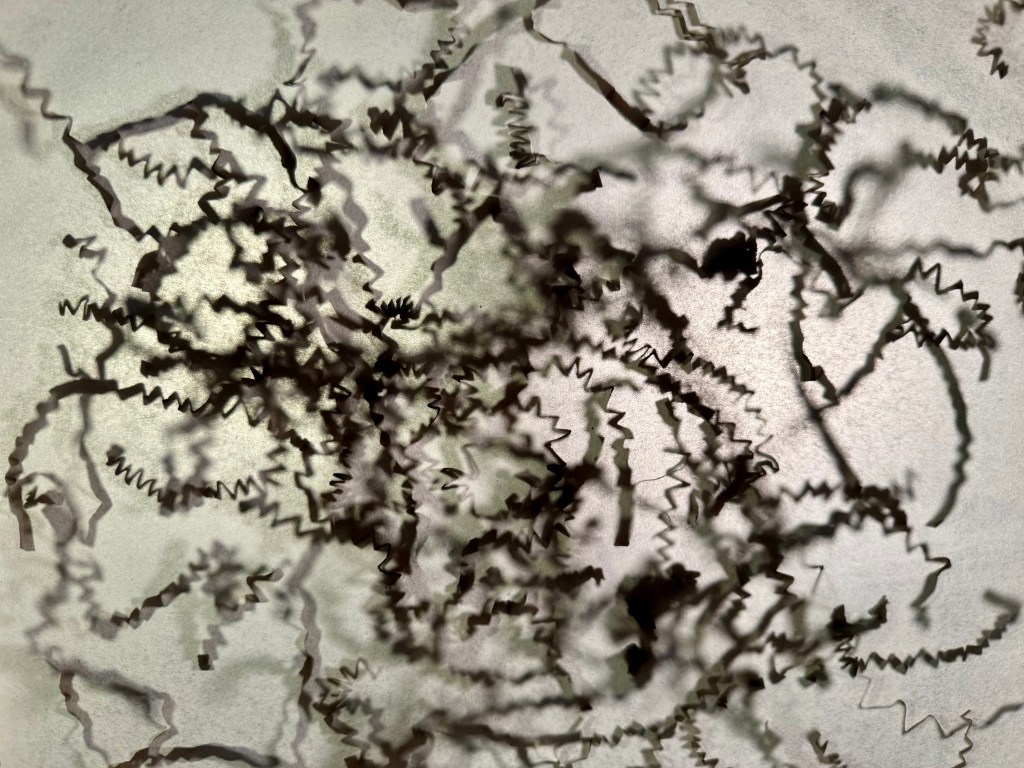
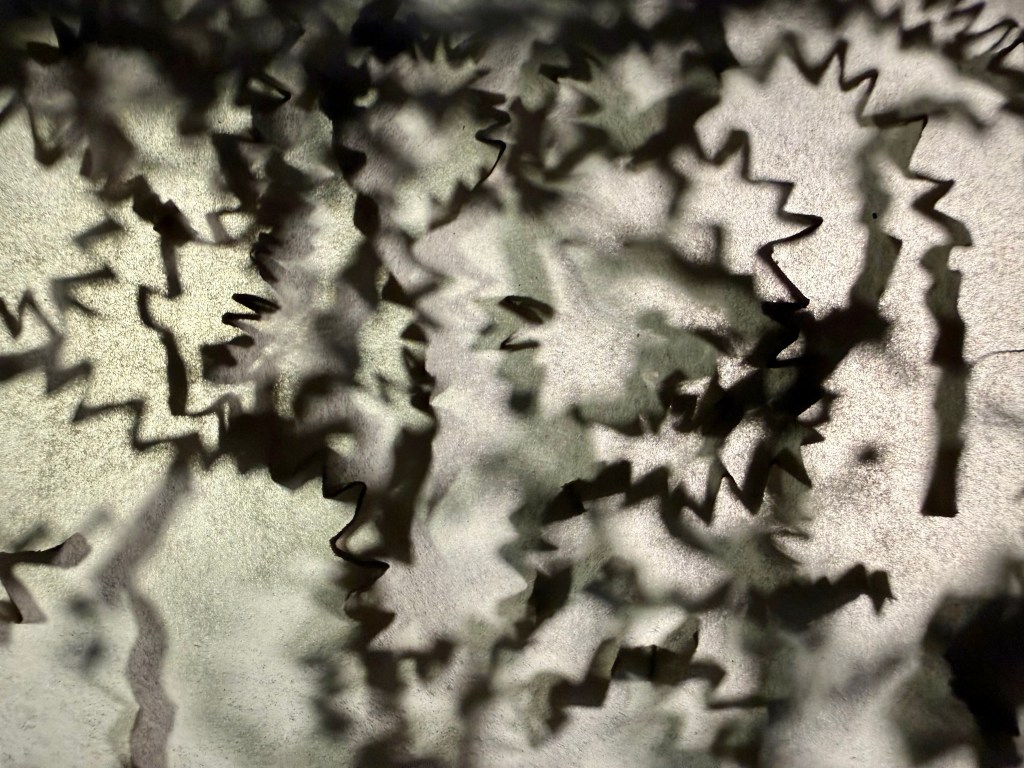
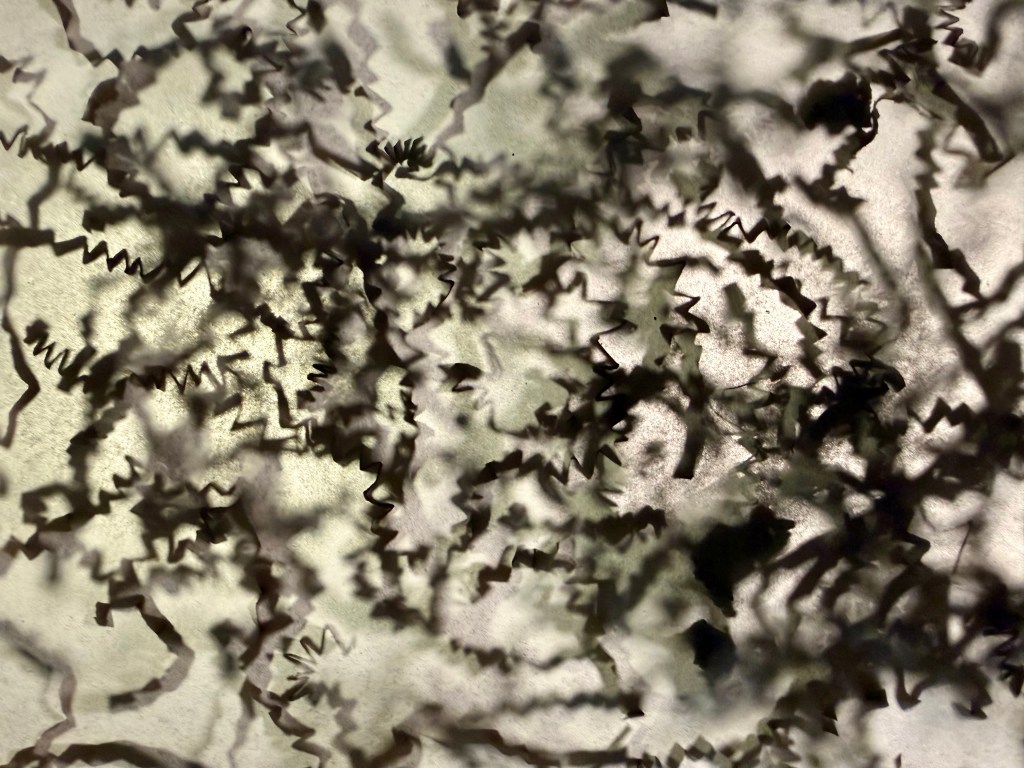
I really like the effect in the photos. The first one in both sets is without any backlight and it almost looks like something trying to break through the tissue paper – like something crawling under the skin. It would have been good to try with just a few bits, but by the time I had the thought, I had put everything away, but something for the future.
I also made a video of the ‘sprinkling’. Otto, the dog, was in the kitchen at the time and decided to have a bark and come close to my head grunting like a pig. I was in the process of cleaning up the audio – I was even going to try out Garage Band – but then decided not to – I liked it how it is. I used some audio effects in Capcut – Deep 2, Echo and Super Reverb. I wanted to make the audio unexpected – the sprinkling of something light has been distorted so that it sounds unusually heavy and the background noises are unexpected when heard with the visual which I think makes it more interesting and unexpected.