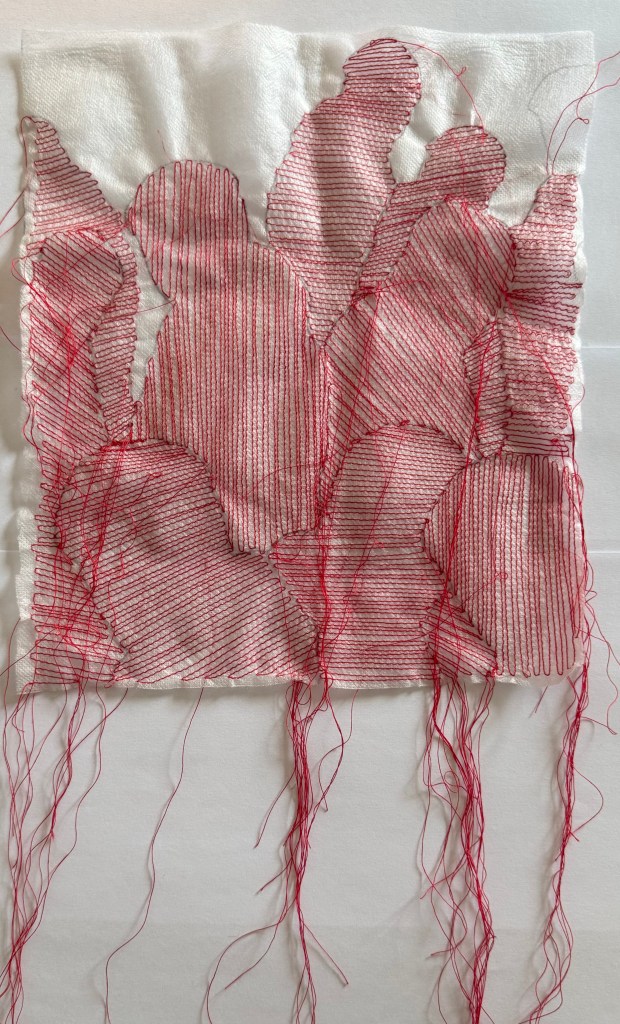
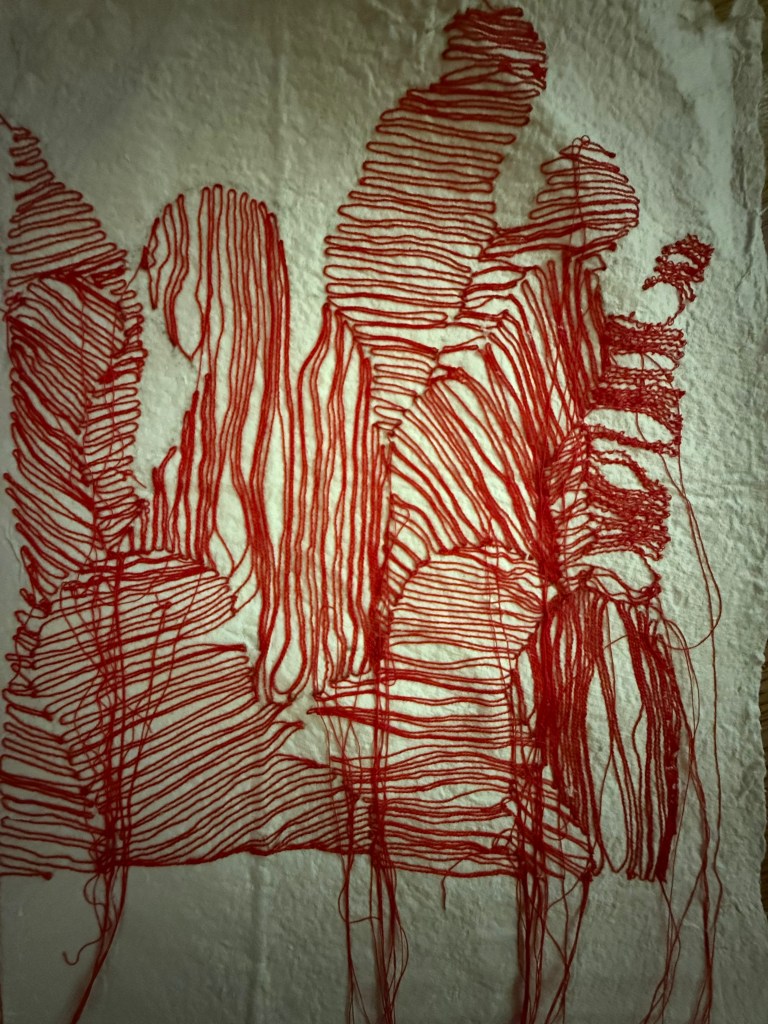
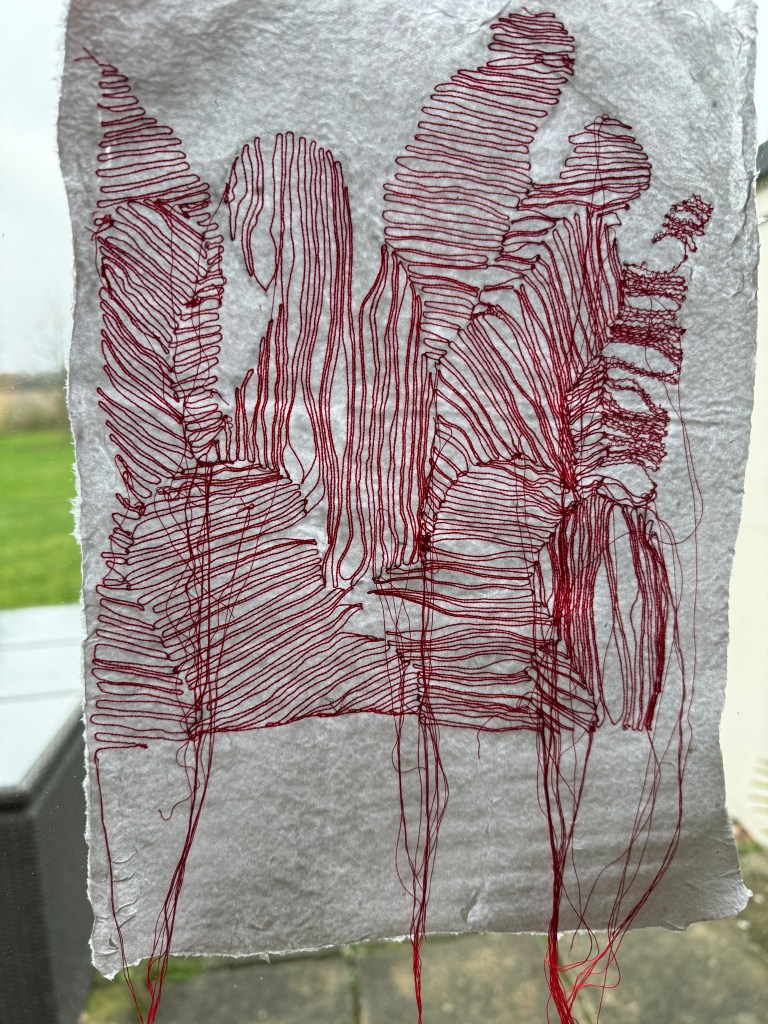
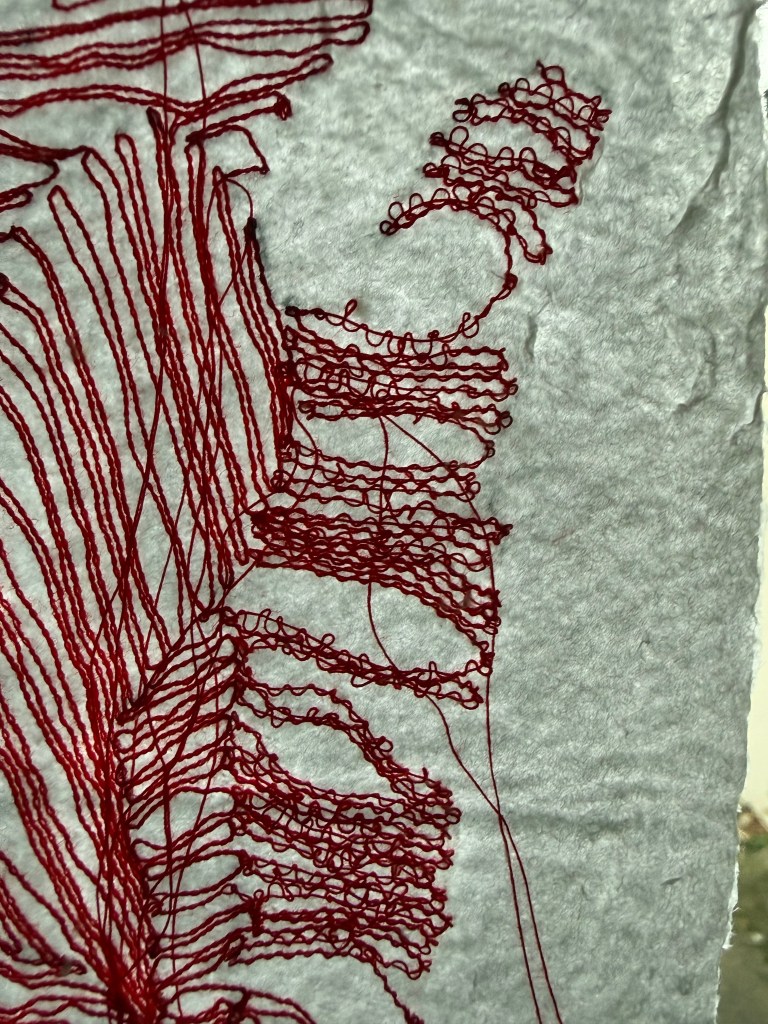
I’m conscious that each time I post I’m creating more work for myself in terms of making my book. But there’s so much to think about, to process and to make at the moment.
We started this week’s session by reflecting on the response we had to the prompts last week. It’s quite interesting in that I didn’t, and still don’t, feel concerned about my identity. Maybe it’s because it can’t be defined, because it exists in and is created by my work. It doesn’t seem important to me – I live, I make.
We then looked at adjusting or disrupting our practice, considering whether there is anything we can do which might create new possibilities. We looked at placing ourselves on a line between two points and considering what would happen if we shifted our position between those points.
Material______________________________ Conceptual
Iterative Making ______________________________ Research-based
Intuitive ______________________________ Structured
Continual ______________________________ Periodic
Process ______________________________ Outcome
At first glance I placed myself clearly to either end: material, iterative making, intuitive, periodic and process. But thinking about it more carefully, and discussing the concepts with other members of my group, I began to see that it is not as simple as that.
- I’m very much about materials, but then again I often have a concept in mind eg experimenting with combining specific processes
- I make iteratively, but often there is a period of time in which I consider the work, research how other artists have approached it etc
- I would say that I work intuitively but often that intuition is grounded in the structure of previous experience and knowledge
- I have periods of activity in physical making, but then I’m thinking about things all the time
- I think process v outcome is the only one in which I can say that I am possibly on the side of process although it could be said that outcomes are important in the sense that they feed back into the process of iterative making, and that outcome does not necessarily carry a sense of finality, in the same way as product does.
In a way, for me, they are more like recursive loops than linear continuums (or continua?). It was a helpful exercise as it highlighted to me that I’m neither one nor the other.
We then considered, what are the most important things to do that are not directly making art. In addition, to continuing to be part of a creative community, making space and time is important to me. In The End I talk about my concern that my time will be sucked up by everyday life. This last week has been busy and I’ve been making every day. The consequence is that tasks in everyday life have not been done and are now mounting up, and quite a few meals have been eaten separately. My art making has had a direct impact on home life and it’s not sustainable long term.
Having developed a way of working, I now need to put in place a time and place for working. By having a dedicated work space away from the house, I can try to develop a regular routine of making, physical or otherwise, in which the boundaries are clear and which minimises disruption to everyday life.
What immediately comes to mind is the Ad Reinhardt quote in After Everything Else:
‘one paints when there is nothing else to do. After everything is done, has been taken care of, one can take up the brush. After all the human social needs, pressures are accounted for. Only then can we be free to work.’