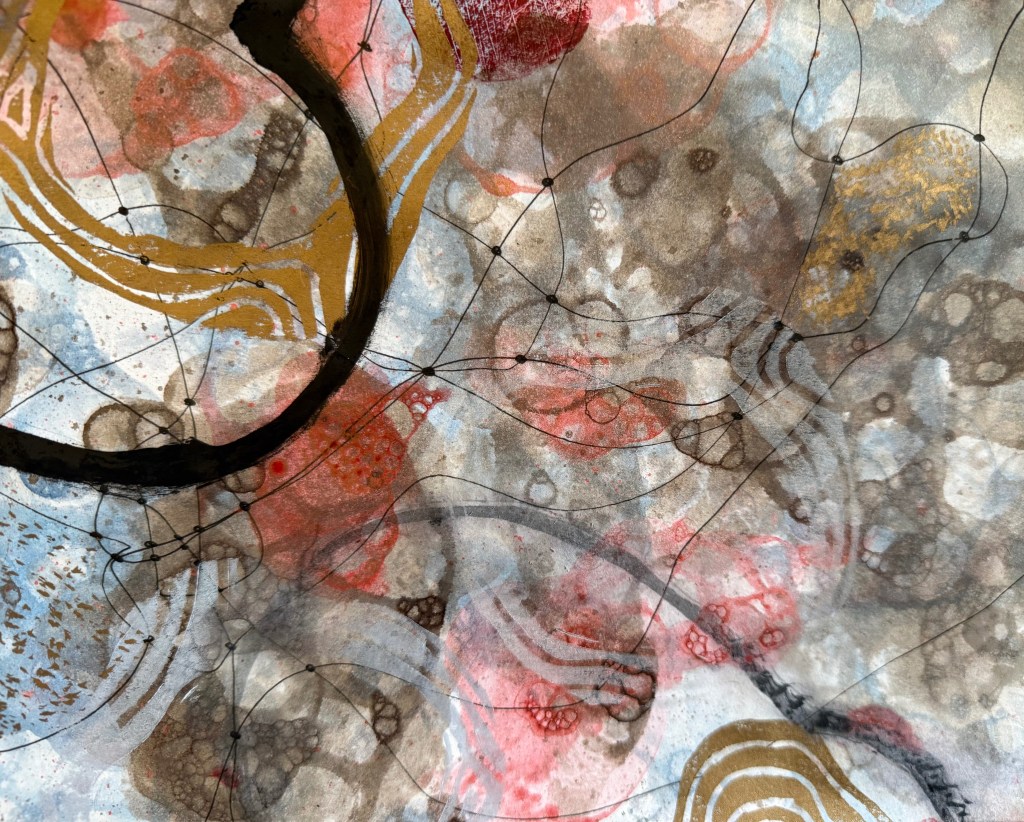
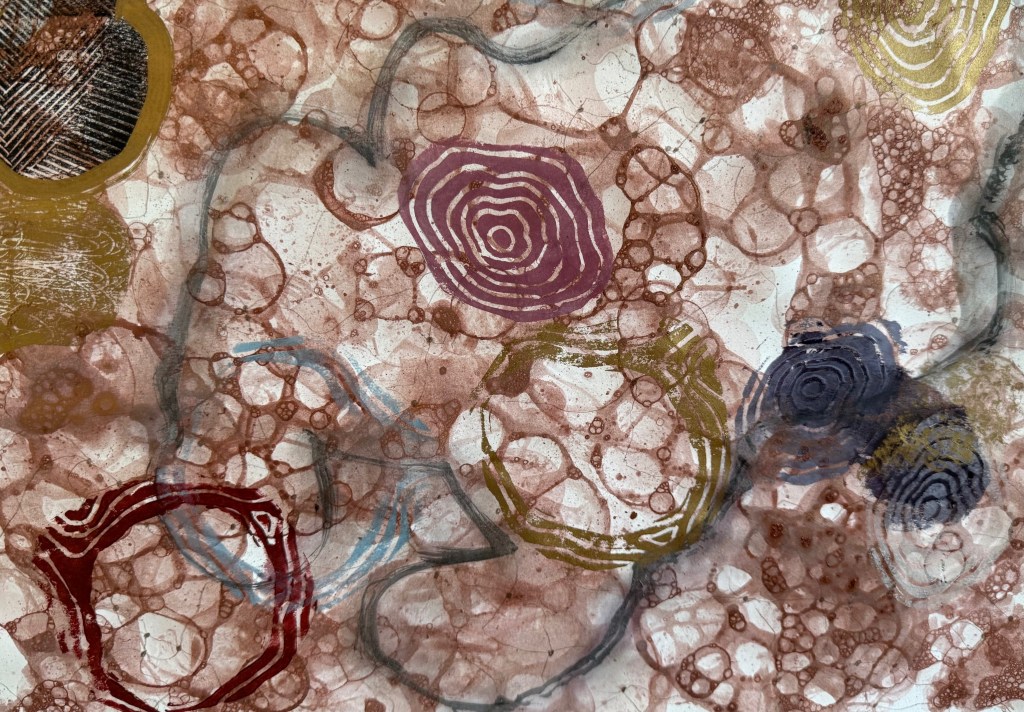
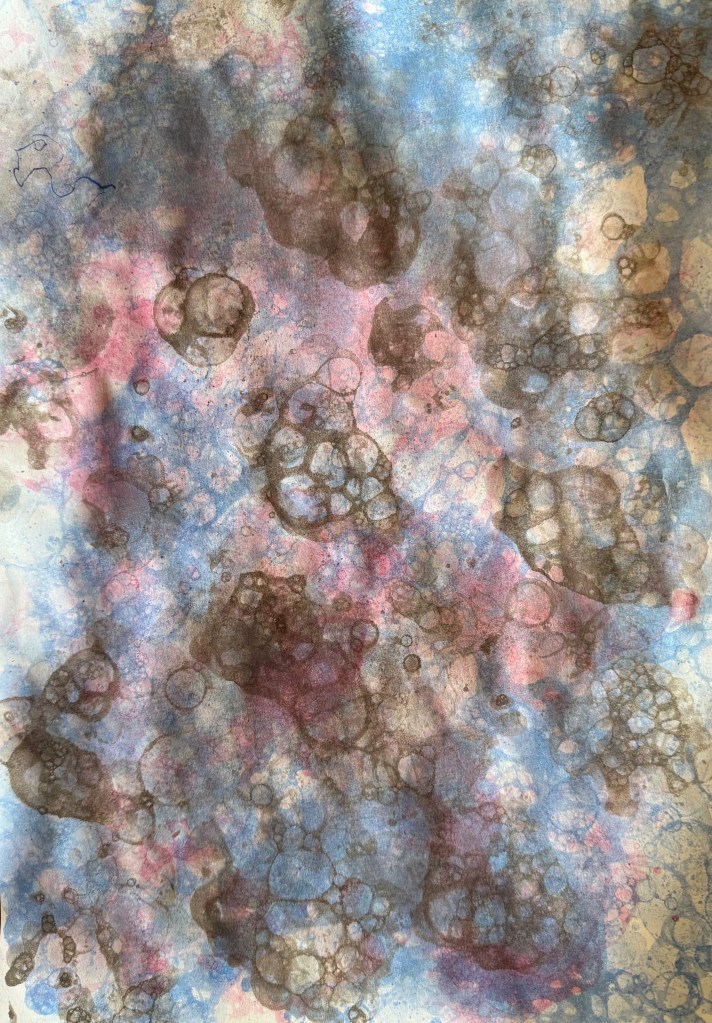
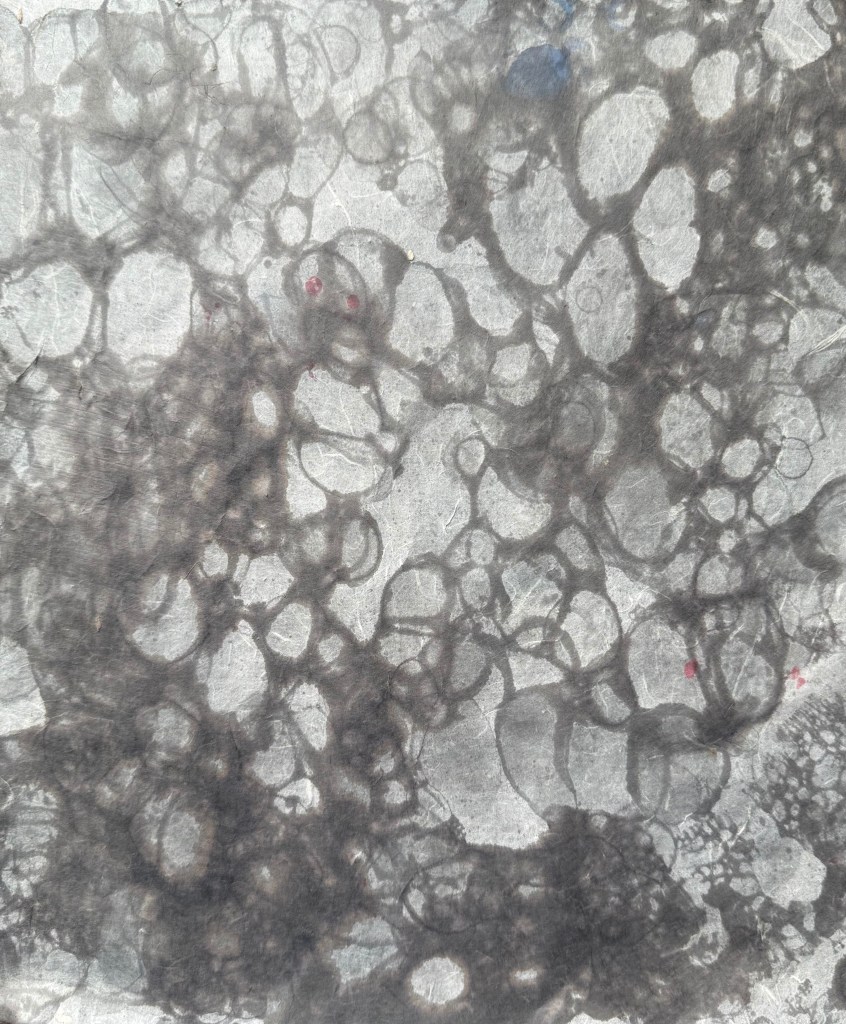
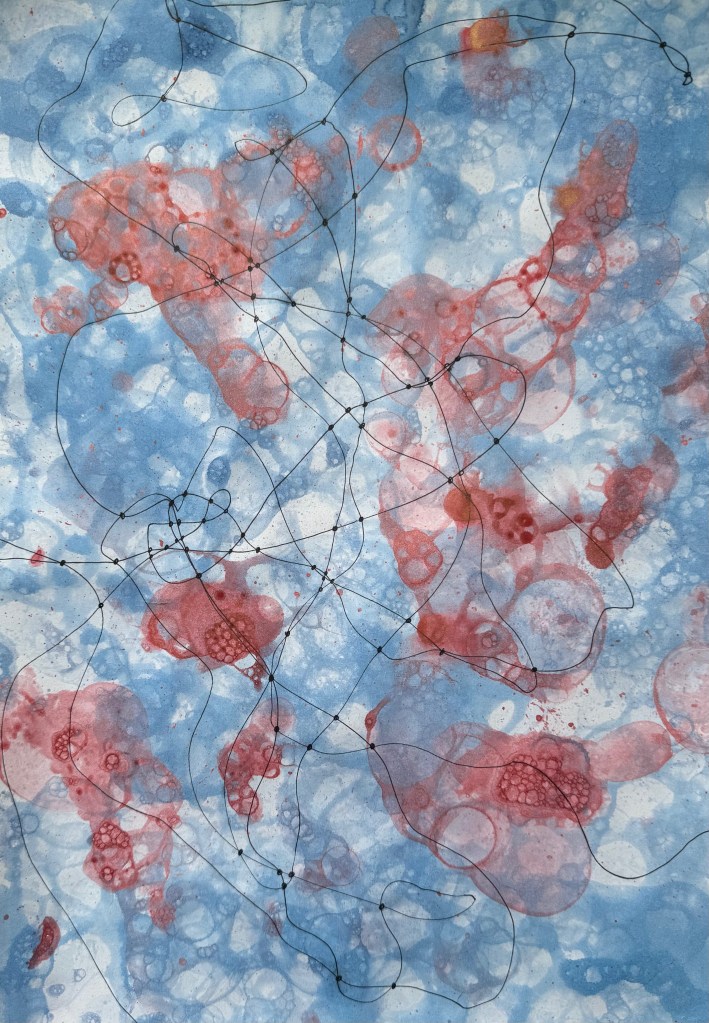
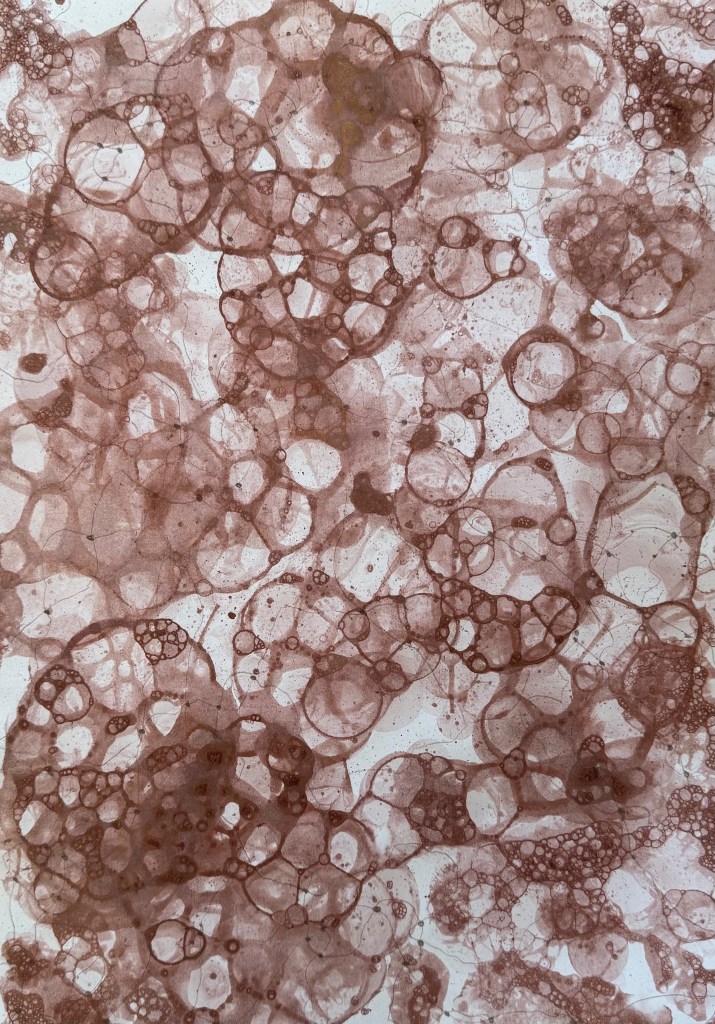
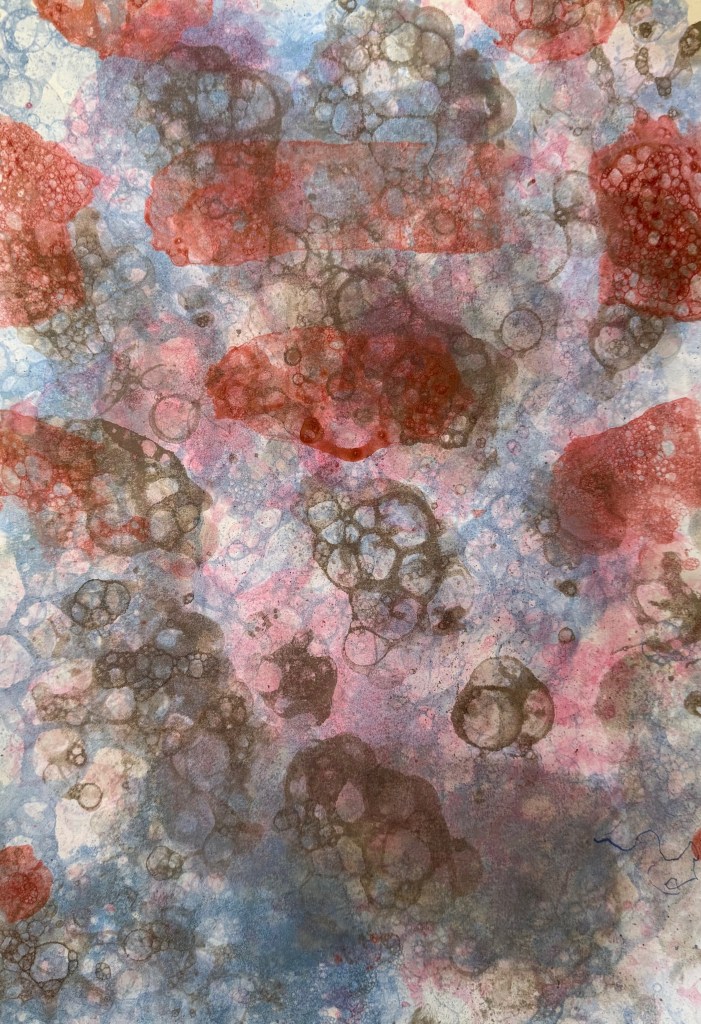
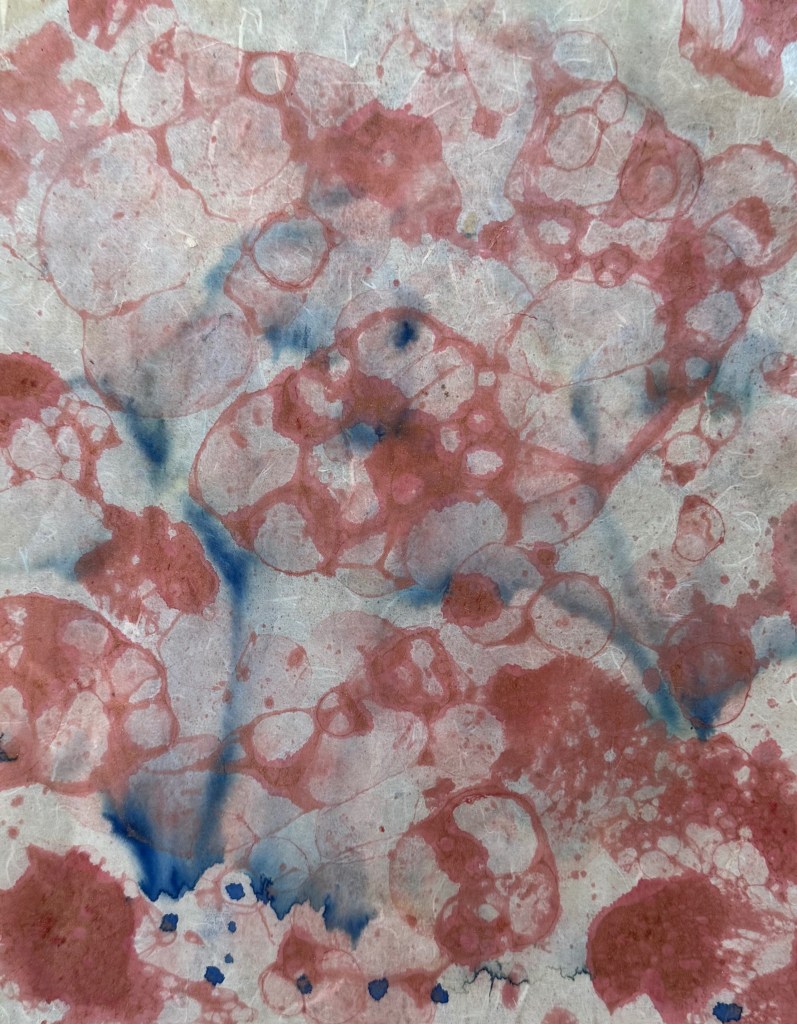
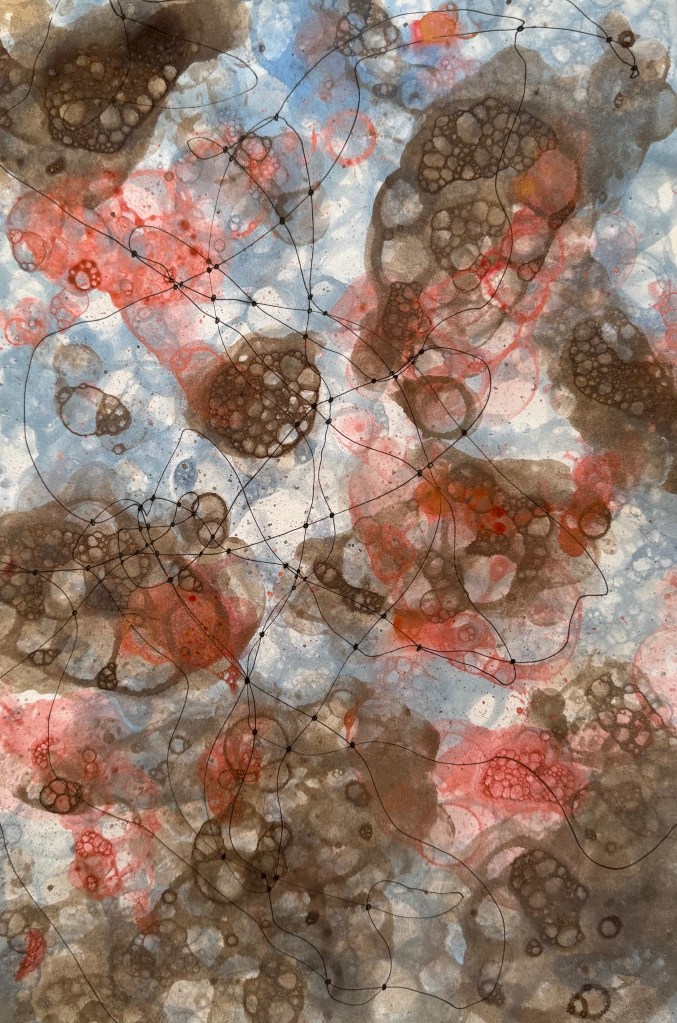
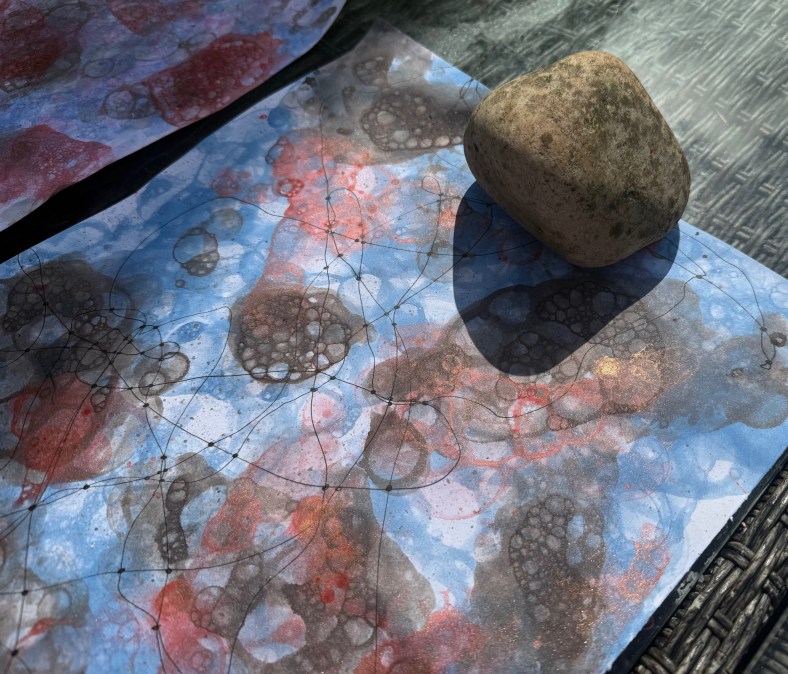
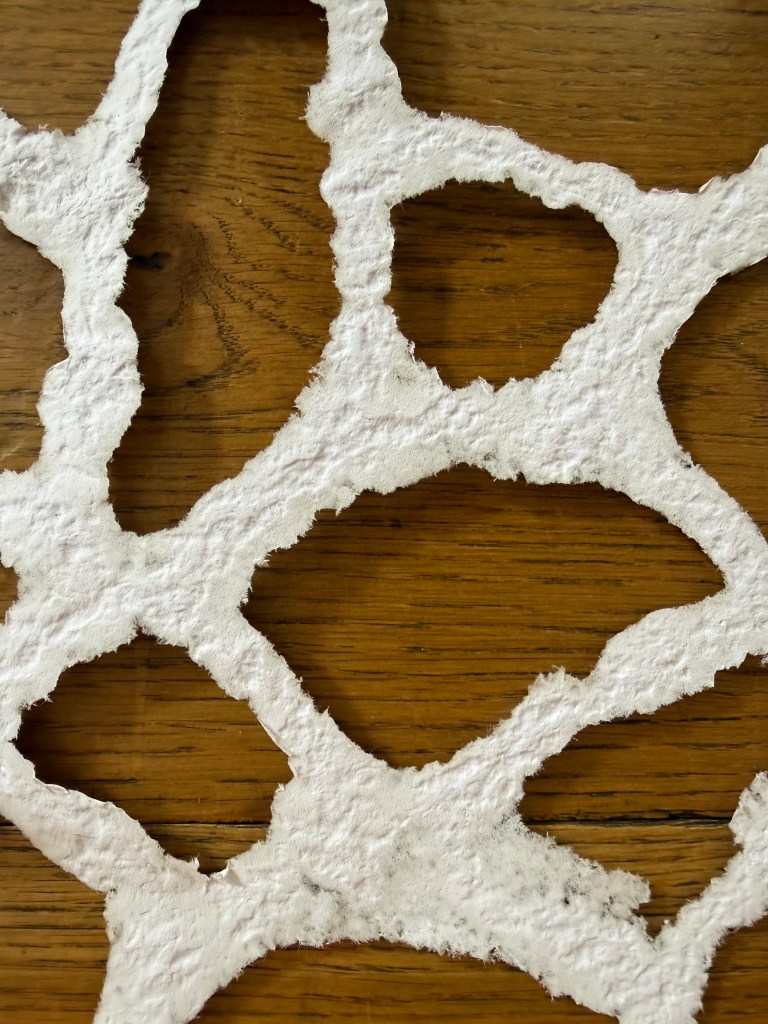
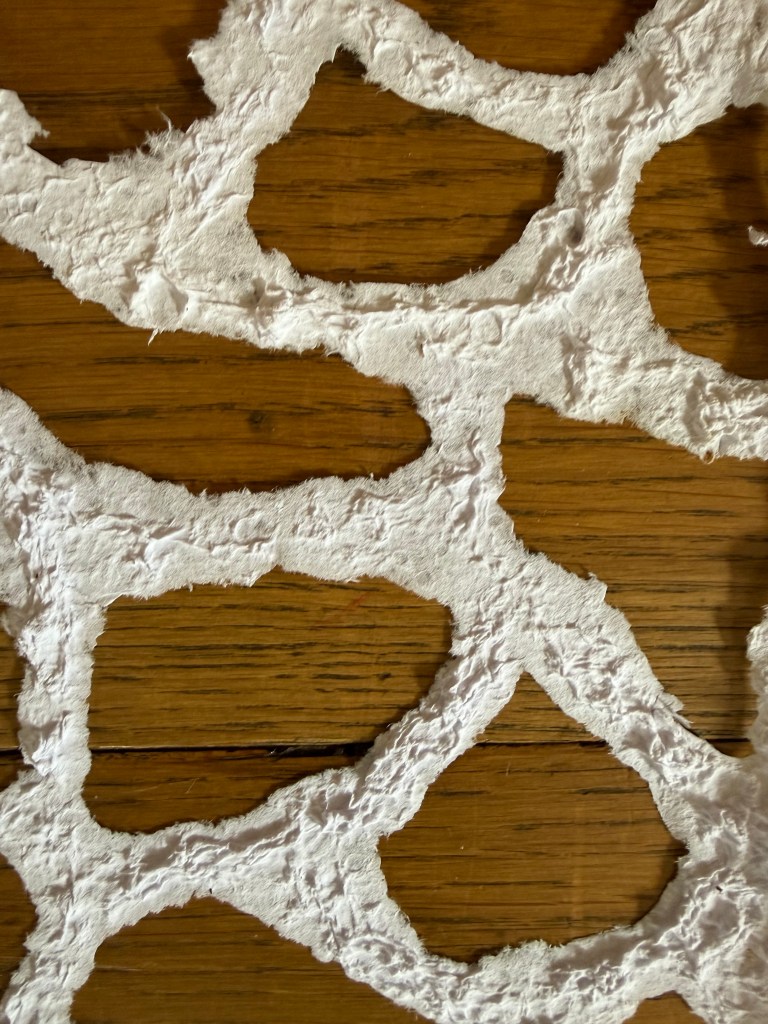
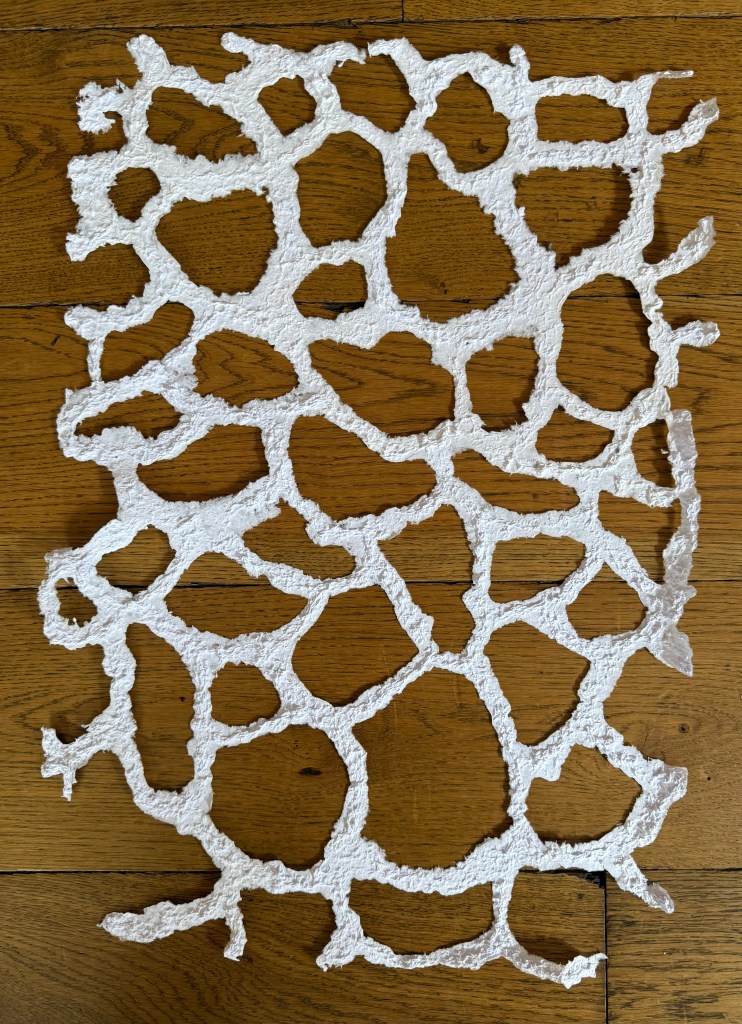
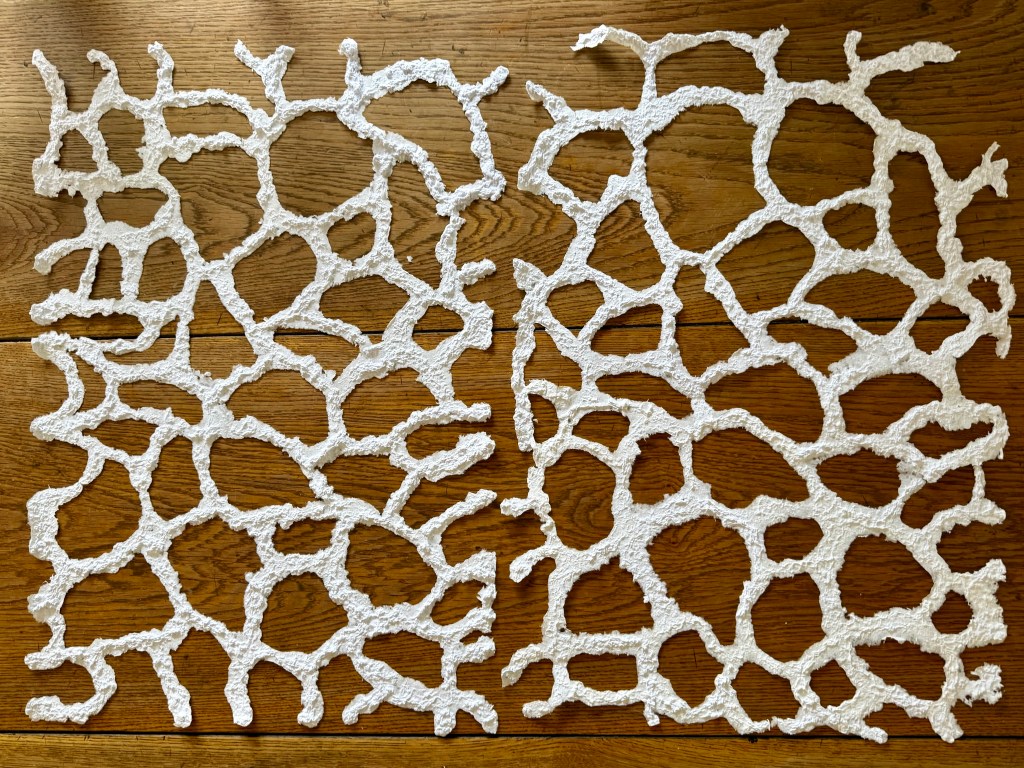
Jonathan started off by commenting that the films I’ve been making are really interesting and that there are so many different things to discuss, the book, the films, and he particularly likes ‘I’m an Artist’ . There’s something about the drawings, the books, trying to make the end papers, the disaster of the suminagashi but me noticing the connection to the line. I explained that I feel like since the end of last year there has been a sense of change, like things are linking up and coming together. He agreed.
He mentioned my videos of the ink in the fish tank – beautifully filmed, and not to diminish them but something you can get hold of quite easily from stock image websites – what’s impressive is what I do with them afterwards – the addition of the thumb harp to the droplet video which he thought was magical, and the addition of the audio to the speeded up version of the ink – I take it to somewhere else, and that’s what’s interesting to him. It interests me too. Before the course I was very much into narrative and I’ve realised that I can satisfy that part of myself in video-making, freeing up other processes for different things – I seem to have reached a point where I can satisfy different parts of myself by using different processes, including the perfectionist chimp which I can keep quiet by drawing lines and repetitive acts.This makes me feel more contented in my making and gives me a feeling of cohesion, but not in a closed way, in a momentary way – next week it could be a different combination of processes.
Jonathan moved onto the book, which is a huge challenge – it’s quite contained within its format – the signatures, the binding and stitching etc. I could have fed it into a website to produce it, but there’s no control, and he felt that it needs my hand because that is what it is about; it needed to be handmade. I commented that I felt a great sense of achievement about my first attempt, even though it hadn’t worked and it wasn’t really passable as a book (I didn’t mention this but I have actually showed it to friends, I’m that chuffed with it – I can’t imagine doing that a couple of years ago!). There’s something very special about making a book. Jonathan understood what I meant and showed me some of his concertina books which he often makes – the form of the book transforms the content. I said that having to go through my blog again has been a helpful process, even just glancing, looking at the images, reminds me of what I’ve done and how I felt at the time. Jonathan said that I have an incredible story to tell myself.
Turning to the videos, Jonathan commented that my video-making is astonishing considering that I’m using Capcut and that I need to step up. It’s something I’ve been thinking about going forward, to become more proficient but not to the extent that there’s nothing left to discover by accident. What would he recommend? Final Cut Pro – watch some video tutorials and will it come easily, allowing me more precise control on edits, layering images and sound etc. Mostly filming with my iPhone – I don’t need anymore than that but what I need to bear in mind is the fps – moving image is 24fps – my phone probably defaults to 30fps. Film in slo-mo (120fps), but will probably need more light if it is dark. Then when I slow down to play it back at 30fps I have 4 times as many frames to play with and the playback is much smoother. A downside is that it creates larger files and will take up more storage.
I commented that I have been wanting to learn how to use my phone to its full potential. Jonathan said what’s intriguing to him is that I’m doing incredible things with it as it is now and learning new techniques isn’t the most important thing – I already have an artistic eye – it might be that for now increasing it to 120fps is enough to be getting on with and will give me lots more to explore. I said that I am very much about using what I have in the moment, having a go and seeing where I can improve things. Jonathan thought that there’s a beauty with that and that it comes from all the other experiments and the comfort I have developed to take things that haven’t worked to somewhere else.
He gave me some tips for filming with the caveat that I shouldn’t get too bogged down with technical stuff as I’m doing it naturally and there’s something really lovely about that – what I’m filming and the way that I’m doing it is interesting . With regard to the Vienna video, a small detail which will help is to hold the camera out from the body using the elbow and shoulder as shock absorbers as the phone itself will do quite a bit of counterbalancing. There are some lovely moments when I notice something interesting and I should look to pause longer in those moments – always hold the shot longer than I think because I can always edit it out, I can’t add it in – like with the shadows on the ground. I explained that when I filmed in Vienna it was very much because I was interested in it rather than being mindful of making something out of it later and perhaps that is the downside of the experimental approach. Going forward I will take his advice and collect footage with possible later use in mind.
He advised that when filming water or anything transparent, light from behind, as I have, but what I can also do is to put black card either side of the fish tank. I could also put black card at the back of the tank which encourages the light to wrap around the side and light everything up against a black background.
Jonathan turned to recording sound. Technically I need a dead cat but they don’t do them for phones, but what I could do is just be conscious of wind increasing and perhaps turn my body or shield the microphone with my hand. These are small details but my films are mesmerising and these extras could take them to another level.
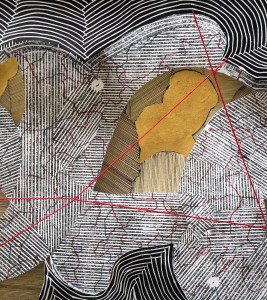
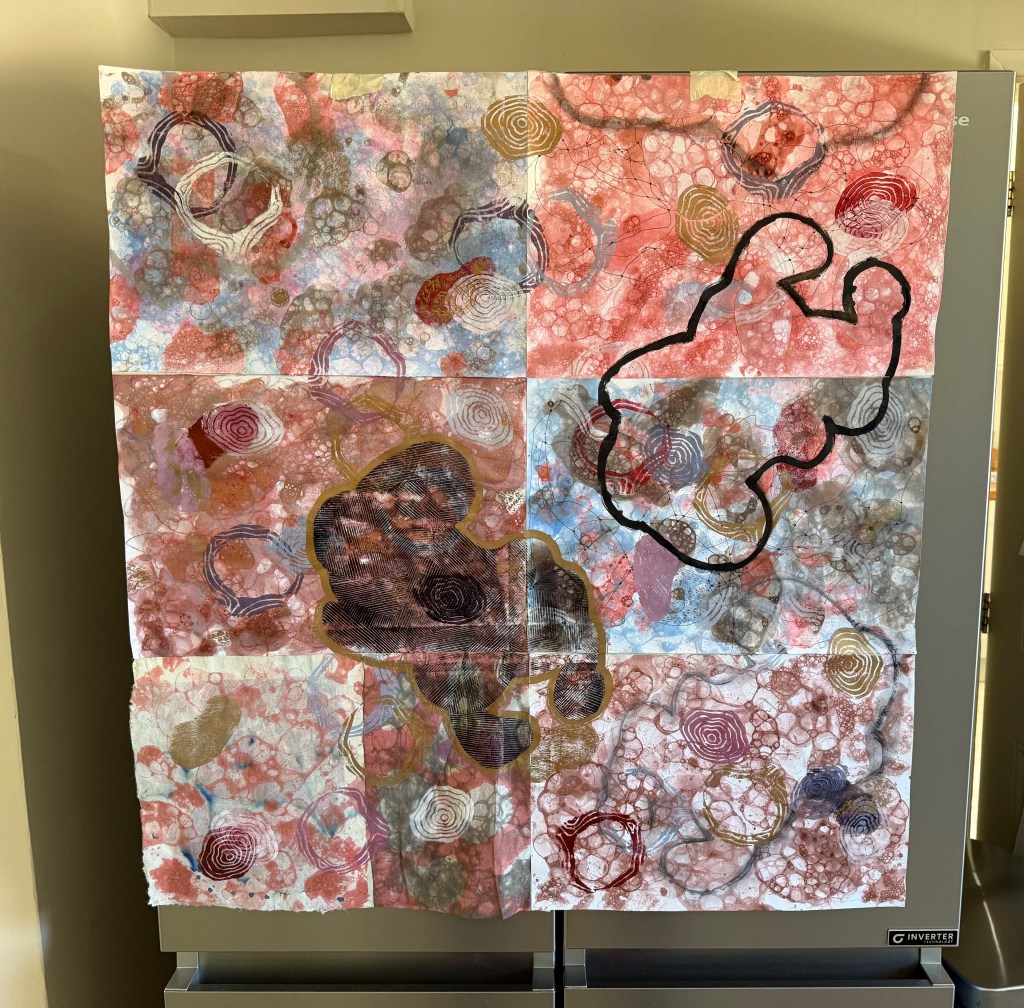
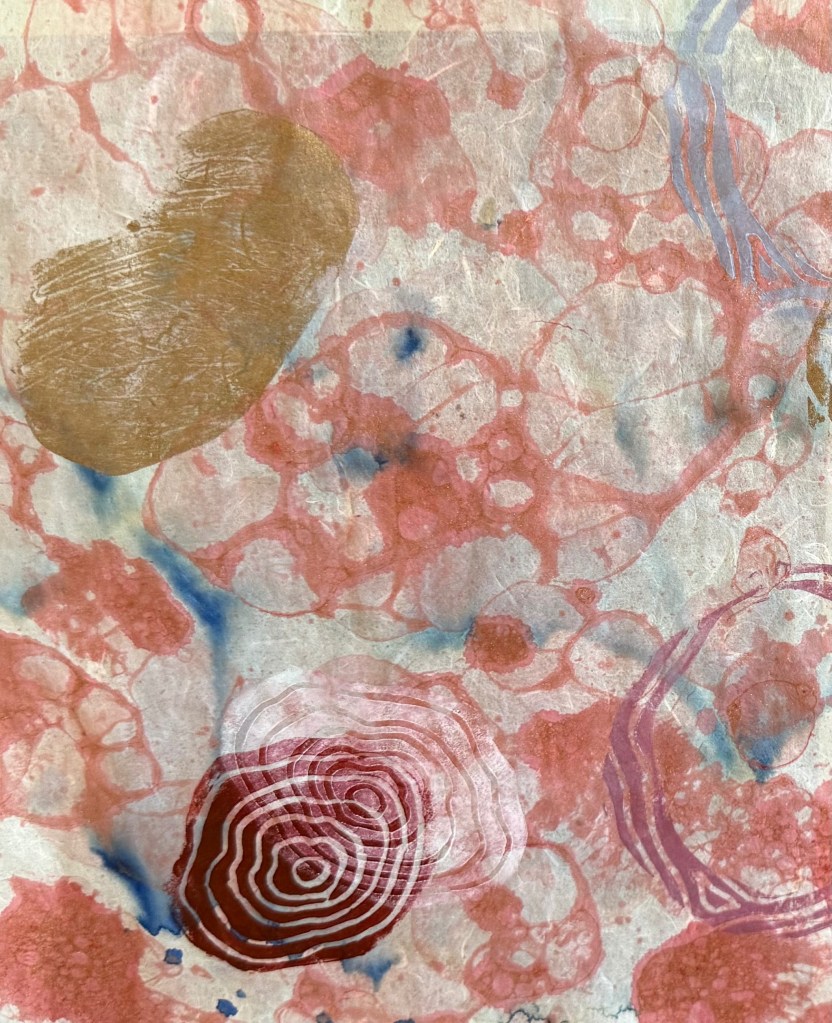
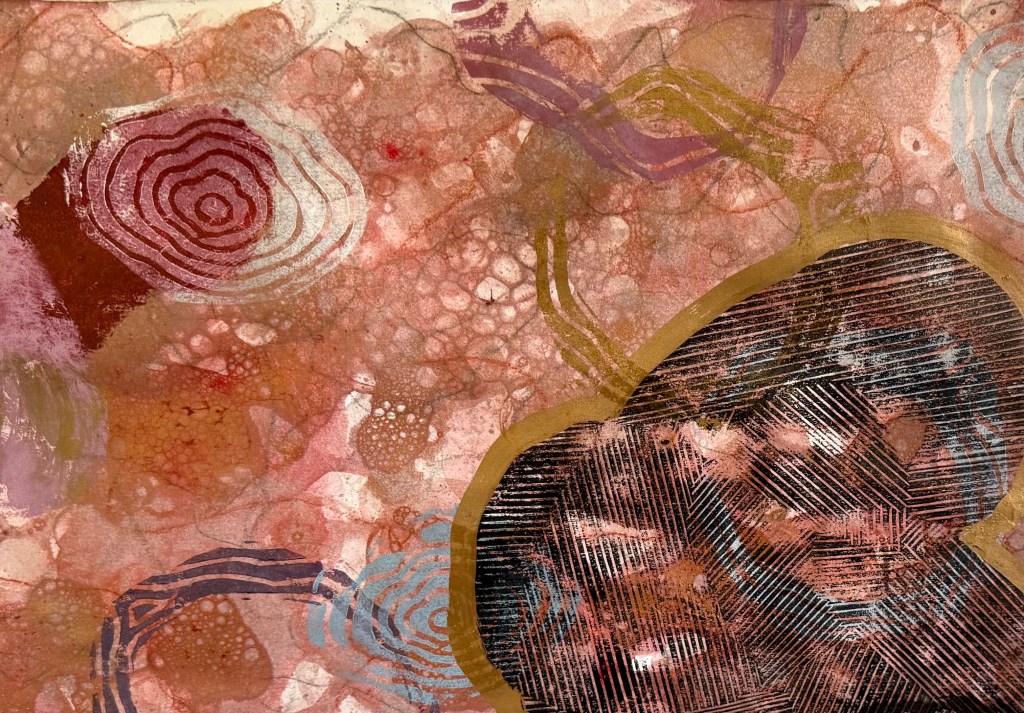
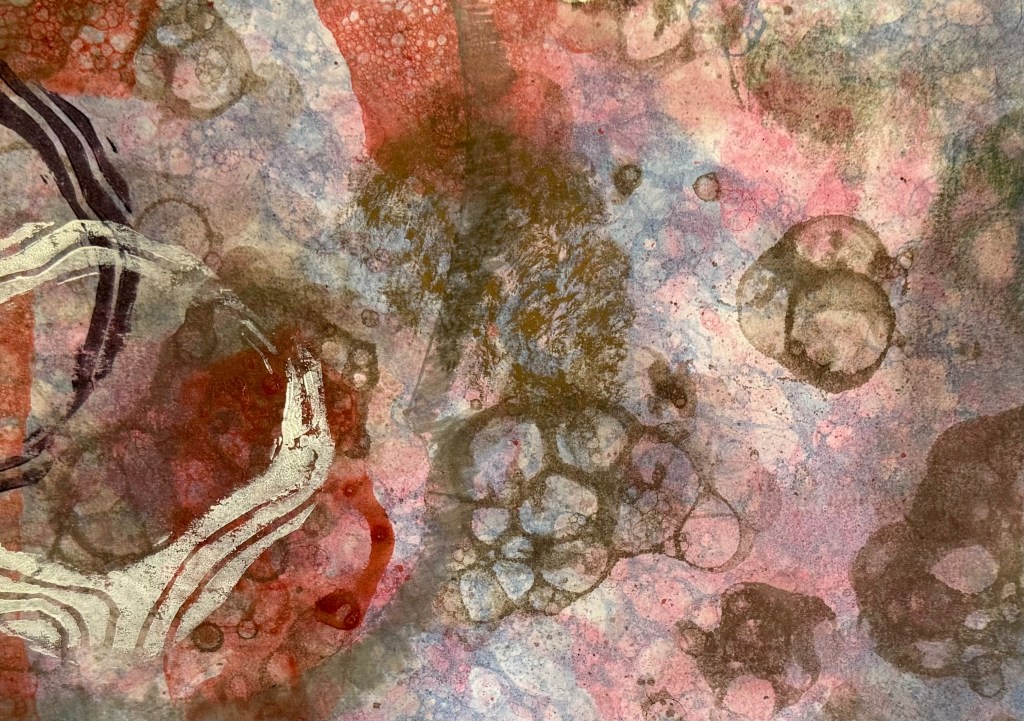
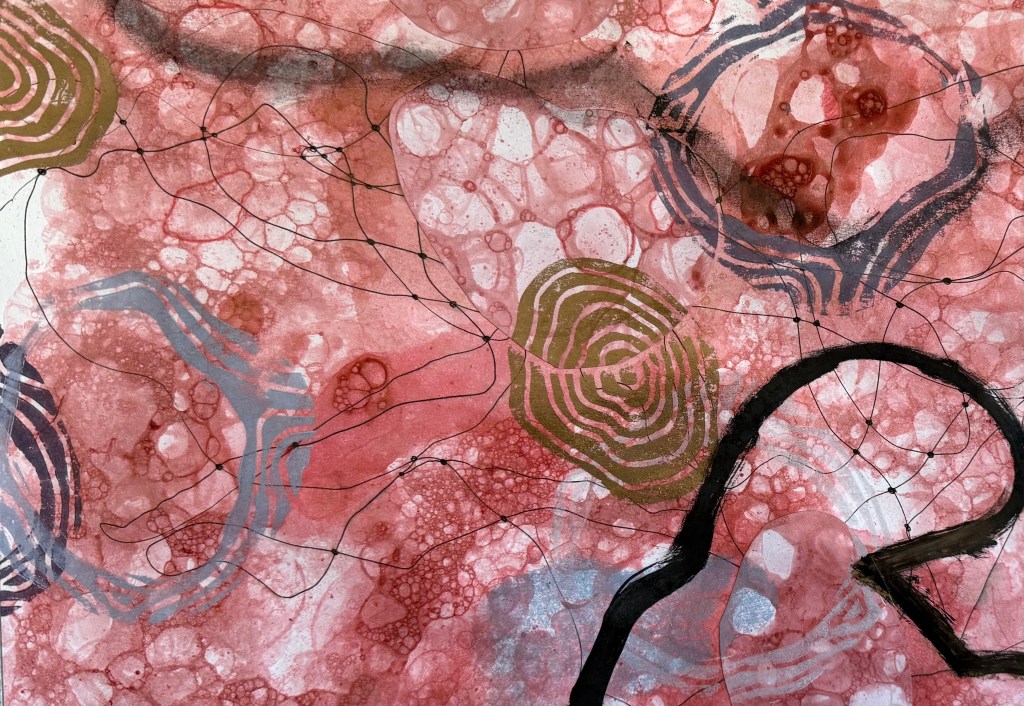
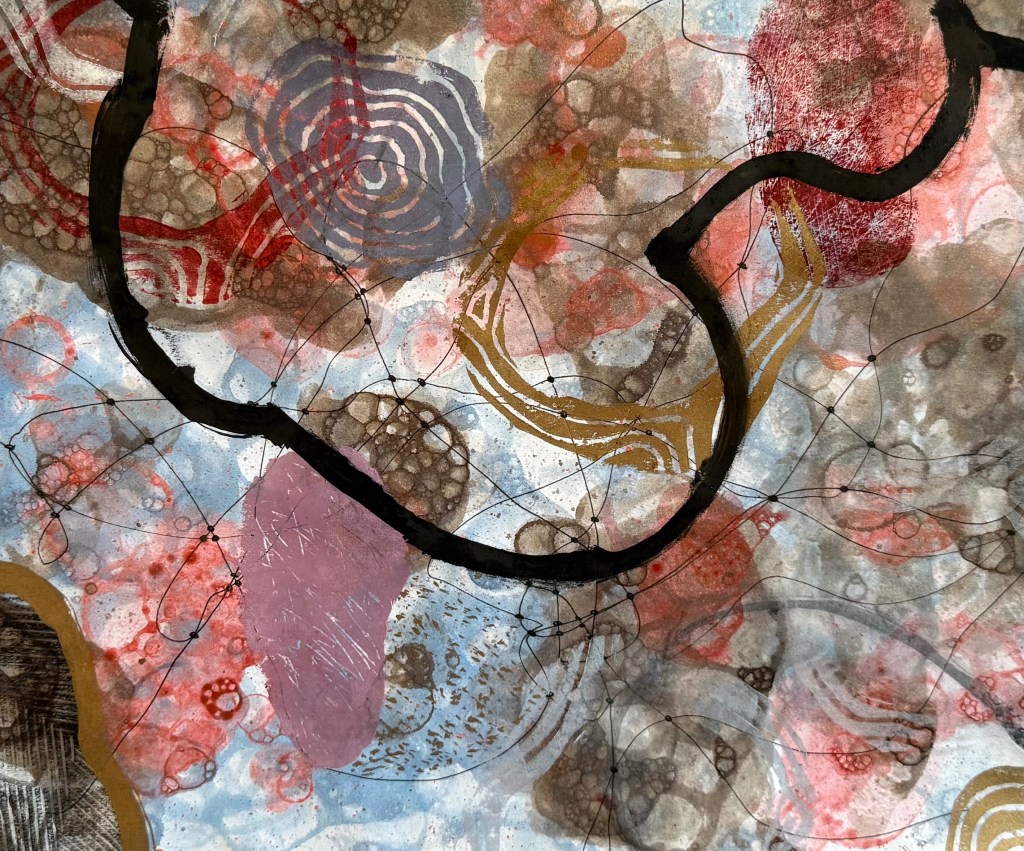
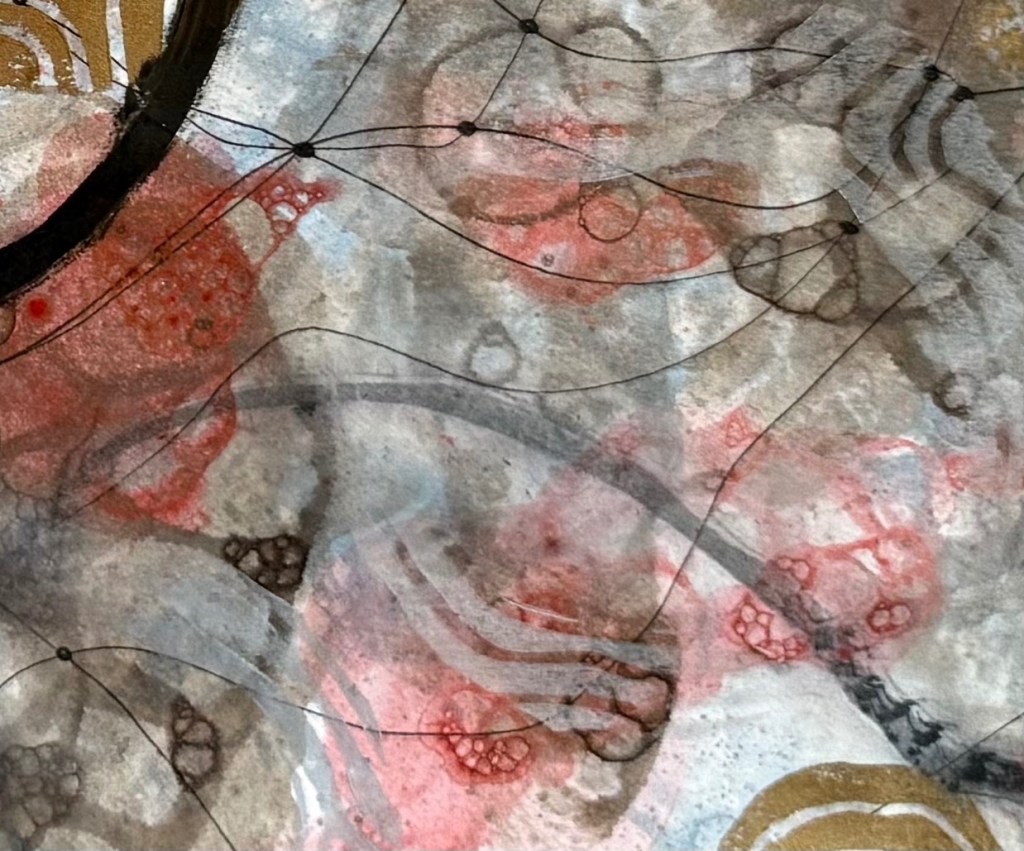
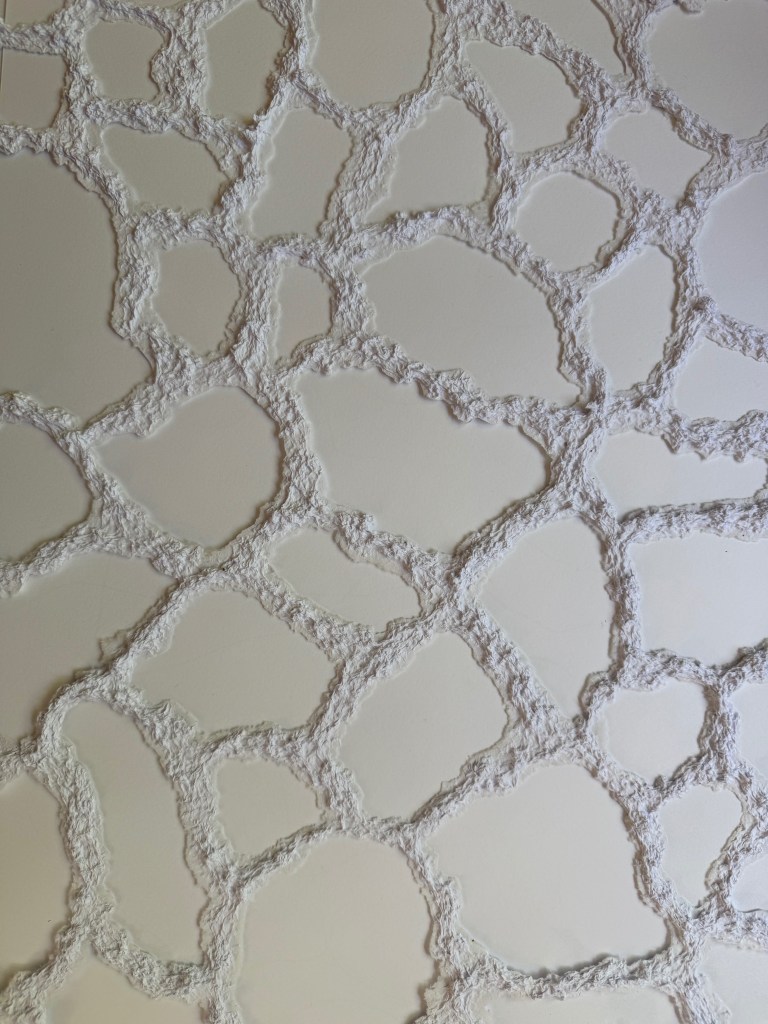
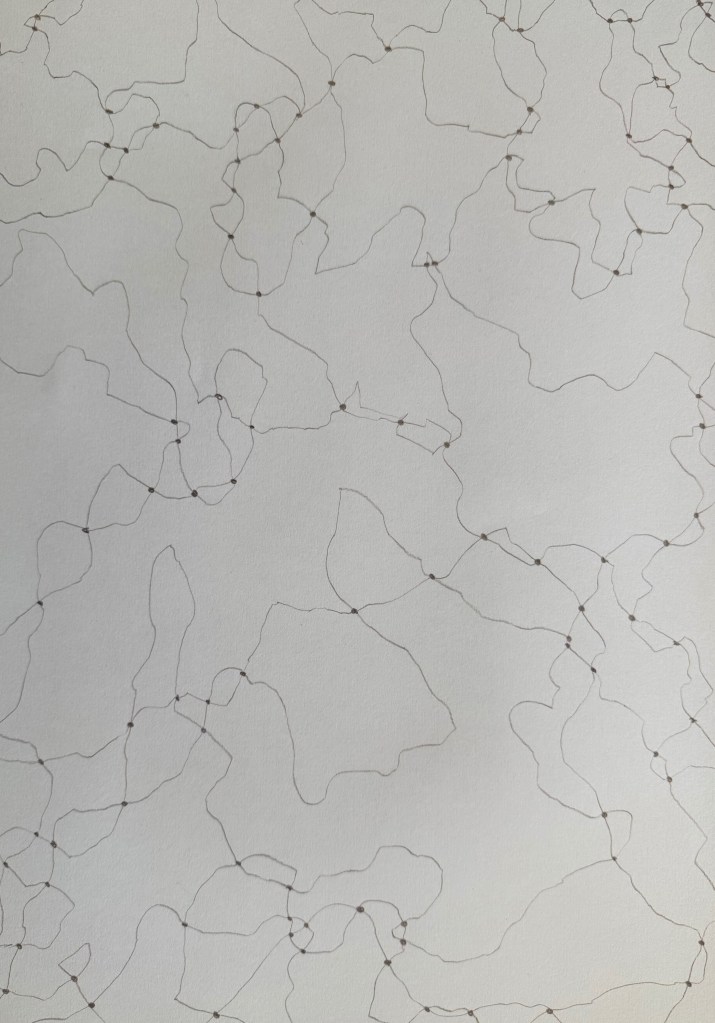
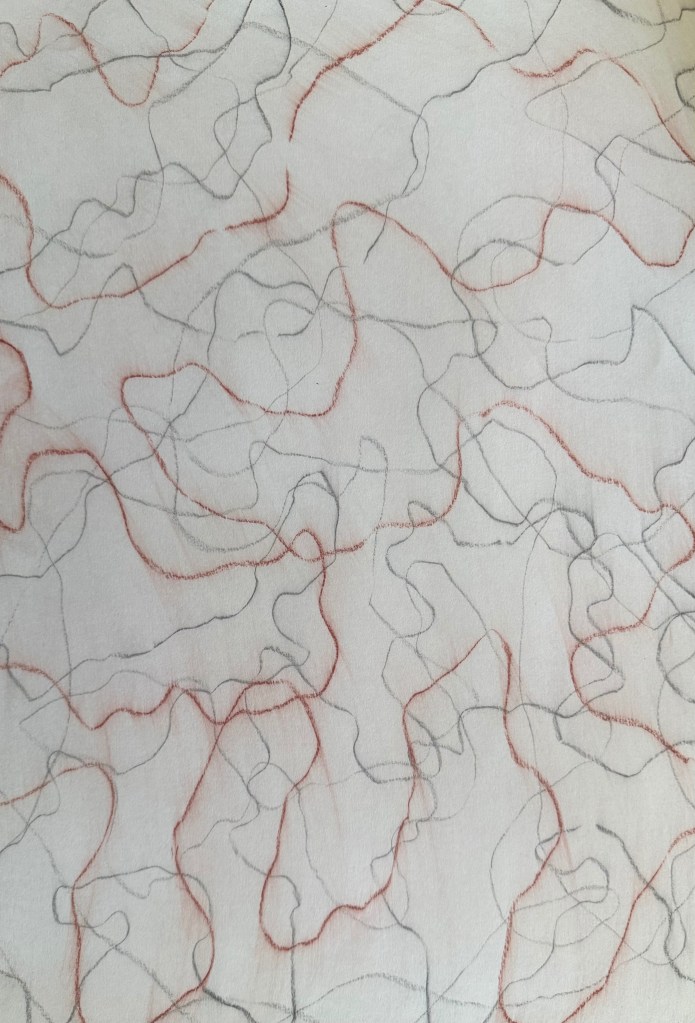
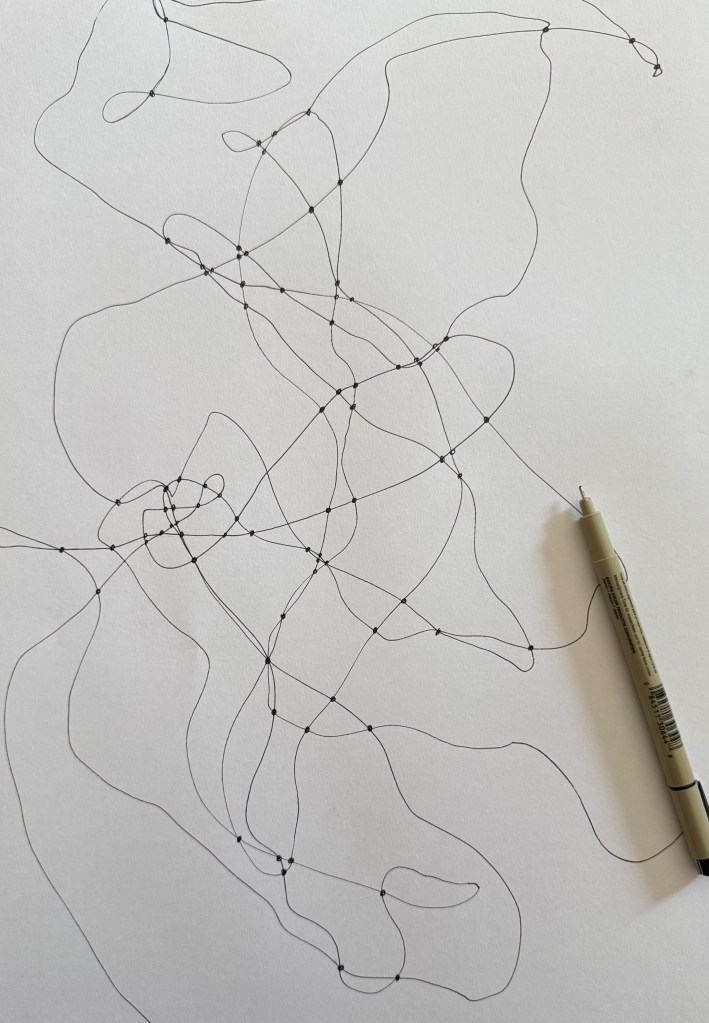
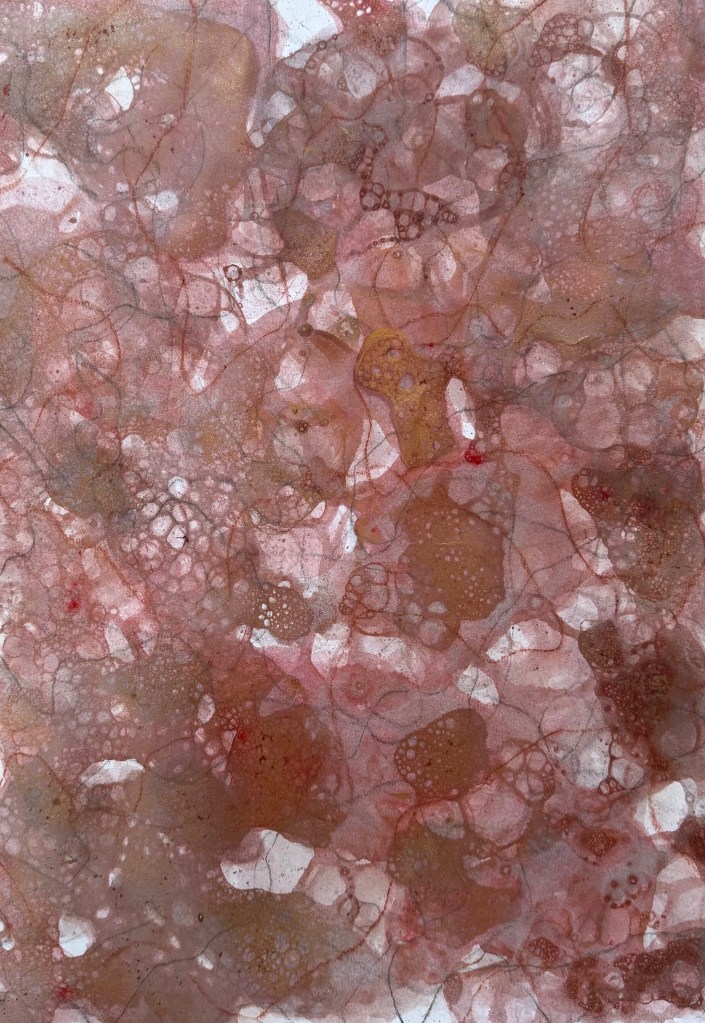
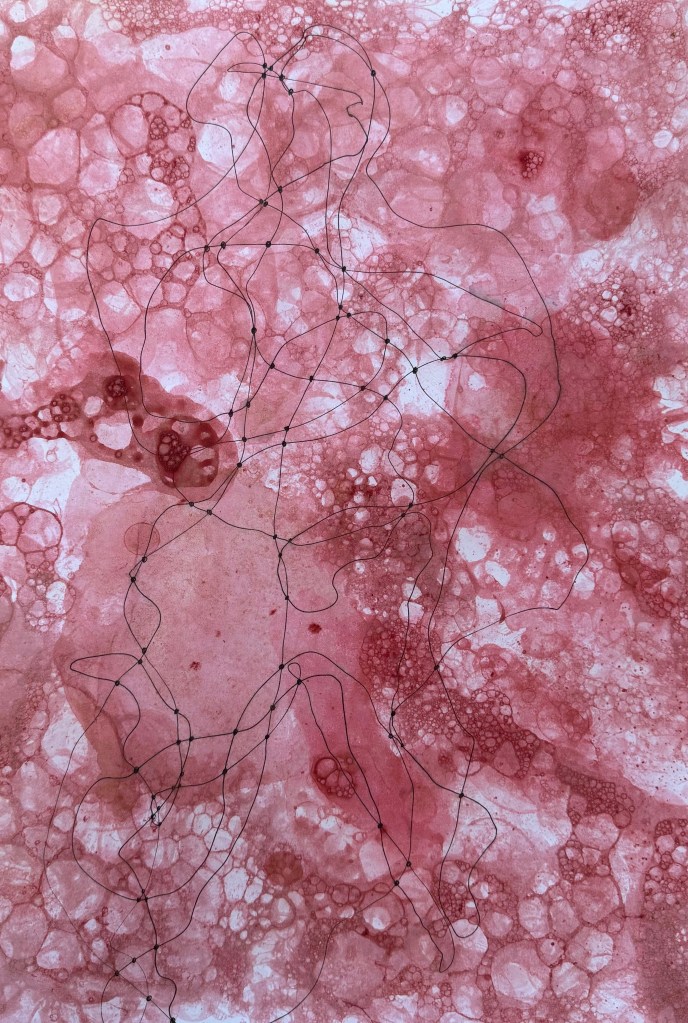
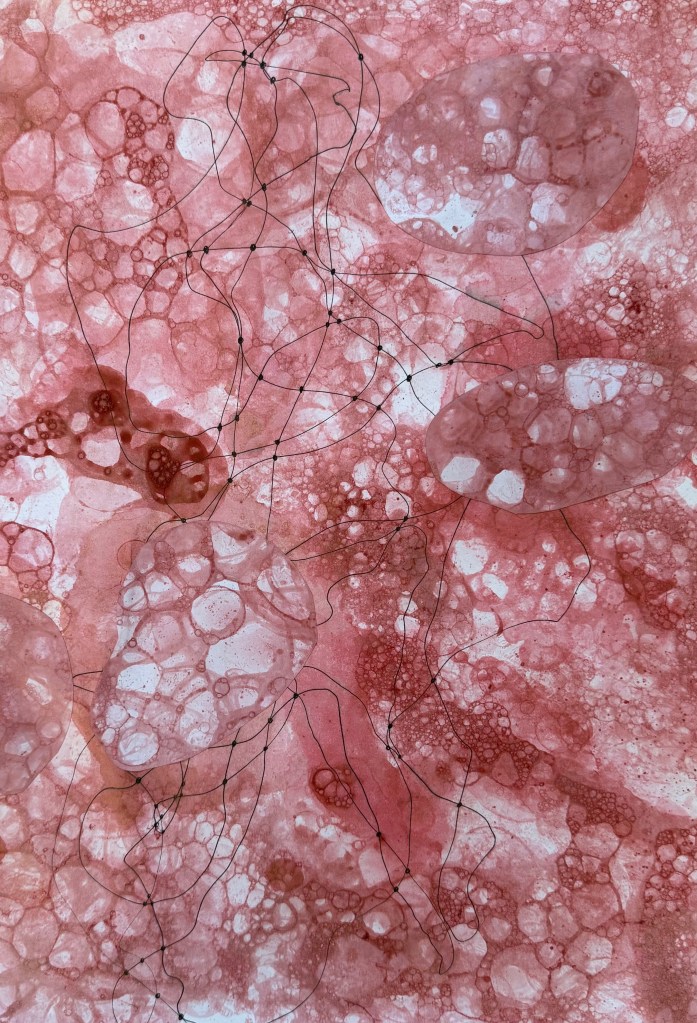
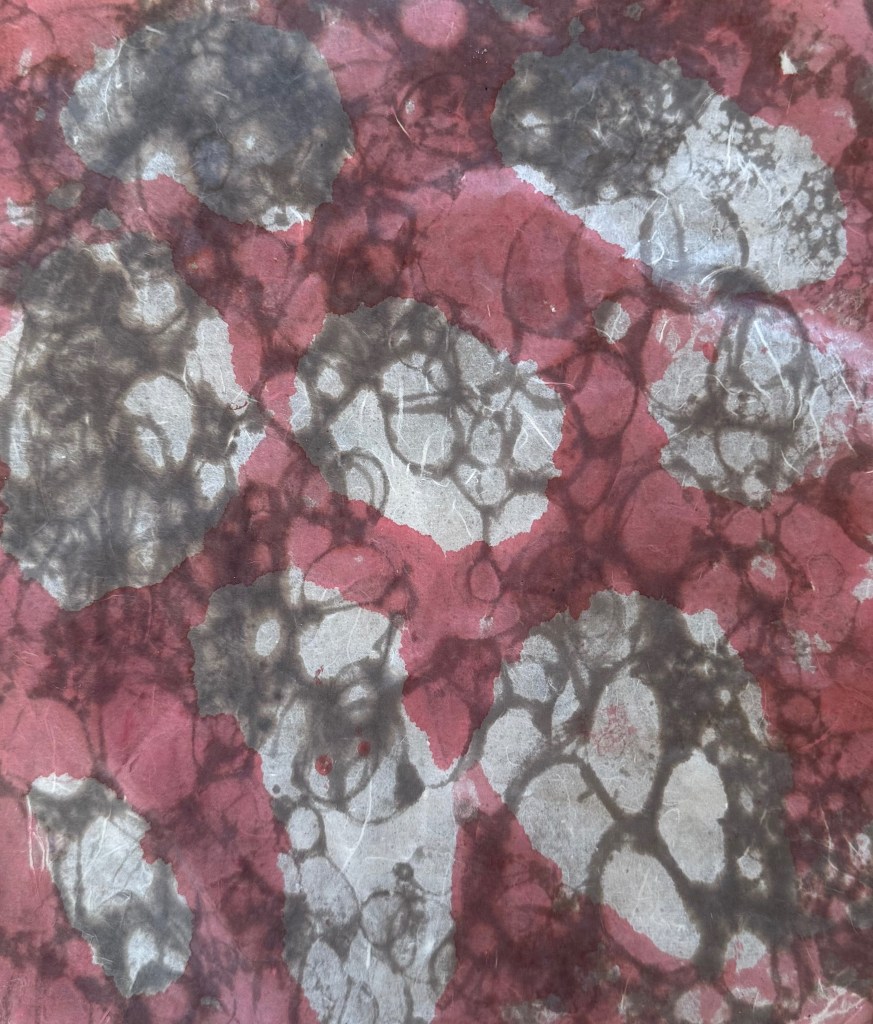
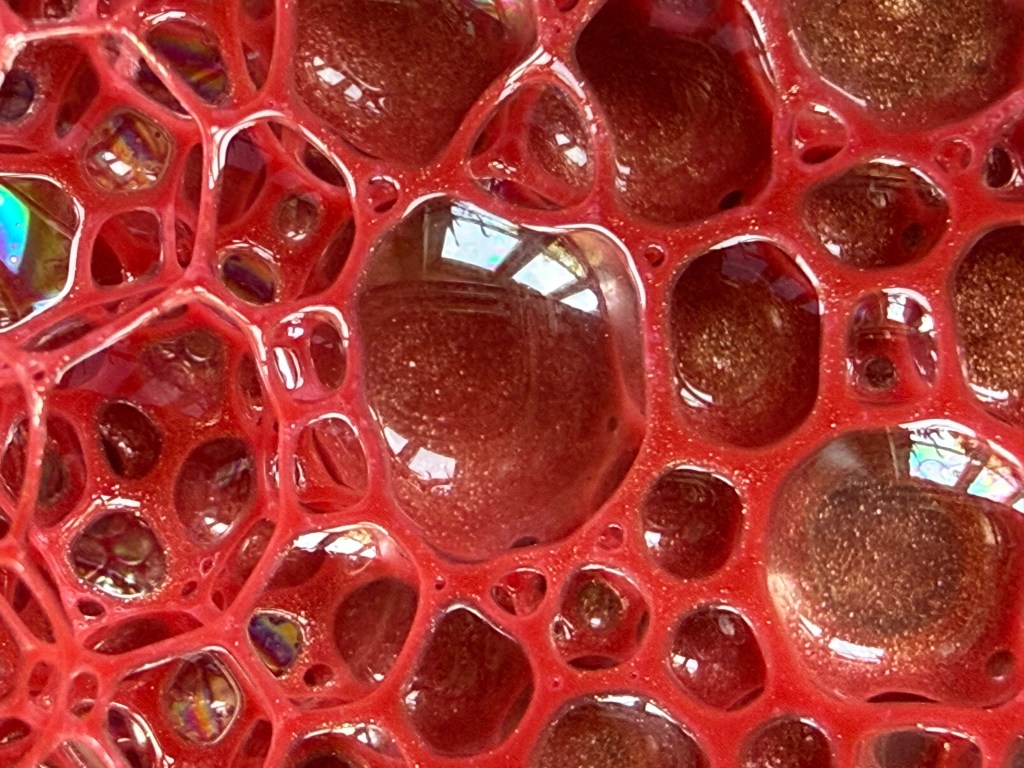
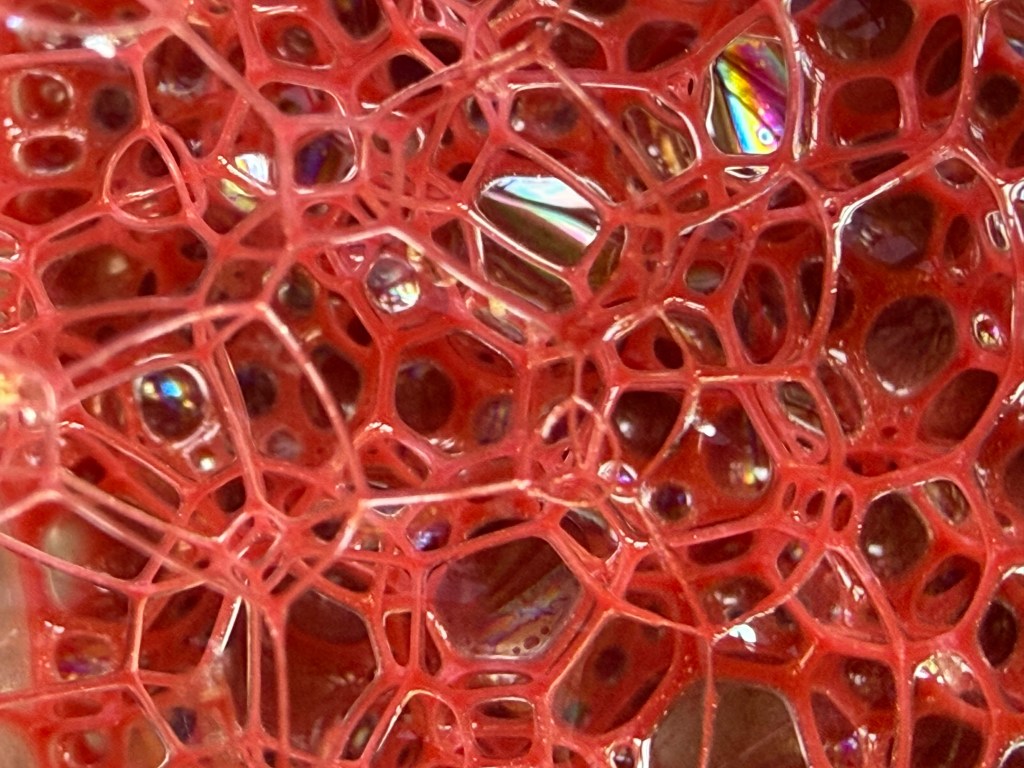
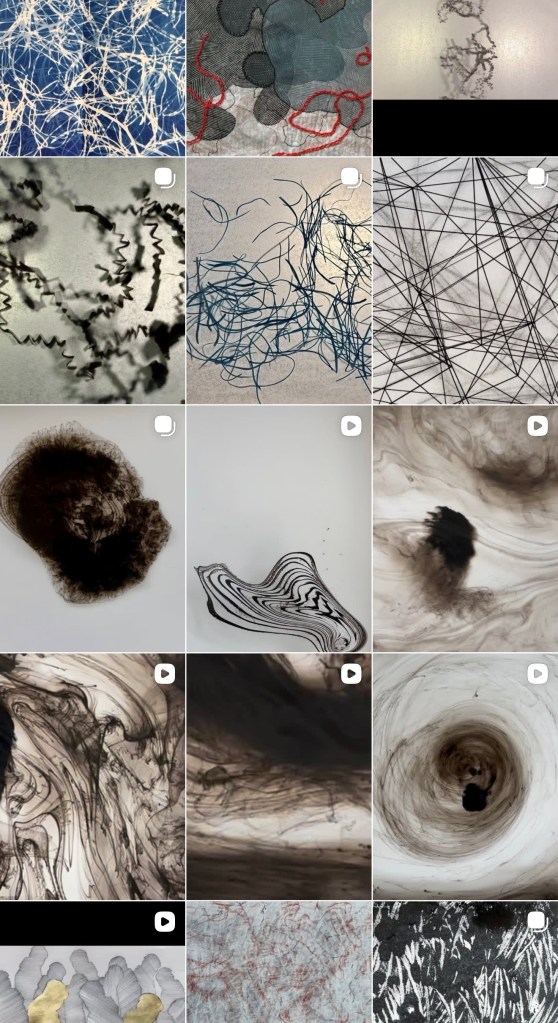
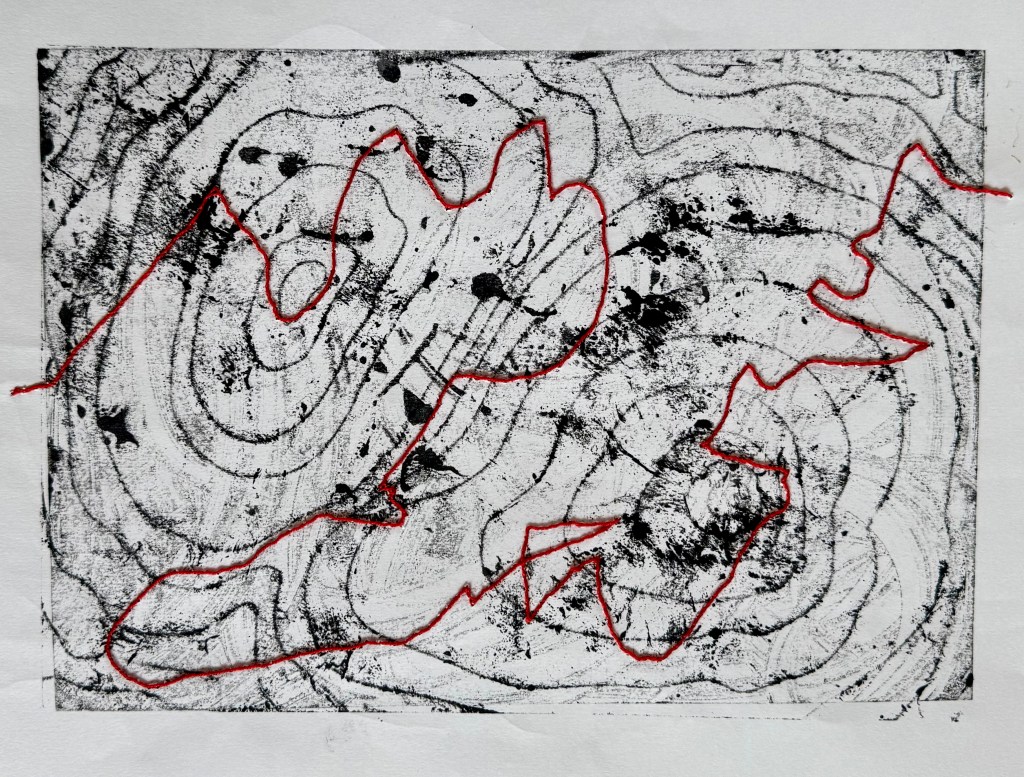
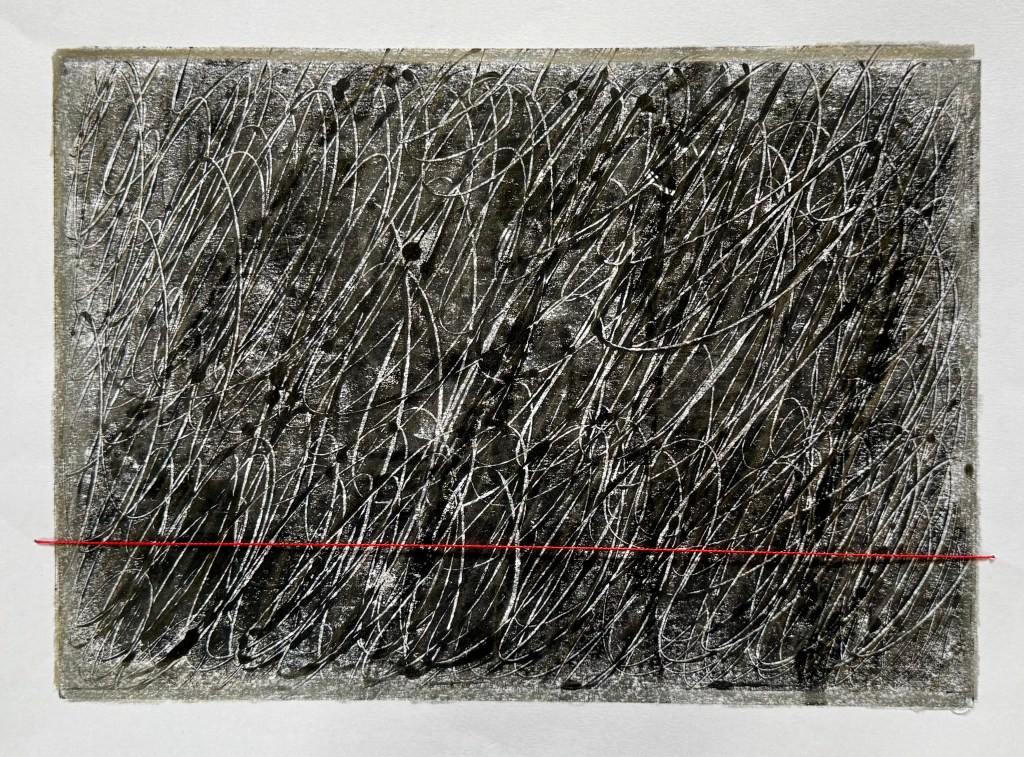
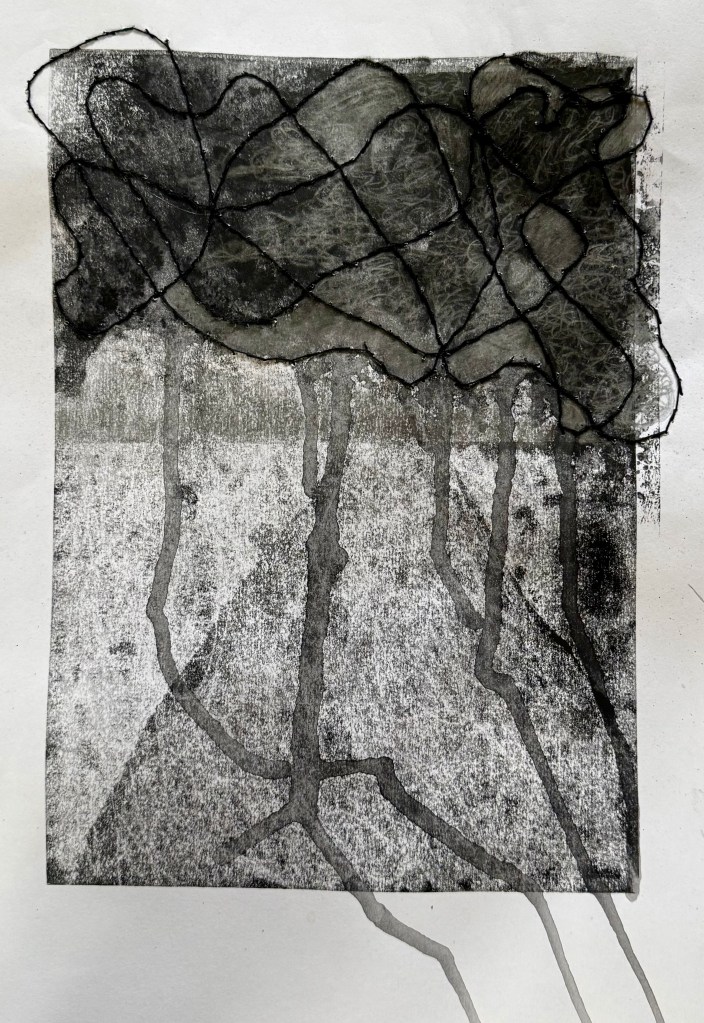
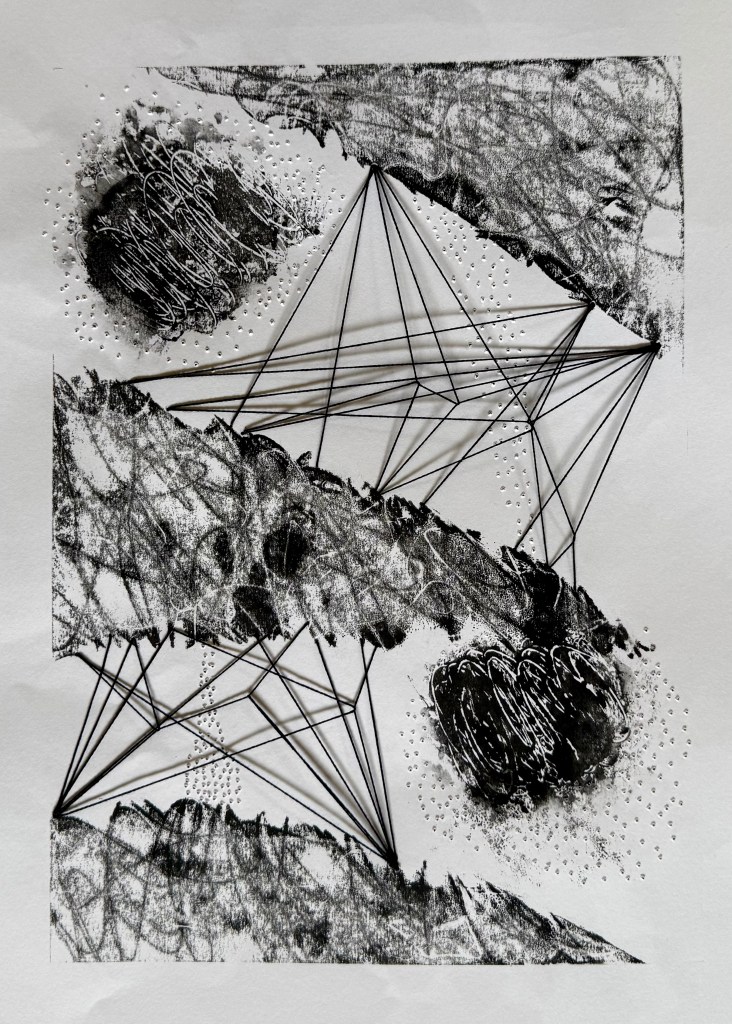
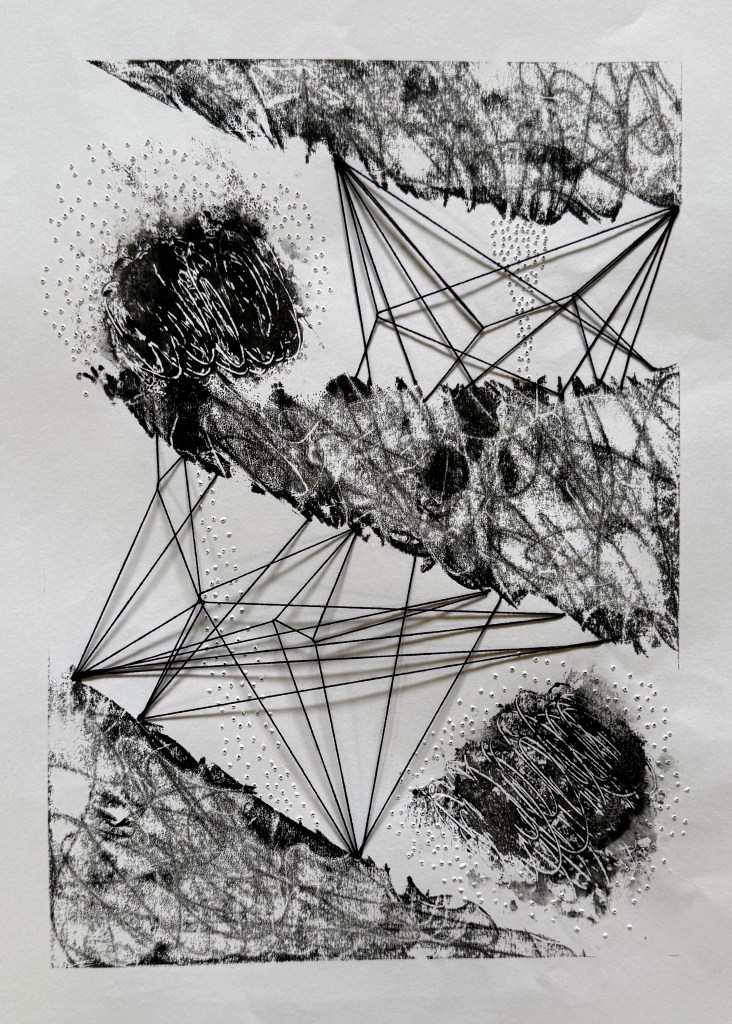
Jonathan commented that there are so many different things to look at, the layers, burning the paper, the red stitch, the scrunched up cyanotype material, ‘the line made by running’, which we had a little chat about.
He thought that I’ve written clearly and beautifully about the show being a snapshot – what would I be showing if I did it now? My books are a definite – I’m feeling quite happy making them if only I could stop posting. Jonathan observed that having volumes means that it’s an ongoing thing, something that can be added to. I thought that maybe I could also have some video. Maybe also a larger piece either layered or not, I’m not quite decided. Once the 5-minute video is out of the way I’ll be more focussed but not so that it’s resolved in anyway – I’m ok as long as I make the decisions in the process and see what happens. If it all goes wrong then at least I’ll have the book. Jonathan thought that whilst there’s so much work that I could show, focussing on the book is a good approach. I commented that the book gives me certainty and grounds me so that I feel a lot more relaxed about other pieces I could make. I’ve noticed that whilst I need and thrive in the experimental I also need a bit of loose structure to feel content and to feel like it is sustainable going forward. Jonathan observed that it’s a metaphor for the way I make work generally.
Jonathan was of the view that the book makes sense on so many levels for me – as a reflective piece – a wonderful treasure of the blog containing memories of what I have done and how I’ve spoken to myself. The book will allow me to dive back into there, and it also has a beautiful handmade feel as an object, as an art piece as well as being an element of structure but within which there is also space for experimentation.
Have I thought about how I might present the books? Yes, but it’s difficult because I want people to engage with them, to pick them up, to read them but not in a way where they just toss them back down again. It’s what we have talked about before where interaction breaches the barrier between artwork and viewer. Maybe they are only there when I’m there. I need to think about it – how to achieve a balance. Jonathan suggested that perhaps a couple of pairs of white gloves – maybe their presence would change the atmosphere. I thought this was a good idea. Jonathan then wondered whether the surface could say something eg a university chair with a flip table might have a sense of note-taking, exam, formality etc. Books piled up on a coffee table says something different, a leather inlaid desktop when compared to a white shelf. What about a conceptual relationship to my work? It’s been such an incredible journey. What about books stood up on a shelf so they taken out and put back in? I had thought about that but decided that perhaps that might just read as spines to be looked at, rather than ‘pick me up’, although the addition of the gloves might allude to the books being picked up. What if the third book is open on a different surface – is that enough? I could always lead the way by picking them up myself. What if the second surface is a screen showing the videos because they are so important to what I am doing, so the book needs to be picked up so that the video can be seen? The one issue is what the edge of the screen would like, we could put it on a white plinthat table height, it could be seen from every direction, we could make it disappear or just accept that it’s a screen with a cable there to power it. I asked about sound and Jonathan thought that so many people want headphones that the sound could just be coming from the screen. Being able to walk round it and seeing the videos from different directions could work well. Jonathan then wondered what that might look like if there were layers over the screen through which to watch the videos.
Finally, Jonathan remarked that it’s really helpful that I’m writing about sustainability and it’s wise that I’m trying to find rhythms of time and place so that I protect what’s happening right now because it’s precious. He’s very encouraged that I’m thinking and writing like this already. I think that it will be difficult but I need to find a way. I need to introduce a little bit of structure so that I change from working sporadically to something more consistent.
As ever, and for the last time, so many good ideas to mull over.