Threads

Whilst I was in London I went to the Hayward Gallery to see Chiharu Shiota’s Threads of Life.

It was captivating. It wasn’t just the scale, the sheer amount and complexity of the thread, or its immersive effect, it was also the effect it had on what is viewed through it. I stood in front of the dress in the cabinet for ages. The fragmentation of the image of the dress through the threads gives it an almost spectral presence. I was also fascinated by how the threads were stapled to the wall, and woven in between each other, casting shadows which create further depth.

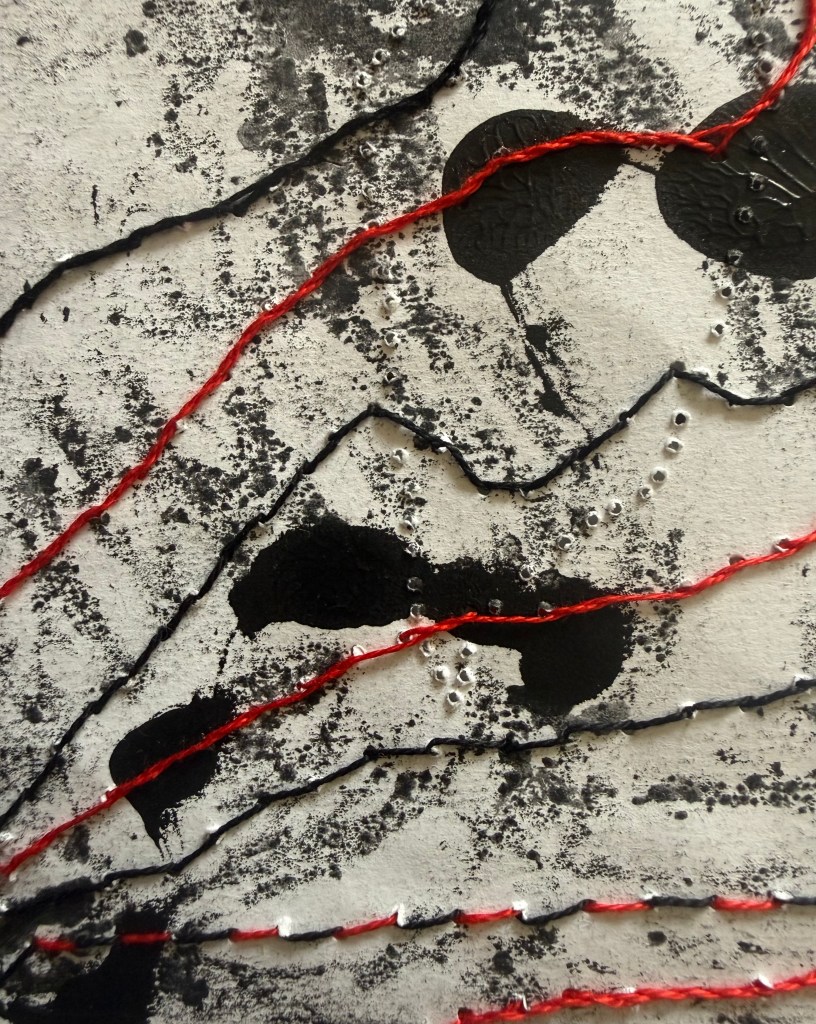
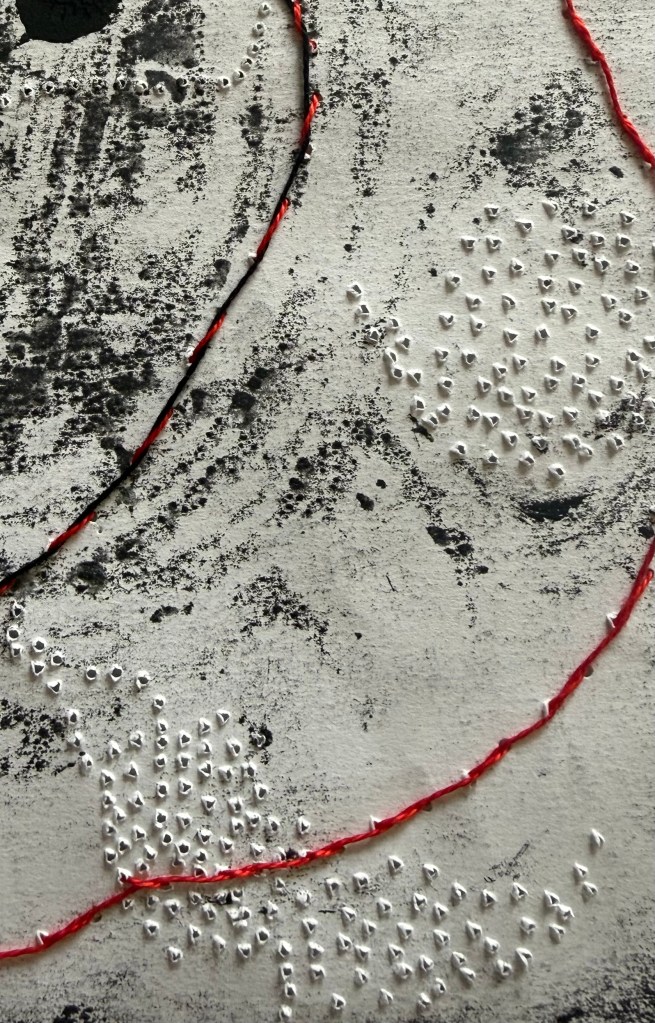
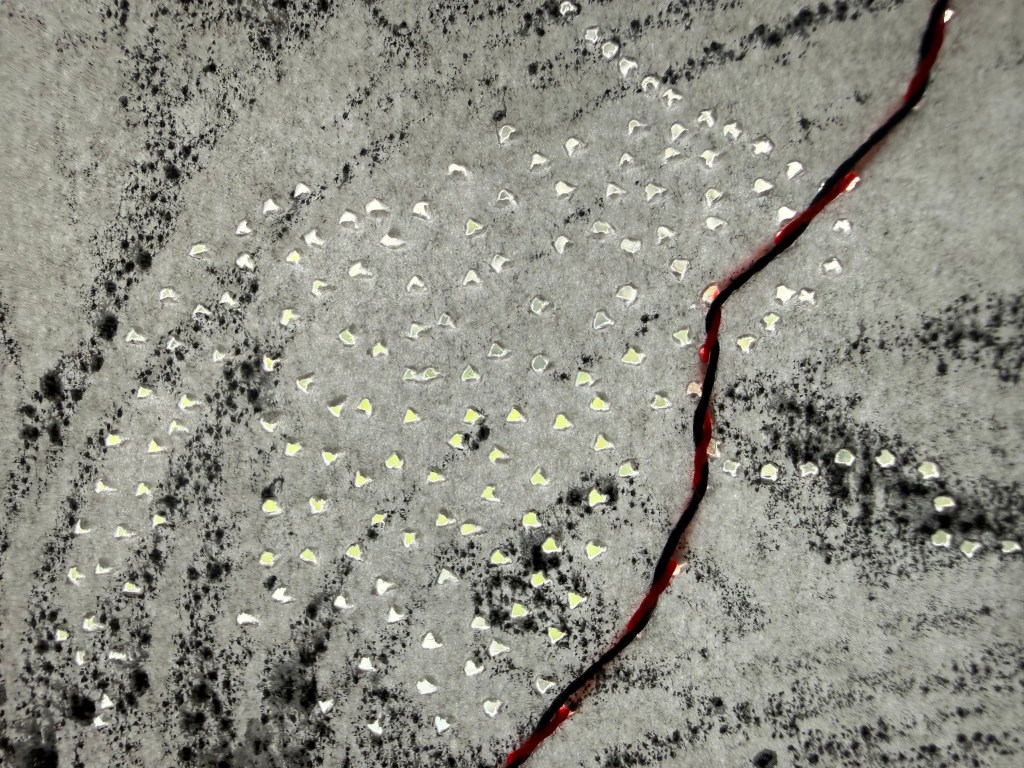
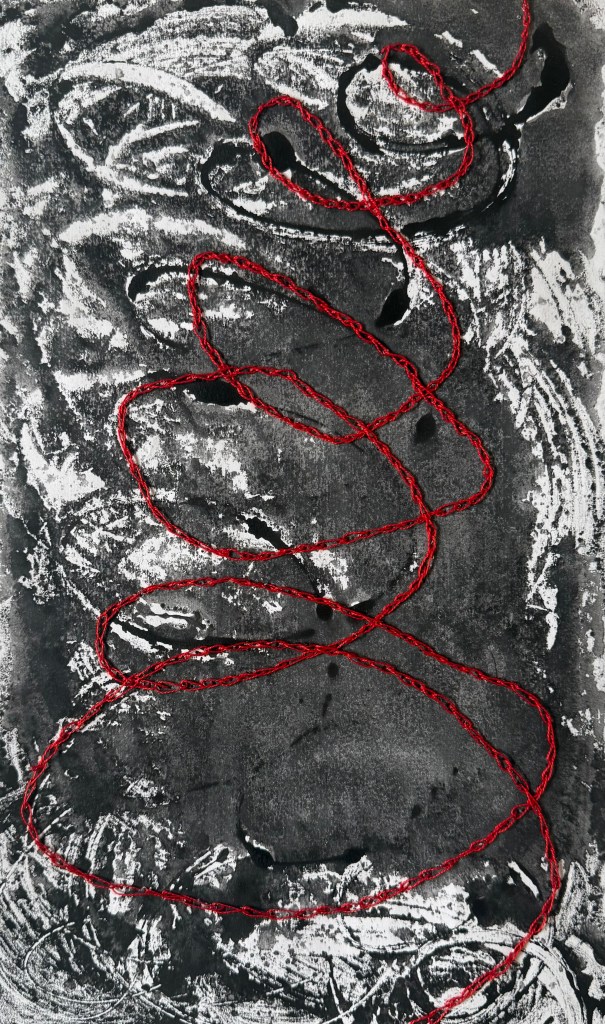
I watched some footage of her working when I got back, and looked at some of her drawings. They remind me of Do Ho Suh. Having used thread recently, I can see myself using it more in the future. I even like the effect of it in the photos, which are only 2D images.

Me and Aquatint, We Just Don’t Get On

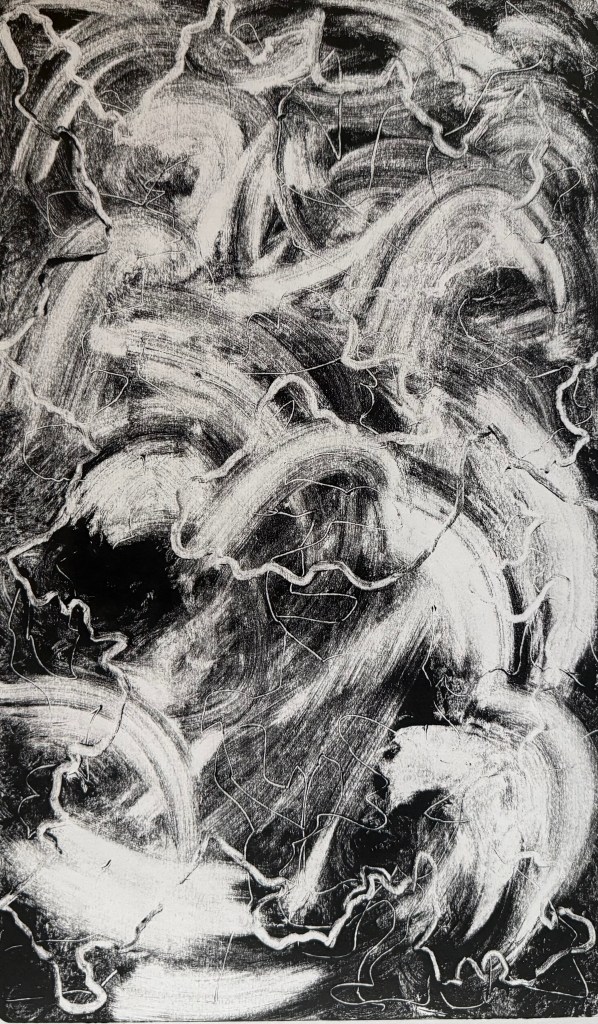
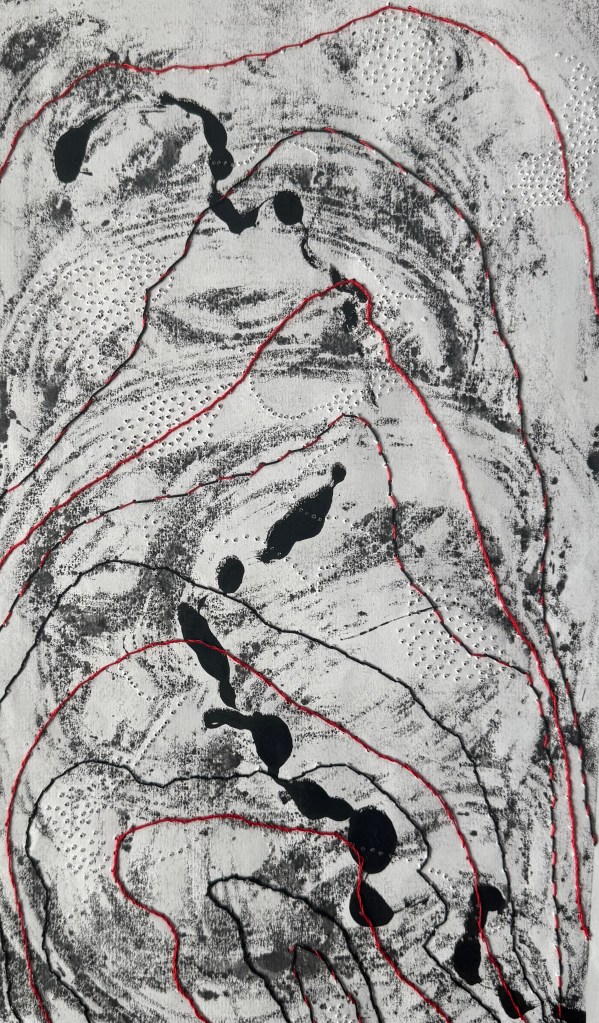
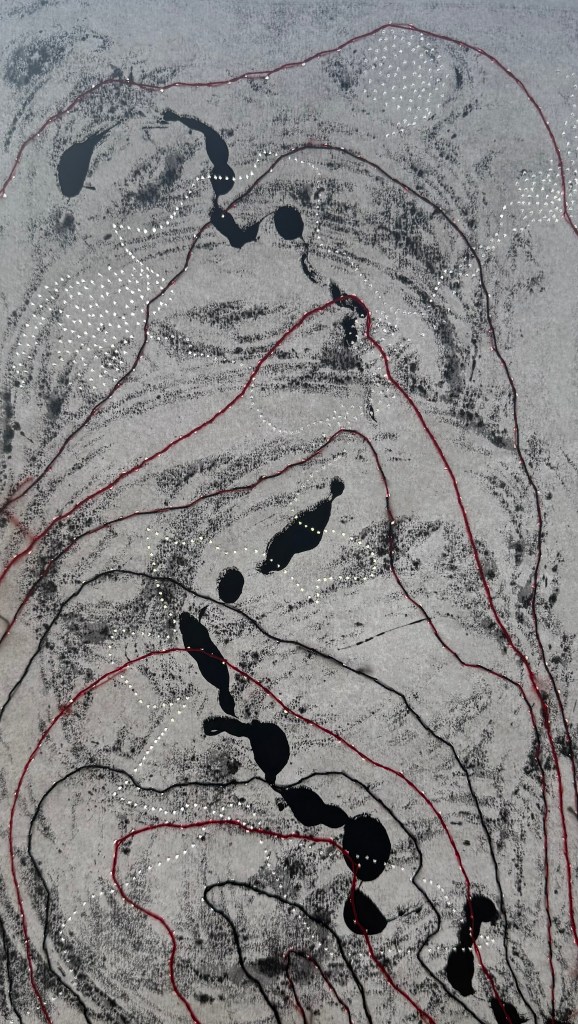
I chose the etching workshop on the Low Res. The others didn’t really appeal to me. At least this year I was a little less ‘rabbit in the headlights’, although I’m not sure about my choice just to draw wavy lines. The etching process was fine – I remembered most of it from last year.

I quite like them when they are placed side by side.

And then Paul mentioned the word ‘aquatint’. I had trouble with it last year – working out what was going on. I understood it a bit better this time, but I don’t think that my image was best suited to it. At times the fine lines disappeared and I was left with blocks of tone, and even Paul’s suggestion to use extender didn’t really make it any better. A bit of creativity in the inking up process just about had me feeling ok about it. This is probably the best one.

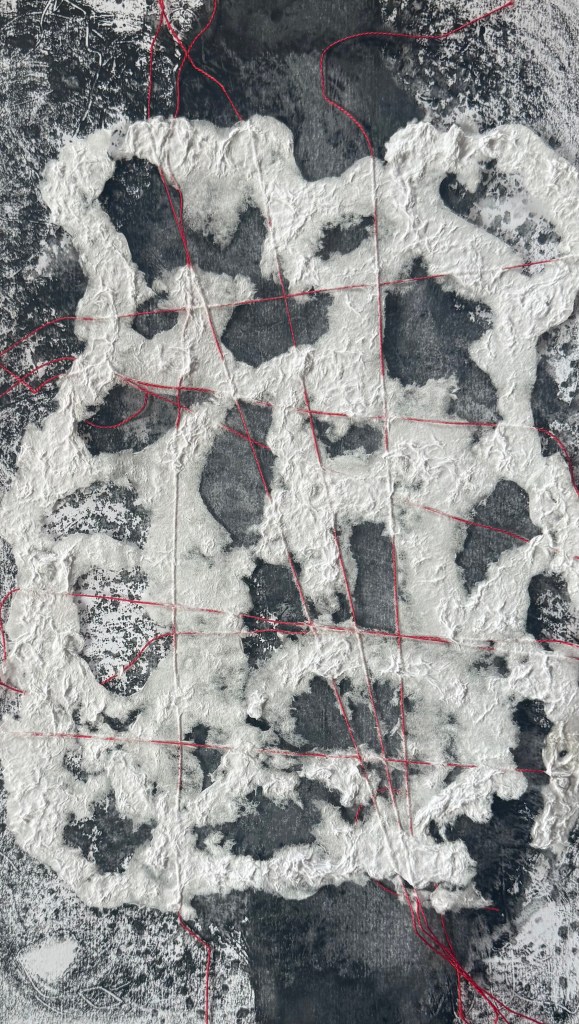
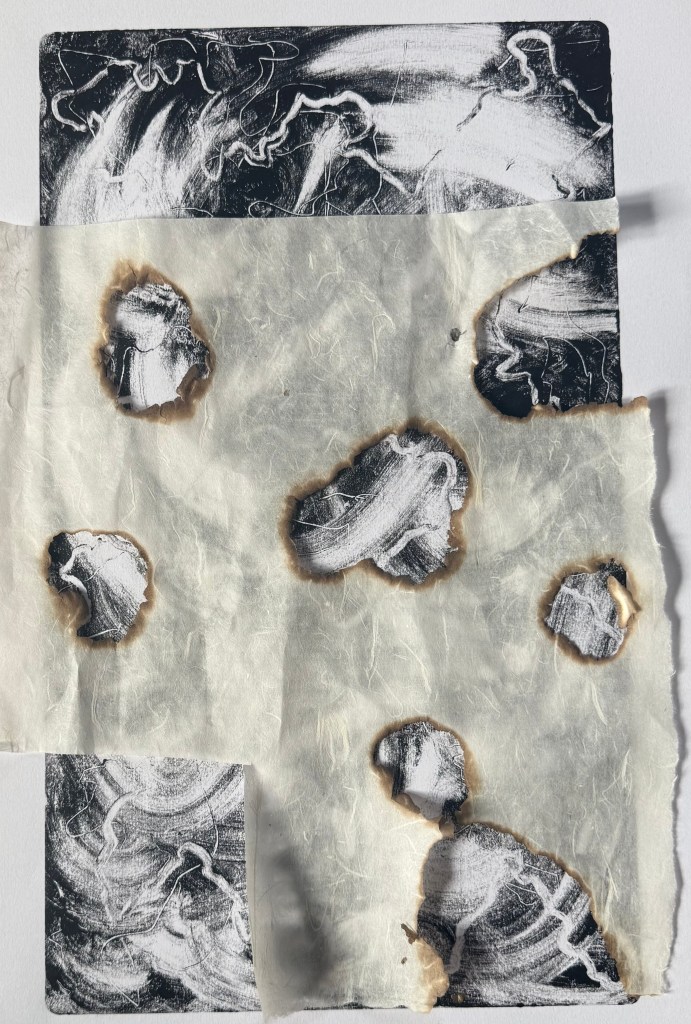
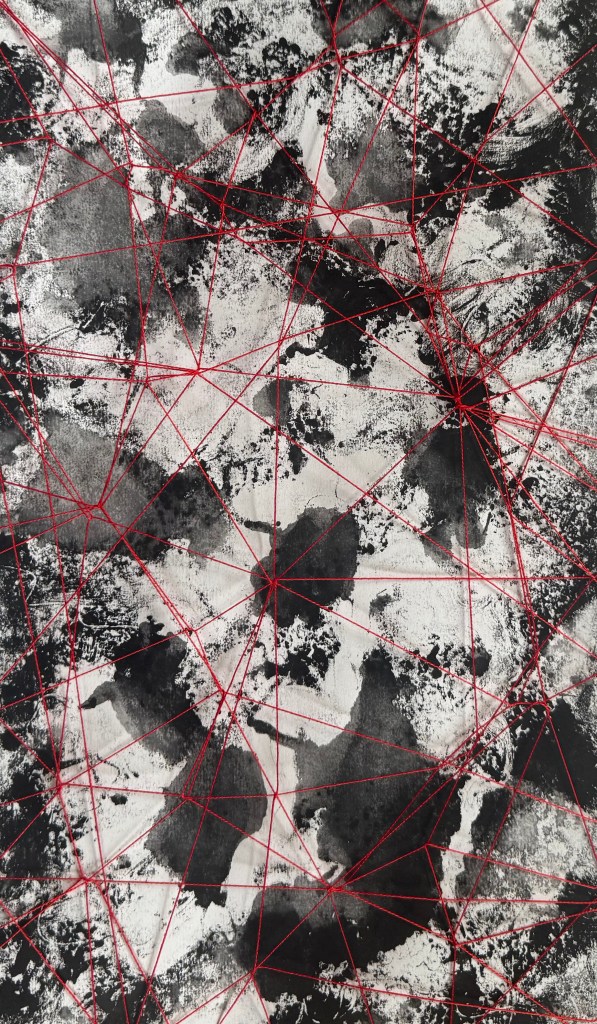
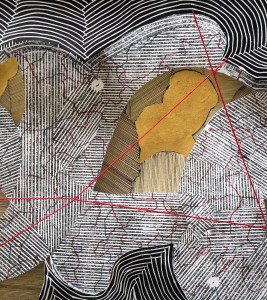
When I got home I cut up the ones that didn’t really work and played around with weaving using varying widths.

I like the last one best. I might experiment with them a bit more.

Rejection

This time last year I was feeling like I had an awful lot to process as a result of the Low Res, and that I couldn’t really get on with very much until I had done so. This year I don’t have the luxury of time. The ‘end’ of the course is nigh. I really need to make the most of what time is left.

Thoughts inevitably turn to the end of year show. I’m still thinking that I will take Jonathan’s advice and keep on as I am, seeing where I am at when the time comes. I’m no longer fixating on a large final piece. I will probably show a few smaller pieces of work, depending on what I have to hand. However, I keep returning to the idea that my blog is a piece in itself. Jonathan and I have previously discussed making it into a book. From what I can see, there are websites that will do this for me but there is little editorial control, and I’m not sure that farming it out to a third party would make it a developmental experience. I think that I would like to make an artefact of sorts out of the blog, and I am thinking about making a book myself. How difficult can it be? Probably, deceptively so, but I’m going to give it a go anyway.

As with last year, I received my annual rejection from the RA during the Low Res. I think that’s the seventh year in a row. My instagram feed is littered with posts by successful applicants, and more recently by unsuccessful ones. They all prove how subjective art is. One caught my attention: how the applicant is trying not to take it personally, but how it is so difficult when she is her art.

I think that I am resolved that I am not my art – it is something that I have made; it is not me, at least not the present me. Even if it is, I came to terms a long time ago with the idea that I can’t please all of the people all of the time, and so it follows that not everyone will like the art that I make.

What’s The Worst That Can Happen?

I spoke with my daughter yesterday. After a short while it became apparent that something wasn’t quite right. She eventually told me that she felt really stressed. It’s difficult when all you want to do is give someone a hug but they’re miles away. It’s her final year: she has a dissertation due in a month and she starts her last set of exams shortly afterwards. She’s in a group of three and they are conducting an experiment, but circumstances have transpired that she has been the one who has had to spend day after day on campus conducting the testing of the participants, whilst one of her group has been abroad and the other has spent half of each week at home with his parents. She feels snowed under with work. She’s waking in the early hours, and not sleeping properly.

I asked her what is the worst that can happen? I don’t graduate, she replied. And what then? I have to redo the year. Is that such a bad thing? It upsets my plan. Well, that’s life, plans often have to change. So, if the very worst case scenario is not that bad, why make yourself ill worrying about it? We also discussed how she needs to be kinder to herself. I reminded her that it’s been non-stop since her car accident last May. She lost her summer holidays to pain relief, physiotherapy and trying to process the situation she found herself in, and no sooner was she emerging from it all than she was back at uni with the onslaught of the final year. I suggested that she discuss how she’s feeling with her supervisor – if you don’t tell people you’re struggling, they won’t know. I think she felt better – she said she did.

The conversation reminded me of the day in my early thirties when I walked out of the office to go to a meeting and realised that I couldn’t go on, and went home, leaving my trainee to go to it alone. I remember how I felt that day. I had an overwhelming feeling that I just couldn’t carry on – there was absolutely no doubt in my mind that it was the right thing to do, no concern that I was letting anybody down. The only other time that I have been that absolute is when I married my husband. I was signed off work for two weeks with ‘exhaustion’, the culmination of running an expedited trial which instead of taking a year to progress, was condensed into less than a couple of months; working incredibly long hours, every day. I coped because I was expected to cope, and like my daughter I just got on with it, reliably taking up the slack. It wasn’t a great work environment, driven by data, with little consideration for the person. The night before my mother had told me that she had been diagnosed with breast cancer – it was the nudge that had pushed me over the edge.

I learnt two important lessons from that experience: no-one is indispensable (they managed to get by without me) and how to say ‘no’. As a consequence work became more tolerable, but not enough for me to go back after maternity leave.

Whenever I hear that a friend’s child wants to be a lawyer, my heart sinks. I still feel uncomfortable when I go back into a corporate environment. The visit to Clifford Chance’s offices during the Low Res to see Jo Boddy’s wonderful exhibition stirred up some old feelings. But worth it because what amazing work. It was a privilege to hear her thinking behind her process, and how she went about its making.

Freedom

I used to think that the key to getting away from product driven working practice would be to free myself up – be looser and more expressive, be out of control, go bigger.

But I’ve recently realised that this isn’t necessarily the case. Maybe I’m not looking for drama, physicality or excitement. Some of the most satisfying moments have been making with repetitive mark-making and slow movements. I don’t need to be writhing around on the floor in a puddle of paint or covering huge pieces of paper with big swooping marks to free myself up; I just need to keep my brain distracted with the process.

Suminagashi

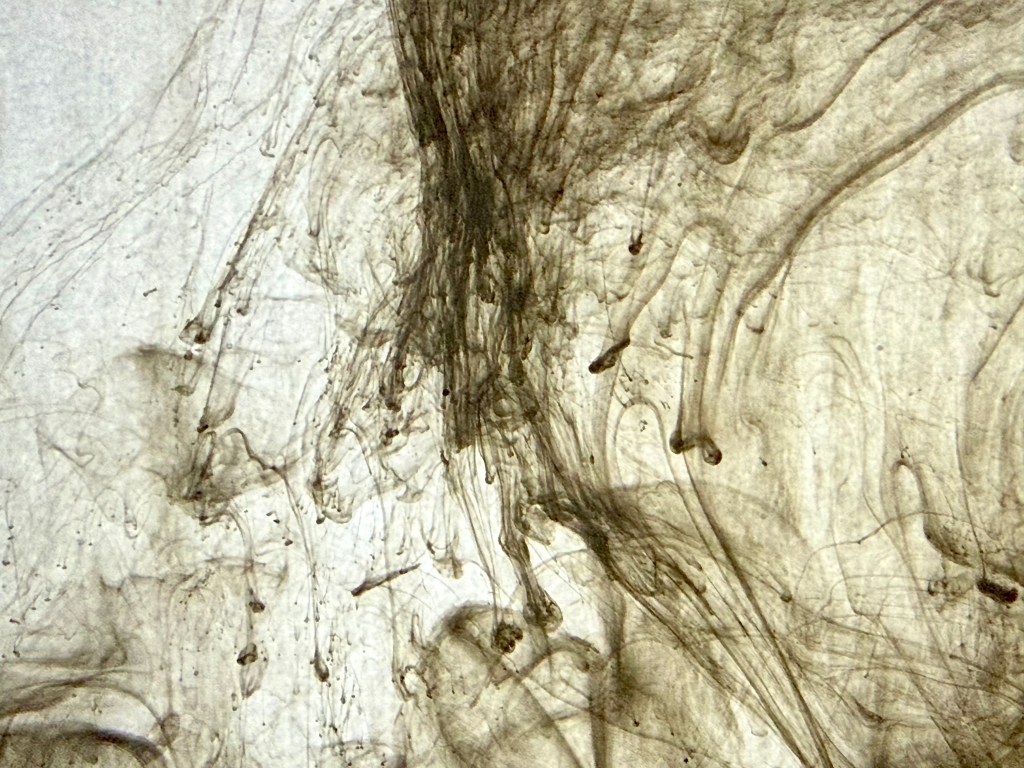
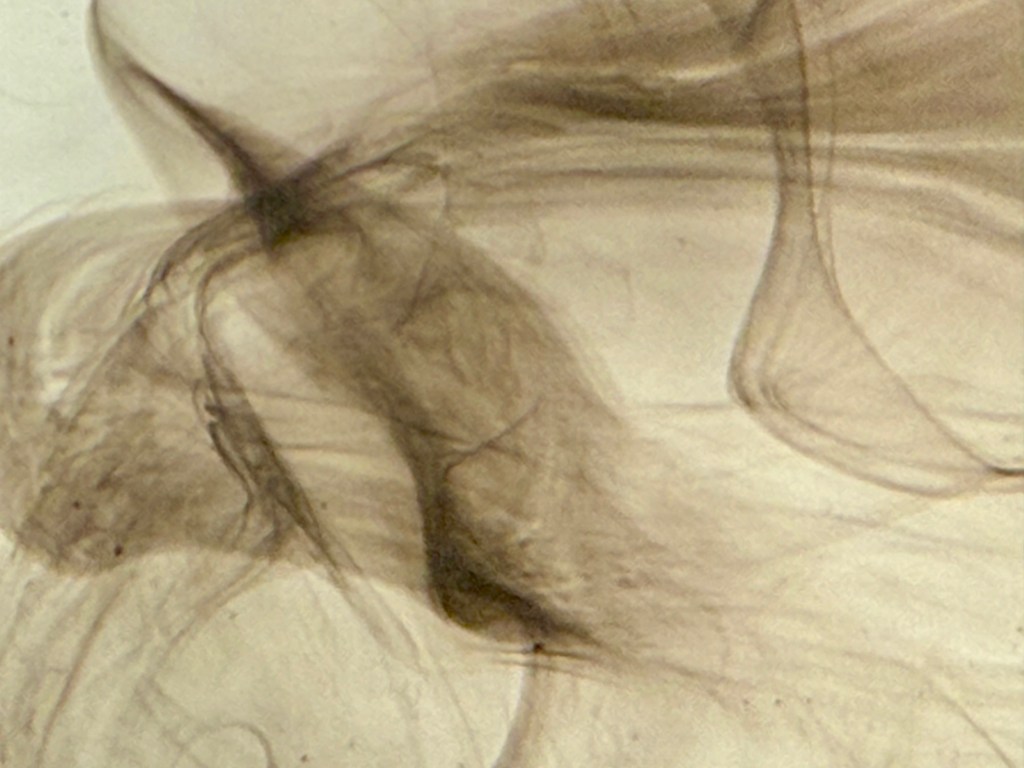
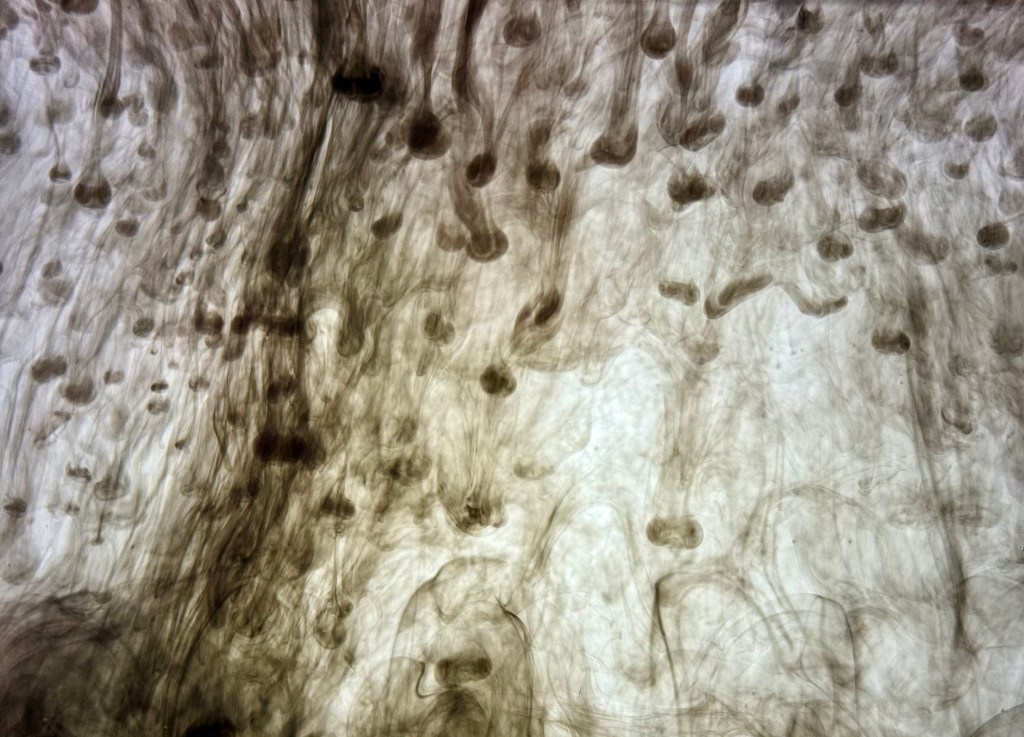
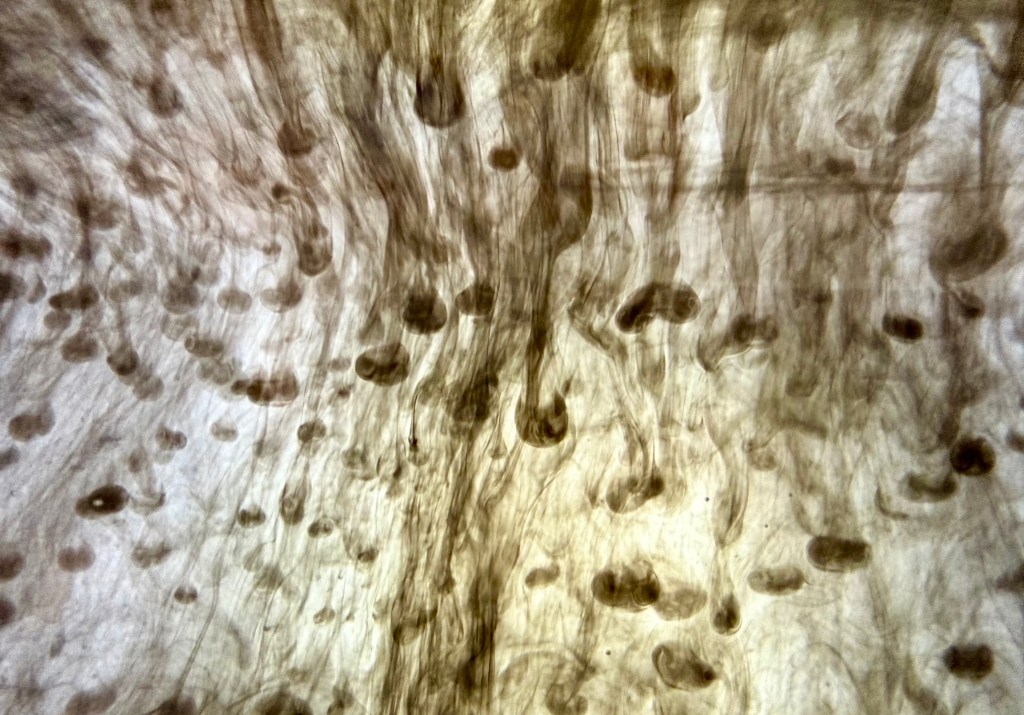
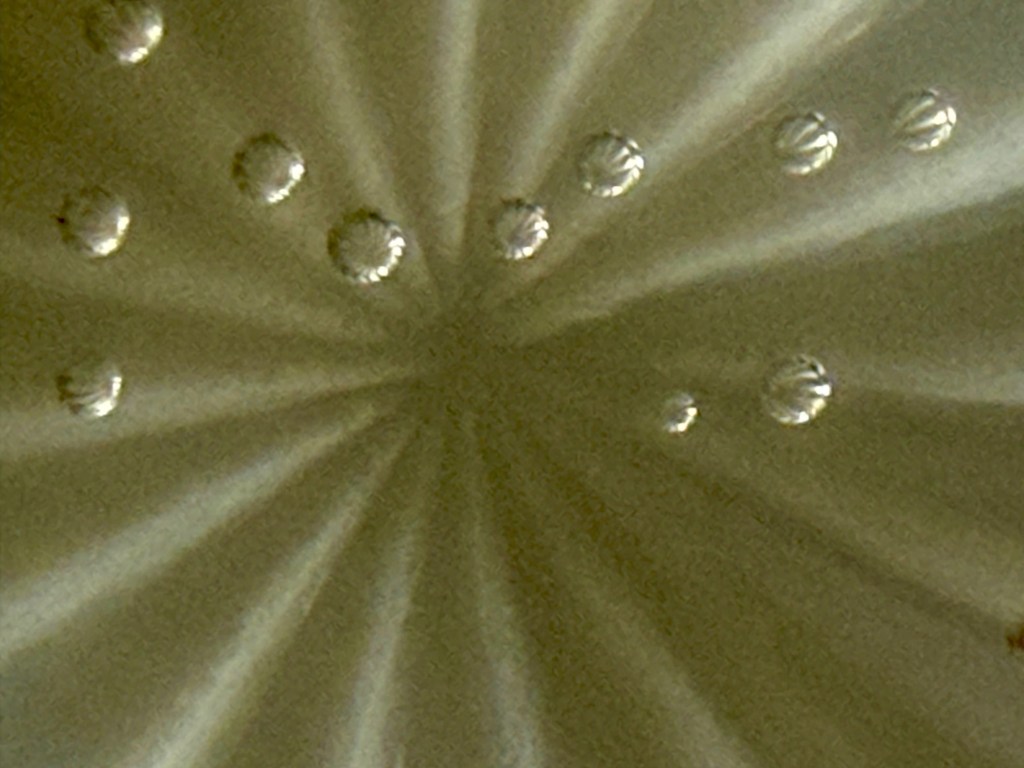
Whilst scrolling, I came across suminagashi – a form of marbling using floating inks. I was drawn to how the effects are reminiscent of contour lines. I was transfixed watching the process, and decided to have a go.

I got hold of some sumi ink and began. Well, it was an unmitigated disaster. The ink wouldn’t float, so I tried thinning it, changing from hard to softened water, even trying distilled. Then when it did float, when I removed the paper from the surface the ink ran everywhere. I tried different papers – watercolour, Ho-sho etc. The most successful turned out to be printer paper. After all that, I decided that perhaps it’s not for me; maybe the results aren’t that great either.

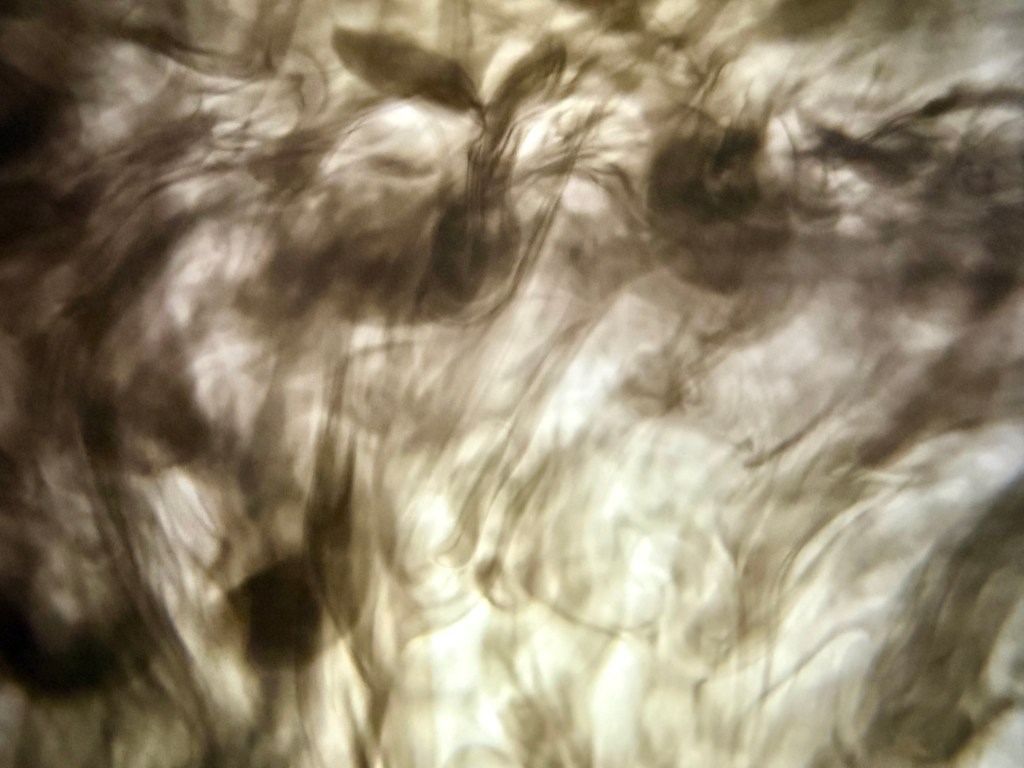
But whilst everything was going wrong, I videoed and photographed. That was much more interesting; watching the ink in the water.

https://youtu.be/s6A-f–2Zio?si=0ngK49HusDV-T2BE

https://youtu.be/zwGYX_Z4_U8?si=A78tycXa4kq1Xwdn

https://youtu.be/n-lo_8TZvdo?si=oN0B184Xh8njHgwZ

https://youtu.be/f2mItHUHoMY?si=CB23cS4FPgzhh892

https://youtu.be/5Iz4SjH9xvY?si=uZqVv2Mbc45gNiXW

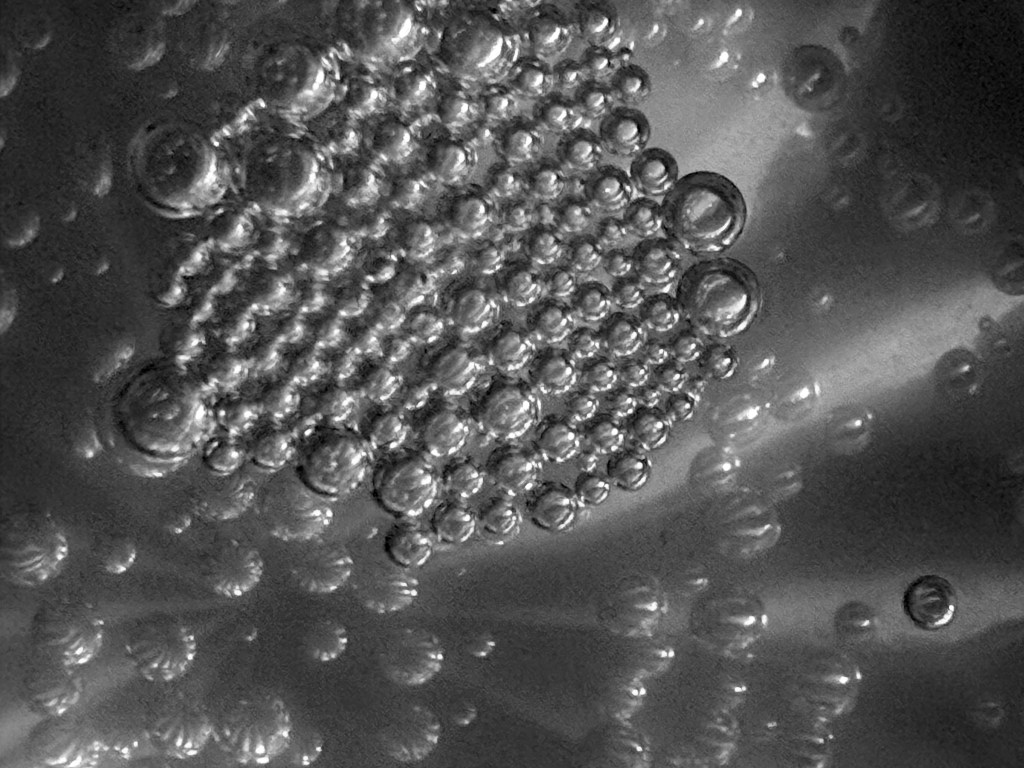
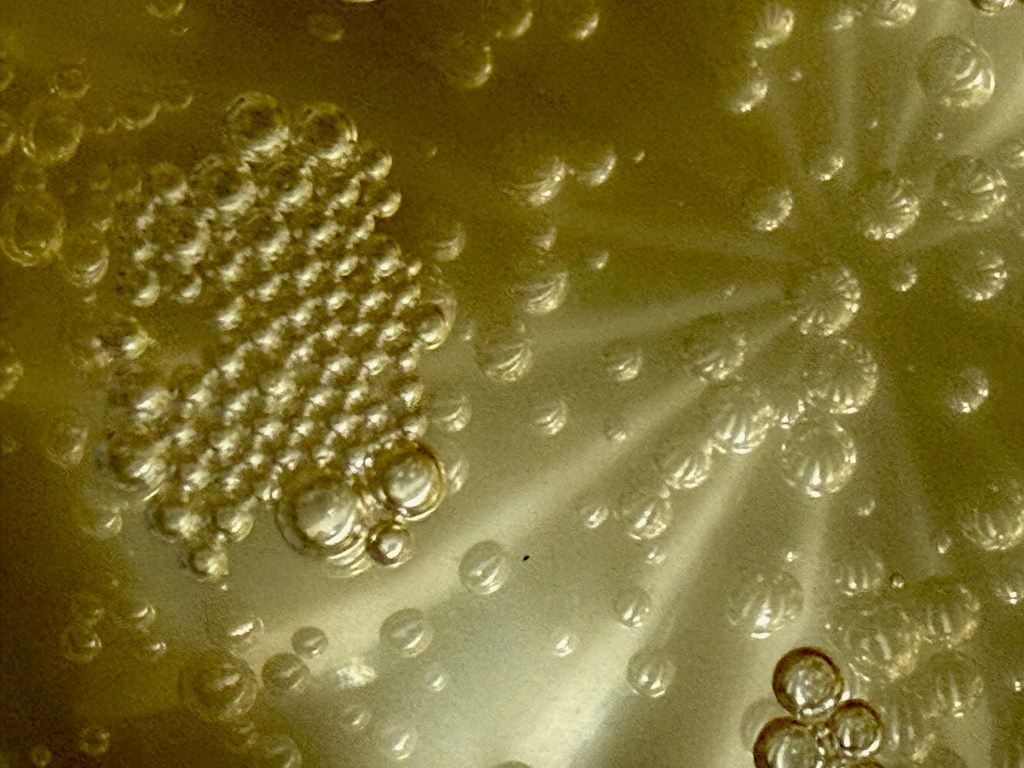
Then some messing around and another go at bubbles, but still disappointing, but I have since discovered a better way – another time.

I’ve managed to get my hands on a small fishtank…

Oops, I’ve Done It Again

I had my latest tutorial with Jonathan a couple of weeks ago. I only meant to leave it a couple of days, to think about it, before I wrote it up. Almost 2 weeks have now passed, and I didn’t make any notes, save for a few odd words I jotted down. I’m having difficulty remembering all the detail. I’m thinking that it might be quite good in the sense of acting as a filter – not in the sense of wheat and chaff, because it’s all wheat, but in the sense of what is really playing on my mind at the moment.

Jonathan asked me how things are – things are good, I’ve had a spate of productivity. What is playing on my mind is the end of year show, and what to make. I had thought about making something which reflects my journey over the last couple of years but the issue is that as soon as I think about an end product I start coming out of the process and old behaviours start to appear. Jonathan asked me what I would do if he told me that I had to have an exhibition tomorrow. Of course I would be able to get some work together, because needs must, but when the deadline is months away that’s a totally different kettle of fish. Jonathan asked me why, because what I could do is just approach the show in the same way as I would approach an exhibition tomorrow. I could just forget about it and carry on as I am and just see where I am closer to June, confident that I will always be able to find something to show. I commented that I really wanted it to have a narrative. Jonathan responded that perhaps the narrative is how I have changed. I asked him what students do – make specific work or work in progress etc? It’s a mixture – some make specific work, some bring a selection of what they’ve been working on and respond to the space. It’s a chance to be experimental and whilst it’s understandable that students want to show all the things they’ve been working on, it’s a case of less is more. In fact, it’s a brave choice to show very little. He suggested that as an extreme example, I could have nothing on the wall, but just be me at a table, asking people to draw outlines which I then start to fill in, taking details to forward on images. As Jonathan spoke I could feel myself reacting physically, resisting. That’s not what I had in mind. It goes back to that inflexibility of thought I referred to in Rain, Rain Go Away, but it didn’t take me long to settle on the alternative approach of just carrying on and seeing where I’m at when the time comes, being mindful that there has to be an element of pre-planning at some stage. Making the decision was a relief – I instantly felt the self-inflicted pressure disappear and I realised that my original plan had actually been fundamentally wrong – produce work which reflected a period of time, is not really possible, signifies something coming to an end – much better to show something which reflects where I am in the process at that moment in time – a snapshot of an ongoing process of development. I’m feeling much happier.

We chatted a bit about the perfectionist, product-driven chimp on my shoulder; about how I need to try and stop it from taking control when it comes to having to think about a final product, to keep it quiet which might involve acknowledging what its saying, but not acting on it.

We spoke about behaviour of work, and process. I explained that I am more mindful in the process of making (I’m now wondering whether that’s a good thing or not) and how I enjoy the process much more than the product which is pretty mind blowing considering where I started out. I’ve been thinking about whether process needs to be apparent in my work, or whether it’s enough that I see it when I look at it. I decided that it was – viewers will always bring their own interpretation.

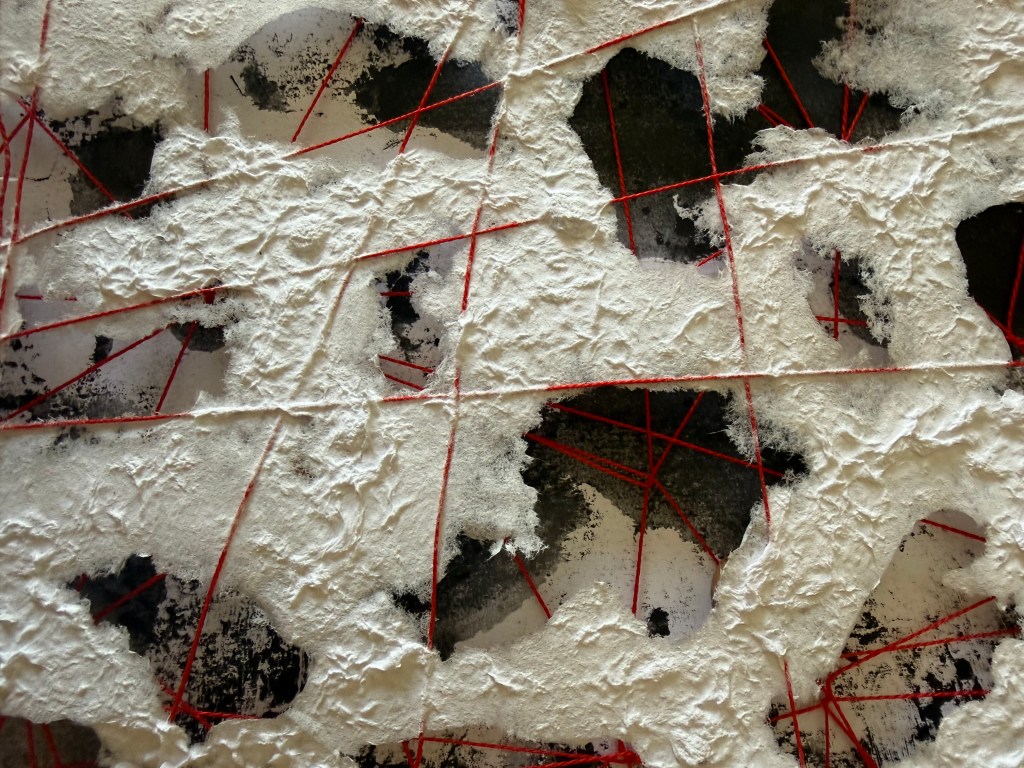
We discussed my thread and paper experiments. Jonathan commented that it seems important along with the layering in my recent work. Will I continue to make videos? Definitely – they are a direct way of representing how I see things.

Do I Have to Look?

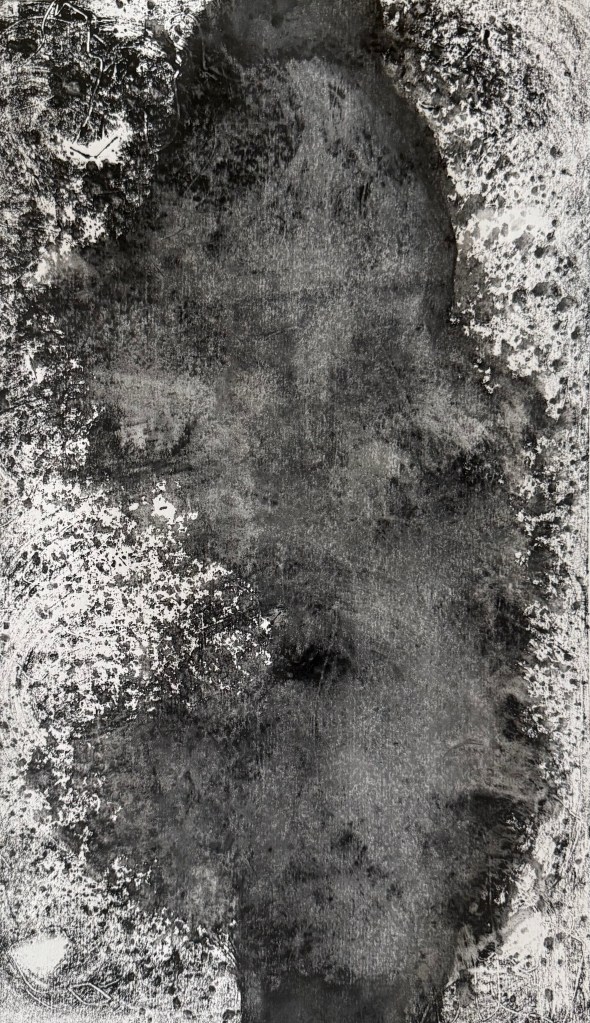
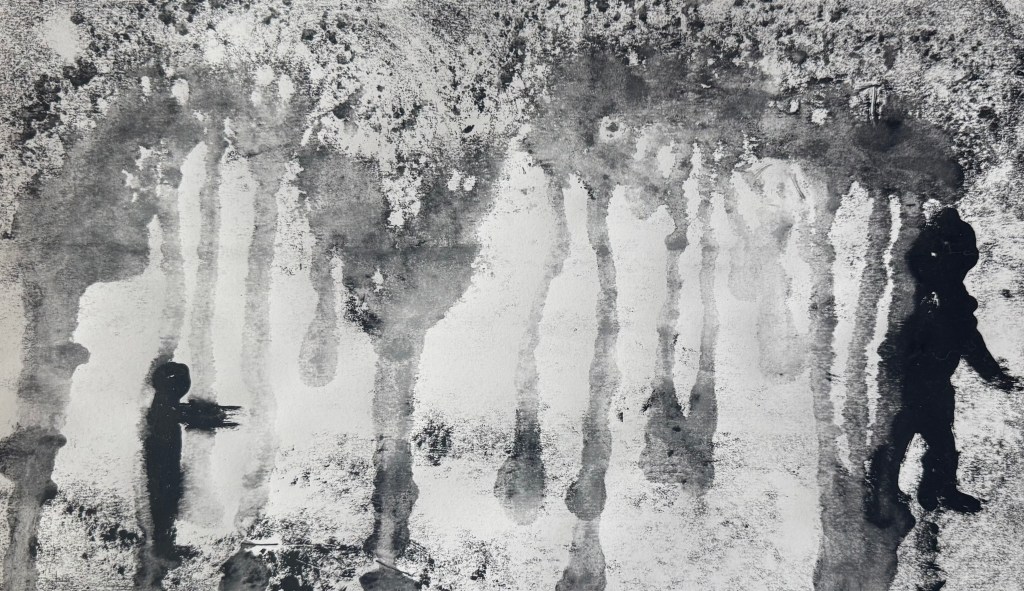
I had an urge to make some marks with charcoal before I went to bed last night. It started off as a wild grassy landscape then I wiped it and used some Conté pastel to draw various figures, crouched, swimming, running etc. They were quite comical. I sometimes wonder whether I have to look at something to be able to draw it. Anyway, I wiped that off and it left some lovely outlines. I kept using the pastel, closed my eyes and drew two heads using a continuous line, looking from time to time. I then traced the lines with some charcoal, cut a wedge of eraser using the fine edge backwards and forwards over the line. I wiped it all back and then did several layers of pastel then charcoal using the eraser in brisk strokes all over the paper. I think it turned out surprisingly well, and I’m pleased that the heads are only just visible when you stand back – close up it’s just a lot of mark-making. And the weirdest thing, I can see a third head in between the two which doesn’t stand out so well in the photo.

Layering

I quite like the idea of revelation, and layering seems to facilitate this.

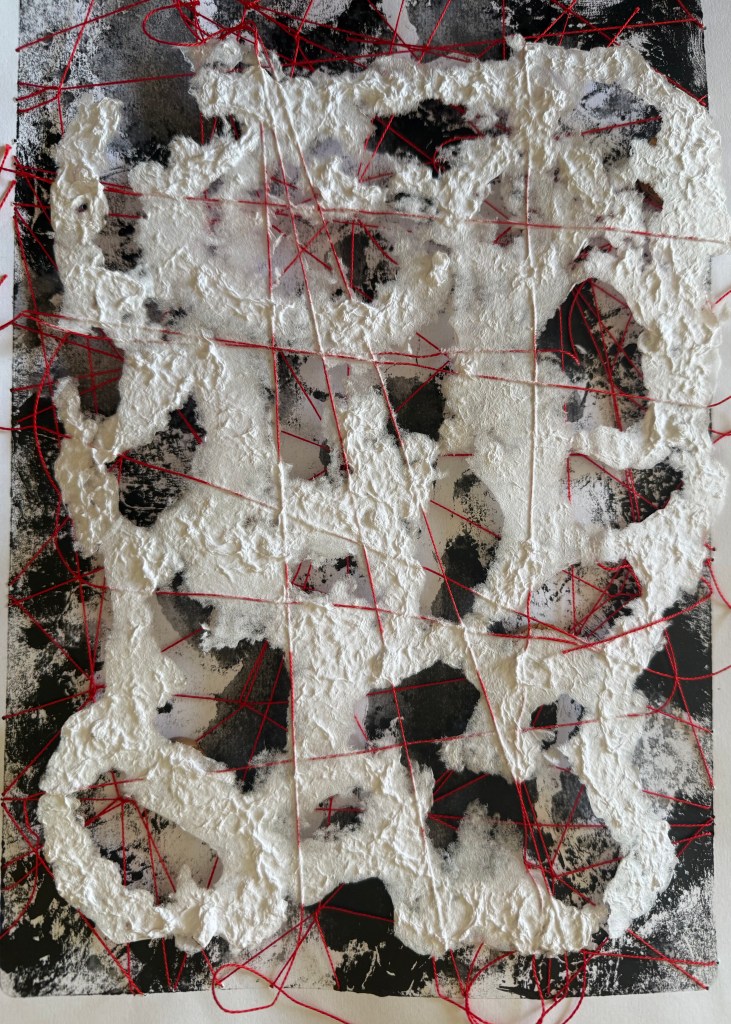
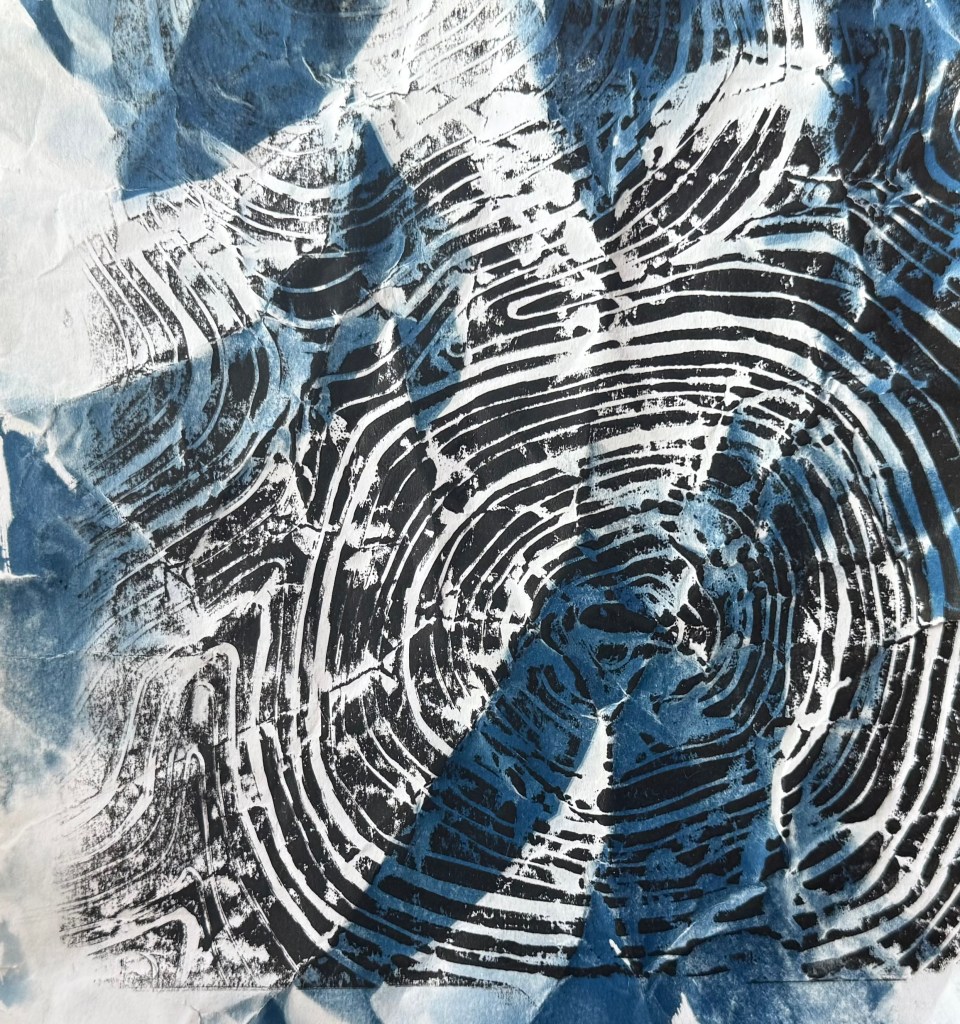
Drawing lines on the first print I made of the linocut – there must have been some loose bits because it left small circular areas of white which reminded me of places or points of interest on a map. I then cut out some areas and laid it on top of a section of the figures line drawing using some cut up old corks as makeshift spacers. I then stuck the print with the large white space onto some watercolour paper and cut out the centre. I sewed some threads across the centre – thicker embroidery silk would have been better but I had to make do with what I had to hand. I laid it on top, slightly off from the print below.