Yet More Play

The sun was out today so I thought that I would take advantage and engage in some more playful experimenting.

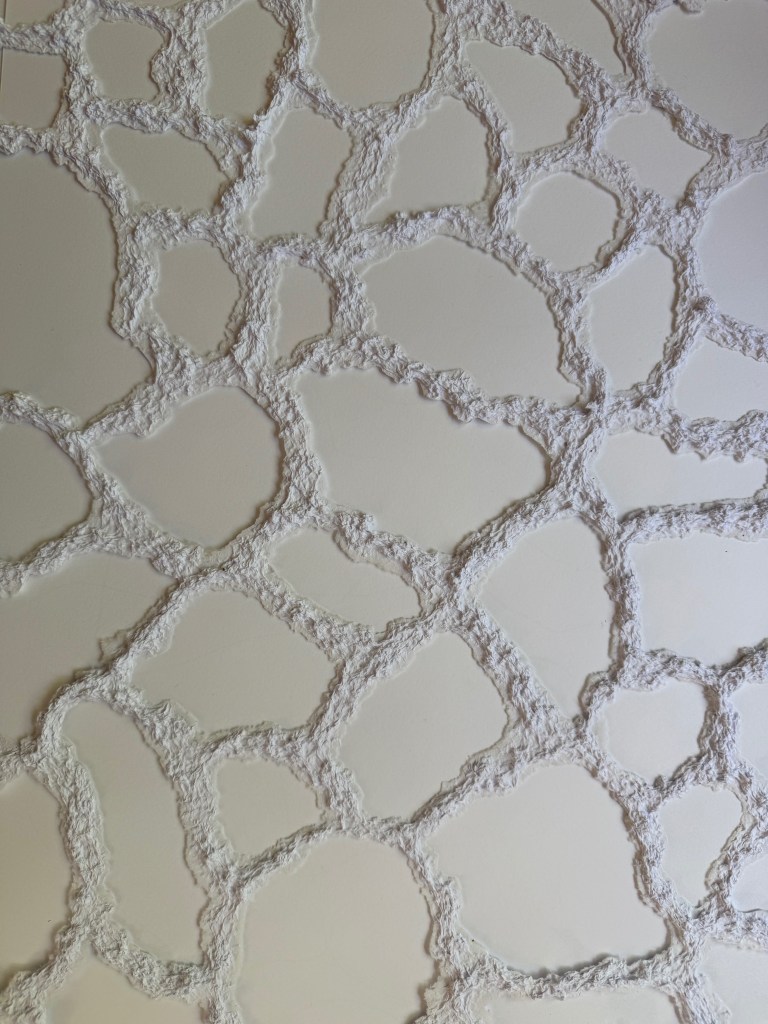
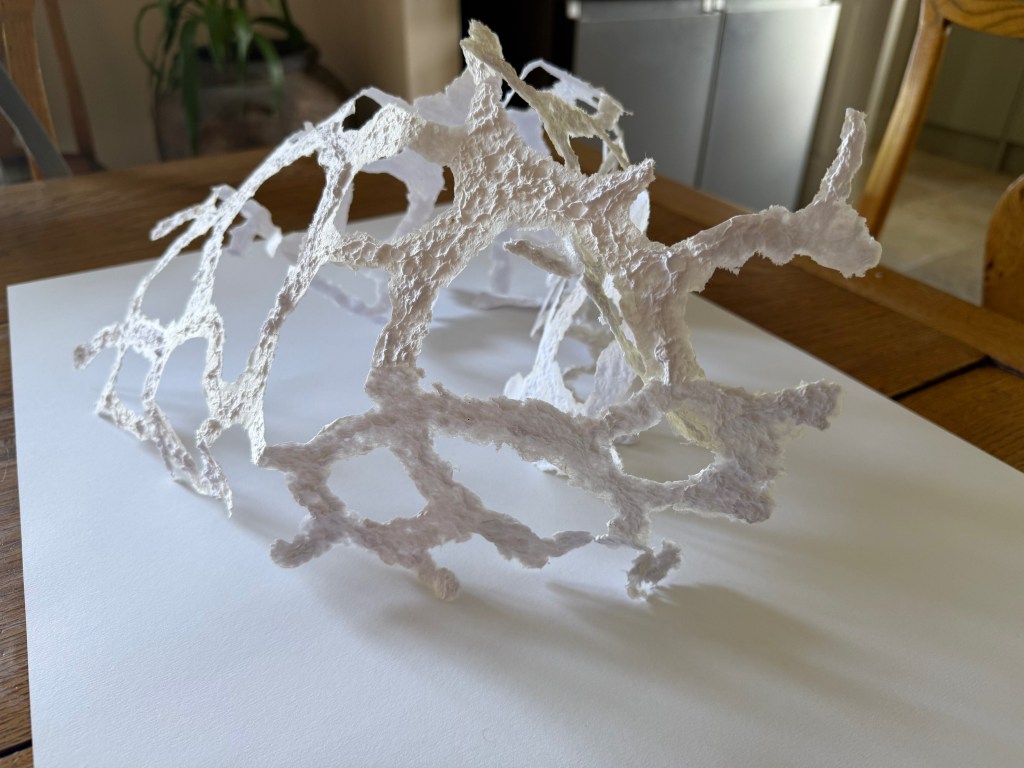
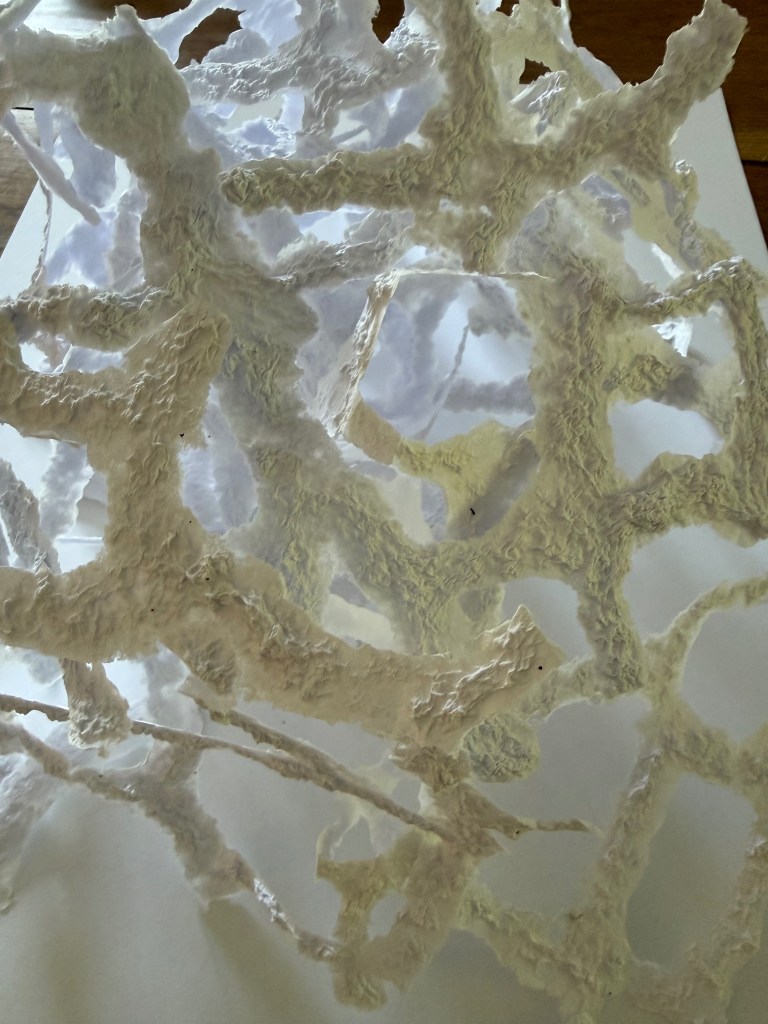
I’ve been lining up my paper pulp lacey membrane sheets by eye – that’s not working and so I’ve marked the edge of the frame so that each sheet is a repetition around the edges which will then line up. I gathered the ones that I’ve made already together in a pile intending to reprocess them in the blender. They took on a 3D form which caught my eye – maybe something for later. I also quite like how they look when laid on white paper.
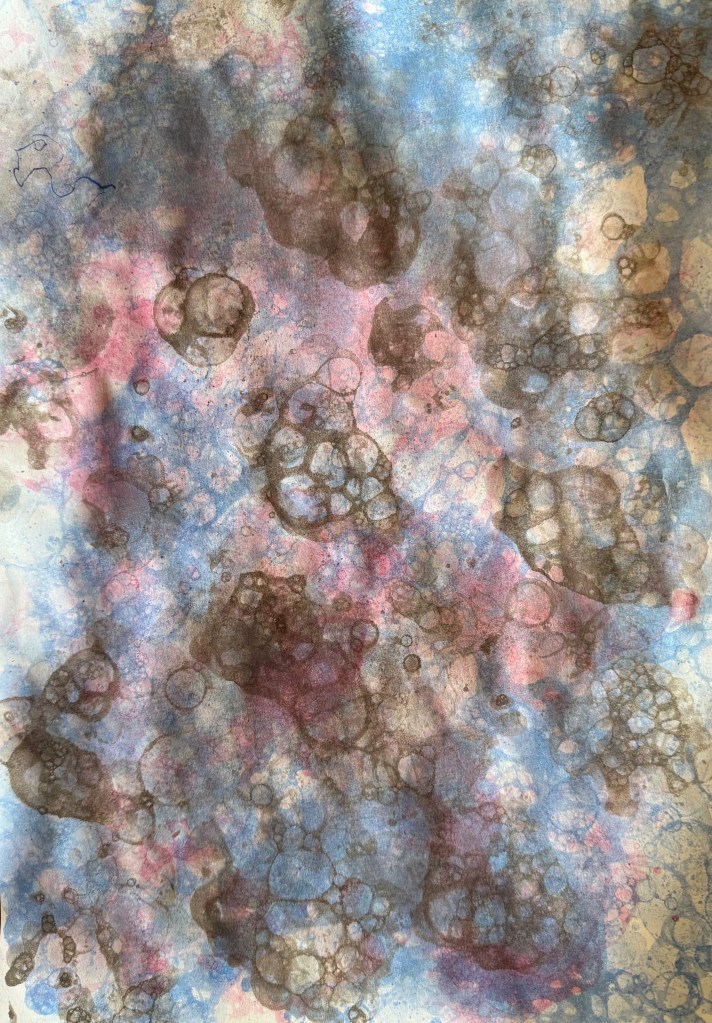
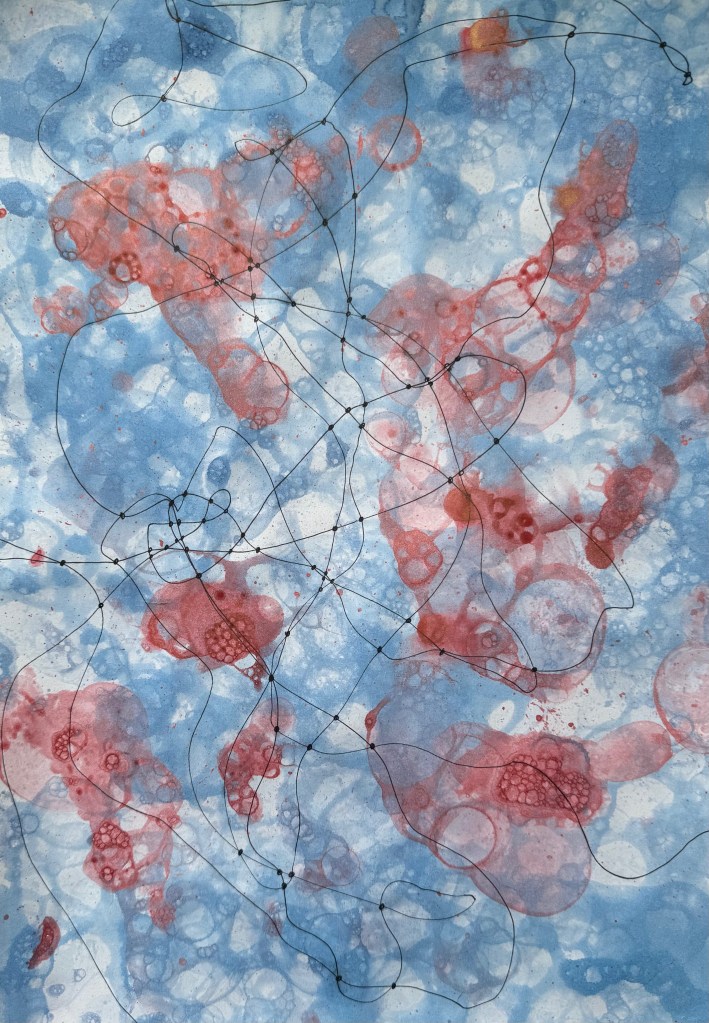
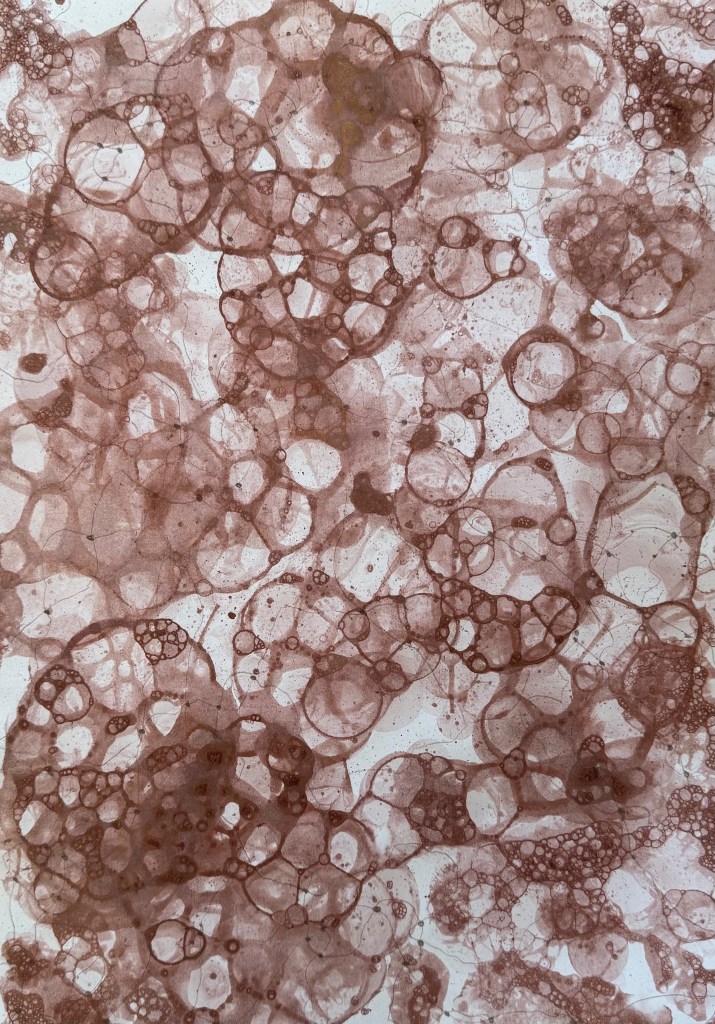
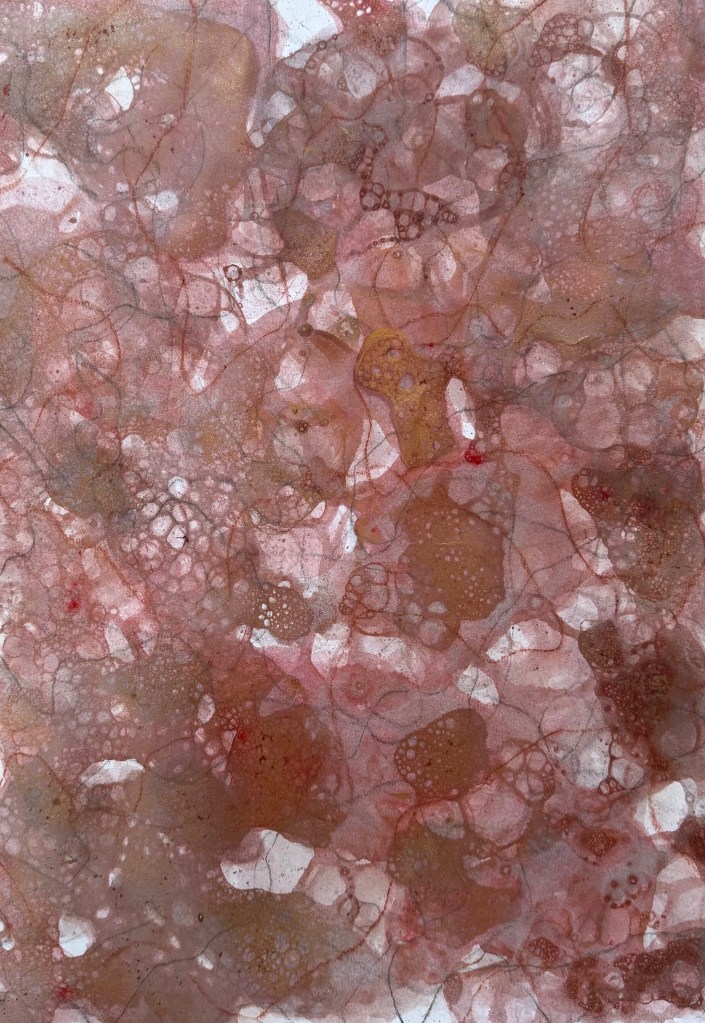
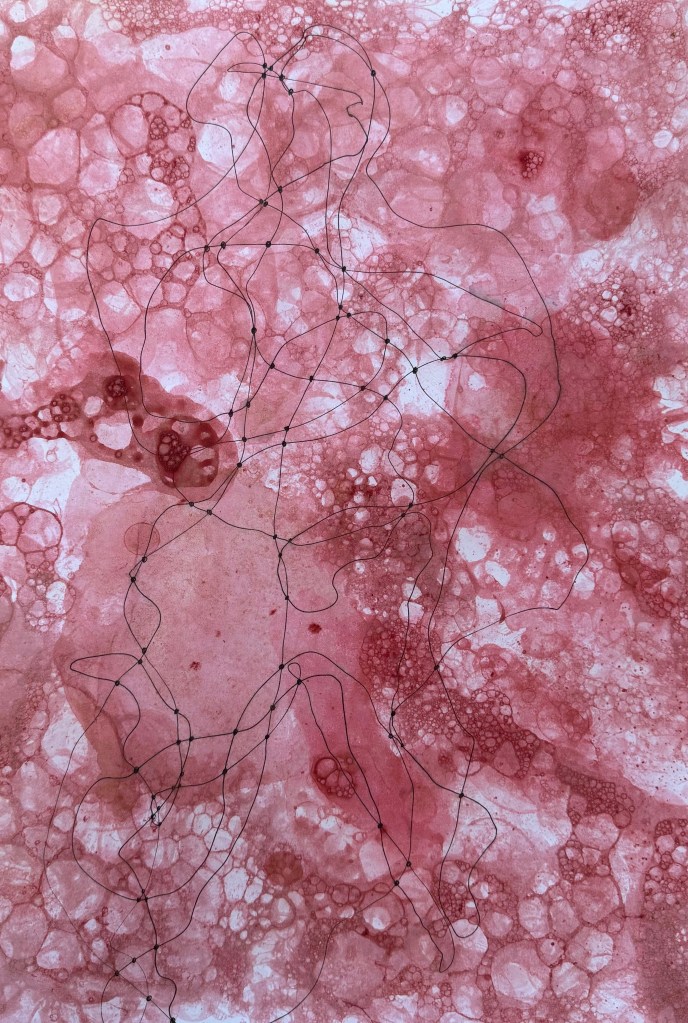
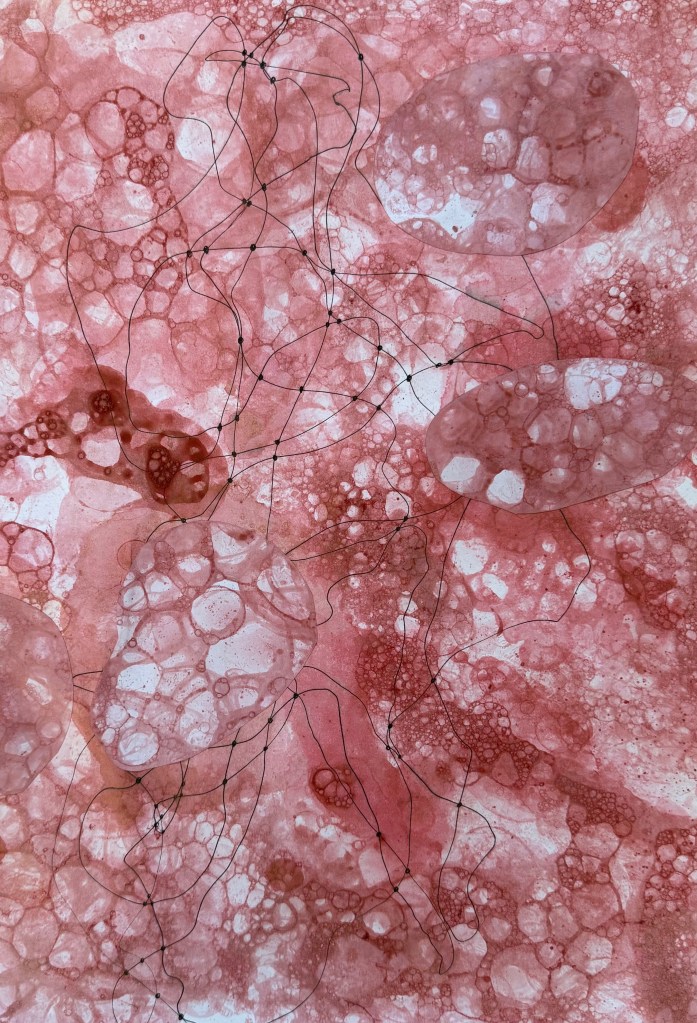
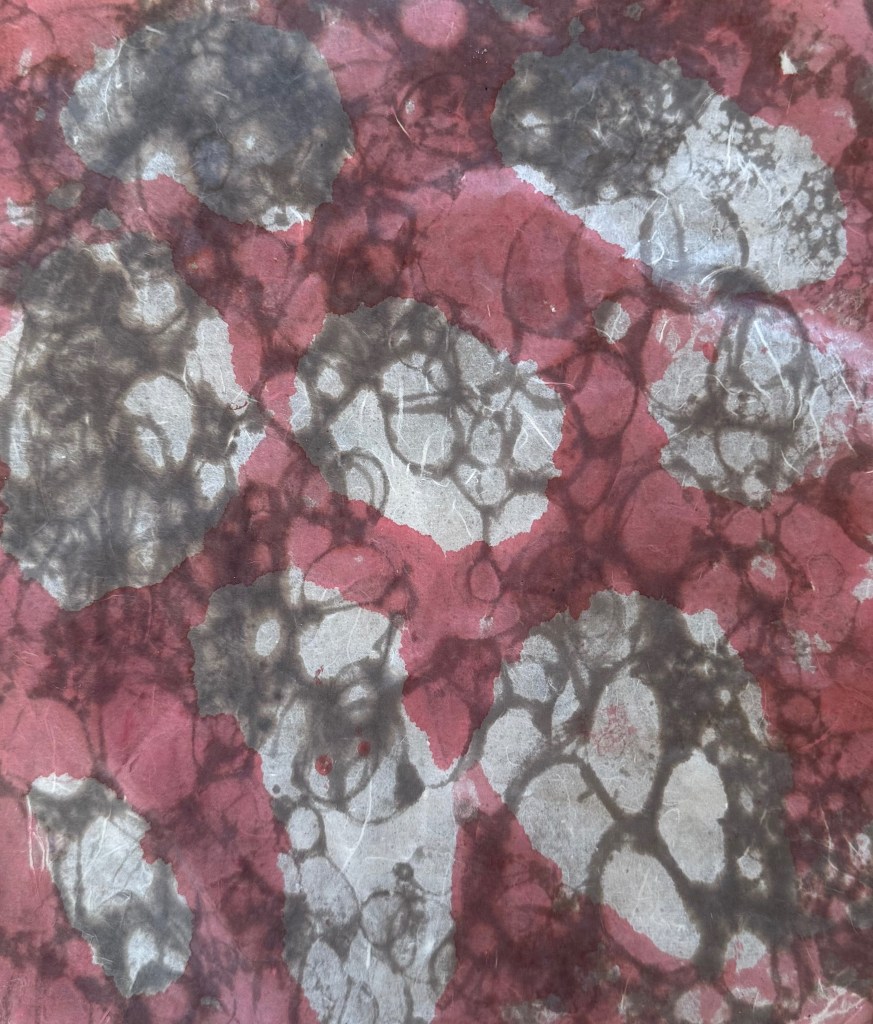
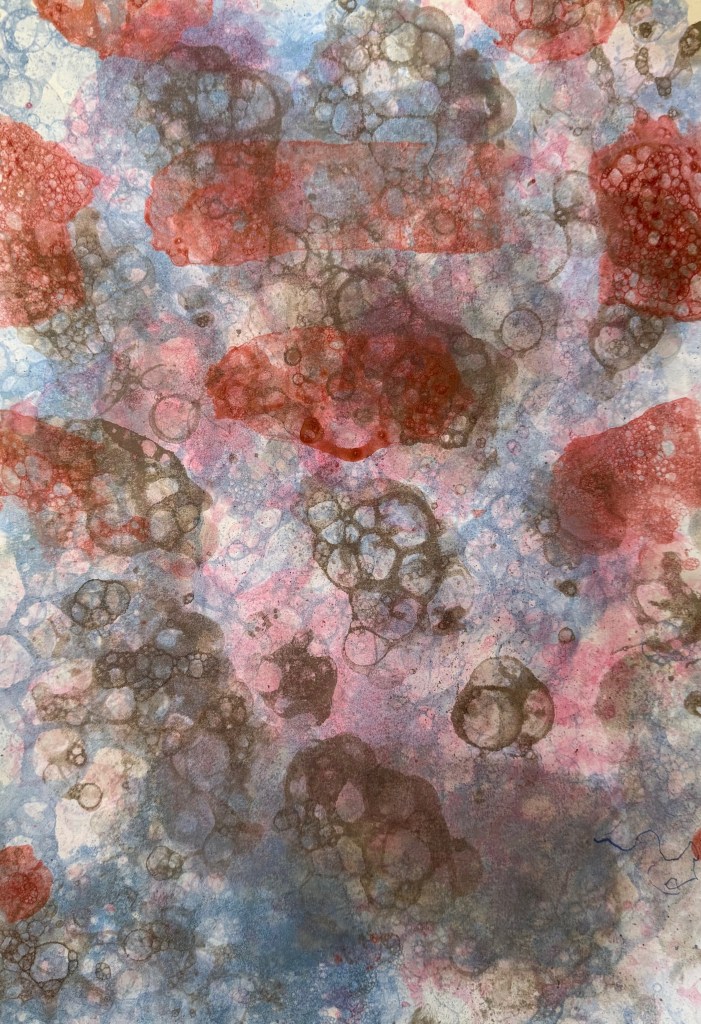
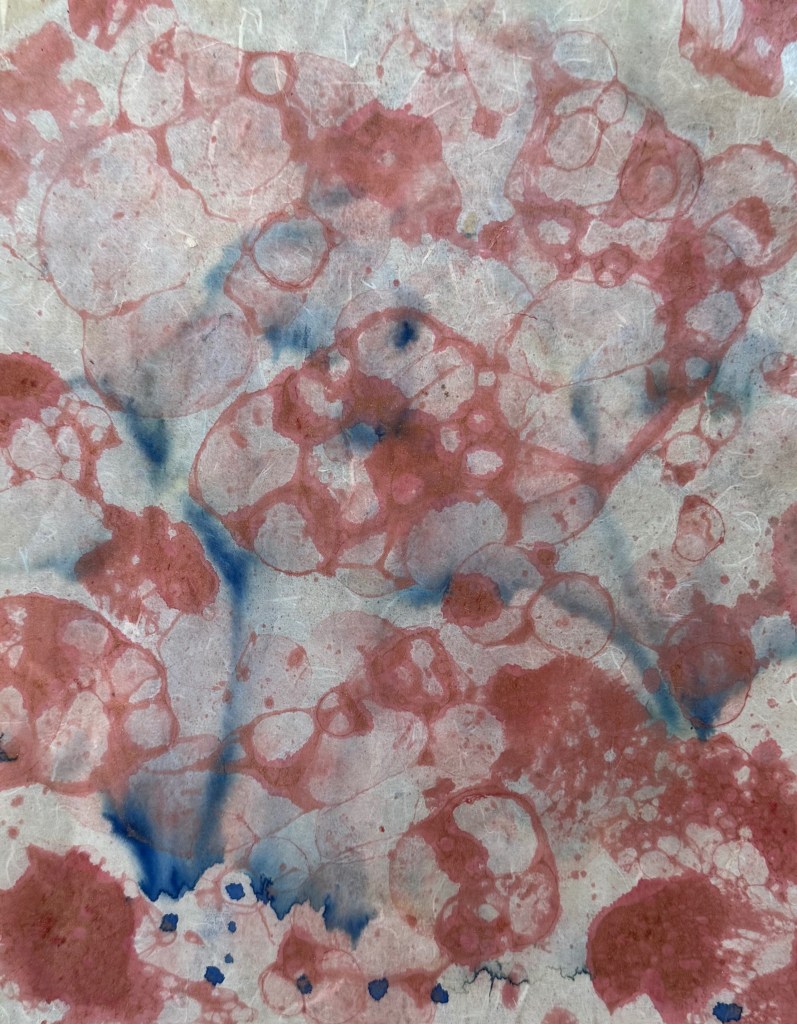
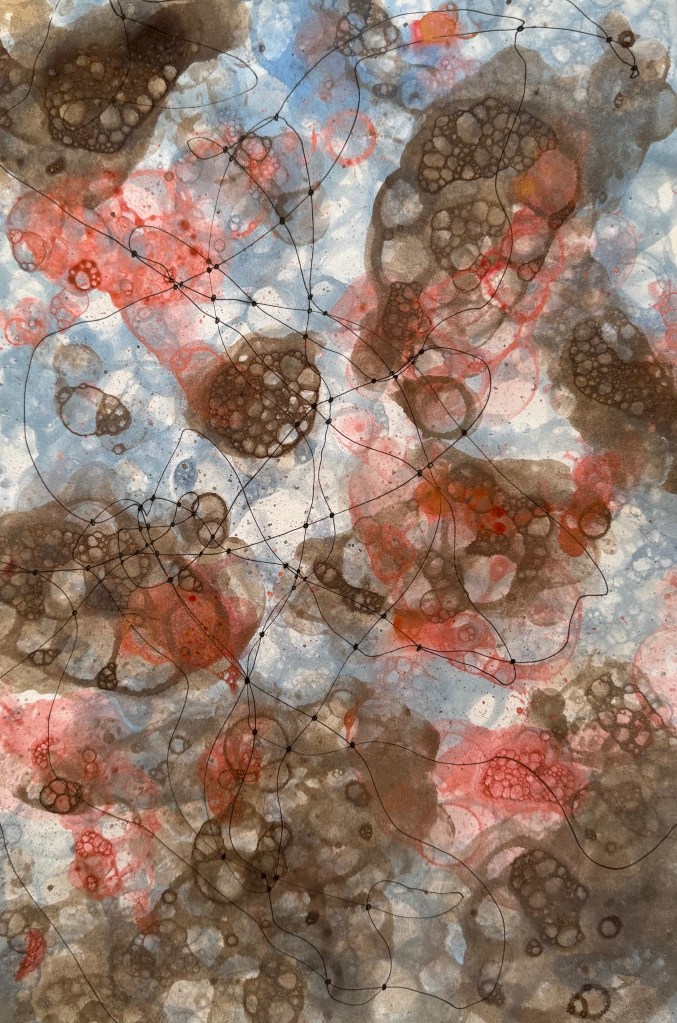
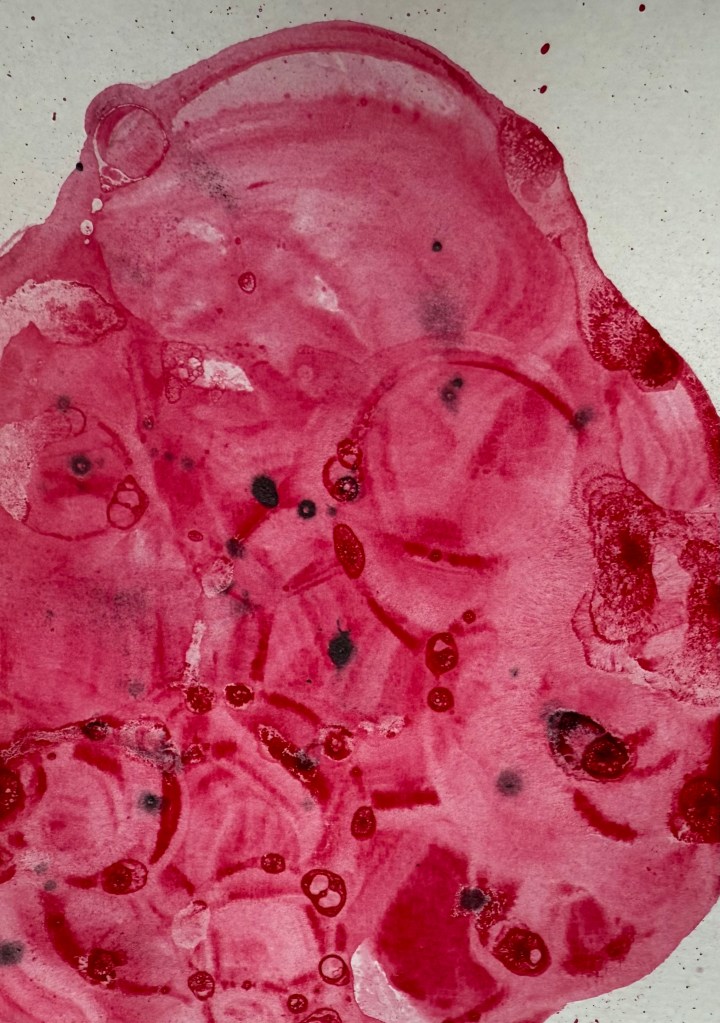
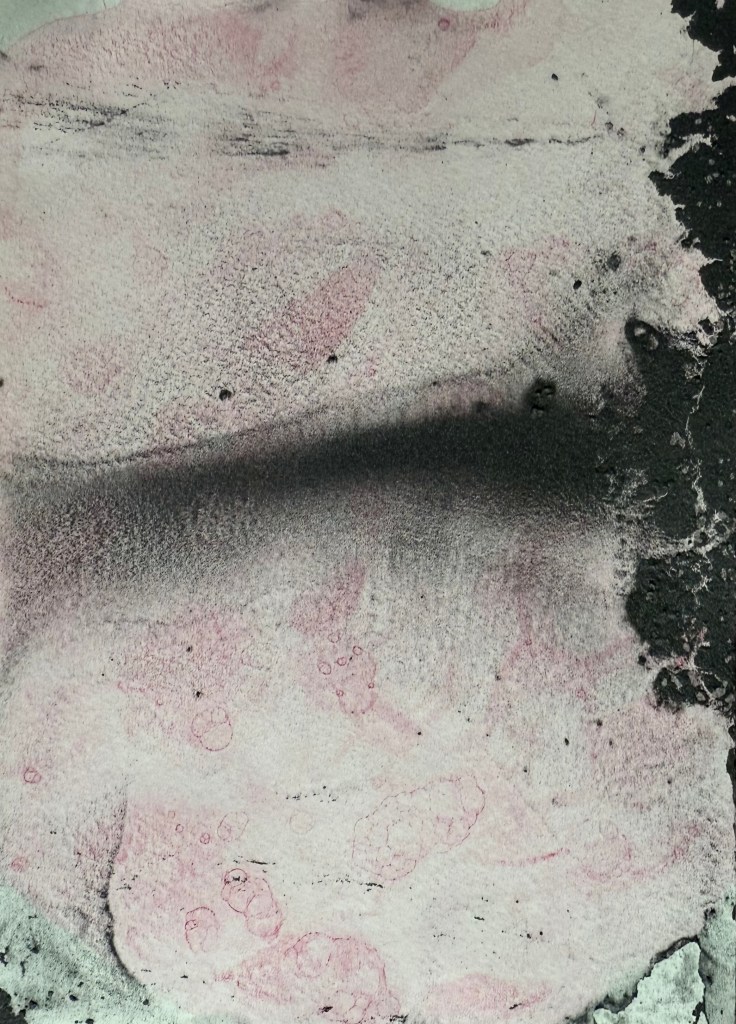
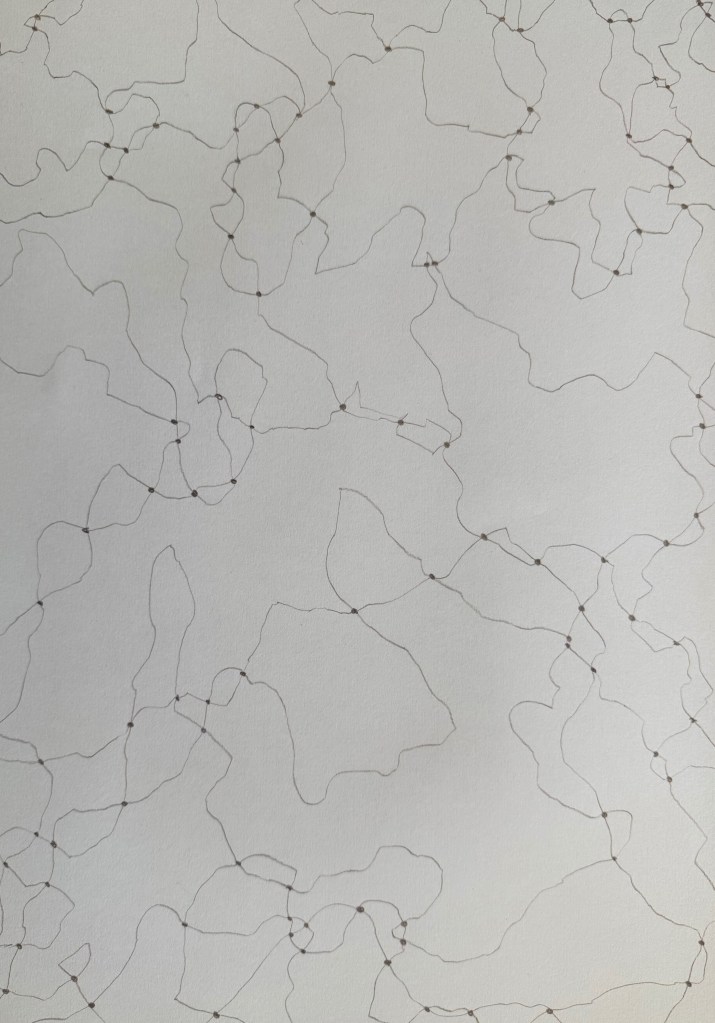
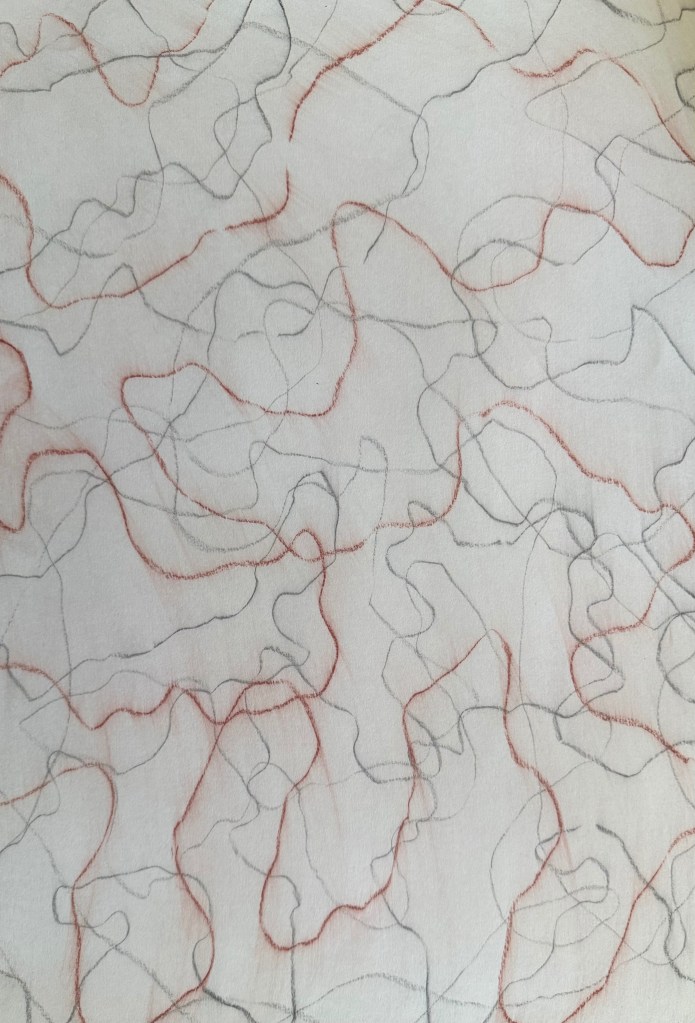
Then it was onto experimenting with bubbles using a mixture of inks and acrylic paints. I want to create a base layer onto which I will print, draw, paint, whatever takes my fancy. I like the idea of it being biological and cell like, hence the bubbles. I tried cartridge paper and the mulberry paper that I’m using for the book. The mulberry paper gives a much less defined edge which I really like. I tried masking with bits of paper – if I ultimately go down this route I’ll use something more robust and less inclined to buckle when wet, although it did provide some pieces to collage. I wanted to see if I could get a layer of lines below, so tried using a fine liner, a pencil and a combination of charcoal and pastel before applying the bubbles.

My first thoughts are to go with something that’s indicative of inside of the body and so I think that for now I’m tending towards reddish tones.
I liked the effect of the shadow cast by the stone.
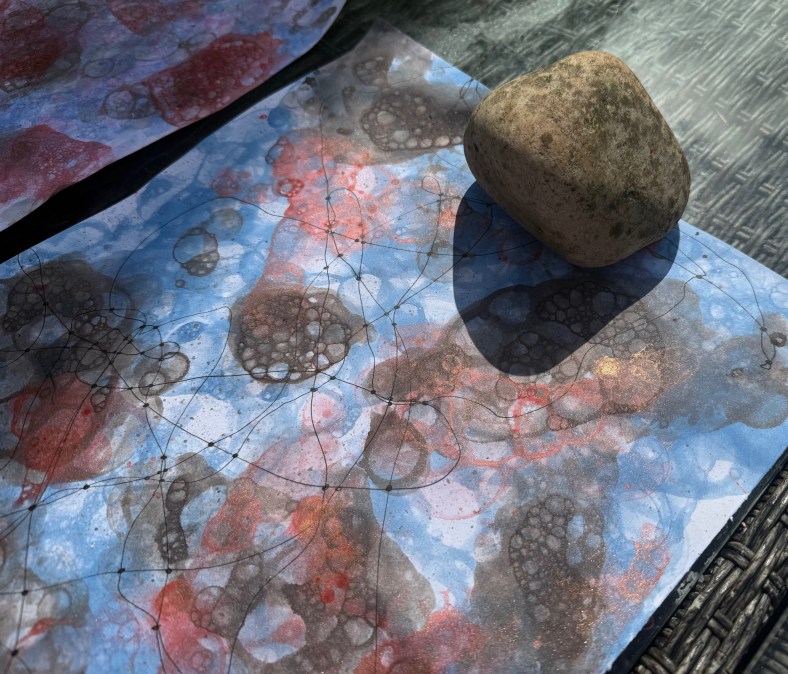
I became distracted by the bubbles.
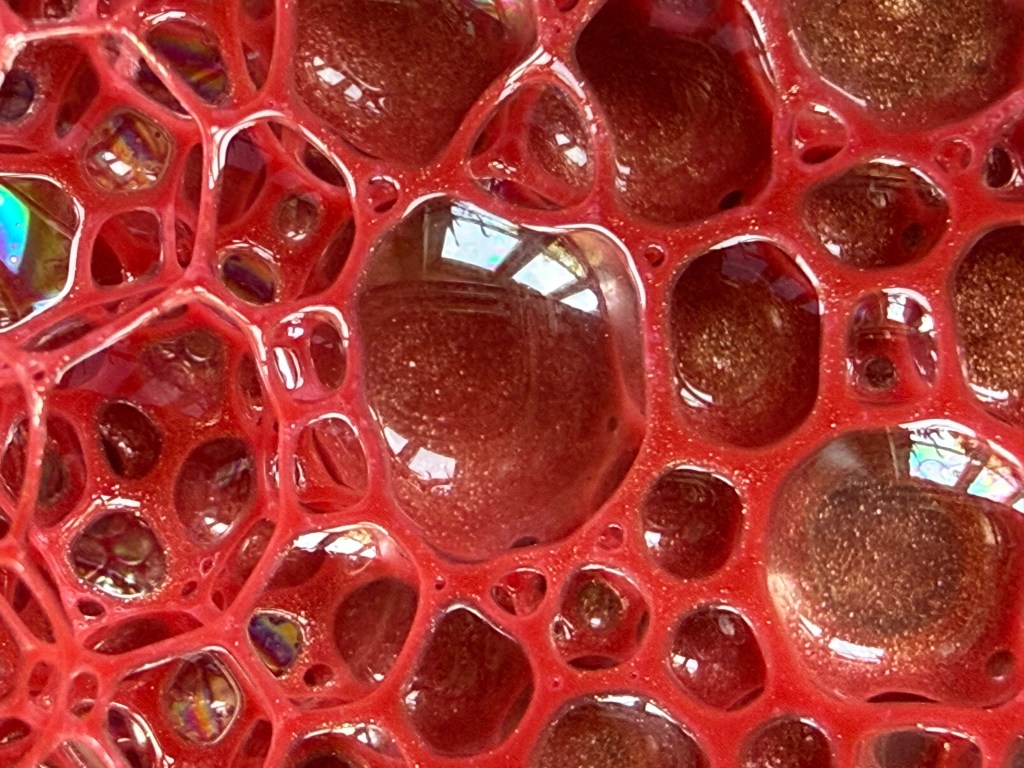
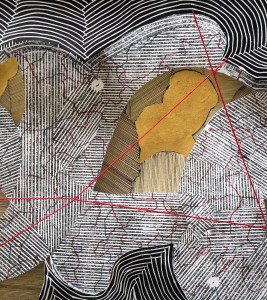
I’ve taped all my test sheets together ready for a layer of printing – I just need to get an idea of size and context for the printed elements. I’ve got together some off cuts of lino and made some shapes out of them ready to experiment with tomorrow morning. I’ve given the main shapes some further thought and decided that having said that they have an identity in my mind, I will not use them again. I might try using their outline, but I will probably cut a new shape most likely using loose lines rather than the straight ones I used previously, to give it a more organic feel. That’s the idea for now, but it could well change!
You Know, Kate, Not Everything You Do Is Art

I was left speechless (unusually for me).

I was a bit surprised because usually he is a bit more open-minded, being someone who likes to experience art, to talk about art and to paint. Maybe it’s because it was the umpteenth time that I had disturbed him whilst he was doomscrolling on his phone. Look at this, I had said. I told him that I would name and shame him. I told him that I would tell all my course mates what he had said and ask them how I should have reacted. We had a titter.

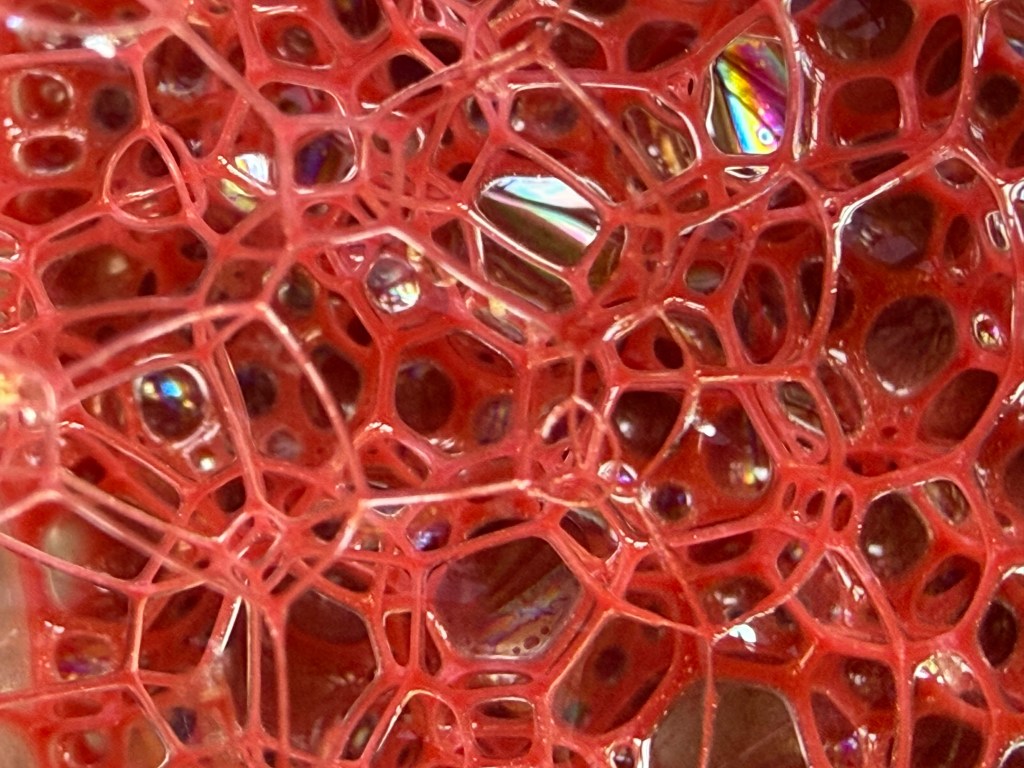
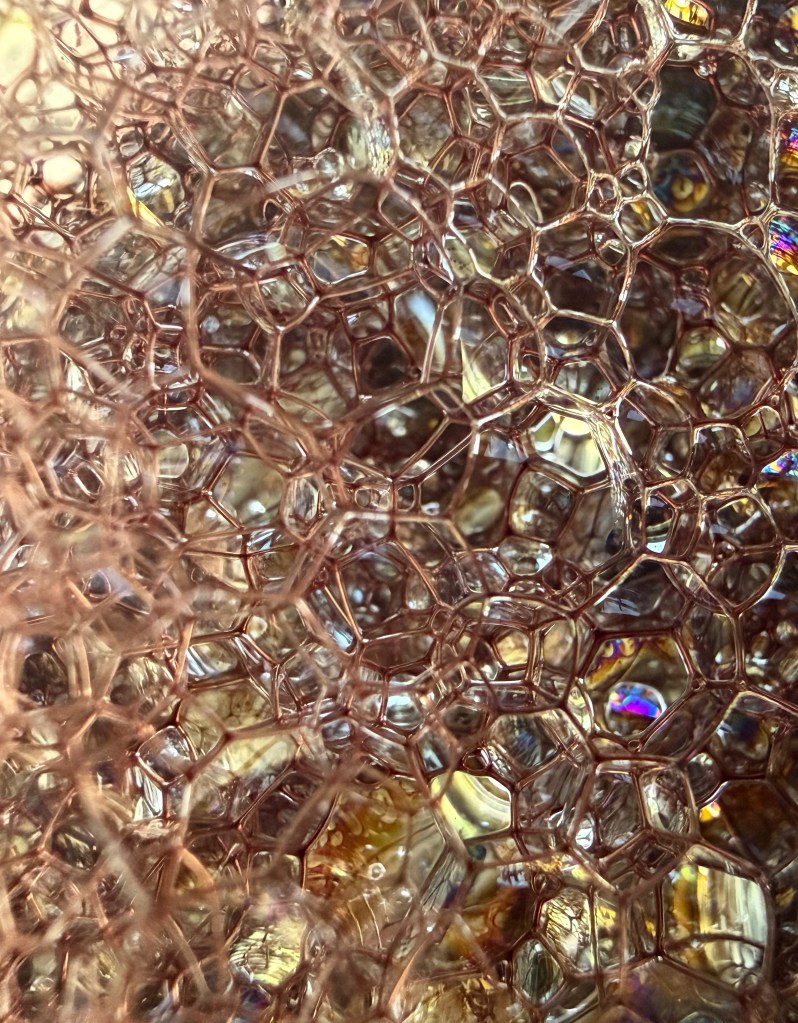
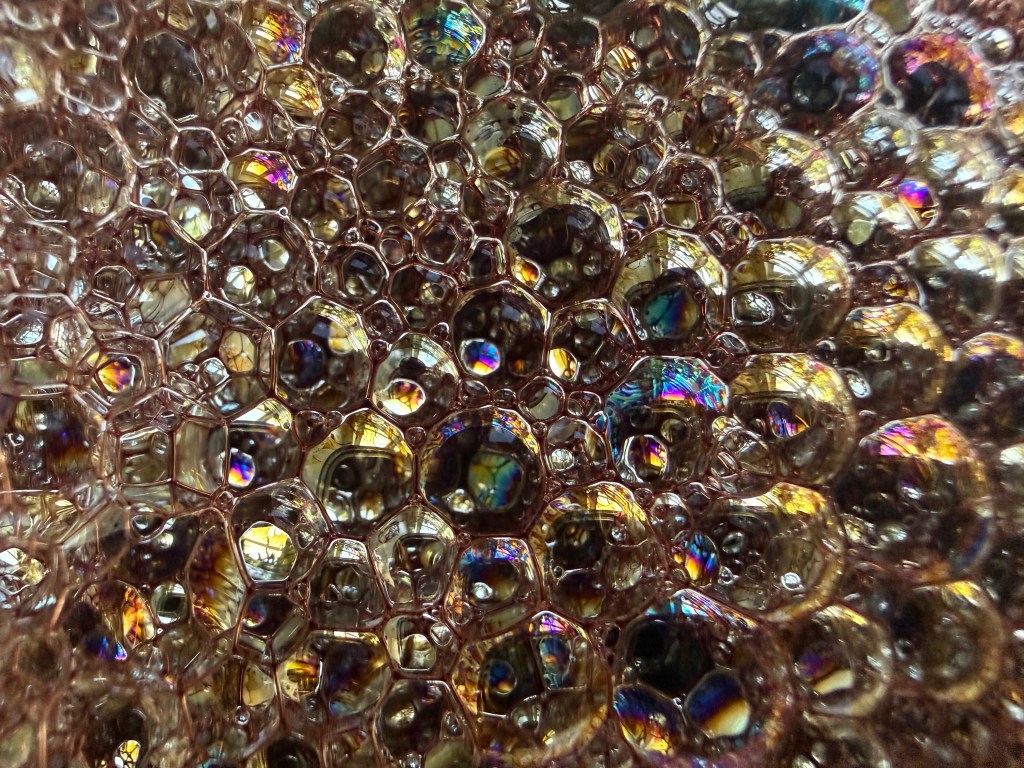
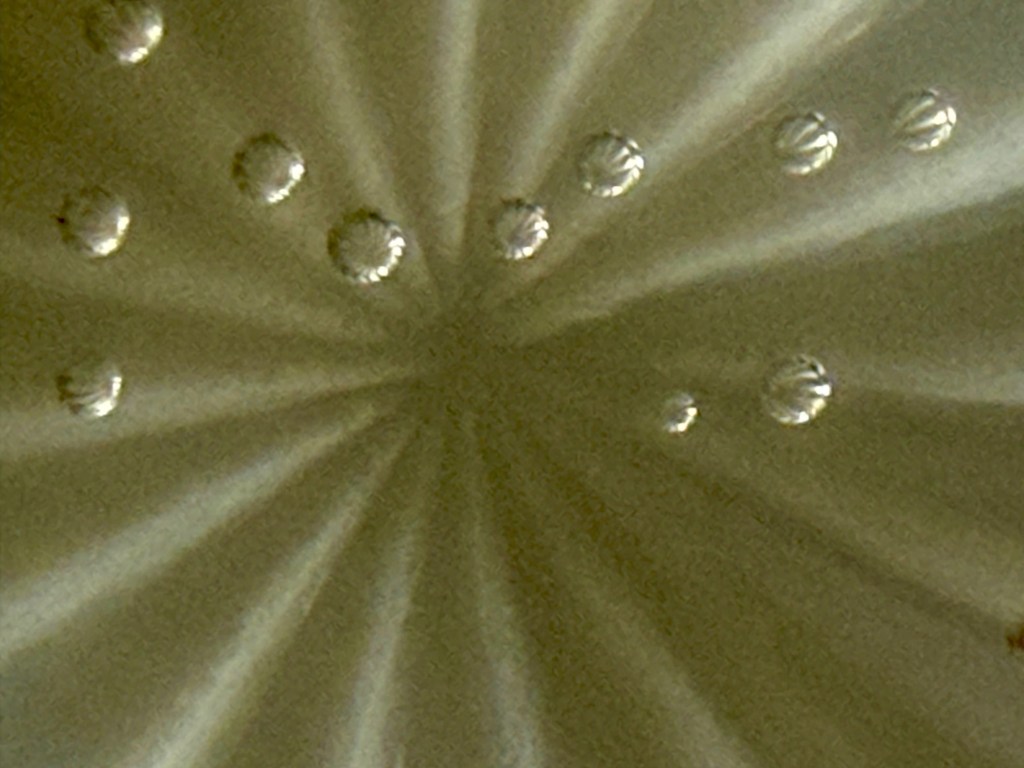
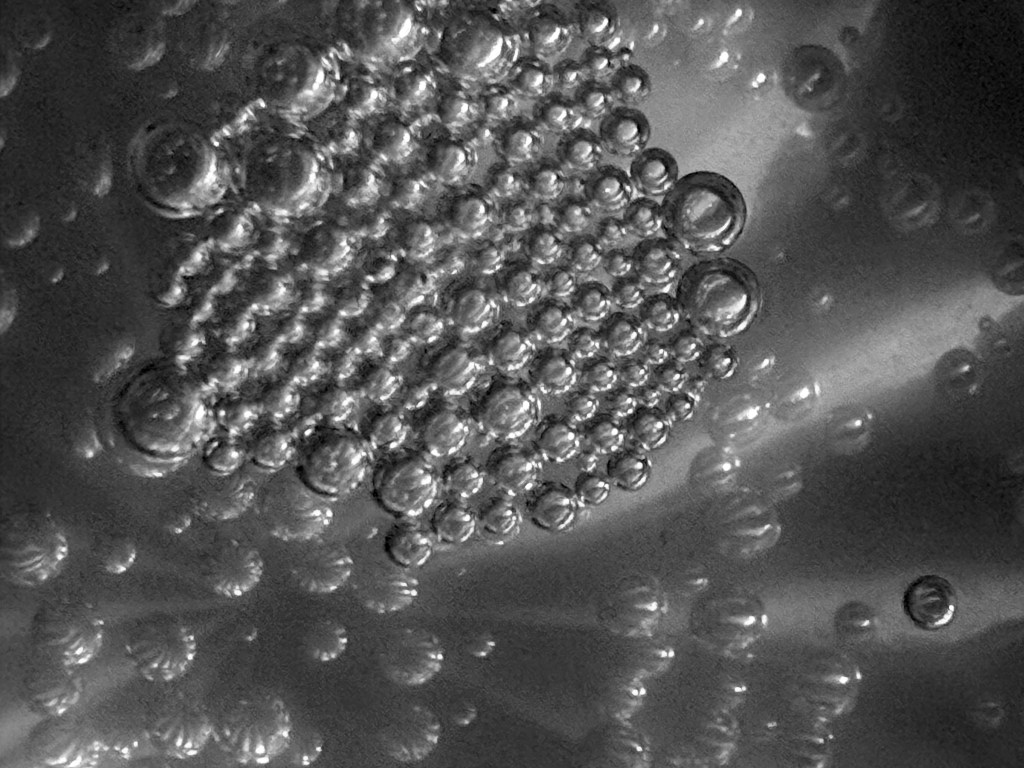
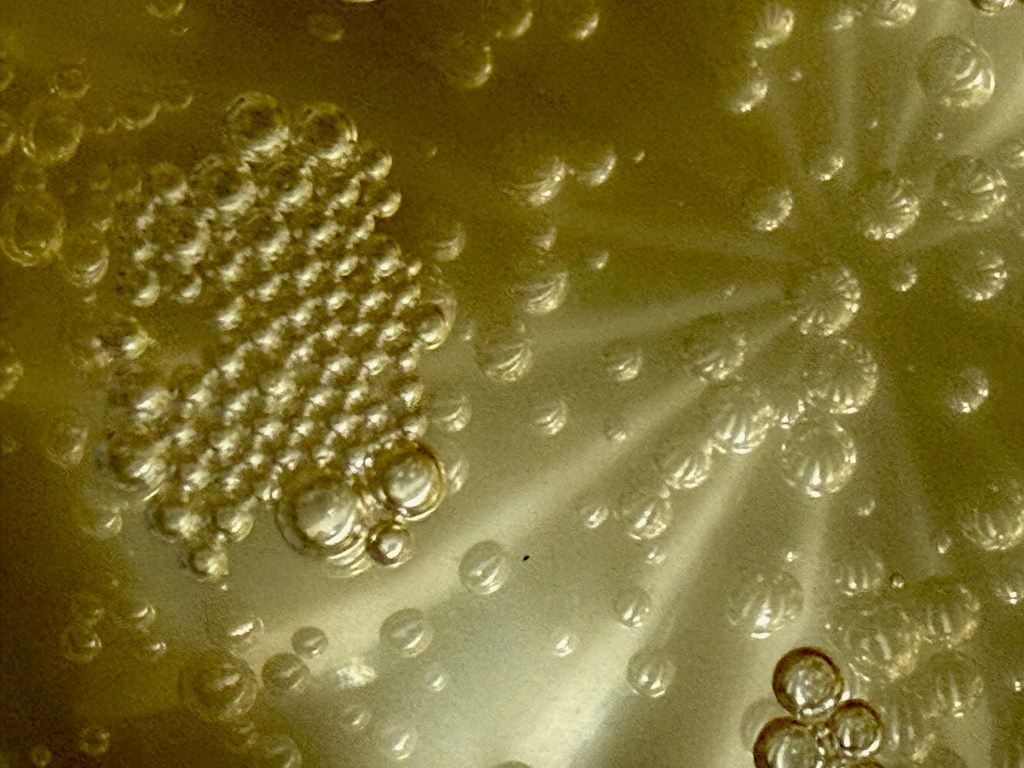
I’d been pouring my morning kombucha. Those bubbles…

Video of Bubbles 1

Video of Bubbles 2

Video of Bubbles 3

I’d been playing with the dog in the garden. Those shadows…

Video of Shadows 1

Video of Shadows 2

Video of Shadows 3

Last Minute

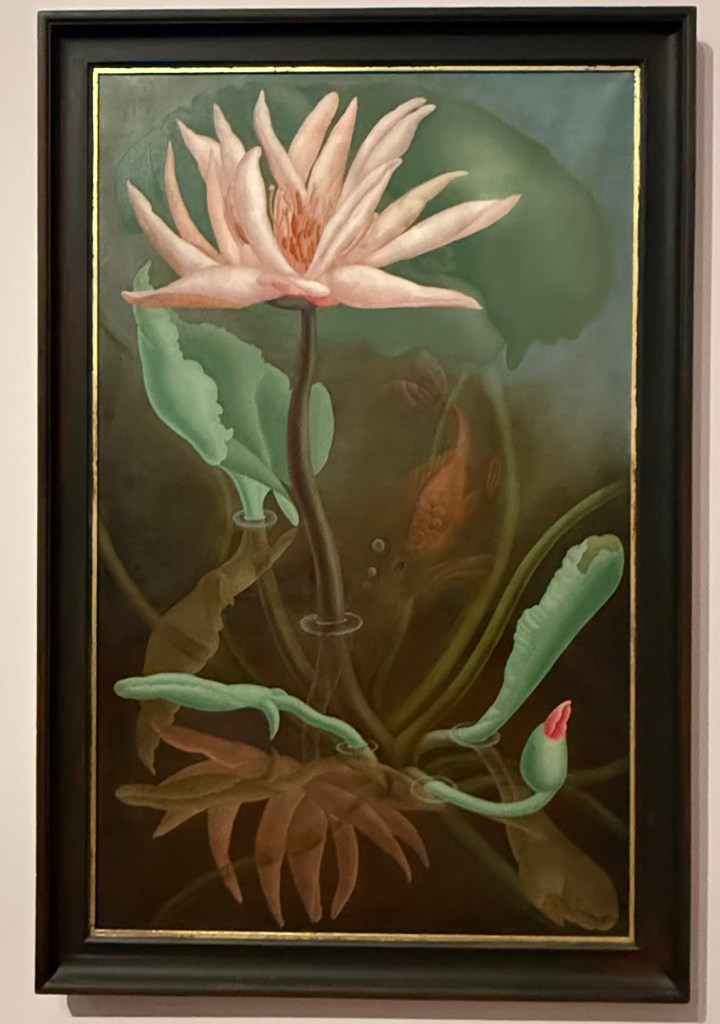
I made a last minute decision to go to Tate Britain on Friday to see the Ithell Colquhoun and Edward Burra exhibitions before they ended yesterday.

I didn’t enjoy the Colquhoun exhibition as much as I was anticipating, and I think it was because there wasn’t much surrealism.

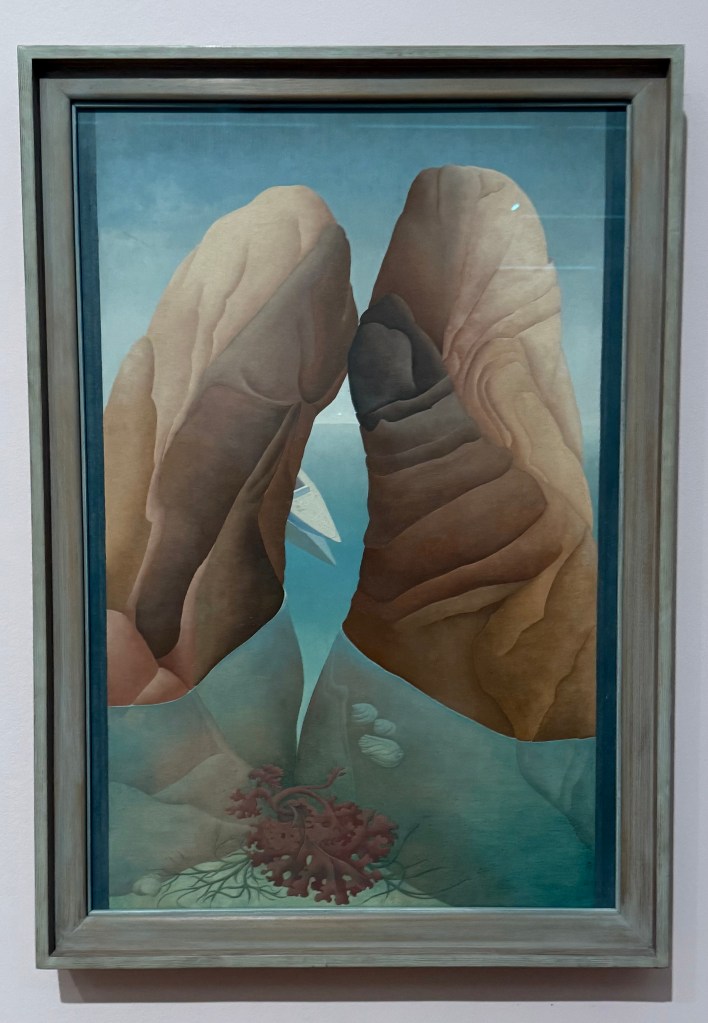
As I was standing in front of Scylla, a woman commented to me that she had been expecting it to be a lot bigger as it had been used so extensively in the marketing of the exhibition. I assume that she had thought that because the image was used for marketing purposes that it was an important work of Colquhoun’s and because it was important and of value, that it would be large in scale – the old perennial issue of size.

Scylla, 1938, oil on board, 91.4 x 61cm

‘It was suggested by what I could see of myself in a bath… It is thus a pictorial pun or double-image in the Daliesque sense – not the result of a dream, but of a dreamlike state.’

Colquhoun used the Surrealist process of decalcomania to produce a mirror image of randomly applied marks which she then used as a starting point for her work.

Gorgon, 1946, oil on board & its decalcomania counterpart of oil on paper

’I meant to paint a ‘Guardian Angel’ but the result of the automatism was so horrific that I had to call it a Gorgon instead’.

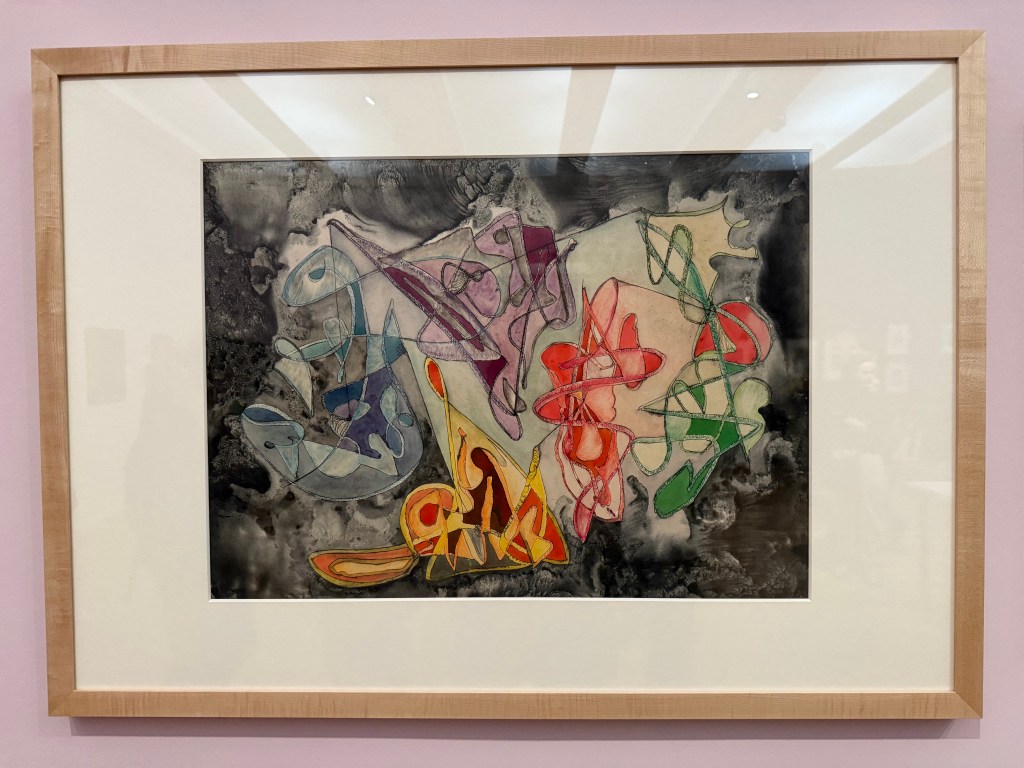
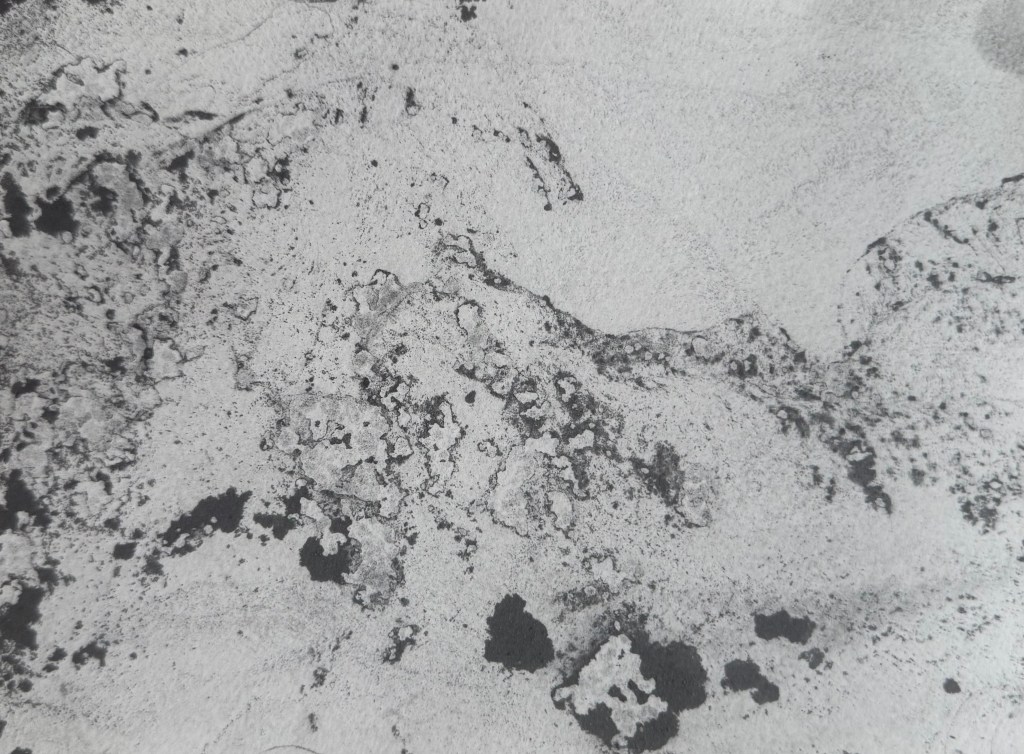
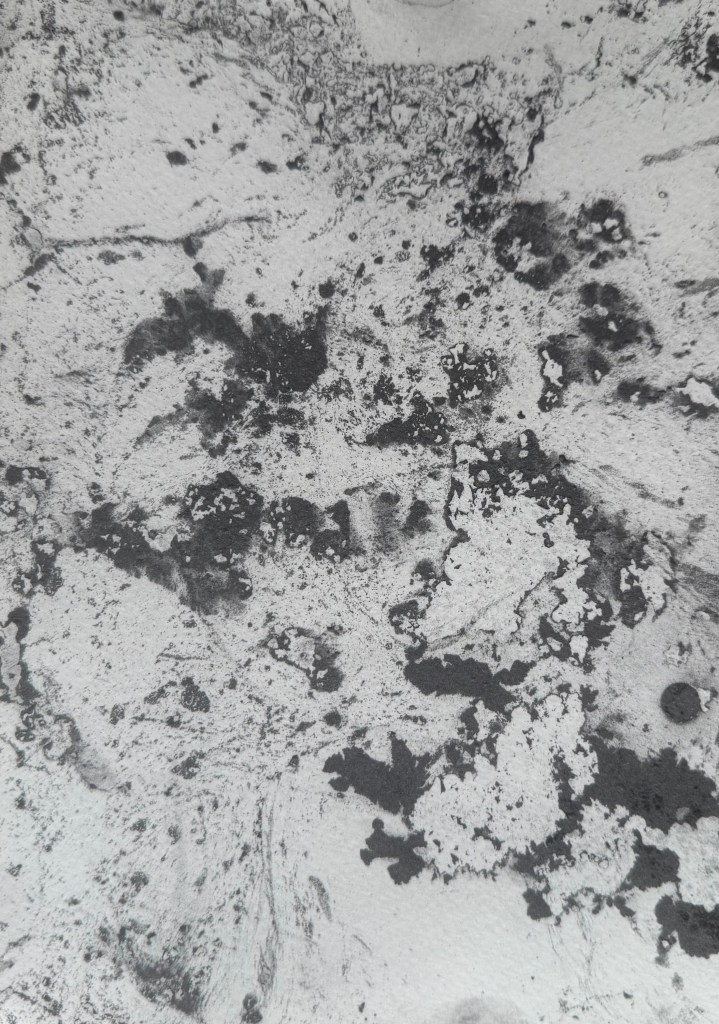
She also used a technique called parsemage, which involved submerging paper in water which had powdered chalk or charcoal on the surface.

These processes offered intuitive access to the unconscious mind, according to the accompanying blurb.

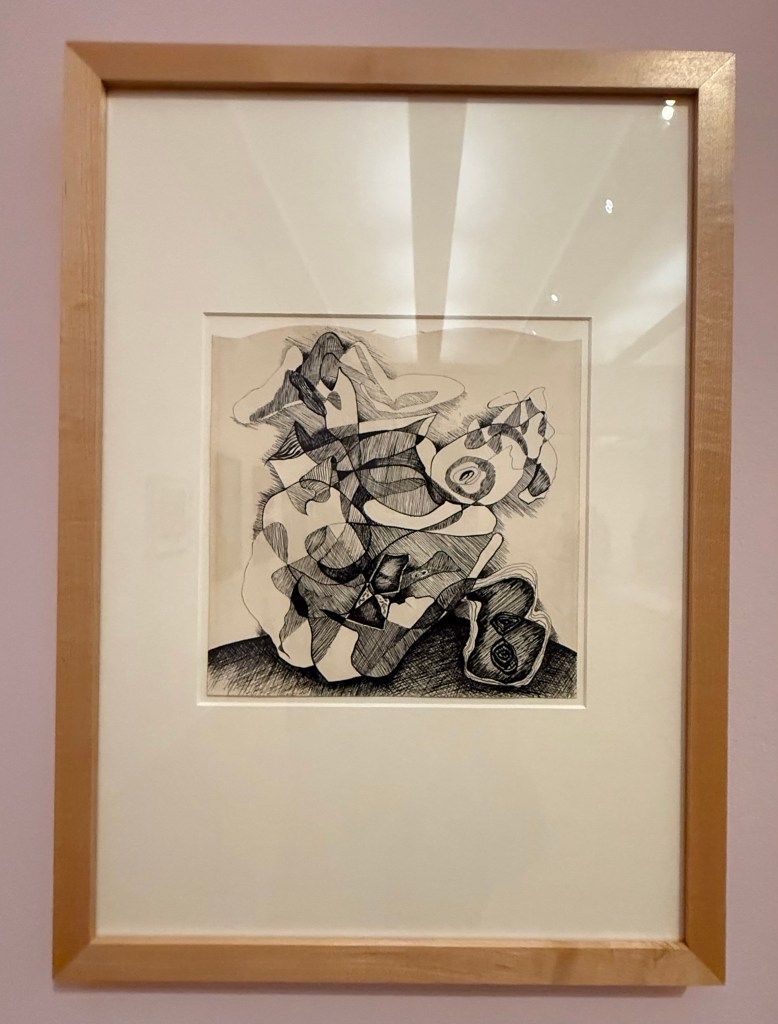
Colquhoun also utilised automatic drawing.

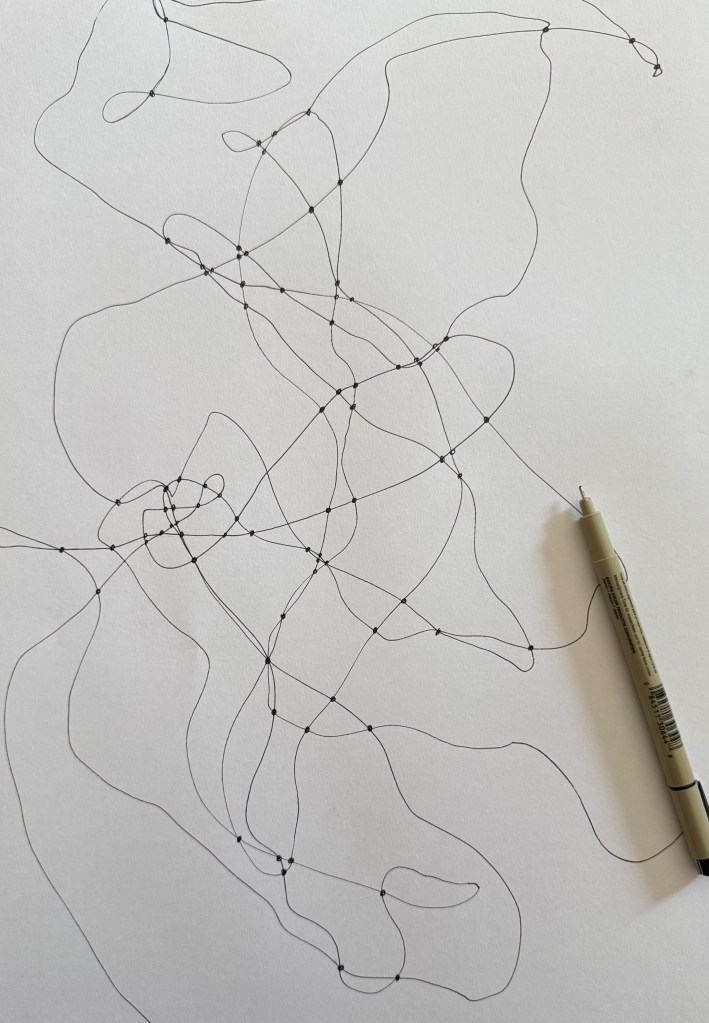
They remind me of my pen drawings in On Your Marks & Lines.

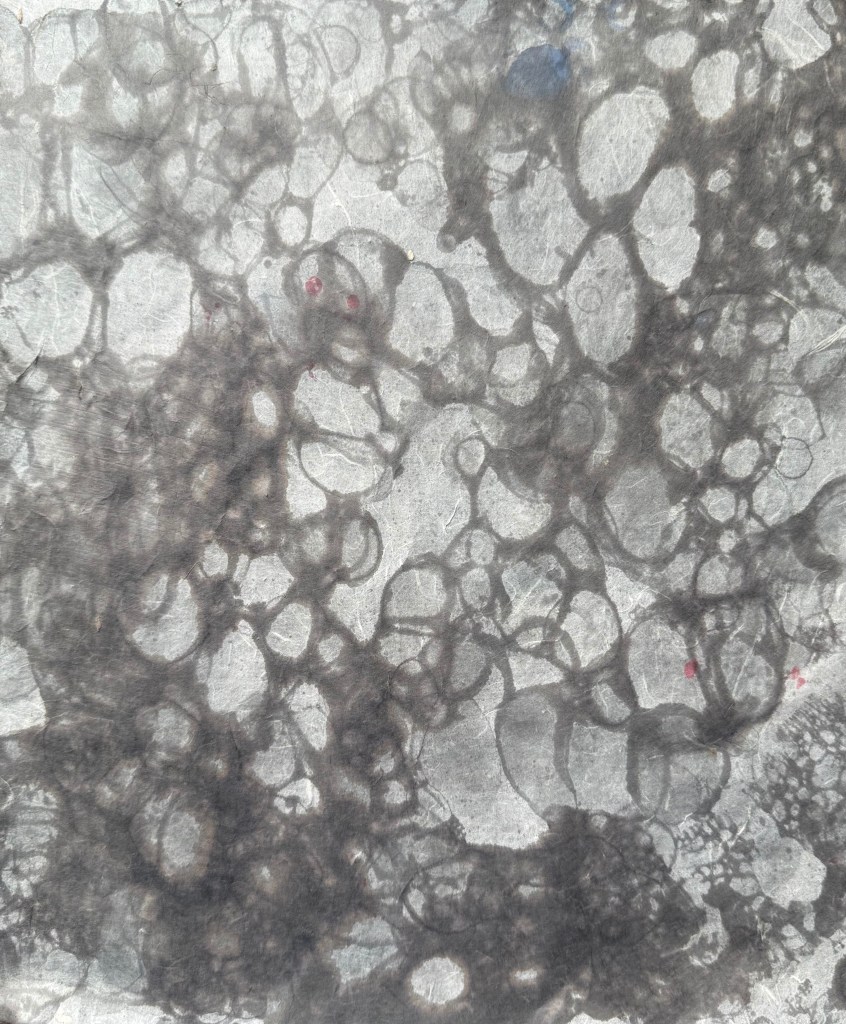
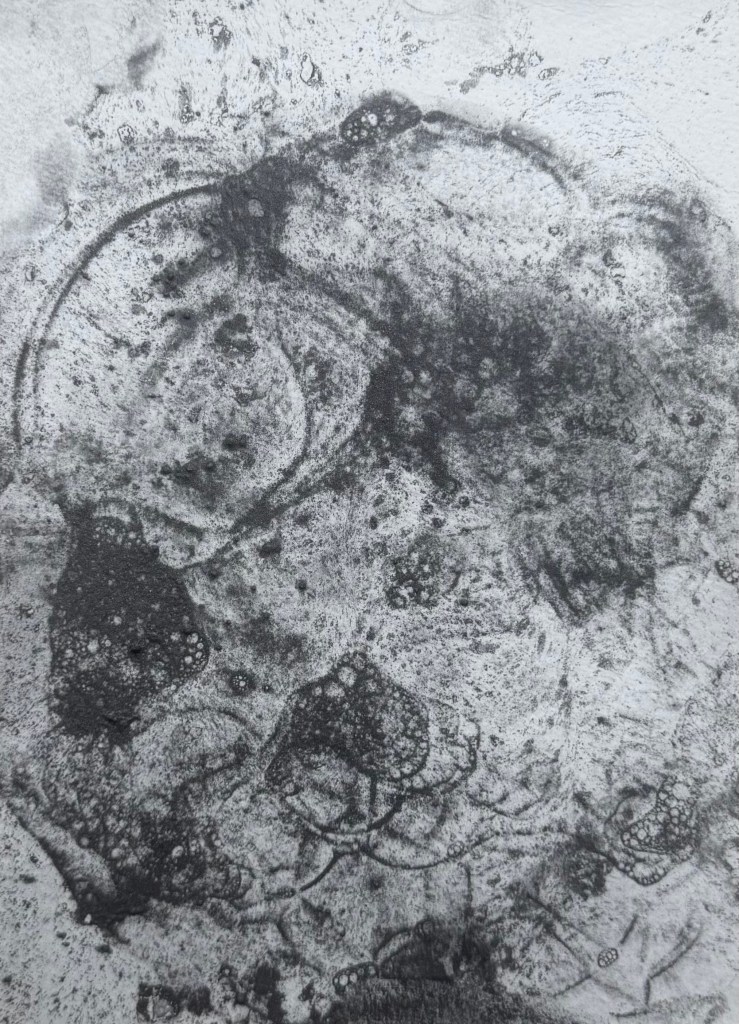
I decided to give parsemage a go – I think that you can do it with anything that can be ground to a dust – I used powdered graphite which has a slightly metallic quality to it. I was really pleased with the results.

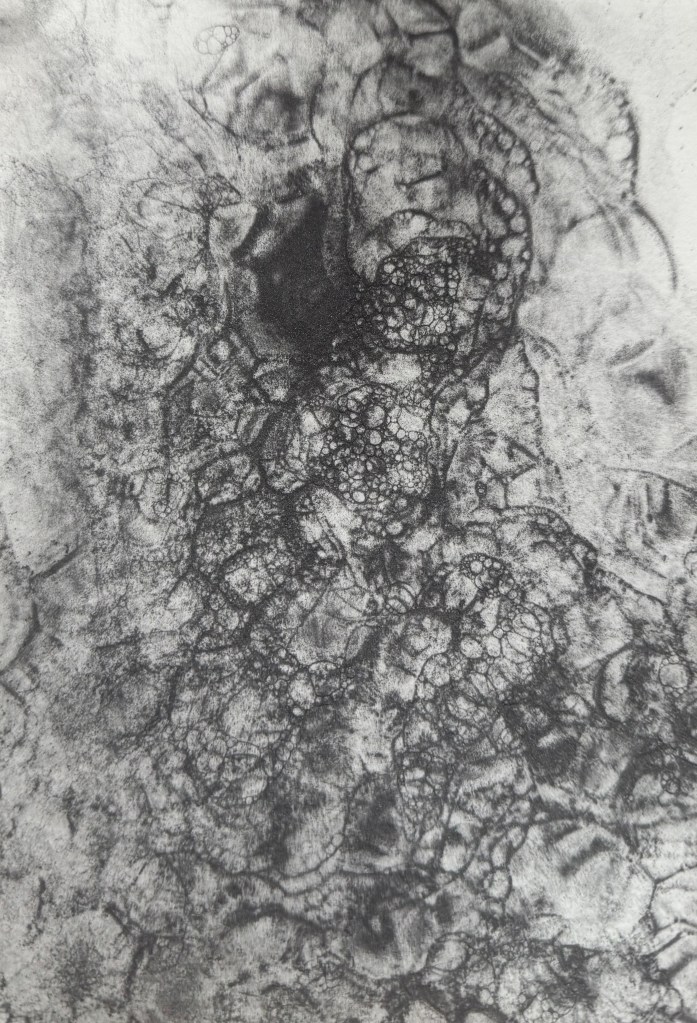
I then remembered a post on Instagram of a potter decorating bowls by blowing bubbles. I’ve used bubbles in wet cyanotyping before, so I decided to try it with the powdered graphite. I really like the delicate lines which were created and it was fascinating watching the effect of the bubbles popping – it reminded me of looking at cells under a microscope.

VIDEO

I then experimented with acrylic ink – maybe I should have realised beforehand – but it failed miserably. I wanted to try again with a water based ink, but I couldn’t find them. It might offer a more effective way of creating something akin to cells, than my previous attempts, so I’ll try again when I eventually locate them.